Milan Travel Guide: Everything You Need to Know for 2026
Last Updated: March 2026
I thought Milan would impress me with glamour. I didn't expect it to move me with its people.
I only needed one trip to Milan to understand why Italians consider it their most alive city. It wasn't the Duomo that got me — though standing on that rooftop among the marble spires is genuinely breathtaking. It was 6 PM on a Tuesday evening when my friend took me to the neighbourhood bar near his apartment and I watched something I had never seen before.
Strangers were pulling tables together. A man in a suit sat next to a woman in paint-stained work clothes. A young couple joined an older man eating alone. Within an hour there were seven tables attached end to end and twenty people sharing drinks, food, laughter, and what sounded like the events of their entire day. I thought they were all family. They were just neighbours. That is Milan.
This guide is built on that one trip — everything I discovered, everything I got wrong, and everything I wish someone had told me before I arrived. Including how not to spend three hours queuing for a rooftop ticket you could have bought online in two minutes.
Table of Contents
- What Is Milan and Why Should You Visit?
- How Do You Get To and Around Milan?
- What Are the Top Attractions and Landmarks in Milan?
- What Are the Best Neighborhoods to Explore in Milan?
- What Is the Nightlife Like in Milan?
- What Food Should You Try in Milan?
- Where Should You Shop in Milan?
- What Festivals and Events Happen in Milan?
- Where Should You Stay in Milan?
- What Do You Need to Know Before Visiting Milan?
- What Are the Best Day Trips from Milan?
- What Did I Learn From My First Trip to Milan?
- How Can You Save Money in Milan?
- Frequently Asked Questions About Visiting Milan
What Is Milan and Why Should You Visit?
Milan is Italy's most cosmopolitan city. Fashion capital. Design capital. Financial capital. But none of that is why I loved it.
I loved it because of what I saw at 6 PM on my first evening. People finishing work and going straight to the bar. Not home. The bar. Sitting with their neighbours. Pushing tables together. Laughing. Sharing their day. I have never seen strangers choose each other the way Milanese do every single evening.
In Rome people are busy. Always moving. Always working. Milan is different. In Milan people work hard and then they stop — completely — and they enjoy their life with everything they have. You feel that difference the moment you arrive.
When Is the Best Time to Visit Milan?
Do not go in July or August. I made this mistake. I went at the end of July and the heat was brutal. Milan in summer is hot and humid in a way that makes sightseeing genuinely unpleasant. I was sweating before I even reached the Duomo. I spent more time looking for shade than looking at anything worth seeing.
I wish someone had told me to check the weather before booking. My honest advice — avoid July and August completely, unles you love heat. You will have a much better trip any other time of year.
Best months: April to May and September to October. The weather is comfortable. The city is energetic. April brings Milan Design Week — one of the most exciting events in the design world. September brings Fashion Week. Both are extraordinary times to visit.
Budget season: January and February. Cold and foggy but the hotel prices drop dramatically. The opera season at La Scala is in full swing. Christmas lights in December make the shopping streets genuinely magical.
- April to May: Best time — perfect weather, Design Week energy, manageable crowds
- June: Still good — warm but not yet unbearable
- July to August: Avoid — brutal heat, humidity, locals leave the city
- September to October: Excellent — Fashion Week, golden weather, full of energy
- November to March: Budget season — cold and foggy but atmospheric and cheap
How Many Days Do You Need in Milan?
Three to four days is enough for a first visit. That is what I had and it covered the major attractions with time left to actually breathe and enjoy the city.
3 to 4 days — See the Duomo rooftop, The Last Supper, the Galleria, Castello Sforzesco, and the Brera gallery. Spend one evening in the Navigli. Walk the fashion district. That is the essential Milan.
5 to 7 days — This gives you time to slow down. Go to a neighbourhood bar in the evening and stay for hours. Take a day trip to Lake Como. Explore the Isola neighbourhood. The more time you give Milan the more it gives back.
One week or more — For design lovers, fashion obsessives, or anyone using Milan as a base for Lombardy. You will be surprised how much depth this city has when you stop rushing.
Quick Facts About Milan
- Language: Italian — English widely spoken in hotels, restaurants, and tourist areas
- Currency: Euro (€)
- Time Zone: CET (UTC+1) — CEST (UTC+2) in summer
- Climate: Hot humid summers, cold foggy winters — check before you book
- Best airport: Milan Malpensa (MXP) for international flights; Linate (LIN) for European routes
- Getting around: Metro, tram, and walking — no car needed
- Emergency number: 112
- Food and bars: Most open until 3 AM — you will never go hungry no matter what time it is
How Do You Get To and Around Milan?
The easiest way to reach Milan is by air into Malpensa Airport — Milan's main international hub — or by high-speed train from other Italian cities. Once you are in the city, the metro and tram network covers virtually everything you need without a car.
On my first trip I booked a private transfer from the airport because I didn't know the city and didn't want the stress of figuring out public transport after a long flight. It was comfortable and completely stress-free. But having now seen how the metro works in Milan, I would probably take the Malpensa Express train next time — it is fast, cheap, and drops you right in the centre. Both options work well depending on your situation.
Which Airports Serve Milan?
Milan has three airports — and choosing the right one matters more than in most cities.
Milan Malpensa Airport (MXP) is the main international airport, about 50km northwest of the city centre. This is where most long-haul flights from Canada , the USA , and the UK arrive. It is the airport you will almost certainly land at if you are coming from North America.
Milan Linate Airport (LIN) is the city airport, just 8km from the centre. It handles mostly European routes and has a direct metro connection (M4 Blue Line) into the city in under 15 minutes. If you have the choice between Malpensa and Linate, choose Linate — the convenience difference is enormous.
Bergamo Orio al Serio Airport (BGY) is 45km northeast of Milan and is used mainly by budget carriers like Ryanair. Despite being marketed as "Milan Bergamo" it is actually in Bergamo. Regular bus services run to Milan Centrale.
For flights to Milan I always recommend checking Kiwi.com before booking anywhere else. Their unique feature combines flights from different airlines that normally do not work together — which often finds significantly cheaper options than booking directly. For Milan specifically, where three different airports serve the city at very different price points, Kiwi is particularly good at finding the best combination of price and convenience.
How Do You Get from the Airport to the City?
My personal choice for a first trip — private transfer. I booked one for my first Milan arrival and I don't regret it. When you don't know a city, having someone meet you at arrivals and take you directly to your hotel removes all the stress of navigating a new place after a long flight. If you are travelling with luggage, with family, or arriving late at night, a private transfer is absolutely worth the cost.
For my next trip I would take the Malpensa Express train — 52 minutes to Milano Centrale, running every 30 minutes, costs €13. It is reliable, fast, and far cheaper than a taxi. Buy your ticket before boarding — inspectors check every journey.
Official white taxi from Malpensa has a fixed rate of €95 to the city centre. Only use white official taxis from the marked rank outside arrivals. Never accept rides from people approaching you inside the terminal.
I always compare transfer options before booking because prices for the same route vary significantly. These are the services I recommend:
Smart travellers always compare transfer options before booking — prices for the same route can vary by 40% or more. Take 60 seconds to check all options and choose what works best for your arrival.
What Is the Best Way to Get Around Milan?
The metro is the backbone of getting around Milan — and honestly it is one of the best city metro systems I have used anywhere in Europe. Clean, frequent, and covering all the major attractions. Once I understood how it worked I used almost nothing else.
Metro (MM): Milan has four metro lines covering the entire city. The most useful for tourists are M1 (Red) for the Duomo and Corso Buenos Aires, M2 (Green) for Navigli and Garibaldi, and M4 (Blue) for Linate Airport. Single ride costs €2.20 and covers 90 minutes on all transport including trams and buses.
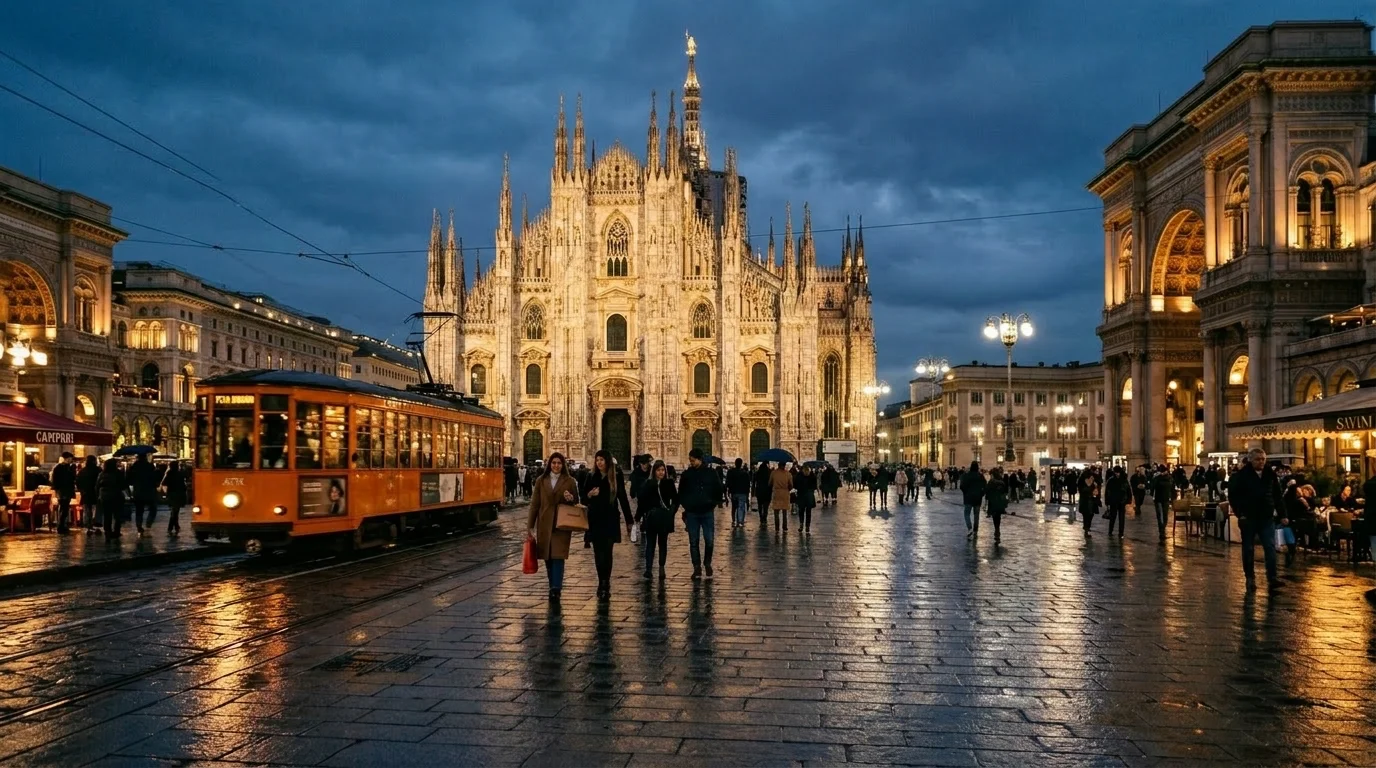
Trams: Milan's historic tram network is one of the most atmospheric ways to see the city. The orange trams have been running since the 1920s and some of the original cars are still in service. Tram 1 along Corso Buenos Aires and Tram 9 through Navigli are particularly scenic. The same €2.20 ticket covers trams.
Walking: The historic centre from the Duomo to Brera, Castello Sforzesco, and the fashion district is completely walkable and most pleasant on foot. The city is flat which makes walking easy even with luggage for short distances.
Cycling: Milan's BikeMi bike sharing system has stations across the city at €4.50 per day. Several e-scooter apps — Lime, Tier, Dott — also operate here and are a fun way to cover the Navigli canal route.
- Single ride (90 min, all transport): €2.20
- 10-ride carnet: €19.50
- 24-hour pass: €7.60
- 48-hour pass: €13.80
- Weekly pass: €17.00
- ATM Mi Card (rechargeable): €10 one-time fee
- Malpensa Express train: €13 one way
- Fixed taxi rate from Malpensa: €95
Milan has excellent data coverage throughout the metro and city centre. I never arrive in a new country without an eSIM already set up on my phone — it activates the moment I land and means I have Google Maps working before I even reach baggage claim. For Italy I use Yesim — plans start from around $5 USD for 1GB and take five minutes to set up before your flight.
On my first or second day in any new city I always take the hop-on hop-off city tour bus. Milan is no exception and I recommend it without hesitation. It gives you the full layout of the city from above before you start exploring on foot. You see where the Duomo sits relative to the Navigli, how far Castello Sforzesco is from the fashion district, and how the neighbourhoods connect. After one ride the whole city makes sense. It saves hours of confusion and wasted walking.
What Are the Top Attractions and Landmarks in Milan?
What surprised me most about Milan's landmarks is how accessible they feel compared to Rome. Fewer crowds, shorter queues when you book correctly, and a sense that you are experiencing something extraordinary without fighting through a wall of tourists to do it. Book everything in advance and you will have a completely different experience from the one most visitors get.
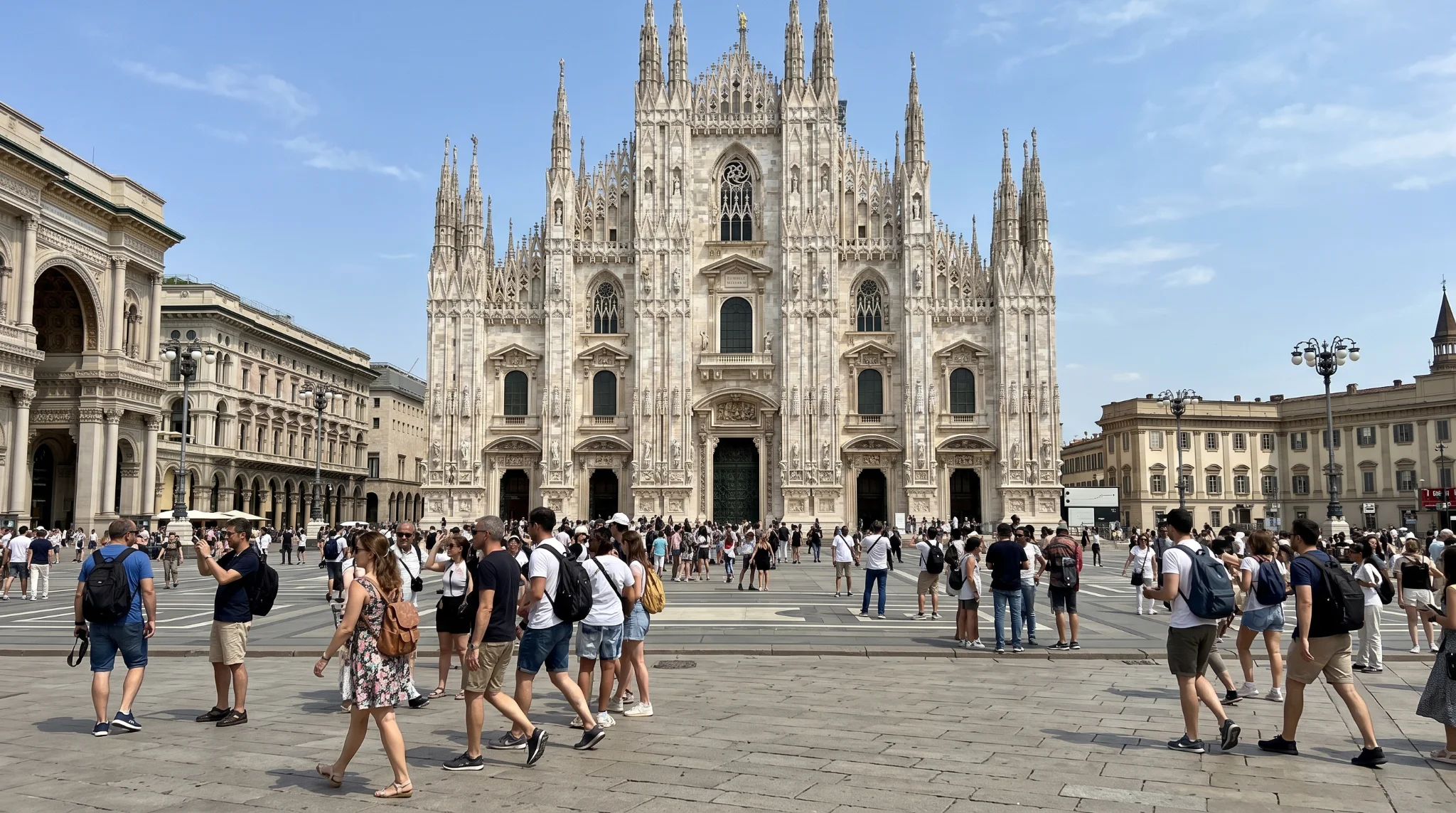
Is the Duomo di Milano Worth Climbing to the Top?
Piazza del Duomo, 20122 Milan MI, Italy
I climbed the stairs to the Duomo rooftop and by the time I reached the top my legs were tired and I was ready to complain about it. Then I stepped out onto the terrace and went completely speechless. I stood there unable to say anything for what felt like a long time. The marble spires rise all around you, the gilded Madonnina glitters at the very top, and the city of Milan spreads out in every direction below. It is genuinely unbelievable that you are standing on top of something like this.
The stairs are worth every step. The elevator gets you there faster but the staircase takes you through the cathedral's structure in a way that makes the arrival feel earned. The Duomo took nearly six centuries to complete — 3,400 statues, 135 spires, and enough white marble to make your eyes ache in the sunlight. Standing among those spires you understand for the first time what that actually means.
Why visit: The rooftop experience is unlike anything else in Italy. Rome has the Vatican dome, Florence has Brunelleschi — but Milan's Duomo rooftop is a walk among the architecture itself, not just a view from above it. Do not leave Milan without going up.
Entrance: Cathedral free; Rooftop by stairs €15 adults; Rooftop by elevator €20 adults; Combined ticket €25
Best time: First entry at 8:00 AM or last slot of the day for golden light
Hours: Cathedral 8:00 AM to 7:00 PM; Rooftop 9:00 AM to 7:00 PM
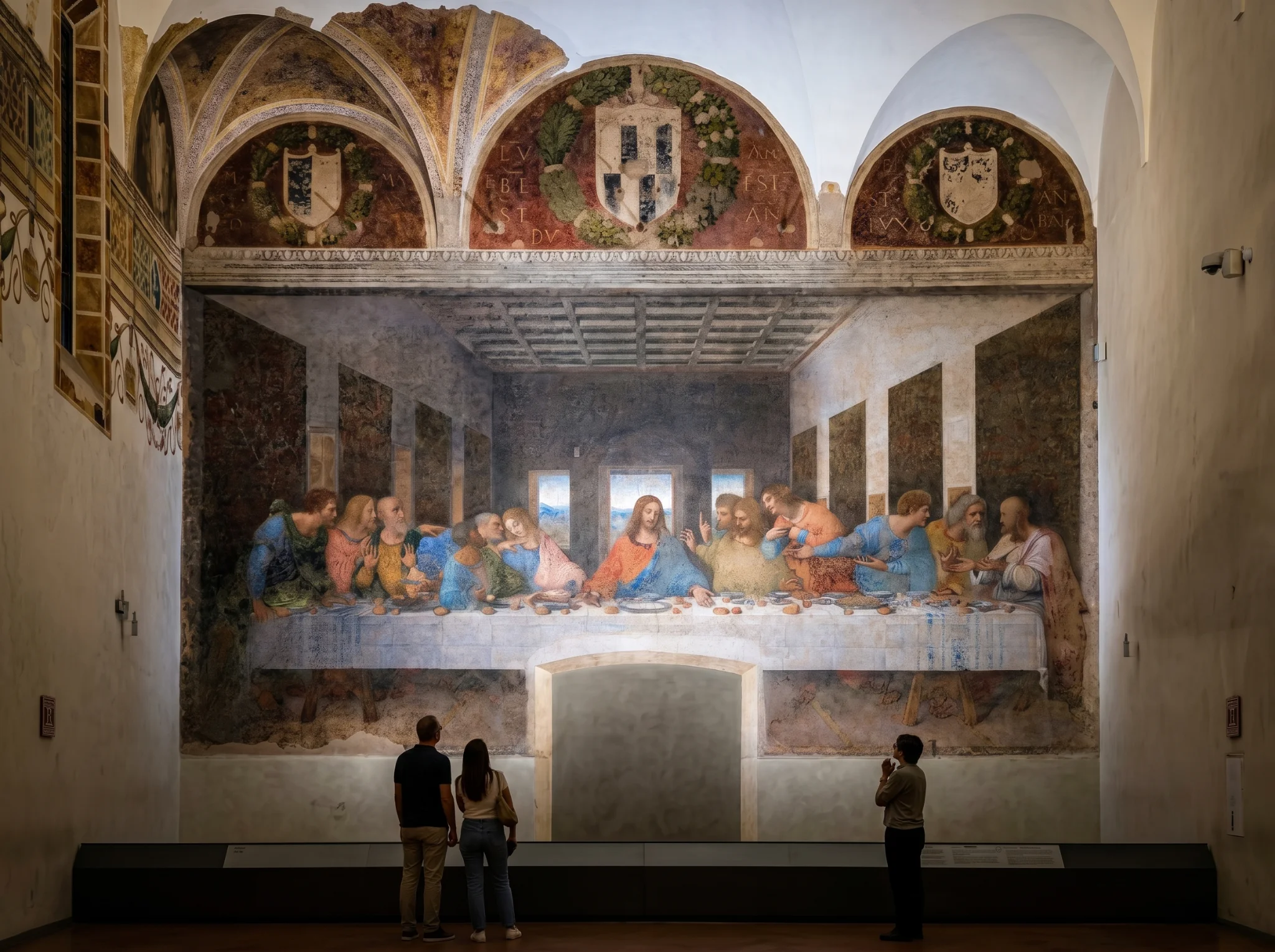
Is The Last Supper Worth Seeing in Person?
Piazza di Santa Maria delle Grazie 2, 20123 Milan MI, Italy
Yes — seeing The Last Supper in person is worth it, and I say that as someone who was not overwhelmed in the way I was at the Vatican. Standing in the refectory of Santa Maria delle Grazie looking at Leonardo da Vinci's actual brushwork on the actual wall where he painted it between 1495 and 1498 is a genuinely significant experience. It is not the emotional earthquake that the Sistine Chapel was for me. But it is something you should see once in your life — and once in person is enough to understand why the entire world knows this painting.
The viewing is tightly controlled — 25 people at a time for exactly 15 minutes in a climate-controlled room. The painting is larger than you expect. The expressions on the apostles' faces are more detailed and more human than any reproduction shows. The damage from centuries of deterioration is visible and somehow makes it feel more real, not less. This is not a reproduction. This is the thing itself. That matters.
Why visit: There is only one Last Supper and it is on a wall in Milan. You may not cry. You may not feel the spiritual weight some people describe. But you will remember standing in that room for the rest of your life.
Entrance: €15 adults plus €2 booking fee; Free for EU citizens under 18
Best time: Any slot — all visits are pre-booked to specific times
Hours: Tuesday to Sunday 8:15 AM to 7:15 PM; Closed Mondays
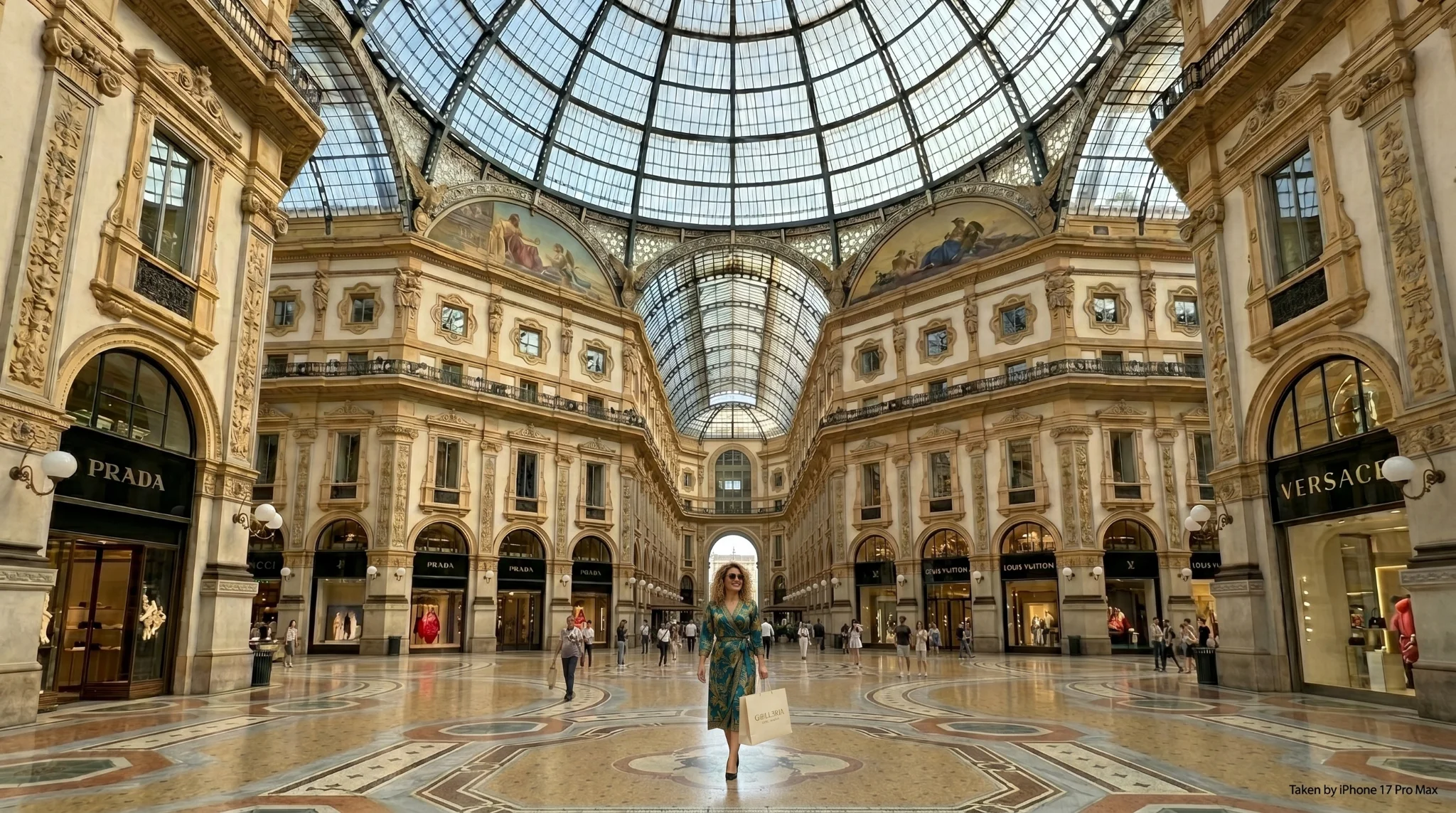
What Makes the Galleria Vittorio Emanuele II So Special?
Piazza del Duomo, 20123 Milan MI, Italy
The first time I walked through the Galleria I stopped mid-step. The glass dome soars 47 metres above you, the mosaic floor stretches ahead, and the light comes through the iron-and-glass roof in a way that makes the whole space glow. It is free to walk through and it is one of the most beautiful interiors I have seen in any city anywhere. Milan calls it "Il Salotto di Milano" — the city's drawing room — and the moment you step inside you understand exactly why.
The Galleria connects Piazza del Duomo with Piazza della Scala and has been doing so since 1877. Prada, Gucci, Louis Vuitton, and Tod's have flagship stores here alongside the legendary Camparino bar which has been serving Campari Spritz since 1867. Even if you buy nothing and drink nothing, walk through it at least twice — once in daylight and once at night when it is illuminated.
Why visit: It is free, it is extraordinary, and it connects two of Milan's most important piazzas. There is no reason not to walk through it every single day you are in Milan.
Entrance: Free to walk through
Best time: Early morning for photography; evening for atmosphere and illumination
Hours: Open 24 hours; shops typically 10:00 AM to 8:00 PM
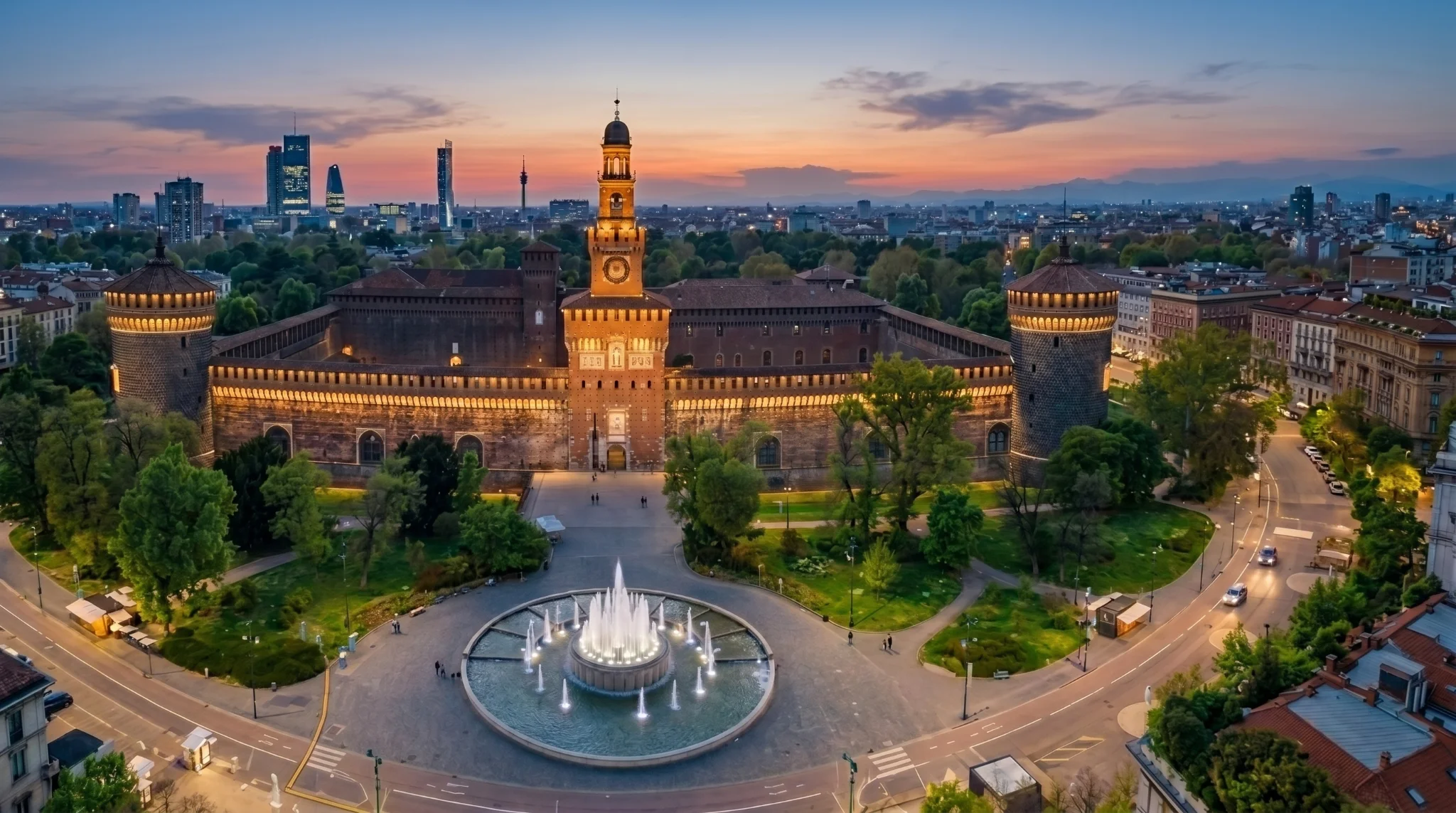
Is Castello Sforzesco Worth Visiting in Milan?
Piazza Castello, 20121 Milan MI, Italy
Castello Sforzesco is one of the largest Renaissance castles in Europe and it is completely free to enter the grounds. Leonardo da Vinci worked here as a court painter and engineer — walking through the same courtyards he walked through is quietly extraordinary even if you do not visit any of the seven museums inside. The scale of the complex surprises most visitors. You come expecting a castle and find something closer to a small city within the city.
The single most powerful object inside is Michelangelo's unfinished Rondanini Pietà — his final work, left incomplete at his death in 1564. It is displayed in a former Spanish hospital within the complex and the experience of standing in front of it is unlike anything else in Milan. Where the Duomo makes you feel the greatness of human achievement, the Rondanini Pietà makes you feel its fragility. Both feelings are worth having.
Why visit: The castle grounds are free and worth an hour of anyone's time. The museum containing the Rondanini Pietà is worth the €10 ticket on its own.
Entrance: Castle grounds free; Museum ticket €10 adults
Best time: Tuesday to Sunday morning
Hours: Grounds 7:00 AM to 7:30 PM; Museums 10:00 AM to 5:30 PM; Closed Monday
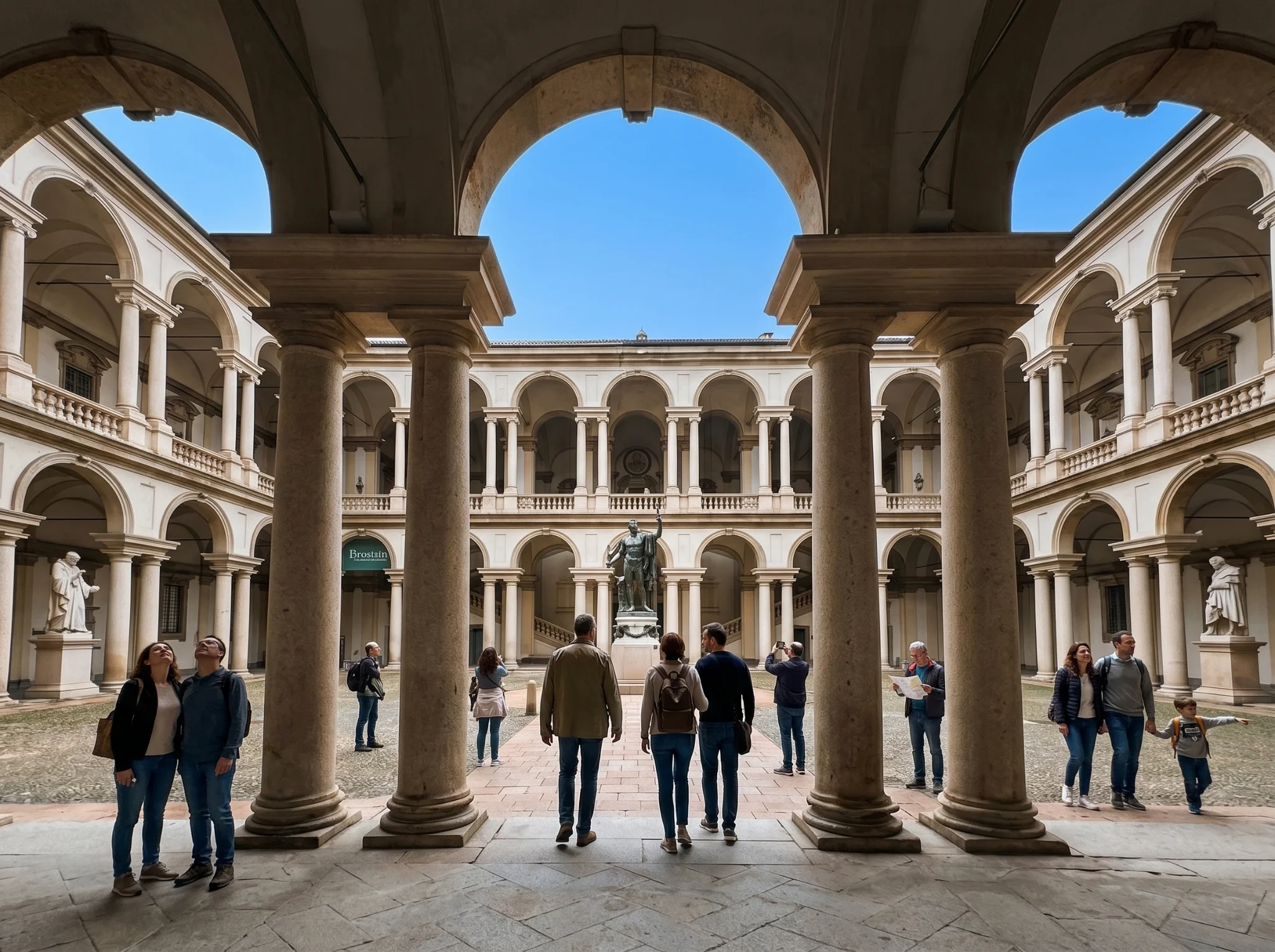
Is the Pinacoteca di Brera Worth Visiting?
Via Brera 28, 20121 Milan MI, Italy
If you see one art gallery in Milan make it the Brera. It houses eight centuries of Italian painting — Raphael, Caravaggio, Titian, Tintoretto — in a beautiful 17th century palazzo in one of Milan's most charming neighbourhoods. Unlike Rome's museums which can feel overwhelming in their scale, the Brera is manageable, rarely overcrowded on weekdays, and genuinely enjoyable to spend two or three hours in.
Mantegna's Dead Christ — painted with an astonishing foreshortening technique that puts you at the feet of the figure — is one of the most technically extraordinary paintings I have ever stood in front of. It stops you completely. The Brera is the kind of gallery where you slow down and actually look rather than rushing through ticking off masterpieces.
Why visit: World class art collection, beautiful building, manageable crowds, and it sits in the middle of the Brera neighbourhood where you can extend your visit into an afternoon of wandering excellent streets.
Entrance: €15 adults; Free for EU citizens under 18; First Sunday of month free
Best time: Tuesday to Thursday morning for fewest crowds
Hours: Tuesday to Sunday 8:30 AM to 7:15 PM; Closed Monday
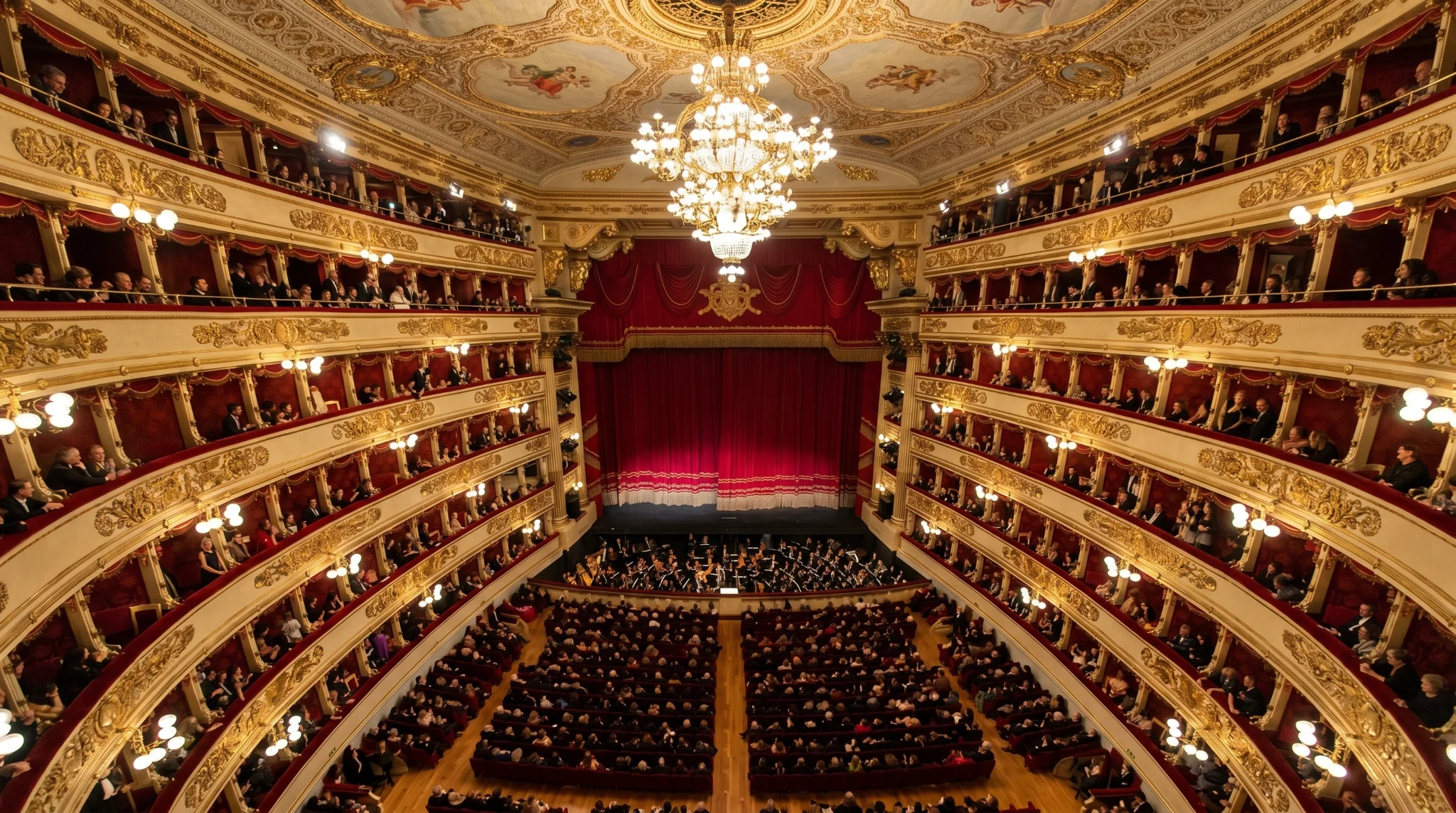
Is Teatro alla Scala Worth Attending?
Via Filodrammatici 2, 20121 Milan MI, Italy
La Scala is one of the most famous opera houses in the world and attending a performance here is a genuine bucket-list experience for music lovers. Founded in 1778, it has premiered works by Verdi and Puccini and the names Callas and Pavarotti are woven permanently into its history. Even if opera is not your thing, the building itself is beautiful and the Teatro alla Scala Museum gives you a fascinating window into Italian musical culture without needing a performance ticket.
The atmosphere on a performance night is electric in a way that is specific to La Scala — the audience is knowledgeable, opinionated, and completely engaged. Milan's opera crowd will applaud brilliance and go silent for mediocrity in a way that reminds you this city takes culture as seriously as it takes fashion.
Why visit: For music lovers this is the most important building in Milan. For everyone else the museum is excellent and the building tour gives you access to the auditorium on a budget.
Entrance: Museum €12 adults; Performance tickets €35 to €250+
Best time: Book performance tickets months ahead for main season December to July
Hours: Museum daily 9:00 AM to 12:30 PM and 1:30 PM to 5:30 PM
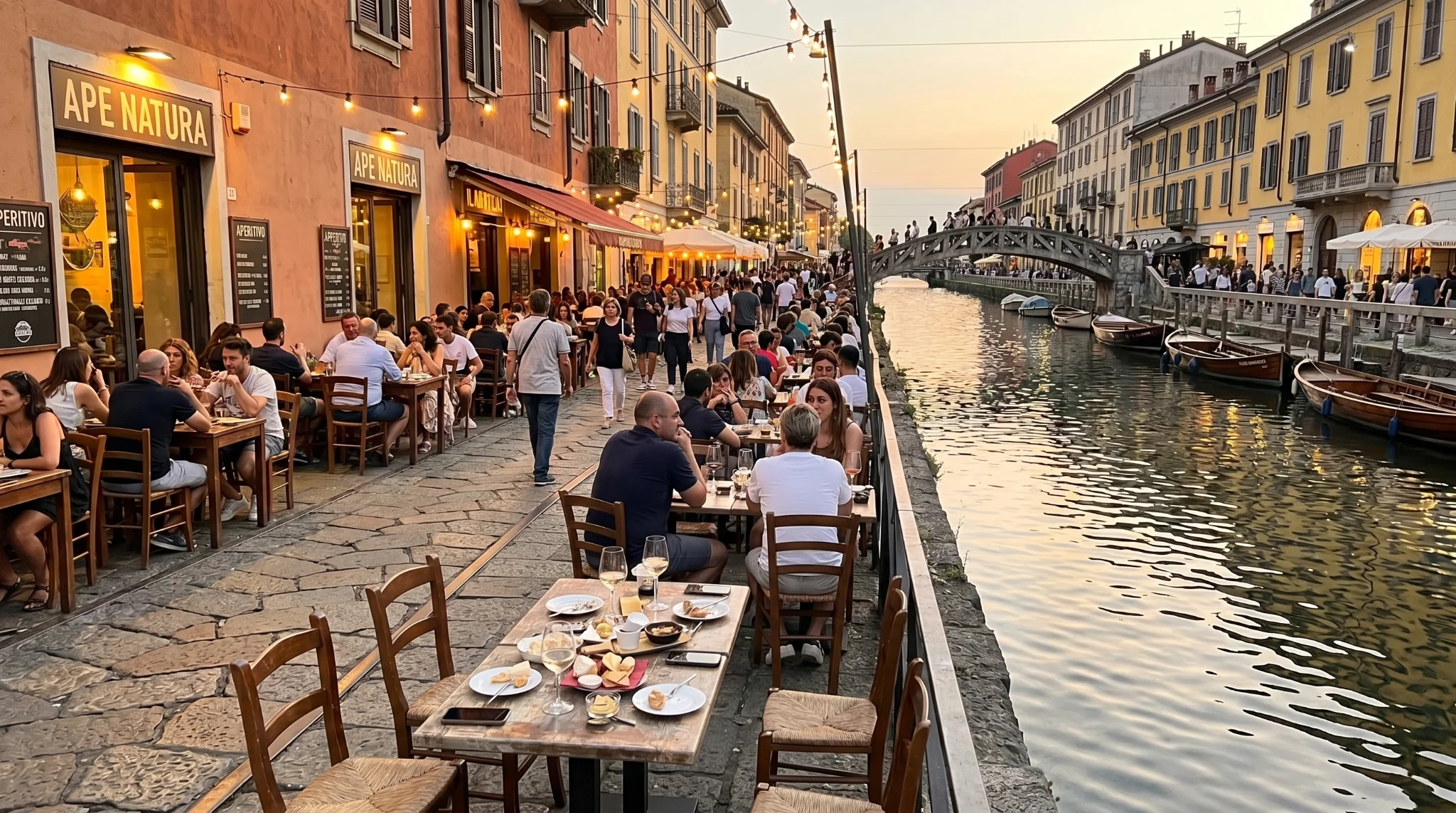
Why Should You Visit the Navigli Canal District?
Alzaia Naviglio Grande, 20144 Milan MI, Italy
The Navigli is where Milan stops being a fashion capital and becomes something more interesting — a neighbourhood where people actually live, drink, argue, laugh, and spend their evenings the way Milanese have for generations. The canals were designed by Leonardo da Vinci and built between the 12th and 17th centuries originally to transport marble for the Duomo. Now they are lined with bars, restaurants, art studios, and some of the best aperitivo spots in the city.
I spent my first Milan evening here and it was the moment the city revealed itself to me. Come at 6 PM and stay until you run out of reasons to leave. The canal reflections at night, the sound of conversation spilling out of bars onto the water, the mix of people from every background sitting together — there is nowhere else in Milan quite like it.
Why visit: The Navigli is free, atmospheric, and gives you an experience of Milan that no museum or landmark can. It is essential.
Entrance: Free to explore
Best time: Evening from 6:00 PM; Last Sunday of month for antique market
Hours: Always accessible; Bars open noon to 2:00 AM
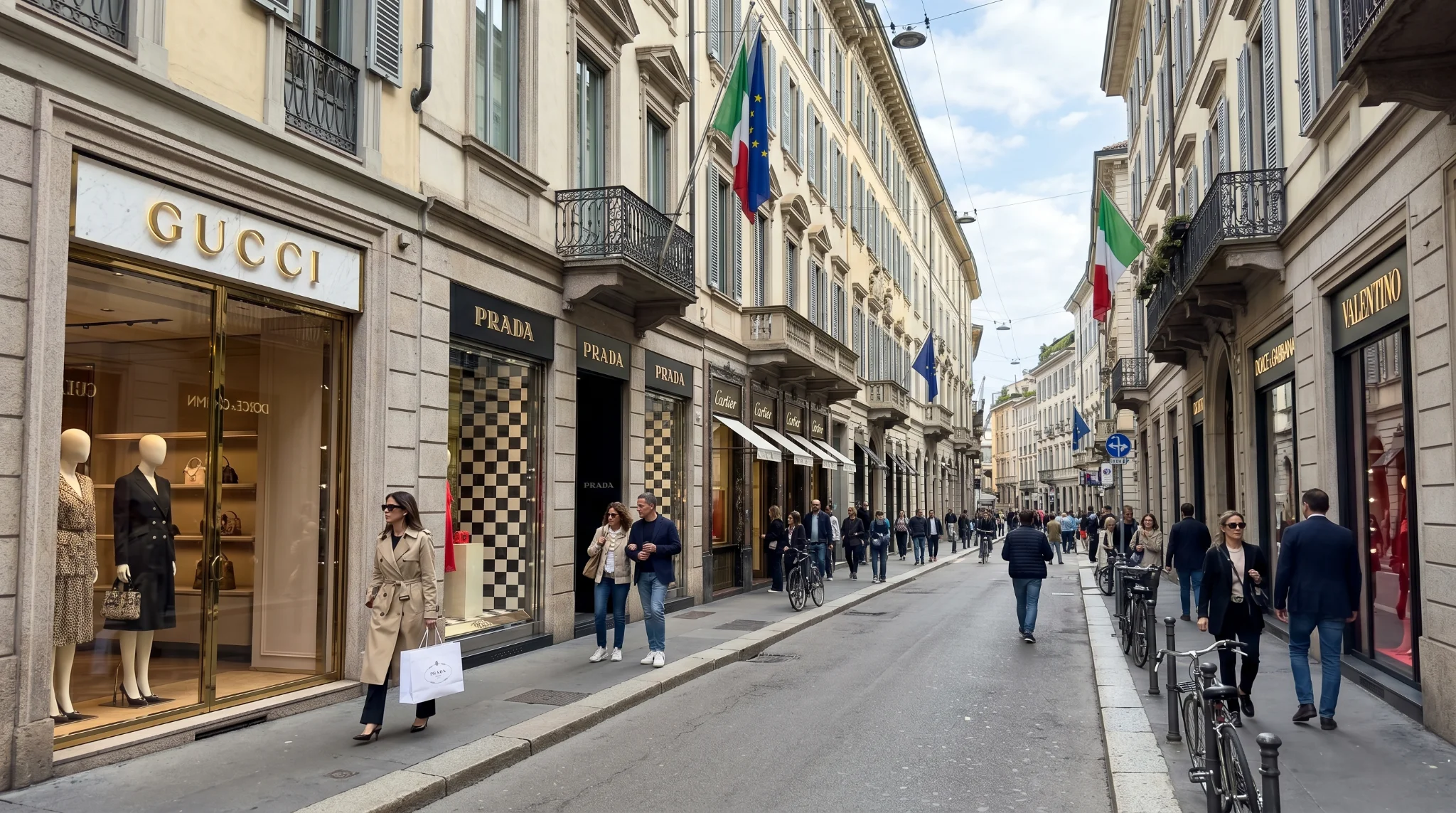
What Makes the Quadrilatero della Moda Worth Visiting?
Via Montenapoleone 1, 20121 Milan MI, Italy
The Quadrilatero della Moda — Milan's legendary fashion quadrangle — is where I understood for the first time what it means to be in the world's fashion capital. Via Montenapoleone, Via della Spiga, Via Sant'Andrea, and Corso Venezia form a rectangle of streets where every major fashion house on earth has its most prestigious Italian flagship store. I walked through it as a window shopper and found it genuinely extraordinary — not because of what things cost but because of what they look like. The window displays alone are worth the walk.
This is where Milan's fashion identity is most concentrated and most visible. Even if you buy nothing, walking the Quadrilatero gives you an understanding of why Milan matters to the fashion world that no magazine or runway show can convey. The architecture of the buildings, the quality of the light, the way people dress just to walk these streets — it is an education in aesthetic.
Why visit: Free to walk, extraordinary to look at, and the best people-watching in any city I have visited. September during Fashion Week takes it to another level entirely.
Entrance: Free to stroll
Best time: Weekday mornings; September during Fashion Week
Hours: Shops typically 10:00 AM to 7:30 PM Monday to Saturday
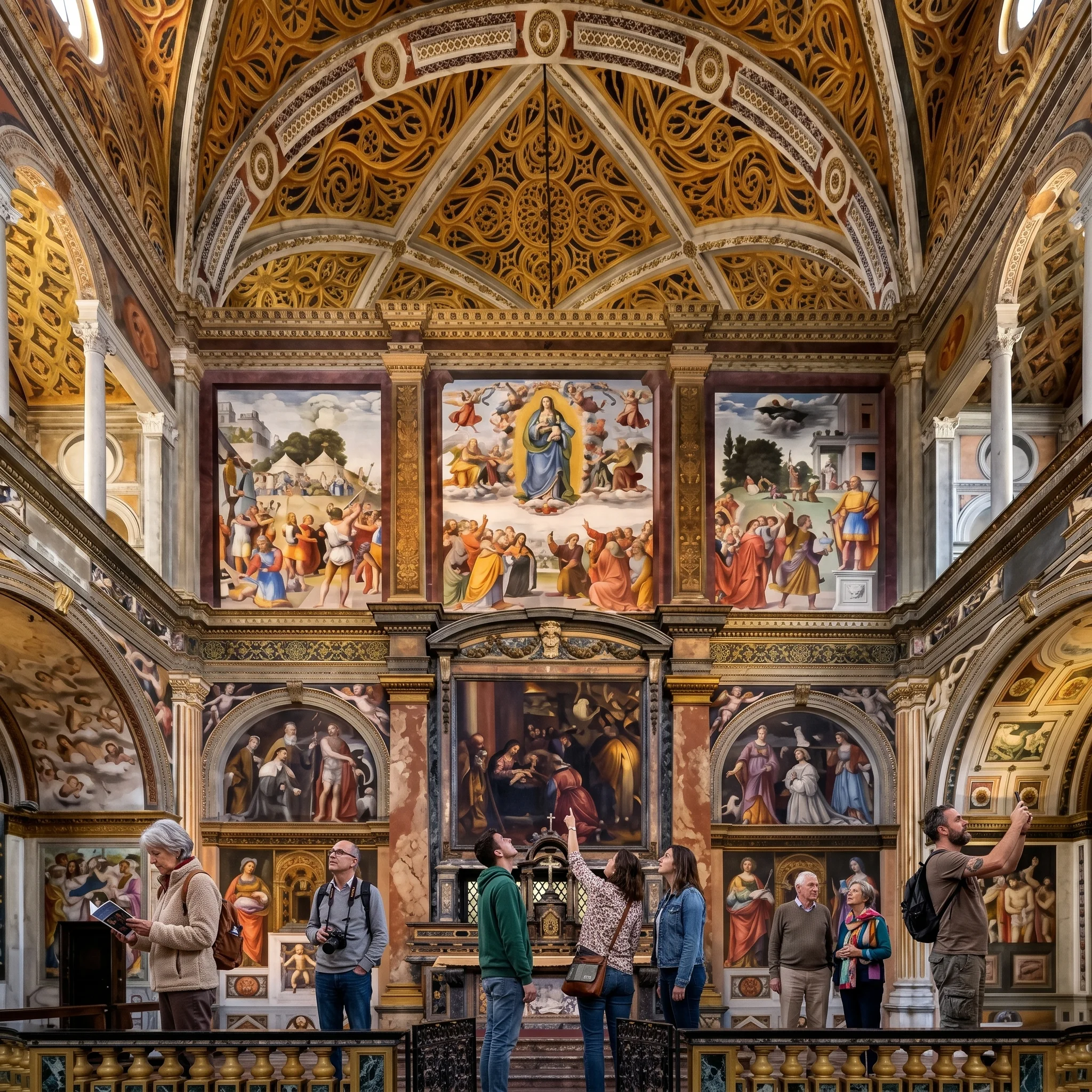
Is the Pinacoteca Ambrosiana Worth Visiting?
Piazza Pio XI 2, 20123 Milan MI, Italy
The Pinacoteca Ambrosiana is one of Milan's best kept secrets — a world class art collection just five minutes walk from the Duomo that most tourists walk straight past on their way to better-known attractions. Founded in 1618 it holds Leonardo da Vinci's Portrait of a Musician, Raphael's original full-scale preparatory drawing for the School of Athens fresco, and Caravaggio's Basket of Fruit. The adjacent library holds Leonardo's Codex Atlanticus — the largest collection of da Vinci drawings in the world.
The Ambrosiana is consistently one of the least crowded major museums in Milan despite containing objects that in Rome would have hour-long queues. If you visited The Last Supper and want to see more da Vinci, this is your next stop. A short walk from the Duomo and you are standing in front of one of the few panel paintings Leonardo ever completed.
Why visit: World class art, almost no crowds, and a Leonardo da Vinci collection that rivals anything in Italy outside Florence.
Entrance: €15 adults; €10 children 6 to 14
Best time: Weekday mornings
Hours: Tuesday to Sunday 10:00 AM to 6:00 PM; Closed Monday
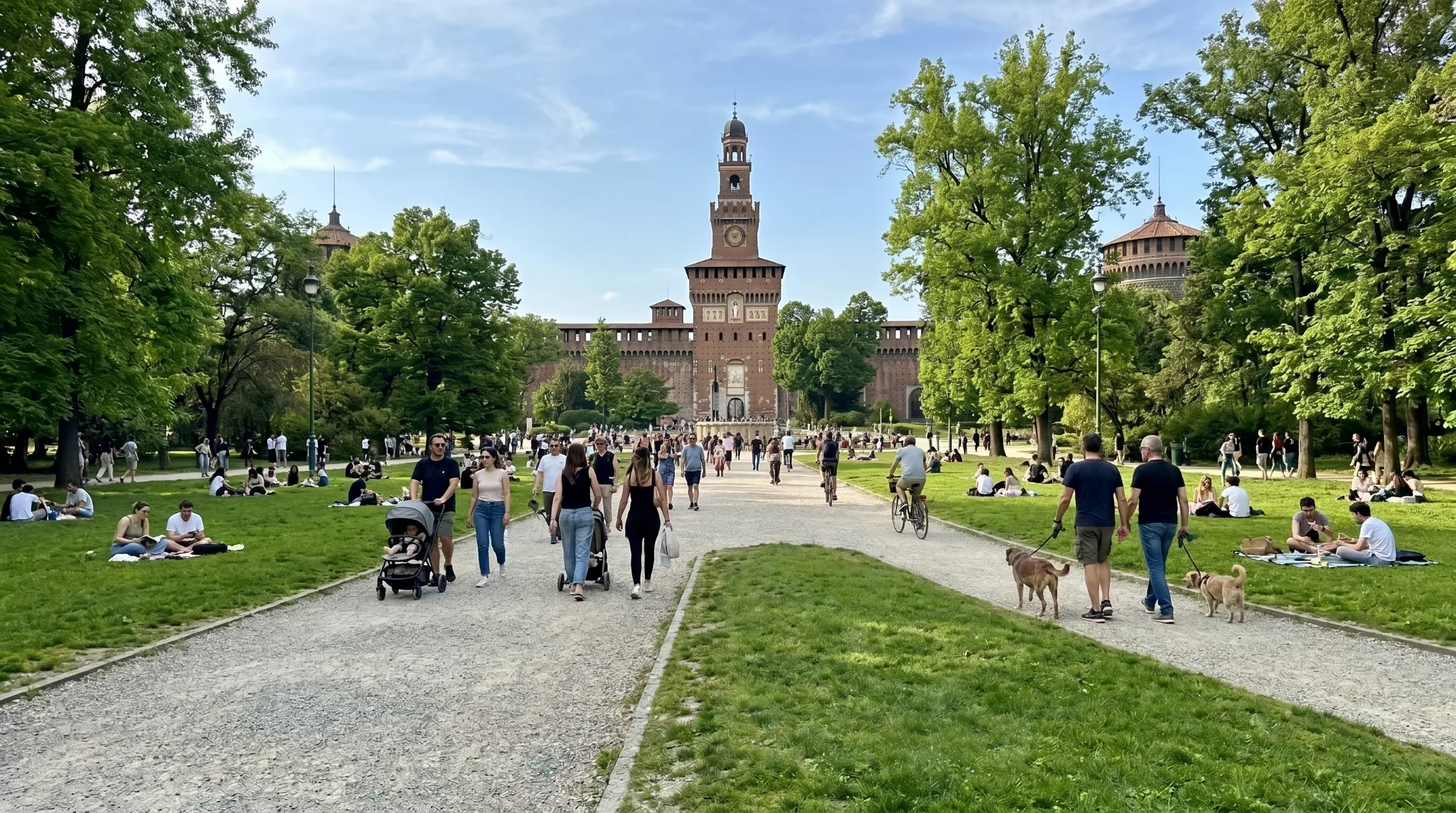
Is Parco Sempione Worth Visiting in Milan?
Piazza Sempione 14, 20154 Milan MI, Italy
After a full day of cathedrals, art galleries, and fashion streets, Parco Sempione is exactly what Milan needs to give you — 47 hectares of green space directly behind the Castello Sforzesco where you can sit, breathe, and remember that you are in a city where people actually live. It is completely free, always open, and genuinely beautiful especially in spring when the trees are in full bloom.
The park holds the Triennale di Milano design museum, a small lake, an aquarium, and the Torre Branca steel tower. On summer evenings there are outdoor cinema screenings and food festivals. For €4 you can climb the Torre Branca for a panoramic view of Milan that rivals the Duomo rooftop at a fraction of the price and without any queue.
Why visit: Free, central, beautiful, and the best place in Milan to sit down for an hour and let the city wash over you.
Entrance: Free; Torre Branca €4
Best time: Morning or early evening
Hours: Daily 6:30 AM to 9:00 PM winter; 6:30 AM to 11:30 PM summer
Book your tours and tickets in advance — it saves hours of queuing and often gets you a better price. These two platforms cover different options, so it's worth checking both.
What Are the Best Neighborhoods to Explore in Milan?
Milan's neighborhoods each have a completely distinct character, from the medieval streets of the Brera to the industrial-chic Isola and the canal-side bohemia of the Navigli. Exploring beyond the Duomo is the key to truly understanding the city.
Brera
Character: Milan's most elegant and artistic neighbourhood, with cobblestone streets, ivy-covered buildings, and a sophisticated village-within-the-city atmosphere. Once Milan's bohemian heart, today it blends upscale boutiques and galleries with the Brera Academy of Fine Arts.
What makes it special: The neighbourhood has a timeless quality that feels worlds away from the corporate city centre nearby. It's home to the Pinacoteca di Brera, dozens of independent art galleries, antique dealers, and some of Milan's best aperitivo bars. Via Brera and Via Fiori Chiari are the two most atmospheric streets.
Best for: Art lovers, romantics, those who want a slower-paced Milan experience
Must-see in this area: Pinacoteca di Brera, Via Fiori Chiari, Bar Brera (Via Brera 23), the Orto Botanico di Brera (botanical garden)
How to get there: Metro M2 (Lanza stop) or M3 (Montenapoleone); 15-minute walk from the Duomo
Location: Via Brera 28, 20121 Milan MI, Italy
Navigli
Character: Milan's most atmospheric and bohemian district, built along the historic canals. A mix of artists, young professionals, locals, and tourists creates a lively, unpretentious energy unlike anywhere else in the city.
What makes it special: The Navigli is Milan's aperitivo heartland — lined with bars that put out lavish free buffets with your evening drink. The canal-side setting, colourful façades, and mix of vintage shops, art studios, and tattoo parlours give it a creative, counter-cultural edge. It's at its best on warm evenings.
Best for: Night owls, foodies, budget travellers, those seeking local atmosphere
Must-see in this area: Alzaia Naviglio Grande canal walk, Piazza XXIV Maggio, Mercatone dell'Antiquariato (last Sunday of month), Mag Café for cocktails
How to get there: Metro M2 (Porta Genova stop); tram 3 or 9
Location: Alzaia Naviglio Grande 1, 20144 Milan MI, Italy
One of the best ways to experience the Navigli on your first evening is the Sunset Navigli Boat Tour with Optional Aperitivo. You float along the historic waterway as the sun goes down, drink in hand, while the city glides past you on both sides. The light on the canal at sunset is something you will not forget. It is the most beautiful way to experience the Navigli and understand why Milan built its entire social culture around these canals.
Isola
Character: A former working-class neighbourhood north of the centre that has become one of Milan's trendiest districts, now the city's most vibrant hub for street art, independent restaurants, and young creative talent.
What makes it special: Isola feels genuinely off-the-beaten-track despite being just two metro stops from the centre. It's home to the Bosco Verticale (Vertical Forest) towers — two stunning residential skyscrapers covered in trees, designed by Boeri Studio, which won the International Highrise Award in 2014. The Porta Nuova business district sits right next to it, creating a fascinating contrast between the old neighbourhood and new Milan.
Best for: Architecture enthusiasts, hipsters, foodies, those wanting a local neighbourhood feel
Must-see in this area: Bosco Verticale (Via Gaetano de Castillia 11), Piazza Isola, street art throughout the area, Frida bar (Via Antonio Pollaiuolo 3)
How to get there: Metro M5 (Isola stop) or M2 (Garibaldi stop)
Location: Piazza Tito Minniti 6, 20159 Milan MI, Italy
Porta Romana & Porta Vittoria
Character: A sophisticated, residential neighbourhood south of the centre popular with young professionals, students from the nearby Bocconi University, and Milan's creative class. Less touristy than Brera, more polished than Navigli.
What makes it special: This area has some of Milan's best independent cafés and restaurants, a strong Milanese identity, and the lovely Parco Ravizza for picnics. Corso Lodi is a fantastic food street with everything from Roman pizza to Vietnamese and natural wine bars. The Fondazione Prada art foundation is nearby in a restored 1910 distillery complex.
Best for: Those who want to live like a local; food lovers; museum-goers
Must-see in this area: Fondazione Prada (Via Lorenzini 14), Parco Ravizza, Viale Bligny, Bar Bianco
How to get there: Metro M3 (Porta Romana stop); tram 9
Location: Largo Richini, 20136 Milan MI, Italy
Duomo & City Centre
Character: The historic heart of Milan — monumental, grand, and busy. This is the area of the Duomo, Galleria, La Scala, and the fashion quadrangle. Tourist-heavy but unmissable.
What makes it special: The centre offers unmatched architectural spectacle, world-class shopping, and easy access to all of Milan's major landmarks. Many of the city's best hotels are here. Walking from the Galleria to La Scala to Pinacoteca Ambrosiana and then the Castello takes you through the best of monumental Milan in a single day.
Best for: First-time visitors; families; those with limited time
Must-see in this area: Duomo, Galleria, La Scala, Via Montenapoleone, Palazzo Reale
How to get there: Metro M1/M3 (Duomo stop)
Location: Piazza del Duomo, 20122 Milan MI, Italy
Ticinese & Darsena
Character: A diverse neighbourhood between the Navigli and the city centre, known for its multicultural mix, excellent street food, and the photogenic Darsena basin (the old harbour of Milan's canal system).
What makes it special: The Darsena was recently redeveloped into a beautiful public waterfront space with cycle paths, cafés, and floating pontoons. The area also hosts the Colonne di San Lorenzo — two standing columns from a Roman temple that form one of Milan's most atmospheric meeting spots, especially on summer evenings when locals gather around them.
Best for: Budget travellers, street food lovers, evening strollers
Must-see in this area: Darsena basin, Colonne di San Lorenzo, Corso di Porta Ticinese for vintage shopping
How to get there: Metro M2 (Porta Genova); tram 3
Location: Piazza XXIV Maggio, 20143 Milan MI, Italy
What Food Should You Try in Milan?
Milan eats differently from the rest of Italy. No tomato sauce everywhere. No pizza on every corner. Milan's food is rich, buttery, and deeply satisfying — built for cold northern winters and long evenings at the table.
What surprised me most was not the restaurants. It was the rhythm. People in Milan do not rush food. They sit. They talk. They order another drink. Food here is not fuel — it is the main event of the day. Once you understand that, everything about eating in Milan makes sense.
How Do Locals Actually Eat in Milan?
Milanese people eat late and they take their time. Lunch is between 12:30 and 2:30 PM. Dinner does not start until 8 PM at the earliest. Most good restaurants do not even open for dinner before 7:30 PM.
But the real Milanese meal happens before dinner. Aperitivo — drinks with free snacks from about 6 PM to 9 PM — is the social heartbeat of this city. You pay for one drink. The bar puts out food. You stay as long as you want. I watched people turn aperitivo into a full evening without spending more than €10 each.
And if you are hungry after midnight? No problem. Milan has food available at almost any hour. I found a store selling Michetta sandwiches after midnight on my first trip. The store was open, busy, and completely normal about it. That does not happen in most cities.
What Are the Must-Try Dishes in Milan?
These are the dishes that define Milan. Do not leave without trying at least two or three of them.
- Ossobuco alla Milanese — Slow-braised veal shanks in a rich sauce with white wine, vegetables, and gremolata — garlic, lemon zest, and parsley on top. I had this at Ristorante Cracco and the meat melted in my mouth completely. The sauce had a depth of flavour I still cannot fully describe. The smell when it arrived at the table stopped my conversation mid-sentence. This is the dish that defines Milan for me. Order it everywhere and compare.
- Risotto alla Milanese — Creamy golden rice cooked with saffron, bone marrow, Parmesan, and butter. The saffron gives it a deep yellow colour that looks almost too beautiful to eat. This is Milan's most iconic dish and every traditional restaurant does it differently. Try it in at least two places.
- Cotoletta alla Milanese — A bone-in veal cutlet pounded thin, breadcrumbed, and fried in butter. Milan invented this dish centuries before Vienna claimed it. The bone is not optional — if it arrives without the bone it is not the real thing.
- Michetta — Milan's star-shaped hollow bread roll. Light, airy, and perfect for sandwiches. I had one after midnight from a store that was still open and it was one of those simple food moments that stays with you. Fresh bread at midnight in a city that never stops. Only in Milan.
- Panzerotto — A half-moon of fried pizza dough stuffed with mozzarella and tomato. Milan's best street food. Luini near the Duomo on Via Santa Radegonda 16 is the most famous spot. Queue outside, eat standing, pay about €3. Worth every minute of the wait.
- Panettone — The tall dome-shaped Christmas bread with dried fruit and citrus peel was invented in Milan. An artisan panettone from a top Milan baker bears no resemblance to the mass-produced versions sold everywhere else in the world. If you visit in November or December buy one and take it home.
- Campari Spritz — Campari was invented in Milan. Drinking a Campari Spritz in the city where it was born, at a canal-side bar at 6 PM, is one of those simple travel experiences that costs almost nothing and feels like everything.
Where Should You Eat in Milan?
Budget — Under €15 per meal
- Luini Panzerotti — Via Santa Radegonda 16, 20121 Milan — The most famous street food spot near the Duomo. A fried panzerotto costs about €3. Queue outside. Eat standing. Open Tuesday to Saturday. This is not a restaurant — it is a Milan institution.
- Mercato Centrale Milano — Piazza IV Novembre 1, inside Stazione Centrale, 20124 Milan — A beautiful food market inside the train station. Pizza, pasta, gelato, coffee — excellent quality at fair prices. Open every day. Perfect for a quick lunch between sightseeing.
Mid-Range — €25 to €50 per meal
- Trattoria del Nuovo Macello — Via Cesare Lombroso 20, 20137 Milan — A classic Milan trattoria loved by locals. The Ossobuco and housemade pasta are outstanding. Book ahead — this place fills up every single night.
- Ratanà — Via Gaetano de Castillia 28, 20124 Milan — A modern trattoria near Porta Nuova with deeply Milanese cooking at fair prices. The risotto alla Milanese here is one of the best in the city.
Fine Dining — €80+ per meal
- Ristorante Cracco — Galleria Vittorio Emanuele II, 20121 Milan — One of Italy's most celebrated restaurants inside one of its most beautiful buildings. I had the Ossobuco here with VIP treatment through a friend and it was one of the finest meals of my life. The smell of that dish arriving at the table is something I still think about. Book weeks ahead. Dress well. Worth every cent for a special occasion.
- Enrico Bartolini al Mudec — Via Tortona 56, 20144 Milan — Three Michelin stars inside the MUDEC contemporary art museum. One of Italy's finest fine dining restaurants. Tasting menus start around €200 per person. Book weeks in advance.
What Are the Dining Customs in Milan?
Tipping is not expected in Milan. A coperto — cover charge of €2 to €4 per person — is standard at most restaurants and covers your bread and table. Leaving a few euros for genuinely good service is appreciated but never required. Never tip 20% American style.
Dress smart when you go out for dinner in Milan. Milanese people dress well to eat out — not formally, but carefully. Very casual clothing like shorts and sportswear can feel out of place in mid-range and fine dining restaurants.
Reservations are essential for any good restaurant on Friday and Saturday evenings. Book through TheFork app or call directly. Walking into a popular Milan restaurant without a reservation on a weekend is almost always a disappointment.
I always book at least one food tour in every city I visit. A good guide takes you to places you would never find alone. For Milan specifically a Navigli food and aperitivo tour is the best way to experience the canal district properly on your first evening.
What Is the Nightlife Like in Milan?
Milan's nightlife is sophisticated, stylish, and starts late — bars fill up around 10:00 PM, clubs rarely get going before midnight, and the party continues until 4:00 or 5:00 AM. The scene is driven by fashion industry energy and a cosmopolitan crowd, with something for everyone from jazz clubs to underground techno venues.
Where Are the Best Areas for Nightlife in Milan?
- Navigli: Alzaia Naviglio Grande, 20144 Milan — The most accessible and lively area, with dozens of bars along both canals. Atmospheric canal-side seating, diverse crowd, and the best aperitivo scene in the city. Great for an early evening or a full night out.
- Corso Como / Porta Garibaldi: Corso Como 9, 20154 Milan — The most fashionable nightlife area, home to 10 Corso Como (the legendary concept store and bar), upscale cocktail bars, and access to the Isola neighbourhood's trendier venues.
- Ticinese / Colonne di San Lorenzo: Corso di Porta Ticinese, 20123 Milan — A younger, more alternative crowd gathering around the ancient Roman columns for outdoor drinks before moving to nearby bars and clubs.
What Are the Best Bars and Clubs in Milan?
Bars & Pubs
- Mag Café — Ripa di Porta Ticinese 43, 20143 Milan — One of Milan's most celebrated cocktail bars on the Naviglio Pavese canal. Known for exceptional, creative cocktails and a relaxed, friendly atmosphere. Popular from aperitivo hour through midnight.
- Camparino in Galleria — Piazza del Duomo 21 (inside the Galleria), 20123 Milan — A bar operating since 1867 inside the Galleria Vittorio Emanuele II. Birthplace of the Campari Spritz. Expensive but unmissably atmospheric for one drink.
- Frida — Via Antonio Pollaiuolo 3, 20159 Milan — A beloved neighbourhood bar in Isola with a large garden, DJ events, and a warm, eclectic atmosphere. Good cocktails and a genuinely local crowd.
- Nottingham Forest — Viale Piave 1, 20129 Milan — A legendary Milan cocktail bar that pioneered the cocktail culture in the city. Consistently ranked among the best bars in Italy. Reservations recommended on weekends.
Clubs & Dancing
- Tunnel — Via Sammartini 30, 20125 Milan — A legendary underground venue in a former railway tunnel near Stazione Centrale. Hosts major electronic music acts and internationally known DJs. Cover charge €10–€20 depending on event.
- Alcatraz — Via Valtellina 25, 20159 Milan — One of Milan's biggest and most versatile live music and club venues, hosting everything from rock concerts to themed club nights. Capacity 1,500.
Live Music & Shows
- Blue Note Milano — Via Pietro Borsieri 37, 20159 Milan — The Italian outpost of the world-famous New York jazz club. Internationally acclaimed jazz, soul, and blues acts perform here nightly. Dinner and show packages available from €35.
- Teatro degli Arcimboldi — Viale dell'Innovazione 20, 20126 Milan — A major concert and theatre venue in northern Milan hosting classical music, opera, ballet, and major touring productions.
What Family-Friendly Evening Entertainment Is Available?
Families will enjoy the evening atmosphere at Piazza del Duomo, which is lit up spectacularly after dark. The Acquario Civico di Milano (Milan Aquarium, Viale Gadio 2) has occasional evening events. The Navigli and Brera districts are pleasant for family evening strolls, and many restaurants welcome children warmly — just remember Italians eat late.
If you want to experience aperitivo in the most memorable way possible — do it on the water at sunset. The Sunset Navigli Boat Tour with Optional Aperitivo combines everything Milan does best — the canal atmosphere, the drinks, the food, and the golden hour light on the old buildings — into one unforgettable evening. I wish I had done this on my trip. It is now the first thing I will book when I go back.
Where Should You Shop in Milan?
Milan is one of the greatest shopping cities on earth. I knew that before I arrived. What I did not know was how dangerous it would be for my wallet. The quality of everything — leather, clothing, eyewear, design objects — is on a completely different level from what we have at home in Canada. You see it immediately. You want it immediately. Budget goes out the window.
I came home with Fendi eyeglasses, two leather jackets, and more dresses than I had planned. I have zero regrets about any of it. What I do regret is not claiming my VAT refund. That money is sitting in Italy right now because I did not know the process. Read everything below before you spend a single euro in Milan.
What Are the Best Shopping Areas in Milan?
Milan has shopping for every budget. From the most expensive street in the world to vintage markets along the canals — it all exists here within a few kilometres of each other.
- Quadrilatero della Moda — Via Montenapoleone, Via della Spiga, Via Sant'Andrea, 20121 Milan — The world's most prestigious fashion district. Every major Italian and international fashion house has a flagship store here. This is where I bought my Fendi eyeglasses and I still wear them every day. Even if you are only window shopping walk every street in this area. The displays alone are worth it. The architecture of the buildings is extraordinary. And the people watching is world class.
- Corso Buenos Aires — Corso Buenos Aires, 20124 Milan — One of the longest shopping streets in Europe at nearly 2 kilometres. High street brands, Italian chains, shoes, accessories, and sportswear at accessible prices. This is where I found my leather jackets — good quality, better prices than the Quadrilatero, and genuinely Italian. Metro M1 to Lima or Loreto.
- Corso di Porta Ticinese — Corso di Porta Ticinese, 20123 Milan — Milan's best street for vintage clothing, independent designers, and streetwear. A younger more alternative crowd. I walked this street just looking and found things I had never seen anywhere else. Best between Via Torino and the Navigli.
- Navigli Antique Market — Alzaia Naviglio Grande, 20144 Milan — Last Sunday of every month, 9 AM to 6 PM. I walked through this market and did not buy anything — but I could have spent hours. Vintage jewellery, prints, furniture, art. Arrive before 10 AM for the best finds before the crowds arrive.
What Should You Buy in Milan?
These are the things worth buying in Milan — items where the quality, authenticity, or price genuinely justifies making the purchase here rather than at home.
- Italian leather goods — bags, jackets, belts, wallets, shoes. The quality of Italian leather in Milan is incomparable. I bought two leather jackets and they are still the best jackets I own. Buy from independent boutiques in Brera and Navigli rather than tourist shops near the Duomo — better quality, better prices, more interesting pieces.
- Designer eyewear — Milan is one of the best cities in the world to buy designer glasses. Fendi, Prada, Versace, Gucci — all have flagship optical stores here. I bought my Fendi eyeglasses in Milan and paid significantly less than I would have at home. If you wear designer eyewear this alone is worth a shopping afternoon.
- Italian fashion and dresses — The variety and quality of women's clothing in Milan is extraordinary. I found dresses here I have never seen anything like at home. Even mid-range Italian fashion brands have a level of craftsmanship that justifies the price.
- Italian wines — Lombardy produces excellent Franciacorta — Italy's answer to Champagne — and outstanding Valtellina reds. Buy from the Peck delicatessen on Via Spadari 9 for expert selection at fair prices.
- Artisan panettone — An artisan panettone from a top Milan baker makes an exceptional gift. Completely different from the mass-produced versions sold everywhere else. Available year round but best in November and December.
- Italian design objects — Milan is the global capital of industrial design. The Triennale Museum Shop and the Kartell flagship store on Via Turati 1 sell iconic Italian design at official prices. Something small and well designed from Milan is the best souvenir you can bring home.
Can Non-EU Visitors Claim a VAT Refund on Shopping in Milan?
Yes. And this is the most important thing in this entire shopping section.
I did not claim my VAT refund on my Milan trip because nobody told me I could. Not the shop assistant at Fendi. Not the boutique where I bought my leather jackets. Nobody. I left Italy having spent a significant amount on shopping and claimed nothing back. The refund I was entitled to was hundreds of euros.
Do not repeat my mistake. If you are visiting from Canada, the US, Australia, the UK, or anywhere outside the EU — you are entitled to claim back between 11% and 22% of what you spend on eligible purchases. The minimum spend is €154.94 in a single shop in a single day.
The process has specific steps that must be followed in the right order. Miss one step and you lose the refund entirely — no exceptions. I learned this the hard way across multiple Italy trips.
→ Tax-Free Shopping in Milan — VAT refund rules, how to claim, and where to shop
→ VAT Refund in Europe — Complete Guide for Non-EU Travelers — everything you need to know before you shop in Milan
→ Global Blue Review 2026 — honest review of the most widely used VAT refund service in Italy
What Are the Shopping Hours and Customs in Milan?
Most shops open 10 AM to 7:30 PM Monday to Saturday. Some open Sunday 11 AM to 7 PM. Smaller independent shops sometimes close 1 PM to 3 PM for lunch — less common in the city centre but still happens.
The sales season — saldi — runs mid-January to mid-February and mid-July to mid-August. Even luxury brands on Via Montenapoleone reduce prices by 30% to 70% during the sales. These discounts are real — regulated by local government. If you can time your trip around the January sales you will get extraordinary value on Italian fashion and leather goods.
What Festivals and Events Happen in Milan?
I visited in late July and missed most of the major events. That was one of my mistakes. Timing your Milan trip around one of the city's major events adds a completely different layer to the experience. The city feels more alive, more creative, and more exciting during these periods.
Here is what happens in Milan across the year so you can plan better than I did.
What Is the Annual Events Calendar for Milan?
| Month | Event | What to Expect |
|---|---|---|
| January | Winter Sales — Saldi Invernali | The best shopping deals of the year. Discounts of 30% to 70% across all fashion and leather goods. Starts mid-January. |
| February | Carnevale Ambrosiano | Milan's unique carnival celebration — the longest in Italy, ending on the Saturday after Ash Wednesday rather than Shrove Tuesday. Parades, costumes, and street food throughout the city. |
| March | MIART Art Fair | One of Italy's most important contemporary art fairs held at Fiera Milano. Galleries from across Europe exhibit new work. Good for art lovers and collectors. |
| April | Milan Design Week — Salone del Mobile | The most important design event in the world. The Salone del Mobile furniture fair at Fiera Milano draws 300,000 visitors. The entire city becomes a design exhibition — studios, showrooms, and public spaces all participate. Book accommodation months ahead. |
| May | Cortili Aperti — Open Courtyards | Hidden private courtyards across Milan open to the public for one weekend. A rare chance to see the secret architecture behind Milan's street facades. Free and genuinely extraordinary. |
| June | Estate Sforzesca | Summer festival in the grounds of Castello Sforzesco with outdoor cinema, concerts, theatre, and food events. Free or low cost. Runs through summer. |
| July | Navigli Grande Festival | Canal-side events, outdoor bars, and summer markets along the Navigli. The city is quieter as locals leave for holidays but the tourist atmosphere picks up. |
| August | Ferragosto | Many Milanese leave for August holidays. Some restaurants and shops close. Hotel prices drop significantly. Quieter city but still fully functional for tourists. |
| September | Milan Fashion Week — Settimana della Moda | The most glamorous time to visit Milan. The global fashion industry descends on the city for runway shows, presentations, and events. The streets of the Quadrilatero are electric. You do not need industry access to feel the energy — it is everywhere. |
| October | MIDO Eyewear Show | The world's largest eyewear trade show at Fiera Milano. If you are in the optical industry this is unmissable. For general visitors the city feels particularly design-focused during this period. |
| November | Milano Jazz Festival | Jazz concerts across the city in venues ranging from intimate clubs to major theatres. Affordable tickets and a wonderful atmosphere as the city moves indoors for winter. |
| December | Christmas Markets and Sant'Ambrogio | December 7 is Sant'Ambrogio — Milan's patron saint day and the opening night of La Scala opera season. The shopping streets are lit up with extraordinary Christmas decorations. The Oh Bej! Oh Bej! market near Castello Sforzesco is one of Italy's oldest Christmas markets, running since 1288. |
How Do Festivals Affect Hotel Prices and Availability in Milan?
Milan Design Week in April and Fashion Week in September cause the biggest price spikes of the year. Hotel prices during these periods can double or triple compared to normal rates. Availability disappears weeks in advance.
If you are visiting during either of these events book your accommodation at least two to three months ahead. If you leave it to the last minute you will either pay an enormous premium or find nothing left in a good location.
The January sales period also sees increased visitors — particularly from the Middle East and Asia where shopping tourism to Milan is extremely popular. Book ahead for January too.
Where Should You Stay in Milan?
Choosing where to stay in Milan changes your whole experience of the city. Milan is not a city where you want to be far from the centre. The metro is excellent but the best moments happen when you step outside your hotel door and are already somewhere worth being.
I stepped outside my hotel every morning into the fashion district. The stores were quiet in the morning — most don't open until 10 AM. But the streets were already beautiful. I walked to the Duomo in ten minutes. To the Galleria in twelve. To Brera in fifteen. Location in Milan is everything.
What Are the Best Areas to Stay in Milan?
The right neighbourhood depends on what kind of trip you are planning. Here is an honest breakdown of every major area.
Why Should You Stay in the Quadrilatero della Moda?
This is where I stayed and where I would stay again. The fashion district is surprisingly quiet at night — the luxury stores close and the streets calm down completely. But during the day you are in the heart of everything. The Duomo, Galleria, La Scala, and Brera are all within easy walking distance.
The neighbourhood feels safe, elegant, and genuinely Milanese. Waking up and walking past Prada and Fendi on your way to breakfast never gets old. If shopping is part of your Milan trip — even just window shopping — this location will make you very happy and possibly very broke.
Best for: Fashion lovers, shoppers, first time visitors, couples
Must experience: Morning walk along Via Montenapoleone before stores open, coffee at Armani Caffè, evening stroll through the Galleria
Getting around: Metro M3 to Montenapoleone — walking distance to almost everything in the historic centre
Why Should You Stay in the Brera Neighbourhood?
Brera is Milan's most beautiful neighbourhood and the second best base in the city. Cobblestone streets, art galleries, excellent aperitivo bars, and a village-within-the-city atmosphere that feels completely different from the corporate city centre nearby.
It is quieter and more residential than the Quadrilatero but still within easy walking distance of the Duomo and major attractions. If you want beauty and atmosphere over convenience and fashion this is your area.
Best for: Art lovers, romantics, repeat visitors, those wanting a slower pace
Must experience: Evening aperitivo on Via Fiori Chiari, morning coffee at Bar Brera, Pinacoteca di Brera on a quiet weekday
Getting around: Metro M2 to Lanza — 15 minute walk to the Duomo
Why Should You Stay in the Navigli District?
The Navigli is Milan's most atmospheric neighbourhood and the best base if nightlife and aperitivo culture are your priority. Canal-side bars, restaurants, art studios, and a genuinely bohemian energy unlike anywhere else in the city.
It is further from the major attractions than Brera or the Quadrilatero but the neighbourhood itself is so enjoyable that the extra metro stop feels worth it. Best for people who want to live in Milan rather than just visit it.
Best for: Night owls, budget travellers, foodies, those wanting local atmosphere
Must experience: Aperitivo along Alzaia Naviglio Grande, canal walk at sunset, antique market on the last Sunday of the month
Getting around: Metro M2 to Porta Genova
Why Should You Stay Near Stazione Centrale?
The area around Milan's central train station has the highest concentration of budget hotels and hostels in the city. It is not the most atmospheric location — the neighbourhood around the station is functional rather than beautiful. But the transport connections from Centrale are unmatched — every metro line, every intercity train, and the Malpensa Express all pass through here.
If you are doing multiple Italian cities by train or need to catch an early morning departure this location makes practical sense. Just manage your expectations about the immediate surroundings.
Best for: Budget travellers, solo travellers, those doing multi-city Italy trips by train
Must experience: Mercato Centrale food market inside the station — one of the best in Italy
Getting around: Metro M2 and M3 to Centrale — excellent connections everywhere
What Should You Expect at Different Price Points?
Milan is an expensive city. More expensive than Rome, more expensive than Florence. Budget accordingly.
Budget — under €80 per night: Clean simple rooms are available but mostly in the Centrale area or outer neighbourhoods. Not glamorous but perfectly functional. Milan is a city where you spend most of your time outside anyway.
Mid-range — €80 to €200 per night: This is the sweet spot. Good locations, comfortable rooms, helpful staff. The Quadrilatero and Brera have excellent options at this price point. Book at least 2 to 3 months ahead for spring and September visits — good mid-range hotels sell out fast during Design Week and Fashion Week.
Luxury — €200 and above: Milan has some of the finest hotels in Europe at this level. The Bulgari Hotel on Via Privata Fratelli Gabba has a legendary garden hidden in the heart of the fashion district. The Four Seasons in a converted 15th century convent on Via Gesù is extraordinary. If budget allows, staying in the fashion district at this level is a genuinely memorable experience.
What Should You Know Before Booking in Milan?
Book early for April and September. Design Week and Fashion Week push hotel prices to their annual peak. I cannot stress this enough — good hotels in central Milan during these periods sell out months in advance.
Always check the cancellation policy before booking. Milan's event calendar means plans can change — a flexible cancellation policy is worth a small premium per night.
Check whether breakfast is included and whether it is worth it. Milan hotel breakfasts are rarely better than the bar around the corner where you can stand at the counter for a perfect espresso and cornetto for €2.50. I never book with breakfast included in Italy.
What Do You Need to Know Before Visiting Milan?
How Should You Handle Money in Milan?
Italy uses the Euro (€). The biggest money mistake tourists make in Milan is using their home bank card without checking the fees first. Your regular bank card almost certainly charges a foreign transaction fee of 2% to 3% on every purchase. In a city where you will spend as much as I did on shopping, those fees add up to a significant amount of wasted money.
Milan also has plenty of small bars, market stalls, and street food vendors that are cash only. Always carry at least €20 to €30 in cash. Use ATMs attached to actual banks — standalone ATMs in tourist areas often charge high withdrawal fees on top of your bank's own fees.
I use Wise for all my travel spending across Italy and Europe. No hidden exchange rate fees, no foreign transaction charges, and I can pay in euros directly from my phone at the real mid-market rate. Set it up before you leave home — it takes about ten minutes and saves you real money every single day of your trip.
How Do You Get Data or a SIM Card for Milan?
Good data coverage in Milan is essential. You need Google Maps to navigate, translation apps for menus, and booking apps for last minute tickets. Do not rely on hotel WiFi alone.
I never arrive in a new country without an eSIM already active on my phone. It downloads before my flight and activates the moment I land. No hunting for a SIM card shop when I arrive exhausted. No roaming charges. For Italy I recommend Airalo — plans start from around $5 USD for 1GB and take five minutes to set up before your flight.
Skip the airport queue — order your eSIM before you travel and activate it the moment you land. Prices and data allowances vary, so it pays to compare providers.
Do You Need Travel Insurance for Milan?
Yes. And I say this from a very specific personal experience.
On one of my Italy trips I got sick on my last day in Milan. I made my way to Verona and ended up in hospital there. I want to tell you something about that experience — the hospital in Verona was genuinely excellent. The care was extraordinary. The staff were kind and professional. But the bill was not small.
Every single cent I paid was covered by my travel insurance. Without it that trip would have ended as a financial disaster instead of just an unexpected adventure. I have never travelled without insurance since.
One medical incident is all it takes. It does not matter how healthy you are. It does not matter how short your trip is. Buy travel insurance before every trip to Italy — no exceptions.
Travel insurance is strongly recommended for Milan — an unexpected medical bill, flight cancellation, or lost luggage can cost far more than the policy. Get covered before you go.
What About Flight Delays and Cancellations?
As someone who flies constantly I know better than most how often flights get disrupted. If your flight to or from Milan is delayed over 3 hours, cancelled, or overbooked — you may be entitled to up to €600 in EU compensation.
Most passengers never claim this because they do not know it exists or think it is too complicated. AirHelp handles the entire claim for you at no upfront cost. They only take a fee if they win your claim. Bookmark it before every trip — not after the delay happens.
Both services check your eligibility for free with no upfront cost — they only charge a commission if they successfully recover your compensation.
Do You Need a Visa to Visit Milan?
Canadian and American citizens do not need a visa for stays up to 90 days within any 180-day period. Your passport must be valid for at least 3 months beyond your planned departure date from Italy.
British citizens can visit Italy visa-free for up to 90 days post-Brexit. Australian citizens also visit visa-free for up to 90 days.
ETIAS — the European Travel Information and Authorisation System — will require pre-registration for visa-exempt travellers visiting the Schengen Area. The launch has been delayed multiple times. Check the current status before your trip at etias.com — it will be a simple online application costing approximately €7 when it launches.
How Do You Get Around Milan?
The metro is the fastest way to cover longer distances. The tram is the most atmospheric. Walking is the most enjoyable for anything in the historic centre.
- Single ride — 90 minutes all transport: €2.20
- 24-hour pass: €7.60
- 48-hour pass: €13.80
- Weekly pass: €17.00
- ATM Mi Card rechargeable: €10 one-time fee
- Official taxi starting fare: €3.30
- Fixed rate Malpensa to centre: €95
Always validate your ticket before boarding. The fine for not validating is €100 on the spot. No exceptions. I have seen it happen to tourists who genuinely forgot. Inspectors show no mercy.
Is Milan Safe for Tourists?
Yes — Milan is a very safe city by European standards. Violent crime against tourists is extremely rare. The main concern is pickpocketing in crowded tourist areas — around the Duomo, inside the Galleria, on busy metro trains, and in the Navigli on busy weekend nights.
Simple rules that work:
- Use a crossbody bag that closes properly — never a backpack worn on your back in crowds
- Keep your phone in your front pocket not your back pocket
- Be alert when someone creates a distraction near you — classic pickpocket technique
- Never put your wallet in your back pocket anywhere in Milan
Milan's emergency number is 112 — covers police, ambulance, and fire.
What Are the Practical Basics for Visiting Milan?
- Plug type: Type F — two round pins. Bring a universal adapter.
- Voltage: 230V — compatible with most modern electronics
- Drinking water: Tap water is safe and good in Milan. Refill your bottle freely — saves €2 to €3 every time you would have bought a bottle.
- Tipping: Not expected. Coperto of €2 to €4 per person is standard at restaurants. Leave a few euros for genuinely good service if you wish.
- Business hours: Many smaller shops close 1 PM to 3 PM for lunch. Less common in the centre but still happens.
- Emergency number: 112
- Useful Italian phrases: Buongiorno (good morning), Grazie (thank you), Per favore (please), Scusi (excuse me), Il conto per favore (the bill please)
- Food at night: Milan has food available almost 24 hours. Bars and restaurants stay open until 2 AM or 3 AM. You will never go hungry no matter what time it is.
What Are the Best Day Trips from Milan?
I did not expect the day trips from Milan to compete with Milan itself. They do. Some of them exceed it. If you have five days in Milan use at least one of them to get out of the city. You will not regret it.
Why Should You Do a Day Trip to Lake Como from Milan?
I rented a car and drove myself to Lake Como, then took a cruise to the islands on the lake. I want to tell you something about that water. I have never seen blue like that anywhere in the world. Not the Mediterranean. Not the Adriatic. Not anywhere. The water of Lake Como is a shade of deep brilliant blue that does not look real until you are sitting on a boat looking at it.
And then the villages. Perched on the hills above the lake with colourful roofs — terracotta, ochre, faded pink — against the blue water below. It looked exactly like a postcard. Except it was real and I was sitting on a boat in the middle of it trying to take photos that I knew would never do it justice.
Lake Como is one of my dream places on earth. If I ever get married I want it to be there. I do not say that lightly. I have been to over 40 countries and visited more than 150 destinations. Lake Como is that special. I recommend it to absolutely everyone without hesitation.
The best way to experience Lake Como is by boat. A cruise takes you past the grand villas, the colourful hillside villages, and across that extraordinary blue water that you simply cannot fully appreciate from the shore. I took a cruise to the islands and it was the highlight of my entire Milan trip. Book in advance — popular departure times sell out fast especially in summer.
Distance: About 50km north of Milan — 30 to 40 minutes by train to Como San Giovanni station
What to see: Lake cruise to Bellagio, Villa del Balbianello, Varenna village, Menaggio
How to get there: Train from Milano Centrale to Como San Giovanni — €5 to €8 one way. Or rent a car from outside Milan city centre and drive yourself — about 40 minutes and one of the most scenic drives in northern Italy.
Time needed: Full day — leave Milan by 9 AM and return by early evening
Best for: Everyone. Honestly. This day trip is for every type of traveller.
Why Should You Take the Bernina Express to St. Moritz from Milan?
The Bernina Express is one of the most spectacular train journeys in the world — a UNESCO World Heritage railway that climbs from the Italian lakes through dramatic Alpine scenery, across the Bernina Pass at 2,253 metres, past glaciers and mountain lakes, and down into the Swiss resort town of St. Moritz. It is completely unlike any other day trip from Milan. Where Lake Como gives you beauty at water level, the Bernina Express gives you the Alps from the inside.
The train crosses from Italy into Switzerland through landscapes that change completely every twenty minutes — from palm trees and Mediterranean vegetation at the bottom to snow covered peaks and frozen lakes at the top. The Landwasser Viaduct — a curved stone bridge 65 metres above the valley floor — is one of the most photographed railway moments in Europe. You will understand why the moment you cross it.
St. Moritz itself is one of the world's most famous luxury resort towns. Even if you are not a skier the town is extraordinary — the frozen lake in winter, the hiking trails in summer, the famous Badrutt's Palace Hotel, and the kind of Alpine air that makes you feel immediately better about everything.
This is the most unique day trip you can do from Milan. Every other destination on this list is Italian. This one takes you across an international border into the Swiss Alps on a train that has been running since 1910. It is an experience in itself before you even arrive.
Distance: About 3 hours from Milan by train to St. Moritz via the Bernina Express
What to see: Bernina Pass, Landwasser Viaduct, glaciers, mountain lakes, St. Moritz town and lake
How to get there: Train from Milano Centrale to Tirano, then the Bernina Express to St. Moritz. Book the Bernina Express panoramic car in advance — the glass roof carriages sell out fast. Or book a guided day tour from Milan that handles all connections.
Time needed: Full day — leave Milan by 7 AM
Best for: Nature lovers, train enthusiasts, luxury travellers, anyone wanting something completely different from the usual Italian day trips
Important: You cross from Italy into Switzerland — bring your passport. Switzerland is not in the EU so check current entry requirements before you go.
Why Should You Visit Florence on a Day Trip from Milan?
Florence is 1 hour 45 minutes from Milan on the high speed Frecciarossa train. That makes it one of the easiest and most rewarding day trips you can do from Milan. The Uffizi Gallery, Michelangelo's David, the Duomo, the Ponte Vecchio — all within a single day if you plan carefully.
Honest advice — Florence deserves more than one day. But if a day trip is all you have it is absolutely worth doing. You will leave wanting to come back. That is not the worst problem to have.
Distance: 300km — 1 hour 45 minutes by Frecciarossa high speed train
What to see: Uffizi Gallery, Michelangelo's David at the Accademia, Ponte Vecchio, Piazzale Michelangelo for the view
How to get there: Frecciarossa from Milano Centrale — from €19 one way booked in advance at trenitalia.com
Time needed: Full day — leave Milan by 7 AM
Why Should You Visit Verona on a Day Trip from Milan?
Verona is just over an hour from Milan by train and one of the most beautiful small cities in Italy. Shakespeare set Romeo and Juliet here for a reason. The Roman Arena in the centre of the city — still used for opera performances in summer — is one of the most extraordinary things you can see in northern Italy. The old town is compact, walkable, and genuinely lovely.
I have a personal connection to Verona — I ended up in hospital there on one of my Italy trips. Even then the city was beautiful. The hospital was excellent. And the experience reminded me why travel insurance is non-negotiable. Verona surprised me more than almost any other Italian city I have visited.
Distance: 160km — just over 1 hour by Frecciarossa high speed train
What to see: Roman Arena, Piazza Bra, Juliet's House, Castelvecchio, old town
How to get there: Frecciarossa from Milano Centrale — from €9 one way booked in advance
Time needed: Half day or full day
Optional rental car: Verona city centre is completely walkable and does not need a car. But if you want to explore Lake Garda, the Valpolicella wine region, or smaller medieval towns in the surrounding Veneto — a rental car from Verona opens up a completely different experience of the area.
Why Should You Visit Venice on a Day Trip from Milan?
Venice is 2 hours 20 minutes from Milan by high speed train. It is a long day trip but one of the most extraordinary you can do from any city in Italy. There is nowhere on earth like Venice. The canals, the gondolas, the absence of cars, the light on the water in the late afternoon — it is completely unlike anything else.
Go early and stay until evening. Venice at golden hour when the day trippers have left is a completely different experience from Venice at midday when it is overwhelmed with crowds. Take the first train from Milan and the last train back.
Distance: 270km — 2 hours 20 minutes by Frecciarossa high speed train
What to see: St Mark's Square, Doge's Palace, Grand Canal, Rialto Bridge, Murano island
How to get there: Frecciarossa from Milano Centrale — from €19 one way booked in advance
Time needed: Full day — leave Milan by 7 AM
Why Should You Visit Bologna on a Day Trip from Milan?
Bologna is just 1 hour from Milan by high speed train and is widely considered the food capital of Italy. If Milan's food surprised you, Bologna will stop you completely. Tortellini, tagliatelle al ragù — the real Bolognese sauce — mortadella, and some of the finest cured meats in the world. The covered arcades stretching for 40 kilometres through the city centre are a UNESCO World Heritage Site.
Bologna is the most underrated day trip from Milan. Most tourists skip it for Florence or Venice. That means fewer crowds, more authentic experiences, and food that genuinely competes with anywhere in Italy.
Distance: 210km — 1 hour by Frecciarossa high speed train
What to see: Piazza Maggiore, the Two Towers, covered arcades, food markets, Sanctuary of San Luca
How to get there: Frecciarossa from Milano Centrale — from €19 one way booked in advance
Time needed: Full day
Optional rental car: Bologna city centre is walkable and well connected by public transport. But the surrounding Emilia-Romagna region is where a rental car transforms your trip. Parma for ham and Parmesan, Modena for balsamic vinegar and the Ferrari Museum, the hilltop villages of the Apennines — none of these are easily reached by train. A rental car from Bologna turns a one-day city visit into a full regional exploration.
Why Should You Visit Tuscany on a Day Trip from Milan?
The rolling hills of Tuscany — cypress trees lining winding roads, hilltop medieval villages, vineyards stretching to every horizon — are about 2 hours from Milan depending on your destination. The landscape looks exactly like the paintings you have seen your entire life and somehow still exceeds every expectation when you are standing in it.
A Tuscany day trip works best as an organised tour from Milan — the countryside is spread out and having a driver means you cover more ground and see more villages than you could on public transport alone.
Distance: Varies by destination — Florence is closest at 1 hour 45 minutes
What to see: Siena, San Gimignano, Chianti wine region, Pisa
How to get there: Organised tour from Milan or train to Florence then local connections
Time needed: Full day
Rental car recommended: Tuscany is one destination where a rental car genuinely transforms the experience. Public transport between small villages is limited. With a car you set your own pace — stop at any vineyard, any hilltop town, any olive grove that catches your eye. This is how Tuscany is meant to be experienced.
Why Should You Visit Naples on a Day Trip from Milan?
Naples is 4 hours 30 minutes from Milan by high speed train — a long day trip but absolutely possible if you start early. The birthplace of pizza, one of Italy's most intensely alive cities, and the gateway to Pompeii and the Amalfi Coast. Naples is raw, chaotic, delicious, and completely unlike anywhere else in Italy.
Honestly — Naples deserves more than a day trip. But if you can only give it one day, go. Just go early and come back late.
Distance: 770km — 4 hours 30 minutes by Frecciarossa high speed train
What to see: Historic centre, Spaccanapoli, pizza at the birthplace, Pompeii nearby
How to get there: Frecciarossa from Milano Centrale — book well in advance for best prices
Time needed: Full day — very long day, leave by 6 AM
Planning Your Milan Day Trips — What You Need to Know
Book your trains in advance. Italian high speed trains — Frecciarossa and Italo — are fast, comfortable, and significantly cheaper when booked early. Last minute fares can be two or three times the advance price. Book at trenitalia.com or italotreno.it.
Leave early. Every day trip from Milan works better when you leave by 7 or 8 AM. It gives you maximum time at your destination and avoids the worst of the midday crowds.
Book both directions at the same time. Do not assume you can buy a return ticket at your destination — popular routes sell out and you do not want to be stranded.
If you want to explore the Lombardy countryside or smaller Lake Como villages at your own pace a rental car picked up outside Milan city centre is worth considering. Never rent a car for use inside Milan itself — the ZTL camera zones will fine you automatically and the charges arrive through your rental company weeks after you get home.
I always compare rental car prices before booking — rates for the same car on the same dates can vary by 30% to 40% across providers.
Car rental prices vary significantly between agencies — the same car on the same date can differ by 30–50% depending on where you book. Always compare before confirming.
What Did I Learn From My First Trip to Milan?
I went to Milan in late July. I did not check the weather before booking. I did not buy my attraction tickets in advance. I did not know about VAT refunds. I did not know about the neighbourhood bar culture. I did not know Milan was alive at 3 AM.
I learned all of those things the hard way during the trip. You get to learn them right now, before you go. That is what this section is for.
What Should You Do Before You Even Land in Milan?
Check the weather before you book your dates. This sounds obvious. I did not do it. I went in late July and the heat was brutal — hot, humid, and suffocating in a way that made sightseeing genuinely unpleasant. I spent more time looking for shade than looking at anything worth seeing.
Milan sits in a valley surrounded by mountains. The heat gets trapped. It is not like Rome heat. It is heavier and harder to escape. If I had checked before booking I would have gone in October. I would have had a completely different trip.
Should You Buy Attraction Tickets in Advance?
Yes. Always. Without exception. This was my biggest practical mistake in Milan.
I arrived at the Duomo without a ticket. I spent over two hours just buying one. Then I waited additional time outside for people to exit before I could enter — the rooftop has a maximum capacity and you cannot go in until someone comes out. I lost nearly three hours of my trip to something that five minutes online the night before would have completely prevented.
Buy every ticket before you leave home. The Duomo rooftop at duomomilano.it. The Last Supper at vivaticket.com. The Brera gallery online. Every major attraction in Milan has an online booking system. Use it. The queues in Milan in summer are not short. They are not forgiving. And they are completely avoidable.
How Do You Handle Expensive Shopping in Your Hotel Room?
I went back to my hotel room multiple times a day to drop off shopping bags. My hands were full and heavy and I did not want to carry everything around Milan all afternoon. So I left my shopping in the room and went back out.
Then I started thinking. Expensive Fendi eyeglasses. Two leather jackets. Designer dresses. All sitting in my hotel room while housekeeping came in. Could someone take something? It made me nervous.
The honest answer is that reputable hotels have strict policies about staff entering rooms and theft is rare. But if you are buying expensive items in Milan — and you will — here is what I recommend:
- Use the hotel safe for small high value items like eyewear, jewellery, and wallets
- Put the "Do Not Disturb" sign on your door when you leave shopping in the room
- Request housekeeping at a specific time so you know when they will be in your room
- For very expensive purchases — keep receipts separate from the items in case you need to make an insurance claim
What Is the VAT Refund and Why Did I Lose €700 to €800?
This is the most expensive mistake I made in Milan. I spent a significant amount on shopping — Fendi eyeglasses, leather jackets, dresses — and claimed none of it back. Not because I tried and failed. Because nobody told me I could.
Not the Fendi shop assistant. Not the boutique where I bought my jackets. Not one single store mentioned it. I left Italy having lost €700 to €800 in VAT refund money I was legally entitled to. That is not a small amount. That is a flight back to Milan.
Here is what I know now. If you are visiting from Canada, the US, Australia, the UK, or anywhere outside the EU — you are entitled to claim back between 11% and 22% of what you spend on eligible purchases. The minimum spend is €154.94 in a single shop in a single day.
The process has specific steps. Miss one and you lose the refund entirely. I lost €700 to €800 because I did not know those steps existed. You now have no excuse. Read our complete guides before you spend a single euro in Milan.
→ Tax-Free Shopping in Milan — Step-by-Step Guide
→ VAT Refund in Europe — Complete Guide for Non-EU Travelers
→ Global Blue Review 2026 — Is It Worth Using?
What Is the Neighbourhood Bar Culture in Milan?
My friend lives in Milan. On my first evening he took me to the bar near his apartment. I thought we were going for a quick drink. We stayed for hours.
People arrived straight from work. A few sat at one table. Then more came. Someone pulled two tables together. Then three. By 7 PM there were seven tables attached end to end and about twenty people sitting around them — different jobs, different ages, different backgrounds. All neighbours. All sharing their day like family.
I genuinely thought they were all relatives. I leaned over and asked my friend. He laughed. He said no — they just live on the same street.
They ordered drinks and snacks. Some left at 9 PM to put their kids to bed. Others stayed until midnight. The bar owner brought food without charging for it if people stayed long enough. I have never seen community like that in Canada or the United States. It was one of the most moving things I have witnessed in any city anywhere.
Does Milan Really Never Sleep?
Yes. And I mean that literally.
My friend sang at a bar until 3 AM on my first visit. We walked home through streets that were still full of people. Food stores were still open. Bars were still serving. The city was completely alive at 3 AM in a way that most cities are not alive at 9 PM.
I found a store selling Michetta sandwiches after midnight. Open, busy, completely normal about it. Fresh bread. Good filling. €4. One of the most satisfying things I ate in Milan — not because of the sandwich itself but because of the moment. Midnight in a city that never stops. Only in Milan.
Plan your evenings accordingly. Do not go to bed early in Milan. The best of the city happens after 10 PM. Save your energy for the evenings and sleep in the mornings. Your trip will be completely different for it.
What Is the Best Way to Get Around Milan on a Budget?
I booked a private transfer from the airport on my first trip because I did not know the city. It was comfortable and stress-free. But having now used the metro in Milan I can tell you — the metro is excellent and costs a fraction of a private transfer.
The M4 Blue Line from Linate Airport gets you to the city centre in 12 minutes for €2.20. The Malpensa Express train from the main international airport takes 52 minutes and costs €13. Both are significantly cheaper than a taxi and just as fast.
Once you are in the city the metro and trams cover everything. I walked most of the historic centre. The city is flat, beautiful, and completely manageable on foot. You do not need a taxi in Milan unless you are travelling late at night or carrying heavy shopping bags. And even then the metro usually works.
How Can You Save Money in Milan?
What Are the Best Money-Saving Strategies for Milan?
These are the strategies that actually work — not generic travel tips but specific things that save real money in Milan specifically.
- Claim your VAT refund — I lost €700 to €800 because I did not know this existed. Non-EU visitors can claim back 11% to 22% on eligible purchases over €154.94 in one shop. Read the guide before you shop. Not after.
- Stand at the bar for coffee — sitting at a table costs two to three times more. Every Milanese person stands at the bar. Do what they do. An espresso standing costs €1.50. Sitting at a table costs €4 or more.
- Aperitivo is your best meal deal — one drink at €8 to €12 gets you access to a generous food buffet at most Navigli and Brera bars from 6 PM to 9 PM. I made a full dinner out of aperitivo multiple times. Best value eating in Milan by a significant margin.
- Order the menu del giorno at lunch — two or three courses plus water for €12 to €18 at most traditional restaurants. This is how you eat at excellent restaurants for budget prices. Only available at lunch.
- Take the metro not taxis — a single metro ride costs €2.20 and covers 90 minutes on all transport. A taxi for the same journey costs €10 to €15 minimum. In a city as well connected as Milan there is almost never a reason to take a taxi during the day.
- Get the weekly transport pass — €17 for unlimited metro, tram, and bus travel. If you are staying five days or more this pays for itself on day two.
- Take the Malpensa Express train — €13 from the airport to the city centre. The official taxi costs €95. Same journey. €82 difference. Take the train.
- Buy attraction tickets online in advance — not just to skip queues but because some platforms offer genuine discounts compared to buying at the door. I wasted hours buying tickets on arrival. Never again.
- Visit the Mercato Centrale for lunch — the food market inside Stazione Centrale has excellent quality food at fair prices. Pizza, pasta, gelato — all significantly cheaper than tourist restaurants near the Duomo.
- Shop during the January or July sales — saldi discounts of 30% to 70% on Italian fashion and leather goods are legally regulated and real. Even luxury brands on Via Montenapoleone reduce prices significantly. If shopping is your priority time your trip around the sales.
- Walk everywhere in the historic centre — the Duomo to Brera to Castello Sforzesco to the Navigli is all walkable. Milan is flat. Walking costs nothing and is often faster than waiting for the metro for short distances.
- Use Kiwi.com for flights — their unique flight combination feature finds cheaper options than booking directly with airlines. For Milan where three different airports serve the city at very different price points this can save significant money on your flight cost.
What Can You Do for Free in Milan?
Milan has more free experiences than most people realise. Some of the best things in the city cost absolutely nothing.
- Walk through the Galleria Vittorio Emanuele II — one of the most beautiful interiors in Europe. Free to walk through 24 hours a day. I walked through it every single day I was in Milan.
- Castello Sforzesco grounds — the castle complex is free to enter. The courtyards, towers, and gardens are extraordinary and cost nothing. Only the museums inside require a ticket.
- Parco Sempione — 47 hectares of beautiful park directly behind the castle. Free always. Perfect for a morning walk or an afternoon break between sightseeing.
- Navigli canal walk — walking the Alzaia Naviglio Grande at any time of day or evening costs nothing. At night the canal reflections and bar atmosphere are extraordinary and completely free to enjoy.
- Quadrilatero della Moda window shopping — walking the fashion district costs nothing. The window displays, the architecture, the people watching — all free. I spent hours here without spending a cent. Well — most of the time.
- Colonne di San Lorenzo — ancient Roman columns in the Ticinese neighbourhood where locals gather on summer evenings. Free, atmospheric, and genuinely beautiful.
- Pinacoteca di Brera — first Sunday of the month — one of Italy's greatest art collections is free on the first Sunday of every month. Book online as slots fill up fast.
- Pinacoteca Ambrosiana — first Sunday of the month — same rule applies. World class Leonardo da Vinci collection for free once a month.
Are There Discount Cards or Passes Worth Buying in Milan?
The Milano Card is worth considering if you plan to use public transport heavily and visit multiple museums. It combines unlimited transport with discounted or free entry to many attractions. Available for 24, 48, or 72 hours.
However — be honest with yourself about how many museums you will actually visit. If you are spending most of your time shopping, eating, and walking the neighbourhoods the transport pass alone at €17 per week is better value than a combined card.
The ATM Mi Card rechargeable transit card at €10 one-time fee is the best practical purchase for almost every visitor. It works on all transport, saves queuing for tickets, and can be topped up on your phone.
Frequently Asked Questions About Visiting Milan
Yes — absolutely and without hesitation. Milan surprised me more than almost any other city I have visited. I expected fashion and glamour. I did not expect warmth, community, extraordinary food, and one of the most beautiful day trips of my life to Lake Como. Milan is worth visiting for the neighbourhood bar culture alone. Everything else is a bonus.
April to May and September to October. Do not go in July or August. I made that mistake. The heat is brutal, humid, and trapped by the mountains surrounding the city. I spent more time looking for shade than sightseeing. Spring and autumn are dramatically more enjoyable.
Three to four days is enough for a first visit. Five to seven days is what I actually recommend if you want to slow down, experience the neighbourhood culture, and do at least one day trip. One week gives you Lake Como, a day trip to Florence or Verona, and time to actually live in the city rather than just visit it.
Yes — Milan is very safe by European standards. Violent crime against tourists is extremely rare. The main risk is pickpocketing around the Duomo, inside the Galleria, on busy metro trains, and in the Navigli on weekend nights. Use a crossbody bag, keep your phone in your front pocket, and never put your wallet in your back pocket. Those three habits are all you need.
Milan is famous for fashion, design, and Leonardo da Vinci's The Last Supper. But what makes it truly special is less obvious — the neighbourhood aperitivo culture, the 24-hour energy, and the warmth of its people are what stay with you long after the Duomo rooftop view fades from memory.
The Malpensa Express train is the best option — 52 minutes to Milano Centrale, runs every 30 minutes, costs €13. The official taxi fixed rate is €95 — significantly more expensive for the same journey. If you are travelling with a group or heavy luggage a private transfer splits the cost and removes all stress. I booked a private transfer on my first trip and had no regrets.
Start with Ossobuco alla Milanese — slow braised veal shanks in a rich sauce with gremolata. I had it at Ristorante Cracco inside the Galleria and the smell when it arrived at my table stopped my conversation mid-sentence. I still think about it. Also try Risotto alla Milanese, Cotoletta alla Milanese, the Michetta sandwich from a local bakery, and a Campari Spritz at a canal-side bar at 6 PM. In that order if possible.
Aperitivo is Milan's evening ritual — drinks with free food from about 6 PM to 9 PM at most bars. You pay for one drink and the bar puts out a generous buffet of antipasti, pasta, and snacks. It is the best value eating in Milan. I made a full dinner out of aperitivo multiple times. It is also where you experience the real social culture of the city — neighbours gathering, tables joining together, strangers becoming friends. Do not skip it.
Yes. Book tickets months in advance — viewings are limited to 25 people at a time for exactly 15 minutes and sell out weeks ahead. The official booking site is vivaticket.com. If tickets are sold out book a guided tour through Viator — they hold reserved slots. It is not the emotional experience the Vatican was for me personally but it is something you should see once in your life. Seeing it in person is completely different from any reproduction.
Yes — and this is important. I lost €700 to €800 on my first Milan trip because nobody told me I could claim it back. Non-EU visitors are entitled to reclaim 11% to 22% on purchases over €154.94 in a single shop in a single day. Get your VAT form stamped in store on the day of purchase. Never check your shopping into hold luggage before visiting the customs desk at the airport. Read our complete guide before you spend anything.
Italy is good for shopping. Milan is exceptional. The quality of leather goods, fashion, eyewear, and design objects here is on a completely different level from what we have at home. I came home with Fendi eyeglasses, two leather jackets, and more dresses than I planned. I have zero regrets about any of it except the VAT refund I did not claim. Visit during the January or July sales for discounts of 30% to 70% on everything.
Lake Como — without question. I rented a car and drove myself there, then took a cruise to the islands on the lake. The water is a shade of blue I have never seen anywhere else in the world. The villages on the hills with their colourful roofs look exactly like a postcard. It is one of the most beautiful things I have seen in over 40 countries and 150 destinations. If I ever get married I want it to be at Lake Como. Go. You will understand immediately.
Yes — Milan is generally more expensive than Rome, particularly for accommodation and restaurants. But the aperitivo culture makes eating affordably much easier in Milan than in Rome — one drink for a full evening of food is a genuinely good deal that has no real equivalent in the Italian capital. Budget €150 to €200 per day for a comfortable mid-range Milan experience including accommodation, food, transport, and one or two attractions.
The metro is the fastest way to cover distance. The tram is the most atmospheric. Walking is the best for anything in the historic centre. Get the ATM Mi Card rechargeable transit card on your first day — €10 one-time fee, works on all metro, trams, and buses by tapping. The weekly pass at €17 is excellent value for stays of five days or more. You do not need a taxi in Milan except late at night.
Milan is extraordinary — but Italy has so much more to offer within easy reach. Here are the guides I recommend reading next:
- Rome Travel Guide — four trips, real memories, and everything I wish I knew before my first visit to the Eternal City
- Florence Travel Guide — Renaissance art, the Uffizi, and the best gelato outside Milan
- Venice Travel Guide — canals, gondolas, and one of the most extraordinary cities on earth
- Verona Travel Guide — Romeo and Juliet, Roman Arena, and the city that surprised me most in northern Italy
- Bologna Travel Guide — the food capital of Italy and the most underrated day trip from Milan
Ready to explore Milan?
Ready to Explore Milan?
Milan is a city that reveals itself slowly — the more time you spend here, the more layers you uncover beneath the fashion-forward, business-minded surface. From Romanesque basilicas to world-changing artworks, from canal-side aperitivo bars to the most thrilling Gothic rooftop walk in Europe, Milan offers an Italian experience unlike any other city in the country.
Whether you're spending a long weekend or a full week, a little planning goes a long way in Milan. Book The Last Supper before anything else, get your transport pass the moment you arrive, and save your evenings for the Navigli. Do those three things and the rest will take care of itself.
Buon viaggio — and welcome to the most underestimated city in Italy. We hope you love every moment of it. Feel free to share your Milan experiences or ask questions in the comments below!