Venice Travel Guide: Everything You Need to Know for 2026
Last Updated: March 2026
Your complete guide to visiting the world's most romantic floating city — from gondola rides to hidden cicchetti bars
Venice is a UNESCO World Heritage city in northeastern Italy, built across 118 small islands separated by canals and connected by over 400 bridges — one of the most extraordinary urban environments on earth. It is best known for its iconic gondolas, the Grand Canal, St. Mark's Basilica, the Carnival festival, and its world-class art and architecture. Visitors come here for the unmatched romance, the car-free streets, the extraordinary museums, the local seafood cuisine, and the rare experience of wandering a city where boats replace buses and every alley leads somewhere magical.
Table of Contents
- Venice Overview
- Getting There & Around
- Top Attractions & Landmarks
- Neighborhoods & Districts
- Food & Dining
- Nightlife & Entertainment
- Shopping
- Seasonal Events & Festivals
- Accommodation Recommendations
- Practical Information
- Day Trips & Nearby Destinations
- Insider Tips & Hidden Gems
- Money-Saving Tips
- Common Tourist Mistakes to Avoid
- Sample Itineraries
- Frequently Asked Questions
What Is Venice and Why Should You Visit?
Venice is a one-of-a-kind Italian city built entirely on water, located in the Veneto region of northeastern Italy on the Adriatic coast. There is truly nowhere else like it on the planet — a car-free labyrinth of canals, stone bridges, and Gothic palaces that has inspired artists, writers, and travellers for centuries. Despite its relatively small size, Venice packs an astonishing density of world-class art, architecture, food, and history into every square meter.
People visit Venice for the sheer visual spectacle of waking up in a city where boats replace cars and every street ends at water. Beyond the postcard imagery, Venice rewards curious travellers with extraordinary museums like the Gallerie dell'Accademia, the best seafood cicchetti bars in Italy, glass-blowing traditions on the island of Murano, and a Carnival celebration that transforms the entire city into a costume party. It is a destination that genuinely earns its legendary reputation.
Venice does come with challenges — it can be expensive, crowded in peak season, and flood-prone in autumn — but these are very manageable with the right planning. Visiting in the shoulder seasons, staying overnight rather than day-tripping, and exploring the quieter sestieri (districts) away from St. Mark's Square will reveal a Venice that most tourists never see.
When Is the Best Time to Visit Venice?
Peak Season (June–August): Summer brings temperatures of 25–32°C (77–90°F) with high humidity. The city is at its busiest and most expensive, with enormous crowds around St. Mark's Square and the Rialto Bridge. Book accommodation 4–6 months in advance and expect to pay premium prices. Despite the crowds, the long daylight hours and warm evenings are wonderful for exploring.
Off-Peak Season (November–January): Winter is Venice's quietest period, with temperatures of 2–8°C (35–46°F) and frequent fog that gives the city an eerie, romantic atmosphere beloved by photographers. Prices drop significantly and you can often have famous sights almost to yourself. However, acqua alta (high water flooding) is most common from October to January, so bring waterproof boots.
Shoulder Season (April–May and September–October): This is the smartest time to visit Venice. Spring brings mild temperatures of 15–22°C (59–72°F), blooming gardens, and manageable crowds. Autumn is warm and golden, with fewer tourists than summer. Both seasons offer a balance of good weather, reasonable prices, and a more relaxed experience. Book 2–3 months ahead.
Carnival Season (February): The famous Venice Carnival, held in the two weeks before Lent (usually February), is one of Europe's most spectacular festivals. The city fills with elaborate costumes, masked balls, and outdoor performances. It is simultaneously one of the best and most crowded times to visit — book accommodation a full year in advance if you want to attend.
How Many Days Do You Need in Venice?
- 1–2 days: Enough for the main highlights — St. Mark's Square, the Doge's Palace, a gondola ride, the Rialto Bridge, and a walk through the main sestieri. Best for transit visitors or those with limited time.
- 3–4 days: Ideal for first-time visitors. You can cover the main sights, take a day trip to Murano and Burano, explore quieter neighbourhoods, and enjoy the food scene without rushing.
- 5–7 days: Allows deep exploration — visiting the Accademia and Peggy Guggenheim galleries, day trips to Torcello and the Venetian Lagoon, discovering hidden squares (campi), and truly living at a local pace.
- 1 week+: For art lovers, history enthusiasts, or those who want to use Venice as a base for exploring the Veneto region, including Verona, Padua, and the Dolomites.
Quick Facts About Venice
- Population: Approximately 255,000 (metro area); around 50,000 live on the historic island itself
- Language: Italian (English widely spoken in tourist areas; hotel and restaurant staff almost always speak English)
- Currency: Euro (€) — ATMs widely available, cards accepted almost everywhere
- Time Zone: Central European Time (CET) — UTC+1 (UTC+2 in summer/CEST)
- Country Code: +39 (Italy)
- Area Code: 041 (Venice)
- Climate: Humid subtropical — warm summers, cold and foggy winters, acqua alta risk in autumn/winter
- Altitude: Essentially at sea level (0–1 m above sea level on the historic islands)
How Do You Get To and Around Venice?
The easiest way to reach Venice is by flying into Venice Marco Polo International Airport, with excellent connections from across Europe and beyond, followed by a water bus or taxi to the historic island — an arrival experience unlike any other in the world.
Which Airports Serve Venice?
Venice Marco Polo International Airport (VCE)
Via Galileo Galilei, 30/1, 30173 Tessera VE, Italy
Located just 8 km north of Venice on the mainland, Marco Polo is Venice's main international airport. It is served by major carriers including Lufthansa, British Airways, Air France, KLM, Delta, easyJet, Ryanair, and Alitalia successor ITA Airways. The airport has a modern terminal with duty-free shops, restaurants, currency exchange, and ATMs.
Treviso Airport (TSF) — Antonio Canova Airport
Via Noalese, 63E, 31100 Treviso TV, Italy
Located 30 km northwest of Venice, Treviso is a smaller airport mainly used by budget carriers like Ryanair. Transfer to Venice takes longer and requires a bus or taxi connection, but fares here are often significantly cheaper.
How Do You Get from the Airport to the City Center?
ACTV Water Bus (Alilaguna): The most scenic and uniquely Venetian way to arrive. The Alilaguna water bus runs from the Marco Polo Airport dock to various stops in Venice including St. Mark's Square, the Rialto, and Cannaregio. Journey time is 60–75 minutes. Cost: approximately €15 per person one-way (2026). Buy tickets at the airport dock or online in advance.
Water Taxi: A private water taxi from Marco Polo Airport directly to your hotel dock is expensive but unforgettable. Expect to pay €110–€140 for up to 4 passengers (2026). The ride takes about 30 minutes and drops you right at your accommodation — invaluable if you have heavy luggage.
Land Bus + Vaporetto: Take the ACTV bus (Line 5) from the airport to Piazzale Roma (Venice's main bus terminal) for about €8, then switch to a vaporetto (water bus) to reach your hotel area. Total cost: approximately €13–€15. Journey time: 45–60 minutes. Good budget option.
Private Transfer (Land): A regular private car or taxi from the airport to Piazzale Roma costs approximately €40–€55. From Piazzale Roma you'll need a vaporetto to reach your hotel. Some taxi services include porterage assistance.
What Is the Best Way to Get Around Venice?
The best way to get around Venice is on foot — the historic city is entirely car-free, and most of the main attractions are within walking distance of each other once you are oriented. For longer journeys across the city or to reach the outer islands, the vaporetto (water bus) system is the primary public transport network.
Vaporetto (Water Bus) System
Venice's vaporetti are operated by ACTV and serve the Grand Canal, the outer islands (Murano, Burano, Torcello, Lido), and key stops throughout the historic centre. Line 1 along the Grand Canal is the most useful for tourists — it's slow but stops at all the major landmarks. Line 2 is faster but has fewer stops.
Tickets & Passes (2026):
- Single ride (75 minutes): €9.50
- 24-hour pass: €25
- 48-hour pass: €35
- 72-hour pass: €45
- 7-day pass: €65
- IMOB rechargeable card (one-time fee): €4 + credit loaded
Gondolas
Gondolas are Venice's iconic flat-bottomed rowing boats — most commonly used by tourists as a romantic experience rather than practical transport. The official fixed rate for a standard gondola ride is €90 for up to 6 passengers for 30 minutes (€110 after 7 PM) as of 2026. Prices are non-negotiable per official tariffs. Shorter traghetti gondola crossings over the Grand Canal cost just €2 and are used by locals daily — a fantastic budget gondola experience.
Walking
Walking is genuinely the best way to experience Venice. The historic centre is compact enough that you can walk from Santa Lucia train station to St. Mark's Square in about 30–40 minutes. The joy of Venice is in the getting lost — following narrow calli (alleys), crossing humpback bridges, and stumbling into peaceful campi (squares) that most tourists rush past.
Walkability Score: 95/100 for the tourist centre. Virtually everything of interest is walkable. The main challenge is the frequent bridges — Venice has over 400 — which make wheeled luggage awkward and can tire those with mobility issues.
Smart travellers always compare transfer options before booking — prices for the same route can vary by 40% or more. Take 60 seconds to check all options and choose what works best for your arrival.
What Are the Top Attractions and Landmarks in Venice?
Venice's top attractions include the stunning St. Mark's Basilica, the imposing Doge's Palace, the sweeping views from the Campanile bell tower, the art treasures of the Gallerie dell'Accademia, and the colourful islands of Murano and Burano — all set within one of the world's most photogenic cities.
St. Mark's Basilica (Basilica di San Marco)
Piazza San Marco, 328, 30100 Venezia VE, Italy
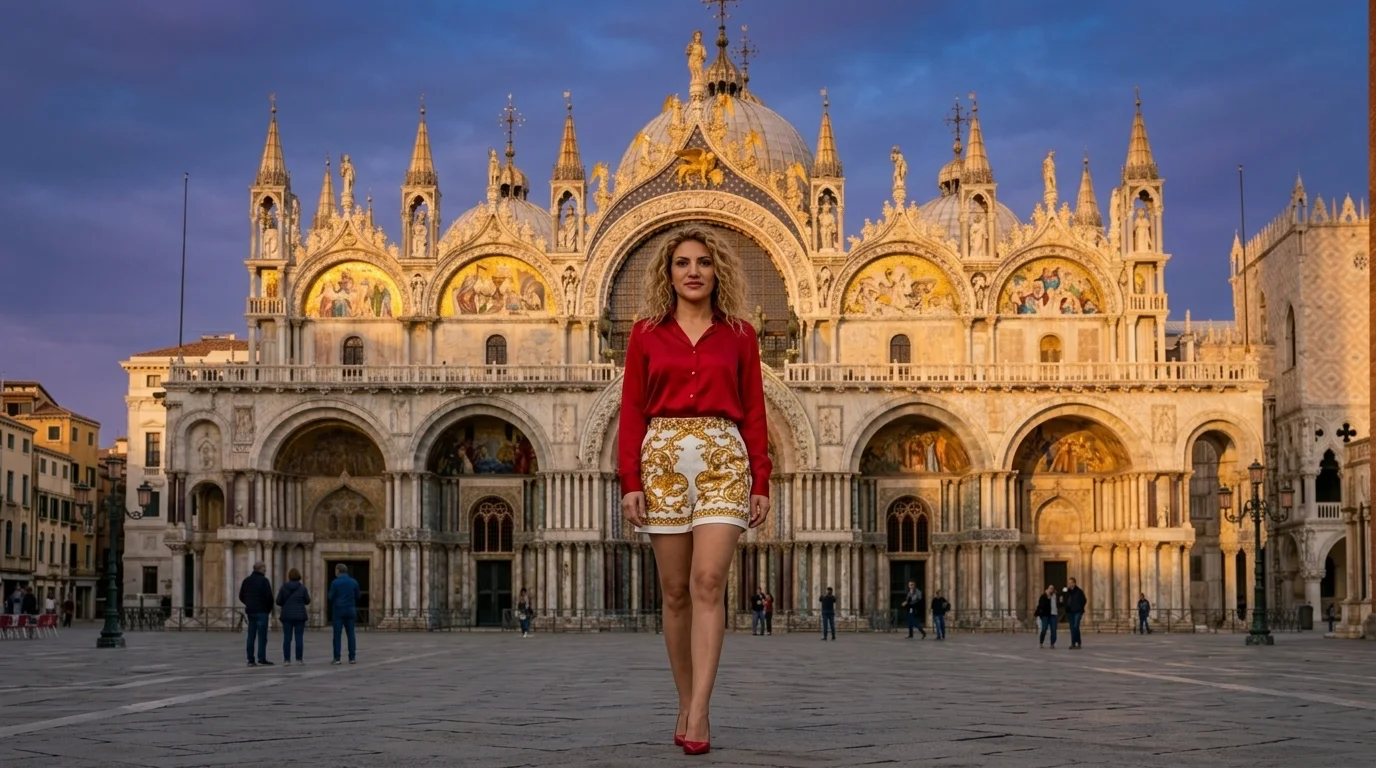
St. Mark's Basilica is one of the finest examples of Byzantine architecture in the world and Venice's most famous landmark. Built in the 11th century to house the relics of St. Mark, the Evangelist, it dazzles visitors with its five elaborate domes, its golden mosaics covering over 8,000 square metres of interior surface, and the famous Pala d'Oro — a jewelled golden altarpiece studded with thousands of gems. The exterior facade is a triumphant blend of Byzantine, Gothic, and Islamic influences accumulated over centuries of Venetian trading power.
Inside, the glittering gold-ground mosaics tell biblical stories in breathtaking detail. The Museo di San Marco on the upper level gives access to the original bronze horses of St. Mark (replicas stand outside) and a spectacular terrace overlooking Piazza San Marco — arguably the best free view in Venice.
Why visit: St. Mark's Basilica is not just a church — it is an overwhelming sensory experience and one of the most beautiful interiors in Europe. The free entry to the main basilica makes it extraordinary value; the paid areas (museum, treasury, Pala d'Oro) add even more depth for those who want it.
Entrance: Main basilica FREE; Museum €7; Treasury €5; Pala d'Oro €5 (2026)
Best time: First thing at opening (9:45 AM) or late afternoon on weekdays
Hours: Mon–Sat 9:45 AM–5:00 PM; Sun 2:00 PM–5:00 PM (hours vary seasonally — check official website)
Doge's Palace (Palazzo Ducale)
Piazza San Marco, 1, 30124 Venezia VE, Italy
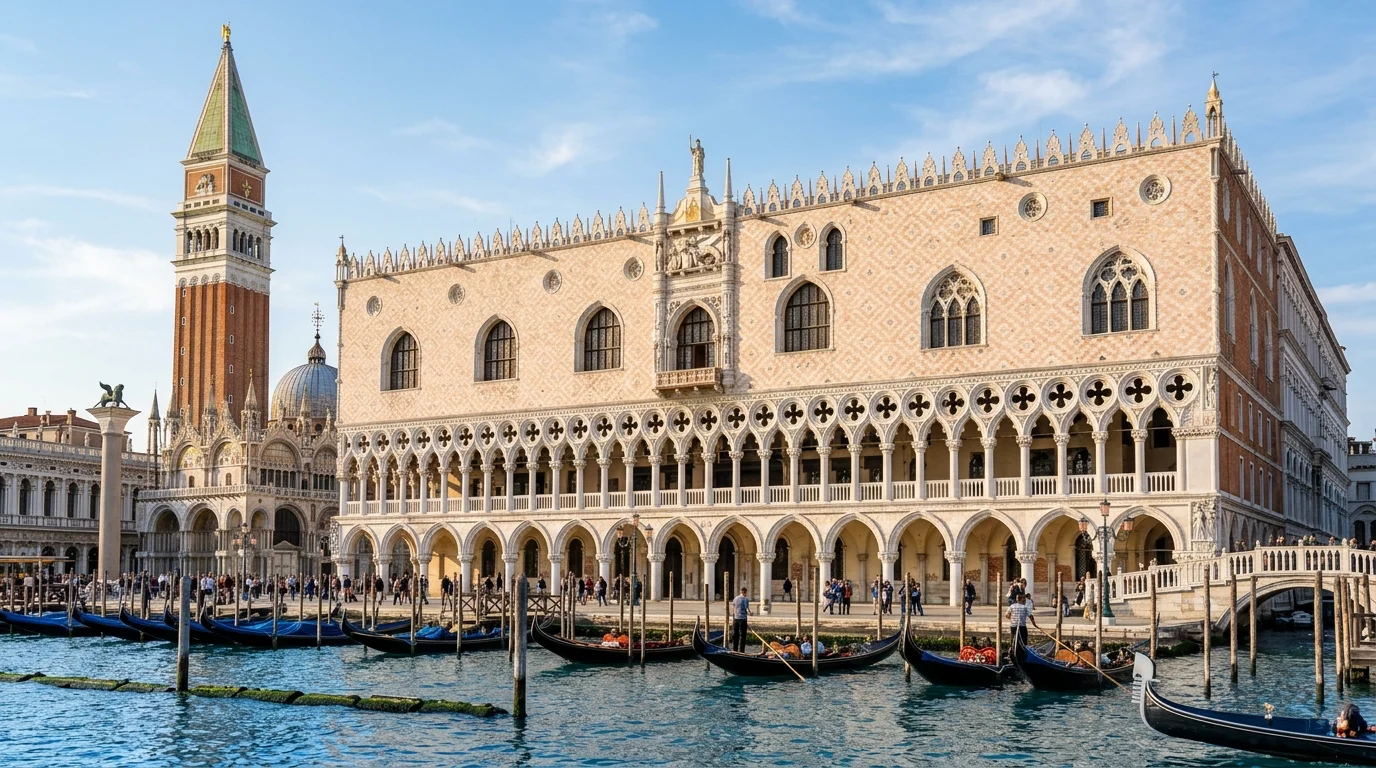
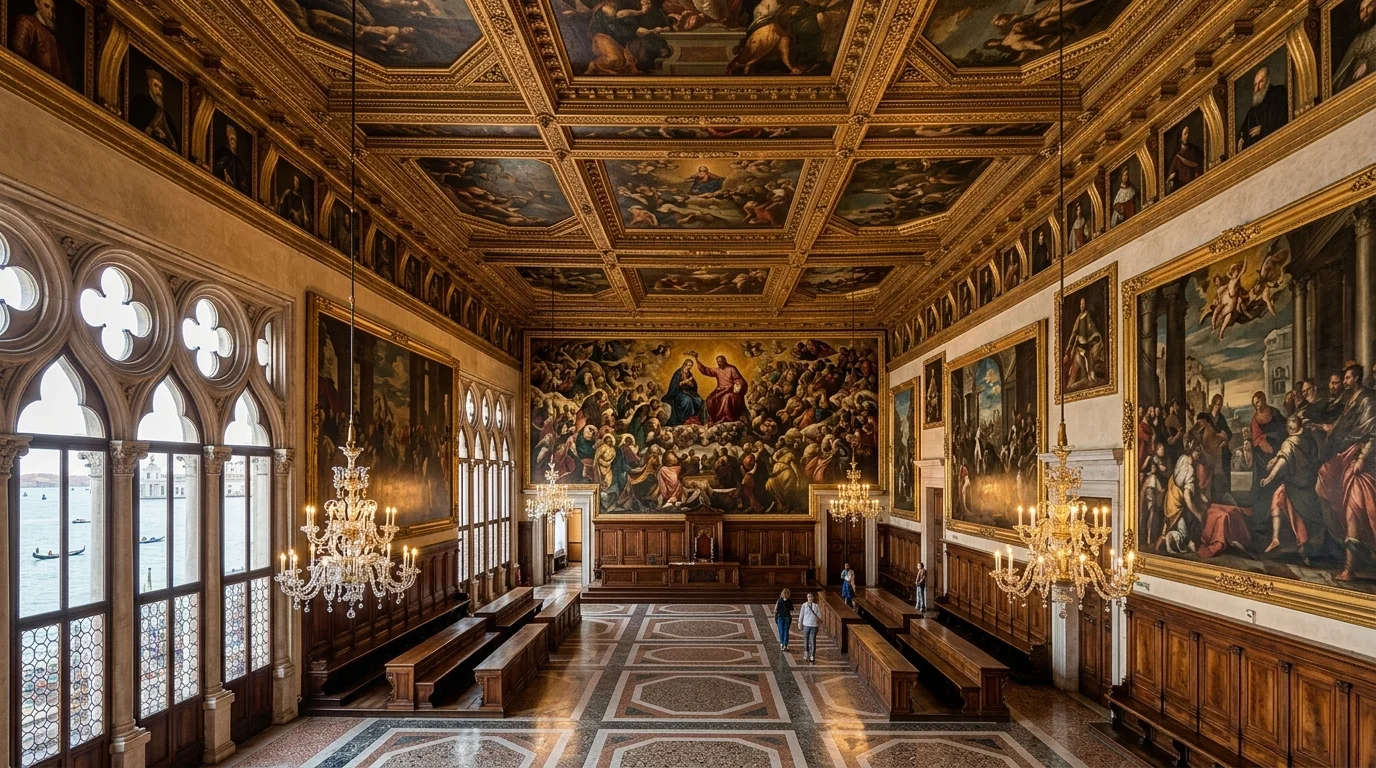
The Doge's Palace is one of the greatest Gothic buildings in the world and the former seat of Venetian government for nearly a thousand years. Its distinctive pink-and-white diamond patterned facade and open loggia arcade are immediately recognisable. Inside, the palace is filled with enormous paintings by Tintoretto, Veronese, and Titian, including Tintoretto's Paradise — one of the largest oil paintings ever made, measuring 7 by 22 metres.
The palace complex includes the private apartments of the Doges (rulers of Venice), lavishly decorated council chambers, the infamous Bridge of Sighs crossing to the New Prisons, and the actual dungeons where Casanova was famously imprisoned. The "Secret Itineraries" tour takes you into rooms normally closed to the public, including the torture chamber and the attic spaces above the council rooms.
Why visit: The Doge's Palace is essential Venice — it tells the entire story of the Venetian Republic's 1,000 years of power through its architecture, art, and rooms. The combination of history, art, and architecture makes it one of Italy's most rewarding museum experiences.
Time needed: 2–3 hours
Entrance: Adults €30; Children (6–14) €15; Under 6 free (2026); Secret Itineraries tour €35 adults
Best time: Weekday mornings; book online to avoid queues
Hours: Daily 9:00 AM–6:00 PM (last entry 5:00 PM); extended hours in summer
The Grand Canal (Canal Grande)
Canal Grande, Venezia VE, Italy (best viewed from Rialto Bridge or Accademia Bridge)
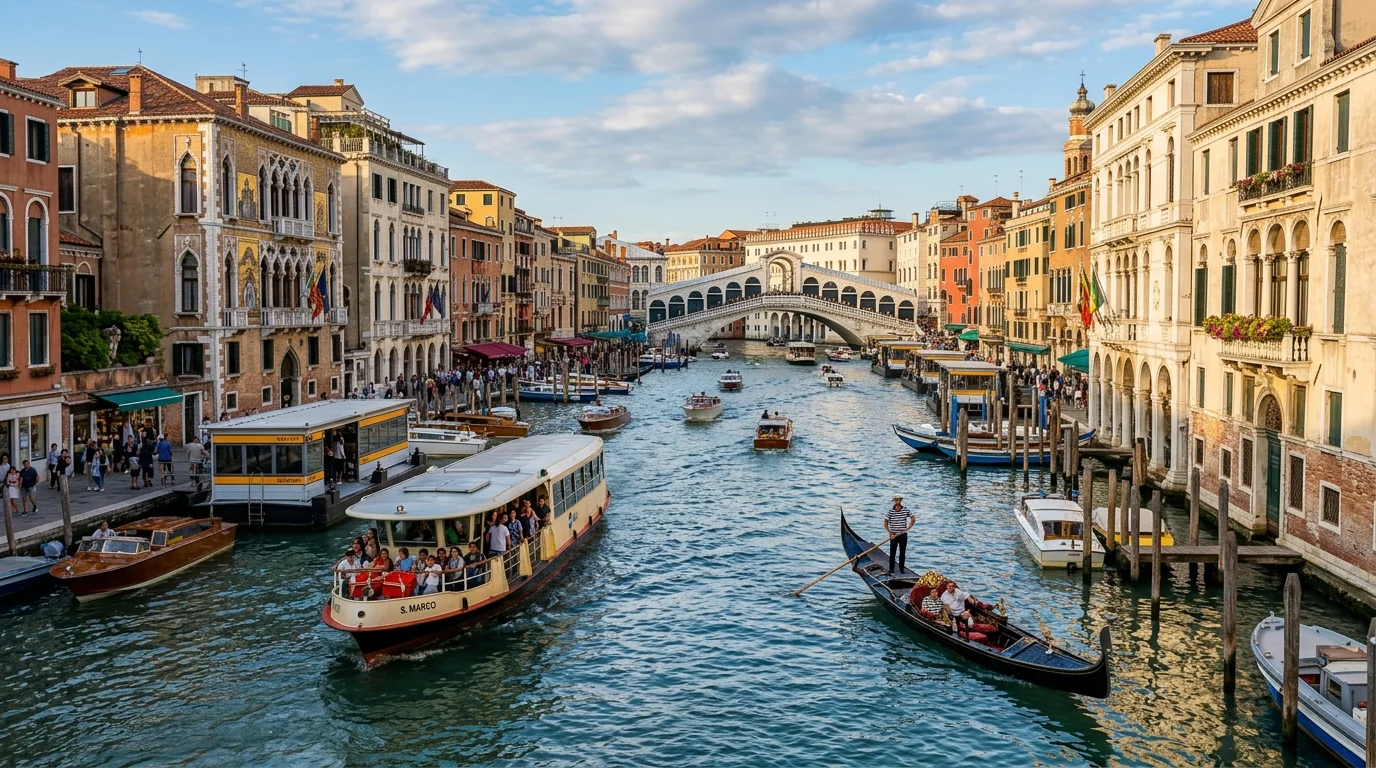
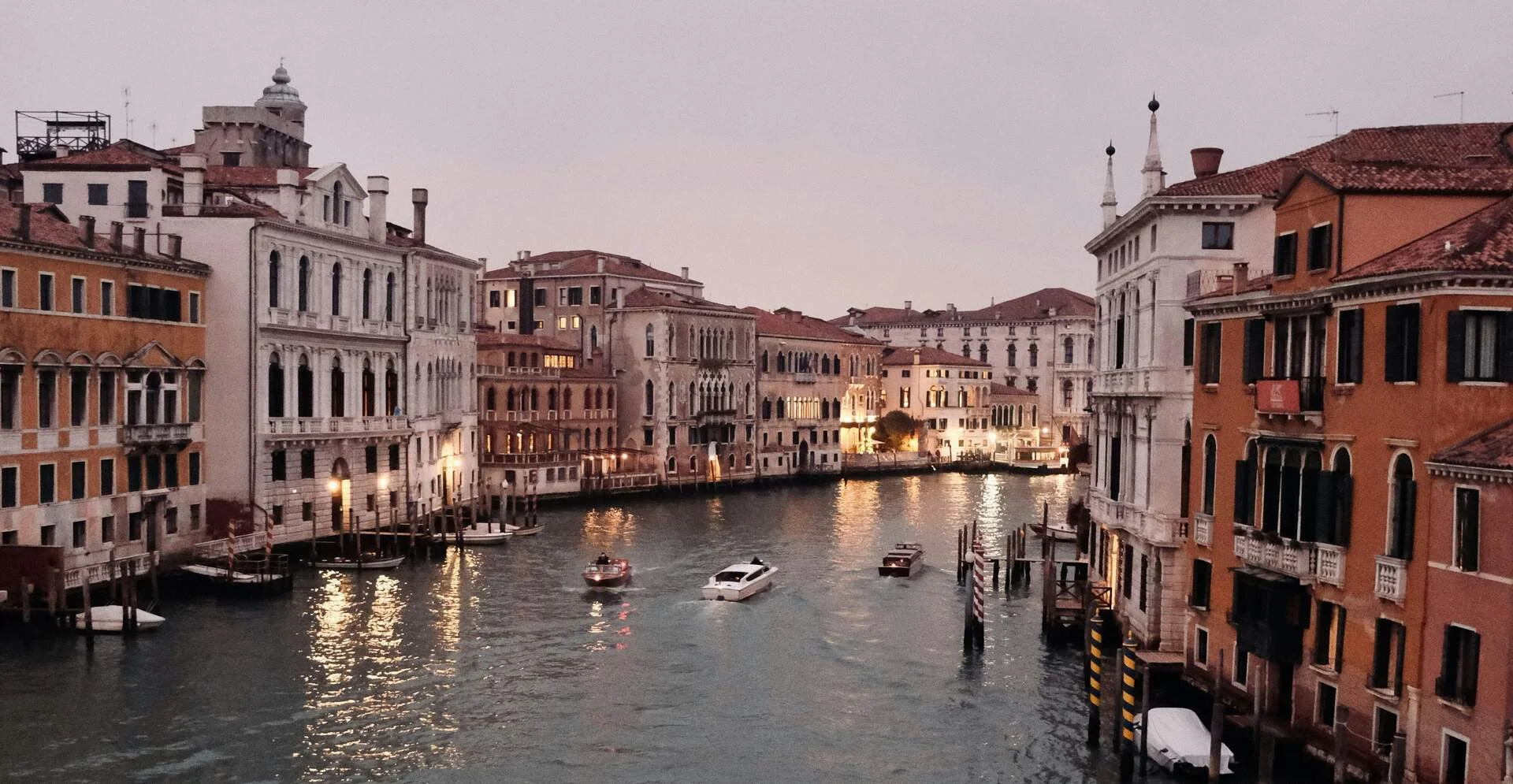
The Grand Canal is Venice's main waterway — a sweeping S-shaped artery stretching 3.8 km through the heart of the city, lined on both sides with over 170 palaces, churches, and historic buildings spanning eight centuries of Venetian architecture. It is essentially an outdoor museum of the most beautiful urban waterfront in the world. Travelling the full length of the Grand Canal on vaporetto Line 1 is one of the great travel experiences in Europe.
Key sights along the canal include the Ca' d'Oro (a stunning Gothic palace now housing an art museum), the Rialto Bridge, the Ca' Rezzonico palace and museum, the Peggy Guggenheim Collection, and the soaring dome of the Santa Maria della Salute church at the canal's southern end.
Why visit: A Grand Canal vaporetto ride is the best introduction to Venice — it is completely free with your vaporetto pass, takes about 45 minutes end-to-end, and delivers a panoramic view of the city's greatest architectural treasures from the water.
Entrance: Free with vaporetto pass (€9.50 single ticket if not)
Best time: Morning for best light; evening for golden hour reflections
Hours: Always accessible; vaporettos run from approximately 5:00 AM to midnight
Rialto Bridge (Ponte di Rialto)
Ponte di Rialto, 30125 Venezia VE, Italy
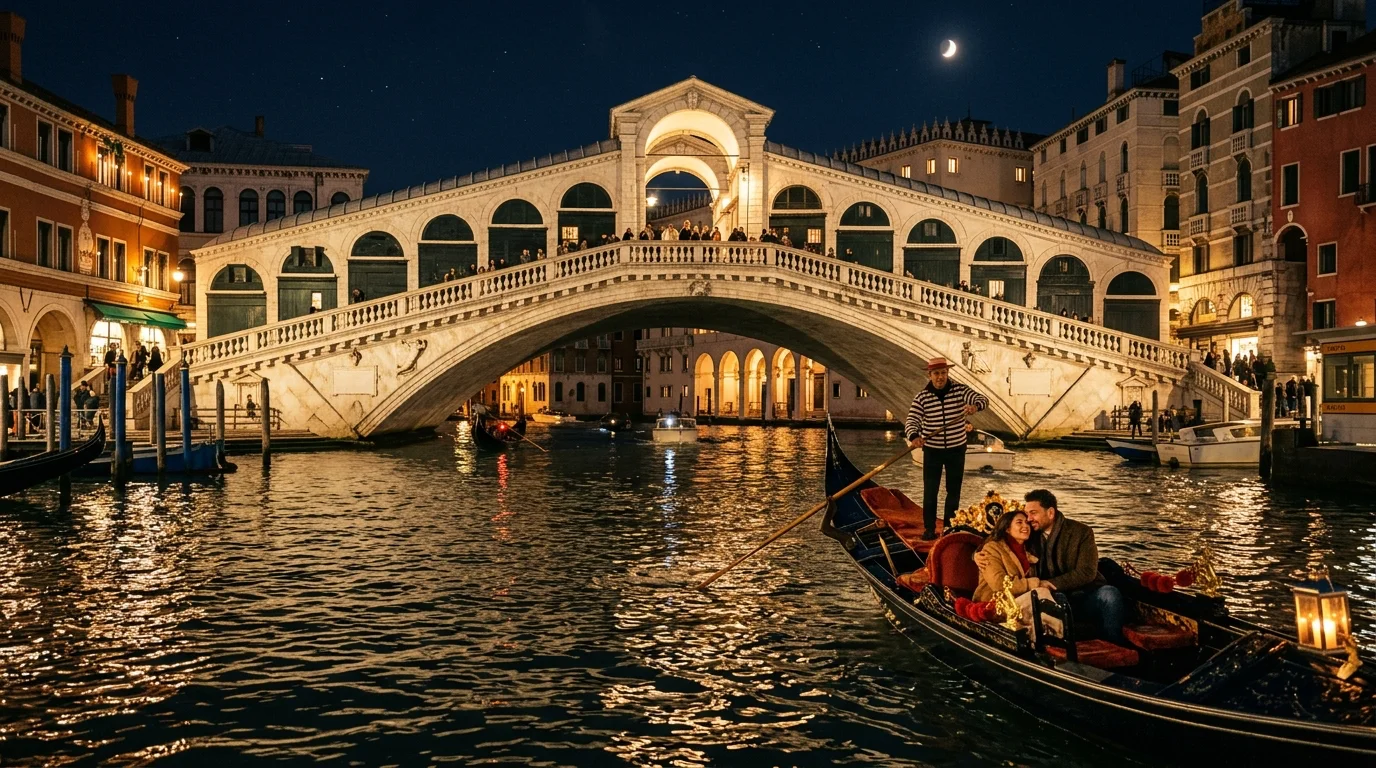
The Rialto Bridge is Venice's most famous and photographed bridge, spanning the Grand Canal near its midpoint. Built between 1588 and 1591 to a design by Antonio da Ponte, the stone arch bridge replaced a series of earlier wooden bridges and was controversial in its day — Michelangelo and Palladio both submitted competing designs that were rejected. Today it is lined with small jewellery and souvenir shops and offers one of the most spectacular views of the Grand Canal.
The Rialto area around the bridge is also Venice's historic market district, home to the Rialto Fish Market (Pescheria) and the outdoor produce market (Erberia), which have been feeding the city since the 11th century.
Why visit: The Rialto Bridge is iconic and the view from the centre of the bridge at sunrise or sunset is breathtaking — completely free and one of the best photo opportunities in Italy.
Entrance: Free
Best time: Sunrise for empty bridge and great photos; market mornings (Tuesday–Saturday, 7:30–11:30 AM)
Hours: Always accessible
Campanile di San Marco (St. Mark's Bell Tower)
Piazza San Marco, 30124 Venezia VE, Italy
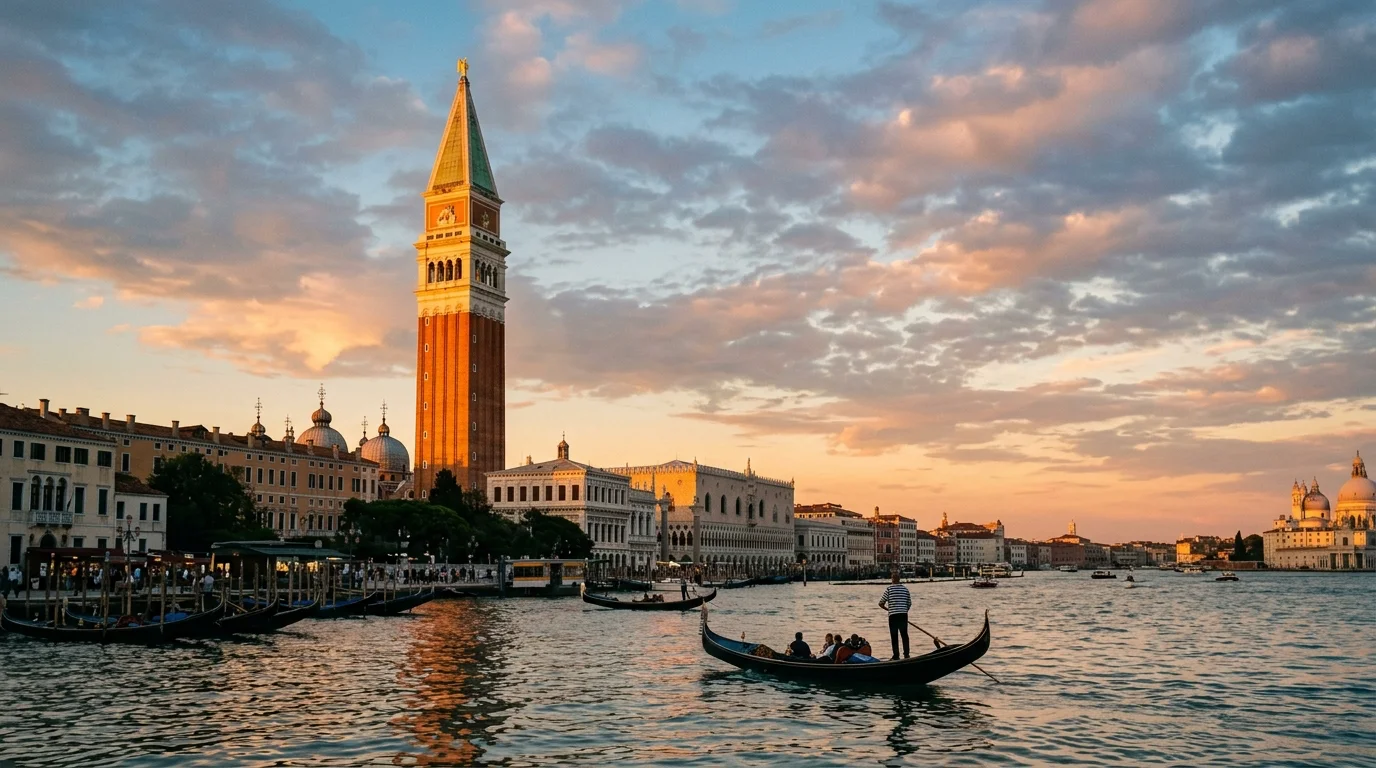
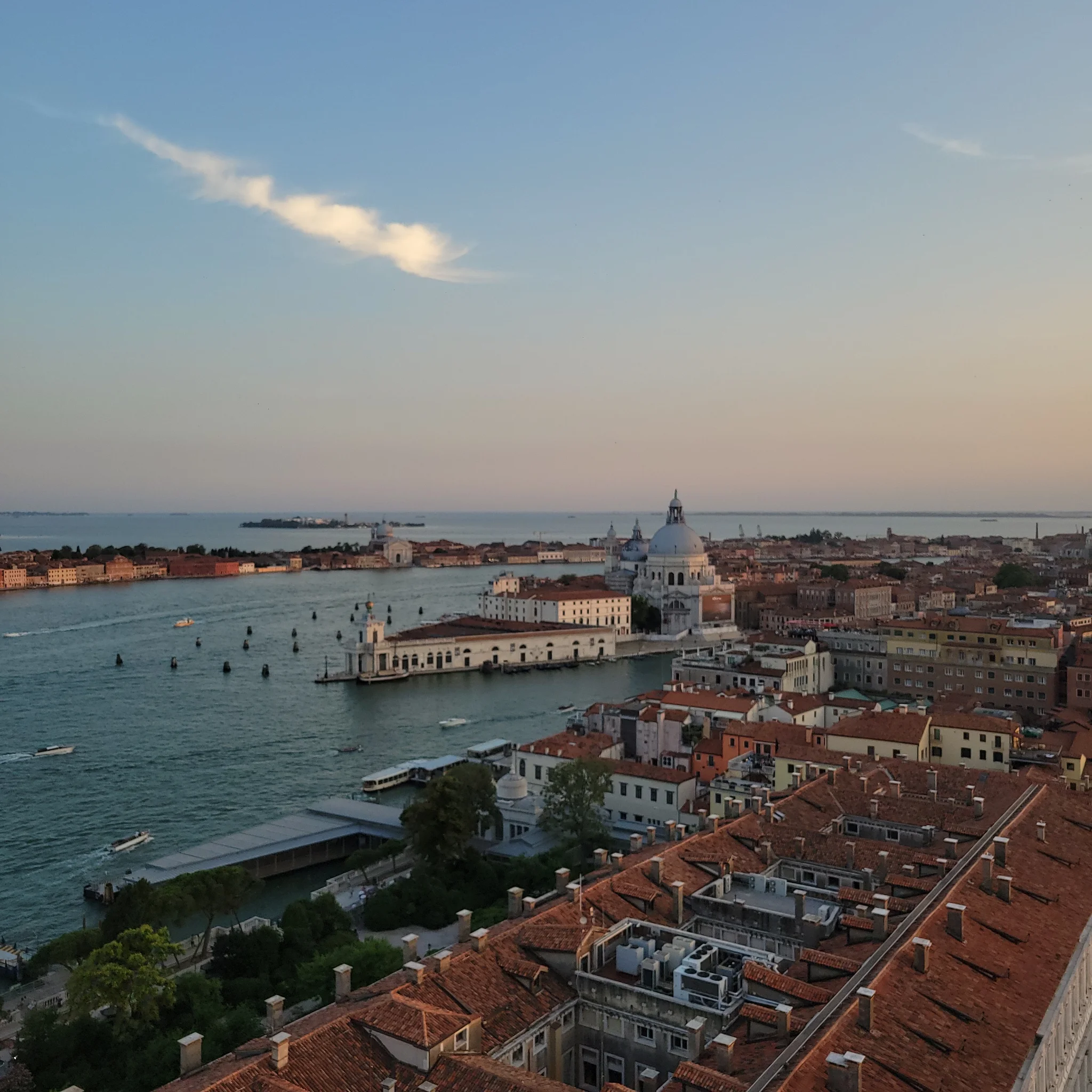
The Campanile is Venice's tallest structure at 98.6 metres and offers the most spectacular 360-degree panoramic view of the entire city, the Venetian Lagoon, and on clear days the distant Dolomite mountains. The current tower is a faithful reconstruction of the original — the medieval Campanile dramatically collapsed in 1902 and was rebuilt and reopened in 1912. You reach the top via a lift (elevator), making it very accessible.
From the top, you can see the patchwork of red-tiled rooftops, the islands of Murano, Burano, and the Lido stretching across the lagoon, and the entire layout of the city's canal network spread below you — a view that makes the geography of Venice suddenly make perfect sense.
Why visit: The Campanile gives the most complete visual overview of Venice of any viewpoint, and the lift makes it effortless. It is the best place to appreciate how extraordinary the city's island setting truly is.
Entrance: Adults €10; Children (under 6) free (2026)
Best time: Clear mornings for Dolomites views; golden hour for the best light on the city
Hours: Daily 9:30 AM–9:00 PM in summer; 9:30 AM–5:30 PM in winter
Gallerie dell'Accademia
Campo della Carità, 1050, 30123 Venezia VE, Italy
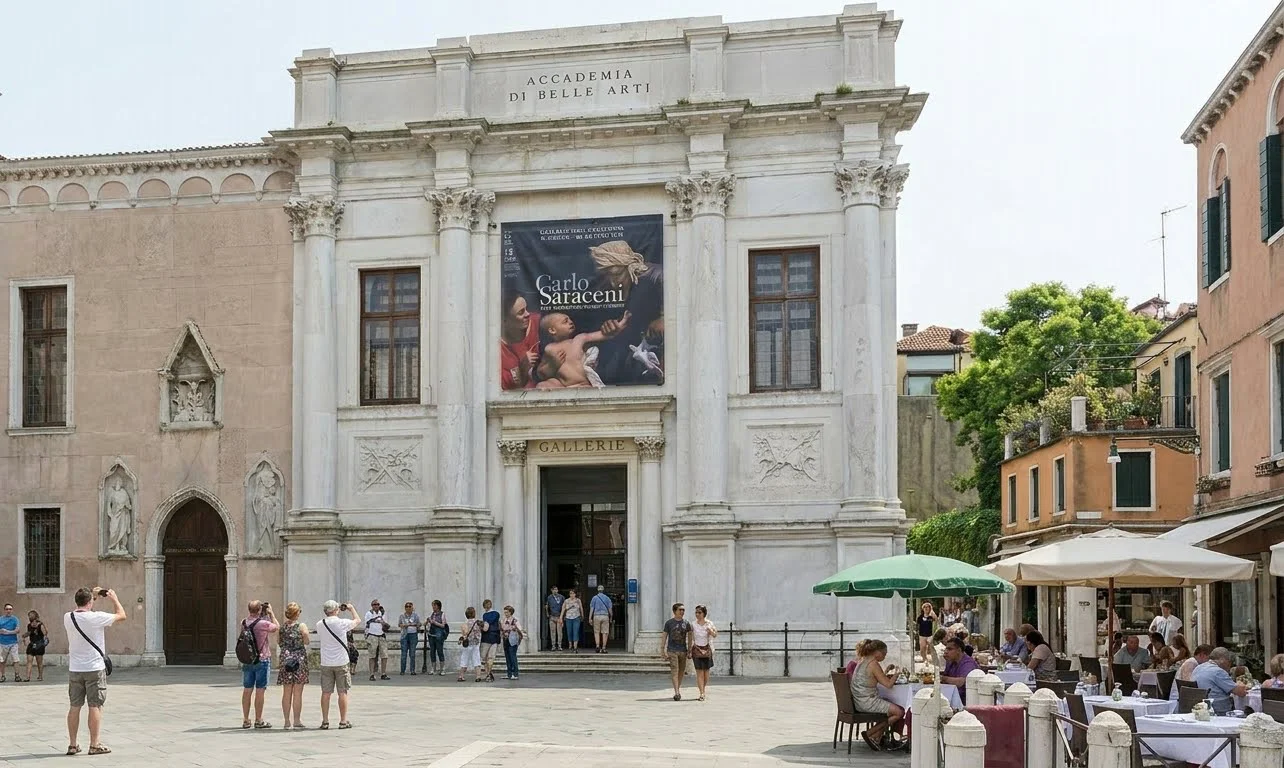
The Gallerie dell'Accademia is Venice's premier art museum and one of Italy's great art collections. Housed in a former church and convent complex, it contains the world's finest collection of Venetian painting from the 14th to the 18th centuries. Works by Giovanni Bellini, Titian, Tintoretto, Veronese, Giorgione, Tiepolo, and Canaletto line the halls in a chronological progression that tells the complete story of Venetian art.
Highlights include Leonardo da Vinci's famous Vitruvian Man drawing (displayed only on special occasions), Giorgione's mysterious The Tempest, Titian's Presentation of the Virgin, and Veronese's vast Feast in the House of Levi. The museum is large but beautifully organised and never as crowded as comparable museums in Rome or Florence.
Why visit: If you want to understand what made Venice the artistic powerhouse it was for 500 years, the Accademia is unmissable. It is quieter and more manageable than the Uffizi in Florence, with equally world-class masterpieces.
Entrance: Adults €15; EU citizens 18–25 €2; Under 18 free (2026)
Best time: Weekday mornings; Tuesdays are typically quietest
Hours: Tuesday–Sunday 8:15 AM–7:15 PM; Monday 8:15 AM–2:00 PM
Peggy Guggenheim Collection
Palazzo Venier dei Leoni, Dorsoduro, 701, 30123 Venezia VE, Italy
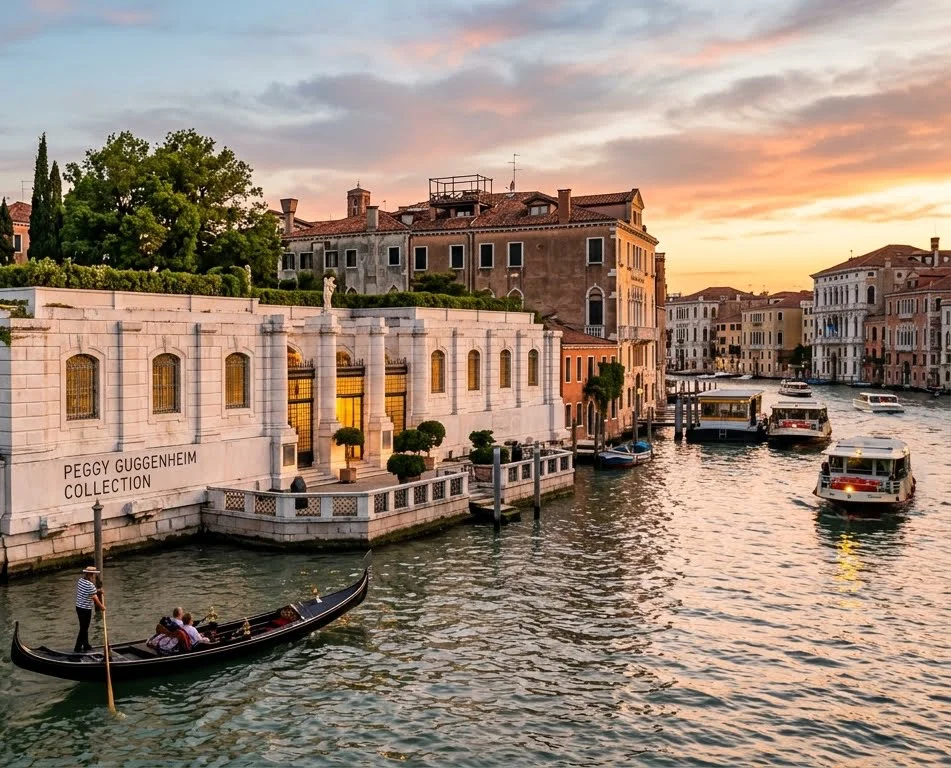
The Peggy Guggenheim Collection is one of Europe's most important museums of modern art, housed in the unfinished Palazzo Venier dei Leoni — famously nicknamed "the palazzo of the non-finito" — directly on the Grand Canal in the Dorsoduro sestiere. American heiress Peggy Guggenheim lived here from 1949 until her death in 1979, assembling one of the finest private collections of 20th-century art ever amassed. Works by Picasso, Dalí, Ernst, Miró, Mondrian, Pollock, Braque, Duchamp, and many others fill the sun-drenched terraces and elegant rooms.
The garden terrace overlooking the Grand Canal is one of Venice's most beautiful spots — calm, sculpted, and filled with important outdoor works including Marino Marini's provocative bronze equestrian figure on the terrace facing the water. Guggenheim's own tomb is in the garden alongside her beloved terriers.
Why visit: A perfect counterpoint to Venice's classical art museums, the Guggenheim offers world-class modernism in a uniquely beautiful setting. The Grand Canal terrace alone is worth the entrance fee.
Entrance: Adults €18; Students €10; Under 10 free (2026)
Best time: Midweek mornings; summer evenings (open until 9 PM on Fridays)
Hours: Wednesday–Monday 10:00 AM–6:00 PM; closed Tuesdays
Island of Murano
Murano, Venezia VE, Italy (vaporetto Line 4.1 or 4.2 from Fondamente Nove or Piazzale Roma)
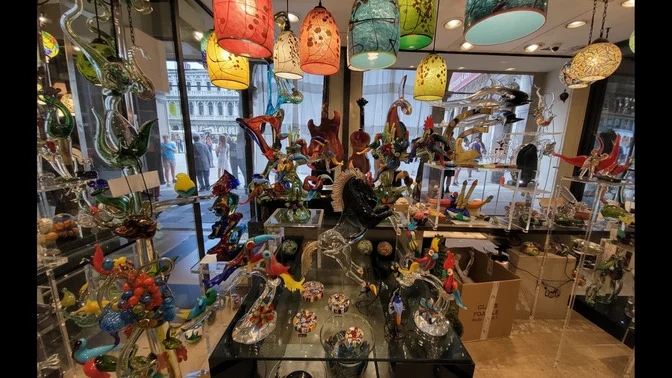
Murano is a cluster of islands about 1.5 km north of Venice, famous worldwide for its extraordinary glass-blowing tradition that dates back to 1291, when the Venetian Republic moved all glassmakers here to prevent fire risk in Venice — and to protect the trade secrets that made Venetian glass the most prized in the world. Today Murano is home to dozens of working glass studios, showrooms, and the excellent Museo del Vetro (Glass Museum) tracing the history of this art form.
The island has a pleasant, genuine village atmosphere with far fewer tourists than Venice proper, plus its own beautiful church — Santa Maria e Donato, with a magnificent 12th-century apse and a stunning mosaic floor even older than St. Mark's. Wandering Murano's canalside fondamente feels like a calmer, older version of Venice.
Why visit: Watching master glassblowers at work is a genuinely mesmerising experience — the studios offer free demonstrations with no obligation to buy. The island also provides a peaceful escape from Venice's peak-season crowds.
Entrance: Island free; Glass Museum adults €10, children €7.50 (2026)
Best time: Weekday mornings when glass studios are most active
Hours: Studios generally open 9:00 AM–5:00 PM daily; Glass Museum Tuesday–Sunday 10:00 AM–6:00 PM
Island of Burano
Burano, Venezia VE, Italy (vaporetto Line 12 from Fondamente Nove — approximately 45 minutes)
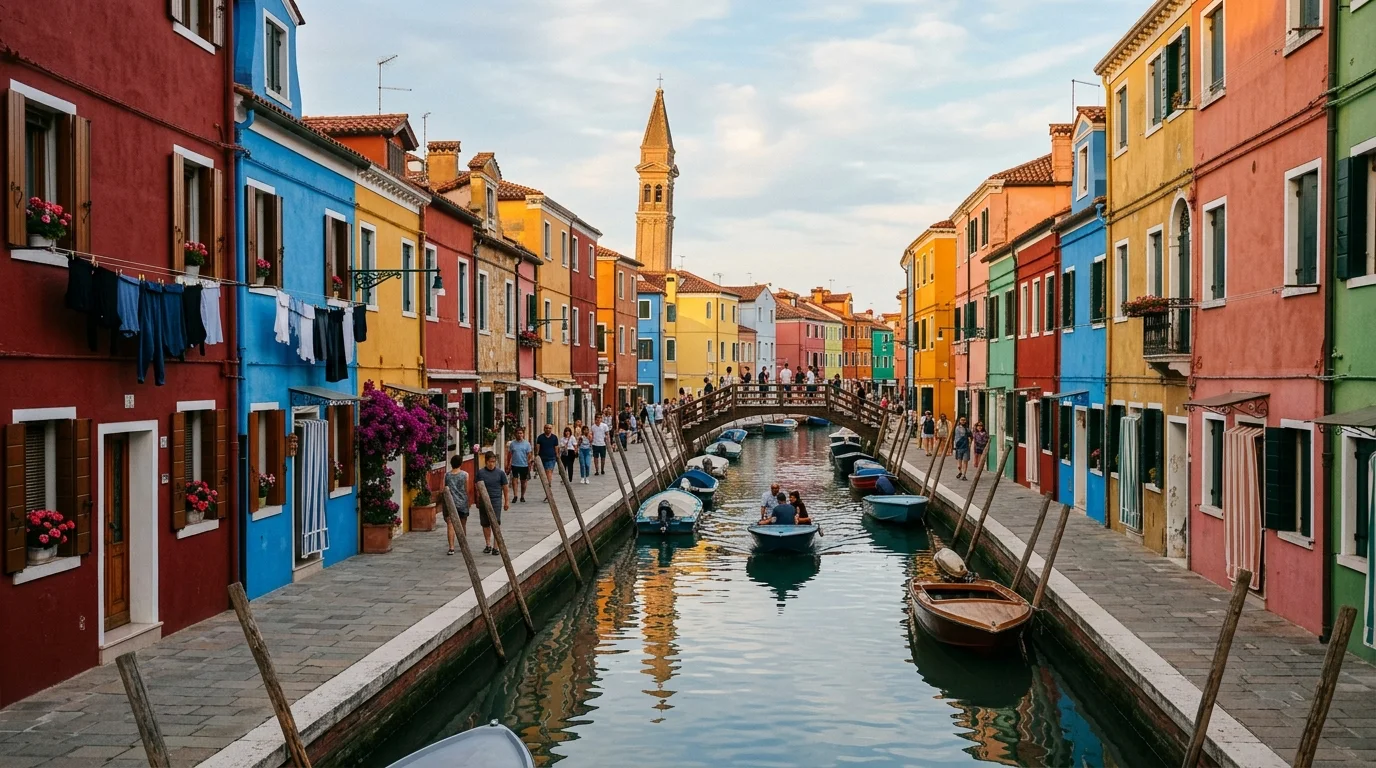
Burano is the most photogenic island in the Venetian Lagoon — a tiny, incredibly colourful fishing village where the houses are painted in vivid candy-bright colours (reportedly so fishermen could identify their homes through the lagoon fog). Every street is a rainbow of pinks, yellows, greens, blues, and reds, with laundry strung between the houses and fishing boats bobbing in the canals. It is one of Italy's most photographed places and absolutely deserves the Instagram hype.
Burano has traditionally been known for its exquisite handmade lace — a tradition you can learn about at the Museo del Merletto (Lace Museum). The island also has excellent restaurants serving fresh lagoon fish, and it is significantly less crowded than Venice even at peak times, with a wonderfully genuine local atmosphere.
Why visit: Burano is simply one of the most visually joyful places in Italy — a half-day trip from Venice that provides extraordinary photography, delicious seafood, and a charming break from city sightseeing.
Entrance: Island free; Lace Museum €5 (2026)
Best time: Midweek mornings before day-tripper groups arrive
Hours: Always accessible; Lace Museum Tuesday–Sunday 10:00 AM–5:00 PM
Santa Maria della Salute Basilica
Dorsoduro, 1b, 30123 Venezia VE, Italy
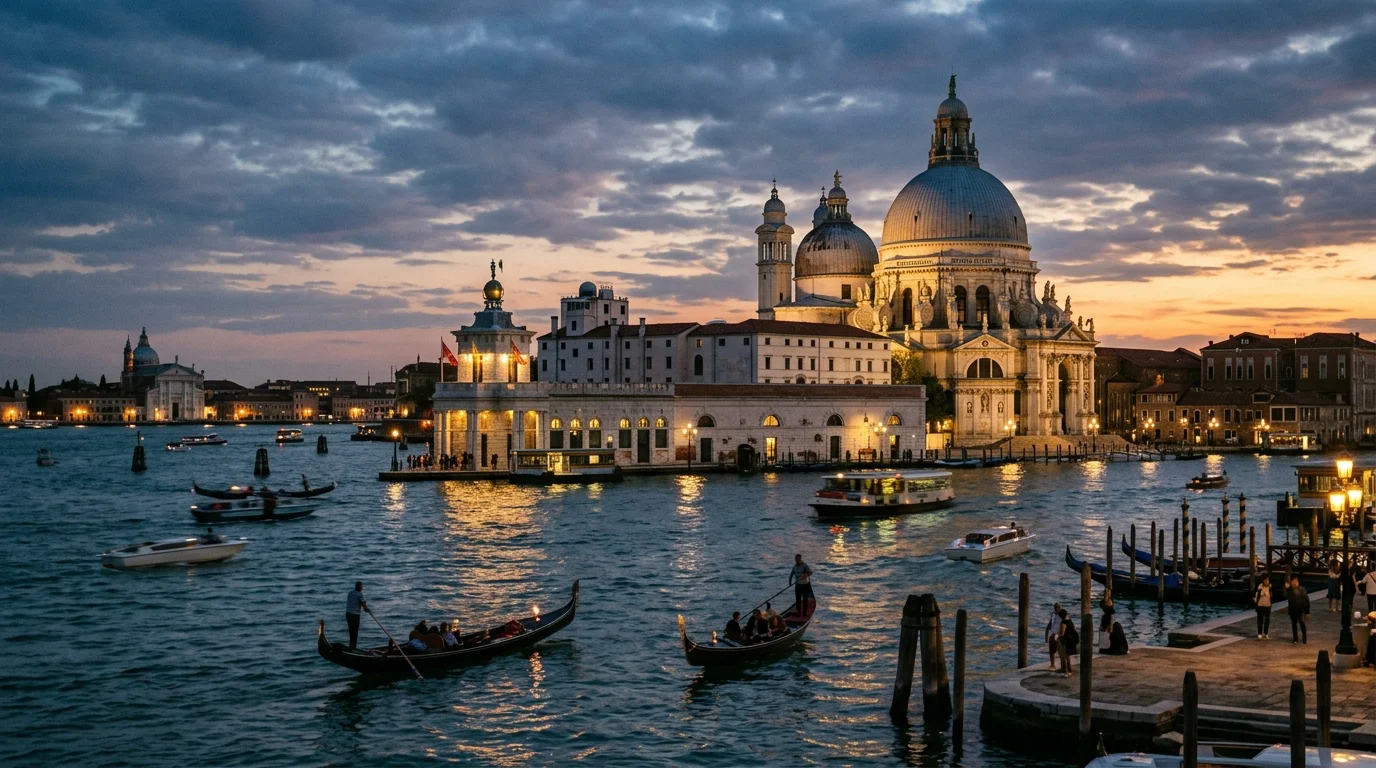
Santa Maria della Salute (Our Lady of Health) is one of Venice's most architecturally significant churches and a defining element of the city's famous skyline. Built between 1631 and 1687 by Baldassare Longhena as a votive offering to the Virgin Mary after Venice survived a devastating plague, the great baroque octagonal church with its enormous dome commands the entrance to the Grand Canal at the Punta della Dogana. From the water, it is one of the most photographed buildings in Europe.
Inside, the church contains important works by Titian including his dramatic ceiling paintings in the sacristy, plus works by Tintoretto. The interior's geometric purity and play of light through the dome is stunning. The church is still an active place of worship, and every November 21st a temporary floating bridge is constructed across the Grand Canal for the Festa della Salute — a centuries-old thanksgiving procession.
Why visit: The Salute is one of the great baroque churches in Europe and its position at the mouth of the Grand Canal makes it a landmark you will photograph dozens of times from boats, bridges, and across the water — but entering it adds a whole new dimension.
Entrance: Church free; Sacristy (with Titian works) €4 (2026)
Best time: Morning for best light through the dome
Hours: Daily 9:00 AM–12:00 PM and 3:00 PM–5:30 PM
Bridge of Sighs (Ponte dei Sospiri)
Ponte dei Sospiri, 30124 Venezia VE, Italy (best viewed from Ponte della Paglia)
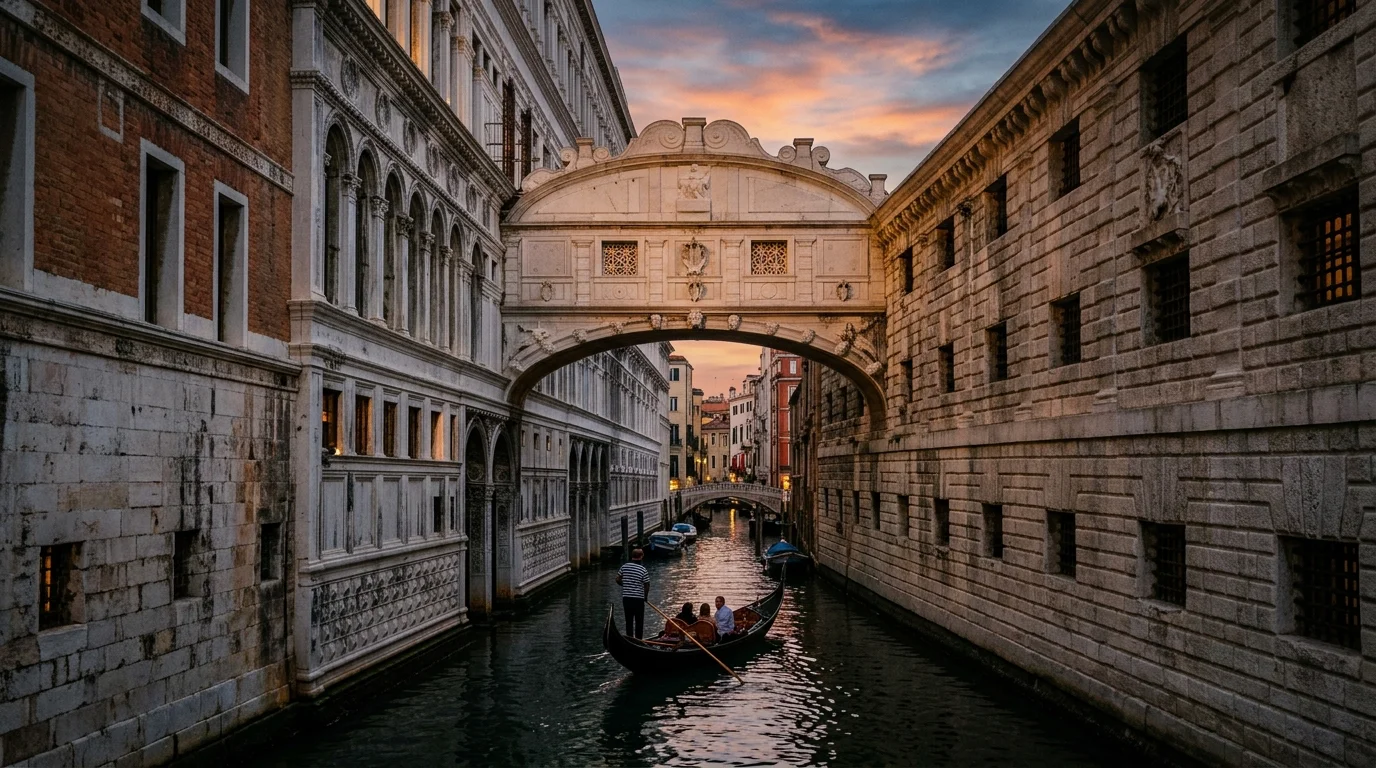
The Bridge of Sighs is one of Venice's most romantically named landmarks — an enclosed white limestone bridge built in 1600 to connect the interrogation rooms of the Doge's Palace to the New Prison. The name was coined by Lord Byron, who wrote that prisoners sighed as they took their last view of beautiful Venice through the bridge's small barred windows before entering the cells. Casanova was among the famous prisoners who crossed it.
The bridge is best viewed and photographed from the nearby Ponte della Paglia (Straw Bridge) — a position that also offers a classic Grand Canal view. While you can walk through the Bridge of Sighs as part of the Doge's Palace tour, the exterior view from the water level is the most evocative experience.
Why visit: The Bridge of Sighs is a quintessential Venice icon with a genuinely fascinating history — and the view from Ponte della Paglia is one of the classic Venice photographs, especially beautiful in early morning mist or at dusk.
Entrance: Free (exterior); included with Doge's Palace ticket (interior)
Best time: Dawn or after 7 PM for crowd-free photography
Hours: Always visible externally
Book your tours and tickets in advance — it saves hours of queuing and often gets you a better price. These two platforms cover different options, so it's worth checking both.
What Are the Best Neighborhoods to Explore in Venice?
Venice's historic centre is divided into six sestieri (districts), each with a distinct character — together they form a city where getting deliberately lost is one of the greatest pleasures.
San Marco
Character: The historic and touristic heart of Venice, centred on Piazza San Marco. Grand, monumental, and often crowded, this is where the iconic landmarks cluster — the Basilica, the Doge's Palace, the Campanile, high-end hotels, and luxury boutiques. The architecture here is Venice at its most spectacular.
What makes it special: Piazza San Marco itself — the only square in Venice grand enough to be called a piazza rather than a campo — is genuinely breathtaking at sunrise before the crowds arrive. The sestiere also contains the Teatro La Fenice opera house and many of Venice's finest restaurants and wine bars.
Best for: First-time visitors, luxury travellers, opera fans, art and architecture enthusiasts
Must-see in this area: Piazza San Marco at dawn, Teatro La Fenice, Calle dei Fabbri for aperitivo bars, the Procuratie arcades, the Museo Correr
How to get there: Vaporetto Line 1 or 2 to San Marco-San Zaccaria or San Marco-Vallaresso stop
Location: Piazza San Marco, 30124 Venezia VE, Italy
Dorsoduro
Character: The most artistically rich sestiere in Venice and a favourite among those who know the city well. Dorsoduro (meaning "hard back" — it sits on firmer ground) is home to the Gallerie dell'Accademia, the Peggy Guggenheim Collection, the Ca' Rezzonico, and the Punta della Dogana contemporary art centre. It has a slightly bohemian, intellectual energy without being overly touristic.
What makes it special: The Zattere promenade along the Giudecca Canal is one of the most pleasant waterfront walks in Venice, perfect for a morning coffee with sun on your face. The neighbourhood around Campo Santa Margherita is Venice's liveliest square for locals — full of students from the nearby university, excellent cicchetti bars, and a relaxed evening scene.
Best for: Art lovers, returning visitors, those who want a local atmosphere, university crowd
Must-see in this area: Campo Santa Margherita, Zattere promenade, Squero di San Trovaso (a working gondola workshop), Gelateria Il Doge
How to get there: Vaporetto Line 1 to Ca' Rezzonico or Accademia stop
Location: Campo Santa Margherita, Dorsoduro, 30123 Venezia VE, Italy
Cannaregio
Character: Venice's most populous sestiere and the most genuinely residential district in the historic centre. Cannaregio stretches from the Santa Lucia train station to the northern edge of the city and contains the world's first Jewish Ghetto (established 1516), excellent local restaurants, and long canal-side walkways (fondamente) that feel miles away from the tourist bustle of San Marco.
What makes it special: The Jewish Ghetto is one of Venice's most historically significant and moving neighbourhoods — compact, quiet, and home to several beautiful synagogues and the Jewish Museum. The Fondamenta della Misericordia and Fondamenta degli Ormesini are the most popular bar-hopping streets in Venice, packed with locals on warm evenings.
Best for: Budget travellers (most affordable accommodation), history enthusiasts, those wanting to escape tourist crowds
Must-see in this area: Jewish Ghetto, Fondamenta della Misericordia, Santa Maria dei Miracoli church, Madonna dell'Orto church
How to get there: Vaporetto Line 1 or 2 to Ferrovia (Santa Lucia station), then walk east; or vaporetto to Guglie or Tre Archi stop
Location: Campo del Ghetto Novo, 2902b, 30121 Venezia VE, Italy
Castello
Character: Venice's largest sestiere, stretching east from St. Mark's to the Arsenale shipyards and beyond. Castello transitions from the tourist bustle near San Marco to genuinely quiet, local neighbourhoods in its eastern reaches — particularly the area around Via Garibaldi, which feels more like a small Italian town than a tourist city.
What makes it special: The Arsenale — Venice's former naval shipyard and the largest pre-industrial complex in the world — is partly accessible during the Biennale. The Giardini della Biennale (Biennale Gardens) offer a rare green escape in a city of stone and water. The waterfront Riva degli Schiavoni promenade provides outstanding views back across the Basin of St. Mark.
Best for: Those wanting quieter streets, Biennale visitors, history enthusiasts (Arsenale), families
Must-see in this area: Riva degli Schiavoni, Via Garibaldi local market, Scuola di San Giorgio degli Schiavoni (Carpaccio paintings), Giardini della Biennale
How to get there: Walk 10–15 minutes east from St. Mark's Square, or vaporetto to Arsenale or Giardini stop
Location: Via Garibaldi, 30122 Venezia VE, Italy
San Polo & Santa Croce
Character: Two adjoining sestieri in the heart of Venice, centred on the Rialto Bridge and market. San Polo is compact and busy, home to the market, the Frari church, and the Scuola Grande di San Rocco. Santa Croce is quieter and less visited, with a pleasant campo neighbourhood feel. Together they form the commercial and crafts heart of historic Venice.
What makes it special: The Rialto Fish Market and produce market in San Polo are the most authentic daily experiences in Venice — a riot of colour, smell, and local activity that has been here since the 11th century. The Frari church in San Polo is arguably the most important Gothic church in Venice and contains Titian's masterpiece altarpiece Assumption of the Virgin.
Best for: Foodies, market lovers, art history enthusiasts, those wanting central but slightly less touristy accommodation
Must-see in this area: Rialto market (mornings only), Santa Maria Gloriosa dei Frari, Scuola Grande di San Rocco, Campo San Polo
How to get there: Vaporetto Line 1 or 2 to Rialto stop, or walk across the Rialto Bridge from the San Marco side
Location: Campo San Polo, 30125 Venezia VE, Italy
What Food Should You Try in Venice?
Venice is famous for its seafood-focused cuisine rooted in the produce of the Adriatic Sea and the Venetian Lagoon, and the quintessential Venetian dining experience is the cicchetti bar crawl — grazing on small snacks with wine, the Venetian answer to tapas. The must-try dishes include sarde in saor, baccalà mantecato, and risotto al nero di seppia.
What Are the Must-Try Local Dishes in Venice?
- Cicchetti — Venice's signature small bites, served at bacari (wine bars) with a glass of ombra (small glass of wine). Think slices of bread topped with salt cod, artichokes, shrimp, or cured meats. The authentic Venetian experience and the most affordable way to eat well in the city.
- Sarde in Saor — One of Venice's oldest dishes: marinated fried sardines with sweet-and-sour onions, raisins, and pine nuts. A preservation technique dating back to Venetian sailors. Rich, complex, and utterly unique to Venice.
- Baccalà Mantecato — Whipped salt cod, slowly beaten with olive oil and garlic until it becomes a smooth, creamy spread served on grilled polenta or bread. A Venetian staple that sounds humble but is sublime when done well.
- Risotto al Nero di Seppia — Black risotto made with cuttlefish ink, giving it a dramatic colour and a deep, briny sea flavour. Genuinely delicious and visually striking — one of Italy's great risotto dishes.
- Bigoli in Salsa — Thick whole-wheat spaghetti with an anchovy-and-onion sauce — a simple, cheap, and historically significant Venetian pasta dish traditionally served on days of abstinence from meat.
- Fritto Misto di Mare — Mixed fried seafood (shrimp, squid, soft-shell crab, tiny fish) — a carnival of Adriatic seafood best eaten fresh at a waterfront trattoria or from a paper cone at a street stall.
- Fegato alla Veneziana — Thinly sliced calf's liver slowly cooked with white onions and white wine until sweet and tender. Venice's most famous meat dish and a revelation for those who think they don't like liver.
- Baicoli with Zabaglione — Thin, dry Venetian biscuits traditionally served with zabaglione (egg yolk, sugar, and Marsala wine cream) for dipping — the classic Venetian dessert combination.
Where Should You Eat in Venice?
Budget-Friendly (Under €15 per meal)
- All'Arco — Calle dell'Ochialer, 436, 30125 San Polo, Venezia — Tiny, legendary bacaro next to the Rialto market, famous for outstanding cicchetti using the freshest market ingredients. Standing room only, cash preferred, open mornings and lunchtime only. Arrive by 10 AM for the best selection.
- Cantina Do Spade — Calle Do Spade, 860, 30125 San Polo, Venezia — One of Venice's oldest bacari, serving generous cicchetti and good house wines. Beloved by locals and in-the-know travellers. Try the baccalà mantecato on polenta.
- Osteria Ae Cravate — Rio Tera San Silvestro, San Polo, Venezia — A friendly, unpretentious local osteria with honest home cooking and excellent value lunch specials. The pasta dishes are superb and prices are genuinely local.
Mid-Range (€25–€55 per meal)
- Osteria alle Testiere — Calle del Mondo Novo, 5801, 30122 Castello, Venezia — Tiny, acclaimed seafood restaurant in Castello with just 22 covers. The menu changes daily based on the catch. Booking essential 1–2 weeks in advance. The raw fish carpaccio and lagoon shrimp pasta are legendary.
- Trattoria da Jonatan — Campo Bandiera e Moro, 3726, 30122 Castello, Venezia — A genuine neighbourhood trattoria in a quiet Castello square with excellent fritto misto and risotto. Popular with local families, relaxed atmosphere, good value wine list.
- Osteria L'Orto dei Mori — Campo dei Mori, 3386, 30121 Cannaregio, Venezia — Lovely osteria in a quiet Cannaregio campo with a creative modern take on Venetian classics and a beautiful small canalside terrace. Very popular — book ahead.
- Anice Stellato — Fondamenta de la Sensa, 3272, 30121 Cannaregio, Venezia — A romantic canal-side restaurant in Cannaregio with outstanding lagoon fish and a loyal local following. The risotto and raw fish antipasti are exceptional. Book at least a week ahead.
Fine Dining (€80+ per meal)
- Glam Venezia — Palazzo Venart, Calle Tron, 1961, 30135 Santa Croce, Venezia — One Venice Michelin star. Chef Donato Ascani's creative tasting menus reinterpret Venetian flavours with contemporary precision. The garden setting is gorgeous. Book well in advance and expect dress code standards.
- Ristorante Quadri — Piazza San Marco, 121, 30124 San Marco, Venezia — Two Michelin stars with arguably the most dramatic location of any fine dining restaurant in Italy — overlooking Piazza San Marco. The cuisine is refined and ambitious. A special occasion destination.
What Are the Dining Customs in Venice?
Meal times: Venetians eat breakfast (colazione) at a bar counter standing up with a coffee and cornetto, typically 7–9 AM. Lunch (pranzo) is 12:30–2:30 PM. Dinner (cena) starts at 7:30–8 PM and runs late. The cicchetti aperitivo hour is typically 5–7:30 PM.
Tipping: Service charges (coperto, usually €2–4 per person) are standard in Venice restaurants — it is a cover charge, not a tip. Tipping beyond this is appreciated but not mandatory. Rounding up or leaving €2–5 for good service is common and welcomed.
Reservations: Essential for mid-range and fine dining restaurants, especially on weekends and in summer. Small bacari and pizzerias rarely take reservations. Book top restaurants 1–2 weeks ahead, or up to a month for the most popular spots.
Dress code: Smart casual for mid-range restaurants; smart or business casual for fine dining. No formal attire is expected except at the very top-end restaurants. Flip-flops and very casual beachwear are frowned upon in traditional trattorie.
What Is the Nightlife Like in Venice?
Venice's nightlife is more about lingering over wine in intimate bars, aperitivo at a canal-side bacaro, and late-night gelato strolls than clubs and DJ sets — and this is precisely what makes it so charming. The scene tends to start early (aperitivo from 5 PM) and wind down by midnight, with the main hotspot areas in Cannaregio and Dorsoduro.
Where Are the Best Areas for Nightlife in Venice?
- Fondamenta della Misericordia, Cannaregio: Fondamenta della Misericordia, 30121 Venezia VE — The most reliably lively bar street in Venice, packed with locals and students from early evening. A string of bacari, wine bars, and informal osterie line the canal fondamente. Best on warm evenings when everyone spills outside.
- Campo Santa Margherita, Dorsoduro: Campo Santa Margherita, 30123 Venezia VE — Venice's most social square, especially beloved by university students. Surrounded by bars, gelaterie, and a small daily market. Very relaxed and genuinely local, with people of all ages sitting on the campo's low walls until late.
- Rialto Area, San Polo: Campo San Polo and surrounding alleys, 30125 Venezia VE — The Rialto bridge area buzzes after dark with a mix of wine bars, cocktail bars, and outdoor seating on the canal. More touristy than Cannaregio but lively and central.
What Are the Best Bars and Clubs in Venice?
Bars & Wine Bars
- El Sbarlefo — Salizada San Pantalon, 3757, 30123 Dorsoduro, Venezia — An outstanding small bacaro with an exceptional wine selection and superb cicchetti. Very popular with Venetians — arrive before 6 PM to guarantee space. The ombra glasses of local Veneto wine are ridiculously affordable.
- Cantina do Mori — Calle Do Mori, 429, 30125 San Polo, Venezia — Venice's oldest bacaro, operating since 1462. Dark, atmospheric, and serving excellent house wines and cicchetti. A mandatory stop on any bacaro crawl — order the francobolli (tiny overstuffed sandwiches).
- Rooftop Bar at Hotel Danieli — Riva degli Schiavoni, 4196, 30122 Castello, Venezia — For a special occasion, the rooftop bar at the legendary Hotel Danieli offers unbeatable views over the Basin of St. Mark and the Doge's Palace at sunset. Expensive but unforgettable.
Clubs & Dancing
- Piccolo Mondo — Accademia, Dorsoduro, 1056, 30123 Venezia — Venice's longest-running club, a tiny underground space near the Accademia bridge with DJs playing mixed music. Very small, very local, open late. Best on weekends.
- Casino di Venezia — Cannaregio, 2040, 30121 Venezia — The world's oldest casino (established 1638), housed in the Ca' Vendramin Calergi palace on the Grand Canal. Dress code required (jacket for men). A unique night out even if you don't gamble.
Live Music & Shows
- Teatro La Fenice — Campo San Fantin, 1965, 30124 San Marco, Venezia — One of Europe's most beautiful opera houses, restored after a devastating 1996 fire. Opera, ballet, and classical concerts run from autumn through spring. Book well ahead for major productions — tickets from €30 to €250+.
- Interpreti Veneziani at San Vidal Church — Campo San Vidal, 2862/b, 30124 San Marco, Venezia — One of the best places to hear Vivaldi performed in Venice — a regular evening concert programme in a beautiful church setting. Tickets approximately €29–€35. A wonderful, more affordable alternative to La Fenice.
What Family-Friendly Evening Entertainment Is Available?
Venice is magical after dark for families — evening gondola rides on quiet canals, gelato from Gelateria Nico on the Zattere or Suso near the Rialto, sunset from the Punta della Dogana terrace, and the live street entertainment often found in Piazza San Marco. The lagoon sunsets from the Zattere or the San Giorgio Maggiore vaporetto stop are genuinely spectacular and completely free.
What and Where Should You Shop in Venice?
The best things to buy in Venice are the products the city has been famous for making for centuries — Murano glass, Burano lace, Carnevale masks, marbled paper, and local food specialties like biscuits and grappa. The top shopping areas include the Mercerie (near St. Mark's), the Rialto market, and the Calle Larga XXII Marzo for luxury brands.
What Are the Best Shopping Districts in Venice?
- Le Mercerie: Merceria dell'Orologio, 30124 San Marco, Venezia — The historic shopping street connecting St. Mark's Square to the Rialto Bridge. Lined with a mix of traditional shops selling masks, glass, and paper goods alongside Italian fashion and jewellery boutiques. Good for souvenir quality without the worst tourist trap prices.
- Calle Larga XXII Marzo: Calle Larga XXII Marzo, 30124 San Marco, Venezia — Venice's luxury shopping street, with Prada, Gucci, Louis Vuitton, Bulgari, and other international brands. If you're looking for Italian designer fashion, this is where to find it.
- Dorsoduro & San Polo backstreets: Calle de la Toletta, 30123 Dorsoduro, Venezia — The quieter back streets of Dorsoduro and San Polo hide Venice's best independent artisan shops — bookbinders, mask-makers, Murano glass artists with no showroom pressure, and small design studios. Shopping here supports genuine local craftspeople.
What Markets Should You Visit in Venice?
Rialto Fish Market (Mercato del Pesce) — Campiello della Pescheria, 30125 San Polo, Venezia — Open Tuesday–Saturday 7:30 AM–12:00 PM. Venice's ancient fish market is a spectacular sensory experience — stalls piled with gleaming Adriatic seafood, crabs, clams, shrimps, and fish you won't recognise. Not a tourist attraction but a working market; visit early for the full atmosphere.
Rialto Produce Market (Erberia) — Campo della Pescheria, 30125 San Polo, Venezia — Adjacent to the fish market, open Monday–Saturday 7:30 AM–1:00 PM. Fresh fruit, vegetables, and local lagoon specialties including artichokes (carciofi) and wild asparagus in spring.
Campo San Barnaba Barge Market — Rio di San Barnaba, Dorsoduro, 30123 Venezia — A floating vegetable barge moored on the canal, selling fresh produce in a picturesque setting beloved by photographers. Open mornings Tuesday–Saturday.
What Should You Buy in Venice?
- Murano Glass — The iconic Venetian souvenir. For authentic pieces, visit glass studios in Murano itself or established Venetian brands like Venini or Barovier & Toso. Prices range from €5 for small items to thousands for art pieces. Avoid mass-produced "Made in China" glass sold in tourist shops — look for "Vetro Artistico Murano" trademark.
- Carnevale Masks — A beautiful souvenir, but quality varies enormously. Hand-crafted papier-mâché masks from artisan studios cost €30–€200+. Mass-produced plastic masks from tourist shops cost €5–€15 and have no lasting value. Visit Ca' Macana (Dorsoduro) or Tragicomica (San Polo) for quality handmade masks.
- Marbled Paper — Venice's traditional decorative paper — swirling, peacock-patterned paper used for bookbinding, stationery, and decorative objects. Beautiful, portable, and uniquely Venetian. Il Papiro and Alberto Valese-Ebru are respected producers.
- Burano Lace — Genuine handmade Burano lace is exquisite but extremely expensive (hours of labour per centimetre). Machine-made lace from China is sold everywhere in Venice — genuine pieces will only be found in Burano at respected shops and will have a price tag that reflects the labour involved.
- Venetian Food Products — Excellent portable gifts include Baicoli biscuits, artisanal grappa from Nonino or Poli, rice from the Po Valley, risotto mixes with squid ink, and locally produced wines (Soave, Bardolino, Amarone from the nearby Veneto region).
- Books & Antique Prints — The Libreria Acqua Alta bookshop (Calle Lunga Santa Maria Formosa, 5176b, Castello) is a Venice institution with gondolas full of secondhand books and quirky decor — a must-visit even if you don't buy. For serious antique prints and maps of Venice, browse the shops around the Rialto.
What Are the Shopping Hours and Customs?
Most shops in Venice open Monday–Saturday 10:00 AM–7:30 PM. Many tourist-oriented shops also open Sunday. Traditional Italian shops sometimes close for a long lunch (1:00–3:30 PM) though this is less common in Venice's tourist areas. Bargaining is not part of Venetian shopping culture in regular shops — prices are fixed. At antique markets, polite negotiation is acceptable.
Can Non-EU Visitors Claim a VAT Tax Refund in Venice?
Yes — if you are a visitor from outside the European Union (including travellers from the USA, Canada, Australia, the UK, and most of Asia and Latin America), you are entitled to a refund of the VAT (Value Added Tax) included in the price of goods you buy in Italy. VAT in Italy is 22% on most goods; 10% on some food items, which means this refund can be significant on high-value purchases like clothing, leather goods, jewellery, designer fashion, and electronics.
How to Claim Your VAT Refund — Step by Step
- Spend at least €154.94 in a single shop in a single day. This is the minimum threshold for a VAT refund claim in Italy. It does not apply across multiple shops — the full amount must be spent in one store.
- Look for the "Tax Free" sign. Participating shops display a "Tax Free Shopping," "Global Blue," or "Planet" logo in the window or at the register.
- Ask for the tax refund form at the register before you pay. Present your non-EU passport — the shop will fill out the form with your details and the purchase amount. Keep the form with your receipt.
- Get the form stamped at customs before you leave. Go to the Customs office at Venice Marco Polo Airport (VCE) before check-in and have an officer stamp your tax refund form. Keep your purchases accessible in hand luggage — do not pack them deep in your checked bags.
- Collect your refund. Hand the stamped form to the Global Blue or Planet desk at the airport. You can receive the refund in cash (minus a processing fee) or as a credit card refund (lower fees, takes a few weeks).
VAT Refund Quick Facts for Venice
- Minimum spend: €154.94 in one shop in one day
- VAT rate on most goods: 22% on most goods; 10% on some food items
- Typical refund after fees: 10–15% of the purchase price
- Refund processors: Global Blue and Planet (formerly Premier Tax Free) at Venice Marco Polo Airport (VCE)
- Who qualifies: Anyone with a non-EU passport who is not a resident of an EU country
- UK visitors: British passport holders qualify since Brexit — the UK is no longer in the EU
- Deadline: Purchases must be exported within 3 months of the date of purchase
- Full guide: VAT Refund in Europe — Complete Guide for Non-EU Travelers
What Festivals and Events Happen in Venice?
Venice's biggest festivals include the world-famous Carnival (February), the Biennale contemporary art and architecture exhibition, the historic Vogalonga rowing regatta, and the spectacular Festa del Redentore fireworks display — together forming one of Europe's richest event calendars in one of its most extraordinary settings.
What Is the Annual Events Calendar for Venice?
| Month | Event Name | Description |
|---|---|---|
| January | Befana celebrations | The Epiphany (January 6) is celebrated with a regatta on the Grand Canal featuring gondoliers dressed as the witch Befana. A charming, very local event with free public viewing. |
| February | Carnevale di Venezia | Venice's most famous event — 10–12 days of masked balls, costume parades, flying angels from the Campanile, outdoor performances in Piazza San Marco, and the Gran Ballo della Maschera. Dates vary annually but typically fall in the two weeks before Lent (2026: Feb 7–17). Book accommodation a full year ahead. |
| March | Su e Zo per i Ponti | A beloved non-competitive walk (literally "up and down the bridges") through Venice's calli and over its 400+ bridges. Open to all, family-friendly, great way to explore the city's hidden corners with thousands of locals. |
| April | Festa di San Marco | Venice's patron saint's day (April 25), coinciding with Italian Liberation Day. Men traditionally give women a single red rosebud. A gondola race along the Grand Canal and outdoor celebrations throughout the city. |
| May | Vogalonga | The "Long Row" — a spectacular non-competitive rowing event in which thousands of boats of all types row a 30-km course through the Venetian Lagoon. Begun in 1975 as a protest against motorboat pollution. An extraordinary spectacle from the canal banks. |
| June | Venice Biennale (Art) | Held in odd-numbered years, the Venice Art Biennale (June–November) is one of the world's most prestigious contemporary art events, filling the Giardini and Arsenale pavilions and dozens of city palaces with international exhibitions. Tickets approximately €25–€30 for main venues. |
| July | Festa del Redentore | One of Venice's most beloved festivals — the third Saturday/Sunday of July. A pontoon bridge is built across the Giudecca Canal. Saturday night sees spectacular fireworks over the lagoon, with Venetians watching from decorated boats. The best fireworks display in Italy. Book canal-side accommodation a year ahead. |
| August | Venice Film Festival | One of the world's oldest and most prestigious film festivals, held at the Lido from late August to early September. Stars, red carpets, and public screenings. Some films are open to the public with tickets purchased in advance — an incredible opportunity to attend a major film festival. |
| September | Regata Storica | The first Sunday of September brings Venice's most spectacular historical regatta — a procession of elaborately decorated historic boats with costumed figures re-enacting the historical welcome of Catherine Cornaro, followed by competitive gondola races. Free to watch from the Grand Canal banks. |
| October | Biennale Architecture | In even-numbered years, the Venice Architecture Biennale fills the same spaces as the art edition (May–November). The 2026 edition runs through the autumn. One of the world's most important architecture events. |
| November | Festa della Salute | November 21st — Venice's annual thanksgiving procession to the Salute basilica across a temporary pontoon bridge over the Grand Canal, commemorating the end of the 1630 plague. Very local, deeply moving event. The smell of roasted chestnuts fills the air. |
| December | Christmas & New Year | Venice at Christmas is magical — significantly quieter than summer, decorated canal bridges and campos, Christmas markets around Campo Santo Stefano, and New Year's Eve celebrations with fireworks over Piazza San Marco at midnight. |
How Do Festivals Affect Hotel Prices and Availability?
Venice Carnival and the Festa del Redentore fireworks weekend are the two events that cause the most dramatic price increases — accommodation can cost 2–3x normal rates and sells out months in advance. The Venice Film Festival raises Lido hotel prices significantly. For Carnival, book accommodation a full year in advance and expect to pay at least 50–100% above standard rates. Shoulder season events like the Regata Storica or Vogalonga have more modest impacts on prices.
Where Should You Stay in Venice?
The best neighbourhood to stay in Venice depends on your priorities — San Marco offers the most central location but at the highest prices and most tourist saturation, while Cannaregio and Dorsoduro provide a more local atmosphere and better value. Staying on the historic island (rather than on the mainland at Mestre) is always recommended for the full Venice experience.
What Are the Best Neighborhoods to Stay in Venice?
| Neighbourhood | Vibe | Price Range (per night, 2026) | Best For |
|---|---|---|---|
| San Marco | Grand, touristy, prestigious | €180–€600+ | Luxury travellers, first-time visitors who want to be central |
| Dorsoduro | Artistic, local, relaxed | €120–€350 | Art lovers, couples, repeat visitors, those seeking local atmosphere |
| Cannaregio | Residential, quiet, authentic | €90–€250 | Budget travellers, families, those who prefer local neighbourhood feel |
| San Polo / Santa Croce | Central, lively, market area | €100–€280 | Foodies, central location seekers, independent travellers |
| Castello | Mixed — touristy near Riva, quiet further east | €100–€320 | Families, those wanting proximity to St. Mark's with slightly lower prices |
| Giudecca Island | Local, peaceful, spectacular views | €150–€400 | Those wanting an escape from crowds with easy vaporetto access |
What Are the Pros and Cons of Each Area?
San Marco:
Pros: Steps from the main sights, finest hotels, elegant atmosphere, easy access to vaporetto stops
Cons: Most expensive area, extremely crowded during the day, tourist-trap restaurants dominate, can feel less "real"
Dorsoduro:
Pros: Best local restaurant and bar scene, two world-class art museums, beautiful canalside walks, quieter than San Marco yet still central
Cons: Fewer budget options, slightly further from the train station (manageable by vaporetto)
Cannaregio:
Pros: Most affordable area, genuine neighbourhood feel, best bacaro and bar scene, close to Santa Lucia station
Cons: Further walk from St. Mark's and main sights (20–25 minutes), less architecturally grand than San Marco
Castello:
Pros: Wide range of price points, quieter eastern sections, good restaurants, easy walk to St. Mark's
Cons: Quality varies hugely across the large sestiere — the Riva degli Schiavoni area is very touristy while the far east is very quiet
How Far in Advance Should You Book in Venice?
Venice has limited accommodation on the historic island, which means availability gets tight quickly. For peak summer (June–August) and Carnival, book at least 4–6 months ahead — ideally earlier for popular properties. Shoulder season (April–May, September–October) warrants booking 2–3 months ahead. For winter visits (November–March, excluding Carnival), 4–6 weeks ahead is usually sufficient. Look for refundable rate options during booking and set price alerts on Booking.com or Hotels.com for the best deals.
What Do You Need to Know Before Visiting Venice?
Here are the essential practical details every visitor to Venice needs to know before arriving — from money and transport passes to cultural customs and safety advice.
Essential Travel Details for Venice
- Currency: Euro (€) — exchange at banks or official exchange offices; avoid airport exchange booths for poor rates
- Credit Cards: Widely accepted in hotels, restaurants, and shops; some small bacari and market stalls are cash-only
- ATMs: Available throughout Venice; use bank-affiliated ATMs to avoid high private ATM fees; typical €5–€8 fee per withdrawal for non-EU bank cards
- Language: Italian; English is widely spoken in tourist areas, hotels, and restaurants
- Tipping: Not mandatory — service charge (coperto) usually already included. Round up or leave €2–5 for good service at restaurants.
- Electrical Plugs: Type F (European two-pin round) — 230V; US travellers need both a plug adapter and voltage converter for non-dual-voltage devices
- Emergency Number: 112 (unified European emergency number for police, ambulance, fire)
- Tourist Police: +39 041 274 7070
- SIM Cards: Purchase at airport or TIM/Vodafone/WindTre stores in Venice; tourist SIMs with 10GB data from approximately €10–€15 for 30 days
- WiFi: Good quality WiFi in almost all hotels; free public WiFi available through "VeneziaConnessa" in parts of the historic centre
- Tap Water: Perfectly safe to drink — Venice's tap water comes from mainland sources and is excellent quality. Save money and plastic by refilling your bottle at the city's public drinking fountains (fontanelle).
Skip the airport queue — order your eSIM before you travel and activate it the moment you land. Prices and data allowances vary, so it pays to compare providers.
How Much Does It Cost to Visit Venice?
| Budget Type | Daily Cost (2026) | What's Included |
|---|---|---|
| Budget Traveller | €80–€130/day | Hostel dorm or budget B&B, cicchetti and pizza meals, 24-hr vaporetto pass, 1 paid attraction per day |
| Mid-Range Traveller | €180–€320/day | 3-star hotel with canal views, mix of restaurant meals and cicchetti, 48-hr vaporetto pass, 2–3 paid attractions, 1 gondola traghetti crossing |
| Luxury Traveller | €500–€1,500+/day | 4–5 star palazzo hotel, fine dining, private water taxi, opera tickets, private gondola, guided tours |
What Are the Most Useful Phrases in Venice?
- Hello: Ciao (informal) / Buongiorno (formal, daytime) / Buonasera (formal, evening)
- Thank you: Grazie
- Please: Per favore
- Excuse me: Scusi (formal) / Permesso (when passing through a crowd)
- How much?: Quanto costa?
- Where is...?: Dov'è...?
- I don't understand: Non capisco
- Help!: Aiuto!
- Bathroom: Il bagno / La toilette
- Check, please: Il conto, per favore
- One Spritz, please: Uno Spritz, per favore — possibly the most useful phrase in Venice
Is Venice Safe for Tourists?
Yes — Venice is one of the safest cities in Italy for tourists, with a very low rate of violent crime. The main safety concerns are petty theft (pickpocketing) and tourist scams rather than any serious danger. Venice's car-free nature and compact size mean it is easy to navigate and generally well-lit at night.
Areas to avoid: Venice has no genuinely dangerous areas, but the very quietest parts of Castello and Cannaregio become deserted late at night — standard urban awareness applies.
Common scams: The "free boat to Murano" trick (pressured glass showroom visits); unlicensed gondoliers quoting low prices then inflating mid-ride; overpriced restaurants near major landmarks with pushy touts; people posing as city officials demanding fines for sitting on bridges or steps (not real — call 112 if approached).
Pickpocketing: Moderate risk in crowded areas — Piazza San Marco, the Rialto Bridge, and packed vaporettos are the highest-risk spots. Use a money belt or zip-pocket bag and keep valuables secured, particularly on crowded Line 1 vaporettos in summer.
Solo traveller safety: Venice is excellent for solo travellers of all genders. The city is well-lit, populated throughout the historic centre, and easy to navigate. Women travelling alone report feeling comfortable and safe. Venice is generally LGBT+ friendly and particularly welcoming in the Dorsoduro and Cannaregio areas.
What Are the Cultural Customs in Venice?
- Greetings: Italians greet with two cheek-kisses (right cheek first) among acquaintances; a handshake with strangers. Buongiorno in shops when you enter, Arrivederci when leaving.
- Dress code: Shoulders and knees covered for any church visit — a scarf or lightweight layer is essential. General dress is smart-casual in the city. Swimwear is only acceptable on the Lido beach.
- Photography: Most sites permit photography without flash. Always ask before photographing people. Photographing inside churches during Mass is disrespectful.
- Public behavior: Sitting on the steps of bridges, monuments, or church doorways is technically subject to fines (the city has been enforcing these regulations more actively). Eating while walking is frowned upon in upmarket areas. Keep voices at a reasonable level in residential streets.
- Dining: Don't ask for parmesan on seafood pasta — it's an Italian faux pas. Coffee standing at the bar is cheaper than sitting at a table (service charge applies when seated). Cappuccino is a morning drink — ordering it after noon raises Italian eyebrows.
- Gestures to avoid: The "chin flick" (fingers under chin pushed outward) is rude. Pointing with the index finger is considered impolite — use an open hand instead.
Do You Need a Visa to Visit Venice?
Citizens of the EU, EEA, the USA, UK, Canada, Australia, New Zealand, and most Western countries do not need a visa to visit Italy for stays up to 90 days. From 2025, non-EU visitors travelling to Italy (as part of the Schengen Area) also need to register with the ETIAS (European Travel Information and Authorisation System) — an online pre-travel registration costing approximately €7. Check the official ETIAS website or your country's embassy for current requirements, as these can change.
What Health Precautions Should You Take in Venice?
Vaccinations: No special vaccinations required for Venice — standard EU/Western healthcare standards apply. Ensure your routine vaccinations (tetanus, MMR, etc.) are up to date.
Pharmacies: Pharmacies (farmacie) are common throughout Venice and open regular business hours. A rotating 24-hour pharmacy is always on duty — the address is posted in all pharmacy windows.
Hospitals: Ospedale Civile di Venezia (Venice Civil Hospital, Campo Santi Giovanni e Paolo, 6777, 30122 Castello) is the main hospital serving the historic island. EU citizens with a European Health Insurance Card (EHIC) receive treatment at the same cost as Italian citizens. Non-EU visitors should have comprehensive travel insurance.
Common health issues: Heat exhaustion in summer (Venice is humid in July–August — carry water constantly); blisters from extensive walking on uneven stone surfaces (good walking shoes are essential); traveller's diarrhoea is rare given Venice's high food safety standards.
Do You Need Travel Insurance for Venice?
Yes — and you should buy it before you board your flight, not after. Travel insurance covers the situations that can turn a great trip into a financial disaster: a medical emergency (a single ambulance ride and hospital stay in Europe can cost €3,000–€10,000 without coverage), a cancelled or delayed flight, lost or stolen baggage, or a last-minute trip cancellation. EU citizens with an EHIC or GHIC card receive reciprocal state healthcare, but this does not cover repatriation, trip cancellation, or lost luggage — a full travel policy fills those gaps. Non-EU travellers have no state coverage at all and should never visit without insurance.
Choosing the right policy matters — coverage limits, exclusions, and pre-existing condition terms vary significantly between providers. Read our full guide before you buy: Best Travel Insurance for Europe — Honest Comparison for 2026.
Travel insurance is strongly recommended for Venice — an unexpected medical bill, flight cancellation, or lost luggage can cost far more than the policy. Get covered before you go.
What Are Your Rights If Your Flight to Venice Is Delayed or Cancelled?
Under EU Regulation 261/2004, if your flight to or from Venice is delayed by more than 3 hours or cancelled without sufficient notice, you are entitled to compensation of up to €600 per passenger — regardless of which airline you flew with, and regardless of how long ago it happened (claims can go back up to 6 years in some countries). This applies to all flights departing from an EU airport, and all flights arriving into an EU airport on an EU-based carrier. Most travellers don't realise they are owed money, and airlines rarely volunteer to pay. A claims service handles everything on your behalf and only charges a fee if they win — so there is no risk to you.
Both services check your eligibility for free with no upfront cost — they only charge a commission if they successfully recover your compensation.
Is Venice Accessible for People with Disabilities?
Venice presents significant accessibility challenges — over 400 bridges with steps, narrow uneven calli, and canal crossings make wheelchair navigation genuinely difficult. However, the city has made progress: many vaporettos are accessible, the main route from the train station through San Marco via the Mercerie is largely step-free (using specifically signed accessible routes), and the Piazza San Marco area is relatively flat. The municipality provides an accessible Venice map at comune.venezia.it and a dedicated helpline (+39 041 274 8144). Book accessible accommodation well in advance as truly step-free hotels are limited.
Is Venice Good for Families with Kids?
Venice is excellent for families — children are fascinated by the canals, gondolas, bridges, and the novelty of a car-free city. Pushchairs are manageable on the accessible routes but tricky on bridges — a baby carrier is more practical for very young children. The islands of Murano (glass-blowing demonstrations are genuinely mesmerising for kids) and Burano (colourful houses) are perfect family half-day trips. Venice's parks and playgrounds are limited but the Giardini della Biennale in Castello provides good green space.
What Are the Best Day Trips from Venice?
The best day trips from Venice include the medieval city of Verona (Romeo and Juliet's home), the university city of Padua with Giotto's extraordinary Scrovegni Chapel, the Venetian villas of the Brenta Riviera, and the wine country of the Prosecco Hills — all within 1–2 hours by train or bus.
Verona
Distance: 115 km west of Venice; 70–90 minutes by Frecciarossa fast train
What to see: Shakespeare's city of Romeo and Juliet is one of northern Italy's most romantic destinations. The massive 1st-century Roman Arena still hosts spectacular open-air opera performances in summer. Juliet's House (Casa di Giulietta) with its famous balcony is a pilgrimage for romantics. The beautiful historic centre — a UNESCO World Heritage site — includes the Piazza delle Erbe, the Castelvecchio castle and museum, and the Ponte Scaligero bridge over the Adige River.
How to get there: Frequent Trenitalia trains from Venice Santa Lucia station to Verona Porta Nuova — 15–20 trains per day, tickets from €15–€25 one-way. Buy at the station or online at trenitalia.com. Local bus or walk from Verona station to the historic centre (15 minutes walking).
Time needed: Full day
Best for: Culture lovers, couples, opera fans (summer especially)
Location: Piazza delle Erbe, 37121 Verona VR, Italy
Padua (Padova)
Distance: 37 km west of Venice; 20–30 minutes by train
What to see: Padua is one of Italy's great university cities (the university dates to 1222, the world's second oldest) and home to what many art historians consider the most important painting cycle in Western art — Giotto's extraordinary frescoes in the Scrovegni Chapel (1305). The chapel must be booked months in advance (only 25 visitors per 15-minute slot). Padua also has a magnificent medieval market square (Piazza delle Erbe and Piazza dei Frutti), the beautiful Basilica of St. Anthony, and the world's oldest botanical garden (Orto Botanico, 1545 — a UNESCO World Heritage site).
How to get there: Trains run every 10–20 minutes from Venice Santa Lucia to Padova Centrale. Journey time: 22–35 minutes. Tickets from €5–€12 one-way. The historic centre is a 20-minute walk or short tram ride from Padova station.
Time needed: Full day; possible half-day for the Scrovegni Chapel and Piazza area
Best for: Art history lovers, architecture enthusiasts, those wanting a genuinely Italian city experience off the tourist trail
Location: Cappella degli Scrovegni, Piazza Eremitani, 8, 35121 Padova PD, Italy
Brenta Riviera & Venetian Villas
Distance: 10–40 km southwest of Venice along the Brenta River
What to see: The Brenta Riviera is a series of magnificent Venetian noble villas built along the Brenta River as summer residences for Venice's wealthy merchant class in the 16th–18th centuries. The most famous, Villa Pisani (now a national museum with a legendary maze garden), and the Palladian Villa Foscari (La Malcontenta) are architectural masterpieces. The traditional way to visit is by Burchiello riverboat from Padua to Venice (or vice versa) — a day-long scenic journey.
How to get there: The SITA bus from Piazzale Roma reaches Dolo and Mira along the Riviera (30–45 minutes, approximately €3). The Burchiello boat runs seasonally (April–October) from Padua — book through Il Burchiello. A rental car gives the most flexibility.
Time needed: Full day
Best for: Architecture and garden enthusiasts, those with a rental car, history lovers
Location: Villa Pisani, Via Doge Pisani, 7, 30031 Stra VE, Italy
Prosecco Hills & Conegliano-Valdobbiadene
Distance: 60–80 km north of Venice; 50–70 minutes by train to Conegliano
What to see: The UNESCO-designated Prosecco Hills of Conegliano and Valdobbiadene are where the world's favourite sparkling wine is born — rolling green hills covered in terraced vineyards, dotted with medieval hilltop towns and family-run cantinas offering tastings. Conegliano itself has a beautiful medieval centre and the Scuola di San Rocco with works by Cima da Conegliano. Wine tours of the hills can be booked through local operators, or simply rent a bike and follow the Strada del Prosecco.
How to get there: Direct trains from Venice Santa Lucia to Conegliano; approximately 8–12 trains per day, 50–70 minutes, from €8–€15 one-way. From Conegliano, local buses or taxis reach the wine country. A rental car is ideal for the hill villages.
Time needed: Full day
Best for: Wine lovers, cyclists, countryside enthusiasts, couples
Location: Piazza Cima, 31015 Conegliano TV, Italy
Dolomites Day Trip
Distance: 130–180 km north of Venice; 2–2.5 hours by car
What to see: The UNESCO World Heritage Dolomites — one of the most spectacular mountain ranges on Earth, with impossibly dramatic sheer rock towers, high alpine meadows, and charming mountain towns. Cortina d'Ampezzo is the most famous resort town, while the Tre Cime di Lavaredo are the iconic jagged peaks. The alpine lakes of Misurina and Lago di Braies are breathtaking. Hiking, cable cars, and mountain biking in summer; skiing in winter.
How to get there: A rental car is essentially required — public transport to the Dolomites is very limited. From Venice, take the A27 motorway north to Belluno then continue to Cortina or other areas. Guided day tours from Venice by coach are available through GetYourGuide and Viator and take the stress out of navigation.
Time needed: Full day minimum; overnight strongly recommended to properly appreciate the mountains
Best for: Outdoor enthusiasts, hikers, photographers, families who want mountain experiences
Location: Cortina d'Ampezzo, 32043 BL, Italy (as a reference point)
Car rental prices vary significantly between agencies — the same car on the same date can differ by 30–50% depending on where you book. Always compare before confirming.
What Are the Hidden Gems and Insider Tips for Venice?
Beyond the main tourist sites, Venice hides some incredible spots most visitors never find — quiet squares, neighbourhood churches with extraordinary art, and viewpoints that reveal the city in an entirely different light.
What Are the Best Hidden Gems in Venice?
- Scuola Grande di San Rocco: Campo San Rocco, 3052, 30125 San Polo, Venezia — Tintoretto spent 23 years covering the entire ceiling and walls of this confraternity building with one of the most extraordinary cycles of Old and New Testament paintings ever created. Less visited than the Accademia, utterly overwhelming. The mirrors provided at the entrance for viewing the ceiling paintings are a thoughtful touch.
- Santa Maria dei Miracoli: Campo dei Miracoli, 30121 Cannaregio, Venezia — Often called the most beautiful small church in Venice — a tiny jewel box of a Renaissance church clad entirely in marble, built between 1481 and 1489. Most tourists walk right past without entering. Free to visit and almost always quiet.
- Squero di San Trovaso: Fondamenta Nani, Dorsoduro, 30123 Venezia — Venice's most visible working gondola workshop, visible across the canal from the Zattere. One of the only remaining squeri (gondola building yards) in Venice, with gondolas in various states of construction visible from the public fondamenta. Best visited in the morning when craftsmen are at work.
- Campo dei Mori: Campo dei Mori, 3412, 30121 Cannaregio, Venezia — A tiny, rarely visited campo in Cannaregio decorated with three 13th-century stone figures of turbaned merchant brothers from the Morosini family. Behind one of them — the one on the corner of the building — Tintoretto lived for the last 20 years of his life. A completely peaceful corner of Venice.
- Libreria Acqua Alta: Calle Lunga Santa Maria Formosa, 5176b, 30122 Castello, Venezia — The world's most eccentric bookshop — books stored in gondolas, bathtubs, and gondola oars serve as shelves. A courtyard staircase made entirely of books leads to a canal view. Worth visiting for the experience even if you don't buy anything. Often has a queue but moves quickly.
- Torcelllo Island: Torcello, Venezia VE, Italy (vaporetto Line 12 from Fondamente Nove via Burano) — The most ancient of the lagoon islands, barely inhabited today, with a hauntingly beautiful Byzantine cathedral (Santa Maria Assunta) containing mosaics as spectacular as those in St. Mark's Basilica — and almost nobody to see them. The silence and emptiness of Torcello after crowded Venice is extraordinary.
- Rio Terà dei Assassini: Rio Terà dei Assassini, San Marco, 30124 Venezia — One of Venice's most evocatively named streets (literally "Alley of the Assassins") — a narrow calle in San Marco that once had a dark reputation but now hides one of Venice's best small bacari and is completely off the tourist radar.
Where Are the Best Photo Spots in Venice?
- Ponte dell'Accademia at Dawn: Ponte dell'Accademia, 30123 Venezia — The wooden Accademia Bridge at sunrise offers the classic view of the Grand Canal towards the Salute Basilica with minimal crowds and beautiful light. Position yourself on the bridge by 6:30 AM in summer for magic-hour photography.
- Rialto Bridge at Sunrise: Ponte di Rialto, 30125 Venezia — Same principle — arrive before 7 AM and the bridge is almost empty, perfectly reflected in the still canal water. The single best free photo in Venice is from the Rialto at dawn.
- Burano from the North End: Fondamenta dei Assassini, Burano, 30012 Venezia — The northern fondamente of Burano offer the classic shot of colourful houses reflected in the canal with fishing boats in the foreground. Best light is early morning or late afternoon (the colours pop in golden light).
- San Giorgio Maggiore from the Zattere: Fondamenta delle Zattere, Dorsoduro, 30123 Venezia — The view from the Zattere waterfront across the Giudecca Canal to Palladio's San Giorgio Maggiore island at sunset is one of the great Venice panoramas. Wide angle lens ideal.
- Ponte dei Tre Archi: Fondamenta di Cannaregio, 30121 Venezia — The three-arched Cannaregio bridge at the western edge of the sestiere is Venice's only multi-arched bridge and dramatically less photographed than the Rialto. The view from either side with the fondamenta receding into the distance is outstanding.
What Do Locals Know That Tourists Don't?
How Can You Save Money in Venice?
The biggest way to save money in Venice is to eat and drink like a local — standing at bacari for cicchetti and ombra wine rather than sitting at tourist restaurants, and using the excellent free sights (churches, canal views, markets) rather than paying for every attraction.
What Are the Best Money-Saving Strategies for Venice?
- Buy a multi-day vaporetto pass — the 72-hour pass (€45) pays for itself after 5 single rides (€9.50 each). Even the 24-hour pass (€25) beats individual tickets if you take 3+ rides.
- Use the public traghetti gondola crossings (€2) instead of a tourist gondola ride (€90). You stand up, cross the Grand Canal, and share the boat with locals — the authentic gondola experience for 2% of the price.
- Visit St. Mark's Basilica for free — the main nave is free admission. Only the separate areas (museum, treasury, Pala d'Oro) charge entry fees.
- Eat breakfast at a bar counter standing up — a coffee and cornetto costs €2–€3 standing versus €8–€12 at a table with table service. This is what Venetians do every morning.
- Shop at the Rialto fish and produce markets for a picnic lunch — fresh bread from a bakery, cheese from a local shop, and fruit from the market for €5–€8 total. The Zattere waterfront or a quiet campo makes a perfect free picnic spot.
- Book attraction tickets online in advance — the Doge's Palace, Accademia, and other major sites often have cheaper online prices and avoid the time cost of queuing (time is money in a city with so much to see).
- Travel off-season — hotel prices in Venice can be 40–60% lower in November through January (excluding Carnival) than in July–August.
- Use Venice's free public drinking fountains (fontanelle) to refill water bottles — saves €2–€3 per bottle throughout the day.
- Take the public ACTV bus (Line 5) from Marco Polo Airport to Piazzale Roma instead of the Alilaguna water bus — saves approximately €7 per person on the airport transfer.
- Look for the "Carte Venezia" discounts at participating museums — several museums offer reduced entry for visitors staying in Venice accommodation. Ask your hotel for the relevant card.
- Visit churches for their art instead of paying museum prices — many of Venice's greatest paintings by Titian, Tintoretto, and Bellini hang in working churches with free or €3 entry, not in expensive museums.
- Eat lunch rather than dinner at good restaurants — many offer a pranzo (lunch) menu with 2 courses plus water for €15–€20 that would cost double in the evening.
What Can You Do for Free in Venice?
- St. Mark's Basilica (main nave): Piazza San Marco, 30124 Venezia — One of the world's great interiors, completely free to enter
- Grand Canal vaporetto ride: With your vaporetto pass, the 45-minute end-to-end ride on Line 1 is the best free sightseeing in Italy
- Rialto Bridge & market: Ponte di Rialto, 30125 Venezia — Free to walk, free to watch the market, spectacular views
- Peggy Guggenheim garden: Open to the public on event days and sometimes during open days — check the museum website for free entry periods
- San Giorgio Maggiore church interior: The church itself (not the tower) is free to enter and contains important works by Tintoretto
- Santa Maria della Salute church: Free main church entry with extraordinary baroque architecture and lagoon position
- Giardini della Biennale: Campo della Tana, 30122 Castello — Beautiful garden park, free outside Biennale exhibition periods
- Getting deliberately lost: The single most rewarding activity in Venice costs nothing — wander away from the main tourist routes and discover the quiet, timeless Venice most visitors never find
Are There Any Discount Cards or Passes Worth Buying?
Musei di Piazza San Marco Pass: €25 adults — covers the Doge's Palace, Museo Correr, Museo Archeologico Nazionale, and Biblioteca Marciana Nazionale. Good value if you plan to visit multiple San Marco museums.
Museum Pass (Musei Civici Veneziani): €30 (valid 6 months) — covers all 11 civic museums including the Doge's Palace, Ca' Rezzonico, Ca' Pesaro, and more. Excellent value for culture-focused visitors staying 4+ days. Buy at the first museum or online at visitmuve.it.
Chorus Pass: €15 — covers 16 of Venice's most important churches that charge small admission fees (€3 each individually). Worthwhile for those planning to visit multiple churches for their art and architecture.
What Are the Budget-Friendly Alternatives?
Skip the expensive gondola (€90) and take the €2 traghetti crossing instead. Skip the Campanile (€10) and get the panoramic view from San Giorgio Maggiore's campanile across the lagoon (same cost, better view of Venice itself, far fewer people). Skip overpriced tourist restaurants and do a cicchetti crawl instead. Skip private tours and use Venice's excellent free audio guide app (Venezia Autentica) for self-guided neighbourhood tours.
What Mistakes Should You Avoid in Venice?
The biggest mistake tourists make in Venice is visiting only as a day-tripper — arriving by cruise ship or train, spending 4 hours fighting crowds around St. Mark's and the Rialto, and leaving without experiencing the city that emerges once the day-trippers are gone.
What Are the Most Common Tourist Mistakes in Venice?
- Mistake: Only visiting Venice as a day trip → Instead: Stay overnight — Venice transforms completely after the day-trippers leave. The early mornings and evenings are when the city is most magical and most local.
- Mistake: Eating at restaurants with photos on the menu or a tout outside → Instead: Any restaurant aggressively seeking your custom is a tourist trap. Walk two calli away from the tourist route and you'll find genuine trattorie with better food at half the price.
- Mistake: Taking a "free boat to Murano" → Instead: Take the public vaporetto (Line 4.1) independently. The "free" boats are sales traps that pressure you into overpriced glass purchases.
- Mistake: Dragging wheeled luggage → Instead: Pack in a backpack or bag you can carry. Venice has hundreds of bridges with steps — wheeled luggage is a nightmare for you and an obstruction for everyone else.
- Mistake: Visiting only the San Marco area → Instead: The best of Venice is in Dorsoduro, Cannaregio, and Castello. San Marco is spectacular but also the most crowded and expensive part of the city.
- Mistake: Not booking major sights in advance → Instead: St. Mark's Basilica, Doge's Palace, Scuola Grande di San Rocco, and the Peggy Guggenheim all benefit from advance booking, especially in summer.
- Mistake: Using Google Maps as your primary navigation tool → Instead: Google Maps works in Venice but is imperfect. Use the yellow wall signs pointing to major landmarks and embrace getting lost as part of the experience.
- Mistake: Visiting in mid-August without preparing for extreme heat and crowds → Instead: If you must visit in August, plan sightseeing for early morning (before 10 AM) and after 5 PM. Take a midday break in your hotel or on the cooler Zattere waterfront.
- Mistake: Not checking the acqua alta forecast in autumn/winter → Instead: Check the Venice flood forecast at comune.venezia.it/maree and pack waterproof boots or cheap waterproof overshoes (sold everywhere in Venice when flooding is predicted).
- Mistake: Paying for a sit-down restaurant lunch when you want a budget meal → Instead: The cicchetti bar is the correct answer for a budget, authentic, and satisfying Venetian midday meal. All'Arco, Cantina Do Mori, and El Sbarlefo are the benchmarks.
- Mistake: Booking a hotel in mainland Mestre to save money → Instead: Unless you are on an extremely tight budget, staying on the historic island is worth the premium. Venice at night — deserted canals, reflections in the water, empty campi — is a completely different and far more special experience than commuting from the mainland.
- Mistake: Wearing flip-flops or sandals for sightseeing → Instead: Venice involves enormous amounts of walking on uneven stone surfaces and over hundreds of bridges. Comfortable, well-fitting walking shoes or trainers are essential — blisters will ruin your trip.
What Is the Best Itinerary for Venice?
The best itinerary depends on your available time. Here are three options — 1 day, 3 days, and 5–7 days — designed to balance the unmissable highlights with genuine local experiences.
What Can You Do in One Day in Venice?
Morning (8:00 AM – 12:30 PM): Start at the Rialto Bridge at 8 AM before the crowds arrive — have your coffee at a bar near the market, then watch the fish market (Pescheria) in full swing until 11 AM. Walk the Mercerie south towards St. Mark's Square (Piazza San Marco). Visit St. Mark's Basilica with your pre-booked timed entry. Climb the Campanile (10:00–11:00 AM) for the city overview. Stroll around the Doge's Palace exterior and the Bridge of Sighs — photograph from Ponte della Paglia.
Afternoon (12:30 PM – 5:30 PM): Lunch at a cicchetti bar (All'Arco or Cantina Do Mori near the Rialto — walk back). Take vaporetto Line 1 from Rialto down the Grand Canal to the Accademia stop — the 20-minute ride gives you the Grand Canal overview from the water. Spend 1.5 hours at the Gallerie dell'Accademia (pre-book). Walk along the Zattere waterfront to the Santa Maria della Salute church (free entry). Catch the sunset from the Punta della Dogana terrace.
Evening (5:30 PM – 10:00 PM): Aperitivo Spritz at El Sbarlefo or a Dorsoduro bacaro (5:30–7:00 PM). Dinner at Osteria L'Orto dei Mori in Cannaregio (book ahead) or at a trattoria in Dorsoduro. Take a final evening walk through the now-quiet alleys of San Marco — Piazza San Marco without the crowds at 9 PM is genuinely magical.
What Is the Perfect 3-Day Itinerary for Venice?
Day 1: San Marco & Dorsoduro — The Grand Sweep
Start early at the Rialto market (8:00 AM), coffee at All'Arco, then take vaporetto Line 1 end-to-end for the Grand Canal overview. Visit St. Mark's Basilica and the Campanile before the crowds peak. Afternoon at the Gallerie dell'Accademia and Peggy Guggenheim Collection. Evening aperitivo on the Zattere and cicchetti dinner in Dorsoduro.
Day 2: Lagoon Islands — Murano, Burano & Torcello
Full day lagoon adventure. Take vaporetto 4.1 from Fondamente Nove to Murano by 9:30 AM — watch a glass-blowing demonstration, visit the Glass Museum, have lunch in Murano. Take Line 12 to Burano in the early afternoon — walk the colourful streets, photograph the canal, and have a coffee. Optional: push on to Torcello (30 more minutes) for the Byzantine mosaics in near-total silence. Return to Venice by vaporetto for sunset drinks at Cannaregio's Fondamenta della Misericordia.
Day 3: Doge's Palace, Hidden Cannaregio & a Final Stroll
Book the Doge's Palace for a morning visit (9:00–11:30 AM) including the Bridge of Sighs. Walk north through San Marco to Cannaregio — explore the Jewish Ghetto, the Santa Maria dei Miracoli church, and the Campo dei Mori. Lunch at a local Cannaregio osteria on Fondamenta della Misericordia. Afternoon at leisure — visit the Scuola Grande di San Rocco (Tintoretto's masterpiece cycle) in San Polo or simply wander without a plan through Castello's quiet eastern neighbourhoods. Final sunset from San Giorgio Maggiore's campanile across the lagoon.
What Is the Best 5–7 Day Itinerary for Venice?
Days 1–3: Follow the 3-day itinerary above, covering the main highlights, the lagoon islands, and a full museum day.
Day 4: Verona Day Trip
Take the morning fast train to Verona (7:30–8:00 AM departure from Santa Lucia). Spend the day exploring the Arena, Juliet's House, Piazza delle Erbe, and the Castelvecchio museum. Dinner in Verona (excellent and better value than Venice) before the last train back by 9 PM.
Day 5: Venice's Hidden Gems & Castello
A day entirely off the tourist trail — morning at the Scuola di San Giorgio degli Schiavoni (Carpaccio's extraordinary narrative paintings), then walk through Via Garibaldi's local market. Afternoon in San Polo at the Scuola Grande di San Rocco and the Frari church. Evening cicchetti crawl through Cannaregio's least-visited fondamente.
Day 6: Padua Day Trip or Venetian Villas
Take the early morning train to Padua (8:00 AM), with a pre-booked timed entry to the Scrovegni Chapel as the centrepiece. Visit the Basilica of St. Anthony, the Piazza dei Frutti market, and the Botanical Garden before the afternoon train back. Or alternatively, spend the day exploring the Brenta Riviera villas by bus if the Palladian architecture appeals more.
Day 7: Revisit Favourites & Departure
A gentle final morning — revisit your favourite campo or canal view, have a long breakfast at your chosen neighbourhood bar, buy food gifts at the Rialto market, and walk a new route to the station or Piazzale Roma. Leave Venice with the unhurried satisfaction of someone who found the real city.
Frequently Asked Questions About Venice
Here are answers to the most common questions about visiting Venice — the practical information every traveller needs before arriving in the world's most extraordinary floating city.
Is Venice safe for tourists?
Yes — Venice is one of the safest cities in Italy and among the safest major tourist destinations in Europe. Violent crime is extremely rare. The main concerns are pickpocketing in crowded areas (Piazza San Marco, packed vaporettos, the Rialto Bridge) and tourist scams like the "free boat to Murano" trap. Use standard urban precautions — keep valuables in a zippered bag, be aware in crowds — and you will have no safety concerns whatsoever.
What is Venice known for?
Venice is known above all for being a city built on water — 118 islands connected by 400 bridges, where gondolas navigate canals instead of cars navigating roads. It is famous for St. Mark's Basilica and the Byzantine gold mosaics inside it, the Doge's Palace, the Venice Carnival festival with its elaborate masks and costumes, world-class art museums including the Gallerie dell'Accademia and the Peggy Guggenheim Collection, Murano glass-blowing, and its extraordinary Gothic and Renaissance architecture.
When is the best time to visit Venice?
The best time to visit Venice is during the shoulder seasons of April–May and September–October. The weather is pleasantly warm (15–22°C), crowds are more manageable than summer, and prices are lower than peak season. Spring is particularly beautiful with clear skies and fewer tourists. Summer (June–August) offers the best weather but also the most intense crowds and highest prices. February Carnival is a spectacular once-in-a-lifetime experience but requires booking accommodation a full year in advance.
How many days do you need in Venice?
Three to four days is ideal for a first visit to Venice — enough to cover the essential highlights (St. Mark's, Doge's Palace, Accademia, a lagoon island day trip), explore a few different neighbourhoods, and experience both the main sights and some of the genuine local atmosphere. Two days is a meaningful minimum for those with limited time. A full week rewards those who want to go deeper, take day trips to Verona or Padua, and truly feel unhurried in the city.
Do I need a visa to visit Venice?
Citizens of the EU, EEA, UK, USA, Canada, Australia, New Zealand, and most Western countries do not need a visa for stays of up to 90 days in Italy. From 2025, most non-EU nationals travelling to the Schengen Area (which includes Italy) need to complete the ETIAS online pre-travel authorisation — a simple online registration costing approximately €7. Always verify current requirements on your country's official government travel website before booking, as regulations can change.
What is the best way to get around Venice?
The best way to get around Venice is on foot — the historic city is entirely car-free and most major sights are within comfortable walking distance once you are oriented. For longer journeys, crossing the city, or reaching the outer islands, the vaporetto (water bus) system operated by ACTV is efficient and affordable. A multi-day vaporetto pass (24-hour €25, 72-hour €45) is essential for most visitors. Gondolas are a wonderful romantic experience but impractical as daily transport at €90 per 30-minute ride.
How much should I budget per day in Venice?
Budget travellers can get by on €80–€130 per day including hostel accommodation, cicchetti meals, a vaporetto pass, and one paid attraction. Mid-range travellers spending on a 3-star hotel, restaurant meals, and several attractions should budget €180–€320 per day. Luxury travellers at 4–5 star hotels with fine dining, private water transport, and premium experiences should budget €500–€1,500+ daily. Venice is expensive by Italian standards but entirely manageable on any budget with smart choices.
What food should I try in Venice?
The essential Venetian food experiences are cicchetti (small bar snacks — the Venetian answer to tapas), sarde in saor (sweet-sour marinated sardines), baccalà mantecato (whipped salt cod on polenta), and risotto al nero di seppia (black cuttlefish ink risotto). For drinks, the Venetian Spritz (Aperol or Campari, Prosecco, soda water, olive) is the quintessential local aperitivo. Try these at any genuine bacaro (wine bar) in the Rialto area or along Cannaregio's canal-side fondamente.
Can I drink tap water in Venice?
Yes — Venice's tap water is perfectly safe to drink and is actually excellent quality, sourced from mainland Italian aquifers. You can confidently refill water bottles at the city's public drinking fountains (fontanelle) found throughout the historic centre. This saves significant money compared to buying bottled water throughout the day.
Do people speak English in Venice?
English is widely spoken in Venice, particularly in hotels, restaurants, tourist attractions, and shops. Most front-line tourism staff speak good to excellent English. In more local bacari, markets, and residential neighbourhoods further from the tourist routes, English proficiency decreases — but Venetians are generally patient and a few words of Italian (grazie, per favore, un caffè) are always appreciated. You will not struggle to communicate as an English speaker anywhere in Venice's tourist areas.
Is Venice good for solo travelers?
Venice is excellent for solo travellers of all backgrounds. The city is extremely safe, easy to navigate, and exceptionally rewarding to explore at your own pace. The bacaro cicchetti culture is particularly solo-friendly — standing at a bar counter with a glass of wine among locals is a natural and social experience. Many of Venice's best experiences — wandering without a plan, stumbling into a beautiful church, following an interesting alley — are actually best done alone. Venice's hostel scene in Cannaregio provides good social opportunities for budget solo travellers.
What should I pack for Venice?
The most important item to pack for Venice is comfortable, well-broken-in walking shoes or trainers — you will walk miles daily on uneven stone surfaces and over hundreds of bridges, and blisters are the number-one complaint of Venice visitors who came unprepared. Pack lightweight layers for variable weather, something to cover shoulders and knees for church visits (a scarf or shawl works perfectly), a compact backpack or day bag (no wheeled luggage within the historic centre), and waterproof footwear or overshoes if visiting October–January when acqua alta (high water flooding) is possible.
Ready to Explore Venice?
Venice is one of those rare places that genuinely exceeds its extraordinary reputation. No photograph, film, or description fully prepares you for the experience of stepping off a vaporetto into a world where cars have been replaced by canals, where every alley leads somewhere unexpected, and where centuries of history, art, and culture are woven into the everyday fabric of a living city. It is improbable, impractical, and absolutely magnificent.
Whether you have one day or one week, whether you arrive in Carnival's euphoric chaos or winter's romantic mist, Venice will leave its mark on you in ways that other cities simply cannot. Book your trip, stay overnight, wander off the tourist map, eat cicchetti at a canal-side bacaro, and let yourself get delightfully lost. Venice rewards exactly this kind of open, curious engagement.
We hope this guide helps you plan the perfect Venice visit. Have questions, updates, or your own Venice discoveries to share? Send us a message — we love hearing from fellow Venice enthusiasts!