Verona Travel Guide: Everything You Need to Know for 2026
Last Updated: March 2026
Your complete guide to visiting the city of Romeo and Juliet — romance, Roman ruins, world-class opera, and incredible Italian food.
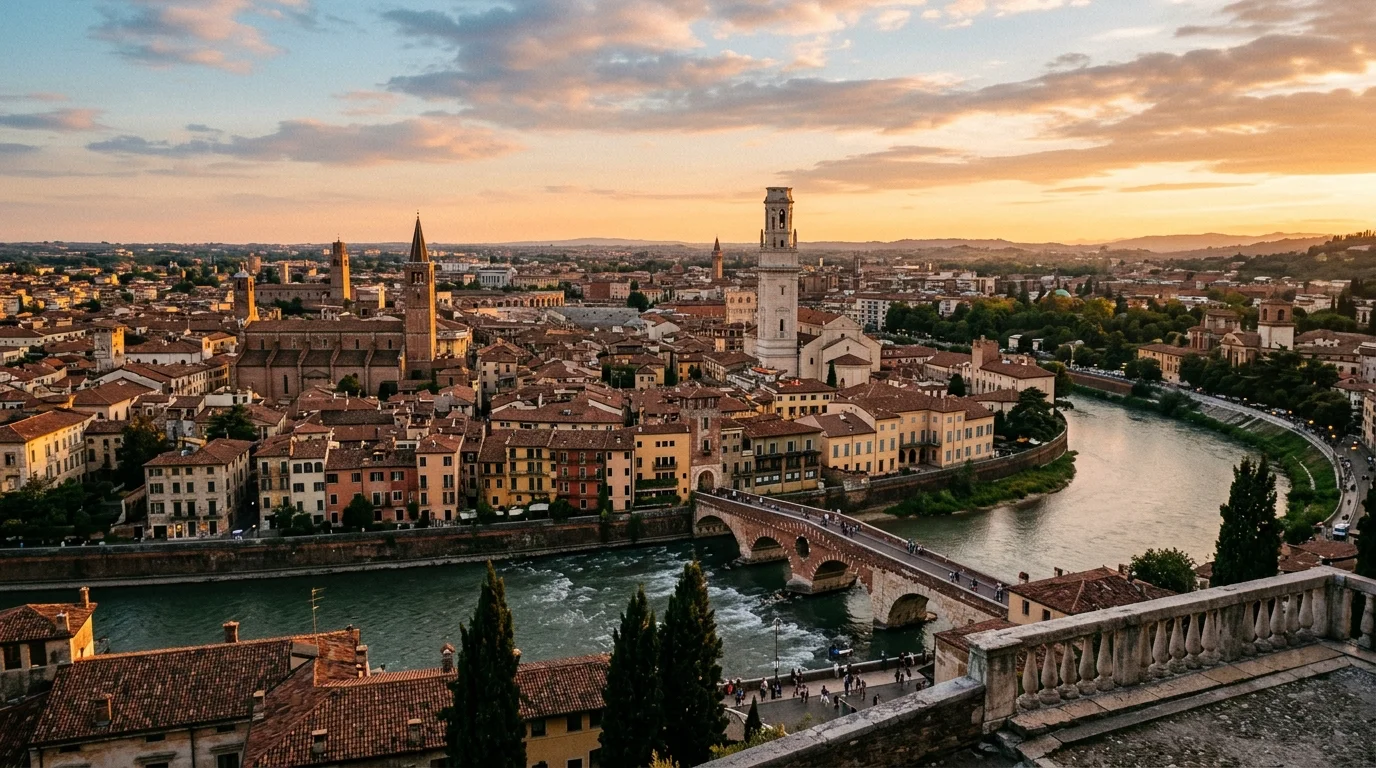
Verona is a beautiful, well-preserved medieval city in the Veneto region of northeastern Italy, located on the Adige River about 120 km west of Venice. It is best known as the setting of Shakespeare's Romeo and Juliet, its magnificent Roman amphitheatre (the Arena di Verona), and its summer opera festival. Visitors come here for its romantic atmosphere, stunning architecture, exceptional wine from the surrounding Valpolicella and Soave regions, and its remarkably compact and walkable historic centre — a UNESCO World Heritage Site since 2000.
Table of Contents
- Verona Overview
- Getting There & Around
- Top Attractions & Landmarks
- Neighborhoods & Districts
- Food & Dining
- Nightlife & Entertainment
- Shopping
- Seasonal Events & Festivals
- Accommodation Recommendations
- Practical Information
- Day Trips & Nearby Destinations
- Insider Tips & Hidden Gems
- Money-Saving Tips
- Common Tourist Mistakes to Avoid
- Sample Itineraries
- Frequently Asked Questions
What Is Verona and Why Should You Visit?
Verona is a captivating northern Italian city of roughly 260,000 people that manages to feel both intimately romantic and grandly historic at the same time. Its ancient streets are lined with pink-marble palaces, medieval towers, vibrant piazzas, and Roman monuments that have been standing for two thousand years. Unlike Venice — just 90 minutes away — Verona is a living city where Italians go about their daily lives among extraordinary architecture, making it feel far more authentic and less like a tourist theme park.
You should visit Verona because it offers a remarkably complete Italian experience in one compact, walkable place. In a single day you can stand inside a 2,000-year-old Roman amphitheatre, visit the balcony that inspired Shakespeare's most famous love story, eat a traditional horse-meat risotto at a family trattoria, and drink a glass of Amarone wine that was produced in the hills just 20 minutes from where you're sitting. Few cities in Italy pack this much history, culture, food, and wine into such an easy-to-navigate package.
The only real challenge in Verona is time — the city rewards slow travellers who linger. Day-trippers from Venice often feel they've only scratched the surface, and many visitors wish they had stayed longer.
When Is the Best Time to Visit Verona?
Peak Season (June–August): Temperatures range from 25°C to 35°C (77°F–95°F), and the city is at its liveliest. This is opera season at the Arena di Verona, one of the most spectacular outdoor performance experiences in the world. Hotels fill up fast and prices spike significantly during opera nights — book at least 3–4 months ahead. Crowds at key sites like Juliet's House can be overwhelming in July and August.
Shoulder Season (April–May and September–October): This is arguably the best time to visit. Temperatures are comfortable (15°C–25°C / 59°F–77°F), crowds are manageable, gardens and parks are beautiful, and wine harvest season in September and October brings special events and fresh tastings in the surrounding countryside. September also catches the tail end of opera season.
Winter (November–March): Verona in winter is quiet, cold (sometimes below freezing), and wonderfully atmospheric — especially around Christmas when the city hosts one of Italy's most beautiful Christmas markets around Piazza Brà. Prices drop considerably and you'll have major attractions almost to yourself. Fog can roll through the city in December and January, adding a gothic, moody quality that Shakespeare himself might have appreciated.
Festival Season: Opera season at the Arena runs June through early September. Vinitaly, one of the world's largest wine fairs, takes place in April. Christmas markets run from late November through early January. The city is particularly lively during Carnevale in February.
How Many Days Do You Need in Verona?
- 1 day: You can hit the main highlights — Arena, Juliet's House, Piazza delle Erbe, and Castelvecchio — but it's rushed. Perfect if you're stopping over en route between Venice and Milan.
- 2–3 days: Ideal for first-time visitors. Enough time to explore all major sights, wander every neighbourhood, take a wine tour, and enjoy meals without rushing.
- 4–5 days: Perfect for slow travellers who want to combine the city with day trips to Lake Garda, the Valpolicella wine region, or the Dolomites. Enough time to feel like a temporary local.
- 1 week+: For wine lovers, opera enthusiasts (catching multiple performances), or those using Verona as a base to explore the entire Veneto region at a leisurely pace.
Quick Facts About Verona
- Population: Approximately 260,000 (city); 920,000 (metro area)
- Language: Italian (English is widely spoken in tourist areas, hotels, and restaurants)
- Currency: Euro (€)
- Time Zone: Central European Time (CET) — UTC+1; CEST (UTC+2) in summer
- Country Code: +39
- Area Code: 045
- Climate: Humid subtropical / continental — hot summers, cold winters, moderate rainfall year-round
- Altitude: 59 metres (194 feet) above sea level
How Do You Get To and Around Verona?
The easiest way to reach Verona is by train — the city sits on the main Milan–Venice high-speed rail line, making it extremely well connected to the rest of Italy. Verona also has its own international airport for direct European flights, and it's easily reached by car via the A4 motorway.
Which Airports Serve Verona?
Verona Villafranca Airport — Aeroporto Valerio Catullo (VRN)
Via dell'Aeroporto, 37060 Villafranca di Verona VR, Italy
Located just 12 km (7.5 miles) southwest of the city centre, this compact and easy-to-navigate airport handles direct flights from London, Amsterdam, Brussels, Barcelona, and many other European cities. Airlines including Ryanair, easyJet, British Airways, and Lufthansa serve it seasonally and year-round. It has basic facilities including a café, car hire desks, and an ATM.
Venice Marco Polo Airport (VCE) is also a popular choice — it's about 115 km away but well connected by train via Venezia Santa Lucia station, making it a viable option if you're flying in from further afield with more route options.
How Do You Get from the Airport to the City Center?
Aerobus Shuttle: The official Aerobus runs between Verona Airport and Verona Porta Nuova train station. Cost: €6 per person one-way (2026). Journey time: approximately 15–20 minutes. Buses run roughly every 20 minutes during peak hours. This is the best-value and most convenient option for most travellers.
Official Taxi: Taxis wait outside arrivals at a designated rank. The fixed fare to the city centre is approximately €25–€35 (2026). Journey time: 15–20 minutes. Only use taxis from the official white taxi rank — never accept offers from unofficial drivers inside the terminal.
Rideshare (Uber): Uber operates in Verona but availability at the airport can be limited. Expect prices similar to or slightly lower than official taxis. Book via the app before exiting arrivals.
Private Transfer: Pre-booked private airport transfers typically cost €40–€55 for a private car (2026) and are worth the extra cost if you're travelling with luggage or as a family. Drivers meet you in arrivals with a name sign.
What Is the Best Way to Get Around Verona?
The best way to get around Verona is on foot — the historic centre is compact, spectacularly beautiful, and almost entirely pedestrianised. Most major sights are within a 15–20 minute walk of each other. For trips to the hills, train station, or outer neighbourhoods, city buses and the occasional taxi cover everything you need.
Public Transport System
Verona's bus network (ATV) is reliable and covers the entire city and surrounding municipalities. For tourists, the key routes are those connecting Porta Nuova train station to the historic centre (Lines 11, 12, 13). Buses run from approximately 5:30 AM to midnight, with reduced frequency on Sundays.
Tickets & Passes:
- Single ride (90 minutes): €1.50 (2026)
- Daily pass: €4.50 (2026)
- Buy tickets at tabacchi (tobacco shops), newsagents, or the ATV office — not on the bus
Taxis & Rideshare
Official white taxis are metered and reliable. The starting fare is €3.20, and most short city trips cost €8–€15 (2026). Taxis can be found at designated ranks at Piazza Brà, Porta Nuova station, and Piazza delle Erbe. You can also call a taxi via the Verona Radiotaxi app or phone (+39 045 532666). Uber also operates in the city.
Walking
Verona's historic centre is one of the most walkable in Italy. The main sights — Arena, Juliet's House, Piazza delle Erbe, Castelvecchio, the Roman Theatre — form a logical walking loop that takes about 2–3 hours at a tourist pace. Streets are almost entirely flat within the city walls, though some of the hillside areas (San Pietro hill, Castel San Pietro) involve steep climbs that are very rewarding.
Walkability Score: 92/100 for the historic centre. The entire UNESCO heritage zone is best explored on foot — cobblestone streets mean you'll want comfortable shoes.
Smart travellers always compare transfer options before booking — prices for the same route can vary by 40% or more. Take 60 seconds to check all options and choose what works best for your arrival.
What Are the Top Attractions and Landmarks in Verona?
Verona's top attractions include one of the best-preserved Roman amphitheatres in the world, Shakespeare's famous balcony, a spectacular medieval castle, beautiful Roman gates, and a warren of magnificent piazzas and churches that would be headline attractions in any other city. Here are the essential sights.
Arena di Verona
Piazza Brà, 1, 37121 Verona VR, Italy
The Arena di Verona is a magnificent Roman amphitheatre built around 30 AD and one of the best-preserved Roman structures in the world. Seating up to 30,000 spectators in its original form, the elliptical structure dominates Piazza Brà in the heart of the city. Almost the entire outer ring was destroyed in a 12th-century earthquake, but the interior seating tiers — the so-called "ala" or wing — survived remarkably intact.
Today the Arena functions as both a museum during the day and a world-famous opera venue in summer. Walking through the ancient tunnels and climbing the pink marble steps is a genuinely awe-inspiring experience. You can feel the weight of 2,000 years of history — gladiatorial combat, medieval jousting tournaments, and decades of world-class opera performances have all taken place here.
Why visit: This is Verona's single must-see sight. Even if you can't attend an opera, the daytime museum visit is extraordinary — you walk inside a functioning, 2,000-year-old building that still packs an audience of 14,000 people for opera performances every summer.
Entrance: Adults €10; reduced €7.50 (students, seniors); free for children under 8 (2026)
Best time: Early morning (opens at 9 AM) to avoid crowds, or attend an evening opera
Hours: Monday 1:30 PM–7:30 PM; Tuesday–Sunday 9:00 AM–7:30 PM (last entry 6:45 PM). During opera season, hours may be reduced on performance days.
Casa di Giulietta (Juliet's House)
Via Cappello, 23, 37121 Verona VR, Italy
Casa di Giulietta is a 13th-century Gothic palazzo that has become one of Italy's most visited romantic landmarks — largely thanks to a bronze statue of Juliet in the courtyard and the famous balcony above it. The house was once owned by the Dal Cappello family (whose name resembles "Capulet"), which inspired the Romeo and Juliet connection. The courtyard walls are covered floor-to-ceiling in love notes, padlocks, and chewing gum left by romantic visitors from around the world.
The interior can be visited as a small museum, decorated in 14th-century style with exhibits about the Shakespeare legend and Verona's place in popular culture. The famous balcony — small but undeniably photogenic — can be accessed from inside the museum.
Why visit: The romantic symbolism and extraordinary atmosphere make this worth visiting even for those who know the Shakespeare connection is largely invented. Just be prepared for significant crowds during peak season.
Entrance: Courtyard free; Museum: Adults €6; reduced €4.50 (2026)
Best time: First thing in the morning (8:30 AM when the courtyard opens) before the crowds arrive
Hours: Courtyard open 8:30 AM–7:30 PM daily; Museum Monday 1:30 PM–7:30 PM, Tuesday–Sunday 9:00 AM–7:30 PM
Castelvecchio and Ponte Scaligero
Corso Castelvecchio, 2, 37121 Verona VR, Italy
Castelvecchio is a magnificent 14th-century fortified castle built by the Scaligeri rulers (the Della Scala family who dominated Verona in the medieval period). Sitting right on the bank of the Adige River, it is one of the finest examples of medieval military architecture in northern Italy. The brick battlements, towers, and the dramatic Ponte Scaligero (Scaligero Bridge) that runs beside it make for one of Verona's most photogenic sights — especially at sunset when the warm light turns the red bricks golden.
Inside the castle is the Civic Museum of Art (Museo di Castelvecchio), renovated by architect Carlo Scarpa in the 1960s in a now-famous intervention that beautifully merges medieval structure with modernist design. The collection spans medieval sculpture, Renaissance paintings, Venetian art, weapons, and armour.
Why visit: The castle exterior and bridge are free to enjoy and rank among Verona's most beautiful sights. The museum inside is genuinely world-class — Pisanello's portrait of a princess and Mantegna's Holy Family are highlights.
Entrance: Museum: Adults €6; reduced €4.50; children under 14 free (2026)
Best time: Late afternoon for golden hour light on the bridge and battlements
Hours: Monday 1:30 PM–7:30 PM; Tuesday–Sunday 10:00 AM–6:00 PM
Piazza delle Erbe
Piazza delle Erbe, 37121 Verona VR, Italy
Piazza delle Erbe — literally "Square of the Herbs" — is Verona's oldest and most beautiful piazza, built on the site of the ancient Roman forum. Surrounded by frescoed medieval palaces, towers, and market stalls selling fruit, souvenirs, and local produce, it has been the beating heart of Verona since Roman times. The Torre dei Lamberti (a 84-metre medieval tower) presides over one end, while the elegant 17th-century Palazzo Maffei anchors the other.
Key features to spot include the Berlina (a stone baldachin where contracts were signed and punishments administered), the Lion of St Mark atop a column (symbol of Venetian rule), and the beautiful fresco on the Casa dei Mercanti. The surrounding buildings are a layered history of Roman, medieval, and Renaissance Verona.
Why visit: This is the most atmospheric place in Verona for a morning coffee or aperitivo — sitting at a café table and watching the square come to life is one of the great pleasures of Italian travel.
Entrance: Free; Torre dei Lamberti climb: Adults €8; reduced €6 (2026)
Best time: Morning for the market atmosphere; early evening for aperitivo hour
Hours: Open at all hours; market stalls typically 8:00 AM–7:30 PM
Teatro Romano and Archaeological Museum
Regaste Redentore, 2, 37129 Verona VR, Italy
Verona's Roman Theatre is a remarkably preserved 1st-century BC performance venue carved into the hillside of San Pietro on the north bank of the Adige River. Unlike the Arena, which sits in the city centre, the theatre sits in a more tranquil location and receives far fewer visitors — making it one of the city's most rewarding experiences. The semicircular seating tiers look out over the Adige and the rooftops of the historic centre, offering one of Verona's best views.
The Archaeological Museum above the theatre (accessible via a funicular lift inside the site) displays Roman mosaics, bronze heads, glassware, and inscriptions found in and around Verona. It is compact but fascinating. The theatre itself still hosts performances in summer as part of the Estate Teatrale Veronese festival.
Why visit: This is one of Verona's most underrated gems. The combination of excellent ruins, beautiful views, and a peaceful hilltop setting makes it far more rewarding than the crowds at Juliet's House — and it often feels wonderfully uncrowded even in high season.
Entrance: Adults €4.50; reduced €3 (2026)
Best time: Morning on a sunny day for the best views
Hours: Monday 1:30 PM–7:30 PM; Tuesday–Sunday 9:00 AM–7:00 PM (last entry 6:30 PM)
Basilica di San Zeno Maggiore
Piazza San Zeno, 2, 37123 Verona VR, Italy
The Basilica di San Zeno Maggiore is widely considered one of the finest Romanesque churches in northern Italy and a masterpiece of medieval architecture. Built primarily in the 12th century and dedicated to Verona's patron saint, the basilica features a magnificent rose window on its façade (known as the "Wheel of Fortune"), extraordinary 11th-century bronze door panels depicting scenes from the Old and New Testaments, and stunning Lombard-Romanesque stonework throughout.
Inside, the three-nave interior houses Mantegna's famous altarpiece "Madonna with Saints" (1456–1459) — though the original panels are partly in Paris's Louvre as Napoleonic loot, with copies displayed in situ — and a beautiful striped marble crypt where Saint Zeno's remains rest. According to legend, Romeo and Juliet were married in this very church.
Why visit: This is one of the great medieval churches of Italy, and because it sits slightly away from the main tourist centre, it retains a genuine spiritual atmosphere. The bronze doors alone justify the 15-minute walk from Piazza Brà.
Entrance: €3 (2026); included in the Verona Card
Best time: Morning weekdays for peaceful atmosphere
Hours: Monday–Saturday 10:00 AM–6:00 PM; Sunday 12:30 PM–6:00 PM (November–February closes at 5:00 PM)
Piazza dei Signori (Piazza Dante)
Piazza dei Signori, 37121 Verona VR, Italy
Just steps from Piazza delle Erbe through an archway, Piazza dei Signori is Verona's most elegant and historically significant square. Surrounded by Gothic and Renaissance civic buildings including the Scaligeri Palace, the Loggia del Consiglio (a masterpiece of Venetian Renaissance architecture), and the old Law Courts, the square feels like an open-air museum. At its centre stands a stern statue of Dante Alighieri, who stayed in Verona as a guest of the Scaligeri family after his exile from Florence.
The Scaligeri Tombs (Arche Scaligere) are located just off this piazza — a group of elaborate Gothic funerary monuments to the Della Scala rulers, surrounded by an ornate Gothic iron fence, that rank among the finest examples of Gothic sculpture in Italy.
Why visit: This quieter, more refined square is where Verona's medieval government concentrated — the architecture is extraordinary and the atmosphere is far calmer than neighbouring Piazza delle Erbe.
Entrance: Free (exterior); Scaligeri Tombs exterior free; interior visits available
Best time: Any time; beautiful lit up at night
Hours: Open at all hours
Castel San Pietro and the Panoramic Viewpoint
Via Castel San Pietro, 37129 Verona VR, Italy
Castel San Pietro sits on the hilltop directly above the Roman Theatre, high above the north bank of the Adige. The current building is a 19th-century Austrian military barracks on the foundations of earlier fortifications, and while the building itself isn't open to visitors, the terraced gardens and esplanade around it offer the single best panoramic viewpoint over Verona. The view encompasses the entire historic centre, the Arena, the river, and the surrounding hills — especially magical at sunset and in the blue hour after dark.
Why visit: This is THE viewpoint in Verona — every photograph of the city's famous panorama is taken from this hilltop. Reaching it requires either a steep 15-minute walk or a short funicular ride (accessible from near the Roman Theatre).
Entrance: Free
Best time: Sunset — arrive 30 minutes before for a spot at the railing
Hours: Open at all hours (the path up is accessible 24/7)
Duomo di Verona (Cathedral of Santa Maria Matricolare)
Piazza Duomo, 21, 37121 Verona VR, Italy
Verona's magnificent Romanesque–Gothic cathedral was built in stages from the 12th through the 16th centuries on the site of an earlier early Christian basilica. The exterior is a wonderful layering of architectural styles — the Romanesque façade with carved portals gives way to Gothic side portals and an elegant Renaissance bell tower designed by Sanmicheli. The cathedral complex also includes the smaller church of Sant'Elena and a Baptistery from the 8th century.
The interior's highlight is Titian's "Assumption of the Virgin" (around 1530–1535), a dramatic altarpiece in the first chapel on the left that demonstrates the Venetian master's ability to compose a monumental scene in a relatively small space.
Why visit: The cathedral is located in a quieter area of the centro storico near the river — the surrounding streets are among Verona's most peaceful and beautiful, and the Titian alone justifies the visit.
Entrance: €3 (2026); included in the Verona Card
Best time: Weekday mornings
Hours: Monday–Saturday 10:00 AM–5:30 PM; Sunday 1:00 PM–5:30 PM
Ponte Pietra (Stone Bridge)
Ponte Pietra, 37121 Verona VR, Italy
Ponte Pietra is Verona's oldest bridge, originally built by the Romans in the 1st century BC. Destroyed during World War II and painstakingly reconstructed stone by stone using original materials (the Veronese even salvaged the fallen blocks from the riverbed), the bridge is a remarkable testament to the city's love of its heritage. The bridge connects the historic centre to the Teatro Romano hill and offers one of the most beautiful views of the Adige and the surrounding architecture.
Why visit: Crossing this ancient bridge at golden hour, with the water reflecting the city's towers and domes, is one of the most beautiful experiences Verona offers — and it's completely free.
Entrance: Free
Best time: Sunrise or golden hour before sunset
Hours: Open at all hours
Book your tours and tickets in advance — it saves hours of queuing and often gets you a better price. These two platforms cover different options, so it's worth checking both.
What Are the Best Neighborhoods to Explore in Verona?
Verona's neighbourhoods each have a distinct character — from the monumental Roman heart of the city to the bohemian university quarter, the elegant residential streets near the river, and the living local neighbourhood just outside the tourist zone. Here are the best areas to explore.
Centro Storico (Historic Centre)
Character: The ancient heart of Verona, packed with Roman, medieval, and Renaissance monuments. Pink marble streets, elegant café-lined piazzas, and a beautifully preserved urban fabric that looks like it was frozen in the 15th century.
What makes it special: This UNESCO World Heritage zone contains nearly every major attraction in Verona — you can walk between the Arena, Piazza delle Erbe, Juliet's House, and the Duomo in under 20 minutes. The pedestrianised streets around Via Mazzini and the two main piazzas are the epicentre of Veronese social life.
Best for: First-time visitors, history lovers, romantics, architecture enthusiasts.
Must-see in this area: Piazza Brà, Via Mazzini, Piazza delle Erbe, Piazza dei Signori, Via Cappello.
How to get there: Walk from Porta Nuova station (about 15–20 minutes) or take bus Line 11/12/13 to Piazza Brà.
Location: Piazza Brà, 37121 Verona VR, Italy
Veronetta (San Giovanni in Valle area)
Character: Bohemian, slightly gritty, authentic neighbourhood on the north bank of the Adige — home to the university, independent bars, street art, and local Veronese life far from the tourist crowds.
What makes it special: Veronetta feels like the "real" Verona — the neighbourhood where students, young creatives, and long-time residents live their daily lives. The streets around Via XX Settembre and the university buildings are filled with cheap aperitivo spots, independent bookshops, and corner bars where a glass of local wine costs €2.50.
Best for: Independent travellers, night-owls, budget travellers, those seeking authentic Italian atmosphere.
Must-see in this area: The university quarter, the Giardino Giusti terraced gardens, local aperitivo bars along Via XX Settembre.
How to get there: 10-minute walk from Piazza Erbe across Ponte Pietra or Ponte Navi.
Location: Via XX Settembre, 37129 Verona VR, Italy
Quartiere San Zeno
Character: Quiet, residential neighbourhood in the western part of the historic centre, centred around the magnificent Basilica di San Zeno. Leafy streets, local restaurants, no tourist kitsch, and a genuinely peaceful atmosphere.
What makes it special: San Zeno is where you come to escape the crowds. The neighbourhood has some of Verona's best traditional restaurants, lovely local wine bars, and the extraordinary basilica as its centrepiece. The streets are relatively little-visited by tourists despite being just 15 minutes' walk from the Arena.
Best for: Food lovers, those wanting an authentic neighbourhood feel, repeat visitors.
Must-see in this area: Basilica di San Zeno, Piazza San Zeno, the surrounding osterie and enotece.
How to get there: 15-minute walk west from Piazza Brà along Via Roma and Corso Cavour.
Location: Piazza San Zeno, 37123 Verona VR, Italy
Lungadige (Riverside Area)
Character: The elegant tree-lined embankments along both sides of the Adige River, with beautiful views of historic bridges, church spires, and hillside gardens. A favourite spot for Veronese joggers, dog-walkers, and Sunday passeggiata.
What makes it special: The riverside is Verona at its most peacefully beautiful. Strolling the Lungadige at golden hour, with Ponte Pietra and Ponte Scaligero reflected in the green river water and the hill of Castel San Pietro rising above, is one of the great free pleasures of visiting the city.
Best for: Romantic walks, photography, joggers, peaceful morning or evening strolls.
Must-see in this area: Ponte Pietra, Ponte Scaligero, Castel San Pietro views from the riverbank.
How to get there: The riverside is easily accessed from the historic centre via any bridge or through Castelvecchio.
Location: Lungadige Cangrande, 37121 Verona VR, Italy
Giardino Giusti Area (East Veronetta Hill)
Character: The hillside neighbourhood above Veronetta, centred around the magnificent Giusti Gardens — a formal Italian Renaissance garden with cypress alleys, grottoes, and panoramic terraces.
What makes it special: The Giardino Giusti is one of the finest Renaissance gardens in Italy and receives a fraction of the visitors it deserves. Goethe famously praised the garden's cypresses during his Italian Journey. The upper terrace offers spectacular views over the city. The surrounding streets are affluent, quiet, and beautiful.
Best for: Garden lovers, history enthusiasts, those wanting a peaceful hillside walk.
Must-see in this area: Giardino Giusti (Via Giardino Giusti, 2); the Roman Theatre below.
How to get there: 10-minute walk from Ponte Pietra.
Location: Via Giardino Giusti, 2, 37129 Verona VR, Italy
What Food Should You Try in Verona?
Verona is famous for its exceptionally rich, meat-forward traditional cuisine — a product of the city's northern Italian location, agricultural surroundings, and Austro-Hungarian historical influence. The must-try dishes include risotto all'Amarone, pastissada de caval, and bigoli con ragù d'asino, alongside some of Italy's finest wines produced in the surrounding hills.
What Are the Must-Try Local Dishes in Verona?
- Pastissada de Caval — A slow-braised horse meat stew cooked with wine, vegetables, and spices. This is Verona's most traditional dish, dating back to a 489 AD battle when horses killed in combat were cooked for the hungry population. Rich, deeply flavoured, and served with polenta. Not to be missed if you're an adventurous eater.
- Risotto all'Amarone — Creamy Carnaroli or Vialone Nano rice cooked with Amarone della Valpolicella wine — one of Italy's greatest red wines. The result is a spectacular, deeply coloured risotto with incredible depth of flavour. This is Verona in a single bowl.
- Bigoli con Ragù d'Asino — Thick, rough-textured pasta (bigoli) with a slow-cooked donkey meat ragù. Another Veronese specialty that surprises visitors — the meat is sweet, tender, and far more approachable than it sounds.
- Pearà — A traditional Veronese sauce made from breadcrumbs, bone marrow, beef stock, and black pepper, traditionally served with boiled meats (bollito misto). Dating back centuries, it is utterly unique to this region.
- Bollito Misto — Mixed boiled meats (veal, beef, cotechino sausage, chicken) served with pearà and other accompaniments. This is old-fashioned comfort food done with extraordinary skill at the best traditional restaurants.
- Gnocchi di Patate — Verona hosts the famous "Bacanal del Gnoco" (Carnival Gnocchi Festival) every February, where the Gnoco King distributes free gnocchi to the crowd. Local gnocchi are among the softest and most delicate in Italy.
- Lesso e Pearà — Boiled meats with pearà sauce — one of those combinations that only makes sense when you're eating it in a traditional Veronese osteria with a glass of Valpolicella. Simple, perfect, unreplicable elsewhere.
- Amarone and Valpolicella Wines — These aren't food exactly, but they are essential to any Veronese meal. Amarone della Valpolicella (made from air-dried Corvina grapes) is one of Italy's most powerful and complex red wines. Ripasso (a lighter, more approachable version) and Valpolicella Classico are excellent everyday wines produced in the hills just 15 km from the city centre.
Where Should You Eat in Verona?
Budget-Friendly (Under €15 per meal)
- Osteria Al Pompiere — Vicolo Regina d'Ungheria, 5, 37121 Verona — Beloved local institution famous for its extraordinary cheese and salumi selection. Lunch here is excellent value — order the local specialties and a glass of house Valpolicella. Arrive early as it fills up fast.
- Mercato Zeno — Piazza San Zeno, Verona — The covered market near the basilica has excellent local food stalls, cheese vendors, and wine sellers. Pick up supplies for a picnic in the Giusti Gardens or riverside park.
- Caffè Filippini — Piazza delle Erbe, 26, 37121 Verona — Sit at a table on the square and order a spritz and a tramezzino sandwich for a budget aperitivo that captures the essence of Veronese daily life. Tourist prices for the location, but worth every euro.
Mid-Range (€25–€50 per meal)
- Trattoria al Pompiere — Vicolo Regina d'Ungheria, 5, 37121 Verona — One of Verona's most celebrated traditional restaurants, serving classic Veronese dishes including pastissada de caval, bigoli with ragù, and exceptional local wines. The service is warm, the atmosphere is convivial, and the food is outstanding. Book ahead.
- Osteria Sottoriva — Via Sottoriva, 9/A, 37121 Verona — Set under the medieval arcade of Via Sottoriva, this charming osteria serves beautifully prepared traditional Veronese cuisine at honest prices. The setting along the riverfront arcade is one of Verona's most atmospheric dining environments.
- Ristorante Il Desco (more upscale mid-range) — Via Pietro San Sebastiano, 7, 37121 Verona — Creative interpretation of Veronese classics in a refined Renaissance palace setting. Excellent wine list focused on local producers.
Fine Dining (€70+ per meal)
- Il Desco — Via Pietro San Sebastiano, 7, 37121 Verona — Verona's most acclaimed restaurant, set in a magnificent 15th-century palazzo. The kitchen produces sophisticated contemporary Veronese cuisine with extraordinary attention to local ingredients and wine pairings. Reserve weeks in advance.
- Locanda 4 Cuochi — Via Alberto Mario, 12, 37121 Verona — Intimate, sophisticated restaurant with a seasonal menu that showcases the best of Veronese and broader Veneto cuisine. The cheese trolley is among the finest in the region.
What Are the Dining Customs in Verona?
Meal times: Lunch is typically 12:30 PM–2:30 PM (many locals still eat a proper sit-down lunch). Dinner begins no earlier than 7:30 PM and peaks around 8:30–9:00 PM. Aperitivo hour (typically 6:00–8:00 PM) is a vital Veronese ritual — spritz and snacks before dinner is not optional.
Tipping: Service is not included unless stated as "coperto" (cover charge, typically €1.50–€3 per person — this is standard and expected). Tipping is not obligatory but leaving €2–€5 for a good meal is appreciated. Never tip at bars or cafés.
Reservations: Essential at popular restaurants, especially on Friday and Saturday evenings and during opera season. Book 1–2 weeks ahead for mid-range places; 3–4 weeks for fine dining.
Dress code: Smart casual for mid-range restaurants; no shorts or flip-flops at fine dining establishments. Veronese locals dress well for dinner, and matching their effort is appreciated.
What Is the Nightlife Like in Verona?
Verona's nightlife scene is lively but characteristically Italian — things start late, the emphasis is on wine and conversation rather than clubbing, and the most vibrant social atmosphere happens during the extended aperitivo hour from 6:00–9:00 PM. The city has a good student population that keeps bars and live music venues buzzing, especially in the Veronetta neighbourhood.
Where Are the Best Areas for Nightlife in Verona?
- Via Sottoriva and Lungadige: Via Sottoriva, 37121 Verona — The medieval arcaded street along the river is lined with wine bars and osterie. On warm evenings, Veronese gather outside with glasses of Valpolicella. The atmosphere from 7:00–10:00 PM is wonderful.
- Veronetta (Via XX Settembre area): Via XX Settembre, 37129 Verona — The student neighbourhood across the Adige has Verona's best concentration of informal bars, craft beer spots, and cheap aperitivo places. More youthful, louder, and less touristic than the centre.
- Piazza delle Erbe surrounds: The bars and restaurants around Piazza delle Erbe are lively until midnight, with outdoor seating and a buzzing atmosphere. More touristy than Veronetta but undeniably atmospheric.
What Are the Best Bars and Clubs in Verona?
Bars & Wine Bars (Enotece)
- Enoteca Can Grande — Vicolo Dietro Santi Apostoli, 1, 37121 Verona — One of Verona's finest wine bars with an exceptional selection of local Amarone, Valpolicella, and Soave wines by the glass. Intimate, knowledgeable staff, and a beautiful setting in a medieval building.
- Il Verdone Osteria e Wine Bar — Via Sottoriva, 21, 37121 Verona — Casual, beloved local wine bar under the medieval arches with outdoor tables on the riverfront arcade. Great Valpolicella by the glass and excellent cichetti (Venetian-style tapas).
- Bar Terrazza Bar Isolo — Via Interrato dell'Acqua Morta, 37129 Verona — Popular student bar in Veronetta with excellent craft beer selection and a young, lively crowd.
Clubs & Dancing
- Berfi's Club — Via Cavour, 9, 37121 Verona — Central club with regular DJ nights, a mixed age group, and a good indoor/outdoor terrace. Cover charges vary by night (€5–€15, 2026).
- Alter Ego — Via Torricelle, 9, 37129 Verona — Larger outdoor summer club in the hillside neighbourhood above Veronetta, with excellent panoramic terraces and regular live music and DJ nights in summer.
Live Music & Shows
- Arena di Verona (Opera Season) — Piazza Brà, 1, 37121 Verona — The world-famous outdoor opera season runs June through early September. Attending a performance of Aida or Nabucco under the stars in a 2,000-year-old Roman amphitheatre is one of the great cultural experiences in Europe. Tickets from approximately €30 (unreserved steps) to €250+ (premium reserved seats) (2026).
- Teatro Filarmonico — Via dei Mutilati, 4, 37121 Verona — Verona's elegant 18th-century opera house hosts ballet, classical concerts, and opera performances from October through May. Tickets typically €15–€80 (2026).
What Family-Friendly Evening Entertainment Is Available?
Verona's evening passeggiata (the traditional Italian stroll) is wonderful for all ages — families walk the streets around Piazza delle Erbe and Via Mazzini from about 7:00–9:00 PM, stopping for gelato at legendary Gelateria Savoia or watching the street musicians in the piazzas. The illuminated city at night is extraordinarily beautiful for a family evening stroll.
What and Where Should You Shop in Verona?
The best things to buy in Verona are wine (especially Amarone and Valpolicella), olive oil, local food products, and Italian leather goods and fashion. The top shopping areas are Via Mazzini (fashion), Via Cappello (boutiques near Juliet's House), and the various food markets and enotece throughout the historic centre.
What Are the Best Shopping Districts in Verona?
- Via Mazzini: Via Mazzini, 37121 Verona — Verona's premier shopping street, pedestrianised and lined with Italian and international fashion brands, jewellers, and upscale boutiques. This is where Veronese locals shop for clothes and accessories. Prices reflect the quality: mid-range to luxury.
- Via Cappello and surrounds: Via Cappello, 37121 Verona — The streets around Juliet's House are filled with boutiques, souvenir shops, and local artisan stores. Quality ranges widely — look past the tourist tat for genuine local products.
- Corso Porta Borsari and Corso Sant'Anastasia: These parallel streets cutting through the historic centre are lined with antique shops, art galleries, independent bookshops, and quality food stores. Best for browsing and discovering local artisans.
What Markets Should You Visit in Verona?
Mercato di Piazza delle Erbe — Piazza delle Erbe, 37121 Verona — Daily market (Monday–Saturday, approximately 8:00 AM–7:30 PM) selling fresh fruit, vegetables, flowers, souvenirs, and street food. A wonderful place to buy local produce and soak up the atmosphere of Europe's most beautiful market square.
Mercato Zeno — Piazza San Zeno, 37123 Verona — Weekly market (Saturday mornings) near the Basilica di San Zeno selling antiques, vintage items, local food products, and bric-a-brac. Much loved by locals and far less touristy than the city centre markets.
Scaligero Antiques Market — Piazza San Zeno, 37123 Verona — Monthly antiques market (third Saturday of each month) with dealers selling quality antique furniture, art, ceramics, and collectibles. Worth timing your visit around if you love antiques.
What Should You Buy in Verona?
- Amarone della Valpolicella wine — The single best souvenir from Verona. Buy from a specialist enoteca (wine shop) rather than a tourist gift shop — Enoteca Can Grande or any of the specialist wine shops near Piazza delle Erbe will help you choose a great bottle. Prices range from €20 for a good entry-level Amarone to €100+ for premium producers (2026).
- Grappa — Northeastern Italy produces Italy's finest grappa. Local varieties flavoured with Amarone or Valpolicella grape skins are uniquely Veronese. Look for brands like Masi or Zeni.
- Olive oil from Lake Garda — The western shore of nearby Lake Garda produces exceptional olive oil with a slightly fruity, mild character. Available in many Veronese food shops.
- Pandoro — The traditional Veronese Christmas cake (a star-shaped golden cake dusted with vanilla sugar) originated in Verona. The original recipe was trademarked in 1894 by local baker Domenico Melegatti. Buy an authentic Melegatti pandoro at any good supermarket or pasticceria.
- Leather goods — Italy remains a benchmark for leather quality, and Verona has several excellent local leather shops on Via Mazzini and surrounding streets. Bags, belts, and wallets from Italian artisan makers make excellent gifts.
- Romeo and Juliet-themed items — Yes, it's touristy, but some of the locally-made ceramics, prints, and artisan pieces with the Shakespearean connection are genuinely beautiful. Look for quality over quantity in the small boutiques off the main tourist routes.
What Are the Shopping Hours and Customs?
Most shops are open Monday–Saturday 10:00 AM–1:00 PM and 3:30 PM–7:30 PM, with many now staying open through lunch. Sunday hours are limited — larger shops and tourist-oriented stores are open, while many local and family-run shops close. Major sales periods are January (after Christmas) and July (end of summer), when discounts of 30–50% are common. VAT refunds (Global Blue or similar) are available for non-EU shoppers on purchases over €70 at participating stores — ask for the tax refund form at purchase and present it at the airport.
Can Non-EU Visitors Claim a VAT Tax Refund in Verona?
Yes — if you are a visitor from outside the European Union (including travellers from the USA, Canada, Australia, the UK, and most of Asia and Latin America), you are entitled to a refund of the VAT (Value Added Tax) included in the price of goods you buy in Italy. VAT in Italy is 22% on most goods; 10% on some food items, which means this refund can be significant on high-value purchases like clothing, leather goods, jewellery, designer fashion, and electronics.
How to Claim Your VAT Refund — Step by Step
- Spend at least €154.94 in a single shop in a single day. This is the minimum threshold for a VAT refund claim in Italy. It does not apply across multiple shops — the full amount must be spent in one store.
- Look for the "Tax Free" sign. Participating shops display a "Tax Free Shopping," "Global Blue," or "Planet" logo in the window or at the register.
- Ask for the tax refund form at the register before you pay. Present your non-EU passport — the shop will fill out the form with your details and the purchase amount. Keep the form with your receipt.
- Get the form stamped at customs before you leave. Go to the Customs office at Verona Villafranca Airport (VRN) before check-in and have an officer stamp your tax refund form. Keep your purchases accessible in hand luggage — do not pack them deep in your checked bags.
- Collect your refund. Hand the stamped form to the Global Blue or Planet desk at the airport. You can receive the refund in cash (minus a processing fee) or as a credit card refund (lower fees, takes a few weeks).
VAT Refund Quick Facts for Verona
- Minimum spend: €154.94 in one shop in one day
- VAT rate on most goods: 22% on most goods; 10% on some food items
- Typical refund after fees: 10–15% of the purchase price
- Refund processors: Global Blue and Planet (formerly Premier Tax Free) at Verona Villafranca Airport (VRN)
- Who qualifies: Anyone with a non-EU passport who is not a resident of an EU country
- UK visitors: British passport holders qualify since Brexit — the UK is no longer in the EU
- Deadline: Purchases must be exported within 3 months of the date of purchase
- Full guide: VAT Refund in Europe — Complete Guide for Non-EU Travelers
What Festivals and Events Happen in Verona?
Verona's biggest festivals are its world-famous summer opera season at the Arena, Vinitaly (one of the world's largest wine fairs), the Carnevale celebrations in February, and the city's beautiful Christmas markets. Verona's event calendar is remarkably full year-round, ensuring there is always something special happening whenever you visit.
What Is the Annual Events Calendar for Verona?
| Month | Event | Description |
|---|---|---|
| January | January Sales / Post-Natale | Major retail sales season begins across the city. Quiet period ideal for budget travellers — hotel prices at their lowest. |
| February | Bacanal del Gnoco (Carnevale) | Verona's unique pre-Lent carnival where the elected "Gnoco King" (Papa del Gnoco) distributes free gnocchi to the crowd in a parade through the city. One of Italy's most distinctive Carnevale traditions, celebrated since the 16th century. Held the Friday before Shrove Tuesday. |
| March | Fieracavalli / Vinitaly Preparations | March sees the first major spring events at the Verona Expo centre. Quieter tourist period with excellent weather starting in late March. |
| April | Vinitaly | One of the world's most important wine fairs, held annually at the Verona Expo. Thousands of producers present wines from across Italy and the world. The accompanying Sol&Agrifood and Enolitech shows add further scope. Check vinitaly.com for 2026 dates. Requires ticket purchase (approximately €50+ per day for trade/public entry). |
| May | Spring in Verona / Primavera Veronese | May brings the best weather of the year, gardens at their peak (Giusti Gardens are spectacular), and before the summer tourist peak. Open-air events and concerts begin in city squares. |
| June | Arena di Verona Opera Season Opening | The world-famous summer opera season opens in June, with productions of Aida, Nabucco, Carmen, and other classics staged in the 2,000-year-old Roman amphitheatre. The opening night is a major cultural event. Performances continue through early September. |
| July | Arena Opera Season / Estate Teatrale Veronese | Peak opera season at the Arena. Simultaneously, the Estate Teatrale Veronese (Veronese Theatre Summer) brings theatre, dance, and music to the Roman Theatre. Summer solstice light shows and outdoor concerts throughout the city. |
| August | Ferragosto / Midsummer Festivals | August 15 (Ferragosto) is Italy's most important summer holiday — much of Italy is on vacation, and Verona hosts special events and outdoor performances. The Arena season continues. Note: some local shops and restaurants close for 1–2 weeks around Ferragosto. |
| September | Arena Closing Season / Grape Harvest | The final opera performances of the season take place in early September. Valpolicella grape harvest (vendemmia) begins in the hills around the city — many wineries offer harvest experiences and special wine events. Excellent weather and reduced crowds. |
| October | Amarone Days / Autumn Wine Events | October is wine season in the Veneto — the hills around Verona are in full harvest mode. Cantina Aperte events allow visitors to tour wine estates and taste. The city is quieter, the light is golden, and the food is exceptional. |
| November | Fieracavalli | The world's most important horse show, held at the Verona Expo in November, draws equestrian enthusiasts from around the world. Spectacular showjumping, equestrian performances, and an enormous horse-related trade fair. Book accommodation well in advance if visiting during this week. |
| December | Christmas Markets (Natale a Verona) | Verona hosts one of Italy's most beautiful Christmas markets, centred around Piazza dei Signori and spreading through the historic centre. The illuminated city and festive atmosphere are truly magical. Markets typically run from late November through early January. The "Villaggio di Natale" (Christmas Village) includes craft stalls, food, and entertainment. |
How Do Festivals Affect Hotel Prices and Availability?
During opera season (June–September), hotel prices in central Verona can increase by 40–80% compared to the off-season, and availability becomes very limited on major performance nights. Book accommodation at least 3–4 months ahead if visiting for opera. Vinitaly in April fills the city's hotels entirely — book 6 months ahead for this period. Fieracavalli in November and Christmas markets in December also cause significant price spikes. The quiet seasons (January–March and October–November outside Fieracavalli week) offer the best hotel prices.
Where Should You Stay in Verona?
The best neighbourhood to stay in Verona depends on your travel style and budget — the historic centre is the most romantic and convenient, while the areas near Porta Nuova station offer better value. Here is a breakdown of the main areas and what to expect.
What Are the Best Neighborhoods to Stay in Verona?
| Neighbourhood | Vibe | Price Range Per Night (2026) | Best For |
|---|---|---|---|
| Centro Storico (Historic Centre) | Romantic, lively, pedestrianised, beautiful | €120–€350+ (mid to luxury) | First-time visitors, romantics, those without a car |
| Veronetta (North of river) | Bohemian, authentic, quieter, student area | €70–€150 (budget to mid-range) | Independent travellers, budget-conscious, those wanting local vibe |
| Near Porta Nuova Station | Modern, convenient, less charming | €60–€130 (budget to mid) | Short stays, early/late trains, transit travellers |
| San Zeno Neighbourhood | Quiet, residential, authentic, near the basilica | €80–€180 (budget to mid) | Repeat visitors, those wanting peaceful neighbourhood atmosphere |
| Hills (Torricelle, Quinzano) | Rural, panoramic, quiet, agriturismo options | €90–€220 (varies) | Wine lovers, couples, those with a car, seeking countryside peace |
What Are the Pros and Cons of Each Area?
Centro Storico:
Pros: Walking distance to everything; beautiful surroundings; romantic atmosphere; no need for transport. Cons: Significantly higher prices; can be noisy (especially around opera season and summer weekends); limited or no parking; very touristy.
Veronetta:
Pros: Authentic local atmosphere; lower prices; excellent independent bars and restaurants; close to Roman Theatre and Giusti Gardens. Cons: Requires crossing the Adige to reach main sights; can feel gritty in some corners; fewer luxury options.
Near Porta Nuova Station:
Pros: Excellent transport connections; lowest prices; easy early/late arrivals. Cons: Far less atmospheric; 20-minute walk or bus ride to historic centre; very few tourist facilities directly around the station area.
How Far in Advance Should You Book in Verona?
For peak opera season (July–August): book 4–6 months ahead for anything in the historic centre. For Vinitaly in April and Fieracavalli in November: 6 months minimum. For Christmas markets (December): 2–3 months ahead. For off-season travel (January–March, October): 2–4 weeks is usually sufficient, though you'll find better prices by booking 1–2 months ahead. Always check cancellation policies — flexible rates are worth the small premium, especially given how easily plans change.
What Do You Need to Know Before Visiting Verona?
Here are the essential practical details every visitor to Verona needs to know — from money and safety to language, health, and cultural customs.
Essential Travel Details for Verona
- Currency: Euro (€) — exchange at banks for best rates; avoid tourist exchange booths
- Credit Cards: Widely accepted in hotels, restaurants, and shops; some small bars and markets are cash-only
- ATMs: Available throughout the historic centre; Bancomat (Italian ATMs) charge €2–€5 per withdrawal for foreign cards — use your home bank's international cards or Revolut/Wise to minimise fees
- Language: Italian; English is widely spoken at hotels, tourist sites, and most restaurants in the historic centre
- Tipping: Not obligatory; 5–10% for exceptional service; coperto (cover charge) of €1.50–€3 at most restaurants is normal and expected
- Electrical Plugs: Type F (European standard, two round pins); 230V / 50Hz; bring an adapter if coming from the UK or US
- Emergency Number: 112 (all emergencies — police, ambulance, fire)
- Tourist Police: +39 045 809 4611 (Questura di Verona)
- SIM Cards: Available at Verona Airport, train station, and phone shops throughout the centre. TIM, Vodafone Italy, and Iliad offer good tourist SIMs from €10–€20 for 30 days of data (2026)
- WiFi: Available free at most hotels, cafés, and bars; Piazza Brà and some other public areas have free public WiFi
- Tap Water: Perfectly safe to drink and excellent quality — Verona has beautiful drinking fountains (fontanelle) throughout the historic centre with fresh mountain water
Skip the airport queue — order your eSIM before you travel and activate it the moment you land. Prices and data allowances vary, so it pays to compare providers.
How Much Does It Cost to Visit Verona?
| Budget Type | Daily Cost (2026) | What's Included |
|---|---|---|
| Budget Traveller | €60–€90 | Hostel or budget B&B, street food and market lunches, cooking own breakfast, public transport, free attractions (Ponte Pietra, Castel San Pietro, walking), 1 paid sight per day |
| Mid-Range Traveller | €130–€200 | 3-star hotel or B&B in historic centre, restaurant lunches and dinners, occasional taxis, main paid attractions, a wine tasting, Verona Card |
| Luxury Traveller | €300+ | 4–5 star hotel, fine dining, private transfers, premium opera tickets, guided tours, wine experiences in the Valpolicella hills |
What Are the Most Useful Phrases in Verona?
- Hello/Good day: Buongiorno (formal) / Ciao (informal)
- Thank you: Grazie
- Please: Per favore
- Excuse me: Mi scusi / Permesso (to get past someone)
- How much?: Quanto costa?
- Where is...?: Dov'è...?
- I don't understand: Non capisco
- Help!: Aiuto!
- Bathroom: Il bagno / La toilette
- Check, please: Il conto, per favore
Is Verona Safe for Tourists?
Yes — Verona is generally a very safe city for tourists. It is one of Italy's more affluent northern cities, with lower crime rates than Rome, Naples, or Milan. The historic centre is well-lit and well-populated until late at night during warm months.
Areas to be more careful: The area immediately around Porta Nuova station at night can attract petty thieves. Some outer suburban areas are best avoided late at night, but tourists rarely venture there.
Common scams: Street sellers aggressively hawking "free" flowers near Juliet's House (they demand payment after handing you the flower — decline firmly from the start); unofficial taxi drivers outside the station (use only official white taxis); restaurant "tourist menus" that appear cheap but add multiple supplements and high service charges.
Pickpocketing: The crowded courtyard of Juliet's House and the summer crowds around the Arena are the main areas for pickpocket activity. Use a money belt or keep valuables in a zipped front pocket.
Solo traveller safety: Verona is excellent for solo travellers of all genders. Women travelling alone generally report feeling very comfortable in the city. LGBTQ+ travellers will find Verona broadly welcoming, though it is a relatively conservative northern Italian city — public displays of affection are accepted but some discretion in more traditional neighbourhoods is appreciated.
What Are the Cultural Customs in Verona?
- Greetings: Italians greet each other with a handshake (formal) or two kisses on the cheek (close acquaintances and friends). A warm "Buongiorno" (Good morning) or "Buonasera" (Good evening) when entering a shop or restaurant is essential good manners.
- Dress code: Casual but neat for everyday — Veronese take pride in their appearance and shorts/flip-flops at restaurants, especially in the evening, may get you seated at the least desirable table. For churches: cover shoulders and knees without exception.
- Photography: Generally unrestricted in public spaces. Always ask permission before photographing individuals, especially inside markets. Photography inside churches is usually permitted without flash; check signs.
- Public behaviour: Italians are expressive and loud in conversation but queue properly and are generally considerate in public. Eating while walking ("on the go") is considered slightly uncouth by locals — find a bench or bar.
- Dining: Cappuccino is a morning drink only — ordering one after dinner will raise eyebrows. Espresso after dinner is the norm. Never ask for ketchup with pasta.
- Gestures to avoid: The "mano cornuta" (index and little finger extended) means very different things in different cultures — in Italy it can be a curse. When in doubt, use words.
Do You Need a Visa to Visit Verona?
Verona is in Italy, which is a Schengen Area country. Citizens of the EU, UK, US, Canada, Australia, New Zealand, and most Western countries do not need a visa for stays up to 90 days within any 180-day period. From 2026, non-EU visitors (including UK, US, and Australian citizens) will need to register for ETIAS (European Travel Information and Authorisation System) before travel — this is a simple online process, not a visa. Check the Italian Ministry of Foreign Affairs website or the official EU ETIAS site for the latest requirements for your specific nationality.
What Health Precautions Should You Take in Verona?
Vaccinations: No special vaccinations required for Italy. Standard up-to-date vaccinations (tetanus, hepatitis A, COVID-19 boosters) are recommended as with all international travel.
Pharmacies: Excellent availability throughout the city. Italian pharmacists (farmacisti) are highly qualified and can advise on and dispense many medications available only by prescription in other countries. Look for the green cross sign. 24-hour pharmacies rotate — the current duty pharmacy (farmacia di turno) is posted on all pharmacy doors.
Hospitals: Ospedale Civile Maggiore (Azienda Ospedaliera Universitaria Integrata Verona, Piazzale Aristide Stefani, 1, 37126 Verona) is the main hospital with accident and emergency. EU citizens with a European Health Insurance Card (EHIC) receive free emergency treatment. All other visitors should carry comprehensive travel insurance — hospital bills without insurance can be substantial.
Common health issues: Heat in summer (stay hydrated, use the fontanelle drinking fountains); cobblestones can twist ankles (wear proper footwear); summer pollen can affect allergy sufferers. Tap water is safe and excellent throughout Verona.
Do You Need Travel Insurance for Verona?
Yes — and you should buy it before you board your flight, not after. Travel insurance covers the situations that can turn a great trip into a financial disaster: a medical emergency (a single ambulance ride and hospital stay in Europe can cost €3,000–€10,000 without coverage), a cancelled or delayed flight, lost or stolen baggage, or a last-minute trip cancellation. EU citizens with an EHIC or GHIC card receive reciprocal state healthcare, but this does not cover repatriation, trip cancellation, or lost luggage — a full travel policy fills those gaps. Non-EU travellers have no state coverage at all and should never visit without insurance.
Choosing the right policy matters — coverage limits, exclusions, and pre-existing condition terms vary significantly between providers. Read our full guide before you buy: Best Travel Insurance for Europe — Honest Comparison for 2026.
Travel insurance is strongly recommended for Verona — an unexpected medical bill, flight cancellation, or lost luggage can cost far more than the policy. Get covered before you go.
What Are Your Rights If Your Flight to Verona Is Delayed or Cancelled?
Under EU Regulation 261/2004, if your flight to or from Verona is delayed by more than 3 hours or cancelled without sufficient notice, you are entitled to compensation of up to €600 per passenger — regardless of which airline you flew with, and regardless of how long ago it happened (claims can go back up to 6 years in some countries). This applies to all flights departing from an EU airport, and all flights arriving into an EU airport on an EU-based carrier. Most travellers don't realise they are owed money, and airlines rarely volunteer to pay. A claims service handles everything on your behalf and only charges a fee if they win — so there is no risk to you.
Both services check your eligibility for free with no upfront cost — they only charge a commission if they successfully recover your compensation.
Is Verona Accessible for People with Disabilities?
Verona's historic centre presents challenges for wheelchair users due to cobblestone streets and medieval buildings — many of the oldest buildings lack lifts. However, the main piazzas (Brà and Erbe) are accessible, and the Arena, Castelvecchio, and most large museums have made significant accessibility improvements. The city's disability access office can be contacted at the Municipal Tourist Office for specific route planning. Modern hotels near the historic centre all offer accessible rooms — specify when booking.
Is Verona Good for Families with Kids?
Verona is an excellent family destination. The compact, car-free historic centre is safe and easy to navigate with pushchairs (though cobblestones make them challenging). Children are genuinely welcomed at restaurants — high chairs are available almost everywhere. The Arena, Roman Theatre, Castelvecchio with its moat and battlements, and the Giusti Gardens all provide excellent family entertainment. Gelato quality is exceptional and available on every corner. The Verona Card covers children under 14 free at municipal museums.
What Are the Best Day Trips from Verona?
The best day trips from Verona include the stunning shores of Lake Garda (just 30 minutes away), the Valpolicella wine region in the surrounding hills, the medieval towns of Mantua and Vicenza, and Venice itself — all reachable within 2 hours. Verona's position in the heart of the Veneto makes it one of Italy's best bases for regional exploration.
Lake Garda (Lago di Garda)
Distance: 25–35 km west; 30–45 minutes by car or bus depending on the shore.
What to see: Italy's largest lake is extraordinarily beautiful — a vast expanse of clear blue water surrounded by mountains, lemon groves, and medieval villages. The southern shore towns of Peschiera del Garda and Lazise are closest to Verona. The western shore (Salò, Limone, Gardone Riviera) is the most dramatic and beautiful. Sirmione, on its narrow peninsula, has a spectacular medieval castle (Rocca Scaligera) and Roman ruins (Grotte di Catullo). The eastern shore offers excellent wine (Bardolino) and olive oil.
How to get there: Regular bus services (ATV) run from Verona Porta Nuova bus station to Peschiera del Garda and other lake towns (€3–€5 one-way, 30–50 minutes). A car gives far more flexibility for exploring multiple villages. Lake ferries connect the main towns once you're there.
Time needed: Full day recommended; half day possible for Sirmione only.
Best for: All travellers — families, couples, nature lovers, wine and food enthusiasts.
Location: Sirmione, 25019 BS, Italy (main destination)
Valpolicella Wine Region
Distance: 15–25 km northwest; 20–30 minutes by car.
What to see: The hillside wine region that produces Verona's greatest wines — Amarone, Valpolicella Classico, and Ripasso — sits in beautiful rolling hills just 15 minutes' drive from the city. The "Classico" zone around the villages of Negrar, Marano, Fumane, and Sant'Ambrogio is the most prestigious. Many family-run estates (cantine) welcome visitors for tours and tastings. The landscapes of terraced vineyards, ancient stone farmhouses, and Romanesque churches are breathtaking, especially during harvest in September and October.
How to get there: Best by car — the winding country roads are part of the experience and public transport to the individual wine estates is limited. A guided wine tour from Verona (book via GetYourGuide or directly with estates) is excellent if you want to drink without driving.
Time needed: Half day for 1–2 wineries; full day for a comprehensive circuit of the Classico zone.
Best for: Wine lovers, couples, food enthusiasts, those interested in Italian rural life.
Location: Fumane, 37022 VR, Italy (heart of the Classico zone)
Venice (Venezia)
Distance: 120 km east; 70–90 minutes by high-speed train.
What to see: One of the world's most extraordinary cities — a labyrinth of canals, Renaissance palaces, Byzantine churches, and world-class art built on a lagoon. The combination of Verona + Venice in a single trip makes tremendous sense geographically: see Verona's Roman and medieval heritage, then take the train to experience Venice's utterly different aquatic urban world. St Mark's Basilica, the Doge's Palace, the Grand Canal, the Rialto Bridge, and Peggy Guggenheim Collection are the unmissable highlights.
How to get there: Frequent Frecciarossa (high-speed) and Regionale trains run from Verona Porta Nuova to Venezia Santa Lucia. Tickets from approximately €10–€35 one-way depending on train type and advance booking (2026).
Time needed: Full day minimum (ideally 2–3 days including an overnight to experience Venice without day-trip crowds).
Best for: First-time visitors to Italy, art lovers, romantics, architecture enthusiasts.
Location: Piazza San Marco, 30124 Venezia VE, Italy
Mantua (Mantova)
Distance: 40 km southwest; 30 minutes by train or car.
What to see: Mantua is one of northern Italy's great Renaissance cities — an UNESCO World Heritage Site that rivals Verona in historical significance but receives a fraction of the visitors. The city sits on three artificial lakes created by the Mincio River and is dominated by the enormous Palazzo Ducale (Ducal Palace) of the Gonzaga family, which contains Mantegna's extraordinary "Camera degli Sposi" frescoes — one of the masterpieces of Italian Renaissance art. The smaller but exquisite Palazzo Te (with its famous Room of Giants) is an equally compelling sight.
How to get there: Direct regional trains from Verona Porta Nuova (approximately €5–€8 one-way, 30 minutes). Trains run roughly hourly. A car takes similar time but parking in Mantua can be tricky.
Time needed: Full day to do it justice.
Best for: Art and history lovers, Renaissance architecture enthusiasts, those wanting to escape tourist crowds.
Location: Piazza Sordello, 46100 Mantova MN, Italy
Vicenza
Distance: 60 km east; 30–40 minutes by train.
What to see: Vicenza is the city of Andrea Palladio — the 16th-century architect whose work fundamentally shaped Western architecture (the "Palladian style" directly inspired Thomas Jefferson's Monticello and countless other buildings worldwide). The historic centre is an UNESCO-listed open-air museum of Palladio's buildings including the extraordinary Basilica Palladiana, the Teatro Olimpico (the world's oldest surviving indoor theatre still in original form), and the stunning Villa Rotonda on the hill above the city.
How to get there: Frequent regional trains from Verona Porta Nuova (approximately €5–€9 one-way, 30–45 minutes). Trains run multiple times per hour.
Time needed: Half day to full day depending on depth of exploration.
Best for: Architecture lovers, design enthusiasts, art historians, anyone interested in the roots of Western classical design.
Location: Piazza dei Signori, 36100 Vicenza VI, Italy
Car rental prices vary significantly between agencies — the same car on the same date can differ by 30–50% depending on where you book. Always compare before confirming.
What Are the Hidden Gems and Insider Tips for Verona?
Beyond the main tourist sites, Verona hides some incredible spots most visitors never find — from a secret garden with the city's best panoramic view to underground Roman ruins beneath the city's streets and a riverside arcade that locals consider the most beautiful street in Italy.
What Are the Best Hidden Gems in Verona?
- Via Sottoriva: Via Sottoriva, 37121 Verona — This medieval arcaded street runs along the south bank of the Adige between two bridges, its Gothic arches sheltering wine bars and trattorias that have been operating for centuries. Most tourists miss it entirely. On summer evenings, Veronese gather under the arches with glasses of wine and it's one of the most beautiful and atmospheric spots in the city.
- Giardino Giusti: Via Giardino Giusti, 2, 37129 Verona — These extraordinary Renaissance terraced gardens, designed in 1570, are one of Italy's finest formal garden designs but receive a tiny fraction of the visitors they deserve. Goethe visited in 1786 and wrote rhapsodically about the cypress alleys. The upper terrace lookout gives one of Verona's best city views. Entry approximately €10 (2026).
- Arco dei Gavi: Corso Cavour/Via Castelvecchio, 37121 Verona — A beautifully preserved 1st-century AD Roman triumphal arch that was dismantled by Napoleonic troops in 1805 and only re-erected in 1932. Most tourists walk right past it on the way to Castelvecchio without realising they are passing a 2,000-year-old monument.
- The Fontanelle (Drinking Fountains): Distributed throughout the historic centre — Verona has a network of beautifully designed stone drinking fountains fed by clear mountain water. Keep a reusable water bottle and drink freely — the water is exceptional and refilling saves money on bottled water all day.
- Museo Lapidario Maffeiano: Piazza Brà, 28, 37121 Verona — The world's oldest public museum (founded 1714), located right on Piazza Brà, housing one of the finest collections of ancient Greek, Etruscan, and Roman inscriptions in Europe. Despite its extraordinary content and central location, it remains largely unknown to tourists. Entry approximately €3 (2026).
- The Scavi (Underground Roman Ruins): Beneath the courtyard of the Palazzo della Ragione in Piazza dei Signori, accessible via the Galleria d'Arte Moderna (Via Scala, 2) — excavations have revealed remarkably preserved Roman street levels and buildings 6 metres below the current city. Eerily beautiful.
- Casa di Romeo: Via Arche Scaligere, 2, 37121 Verona — Just around the corner from the Scaligeri Tombs, this Gothic 13th-century palazzo was once owned by the Montecchi family (Shakespeare's "Montagues"). It operates today as a restaurant, but the building's exterior is magnificent and largely unvisited. Stand outside and appreciate the Gothic arch windows and carved stonework.
Where Are the Best Photo Spots in Verona?
- Castel San Pietro Terrace: Via Castel San Pietro, 37129 Verona — The classic panoramic shot of Verona's skyline. Best at sunset when the city glows in warm light; dramatic in foggy winter mornings too.
- Ponte Scaligero from the Adige Bank: Lungadige Cangrande, 37121 Verona — Stand on the opposite bank of the Adige looking back at the crenellated Ponte Scaligero and Castelvecchio. Golden hour light on the red brick is spectacular.
- Via Sottoriva under the arches: Via Sottoriva, 37121 Verona — The receding Gothic arches with the river visible at the end make for one of Verona's most dramatic architectural photographs. Morning light is best.
- Piazza delle Erbe from the Torre dei Lamberti: Piazza delle Erbe, 37121 Verona — The bird's-eye view from the top of the medieval tower across the colourful market square and surrounding rooftops is Verona's best overhead shot.
- Ponte Pietra at sunrise: Ponte Pietra, 37121 Verona — The ancient bridge with the Teatro Romano hill behind it at first light, when the river is still and misty, is one of Italy's most beautiful quiet photographs.
What Do Locals Know That Tourists Don't?
How Can You Save Money in Verona?
The biggest way to save money in Verona is to buy the Verona Card, which gives you free entry to all major municipal museums and unlimited public transport — it pays for itself after visiting just two or three sights and removes the hassle of queuing to buy tickets separately at each attraction.
What Are the Best Money-Saving Strategies for Verona?
- Buy the Verona Card immediately on arrival — it covers entry to most major paid sights and public transport (€20–€25, 2026).
- Eat lunch at traditional trattorias rather than dinner — the same quality meal costs 30–40% less at lunchtime, and the menù del giorno (set menu) at €12–€18 is exceptional value.
- Drink the house wine (vino della casa) at traditional restaurants — this is invariably a drinkable local Valpolicella or Soave served in a carafe at €6–€10 per half-litre, dramatically cheaper than bottled wine.
- Use Verona's free drinking fountains (fontanelle) throughout the historic centre — refill a reusable bottle and never buy bottled water during your visit.
- Visit free sights: Ponte Pietra, Ponte Scaligero exterior, Piazza delle Erbe, Piazza dei Signori, Castel San Pietro viewpoint, all exterior architectural landmarks — a full day of sightseeing at zero cost is entirely possible in Verona.
- Buy opera tickets for the unreserved stone steps (gradinata) at the Arena — at approximately €30–€40 (2026) these are significantly cheaper than reserved seats and give you the authentic ancient-Roman audience experience. Arrive 1 hour early for a good position and bring or rent a seat cushion.
- Book trains at least 3–4 days ahead on Trenitalia for heavily discounted "Super Economy" fares to Venice, Milan, Bologna, and other destinations.
- Shop for wine at the local Lidl, Esselunga, or Conad supermarkets — you can buy an excellent bottle of Valpolicella Ripasso for €5–€8 that would cost €20 in a tourist restaurant (2026).
- Visit Verona in the shoulder seasons (April–May or late September–October) — hotel prices are 30–50% lower than peak summer, crowds are much reduced, and the weather is often better.
- Take the free bus from Porta Nuova station to the city centre rather than a taxi — saves €10–€15 per trip with a bus ticket costing €1.50 (2026).
- Use the Aerobus shuttle (€6) rather than a taxi (€25–€35) for airport transfers.
- Get the menù turistico at lunch only at tourist-zone restaurants — these are usually reasonable value at lunchtime but overpriced at dinner.
What Can You Do for Free in Verona?
- Walk Piazza delle Erbe: Free; the most beautiful market square in Italy, free to wander at all hours.
- Castel San Pietro Viewpoint: Via Castel San Pietro — free panoramic view over the entire city; best at sunset.
- Ponte Pietra and Ponte Scaligero: Both ancient bridges are free to cross and photograph; extraordinary architectural and historical experience at zero cost.
- Basilica di San Zeno exterior: The extraordinary Romanesque façade and bronze doors can be appreciated for free from the piazza outside.
- Juliet's House courtyard: The courtyard is free to enter (museum inside costs €6).
- Evening passeggiata: Join locals for the traditional evening stroll along Via Mazzini and around the piazzas — free, delightful, and quintessentially Italian.
- Arco dei Gavi: The beautifully preserved Roman arch near Castelvecchio is free to view.
- Scaligeri Tombs exterior: The extraordinary Gothic funerary monuments are viewable from outside the fence for free.
Are There Any Discount Cards or Passes Worth Buying?
Verona Card: €20 (24 hours) or €25 (48 hours) — covers free entry to the Arena, Castelvecchio Museum, Teatro Romano with Archaeological Museum, Juliet's House Museum, Duomo complex (Cathedral, Sant'Elena, Baptistery), Basilica di San Zeno, and 9 other municipal museums, plus unlimited city bus transport. Available at the Arena ticket office, Piazza Brà tourist office, and at participating museums. This is the single best-value purchase for any visitor planning more than 1–2 paid sights.
What Are the Budget-Friendly Alternatives?
Instead of a pricey gondola tour (if day-tripping to Venice), take the traghetto (public standing gondola ferry) across the Grand Canal for €2. Instead of a guided city tour, download the free Rick Steves Verona audio tour for a self-guided walk. Instead of restaurant dessert, buy a cone at Gelateria Savoia (Piazza Brà) for €2.50 — it's better anyway. Instead of a wine bar in the tourist centre, head to Veronetta for aperitivo where your €4 glass of wine comes with free snacks.
What Mistakes Should You Avoid in Verona?
The biggest mistake tourists make in Verona is spending their entire time on the two main piazzas without exploring the extraordinary depth of the city's quieter streets, neighbourhoods, and less-visited sights — and leaving thinking they've "done" Verona when they've barely scratched the surface.
What Are the Most Common Tourist Mistakes in Verona?
- Mistake: Eating on Piazza delle Erbe or Piazza Brà. → Instead: Walk two minutes off the main squares to find dramatically better food at significantly lower prices in local trattorias and osterie.
- Mistake: Visiting Juliet's House at midday in summer. → Instead: Go at 8:30 AM when the courtyard opens and you'll have it almost entirely to yourself for photographs.
- Mistake: Taking an unofficial taxi from the train station. → Instead: Walk to the official white taxi rank outside Porta Nuova, or use the Aerobus or city bus — much cheaper and completely safe.
- Mistake: Not booking Arena opera tickets in advance. → Instead: Book 2–4 months ahead at arena.it for the best seat selection at better prices. Tickets disappear fast for headliner productions.
- Mistake: Skipping the Basilica di San Zeno because it's "too far" (it's a 15-minute walk from the Arena). → Instead: Make the effort — it's one of the finest Romanesque buildings in Italy and the neighbourhood around it is Verona at its most authentic.
- Mistake: Not buying the Verona Card. → Instead: Purchase it at the Arena ticket office on arrival — if you visit 3+ sights it saves you money and time.
- Mistake: Wearing inappropriate shoes. → Instead: Verona's beautiful cobblestone streets will destroy fashion shoes and high heels. Wear comfortable, flat walking shoes every day without exception.
- Mistake: Ordering a cappuccino after dinner. → Instead: Order an espresso or a grappa like the locals. Cappuccino is strictly a breakfast drink in Italian culture.
- Mistake: Missing the Veronetta neighbourhood across the Adige. → Instead: Cross Ponte Pietra and spend an afternoon exploring the Roman Theatre, Giusti Gardens, and the authentic student quarter — a completely different side of Verona.
- Mistake: Not combining Verona with at least one day trip. → Instead: Lake Garda (30 mins), Mantua (30 mins by train), and Venice (80 mins) are all extraordinary — Verona's location makes regional day trips uniquely easy.
- Mistake: Visiting during Vinitaly or Fieracavalli without booking accommodation 6 months ahead. → Instead: Check the Verona Expo event calendar before booking your trip — during these mega-fairs, hotel prices triple and availability disappears.
- Mistake: Rushing through Piazza dei Signori without noticing the Scaligeri Tombs just around the corner. → Instead: Take the small passageway from the piazza to the Arche Scaligere — the Gothic funerary monuments are among the finest medieval sculpture in northern Italy and almost always uncrowded.
What Is the Best Itinerary for Verona?
The best itinerary depends on your time available. Here are three options — 1 day, 3 days, and 5–7 days — designed to give you the maximum Verona experience at each duration.
What Can You Do in One Day in Verona?
Morning (8:00 AM – 12:30 PM): Start with a breakfast espresso and cornetto at a local bar near your hotel (never skip this essential Italian ritual). Head to Juliet's House at 8:30 AM when the courtyard opens — you'll have it almost to yourself. Then walk through Piazza delle Erbe (stopping to admire the architecture) and into Piazza dei Signori to see the Dante statue and Scaligeri Tombs. Climb the Torre dei Lamberti for the best rooftop views of the city (approximately 9:30 AM — queues are manageable early). Walk to the Arena di Verona and spend 1–1.5 hours exploring the ancient amphitheatre.
Afternoon (12:30 PM – 5:30 PM): Lunch at Osteria Sottoriva on the beautiful riverside arcade (reserve ahead, or grab a focaccia at a nearby panetteria for a picnic on the Lungadige). After lunch, walk along the Adige riverbank to Castelvecchio — explore the castle exterior and cross Ponte Scaligero for the best view back over the fortifications. If time allows, visit the Civic Museum inside. In late afternoon, walk to the Basilica di San Zeno (allow 45 minutes for the church and its extraordinary bronze doors).
Evening (5:30 PM – 10:00 PM): Walk back through the historic centre to Castel San Pietro for sunset views over the city (sunset time varies — check the time and arrive 30 minutes before). Descend for aperitivo at an enoteca on Via Sottoriva around 7:00 PM. Dinner at a traditional trattoria in the San Zeno neighbourhood or near Piazza delle Erbe — the city at night is beautiful for a final evening stroll.
What Is the Perfect 3-Day Itinerary for Verona?
Day 1: Roman and Medieval Verona
Follow the one-day itinerary above, but at a more relaxed pace. Begin at 8:30 AM with Juliet's House (before crowds), move through the main piazzas, visit the Arena in the morning, have a long leisurely lunch, and spend the afternoon at Castelvecchio and Ponte Scaligero. Evening: sunset at Castel San Pietro, aperitivo on Via Sottoriva, dinner at a traditional trattoria near San Zeno.
Day 2: The Other Side of the River and Hidden Verona
Cross Ponte Pietra in the morning and explore the north bank — visit the Teatro Romano and Archaeological Museum (fascinating and rarely crowded), then walk up to the Giardino Giusti for a morning among the Renaissance terraces and cypress alleys. Return to the historic centre for lunch at Trattoria al Pompiere (try pastissada de caval). Afternoon: explore the Duomo complex (Cathedral + Titian Assumption) and the beautiful backstreets between the cathedral and the river. Evening: dinner at Osteria Sottoriva, then explore the Veronetta bar scene for drinks in the university quarter.
Day 3: Lake Garda Day Trip or Wine Country
Take the morning bus to Sirmione on Lake Garda (30–45 minutes) for the castle, Roman ruins (Grotte di Catullo), and a swim in the lake. Alternatively, hire a car and spend the day touring the Valpolicella Classico wine estates — visit 2–3 family wineries for tours and tastings, have lunch at a hillside agriturismo, and return to Verona for a final evening with wine and a memorable dinner. Book a table at a better restaurant for your last night — Il Desco or Locanda 4 Cuochi for a special meal.
What Is the Best 5-7 Day Itinerary for Verona?
Days 1–3: Follow the 3-day itinerary above for a thorough exploration of the city and first day trip.
Day 4: Venice Day Trip
Take the early Frecciarossa train from Porta Nuova to Venezia Santa Lucia (depart 7:30–8:00 AM, arrive approximately 9:00–9:15 AM). Spend the day exploring Venice's highlights — St Mark's Square and Basilica, Doge's Palace, Grand Canal by vaporetto, Rialto Market for lunch, afternoon in Dorsoduro (Peggy Guggenheim Collection and quieter sestieri). Return train approximately 7:00–8:00 PM. Dinner near your hotel in Verona.
Day 5: Valpolicella Deep Dive
Rent a car or book a guided wine tour (available from multiple operators, approximately €80–€120 per person including transport and tastings, 2026). Visit 2–3 top-quality wine estates in the Valpolicella Classico zone — Allegrini, Masi, Bertani, or Zenato are excellent starting points. Include a long lunch at an estate agriturismo with stunning hillside views. Return late afternoon, followed by a quiet evening in the city.
Day 6: Mantua and the Gonzaga Legacy
Take the morning train to Mantua (30 minutes, approximately €5–€8). Spend the day exploring the Palazzo Ducale (book tickets ahead — Mantegna's Camera degli Sposi requires advance reservation), have lunch in the beautiful Piazza delle Erbe, and visit the magnificent Palazzo Te in the afternoon. Return to Verona for a final shopping evening on Via Mazzini — pick up wines, grappa, and Italian leather goods.
Day 7: Final Morning and Departure
Leisurely final morning breakfast at a café on Piazza delle Erbe. Revisit your favourite spots — a final walk along Via Sottoriva, a last glass of espresso standing at the bar, perhaps one more circuit of the Arena before departure. Most flights from Verona Airport depart mid-morning or midday — the Aerobus from Porta Nuova takes 15–20 minutes.
Ready to Explore Verona?
Verona is one of Italy's most complete, most beautiful, and most rewarding cities — a place where 2,000 years of history, extraordinary wine, world-class opera, and some of Italy's finest food all coexist within a perfectly scaled, walkable historic centre. Whether you come for a weekend or a week, you will leave already planning your return.
Don't rush Verona — linger over your Amarone, take the long way home through the medieval backstreets, sit on the Castel San Pietro terrace until the last light fades over the city. This is a city that rewards the slow traveller above all others, and every moment spent here is a moment in one of Europe's great urban masterpieces.
We wish you an unforgettable trip to Verona! Have questions, tips of your own, or experiences to share? Send us a message — we'd love to hear from you.
Frequently Asked Questions
Yes, Verona is generally a very safe city for tourists. It is one of northern Italy's more affluent cities with lower crime rates than many major Italian destinations. The main risks are petty theft (pickpocketing in crowded areas like Juliet's House courtyard and Arena queues) and scams targeting tourists near the station. Exercise normal urban awareness, keep valuables secure, and you will have no problems. Solo travellers, including women travelling alone, consistently report feeling safe and comfortable in Verona.
Verona is internationally known as the setting of Shakespeare's Romeo and Juliet, home to Juliet's famous balcony. It is also famous for its magnificent Roman Arena (still hosting world-class opera every summer), its extraordinarily well-preserved medieval and Renaissance historic centre (UNESCO World Heritage Site), and the exceptional wines produced in the surrounding hills — particularly Amarone della Valpolicella, one of Italy's greatest red wines.
The best time to visit Verona is during the shoulder seasons — April to May, or September to October. These months offer comfortable temperatures (15°C–25°C), smaller crowds than peak summer, and beautiful light. September additionally catches the tail end of opera season and the beginning of wine harvest, making it arguably the single best month of the year. Summer (June–August) is peak opera season but very crowded and hot; December is magical for Christmas markets.
A minimum of 2 full days is recommended for a satisfying first visit to Verona — enough to cover the main sights without rushing and experience at least one proper meal and an evening in the city. Three to four days allows you to add a day trip (Lake Garda or Venice), explore all neighbourhoods, and experience the city at a genuinely Italian pace. Opera enthusiasts and wine lovers benefit from 5–7 days to combine the city with Valpolicella wine tours and multiple day trips.
Verona is in Italy, part of the EU's Schengen Area. Citizens of most Western countries including the US, UK, Canada, Australia, New Zealand, and EU member states do not require a visa for stays up to 90 days. From 2026, non-EU visitors (including UK and US citizens) need to register for ETIAS (European Travel Information and Authorisation System) before travel — this is a simple online pre-authorisation, not a full visa. Always check the latest requirements at the official EU travel website before your trip.
Walking is by far the best way to get around Verona's historic centre — it is compact, almost entirely pedestrianised, and the architecture is best appreciated at a strolling pace. City buses (ATV) connect the train station (Porta Nuova) to the historic centre for €1.50 per ride (2026) and cover outer neighbourhoods. Taxis and Uber are available for convenience. A car is useful only for day trips to Lake Garda, Valpolicella wine estates, or other destinations outside the city.
Budget travellers can manage on €60–€90 per day using hostels, eating street food and market lunches, focusing on free sights, and buying the Verona Card for paid attractions. Mid-range travellers spending on a comfortable 3-star hotel, restaurant meals, and main attractions should budget €130–€200 per day. Luxury travellers in 4–5 star hotels with fine dining and premium opera tickets should budget €300+ per day. These figures exclude accommodation for the first tier and include modest accommodation for the others.
The absolute must-tries are: pastissada de caval (slow-braised horse meat stew with polenta — the city's signature dish), risotto all'Amarone (risotto cooked with Verona's greatest wine), bigoli con ragù d'asino (thick pasta with donkey meat ragù), pearà (the unique Veronese breadcrumb and bone marrow sauce), and of course Amarone della Valpolicella wine. These dishes can't be found in this form anywhere else in the world — eating them in a traditional Veronese osteria is one of the highlights of visiting the city.
Yes, absolutely — Verona's tap water is excellent, safe, and delicious. The city has a network of beautiful public drinking fountains (fontanelle) throughout the historic centre fed by clean mountain water. Bring a reusable bottle and drink freely all day at zero cost.
English is widely spoken in tourist areas of Verona — at hotels, major restaurants, the Arena ticket office, and most tourist-facing businesses you will be comfortably served in English. Outside the tourist zone, in local bars, small shops, and residential neighbourhoods, English becomes less common. Learning a few basic Italian phrases (Buongiorno, Grazie, Quanto costa?, Il conto per favore) is warmly appreciated by locals and will noticeably improve your interactions throughout the city.
Verona is an excellent city for solo travellers. Its compact, safe, walkable historic centre is ideal for independent exploration. Solo diners are welcome at the bar or counter of most osterie and trattorias — in fact, sitting at the bar is how many locals eat for lunch. The city's wine bar culture is particularly welcoming for solo travellers, as striking up conversation over a glass of Valpolicella is entirely natural. Women travelling alone consistently rate Verona highly for comfort and safety.
Whatever the season, comfortable flat walking shoes are non-negotiable — cobblestones will destroy fashion footwear and your feet. In summer (June–September), pack light breathable clothing, sun protection, and a light layer for air-conditioned restaurants and evening breezes. In winter (December–February), pack warm layers and a good waterproof jacket — Verona can be genuinely cold with fog. Year-round, carry a scarf or light cover-up for visiting churches (shoulders and knees must be covered). A reusable water bottle is highly recommended to use with the city's excellent drinking fountains.