Bari Travel Guide: Everything You Need to Know for 2026
Last Updated: March 2026
Your complete guide to visiting Bari — the vibrant capital of Puglia on Italy's Adriatic coast
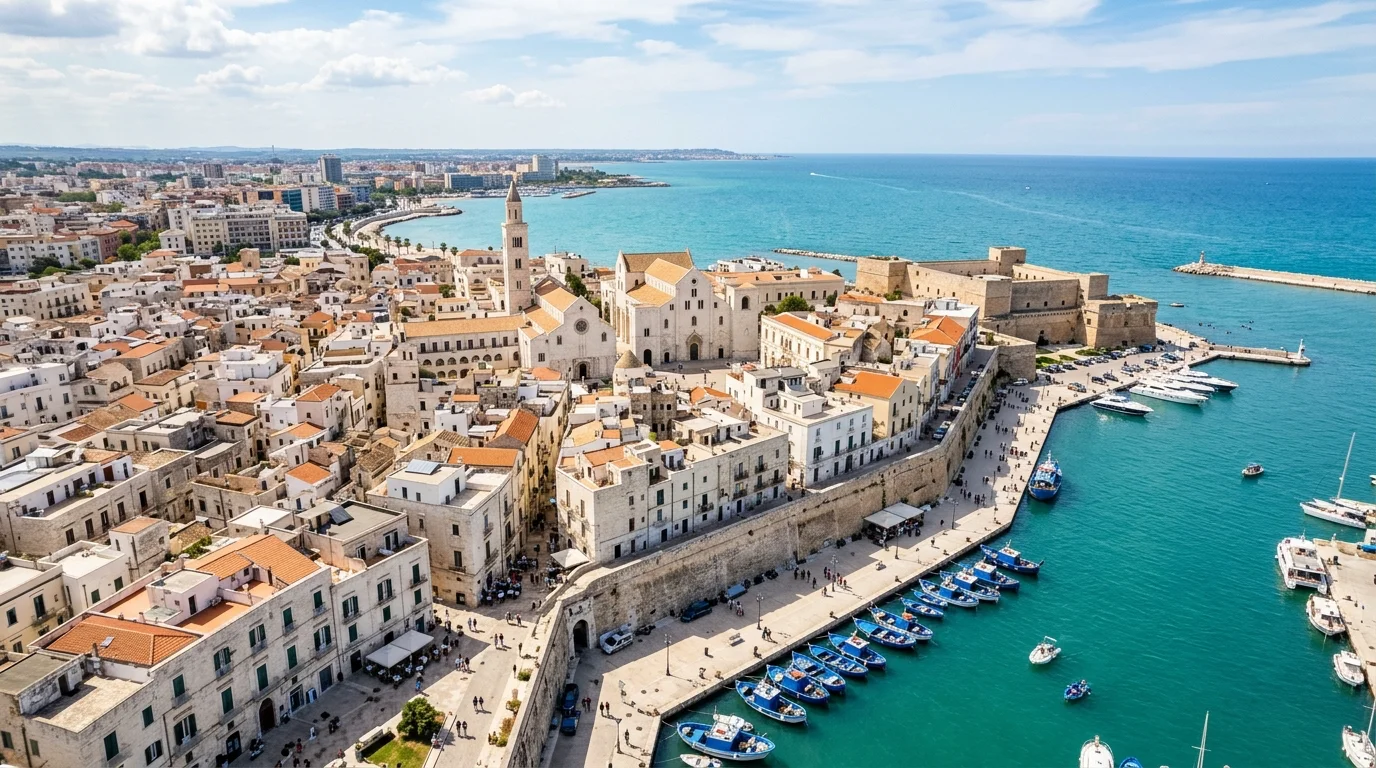
Bari is the lively capital city of the Puglia region, located on the heel of Italy's boot along the Adriatic Sea in southern Italy. It is best known for its stunning medieval old town (Bari Vecchia), the magnificent Basilica di San Nicola, and its world-famous handmade orecchiette pasta. Visitors come here for authentic Italian culture, incredible seafood, beautiful Baroque architecture, and the perfect base for exploring the stunning Puglia countryside.
Table of Contents
- Bari Overview
- Getting There & Around
- Top Attractions & Landmarks
- Neighborhoods & Districts
- Food & Dining
- Nightlife & Entertainment
- Shopping
- Seasonal Events & Festivals
- Accommodation Recommendations
- Practical Information
- Day Trips & Nearby Destinations
- Insider Tips & Hidden Gems
- Money-Saving Tips
- Common Tourist Mistakes to Avoid
- Sample Itineraries
- Frequently Asked Questions
What Is Bari and Why Should You Visit?
Bari is the second-largest city in southern Italy and the proud capital of the Puglia region, sitting on the Adriatic coast with a population of around 320,000 people. This is a city that feels genuinely Italian — not polished for tourists, but alive with real local energy, incredible food, and centuries of history layered into every narrow alley and crumbling palazzo.
What sets Bari apart from other Italian cities is its raw, authentic character. While tourists flock to Rome, Florence, and Venice, Bari remains refreshingly unhurried. You will find local grandmothers (the famous nonne) making fresh orecchiette pasta right outside their front doors in Bari Vecchia. You will eat the best seafood of your life at casual harbour-side restaurants. And you will explore one of the most beautifully preserved medieval old towns in all of Italy.
Bari is also the perfect gateway to one of Italy's most underrated regions. From here, you can explore the cave city of Matera, the fairy-tale trulli houses of Alberobello, the baroque wonder of Lecce, and the beautiful Itria Valley — all within a couple of hours. For 2026, Bari is a smart traveller's choice: affordable, authentic, and packed with incredible experiences.
When Is the Best Time to Visit Bari?
Spring (April–June): This is the absolute best time to visit Bari. Temperatures are warm and comfortable (18°C–26°C / 64°F–79°F), the city is buzzing with outdoor life, wildflowers bloom across the countryside, and tourist crowds are manageable. May is particularly beautiful. Book accommodation a month or two in advance during this period.
Summer (July–August): Bari gets hot and busy in peak summer, with temperatures regularly reaching 32°C–36°C (90°F–97°F). The city beach fills up, festivals are in full swing, and prices climb. It is still a great time to visit, but expect crowds at major attractions and book everything well in advance — especially if you plan to visit during the Feast of San Nicola in early May.
Autumn (September–October): September and October are arguably the smartest time to visit. The heat softens to a gorgeous 22°C–28°C (72°F–82°F), the sea is still warm enough to swim in, and visitor numbers drop sharply after August. Prices for hotels and flights fall noticeably. October brings the Sagra della Focaccia and harvest festivals across Puglia.
Winter (November–March): Bari in winter is mild by northern European standards (8°C–14°C / 46°F–57°F), rarely sees snow, and is wonderfully uncrowded. The Christmas markets and nativity scenes are charming, and you will have major attractions almost entirely to yourself. Prices are at their lowest. The Feast of San Nicola celebrations in December are a highlight.
How Many Days Do You Need in Bari?
- 1–2 days: You can cover the essential highlights — Bari Vecchia, the Basilica di San Nicola, the lungomare, and a proper seafood meal. Great for a stopover between other Puglia destinations.
- 3–4 days: The ideal amount of time for first-time visitors. Explore the old town deeply, take a half-day trip to Alberobello or Matera, eat your way through the local cuisine, and experience the evening passeggiata.
- 5–7 days: Perfect for travellers who want to use Bari as a base for Puglia. Day trips to Polignano a Mare, Ostuni, Lecce, and the Valle d'Itria are all very easy from here.
- 1 week+: For those who truly want to live like a local — visiting weekly markets, cooking classes, exploring lesser-known villages, and spending lazy afternoons on the Adriatic coast.
Quick Facts About Bari
- Population: \~320,000 city; \~1.2 million metropolitan area
- Language: Italian (English spoken in tourist areas, hotels, and restaurants — less so in local neighbourhoods)
- Currency: Euro (€)
- Time Zone: Central European Time (CET) — UTC+1 (UTC+2 in summer CEST)
- Country Code: +39 (Italy)
- Area Code: 080
- Climate: Mediterranean — hot dry summers, mild wet winters
- Altitude: 5 metres (16 feet) above sea level
How Do You Get To and Around Bari?
The easiest way to reach Bari is by flying into Bari Karol Wojtyła Airport, which has excellent connections to major European cities. You can also arrive by train, with fast rail links from Rome (about 4 hours) and Naples (about 3.5 hours).
Which Airports Serve Bari?
Bari Karol Wojtyła Airport (BRI)
Via del Generale Saverio Papola, 70128 Bari BA, Italy
Located just 8 km (5 miles) northwest of the city centre, this modern international airport serves flights from major airlines including Ryanair, easyJet, Vueling, Alitalia/ITA Airways, Lufthansa, and British Airways. It handles around 5 million passengers a year and has good facilities including restaurants, shops, and car hire desks.
How Do You Get from the Airport to the City Centre?
Official Taxi: Official white taxis wait outside the arrivals terminal. The fixed rate to central Bari is approximately €25–€30 (2026 rate). The journey takes around 20 minutes in normal traffic. Always use official white taxis and insist on the meter or agree on the fixed city rate before getting in.
Rideshare (FREE NOW / Uber): FREE NOW is the main rideshare app used in Bari. Prices are similar to taxis at around €18–€25. It is convenient and avoids any potential haggling.
Public Bus — Tempesta Bus: The Tempesta Bus company runs a dedicated airport shuttle to Bari Centrale train station. Tickets cost approximately €5 (2026). The journey takes about 30 minutes. Buses run roughly every 30–60 minutes and it is a very good budget option.
Train (Ferrovie del Sud Est): A train service connects the airport to Bari Centrale station. The journey takes about 15 minutes and costs around €5. This is the fastest and most affordable option if you are heading to the city centre.
What Is the Best Way to Get Around Bari?
The best way to get around central Bari is on foot — the old town and modern centre are compact and very walkable. For longer journeys around the city and region, the local bus network and trains are efficient and affordable.
Public Transport System
Bari's public transport is run by AMTAB for city buses. The network covers most of the city, with key routes running along the lungomare (seafront) and connecting the train station to major attractions. Buses run from around 5:30 AM to midnight on main routes.
Tickets & Passes:
- Single ride: €1.30 (valid 90 minutes)
- Daily pass: €3.50
- 10-journey carnet: €10.00
- Buy tickets at tobacco shops (tabaccherie), newsstands, or from bus drivers
Taxis & Rideshare
Official white taxis in Bari are metered and reliable. You can hail them on the street, find them at taxi ranks near Piazza Aldo Moro (the main square by the train station) and Piazza del Ferrarese, or call Radio Taxi Bari at +39 080 554 3333. The FREE NOW app also works well. A typical fare within the city centre costs €8–€15 (2026).
Walking
Bari is an excellent city for walking. The old town (Bari Vecchia) is entirely pedestrian-friendly, and the beautiful lungomare promenade stretches along the seafront for several kilometres. The terrain is flat, making it easy for all fitness levels.
Walkability Score: 82/100 for the tourist centre. The old town, seafront, and modern shopping district are all comfortably linked on foot. The main train station to Bari Vecchia is about a 20-minute walk, or 10 minutes by bus.
Smart travellers always compare transfer options before booking — prices for the same route can vary by 40% or more. Take 60 seconds to check all options and choose what works best for your arrival.
What Are the Top Attractions and Landmarks in Bari?
Bari's top attractions include the magnificent Basilica di San Nicola, the labyrinthine medieval streets of Bari Vecchia, the stunning Castello Normanno-Svevo, and the beautiful Adriatic seafront promenade. Here is a detailed guide to the city's must-see sights.
Basilica di San Nicola
Largo Abate Elia, 13, 70122 Bari BA, Italy
The Basilica di San Nicola is one of the most important pilgrimage churches in all of Italy and one of the finest examples of Romanesque architecture in the entire country. Built between 1087 and 1197, it was constructed to house the relics of Saint Nicholas — yes, the real Santa Claus — whose bones were brought to Bari by local sailors from Myra (in modern Turkey) in 1087. The church has been drawing pilgrims from across Europe and beyond for nearly 1,000 years.
The façade is powerfully austere, with three portals decorated with intricate carvings of animals, mythological figures, and biblical scenes. Inside, the church is equally impressive — a soaring nave, ancient columns, a stunning 11th-century bishop's throne, and a beautiful 12th-century ciborium. The crypt below, where the saint's relics are kept, is an atmospheric and deeply moving space that is central to Bari's identity.
Why visit: This is THE landmark of Bari — historically, spiritually, and architecturally. Even non-religious visitors are struck by its scale, beauty, and the genuine devotion of pilgrims who come from around the world. The crypt in particular is unforgettable.
Entrance: Free (crypt and church); Museo di San Nicola €3 adults (2026)
Best time: Morning on weekdays to avoid crowds; the daily 10:00 AM Mass is open to visitors
Hours: Monday–Saturday 7:00 AM–8:00 PM; Sunday 7:00 AM–10:00 PM
Bari Vecchia (Old Town)
Bari Vecchia, 70122 Bari BA, Italy
Bari Vecchia is the ancient heart of the city — a dense, atmospheric tangle of whitewashed alleys, archways, churches, and piazzas built on a small peninsula jutting into the Adriatic. It is one of southern Italy's most evocative old towns, largely unchanged in its layout since medieval times. Getting lost here is not only inevitable, it is the entire point.
The old town is packed with history at every turn. You will pass tiny chapels, Byzantine mosaics, Norman doorways, and laundry strung between balconies just as it has been for centuries. The area around Via dell'Arco Basso is famous for the nonne — local women who sit outside making orecchiette by hand each morning, a tradition you simply cannot miss.
Why visit: Bari Vecchia is the single most rewarding experience in the city. It is authentic, lively, beautiful, and completely free to explore. No other part of Bari captures the city's soul like this ancient neighbourhood.
Entrance: Free to walk around
Best time: Morning (9:00 AM–12:00 PM) to see the orecchiette ladies; evenings for a lively atmosphere
Hours: Open 24 hours; most shops and churches open 9:00 AM–1:00 PM and 4:00 PM–8:00 PM
Castello Normanno-Svevo (Norman-Swabian Castle)
Piazza Federico II di Svevia, 4, 70122 Bari BA, Italy
The Castello Normanno-Svevo is Bari's imposing seafront fortress, originally built by the Normans in 1132 and later significantly expanded and strengthened by the Holy Roman Emperor Frederick II in the early 13th century. It stands at the edge of the old town, its massive walls rising directly from the waterfront in a dramatic statement of power and defence. The castle has served as a military base, a royal residence, and an administrative centre over the centuries.
Today the castle hosts rotating exhibitions of sculpture, art, and cultural artefacts — particularly focused on the architectural heritage of Puglia. The inner courtyard is beautiful, and the views from the ramparts looking back across the old town and out to the Adriatic are superb. A permanent collection in the castle features plaster cast reproductions of decorative architectural elements from Puglia's greatest medieval buildings.
Why visit: The castle is both a fascinating piece of history and one of the best photo spots in Bari. The combination of Norman foundations, Swabian additions, and later Renaissance modifications makes it an architectural treasure.
Entrance: €5 adults; €2.50 EU citizens 18–25; free for EU citizens under 18 and over 65 (2026)
Best time: Late afternoon for golden light on the stone
Hours: Tuesday–Sunday 8:30 AM–7:30 PM; closed Mondays
Lungomare Nazario Sauro & Lungomare Imperatore Augusto
Lungomare Imperatore Augusto, 70122 Bari BA, Italy
Bari's seafront promenade is one of the most beautiful in southern Italy — a wide, elegant walkway stretching for over 3 kilometres along the Adriatic coast, lined with palm trees, benches, and stunning views out to sea. The lungomare is the social heart of the city. Every evening, baresi of all ages come here for the passeggiata — the beloved Italian tradition of a leisurely evening stroll — and the atmosphere is wonderfully warm and alive.
The promenade passes some of Bari's grandest buildings, including the Palazzo della Provincia and the old harbourfront. In summer, sections of the beach below the promenade are set up with deckchairs and beach bars. Early morning joggers, elderly couples arm in arm, teenagers on scooters, and families with strollers all share this space in perfect Italian harmony.
Why visit: The lungomare captures the very best of Italian coastal living. It is completely free, open at all hours, and offers some of the most beautiful sunset views you will find anywhere in Puglia.
Entrance: Free
Best time: Sunset (7:00–8:30 PM in summer) for the passeggiata; early morning for peaceful walking
Hours: Always open
Cattedrale di San Sabino (Bari Cathedral)
Piazza dell'Odegitria, 1, 70122 Bari BA, Italy
Standing just a short walk from the Basilica di San Nicola, Bari's Cathedral of San Sabino is often overlooked by tourists who are dazzled by its more famous neighbour — but it absolutely deserves your attention. The cathedral was built in the late 12th century on the ruins of an earlier Byzantine church and is a masterpiece of Pugliese Romanesque style, with a beautifully carved rose window and an elegant cloister that is one of the best preserved in southern Italy.
The interior is serene and atmospheric, with ancient frescoes visible on several walls and a fascinating underground archaeological area (Ipogeo Cattedrali) where the remains of the original Byzantine church can be explored. The cathedral holds the revered icon of the Madonna Odegitria, one of the most venerated religious images in all of Puglia.
Why visit: Far fewer tourists visit than the Basilica di San Nicola, meaning you can enjoy it in peaceful contemplation. The cloister alone is worth the visit.
Entrance: Free; underground archaeological area €2 (2026)
Best time: Weekday mornings
Hours: Monday–Friday 8:00 AM–12:30 PM and 4:00 PM–7:00 PM; weekends 8:00 AM–1:00 PM and 4:00 PM–8:00 PM
Piazza del Ferrarese & Piazza Mercantile
Piazza del Ferrarese, 70122 Bari BA, Italy
These two adjacent piazzas at the edge of the old town form the vibrant social hub of Bari. Piazza del Ferrarese is a lively, palm-lined square full of cafés, bars, and restaurants that buzz with life from morning to midnight. It sits right at the point where the old town meets the modern city and the seafront, making it the natural gathering point for locals and visitors alike.
Piazza Mercantile, just steps away, is the older and more architecturally beautiful of the two. The elegant Column of Justice (Colonna della Giustizia) stands at its centre — historically the column to which debtors were tied and publicly shamed. The surrounding buildings include the lovely Sedile, a former council building with beautiful loggia and balustrades.
Why visit: These piazzas are perfect for people-watching, coffee, aperitivo, and soaking up the atmosphere of daily Bari life. They are also the starting point for most old town walks.
Entrance: Free
Best time: Aperitivo hour (6:00–8:00 PM) for peak atmosphere
Hours: Always open
Museo Archeologico Nazionale di Bari (MANA)
Piazza Umberto I, 19, 70121 Bari BA, Italy
Located within the University of Bari's beautiful 19th-century palazzo, the National Archaeological Museum houses one of the most important collections of ancient Greek and pre-Roman artefacts in southern Italy. The museum's highlights include an extraordinary collection of ancient Greek pottery from the Puglia region, Messapian and Daunian ceramics, coins, jewellery, and funerary objects that tell the story of Puglia's rich pre-Roman history stretching back thousands of years.
The museum underwent significant renovation work in recent years, and the new display rooms are beautifully designed, making the collection accessible and engaging even for visitors who are not archaeology enthusiasts. The section dedicated to Magna Graecia — the network of ancient Greek colonies that once flourished throughout southern Italy — is particularly impressive.
Why visit: This museum gives you essential context for understanding the deep history of Puglia before the Romans, the Normans, and the Byzantines. It is excellent value and very manageable in size — you will not feel overwhelmed.
Entrance: €5 adults; €2.50 reduced (2026)
Best time: Midday, when outdoor attractions are at their hottest
Hours: Tuesday–Sunday 9:00 AM–7:30 PM; closed Mondays
Teatro Petruzzelli
Corso Cavour, 12, 70121 Bari BA, Italy
The Teatro Petruzzelli is Bari's magnificent opera house and one of the largest and most beautiful theatres in all of Italy. Built in 1903 and lovingly restored after a devastating arson fire in 1991 (it reopened fully in 2009 after an 18-year restoration), the Petruzzelli is a stunning Neo-Baroque building with a grand horseshoe auditorium seating around 1,500 people. It has hosted some of the world's greatest opera singers, ballet companies, and orchestras.
Even if you are not planning to attend a performance, the building itself is worth admiring from the outside — the ornate façade on Corso Cavour is one of Bari's most photographed buildings. Guided tours of the interior are available and are well worth taking to see the gorgeous auditorium, painted ceilings, and backstage areas.
Why visit: Attending a performance at the Petruzzelli is one of the most memorable experiences you can have in Bari — world-class opera or ballet in a breathtaking historic setting for a fraction of what you would pay in Rome or Milan.
Entrance: Guided tours approximately €10; performance tickets €15–€120 depending on show and seat (2026)
Best time: October–May for the main opera and ballet season
Hours: Box office open Tuesday–Friday 11:00 AM–7:00 PM; Saturday 11:00 AM–2:00 PM
Pinacoteca Metropolitana Corrado Giaquinto
Via Spalato, 19, 70121 Bari BA, Italy
Bari's city art gallery is one of the best collections of southern Italian painting from the 15th to the 20th century, housed in a dignified palazzo in the modern city centre. The collection includes important works by Venetian masters, Neapolitan painters, and — most significantly — a wonderful room dedicated to the works of Corrado Giaquinto, the brilliant 18th-century Baroque painter who was born in nearby Molfetta and became one of Europe's most celebrated court painters.
The museum is genuinely excellent and very manageable in size. The permanent collection is displayed across beautifully restored gallery rooms, with strong works by Vivarini, Bellini, Tintoretto, and a fascinating collection of southern Italian furniture and decorative arts. This is a museum that punches well above its weight.
Why visit: Rarely crowded and home to genuinely important artworks, the Pinacoteca is a delightful find for art lovers. The Giaquinto room alone is worth the entrance fee.
Entrance: €4 adults; €2 reduced (2026)
Best time: Afternoon — good rainy-day option
Hours: Tuesday–Sunday 9:00 AM–7:00 PM; closed Mondays
Faro del Bari (Bari Lighthouse) & Molo Sant'Antonio
Molo Sant'Antonio, 70122 Bari BA, Italy
The Molo Sant'Antonio is a long stone jetty extending out into the Adriatic from the edge of the old town, ending at a historic lighthouse. This is one of the most atmospheric and least-touristy spots in all of Bari. Locals come here to fish, walk, and watch the sun go down over the city skyline — and the views back towards Bari Vecchia and the Castello are absolutely stunning.
The walk along the molo is about 800 metres each way, with open sea on both sides and the entire old town stretching out before you as you return. Fishermen line the sides with their rods early in the morning, and the lighthouse at the end has a wonderfully romantic, end-of-the-world feeling as waves crash against the stones.
Why visit: This is Bari's best sunset spot and one of its best-kept secrets. Almost entirely local, completely free, and utterly beautiful.
Entrance: Free
Best time: Sunset; early morning for fishing atmosphere
Hours: Always open
Book your tours and tickets in advance — it saves hours of queuing and often gets you a better price. These two platforms cover different options, so it's worth checking both.
What Are the Best Neighborhoods to Explore in Bari?
Bari's neighbourhoods each have a completely distinct character, from the ancient whitewashed lanes of the old town to the elegant 19th-century grid of Murat. Here are the best areas to explore.
Bari Vecchia (The Old Town)
Character: This is the ancient heart of Bari — a dense, atmospheric tangle of narrow whitewashed alleys, Baroque churches, crumbling palaces, and centuries-old homes stacked impossibly close together on a small peninsula. The architecture blends Norman, Byzantine, and Spanish influences in a way found nowhere else in Italy.
What makes it special: The old town is entirely pedestrianised and deeply authentic. This is where the famous nonne make orecchiette by hand in the alleyways every morning, where local kids play football in ancient squares, and where tiny chapels dedicated to forgotten saints sit beside neighbourhood bars. It feels genuinely untouched by mass tourism.
Best for: History lovers, food lovers, photographers, and anyone who wants to experience true southern Italian culture
Must-see in this area: Basilica di San Nicola, Cattedrale di San Sabino, Piazza Mercantile, Via dell'Arco Basso (orecchiette alley), Chiesa di San Gregorio
How to get there: Walk from the central train station in about 20 minutes, or take bus 21 to Piazza del Ferrarese
Location: Piazza del Ferrarese, 70122 Bari BA, Italy
Murat (The Modern Centre)
Character: Built in the early 19th century under Joachim Murat (Napoleon's brother-in-law and King of Naples), this elegant neighbourhood forms the modern heart of Bari. It is laid out on a clean rectangular grid with wide, tree-lined streets and handsome Neo-classical and Art Nouveau buildings. This is where most of the city's best shopping, upscale restaurants, theatres, and hotels are found.
What makes it special: Murat has a sophisticated, unhurried elegance. The main promenade street, Corso Vittorio Emanuele II, is perfect for an evening stroll. The neighbourhood is home to the Teatro Petruzzelli, the Pinacoteca, and many of Bari's best cafés and pastry shops. It feels very much like the Bari that baresi are most proud of.
Best for: Shoppers, theatre and culture enthusiasts, café lovers, and those wanting a comfortable central base
Must-see in this area: Teatro Petruzzelli, Piazza Umberto I, Corso Vittorio Emanuele II, Piazza Libertà, Palazzo della Provincia
How to get there: Central — this is the modern city centre, immediately accessible from the main train station
Location: Piazza Umberto I, 70121 Bari BA, Italy
Madonnella
Character: A working-class, traditional neighbourhood just east of the old town, Madonnella is a favourite with young locals for its independent bars, authentic trattorie, and colourful street murals. It has a grittier, more lived-in feel than Murat but is increasingly popular with young Italians and creative types who have been opening small wine bars, galleries, and restaurants here.
What makes it special: Madonnella feels like the Bari that tourists never find — real, unpretentious, and genuinely local. The covered market at Mercato del Pesce is held here each morning and is one of the best fish markets in all of southern Italy. The neighbourhood's bars do some of the best aperitivo spreads in the city.
Best for: Off-the-beaten-path explorers, food market enthusiasts, young travellers, craft beer and wine lovers
Must-see in this area: Mercato del Pesce (morning fish market), Via Adriatica cafés, street art murals along Via Dalmazia
How to get there: 15-minute walk east of the old town, or bus 12 from Piazza Aldo Moro
Location: Via Dalmazia, 70121 Bari BA, Italy
Carrassi & Poggiofranco
Character: These affluent residential neighbourhoods in the western part of the city are home to Bari's middle and upper-middle classes. Tree-lined avenues, elegant apartment buildings, and pleasant neighbourhood squares characterise the area. This is where you will find more upscale restaurants, the Fiera del Levante exhibition grounds, and the city's best local food shops.
What makes it special: These neighbourhoods give you a taste of everyday, comfortable Bari life away from the tourist zone. The weekly Mercato di Carrassi food market is wonderful, and there are some outstanding neighbourhood restaurants here that attract local families and professionals.
Best for: Travellers who want to experience residential Bari, good neighbourhood restaurants, and food markets
Must-see in this area: Fiera del Levante (during September fair), local neighbourhood bars, Viale della Repubblica
How to get there: Bus 6 or 26 from the city centre; about 20 minutes
Location: Viale della Repubblica, 70125 Bari BA, Italy
Pane e Pomodoro Beach District
Character: Named after the legendary Pugliese snack (bread rubbed with tomato and olive oil), this neighbourhood surrounds Bari's most popular free public beach — a long stretch of rocky shoreline about 2 km south of the city centre. In summer, this is where baresi come to swim, sunbathe, and socialise from early morning until late at night.
What makes it special: Pane e Pomodoro is genuinely local beach culture at its most Italian. You will see families picnicking, teenagers playing beach volleyball, elderly men in Speedos playing cards, and street food vendors selling everything from coconut slices to fried pastry. The beach bars here serve excellent aperitivo from about 6:00 PM.
Best for: Beach-goers, families, those wanting an authentic local summer experience
Must-see in this area: Pane e Pomodoro Beach (free), seafront bars, evening passeggiata along the seafront road
How to get there: 25-minute walk south from the old town along the lungomare, or bus 9
Location: Spiaggia di Pane e Pomodoro, Via Cognetti, 70122 Bari BA, Italy
What Food Should You Try in Bari?
Bari is famous for its extraordinary cuisine, anchored by fresh seafood, handmade orecchiette pasta, extraordinary olive oil, and simple, flavour-packed dishes that showcase the best of Pugliese cooking. Eating well in Bari is easy, affordable, and one of the most memorable things you will do in the city.
What Are the Must-Try Local Dishes in Bari?
- Orecchiette alle Cime di Rapa — Bari's signature pasta dish: small ear-shaped pasta tossed with sautéed turnip tops, garlic, chilli, anchovies, and good Pugliese olive oil. This is the dish that defines the city's cooking and you must eat it here where it is made properly. Try it at any good trattoria for €8–€12.
- Tiella Barese — A layered oven-baked casserole of rice, potatoes, mussels, tomatoes, onions, and pecorino cheese. It is deeply comforting, uniquely Baresi, and found in almost no other part of Italy. Budget €10–€14 as a main course.
- Focaccia Barese — Bari's focaccia is different from the Ligurian version most people know. It is thicker, softer, made with semolina flour and olive oil, and topped with fresh tomatoes, olives, and oregano. Every bakery (forno) in the city makes it fresh throughout the day — a slice costs just €1–€2 and it is absolutely perfect.
- Crudo di Mare (Raw Seafood) — Bari has one of Italy's great raw seafood traditions. At harbour-side restaurants and market stalls, you can eat sea urchins (ricci di mare), raw mussels, clams, oysters, and cuttlefish dressed simply with lemon. This is an absolute must for any seafood lover.
- Sgagliozze — Fried polenta squares sold by street vendors throughout the old town. Crispy on the outside, soft inside, and salted generously. They cost just €1 and are the perfect Bari street food.
- Panzerotti — Deep-fried half-moon pastries filled with tomato and mozzarella (or sometimes ricotta and spinach). The home of panzerotti is the historic Panificio Fiore in the old town — you will see the queue stretching down the street. About €2–€3 each.
- Taranta (local wine) — Not a food, but you cannot leave Bari without drinking Primitivo di Manduria or Negroamaro — the two great red wines of Puglia. They are robust, deeply fruited, and superb value at €3–€5 a glass.
- Pasticciotto Leccese — Technically from Lecce but widely available in Bari, this shortcrust pastry filled with egg custard cream is the classic Pugliese breakfast pastry. Best eaten warm from a bar or pasticceria with a morning espresso.
Where Should You Eat in Bari?
Budget-Friendly (Under €15 per meal)
- Panificio Fiore — Via Chirulli, 12, 70122 Bari BA — The most famous panzerotti in Bari, made fresh and fried to order since 1943. The queue is long but moves quickly. Get here before 1:00 PM. Panzerotti €2.50 each.
- Trattoria Nicola Gargano — Via Putignani, 213, 70122 Bari BA — A no-frills local trattoria serving magnificent orecchiette, tiella, and fresh fish at prices that seem impossibly low. Lunch menu €12–€15 including wine. Book ahead or arrive at 12:30 PM sharp.
- Il Pescatore di Framarino — Via Federico II di Svevia, 6, 70122 Bari BA — A simple harbour-side fish counter in the old town where you can eat raw seafood standing up, exactly as locals do. Sea urchins, mussels, and clams from €8–€12 per serving.
Mid-Range (€20–€45 per meal)
- Ristorante Al Pescatore — Piazza Federico II di Svevia, 6-8, 70122 Bari BA — One of Bari's most beloved fish restaurants, with an outdoor terrace facing the castle. The seafood antipasto is legendary, and the pasta with shellfish is extraordinary. Budget €35–€45 per person with wine. Book ahead.
- Osteria delle Travi — Largo Chiurlia, 12, 70122 Bari BA — A beautiful osteria set under ancient arches in the old town. Excellent local wine list, outstanding orecchiette, and magnificent lamb dishes. Very popular with locals — book at least 48 hours in advance.
- Terranima — Via Putignani, 213/215, 70122 Bari BA — A warm, rustic restaurant focusing on traditional Pugliese cuisine with wonderful antipasto spreads, excellent pasta, and a very good natural wine list. A favourite with visiting food journalists and in-the-know travellers.
- La Cecchina — Via Roberto da Bari, 15, 70121 Bari BA — A smart but welcoming trattoria in the Murat district, beloved for its modern take on traditional Pugliese dishes. Perfect for a relaxed dinner before the theatre.
Fine Dining (€60+ per meal)
- Bacco — Via Re David, 53, 70125 Bari BA — Bari's most sophisticated fine-dining restaurant, with a seasonal tasting menu showcasing premium Pugliese ingredients prepared with genuine technical skill. Expect €80–€120 per person for the full tasting menu with wine pairing. Book 1–2 weeks in advance.
- Il Buco — Via Cognetti, 10, 70121 Bari BA — A beautiful underground restaurant (literally set in a historic cellar) serving creative Pugliese cuisine with an outstanding wine cellar. Excellent service and a romantic atmosphere for special occasions. €65–€90 per person.
What Are the Dining Customs in Bari?
Meal times: Locals eat breakfast (colazione) at a bar from 7:00–9:00 AM (espresso and a pastry). Lunch (pranzo) is from 1:00–3:00 PM and is the main meal of the day. Dinner (cena) starts at 8:00 PM and often runs until 10:30 PM or later. Turning up for dinner at 6:30 PM or 7:00 PM, as many northern Europeans do, will earn you puzzled looks.
Tipping: Tipping is not obligatory in Italy but is appreciated. A service charge (coperto) of €1–€3 per person is usually included automatically. If you are happy with the service, leaving an additional €2–€5 on the table is perfectly appropriate.
Reservations: Always book popular restaurants at least 24–48 hours in advance, especially Friday and Saturday evenings. Most places take bookings by phone or WhatsApp.
Dress code: Smart casual is appropriate for mid-range and fine dining restaurants. No swimwear, sportswear, or flip-flops at dinner. Italians generally take a little care over how they dress for an evening meal and appreciate when visitors do the same.
What Is the Nightlife Like in Bari?
Bari's nightlife scene is lively, sociable, and very Italian in character — it starts late, runs until the small hours on weekends, and centres as much around long dinners and aperitivo as it does around clubs and bars. The evening passeggiata begins around 7:00 PM, aperitivo runs from 6:30–9:00 PM, dinner from 8:30 PM onwards, and bars and clubs rarely fill up before midnight.
Where Are the Best Areas for Nightlife in Bari?
- Piazza del Ferrarese and the Old Town Edges: Piazza del Ferrarese, 70122 Bari BA — This is the most popular area for a drink before or after dinner. Dozens of bars line the square and surrounding streets, with outdoor seating and a buzzing atmosphere from about 6:00 PM until 1:00 AM. Very mixed age group, relaxed and sociable.
- Via Trevisani and Corso Italia: Via Trevisani, 70124 Bari BA — This strip in the Libertà neighbourhood is popular with Bari's university students for cheap drinks and casual bars. More locals than tourists, very lively Thursday through Saturday nights.
- Pane e Pomodoro Seafront (Summer): Via Cognetti, 70122 Bari BA — In July and August, the seafront area around the public beach comes alive at night with outdoor concerts, pop-up bars, and a wonderfully casual summer party atmosphere that goes on until 3:00 AM or later.
What Are the Best Bars and Clubs in Bari?
Bars & Pubs
- Enoteca Bacco e Arianna — Via Argiro, 55, 70121 Bari BA — A beloved wine bar in the Murat district with an exceptional selection of Pugliese wines by the glass. Knowledgeable staff, excellent cheese and charcuterie boards, and a relaxed, sophisticated atmosphere. Open from 6:00 PM. Expect to spend €15–€25 per person on drinks and snacks.
- Birroteca — Via Roberto da Bari, 76, 70121 Bari BA — Bari's leading craft beer bar, with an ever-rotating selection of local and Italian micro-brewery beers alongside imported favourites. Very popular with the young professional crowd on weekend nights. Pints from €5–€7.
- RosaKissMe — Corso Vittorio Emanuele II, 72, 70122 Bari BA — A charming cocktail bar-café hybrid right in the heart of Murat, popular for aperitivo (excellent Negroni) and post-dinner cocktails. Stylish but unpretentious.
Clubs & Dancing
- Demodé Club — Via Prospero Petroni, 10, 70124 Bari BA — Bari's best-known nightclub, popular for commercial house, R&B, and occasional live sets. Cover charge €10–€15 including first drink. Dress code applies — no sportswear. Gets going after midnight, peaks around 1:30–2:30 AM. Busiest on Friday and Saturday.
- Officina degli Esordi — Via Niceforo, 33, 70124 Bari BA — A popular venue combining live music, DJ sets, and a relaxed bar area. More alternative and indie in musical direction than Demodé. Cover charge €5–€10. Great atmosphere on Thursday and Friday nights.
Live Music & Shows
- Teatro Petruzzelli — Corso Cavour, 12, 70121 Bari BA — Opera, ballet, and classical concerts October through May. World-class performances in a stunning historic setting. Tickets €15–€120. See the earlier Attractions section for full details.
- Spazio Murat — Piazza del Ferrarese, 1, 70122 Bari BA — A cultural centre in the heart of the city hosting live concerts, theatre performances, and outdoor events, especially in summer. Many events are free or very low cost. Check the programme at spazimurat.it.
What Family-Friendly Evening Entertainment Is Available?
Families are very welcome in Italian nightlife culture. The evening passeggiata along the lungomare is perfect for all ages and runs until 10:00 PM or later in summer. Gelaterie stay open until 11:00 PM or midnight, and most restaurants actively welcome children at dinner. The puppet shows and street performers that appear in Piazza del Ferrarese and around the old town during summer evenings are popular with kids. The theatre also occasionally stages family-friendly performances — check the programme.
What and Where Should You Shop in Bari?
The best things to buy in Bari are quality food products — extra-virgin olive oil, pasta, wine, preserves, and ceramics — and the top shopping areas are Via Sparano (for fashion and high street), the old town markets (for food and crafts), and the Saturday Mercato di Bari for a bit of everything.
What Are the Best Shopping Districts in Bari?
- Via Sparano da Bari: Via Sparano da Bari, 70121 Bari BA — The main pedestrianised shopping street in the Murat district, lined with Italian and international fashion chains, shoe shops, jewellers, and cafés. This is Bari's answer to a high street and is always busy. Think Zara, H&M, Benetton, and local Italian brands.
- Corso Vittorio Emanuele II: Corso Vittorio Emanuele II, 70122 Bari BA — A more upscale shopping street running parallel to Via Sparano, with higher-end boutiques, leather goods shops, and elegant jewellers alongside excellent pastry shops and cafés. Better for quality gifts and Italian fashion.
- Bari Vecchia Craft Shops: Via dell'Arco Basso, 70122 Bari BA — The old town has several good artisan and craft shops selling handmade ceramics, local food products, and small souvenir items. Quality varies, so look for genuinely handmade items rather than mass-produced tourist trinkets.
What Markets Should You Visit in Bari?
Mercato del Pesce (Fish Market) — Via Niceforo, 70121 Bari BA — Open Monday to Saturday from 6:00 AM to 1:00 PM. Bari's famous fish market is a spectacular, noisy, utterly local experience. The day's catch is laid out across long stalls and the vendors' sales pitches are theatrical and entertaining. Even if you are not buying, this is one of the best free experiences in the city.
Mercato Coperto di Bari (Covered Market) — Via Garruba, 70121 Bari BA — A permanent covered market in the Murat district open Monday to Saturday 7:00 AM–1:30 PM (also 4:30–7:30 PM on weekdays). Excellent for fresh produce, local cheeses, salumi, bread, and picnic supplies. Very popular with local residents and far cheaper than supermarkets.
Mercatino dell'Antiquariato — Piazza del Ferrarese, 70122 Bari BA — An antiques and bric-a-brac market held on the last Sunday of each month in Piazza del Ferrarese. Great for vintage postcards, old ceramics, second-hand books, and Italian curiosities at reasonable prices.
What Should You Buy in Bari?
- Extra-Virgin Olive Oil — Puglia produces some of Italy's finest olive oil. Look for DOP-certified (Protected Designation of Origin) bottles from local producers. A quality 750ml bottle costs €8–€20 and makes the best possible edible souvenir. Available at the covered market and specialist food shops.
- Orecchiette Pasta (Fresh or Dried) — Buy fresh orecchiette directly from the nonne in the old town for €3–€5 per 500g, or pick up premium dried varieties from specialist pasta shops. Excellent quality dried orecchiette from Pastificio Artigianale in the old town costs around €3–€4 per packet.
- Pugliese Wines — Bottles of Primitivo di Manduria, Negroamaro, or the white Verdeca make excellent gifts and are available at excellent prices from the Enoteca Meridionale (Via Cognetti, 20, 70122 Bari BA). Prices start at €6–€8 for very good table wines.
- Taralli — These circular snack crackers made with olive oil, wine, and fennel seeds are Bari's essential nibble. Sold in bags throughout the city from €2–€4. Absolutely addictive.
- Local Ceramics — Pugliese ceramics, particularly from nearby Grottaglie, feature distinctive geometric patterns and vibrant colours. Good quality pieces available in old town craft shops from €15–€50.
- Almond Products — Puglia is Italy's almond capital, and you will find wonderful almond-based sweets, pastes, and confectionery throughout Bari. The marzipan fruits from Pasticceria Fiore are particularly wonderful at around €12–€20 per box.
What Are the Shopping Hours and Customs?
Most shops in Bari follow traditional Italian hours: open 9:00 AM–1:00 PM, closed for lunch until 4:00 PM or 4:30 PM, then open again until 7:30 PM or 8:00 PM. Many shops close on Sunday (or close at lunchtime on Sunday). Large chain stores on Via Sparano tend to have continuous hours. Bargaining is not customary in shops or markets (except the antiques market where gentle negotiation is acceptable).
Can Non-EU Visitors Claim a VAT Tax Refund in Bari?
Yes — if you are a visitor from outside the European Union (including travellers from the USA, Canada, Australia, the UK, and most of Asia and Latin America), you are entitled to a refund of the VAT (Value Added Tax) included in the price of goods you buy in Italy. VAT in Italy is 22% on most goods; 10% on some food items, which means this refund can be significant on high-value purchases like clothing, leather goods, jewellery, designer fashion, and electronics.
How to Claim Your VAT Refund — Step by Step
- Spend at least €154.94 in a single shop in a single day. This is the minimum threshold for a VAT refund claim in Italy. It does not apply across multiple shops — the full amount must be spent in one store.
- Look for the "Tax Free" sign. Participating shops display a "Tax Free Shopping," "Global Blue," or "Planet" logo in the window or at the register.
- Ask for the tax refund form at the register before you pay. Present your non-EU passport — the shop will fill out the form with your details and the purchase amount. Keep the form with your receipt.
- Get the form stamped at customs before you leave. Go to the Customs office at Bari Karol Wojtyła Airport (BRI) before check-in and have an officer stamp your tax refund form. Keep your purchases accessible in hand luggage — do not pack them deep in your checked bags.
- Collect your refund. Hand the stamped form to the Global Blue or Planet desk at the airport. You can receive the refund in cash (minus a processing fee) or as a credit card refund (lower fees, takes a few weeks).
VAT Refund Quick Facts for Bari
- Minimum spend: €154.94 in one shop in one day
- VAT rate on most goods: 22% on most goods; 10% on some food items
- Typical refund after fees: 10–15% of the purchase price
- Refund processors: Global Blue and Planet (formerly Premier Tax Free) at Bari Karol Wojtyła Airport (BRI)
- Who qualifies: Anyone with a non-EU passport who is not a resident of an EU country
- UK visitors: British passport holders qualify since Brexit — the UK is no longer in the EU
- Deadline: Purchases must be exported within 3 months of the date of purchase
- Full guide: VAT Refund in Europe — Complete Guide for Non-EU Travelers
What Festivals and Events Happen in Bari?
Bari's biggest festivals are the Festa di San Nicola in May and the Fiera del Levante international trade fair in September, but the city's event calendar is packed year-round with religious celebrations, food festivals, cultural events, and outdoor concerts. Here is a month-by-month guide.
What Is the Annual Events Calendar for Bari?
| Month | Event Name | Description |
|---|---|---|
| January | Epiphany Celebrations (La Befana) | On January 6th, the feast of the Epiphany is celebrated across Italy. In Bari, the Befana figure visits children with sweets, and churches hold special masses. A quiet but charming start to the year. |
| February | Bari Carnival (Carnevale) | The weeks before Lent bring parades, costumes, and street parties in the old town and modern centre. Not as famous as Venice or Viareggio, but a very local and genuine celebration with plenty of fried pastries and confetti. |
| March | Settimana Santa (Holy Week) | The week before Easter features solemn religious processions through the old town, with the Good Friday procession of the Addolorata being particularly moving and atmospheric. Very important to local religious life. |
| April | Easter in Bari (Pasqua) | Easter Sunday brings family celebrations, special restaurant menus featuring lamb and traditional pastries (agnello pasquale), and open-air masses. The city is very busy this weekend — book well in advance. |
| May | Festa di San Nicola | Bari's most important festival, held on May 7th–9th. The relics of Saint Nicholas are carried in a magnificent procession, a statue of the saint is transported by boat across the harbour, fireworks light up the sky, and the entire city celebrates. The atmosphere is extraordinary. One of southern Italy's great religious festivals. |
| June | Estate Barese (Bari Summer Festival) | The beginning of a long summer of outdoor concerts, theatre performances, film screenings, and cultural events across the city. Many events take place in the castle courtyard or along the seafront and are free or very low cost. |
| July | Bari in Jazz / World Music Festival | Summer music festivals bring both Italian and international jazz, blues, and world music acts to outdoor venues across the city. Concerts in the castle courtyard are particularly atmospheric. Ticket prices vary from free to €30. |
| August | Ferragosto Celebrations | August 15th is Italy's main summer holiday. Bari's beach fills to maximum capacity, restaurants serve special ferragosto menus, and the evening passeggiata is at its most lively. Much of the city empties as locals head to the countryside — but the tourist areas remain busy. |
| September | Fiera del Levante | One of Italy's most important international trade fairs, held at the Fiera del Levante exhibition grounds west of the city centre. A massive event covering everything from agriculture to technology. Public days offer fascinating insights into Pugliese produce and Italian industry. Very busy — book accommodation far in advance if visiting during the fair. |
| October | Sagra della Focaccia and Puglia Harvest Festivals | October brings food festivals celebrating the olive harvest, wine harvest, and local produce throughout Puglia. In Bari itself, neighbourhood food events and the return of the opera season at the Petruzzelli mark the return of autumn. The city feels wonderfully local and unhurried this month. |
| November | Tutti i Santi / Commemoration of the Dead | All Saints Day (November 1st) and All Souls Day (November 2nd) are important in Bari's Catholic culture. Families visit cemeteries, churches hold special services, and traditional pastries for the dead (fave dei morti) are sold throughout the city. |
| December | Feast of San Nicola (December 6th) & Christmas Markets | December 6th is another celebration of the patron saint, with a special Mass in the Basilica crypt. Christmas markets open around the old town and Piazza del Ferrarese through December, selling local crafts, food, and seasonal gifts. The nativity scenes (presepi) displayed throughout the old town are beautiful and elaborate. |
How Do Festivals Affect Hotel Prices and Availability?
The Festa di San Nicola (May 7–9) and the Fiera del Levante (first two weeks of September) cause the biggest spikes in hotel demand — prices can double or triple and availability disappears weeks in advance. Easter weekend, Ferragosto (August 15), and major concert events also put significant pressure on accommodation. For these dates, book at least 6–8 weeks ahead, or ideally 3–4 months for the biggest events.
Where Should You Stay in Bari?
The best neighbourhood to stay in Bari depends on your travel style — Bari Vecchia is for those who want atmosphere and character, Murat for those who want convenience and comfort, and the seafront for those who prioritise beach access. Here is a breakdown to help you choose.
What Are the Best Neighborhoods to Stay in Bari?
| Neighbourhood | Vibe | Price Range Per Night (2026) | Best For |
|---|---|---|---|
| Bari Vecchia (Old Town) | Historic, atmospheric, characterful, lively | €60–€180 | First-timers, couples, culture lovers, photographers |
| Murat (City Centre) | Elegant, convenient, well-connected | €70–€220 | Business travellers, shoppers, theatre-goers, families |
| Lungomare (Seafront) | Scenic, breezy, relaxed | €80–€250 | Couples, summer visitors, those wanting sea views |
| Near Train Station (Piazza Aldo Moro) | Practical, busy, well-connected | €45–€130 | Budget travellers, short-stay visitors, transit travellers |
| Carrassi / Poggiofranco | Residential, quiet, local | €50–€150 | Long-stay visitors, those wanting a local experience |
What Are the Pros and Cons of Each Area?
Bari Vecchia (Old Town):
Pros: Unbeatable atmosphere; walking distance to all major attractions; excellent restaurant options; wonderfully authentic neighbourhood life; great for photos at all hours.
Cons: Streets can be noisy, especially on weekend nights; parking is impossible; some streets are very narrow and can feel slightly intimidating after midnight; Wi-Fi quality in some older buildings is poor.
Murat (City Centre):
Pros: Best connected neighbourhood for public transport; wide choice of hotels and B&Bs at all price points; excellent restaurants and shopping on the doorstep; close to the train station for day trips.
Cons: Less atmospheric than the old town; some streets can feel anonymous; heavier traffic noise on main roads.
Lungomare (Seafront):
Pros: Beautiful views; access to the beach; cooler breezes in summer; romantic setting; excellent morning runs along the promenade.
Cons: Slightly further from the main tourist sights; busier and noisier in peak summer; can be more expensive.
How Far in Advance Should You Book in Bari?
For peak season (June–August) and festival periods (especially May 7–9 Festa di San Nicola and the Fiera del Levante in September), book at least 2–3 months in advance. For spring and autumn shoulder seasons, 3–4 weeks is usually sufficient. Winter visits can often be booked just a week ahead. For the best prices, book directly with the property after checking online platforms for the going rate — many small B&Bs offer better rates for direct bookings.
What Do You Need to Know Before Visiting Bari?
Here are the essential practical details every visitor to Bari needs to know before arriving — from money and transport to safety and health.
Essential Travel Details for Bari
- Currency: Euro (€); exchange at banks or use ATMs for best rates — avoid airport or hotel exchange desks
- Credit Cards: Widely accepted in hotels, restaurants, and shops; carry some cash for markets, smaller trattorias, and street food
- ATMs: Plentiful throughout the city centre; use ATMs attached to major banks (Intesa Sanpaolo, Banco di Napoli) for best rates; daily withdrawal limit typically €250–€500
- Language: Italian; English is spoken reasonably well in tourist areas, hotels, and restaurants; much less so in the old town and local neighbourhoods — a few Italian phrases go a long way
- Tipping: Not obligatory; coperto (cover charge) of €1–€3 included at most restaurants; leave an extra €2–€5 for good service
- Electrical Plugs: Type F (Schuko) and Type L (Italian 3-pin); 220V/50Hz; visitors from UK and US will need adapters
- Emergency Number: 112 (all emergencies — police, ambulance, fire)
- Tourist Police (Polizia Turistica): +39 080 529 4530
- SIM Cards: Buy at any TIM, Vodafone, or WindTre shop; available from about €10–€15 including data (30-day bundles with 50GB+ widely available in 2026)
- WiFi: Good quality WiFi in most hotels, cafés, and restaurants; limited free public WiFi in some piazzas
- Tap Water: Safe to drink — Bari's tap water is clean and drinkable; locals and visitors drink it freely
Skip the airport queue — order your eSIM before you travel and activate it the moment you land. Prices and data allowances vary, so it pays to compare providers.
How Much Does It Cost to Visit Bari?
| Budget Type | Daily Cost (2026) | What's Included |
|---|---|---|
| Budget Traveller | €50–€75 per day | Hostel dorm bed or budget B&B (€20–€35); focaccia and street food for meals (€10–€15); public transport or walking; free attractions (old town, lungomare) |
| Mid-Range Traveller | €100–€160 per day | Good B&B or 3-star hotel (€60–€100); lunch at trattoria, dinner at a proper restaurant (€30–€50); occasional museum entry; mix of walking and taxis |
| Luxury Traveller | €220–€400+ per day | 4–5 star hotel (€150–€250); fine dining at Bacco or Il Buco; private transfers; guided tours; opera tickets |
What Are the Most Useful Phrases in Bari?
- Hello: Ciao (informal) / Buongiorno (formal, daytime) / Buonasera (formal, evening)
- Thank you: Grazie
- Please: Per favore / Per piacere
- Excuse me: Mi scusi / Permesso (to pass through)
- How much?: Quanto costa?
- Where is...?: Dov'è...?
- I don't understand: Non capisco
- Help!: Aiuto!
- Bathroom: Il bagno
- Check, please: Il conto, per favore
Is Bari Safe for Tourists?
Yes, Bari is generally safe for tourists and has improved significantly in recent years. Like all large Italian cities, it has areas that require standard urban common sense, but violent crime against tourists is rare. The vast majority of visitors have entirely trouble-free trips.
Areas to avoid: The peripheral neighbourhoods of Libertà and Santo Spirito after dark are best avoided by unfamiliar visitors, particularly walking alone late at night. Stick to the well-lit central areas and old town after midnight.
Common scams: Overcharging for taxi rides (always agree on the price or insist on the meter); unauthorised parking attendants near the castle demanding payment (you don't owe them anything); fake €50 notes in tourist areas (check notes at ATMs or banks); distraction thefts at the fish market (keep bags closed and in front).
Pickpocketing: A genuine risk in crowded areas — the fish market, Piazza del Ferrarese, and busy bus routes. Use a money belt for passports and large amounts of cash. Keep phones in inside pockets.
Solo traveller safety: Bari is broadly welcoming to solo travellers including solo women. The popular tourist areas and restaurant districts are safe and well-populated until late. LGBTQ+ visitors will find Bari is generally tolerant and welcoming, particularly in the younger, more cosmopolitan bar and restaurant scene.
What Are the Cultural Customs in Bari?
- Greetings: Italians greet with two cheek kisses (left cheek first) among friends and family; handshakes in formal or first-meeting situations
- Dress code: Smart casual in restaurants; shoulders and knees must be covered in churches (carry a scarf); no beachwear in the city centre or restaurants
- Photography: Ask permission before photographing individuals; no photography inside churches during Mass; the nonne pasta ladies welcome photos but appreciate a small purchase
- Public behavior: Keep voices moderate; queuing is loosely observed — you may need to assert yourself politely; public displays of affection are accepted
- Dining: Never ask for a cappuccino after 11:00 AM — this marks you as a tourist immediately; do not expect a split bill (dividing the bill equally is the norm); espresso is drunk standing at the bar for about €1 — sitting down can double the price
- Gestures to avoid: The "OK" sign with thumb and forefinger is considered rude in southern Italy; pointing directly at people is considered impolite
Do You Need a Visa to Visit Bari?
Citizens of EU and Schengen countries, the USA, UK, Canada, Australia, and most other Western nations do not need a visa to visit Italy (and therefore Bari) for stays of up to 90 days within any 180-day period. From 2025, EU visitors are already covered, but non-EU citizens will need to register under Italy's ETIAS system when it launches — check the official EU ETIAS website for the latest requirements as this system's launch date has been subject to changes. Always verify your specific nationality's requirements at the Italian Foreign Ministry website (esteri.it) before travelling.
What Health Precautions Should You Take in Bari?
Vaccinations: No special vaccinations are required or recommended for Italy beyond standard routine vaccinations. EU citizens with a European Health Insurance Card (EHIC) are entitled to state healthcare at reduced cost.
Pharmacies: Excellent — pharmacies (farmacia, indicated by a green cross) are found throughout the city and can supply a wide range of medications without prescription. 24-hour pharmacies operate on a rotating schedule — the current on-call farmacia is posted on all pharmacy doors.
Hospitals: Policlinico di Bari (Piazza G. Cesare, 11, 70124 Bari BA) is the main public hospital and provides good quality care. Emergency treatment is free or very low cost for EU citizens. Non-EU visitors should carry comprehensive travel insurance — medical bills for non-EU visitors without insurance can be substantial.
Common health issues: Heat exhaustion and dehydration in summer (carry water, wear a hat, avoid midday sun); food safety is not usually a concern — Italian food standards are high; mosquitoes in summer evenings near the seafront (bring repellent).
Do You Need Travel Insurance for Bari?
Yes — and you should buy it before you board your flight, not after. Travel insurance covers the situations that can turn a great trip into a financial disaster: a medical emergency (a single ambulance ride and hospital stay in Europe can cost €3,000–€10,000 without coverage), a cancelled or delayed flight, lost or stolen baggage, or a last-minute trip cancellation. EU citizens with an EHIC or GHIC card receive reciprocal state healthcare, but this does not cover repatriation, trip cancellation, or lost luggage — a full travel policy fills those gaps. Non-EU travellers have no state coverage at all and should never visit without insurance.
Choosing the right policy matters — coverage limits, exclusions, and pre-existing condition terms vary significantly between providers. Read our full guide before you buy: Best Travel Insurance for Europe — Honest Comparison for 2026.
Travel insurance is strongly recommended for Bari — an unexpected medical bill, flight cancellation, or lost luggage can cost far more than the policy. Get covered before you go.
What Are Your Rights If Your Flight to Bari Is Delayed or Cancelled?
Under EU Regulation 261/2004, if your flight to or from Bari is delayed by more than 3 hours or cancelled without sufficient notice, you are entitled to compensation of up to €600 per passenger — regardless of which airline you flew with, and regardless of how long ago it happened (claims can go back up to 6 years in some countries). This applies to all flights departing from an EU airport, and all flights arriving into an EU airport on an EU-based carrier. Most travellers don't realise they are owed money, and airlines rarely volunteer to pay. A claims service handles everything on your behalf and only charges a fee if they win — so there is no risk to you.
Both services check your eligibility for free with no upfront cost — they only charge a commission if they successfully recover your compensation.
Is Bari Accessible for People with Disabilities?
Accessibility in Bari is mixed. The Murat district has largely flat, wide pavements and is reasonably wheelchair-accessible. However, the old town (Bari Vecchia) presents significant challenges with cobblestones, uneven surfaces, steps, and very narrow alleys that are impossible to navigate in a wheelchair. The lungomare promenade is accessible and smooth. The castle and main museums have been partially adapted for wheelchair access, but call ahead to confirm current accessibility. The main train station has lifts and adapted facilities.
Is Bari Good for Families with Kids?
Bari is a genuinely family-friendly city. Italian culture deeply welcomes children in restaurants and public spaces — you will never feel unwelcome with a stroller or small children at dinner. The seafront and public beaches are excellent for families in summer. The castle, the old town exploration, and the fish market are all fascinating for older children. Baby supplies are widely available at supermarkets and pharmacies. Most restaurants have high chairs available on request.
What Are the Best Day Trips from Bari?
The best day trips from Bari include the fairy-tale trulli town of Alberobello, the dramatically perched clifftop village of Polignano a Mare, the Baroque city of Lecce, the cave city of Matera, and the stunning whitewashed hilltop town of Ostuni. Bari's central location in Puglia makes it the perfect base for exploring the entire region.
Alberobello — The Trulli Town
Distance: 55 km (34 miles) south of Bari; approximately 1.5 hours by train or bus
What to see: Alberobello is a UNESCO World Heritage Site and one of the most extraordinary-looking towns in Italy. The rione Monti and rione Aia Piccola districts are entirely filled with trulli — ancient cone-roofed stone houses unique to this corner of Puglia. Walking through these dreamlike streets feels like stepping inside a fairy tale. The Trullo Sovrano is the only two-storey trullo in existence and is open to visitors.
How to get there: Direct Ferrovie del Sud Est (FSE) train from Bari Centrale to Alberobello takes about 1.5 hours; tickets approximately €4.60 each way (2026). Trains run several times daily. By car, about 55 minutes via the SS172.
Time needed: Half day (3–4 hours in town is sufficient to see the main districts)
Best for: Couples, families, photographers, UNESCO heritage enthusiasts
Location: Rione Monti, Via Monte San Michele, 70011 Alberobello BA, Italy
Polignano a Mare — The Cliff Village
Distance: 35 km (22 miles) south of Bari; approximately 30 minutes by train
What to see: Polignano a Mare is arguably the most photogenic town in all of Puglia — a compact, dazzling-white old town perched dramatically on limestone cliffs above a series of stunning sea caves and turquoise coves. The views from the terrace at the edge of town are absolutely breathtaking. The main beach (Lama Monachile) sits in a natural gorge between vertical cliffs and is one of the most beautiful beaches in southern Italy. Polignano is also the birthplace of the legendary Italian singer-songwriter Domenico Modugno, who wrote Volare.
How to get there: Train from Bari Centrale (Trenitalia) takes 30 minutes; tickets approximately €3 each way (2026). Very frequent service. By car, about 30 minutes via the SS16.
Time needed: Half to full day; full day in summer if you want to swim
Best for: Day trippers of all types, swimmers in summer, photographers, couples
Location: Piazza Vittorio Emanuele II, 70044 Polignano a Mare BA, Italy
Matera — The Cave City
Distance: 65 km (40 miles) southwest of Bari; approximately 1.5 hours by bus or car
What to see: Matera is one of the oldest continuously inhabited cities in the world, a UNESCO World Heritage Site, and one of the most extraordinary places you will ever see. The Sassi di Matera — two ancient neighbourhoods of cave dwellings carved directly into a deep ravine — are simply unlike anywhere else on earth. The city was European Capital of Culture 2019 and has been transformed in recent years, with the cave hotels and restaurants now among the finest in southern Italy. Allow a full day — it deserves it.
How to get there: Flixbus and Marozzi operate bus services from Bari Centrale bus station to Matera; journey about 1.5 hours, tickets approximately €4–€8 one way (2026). By car, about 65 minutes via the SS96 and SS7. No direct train service exists between Bari and Matera.
Time needed: Full day; consider an overnight stay to experience the city illuminated at night (spectacular)
Best for: History lovers, architecture enthusiasts, photographers, culture seekers
Location: Piazza Vittorio Veneto, 75100 Matera MT, Italy
Ostuni — The White City
Distance: 80 km (50 miles) southeast of Bari; approximately 1 hour by train
What to see: Ostuni is known as the "White City" for its spectacular whitewashed old town, which crowns a hilltop and gleams in the Pugliese sunshine. The narrow, winding streets of the centro storico are wonderfully photogenic, and the views across the olive-grove-covered plain to the Adriatic are magnificent. The town is chic and a little more upmarket than some other Pugliese towns, with excellent boutique shops, galleries, and high-quality restaurants. The nearby beaches on the Costa Merlata and Torre Canne are among the best on the Adriatic coast.
How to get there: Train from Bari Centrale (Trenitalia) to Ostuni station takes about 1 hour; tickets approximately €8 each way (2026). Note that Ostuni train station is 3 km from the old town — take a local bus or taxi from the station. By car, about 75 minutes via the SS16 and E840.
Time needed: Full day
Best for: Couples, food and wine lovers, beach visitors in summer, photographers
Location: Piazza della Libertà, 72017 Ostuni BR, Italy
Lecce — The Florence of the South
Distance: 150 km (93 miles) south of Bari; approximately 1.5 hours by train
What to see: Lecce is arguably the most beautiful Baroque city in Italy — an extraordinary concentration of ornate golden-stone churches, palaces, and piazzas that has earned it the nickname "Florence of the South." The Basilica di Santa Croce is a masterpiece of extreme Baroque decoration that must be seen to be believed. The historic centre is largely car-free and perfect for wandering. Lecce is also famous for its papier-mâché artisan tradition and its excellent local wine and cuisine. At 1.5 hours from Bari by fast train, it makes a very viable day trip.
How to get there: Fast train from Bari Centrale (Trenitalia Intercity) takes approximately 1.5 hours; tickets approximately €10–€15 each way (2026). Trains run frequently throughout the day. By car, about 1.5 hours via the A14 motorway.
Time needed: Full day; consider staying overnight to experience the city after the day-trippers leave
Best for: Architecture lovers, art enthusiasts, foodies, culture seekers of all ages
Location: Piazza Sant'Oronzo, 73100 Lecce LE, Italy
Car rental prices vary significantly between agencies — the same car on the same date can differ by 30–50% depending on where you book. Always compare before confirming.
What Are the Hidden Gems and Insider Tips for Bari?
Beyond the main tourist sites, Bari hides some incredible spots most visitors never find — quiet churches, secret viewpoints, local institutions, and experiences that only the locals know about.
What Are the Best Hidden Gems in Bari?
- Chiesa di San Gregorio: Largo Urbano II, 70122 Bari BA — One of the most beautiful and least-visited churches in the old town. This tiny 11th-century church sits in a quiet square deep inside Bari Vecchia, with an exquisitely carved portal and a wonderfully peaceful interior. Almost no tourists find it. Visit on a weekday morning for solitary contemplation.
- Ipogeo di San Vito: Via Venezia, 70122 Bari BA — An underground early Christian hypogeum (burial chamber) hidden beneath the streets of the old town. Remarkable Byzantine frescoes survive on the walls. Can be visited by arrangement with the local diocese — ask at the tourist office for current access details.
- Palazzo Ateneo Gallery: Piazza Umberto I, 70121 Bari BA — The gallery of the University of Bari, housed in the same building as the archaeological museum. Features temporary contemporary exhibitions and a beautiful vaulted reading room. Free entry and virtually no tourists.
- The Rooftop Terrace of the Grand Hotel Oriente: Via Vitantonio Lombardi, 9, 70122 Bari BA — Hotel guests and those who ask nicely at reception can access the rooftop terrace of this historic hotel, which offers one of the best views across the modern city and out to the Adriatic. Go at sunset.
- Mercato Settimanale del Quartiere Libertà: Via Capruzzi, 70124 Bari BA — A large, brilliantly local weekly street market held every Saturday morning in the Libertà neighbourhood. Everything from fresh produce and clothing to tools and second-hand goods. Almost entirely Italian clientele — a wonderful slice of everyday Bari life.
- Via Venezia at Dusk: Via Venezia, 70122 Bari BA — This long, relatively wide street cutting through the heart of Bari Vecchia transforms at dusk when the golden light bounces off the white walls. The local residents bring out chairs and gather to talk in small groups — pure Italian neighbourhood magic that feels completely unstaged.
- Ricci di Mare at the Morning Fish Market: Via Niceforo, 70121 Bari BA — Arrive at the fish market before 8:00 AM and look for the vendors selling fresh ricci (sea urchins) opened on the spot. Eat them standing up with bread for about €3–€5 per serving. This is one of the most intensely delicious and local things you can do in Bari.
Where Are the Best Photo Spots in Bari?
- Molo Sant'Antonio at Sunset: Molo Sant'Antonio, 70122 Bari BA — Walk to the end of this jetty at golden hour for an unobstructed view of the old town silhouetted against a spectacular Adriatic sky. The absolute best sunset photo spot in Bari.
- Piazza Mercantile with the Column of Justice: Piazza Mercantile, 70122 Bari BA — Early morning (before 9:00 AM) this piazza is quiet and beautifully lit. The Column of Justice, the surrounding arcaded buildings, and the old stone streets make for wonderful architectural photographs.
- Via dell'Arco Basso (Orecchiette Alley): Via dell'Arco Basso, 70122 Bari BA — Photograph the nonne at work making pasta with their hands moving in ancient rhythmic motions — a living tradition that is as visually compelling as any museum exhibit. Best around 9:30–11:00 AM.
- The Castle at Night: Piazza Federico II di Svevia, 4, 70122 Bari BA — The Castello Normanno-Svevo is dramatically illuminated after dark. Walk around the exterior moat area at night for spectacular long-exposure photography opportunities.
- Lungomare at Dawn: Lungomare Imperatore Augusto, 70122 Bari BA — Set your alarm for 6:00 AM on a clear morning and walk the lungomare as the sun rises over the Adriatic. The light is extraordinary, almost no one is around, and the city feels entirely yours.
What Do Locals Know That Tourists Don't?
How Can You Save Money in Bari?
The biggest way to save money in Bari is to eat where locals eat — the lunch menu (menu del giorno) at neighbourhood trattorias offers two courses with bread and a drink for €10–€15, representing extraordinary value for the quality of food on offer.
What Are the Best Money-Saving Strategies for Bari?
- Eat lunch at a local trattoria for the menu del giorno (€12–€15 for two courses with drink) instead of dinner, where the same meal costs €25–€40.
- Buy focaccia barese from a forno (bakery) for €1–€2 per slice for breakfast instead of sitting down at a tourist café (€5–€8).
- Visit the fish market early morning and eat ricci di mare (sea urchins) on the spot for €3–€5 — the freshest and most affordable seafood experience in the city.
- Take the airport train (€5) instead of a taxi (€25–€30) to and from the airport — a saving of €20–€25 per trip.
- Plan museum visits on the first Sunday of the month when Italian state museums are free.
- Walk everywhere in the city centre — Bari is compact and flat, and you will barely need public transport between the main attractions.
- Buy wine at the covered market or a local enoteca rather than at restaurants — a good bottle of Primitivo costs €6–€10 at a shop versus €20–€30 at a restaurant.
- Use the Trenitalia app to book train tickets to day-trip destinations — early booking can save 30–50% on the ticket price.
- Choose a B&B with included breakfast — typical Italian hotel breakfast is simple but provides everything you need, and you save €4–€8 per person per morning.
- Bring a reusable water bottle — Bari's tap water is clean and excellent. Refill freely rather than buying bottled water (€1.50–€3 per bottle at tourist cafés).
- Aperitivo happy hour (6:30–8:00 PM) at local bars includes free snacks with your drink (€5–€8) — in many bars this functions as a full meal if you are on a tight budget.
- Travel in May, October, or November for the best combination of great weather and significantly lower accommodation and flight prices compared to peak summer.
What Can You Do for Free in Bari?
- Bari Vecchia (Old Town) Exploration: All of Piazza Mercantile, Piazza del Ferrarese — completely free to wander for hours
- Basilica di San Nicola: Largo Abate Elia, 13, 70122 Bari — Free entry to the church and crypt (just the museum is charged)
- Lungomare Promenade Walk: Lungomare Imperatore Augusto — 3 kilometres of beautiful free seafront walking
- Pane e Pomodoro Beach: Via Cognetti — Bari's best free public beach for swimming in summer
- Molo Sant'Antonio Sunset Walk: Molo Sant'Antonio — One of the best free sunset views in southern Italy
- Fish Market Visit: Via Niceforo — A completely free and utterly local spectacle, open Monday–Saturday mornings
- Evening Passeggiata: Lungomare and Piazza del Ferrarese — The quintessential free Italian experience, every evening from 7:00 PM
- Outdoor Summer Concerts: Spazio Murat and various piazzas — Many summer concerts and events are free of charge throughout June–September
Are There Any Discount Cards or Passes Worth Buying?
Puglia Experience Card: Available for purchase through the Puglia tourism portal, this card offers discounts at museums, selected restaurants, and transport links across the region. Price varies (approximately €25 for 72 hours in 2026). Best value for visitors spending 3+ days exploring multiple sites across Puglia. Check pugliateatro.it for current availability and pricing.
What Are the Budget-Friendly Alternatives?
The free viewpoint from the ramparts of the seafront near the castle beats paying for the castle interior if architecture is not your primary interest. A picnic from the covered market (cheese, salumi, focaccia, olives — total €8–€12 for two people) on the lungomare or in Piazza Mercantile is a better meal than many tourist restaurants. Walking the old town with a downloaded audio guide app (free) gives you 90% of the experience of a paid guided tour.
What Mistakes Should You Avoid in Bari?
The biggest mistake tourists make in Bari is spending too much time near the major sights and not enough time simply wandering without a plan — the city's real magic is in the unexpected encounters and quiet corners you find when you put the map away.
What Are the Most Common Tourist Mistakes in Bari?
- Mistake: Eating at restaurants directly facing the main tourist sights. → Instead: Walk 100–200 metres away from major attractions and choose places where locals are actually eating. The quality and price difference is remarkable.
- Mistake: Visiting only Bari Vecchia and the Basilica di San Nicola and leaving. → Instead: Spend at least a full day in the city — the lungomare, the castle, the Pinacoteca, and the wonderful aperitivo culture are all worth your time.
- Mistake: Taking an unofficial taxi from the airport. → Instead: Use the airport train (€5) or an official white taxi with the meter running. Always confirm the city fixed rate before getting in.
- Mistake: Skipping Bari as "just a transit city" on the way to Puglia's more famous towns. → Instead: Bari is one of the most authentic and rewarding cities in southern Italy — give it at least 2–3 full days.
- Mistake: Trying to drive inside Bari Vecchia. → Instead: The old town is largely closed to non-resident traffic. Park in the paid car parks near the train station (approximately €1–€1.50/hour) or near Piazza Aldo Moro and walk in. Attempting to drive in will result in heavy fines.
- Mistake: Arriving for dinner at 6:30 or 7:00 PM. → Instead: Restaurants in Bari do not really start filling up until 8:30 PM. Arriving early means eating alone in an empty room, which kills the atmosphere. Have your aperitivo first, then arrive for dinner at 8:30–9:00 PM.
- Mistake: Not visiting the fish market. → Instead: The Mercato del Pesce is one of the most spectacular free experiences in Bari — go on any weekday morning before 9:00 AM for the best atmosphere.
- Mistake: Paying for bottled water constantly. → Instead: Bari's tap water is clean, safe, and delicious. Bring a refillable bottle and save €3–€5 per day.
- Mistake: Missing the evening passeggiata. → Instead: Join the locals on the lungomare between 7:00 and 9:00 PM — this is when Bari is at its most beautiful and Italian. It costs nothing and is one of the most genuine cultural experiences in the city.
- Mistake: Not booking popular restaurants in advance. → Instead: The best trattorias and fish restaurants in Bari (Osteria delle Travi, Al Pescatore, Terranima) fill up completely for weekend evenings and popular lunch slots. Book at least 48 hours ahead.
- Mistake: Wandering into Bari Vecchia at night alone without awareness. → Instead: The old town is largely fine, but take basic precautions — keep bags secured, stick to lively areas, and avoid very dark and quiet alleys after midnight.
- Mistake: Sitting down at a bar just for a quick espresso. → Instead: Drink your espresso standing at the bar (al banco) — it costs about half what you pay at a table and is the authentic Italian way. Save the sitting for when you actually want to linger over a longer drink.
What Is the Best Itinerary for Bari?
The best itinerary depends on your time and interests. Here are three detailed options — one day, three days, and five to seven days — so you can plan the perfect Bari visit.
What Can You Do in One Day in Bari?
Morning (8:00 AM – 12:00 PM): Start the day with breakfast at a local bar on Via Sparano — espresso and a warm pasticciotto for about €2.50. Head immediately to Via dell'Arco Basso in the old town to watch the nonne making orecchiette (best between 9:00–10:30 AM). Buy a small bag of fresh pasta as a souvenir. Spend the rest of the morning exploring Bari Vecchia — get gloriously lost, admire the street life, and visit the magnificent Basilica di San Nicola. Spend at least an hour in the church and crypt.
Afternoon (12:00 PM – 5:00 PM): Lunch at Trattoria Nicola Gargano (or similar local trattoria) — orecchiette alle cime di rapa and grilled fish for the full Pugliese experience (€15–€20 including wine). After lunch, visit the Castello Normanno-Svevo (€5 entry) and walk around its perimeter along the seafront. Then walk the full lungomare from the castle to Pane e Pomodoro beach and back — about an hour each way with stops.
Evening (5:00 PM – 10:00 PM): Aperitivo in Piazza del Ferrarese or at Enoteca Bacco e Arianna — a glass of Primitivo and some snacks (€6–€8). Watch the sunset from the Molo Sant'Antonio jetty (walk out to the lighthouse). Dinner at a seafood restaurant in the old town (book ahead). End the evening with a gelato and a stroll along the lungomare.
What Is the Perfect 3-Day Itinerary for Bari?
Day 1: The Old Town and Seafront
Follow the full one-day itinerary above, adding an evening visit to the Pinacoteca Metropolitana (open until 7:00 PM) and a pre-dinner walk through Piazza Mercantile. Book dinner at Osteria delle Travi for a genuinely outstanding Pugliese meal under ancient arches in the old town (book ahead). End with a nightcap at Enoteca Bacco e Arianna.
Day 2: Culture and Day Trip to Polignano a Mare
Morning at the fish market (7:00–8:30 AM) for the atmosphere and a breakfast of fresh ricci di mare. Train to Polignano a Mare (30 minutes, €3) — spend the morning exploring the dazzling clifftop old town and take photographs of the stunning gorge beach. Swim at Lama Monachile in summer, or explore the sea caves by boat in spring and autumn (local boat tours operate from the port, approximately €10–€15 per person). Return to Bari by 4:00 PM. Evening: Teatro Petruzzelli performance (book in advance) or cocktails and dinner in the Murat neighbourhood.
Day 3: Alberobello Day Trip and Farewell Dinner
Take the FSE train to Alberobello (1.5 hours, €4.60). Explore the rione Monti trulli district thoroughly, visit the Trullo Sovrano, and have lunch at a local restaurant in town. Return to Bari by late afternoon. Use the final evening for shopping on Via Sparano and Corso Vittorio Emanuele II, then end with a special dinner at Ristorante Al Pescatore facing the castle — the ultimate send-off from Bari.
What Is the Best 5-7 Day Itinerary for Bari?
Days 1–3: Follow the 3-day itinerary above for a comprehensive introduction to Bari and its nearest highlights.
Day 4: Matera Day Trip
Take the bus from Bari Centrale bus station to Matera (1.5 hours, €5–€8). Spend the day exploring the extraordinary Sassi — the two UNESCO cave neighbourhoods. Visit the rock churches (rupestrian churches), take in the panoramic views from the Belvedere, and have lunch in one of the cave restaurants. Return to Bari for a quiet dinner in a neighbourhood trattoria in Madonnella.
Day 5: Bari Hidden Gems Day
Dedicate the day to Bari's less-visited treasures. Morning: MANA archaeological museum, followed by the Palazzo Ateneo gallery. Afternoon: Walk to the hidden Chiesa di San Gregorio, then explore Madonnella neighbourhood including the Saturday market (if it is a Saturday). Evening: First-time visit to the rooftop bar scene or a concert at Spazio Murat.
Day 6: Lecce Day Trip
Early train to Lecce (1.5 hours, €10–€15). Spend the full day in the most Baroque city in Italy — Piazza del Duomo, Basilica di Santa Croce, the Roman amphitheatre, and excellent shopping for papier-mâché crafts and local ceramics. Lunch at a good trattoria in the old town. Return to Bari in the evening. Final dinner at Bacco fine dining restaurant to close the trip in style.
Day 7: Slow Morning and Departure
Final focaccia breakfast from Panificio Santa Rita. One last walk along the lungomare in the morning light. Collect any remaining food souvenirs from the covered market (olive oil, wine, taralli, pasta). Head to the airport with the train — or make one final stop at Piazza del Ferrarese for a goodbye espresso, standing at the bar, just like a local.
Ready to Explore Bari?
Bari is a city that rewards those who arrive without too many expectations and leave with an enormous number of wonderful memories. From the ancient alleyways of Bari Vecchia to the golden light on the Adriatic at sunset, from the extraordinary flavour of fresh orecchiette to the soaring vaults of the Basilica di San Nicola, this is a city that works itself into your heart in the way that only the most genuine and unpolished places can.
Use Bari as your gateway to magnificent Puglia — but give the city itself the time and attention it deserves. Three or four days here, eating brilliantly, walking freely, and living at the unhurried pace of southern Italy, will leave you deeply reluctant to leave and immediately planning your return.
We hope this guide helps you plan the perfect Bari trip. If you have questions, tips to share, or experiences to add, send us a message — we love hearing from fellow travellers who have discovered the magic of this extraordinary city.
Frequently Asked Questions
Yes, Bari is generally safe for tourists and has improved significantly in recent years. Violent crime against visitors is rare. The main concerns are petty theft and pickpocketing in crowded areas like the fish market and Piazza del Ferrarese, and occasional moped bag-snatching. Keep bags secured, use common sense after midnight in quiet areas of the old town, and stick to well-lit central areas. The vast majority of visitors experience no problems at all.
Bari is best known for three things: the magnificent Basilica di San Nicola (which holds the relics of the real Saint Nicholas), the extraordinary handmade orecchiette pasta tradition of Bari Vecchia (where local women make pasta by hand in the streets), and its outstanding seafood cuisine, particularly the tradition of eating raw shellfish at the harbourside. It is also the main gateway city for exploring the beautiful Puglia region.
The best times to visit Bari are April to June and September to October. Spring and early autumn bring comfortable temperatures (18°C–26°C), manageable crowds, and lower prices than peak summer. May is particularly special, with the magnificent Festa di San Nicola festival (May 7–9) being one of southern Italy's great celebrations. September combines post-summer warmth with the excellent Fiera del Levante and the return of the opera season.
Two to three days is the ideal amount of time for a first visit to Bari itself — enough to explore the old town deeply, eat very well, see the major sights, and enjoy the lungomare. If you plan to use Bari as a base for exploring Puglia (Alberobello, Polignano a Mare, Matera, Lecce, Ostuni), budget five to seven days for a very satisfying and comprehensive trip.
Most Western visitors, including EU citizens, US, UK, Canadian, and Australian passport holders, do not need a visa to visit Italy for stays of up to 90 days. From 2025 onwards, non-EU visitors will need to register under the EU's ETIAS electronic travel authorisation system before arrival — check the official ETIAS website or Italian Foreign Ministry (esteri.it) for the most current requirements for your nationality.
Walking is the best way to explore central Bari — the old town, seafront, and modern centre are all within easy walking distance of each other on flat, pedestrian-friendly streets. For longer distances (airport, outer suburbs), the city bus network and official taxis are affordable and reliable. The FREE NOW rideshare app is useful for late-night returns. Avoid driving in the old town — it is largely restricted to residents and the narrow streets are near-impossible to navigate.
Budget travellers can manage on €50–€75 per day (hostel/budget B&B, street food and set lunch menus, free attractions). Mid-range travellers should budget €100–€160 per day for a comfortable B&B, proper restaurant meals, and occasional museum admissions. A luxury Bari experience costs €220–€400+ per day for fine hotels, fine dining, and private experiences. Bari is significantly more affordable than Rome, Florence, or Venice for comparable quality.
Absolutely do not leave Bari without eating orecchiette alle cime di rapa (the city's signature pasta dish with turnip tops), tiella barese (the magnificent baked rice, potato, and mussel casserole), freshly fried panzerotti from Panificio Fiore, focaccia barese from a local bakery, and raw seafood (crudo di mare) at the harbour. Wash it all down with a glass of local Primitivo red wine — preferably with your feet up on the lungomare at sunset.
Yes — Bari's tap water is safe, clean, and perfectly drinkable. Locals and residents drink it freely. Bring a refillable bottle and you will save significant money over a multi-day visit.
English is spoken reasonably well in hotels, tourist-facing restaurants, and most major attractions. It is much less common in the old town's smaller shops, local trattorias, and neighbourhood areas — but Italians are generally very patient and helpful with visitors who make a small effort with basic Italian phrases. A simple "Buongiorno," "Grazie," and "Per favore" will earn you enormous goodwill.
Yes, Bari is an excellent city for solo travellers. The city is safe, sociable, and very easy to navigate alone. The Italian café and bar culture makes it easy to meet people, and the old town's human scale means you never feel isolated. Solo women report feeling comfortable and welcome in Bari's central areas, restaurants, and tourist zones — standard awareness in quieter areas at night is advisable, as with any large city. The LGBTQ+ scene is small but welcoming, particularly in the younger Murat and Libertà neighbourhoods.
In summer (June–September), pack light breathable clothing, a sun hat, high-factor sunscreen, and a light scarf or shawl for visiting churches (compulsory dress code). Comfortable walking shoes are essential year-round — cobblestones in the old town demand sensible footwear. In spring and autumn, add a light jacket for evenings. For winter visits, a proper coat, layers, and waterproof shoes are advisable. Pack a universal EU plug adapter if coming from the UK or USA.