Amsterdam Travel Guide: Everything You Need to Know for 2026
Last Updated: March 2026
Your complete guide to visiting one of Europe's most beautiful, vibrant, and endlessly fascinating canal cities
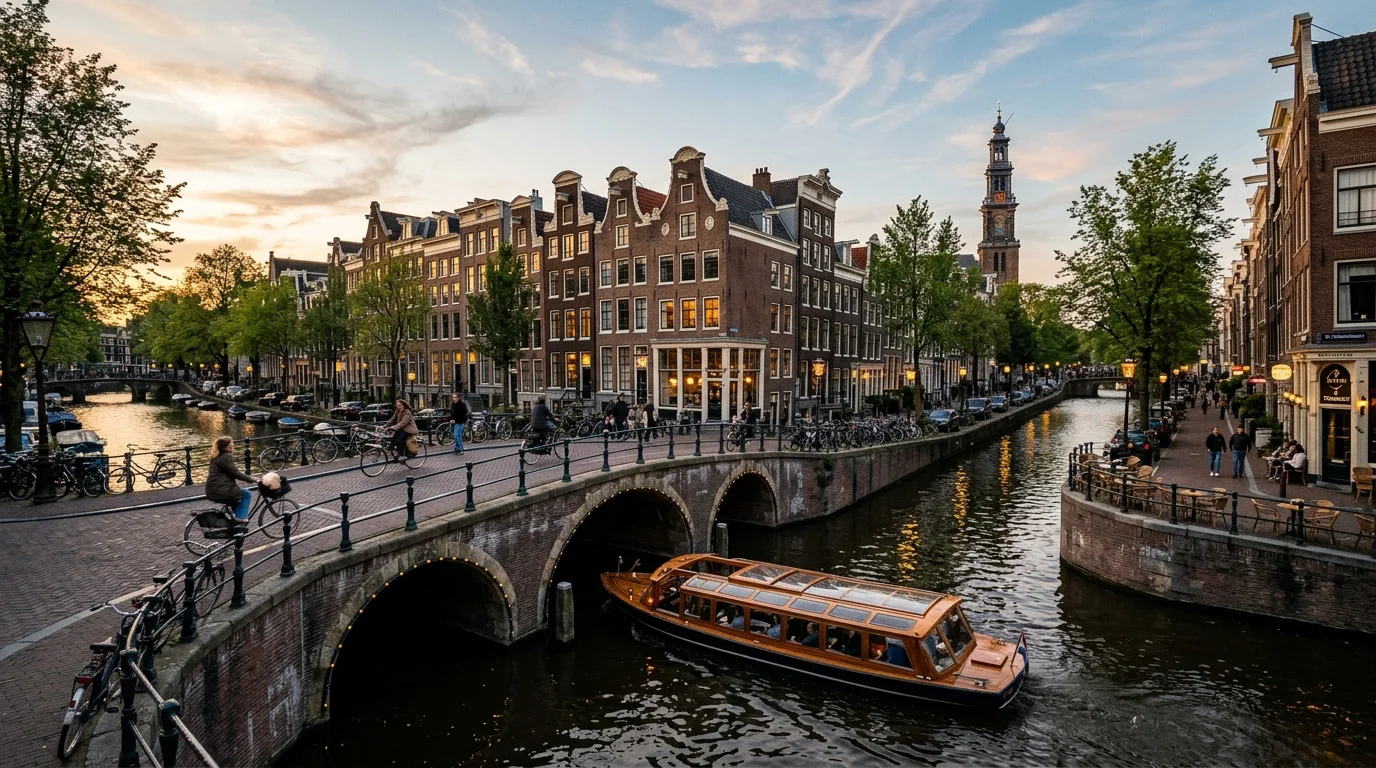
I have been to Amsterdam twice and I still cannot fully describe what this city does to you the moment you arrive. It looks exactly like a postcard — colourful canal houses in every shade of amber, green, and rust, their reflections rippling in the water below, bicycles stacked three deep on every bridge. Except no postcard prepares you for how alive it all feels.
I rented a bike, stood inside the Anne Frank House and felt something I was not ready for, took a canal boat and watched the city slide past me like a painting. The second time I came back, I brought someone with me — because Amsterdam is one of those cities you need to share.
This guide is built from two real visits. I will tell you what moved me, what surprised me, what I would do differently, and exactly how to make the most of every day you have there.
Table of Contents
- What Is Amsterdam and Why Should You Visit?
- How Do You Get To and Around Amsterdam?
- What Are the Top Attractions and Landmarks in Amsterdam?
- What Are the Best Neighborhoods to Explore in Amsterdam?
- What Is the Nightlife Like in Amsterdam?
- What Food Should You Try in Amsterdam?
- Where Should You Shop in Amsterdam?
- What Festivals and Events Happen in Amsterdam?
- Where Should You Stay in Amsterdam?
- What Do You Need to Know Before Visiting Amsterdam?
- What Are the Best Day Trips from Amsterdam?
- What Did I Learn After Two Trips to Amsterdam?
- How Can You Save Money in Amsterdam?
- Frequently Asked Questions About Visiting Amsterdam
What Is Amsterdam and Why Should You Visit?
Honestly? Amsterdam blew my mind. I was not expecting a city that beautiful.
The first time I arrived, I just stood there looking at the canals. Every building around the water is a different colour — deep red, mustard yellow, forest green. They are all different heights, different shapes, leaning slightly forward over the water like they are trying to get a better look. And everywhere you turn, there are bicycles. Thousands of them. Chained to bridges, parked on sidewalks, and yes — lying at the bottom of the canals under the water. I actually stopped and stared at that.
Amsterdam is also famous for its coffee shops where people smoke marijuana legally. I do not smoke myself, but I walked into a couple just to see what they were like. Nothing else in the world looks or feels like those places. The smell hits you from the street. The vibe inside is completely relaxed. It is just part of daily life there in a way that is hard to explain until you see it.
This city gets under your skin. I went back a second time. That should tell you everything.
When Is the Best Time to Visit Amsterdam?
Go in April or May if you can. The tulips are out, the weather is lovely, and the city is not yet packed with summer tourists.
Best months: April and May — This is Amsterdam at its prettiest. Flowers everywhere, warm enough to sit outside, and King's Day on April 26 is one of the biggest street parties in Europe. The whole city turns orange. It is incredible.
Avoid: July and August — Hot, crowded, and expensive. The Anne Frank House sells out weeks ahead. Hotels cost a fortune. Still a great city but you will fight the crowds everywhere you go.
Best for budget: November to February — Cold and sometimes grey, but hotels are cheap and the museums are quiet. December is actually magical — the city lights up the canals for the Amsterdam Light Festival and it feels like a fairy tale.
- Spring (March–May): My top pick — tulips, great weather, King's Day
- Summer (June–August): Busy and expensive — book everything months ahead
- Autumn (September–October): Quieter, beautiful, easier to get into restaurants
- Winter (November–February): Cold but cheap — perfect if you love museums
How Many Days Do You Need in Amsterdam?
Three to four days is perfect for a first visit. That is what I did the first time and I left feeling like I had really seen the city.
3 to 4 days — You can do the big museums, a canal boat tour, a bike ride, the Jordaan neighbourhood, and still have time for good food and a night out. This is the sweet spot.
5 to 7 days — Take day trips, slow down, explore neighbourhoods that tourists never find. A completely different experience.
One week or more — You basically get to live like a local. Worth it if Amsterdam gets you the way it got me.
Quick Facts About Amsterdam
- Language: Dutch — but almost everyone speaks English, do not worry
- Currency: Euro (€)
- Time Zone: CET (UTC+1 winter, UTC+2 summer)
- Climate: Mild but rainy — always pack a light jacket
- Best airport: Amsterdam Schiphol (AMS) — 15 minutes to the centre by train
- Getting around: Bike, tram, or walk — forget the car
- Emergency number: 112
How Do You Get To and Around Amsterdam?
I remember arriving at Schiphol and thinking how easy everything was. The train station is right inside the airport. You buy a ticket, you get on, and 15 minutes later you are in the heart of Amsterdam. No stress, no confusion. It is one of the smoothest airport arrivals in Europe.
Which Airports Serve Amsterdam?
Amsterdam has one main airport — Schiphol (AMS) — and it is a great one. It is about 15 km from the city centre and connected directly by train. Almost every major airline flies here, including Air Canada direct from Toronto. The airport is clean, easy to navigate, and has good food and shopping if you have a layover.
How Do You Get from the Airport to the City?
The train is the best option by far. I have taken it both times and it could not be easier.
Train (what I use): Trains run every 10 to 15 minutes from Schiphol directly to Amsterdam Centraal. The ride takes 15 to 17 minutes and costs around €5.40 (2026). Buy your ticket at the yellow NS machines before you board.
Private transfer (good with luggage or a group): If you are arriving late at night or travelling with a lot of bags, a pre-booked private transfer is worth it. Prices run €45 to €80 (2026) depending on vehicle size. You get a driver waiting for you with your name on a sign — no hunting for taxis when you are tired.
Official taxi: The metered taxi from Schiphol to the centre costs around €40 to €55 (2026). Only use the official taxi rank outside Arrivals. Do not accept offers from anyone inside the terminal — those are not legitimate taxis.
Amsterdam has a lot of small canal-side shops and market stalls that prefer cash. I always load up my Wise card before I travel so I have euros ready at the real exchange rate with no ATM fees eating into my budget the moment I land.
If you want to compare transfer options before you book, it takes two minutes and can save you real money. Prices for the same Schiphol route vary more than you would expect.
What Is the Best Way to Get Around Amsterdam?
Rent a bike. I know it sounds scary if you have never cycled in a busy city, but Amsterdam makes it work in a way that genuinely surprised me.
I was nervous the first time I got on a bike there. The streets looked chaotic — cyclists coming from every direction, trams cutting across, pedestrians wandering into the cycle lanes. But within an hour I understood why it works. Every Dutch person learns to ride a bike as a small child and it shows — the whole city moves together like one organism. Nobody cuts anyone off. Nobody panics. You just go with the flow and it clicks.
Bicycle rental: Expect to pay €10 to €15 per day (2026) from a local shop. Avoid the big chain rental places right outside Centraal Station — they are overpriced and the bikes are not always well maintained. Try Frederic Rent a Bike on Brouwersgracht or OrangeCity Bikes for better value.
Tram: If cycling is not for you, the tram covers almost every tourist area efficiently. A single ride costs €3.40 (2026). The Amsterdam Travel Ticket covering 1, 2, or 3 days of unlimited tram, bus, and metro — plus the Schiphol train — is excellent value at €17 to €27 (2026).
Walking: The historic centre is very walkable and flat. From Centraal Station to the Rijksmuseum is about 30 minutes on foot and the walk itself is beautiful. Wear comfortable shoes — the cobblestones are charming but uneven.
I never arrive in a new country without an eSIM already set up on my phone. Airalo takes about five minutes to activate before your flight and means you have data working the second you land — no hunting for a SIM card when you are tired and jet-lagged.
Should You Take the Hop-On Hop-Off Bus in Amsterdam?
On my first or second day in any new city I always take the hop-on hop-off city tour bus. Amsterdam is no exception and I recommend it without hesitation. It gives you the full layout of the city before you start exploring on foot. You see where the Rijksmuseum sits relative to the Anne Frank House, how far the Jordaan is from Dam Square, and how the neighbourhoods connect. After one ride the whole city makes sense. It saves hours of confusion and wasted walking.
What Are the Top Attractions and Landmarks in Amsterdam?
I went into Amsterdam thinking I knew what to expect from the museums. I was wrong. These are not the kind of places you walk through and forget. They stay with you. Especially the Anne Frank House — I was not prepared for how that one would feel.
Is the Rijksmuseum Worth Visiting in Amsterdam?
Museumstraat 1, 1071 XX Amsterdam, Netherlands
I walked into the Rijksmuseum not knowing what to expect and walked out two hours later feeling like I had just taken a history class I actually wanted to be in. The building itself is stunning — you stop at the entrance just to look up.
This is the Netherlands' national museum and it holds over a million objects covering 800 years of Dutch art and history. The star of the show is Rembrandt's The Night Watch — a painting so large and so detailed that you end up standing in front of it much longer than you planned.
Why visit: Seeing The Night Watch in person is genuinely different from seeing it in a book. The scale, the detail, the light — you understand immediately why people travel specifically to see this one painting.
Entrance: Adults €22.50 (2026) — children under 18 free
Best time: Weekday morning — book a timed entry slot online
Hours: Daily 9:00 AM to 5:00 PM
What Is It Like to Visit the Anne Frank House?
Westermarkt 20, 1016 GV Amsterdam, Netherlands
I will be honest with you — I walked into the Anne Frank House and felt deeply scared. Not scared of anything physical. Scared in the way you feel when history becomes completely real in front of you. The rooms are tiny. The hiding place is smaller than you imagine. And Anne was just a teenager living in there.
The Secret Annex where Anne and her family hid from the Nazis for two years has been kept bare on purpose — no furniture, no decorations. Just walls and floors and the weight of what happened there. Her original diary is displayed inside. I stood and read a few pages and could not move for a while.
Why visit: This is not just a museum. It is one of the most important places you can visit in Europe. It makes history personal in a way that nothing else does. Go even if you think you already know the story — being there changes something.
Entrance: Adults €16 (2026) — youth €8 — children under 10 free
Best time: Early morning or late afternoon on a weekday
Hours: Daily — generally 9:00 AM to 10:00 PM in summer, check website for exact times
Is the Van Gogh Museum Worth It in Amsterdam?
Museumplein 6, 1071 DJ Amsterdam, Netherlands
I was not sure what to expect from the Van Gogh Museum. I had seen his paintings in books a hundred times. But standing in front of the real thing felt completely different — like I was inside the painting rather than looking at it. The colours are more intense in person. The brushwork has a texture and energy that no photograph captures.
The museum holds the world's largest collection of Van Gogh's work — over 200 paintings and 500 drawings. The collection is arranged chronologically so you follow his life as you walk through the rooms. By the end you understand both the genius and the sadness of the man.
Why visit: If you have ever been moved by Van Gogh's work in a book or on a screen, seeing the originals in person will hit you on a completely different level. I enjoyed this museum more than I expected and I think about it still.
Entrance: Adults €22 (2026) — children under 18 free
Best time: Friday evening after 6:00 PM — less crowded and beautiful lighting
Hours: Daily 9:00 AM to 5:00 PM — Fridays until 9:00 PM
Should You Do a Canal Boat Tour in Amsterdam?
Departures from Centraal Station waterfront and along Prinsengracht, Amsterdam
Yes. Do not skip this. I took the canal boat tour and it gave me a completely different view of the city — literally. From the water, you see the canal houses from the angle they were meant to be seen. Every building is a different colour, a different shape, leaning slightly over the water. It looked even more like a postcard from down there than it did from the street.
The Amsterdam Canal Ring is a UNESCO World Heritage Site — 100 kilometres of canals lined by over 1,500 historic canal houses built during the Dutch Golden Age in the 1600s. The boat tour takes you through the main canals and under dozens of bridges while a guide explains the history.
Why visit: The canal boat tour is the single best way to understand the layout and beauty of Amsterdam in a short time. Even if you walk all the canals on foot, the view from the water is completely different and worth experiencing.
Entrance: €15 to €25 per person (2026) depending on operator
Best time: Late afternoon for the best light on the buildings
Hours: Tours run daily throughout the day
Is the Red Light Secrets Museum Worth Visiting?
Oudezijds Achterburgwal 60, 1012 DP Amsterdam, Netherlands
I went to the Red Light Secrets Museum and had so much fun. It is not what you might expect — it is actually a really well-made, thoughtful museum about the history of Amsterdam's Red Light District and the lives of the people who work there. It is honest, sometimes surprising, and genuinely interesting.
The museum is set inside a real canal house in the middle of De Wallen. You walk through rooms that tell the story of the district from the 1600s to today — the history, the politics, the personal stories. There are interactive elements and real testimonials from sex workers. It treats a complicated subject with more intelligence than most people expect.
Why visit: Amsterdam's Red Light District is one of the most famous neighbourhoods in the world and most tourists walk through it without understanding anything about it. This museum gives you the real context — and it is genuinely entertaining at the same time.
Entrance: Adults €15 (2026)
Best time: Afternoon on a weekday
Hours: Daily 11:00 AM to 11:00 PM
What Is the Amsterdam Canal Ring and Why Does It Matter?
Herengracht, Keizersgracht, Prinsengracht, Amsterdam, Netherlands
The canal ring is not just something you visit — it is something you live in while you are in Amsterdam. Every walk, every bike ride, every tram journey takes you past it. And every single time, it stops you for a second.
The three main canals — Herengracht, Keizersgracht, and Prinsengracht — were built in the 1600s when Amsterdam was the richest city in the world. The canal houses lining them were built by merchants who wanted everyone to know it. They are all slightly different, all slightly leaning, and all completely beautiful. The whole ring is a UNESCO World Heritage Site.
Why visit: It is free. It is everywhere. And it is the soul of Amsterdam. Walk it, cycle it, photograph it at sunrise — the canal ring rewards every kind of attention you give it.
Entrance: Free
Best time: Sunrise or sunset for photography
Hours: Always accessible
Should You Visit Vondelpark in Amsterdam?
Vondelpark, 1071 Amsterdam, Netherlands
If the weather is good, go to Vondelpark. It is where Amsterdam comes to breathe. On a sunny afternoon the park fills up with locals picnicking, cycling, rollerblading, and just sitting in the grass doing nothing — and it feels exactly like what a city should be.
The park is 47 hectares of green space right next to the Museum Quarter. It has an open-air theatre with free performances in summer, several good cafés, and a permanently relaxed energy that is very Amsterdam.
Why visit: It is free, it is beautiful, and it shows you Amsterdam the way locals actually live it. After a day of museums, an hour in Vondelpark resets everything.
Entrance: Free
Best time: Sunny weekday afternoons or summer evenings for live music
Hours: Always open
What Are the Best Neighborhoods to Explore in Amsterdam?
Amsterdam is a small city but each neighbourhood feels completely different. You can walk from one into another in ten minutes and feel like you have crossed into a different world. That is one of the things I love most about it.
Why Should You Stay in or Visit the Jordaan?
The Jordaan is the neighbourhood that made me fall in love with Amsterdam on a deeper level. It is a maze of tiny streets, small canals, hidden courtyards, and independent shops and cafés that feel genuinely local. No big chains, no tour buses — just Amsterdam at its most charming.
Best for: Romantics, photographers, people who want to feel like a local
Must experience: Walking along Brouwersgracht canal, browsing the Saturday Noordermarkt, stopping into a brown café for a beer and bitterballen
Getting there: 20-minute walk west from Centraal Station or tram 13/17 to Westermarkt
Why Should You Visit Oud-Zuid and the Museum Quarter?
This is where I stayed and I would choose it again. It is clean, safe, walkable, and puts you right next to the three biggest museums in the city. The streets are wide and lined with trees — it has a slightly grand, Parisian feel compared to the rest of Amsterdam.
P.C. Hooftstraat is right here — Amsterdam's luxury shopping street with Chanel, Gucci, Louis Vuitton, and all the big international brands. We walked there from our hotel in a few minutes. If shopping is part of your trip, this location is perfect.
Best for: First-time visitors, museum lovers, shoppers, families
Must experience: Museumplein square, Vondelpark, P.C. Hooftstraat, and the Concertgebouw concert hall
Getting there: Tram 2, 3, 5, or 12 to Museumplein
Why Should You Explore De Pijp?
De Pijp is Amsterdam's most multicultural and lively neighbourhood and the food scene here is outstanding. The Albert Cuypmarkt — the biggest street market in Amsterdam — runs the full length of Albert Cuypstraat every day except Sunday. Fresh stroopwafels, Dutch cheese, herring, flowers, clothing — everything is here and the prices are far better than the tourist centre.
The neighbourhood has a young, creative energy and the streets are full of small restaurants from every corner of the world. Indonesian, Surinamese, Turkish, modern European — you could eat a different cuisine every night for a week without leaving De Pijp.
Best for: Foodies, market lovers, budget travellers, people who want a local atmosphere
Must experience: Albert Cuypmarkt, a rijsttafel dinner, the Heineken Experience brewery
Getting there: Tram 3, 12, or 24 to Albert Cuypstraat
Why Should You Cross to Amsterdam-Noord?
Most tourists never go to Amsterdam-Noord and that is exactly why you should. Take the free ferry from behind Centraal Station — it takes five minutes — and you arrive in a completely different Amsterdam. Former industrial buildings turned into art studios, creative markets, street food events, and some of the best views of the city skyline you will find anywhere.
The Eye Filmmuseum is here — a stunning white building right on the waterfront that looks like something out of a science fiction film. The A'DAM Tower next door has a rooftop swing that hangs out over the edge of the building. And the NDSM Wharf is a massive former shipyard that now hosts art installations, weekend markets, and pop-up events.
Best for: Creative travellers, people who want to escape the tourist trail, architecture lovers
Must experience: Eye Filmmuseum, A'DAM Tower rooftop, NDSM Wharf, Pllek beach bar on the waterfront
Getting there: Free GVB ferry from behind Amsterdam Centraal — runs 24 hours, takes 5 minutes
Why Should You Visit De Wallen — the Red Light District?
De Wallen is one of the oldest parts of Amsterdam and also the most misunderstood. Yes, it is the famous Red Light District. But it is also home to Amsterdam's oldest building — the Oude Kerk, a church built in 1213 — and some of the most beautiful medieval canal architecture in the city. I walked through it in the evening and the contrast between the church spire and the red-lit windows all around it is something I will never forget.
The Red Light Secrets Museum is here too — and as I mentioned in the attractions section, it is genuinely worth your time. The neighbourhood is safe during the day and early evening. Use common sense late at night like you would anywhere.
Best for: History lovers, curious travellers, people who want to understand Amsterdam's most famous neighbourhood properly
Must experience: Oude Kerk, Red Light Secrets Museum, the canal architecture of Oudezijds Voorburgwal at dusk
Getting there: 10-minute walk east from Centraal Station
Why Should You Explore the Plantage District?
The Plantage is a quiet, leafy neighbourhood east of the centre that most tourists skip completely. That is a mistake. This is where you find the Hortus Botanicus — one of the oldest botanical gardens in the world, founded in 1638 — and the Dutch Resistance Museum, which tells the story of how ordinary Amsterdam citizens resisted the Nazi occupation during World War Two. After the Anne Frank House, the Resistance Museum hit me the hardest of anything I saw in Amsterdam.
Best for: History lovers, families, anyone who wants a quieter half-day away from the crowds
Must experience: Hortus Botanicus, Dutch Resistance Museum, a walk out to the Eastern Docklands for the modern architecture
Getting there: Tram 9 or 14 to Artis, or a 20-minute walk east from Nieuwmarkt
What Food Should You Try in Amsterdam?
I am not going to pretend I loved every Dutch food I tried. Bitterballen are everywhere and everyone raves about them — but honestly they were too oily for me. What I did love was the sweet stuff. The stroopwafel, the poffertjes, the Dutch pancakes. Amsterdam has a serious talent for making simple food feel special.
How Do Locals Actually Eat in Amsterdam?
Amsterdam eats earlier than most European cities. Dinner starts around 6:00 PM and most restaurants stop taking reservations by 9:00 PM. Lunch is a big deal — the daily lunch menus at local restaurants are excellent value and often the same food you would pay double for at dinner. Do not skip lunch here.
What Are the Must-Try Dishes in Amsterdam?
- Stroopwafel — Two thin crispy waffles with a caramel syrup filling in the middle. I had seen these in packages at home and thought I knew what they were. Then I tried a fresh warm one at a market stall and understood immediately why they are famous. The fresh version is on a completely different level. Find them at any market — the Albert Cuypmarkt has great ones.
- Poffertjes — Small fluffy mini pancakes made with yeast and buckwheat flour, served warm with butter and powdered sugar. I had mine with a Nutella-style topping and loved every bite. Light, soft, slightly spongy — not like regular pancakes at all. Look for the poffertjes stalls at markets throughout the city.
- Dutch pancakes (Pannenkoeken) — Large thin pancakes that sit somewhere between a French crêpe and an American pancake. You can get them sweet or savoury. I tried one with apple and cinnamon and it was delicious. Pancake House Upstairs on Grimburgwal 2 is a cozy Amsterdam institution for these.
- Bitterballen — Deep-fried breadcrumb balls filled with a thick beef ragout, served with mustard. Very popular bar snack. I found them a bit too oily personally but Arman enjoyed them. Try one and decide for yourself — they are a genuine Amsterdam staple.
- Haring (Dutch herring) — Raw salt-cured herring served with chopped raw onion and pickles. Locals eat it by holding the fish by the tail and lowering it into their mouth. It sounds strange. It tastes surprisingly good if you are adventurous. Best tried May to July during the new herring season.
- Rijsttafel (Indonesian Rice Table) — Not Dutch in origin but deeply part of Amsterdam culture through the colonial history. A feast of 15 to 25 small Indonesian dishes served around a central bowl of rice. One of the most unique dining experiences in the city. Blauw restaurant on Amstelveenseweg 158 is widely considered the best.
- Jenever (Dutch gin) — The ancestor of modern gin, served chilled in small tulip-shaped glasses. Arman tried this and loved it. I am not a gin drinker but I tasted it and understood the appeal — smoother and more mellow than regular gin. Try it at Wynand Fockink on Pijlsteeg 31, a tasting house that has been serving it since 1679.
Where Should You Eat in Amsterdam?
Budget — Under €15 per meal
- Albert Cuypmarkt food stalls — Albert Cuypstraat, 1072 Amsterdam — Fresh stroopwafels, poffertjes, herring, Dutch cheese, and international street food all in one place. This is where I would send anyone who wants to eat well without spending much. A full lunch under €10 and you get to walk through Amsterdam's best market at the same time.
- Broodje Bert — Elandsgracht 52, 1016 TV Amsterdam — A classic Amsterdam sandwich shop serving Dutch broodjes with traditional fillings. Queue with the locals, eat at the counter, spend around €8. Lunch only.
- Febo — Multiple locations across Amsterdam — Amsterdam's famous automat fast food chain where you buy hot snacks directly from coin-operated wall compartments. A kroket or frikandel from Febo at midnight is a completely Amsterdam experience and costs under €5.
Mid-Range — €15 to €40 per meal
- Café de Reiger — Nieuwe Leliestraat 34, 1015 SH Amsterdam — A beloved Jordaan brown café that also serves outstanding traditional Dutch food. Stamppot, braised short ribs, excellent daily specials. Very popular with locals — book ahead for dinner. Mains €18 to €26 (2026).
- Restaurant Greetje — Peperstraat 23-25, 1011 TJ Amsterdam — The best restaurant in Amsterdam for modern Dutch cuisine. The menu changes with the seasons and everything is creative and well-executed. If you want to understand what Dutch food can really be, eat here. Book well ahead. Mains €24 to €32 (2026).
- De Kas — Kamerlingh Onneslaan 3, 1097 DE Amsterdam — Set inside a beautiful 1926 greenhouse in a park, De Kas grows much of its own produce on site and serves it in a set menu. One of Amsterdam's most unique dining experiences. Lunch around €45, dinner €65 (2026).
Fine Dining — €65+ per person
- Ciel Bleu — Hotel Okura, Ferdinand Bolstraat 333, 1072 LH Amsterdam — Two Michelin stars on the 23rd floor with panoramic city views. French-influenced contemporary cuisine at the highest level. Book weeks ahead. Tasting menu from €145 per person (2026).
- Rijks — Museumstraat 2, 1071 XX Amsterdam — Inside the Rijksmuseum itself. One Michelin star, modern Dutch tasting menu, extraordinary setting. From €85 per person (2026).
What Are the Dining Customs in Amsterdam?
The biggest thing that surprised me is how early dinner is. If you show up at a restaurant at 9:00 PM expecting a full dinner service the way you would in Spain or Italy, you may find the kitchen is already closing. Eat by 7:30 PM to be safe.
Meal times: Breakfast 7:00 to 10:00 AM, lunch noon to 2:00 PM, dinner 6:00 to 8:00 PM. Plan accordingly.
Tipping: Not compulsory but appreciated. Round up the bill or leave 10% for good service at a restaurant. In cafés and bars, rounding up small change is the norm.
Reservations: Essential for popular restaurants on Friday and Saturday evenings. Book at least two to three days ahead — and several weeks ahead for Michelin-starred places.
A food tour is genuinely one of the best ways to eat your way through Amsterdam — you hit the Albert Cuypmarkt, try Dutch herring, fresh stroopwafels, and Indonesian street snacks in one go with someone local who knows exactly where to go.
What Is the Nightlife Like in Amsterdam?
Amsterdam calls itself a party city and it earns that reputation. But what surprised me is how many different kinds of nights out exist here. You can spend an evening in a cozy 400-year-old brown café nursing a jenever and talking to locals. Or you can go to one of the best techno clubs in Europe and dance until sunrise. Both are valid Amsterdam experiences and both are genuinely good.
Where Are the Best Areas for Nightlife in Amsterdam?
Leidseplein is the centre of tourist nightlife — busy, loud, and fun. Rembrandtplein is slightly more local. And if you want something more underground and creative, Amsterdam-Noord is where the serious music scene lives.
What Are the Best Bars and Clubs in Amsterdam?
Bars and Brown Cafés
- Wynand Fockink — Pijlsteeg 31, 1012 HH Amsterdam — A tiny jenever tasting house in an alley behind Dam Square, serving Dutch gin and liqueurs since 1679. Standing room only, no music, no fuss — just excellent spirits in a space that has barely changed in 350 years. This is the most authentic bar experience in Amsterdam and it costs almost nothing.
- Brouwerij 't IJ — Funenkade 7, 1018 AL Amsterdam — Amsterdam's most famous craft brewery, built inside a working windmill from 1725. They brew their own beers and serve them in a rustic taproom. Only open afternoons — go on a sunny day and sit outside under the windmill with a cold glass. One of those Amsterdam experiences you talk about for years.
- Café Hoppe — Spui 18-20, 1012 XA Amsterdam — One of Amsterdam's oldest brown cafés, open since 1670. The terrace on Spui square is perfect for people-watching over a beer. Always full of locals.
- Door 74 — Reguliersdwarsstraat 74, 1017 BN Amsterdam — Amsterdam's best cocktail bar. It is a speakeasy — you book a table by sending a text message in advance. Award-winning cocktails, intimate atmosphere, no walk-ins. Worth the extra effort.
Clubs and Dancing
- Shelter — Johan van Hasseltweg 170, 1022 WX Amsterdam — Underground techno and electronic music club in the basement of the A'DAM Tower in Noord. Open Thursday to Sunday from midnight. One of the best clubs in Europe for electronic music. No sportswear at the door.
- Paradiso — Weteringschans 6-8, 1017 SG Amsterdam — A legendary live music and club venue inside a converted 19th-century church near Leidseplein. The Rolling Stones played here. Nirvana played here. The setting inside the old church is extraordinary — one of the most atmospheric music venues I have ever seen.
- Melkweg — Lijnbaansgracht 234a, 1017 PH Amsterdam — Right next to Paradiso, Melkweg is a massive multi-arts complex with three stages covering everything from hip-hop to world music to electronic. Also has a cinema and gallery. Book ahead for popular shows.
Live Music
- Bimhuis — Piet Heinkade 3, 1019 BR Amsterdam — Amsterdam's home of jazz and improvised music. A world-class venue in a beautiful modern waterfront building. Tickets run €15 to €35 (2026). If you love jazz, this is a must.
- Concertgebouw — Concertgebouwplein 10, 1071 LN Amsterdam — One of the greatest concert halls in the world. Every Wednesday at 12:30 PM they hold a free lunchtime concert — no reservation needed, just arrive by noon. This is one of Amsterdam's best free experiences and almost no tourists know about it.
What Family-Friendly Evening Entertainment Is Available?
Amsterdam has good evening options for families too. The Eye Filmmuseum in Noord screens classic and family films in a stunning waterfront setting. In summer, Vondelpark's open-air theatre runs free performances including music, theatre, and family shows from June through August. The Royal Theatre Carré on the Amstel hosts circus performances and family shows throughout the year.
Where Should You Shop in Amsterdam?
What Are the Best Shopping Areas in Amsterdam?
P.C. Hooftstraat is the address for luxury shopping. It is a beautiful tree-lined street in the Museum Quarter with every major international brand you can think of. I was staying nearby and walked there in a few minutes — which was either very convenient or very dangerous for my wallet.
- P.C. Hooftstraat — Pieter Cornelisz Hooftstraat, 1071 Amsterdam — Amsterdam's luxury shopping street. Hermès, Prada, Chanel, Gucci, Louis Vuitton, and more, all within a few hundred metres. Beautiful street, excellent service, and the stores here feel less frantic than their equivalents in Paris or Milan.
- Kalverstraat and Leidsestraat — Central Amsterdam — The main high street shopping area with international chains, Dutch brands, and department stores including the Bijenkorf on Dam Square. Good for everyday shopping and browsing.
- The Jordaan — Jordaan, 1016 Amsterdam — Independent boutiques, art galleries, antique shops, and specialty food stores. This is where you find things you cannot find anywhere else — small Dutch designers, handmade jewellery, vintage prints. Allow a full afternoon to explore properly.
- Albert Cuypmarkt — Albert Cuypstraat, 1072 Amsterdam — Amsterdam's biggest and best street market, open Monday to Saturday. Fresh food, flowers, clothing, fabric, household goods, and street food all in one long stretch. The prices are far better than any shop in the tourist centre.
- Waterlooplein Flea Market — Waterlooplein, 1011 Amsterdam — Amsterdam's famous outdoor flea market, open daily except Sunday. Vintage clothing, second-hand books, antiques, quirky accessories, and the occasional genuine find. Go with time and patience.
What About Vintage Shopping in Amsterdam?
A friend told me before my trip that Amsterdam has some of the best vintage and second-hand stores in Europe. She was not exaggerating. I walked into one and stood there looking at racks of incredibly stylish dresses, boots, belts, and coats — things you genuinely cannot find anywhere else. I did not buy anything only because I had no space left in my suitcase, and I still regret it.
If vintage shopping is your thing, leave room in your bag before you go. These stores are not charity shop level — they are carefully curated, genuinely stylish, and the pieces are unique.
- Episode — Waterlooplein 1, 1011 PG Amsterdam — One of the best known vintage stores in Amsterdam. Three floors of carefully selected second-hand clothing, shoes, and accessories from every decade. Excellent quality and very well organised.
- IJ-Hallen Flea Market — NDSM-plein 1, 1033 Amsterdam-Noord — The largest flea market in Europe, held one weekend per month at the NDSM Wharf in Noord. Hundreds of stalls selling vintage clothing, furniture, art, and collectibles. Check the dates before you go — it is worth planning your trip around.
- Zipper — Huidenstraat 7, 1016 ER Amsterdam — A beloved Jordaan vintage store specialising in American vintage from the 1950s to the 1990s. Denim, leather jackets, band tees, boots. If you love that era of fashion this is your place.
- Laura Dols — Wolvenstraat 7, 1016 EM Amsterdam — Specialises in vintage glamour — 1940s to 1970s dresses, shoes, and accessories. Everything is in beautiful condition and the store itself feels like stepping into another era.
What Should You Buy in Amsterdam?
- Stroopwafels — Buy a proper tin from a market stall or a good food shop, not a tourist gift shop. The quality difference is significant.
- Dutch cheese — Aged Gouda, Edam, and Leerdammer from a real kaaswinkel (cheese shop) rather than a supermarket. Try before you buy — the good shops always offer samples.
- Delftware — The iconic blue and white Dutch pottery. Genuine hand-painted Delftware is expensive but beautiful. Avoid the cheap imitations sold near Dam Square — the real thing comes with a certificate and is made in Delft.
- Vintage fashion — As I said, leave room in your suitcase. You will find things in Amsterdam's vintage stores that do not exist anywhere else in Europe.
- Dutch gin (Jenever) — A bottle of aged jenever from Wynand Fockink makes an excellent gift for anyone who appreciates spirits. They sell their own bottles to take home.
- Flower bulbs — Amsterdam is the flower capital of the world. Tulip bulbs from the Bloemenmarkt (flower market) on the Singel canal make a beautiful and very Dutch souvenir to take home and plant.
Can You Get a VAT Refund on Shopping in Amsterdam?
Yes — and most tourists have no idea this exists. If you live outside the European Union, you are entitled to a VAT refund on purchases over €50 in a single store. The standard VAT rate in the Netherlands is 21%, so on a significant purchase this is real money. I did not know about this on my first trip and left money on the table. Do not make the same mistake.
Ask for a VAT refund form (Tax Free Form) at the time of purchase in any participating store — including the luxury brands on P.C. Hooftstraat. You get the refund processed at the airport before you fly home. Full details in our guide below.
→ VAT Refund in Europe — Complete Guide for Non-EU Travelers
What Festivals and Events Happen in Amsterdam?
What Is the Annual Events Calendar for Amsterdam?
| Month | Event | What to Expect |
|---|---|---|
| January | Amsterdam International Fashion Week | Dutch and international designers showcase collections — good for fashion lovers and industry insiders |
| February | Amsterdam Light Festival (ends Feb) | Stunning light art installations along the canals — runs from late November through February. One of the most beautiful things you can see in winter Amsterdam |
| March | Stille Omgang (Silent Procession) | An ancient Catholic tradition — a silent night walk through the city centre. Deeply moving if you come across it |
| April | King's Day — April 26 | The biggest party of the year. The whole city wears orange, the canals fill with boats, and every street becomes a flea market and dance floor. Do not miss this if you can help it |
| April–May | Keukenhof Gardens Open | The world's most famous tulip garden, 30 minutes from Amsterdam. Seven million flowers in bloom. Open late March through mid-May only |
| May | Remembrance Day and Liberation Day | May 4 is National Remembrance Day — a deeply felt national moment of silence at 8:00 PM. May 5 is Liberation Day with free concerts across the city |
| June | Holland Festival | Amsterdam's biggest performing arts festival — theatre, opera, dance, and music across multiple venues throughout June |
| July–August | Amsterdam Pride | One of the world's most famous Pride celebrations, centred around the Canal Parade on the first Saturday of August — decorated boats fill the canals in a spectacular floating parade |
| August | Grachtenfestival (Canal Festival) | Classical music performances on stages along the canals and on floating platforms. Free and ticketed events across ten days in August |
| September | Uitmarkt | Free preview performances of the entire Amsterdam cultural season — theatre, dance, music, opera — all in one weekend on Museumplein and along the canals |
| October | Amsterdam Dance Event (ADE) | The world's largest electronic music conference and festival. Over 2,500 artists perform across 200 venues across five days. Essential for electronic music fans |
| November | Sinterklaas Arrival | The arrival of Sinterklaas by boat into Amsterdam harbour — a beloved Dutch tradition that kicks off the festive season. Great for families with children |
| December | Amsterdam Light Festival begins | Light art installations appear along the canals from late November. The city looks magical. Combine with Christmas markets for a perfect winter visit |
How Do Festivals Affect Hotel Prices and Availability?
King's Day, Amsterdam Pride, and the Amsterdam Dance Event are the three events that cause the biggest price spikes. Hotels during King's Day weekend can cost three to four times the normal rate and sell out months in advance. If you are visiting during any of these events, book your accommodation at least three to four months ahead. The earlier the better.
The Keukenhof tulip season in April and May also pushes prices up across the whole city. Spring in Amsterdam is beautiful but it is not the cheapest time to visit — you are paying for the flowers and the weather and so is everyone else.
Where Should You Stay in Amsterdam?
I did not choose my Amsterdam hotel randomly — I wanted to be close to the shopping and the museums without being right in the middle of the tourist chaos near Centraal Station. The Museum Quarter delivered exactly that. Quiet streets, beautiful architecture, and everything within easy reach. I would stay in the same area again without hesitation.
What Are the Best Areas to Stay in Amsterdam?
For a first visit, the Museum Quarter or the Jordaan are the two best options. The Museum Quarter puts you near the big attractions and the best shopping. The Jordaan puts you in the most charming and atmospheric part of the city.
| Area | Best For | Price Range | Transport |
|---|---|---|---|
| Museum Quarter / Oud-Zuid | First timers, museum lovers, shoppers, couples | €€€ | Tram 2, 3, 5, 12 — easy access everywhere |
| Jordaan | Romantics, repeat visitors, people who want local atmosphere | €€–€€€ | Tram 13, 17 — walkable to canal ring |
| City Centre / Dam Square | Those who want to be in the middle of everything | €€€ | Everything walkable — but noisy at night |
| De Pijp | Foodies, budget travellers, younger crowd | €–€€ | Tram 3, 12, 24 — 15 min to centre |
| Amsterdam-Noord | Creative travellers, those wanting something different | €–€€ | Free ferry to Centraal — 5 minutes |
What Should You Expect at Different Price Points?
Budget — under €100 per night: Hostels and basic hotels, mostly outside the centre in De Pijp or Noord. Clean and functional but you will spend more time commuting to attractions. Good option if you plan to be out all day and just need a bed.
Mid-range — €100 to €250 per night: This is where Amsterdam has the best options. Boutique hotels in the Jordaan, canal house hotels on the main ring, and solid four-star options near Museumplein. You get character, good locations, and comfortable rooms. This is what I would recommend for most travellers.
Luxury — €250 and above per night: Amsterdam has some outstanding luxury options. The Hotel Okura in De Pijp has two Michelin-starred dining and beautiful rooms. The Waldorf Astoria on the Herengracht is set inside five 17th-century canal houses and is one of the most beautiful hotels in Europe. The Dylan on the Keizersgracht is intimate and design-focused.
What Should You Know Before Booking in Amsterdam?
Book early. Amsterdam is one of the most visited cities in Europe and good hotels in good locations sell out fast — especially for spring and summer dates. I always book with free cancellation so I can change plans if something comes up. Pay a little more for that flexibility. It is always worth it.
Also be aware that many Amsterdam hotels are inside historic canal houses — which means narrow staircases, no lifts, and rooms that can be quite small by modern standards. If you have mobility issues or a lot of luggage, check the hotel details carefully before booking.
What Do You Need to Know Before Visiting Amsterdam?
How Should You Handle Money in Amsterdam?
Amsterdam is increasingly cashless — most restaurants, shops, and attractions accept card payments without any issue. But markets like Albert Cuypmarkt and smaller street food stalls often prefer cash. I always make sure I have some euros on me for exactly those situations.
Amsterdam's canal-side markets and smaller food stalls often work in cash only. I loaded my Wise card with euros before I left home and used it everywhere — you get the real mid-market exchange rate with no hidden fees, which adds up to real savings over a full trip.
How Do You Get Data or a SIM Card for Amsterdam?
The easiest option by far is an eSIM. I set mine up before I left home and had data working the second my plane landed at Schiphol. No hunting for a SIM card when you are tired and dragging luggage through an airport.
If you are visiting multiple European countries on the same trip — which Amsterdam makes very easy given how central it is — an eSIM that covers the whole of Europe saves you from buying a new SIM in every country.
Do You Need Travel Insurance for Amsterdam?
Yes. Always. I say this from personal experience — I ended up in hospital on a trip to Italy and my travel insurance covered every cent. Medical costs in Europe can be significant even for something minor. Never travel without coverage regardless of how short your trip is or how healthy you feel.
Do You Need a Visa to Visit Amsterdam?
Canadian, American, British, and Australian passport holders do not need a visa to visit the Netherlands for stays up to 90 days. You enter as a tourist and no advance paperwork is required. Make sure your passport is valid for at least three months beyond your planned departure date from the Schengen Area.
Note that from 2025 the EU requires travellers from visa-exempt countries to register online through the ETIAS system before travelling to Europe. It is a simple online process and costs €7. Check the current requirements before you travel as rollout dates have shifted.
How Do You Get Around Amsterdam on Public Transport?
The tram is your best friend in Amsterdam. Lines 2, 11, 12, and 19 cover almost every tourist area. Buy the Amsterdam Travel Ticket if you are staying more than a day — it covers all trams, buses, and metro plus the Schiphol airport train and is excellent value.
- Single tram ride: €3.40 (2026)
- 1-day Amsterdam Travel Ticket: €17 (2026)
- 2-day Amsterdam Travel Ticket: €22 (2026)
- 3-day Amsterdam Travel Ticket: €27 (2026)
- Bicycle rental: €10 to €15 per day (2026)
- Taxi base fare: approximately €3.22 plus €2.35 per km (2026)
Is Amsterdam Safe for Tourists?
Amsterdam is generally very safe. I never felt uncomfortable walking around at any time of day or night. The city is well-lit, well-policed, and locals are friendly and helpful. Use the same common sense you would in any major European city and you will have no problems.
The main risk is pickpocketing in crowded tourist areas — particularly around Centraal Station, the Red Light District, and busy tram stops. Keep your bag in front of you, do not flash expensive items, and be aware of your surroundings in crowds. Bicycle theft is also very common — always use two locks if you rent a bike and lock it to something fixed.
What Are the Practical Basics for Visiting Amsterdam?
- Plug type: Type C and F — bring a European adapter if travelling from North America
- Voltage: 230V — North American devices need a voltage converter for non-dual-voltage appliances
- Drinking water: Tap water is safe and excellent quality — no need to buy bottled water
- Tipping: Not compulsory — round up or leave 10% at restaurants for good service
- Business hours: Most shops open 10:00 AM to 6:00 PM — many closed Sunday mornings
- Emergency number: 112 for police, fire, and ambulance
- Useful Dutch phrases: Dank je wel (thank you), Alsjeblieft (please / here you go), Hoeveel kost dit? (how much does this cost?), Spreekt u Engels? (do you speak English?), Waar is...? (where is...?)
Was Your Flight to Amsterdam Delayed or Cancelled?
Schiphol is one of Europe's busiest airports and handles over 70 million passengers a year. Delays happen — especially in summer when the airport operates at full capacity. If your flight to or from Amsterdam was delayed by more than three hours you may be entitled to up to €600 in compensation under EU261 regulations. It costs nothing to check.
What Are the Best Day Trips from Amsterdam?
One of the things that surprised me most about the Netherlands is how easy and fast everything is to reach from Amsterdam. You can be in a completely different world in 30 to 60 minutes by train. I ended up doing more day trips from Amsterdam than from almost any other city I have visited.
Why Should You Visit the Keukenhof Tulip Gardens from Amsterdam?
The Keukenhof is one of the most beautiful places I have ever been. Seven million tulips in bloom across 32 hectares of gardens — every colour you can imagine, perfectly arranged, with that incredible sweet floral smell hanging in the air on a warm spring morning. It does not look real. It looks like someone turned a painting into a place you can walk through.
Distance: About 40 minutes from Amsterdam by bus from Schiphol or by direct Keukenhof Express bus from various city stops
What to see: Tulip fields in every colour, themed garden sections, greenhouse displays, windmill on site, and the surrounding bulb fields along the route
How to get there: Keukenhof Express bus runs directly from Amsterdam during the season — buy a combination ticket online that includes transport and entry
Time needed: Full day — half day minimum
Important: Keukenhof is only open from late March to mid-May. You cannot visit outside this window. Book tickets online in advance — it sells out.
Why Should You Do a Day Trip to Haarlem from Amsterdam?
Haarlem was one of my favourite day trips from Amsterdam. It is only 15 minutes by train and feels like a smaller, quieter, less touristy version of Amsterdam. Beautiful canals, a stunning central square, great independent shops, and far fewer crowds than the capital. If Amsterdam feels overwhelming at any point, Haarlem is the perfect reset.
Distance: 15 to 20 minutes by direct train from Amsterdam Centraal — trains run every 15 minutes
What to see: The Grote Markt central square, the magnificent Sint-Bavokerk church, the Frans Hals Museum, canal walks, and the excellent independent shopping streets
How to get there: Direct train from Amsterdam Centraal, around €4 to €6 each way (2026)
Time needed: Half day to full day
Why Should You Visit Gouda from Amsterdam?
Most people think Gouda is just cheese. And yes, the cheese is extraordinary — but what stopped me in my tracks was the Sint-Janskerk, the church in the centre of Gouda. It is the longest church in the Netherlands and has the most beautiful stained glass windows I have seen anywhere in Europe. The light coming through those windows on a sunny day is something I still think about. Gouda is a small, quiet, genuinely lovely Dutch city and the church alone makes it worth the trip.
Distance: About 45 minutes by train from Amsterdam Centraal with one change
What to see: Sint-Janskerk and its extraordinary stained glass, the historic market square (Markt), the Gouda cheese market (Thursday mornings in summer), and the city's canals
How to get there: Train from Amsterdam Centraal via Utrecht or Den Haag — around €12 to €15 each way (2026)
Time needed: Half day
Why Should You Visit Kinderdijk from Amsterdam?
Kinderdijk is like stepping into a Dutch postcard. A village with 19 historic windmills standing in a row along the waterways — all still in working condition, all beautifully preserved. It is a UNESCO World Heritage Site and one of the most photographed places in the Netherlands. I went in the afternoon when the light was golden and the reflections of the windmills in the water were extraordinary.
Distance: About 1.5 hours from Amsterdam — train to Rotterdam then water bus to Kinderdijk
What to see: 19 historic windmills, walking and cycling paths along the dykes, one windmill open to go inside, beautiful flat Dutch landscape in every direction
How to get there: Train to Rotterdam Centraal then Waterbus line 20 to Kinderdijk — buy a combination ticket online
Time needed: Full day — combine with Rotterdam for a great day out
Why Should You Visit Rotterdam from Amsterdam?
Rotterdam is unlike any other city in the Netherlands. It was almost completely destroyed in World War Two and rebuilt from scratch — which means it has the most striking and experimental modern architecture in the country. The building that blew my mind was the Cube Houses — bright yellow cubes tilted at 45 degrees and stacked on top of each other. I could not stop staring at them. They look completely impossible and somehow they are people's actual homes.
Distance: About 40 minutes by Intercity Direct train from Amsterdam Centraal
What to see: The Cube Houses (Kubuswoningen), the Markthal covered market, the Erasmus Bridge, the old harbour (Oude Haven), and the incredible skyline of modern architecture
How to get there: Intercity Direct train from Amsterdam Centraal — around €15 to €20 each way (2026). Book in advance for the best price.
Time needed: Full day
Why Should You Visit The Hague from Amsterdam?
The Hague surprised me. I was not expecting such a beautiful, elegant city. It has a completely different feel from Amsterdam — wider streets, grand government buildings, a more sophisticated atmosphere. And then you walk to Scheveningen, the beach on the North Sea right at the edge of the city, and suddenly you are at the seaside. The shopping in The Hague is also excellent — one of the best shopping centres I visited in the Netherlands.
Distance: About 50 minutes by direct train from Amsterdam Centraal
What to see: The Binnenhof parliament buildings, the Mauritshuis museum (home to Vermeer's Girl with a Pearl Earring), the Scheveningen beach and pier, and excellent shopping in the city centre
How to get there: Direct train from Amsterdam Centraal — around €12 to €15 each way (2026)
Time needed: Full day
Why Should You Visit Delft from Amsterdam?
Delft is small, beautiful, and feels like Amsterdam did 300 years ago — without the crowds. The canals are quieter, the streets are narrower, and the whole city has a calm, timeless quality. This is where Delftware blue and white pottery comes from and where the painter Vermeer was born and spent his entire life. The market square is stunning and the Nieuwe Kerk tower has one of the best views in the region.
Distance: About 1 hour from Amsterdam by train via Den Haag
What to see: The Markt central square, the Nieuwe Kerk and Oude Kerk, the Royal Delft pottery factory, canal walks, and the many independent shops selling genuine handmade Delftware
How to get there: Train from Amsterdam Centraal via Den Haag Centraal — around €14 to €16 each way (2026)
Time needed: Half day to full day — combine easily with The Hague
Why Should You Visit Utrecht from Amsterdam?
Utrecht is a university city with a young, creative energy and beautiful medieval canals that sit lower than street level — a unique feature you do not see anywhere else in the Netherlands. The cafés and restaurants along the canal wharves are some of the best in the country. The Dom Tower in the centre is the tallest church tower in the Netherlands and worth climbing for the view.
Distance: About 30 minutes by direct train from Amsterdam Centraal — one of the fastest day trips you can do
What to see: The sunken canal wharves and their cafés, the Dom Tower, the Oudegracht canal, excellent independent shopping, and the vibrant student atmosphere
How to get there: Direct train from Amsterdam Centraal every 15 minutes — around €8 to €10 each way (2026)
Time needed: Half day to full day
What Did I Learn After Two Trips to Amsterdam?
I have been to Amsterdam twice and made different mistakes each time. The first trip I showed up without tickets to anything and spent half a day queuing or missing out entirely. The second trip I came prepared and had a completely different experience. Everything I am about to tell you comes from getting things wrong first.
What Should You Do Before You Even Land in Amsterdam?
Book the Anne Frank House online at annefrank.org before you do anything else. Tickets are released two months in advance and they go fast — especially in summer. I cannot stress this enough. You cannot buy walk-in tickets. If you do not book ahead you will not get in and you will regret it for the rest of the trip.
Why Should You Never Drive a Car in Amsterdam's Centre?
I drove in Amsterdam and I will never do it again. The streets in the historic centre are medieval — designed for horses and bicycles in the 1600s, not modern vehicles. They are narrow, they twist unexpectedly, trams cut across without warning, and cyclists appear from every direction at once. I was gripping the steering wheel so hard my hands hurt. Park outside the centre and take the tram in, or do not bring a car at all.
How Do You Survive Amsterdam on a Bicycle?
Rent a bike but do not panic. I was nervous the first time I cycled in Amsterdam because the streets looked completely chaotic. But within an hour I understood how it works. Every Dutch person has been cycling since they were a small child and the whole city moves together like one organism. Stay in the cycle lanes, go with the flow, and do not make sudden movements. You will be fine.
The one real rule is to always lock your bike to something fixed with two locks. Bicycle theft in Amsterdam is extremely common — locals use two locks as a matter of habit. If you rent a bike and come back to find it gone, it will ruin your afternoon.
What Is the Anne Frank House Actually Like Inside?
I want to prepare you for this one because I was not prepared myself. The Anne Frank House is not like any other museum. You walk through the actual rooms where Anne and her family hid for two years. The rooms are tiny. The space is claustrophobic. And the bookcase that hid the entrance to the Secret Annex is right there in front of you — the actual bookcase, not a replica.
I felt deeply scared inside that building. Not of anything physical — scared in the way you feel when something historical becomes completely real. Anne was a teenager writing in her diary in those rooms. Standing there makes that fact impossible to ignore. Go prepared for it to affect you.
What Did the Van Gogh Museum Teach Me?
I had seen Van Gogh's paintings in books and on screens so many times that I thought I knew them. I was wrong. Standing in front of the real paintings I understood immediately why people travel specifically to see them. The colours are more intense than any reproduction shows. The brushwork has a physical texture and energy that photographs cannot capture. I felt like I was inside the paintings rather than looking at them.
Do not skip this museum even if you think you are not particularly interested in Van Gogh. The experience of seeing the originals changes your relationship with the work completely.
What Do You Actually See on the Canal Boat Tour?
The canal boat tour gave me a completely different perspective on Amsterdam than walking the streets does. From the water, you see the canal houses from the angle they were designed to be seen — reflecting in the water, each one a different colour and shape, leaning slightly forward. It looks even more like a postcard from down there than it does from street level.
Take the boat tour on your first or second day rather than saving it for the end of the trip. It gives you a brilliant overview of the city layout and helps you understand which neighbourhoods you want to explore on foot afterwards.
What Should You Know About Amsterdam's Coffee Shops?
Amsterdam's coffee shops — where marijuana is sold and smoked legally — are genuinely unlike anything else in the world. I do not smoke myself but I walked into a couple out of curiosity and the atmosphere is completely relaxed and friendly. No pressure, no weirdness. It is just part of daily life in Amsterdam in a way that takes a moment to absorb.
The smell hits you from the street before you even reach the door. Inside, people sit at tables, order at a counter, and treat the whole experience the way someone else might treat stopping for a coffee. If you are curious, walk in and have a look. Nobody will pressure you to buy anything.
How Can You Save Money in Amsterdam?
What Are the Best Money-Saving Strategies for Amsterdam?
Amsterdam is not a cheap city but it is very possible to manage your budget well if you know where to spend and where to save. I spent a lot on shopping and museums and very little on food and transport — and that balance worked perfectly.
- Buy the Museumkaart (€69.95 in 2026) if you plan to visit three or more museums. It covers the Rijksmuseum, Stedelijk, Eye Filmmuseum, and dozens more across the Netherlands. It pays for itself after two large museums.
- Buy the Amsterdam Travel Ticket at Schiphol the moment you land. It covers all trams, buses, and metro plus the airport train for up to three days. Much cheaper than buying individual tickets every time.
- Eat at the Albert Cuypmarkt in De Pijp for lunch. Fresh stroopwafels, poffertjes, Dutch cheese, herring, and international street food — a full delicious lunch for under €10.
- Use a Wise card for all spending instead of paying foreign transaction fees on your regular card. The savings add up over a full trip, especially if you are shopping.
- Book museum tickets online in advance. Not only does this guarantee entry — some museums offer a small discount for online booking versus paying at the door.
- Take the free GVB ferry to Amsterdam-Noord instead of paying for a boat tour. The five-minute crossing gives you great views of the IJ waterway and the Amsterdam skyline for absolutely nothing.
- Visit Vondelpark, the Begijnhof, the canal ring, and the NEMO rooftop terrace — all free and all genuinely worth your time.
- Rent a bike instead of taking taxis. A full day of cycling costs €10 to €15 (2026) and covers more ground than any other transport option in the city.
- Always ask about the VAT refund when making large purchases. Non-EU visitors are entitled to reclaim 21% VAT on purchases over €50 in a single store. On a Hermès or Prada purchase this is serious money — I wish I had known this earlier.
- Drink at brown cafés in the Jordaan rather than tourist bars near Leidseplein. The beer costs less, the atmosphere is better, and you are drinking where locals actually drink.
- Buy stroopwafels and Dutch cheese at the Albert Cuypmarkt rather than tourist shops near Dam Square. The quality is better and the prices are a fraction of what you pay in the centre.
- Travel to day trip destinations by train using an OV-chipkaart loaded with credit rather than buying individual tickets each time. The per-journey rate is lower and it works everywhere in the Netherlands.
What Can You Do for Free in Amsterdam?
Quite a lot, actually. Some of my favourite Amsterdam moments cost nothing at all.
- Walk the canal ring: The most beautiful urban landscape in the Netherlands and completely free. Walk it at sunrise before the tourists arrive and you will have it almost to yourself.
- Vondelpark: Free entry, free atmosphere, free open-air theatre performances in summer. One of the best urban parks in Europe.
- The Begijnhof: A medieval courtyard hidden in the city centre, free to enter, and one of the most peaceful places in Amsterdam.
- NEMO rooftop terrace: Free panoramic views over the harbour and old city. One of Amsterdam's best-kept secrets.
- Free GVB ferry to Noord: Five minutes across the IJ waterway, great views, completely free.
- Concertgebouw free lunchtime concerts: Every Wednesday at 12:30 PM — world-class classical music in one of the world's greatest concert halls, for nothing. Arrive by noon.
- Brouwersgracht canal: Consistently voted the most beautiful canal in Amsterdam. Just walk there and look at it. Free and unforgettable.
- Bloemenmarkt flower market: Free to browse Amsterdam's famous floating flower market on the Singel canal. Buy bulbs to take home or just enjoy the colours and the smell.
Are There Discount Cards or Passes Worth Buying?
The Museumkaart is genuinely worth it if you are a museum person — no question. The Amsterdam Travel Ticket is worth it for transport if you are staying two or more days. The I Amsterdam City Card combines both transport and museum entry but works out more expensive than buying them separately in most cases — do the maths based on your specific itinerary before purchasing.
Frequently Asked Questions About Visiting Amsterdam
Absolutely yes. Amsterdam is one of those cities that gets under your skin in a way you do not expect. The canals, the museums, the food, the energy — it delivers on every level. I went back a second time and I would go again.
Three to four days is the sweet spot for a first visit. That gives you time for the three major museums, a canal boat tour, a bike ride, good food, and evenings out without feeling rushed. Five to seven days lets you slow down and take day trips.
April and May are the best months. The tulips are in bloom, the weather is lovely, and the city has not yet hit peak summer crowds. King's Day on April 26 is one of the best street parties in Europe. December is also beautiful if you do not mind cold weather — the Amsterdam Light Festival transforms the canals.
It is not the cheapest European city but it is very manageable if you plan ahead. The Museumkaart saves money on museums, the Amsterdam Travel Ticket saves on transport, and eating at markets and lunch menus keeps food costs down. Shopping and accommodation are where Amsterdam gets expensive — especially in peak season.
Not at all. English is spoken almost universally in Amsterdam — in restaurants, shops, museums, hotels, and on the street. The Dutch have some of the highest English proficiency in the world. You will have no communication problems whatsoever as an English speaker.
Yes, Amsterdam is generally very safe. The main risk is pickpocketing in crowded tourist areas like Centraal Station and the Red Light District. Keep your bag in front of you in crowds, watch your drinks in busy bars, and use the Uber app rather than accepting rides from strangers.
Yes — Amsterdam tap water is excellent quality and completely safe to drink. Do not waste money on bottled water. Fill a reusable bottle at your hotel and use it all day.
Yes — and this is the most important booking advice in this entire guide. The Anne Frank House does not sell walk-in tickets. You must book online at annefrank.org — often weeks ahead in peak season. Book the moment your travel dates are confirmed. If you do not book ahead you will not get in.
Very easy. Bike rental shops are everywhere, especially near Centraal Station. Expect to pay €10 to €15 per day (2026) for a basic city bike. The city has over 800 km of dedicated cycle lanes and is completely flat — cycling is genuinely the best way to explore. Always use two locks and never leave your bike unlocked.
Yes — the sale and consumption of small amounts of cannabis is tolerated in licensed coffee shops in Amsterdam. You must be 18 or over and show ID to enter. Do not buy from street dealers and never attempt to take cannabis across any border. The coffee shops themselves are safe, legal, and very relaxed environments.
The train is the best option by far. Direct trains run every 10 to 15 minutes from Schiphol Plaza — directly below the terminal — to Amsterdam Centraal. The journey takes 15 to 17 minutes and costs around €5.40 (2026). Buy your ticket at the yellow NS machines before boarding.
The Anne Frank House, the Rijksmuseum, the Van Gogh Museum, a canal boat tour, and at least one evening in a brown café in the Jordaan with a Dutch beer and a plate of bitterballen. Those five things give you the real Amsterdam experience. Add the Red Light Secrets Museum and a day trip to Keukenhof in spring and you have a truly unforgettable trip.
Amsterdam is one of the best cities in Europe for solo travel. It is safe, English-friendly, easy to navigate, and has a naturally open and social atmosphere. Brown cafés are particularly good for solo travellers — sit at the bar, order a beer, and you will be in conversation with a local within ten minutes.
King's Day (Koningsdag) is the Dutch national celebration of the King's birthday, held every year on April 26. The entire city of Amsterdam turns orange — the Dutch national colour — and becomes one giant outdoor party. The canals fill with decorated boats, every street becomes a flea market, and music plays everywhere from early morning until well past midnight. It is one of the most joyful events I have ever experienced in any city in the world.
Amsterdam is the perfect base for exploring the rest of this incredible country. Here are some guides to help you plan.
- Rome Travel Guide — Another city that rewards multiple visits and never gets old
- Milan Travel Guide — Europe's fashion capital, just a short flight from Amsterdam
- Venice Travel Guide — Another UNESCO canal city with a completely different character
Ready to explore Amsterdam?
Ready to Explore Amsterdam?
Amsterdam got me twice. The first time I went for the museums and left talking about the canals. The second time I went back for the canals and left talking about the food, the vintage shops, and the feeling of cycling through the Jordaan on a warm afternoon with nowhere specific to be. That is what this city does. It always gives you something new to come back for.
Have a question or tip to share? Send us a message — we read every message and update our guides regularly.