Barcelona Travel Guide: Everything You Need to Know for 2026
Last Updated: March 2026
From Sagrada Família to hidden tapas bars — everything you need to know before you visit Barcelona.
Barcelona is the capital of Catalonia and Spain's second-largest city, located on the northeastern Mediterranean coast between the Pyrenees mountains and the sea. It is best known for its extraordinary Gaudí architecture (including the iconic Sagrada Família), its lively food scene, beautiful beaches, and world-class art and culture. Visitors come here for the perfect blend of sun, sea, culture, nightlife, and gastronomy — a city that truly has something for everyone, from families to solo adventurers.
Table of Contents
- Barcelona Overview
- Getting There & Around
- Top Attractions & Landmarks
- Neighborhoods & Districts
- Food & Dining
- Nightlife & Entertainment
- Shopping
- Seasonal Events & Festivals
- Accommodation Recommendations
- Practical Information
- Day Trips & Nearby Destinations
- Insider Tips & Hidden Gems
- Money-Saving Tips
- Common Tourist Mistakes to Avoid
- Sample Itineraries
- Frequently Asked Questions
What Is Barcelona and Why Should You Visit?
Barcelona is a world-class Mediterranean city that somehow manages to be a beach destination, an architectural wonderland, a culinary capital, and a cultural powerhouse all at once. Spread across a sun-drenched coastal plain between the Collserola hills and the sparkling Mediterranean Sea, it pulses with a unique Catalan identity that sets it apart from every other city in Spain. The streets are alive with street performers, buzzing terraces, and locals who genuinely love where they live.
What makes Barcelona truly special is the sheer density of things to see and do. In one afternoon, you can walk through a medieval Gothic quarter, gaze up at a surrealist cathedral under construction for over 140 years, eat the freshest seafood of your life, and then wander down to a sandy beach. Few cities in the world pack this much into such a walkable, enjoyable space. Barcelona doesn't just have highlights — it is a highlight.
The city's only real challenge is popularity. Barcelona draws over 12 million tourists per year, so the most famous spots can get very crowded, especially in summer. But with a little planning — and this Barcelona travel guide — you'll know exactly how to sidestep the crowds, save money, and experience the Barcelona that locals know and love.
When Is the Best Time to Visit Barcelona?
Peak Season (June–August): Summer brings hot, sunny weather with temperatures between 28–32°C (82–90°F), packed beaches, and a buzzing nightlife scene. Hotels are at their most expensive, queues at top attractions are longest, and the city feels electric but crowded. Book everything at least 3–4 months in advance, especially Sagrada Família tickets.
Off-Peak Season (November–February): Winter is mild by European standards (10–15°C / 50–59°F), crowds thin out dramatically, and prices drop significantly. Some beach-facing businesses close, but the city's museums, restaurants, and cultural scene are fully open. January sales make it a great time for shopping.
Shoulder Season (April–May and September–October): This is arguably the best time to visit Barcelona. Temperatures are pleasant (18–25°C / 64–77°F), crowds are more manageable, prices are lower than summer, and the city is at its most relaxed. September is particularly magical — the locals are back from their August holidays, the Mercè Festival takes over the city, and the beaches are warm but less packed.
Festival Season (September and April): La Mercè in late September is Barcelona's biggest street festival — free concerts, human towers, fire runs, and celebrations across every neighborhood. Semana Santa (Easter) in April brings solemn yet beautiful processions through the Gothic Quarter. Both are unmissable if you can plan your trip around them.
How Many Days Do You Need in Barcelona?
- 1–2 days: A rushed but rewarding whistle-stop — see Sagrada Família, walk Las Ramblas, and explore the Gothic Quarter. Best for stopover travelers.
- 3–4 days: Ideal for first-time visitors. Enough time to hit the top Gaudí sites, explore Barceloneta beach, visit the Picasso Museum, and enjoy a proper food and nightlife experience.
- 5–7 days: Allows deep exploration — day trips to Montserrat or Sitges, hidden neighborhood wandering, cooking classes, a FC Barcelona match, and the slower, more local pace that makes the city truly sing.
- 1 week+: For enthusiasts and slow travelers. Take day trips to the Dalí Theatre-Museum in Figueres, the Costa Brava, and Tarragona's Roman ruins. Attend local market days, take a flamenco or cooking class, and start to feel like a barcelonés.
Quick Facts About Barcelona
- Population: ~1.6 million (city); ~5.5 million (metro area)
- Language: Catalan and Spanish (Castellano); English widely spoken in tourist areas
- Currency: Euro (€)
- Time Zone: Central European Time (CET) / UTC+1 (UTC+2 in summer)
- Country Code: +34
- Area Code: 93
- Climate: Mediterranean — warm, dry summers; mild, wet winters
- Altitude: Approximately 12 meters (39 feet) above sea level at sea level; up to 512 m at Tibidabo
How Do You Get To and Around Barcelona?
The easiest way to reach Barcelona is by air into Barcelona–El Prat Airport, with excellent rail connections from Madrid and other Spanish cities as a strong second option. Once in the city, Barcelona has one of Europe's best public transport networks, and the tourist center is highly walkable.
Which Airports Serve Barcelona?
Barcelona–El Prat Airport (BCN)
Carrer de Can Magí, El Prat de Llobregat, 08820 Barcelona, Spain
Located just 14 km (9 miles) southwest of the city center, El Prat is a major international hub served by dozens of airlines including Vueling, Ryanair, easyJet, British Airways, Iberia, Lufthansa, Air France, and American Airlines. It has two main terminals (T1 and T2) connected by a free shuttle bus. Terminal 1 handles most international flights; Terminal 2 serves primarily low-cost carriers.
Girona–Costa Brava Airport (GRO)
Carretera de l'Aeroport, s/n, 17185 Vilobi d'Onyar, Girona, Spain
About 100 km (62 miles) north of Barcelona, Girona airport is used mainly by Ryanair for budget flights. It takes roughly 1.5 hours to reach Barcelona city center by bus or train, so factor in that extra time and cost when comparing prices.
How Do You Get from the Airport to the City Center?
Aerobús (Airport Bus): The most popular option — A1 (from T1) and A2 (from T2) run every 5–10 minutes to Plaça de Catalunya, stopping at Plaça d'Espanya and Gran Via. Journey time: about 35 minutes. Cost: €7.50 one way / €13.50 return (2026). Runs 05:30–01:15 daily.
Metro (Line L9 Sud): The cheapest option at around €5.50 (Zone 1+2). Connects T1 and T2 to Zona Universitària station, where you transfer to Line L3 for the city center. Takes about 45–55 minutes total. Runs until midnight (later on weekends).
RENFE Train (R2 Nord): From Terminal 2 only (free shuttle from T1). Trains run every 30 minutes to Passeig de Gràcia and Barcelona Sants stations. Cost: €4.60 with a T-Casual card, journey time ~25 minutes. Note: T1 passengers must take a shuttle to T2 first, adding about 15 minutes.
Official Taxi: Fixed rate from airport to city center: €39 (2026). All taxis are metered; the fixed rate only applies within the city limits. Taxis queue at dedicated ranks outside each terminal. Journey time: 20–40 minutes depending on traffic.
Rideshare (Uber/Cabify/FREE NOW): Available from designated pick-up zones. Typically €25–35, though surge pricing applies during busy periods. Slightly cheaper than official taxis but not dramatically so.
Private Transfer: Pre-booked transfers cost €40–60 for a private car but include door-to-door service with a named driver — great for families with luggage or late-night arrivals.
What Is the Best Way to Get Around Barcelona?
The best way to get around Barcelona is a combination of walking and the excellent metro system. The tourist center — from the Gothic Quarter to Gràcia — is very walkable, and most major attractions are within 2–3 metro stops of each other. For longer journeys, the metro is fast, cheap, and easy to use.
Public Transport System
Barcelona's public transport (TMB) includes the metro (11 lines), buses, trams, funiculars to Montjuïc and Tibidabo, and a cable car. The metro runs Monday–Thursday 05:00–midnight, Friday 05:00–02:00, all night Saturday, and until midnight Sunday. It's clean, well-signed in English, and covers virtually every tourist attraction.
Tickets & Passes (2026 prices):
- Single ride: €2.55
- T-Casual card (10 trips, Zone 1): €12.15 — best value for most visitors
- T-Día (unlimited 1-day pass): €11.35
- T-Familiar (unlimited 8 trips, shareable): €10.85
- Barcelona Card (2–5 days, unlimited transport + museum discounts): €30–€60
Taxis & Rideshare
Barcelona taxis are black and yellow, metered, and generally reliable. Flagfall is €2.55 with rates around €1.21/km (2026). Rideshare apps Uber, Cabify, and FREE NOW all operate in Barcelona and are usually slightly cheaper than taxis. Always use officially marked taxi ranks or apps — never accept rides from unlicensed drivers approaching you on the street.
Cycling & Scooters
Barcelona has over 200 km of bike lanes and the Bicing public bike-share scheme (subscription-based, mainly for residents). Tourist-friendly rental services like Donkey Republic and Un Cotxe Menys offer day rentals for around €15–20. Electric scooters (Tier, Lime, Voi) are also available via app for short trips. Both are excellent for the seafront Passeig Marítim route.
Walking
Barcelona's tourist center is extremely walkable — the Gothic Quarter, El Born, Barceloneta beach, and Las Ramblas are all within a 20-minute walk of each other. The Eixample grid is easy to navigate, though the blocks are longer than they look. Wear comfortable shoes; Barcelona's old town has cobblestones that can be tough on the feet after a long day.
Walkability Score: 90/100 for the tourist center. The Gothic Quarter, El Born, Barceloneta, and Eixample are all highly walkable. The hills of Montjuïc and Tibidabo require a funicular or bus.
Smart travellers always compare transfer options before booking — prices for the same route can vary by 40% or more. Take 60 seconds to check all options and choose what works best for your arrival.
What Are the Top Attractions and Landmarks in Barcelona?
Barcelona's top attractions include Gaudí's breathtaking Sagrada Família, the medieval Gothic Quarter, the vibrant Las Ramblas, and world-class museums — making it one of the richest cities for sightseeing in all of Europe.
Sagrada Família
Carrer de Mallorca, 401, 08013 Barcelona, Spain
Antoni Gaudí's unfinished basilica is one of the most extraordinary buildings in the world — a towering, organic masterpiece that looks like it grew rather than was built. Construction began in 1882 and continues today, funded entirely by visitor tickets. The exterior is covered in symbolic sculptures; the interior floods visitors with kaleidoscopic light through massive stained-glass windows in hues of amber, blue, and green.
The basilica combines Gothic and Art Nouveau elements in a way that defies easy categorization. The Nativity Facade (Gaudí's own work) faces east; the Glory Facade, still under construction, will be the largest when complete. The interior's forest-like columns branch upward like trees, creating a genuinely transcendent experience. Gaudí himself is buried in the crypt below.
Why visit: Simply put, there is nothing else like this anywhere in the world. Even if you're not religious or don't usually care about churches, Sagrada Família will stop you in your tracks. It is the single most unmissable thing in Barcelona.
Entrance: Basic entry €26 adults, €24 seniors/students; Tower access add-ons €8–10 extra (2026)
Best time: First thing in the morning (9:00 AM) or after 4:00 PM
Hours: Daily 09:00–20:00 (May–Oct); 09:00–18:00 (Nov–Apr); last entry 15 mins before closing
Park Güell
Carrer d'Olot, 7, 08024 Barcelona, Spain
Perched on Carmel Hill in the Gràcia neighborhood, Park Güell is Gaudí's colorful public park that originally started as a private housing development for wealthy residents. The project was abandoned in 1914 but the existing structures — including the famous mosaic dragon stairway, the Hypostyle Room with its 86 tilted columns, and the sweeping terrace with its mosaic serpentine bench — became a public park and are now a UNESCO World Heritage Site.
The park covers 17 hectares and offers some of the best panoramic views of Barcelona and the Mediterranean. The Monumental Zone (the ticketed area with the main Gaudí structures) is the highlight, but the surrounding free park with its viaducts and forest paths is also worth exploring.
Why visit: The combination of Gaudí's whimsical architecture and sweeping city views makes this one of Barcelona's most joyful experiences. The mosaic dragon at the entrance is one of the most photographed landmarks in Spain.
Entrance: Monumental Zone: €10 adults, €7 reduced (2026); free areas open 24 hours
Best time: Early morning (8:00 AM) to avoid crowds and heat
Hours: Monumental Zone: Daily 09:30–19:30 (hours vary by season)
Casa Batlló
Passeig de Gràcia, 43, 08007 Barcelona, Spain
Called "the house of bones" by locals due to its skeletal balconies and scaly dragon-back roof, Casa Batlló is Gaudí's most playful and dramatic building. Redesigned between 1904 and 1906 for textile baron Josep Batlló, the facade shimmers with fragments of blue, green, and mauve ceramic tiles that appear to change color depending on the light. The interior is equally breathtaking — a fluid, cave-like space where straight lines are almost entirely absent.
The building's interior features the famous "blue room" staircase where the tiles get lighter toward the top, creating the illusion of being underwater. The attic, shaped like the ribcage of a dragon, is one of the most extraordinary architectural spaces in Europe. The rooftop terrace, covered in ceramic scales, offers great views of the Passeig de Gràcia.
Why visit: Casa Batlló offers the most immersive Gaudí interior experience in Barcelona. The audio guide (included in the ticket) brings the building's symbolism alive in a genuinely engaging way.
Entrance: Standard entry from €35; Magic Nights evening experiences from €49 (2026)
Best time: Weekday mornings; evenings for the special light shows
Hours: Daily 09:00–21:00 (last entry 20:00)
Gothic Quarter (Barri Gòtic)
Barri Gòtic, Ciutat Vella, 08002 Barcelona, Spain
The Gothic Quarter is Barcelona's medieval heart — a dense labyrinth of narrow stone streets, Roman ruins, Gothic cathedrals, and hidden plazas that has been continuously inhabited for over 2,000 years. Walking through the Barri Gòtic is like stepping back through time, with layers of history visible in every wall and alleyway. The neighborhood is bounded by Las Ramblas to the west and Via Laietana to the east.
Key sights within the Gothic Quarter include the Barcelona Cathedral (La Seu), the Roman Temple of Augustus (hidden inside a medieval courtyard), Plaça Reial with its elegant archways, Plaça de Sant Jaume with the town hall and Generalitat palace, and the atmospheric Plaça de Sant Felip Neri. The narrow Carrer del Bisbe with its neo-Gothic bridge is one of the most photographed streets in Barcelona.
Why visit: This is the soul of old Barcelona — completely free to explore, endlessly fascinating, and easy to lose hours wandering without a specific destination. Every alley reveals something unexpected.
Entrance: Free to walk; Barcelona Cathedral free Mon–Sat 12:30–19:30 and Sun morning; donation otherwise
Best time: Early morning (before 10:00 AM) or late evening (after 8:00 PM) to avoid crowds
Hours: Streets open 24 hours; individual sights have own hours
La Boqueria Market
La Rambla, 91, 08001 Barcelona, Spain
The Mercat de Sant Josep de la Boqueria — universally known as La Boqueria — is one of Europe's most famous and spectacular food markets. Dating back to the 13th century, this enormous covered market bursts with color, sound, and smell: towers of tropical fruit, fresh seafood on ice, hanging jamón legs, colorful spice stalls, local cheeses, and fresh juice bars with every combination imaginable. The market opens directly onto Las Ramblas.
La Boqueria has over 300 vendors spread across a vast iron-and-glass structure built in 1840. While it has become very touristy (and prices reflect this), the inner stalls away from the entrance still serve locals buying their daily groceries. The best strategy is to head directly to the back of the market where the prices are fairer and the produce more genuine.
Why visit: Even if you don't buy anything, La Boqueria is a feast for the senses and one of the great urban experiences of Barcelona. The morning atmosphere when traders are setting up is particularly wonderful.
Entrance: Free to enter; prices vary by vendor
Best time: 9:00–11:00 AM on weekdays for the best experience and local clientele
Hours: Monday–Saturday 08:00–20:30; closed Sunday
Picasso Museum (Museu Picasso)
Carrer de Montcada, 15–23, 08003 Barcelona, Spain
The Museu Picasso is housed in five connected medieval palaces on one of Barcelona's most beautiful streets, Carrer de Montcada, in the El Born neighborhood. The museum holds one of the most important collections of early Picasso works in the world — over 4,000 pieces documenting the evolution of the artist from his childhood in Málaga and formative years in Barcelona, where he lived and studied from age 13. The permanent collection is particularly strong on his Blue Period and early paintings.
The highlight of the collection is the remarkable "Las Meninas" series — 58 paintings Picasso created in 1957 in response to Velázquez's famous masterpiece. Watching Picasso deconstruct and reimagine Velázquez's painting across 58 canvases is a fascinating artistic conversation across centuries. The medieval palace architecture is itself a stunning backdrop for the art.
Why visit: If you have any interest in art or Picasso, this museum is essential. Even non-art lovers are often surprised by how engaging the chronological narrative of Picasso's early development becomes. The building alone is worth the entry fee.
Entrance: €14 adults, €7 reduced; free every Thursday 18:00–21:30 and the first Sunday of every month (2026)
Best time: Weekday afternoons; or Thursday evening for free entry
Hours: Tuesday–Sunday 10:00–20:00 (Thursday until 21:30); closed Monday
Montjuïc Castle and Hill
Ctra de Montjuïc, 66, 08038 Barcelona, Spain
Montjuïc is a 184-meter hill overlooking the city and the port, dotted with gardens, museums, sports venues, and crowned by a 17th-century castle with sweeping 360-degree views. The hill served as a military fortress for centuries and as the site of the 1992 Olympic Games. Today it's one of Barcelona's most pleasant green escapes, accessible by cable car, funicular, or bus.
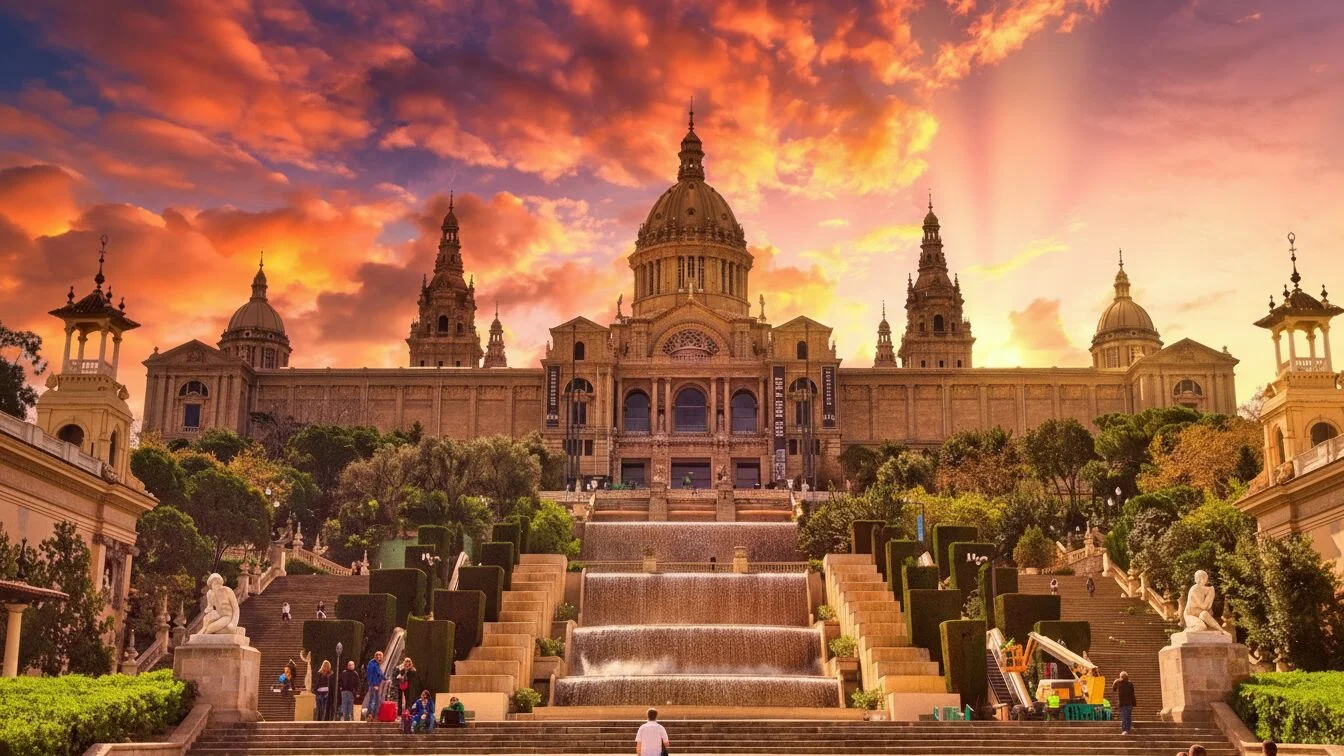
The Montjuïc area contains the Joan Miró Foundation (one of the world's great Miró collections), the Olympic Stadium (where the 1992 Games were held), the Palau Nacional with the Museu Nacional d'Art de Catalunya inside (MNAC), and the spectacular Font Màgica (Magic Fountain), which puts on free water and light shows Thursday–Sunday evenings in summer. The castle itself offers the best panoramic views in Barcelona.
Why visit: Half a day on Montjuïc gives you art, gardens, history, Olympics heritage, and the best views in the city — all largely for free or very cheaply. The cable car ride up from Barceloneta is a highlight in itself.
Entrance: Castle: €10 adults; MNAC: €12 adults; Fundació Miró: €18 adults; Cable car: €13 one way (2026)
Best time: Late afternoon for sunset views; Thursday evening for free Magic Fountain show
Hours: Castle open daily 10:00–18:00 (summer until 20:00)
Casa Milà (La Pedrera)
Passeig de Gràcia, 92, 08008 Barcelona, Spain
La Pedrera ("The Stone Quarry"), as locals nicknamed it when it was built in 1912, is Gaudí's last great civic building before he devoted himself entirely to the Sagrada Família. The undulating stone facade with its wrought-iron balconies resembles a cliff face or waves frozen in stone. The rooftop is the building's true masterpiece — populated with warrior-like chimney stacks and ventilation towers that look like abstract sculptures.
The building is now a UNESCO World Heritage Site managed by the Fundació Catalunya-La Pedrera. The interior includes a fascinating permanent exhibition on Gaudí's life and work (the "Pedrera, the Building" exhibition), a rooftop tour, and an attic with parabolic arches. The restored apartment floor shows how a wealthy family lived in the building in 1912.
Why visit: The rooftop of La Pedrera at sunset is one of the great architectural experiences in Europe — the chimney warriors glow amber against the sky, and the views of the Eixample grid stretching to the sea are unforgettable.
Entrance: From €28 adults; rooftop concerts in summer from €45 (2026)
Best time: Late afternoon for golden-hour rooftop views
Hours: Daily 09:00–20:30 (last rooftop access 19:15); evening tours available in summer
Barceloneta Beach
Passeig Marítim de la Barceloneta, 08003 Barcelona, Spain
Barceloneta is Barcelona's most central and famous beach — a wide, sandy stretch running along the waterfront of the old fishermen's neighborhood of the same name. The beach is backed by the Passeig Marítim promenade, lined with chiringuitos (beach bars), restaurants, volleyball courts, and Frank Gehry's golden metallic fish sculpture. The beach is easily accessible by metro (Barceloneta station) or on foot from the Gothic Quarter in about 20 minutes.
Barcelona's city beaches were largely created for the 1992 Olympics when the city redeveloped its waterfront. Barceloneta is the closest and busiest; neighboring Nova Icaria, Bogatell, and Mar Bella beaches are less crowded and preferred by locals. The sea is clean and calm, with water temperatures reaching 26°C (79°F) in August.
Why visit: The combination of city and beach in one of Europe's most beautiful cities is Barcelona's greatest luxury. There's no extra charge for the Mediterranean — it's free, always.
Entrance: Free
Best time: Early morning for a swim before crowds arrive; sunset from the beach is stunning
Hours: Open 24 hours; lifeguards on duty June–September 10:00–19:00
Palau de la Música Catalana
Carrer del Palau de la Música, 4-6, 08003 Barcelona, Spain
The Palau de la Música Catalana is a concert hall built between 1905 and 1908 by architect Lluís Domènech i Montaner — one of the most important buildings of Catalan Modernisme and a UNESCO World Heritage Site. Unlike Gaudí's organic forms, Domènech i Montaner's style is intricately decorative, covering every surface with mosaics, stained glass, sculptural elements, and floral motifs. The result is an explosion of color and craftsmanship unlike anything else in the world.
The centerpiece of the concert hall is the inverted stained-glass dome — a skylight of amber and blue glass that floods the auditorium with natural light during daytime performances. The stage is flanked by ceramic muses who seem to burst through the walls. The building is best experienced from inside — either on a guided tour or, ideally, attending an actual concert here.
Why visit: A guided tour here is one of the most visually overwhelming experiences in Barcelona. Attending a concert inside the Palau is a bucket-list experience — the architecture transforms the musical performance into something truly extraordinary.
Entrance: Guided tour: €22 adults, €15 reduced (2026); concerts from €20
Best time: Daytime for the best stained-glass light; morning tours less crowded
Hours: Guided tours daily 10:00–18:00 (July–Aug until 15:30; evening tours in some seasons)
Book your tours and tickets in advance — it saves hours of queuing and often gets you a better price. These two platforms cover different options, so it's worth checking both.
What Are the Best Neighborhoods to Explore in Barcelona?
Barcelona's neighborhoods each have a completely distinct character — from the medieval stone streets of the Gothic Quarter to the modernista grid of Eixample and the hipster market culture of El Born. Here are the best areas to explore.
Gothic Quarter (Barri Gòtic)
Character: Barcelona's oldest neighborhood — a dense maze of narrow medieval streets, Roman ruins, Gothic churches, and hidden plazas. The atmosphere is ancient, atmospheric, and sometimes tourist-heavy, but always fascinating. Architecture spans 2,000 years of history.
What makes it special: The density of history here is extraordinary — Roman walls, a 14th-century cathedral, the old Jewish quarter (El Call), and charming small plazas like Plaça de Sant Felip Neri. It's simultaneously a living neighborhood and an open-air museum.
Best for: History lovers, architecture fans, first-time visitors who want to feel Barcelona's ancient soul
Must-see in this area: Barcelona Cathedral, Plaça Reial, Temple d'August, El Call (Jewish Quarter), Carrer del Bisbe bridge
How to get there: Metro: Jaume I (L4) or Liceu (L3); 10-minute walk from Las Ramblas
Location: Barri Gòtic, Ciutat Vella, 08002 Barcelona
El Born (Sant Pere, Santa Caterina i la Ribera)
Character: Barcelona's hippest and most genuinely charming neighborhood — medieval streets lined with independent boutiques, craft cocktail bars, excellent restaurants, and the incredible 19th-century Mercat de Santa Caterina with its colorful mosaic roof. El Born has the energy of a neighborhood that's always on the verge of a party.
What makes it special: El Born strikes the perfect balance between history and contemporary cool. The Picasso Museum is here, alongside the Santa Maria del Mar church (possibly the most beautiful Gothic building in Barcelona), the El Born Cultural Centre (built over archaeological ruins of the 1714 siege of Barcelona), and an endless supply of excellent small restaurants and bars.
Best for: Foodies, culture lovers, travelers who want a more authentic and less touristy experience than the Gothic Quarter
Must-see in this area: Picasso Museum, Santa Maria del Mar, Mercat de Santa Caterina, El Born Cultural Centre, Passeig del Born
How to get there: Metro: Jaume I (L4) or Arc de Triomf (L1)
Location: El Born, Sant Pere, Santa Caterina i la Ribera, 08003 Barcelona
Eixample
Character: The elegant, grid-planned expansion district built in the late 19th and early 20th centuries. Wide, tree-lined boulevards, modernista architecture at every turn, upscale restaurants and boutiques, and the famous Passeig de Gràcia — Barcelona's answer to the Champs-Élysées. Sophisticated, spacious, and architecturally stunning.
What makes it special: The Eixample is where Gaudí and his contemporaries filled an entire city district with extraordinary architecture. Walk a few blocks in any direction and you'll find ornate apartment buildings, tiled sidewalks, and the "Block of Discord" where three rival architects competed side by side. The Gayxample (around Carrer del Consell de Cent) is the center of Barcelona's large LGBTQ+ community.
Best for: Architecture lovers, upscale dining and shopping, couples
Must-see in this area: Sagrada Família, Casa Batlló, La Pedrera, Passeig de Gràcia, Block of Discord
How to get there: Metro: Passeig de Gràcia (L2, L3, L4) or Diagonal (L3, L5)
Location: Eixample, 08007–08013 Barcelona
Gràcia
Character: A village-within-a-city that only became part of Barcelona in 1897 and still fiercely maintains its own identity. Bohemian, artsy, left-leaning, and full of young professionals and families. Narrow streets open suddenly into charming plazas (Plaça del Sol, Plaça de la Vila de Gràcia) packed with terraces and local life. Very few souvenir shops here — mostly real, local Barcelona.
What makes it special: Gràcia feels like the "real" Barcelona that many tourists never find. The neighborhood hosts the incredible Festa Major de Gràcia each August, when every street is decorated in elaborate handmade decorations for a week-long neighborhood celebration. Park Güell is just above Gràcia on Carmel Hill.
Best for: Independent travelers, repeat visitors, anyone who wants to escape the tourist bubble
Must-see in this area: Plaça del Sol, Mercat de l'Abaceria (Mercat de Gràcia), Park Güell (nearby), local tapas bars on Carrer de Verdi
How to get there: Metro: Diagonal (L3, L5) or Fontana (L3)
Location: Gràcia, 08012 Barcelona
Barceloneta
Character: The old fishermen's quarter wedged between the Gothic Quarter and the sea — a tight grid of narrow streets lined with seafood restaurants, chiringuitos, and a genuinely working-class community that has lived alongside tourism for decades. Front the neighborhood onto the city's most famous beach and the regenerated Port Olímpic marina.
What makes it special: Barceloneta is where you eat paella by the sea, rent a bike along the Passeig Marítim, and watch the sunset from the beach with a cold Estrella Damm. It's festive, relaxed, and unambiguously fun. The Barceloneta market (Mercat de la Barceloneta) is a lovely, very local alternative to La Boqueria.
Best for: Beach lovers, seafood enthusiasts, families
Must-see in this area: Barceloneta Beach, Passeig Marítim, Frank Gehry's Fish sculpture, Barceloneta Market, Port Olímpic
How to get there: Metro: Barceloneta (L4); 20-minute walk from Gothic Quarter
Location: Barceloneta, Ciutat Vella, 08003 Barcelona
Poble Sec and Montjuïc
Character: A rapidly gentrifying neighborhood at the foot of Montjuïc hill, with a young, creative energy and some of Barcelona's best tapas bar hopping on Carrer de Blai (the "pintxos street"). Poble Sec has the unpretentious feel of a neighborhood just discovering its own charms. Above it, Montjuïc offers gardens, museums, the Olympic complex, and the castle.
What makes it special: Carrer de Blai is arguably the best street for budget eating in Barcelona — dozens of pintxos bars where small snacks cost €1–2 each. The Teatre Grec amphitheatre, carved into the Montjuïc hillside, hosts the city's biggest annual arts festival each summer. The neighborhood has an authentic, non-touristy feel that's rare in central Barcelona.
Best for: Budget travelers, foodies, arts lovers, anyone who wants an authentic neighborhood experience close to the city center
Must-see in this area: Carrer de Blai pintxos bars, Parc de Montjuïc, MNAC, Fundació Joan Miró, Grec amphitheatre
How to get there: Metro: Paral·lel (L2, L3); 15-minute walk from Las Ramblas
Location: Poble Sec, Sants-Montjuïc, 08004 Barcelona
What Food Should You Try in Barcelona?
Barcelona is famous for its exceptional Catalan cuisine — a rich, Mediterranean-influenced cooking tradition that combines fresh seafood, local vegetables, exceptional olive oil, and the iconic romesco and sofregit sauces. The must-try dishes include pa amb tomàquet, fresh seafood paella, and the famous pintxos from the Basque tradition that have taken the city by storm.
What Are the Must-Try Local Dishes in Barcelona?
- Pa amb tomàquet — Literally "bread with tomato," this is the foundational Catalan dish: grilled bread rubbed with fresh tomato and olive oil, finished with salt. It's served with almost every meal and is deceptively simple and perfect.
- Paella de mariscos — While paella originates from Valencia, Barcelona's version with fresh local seafood (prawns, mussels, clams, cuttlefish) is extraordinary. Order it on the Barceloneta waterfront at a proper restaurant — never from a tourist-trap place showing photos of the menu.
- Fideuà — Barcelona's own coastal twist on paella: made with thin noodles instead of rice, cooked in rich seafood broth. Often served with aioli on the side. Many locals consider fideuà superior to paella.
- Croquetes de bacallà — Salt cod croquettes with a crispy exterior and creamy, intensely flavored interior. Found in every bar in the city and an essential starter with a cold beer.
- Escalivada — Roasted and peeled red peppers and aubergine (eggplant), drizzled with olive oil and often served on bread. A perfect example of Catalan cooking's ability to make simple ingredients extraordinary.
- Patatas bravas — Chunky fried potatoes served with a spicy tomato sauce (brava sauce) and garlic aioli. Barcelona's version typically combines both sauces. An essential bar snack found everywhere.
- Crema catalana — Spain's answer to crème brûlée: a rich egg custard flavored with lemon and cinnamon, topped with a caramelized sugar crust. Lighter than the French version and arguably more delicious.
- Pintxos — Small Basque-inspired snacks, usually on bread with various toppings (anchovies, cheese, peppers, mushrooms). Best found on Carrer de Blai in Poble Sec, where they typically cost €1–2 each.
Where Should You Eat in Barcelona?
Budget-Friendly (Under €15 per meal)
- Bar Cañete — Carrer de la Unió, 17, 08001 Barcelona — A beloved local bar serving excellent tapas at very fair prices; the croquettes and patatas bravas are legendary. Standing room at the bar keeps prices down.
- El Xampanyet — Carrer de Montcada, 22, 08003 Barcelona — A classic cava bar in El Born that's been serving house cava and simple tapas (anchovies, cheese, pa amb tomàquet) since 1929. Charming and authentic.
- La Cova Fumada — Carrer del Baluard, 56, 08003 Barcelona — The legendary Barceloneta bar credited with inventing the bombas (stuffed fried potato balls). Cash only, no reservations, closes early — but genuinely iconic.
- Carrer de Blai pintxos bars (Poble Sec) — Multiple venues on Carrer de Blai, 08004 — Grab pintxos at €1–2 each from a dozen different bars. Wonderful, social, cheap, and delicious.
Mid-Range (€20–45 per meal)
- Can Solé — Carrer de Sant Carles, 4, 08003 Barcelona — A historic Barceloneta restaurant (open since 1903) serving classic seafood dishes including excellent fideuà. The paella for two costs around €35 but is genuinely superb.
- Cervecería Catalana — Carrer de Mallorca, 236, 08008 Barcelona — An iconic Eixample tapas bar that's always busy for good reason: generous portions, excellent quality, and great ambiance. Get here early or expect a queue.
- Bodega Sepúlveda — Carrer de Sepúlveda, 173, 08011 Barcelona — A charming old wine shop turned restaurant in Sant Antoni with excellent Catalan cooking and a magnificent natural wine selection. Very popular with locals.
- Bar Brutal — Carrer de la Princesa, 14, 08003 Barcelona — An excellent natural wine bar and restaurant in El Born. Creative seasonal tapas, outstanding wine list, convivial atmosphere. Book ahead for weekends.
Fine Dining (€70+ per meal)
- Disfrutar — Carrer de Villarroel, 163, 08036 Barcelona — Ranked among the world's top 10 restaurants, Disfrutar offers a multi-course avant-garde tasting menu from former El Bulli chefs. Book months ahead. Lunch tasting menu from €210 (2026).
- Tickets — Avinguda del Paral·lel, 164, 08015 Barcelona — Albert Adrià's spectacular tapas bar where avant-garde cuisine meets playful theatre. Reservations open exactly 60 days in advance and sell out in minutes. Worth the effort.
What Are the Dining Customs in Barcelona?
Meal times: Barcelonans eat late by most international standards. Lunch is the main meal, typically 2:00–4:00 PM. Dinner rarely starts before 9:00–10:00 PM. Tourist restaurants open earlier but the best local spots follow local hours.
Tipping: Tipping is appreciated but not obligatory in Spain. Around 5–10% is considered generous. Locals often just round up or leave a euro or two. Service charges are not normally included in Barcelona.
Reservations: Essential for popular restaurants, especially at weekends. Most restaurants accept reservations via phone or directly through their website or apps like TheFork. Top spots need advance booking of days to weeks.
Menu del día (set lunch): This is the greatest bargain in Barcelona — most restaurants offer a three-course lunch with bread and a drink for €12–18 on weekdays. The same meal ordered à la carte in the evening could cost three times as much.
What Is the Nightlife Like in Barcelona?
Barcelona's nightlife is legendary — one of the best in Europe — with bars that don't fill up until midnight and clubs that run until 6:00 AM. The city genuinely comes alive after dark, with a culture of late dinners (9–10 PM), aperitivo bars (10 PM–midnight), and then clubs and discos that hit their stride between 1:00–3:00 AM.
Where Are the Best Areas for Nightlife in Barcelona?
- El Born / Gothic Quarter: Passeig del Born and surrounding streets, 08003 — Cocktail bars, cava bars, and intimate live music venues. The best area for bar-hopping and a more sophisticated crowd.
- Eixample (Gayxample): Around Carrer del Consell de Cent, 08011 — The center of Barcelona's LGBTQ+ scene with excellent cocktail bars, clubs, and a very welcoming atmosphere for everyone.
- Port Olímpic: Passeig del Taulat, 08005 — A strip of mega-clubs and beach bars that cater to a younger, more tourist-heavy crowd. The clubs here are large, commercial, and very loud — but undeniably fun if that's your scene.
- Poble Sec (Carrer de Blai): Carrer de Blai, 08004 — Barcelona's best pintxos street doubles as a fantastic early-evening bar-hopping zone. More relaxed and local than the Gothic Quarter.
What Are the Best Bars and Clubs in Barcelona?
Bars & Pubs
- El Xampanyet — Carrer de Montcada, 22, 08003 — A legendary old-school cava bar in El Born. Order the house cava (€2.50 a glass) with anchovies. Low-lit, charming, and quintessentially Barcelona.
- Bar Marsella — Carrer de Sant Pau, 65, 08001 — Barcelona's oldest bar (opened 1820) in the Raval neighborhood. Dusty bottles of absinthe line the shelves; the atmosphere is extraordinary. A living museum of Barcelona's bohemian past.
- Dry Martini — Carrer d'Aribau, 162, 08036 — One of the world's great cocktail bars, open since 1978. The martinis are perfect and the setting — leather stools, wood paneling, expert barmen in white jackets — is timeless.
- Bar Calders — Carrer del Parlament, 25, 08015 — A beloved Sant Antoni neighborhood bar with a great terrace, excellent vermouth, and the real, unpretentious Barcelona atmosphere.
Clubs & Dancing
- Razzmatazz — Carrer dels Almogàvers, 122, 08018 — Barcelona's most famous and beloved club — five rooms with five completely different music styles under one roof. Capacity 3,000. Proper international DJ bookings. Opens at 1:00 AM; best from 3:00 AM.
- Sala Apolo — Carrer Nou de la Rambla, 113, 08004 — A beautiful mid-century ballroom in Poble Sec that hosts both live concerts earlier in the evening and the legendary "Nitsa" dance club night afterward. One of the most atmospheric clubs in Europe.
- Pacha Barcelona — Passeig Marítim de la Barceloneta, 38, 08003 — A seafront club near Port Olímpic that's part of the global Pacha brand — glamorous, expensive (€20+ entry), and very popular for a reason.
Live Music & Shows
- Palau de la Música Catalana — Carrer del Palau de la Música, 4-6, 08003 — See the architecture section above. Concerts from €20; the building itself is the greatest show in town.
- Tablao Cordobés — La Rambla, 35, 08002 — A long-established flamenco show venue on Las Ramblas. Shows run nightly at 7:00 PM and 9:30 PM. Tickets from €45 including a drink (2026). Book ahead online for the best tables.
- Jazz Sí Club — Carrer de Requesens, 2, 08001 — A tiny, legendary jazz and live music club in the Raval neighborhood. Admission typically €5–10, with sessions most evenings of the week. Very unpretentious and very good.
What Family-Friendly Evening Entertainment Is Available?
For families and non-clubbers, Barcelona's evenings are equally rich. The Font Màgica (Magic Fountain) at the foot of Montjuïc puts on free water and light shows Thursday–Sunday evenings in summer (check exact schedule at bcn.cat). The waterfront Passeig Marítim is lovely for an evening walk. The Tibidabo amusement park (Plaça del Tibidabo, 3-4) opens on weekends and runs late into the evening in summer. Evening boat tours along the coast are another great option.
What and Where Should You Shop in Barcelona?
The best things to buy in Barcelona are local food products (olive oil, cava, jamón, saffron), design items, fashion, and ceramics, and the top shopping areas range from the designer boutiques of Passeig de Gràcia to the vintage and independent shops of El Born and Gràcia.
What Are the Best Shopping Districts in Barcelona?
- Passeig de Gràcia and surroundings: Passeig de Gràcia, 08007 — Barcelona's most elegant shopping boulevard, lined with flagship stores of international luxury and fashion brands (Zara flagship, H&M, Massimo Dutti, Mango HQ), plus local designers and concept stores.
- El Born: Carrer del Rec and surrounding streets, 08003 — The city's coolest independent shopping zone. Small boutiques for fashion, design objects, vintage clothing, jewelry, and books. Very few chain stores — mostly local designers and one-of-a-kind shops.
- Portal de l'Àngel / Gothic Quarter: Portal de l'Àngel, 08002 — A pedestrian street leading into the Gothic Quarter that's one of the busiest shopping streets in Europe. Mostly high street brands (Zara, Mango, H&M) but in a beautiful medieval setting.
- Gràcia: Carrer de Verdi and surrounding streets, 08012 — Independent boutiques, concept stores, vintage shops, and artisanal food shops in a very non-touristy setting. Good for unique, locally made gifts.
What Markets Should You Visit in Barcelona?
Mercat de Sant Antoni — Carrer del Comte d'Urgell, 1, 08011 — A recently restored 19th-century market building in Sant Antoni that hosts a food market during the week and a famous Sunday book and coin market that fills the surrounding streets. One of the most atmospheric markets in the city.
El Encants Barcelona — Plaça de les Glòries Catalanes, 08018 — A huge, covered flea market (antiques, furniture, clothing, bric-a-brac) under a spectacular mirrored canopy. Open Monday, Wednesday, Friday, and Saturday 09:00–20:00. A fascinating treasure hunt with genuine bargains.
Mercat dels Antiquaris (Cathedral Antiques Market) — Pla de la Seu, Barri Gòtic, 08002 — A charming antiques and collectibles market in front of the Cathedral every Thursday morning. Small but atmospheric and very central.
What Should You Buy in Barcelona?
- Cava — Catalan sparkling wine, produced in the Penedès region an hour from the city. A bottle of excellent cava costs €8–15 at any supermarket — a fraction of what you'd pay at home. Look for Gramona, Recaredo, or Juvé & Camps labels.
- Olive oil — Catalan olive oils are among the world's finest. Buy a quality bottle from La Boqueria or any deli shop — look for Siurana PDO or Les Garrigues PDO designations.
- Design objects and ceramics — Barcelona has a fantastic design scene. The Barcelona Design Museum shop (Plaça de les Glòries Catalanes, 37) and various El Born boutiques sell beautifully designed locally made objects.
- Jamón ibérico — Vacuum-packed ibérico ham is the best edible souvenir from Spain. Buy it from a proper deli (Colmado Quilez, Rambla de Catalunya, 63, is excellent) rather than tourist shops near Las Ramblas.
- Espadrilles (Espardenyes) — Traditional Catalan rope-soled shoes made in Catalonia and the Pyrenees. La Manual Alpargatera at Carrer d'Avinyó, 7 (Gothic Quarter) has been making them since 1940 and will custom-make your size while you wait.
- Books and art prints — Barcelona has wonderful independent bookshops and art print sellers. The MNAC, Picasso Museum, and Fundació Miró all have excellent shops with quality art prints that make beautiful, relatively affordable souvenirs.
What Are the Shopping Hours and Customs?
Most shops in Barcelona open Monday–Saturday 10:00–20:00/21:00. Large shopping centers (like El Corte Inglés at Plaça de Catalunya) and supermarkets are open 09:00–22:00. Small independent shops often close for a long lunch (14:00–16:00), especially outside the tourist center. Sunday shopping is limited — mainly shopping centers and tourist areas remain open.
Can Non-EU Visitors Claim a VAT Tax Refund in Barcelona?
Yes — if you are a visitor from outside the European Union (including travellers from the USA, Canada, Australia, the UK, and most of Asia and Latin America), you are entitled to a refund of the VAT (Value Added Tax) included in the price of goods you buy in Spain. VAT in Spain is 21% on most goods, which means this refund can be significant on high-value purchases like clothing, leather goods, jewellery, designer fashion, and electronics.
How to Claim Your VAT Refund — Step by Step
- Spend at least no minimum (Spain has no minimum threshold) in a single shop in a single day. This is the minimum threshold for a VAT refund claim in Spain. It does not apply across multiple shops — the full amount must be spent in one store.
- Look for the "Tax Free" sign. Participating shops display a "Tax Free Shopping," "Global Blue," or "Planet" logo in the window or at the register.
- Ask for the tax refund form at the register before you pay. Present your non-EU passport — the shop will fill out the form with your details and the purchase amount. Keep the form with your receipt.
- Get the form stamped at customs before you leave. Go to the Customs office at Barcelona El Prat Airport (BCN) before check-in and have an officer stamp your tax refund form. Keep your purchases accessible in hand luggage — do not pack them deep in your checked bags.
- Collect your refund. Hand the stamped form to the Global Blue or Planet desk at the airport. You can receive the refund in cash (minus a processing fee) or as a credit card refund (lower fees, takes a few weeks).
VAT Refund Quick Facts for Barcelona
- Minimum spend: no minimum (Spain has no minimum threshold) in one shop in one day
- VAT rate on most goods: 21% on most goods
- Typical refund after fees: 10–15% of the purchase price
- Refund processors: Global Blue and Planet (formerly Premier Tax Free) at Barcelona El Prat Airport (BCN)
- Who qualifies: Anyone with a non-EU passport who is not a resident of an EU country
- UK visitors: British passport holders qualify since Brexit — the UK is no longer in the EU
- Deadline: Purchases must be exported within 3 months of the date of purchase
- Full guide: VAT Refund in Europe — Complete Guide for Non-EU Travelers
What Festivals and Events Happen in Barcelona?
Barcelona's biggest festivals are La Mercè in late September (the city's main street festival), Primavera Sound in May/June (one of Europe's top music festivals), and the Festa Major de Gràcia in August — but the city celebrates something almost every month of the year.
What Is the Annual Events Calendar for Barcelona?
| Month | Event Name | Description |
|---|---|---|
| January | Cavalcada de Reis (Three Kings Parade) | January 5th — Barcelona's beloved Three Kings parade through the city on the eve of Epiphany; floats throw sweets to thousands of children lining the streets. The biggest family event of the winter. |
| February | Carnival (Carnaval) | Late February — Parades, costumes, and revelry across the city, with the biggest celebrations in the Raval neighborhood and Sitges (day trip). The Sitges Carnival is one of Spain's most famous and flamboyant. |
| March | Sant Medir de Gràcia | March 3rd — A beloved Gràcia neighborhood festival where horseback riders and floats parade through the streets throwing sweets to the crowd. Loud, colorful, and entirely local. |
| April | Semana Santa (Holy Week) | Solemn and beautiful religious processions through the Gothic Quarter in the days leading up to Easter Sunday. The Brotherhood of Our Lady of Sorrows procession on Good Friday is particularly moving. |
| April | Sant Jordi (St George's Day) | April 23rd — Catalonia's version of Valentine's Day: tradition says men give women a rose and women give men a book. The entire city fills with book and flower stalls. One of the most charming days in the Barcelona calendar. |
| May/June | Primavera Sound | Late May/Early June — One of Europe's most respected indie and alternative music festivals, held at the Parc del Fòrum. Three days of world-class acts across multiple stages; tickets from €80/day (2026). |
| June | Sónar Festival | Mid-June — Barcelona's internationally acclaimed electronic music and digital art festival, held across multiple venues including the Fira. Two distinct parts: SónarDay and SónarNight. Tickets from €75/day (2026). |
| June | Revetlla de Sant Joan (Midsummer Night) | June 23rd — Barcelona's wildest night of the year: bonfires on the beach, fireworks, cava, and celebrating until dawn. The entire city is outside partying. Extraordinary atmosphere. |
| August | Festa Major de Gràcia | Mid-August — The Gràcia neighborhood festival where every street is lavishly decorated by local residents competing for the most creative theme. A week of free concerts, dances, and celebrations centered on Plaça del Sol. |
| September | La Mercè Festival | Around September 24th — Barcelona's main city festival: free concerts across every major plaza, correfocs (fire runs with devils shooting fireworks into the crowd), castellers (human towers), giants parade, and events across every neighborhood. Unmissable. |
| October | Barcelona International Jazz Festival | October–November — One of Europe's oldest jazz festivals, with concerts at Palau de la Música Catalana, Sala Apolo, and venues across the city. Major international names alongside local talent. |
| December | Christmas Markets (Fira de Santa Llúcia) | December 1–23 — A beautiful Christmas market in front of the Cathedral selling nativity figures, decorations, and caga tió (a Catalan Christmas tradition with a log that "defecates" gifts). More authentic and less commercial than most European Christmas markets. |
How Do Festivals Affect Hotel Prices and Availability?
Barcelona's major festivals — especially Primavera Sound, Sónar, and La Mercè — cause significant spikes in hotel prices and reduce availability dramatically. During Primavera Sound weekend, prices in central hotels can triple. For La Mercè (late September), accommodation fills up weeks in advance. Book at least 2–3 months ahead for any festival period, and 4–6 months for Primavera Sound or Sónar.
Where Should You Stay in Barcelona?
The best neighborhood to stay in Barcelona depends on your travel style. The Gothic Quarter and El Born put you in the historic heart; Eixample gives you elegance and great transport links; Barceloneta is perfect for beach lovers; and Gràcia gives you the most local, authentic experience.
What Are the Best Neighborhoods to Stay in Barcelona?
| Neighborhood | Vibe | Price Range (per night, 2026) | Best For |
|---|---|---|---|
| Gothic Quarter | Medieval, central, atmospheric, touristy | €80–200 (hotel) | First-time visitors, location-focused |
| El Born | Hip, historic, great bars and restaurants | €90–220 (hotel) | Culture lovers, foodies, return visitors |
| Eixample | Elegant, grid layout, easy metro access | €70–300 (hotel) | All types; great central base |
| Barceloneta | Beach district, seafood, lively summer | €80–250 (hotel) | Beach lovers, summer visitors |
| Gràcia | Bohemian village feel, very local | €60–180 (hotel) | Return visitors, long stays, budget-conscious |
| Poble Sec / Sant Antoni | Trendy, up-and-coming, great eating | €60–160 (hotel) | Budget travelers, foodies |
What Are the Pros and Cons of Each Area?
Gothic Quarter:
Pros: Walking distance to everything — Las Ramblas, the Cathedral, El Born, the waterfront. Atmospheric and exciting day and night.
Cons: Can be noisy at night (especially near Las Ramblas and Plaça Reial). Higher pickpocketing risk than other areas. Some streets feel very tourist-saturated.
Eixample:
Pros: Excellent metro connections, wide pavements, quieter nights, close to Sagrada Família and Casa Batlló, great restaurant and bar scene. More spacious apartments available.
Cons: Slightly further from the old town on foot (though very easy by metro). Less atmospheric than the Gothic Quarter for that "Barcelona feel" on arrival.
Barceloneta:
Pros: Walk to the beach in 5 minutes. Great seafood restaurants everywhere. Wonderful summer energy.
Cons: Extremely noisy in summer, especially at night. Can feel overwhelming during peak season. Limited accommodation options compared to Eixample.
How Far in Advance Should You Book in Barcelona?
For summer (June–August) and festival periods, book 3–4 months ahead minimum for the best prices and selection. For shoulder season (April–May, September–October), 4–6 weeks ahead is usually sufficient. Winter visits can often be booked 1–2 weeks ahead. Always look for free cancellation rates to retain flexibility.
What Do You Need to Know Before Visiting Barcelona?
Here are the essential practical details every visitor to Barcelona needs to know — from money and transport passes to safety tips and cultural customs.
Essential Travel Details for Barcelona
- Currency: Euro (€); exchange offices available across the city (avoid those charging commissions on Las Ramblas)
- Credit Cards: Widely accepted everywhere including small cafés and markets. Visa and Mastercard universal; Amex accepted at most hotels and restaurants
- ATMs: Abundant across the city. Use ATMs attached to banks (CaixaBank, Sabadell, BBVA) to avoid high fees; avoid standalone ATMs in tourist areas
- Language: Catalan and Spanish (Castellano). English widely spoken in tourist areas, hotels, and restaurants. Street signs are in Catalan
- Tipping: 5–10% appreciated but not obligatory. Service charge not normally included
- Electrical Plugs: Type C/F (2 round pins); 230V/50Hz. UK and US visitors need an adapter
- Emergency Number: 112 (all emergencies in Spain)
- Tourist Police: 93 256 24 30 (Guardia Urbana tourist unit, stationed on Las Ramblas)
- SIM Cards: Available at the airport and phone shops across the city. Orange, Vodafone, and Yoigo offer tourist SIM cards from €15 with 20GB data
- WiFi: Free public WiFi available in most cafés, all metro stations, Plaça de Catalunya, and across the tourist center via Barcelona Free WiFi network
- Tap Water: Safe to drink but has a slightly chalky taste due to high mineral content. Most locals drink bottled water (€0.50–1.00 in supermarkets)
Skip the airport queue — order your eSIM before you travel and activate it the moment you land. Prices and data allowances vary, so it pays to compare providers.
How Much Does It Cost to Visit Barcelona?
| Budget Type | Daily Cost (2026) | What's Included |
|---|---|---|
| Budget Traveler | €50–80 | Hostel dorm (€20–30), menú del día lunch, supermarket dinner or pintxos, metro T-Casual card, free beaches and walking |
| Mid-Range Traveler | €100–180 | 3-star hotel (€80–120), proper restaurant lunch and casual dinner, taxi occasionally, 1–2 paid attractions (Sagrada Família, Park Güell) |
| Luxury Traveler | €250–500+ | 4–5 star hotel (€180–400), fine dining, private transport, skip-the-line tours, rooftop experiences, flamenco shows |
What Are the Most Useful Phrases in Barcelona?
- Hello (Catalan / Spanish): Hola / Hola
- Thank you: Gràcies / Gracias
- Please: Si us plau / Por favor
- Excuse me: Perdoni / Perdón
- How much?: Quant és? / ¿Cuánto cuesta?
- Where is...?: On és...? / ¿Dónde está...?
- I don't understand: No entenc / No entiendo
- Help!: Ajuda! / ¡Ayuda!
- Bathroom: Lavabo / Baño
- Check, please: El compte, si us plau / La cuenta, por favor
Is Barcelona Safe for Tourists?
Barcelona is generally very safe for tourists, with violent crime being rare. However, it has one of the highest pickpocketing rates of any city in Europe — this is the most significant risk travelers face, and it's important to take it seriously. The vast majority of visitors have wonderful, incident-free trips.
Areas to avoid: The lower end of Las Ramblas near the port after midnight. The deeper Raval neighborhood late at night. Around Arc de Triomf station after dark.
Common scams: The "friendship bracelet" scam — a man forces a bracelet onto your wrist and then demands €20 to take it off. The "shell game" — a con on Las Ramblas where apparent winners are plants. Overcharging in tourist-area restaurants (always check the price before ordering). Fake police asking to see your "drugs check" wallet.
Pickpocketing: Extremely common on Las Ramblas, La Boqueria entrance, Sagrada Família queues, and on the metro (especially Line L3 at crowded stops). Use a money belt or anti-theft bag, carry only what you need for the day, and keep your phone in a front pocket.
Solo traveler safety: Barcelona is excellent for solo travelers of all genders. Women traveling alone generally feel very safe in tourist areas and during the day. Standard nighttime precautions apply. The city has a well-established LGBTQ+ scene and is very welcoming.
What Are the Cultural Customs in Barcelona?
- Greetings: Two kisses on the cheek (right first) between friends and acquaintances. A handshake in formal/business situations. "Hola" is always appropriate.
- Dress code: Barcelona is generally relaxed about dress. However, you should cover shoulders and knees when entering churches. Walking around supermarkets or restaurants in just a swimsuit is now illegal in Barcelona (fine of up to €500).
- Photography: Always ask permission before photographing people, especially in markets. Some museums and sites prohibit photography of specific works — look for signs.
- Public behavior: Barcelona has banned drinking alcohol on most streets and beaches (fine of up to €500). Public drunkenness will attract police attention. Moderate noise levels in residential areas after midnight.
- Dining: Never rush your meal — lingering over food is a cultural value, not an inefficiency. Don't be surprised if the waiter doesn't bring your bill until you ask for it (this is polite in Spain, not negligent).
- Catalan identity: Catalans have a strong separate cultural and linguistic identity. Acknowledging this (saying "gràcies" or "bon dia" instead of "gracias" or "buenos días") is warmly appreciated and will get you a warmer reception.
Do You Need a Visa to Visit Barcelona?
Barcelona is in Spain, which is part of the Schengen Area. Citizens of the EU, EEA, USA, Canada, Australia, New Zealand, the UK, and most other Western countries do not need a visa for stays of up to 90 days within a 180-day period. From 2026, non-EU visitors (including US and UK citizens) need to register via the ETIAS (European Travel Information and Authorisation System) before travel — this is a quick, inexpensive online process. Always check the Spanish consulate website for your country's current requirements.
What Health Precautions Should You Take in Barcelona?
Vaccinations: No specific vaccinations are required for Barcelona. Standard up-to-date routine vaccinations are recommended.
Pharmacies: Abundant across the city, identifiable by the green cross sign. Many pharmacists speak English. You can buy a wide range of medications over the counter. 24-hour pharmacies are available (look for the rotating "de guardia" sign or search farmàcia de guàrdia on Google Maps).
Hospitals: Spain has an excellent public healthcare system. EU citizens with a European Health Insurance Card (EHIC) receive free or subsidized treatment. Non-EU visitors should have comprehensive travel insurance — a medical bill without insurance can be very expensive. The main tourist-area hospital is Hospital de la Santa Creu i Sant Pau (Carrer de Sant Antoni Maria Claret, 167).
Common health issues: Sunburn and heat exhaustion in summer are the most common tourist health problems — always carry water, use sunscreen, and avoid prolonged midday sun in July–August. Food safety is excellent; tap water is safe to drink.
Do You Need Travel Insurance for Barcelona?
Yes — and you should buy it before you board your flight, not after. Travel insurance covers the situations that can turn a great trip into a financial disaster: a medical emergency (a single ambulance ride and hospital stay in Europe can cost €3,000–€10,000 without coverage), a cancelled or delayed flight, lost or stolen baggage, or a last-minute trip cancellation. EU citizens with an EHIC or GHIC card receive reciprocal state healthcare, but this does not cover repatriation, trip cancellation, or lost luggage — a full travel policy fills those gaps. Non-EU travellers have no state coverage at all and should never visit without insurance.
Choosing the right policy matters — coverage limits, exclusions, and pre-existing condition terms vary significantly between providers. Read our full guide before you buy: Best Travel Insurance for Europe — Honest Comparison for 2026.
Travel insurance is strongly recommended for Barcelona — an unexpected medical bill, flight cancellation, or lost luggage can cost far more than the policy. Get covered before you go.
What Are Your Rights If Your Flight to Barcelona Is Delayed or Cancelled?
Under EU Regulation 261/2004, if your flight to or from Barcelona is delayed by more than 3 hours or cancelled without sufficient notice, you are entitled to compensation of up to €600 per passenger — regardless of which airline you flew with, and regardless of how long ago it happened (claims can go back up to 6 years in some countries). This applies to all flights departing from an EU airport, and all flights arriving into an EU airport on an EU-based carrier. Most travellers don't realise they are owed money, and airlines rarely volunteer to pay. A claims service handles everything on your behalf and only charges a fee if they win — so there is no risk to you.
Both services check your eligibility for free with no upfront cost — they only charge a commission if they successfully recover your compensation.
Is Barcelona Accessible for People with Disabilities?
Barcelona has made significant improvements to accessibility over recent years. The metro has lifts at most major stations; all buses are wheelchair accessible; and many major attractions including Sagrada Família, MNAC, and the Picasso Museum have accessible routes. The old town (Gothic Quarter) has uneven cobblestones that can be challenging for wheelchairs. The Institut Municipal de Persones amb Discapacitat (IMPD) provides a disability guide: accessible.bcn.cat.
Is Barcelona Good for Families with Kids?
Barcelona is excellent for families with children. The beaches are calm and safe, the city has a very child-friendly culture (children are welcome in restaurants at all hours), and there are specific attractions for kids including the Barcelona Aquarium (L'Aquàrium, Moll d'Espanya del Port Vell), the Barcelona Zoo (Parc de la Ciutadella, 08003), Tibidabo amusement park, and the CosmoCaixa science museum (Carrer d'Isaac Newton, 26). Buggy access is generally good in the Eixample and along the waterfront, but the Gothic Quarter's cobblestones make stroller navigation challenging.
What Are the Best Day Trips from Barcelona?
The best day trips from Barcelona include the spiritual mountain monastery of Montserrat, the elegant seaside town of Sitges, the remarkable Dalí Theatre-Museum in Figueres, the Roman ruins of Tarragona, and the wild Costa Brava coastline — all reachable within 1–2 hours.
Montserrat
Distance: 60 km / 37 miles northwest of Barcelona; approximately 1 hour 15 minutes by train and rack railway
What to see: A dramatic, multi-peaked mountain with a Benedictine monastery clinging to its cliffs at 720 meters altitude. The monastery houses the famous "Black Madonna" (La Moreneta) — Catalonia's patron saint and one of Spain's most venerated religious icons. The scenery is extraordinary: jagged rock formations, sweeping Catalan plains below, and the Pyrenees visible on clear days. Hiking trails lead to hermitages and viewpoints above the monastery.
How to get there: RENFE train from Plaça Espanya station (Line R5 direction Manresa) to Monistrol de Montserrat, then the rack railway (cremallera) to the monastery. Total journey ~1 hour 15 min each way. Round-trip train + rack railway + cable car from about €37 (2026). Trains run approximately every hour.
Time needed: Full day — arrive by 10:00 AM to beat the crowds and have time for hiking
Best for: History and culture lovers, hikers, religious pilgrims, nature enthusiasts
Location: Monestir de Montserrat, Montserrat, 08199 Barcelona
Sitges
Distance: 35 km / 22 miles southwest of Barcelona; approximately 40 minutes by train
What to see: A beautiful, charming seaside resort town with elegant whitewashed buildings, 17 beaches (some of the best in the Barcelona area), a charming old town with an art museum and clifftop church, and a vibrant, very LGBTQ+-friendly atmosphere. Sitges has a distinctly elegant, civilized charm that makes it feel a world apart from busy Barcelona.
How to get there: RENFE train from Barcelona Passeig de Gràcia or Sants station (Line R2 Sud) direct to Sitges. €4.60 each way (2026). Trains run every 20–30 minutes. Journey time ~40 minutes.
Time needed: Half day for the beach; full day to explore the town, museum, and waterfront
Best for: Beach lovers, LGBTQ+ travelers, art lovers, anyone wanting a calmer alternative to Barceloneta
Location: Passeig de la Ribera, Sitges, 08870
Figueres and the Dalí Theatre-Museum
Distance: 140 km / 87 miles north of Barcelona; approximately 1 hour by high-speed train
What to see: The small Catalan town of Figueres is home to the extraordinary Teatre-Museu Dalí — the museum Salvador Dalí designed himself as his life's final artistic creation. The museum contains the largest collection of Dalí works in the world, housed inside a surreal building topped with giant eggs and a geodesic dome. It's simultaneously a museum, a performance, and a work of art in itself. Dalí is buried in the crypt beneath the stage.
How to get there: High-speed RENFE AVE or Avant train from Barcelona Sants to Figueres-Vilafant station. From €18 each way (2026). Approximately 1 hour. The museum is a 15-minute walk from the station.
Time needed: Full day — 2–3 hours in the museum, plus town exploration
Best for: Art lovers, Dalí fans, surrealism enthusiasts
Location: Plaça de Gala i Salvador Dalí, 5, 17600 Figueres, Girona
Tarragona
Distance: 100 km / 62 miles southwest of Barcelona; approximately 1 hour by train
What to see: One of Spain's most underrated cities — a provincial Roman capital that preserves extraordinary Roman ruins including a 1st-century amphitheatre on the seashore, a Roman circus, city walls, and an extensive archaeological museum. Tarragona also has an elegant medieval cathedral, beautiful beaches, excellent restaurants (the Costa Daurada seafood is superb), and a relaxed, local atmosphere that feels refreshingly un-touristy.
How to get there: RENFE regional train from Barcelona Sants to Tarragona, approximately 1 hour. From €8 each way (2026). Trains run frequently throughout the day.
Time needed: Full day
Best for: History buffs, Roman history fans, anyone wanting to escape tourist crowds
Location: Amfiteatre Romà, Parc de l'Amfiteatre, Tarragona, 43003
Costa Brava
Distance: 100–140 km / 62–87 miles northeast; approximately 1.5–2 hours by car or bus
What to see: Spain's most dramatic and beautiful coastline — rugged cliffs, crystal-clear turquoise water, hidden coves accessible only by boat or footpath, and charming medieval fishing villages like Cadaqués, Calella de Palafrugell, and Pals. The Costa Brava was Salvador Dalí's homeland (his house at Portlligat near Cadaqués is now a museum). The Camí de Ronda coastal walking path connects many of the coves and villages.
How to get there: Best by car (rent for the day from around €35). SARFA buses connect Barcelona Nord station to major Costa Brava towns. Some organized day tours run from Barcelona in summer.
Time needed: Full day minimum; overnight stays highly recommended to experience the coast at its best
Best for: Nature lovers, beach enthusiasts, travelers seeking beauty away from crowds
Location: Cadaqués, 17488 Girona (as a starting point)
Car rental prices vary significantly between agencies — the same car on the same date can differ by 30–50% depending on where you book. Always compare before confirming.
What Are the Hidden Gems and Insider Tips for Barcelona?
Beyond the main tourist sites, Barcelona hides some incredible spots most visitors never find — from a rooftop with better views than Tibidabo to a medieval courtyard with live palm trees growing from the 1st century.
What Are the Best Hidden Gems in Barcelona?
- Bunkers del Carmel: Turó de la Rovira, 08032 Barcelona — Anti-aircraft bunkers from the Spanish Civil War on a hill in the Carmel neighborhood, offering the single best 360-degree panoramic view of Barcelona. Almost entirely unknown to first-time visitors despite being more spectacular than Tibidabo's views. Free, always open, best at sunset.
- Sant Pau Recinte Modernista: Carrer de Sant Antoni Maria Claret, 167, 08025 Barcelona — A complete modernista hospital complex by Lluís Domènech i Montaner — arguably more architecturally spectacular than anything Gaudí built but far less visited. UNESCO World Heritage Site. Entrance €22 (2026), often half the queue of Sagrada Família.
- Parc de la Ciutadella: Passeig de Pujades, 08003 Barcelona — Barcelona's green heart: a large, beautiful park with a boating lake, the zoo, an ornate cascade fountain (designed partly by a young Gaudí), and massive old trees. Beloved by locals for weekend picnics but surprisingly overlooked by tourists. Completely free.
- El Call (Jewish Quarter): Carrer del Call, Barri Gòtic, 08002 — The medieval Jewish quarter of Barcelona, abandoned after the 1391 pogrom and centuries of neglect, is slowly being rediscovered. The Sinagoga Major (one of Europe's oldest synagogues) is hidden at Carrer de Marlet, 5. A haunting and beautiful corner of the Gothic Quarter.
- Hospital de la Santa Creu i Sant Pau courtyard: See Recinte Modernista above — but even the exterior and free-to-enter gardens are staggering.
- Barceloneta's side streets: One block back from the main Barceloneta seafront restaurants are tiny, narrow streets with much more affordable and authentic seafood restaurants used by locals. The difference in price for the same dish can be 30–50%.
- Plaça de Sant Felip Neri: Plaça de Sant Felip Neri, Barri Gòtic, 08002 — A small, peaceful Gothic Quarter square with bullet holes still visible in the church walls from the Civil War. One of the most atmospheric and melancholy spots in Barcelona. Tiny fountain, ancient stone, complete calm.
Where Are the Best Photo Spots in Barcelona?
- Bunkers del Carmel: Turó de la Rovira, 08032 — The 360° panoramic view. Best at golden hour before sunset — the entire city glows amber. No crowds compared to other viewpoints.
- Park Güell Mosaic Terrace: Carrer d'Olot, 7, 08024 — The serpentine mosaic bench at sunrise (8:30 AM opening) — incredibly beautiful and actually photogenic with almost no people around.
- Carrer del Bisbe Bridge: Carrer del Bisbe, Barri Gòtic, 08002 — The gothic neo-medieval bridge spanning two buildings. Best light in the late morning; gorgeous with moody skies.
- Sagrada Família at night: Carrer de Mallorca, 401 — The illuminated basilica reflected in the small pool on Avinguda de Gaudí to the east at night is spectacular. Visit after 9:00 PM when crowds thin.
- Barceloneta at sunrise: Passeig Marítim de la Barceloneta — The beach and Frank Gehry's fish sculpture at sunrise, before anyone else arrives. Magical golden light on empty sand.
What Do Locals Know That Tourists Don't?
How Can You Save Money in Barcelona?
The biggest way to save money in Barcelona is to eat the menú del día for lunch (a full three-course meal with drink for €12–18 at most restaurants), use the T-Casual metro card rather than single tickets, and prioritize the city's many free attractions and beaches instead of overpaying for tourist experiences.
What Are the Best Money-Saving Strategies for Barcelona?
- Buy a T-Casual metro card (10 trips for €12.15) instead of single tickets (€2.55 each) — saves over 50%.
- Visit Sagrada Família, Park Güell, and Casa Batlló early in the morning to find cheaper online rates (prices are dynamic and higher during peak hours).
- The Picasso Museum is FREE every Thursday evening from 18:00–21:30 and the first Sunday of every month. Plan your week around this.
- Eat at La Boqueria's inner stalls, not the entrance stalls — same quality, lower prices. Better yet, shop at Mercat de Santa Caterina or Mercat de Sant Antoni, where prices are much fairer and quality equally good.
- Drink coffee standing at the bar — the same coffee costs 20–30% more if you sit at a table. This is local custom everywhere in Spain.
- Buy supermarket wine for pre-drinks — Catalonia produces exceptional wines, and a very good bottle costs €5–8 in Mercadona, Caprabo, or Lidl. A glass of equivalent wine in a bar costs €5–7.
- Take the Aerobús to/from the airport (€7.50) instead of a taxi (€39) and save over €30 per person per journey.
- Use Google Maps to walk between nearby attractions rather than taking the metro for 1-stop journeys.
- Visit Montjuïc via the free Funicular de Montjuïc (included in the T-Casual card) rather than the cable car (€13 one way).
- Look for "nit de museus" (museum night) events — usually held in May and September — when dozens of museums open for free or with special programming.
- Book flights on Tuesdays and Wednesdays for the cheapest prices, and travel mid-week rather than weekends when possible.
- Use Lidl, Mercadona, or Aldi for supermarket shopping — same local products at a fraction of the tourist-area convenience store price.
What Can You Do for Free in Barcelona?
- Barceloneta and city beaches: Passeig Marítim de la Barceloneta, 08003 — Free, beautiful, and one of Barcelona's greatest pleasures.
- Gothic Quarter wandering: Barri Gòtic, 08002 — Hours of exploration in medieval streets at zero cost.
- Bunkers del Carmel views: Turó de la Rovira, 08032 — The best panoramic view in Barcelona, completely free.
- Parc de la Ciutadella: Passeig de Pujades, 08003 — Beautiful park with boating lake, free entry.
- Park Güell free area: Carrer d'Olot, 7, 08024 — The non-Monumental Zone of the park (outside the ticketed area) is free and offers lovely walks and city views.
- Las Ramblas walk: La Rambla, 08002 — The classic Barcelona promenade is free (just watch your pockets).
- Font Màgica evening show: Plaça de Carles Buïgas, 1, 08038 — Free Thursday–Sunday evenings in summer (check schedule).
- Sant Pau Recinte Modernista exterior: Free to admire from outside; one of Europe's most beautiful buildings.
Are There Any Discount Cards or Passes Worth Buying?
Barcelona Card: €30 (2 days) to €60 (5 days) — Includes unlimited public transport and free or discounted entry to over 25 museums including MNAC, Fundació Miró, and the History Museum. Worth buying if you're doing many museums in a short time; calculate based on your specific itinerary.
Articket BCN: €38 — Entry to 6 of Barcelona's best art museums including MNAC, Fundació Miró, Fundació Antoni Tàpies, MACBA, CCCB, and Museu Picasso. Excellent value if you plan to visit all 6; valid for 12 months.
What Mistakes Should You Avoid in Barcelona?
The biggest mistake tourists make in Barcelona is not booking Sagrada Família tickets in advance — many visitors arrive expecting to queue and find it completely sold out for days ahead. Planning ahead is the single most important thing you can do.
What Are the Most Common Tourist Mistakes in Barcelona?
- Mistake: Not booking Sagrada Família in advance → Instead: Book online at sagradafamilia.org immediately after booking your flights. Slots sell out weeks ahead in summer.
- Mistake: Eating on Las Ramblas → Instead: Walk one street in either direction (Carrer de la Petxina, Carrer de la Boqueria) for the same quality food at 40–60% lower prices.
- Mistake: Taking a cab from the airport at a metered rate → Instead: The airport-to-city rate is fixed at €39. If a driver tries to run the meter from the airport, insist on the fixed rate or get out and find another taxi.
- Mistake: Visiting La Boqueria at noon on a weekend → Instead: Go at 9:00–10:00 AM on a Tuesday or Wednesday for the best experience and most pleasant atmosphere.
- Mistake: Planning dinner at 7:00 PM → Instead: Most good local restaurants don't open for dinner until 8:30–9:00 PM. Arriving at 7:00 PM means eating alone in a tourist restaurant while locals haven't started yet.
- Mistake: Accepting a "friendship bracelet" or any item pressed into your hands on Las Ramblas → Instead: Firmly say "no" and keep walking. Once it's on your wrist, you're expected to pay €10–20 to remove it. These are organized scams.
- Mistake: Taking an unlicensed cab at the airport or outside clubs → Instead: Only use official black-and-yellow taxis or ride-hailing apps (Uber, Cabify, FREE NOW). Unlicensed drivers have no meters and will charge wildly inflated prices.
- Mistake: Trying to visit every Gaudí site in one day → Instead: Give each building its due time. Sagrada Família and Park Güell in the morning, La Pedrera or Casa Batlló in the afternoon — that's already a full, rich day.
- Mistake: Assuming everyone speaks Spanish and ignoring Catalan → Instead: A simple "bon dia" or "gràcies" in Catalan will immediately warm relations with locals and shopkeepers. Catalans appreciate the acknowledgment of their distinct language and culture.
- Mistake: Going to a Flamenco show on Las Ramblas → Instead: Flamenco is actually a southern Spanish (Andalusian) tradition, not Catalan. For authentic flamenco, book the Tablao Cordobés, Los Tarantos (Plaça Reial), or Palau Dalmases — and research which venues have genuine professional performers.
- Mistake: Walking around in swimwear away from the beach → Instead: Barcelona has a civic ordinance making it illegal to be in swimming attire in shops, restaurants, or streets away from the beach. You can be fined up to €500. Carry a shirt and shorts and put them on when leaving the beach.
- Mistake: Using ATMs at tourist locations on Las Ramblas → Instead: Use ATMs attached to actual bank branches (CaixaBank, BBVA, Sabadell). Standalone ATMs in tourist areas charge very high fees and some are operated by dynamic currency conversion schemes.
What Is the Best Itinerary for Barcelona?
The best itinerary depends on your time. Here are three options — 1 day, 3 days, and 5–7 days — to make the most of Barcelona at any pace.
What Can You Do in One Day in Barcelona?
Morning (8:00 AM – 12:30 PM): Start early at Sagrada Família (booked for 9:00 AM entry) — spend 2 hours here. Walk or take the metro to La Boqueria on Las Ramblas for a mid-morning coffee and fresh juice. Then explore the Gothic Quarter — wander through to the Cathedral, down to Plaça Reial, and peek into the hidden Roman Temple d'August.
Afternoon (12:30 PM – 5:00 PM): Grab a menú del día lunch at a restaurant in El Born (€12–15). Walk through El Born to the Picasso Museum (or skip the interior and just admire the street and Santa Maria del Mar church). Walk down to Barceloneta for a swim or a walk along the promenade. See the Frank Gehry fish sculpture.
Evening (5:00 PM – 10:00 PM): Take the metro to Passeig de Gràcia and walk the Block of Discord — admire Casa Batlló and La Pedrera from the street (entry prices are optional). Dinner at Cervecería Catalana (get there before 8:30 PM to avoid a long queue). End with a drink in El Born — try El Xampanyet for classic Barcelona cava atmosphere.
What Is the Perfect 3-Day Itinerary for Barcelona?
Day 1: Gaudí and the Eixample — Sagrada Família at 9:00 AM (pre-booked), then a walk down Passeig de Gràcia to admire the Block of Discord (Casa Batlló and La Pedrera). Menú del día lunch at a neighborhood restaurant in the Eixample. In the afternoon, choose one interior to visit properly (either Casa Batlló or La Pedrera — not both). Evening: dinner in El Born, drinks at El Xampanyet.
Day 2: Old Town and the Sea — Early morning at Park Güell (booked for 8:30 AM entry), then descend through Gràcia neighborhood for brunch at a local café. Afternoon: explore the Gothic Quarter and El Born thoroughly — Cathedral, Temple d'August, Picasso Museum, Santa Maria del Mar. Late afternoon: walk down to Barceloneta for a swim. Evening: seafood dinner in Barceloneta or at a waterfront restaurant.
Day 3: Montjuïc and Culture — Morning at MNAC (Museu Nacional d'Art de Catalunya) with its extraordinary Romanesque art collection and the best view of the city from the terrace. Afternoon: take the cable car up to Montjuïc Castle, walk through the gardens, and visit the Fundació Joan Miró if time allows. Evening: pintxos on Carrer de Blai in Poble Sec, then drinks in the neighborhood's excellent small bars.
What Is the Best 5-7 Day Itinerary for Barcelona?
Days 1–3: Follow the 3-day itinerary above — you'll have the highlights well covered.
Day 4: Day Trip to Montserrat — Take the first train from Plaça Espanya (around 8:36 AM) to beat the crowds. Explore the monastery, see the Black Madonna, and hike to the Sant Joan chapel for breathtaking views. Return to Barcelona for a late dinner in the Gràcia neighborhood.
Day 5: Hidden Barcelona and Local Life — Morning: explore the Recinte Modernista de Sant Pau — one of Barcelona's most spectacular yet overlooked buildings. Lunch at Mercat de Sant Antoni. Afternoon: wander the streets of Gràcia neighborhood; visit the Palau del Baró de Quadras (a hidden modernista gem). Evening: head to the Bunkers del Carmel for the best sunset view in Barcelona.
Day 6: Beach Day and Shopping — Morning: explore El Born's independent boutiques for unique souvenirs and local design. Afternoon: spend the afternoon on Bogatell or Mar Bella beach (quieter than Barceloneta). Evening: dinner at a mid-range restaurant in El Born or Eixample — try Bar Brutal for excellent natural wine and creative food.
Day 7: Revisit Favorites and Departure — A slow final morning: revisit a favorite café, buy provisions from La Boqueria's inner stalls (jamón, cava, olive oil) for gifts. Final walk along Las Ramblas to the port. Transfer to airport with enough time — take the Aerobús from Plaça de Catalunya (journey ~35 minutes). You'll leave Barcelona wanting to come back immediately.
Ready to Explore Barcelona?
Barcelona is one of those rare cities that exceeds expectations no matter how high you set them. From the jaw-dropping genius of Gaudí's architecture to the simple pleasure of eating fresh seafood by the Mediterranean, this city delivers magic at every turn. Whether you're visiting for three days or three weeks, Barcelona will leave you with memories you'll carry for a lifetime — and an overwhelming desire to come back.
The best advice anyone can give you about Barcelona is this: slow down, wander without a plan at least once, eat lunch at 2:00 PM when the locals do, and remember that the best experiences are often found not at the famous landmarks but in the quiet alley around the corner from them. ¡Bon profit! — as they say in Catalan when sitting down to a meal.
Planning to explore more of Spain? Also read our guides to Madrid and Valencia — two very different Spanish cities that pair beautifully with a Barcelona trip.
Have a question about Barcelona, or spotted something that's changed? Send us a message — we read every email and update this guide regularly.
Frequently Asked Questions
Barcelona is generally very safe, with violent crime being rare. The main risk is pickpocketing, which is extremely common on Las Ramblas, in the Gothic Quarter, at La Boqueria, and on the metro. Use a money belt, keep bags in front of you, and don't carry more than you need for the day. With basic precautions, the vast majority of visitors have completely incident-free trips.
Barcelona is best known for its extraordinary Gaudí architecture — especially the Sagrada Família basilica and Park Güell — as well as its vibrant food and nightlife scene, its Mediterranean beaches, and its unique Catalan culture that distinguishes it from the rest of Spain. It also has a world-class art scene (Picasso Museum, Fundació Miró), an iconic tree-lined boulevard (Las Ramblas), and one of Europe's most celebrated football clubs (FC Barcelona).
The best time to visit Barcelona is during the shoulder seasons: April–May and September–October. Weather is warm and pleasant (18–25°C), crowds are more manageable than summer, and prices are lower. September is particularly special — the city is still warm and sunny but less crowded, and La Mercè Festival in late September fills the streets with free concerts and celebrations. If you love the beach and don't mind crowds, July–August is peak summer season.
Three to four days is the ideal minimum for a first visit to Barcelona — enough time to see the Sagrada Família, Park Güell, the Gothic Quarter, the Picasso Museum, and the beaches without feeling rushed. Five to seven days allows for a day trip to Montserrat or Sitges, deeper neighborhood exploration, and a more relaxed pace. Even a week feels too short — Barcelona rewards repeat visitors enormously.
Barcelona is in Spain, part of the EU's Schengen Area. Citizens of the EU, USA, Canada, UK, Australia, and most Western countries do not need a visa for stays of up to 90 days. From 2026, many non-EU visitors (including US and UK citizens) must register for ETIAS (European Travel Information and Authorisation System) — a quick and inexpensive online pre-registration. Always check the latest requirements at the Spanish embassy or consulate for your home country.
The best way to get around is a combination of walking and the excellent metro system. The tourist center is highly walkable — the Gothic Quarter, El Born, Barceloneta, and Eixample are all within comfortable walking distance of each other. For longer distances, the metro is fast, clean, and cheap. Buy a T-Casual card (10 trips, €12.15) for the best value — it's shareable between multiple people.
Budget travelers can get by on €50–80 per day (hostel dorm, menú del día, T-Casual metro card, free beaches). Mid-range travelers spending €100–180 per day will enjoy 3-star hotels, proper restaurants, and paid attractions. Luxury travelers spending €250–500+ per day can access 5-star hotels, fine dining, private tours, and premium experiences. The menú del día lunch is the single biggest money-saver for every budget level.
The must-try dishes are pa amb tomàquet (grilled bread rubbed with tomato and olive oil — the foundation of Catalan cuisine), fresh seafood paella or fideuà (the Catalan noodle version), croquetes de bacallà (salt cod croquettes), patatas bravas (fried potatoes with spicy tomato sauce and aioli), and crema catalana for dessert. For a local food experience, order pintxos on Carrer de Blai and drink cava instead of wine — Catalonia produces some of Spain's best sparkling wine.
Yes, tap water in Barcelona is safe to drink and meets EU quality standards. However, it has a somewhat chalky, mineral taste due to the high limestone content in the local water supply, which is why most locals prefer bottled water. Bottled water costs €0.50–1.00 at supermarkets — carry a refillable bottle and top up from any café or restaurant without hesitation.
English is widely spoken in hotels, tourist areas, restaurants, and major attractions — you will have no difficulty communicating in tourist-facing contexts. Away from the tourist center, English proficiency drops, but younger Barcelonans generally speak reasonable English. That said, making an effort to use even a few words of Catalan or Spanish (especially "gràcies" or "bon dia") is warmly received and can notably improve your interactions with locals.
Barcelona is excellent for solo travelers. The city has a vibrant social hostel scene, countless bars and restaurants where solo dining and drinking is completely normal, and an atmosphere that is open and friendly to independent travelers. Women traveling alone report feeling safe in tourist areas and along the main boulevards. Standard nighttime safety precautions apply. The LGBTQ+ scene in the Eixample (Gayxample) is very welcoming for all.
For summer, pack light, breathable clothing, a good sunscreen (SPF 50+), comfortable walking shoes (crucial — you'll walk a lot on cobblestones), a swimsuit, and a light cardigan for air-conditioned interiors. For spring and autumn visits, bring a light jacket or layer for evenings, which can be cool. Year-round, carry a small day bag that closes securely (zip-top, worn in front) to protect against pickpockets. A portable phone charger is useful for long days of navigation.