Tuscany Travel Guide: Everything You Need to Know for 2026
Last Updated: May 2026
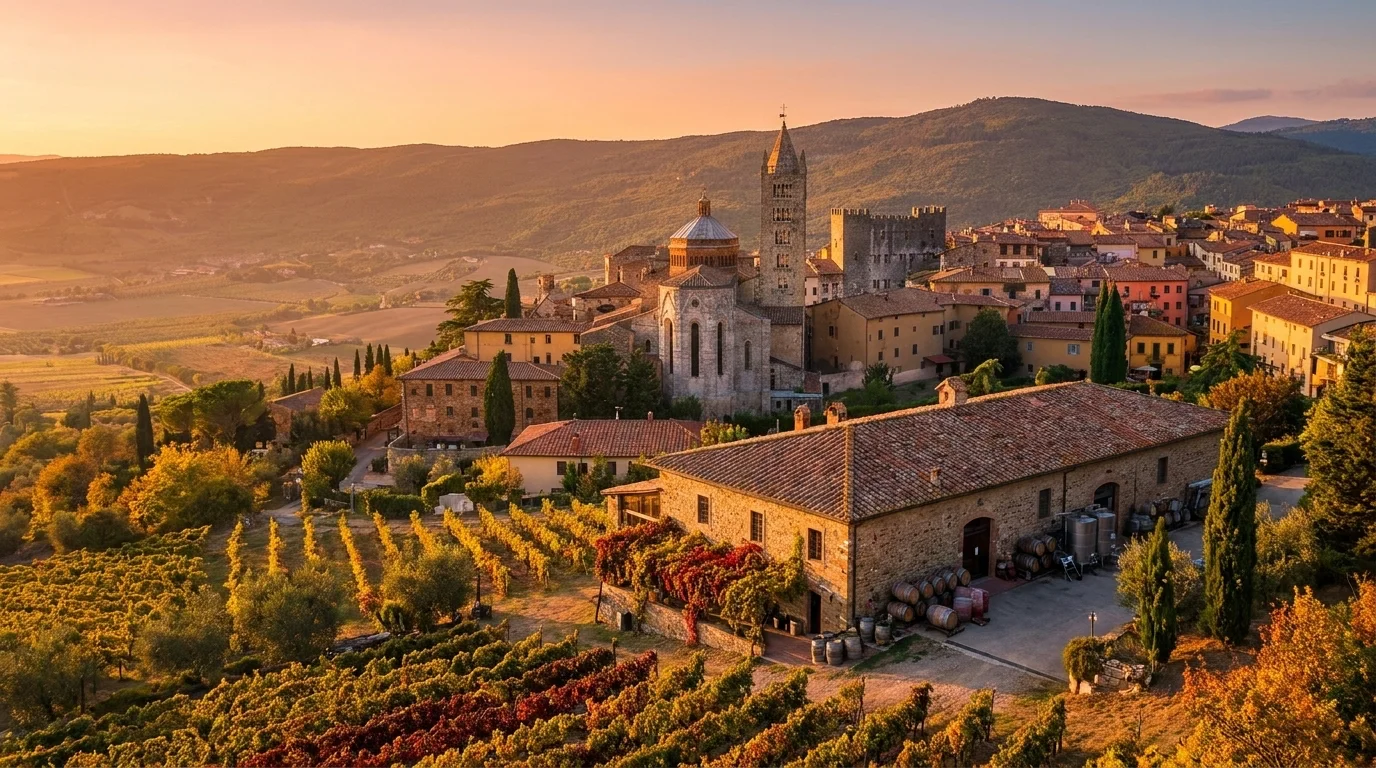
Cypress-lined roads, medieval towers rising from hilltops, the world's greatest Renaissance art, and wine so good it has its own regional identity — Tuscany is the Italy most people picture when they close their eyes.
Tuscany is a region in central Italy, stretching from the Apennine mountains in the north to the Tyrrhenian Sea in the west and the rolling Val d'Orcia hills in the south. It is best known for Renaissance Florence, the medieval cities of Siena and San Gimignano, the Leaning Tower of Pisa, world-class wines including Chianti and Brunello di Montalcino, and some of Europe's most celebrated countryside landscapes. Visitors come here for art, architecture, food, wine, and one of the most beautiful rural landscapes on earth.
Table of Contents
- Tuscany Overview
- Getting There & Around
- Top Attractions & Landmarks
- Towns & Areas to Explore
- Food & Wine
- Nightlife & Entertainment
- Shopping
- Seasonal Events & Festivals
- Where to Stay
- Practical Information
- Day Trips & Nearby Destinations
- Insider Tips & Hidden Gems
- Money-Saving Tips
- Common Tourist Mistakes to Avoid
- Sample Itineraries
- Frequently Asked Questions
What Is Tuscany and Why Should You Visit?
Tuscany is a region in central Italy and one of the most visited destinations in Europe — and for very good reason. It contains Florence, the birthplace of the Renaissance and home to more masterpieces per square kilometre than almost anywhere else on earth; Siena, one of the finest preserved medieval cities in the world; the Leaning Tower of Pisa; the vine-covered Chianti hills; and a string of hilltop towns that have barely changed in five hundred years. This is the Tuscany travel guide to help you plan every part of your trip.
What makes Tuscany extraordinary is the density of it. In a single week you can stand in front of Michelangelo's David, walk the walls of a medieval city at sunset, drink Chianti at the vineyard where it was made, eat hand-rolled pasta in a stone farmhouse kitchen, and watch the sun set over cypress-lined hills that look exactly like a Renaissance painting. Nowhere else offers this combination at such close range.
The region also rewards slow travel. Many visitors rush through Florence in two days and consider Tuscany done — but the real Tuscany is in the smaller towns: the leather markets of Arezzo, the white truffles of San Miniato, the thermal springs of Saturnia, the wild coastline of the Maremma, the abbey of Sant'Antimo rising alone in a valley at dawn.
When Is the Best Time to Visit Tuscany?
Spring (April–May): The best time to visit Tuscany. Temperatures are warm but not hot (16–24°C), wildflowers carpet the hills, the vineyards are budding, and tourist numbers are moderate. The light in April and May is extraordinary — golden and soft in a way that makes every landscape photograph look effortless.
Summer (June–August): Peak season and the hottest time — Florence regularly hits 35°C+ in July. Popular towns are crowded, accommodation is expensive, and queues at major attractions are long. That said, the Tuscan countryside in summer is lush and beautiful, and the long evenings are perfect for outdoor dining. Book everything months in advance.
Autumn (September–October): The second-best time to visit. Grape harvest (vendemmia) transforms the Chianti hills into a hive of activity, temperatures cool to a pleasant 18–25°C, and the light turns golden and amber. October is particularly beautiful — the olive harvest begins, truffles come into season, and the tourist crowds thin dramatically after mid-September.
Winter (November–March): Quiet, atmospheric, and surprisingly rewarding. Florence's museums are nearly crowd-free, smaller towns feel genuinely local, and hotel prices drop significantly. It can be cold (5–12°C) and rainy, but the food and wine are exceptional in winter — think ribollita by the fire and Brunello in Montalcino. Snow occasionally dusts the hilltops in January and February.
How Many Days Do You Need in Tuscany?
- 2–3 days: Florence only — the Uffizi, Accademia, Duomo, and city wandering. A taste of Tuscany but not the countryside.
- 5–7 days: The ideal first visit — Florence (2 days), Siena (1 day), San Gimignano (half day), Chianti drive (1 day), Pisa or Lucca (1 day).
- 10–14 days: Deep exploration — adds the Val d'Orcia (Pienza, Montepulciano, Montalcino), Arezzo, Cortona, Volterra, and a few days with a rental car on back roads.
- 2 weeks+: Living like a local — agriturismos, cooking classes, vineyard visits, thermal baths at Saturnia, the Maremma coast, Elba island.
Quick Facts About Tuscany
- Regional Capital: Florence (Firenze)
- Population: ~3.7 million (region)
- Language: Italian (English widely spoken in tourist areas)
- Currency: Euro (€)
- Time Zone: CET/CEST (UTC+1 in winter, UTC+2 in summer)
- Country Code: +39
- Area Code: Florence 055 / Siena 0577 / Pisa 050
- Climate: Mediterranean — warm, dry summers; mild, wet winters
- Best Airports: Florence (FLR) and Pisa (PSA)
How Do You Get To and Around Tuscany?
The easiest way to reach Tuscany is by flying into Florence (FLR) or Pisa (PSA) airports, or by arriving on Italy's high-speed train network from Rome (1.5 hours), Milan (1.75 hours), or Venice (2 hours). Once in Tuscany, a rental car is essential for exploring the countryside — trains and buses serve the major cities well but leave most hilltop towns inaccessible.
Which Airports Serve Tuscany?
Florence Peretola Airport (FLR) — Via del Termine 11, Florence. A small, convenient airport 4 km from the city centre. Serves mainly European routes from airlines including British Airways, Lufthansa, KLM, and Ryanair. Easy to reach by tram (T2 line, 20 minutes, €1.70) or taxi (€25–30, 15 minutes).
Pisa Galileo Galilei Airport (PSA) — Via dell'Aeroporto 5, Pisa. Tuscany's largest international airport, 80 km from Florence. Served by Ryanair, easyJet, Wizz Air, and major carriers. Direct train to Florence Santa Maria Novella from inside the airport (PisaMover shuttle + train, 1 hour, €9.50 total) or to Pisa city centre (5 minutes, €2.40).
How Do You Get Around Tuscany?
Getting around Tuscany properly requires a rental car. Trains and buses link Florence to Siena (1.5 hours by bus/train), Pisa (1 hour), Arezzo (1 hour), and Lucca (1.5 hours) — but most of the countryside, the Chianti wine estates, and the smaller hilltop villages are only reachable by car.
Rental Car
Book a car at Florence or Pisa airport. Manual transmission cars are significantly cheaper than automatics. Drive on the right. The roads through the Chianti hills (SS222 — the Chiantigiana road) and Val d'Orcia are some of the most scenic in Europe. Fuel costs roughly €1.80–2.00/litre in 2026.
Train (Trenitalia)
Florence Santa Maria Novella is Tuscany's main rail hub. High-speed Frecciarossa trains connect Florence to Rome (1.5 hours, €20–45), Milan (1.75 hours, €25–55), and Venice (2 hours, €25–50). Regional trains serve Pisa, Arezzo, Lucca, Siena (via Empoli), and Grosseto. Book at trenitalia.com or at station ticket machines.
Bus (SITA / Tiemme / FlixBus)
Buses fill gaps the train doesn't cover. SITA buses run Florence–Siena (1.5 hours, €8.30) and Florence–San Gimignano (with a change at Poggibonsi, 1.5 hours total). Tiemme covers the Siena province. FlixBus operates intercity routes at low prices. Buy tickets at bus station windows or tabacchi shops — most regional buses don't accept onboard payment.
Walkability in Town Centres
Tuscany's historic town centres are extremely walkable — Florence's main sights are all within 20 minutes' walk of each other, and smaller towns like Siena, San Gimignano, and Lucca are best explored entirely on foot. Cobblestone streets and hilly terrain make comfortable walking shoes essential. Walkability Score: 85/100 within town centres; 20/100 for the countryside without a car.
Smart travellers always compare transfer options before booking — prices for the same route can vary by 40% or more. Take 60 seconds to check all options and choose what works best for your arrival.
What Are the Top Attractions and Landmarks in Tuscany?
Tuscany's top attractions range from Florence's world-famous art galleries to Siena's medieval piazza, the Leaning Tower of Pisa, and the vineyards and hilltop towns of the countryside. Here are the must-see sights.
Uffizi Gallery (Galleria degli Uffizi)
Piazzale degli Uffizi 6, 50122 Florence
The Uffizi is one of the most important art museums in the world — a palazzo built for the Medici family in the 16th century that now houses the greatest collection of Italian Renaissance painting on earth. Botticelli's Birth of Venus and Primavera, Leonardo da Vinci's Annunciation, Michelangelo's Doni Tondo, Raphael's portraits, Caravaggio's Bacchus — room after room of works you've seen in textbooks, now hanging before you.
The collection spans from the 13th to 18th centuries across 45 rooms. Allow a full half-day minimum — rushing through the Uffizi is a waste. The building itself, a U-shaped loggia overlooking the Arno, is architecturally magnificent. The top floor corridor offers remarkable views over Piazza della Signoria.
Why visit: The single greatest collection of Renaissance painting in existence, in a building designed by Vasari for Cosimo I de' Medici. No serious lover of art should miss it.
Entrance: €20 adults (€4 surcharge for pre-booked timed entry — essential in summer)
Best time: Opening time (8:15 AM) or late afternoon
Hours: Tuesday–Sunday 8:15 AM–6:50 PM; closed Monday
Piazza del Campo & Torre del Mangia — Siena
Piazza del Campo, 53100 Siena SI
Siena's Piazza del Campo is one of the great public spaces of the medieval world — a shell-shaped brick piazza sloping toward the Palazzo Pubblico, built in the 14th century as the centre of civic life. Surrounded by Gothic palaces and divided into nine segments representing the medieval Council of Nine, it's a place that stops you in your tracks the moment you walk into it.
The Torre del Mangia (88 metres) rises from the Palazzo Pubblico and offers the finest view in all of Tuscany — the rooftops of Siena, the surrounding hills, and the Duomo's striped campanile on clear days. The piazza hosts the Palio horse race twice a year (July 2 and August 16), one of Italy's most dramatic and intense events.
Why visit: The most perfectly preserved medieval city square in Italy. Walking into the Campo for the first time is a genuine jaw-drop moment.
Entrance: Square is free; Torre del Mangia €10 adults
Best time: Early morning or evening when the day-trippers have left
Hours: Torre del Mangia open daily 10:00 AM–7:00 PM (summer); closes earlier in winter
Siena Cathedral (Duomo di Siena)
Piazza del Duomo 8, 53100 Siena SI
The Duomo di Siena is one of Italy's greatest Gothic cathedrals — striped black and white marble inside and out, with a facade encrusted with mosaics and sculpture that took centuries to complete. The interior is extraordinary: a carved marble floor depicting biblical and allegorical scenes (usually covered to protect them, briefly exposed in autumn), Pisano's octagonal pulpit, Donatello's bronze tomb slabs, and Pinturicchio's magnificent Piccolomini Library.
The cathedral was originally meant to be far larger — the Sienese planned to make it the largest cathedral in Christendom, but the Black Death of 1348 killed half the population and ended construction. The abandoned nave shell still stands beside the completed building.
Why visit: One of the most beautiful interiors in Italy, with centuries of extraordinary art packed into a single building.
Entrance: €5 basic entry; OPA SI Pass (€15) includes the baptistery, crypt, and Piccolomini Library
Best time: Early morning for fewer crowds
Hours: Monday–Saturday 10:30 AM–7:00 PM; Sunday 1:30–6:00 PM (varies seasonally)
Accademia Gallery & Michelangelo's David
Via Ricasoli 58/60, 50122 Florence
The Galleria dell'Accademia is home to Michelangelo's David — the 5.17-metre marble statue considered by many to be the greatest sculpture ever made. Carved between 1501 and 1504, the David depicts the biblical hero in the moment before his confrontation with Goliath, and the tension, detail, and sheer scale of the work are breathtaking in person. It is impossible to be fully prepared for how it looks.
The Accademia also contains Michelangelo's Prisoners — four unfinished slaves seemingly still trapped within their marble blocks — as well as a significant collection of Florentine Renaissance painting. But it is David that everyone comes for, and he delivers completely.
Why visit: Seeing the David in person is a fundamentally different experience from any photograph. Allow time to simply stand and look.
Entrance: €16 adults (timed entry booking essential — at galleriaaccademiafirenze.it)
Best time: Opening time (8:15 AM) for fewer crowds
Hours: Tuesday–Sunday 8:15 AM–6:50 PM; closed Monday
Florence Cathedral & Brunelleschi's Dome (Duomo di Firenze)
Piazza del Duomo, 50122 Florence
Florence's cathedral — the Cattedrale di Santa Maria del Fiore — is crowned by Filippo Brunelleschi's dome, completed in 1436 and still the largest brick dome ever constructed. The dome was an engineering miracle: when Brunelleschi designed it, the technology to build it did not exist — he essentially invented the methods as he went. The result dominates Florence's skyline from every direction and is visible for miles across the Tuscan countryside.
Climbing the dome (463 steps) is one of Florence's essential experiences — the view from the top encompasses the entire city and surrounding hills. The adjacent Giotto's Campanile (414 steps) offers a slightly different and equally spectacular view, and you can see the dome's exterior details up close. The cathedral's interior is unusually austere given its facade, but Vasari's Last Judgment fresco inside the dome is extraordinary.
Why visit: The dome is an architectural achievement that defines Florence — and the climb delivers one of Italy's great views.
Entrance: Brunelleschi Pass €30 (covers dome, campanile, baptistery, crypt, museum — valid 72 hours)
Best time: Book the first entry slot of the day (8:15 AM) to avoid heat and crowds in the narrow staircase
Hours: Daily, various hours by component — book online at operaduomo.firenze.it
Piazza dei Miracoli & Leaning Tower of Pisa
Piazza dei Miracoli, 56126 Pisa PI
The Leaning Tower of Pisa is one of the world's most recognised structures, but seeing it in person still surprises — the lean is more dramatic than photographs suggest, and the marble building itself is exquisitely beautiful. The tower is a freestanding cylindrical bell tower for the adjacent cathedral, begun in 1173 and taking 199 years to complete (the ground beneath it shifted during construction, causing the lean).
The Piazza dei Miracoli (Field of Miracles) contains four extraordinary Romanesque monuments: the tower, the Duomo, the Baptistery, and the Camposanto (monumental cemetery). Together they form one of the finest medieval architectural groupings in Italy, and the white marble buildings against the green grass of the square create an almost otherworldly visual effect.
Why visit: The tower is genuinely more impressive in person than in photographs — and Pisa is an easy 1-hour train trip from Florence, making it an ideal half-day trip.
Entrance: Tower climb €20 (must book in advance); Duomo free; Baptistery + Camposanto €7 each
Best time: Early morning or late afternoon — midday crowds and light are both harsh
Hours: Daily 8:00 AM–8:00 PM (summer); shorter hours in winter
San Gimignano Medieval Towers
Piazza della Cisterna, 53037 San Gimignano SI
San Gimignano is famous for its 14 surviving medieval towers — built by rival noble families in the 12th and 13th centuries as symbols of wealth and power. At its height the town had 72 towers; today's 14 still give it an extraordinary skyline visible for miles across the Val d'Elsa. The town itself is small enough to walk in an hour, but it rewards slow exploration — tiny lanes, Vernaccia wine tastings, the award-winning saffron gelato at Gelateria Dondoli, and a Romanesque collegiate church with frescoes that rival far more famous works.
The Torre Grossa (the tallest surviving tower at 54 metres) is open to visitors and offers the best view of the town's towers and the surrounding Tuscan countryside — worth every one of the 218 steps.
Why visit: One of the most visually striking towns in Tuscany, and small enough to combine with Siena in a single day trip.
Entrance: Town is free; Torre Grossa €9; Collegiate Church frescoes €6
Best time: Arrive early (9:00–10:00 AM) before coach tour groups arrive
Hours: Torre Grossa daily 10:00 AM–5:30 PM (winter), 10:00 AM–7:30 PM (summer)
Chianti Wine Region (Strada del Chianti)
SS222 Chiantigiana Road, between Florence and Siena
The Chianti Classico region stretches across the hills between Florence and Siena, covered in vineyards, olive groves, cypress trees, and medieval farmhouses. The SS222 — the Chiantigiana road — is one of Europe's most beautiful drives, winding through Greve in Chianti, Panzano, Radda, and Castellina before reaching Siena. This is the heartland of Sangiovese wine, the grape behind Chianti Classico, Brunello di Montalcino, and Vino Nobile di Montepulciano.
Almost every estate along the route offers tastings and cellar tours, from small family producers to famous names like Antinori, Castello di Brolio, and Badia a Coltibuono. The village of Greve in Chianti (the unofficial capital of the Chianti zone) has an excellent weekly market and the Enoteca del Chianti Classico where you can taste dozens of producers' wines under one roof.
Why visit: The most beautiful wine road in Italy, and the tastings are extraordinarily good value compared to equivalent wine regions in France.
Entrance: Most winery tours €15–30 including tasting; some free
Best time: Late September–October for the grape harvest (vendemmia)
Hours: Estate tours usually require advance booking — contact directly
Val d'Orcia — Pienza, Montepulciano & Montalcino
Val d'Orcia, Province of Siena
The Val d'Orcia is a UNESCO World Heritage landscape — the wide valley south of Siena that inspired Renaissance painters and looks almost exactly like the backgrounds of Lorenzetti and Leonardo. Rolling hills, lone farmhouses, cypress avenues, and medieval villages on volcanic tufa mounds create a landscape that seems almost too perfect to be real. The three most rewarding towns are Pienza (a perfect Renaissance ideal city built in the 15th century by Pope Pius II), Montepulciano (hilltop home of Vino Nobile wine), and Montalcino (the proud home of Brunello, Italy's most prestigious red wine).
The drive between these three towns — perhaps 45 minutes of total driving — passes through some of the most beautiful landscapes in Europe. Stop at any of the agriturismo signs along the way for an impromptu tasting or farm lunch.
Why visit: The Val d'Orcia is Tuscany's most iconic landscape and the area that inspired most people's image of Italy.
Entrance: Free to explore the towns; wine cellar tastings €10–25
Best time: April–May for wildflowers; October for autumn colours
How to get there: Rental car essential — public transport is very limited
Lucca — Medieval Walls and Musical Heritage
Piazza Napoleone, 55100 Lucca LU
Lucca is one of Tuscany's most liveable and least touristy major cities — a perfectly intact medieval city enclosed within Renaissance walls so wide that locals cycle along the top of them. The walls run 4.2 km around the entire historic centre and are lined with trees; renting a bicycle and cycling the top of the walls is one of Tuscany's great simple pleasures. The city is also the birthplace of Giacomo Puccini (La Bohème, Tosca, Madama Butterfly) and hosts a major music festival each summer.
Inside the walls: the extraordinary Piazza dell'Anfiteatro (an oval piazza built directly on the foundation of a Roman amphitheatre), the 12th-century Cathedral of San Martino, dozens of independent shops, restaurants, and cafés that feel genuinely local rather than tourist-targeted. Lucca is significantly less visited than Florence or Siena, and the difference in atmosphere is marked.
Why visit: The most relaxed and authentic large city in Tuscany — ideal for a contrast to the busier major destinations.
Entrance: Walls free; cathedral €3; bicycle rental ~€15/day
Best time: Any time of year; summer evenings are particularly pleasant
How to get there: Direct train from Florence Santa Maria Novella (1.5 hours, €8)
Book your tours and tickets in advance — it saves hours of queuing and often gets you a better price. These two platforms cover different options, so it's worth checking both.
What Are the Best Towns and Areas to Explore in Tuscany?
Tuscany is better understood as a collection of distinct areas than a single city. Each zone has its own character, landscape, and specialities — here's a breakdown of the major areas.
Florence (Firenze)
Character: The regional capital and cultural powerhouse — a Renaissance city on the Arno river whose historic centre is a UNESCO World Heritage Site. Dense with museums, churches, palaces, leather markets, and the most extraordinary concentration of Renaissance art anywhere on earth.
What makes it special: Florence is where the Renaissance was born — Botticelli, Leonardo, Michelangelo, Brunelleschi, and Donatello all worked here, and their work remains in situ in the galleries and churches of the city centre. The Oltrarno neighbourhood on the south bank of the Arno retains a genuine artisan quarter atmosphere.
Best for: Art lovers, architecture enthusiasts, first-time Italy visitors, foodies
Must-see: Uffizi, Accademia (David), Duomo and dome climb, Ponte Vecchio, Piazza della Signoria, Oltrarno's workshops
How to get there: Florence Santa Maria Novella station is Italy's main rail hub for Tuscany; direct high-speed trains from Rome (1.5h), Milan (1.75h), Venice (2h)
Location: Piazza della Repubblica, 50123 Florence FI
Siena
Character: Florence's great medieval rival — a city of red brick and Gothic stone whose historic centre is perfectly preserved within its ancient walls. Siena has a different energy from Florence: slower, more local, quieter after the day-trippers leave. The famous Palio horse race, run twice a year around the Piazza del Campo, is the most intensely local event in Italian civic life.
What makes it special: The Piazza del Campo is one of the world's great public spaces; the Duomo is extraordinarily beautiful inside and out; the city's 17 contrade (districts) each have their own colours, mascot, museum, and church — giving Siena a hyper-local civic identity unlike anywhere else in Italy.
Best for: Medieval history, art history, authentic Italian city life, those who want Florence's quality without Florence's crowds
Must-see: Piazza del Campo, Duomo, Torre del Mangia, Pinacoteca Nazionale, Orto Botanico
How to get there: Bus from Florence (Sena/SITA, 1.5 hours, €8) or train via Empoli (2–2.5 hours)
Location: Piazza del Campo, 53100 Siena SI
The Chianti Hills
Character: The rolling vine-covered hills between Florence and Siena — classic Tuscany landscape of cypress avenues, stone farmhouses, vineyard estates, and medieval villages. The Chianti Classico DOCG zone is one of Italy's most revered wine territories.
What makes it special: This is the landscape you picture when you imagine Tuscany. The SS222 (Chiantigiana) road passes through a continuous series of beautiful views, wine estates open for tasting, and tiny villages with local trattorias. Greve in Chianti, Radda, Castellina, and Panzano are the key villages.
Best for: Wine lovers, drivers, cyclists (serious road cycling culture), rural retreats, wedding couples
Must-see: Castello di Brolio, Greve market, Panzano butcher Dario Cecchini (a legendary figure), Radda's town walls
How to get there: Rental car essential — or day tour from Florence or Siena
Location: Greve in Chianti, Via Roma 1, 50022 Greve in Chianti FI
Val d'Orcia
Character: A UNESCO World Heritage landscape of wide valleys, volcanic tufa hills, hot springs, and medieval towns. The most photographed landscape in Tuscany — endless rolling hills with lone farmhouses and cypress-lined roads. Home to Brunello di Montalcino, Vino Nobile di Montepulciano, and Pecorino di Pienza.
What makes it special: The Val d'Orcia is Tuscany's most emotionally powerful landscape — it looks like a Renaissance painting because Renaissance painters actually painted it. The thermal baths at Bagno Vignoni (a medieval piazza flooded with hot spring water) are unique in Italy.
Best for: Landscape photography, wine tourism, slow travel, couples, thermal spa seekers
Must-see: Pienza, Montepulciano, Montalcino and its Brunello enotecas, Bagno Vignoni, the cypress avenue of La Foce
How to get there: Rental car essential from Florence (2 hours) or Siena (1 hour)
Location: Piazza Pio II, 53026 Pienza SI
The Maremma Coast
Character: Tuscany's wild south — a coastal region of pine forests, wetlands, white sand beaches, and ancient Etruscan ruins. Far less visited than the rest of Tuscany and largely undiscovered by international tourists. The Parco Regionale della Maremma protects a long stretch of coast with cliffs, river gorges, and semi-wild horses.
What makes it special: The Maremma offers a completely different side of Tuscany — nature rather than art, beaches rather than museums, and local rather than touristic. Porto Ercole and Porto Santo Stefano on the Argentario promontory are beautiful yacht-village alternatives to Portofino at half the price. The thermal waterfalls at Saturnia are free to use and utterly magical.
Best for: Nature lovers, beach-goers, cyclists, those wanting to avoid crowds
Must-see: Saturnia thermal waterfalls, Parco della Maremma, Pitigliano (the "little Jerusalem" tuff town), the Etruscan ruins at Populonia
How to get there: Rental car from Florence (2.5–3 hours) or Siena (1.5 hours)
Location: Cascate del Mulino, Saturnia, 58014 Manciano GR
What Food and Wine Should You Try in Tuscany?
Tuscany's cuisine is one of Italy's most celebrated — earthy, seasonal, and rooted in peasant traditions that have been elevated over centuries into some of Italy's finest cooking. The wine is world-class across multiple varieties and price points.
What Are the Must-Try Dishes in Tuscany?
- Bistecca alla Fiorentina — The defining Tuscan dish: a thick T-bone steak from Chianina cattle, grilled over wood charcoal, served rare (al sangue), seasoned with only salt, olive oil, and rosemary. Sold by weight (typically 800g–1.2kg), it's meant to be shared. Expect to pay €50–80 for a proper one. Do not ask for it well-done — this is a cultural offence.
- Ribollita — "Reboiled" — a hearty Tuscan bread soup made with cavolo nero (black kale), cannellini beans, carrots, celery, and day-old bread. Simple, deeply flavoured, and one of the great cold-weather dishes of Italian cuisine.
- Pici al ragù — Pici are thick, hand-rolled pasta (like fat spaghetti) unique to the Siena area. Usually served with a slow-cooked wild boar ragù, a meat sauce, or cacio e pepe (cheese and pepper) style. Extraordinary with a glass of Chianti.
- Lampredotto — Florence's iconic street food: a tripe sandwich sold from roadside carts (lampredottai) around the city's markets since medieval times. The tripe (fourth stomach of cattle) is slow-cooked in broth with tomato and herbs, sliced, and stuffed into a schiacciata roll dipped in the broth. A must for the adventurous eater.
- Pappa al pomodoro — Stale bread and tomato soup, thickened until it almost sets, flavoured with basil and olive oil. One of Tuscany's great cucina povera dishes.
- Pecorino di Pienza — Sheep's milk cheese from the Val d'Orcia, ranging from fresh and mild (fresco) to aged and sharp (stagionato). Buy directly from a producer in Pienza for the best quality.
- Tartufo Bianco (White Truffle) — San Miniato (in October–November) and the Crete Senesi are Tuscany's white truffle territory. Shaved raw over pasta, risotto, or eggs, white truffle has an intensity that is impossible to describe — nothing else smells or tastes like it.
- Cantucci e Vin Santo — Hard almond biscuits (cantucci) dipped into Vin Santo, the sweet amber dessert wine made from dried grapes. The classic Tuscan way to end a meal.
What Are the Best Wines of Tuscany?
- Chianti Classico DOCG — Sangiovese-dominant red from the hills between Florence and Siena. Riserva versions (aged at least 2 years) are among Italy's best values. Look for the black rooster (gallo nero) on the bottle.
- Brunello di Montalcino DOCG — Italy's most prestigious red wine, made from 100% Sangiovese Grosso (Brunello) near Montalcino. Structured, complex, ages for decades. Expects prices of €40–100+ per bottle at the winery.
- Vino Nobile di Montepulciano DOCG — The "noble wine" of Montepulciano, elegant and structured. An excellent and often better-value alternative to Brunello.
- Vernaccia di San Gimignano DOCG — Tuscany's great white wine, crisp and mineral with a slightly bitter finish. Italy's first white wine to receive DOC status.
- Vin Santo — Sweet amber dessert wine made from semi-dried trebbiano and malvasia grapes. The best are complex, nutty, and honeyed with high acidity.
Where Should You Eat in Tuscany?
Budget-Friendly (Under €15 per meal)
- Trattoria Mario — Via Rosina 2, Florence. Cash-only, shared tables, queues from 11:30 AM. Classic Florentine ribollita, pappa al pomodoro, and pasta — unchanged since 1953. Under €12 for a full meal.
- Lampredotto carts at Mercato Centrale — Piazza del Mercato Centrale, Florence. The classic Florentine street lunch experience. Nerbone inside the market is also excellent for budget plates.
- Osteria Le Logge — Via del Porrione 33, Siena. Simple Sienese classics in a former pharmacy — good value for the quality, under €15 for pasta and wine.
Mid-Range (€25–50 per meal)
- Buca Mario — Piazza degli Ottaviani 16r, Florence. Florence's oldest restaurant (1886), specialising in traditional Florentine dishes. Order the bistecca if budget allows.
- Osteria di Fonterutoli — Loc. Fonterutoli, Castellina in Chianti. Beautiful terrace above the vineyards of the Mazzei estate, excellent Chianti and grilled meats.
- Ristorante Il Pozzo — Piazza Roma 2, Monteriggioni. Inside a perfectly preserved 13th-century walled village — hand-rolled pici and wild boar, worth the detour.
Fine Dining (€80–150+ per person)
- Enoteca Pinchiorri — Via Ghibellina 87, Florence. Three Michelin stars, one of Italy's finest wine cellars (100,000+ bottles). A once-in-a-trip splurge for serious food and wine lovers.
- La Tenda Rossa — Via di Cerbaia 9-11, Cerbaia (San Casciano). Two Michelin stars, family-run, extraordinary Tuscan tasting menus with impeccable wine pairings from a 40,000-bottle cellar.
What Is the Nightlife Like in Tuscany?
Tuscany's nightlife is concentrated in Florence — the countryside towns largely close by 10:00 PM except in summer. Florence has a lively and varied evening scene that caters to students, tourists, and locals alike.
Where Are the Best Areas for Nightlife in Florence?
- Oltrarno (south of the Arno): The most authentic nightlife area — wine bars (enoteche), craft cocktail bars, and outdoor aperitivo spots in Piazza Santo Spirito. Starts around 7:00 PM with aperitivo, goes until 1:00–2:00 AM.
- San Frediano district: Via dei Serragli and surrounds — a genuine neighbourhood bar scene with fewer tourists and better prices. The area around the Porta San Frediano is particularly lively on warm evenings.
- Santa Croce: More tourist-oriented but convenient — Piazza Santa Croce and the streets around it have bars, restaurants, and outdoor terraces that stay busy until late.
What Are the Best Bars and Wine Bars in Tuscany?
Wine Bars (Enoteche)
- Enoteca Alessi — Via delle Oche 27-29r, Florence. A magnificent old wine shop turned bar with exceptional Chianti and Brunello by the glass. The room itself is worth a visit.
- Divinum — Via Fontebranda 29, Siena. Excellent selection of Sienese and Tuscan wines by the glass in a vaulted medieval cellar.
- Enoteca Italiana — Fortezza Medicea, Siena. Inside Siena's 16th-century Medici fortress — a national enoteca with thousands of Italian labels on the shelves.
Cocktail Bars
- Mad Souls & Spirits — Borgo San Frediano 38r, Florence. Florence's most acclaimed craft cocktail bar — small, always busy, extraordinarily good drinks. Book ahead on weekends.
- Il Santino — Via di Santo Spirito 60r, Florence. Natural wine bar and small plates attached to the excellent Il Santo Bevitore restaurant.
What and Where Should You Shop in Tuscany?
Tuscany's best shopping is for leather goods, wine, food products, ceramics, and artisan crafts — most of which are available at source and of far better quality than what you'd find elsewhere.
What Are the Best Shopping Areas in Tuscany?
- Florence's leather district (Santa Croce area): Via del Parione and surrounding streets near Piazza Santa Croce. The Scuola del Cuoio (Leather School) inside Santa Croce church sells handmade leather goods made by master craftsmen — wallets, bags, belts, and gloves at fair prices. Better quality and more authentic than the street market stalls.
- Mercato Centrale, Florence: Piazza del Mercato Centrale 6. The best food market in Florence — upper floor is a food hall; ground floor has butchers, cheesemongers, truffle sellers, and wine merchants. Good for buying cured meats, pecorino, and olive oil to take home.
- Pienza's main street (Corso il Rossellino): The best place in Tuscany to buy aged Pecorino di Pienza direct from producers. Also excellent local honey, truffles in jars, and Brunello di Montalcino.
What Should You Buy in Tuscany?
- Chianti Classico wine — Buy directly from a winery estate (cantina) in the Chianti hills for the best prices and selection. Many wineries ship internationally.
- Extra virgin olive oil — Tuscan EVO oil (particularly from the area around Lucca and the Chianti hills) is among Italy's finest. Buy from a producer in autumn after the October–November harvest for the freshest, greenest oil.
- Florentine leather goods — Wallets, bags, notebooks, gloves. Buy from workshops rather than street stalls for genuine craftsmanship. Budget €40–80 for a quality wallet; €150–400 for a bag.
- White truffles (autumn only) — Fresh white truffles from San Miniato or preserved truffle products year-round. The San Miniato truffle festival in November is the best place to buy.
- Marbled paper products — Florentine carta marmorizzata (marbled paper) is used to cover notebooks, photo albums, and boxes. Alberto Cozzi (Via del Parione 35r, Florence) is one of the last traditional masters.
- Ceramics from Montelupo Fiorentino — The small town of Montelupo (30 minutes from Florence) has been producing painted maiolica ceramics since the 15th century and has dozens of workshops selling direct.
Can Non-EU Visitors Claim a VAT Tax Refund in Tuscany?
Yes — if you are a visitor from outside the European Union (including travellers from the USA, Canada, Australia, the UK, and most of Asia and Latin America), you are entitled to a refund of the VAT (Value Added Tax) included in the price of goods you buy in Italy. VAT in Italy is 22% on most goods; 10% on some food items, which means this refund can be significant on high-value purchases like clothing, leather goods, jewellery, designer fashion, and electronics.
How to Claim Your VAT Refund — Step by Step
- Spend at least €154.94 in a single shop in a single day. This is the minimum threshold for a VAT refund claim in Italy. It does not apply across multiple shops — the full amount must be spent in one store.
- Look for the "Tax Free" sign. Participating shops display a "Tax Free Shopping," "Global Blue," or "Planet" logo in the window or at the register.
- Ask for the tax refund form at the register before you pay. Present your non-EU passport — the shop will fill out the form with your details and the purchase amount. Keep the form with your receipt.
- Get the form stamped at customs before you leave. Go to the Customs office at Florence Peretola Airport (FLR) before check-in and have an officer stamp your tax refund form. Keep your purchases accessible in hand luggage — do not pack them deep in your checked bags.
- Collect your refund. Hand the stamped form to the Global Blue or Planet desk at the airport. You can receive the refund in cash (minus a processing fee) or as a credit card refund (lower fees, takes a few weeks).
VAT Refund Quick Facts for Tuscany
- Minimum spend: €154.94 in one shop in one day
- VAT rate on most goods: 22% on most goods; 10% on some food items
- Typical refund after fees: 10–15% of the purchase price
- Refund processors: Global Blue and Planet (formerly Premier Tax Free) at Florence Peretola Airport (FLR)
- Who qualifies: Anyone with a non-EU passport who is not a resident of an EU country
- UK visitors: British passport holders qualify since Brexit — the UK is no longer in the EU
- Deadline: Purchases must be exported within 3 months of the date of purchase
- Full guide: VAT Refund in Europe — Complete Guide for Non-EU Travelers
What Festivals and Events Happen in Tuscany?
Tuscany's events calendar is one of Italy's richest — from the Palio horse race in Siena to Florence's Easter fireworks and the truffle festivals of autumn.
Annual Events Calendar
| Month | Event | Description |
|---|---|---|
| March/April | Scoppio del Carro, Florence | Easter Sunday explosion of a decorated cart in front of the Duomo — a 350-year-old tradition involving a mechanical dove and a lot of fireworks. Extraordinary to watch. |
| May | Maggio Musicale Fiorentino | Florence's major classical music and opera festival, running through June. Performances at the Teatro del Maggio and various historic venues. |
| June | Calcio Storico, Florence | A brutal medieval football match played in Piazza Santa Croce between Florence's four historic districts — somewhere between football, rugby, and wrestling. June 24 is the final. |
| July 2 | Palio di Siena (first race) | The most intense civic event in Italy — ten horses and bareback riders race three times around the Piazza del Campo for the honour of their contrada. Book accommodation months ahead. |
| August 15 | Ferragosto | Italy's major summer holiday — much of Florence closes, but the towns and beaches are full. Many restaurants close for the week around August 15. |
| August 16 | Palio di Siena (second race) | The second Palio of the year — same feverish atmosphere, different contrade eligible to race. Extraordinary experience but plan and book many months in advance. |
| September | Vendemmia (Grape Harvest) | September–October throughout the Chianti, Brunello, and Nobile wine zones. Many wineries host harvest days open to visitors. The landscape turns golden. |
| October | Eurochocolate, various cities | Chocolate festival in various Tuscan cities. Also: Fiera del Tartufo Bianco begins in San Miniato. |
| November | Fiera del Tartufo Bianco, San Miniato | Three weekends in November celebrating the white truffle harvest. Stalls sell fresh truffles, truffle products, and local food. One of Tuscany's best food events. |
| December | Christmas Markets, Florence & Siena | Florence's German-style Christmas market in Piazza Santa Croce (late November through December) is one of Italy's most atmospheric. |
Where Should You Stay in Tuscany?
Where to stay in Tuscany depends entirely on how you're travelling — a Florence base works well for museum-focused visitors, but staying in an agriturismo in the Chianti hills or Val d'Orcia is the quintessential Tuscan experience.
Best Areas to Stay in Tuscany
| Area | Vibe | Price Per Night | Best For |
|---|---|---|---|
| Florence city centre | Urban, cultural, bustling | €120–350 | Museums, art, city convenience |
| Oltrarno, Florence | Local, artisan, quieter | €90–200 | Authentic neighbourhood feel |
| Siena historic centre | Medieval, intimate, walkable | €100–250 | Those wanting the medieval experience |
| Chianti agriturismo | Countryside, vineyards, peaceful | €80–200 | Wine lovers, couples, rural retreat |
| Val d'Orcia agriturismo | Remote, scenic, genuine | €100–280 | Landscape photography, deep relaxation |
| Lucca | Local, relaxed, less touristic | €80–180 | Those wanting to avoid crowds |
Agriturismo — Tuscany's Best Accommodation Type
An agriturismo is a working farm that offers accommodation — typically in stone farmhouses or converted outbuildings, often with a pool, vineyard or olive grove on the property, and breakfast or dinner made from their own produce. Staying in a Chianti or Val d'Orcia agriturismo is the quintessential Tuscany experience and usually cheaper than an equivalent city hotel.
What Do You Need to Know Before Visiting Tuscany?
Here are the essential practical details every visitor to Tuscany needs before arriving.
Essential Travel Details for Tuscany
- Currency: Euro (€) — cash is still preferred at markets, smaller trattorias, and agriturismo farms
- Credit Cards: Widely accepted at hotels, larger restaurants, and shops; less so at local markets and small bars
- ATMs: Plentiful in cities; less common in rural areas — carry cash if driving the countryside
- Language: Italian; English widely spoken in Florence, Siena, Pisa, and San Gimignano; less so in rural villages
- Tipping: Not obligatory — round up the bill or leave €1–2 per person at a restaurant; no tipping culture at bars
- Electrical Plugs: Type F/L (Italian) and Type C — European 220V; US/UK travellers need an adapter
- Emergency Number: 112 (general emergency), 113 (police), 118 (ambulance)
- SIM Cards: Available at tabacchi shops and TIM/Vodafone stores — prepaid SIMs from €10–15 with good data allowances
- WiFi: Good in Florence hotels and cafés; patchy in rural agriturismo properties — confirm before booking if essential
- Tap Water: Safe to drink throughout Tuscany — excellent quality from mountain springs
Skip the airport queue — order your eSIM before you travel and activate it the moment you land. Prices and data allowances vary, so it pays to compare providers.
How Much Does It Cost to Visit Tuscany?
| Budget Type | Daily Cost | What's Included |
|---|---|---|
| Budget | €80–110/day | Hostel or budget B&B, street food and market lunches, walking and free sights, one paid museum |
| Mid-Range | €150–220/day | 3-star hotel or agriturismo, trattoria lunches and dinners, car rental shared between 2, major paid attractions |
| Luxury | €350+/day | 4–5 star hotel or boutique agriturismo, fine dining, private car or transfers, guided experiences |
Do You Need Travel Insurance for Tuscany?
Yes — and you should buy it before you board your flight, not after. Travel insurance covers the situations that can turn a great trip into a financial disaster: a medical emergency (a single ambulance ride and hospital stay in Europe can cost €3,000–€10,000 without coverage), a cancelled or delayed flight, lost or stolen baggage, or a last-minute trip cancellation. EU citizens with an EHIC or GHIC card receive reciprocal state healthcare, but this does not cover repatriation, trip cancellation, or lost luggage — a full travel policy fills those gaps. Non-EU travellers have no state coverage at all and should never visit without insurance.
Choosing the right policy matters — coverage limits, exclusions, and pre-existing condition terms vary significantly between providers. Read our full guide before you buy: Best Travel Insurance for Europe — Honest Comparison for 2026.
Travel insurance is strongly recommended for Tuscany — an unexpected medical bill, flight cancellation, or lost luggage can cost far more than the policy. Get covered before you go.
What Are Your Rights If Your Flight to Tuscany Is Delayed or Cancelled?
Under EU Regulation 261/2004, if your flight to or from Tuscany is delayed by more than 3 hours or cancelled without sufficient notice, you are entitled to compensation of up to €600 per passenger — regardless of which airline you flew with, and regardless of how long ago it happened. A claims service handles everything on your behalf and only charges a fee if they win — so there is no risk to you.
Both services check your eligibility for free with no upfront cost — they only charge a commission if they successfully recover your compensation.
Is Tuscany Safe for Tourists?
Yes — Tuscany is one of Italy's safest regions for tourists. Violent crime is rare and the region is accustomed to millions of international visitors. The main concerns are pickpocketing in busy tourist areas (particularly Florence's main squares and markets), ZTL driving fines, and tourist-trap restaurants near major attractions.
Areas to be aware of: Florence's Santa Maria Novella train station area at night; the market stalls around San Lorenzo (high-pressure selling and some counterfeit goods)
Common tourist issues: Being seated at a tourist-menu restaurant without being told the prices; ordering bottled water automatically added to the bill; unofficial "guides" offering tours outside major attractions
Useful Italian Phrases for Tuscany
- Hello / Good day: Ciao / Buongiorno
- Thank you: Grazie
- Please: Per favore
- The bill, please: Il conto, per favore
- How much?: Quanto costa?
- Where is...?: Dove si trova...?
- A glass of red/white wine: Un bicchiere di vino rosso/bianco
- Do you have a menu in English?: Avete il menù in inglese?
- Tap water, please: Acqua del rubinetto, per favore
- Delicious!: Buonissimo!
What Are the Best Day Trips from Tuscany's Main Cities?
Tuscany's central location makes it an ideal base for day trips into neighbouring regions, and the cities of Rome, Bologna, and the Cinque Terre coast are all within easy reach.
Rome — from Florence
Distance: 280 km — 1.5 hours by Frecciarossa high-speed train from Florence Santa Maria Novella
What to see: The Colosseum, Roman Forum, Vatican Museums, Sistine Chapel, Piazza Navona, and the Pantheon — ancient Rome's greatest monuments. Florence and Rome complement each other perfectly: Renaissance vs. ancient world, intimate medieval city vs. grand imperial capital.
How to get there: Frecciarossa trains run every 30–60 minutes from Florence SMN. Tickets from €20–45 each way depending on timing. Book on trenitalia.com.
Time needed: Full day — depart Florence by 8:00 AM, return by 9:00–10:00 PM
Best for: Those with an extra day who haven't yet seen Rome, or returning visitors who want to combine both cities in one trip
Location: Roma Termini station, Piazza dei Cinquecento, 00185 Rome RM
Cinque Terre — from Florence or Pisa
Distance: 130 km from Florence — 2–2.5 hours by train (change at La Spezia)
What to see: Five colourful fishing villages (Monterosso, Vernazza, Corniglia, Manarola, Riomaggiore) clinging to dramatic cliffs above the Ligurian Sea. Hiking the coastal path between villages, swimming in the sea, eating seafood — a completely different landscape from the Tuscan countryside.
How to get there: Train from Florence SMN to La Spezia Centrale (1.5–2 hours), then local Cinque Terre Express train to the villages (every 30 minutes). The Cinque Terre Card (€18.50/day) covers all trains and hiking trails.
Time needed: Full day minimum — ideally overnight to avoid crowds and enjoy evenings in the villages
Best for: Hikers, beach lovers, those wanting coastal scenery as a contrast to Tuscany's inland landscapes
Location: Piazza Garibaldi, 19018 Vernazza SP
Bologna — from Florence
Distance: 100 km — 35 minutes by Frecciarossa from Florence
What to see: Italy's food capital and home of the university — a beautiful city of red-brick arcades, medieval towers, Renaissance churches, and the greatest food market in Italy (Mercato di Mezzo). Bologna is entirely authentic, largely tourist-free, and one of Italy's most underrated cities. Try mortadella, tagliatelle al ragù (the original Bolognese), and tortellini in brodo.
How to get there: High-speed train from Florence SMN, 35 minutes, from €15 each way. Trains run every 30 minutes.
Time needed: Half day to full day
Best for: Food lovers, those wanting a break from tourist crowds, a genuine Italian city experience
Location: Piazza Maggiore, 40124 Bologna BO
Elba Island — from the Maremma Coast
Distance: 10 km offshore from Piombino — 1 hour by ferry from Piombino port
What to see: Napoleon's island of exile — a beautiful island of rocky coves, white beaches, turquoise water, and hills covered in Mediterranean scrub. Excellent snorkelling and diving. Napoleon's two residences (Villa dei Mulini and Villa San Martino) are open as museums. Ferragosto and August weekends are very crowded — early June and September are ideal.
How to get there: Train from Florence to Campiglia Marittima, bus to Piombino port, then Moby Lines or Toremar ferry to Portoferraio (1 hour, from €15 one way). Car ferries also available.
Time needed: Full day minimum; ideally 2–3 nights
Best for: Beach lovers, divers, those wanting an island escape from Tuscany's inland heat in summer
Location: Piazza della Repubblica, 57037 Portoferraio LI
Car rental prices vary significantly between agencies — the same car on the same date can differ by 30–50% depending on where you book. Always compare before confirming.
What Are the Hidden Gems and Insider Tips for Tuscany?
Beyond the main tourist trail, Tuscany hides some of its best experiences in lesser-known towns and landscapes that most visitors never reach.
Hidden Gems Worth Visiting
- Pitigliano: Via Roma 1, 58017 Pitigliano GR. The "little Jerusalem" — a medieval town built entirely on a volcanic tuff cliff above steep gorges in the Maremma. One of the most dramatic townscapes in Italy, almost unknown to international visitors. A significant Jewish community sheltered here during WWII.
- Volterra: Piazza dei Priori 1, 56048 Volterra PI. An ancient Etruscan city on a high ridge above the metalliferous hills. Extraordinary Etruscan museum, Roman theatre ruins, medieval palazzi, and alabaster workshops — and far fewer tourists than San Gimignano despite being equally impressive.
- Bagni San Filippo: Loc. Bagni San Filippo, 53040 Castiglione d'Orcia SI. Free natural hot springs in the forest — white calcium carbonate formations and steaming pools, free to use at any time. A magical and totally free experience hidden in the Val d'Orcia hills.
- Abbazia di Sant'Antimo: Loc. Castelnuovo dell'Abate, 53024 Montalcino SI. A 12th-century Romanesque abbey in an isolated valley below Montalcino — one of the most beautiful buildings in Tuscany, still occupied by French monks who sing Gregorian chant at daily services. The setting alone is extraordinary.
- Sorano: Piazza Busatti 1, 58010 Sorano GR. Another Maremma tuff-cliff town, less visited even than Pitigliano. The Orsini fortress and the cave dwellings carved into the volcanic rock are remarkable.
- Anghiari: Via Matteotti, 52031 Anghiari AR. A perfectly preserved hill town near Arezzo — steep medieval lanes, craft workshops, and the Piero della Francesca trail. Leonardo da Vinci's lost Battle of Anghiari fresco was painted to commemorate the battle fought near here.
Best Photography Spots in Tuscany
- The cypress avenue at La Foce: SP40, Val d'Orcia. The most famous image in Tuscany — a cypress-lined white gravel road winding up a hillside in the Val d'Orcia. Best photographed in morning mist in April, May, or October.
- Piazza del Campo from the Torre del Mangia top: Siena. The aerial view of the Campo and the city's rooftops stretching to the Duomo dome is one of the best urban views in Italy.
- The Ponte Vecchio at dawn: Ponte Vecchio, Florence. Walk down to the Arno embankment before 7:00 AM in summer — the bridge and its reflection in the river are beautiful without the crowds.
- Monteriggioni walls at sunset: Piazza Roma 1, 53035 Monteriggioni SI. A small walled medieval village visible from the A1 autostrada — the 14 towers intact around a complete wall, glowing gold at sunset.
How Can You Save Money in Tuscany?
The biggest way to save money in Tuscany is to time your visit outside peak summer months and to eat and drink like a local rather than in tourist-trap restaurants near the main sights.
Best Money-Saving Strategies
- Visit Florence's state museums on the first Sunday of the month — entry is free (Uffizi, Accademia, Bargello, and others). Queues are longer but completely free.
- Buy a Trenitalia multi-trip carnet if using regional trains frequently — sold at station machines, offers a discount on single-ticket prices.
- Eat lunch rather than dinner at good restaurants — the same kitchen, the same quality, often 30–40% cheaper at lunch with the fixed menu del giorno.
- Shop at local supermarkets (Conad, Esselunga, Coop) for wine, cheese, and cured meats to eat in your accommodation — Tuscany's supermarket shelves carry extraordinary producers at retail prices.
- Book Uffizi and Accademia tickets online well in advance — you avoid the queue surcharge and get better time slots.
- Drive the Chiantigiana road and taste at smaller, family-run wineries rather than the famous names — quality is often equal, prices significantly lower.
- Use the Pisa airport bus (PisaMover + regional train) rather than a taxi — saves €15–20 per person on the transfer to Florence.
- Visit Lucca, Arezzo, Cortona, and Volterra instead of (or alongside) the more famous destinations — all are extraordinary, all are free to enter and explore, and all are less expensive to eat and sleep in.
What Can You Do for Free in Tuscany?
- Walk the walls of Lucca: The complete 4.2 km circuit on top of the Renaissance walls, lined with trees — entirely free and one of Tuscany's great walks.
- Piazza del Campo, Siena: The most beautiful medieval square in Italy costs nothing to sit in.
- Piazzale Michelangelo view, Florence: The best panoramic view of Florence and the Arno valley — free, accessible on foot or by bus.
- Bagni San Filippo hot springs: Free natural thermal pools in the Val d'Orcia forest — no entry fee, no booking required.
- Abbey of Sant'Antimo: Free to enter and attend Gregorian chant services.
- San Miniato al Monte, Florence: The beautiful Romanesque church above Piazzale Michelangelo — free entry and one of the finest views in the city from its terrace.
What Mistakes Should You Avoid in Tuscany?
The biggest mistake tourists make in Tuscany is spending all their time in Florence and missing the rest of the region entirely — the hilltop towns, the wine country, and the Val d'Orcia are what make Tuscany uniquely Tuscany.
Most Common Tourist Mistakes in Tuscany
- Mistake: Not booking the Uffizi and Accademia in advance. → Instead: Book timed entry tickets at least 1–2 weeks ahead in peak season (May–September). Walk-up queues regularly exceed 2–3 hours.
- Mistake: Eating in restaurants immediately adjacent to the Uffizi, Duomo, and Ponte Vecchio. → Instead: Walk three streets away — the quality doubles and the price drops by 30–40%.
- Mistake: Trying to "do" Florence in one day. → Instead: Allow a minimum of two full days for Florence — one for the Uffizi and Accademia, one for the Duomo, city wandering, and the Oltrarno.
- Mistake: Skipping Siena in favour of a second Florence day. → Instead: Siena deserves at least one full day and is significantly different from Florence — mediaeval rather than Renaissance, quieter, and extraordinarily beautiful.
- Mistake: Not renting a car. → Instead: A rental car unlocks the vast majority of Tuscany. Without one you're limited to Florence, Siena, Pisa, and Lucca. With one the entire region opens up.
- Mistake: Going to Florence in the height of summer (July–August) without advance bookings for everything. → Instead: Book accommodation and major museum tickets months ahead for July–August. Or visit in spring/autumn instead.
- Mistake: Ordering a cappuccino after noon. → Instead: Italians only drink milky coffee (cappuccino, latte) in the morning. Ordering one after lunch signals you as a tourist and you may get a look. After noon: espresso, macchiato, or in summer a freddo (iced espresso).
- Mistake: Buying "genuine Florentine leather" at San Lorenzo market stalls. → Instead: Much of what's sold is imported and machine-made. For genuinely Florentine handmade leather, go to the Scuola del Cuoio at Santa Croce or named workshops on Via della Vigna Nuova.
- Mistake: Not validating your regional train ticket before boarding. → Instead: Always stamp your ticket at the yellow validating machine on the platform — failure to do so results in a €50 on-the-spot fine even with a valid ticket.
- Mistake: Assuming Tuscany means Florence. → Instead: Tuscany is a region. Its greatest experiences — the wine country, the Val d'Orcia landscape, the medieval towns — are outside Florence and require a car to reach.
What Is the Best Itinerary for Tuscany?
The best Tuscany itinerary depends entirely on your time and transport. Here are three options — a quick overview day trip, a 5-day first-time visit, and a 10-day deep exploration.
What Can You See in One Day in Tuscany?
If coming from Rome by train: Depart Roma Termini at 7:30 AM, arrive Florence 9:00 AM. Spend the morning at the Accademia (David) or Uffizi (pre-booked). Lunch at Trattoria Mario or the Mercato Centrale. Afternoon: climb Giotto's Campanile for the view, walk across the Ponte Vecchio, explore the Oltrarno neighbourhood. Dinner in Oltrarno, return train to Rome departs 9:00 PM, arrives 10:30 PM.
Perfect 5-Day Tuscany Itinerary
Day 1: Florence — Art & Architecture. Morning at the Accademia (David) at opening time. Afternoon at the Uffizi (book back-to-back slots). Evening in Oltrarno — aperitivo in Piazza Santo Spirito, dinner at one of the neighbourhood's trattorias. Stay in Florence.
Day 2: Florence — Duomo, Wandering & Markets. Climb Brunelleschi's Dome first thing (book ahead). Explore the city: Mercato Centrale for lunch supplies, Piazza della Signoria, Palazzo Vecchio, the Bargello sculpture museum. Afternoon: San Miniato al Monte for the hilltop view. Stay in Florence.
Day 3: Chianti Hills — Pick up rental car. Drive the SS222 south from Florence — stop at Panzano (Dario Cecchini's shop), Radda in Chianti (lunch at a local osteria), a Chianti Classico estate for an afternoon tasting, Greve in Chianti for the main square and enoteca. Stay in a Chianti agriturismo.
Day 4: Siena & San Gimignano. Morning in San Gimignano: climb the Torre Grossa, Vernaccia tasting at a local winery, Gelateria Dondoli. Afternoon in Siena: Piazza del Campo, Duomo, Torre del Mangia. Evening aperitivo in the Campo as day-trippers leave. Stay in Siena or return to Chianti agriturismo.
Day 5: Val d'Orcia Loop. Drive the Val d'Orcia: Pienza (Pecorino, Pio II's ideal city), Montepulciano (Vino Nobile tasting in a cantina), Montalcino (Brunello enoteca in the fortress), stop at Bagni San Filippo hot springs. Return car. Evening in Florence or depart.
10-Day Tuscany Itinerary
Days 1–2: Florence — follow 5-day Days 1–2 above.
Day 3: Pisa and Lucca — half day at the Leaning Tower and Piazza dei Miracoli, afternoon cycling Lucca's walls, evening in Lucca's restaurants. Train from Florence, 1 hour each way.
Days 4–5: Chianti hills and Siena — follow 5-day Days 3–4 above, but spend the night in Siena and take extra time for the Pinacoteca Nazionale and a contrada neighbourhood walk.
Days 6–7: Val d'Orcia — base yourself in Pienza or Montalcino for two nights. Day 6: Montepulciano and Montalcino wineries. Day 7: Abbey of Sant'Antimo in the morning, Bagni San Filippo hot springs in the afternoon, sunset at the La Foce cypress avenue.
Day 8: Volterra and San Gimignano — the Etruscan museum in Volterra, alabaster workshops, then San Gimignano in the afternoon.
Day 9: Arezzo and Cortona — Piero della Francesca's frescoes in Arezzo's Basilica of San Francesco, then hilltop Cortona (setting of Under the Tuscan Sun) for afternoon.
Day 10: Return to Florence — morning at the Boboli Gardens or Palazzo Pitti, final lunch at a favourite Oltrarno spot, depart.
Frequently Asked Questions About Tuscany
Here are answers to the most common questions visitors ask about travelling in Tuscany.
Is Tuscany worth visiting?
Yes — Tuscany is one of the most rewarding destinations in Europe. The region combines world-class Renaissance art in Florence, dramatic medieval towns like Siena and San Gimignano, iconic rolling countryside, and extraordinary food and wine. Whether you have two days or two weeks, Tuscany delivers at every level of budget and travel style.
What is Tuscany best known for?
Tuscany is best known for its rolling hills dotted with cypress trees and vineyards, its medieval hilltop towns, its Renaissance art and architecture (particularly in Florence), and its exceptional food and wine — including Chianti, Brunello di Montalcino, Vernaccia di San Gimignano, bistecca fiorentina, and truffles.
When is the best time to visit Tuscany?
Late spring (April–May) and early autumn (September–October) are the best times to visit Tuscany. The weather is warm and sunny (18–26°C), the countryside is either lush green or golden with harvest, and tourist crowds are manageable. Summer is hot and busy; winter is quieter and atmospheric with excellent food and wine.
How many days do you need in Tuscany?
You need at least 5–7 days to do Tuscany justice — two days in Florence, one day each in Siena and San Gimignano, and at least one day exploring the Chianti countryside. Two weeks allows you to add Lucca, Montepulciano, Montalcino, the Val d'Orcia, and the Maremma coast.
How do you get around Tuscany?
A rental car is the best way to explore Tuscany beyond the main cities — it gives you access to hilltop villages, vineyard estates, and countryside roads that are impossible to reach by public transport. Trains connect Florence, Siena, Pisa, Arezzo, and other major towns well. Buses serve smaller villages but are slow and infrequent.
What is the most beautiful town in Tuscany?
Siena is widely considered the most beautiful town in Tuscany — its perfectly preserved medieval centre, striped Gothic Duomo, and the extraordinary shell-shaped Piazza del Campo make it one of the finest medieval cities in Europe. San Gimignano, Montepulciano, Pienza, and Lucca are all exceptional in different ways.
What food is Tuscany famous for?
Tuscany is famous for bistecca alla fiorentina (thick T-bone steak grilled over charcoal), ribollita (hearty bread and vegetable soup), pici al ragù (thick hand-rolled pasta), pecorino cheese, white truffles, lampredotto (Florentine tripe sandwich), and schiacciata flatbread. Chianti wine is Tuscany's most famous export.
Is Tuscany expensive?
Tuscany ranges from budget-friendly to very expensive depending on your choices. Florence's museums and restaurants can be pricey, but smaller towns like Lucca, Arezzo, and Cortona are much more affordable. Budget travellers can get by on €80–100/day; mid-range travellers should expect €150–220/day including accommodation, food, and one or two paid attractions.
Can you drink tap water in Tuscany?
Yes — tap water is safe and good quality throughout Tuscany. Tuscany's mountain spring water is particularly good. Ask for acqua del rubinetto (tap water) at restaurants to avoid being charged for bottled water.
Do people speak English in Tuscany?
English is widely spoken in Florence, Siena, Pisa, and San Gimignano. In smaller villages and rural areas, English is less common — learning a few Italian phrases is appreciated and goes a long way with locals.
Is Tuscany good for solo travellers?
Yes — Tuscany is excellent for solo travellers. Florence has a strong international visitor culture, guided tours make it easy to meet people, and the region is very safe. Solo travellers often find the smaller hilltop towns particularly rewarding — you can wander at your own pace without compromise.
What should I pack for Tuscany?
Pack comfortable walking shoes for cobblestone streets, layers for cool evenings even in summer, a light rain jacket for spring and autumn, and modest clothing for church visits (covered shoulders and knees required). Sunscreen and a hat are essential in summer. Bring a reusable water bottle — public fountains (nasoni) are common throughout Tuscany.
Ready to Explore Tuscany?
Tuscany is one of those rare places that delivers on every expectation — and then exceeds them. The first time you drive through the Chianti hills with a glass of local Vernaccia at lunch, or walk into the Piazza del Campo at dusk as the last tour groups leave, or stand in front of Michelangelo's David and realise no photograph has prepared you for its scale — you'll understand why so many people return again and again.
Planning to combine your Tuscany trip with nearby destinations? Also explore our guides to Florence and Rome for more inspiration.
Have a question or a tip to share? Send us a message — we read every message and update our guides regularly.