Florence Travel Guide: Everything You Need to Know for 2026
Last Updated: March 2026
Your complete guide to visiting the Renaissance capital of the world — art, food, history, and hidden gems all in one beautiful Tuscan city.
Florence (Firenze) is a historic city in central Italy and the capital of the Tuscany region, sitting along the banks of the Arno River. It is best known for being the birthplace of the Renaissance, home to Michelangelo's David, Botticelli's Birth of Venus, and some of the world's most magnificent medieval architecture. Visitors come here for world-class art and museums, stunning architecture, incredible Tuscan food and wine, and a romantic, timeless atmosphere unlike anywhere else in Europe.
Table of Contents
- Florence Overview
- Getting There & Around
- Top Attractions & Landmarks
- Neighborhoods & Districts
- Food & Dining
- Nightlife & Entertainment
- Shopping
- Seasonal Events & Festivals
- Accommodation Recommendations
- Practical Information
- Day Trips & Nearby Destinations
- Insider Tips & Hidden Gems
- Money-Saving Tips
- Common Tourist Mistakes to Avoid
- Sample Itineraries
- Frequently Asked Questions
What Is Florence and Why Should You Visit?
Florence is one of the most beautiful and culturally rich cities in the world, a compact Italian treasure that served as the epicenter of the Renaissance and continues to inspire millions of visitors every year. Walking its medieval streets feels like stepping into a living museum — every piazza, church, and palazzo tells the story of a civilization that changed art, science, and philosophy forever. Yet Florence is far more than a history lesson. It is a vibrant, living city with outstanding food, passionate locals, world-class shopping, and a warmth that draws travelers back again and again.
People visit Florence for countless reasons — to stand before Michelangelo's David, to cross the iconic Ponte Vecchio, to sip Chianti in a candlelit enoteca, or simply to lose themselves in the golden light that bathes the city at sunset. No other city in Europe packs so much artistic and cultural magnificence into such a walkable, manageable space. Florence rewards the curious traveler at every turn.
The city does get very busy in summer, and queues at major attractions can be long without advance booking. But with a little planning, Florence reveals itself as an endlessly rewarding destination that exceeds almost every expectation.
When Is the Best Time to Visit Florence?
Peak Season (June–August): Temperatures reach 32–38°C (90–100°F) and the city is packed with tourists. Hotel prices are at their highest, queues at the Uffizi and Accademia are longest, and the streets around major sights can feel overwhelming. Book everything months in advance if you visit in summer.
Shoulder Season (April–May and September–October): This is widely considered the best time to visit Florence. Temperatures are comfortable (18–26°C / 64–80°F), crowds are smaller than summer, and the city looks its most beautiful — spring flowers in April, golden autumn light in October. Hotel prices are moderate and most attractions are fully open.
Off-Peak Season (November–March): Florence in winter is quieter, cheaper, and surprisingly charming. Christmas markets and decorations make December magical, and January–February offer the lowest prices of the year. Some smaller museums reduce hours and a few restaurants close, but the big attractions remain open. Pack layers as temperatures drop to 3–10°C (37–50°F).
Festival Season: Florence hosts many celebrations throughout the year. The Scoppio del Carro (Easter Sunday fireworks), Calcio Storico (June), and the Feast of San Giovanni (June 24th) are the most exciting times to experience local culture at its most vibrant.
How Many Days Do You Need in Florence?
- 1–2 days: You can see the absolute highlights — the Duomo, Ponte Vecchio, and one major museum. This works for a quick stopover on a broader Italy trip.
- 3–4 days: Ideal for first-time visitors. You can cover the Uffizi, Accademia, major churches, key neighborhoods, day trip to Siena or Pisa, and enjoy the food scene properly.
- 5–7 days: Allows for deeper exploration — hidden neighborhoods, lesser-known museums, multiple day trips into Tuscany, cooking classes, and a truly relaxed pace.
- 1 week+: Perfect for art enthusiasts, foodies, or anyone who wants to live like a local, explore surrounding Chianti wine country, and visit San Gimignano, Lucca, and other Tuscan gems.
Quick Facts About Florence
- Population: Approximately 380,000 (city); 1 million in the metro area
- Language: Italian (English widely spoken in tourist areas)
- Currency: Euro (€)
- Time Zone: Central European Time (CET) — UTC+1 (UTC+2 in summer)
- Country Code: +39
- Area Code: 055
- Climate: Mediterranean — hot summers, mild winters, pleasant spring and autumn
- Altitude: 50 metres (164 feet) above sea level
How Do You Get To and Around Florence?
The easiest way to reach Florence is by train, especially if you are already in Italy — Florence's Santa Maria Novella station sits right in the city center and connects to Rome, Venice, Milan, and Bologna via high-speed rail in under two hours. If you are flying from abroad, the city's small airport handles European flights, while Pisa's larger airport is a popular alternative.
Which Airports Serve Florence?
Florence Peretola Airport – Amerigo Vespucci (FLR)
Via del Termine 11, 50127 Florence, Italy
Located just 5 km (3 miles) northwest of the city center, Florence's own airport handles mainly European routes. Airlines including Alitalia, Ryanair, easyJet, British Airways, and Lufthansa serve it. The airport is small and easy to navigate, though it has limited long-haul options.
Pisa Galileo Galilei Airport (PSA)
Via Aeroporto Galileo Galilei, 56121 Pisa, Italy
Located about 80 km (50 miles) west of Florence, Pisa's airport handles far more international routes and is often cheaper for flights. Direct trains run from Pisa Airport to Florence SMN in approximately 1 hour and 15 minutes.
How Do You Get from the Airport to the City Center?
From Florence Airport (FLR):
Tram Line T2: The most convenient and cheapest option. The tram runs directly from Florence Airport to the city center (Santa Maria Novella area) in about 22 minutes. Tickets cost €1.70 (2026) and run frequently from early morning until midnight.
Official Taxi: Takes 15–25 minutes, costs approximately €22–€25 flat rate into the city center (2026). Use only official white taxis from the designated taxi rank outside arrivals.
Private Transfer: Costs approximately €35–€50 for a private car (2026). Book in advance through licensed operators. A great option if you have heavy luggage or arrive late at night.
From Pisa Airport (PSA):
Train: The Pisa Aeroporto train station is a short walk from arrivals. Trains run to Florence SMN every 30–60 minutes and take about 1 hour 10 minutes. Cost: approximately €9–€15 (2026).
What Is the Best Way to Get Around Florence?
The best way to get around Florence is simply on foot — the historic center is remarkably compact, and most major sights are within a 20–30 minute walk of each other. Walking is not just practical; it is genuinely the best way to discover the city's countless hidden piazzas, frescoed church facades, and artisan workshops tucked down medieval lanes.
Walking
Florence's historic center (Centro Storico) is a UNESCO World Heritage Site and largely pedestrianized. Most major attractions are clustered within a 2 km radius of the Duomo. The terrain is flat, making walking easy and enjoyable year-round (though summer heat can be intense midday).
Walkability Score: 90/100 for the tourist center. The Oltrarno and Fiesole areas require a bit more effort but are still very walkable.
Public Transport (ATAF Buses)
Florence's bus network covers the whole city and its suburbs. Bus lines C1, C2, C3, and D are the most useful for tourists, connecting major sights and neighborhoods. The historic center has limited car access (ZTL zone), which means buses and trams are key for getting between the periphery and center.
Tickets & Passes:
- Single ride (90 minutes): €1.70
- Day pass: €5.00
- 3-day pass: €12.00
- Rechargeable Carta Agile card: available at tobacco shops (tabacchi)
Taxis & Rideshare
Official white taxis are metered and safe. You can find them at designated taxi ranks near Santa Maria Novella station, Piazza della Repubblica, and Piazza del Duomo. Uber is available in Florence but operates at similar or slightly higher prices than taxis. A typical cross-city taxi ride costs €8–€15 (2026).
Cycling & E-Bikes
Florence has a bike-share system (RideMovi) with stations across the city. Rentals start from around €1.50 per 30 minutes (2026). E-bikes and scooters are available through apps like Lime and Bird. Cycling is a lovely way to explore, though the cobblestone streets in some areas can be bumpy.
Smart travellers always compare transfer options before booking — prices for the same route can vary by 40% or more. Take 60 seconds to check all options and choose what works best for your arrival.
What Are the Top Attractions and Landmarks in Florence?
Florence's top attractions include some of the most extraordinary art and architecture ever created by human hands. From Michelangelo's David to Brunelleschi's revolutionary dome, the city is an open-air museum of Renaissance genius — and these are the sights you absolutely must not miss.
Florence Cathedral (Cattedrale di Santa Maria del Fiore) — The Duomo
Piazza del Duomo, 50122 Florence, Italy
The Florence Cathedral, known as the Duomo, is the defining symbol of the city and one of the most breathtaking buildings in the world. Construction began in 1296 under Arnolfo di Cambio and took over 140 years to complete. Its pink, white, and green marble facade is extraordinary, and the interior is vast, cool, and decorated with frescoes covering the enormous dome ceiling.
The dome itself — designed by Filippo Brunelleschi and completed in 1436 — was an engineering marvel of its time, the largest brick dome ever constructed. You can climb to the top of the dome (463 steps) for one of the most spectacular views in all of Italy.
Why visit: The Duomo complex is the heart of Florence and an architectural wonder that defines the city's skyline. Climbing the dome or Giotto's Campanile rewards you with unforgettable panoramic views over the red-tiled rooftops of the city.
Entrance: The cathedral interior is free. Duomo complex ticket (dome + campanile + baptistery + museum): €30 adults (2026)
Best time: Early morning (8:00–9:30 AM) or late afternoon to avoid peak crowds
Hours: Cathedral: Monday–Friday 10:00 AM–5:00 PM, Saturday 10:00 AM–4:45 PM, Sunday 1:30 PM–4:45 PM. Dome: Monday–Friday 8:15 AM–7:00 PM, Saturday until 5:00 PM
Uffizi Gallery (Galleria degli Uffizi)
Piazzale degli Uffizi 6, 50122 Florence, Italy
The Uffizi Gallery is one of the oldest and most important art museums in the world, housing the most extraordinary collection of Italian Renaissance paintings ever assembled in one place. Built in the 16th century by Cosimo I de' Medici, the gallery contains masterpieces by Botticelli, Leonardo da Vinci, Michelangelo, Raphael, Titian, and dozens of other Renaissance giants. Botticelli's The Birth of Venus and Primavera alone are worth the trip to Florence.
The museum holds over 100,000 works of art, of which approximately 2,000 are on display at any time across its 93 rooms. A visit to the Uffizi is genuinely life-changing for art lovers and provides an unparalleled education in Western art history for everyone else.
Why visit: There is simply no other museum on earth where you can see so many extraordinary Renaissance masterpieces in one place. Even a basic knowledge of the works displayed makes this one of the most moving experiences Italy has to offer.
Entrance: Adults €20–€25 depending on season (2026); EU citizens under 18 free; EU citizens 18–25 reduced rate
Best time: First thing in the morning (8:15 AM opening) or late afternoon
Hours: Tuesday–Sunday 8:15 AM–6:50 PM; closed Mondays
Galleria dell'Accademia (Michelangelo's David)
Via Ricasoli 58–60, 50129 Florence, Italy
The Galleria dell'Accademia houses Michelangelo's David, arguably the most famous sculpture in the world. Carved from a single block of Carrara marble between 1501 and 1504, the 5.17-metre (17-foot) statue depicts the biblical hero David before his battle with Goliath. Standing beneath it is a genuinely awe-inspiring experience — photographs simply do not capture its scale, detail, or emotional power.
The gallery also contains Michelangelo's Prisoners (four unfinished sculptures intended for the tomb of Pope Julius II), a collection of Florentine Renaissance paintings, and rotating temporary exhibitions. The Prisoners are fascinating because you can see Michelangelo's technique — the figures appearing to struggle free from the marble.
Why visit: Seeing David in person is one of those rare travel experiences that genuinely moves people. It is both a supreme artistic achievement and a profound meditation on the human form and spirit — something every visitor to Florence should experience.
Entrance: Adults €16 (2026); under 18 free; reduced rates for students
Best time: First entry (8:15 AM) or the final hour before closing
Hours: Tuesday–Sunday 8:15 AM–6:50 PM; closed Mondays
Ponte Vecchio
Ponte Vecchio, 50125 Florence, Italy
Ponte Vecchio is Florence's most iconic bridge and one of the most recognizable bridges in the world. Built in 1345 across the Arno River, it is the only Florentine bridge not destroyed by the Germans during World War II, reportedly on orders from Hitler himself. The bridge is lined on both sides with shops — originally butchers and tanners, but since the 16th century exclusively jewelers and goldsmiths, a tradition that continues today.
Running above the shops is the Vasari Corridor, a private elevated passageway built in 1564 for the Medici family to walk unseen between their residences. The bridge offers spectacular views in both directions along the Arno, especially at golden hour when the light turns the river and the old buildings a warm amber.
Why visit: Ponte Vecchio is both a practical crossing and a living piece of medieval history. The combination of the bridge's architecture, the glittering jewelry shops, and the river views makes it utterly unique among European landmarks.
Entrance: Free to walk across
Best time: Sunset for golden light and beautiful photos; early morning to avoid crowds
Hours: Always open (public bridge)
Piazzale Michelangelo
Piazzale Michelangelo, 50125 Florence, Italy
Piazzale Michelangelo is the most famous viewpoint in Florence, offering a breathtaking panoramic view of the entire city — the Duomo, the Palazzo Vecchio tower, the Arno river, the green Tuscan hills — all spread out before you in one glorious sweep. The piazza sits on a hill in the Oltrarno district and is a 20–30 minute uphill walk from the city center (or reachable by bus 12 or 13).
At the center of the piazza stands a bronze replica of Michelangelo's David, installed in 1873. The surrounding terraces and steps are popular gathering spots, especially at sunset when photographers and couples line up to watch the golden light fade over the rooftops.
Why visit: This is the classic Florence postcard view — the panorama that makes you fall completely in love with the city. Watching the sun set over Florence from Piazzale Michelangelo is one of the most beautiful experiences you will have anywhere in Italy.
Entrance: Free
Best time: Sunset (approximately 30 minutes before) — arrive early to get a good spot
Hours: Always open
Palazzo Vecchio & Piazza della Signoria
Piazza della Signoria, 50122 Florence, Italy
Piazza della Signoria is Florence's main civic square and has been the political heart of the city for centuries. Dominated by the imposing Palazzo Vecchio (begun in 1299), the square functions as an open-air sculpture museum with copies of famous works — including a replica of David — and original Renaissance sculptures in the Loggia dei Lanzi arcade. The atmosphere here is electric, especially in the evenings when the square fills with Florentines and visitors alike.
The Palazzo Vecchio itself is Florence's town hall and was once the residence of the Medici family. You can tour the magnificent Salone dei Cinquecento (Hall of the Five Hundred), decorated with enormous frescoes by Giorgio Vasari, and climb the tower (94 metres) for excellent city views.
Why visit: The Piazza della Signoria is the living room of Florence — the place where locals congregate and history was made. Combining the plaza with a visit inside the Palazzo Vecchio gives a fascinating insight into Medici power and Florentine political history.
Entrance: Plaza is free; Palazzo Vecchio adults €12.50 (2026); tower €12.50; combined ticket €18
Best time: Morning for the palace; evenings for the piazza atmosphere
Hours: Palazzo Vecchio: Friday–Wednesday 9:00 AM–11:00 PM; Thursday 9:00 AM–2:00 PM (hours vary by season)
Boboli Gardens (Giardino di Boboli)
Piazza de' Pitti 1, 50125 Florence, Italy
The Boboli Gardens are an extraordinary example of Italian Renaissance garden design, laid out behind the Palazzo Pitti in the 16th century for the Medici Grand Dukes. Covering 45,000 square metres on the hills of Oltrarno, the gardens contain fountains, grottos, statues, cypress avenues, and geometric hedgerow mazes that unfold one after another as you walk uphill. The view from the top of the gardens across Florence is superb.
The gardens also provide access to several small museums including the Porcelain Museum and Bardini Gardens. They are a wonderful escape from the busy streets of the city center and a perfect place to relax, picnic, and enjoy some peace in the midst of sightseeing.
Why visit: Boboli is a green oasis in the heart of the city — part art gallery, part historic park, part peaceful retreat. It is especially beautiful in spring when the roses bloom and in autumn when the cypress trees glow in golden light.
Entrance: Adults €10 (combined with Palazzo Pitti museums: €22) (2026)
Best time: Spring and autumn; mornings on weekdays
Hours: Daily 8:15 AM–dusk (varies by season); closed first and last Monday of month
Santa Croce Basilica
Piazza di Santa Croce 16, 50122 Florence, Italy
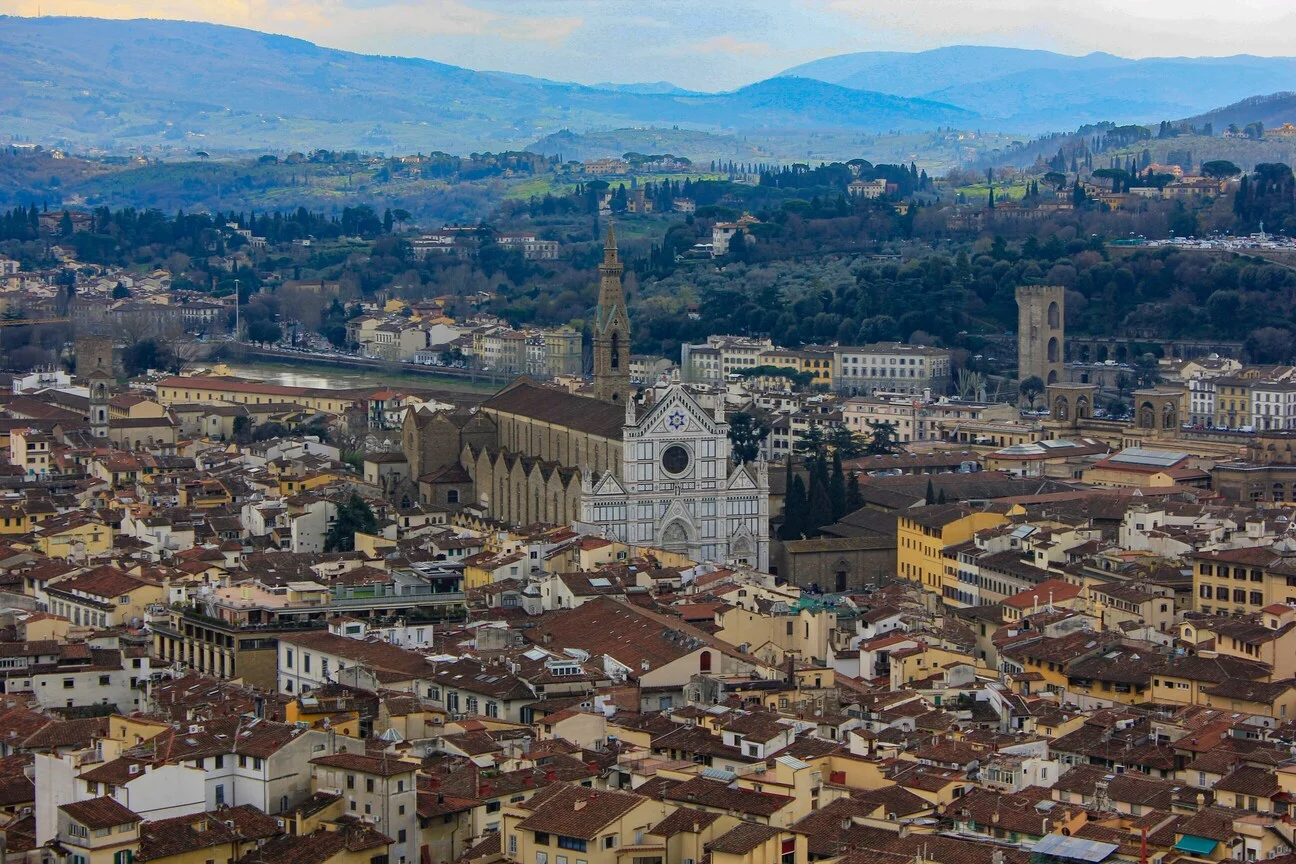
The Basilica di Santa Croce is the largest Franciscan church in the world and Florence's "Temple of the Italian Glories" — it is the burial place of some of Italy's greatest figures including Michelangelo, Galileo Galilei, Niccolò Machiavelli, and Dante Alighieri (cenotaph only). The church's Gothic marble facade and the beautiful piazza in front of it are iconic Florence landmarks in their own right.
Inside, the basilica contains magnificent Giotto frescoes in the Bardi and Peruzzi chapels, extraordinary funerary monuments, and the famous Pazzi Chapel — a masterpiece of early Renaissance architecture by Brunelleschi. The adjacent museum houses Cimabue's crucifix, damaged in the 1966 Arno flood.
Why visit: Santa Croce offers a genuinely moving experience — standing at the tombs of Michelangelo and Galileo is unexpectedly powerful. The art, architecture, history, and the beautiful piazza outside make this one of Florence's most complete and rewarding sites.
Entrance: Adults €8 (2026); children under 11 free
Best time: Morning, when light floods the interior beautifully
Hours: Monday–Saturday 9:30 AM–5:30 PM; Sunday 12:00 PM–5:30 PM
Pitti Palace (Palazzo Pitti)
Piazza de' Pitti 1, 50125 Florence, Italy
The Pitti Palace is the largest palazzo in Florence, an enormous Renaissance structure that served as the main residence of the Medici Grand Dukes from 1550 onward and later housed the Italian royal family. Today it functions as a complex of museums, the most famous of which is the Palatine Gallery (Galleria Palatina) — containing one of the finest collections of Raphael paintings in the world alongside works by Titian, Rubens, and Caravaggio.
The palace also houses the Gallery of Modern Art, the Silver Museum (Museo degli Argenti), and the Carriage Museum. The combined ticket including the Boboli Gardens offers outstanding value and a full day of extraordinary art and history.
Why visit: If you've already visited the Uffizi, the Pitti Palace offers a completely different Florentine art experience — more intimate, less crowded, and with a remarkable Raphael collection that rivals any museum in Europe.
Entrance: Palatine Gallery + Royal Apartments: €16 adults; combined Pitti museums + Boboli: €22 (2026)
Best time: Weekday mornings
Hours: Tuesday–Sunday 8:15 AM–6:50 PM; closed Mondays
San Miniato al Monte
Via delle Porte Sante 34, 50125 Florence, Italy
San Miniato al Monte is one of the finest Romanesque churches in Italy and arguably the most beautiful church in Florence after the Duomo. Built between the 11th and 13th centuries on a hilltop south of the Arno, its stunning green-and-white marble facade is visible from much of the city. The interior contains a magnificent inlaid marble floor, a beautiful apse mosaic, and the Chapel of the Cardinal of Portugal — a Renaissance masterpiece of decorative arts.
The Benedictine monks who live here still chant Gregorian vespers every evening at 5:30 PM, an experience that is quietly unforgettable. The churchyard is the burial place of many Florentine notables, and the terrace in front offers one of the best views in the city.
Why visit: San Miniato is Florence's best-kept secret — equally stunning to the Duomo but visited by a fraction of the tourists. It rewards the extra 10-minute uphill walk from Piazzale Michelangelo with incredible art, history, and an authentic spiritual atmosphere.
Entrance: Free (donations appreciated)
Best time: Vespers at 5:30 PM daily; early morning for solitude
Hours: Daily 9:30 AM–1:00 PM and 3:00 PM–7:00 PM (varies slightly by season)
Book your tours and tickets in advance — it saves hours of queuing and often gets you a better price. These two platforms cover different options, so it's worth checking both.
What Are the Best Neighborhoods to Explore in Florence?
Florence's neighborhoods each have a distinct character, from the grand medieval streets of the historic center to the artisan workshops and bohemian cafés of Oltrarno. Here are the best areas to explore on foot.
Centro Storico (Historic Center)
Character: The medieval heart of Florence, centered around the Duomo. Grand Renaissance palaces, narrow stone streets, luxury boutiques, and the city's most famous squares characterize this area. It buzzes with life all day and into the evening.
What makes it special: Walking these streets means passing extraordinary architecture at every turn — the Orsanmichele church, the Loggia dei Lanzi, the Baptistery. Almost every building has a story worth knowing.
Best for: First-time visitors, art and history lovers, anyone wanting maximum sightseeing convenience
Must-see in this area: Duomo, Piazza della Signoria, Orsanmichele, Via dei Calzaiuoli, the Baptistery
How to get there: The historic center is the hub — buses and the tram connect here from everywhere else in the city
Location: Piazza del Duomo, 50122 Florence, Italy
Oltrarno
Character: Florence's "left bank" across the Arno River has a more authentically Florentine character than the tourist-heavy centro storico. You'll find artisan workshops, independent wine bars, bohemian piazzas, and locals who still call this neighborhood home.
What makes it special: Oltrarno feels real. Artisans still carve frames, restore paintings, and craft gold jewelry in tiny workshops. The Piazza Santo Spirito is the neighborhood's living room, surrounded by cafés and buzzing with local life in the evenings.
Best for: Travelers who want to go beyond tourist Florence, food and wine enthusiasts, photographers
Must-see in this area: Palazzo Pitti, Boboli Gardens, Santo Spirito church, Piazza Santo Spirito, Via Maggio
How to get there: Cross Ponte Vecchio or Ponte Santa Trinita from the center; bus D or 11
Location: Piazza Santo Spirito, 50125 Florence, Italy
Santa Croce District
Character: The neighborhood around the Basilica di Santa Croce is one of the liveliest in Florence. It mixes tourist attractions with an authentic local character — leather workshops, Jewish heritage sites, traditional trattorie, and buzzing nightlife, especially on Via de' Benci and Borgo de' Greci.
What makes it special: The Florence of the 14th century feels very present here. The leather market, the stunning basilica, and the neighborhood's mix of students, artisans, and families give it genuine energy.
Best for: Culture and history lovers, shoppers looking for genuine Florentine leather, those who want neighborhood restaurants over tourist traps
Must-see in this area: Santa Croce Basilica, the Leather School (Scuola del Cuoio), the Sant'Ambrogio market, Via dei Servi
How to get there: 10-minute walk east from Piazza della Signoria; bus C1 or C3
Location: Piazza di Santa Croce, 50122 Florence, Italy
San Lorenzo & the Mercato Centrale
Character: This lively, slightly chaotic neighborhood around Florence's biggest market has a working-class energy quite different from the polished centro storico. The streets around the San Lorenzo church are lined with leather and souvenir stalls, while the magnificent Mercato Centrale food hall stands at the center of it all.
What makes it special: The Mercato Centrale (especially the stunning upstairs food hall opened in 2014) is one of the finest covered food markets in Italy — a spectacular place to eat lunch or sample Tuscan specialties. The Medici Chapels in the San Lorenzo church complex are unmissable.
Best for: Food lovers, budget travelers, shoppers
Must-see in this area: Mercato Centrale, Medici Chapels (Cappelle Medicee), Basilica di San Lorenzo, the street market stalls
How to get there: 5-minute walk northwest from the Duomo; buses C1, 14, 23
Location: Piazza del Mercato Centrale, 50123 Florence, Italy
Santa Maria Novella
Character: The area around the main train station has Florence's most diverse, cosmopolitan atmosphere. The beautiful Santa Maria Novella church anchors one end while the station creates a busy transit hub at the other. Wide tree-lined boulevards characterize this part of the city, along with excellent mid-range hotels and a range of international restaurants.
What makes it special: The Officina Profumo Farmaceutica di Santa Maria Novella — one of the world's oldest pharmacies, founded in 1612 — is a remarkable perfume and herbal medicine boutique that is worth visiting even if you buy nothing. The church's extraordinary frescoes by Ghirlandaio and Masaccio are world-class.
Best for: Travelers arriving by train, families, those who prefer wide streets and a calmer pace
Must-see in this area: Santa Maria Novella Basilica, Officina Profumo Farmaceutica, Piazza Santa Maria Novella
How to get there: The train station is the anchor; all major bus lines pass through here
Location: Piazza Santa Maria Novella, 50123 Florence, Italy
What Food Should You Try in Florence?
Florence is famous for its robust, unpretentious Tuscan cuisine — big flavors built from simple, high-quality ingredients like olive oil, beans, bread, and bistecca (beef steak). The must-try dishes are the Bistecca alla Fiorentina, ribollita, lampredotto, and pappa al pomodoro — hearty, honest food that has defined this region for centuries.
What Are the Must-Try Local Dishes in Florence?
- Bistecca alla Fiorentina — The iconic T-bone steak from Chianina cattle, grilled over charcoal, served rare (al sangue). Ordered by weight (minimum 800g), it is Florence's most celebrated dish and an unforgettable meal. Best tried at Buca Mario or Trattoria Sostanza.
- Lampredotto — Florence's beloved street food: a sandwich made from the fourth stomach of a cow, slow-cooked in broth with herbs, served in a schiacciata roll with salsa verde and hot sauce. Try it at any of the traditional lampredottai carts across the city.
- Ribollita — A thick, peasant bread soup made with cannellini beans, cavolo nero (Tuscan kale), vegetables, and stale bread. Hearty, warming, and deeply satisfying — a winter staple that appears on almost every traditional trattoria menu.
- Pappa al Pomodoro — A dense tomato and stale bread soup, flavored with basil and olive oil. Deceptively simple and surprisingly delicious, especially when made with peak summer tomatoes.
- Crostini di Fegatini — Toasted bread topped with chicken liver pâté, a classic Florentine appetizer that appears at the start of almost every proper Tuscan meal. Rich, savory, and addictive.
- Schiacciata — Florence's version of focaccia — a thin, crispy, olive oil-rich flatbread that appears plain, stuffed with prosciutto and cheese, or (in autumn) made sweet with grapes (schiacciata con l'uva).
- Gelato — Florence has excellent gelato. Look for shops displaying gelato stored in metal containers with lids (not piled high in colorful mountains — the latter is often made with artificial ingredients and preservatives).
- Cantuccini e Vin Santo — Almond biscotti (cantucci) served with sweet dessert wine (Vin Santo) for dipping. The traditional Florentine dessert, simple and perfect.
Where Should You Eat in Florence?
Budget-Friendly (Under €15 per meal)
- Trattoria Mario — Via Rosina 2, 50123 Florence — A legendary no-frills lunch spot near the Mercato Centrale where you share tables with strangers. Cash only, no reservations, incredible traditional Florentine cooking at old-school prices. The ribollita and the daily pasta specials are outstanding.
- Mercato Centrale (upstairs food hall) — Piazza del Mercato Centrale, Via dell'Ariento, 50123 Florence — The stunning upstairs market food hall offers excellent quality street food from multiple Florentine producers — lampredotto, pasta, pizza, gelato, wine — all at reasonable prices in a beautiful setting.
- Buca dell'Orafo — Via dei Girolami 28r, 50122 Florence — Near Ponte Vecchio, this small trattoria offers honest Florentine cooking at fair prices. The pappa al pomodoro and daily meat specials are excellent.
Mid-Range (€20–€45 per meal)
- Buca Mario — Piazza degli Ottaviani 16r, 50123 Florence — Florence's oldest restaurant (since 1886) serves outstanding Bistecca alla Fiorentina, classic Tuscan pasta, and traditional appetizers in a historic setting with attentive service.
- Trattoria Sostanza — Via del Porcellana 25r, 50123 Florence — Known as "Il Troia" by regulars, this 1869 institution serves some of the best butter pasta (pasta al burro) and Bistecca in the city. Book ahead — it fills up fast.
- Buca dell'Orafo — Via dei Girolami 28r, 50122 Florence — A beloved family-run trattoria near Ponte Vecchio with excellent ribollita, fresh pasta, and grilled meats at fair prices.
- Il Latini — Via dei Palchetti 6r, 50123 Florence — A raucous, communal dining experience in a historic setting. Arrive early (or book ahead) and prepare to share tables. The Chianti flows freely and the food is hearty and generous.
Fine Dining (€60+ per meal)
- Enoteca Pinchiorri — Via Ghibellina 87, 50122 Florence — One of Italy's finest restaurants with three Michelin stars, a legendary wine cellar (one of Europe's greatest), and sublime modern Tuscan cuisine. An occasion restaurant that requires months of advance booking.
- Borghese Restaurant at Four Seasons Florence — Borgo Pinti 99, 50121 Florence — Exquisite cuisine in the stunning setting of a Medici villa, with a beautiful garden terrace. One of Florence's grandest dining experiences.
What Are the Dining Customs in Florence?
Meal times: Italians eat lunch between 1:00 PM and 2:30 PM and dinner from 7:30 PM to 10:00 PM. Many traditional trattorias are closed between 3:00 PM and 7:00 PM (riposo).
Tipping: Tipping is not obligatory in Italy. A coperto (cover charge of €1.50–€3 per person) is standard and appears on the bill. If service was excellent, leaving 5–10% is appreciated but not expected.
Reservations: Essential at fine dining restaurants (book weeks ahead). Recommended for popular mid-range trattorias, especially on weekends. Most places accept phone or email reservations.
Dress code: Smart casual is appropriate for most mid-range and fine dining restaurants. Florence is a stylish city — Florentines dress well even for casual meals.
What Is the Nightlife Like in Florence?
Florence's nightlife scene is lively, stylish, and centered around wine — this is Tuscany, after all. Things typically start with aperitivo hour from 6:00–9:00 PM, when many bars offer free snacks with drinks, and evenings can run until 2:00–3:00 AM in the clubs and bars of the Santa Croce and Oltrarno districts.
Where Are the Best Areas for Nightlife in Florence?
- Santa Croce District: Via de' Benci, Piazza Santa Croce, 50122 Florence — The liveliest nightlife area, popular with students and young travelers. Bars, clubs, and live music venues line the streets around the basilica.
- Oltrarno (Piazza Santo Spirito): Piazza Santo Spirito, 50125 Florence — More authentic, local, and laid-back than Santa Croce. The piazza fills with people in the evenings for casual wine and conversation. A wonderful place for wine bars and intimate music spots.
- Piazza della Repubblica: Piazza della Repubblica, 50123 Florence — Florence's grand central piazza has historic cafés with outdoor seating, perfect for an elegant early evening drink in the center of the city.
What Are the Best Bars and Clubs in Florence?
Bars & Wine Bars (Enoteche)
- Buca Mario Wine Bar — Piazza degli Ottaviani 16r, 50123 Florence — Exceptional wine selection with hundreds of Tuscan and Italian labels. A sophisticated spot for serious wine exploration.
- Enoteca Pitti Gola e Cantina — Piazza de' Pitti 16, 50125 Florence — A beloved Oltrarno enoteca with an outstanding selection of natural wines, local cheeses, and charcuterie. Very popular with Florentines.
- Mad Souls & Spirits — Borgo San Frediano 38r, 50124 Florence — One of Florence's best cocktail bars with inventive drinks and a relaxed Oltrarno vibe. Great for aperitivo.
Clubs & Dancing
- Space Club — Via Palazzuolo 37, 50123 Florence — Florence's largest and most popular club with multiple rooms, international DJs, and a young international crowd. Cover charge approximately €10–€15 (2026).
- Yab — Via de' Sassetti 5r, 50123 Florence — A long-established Florence nightclub popular with students and young travelers, known for its lively atmosphere and accessible cover charge.
Live Music & Shows
- Jazz Club Florence — Via Nuova de' Caccini 3, 50122 Florence — The best live jazz venue in the city with regular performances by Italian and international artists. Booking recommended for weekend shows.
- Teatro del Maggio Musicale Fiorentino — Piazzale Vittorio Gui 1, 50144 Florence — Florence's main opera house, staging world-class opera, classical concerts, and ballet. An unforgettable cultural evening, especially from the stalls.
What Family-Friendly Evening Entertainment Is Available?
Families can enjoy evening gelato walks along the Arno, concerts in the many historic churches (look for poster boards near major churches advertising evening concerts), and the atmospheric passeggiata (evening stroll) that Italians of all ages participate in. The Piazza della Signoria stays lively and safe into the evening.
What and Where Should You Shop in Florence?
The best things to buy in Florence are leather goods, gold jewelry, silk, handmade paper products, and artisan-crafted items — the city has been a center of exceptional craftsmanship for centuries, and authentic Florentine goods make wonderful souvenirs and gifts.
What Are the Best Shopping Districts in Florence?
- Via de' Tornabuoni & Via della Vigna Nuova: Via de' Tornabuoni, 50123 Florence — Florence's luxury shopping street, lined with Gucci, Prada, Ferragamo, Versace, and other top Italian designers. Ferragamo's founding store (with its own museum) is here. Come for high-end Italian fashion and accessories.
- Oltrarno Artisan Workshops: Via Maggio and surroundings, 50125 Florence — The authentic alternative to tourist shops. Artisan workshops along Via Maggio and the surrounding streets sell handmade frames, restored furniture, gold jewelry, and leather goods directly from the craftspeople who make them.
- San Lorenzo Market & Surroundings: Piazza San Lorenzo, 50123 Florence — Florence's famous outdoor leather market with hundreds of stalls selling leather bags, belts, wallets, scarves, and souvenirs. Bargaining is expected here — always negotiate on price.
What Markets Should You Visit in Florence?
Mercato Centrale — Piazza del Mercato Centrale, Via dell'Ariento, 50123 Florence — Open Monday–Saturday 7:00 AM–2:00 PM (ground floor food market); upstairs food hall open daily until midnight. The ground floor sells fresh produce, meat, cheese, and Tuscan specialties — an excellent place to buy edible souvenirs.
Mercato Sant'Ambrogio — Piazza Ghiberti, 50122 Florence — Open Monday–Saturday 7:00 AM–2:00 PM. A wonderfully authentic neighborhood food market popular with local Florentines. Far less touristy than the Mercato Centrale with equally good produce and lower prices.
Mercato delle Pulci (Flea Market) — Piazza dei Ciompi, 50122 Florence — Open Tuesday–Sunday mornings. A charming flea market with antiques, vintage items, and curios. The last Sunday of the month sees a larger market with more vendors.
What Should You Buy in Florence?
- Leather goods — Bags, wallets, belts, and gloves. Florence has been producing world-class leather for centuries. For authentic quality, buy from the Scuola del Cuoio (Leather School) at Santa Croce or from artisan workshops in Oltrarno rather than tourist market stalls.
- Gold jewelry — The Ponte Vecchio jewelers have sold gold for hundreds of years. Florentine gold work is typically 18k with distinctive craftsmanship.
- Handmade Florentine paper (Carta Fiorentina) — Beautifully marbled notebooks, stationery, and paper products are made using Renaissance-era techniques. Il Torchio in Oltrarno and Giulio Giannini e Figlio near Palazzo Pitti are the best places to buy.
- Wines and olive oil — Chianti Classico, Brunello di Montalcino, and Morellino di Scansano wines make excellent gifts. Tuscan extra-virgin olive oil is world-class. Buy from the Mercato Centrale or specialist enoteche.
- Ceramics — Beautiful hand-painted Italian ceramics from Tuscany and surrounding regions are widely available, especially in the San Lorenzo market and specialist shops.
- Ferragamo and Florentine fashion — Several historic Italian fashion houses were founded in Florence. The Ferragamo flagship store on Via de' Tornabuoni includes a shoe museum.
What Are the Shopping Hours and Customs?
Most Florence shops open Monday–Saturday 9:00 AM–1:00 PM and 3:30 PM–7:30 PM. Many tourist-area shops now stay open through lunch and on Sundays. Bargaining is appropriate at markets (especially San Lorenzo) but not in regular shops or boutiques. Non-EU tourists can claim VAT refunds (approximately 20%) on purchases over €154.94 from shops displaying the Tax Free Shopping sign.
Can Non-EU Visitors Claim a VAT Tax Refund in Florence?
Yes — if you are a visitor from outside the European Union (including travellers from the USA, Canada, Australia, the UK, and most of Asia and Latin America), you are entitled to a refund of the VAT (Value Added Tax) included in the price of goods you buy in Italy. VAT in Italy is 22% on most goods; 10% on some food items, which means this refund can be significant on high-value purchases like clothing, leather goods, jewellery, designer fashion, and electronics.
How to Claim Your VAT Refund — Step by Step
- Spend at least €154.94 in a single shop in a single day. This is the minimum threshold for a VAT refund claim in Italy. It does not apply across multiple shops — the full amount must be spent in one store.
- Look for the "Tax Free" sign. Participating shops display a "Tax Free Shopping," "Global Blue," or "Planet" logo in the window or at the register.
- Ask for the tax refund form at the register before you pay. Present your non-EU passport — the shop will fill out the form with your details and the purchase amount. Keep the form with your receipt.
- Get the form stamped at customs before you leave. Go to the Customs office at Florence Peretola Airport (FLR) before check-in and have an officer stamp your tax refund form. Keep your purchases accessible in hand luggage — do not pack them deep in your checked bags.
- Collect your refund. Hand the stamped form to the Global Blue or Planet desk at the airport. You can receive the refund in cash (minus a processing fee) or as a credit card refund (lower fees, takes a few weeks).
VAT Refund Quick Facts for Florence
- Minimum spend: €154.94 in one shop in one day
- VAT rate on most goods: 22% on most goods; 10% on some food items
- Typical refund after fees: 10–15% of the purchase price
- Refund processors: Global Blue and Planet (formerly Premier Tax Free) at Florence Peretola Airport (FLR)
- Who qualifies: Anyone with a non-EU passport who is not a resident of an EU country
- UK visitors: British passport holders qualify since Brexit — the UK is no longer in the EU
- Deadline: Purchases must be exported within 3 months of the date of purchase
- Full guide: VAT Refund in Europe — Complete Guide for Non-EU Travelers
What Festivals and Events Happen in Florence?
Florence's biggest festivals are the Scoppio del Carro at Easter, the Calcio Storico in June, and the Feast of San Giovanni on June 24th — but the city has a rich calendar of cultural events, music festivals, and seasonal celebrations throughout the entire year.
What Is the Annual Events Calendar for Florence?
| Month | Event Name | Description |
|---|---|---|
| January | Pitti Immagine Uomo | Florence's world-famous men's fashion fair, held at the Fortezza da Basso. The city fills with fashion industry professionals and street style photographers. Usually held mid-January. |
| February | Carnevale di Firenze | Florence's Carnival celebration with masked parades, costumes, and events across the city in the week before Lent. Smaller than Venice's Carnevale but charming and locally celebrated. |
| March | Pitti Immagine Bimbo & Uomo | Another round of Pitti fashion fairs, including children's fashion. The Fortezza da Basso becomes a fashion hub again for a few days. |
| April | Scoppio del Carro (Easter Sunday) | Florence's most spectacular traditional event — a cart (carro) loaded with fireworks is pulled by white oxen to the Duomo, where a mechanical dove ignites the fireworks at the moment of the Gloria. An ancient tradition dating to the First Crusade. |
| May | Maggio Musicale Fiorentino | Florence's prestigious music festival, one of Italy's oldest, featuring opera, classical concerts, and ballet at venues across the city throughout May and into June. Book tickets well in advance. |
| June | Calcio Storico Fiorentino | Florence's unique historical football game — a violent, passionate mix of football, wrestling, and rugby played in Piazza Santa Croce in 16th century costume. Matches in mid-June with the final on June 24th. One of the most extraordinary events in Italy. |
| June 24 | Feast of San Giovanni (St. John the Baptist) | Florence's patron saint day, celebrated with a magnificent fireworks display over the Arno River at 10:00 PM. Viewable from Piazzale Michelangelo, the bridges, and the Lungarni. One of the most beautiful nights of the year in Florence. |
| July | Estate Fiesolana | Summer festival of music, cinema, dance, and theatre held in the ancient Roman amphitheatre in nearby Fiesole, overlooking Florence. A magical outdoor cultural experience on warm summer evenings. |
| August | Ferragosto | Italy's major summer holiday on August 15th. Much of the city closes, but tourist attractions remain open. Many Florentines leave the city, making this one of the quieter (and hotter) times to visit. |
| September | Settembre Musica / Firenze Jazz Festival | Autumn brings outdoor music festivals including jazz concerts in historic piazzas. The September evening atmosphere in Florence is among the best of the year. |
| October | Florence Biennale | International contemporary art exhibition held at the Fortezza da Basso in odd years, bringing artists from around the world. An excellent counterpoint to Florence's primarily Renaissance art focus. |
| November | Pitti Immagine Filati | The knitwear and yarn edition of the Pitti fashion fair. A quieter month for tourists overall, making November one of the better times to explore the city with fewer crowds. |
| December | Christmas Markets & Presepi | Piazza Santa Croce hosts Florence's main Christmas market, with stalls selling crafts, food, and gifts. The city's churches display elaborate nativity scenes (presepi). Christmas illuminations make Florence particularly beautiful after dark. |
How Do Festivals Affect Hotel Prices and Availability?
The Pitti Immagine fashion fairs (January, June) cause hotel prices to spike significantly — sometimes double the normal rate — and the city books out weeks in advance. The Easter weekend (Scoppio del Carro) and the June 24th Feast of San Giovanni are also popular booking periods. For summer generally, book accommodation at least 2–3 months in advance. For the Calcio Storico, tickets sell out immediately — check the official Florence tourism website for release dates.
Where Should You Stay in Florence?
The best neighborhood to stay in Florence depends on your travel style — the historic center puts you closest to the sights but is the most expensive, while Oltrarno offers a more authentic local experience, and Santa Maria Novella provides the best transport connections.
What Are the Best Neighborhoods to Stay in Florence?
| Neighborhood | Vibe | Price Range (per night, 2026) | Best For |
|---|---|---|---|
| Centro Storico (Historic Center) | Elegant, busy, central | €120–€400+ | First-timers wanting maximum convenience |
| Oltrarno | Authentic, artsy, local | €80–€250 | Travelers wanting a real Florentine experience |
| Santa Maria Novella | Convenient, cosmopolitan | €90–€280 | Arrivals by train; families; good value |
| Santa Croce | Lively, cultural, mixed | €75–€220 | Younger travelers, nightlife seekers |
| Fiesole (hilltop village) | Peaceful, panoramic, rural | €60–€200 | Couples, those with a car, seeking tranquility |
What Are the Pros and Cons of Each Area?
Centro Storico:
Pros: Everything is walking distance; the atmosphere is extraordinary; great for sightseeing without transport. Cons: Most expensive area; traffic restrictions mean taxis can't always reach your hotel; noisy from street activity.
Oltrarno:
Pros: More authentic and less touristy; excellent restaurants and wine bars; beautiful neighborhood streets. Cons: Slightly further from the main sights (10–15 minutes walking across a bridge).
Santa Maria Novella:
Pros: Excellent train and bus connections; more mid-range options; wide streets. Cons: The area immediately around the station is less charming; some streets can feel slightly rough after dark.
How Far in Advance Should You Book in Florence?
During peak summer (June–August), book accommodation at least 2–3 months ahead — good options at fair prices disappear fast. During Pitti Immagine fashion weeks (January and June), book 4–6 months ahead. For Easter weekend, book as soon as your dates are confirmed. Shoulder season (April–May and September–October) allows more flexibility but still benefits from a month's advance booking for the best choices.
What Do You Need to Know Before Visiting Florence?
Here are the essential practical details every visitor to Florence needs to know — from money and safety to language and health.
Essential Travel Details for Florence
- Currency: Euro (€). ATMs (Bancomat) are widely available throughout the city center.
- Credit Cards: Widely accepted in hotels, restaurants, and larger shops. Some smaller trattorias and market stalls are cash only — always ask ("Si accetta carta?" = "Do you accept cards?").
- ATMs: Abundant in the city center. Use bank ATMs rather than standalone machines to minimize fees. Daily withdrawal limits are typically €250–€500.
- Language: Italian. English is widely spoken in tourist areas, hotels, and restaurants. Learning a few Italian phrases is appreciated and often rewarded with warmth.
- Tipping: Not mandatory. Leave 5–10% if service was exceptional. The coperto (cover charge) is standard and not a tip — check your bill.
- Electrical Plugs: Type F (two round pins) and Type L (three round pins). Voltage: 230V, 50Hz. US and UK travelers need adapters.
- Emergency Number: 112 (general emergency); 113 (police); 118 (ambulance); 115 (fire)
- Tourist Police: +39 055 203 911 (Questura di Firenze)
- SIM Cards: Available from TIM, Vodafone, and WindTre stores at the airport and throughout the city. A tourist SIM with data costs approximately €10–€20 for 10–30 GB (2026).
- WiFi: Good quality WiFi in most hotels. Free public WiFi available at many cafés and some public spaces. The city has a free public WiFi network (Comune WiFi) in some areas.
- Tap Water: Safe and excellent to drink. Florence's tap water comes from mountain springs and is genuinely good. The city also has free public drinking fountains (nasoni) throughout the centro storico.
Skip the airport queue — order your eSIM before you travel and activate it the moment you land. Prices and data allowances vary, so it pays to compare providers.
How Much Does It Cost to Visit Florence?
| Budget Type | Daily Cost (2026) | What's Included |
|---|---|---|
| Budget Traveler | €60–€90 | Hostel dorm bed (€20–€35), street food and market lunches, bus tickets, free attractions (churches, piazzas, Piazzale Michelangelo) |
| Mid-Range Traveler | €120–€200 | 3-star hotel or B&B (€90–€150), trattoria meals, museum admissions, occasional taxi, one paid attraction per day |
| Luxury Traveler | €300–€600+ | 4-5 star hotel (€200–€500+), fine dining, private guides, exclusive experiences, private transfers |
What Are the Most Useful Phrases in Florence?
- Hello / Good day: Ciao (informal) / Buongiorno (formal)
- Thank you: Grazie
- Please: Per favore / Per piacere
- Excuse me: Scusi (formal) / Scusa (informal)
- How much?: Quanto costa?
- Where is...?: Dov'è...?
- I don't understand: Non capisco
- Help!: Aiuto!
- Bathroom: Il bagno
- Check, please: Il conto, per favore
Is Florence Safe for Tourists?
Florence is generally very safe for tourists — it has low violent crime rates compared to most European capitals and is considered one of Italy's safest cities. The main risks for visitors are petty theft, pickpocketing, and tourist scams rather than violent crime.
Areas to avoid: The area immediately around Santa Maria Novella station late at night can attract petty criminals. Be alert in very crowded tourist spots (Ponte Vecchio, around the Duomo) where pickpockets operate.
Common scams: Friendship bracelet scams (someone ties a bracelet on your wrist then demands payment); restaurant touts who steer you toward overpriced tourist traps near major sights; unofficial "guides" who offer to take you inside attractions for a fee; counterfeit goods sellers in the San Lorenzo market area.
Pickpocketing: Common in crowded tourist areas, on the C1 bus line, and around the main train station. Use a money belt or hidden travel wallet, keep bags in front of you, and be especially alert in large crowds.
Solo traveler safety: Florence is excellent for solo travelers of all genders. Women traveling alone should exercise the same awareness they would in any European city. The LGBTQ+ community is generally welcomed — Florence has an active and visible LGBTQ+ scene, especially in the Oltrarno and Santa Croce areas.
What Are the Cultural Customs in Florence?
- Greetings: Italians greet with "Buongiorno" (morning/afternoon) or "Buonasera" (evening). A handshake is standard; cheek kisses are for friends. Always greet shopkeepers and restaurant staff when entering.
- Dress code: Smart casual is appropriate everywhere. Religious sites require covered shoulders and knees — carry a scarf for spontaneous church visits. Florence is fashion-conscious; Italians appreciate well-dressed visitors.
- Photography: Flash photography is prohibited in most museums. Always ask before photographing people, especially in markets. Some churches prohibit photography altogether during services.
- Public behavior: Italians are generally expressive and loud in conversation — but public drunkenness, rowdiness, and very loud behavior are frowned upon. Respect the passeggiata culture: evening strolls are social and gracious, not a rush.
- Dining: Cappuccino is a morning drink in Italy — ordering one after a meal marks you as a tourist. Standing at the bar to drink your coffee is cheaper than sitting at a table (different prices are listed on the menu for bar vs. table service).
- Gestures to avoid: The "mano cornuta" (index finger and pinky raised) is an offensive gesture in Italy (it implies someone is a cuckold). Avoid it even if you think you're making a "rock on" sign.
Do You Need a Visa to Visit Florence?
Italy is a member of the Schengen Area. Citizens of the USA, Canada, Australia, New Zealand, UK (post-Brexit), and most other Western countries do not need a visa for stays of up to 90 days within any 180-day period. EU citizens need only a valid national ID card or passport. From 2025, non-EU visitors will need to register via the ETIAS (European Travel Information and Authorisation System) before travel — check the official EU website for current requirements. Always verify the current visa requirements for your specific nationality at the Italian Embassy website.
What Health Precautions Should You Take in Florence?
Vaccinations: No specific vaccinations are required for Florence or Italy. Routine vaccinations (tetanus, measles, flu) should be up to date. Travel health insurance is strongly recommended.
Pharmacies: Farmacie (pharmacies) are plentiful throughout Florence, recognizable by a green cross sign. Pharmacists can advise on minor ailments and dispense many medications without prescription. There are 24-hour pharmacies — ask at your hotel for the nearest one.
Hospitals: The main public hospital is Ospedale di Careggi (Largo Brambilla 3, 50134 Florence, tel: 055 794111). EU citizens should carry their EHIC/GHIC card. Non-EU visitors should have comprehensive travel insurance — medical care without insurance is expensive in Italy.
Common health issues: Summer heat can be intense — stay hydrated, use sunscreen, and avoid prolonged midday sun exposure. Florence has no major food or water safety issues. Tap water is safe to drink throughout the city.
Do You Need Travel Insurance for Florence?
Yes — and you should buy it before you board your flight, not after. Travel insurance covers the situations that can turn a great trip into a financial disaster: a medical emergency (a single ambulance ride and hospital stay in Europe can cost €3,000–€10,000 without coverage), a cancelled or delayed flight, lost or stolen baggage, or a last-minute trip cancellation. EU citizens with an EHIC or GHIC card receive reciprocal state healthcare, but this does not cover repatriation, trip cancellation, or lost luggage — a full travel policy fills those gaps. Non-EU travellers have no state coverage at all and should never visit without insurance.
Choosing the right policy matters — coverage limits, exclusions, and pre-existing condition terms vary significantly between providers. Read our full guide before you buy: Best Travel Insurance for Europe — Honest Comparison for 2026.
Travel insurance is strongly recommended for Florence — an unexpected medical bill, flight cancellation, or lost luggage can cost far more than the policy. Get covered before you go.
What Are Your Rights If Your Flight to Florence Is Delayed or Cancelled?
Under EU Regulation 261/2004, if your flight to or from Florence is delayed by more than 3 hours or cancelled without sufficient notice, you are entitled to compensation of up to €600 per passenger — regardless of which airline you flew with, and regardless of how long ago it happened (claims can go back up to 6 years in some countries). This applies to all flights departing from an EU airport, and all flights arriving into an EU airport on an EU-based carrier. Most travellers don't realise they are owed money, and airlines rarely volunteer to pay. A claims service handles everything on your behalf and only charges a fee if they win — so there is no risk to you.
Both services check your eligibility for free with no upfront cost — they only charge a commission if they successfully recover your compensation.
Is Florence Accessible for People with Disabilities?
Florence's historic center poses accessibility challenges — many streets are cobblestone, medieval buildings often lack lifts, and some attractions have limited wheelchair access. However, significant improvements have been made. The major museums (Uffizi, Accademia, Pitti Palace) all have wheelchair access and lifts. The tram T2 is fully accessible. Contact the tourist information center or individual museums in advance to confirm specific access arrangements.
Is Florence Good for Families with Kids?
Florence is wonderful for families with older children (8+) who can engage with the history and art. For younger children, the Boboli Gardens, the Piazzale Michelangelo, gelato stops, and the Mercato Centrale food hall are excellent. Children under 18 (EU) and under 6 (generally) enter many major museums free. Stroller navigation is challenging on cobblestones — a carrier or sturdy pram is better. Changing facilities are available in most museums and large restaurants.
What Are the Best Day Trips from Florence?
The best day trips from Florence include the medieval hilltop towns of Siena and San Gimignano, the leaning tower city of Pisa, the Chianti wine region, and the charming town of Lucca — all within 1.5 hours and each offering a completely different Tuscan experience.
Siena
Distance: 70 km (43 miles), approximately 1.5 hours by bus or 1 hour 30 minutes by train (via Empoli)
What to see: One of Italy's most perfectly preserved medieval cities, Siena is built around the magnificent fan-shaped Piazza del Campo — the most beautiful medieval square in Italy. The striped marble Siena Cathedral (Duomo di Siena) is arguably the most extraordinary Gothic church in the world, filled with Bernini sculptures, Michelangelo carvings, and Pinturicchio frescoes. The city's famous Palio horse race (July 2 and August 16) is the most thrilling traditional event in all of Italy.
How to get there: SENA/Flixbus coaches run directly from Florence to Siena in about 1 hour 15 minutes and are cheaper and faster than the train. Depart from Santa Maria Novella coach station. Cost approximately €7–€14 return (2026).
Time needed: Full day recommended
Best for: Medieval history lovers, architecture enthusiasts, anyone wanting a complete contrast to Florence's Renaissance character
Location: Piazza del Campo, 53100 Siena, Italy
Pisa
Distance: 80 km (50 miles), approximately 1 hour by train from Florence SMN
What to see: Pisa is far more than its famous leaning tower. The Campo dei Miracoli (Field of Miracles) contains four extraordinary Romanesque masterpieces — the Leaning Tower, the Cathedral, the Baptistery, and the Camposanto cemetery — all within one beautifully maintained grassed square. It is genuinely impressive and merits several hours of exploration beyond the obligatory "holding up the tower" photograph. The city itself has a lively student population and excellent restaurants.
How to get there: Direct trains from Florence SMN run every 30–60 minutes, taking approximately 1 hour. Cost: approximately €9–€12 (2026). The Leaning Tower is a 15-minute walk from Pisa Centrale station.
Time needed: Half day to full day
Best for: All visitors, especially those with limited time who want a classic Italian sightseeing experience
Location: Piazza del Duomo, 56126 Pisa, Italy
San Gimignano
Distance: 55 km (34 miles), approximately 1 hour 20 minutes by bus from Florence
What to see: The "medieval Manhattan" of Tuscany, San Gimignano is a hilltop walled town famous for its 14 surviving medieval towers — originally there were 72, built by rival noble families as symbols of wealth and power. The town's perfectly preserved medieval character, stunning hilltop position, and world-class Vernaccia white wine make it one of the most atmospheric day trips in Tuscany. The views from the towers across the surrounding countryside are breathtaking.
How to get there: Bus from Florence to Poggibonsi (approximately 75 minutes), then a short connecting bus to San Gimignano (25 minutes). Total approximately 1 hour 30–45 minutes. Cost approximately €8–€12 return (2026). Alternatively, join a guided day tour that combines San Gimignano with Siena or Chianti.
Time needed: Full day (or combine with Siena for a two-destination day)
Best for: Medieval history lovers, wine enthusiasts, photographers, couples
Location: Piazza della Cisterna, 53037 San Gimignano, Siena, Italy
Chianti Wine Country
Distance: 30–60 km (20–40 miles) south of Florence; the Chianti Classico zone begins just 20 km from the city
What to see: The rolling hills of the Chianti region between Florence and Siena are among the most beautiful landscapes in Italy — vineyards, cypress avenues, hilltop villages, and Renaissance villas stretch in every direction. A driving tour through Greve in Chianti, Panzano, Radda in Chianti, and Gaiole takes you through the heart of some of the world's greatest wine country. Wine tastings and cellar tours at family estates are the highlight — many offer lunch and accommodation too.
How to get there: A car is the best way to explore Chianti properly (rent in Florence for a day). Alternatively, several excellent guided wine tours depart daily from Florence with transport included. The SITA bus serves Greve in Chianti from the SMN coach station.
Time needed: Full day (or multiple days if staying in an agriturismo)
Best for: Wine lovers, couples, food enthusiasts, photographers, those wanting to experience authentic Tuscan countryside life
Location: Piazza Giacomo Matteotti 11, 50022 Greve in Chianti, Florence, Italy
Lucca
Distance: 75 km (47 miles), approximately 1 hour 25 minutes by train from Florence SMN
What to see: Lucca is one of Italy's most delightful and least-touristy small cities — a beautifully preserved walled Renaissance city where you can cycle along the top of the 16th-century city walls. The city center is compact, elegant, and full of stunning Romanesque churches, excellent restaurants, and lovely shops. The birthplace of Giacomo Puccini, Lucca has a proud operatic tradition with concerts and performances throughout the summer. It offers a completely different pace and character from Florence.
How to get there: Trains from Florence SMN to Lucca run regularly, taking 1 hour 20–30 minutes. Cost approximately €8–€12 (2026). Lucca station is a 5-minute walk from the city walls.
Time needed: Full day
Best for: Cycling enthusiasts, those seeking a quieter alternative to Florence and Siena, families, opera lovers
Location: Piazza Napoleone, 55100 Lucca, Italy
Car rental prices vary significantly between agencies — the same car on the same date can differ by 30–50% depending on where you book. Always compare before confirming.
What Are the Hidden Gems and Insider Tips for Florence?
Beyond the main tourist sites, Florence hides some incredible spots that most visitors never find — atmospheric corners, free viewpoints, and local experiences that are far more rewarding than the crowded classics.
What Are the Best Hidden Gems in Florence?
- Cenacolo di Sant'Apollonia: Via XXVII Aprile 1, 50129 Florence — Andrea del Castagno's masterful Last Supper fresco (1447) is displayed in this small former convent refectory. Almost completely unknown to tourists, it is free to enter and extraordinary — you can stand right in front of it for as long as you like with virtually no one else present.
- Brancacci Chapel (Cappella Brancacci): Piazza del Carmine 14, 50124 Florence, Oltrarno — The Masaccio frescoes in this small chapel (1424-1427) are considered the founding works of the Renaissance — they influenced virtually every major artist who came after, including Michelangelo. Entry is controlled and limited, creating an intimate, extraordinary experience. Advance booking required (€10).
- Giardino delle Rose (Rose Garden): Viale Giuseppe Poggi 2, 50125 Florence — A beautiful free public garden on the hill below Piazzale Michelangelo with panoramic views of Florence and spectacular roses blooming in May and June. Almost no tourists and a wonderful place to escape the crowds.
- Bardini Gardens: Via de' Bardi 1r, 50125 Florence — The smaller, quieter sibling of the Boboli Gardens in Oltrarno. Wisteria-draped steps, fountains, and extraordinary views make these gardens one of Florence's best-kept secrets. Entry approximately €10 (2026).
- San Miniato al Monte Cemetery: Via delle Porte Sante 34, 50125 Florence — The monumental cemetery beside the San Miniato church contains extraordinary Art Nouveau and Neo-Gothic funerary monuments. It is one of the most beautiful and atmospheric places in Florence and almost entirely unknown to tourists.
- Oltrarno Artisan Workshops, Via Maggio: Via Maggio, 50125 Florence — Walk slowly along Via Maggio and peer through workshop doors — you'll see gilders, restorers, and craftspeople who have worked in these spaces for decades. The Florentine craft tradition is alive here in a way that no museum can replicate.
- Forte Belvedere: Via di San Leonardo, 50125 Florence — When open (check for temporary exhibitions), the Forte Belvedere offers exceptional views over Florence from a rarely-visited hilltop fortification. The fortress itself is beautiful and the terrace views are some of the best in the city.
Where Are the Best Photo Spots in Florence?
- Ponte Santa Trinita: Ponte Santa Trinita, 50123 Florence — The best place to photograph Ponte Vecchio. Stand in the center of this elegant bridge and look east for the classic postcard shot, especially at golden hour when the light turns amber.
- Piazzale Michelangelo: Piazzale Michelangelo, 50125 Florence — The classic panoramic view of Florence. Best 30 minutes before sunset when the light is warm and the city glows. Arrive early for a front-row position.
- San Miniato al Monte terrace: Via delle Porte Sante 34, 50125 Florence — Even better than Piazzale Michelangelo for a more intimate, less crowded view over the city. Late afternoon light is magnificent here.
- Lungarno degli Archibusieri: Lungarno degli Archibusieri, 50122 Florence — The walkway along the Arno near the Uffizi offers a beautiful long view down the river towards Ponte Vecchio. Best at dawn when it is empty.
- Badia Fiorentina tower view: Via del Proconsolo 4, 50122 Florence — Look south along Via del Proconsolo at dusk for a beautiful framed view of the Bargello tower and the Badia Fiorentina belfry lit against the evening sky.
What Do Locals Know That Tourists Don't?
How Can You Save Money in Florence?
The biggest way to save money in Florence is to visit on weekdays in shoulder season (April–May or September–October), when hotel prices are 30–50% lower than summer peak rates, crowds at attractions are manageable, and the city is at its most beautiful.
What Are the Best Money-Saving Strategies for Florence?
- Book museum tickets online in advance to avoid the "convenience fee" added to last-minute tickets at premium prices — and to ensure you actually get in.
- Eat lunch at the Mercato Centrale food hall for excellent Florentine food at market prices (€8–€15 for a full lunch). Far cheaper and more authentic than most tourist restaurants near the Duomo.
- Order coffee standing at the bar (al banco) rather than seated at a table — you'll pay €1.20–€1.50 for an espresso versus €3–€5 seated.
- Use the free public drinking water fountains (nasoni) throughout the city rather than buying bottled water — Florence tap water is excellent and free.
- Walk everywhere in the historic center — it saves bus fares and is the best way to explore.
- Eat a picnic lunch from the Mercato Sant'Ambrogio (cheaper and more local than Mercato Centrale) in one of the beautiful piazzas — Piazza Santa Croce and Piazza Santo Spirito are perfect.
- Visit the major museums on Tuesday and Wednesday mornings when they are least crowded and you get more value from your time inside.
- Consider the Firenze Card (€85 for 72 hours as of 2026) if you plan to visit 4+ major museums — it includes fast-track entry and can save significant money on multiple admissions.
- Stay in Oltrarno or Santa Croce instead of the immediate Duomo area — accommodation is 20–40% cheaper and the neighborhood experience is better.
- Take a taxi from the official rank rather than booking via apps — metered taxis within the city center are not expensive.
- Book accommodation during early shoulder season (first two weeks of April or last two weeks of October) for a perfect balance of good weather, lower prices, and fewer tourists.
- Many of Florence's most beautiful churches are completely free — Santa Croce charges entry, but the interiors of San Lorenzo, Santa Maria Novella (check times), Orsanmichele, and dozens of smaller churches can be visited at no cost.
What Can You Do for Free in Florence?
- Piazzale Michelangelo: Piazzale Michelangelo, 50125 — The best panoramic view of Florence, completely free.
- San Miniato al Monte Church: Via delle Porte Sante 34 — One of Italy's finest Romanesque churches, free entry (donations welcome).
- Piazza della Signoria: Piazza della Signoria, 50122 — The Loggia dei Lanzi contains genuine Renaissance masterpieces, free to view.
- Ponte Vecchio: Free to walk across at any time — the views along the Arno from the bridge are extraordinary.
- Giardino delle Rose (Rose Garden): Viale Giuseppe Poggi 2 — Free public garden with panoramic views.
- Cenacolo di Sant'Apollonia: Via XXVII Aprile 1 — Free entry to see this remarkable Last Supper fresco.
- Duomo Cathedral Interior: Free to enter the cathedral itself (dome and campanile require tickets).
- Florence's church frescoes: Many free churches contain extraordinary art — Orsanmichele, Santa Trinita, and San Marco's cloisters among them.
Are There Any Discount Cards or Passes Worth Buying?
Firenze Card: Approximately €85 for 72 hours (2026) — includes fast-track (priority) entry to 72 museums and sites including the Uffizi, Accademia, Bargello, Pitti Palace, and more. Pays for itself if you visit 4+ paid attractions and is invaluable for avoiding queues in peak season.
What Are the Budget-Friendly Alternatives?
Instead of paying €12 to climb the Palazzo Vecchio tower, walk free to Piazzale Michelangelo for equivalent views. Instead of buying gelato near tourist sites (€3.50–€5 per scoop), find a gelateria 2–3 streets away from the major sights where prices drop to €2–€2.50. Instead of guided museum tours (€25+), download the free Rick Steves audio tour app — it covers the Uffizi, Accademia, and major Florence sights with excellent commentary at no cost.
What Mistakes Should You Avoid in Florence?
The biggest mistake tourists make in Florence is not booking major museum tickets in advance — arriving to find the Uffizi or Accademia booked out or facing a 2–3 hour queue is a deeply frustrating waste of precious travel time that is entirely avoidable.
What Are the Most Common Tourist Mistakes in Florence?
- Mistake: Not booking museum tickets in advance. → Instead: Book the Uffizi, Accademia, and dome climb weeks ahead online. In summer, treat this as essential, not optional.
- Mistake: Eating at restaurants immediately adjacent to the Duomo or Ponte Vecchio. → Instead: Walk just 2–4 streets away and prices drop dramatically while quality rises. The Piazza del Duomo restaurants are almost universally tourist traps.
- Mistake: Trying to see everything in one or two days. → Instead: Accept that Florence rewards a slower pace. Choose 2–3 major sites per day and leave time to wander and discover.
- Mistake: Visiting only the tourist center (the area between the Duomo and Uffizi). → Instead: Cross the Ponte Vecchio into Oltrarno — you'll immediately find a more authentic, beautiful, and less crowded Florence.
- Mistake: Driving a rental car into the ZTL restricted zone. → Instead: Park at a park-and-ride outside the center or use public transport. ZTL fines of €80–€165 arrive months later by mail.
- Mistake: Ordering cappuccino after lunch or dinner. → Instead: Order an espresso — it's more Italian and the milk in afternoon cappuccino is considered by locals as hard on digestion.
- Mistake: Ignoring the smaller churches and museums. → Instead: The Brancacci Chapel, Cenacolo di Foligno, San Marco convent, and Bargello museum offer world-class art with a fraction of the crowds.
- Mistake: Buying leather from San Lorenzo outdoor market stalls without checking quality. → Instead: For quality leather, visit the Scuola del Cuoio at Santa Croce or the artisan workshops of Oltrarno where the goods are genuinely Florentine-made.
- Mistake: Not dressing appropriately for churches. → Instead: Always carry a light scarf or shawl to cover your shoulders and knees. Many churches will turn you away at the door without covered clothing — this means missing some of Florence's finest interiors.
- Mistake: Going to the Piazzale Michelangelo for sunset without arriving early enough. → Instead: Arrive at least 45 minutes before sunset in summer — the viewing area fills up completely. Or go to San Miniato al Monte just above, which has equal views and far fewer people.
- Mistake: Not trying lampredotto because it sounds unusual. → Instead: This is Florence's most beloved street food and an authentic local experience. Order it at a traditional cart — the flavor is rich, savory, and delicious.
- Mistake: Rushing through the Uffizi in 90 minutes. → Instead: Book at least 3–4 hours for the Uffizi and arrive rested. The Botticelli rooms alone deserve an unhurried hour. A rushed visit is one of the great regrets Florence visitors report.
What Is the Best Itinerary for Florence?
The best itinerary depends on your time. Here are three options — one day, three days, and five to seven days — each designed to give you the most meaningful Florence experience possible.
What Can You Do in One Day in Florence?
Morning (8:00 AM – 12:30 PM): Start at the Duomo complex the moment it opens (8:15 AM) — visit the Cathedral interior (free), then climb Giotto's Campanile for panoramic views (no timed ticket needed, less crowded than the dome). Walk to the Piazza della Signoria and spend time in the free Loggia dei Lanzi sculpture gallery. Grab a coffee at a bar off the main tourist streets. Head to the Uffizi at your pre-booked morning slot.
Afternoon (12:30 PM – 5:30 PM): Eat lunch at the Mercato Centrale food hall (quick, delicious, economical). Walk to Ponte Vecchio and cross into Oltrarno. Explore Piazza Santo Spirito and pick up a gelato. Walk uphill to Piazzale Michelangelo for the panoramic view of the city.
Evening (5:30 PM – 10:00 PM): Walk back down to the Ponte Vecchio area for the golden hour light on the river. Dinner at a trattoria in Oltrarno or Santa Croce (book ahead for Trattoria Mario or similar). Evening passeggiata along the Lungarni.
What Is the Perfect 3-Day Itinerary for Florence?
Day 1: Art & the Historic Center
Begin at the Uffizi Gallery at the first morning slot (8:15 AM pre-booked). Spend 3–4 hours among the Botticelli, Leonardo, and Michelangelo masterpieces. Lunch at Buca dell'Orafo near Ponte Vecchio. Afternoon: explore Piazza della Signoria, the free Loggia dei Lanzi, and cross Ponte Vecchio into Oltrarno. Aperitivo at an Oltrarno enoteca. Dinner at a traditional Oltrarno trattoria.
Day 2: Michelangelo & Renaissance Florence
Early morning: Accademia Gallery (8:15 AM pre-booked) to see David without large crowds. Walk to the Duomo complex — climb the dome or campanile (pre-booked). Lunch at Trattoria Mario near the Mercato Centrale. Afternoon: visit the Medici Chapels at San Lorenzo and the beautiful Laurentian Library. Walk up to Piazzale Michelangelo for sunset views. Dinner in Santa Croce.
Day 3: Oltrarno & Hidden Florence
Morning: visit the Pitti Palace and Palatine Gallery. Walk through the Boboli Gardens. Lunch picnic in the garden or at the Santo Spirito piazza. Afternoon: Brancacci Chapel (pre-booked) to see Masaccio's revolutionary frescoes, then walk to San Miniato al Monte. Stay for vespers at 5:30 PM. Final dinner at your favorite Florence restaurant.
What Is the Best 5-7 Day Itinerary for Florence?
Days 1–3: Follow the 3-day itinerary above, covering the major museums and key neighborhoods thoroughly.
Day 4: Siena Day Trip
Take the morning SENA coach to Siena (depart 8:00–9:00 AM). Spend the day exploring the Piazza del Campo, climbing the Torre del Mangia, and visiting the extraordinary Siena Cathedral and its Piccolomini Library. Lunch on the Campo. Return to Florence by early evening.
Day 5: The Bargello, Santa Croce & Hidden Gems
Morning: visit the Bargello museum (Florence's sculpture museum with extraordinary Donatello, Michelangelo, and Cellini works — far less crowded than the Accademia). Explore the Santa Croce basilica and leather school. Afternoon: the Cenacolo di Sant'Apollonia (free, remarkable, empty). Evening: dinner at Il Latini for a raucous communal Florentine dining experience.
Day 6: Chianti Wine Country
Rent a car or join a guided Chianti wine tour. Drive south through the beautiful hills of the Chianti Classico zone — stop in Greve in Chianti for the morning market, visit a family winery for a cellar tour and tasting, lunch at an agriturismo, and explore Panzano in Chianti in the afternoon. Return to Florence for a relaxed final evening in Oltrarno.
Day 7: Revisit Favorites & Departure
A slow final morning — revisit your favorite café and piazza, do any remaining shopping in the artisan workshops of Via Maggio, pick up edible souvenirs (wine, olive oil, cantucci) from the Mercato Centrale, and depart at your own pace.
Ready to Explore Florence?
Florence is one of those rare travel destinations that manages to be simultaneously a world-class art destination, a deeply human city, and a place of extraordinary beauty that stays with you long after you leave. Whether you stand before Michelangelo's David for the first time, sip Chianti in a candlelit Oltrarno enoteca, or watch the sunset turn the Arno golden from Ponte Santa Trinita, Florence has a way of making you feel that you have encountered something genuinely irreplaceable.
Plan your visit, book your museum tickets early, and give yourself more time than you think you need. Florence is a city that rewards the unhurried, the curious, and those willing to wander a little off the main tourist path. We are certain it will become one of the most memorable journeys of your life — we hope this guide helps you make the very most of it.
Have a wonderful trip to Florence — and please share your experiences or questions in the comments below. We would love to hear from you!
Frequently Asked Questions
Yes, Florence is generally very safe for tourists. It has low rates of violent crime compared to most European cities. The main concerns are petty theft and pickpocketing in crowded tourist areas — around the Duomo, Ponte Vecchio, and on busy bus routes. Use a money belt, keep bags in front of you, and stay aware in dense crowds. The city is considered safe for solo travelers, women, and LGBTQ+ visitors.
Florence is known as the birthplace of the Renaissance and home to some of the world's greatest art and architecture. It is famous for Michelangelo's David, Botticelli's Birth of Venus in the Uffizi Gallery, Brunelleschi's magnificent dome on the Cathedral, the medieval Ponte Vecchio bridge, outstanding Tuscan cuisine, and the Chianti wine region that surrounds it. It is widely considered one of the most beautiful cities in the world.
The best time to visit Florence is April to May or September to October — the shoulder seasons when the weather is pleasant (18–26°C), crowds are more manageable than summer, and the city looks its most beautiful. July and August are the hottest and most crowded months. December is surprisingly charming with Christmas decorations and low hotel prices.
Three to four days is ideal for a first-time visitor to Florence — enough to visit the major museums (Uffizi, Accademia), explore the key neighborhoods, enjoy the food scene, and take a day trip to Siena or Pisa. Serious art lovers and those wanting to explore more of Tuscany will benefit from five to seven days. Even a single day is worthwhile for those passing through Italy.
Citizens of the USA, Canada, Australia, UK, and most Western countries do not need a visa to visit Italy (and therefore Florence) for stays of up to 90 days within a 180-day period. Italy is part of the Schengen Area. From 2025, many non-EU visitors need to register via the ETIAS system before travel. Always check the current visa requirements for your specific nationality at the Italian Embassy website well before your trip.
Walking is by far the best way to get around Florence — the historic center is compact, largely flat, and the streets are so beautiful that walking is a pleasure in itself. For longer distances or to reach the hills, buses and the T2 tram are reliable and inexpensive. Taxis are safe and metered. Avoid driving in the historic center entirely due to ZTL traffic restrictions and limited parking.
Budget travelers can manage on €60–€90 per day (hostel, street food, free attractions, bus travel). Mid-range travelers should budget €120–€200 per day (3-star hotel, trattoria meals, museum admissions). Luxury travelers can easily spend €300–€600 or more per day. Florence is not a cheap city by Italian standards, but it offers exceptional value compared to other major European cultural capitals.
The must-try foods in Florence are: Bistecca alla Fiorentina (the famous T-bone steak, served rare), lampredotto (traditional street food sandwich from the fourth stomach of a cow — better than it sounds), ribollita (hearty Tuscan bean and bread soup), schiacciata (the local olive oil flatbread), and crostini di fegatini (chicken liver pâté on toast). Finish with a glass of Chianti Classico and cantuccini (almond biscotti) dipped in Vin Santo dessert wine.
Yes — Florence's tap water is perfectly safe, clean, and actually very good. It comes from mountain springs and is tested regularly. There are also free public drinking fountains (nasoni) throughout the city center. Save money and skip the bottled water.
English is widely spoken in Florence's tourist areas, hotels, restaurants, and museums — the city welcomes millions of international visitors and staff in hospitality are generally comfortable in English. Outside the tourist center, English becomes less common. Learning a few Italian phrases (buongiorno, grazie, per favore, il conto per favore) is greatly appreciated and will earn you warm smiles from locals.
Florence is an excellent destination for solo travelers. It is safe, walkable, and very easy to navigate alone. Solo travelers can book museum tickets individually (no need for tour groups), enjoy meals at the bar or at communal tables in traditional trattorias, and meet other travelers easily in the social atmosphere of Oltrarno and Santa Croce. The city's compact size means you never feel lost or isolated. LGBTQ+ solo travelers are generally welcomed.
Pack comfortable walking shoes suitable for cobblestones (not flip-flops — uneven stone streets are hard on feet). Bring a light scarf or shawl for church visits (required to cover shoulders and knees). In summer, pack light breathable clothing, sunscreen, and a refillable water bottle. For spring and autumn, layer up — mornings can be cool. Smart casual clothing is appropriate for evening dining — Florentines dress well and you'll feel more at ease doing the same.