Naples Travel Guide: Everything You Need to Know for 2026
Last Updated: March 2026
Your complete guide to visiting one of Italy's most passionate, chaotic, and delicious cities
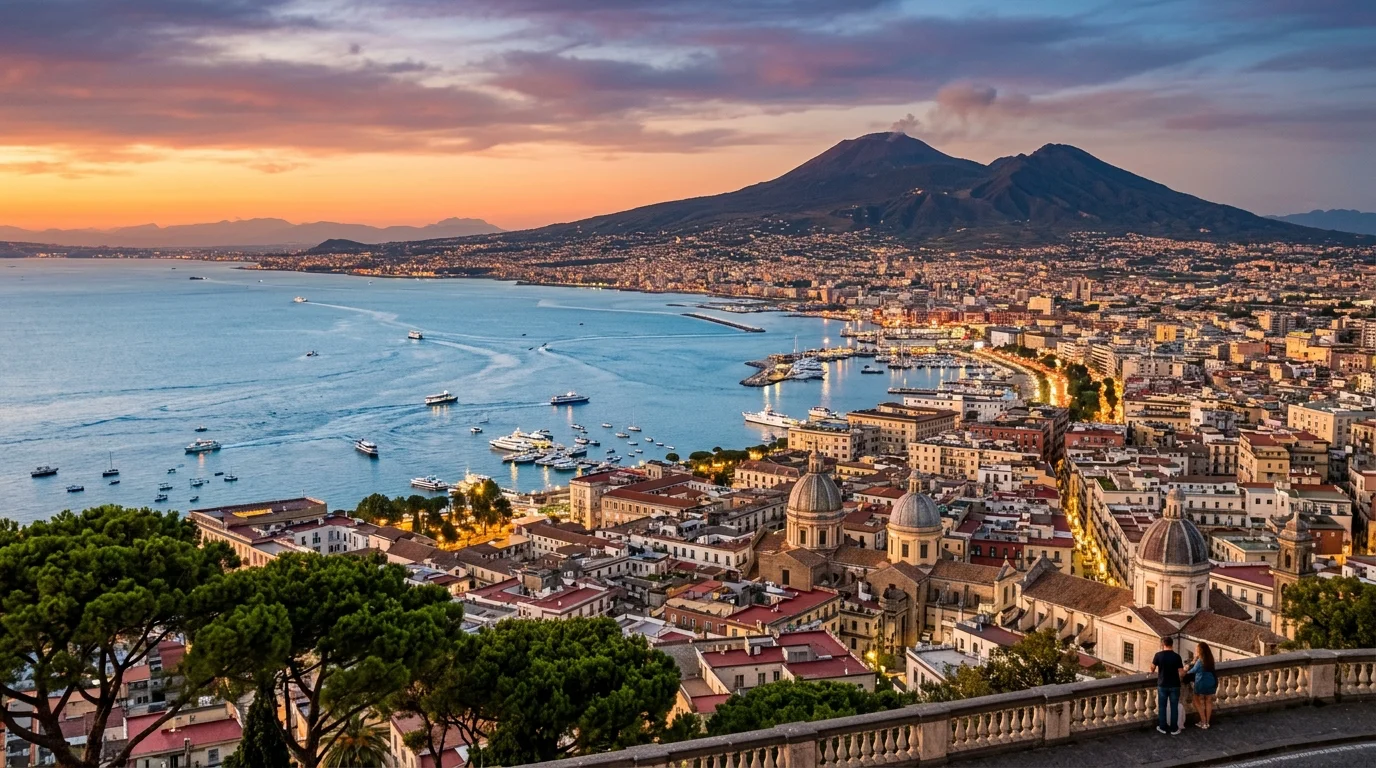
Naples (Napoli in Italian) is a historic city in southern Italy, located on the stunning Bay of Naples in the Campania region, with Mount Vesuvius looming dramatically to the east. It is best known as the birthplace of pizza, its UNESCO-listed historic center, and its role as the gateway to Pompeii, the Amalfi Coast, and the island of Capri. Visitors come here for world-class archaeological museums, authentic Neapolitan street food, centuries of art and architecture, and the raw, electric energy of one of Europe's oldest and most vibrant cities.
Table of Contents
- Naples Overview
- Getting There & Around
- Top Attractions & Landmarks
- Neighborhoods & Districts
- Food & Dining
- Nightlife & Entertainment
- Shopping
- Seasonal Events & Festivals
- Accommodation Recommendations
- Practical Information
- Day Trips & Nearby Destinations
- Insider Tips & Hidden Gems
- Money-Saving Tips
- Common Tourist Mistakes to Avoid
- Sample Itineraries
- Frequently Asked Questions
What Is Naples and Why Should You Visit?
Naples is Italy's third-largest city and one of the oldest continuously inhabited cities in the world, founded by Greek settlers more than 2,700 years ago. It sits on the volcanic Bay of Naples in southern Italy, backed by the brooding silhouette of Mount Vesuvius and draped across steep hills that tumble down to the sparkling Tyrrhenian Sea. Naples is loud, colourful, chaotic, and utterly unforgettable — a city that grabs you by the collar and refuses to let go.
People visit Naples for reasons that go far beyond the famous pizza. The city holds one of the richest concentrations of art, architecture, and history in Europe, from Greek temples and Roman ruins to baroque churches and royal palaces. Its UNESCO-listed historic centre is a labyrinth of narrow streets (called vicoli) packed with shrines, street food vendors, laundry lines, and more churches per square kilometre than almost anywhere on earth. Naples rewards curious, open-minded travellers more generously than perhaps any other Italian city.
Yes, Naples has a reputation for grime and disorder — and some of it is fair. But that rawness is also what makes it so authentic. Unlike many Italian cities polished smooth for tourism, Naples feels real. The people are warm, passionate, and fiercely proud of their city, and that pride is infectious the moment you arrive.
When Is the Best Time to Visit Naples?
Spring (April–June): This is widely considered the best time to visit Naples. Temperatures are warm but not scorching (18–26°C / 64–79°F), the city is in full bloom, and the outdoor cafés buzz with life. Crowds are building but not yet overwhelming. Hotel prices are moderate, and the light on the bay is absolutely gorgeous. Book accommodation at least 6–8 weeks ahead.
Summer (July–August): Naples in summer is hot and humid, with temperatures regularly hitting 30–35°C (86–95°F). The city itself is actually quieter than you might expect in August, as many locals leave for the coast — but the surrounding attractions like Pompeii and the Amalfi Coast are packed solid. Prices rise sharply. If you visit in summer, start sightseeing early in the morning and rest in the afternoon.
Autumn (September–October): September is arguably the single best month to visit Naples. The heat softens, the summer crowds thin out, the sea is still warm enough to swim, and the city feels alive again after the August exodus. October brings occasional rain but remains mild and far less crowded than spring.
Winter (November–March): Naples winters are mild by northern European standards (8–14°C / 46–57°F), with some rain and occasional cold snaps. Tourist numbers drop dramatically, making it a wonderful time to explore museums and monuments without crowds. Christmas is a magical time here — the famous Christmas alley (Via San Gregorio Armeno) is in full swing with nativity scene craftsmen selling their work. Book early for the Christmas period.
How Many Days Do You Need in Naples?
- 1–2 days: Enough to see the historic centre, eat your way through the street food scene, and visit the National Archaeological Museum. Good as a stopover.
- 3–4 days: The ideal first visit. You can cover the top museums, several neighbourhoods, a day trip to Pompeii or Herculaneum, and still have time to wander without rushing.
- 5–7 days: Allows for day trips to the Amalfi Coast, Capri, and Caserta as well as deeper exploration of Naples itself, including Spaccanapoli, the underground city, and the Catacombs.
- 1 week+: For true enthusiasts and slow travellers. You can explore every neighbourhood, take cooking classes, attend local events, and begin to feel like a temporary Neapolitan.
Quick Facts About Naples
- Population: \~3 million (metro area); \~970,000 (city proper)
- Language: Italian (Neapolitan dialect widely spoken); English proficiency is moderate in tourist areas, lower in residential neighbourhoods
- Currency: Euro (€)
- Time Zone: Central European Time (CET) / UTC+1; Central European Summer Time (CEST) / UTC+2 in summer
- Country Code: +39 (Italy)
- Area Code: 081
- Climate: Mediterranean (hot dry summers, mild wet winters)
- Altitude: Approximately 17 metres (56 feet) above sea level at city centre
How Do You Get To and Around Naples?
The easiest way to reach Naples is by flying into Naples International Airport (Capodichino) or by taking a high-speed train from Rome, Florence, or Milan — trains are fast, comfortable, and often the better option if you're already in Italy.
Which Airports Serve Naples?
Naples International Airport – Capodichino (NAP)
Via Umberto Maddalena, 80144 Naples, Italy
Naples' only commercial airport sits just 5–6 km north of the city centre, making transfers quick and cheap. It handles flights from most major European cities, with connections from New York (JFK) and other long-haul destinations via hubs. Airlines including easyJet, Ryanair, Wizz Air, Alitalia, Lufthansa, British Airways, and Air France operate regular services. The airport is compact and easy to navigate, though it gets extremely busy in summer months.
How Do You Get from the Airport to the City Center?
Official Taxi: A fixed-rate taxi from Capodichino Airport to the city centre or waterfront costs a flat €23 (2026) for up to 4 passengers. Taxis are white and wait outside Arrivals. Journey time is 15–25 minutes depending on traffic. Always confirm the flat rate before you depart.
Alibus Airport Shuttle: The dedicated Alibus airport-to-city bus runs every 30 minutes and stops at Piazza Garibaldi (Naples Central Station) and the port (Molo Beverello) for just €5 per person (2026). It's the cheapest and most convenient option for solo travellers. Journey time is approximately 20–30 minutes.
ANM City Bus (Line 3S/Line 105): The cheapest option at €1.60 per ride (2026), though slower and less convenient with luggage. Runs from the airport to various city stops.
Private Transfer: Private transfers from the airport cost €30–50 (2026) for a car, bookable in advance online. Great for families with luggage or late-night arrivals.
What Is the Best Way to Get Around Naples?
The best way to get around Naples is a combination of walking (for the historic centre) and the metro or funiculars (for getting between the hills and the port areas). The city also has an extensive bus network, though buses can be slow and crowded.
Public Transport System
Naples has a surprisingly good public transport network run by ANM, including buses, three metro lines, and four funiculars that climb the Vomero and Posillipo hills. The metro is modern on Line 1 (art metro) and Line 6, while Line 2 is older. Funiculars are a fun and practical way to reach hilltop neighbourhoods. Services generally run from 6:00 AM to 11:00 PM (midnight on weekends).
Tickets & Passes:
- Single ride (90 minutes): €1.60 (2026)
- Daily pass: €4.50 (2026) — great value for sightseers
- Weekly pass: €15.80 (2026)
- Unico Campania card: covers trains to Pompeii, Herculaneum, and Sorrento — very useful for day trippers
Taxis & Rideshare
Official taxis in Naples are white and metered, with fixed flat rates to the airport, port, and train station. Always use official taxis from designated ranks or ordered via the official app (iTaxi or ConTaxi). Uber operates in Naples but only the Uber Black service (higher-end cars) — budget rideshares are not widely available. Typical city centre journeys cost €8–15 (2026).
Walking
The Naples historic centre (Centro Storico) is best explored entirely on foot. The main sights along Spaccanapoli, Via dei Tribunali, and Piazza del Plebiscito are within a roughly 2 km radius and perfectly walkable. The terrain is mostly flat in the old city but hilly in Vomero and Posillipo — use the funicular for those areas rather than walking up steep steps in summer heat.
Walkability Score: 82/100 for the tourist centre. The historic centre, seafront, and Chiaia are excellent on foot; Vomero requires the funicular.
Smart travellers always compare transfer options before booking — prices for the same route can vary by 40% or more. Take 60 seconds to check all options and choose what works best for your arrival.
What Are the Top Attractions and Landmarks in Naples?
Naples' top attractions include one of the world's greatest archaeological museums, royal palaces, subterranean tunnels, ancient catacombs, and the dramatic backdrop of Vesuvius — all within a compact and walkable historic city centre.
National Archaeological Museum of Naples (MANN)
Piazza Museo, 19, 80135 Napoli NA, Italy
The Museo Archeologico Nazionale di Napoli — known as MANN — is considered one of the greatest archaeological museums in the world and is an absolute must-see for any visitor to Naples. The collection is staggering in scale and quality, housing the finest artifacts recovered from Pompeii and Herculaneum, including the famous Secret Cabinet of erotic art, extraordinary mosaics, and everyday objects that bring the ancient Roman world vividly to life.
Don't miss the Farnese Bull (the largest ancient sculpture group ever found), the Alexander Mosaic depicting the Battle of Issus, and the haunting collection of casts and objects from Pompeii. Allow at least 3–4 hours to do the museum justice, and consider hiring an audio guide or joining a guided tour to understand the context behind the treasures.
Why visit: There is simply nowhere else on earth where you can see so many perfectly preserved Roman artworks, treasures, and everyday objects in one place. This museum is the real reason to visit Naples before Pompeii itself.
Entrance: Adults €20 (2026); EU citizens 18–25: €2; Under 18 free; first Sunday of month free
Best time: Weekday mornings to beat school groups
Hours: Wednesday–Monday 9:00 AM–7:30 PM; closed Tuesdays
Piazza del Plebiscito
Piazza del Plebiscito, 80132 Napoli NA, Italy
Piazza del Plebiscito is Naples' grandest public square and the symbolic heart of the city. Flanked by the neoclassical colonnade of the Church of San Francesco di Paola on one side and the magnificent Royal Palace (Palazzo Reale) on the other, it is one of the most beautiful squares in all of Italy. The vast open space was once used as a parking lot but was pedestrianised in the 1990s and has since become the gathering place for Neapolitans on holidays and evenings.
The twin equestrian statues of Charles III of Bourbon and Ferdinand I dominate the centre of the square. The Church of San Francesco di Paola is directly inspired by the Pantheon in Rome and is spectacular inside — free to enter. Locals have a tradition of walking blindfolded between the two statues without veering off course, though this is more legend than regular practice.
Why visit: This is Naples at its most majestic and photogenic — particularly at golden hour when the buildings glow orange. It gives you the full sense of the city's Bourbon royal grandeur.
Entrance: Square — free; Royal Palace — €10 adults (2026)
Best time: Early morning for empty photos, evening for atmosphere
Hours: Square always open; Royal Palace Thursdays–Tuesdays 9:00 AM–8:00 PM
Spaccanapoli — The Old City Street
Via Benedetto Croce / Via San Biagio dei Librai, 80134 Napoli NA, Italy
Spaccanapoli ("Naples splitter") is the long, dead-straight street that cuts the historic centre of Naples in half, following the ancient Greek-Roman city grid laid down over 2,500 years ago. Walking this street is one of the great urban experiences in Italy — it is lined with churches, palaces, pizza shops, street shrines, market stalls, and the daily theatre of Neapolitan life playing out in every direction.
The street changes names as it goes — Via Benedetto Croce in the middle section and Via San Biagio dei Librai further east — but it's all one continuous route. Along the way you'll pass the Church of Gesù Nuovo with its extraordinary diamond-cut stone facade, the serene Cloister of Santa Chiara, and dozens of ornate baroque churches, many of them free to enter.
Why visit: This is the beating heart of authentic Naples. No other street in Italy shows you so much history, religion, food culture, and daily life packed into a single walk.
Entrance: Street is free; individual churches: free to €5
Best time: Morning for quiet or late afternoon for buzz
Hours: Always open (street); churches generally 9:00 AM–6:00 PM
Castel dell'Ovo (Egg Castle)
Via Eldorado, 3, 80132 Napoli NA, Italy
Castel dell'Ovo — the Egg Castle — is Naples' oldest surviving fortification, perched dramatically on a small islet (Megaride) connected to the Borgo Marinaro harbour district. The castle dates back to Roman times and gets its poetic name from a legend involving the Roman poet Virgil, who supposedly buried a magical egg in the foundations — if the egg breaks, the castle will fall and Naples with it.
The castle was used as a residence, fortress, and prison through the centuries. Today it hosts free art exhibitions and cultural events, and the battlements offer superb panoramic views over the Bay of Naples, the Vesuvius skyline, and the Posillipo coast. The harbour below is lined with fish restaurants and is a wonderful spot for an evening aperitivo.
Why visit: Free to enter, architecturally fascinating, and the views from the upper terraces are among the best in Naples — a perfect combination.
Entrance: Free (2026)
Best time: Late afternoon for the best light on the bay
Hours: Monday–Saturday 9:00 AM–7:30 PM; Sunday 9:00 AM–2:00 PM
Naples Underground (Napoli Sotterranea)
Piazza San Gaetano, 68, 80138 Napoli NA, Italy
Beneath the streets of Naples lies a vast underground world — more than 2,400 years of history tunnelled into the volcanic rock (tufa) on which the city is built. The original tunnels were carved by the Greeks and Romans to quarry building material and channel water into cisterns. During World War II, the tunnels became air-raid shelters for thousands of Neapolitans, and many artefacts from those years remain exactly where people left them.
The guided tours of Napoli Sotterranea last about 80 minutes and take you 40 metres below street level through narrow passages, ancient cisterns, and the WWII shelter section. Some passages are genuinely tight (you will be given a candle to hold), making this a memorable adventure. The tour is available in English and is one of the most popular experiences in the city — book ahead.
Why visit: Naples underground is unlike anything else in Italy. It is part history lesson, part adventure, and entirely unforgettable.
Entrance: Adults €15; children (6–12) €7 (2026)
Best time: Book the first English tour of the day
Hours: Tours daily at 10:00 AM, 12:00 PM, 2:00 PM, 4:00 PM, 6:00 PM (English times vary — check website)
Catacombs of San Gennaro
Via Capodimonte, 13, 80131 Napoli NA, Italy
The Catacombs of San Gennaro are the most important early Christian burial site in southern Italy, carved into the hill of Capodimonte above the city. Dating back to the 2nd century AD, they were expanded over centuries as the burial place of Naples' bishops and nobility, and are decorated with remarkable early Christian frescoes that rival anything in the Roman catacombs. The site also contains an extraordinary double-level structure unique to Naples.
Guided tours last about 45 minutes and bring these ancient tunnels to life with excellent commentary. The tours are run by a social cooperative that employs local young people from the Rione Sanità neighbourhood — a socially conscious tourism model that helps one of Naples' most economically challenged areas. Many visitors combine the catacombs with a visit to the Rione Sanità neighbourhood itself.
Why visit: Historically and artistically outstanding, and the ethical tourism model makes it even more rewarding. Often less crowded than Napoli Sotterranea.
Entrance: Adults €9; children (6–12) €5 (2026)
Best time: Monday–Friday morning visits are quietest
Hours: Daily 10:00 AM–5:00 PM; guided tours run on the hour
Royal Palace of Naples (Palazzo Reale)
Piazza del Plebiscito, 1, 80132 Napoli NA, Italy
The Palazzo Reale is one of the most magnificent royal residences in Italy, built in the 17th century to house visiting Spanish viceroys and later used as the main residence of the Bourbon kings of Naples. The palace's ceremonial apartments on the upper floors contain opulent state rooms, royal carriages, a beautiful historic theatre (Teatro di Corte), and a magnificent royal library (Biblioteca Nazionale) holding over 2 million volumes.
The eight niches on the facade of the palace contain statues of the eight dynasties that ruled Naples — look for the various kings and count them as you approach across the piazza. The rooftop terraces and hanging gardens offer superb views over Piazza del Plebiscito and the bay, and are included in the entry ticket.
Why visit: The royal apartments give you a vivid sense of the extraordinary wealth and power that flowed through Naples as the capital of the Kingdom of the Two Sicilies. The historic theatre inside is one of Italy's secret gems.
Entrance: Adults €10; under 18 free (2026)
Best time: Weekday mornings
Hours: Thursday–Tuesday 9:00 AM–8:00 PM; closed Wednesdays
Pompeii Archaeological Site
Via Villa dei Misteri, 2, 80045 Pompei NA, Italy
Pompeii is technically a day trip from Naples (see Section 11) but so closely tied to the city that it deserves mention as an essential part of any Naples itinerary. The ancient Roman city buried by the eruption of Vesuvius in 79 AD is one of the greatest archaeological sites in the world — a perfectly frozen moment in time where you can walk down actual Roman streets, enter homes, and see life as it was 2,000 years ago. The plaster casts of the victims remain among the most profoundly moving things you will ever see.
The site covers 66 hectares and you could spend an entire day here. Key highlights include the Forum, the Amphitheatre, the Villa of the Mysteries (with extraordinary preserved frescoes), the thermal baths, and the Garden of the Fugitives where the famous casts of the dead were found.
Why visit: Pompeii is one of the most important and affecting historical sites in the world, and being able to reach it in 30 minutes from Naples makes visiting essentially obligatory.
Entrance: Adults €20 (2026); EU citizens 18–25: €2; under 18 free
Best time: Arrive at opening (9:00 AM) before the heat and crowds build
Hours: Daily 9:00 AM–7:00 PM (last entry 5:30 PM) April–October; 9:00 AM–5:00 PM November–March
Capodimonte Museum and Park
Via Miano, 2, 80131 Napoli NA, Italy
The Museo di Capodimonte houses one of Italy's finest art collections in a former Bourbon royal hunting lodge set in a vast hilltop park above Naples. The collection spans eight centuries of Italian and European art, with masterpieces by Titian, Caravaggio, Raphael, Botticelli, El Greco, and Andy Warhol among many others. The Caravaggio room alone — containing his magnificent "Flagellation of Christ" — is worth the entire visit.
The surrounding Parco di Capodimonte is the largest green space in Naples, covering over 130 hectares of woodland and gardens. It's a wonderful escape from the city below, and Neapolitan families come here at weekends for picnics, cycling, and walks. The combination of world-class art and a beautiful park makes this one of the most underrated half-days in Naples.
Why visit: Capodimonte is a genuine world-class art museum that rarely features on tourist itineraries — meaning you can have masterpieces almost entirely to yourself on a weekday morning.
Entrance: Adults €12 (2026); first Sunday of month free
Best time: Weekday morning for museum; weekend afternoon for park
Hours: Thursday–Tuesday 9:00 AM–7:30 PM; closed Wednesdays
San Martino Charterhouse and Museum
Largo San Martino, 5, 80129 Napoli NA, Italy
The Certosa e Museo di San Martino is a magnificent 14th-century Carthusian monastery perched on the Vomero hill with the most spectacular views over Naples, the bay, and Vesuvius of any site in the city. The monastery was lavishly decorated over centuries by the finest Neapolitan artists, and its church interior — all marble, gold, and frescoes — is among the most opulent in a city already overflowing with baroque art.
The museum inside tells the story of Naples through paintings, sculpture, carriages, maps, prints, and an extraordinary collection of presepe (Nativity scenes) — a Neapolitan art form taken to theatrical extremes. The cloister garden is one of the most beautiful in southern Italy, and the terrace outside offers the finest panoramic photograph in Naples.
Why visit: The combination of stunning art, history, gardens, and unbeatable views makes San Martino a highlight that many first-time visitors miss in favour of the lower city attractions.
Entrance: Adults €8 (2026); under 18 free
Best time: Morning on a clear day for the views
Hours: Thursday–Tuesday 9:00 AM–7:00 PM; closed Wednesdays
Via San Gregorio Armeno (Christmas Alley)
Via San Gregorio Armeno, 80138 Napoli NA, Italy
Via San Gregorio Armeno is one of the most famous streets in Naples — a narrow alley in the historic centre entirely dedicated to the making and selling of presepe (Nativity scenes), one of the great Neapolitan art traditions. The street's craftsmen and workshops have been producing handmade figurines, miniature landscapes, and elaborate Nativity set accessories for centuries, and the skill involved is extraordinary.
While the street is famous at Christmas, the workshops are open all year round, and you'll find everything from traditional religious figures to cheeky celebrity statuettes (politicians, sports stars, and TV characters are always popular sellers). Walking the alley at any time of year is a genuine cultural experience, and buying even a small handmade figure is a wonderful souvenir.
Why visit: This is a living craft tradition unlike anything else in Europe — a street where artisans work in their tiny workshops while selling to the public, just as they have for hundreds of years.
Entrance: Free to walk and browse
Best time: Year-round; absolutely magical in December
Hours: Most shops open daily 10:00 AM–7:00 PM
Book your tours and tickets in advance — it saves hours of queuing and often gets you a better price. These two platforms cover different options, so it's worth checking both.
What Are the Best Neighborhoods to Explore in Naples?
Naples' neighbourhoods each have a completely distinct character — from the frenetic energy of the ancient historic centre to the elegant hilltop calm of Vomero and the bohemian charm of Chiaia. Here are the best ones to explore.
Centro Storico (Historic Centre)
Character: The oldest and most atmospheric part of Naples — a dense, labyrinthine neighbourhood built on the original Greek-Roman grid, packed with baroque churches, pizza shops, palaces, and shrines on every corner. It is loud, chaotic, and endlessly fascinating.
What makes it special: UNESCO World Heritage listed, it contains the highest concentration of churches in the world and some of the best street food in Italy. The famous streets of Spaccanapoli and Via dei Tribunali run straight through its heart. Every alley leads somewhere surprising.
Best for: First-time visitors, history lovers, food explorers, photographers
Must-see in this area: Spaccanapoli, Piazza San Domenico Maggiore, Via San Gregorio Armeno, Gesù Nuovo Church, Cloister of Santa Chiara
How to get there: Walk from Piazza del Plebiscito (10 minutes), or Metro Line 1 to Università or Dante stations
Location: Via Benedetto Croce, 80134 Napoli NA, Italy
Chiaia
Character: Naples' most elegant and fashionable neighbourhood, running along the seafront from Piazza dei Martiri to Mergellina. Chiaia is where you find the best boutiques, the smartest restaurants, elegant Liberty-era apartment buildings, and a cosmopolitan café culture. It feels almost like a different city compared to the Centro Storico.
What makes it special: The beautiful waterfront Lungomare promenade (Via Francesco Caracciolo) is one of Italy's finest seaside walks. Villa Pignatelli — a historic villa turned museum — and the Villa Comunale public gardens are both here. The neighbourhood comes alive at aperitivo time (6–9 PM) when outdoor tables fill with Neapolitan professionals.
Best for: Upscale shoppers, couples, aperitivo seekers, evening strollers
Must-see in this area: Lungomare seafront, Piazza dei Martiri, Villa Comunale, Villa Pignatelli
How to get there: 15-minute walk from Piazza del Plebiscito along the seafront; Bus C25 or C28
Location: Piazza dei Martiri, 80121 Napoli NA, Italy
Vomero
Character: Naples' upmarket residential hill district, reached by funicular and offering dramatically different energy from the lower city — cleaner streets, more space, better air, and excellent local restaurants and boutiques away from the tourist circuit. Vomero sits above the city and looks down over it with superb views.
What makes it special: The Certosa di San Martino museum and the Castel Sant'Elmo fortress both sit here, offering the best panoramas in Naples. Via Scarlatti and Via Luca Giordano are the main shopping streets — popular with locals rather than tourists. The neighbourhood has a noticeably slower, more comfortable pace.
Best for: Art lovers, photography enthusiasts, shoppers seeking local boutiques, travellers wanting to escape tourist crowds
Must-see in this area: Certosa di San Martino, Castel Sant'Elmo, Via Scarlatti, funicular stations
How to get there: Centrale, Chiaia, or Montesanto funicular from the lower city
Location: Piazza Vanvitelli, 80129 Napoli NA, Italy
Spaccanapoli & Via dei Tribunali (Heart of the Old City)
Character: The two main arteries of the historic centre — Spaccanapoli running east-west through the lower section and Via dei Tribunali one block north — are the liveliest streets in Naples, packed with pizza shops, cafés, street vendors, and an unceasing flow of scooters, shoppers, and tourists.
What makes it special: This is where Neapolitan street food culture reaches its peak. The famous Pizzeria Sorbillo and Di Matteo are both on Via dei Tribunali. The alleyways branching off these streets contain the most authentic and least-visited corners of the old city.
Best for: Food lovers, urban explorers, street photographers, anyone who wants the full Naples experience
Must-see in this area: Pizzeria Sorbillo, Piazza San Gaetano, San Lorenzo Maggiore, Cappella Sansevero
How to get there: Metro Line 1 to Dante station (5-minute walk); walk from Piazza del Plebiscito (15 minutes)
Location: Via dei Tribunali, 80138 Napoli NA, Italy
Rione Sanità
Character: Naples' most authentic and least-touristy central neighbourhood — a densely populated valley district below Capodimonte that has traditionally been one of the city's most economically challenged areas but is in the middle of a fascinating cultural renaissance. It is raw, vibrant, and gives you a completely unfiltered view of Neapolitan daily life.
What makes it special: The Catacombs of San Gennaro are here, along with extraordinary baroque churches, a thriving street art scene, excellent local food at rock-bottom prices, and some of the most magnificent but run-down architectural heritage in the city. Social cooperatives and cultural projects run by local young people have transformed the neighbourhood's self-image in recent years.
Best for: Adventurous travellers, culture seekers, budget travellers, anyone wanting the real Naples without the tourist polish
Must-see in this area: Catacombs of San Gennaro, Palazzo dello Spagnolo, Basilica di Santa Maria della Sanità, local street markets
How to get there: 20-minute walk from the historic centre; Bus C63 from city centre
Location: Piazza Sanità, 80136 Napoli NA, Italy
Posillipo
Character: Naples' most beautiful and exclusive residential area — a scenic cape to the west of the city, draped with luxury villas, stunning sea views, seafood restaurants, and a relaxed coastal atmosphere far removed from the urban intensity of central Naples.
What makes it special: The Parco Virgiliano offers some of the most spectacular panoramic views in all of southern Italy — looking back over the entire Bay of Naples, Vesuvius, and the islands of Capri and Ischia all at once. The cliff-side road of Via Posillipo is gorgeous to drive or cycle in the early morning.
Best for: Couples, those seeking peace and views, seafood lovers, day-trippers wanting to escape the city
Must-see in this area: Parco Virgiliano, Marechiaro village, Via Posillipo scenic drive
How to get there: Bus 140 from Piazza Vittoria (Chiaia); taxi from city centre approximately €12–15 (2026)
Location: Via Posillipo, 80123 Napoli NA, Italy
What Food Should You Try in Naples?
Naples is the birthplace of pizza and one of the great food cities of the world — eating here is not a side activity but a central reason to visit. The Neapolitan food tradition is ancient, proud, and intensely local, built on simple, high-quality ingredients that need little embellishment.
What Are the Must-Try Local Dishes in Naples?
- Pizza Napoletana — The original Neapolitan pizza: a soft, charred, slightly chewy crust made with San Marzano tomatoes, fior di latte mozzarella, and fresh basil. Specifically protected by EU law under "Pizza Napoletana STG." The classic versions are Margherita and Marinara. Expect to pay €4–8 (2026) at a traditional pizzeria.
- Sfogliatella — A shell-shaped pastry (riccia = flaky pastry; frolla = shortcrust) filled with sweetened ricotta, semolina, candied orange peel, and cinnamon. One of Naples' most iconic pastries, best eaten hot from the oven at around 7–8 AM.
- Ragù Napoletano — The original slow-cooked meat sauce, simmered for many hours with tomato, lard, wine, and beef, pork, or lamb. Served with ziti pasta. It is nothing like the bolognese served elsewhere in the world — richer, more intense, and extraordinary.
- Babà al Rum — A small sponge cake soaked in rum syrup, often topped with whipped cream and fruit. A quintessential Neapolitan dessert available in every pastry shop.
- Friarielli e Salsicce — Sautéed broccoli rabe (bitter greens) with pork sausage — a classic combination served as a side dish or pizza topping. The bitterness of the greens and the fat of the sausage create a perfect balance.
- Cuoppo — A paper cone filled with fried mixed seafood or vegetables — calamari, shrimp, zucchini, and more — eaten as street food while walking. Available from street vendors in the historic centre for €4–8 (2026).
- Maccheroni al Ragù — Pasta with the slow-cooked Neapolitan ragù mentioned above. A Sunday tradition in every Neapolitan family home — try it in a traditional trattoria on a Sunday.
- Gelato di Riso — A uniquely Neapolitan street food: rice ice cream sold in small paper cups. A hot-day institution and very cheap at around €1.50 (2026).
Where Should You Eat in Naples?
Budget-Friendly (Under €15 per meal)
- Pizzeria Di Matteo — Via dei Tribunali, 94, 80138 Napoli — Famous historic pizzeria on the Tribunali; cash only, standing at the counter or take away; a classic Margherita costs around €4–5 (2026). The fried pizza (pizza fritta) here is extraordinary.
- Trattoria da Nennella — Vico Lungo Teatro Nuovo, 103-105, 80134 Napoli — A raucously fun traditional trattoria in the Quartieri Spagnoli serving massive portions of home-cooked Neapolitan food at impossibly low prices. Expect queues and communal seating. Full lunch under €12 (2026).
- Antiche Delizie — Via Pasquale Scura, 14, 80134 Napoli — A classic Neapolitan deli and bakery in the Spanish Quarter serving sfogliatella, cornetti, and hot ready meals. Breakfast for under €3 (2026).
Mid-Range (€20–50 per meal)
- Pizzeria Sorbillo — Via dei Tribunali, 32, 80138 Napoli — One of Naples' most famous pizzerias, run by a family with generations of pizza-making tradition. Larger, more comfortable than Di Matteo; pizza €5–9 (2026). Queues at peak times — arrive early.
- Trattoria Mario — Via della Quercia, 11, 80134 Napoli — A tiny, authentic family trattoria in the Spanish Quarter. Daily specials change with the market; typical lunch costs €20–25 (2026) with wine. No website — just walk in and hope for space.
- Ristorante Umberto — Via Alabardieri, 30-31, 80121 Napoli (Chiaia) — A smartly casual restaurant in Chiaia serving excellent traditional Neapolitan cuisine with quality seafood. Full dinner with wine around €35–45 (2026).
- La Stanza del Gusto — Vico Sedil Capuano, 17, 80138 Napoli — A creative osteria near the historic centre specialising in regional Italian cheeses and local wines alongside seasonal dishes. Great cheese board for two around €25 (2026).
Fine Dining (€60+ per meal)
- Palazzo Petrucci — Piazza San Domenico Maggiore, 4, 80134 Napoli — A Michelin-starred restaurant in a historic palazzo on Spaccanapoli, offering creative modern Neapolitan cuisine. Tasting menus from €90 (2026). Book well in advance.
- Il Comandante — Via Cristoforo Colombo, 45, 80133 Napoli (Hotel Romeo) — A Michelin-starred restaurant on the 10th floor of the Romeo Hotel with sweeping bay views and exceptional modern Italian cuisine. Tasting menus from €130 (2026).
What Are the Dining Customs in Naples?
Meal times: Neapolitans eat later than you might expect. Lunch is typically 1:30–3:00 PM and dinner starts at 8:00 PM, rarely before. Many restaurants are closed between 3:00 and 7:30 PM.
Tipping: Tipping is not mandatory in Italy but is appreciated. Leaving €1–2 per person or rounding up the bill is customary. Service charge ("coperto") of €1.50–3 per person is added automatically at most sit-down restaurants and is legitimate.
Reservations: Essential for popular restaurants, especially at dinner on weekends. Many casual trattorie do not take reservations and work on a first-come basis.
Dress code: Naples restaurants are generally casual. Smart casual is fine for mid-range; a step up (no sportswear) for fine dining venues.
What Is the Nightlife Like in Naples?
Naples' nightlife scene is vibrant, passionate, and very much a late-night affair — aperitivo starts around 7 PM, dinner at 8–9 PM, and bars and clubs don't fill up until midnight or later. The city has a lively bar culture centred on the Chiaia and Piazza Bellini areas.
Where Are the Best Areas for Nightlife in Naples?
- Piazza Bellini: Via Santa Maria di Costantinopoli, 80138 Napoli — The cultural and social heart of Naples' nightlife. This beautiful square is surrounded by bars and cafés, with tables spilling across the ancient Greek walls incorporated into the piazza's design. The crowd is young, artistic, and international — students, musicians, and artists mix here nightly from around 6 PM to 2 AM.
- Chiaia Waterfront & Nearby Streets: Via Chiaia and Via dei Mille, 80121 Napoli — The Chiaia area has a more upscale bar scene with sleek cocktail bars, wine bars, and outdoor terraces popular with the city's professionals and a more dressed-up crowd.
- Quartieri Spagnoli (Spanish Quarter): Via Speranzella, 80134 Napoli — The atmospheric Spanish Quarter has a network of small, characterful bars tucked into its narrow streets. Less polished than Chiaia but full of authentic local energy, especially from Thursday to Saturday.
What Are the Best Bars and Clubs in Naples?
Bars & Pubs
- Enoteca Belledonne — Vico Belledonne a Chiaia, 18, 80121 Napoli — A legendary wine bar in Chiaia, famous for its aperitivo hour when the tiny space fills to bursting and bottles of local Campanian wine are opened. Very popular — arrive early for a table. Wine from €4 a glass (2026).
- Libreria Berisio — Via Port'Alba, 28, 80134 Napoli — A unique bookshop-bar hybrid near Piazza Bellini where you can browse second-hand books with an Aperol Spritz in hand. Relaxed, bohemian, and entirely Neapolitan in spirit.
- Bar San Martino — Largo San Martino, 80129 Napoli (Vomero) — A hilltop bar terrace near the San Martino Charterhouse with jaw-dropping views over the city at sunset. Cocktails from €8 (2026). Go for sunset — you won't regret it.
Clubs & Dancing
- Arenile Reload — Via Coroglio, 14b, 80124 Napoli (Bagnoli) — One of Naples' best summer outdoor clubs set on the seafront in the Bagnoli area. Hosts live music, DJs, and events from May to September. Cover charge varies €10–20 (2026).
- Rising South — Via San Sebastiano, 19, 80134 Napoli — A popular music and club venue near the historic centre hosting electronic music nights, indie events, and live acts. Popular with a young local crowd.
Live Music & Shows
- Teatro San Carlo — Via San Carlo, 98/F, 80132 Napoli — One of the world's oldest and most beautiful opera houses, founded in 1737, just off Piazza del Plebiscito. Opera, ballet, and classical concerts run from October to June. Tickets from €25 (2026) — book well in advance for popular productions.
- Bourbon Street — Via Bellini, 52, 80135 Napoli — A famous jazz and blues bar near Piazza Bellini hosting live music almost every night. Great atmosphere and a mix of Neapolitan and international musicians.
What Family-Friendly Evening Entertainment Is Available?
Naples is wonderfully child-friendly in the evening — the Italian culture of family life means children are welcome in restaurants until late, and the seafront Lungomare promenade is perfect for an evening stroll with ice cream. The Piazza del Plebiscito often hosts free outdoor events, concerts, and light shows, especially in summer. The Città della Scienza science museum in Bagnoli has occasional evening family events.
What and Where Should You Shop in Naples?
The best things to buy in Naples are artisan-made goods — presepe figurines from Via San Gregorio Armeno, handmade jewellery, local limoncello and food products, and leather goods — while the top shopping areas range from the elegant boutiques of Chiaia to the chaotic street markets of the historic centre.
What Are the Best Shopping Districts in Naples?
- Via Toledo & Galleria Umberto I: Via Toledo, 80134 Napoli — The main commercial high street of Naples, running from Piazza del Plebiscito to Piazza Dante. A mix of international chains and local shops. The magnificent Galleria Umberto I — a 19th-century glass-domed arcade — is halfway up and worth seeing for its architecture alone. Mid-range shopping with some local character.
- Via Chiaia & Via dei Mille: Via Chiaia, 80121 Napoli — Naples' upscale shopping corridor in the Chiaia district. Boutiques, jewellers, Italian fashion brands, and artisan shoes. More expensive but excellent quality and a far more pleasant shopping environment.
- Via San Gregorio Armeno: Via San Gregorio Armeno, 80138 Napoli — The famous Christmas alley (see Attractions section), lined with artisan workshops selling handmade Nativity figures and unique souvenirs year-round.
What Markets Should You Visit in Naples?
Mercato di Porta Nolana — Via Sopramuro/Porta Nolana, 80142 Napoli — Open Monday–Saturday 7:00 AM–2:00 PM. Naples' most famous fish market, right next to the port. The freshest seafood sold directly from fishing boats and market stalls. An extraordinary sensory experience. Also sells vegetables, cheese, and street food.
Mercato di Antignano — Piazza degli Artisti, 80129 Napoli (Vomero) — Open Monday–Saturday 7:00 AM–2:00 PM. A huge neighbourhood market in Vomero selling everything from fresh produce and clothing to household goods. Popular with locals, excellent for cheap food shopping.
Poggioreale Flea Market — Via Nuova Poggioreale, 80143 Napoli — Open Sunday mornings, 7:00 AM–1:00 PM. Naples' large flea market where you can find vintage items, second-hand clothes, antiques, and all manner of curiosities. Bargaining is expected and fun.
What Should You Buy in Naples?
- Presepe Figurines (Nativity figures) — Handmade in workshops on Via San Gregorio Armeno. Prices from €5 for small figures to €100+ for large, detailed artisan pieces. Unique to Naples and genuinely beautiful.
- Limoncello — Buy authentic limoncello made with Amalfi Coast IGP lemons from a food shop rather than a tourist trap. Antiche Delizie or the Eataly at Piazza Garibaldi are reliable options. €8–20 per bottle (2026).
- Mozzarella di Bufala & Local Cheeses — Fresh buffalo mozzarella from the Caserta plains, available at delis and markets. Take a cooler bag if you plan to travel with it.
- Cornicello Amulets — The traditional Neapolitan red horn charm (horn-shaped pendant) believed to ward off the evil eye. Sold in silver, gold, coral, and plastic. A classic souvenir found in jewellery shops throughout the city.
- Coffee & Espresso Equipment — Neapolitan-made coffee (Kimbo, Passalacqua, Morettino) and traditional moka pots. Available in supermarkets, delis, and kitchenware shops. A bag of locally roasted coffee from a neighbourhood bar costs €4–6 (2026).
- Leather Goods — Handmade leather bags, belts, and shoes are available at better prices in Naples than most other Italian cities. Look in side streets off Via Chiaia for artisan workshops.
What Are the Shopping Hours and Customs?
Most shops in Naples open from 9:30 AM to 1:30 PM, close for the afternoon riposo, and reopen from 4:30–5:00 PM until 8:00 PM. Many shops (especially smaller ones) close on Sunday afternoons and all day Sunday in residential neighbourhoods. Markets operate in the morning only, typically 7:00 AM to 1:30 PM. Bargaining is not typical in shops but is expected at flea markets and from some market vendors. EU residents can claim VAT refunds (Global Blue) on purchases over €154.95 at participating shops — ask for the paperwork at the till.
Can Non-EU Visitors Claim a VAT Tax Refund in Naples?
Yes — if you are a visitor from outside the European Union (including travellers from the USA, Canada, Australia, the UK, and most of Asia and Latin America), you are entitled to a refund of the VAT (Value Added Tax) included in the price of goods you buy in Italy. VAT in Italy is 22% on most goods; 10% on some food items, which means this refund can be significant on high-value purchases like clothing, leather goods, jewellery, designer fashion, and electronics.
How to Claim Your VAT Refund — Step by Step
- Spend at least €154.94 in a single shop in a single day. This is the minimum threshold for a VAT refund claim in Italy. It does not apply across multiple shops — the full amount must be spent in one store.
- Look for the "Tax Free" sign. Participating shops display a "Tax Free Shopping," "Global Blue," or "Planet" logo in the window or at the register.
- Ask for the tax refund form at the register before you pay. Present your non-EU passport — the shop will fill out the form with your details and the purchase amount. Keep the form with your receipt.
- Get the form stamped at customs before you leave. Go to the Customs office at Naples Capodichino Airport (NAP) before check-in and have an officer stamp your tax refund form. Keep your purchases accessible in hand luggage — do not pack them deep in your checked bags.
- Collect your refund. Hand the stamped form to the Global Blue or Planet desk at the airport. You can receive the refund in cash (minus a processing fee) or as a credit card refund (lower fees, takes a few weeks).
VAT Refund Quick Facts for Naples
- Minimum spend: €154.94 in one shop in one day
- VAT rate on most goods: 22% on most goods; 10% on some food items
- Typical refund after fees: 10–15% of the purchase price
- Refund processors: Global Blue and Planet (formerly Premier Tax Free) at Naples Capodichino Airport (NAP)
- Who qualifies: Anyone with a non-EU passport who is not a resident of an EU country
- UK visitors: British passport holders qualify since Brexit — the UK is no longer in the EU
- Deadline: Purchases must be exported within 3 months of the date of purchase
- Full guide: VAT Refund in Europe — Complete Guide for Non-EU Travelers
What Festivals and Events Happen in Naples?
Naples' biggest festivals are the Feast of San Gennaro (twice yearly), the outdoor summer concerts at Piazza del Plebiscito, and the city's extraordinary Christmas celebrations — but the Neapolitan calendar is rich with local saints' days, cultural events, and food festivals throughout the year.
What Is the Annual Events Calendar for Naples?
| Month | Event Name | Description |
|---|---|---|
| January | Epiphany (La Befana) | January 6 is a major holiday in Italy. In Naples, the old woman La Befana brings gifts to children and street celebrations fill the city. Expect closures of many businesses. |
| February | Carnevale di Napoli | Naples holds its own Carnival celebrations with parades, costumes, and events in the weeks before Lent. Less famous than Venice but lively and authentically local, especially in the Rione Sanità and historic centre. |
| March | Settimana Santa (Holy Week) | Neapolitan Holy Week processions are deeply moving and spectacularly theatrical — some of the most intense religious celebrations in Italy. The Good Friday procession in Procida (day trip) is world-famous. |
| April | Pizza Village Opening Season | Spring marks the opening of many outdoor venues and food events. The Lungomare seafront comes alive with outdoor eating and cultural events as the weather warms. |
| May | Maggio dei Monumenti | Throughout May, many normally closed historical buildings, palaces, monasteries, and private gardens in Naples open to the public for free or reduced admission. An extraordinary opportunity to see the city's hidden heritage. |
| June | Napoli Teatro Festival | Naples' major theatre and performing arts festival running through June and July, with performances in extraordinary historic venues across the city — courtyards, ancient ruins, churches, and piazzas. |
| July | Estate a Napoli (Summer in Naples) | A packed summer programme of free outdoor concerts, films, and cultural events spread across the city's piazzas, parks, and waterfront. Many events are free or very cheap. |
| August | Feast of the Assumption | August 15 (Ferragosto) is a national holiday. Naples largely closes down as residents leave for the coast — it's actually a pleasant time to visit the city itself, as tourist attractions are quiet. Watch the fireworks over the bay. |
| September | Feast of San Gennaro (Major) | September 19 is the main feast day of Naples' patron saint. The famous miracle of the liquefaction of San Gennaro's blood is performed in the Cathedral of Naples — thousands crowd in and outside the church. If the blood liquefies, Naples will have good luck for the year. A deeply emotional event. |
| October | Naples Pizza Village | The world's largest pizza event — the Napoli Pizza Village on the Lungomare typically runs in late September/early October (dates vary annually) and brings together dozens of the city's best pizzaioli. Free entry to the event; pizza sold at market price. Unmissable for food lovers. |
| November | All Souls' Day (Tutti i Santi) | November 1–2 is a major occasion in Naples, when families visit cemeteries and special pastries called "Ossa di Morto" (bones of the dead) fill pastry shops. A solemn and fascinating time to observe Neapolitan religious culture. |
| December | Christmas in Naples (Natale a Napoli) | December is arguably Naples' most magical month. Via San Gregorio Armeno (Christmas Alley) is at its spectacular peak. Living Nativity scenes are performed across the city. Piazza del Plebiscito hosts a huge Christmas market and light show. The city feels festive and warm despite the cool temperatures. |
How Do Festivals Affect Hotel Prices and Availability?
The Feast of San Gennaro (September 19), Easter Week, and the Christmas/New Year period drive the biggest demand spikes — book accommodation at least 2–3 months ahead for these dates. The Naples Pizza Village event (October) and the Napoli Teatro Festival (June–July) also fill hotels quickly. General summer (July–August) sees the entire Amalfi/Pompeii tourism region at capacity — book everything in advance.
Where Should You Stay in Naples?
The best neighbourhood to stay in Naples depends on your travel style. First-time visitors who want to be in the middle of the action should choose the Historic Centre or Chiaia; those wanting more comfort and safety at slightly higher prices should look at Chiaia or Vomero.
What Are the Best Neighborhoods to Stay in Naples?
| Neighbourhood | Vibe | Price Range per Night (2026) | Best For |
|---|---|---|---|
| Centro Storico | Chaotic, authentic, historic | €60–180 | First-time visitors, food lovers, budget travellers |
| Chiaia | Elegant, safe, cosmopolitan | €100–300 | Couples, upscale travellers, seafront fans |
| Vomero | Quiet, residential, hilltop views | €70–180 | Travellers wanting calm, panoramic views |
| Santa Lucia / Lungomare | Scenic waterfront, central | €120–400 | Luxury travellers, those wanting sea views |
| Piazza Garibaldi area | Gritty, convenient, urban | €40–110 | Budget travellers, transit users, early/late arrivals |
What Are the Pros and Cons of Each Area?
Centro Storico:
Pros: Walking distance to everything, most authentic Neapolitan experience, best access to street food and nightlife, great range of accommodation prices.
Cons: Can be noisy until late at night, some areas feel rough after dark, driving and navigation is chaotic, parking is nearly impossible.
Chiaia:
Pros: Safest and most comfortable neighbourhood, excellent restaurants and bars on the doorstep, beautiful seafront walking, easy bus connections to centre.
Cons: Pricier, slightly further from major attractions (15–20 minute walk to historic centre), less authentically Neapolitan in atmosphere.
Vomero:
Pros: Cleanest and quietest area, cooler in summer, excellent local restaurants and shops, great panoramic views, safer feel.
Cons: Requires funicular or bus to reach lower city attractions, slightly less convenient for day trips to Pompeii/port.
Santa Lucia / Lungomare:
Pros: Stunning bay views, close to Piazza del Plebiscito and the Royal Palace, the most prestigious address in Naples, excellent hotel options.
Cons: Higher prices, tourist-heavy, not as convenient for the historic centre on foot.
How Far in Advance Should You Book in Naples?
For summer visits (June–August), book accommodation at least 2–3 months ahead — the entire Campania region fills up and good mid-range options disappear fast. For Easter and the San Gennaro feast (September 19), book 2–3 months ahead. For shoulder season (April–May, October–November) booking 3–6 weeks ahead is usually sufficient. December is surprisingly busy — book at least 4–6 weeks ahead for the Christmas period. Always look for free cancellation rates — they cost only slightly more and give you flexibility.
What Do You Need to Know Before Visiting Naples?
Here are the essential practical details every visitor to Naples needs to know — from money and language to safety and health.
Essential Travel Details for Naples
- Currency: Euro (€). Cash is still important in Naples — many smaller restaurants, cafés, taxis, and market vendors are cash-only or prefer it. Carry some euros at all times.
- Credit Cards: Accepted at hotels, larger restaurants, and chain shops. Visa and Mastercard most widely accepted. Less reliable at small restaurants and markets.
- ATMs: Widely available throughout the city. Use ATMs attached to major banks (Banco di Napoli, UniCredit, Intesa Sanpaolo) rather than standalone machines to avoid high fees. Daily withdrawal limit typically €250–500.
- Language: Italian (Neapolitan dialect also widely spoken). English proficiency in tourist areas is moderate — staff at major hotels, restaurants near sights, and tourist offices generally speak some English. Away from the tourist circuit, English is less common.
- Tipping: €1–2 per person at restaurants is appreciated but not mandatory. Round up taxi fares. Coffee bar staff are not usually tipped.
- Electrical Plugs: Type F (two round pins), 230V, 50Hz. Adaptors needed for UK and US plugs.
- Emergency Number: 112 (all emergencies — works EU-wide)
- Tourist Police: Polizia di Stato tourism assistance: 0039 081 794 1111
- SIM Cards: Available from TIM, Vodafone, WindTre, and Iliad at the airport, Piazza Garibaldi, and mobile phone shops throughout the city. A tourist SIM with 15GB data costs around €10–15 for 30 days (2026). Bring your passport to purchase.
- WiFi: Good in hotels and many cafés. Free public WiFi available at the airport, some piazzas, and the metro stations on Line 1. Quality varies.
- Tap Water: Technically safe to drink from the tap in Naples, though many locals drink bottled mineral water. The taste can be chlorine-y in summer. Bottled water is very cheap (€0.50–1 per 1.5-litre bottle in supermarkets).
Skip the airport queue — order your eSIM before you travel and activate it the moment you land. Prices and data allowances vary, so it pays to compare providers.
How Much Does It Cost to Visit Naples?
| Budget Type | Daily Cost (2026) | What's Included |
|---|---|---|
| Budget Traveller | €50–80 per day | Hostel or budget B&B, pizza and street food meals, public transport, one or two free or low-cost attractions (MANN on free Sundays, Castel dell'Ovo, walking) |
| Mid-Range Traveller | €120–200 per day | 3-star hotel, mix of trattorie and mid-range restaurants, taxis and public transport, paid museum entries, one guided tour or experience |
| Luxury Traveller | €300–600+ per day | 4–5 star hotel (Santa Lucia or Chiaia), fine dining, private transfers, skip-the-line tickets, private guided tours, boat trips, and premium experiences |
What Are the Most Useful Phrases in Naples?
- Hello: Ciao (informal) / Buongiorno (formal, daytime) / Buonasera (evening)
- Thank you: Grazie
- Please: Per favore / Per piacere
- Excuse me: Scusi (formal) / Scusa (informal)
- How much?: Quanto costa?
- Where is...?: Dov'è...?
- I don't understand: Non capisco
- Help!: Aiuto!
- Bathroom: Il bagno
- Check, please: Il conto, per favore
Is Naples Safe for Tourists?
Naples is generally safe for tourists, though it requires more urban awareness than most Italian cities. The vast majority of visitors have completely trouble-free trips. Petty crime — primarily bag snatching and pickpocketing — is the main concern, not violent crime against tourists.
Areas to be more careful: Piazza Garibaldi (train station) area especially at night; the Quartieri Spagnoli late at night; isolated alleys in the eastern historic centre after dark.
Common scams: Fake taxi drivers at the station and port charging extortionate rates (always use official white taxis or apps); men placing flower bracelets on your wrist and demanding payment; overcharging in tourist cafés for "extra" service. Always check your bill before paying.
Pickpocketing: Moderately common on crowded buses (especially the R2 line) and at major tourist sites. Keep bags in front, avoid carrying wallets in back pockets, and be aware of your surroundings in crowds.
Solo traveller safety: Naples is generally fine for solo female travellers in tourist areas, particularly during the day and in Chiaia and Vomero at night. Women may receive more attention than in northern Italian cities — ignoring it firmly and confidently is the most effective response. LGBTQ+ travellers will find Naples becoming progressively more open, especially in the Chiaia neighbourhood and arts community, though public displays of affection may attract unwanted attention in conservative areas.
What Are the Cultural Customs in Naples?
- Greetings: Italians typically greet with a kiss on each cheek (starting left) between friends. With strangers, a handshake and "Buongiorno/Buonasera" is appropriate. Neapolitans are particularly warm and expressive.
- Dress code: Dress modestly to enter churches — covered shoulders and knees required. Casual clothing is fine everywhere else. Neapolitans are fashionable and generally well-dressed, especially in Chiaia.
- Photography: Always ask permission before photographing individuals, especially in working-class neighbourhoods. Photography is generally fine at tourist sites; check signs in churches.
- Public behavior: Italians speak loudly and expressively — this is not rudeness. Queuing culture is relaxed by northern European standards. Eating while walking is common and perfectly acceptable in Naples.
- Dining: Cappuccino is a breakfast drink — ordering one after lunch or dinner marks you immediately as a tourist. Espresso is taken at any time. Don't ask for parmesan on seafood pasta — it is considered sacrilege.
- Gestures to avoid: The "okay" circle gesture can be offensive in parts of southern Italy. Be cautious with the "horns" gesture (index and little finger up) — in Naples this can be an insult rather than the rock-music gesture.
Do You Need a Visa to Visit Naples?
Citizens of the EU, EEA, the United States, Canada, Australia, New Zealand, and the UK do not need a visa to visit Italy for stays of up to 90 days. As of early 2026, the EU ETIAS (Electronic Travel Information and Authorisation System) is in the process of being rolled out for visa-exempt non-EU nationals — check the official EU website at travel.ec.europa.eu for the current status. Citizens of most other countries can check requirements at the Italian Ministry of Foreign Affairs website (esteri.it). Your passport should have at least 3 months' validity beyond your planned departure from the Schengen Area.
What Health Precautions Should You Take in Naples?
Vaccinations: No special vaccinations are required or recommended for travel to Naples or Italy. Standard vaccinations (tetanus, measles, hepatitis A for those who eat adventurously) should be up to date.
Pharmacies: Italian pharmacies (farmacia — green cross symbol) are excellent and pharmacists can advise on minor ailments. Many medications available over the counter in other countries require a prescription in Italy. A rotating schedule means one pharmacy in each area is always open 24 hours — look for the posted list on any pharmacy door.
Hospitals: The main hospitals in Naples include Ospedale Cardarelli (general emergencies), Ospedale del Mare, and Policlinico Federico II. Public hospitals are good quality but can be slow. Private clinics are available for non-urgent matters. EU citizens should carry their EHIC/GHIC card for health coverage; non-EU visitors should have travel insurance.
Common health issues: The main summer concerns are heat and dehydration — drink plenty of water, use sunscreen, and rest in the afternoon. Food safety is generally very good at established restaurants; avoid unreliable-looking street food stalls in hot weather. Mosquitoes can be present in summer evenings near the coast.
Do You Need Travel Insurance for Naples?
Yes — and you should buy it before you board your flight, not after. Travel insurance covers the situations that can turn a great trip into a financial disaster: a medical emergency (a single ambulance ride and hospital stay in Europe can cost €3,000–€10,000 without coverage), a cancelled or delayed flight, lost or stolen baggage, or a last-minute trip cancellation. EU citizens with an EHIC or GHIC card receive reciprocal state healthcare, but this does not cover repatriation, trip cancellation, or lost luggage — a full travel policy fills those gaps. Non-EU travellers have no state coverage at all and should never visit without insurance.
Choosing the right policy matters — coverage limits, exclusions, and pre-existing condition terms vary significantly between providers. Read our full guide before you buy: Best Travel Insurance for Europe — Honest Comparison for 2026.
Travel insurance is strongly recommended for Naples — an unexpected medical bill, flight cancellation, or lost luggage can cost far more than the policy. Get covered before you go.
What Are Your Rights If Your Flight to Naples Is Delayed or Cancelled?
Under EU Regulation 261/2004, if your flight to or from Naples is delayed by more than 3 hours or cancelled without sufficient notice, you are entitled to compensation of up to €600 per passenger — regardless of which airline you flew with, and regardless of how long ago it happened (claims can go back up to 6 years in some countries). This applies to all flights departing from an EU airport, and all flights arriving into an EU airport on an EU-based carrier. Most travellers don't realise they are owed money, and airlines rarely volunteer to pay. A claims service handles everything on your behalf and only charges a fee if they win — so there is no risk to you.
Both services check your eligibility for free with no upfront cost — they only charge a commission if they successfully recover your compensation.
Is Naples Accessible for People with Disabilities?
Naples presents significant accessibility challenges — the historic centre's cobblestones, steep hills, and narrow streets are very difficult for wheelchair users and those with limited mobility. Metro Line 1 stations have lifts and are generally accessible. Funiculars are accessible. Most major museums have accessible entrances and lifts. Call ahead before visiting any attraction to confirm current accessibility. The Chiaia and Santa Lucia waterfront areas are more navigable than the historic centre.
Is Naples Good for Families with Kids?
Naples is absolutely excellent for families with children. Italians adore children, and kids are welcome everywhere — restaurants will provide high chairs, strollers are tolerated even in tight spaces, and children under 18 get free entry to state museums. The hands-on archaeological sites and the underground tunnels are great for older children. The beach areas at Posillipo and the day trip to Pompeii are particularly memorable for families. Bring a carrier for infants if exploring the historic centre cobblestones.
What Are the Best Day Trips from Naples?
The best day trips from Naples include Pompeii and Herculaneum (ancient Roman cities), the Amalfi Coast, the island of Capri, the Royal Palace at Caserta, and the island of Ischia — making Naples arguably the best base for day trips in all of Italy.
Pompeii
Distance: 24 km / 15 miles; 35–40 minutes by Circumvesuviana train from Naples Porta Nolana station
What to see: The ancient Roman city buried by Vesuvius in 79 AD — one of the world's most significant archaeological sites. Walk actual Roman streets, enter preserved homes, see the plaster casts of victims, and explore the Forum, Amphitheatre, and the Villa of the Mysteries with its extraordinary 2,000-year-old frescoes. Allow at least 4–5 hours.
How to get there: Circumvesuviana train from Napoli Porta Nolana station to Pompei Scavi – Villa dei Misteri stop. Trains every 30 minutes; single ticket \~€3.60 (2026). Also accessible by Trenitalia regional train to Pompei station (slightly longer walk to entrance).
Time needed: Full day recommended
Best for: History lovers, families, anyone interested in ancient Rome
Location: Via Villa dei Misteri, 2, 80045 Pompei NA, Italy
Herculaneum (Ercolano)
Distance: 12 km / 7.5 miles; 20 minutes by Circumvesuviana train
What to see: A smaller but in many ways more impressive Roman city than Pompeii — Herculaneum was buried under a deeper layer of volcanic material, which preserved it more completely, including wooden furniture, fabric, food, and even scrolled papyri. The site is more intimate, less crowded, and the state of preservation is astounding.
How to get there: Circumvesuviana train from Naples to Ercolano Scavi station; 5-minute walk to entrance. Trains every 30 minutes; ticket \~€2.40 (2026). Combined ticket with Pompeii available.
Time needed: Half day (3–4 hours)
Best for: Those who want to see Roman ruins without the Pompeii crowds; detail-oriented visitors
Location: Corso Resina, 187, 80056 Ercolano NA, Italy
Amalfi Coast
Distance: 65 km / 40 miles to Positano; 1.5–2 hours by ferry from Naples Molo Beverello port
What to see: One of the most spectacular coastlines in the world — dramatic cliffs plunging into turquoise water, with the pastel-coloured villages of Positano, Amalfi, and Ravello clinging to the hillsides. Each village has its own character: Positano is the most fashionable and photographed; Amalfi has its magnificent cathedral and medieval history; Ravello sits high above the sea with legendary gardens and views.
How to get there: Ferry from Naples Molo Beverello to Positano and Amalfi (seasonal, summer only) — most atmospheric option, \~€25 one-way (2026). Year-round: take the Circumvesuviana train to Sorrento and then SITA bus along the coast. Hiring a car or private driver is the most flexible option.
Time needed: Full day minimum; overnight recommended to fully appreciate it
Best for: Couples, photographers, beach lovers, scenic drive enthusiasts
Location: Piazza Flavio Gioia, 84011 Amalfi SA, Italy (main town centre)
Capri
Distance: 32 km / 20 miles; 50 minutes by fast ferry from Naples Molo Beverello
What to see: Italy's most glamorous island — Capri is a dramatic limestone rock rising from the Bay of Naples, topped with the chic towns of Capri and Anacapri. See the famous Blue Grotto (Grotta Azzurra) sea cave lit by an unearthly blue light, ride the chairlift to Monte Solaro for panoramic views, wander the Via Krupp cliff-side path, and explore the Roman ruins of Villa Jovis where Emperor Tiberius once lived.
How to get there: Fast ferry (aliscafo) from Naples Molo Beverello port: \~€22 one-way (2026), departures every 1–2 hours. Buy tickets in advance in summer — they sell out. Slower car ferry also available but not recommended for day trips.
Time needed: Full day; overnight for the island in the evening without crowds
Best for: Luxury travellers, couples, natural beauty seekers; very popular so expect summer crowds
Location: Piazzetta di Capri, 80073 Capri NA, Italy
Royal Palace of Caserta (Reggia di Caserta)
Distance: 35 km / 22 miles north of Naples; 45 minutes by Trenitalia train from Naples Centrale
What to see: The Reggia di Caserta is one of the largest and most magnificent royal palaces in the world — often called the "Italian Versailles." Built by the Bourbon kings of Naples in the 18th century, it contains 1,200 rooms, extraordinary royal apartments, and the most spectacular baroque garden in Italy, featuring fountains, cascades, and a 3 km long avenue stretching to the mountains. Star Wars fans may recognise it as the setting for Queen Amidala's palace in The Phantom Menace.
How to get there: Trenitalia regional train from Naples Centrale to Caserta station (\~€4 each way, 2026). The palace is a 5-minute walk from the station.
Time needed: Full day (the gardens alone take 2–3 hours)
Best for: Architecture lovers, garden enthusiasts, history fans; much less crowded than Pompeii
Location: Viale Douhet, 2/22, 81100 Caserta CE, Italy
Ischia
Distance: 33 km / 20 miles; 1.5 hours by slow ferry or 50 minutes by fast ferry from Naples Molo Beverello
What to see: Italy's largest island in the Bay of Naples is a volcanic paradise famous for its thermal spa beaches, the imposing medieval Aragonese Castle (Castello Aragonese), green volcanic hillsides, and a more relaxed, less-touristy atmosphere than Capri. The thermal hot springs at Poseidon Thermal Gardens or Negombo are world-class. The island has beautiful sandy beaches, charming villages (Sant'Angelo, Ischia Porto, Lacco Ameno), and excellent seafood restaurants.
How to get there: Ferry from Molo Beverello (fast ferry \~€20 one-way, 2026) or Pozzuoli port. Year-round service.
Time needed: Full day; overnight strongly recommended to get the most from it
Best for: Spa and wellness travellers, families, beach lovers; much less crowded than Capri
Location: Piazza degli Eroi, 80077 Ischia NA, Italy
Car rental prices vary significantly between agencies — the same car on the same date can differ by 30–50% depending on where you book. Always compare before confirming.
What Are the Hidden Gems and Insider Tips for Naples?
Beyond the main tourist sites, Naples hides some incredible spots most visitors never find — underground cisterns, forgotten churches, secret viewpoints, and neighbourhood corners that show you the real Neapolitan soul.
What Are the Best Hidden Gems in Naples?
- Cappella Sansevero: Via Francesco De Sanctis, 19-21, 80134 Napoli — A tiny private chapel in the historic centre containing one of the most astonishing sculptures in the world: "The Veiled Christ" by Giuseppe Sanmartino (1753), a marble sculpture where the transparent veil over Christ's face is carved from a single block of stone. It seems physically impossible. The chapel also holds other extraordinary baroque sculptures and the bizarre "anatomical machines" in the crypt. Entry is limited — book online in advance. €8 adults (2026).
- Parco Virgiliano, Posillipo: Via Virgilio, 80123 Napoli — A hilltop park in Posillipo that offers what many consider the single finest panoramic view in southern Italy: the entire Bay of Naples, Vesuvius, Capri, Ischia, Procida, and the sweep of the coast all visible at once. Completely free, open daily, and visited almost entirely by local families. Go at sunset.
- Piazza San Domenico Maggiore: Piazza San Domenico Maggiore, 80134 Napoli — One of the most beautiful piazzas in Naples, lined with palaces and anchored by the striking 14th-century church. Just off Spaccanapoli but calmer and less touristy. The cafés here are excellent for watching local life.
- Palazzo dello Spagnolo, Rione Sanità: Via Vergini, 19, 80137 Napoli — A magnificent 18th-century baroque palace in the Sanità neighbourhood with a famous "butterfly" double staircase cascading up to the upper floors. Often empty of tourists. The exterior alone is extraordinary. The neighbourhood cooperative runs occasional guided tours of the interior.
- Complesso di San Lorenzo Maggiore (Buried City): Via Tribunali, 316, 80138 Napoli — Beneath this gothic church lies an excavated ancient Roman and then medieval market — a buried city within the city. You can walk the actual streets of Roman Naples underground, see market stalls, and explore the archaeological museum below the church. Far less visited than Napoli Sotterranea. Entry \~€9 (2026).
- The Cat Sanctuary at Piazza dei Martiri: Via Chiaia, 80121 Napoli — A little-known informal cat sanctuary in the gardens near Piazza dei Martiri in Chiaia where dozens of well-cared-for cats live among ancient Roman ruins. A peaceful and charming corner in the middle of one of Naples' busiest neighbourhoods.
- Galleria Borbonica (Bourbon Tunnel): Vico del Grottone, 4, 80132 Napoli — A vast underground tunnel system begun by the Bourbon king Ferdinand II as an escape route from the Royal Palace. Used as a World War II shelter and later a police depot, it's packed with abandoned vintage cars, motorcycles, and historical artefacts exactly where they were left. Adventure tours by torch and boat are available. Entry from €10 (2026).
Where Are the Best Photo Spots in Naples?
- San Martino Terrace: Largo San Martino, 80129 Napoli — The terrace outside the Certosa di San Martino is the classic panoramic view of Naples — the city spreading down to the bay with Vesuvius behind. Best at sunrise or late afternoon for golden light.
- Piazza del Plebiscito at golden hour: Piazza del Plebiscito, 80132 Napoli — The square's neoclassical colonnade glows orange in the evening light. Shoot from the Royal Palace steps toward the church facade.
- Via dei Tribunali looking west: Via dei Tribunali, 80138 Napoli — Capture the classic Naples street scene: laundry lines, baroque church facades, scooters, and the chaos of daily life. Best in morning light.
- Borgo Marinaro at sunset: Via Eldorado, 3, 80132 Napoli — The small fishing harbour beneath Castel dell'Ovo at sunset gives you a perfect shot of the castle reflected in the water with Vesuvius in the background.
- Parco Virgiliano panorama: Via Virgilio, 80123 Napoli — The best wide panoramic shot of the Bay of Naples. Bring a telephoto lens and shoot toward Vesuvius and the islands early in the morning before haze builds.
What Do Locals Know That Tourists Don't?
How Can You Save Money in Naples?
The biggest way to save money in Naples is to eat and drink like a local — standing at bar counters, buying food from markets and bakeries, and avoiding anything near a major tourist site. Naples is actually one of the most affordable major cities in Western Europe if you step away from tourist traps.
What Are the Best Money-Saving Strategies for Naples?
- Always stand at the bar for coffee — €1.10–1.20 per espresso standing versus €3–5 seated at a table.
- Visit MANN, Capodimonte, Pompeii, and Herculaneum on the first Sunday of the month when they're free.
- Use the Circumvesuviana train (€3.60 one-way) to reach Pompeii rather than expensive guided tours or private transfers.
- Buy the Unico Campania travel card for days when you're taking the train to Pompeii or Sorrento — it covers public transport in Naples AND the Circumvesuviana, saving on multiple single tickets.
- Eat pizza for lunch at traditional pizzerie on Via dei Tribunali — a full pizza with water costs €6–8 (2026).
- Buy groceries and snacks at supermarkets (Carrefour, Conad, Esselunga) or the Porta Nolana market rather than tourist-area convenience shops — prices are 40–60% lower.
- Use the ANM daily transport pass (€4.50) if you're taking more than 3 bus/metro/funicular rides in a day.
- Book ferry tickets to Capri or Ischia at least one day ahead online — last-minute dock prices can be 20–30% higher in peak season.
- Go to Herculaneum instead of Pompeii for your Roman ruins fix — entry is the same price (€20) but the site is smaller, less overwhelming, requires less time, and is generally less crowded.
- The Castel dell'Ovo and Parco Virgiliano are both completely free and among the best experiences in Naples.
- Look for the "Artecard" Naples pass (see below) if you're visiting multiple paid museums.
- Avoid restaurants with menus displayed in 6 languages and photographs of food — these are tourist traps at double the price of authentic places.
- Book hotels in the Centro Storico or Vomero rather than the Santa Lucia waterfront — you'll save €50–100 per night for equivalent quality.
What Can You Do for Free in Naples?
- Walk Spaccanapoli and Via dei Tribunali: The entire historic centre is free to explore on foot. Budget 3–4 hours for a thorough wander.
- Visit Piazza del Plebiscito: Naples' grandest square — and the Church of San Francesco di Paola inside — are both free.
- Castel dell'Ovo: Free entry to this stunning castle with great bay views.
- Lungomare Seafront Walk: The 3 km seafront promenade from Castel dell'Ovo to Mergellina is one of Italy's finest free walks, especially at sunset.
- Parco di Capodimonte: The large royal park is free to enter — great for picnics and walks with views.
- Parco Virgiliano: Free hilltop park with the best panoramic views of the bay.
- Browse Via San Gregorio Armeno: Walking the Christmas alley and watching artisans work is completely free.
- Church hopping in the historic centre: Naples has hundreds of churches, most free to enter, many containing extraordinary art by Caravaggio, Giordano, and other masters. Gesù Nuovo, Santa Chiara (outside the cloister), San Lorenzo Maggiore, and the Cathedral are all free.
Are There Any Discount Cards or Passes Worth Buying?
Campania Artecard (3-day Naples card): €32 (2026) — Includes free entry to 3 museums of your choice (including MANN and Capodimonte), 50% discount on subsequent museums, and unlimited public transport in Naples for 3 days. If you plan to visit 3 or more paid museums, this card typically pays for itself.
What Are the Budget-Friendly Alternatives?
Instead of expensive guided tours to Pompeii, take the €3.60 Circumvesuviana train and use the excellent free audioguide app (available at the site entrance). Instead of paying €15 for Napoli Sotterranea, explore the free underground section at San Lorenzo Maggiore (€9 with much to see). Instead of Capri (more expensive ferry + entrance costs), visit the free Parco Virgiliano for equally spectacular bay views. For sunset views without paying a museum fee, the free terraces of Castel dell'Ovo and Parco Virgiliano beat any rooftop bar.
What Mistakes Should You Avoid in Naples?
The biggest mistake tourists make in Naples is spending all their time at the major tourist sites without exploring the authentic neighbourhoods, side streets, and food culture that make the city truly special.
What Are the Most Common Tourist Mistakes in Naples?
- Mistake: Eating at restaurants directly adjacent to Piazza del Plebiscito, the Royal Palace, or Castel Nuovo. → Instead: Walk two blocks in any direction and you'll find authentically better food at half the price. Tourist-facing restaurants near major sights consistently serve mediocre food at inflated prices.
- Mistake: Skipping Herculaneum and only visiting Pompeii. → Instead: Visit Herculaneum, especially if you only have time for one Roman site — it is better preserved, less crowded, and in many ways more impressive, all for the same ticket price.
- Mistake: Not booking MANN, Pompeii, or Napoli Sotterranea tickets in advance. → Instead: Book all major attractions online before you travel. In summer, Pompeii and Capri ferries can be fully booked days in advance.
- Mistake: Wearing flip-flops for a day of sightseeing. → Instead: Wear comfortable, closed-toe walking shoes. The cobblestones of the historic centre and Pompeii are uneven, slippery when wet, and brutal on flimsy footwear after a few hours.
- Mistake: Not validating your public transport ticket. → Instead: Validate every ticket every time you board a bus, tram, or metro. Inspectors check regularly and the fine is €50 — far exceeding the €1.60 ticket you forgot to stamp.
- Mistake: Carrying a shoulder bag with the strap on the road-facing side while walking. → Instead: Always keep bags on your body away from the road and hold phones and cameras securely. Bag snatchers on scooters are a real concern, especially in the historic centre.
- Mistake: Ordering cappuccino after dinner. → Instead: This marks you immediately as a tourist in Italian culture. Order an espresso or digestivo (limoncello, grappa) after dinner. Save cappuccino for morning.
- Mistake: Visiting the Amalfi Coast in summer without a car or advance bus booking. → Instead: Take the ferry from Naples directly to Positano or Amalfi in summer (seasonal service) — it's more scenic and avoids the notorious summer traffic jams on the cliff road.
- Mistake: Only spending 1–2 days in Naples and treating it purely as a Pompeii/Amalfi gateway. → Instead: Give Naples at least 3 days. The city has world-class museums, extraordinary food, and a unique culture that rewards time spent exploring properly.
- Mistake: Not downloading offline Google Maps before arriving. → Instead: The historic centre is labyrinthine and data coverage can be spotty in the deep alleys. Download offline maps for Naples before you leave your hotel.
- Mistake: Accepting unsolicited "tours" or help from strangers at major transport hubs. → Instead: At Piazza Garibaldi station and the port, politely decline all unsolicited offers of assistance, tours, or transport. Legitimate services are clearly signed.
- Mistake: Staying only in the Santa Lucia waterfront area and never exploring beyond it. → Instead: The waterfront hotels are beautiful but the real Naples is in the historic centre, Rione Sanità, and Vomero. Commit to at least one day exploring deeper than your hotel neighbourhood.
What Is the Best Itinerary for Naples?
The best itinerary depends on your time. Here are three options — 1 day, 3 days, and 5–7 days — that maximise your Naples experience at every length of visit.
What Can You Do in One Day in Naples?
Morning (8:00 AM – 12:00 PM): Start with a breakfast sfogliatella at Attanasio near Piazza Garibaldi (opens 6:30 AM). Take a taxi or walk to the National Archaeological Museum (MANN) — arrive at 9:00 AM opening to beat crowds. Spend 2 hours in the highlights: the Pompeii collection, Secret Cabinet, and Farnese Bull. Walk 15 minutes down into the historic centre and begin your Spaccanapoli walk at Piazza del Gesù Nuovo.
Afternoon (12:00 PM – 5:00 PM): Have lunch at Di Matteo or Sorbillo on Via dei Tribunali (arrive before 12:30 PM to avoid queues) — classic Margherita pizza for €5–7. Walk Spaccanapoli east to Via San Gregorio Armeno, then continue to Piazza del Plebiscito. Visit the Church of San Francesco di Paola (free). Stroll down to Castel dell'Ovo — free entry, beautiful views — then along the Lungomare seafront toward Chiaia.
Evening (5:00 PM – 10:00 PM): Aperitivo at Enoteca Belledonne in Chiaia (7 PM). Dinner at a trattoria in the Spanish Quarter — Nennella or a similar traditional spot (8:30 PM). Evening gelato walk back along the seafront.
What Is the Perfect 3-Day Itinerary for Naples?
Day 1: The Historic Heart
Breakfast at Attanasio or Bar Mexico (famous for strong, cold-brew coffee). MANN in the morning — allow 3 hours minimum. Lunch on Via dei Tribunali. Afternoon on Spaccanapoli — Cappella Sansevero (book ahead), San Gregorio Armeno, Santa Chiara Cloister. Evening at Piazza del Plebiscito, then dinner in the Spanish Quarter followed by drinks at Piazza Bellini.
Day 2: Pompeii Day Trip
Early start — take the 8:15 AM Circumvesuviana train from Napoli Porta Nolana to Pompei Scavi. Arrive at the site by 9:00 AM. Spend 4–5 hours with the audio guide. Have lunch in Pompeii town (quieter and cheaper than the site's café). Return to Naples by 4:00 PM. Evening at the Lungomare seafront — walk from Castel dell'Ovo to Mergellina for the sunset. Seafood dinner at Ristorante Umberto in Chiaia.
Day 3: Vomero, Capodimonte, and the Underground
Morning: Take the funicular up to Vomero. San Martino Charterhouse and museum — allow 2 hours, plus the terrace views. Walk to Castel Sant'Elmo (great views, €5 entry). Lunch at a local Vomero pizzeria. Afternoon: Napoli Sotterranea underground tour (book the 2:00 PM English tour in advance). Late afternoon: stroll through Rione Sanità neighbourhood. Dinner at a traditional trattoria, followed by a passeggiata (evening stroll) along Via dei Tribunali.
What Is the Best 5-7 Day Itinerary for Naples?
Days 1–3: Follow the 3-day itinerary above.
Day 4: Capri or Amalfi Coast
Take the 8:15 AM fast ferry from Molo Beverello to Capri (pre-booked). Morning at the Blue Grotto, afternoon in Capri town and Monte Solaro chairlift. Return ferry at 6:00 PM, dinner in Naples. Alternatively, take the Circumvesuviana to Sorrento and SITA bus along the Amalfi Coast to Positano and Amalfi — lunch in Positano, afternoon in Amalfi at the cathedral.
Day 5: Herculaneum and Capodimonte Museum
Morning: Circumvesuviana train to Herculaneum — 3 hours exploring (smaller and more intense than Pompeii). Return to Naples by 1:00 PM. Lunch in the city. Afternoon: Capodimonte Museum for the Caravaggio and Titian collection, followed by a picnic in the park. Evening: return to Chiaia for aperitivo and the Bourbon Tunnel tour (book ahead).
Day 6: Caserta Palace and Shopping
Morning train to Caserta (45 minutes). Spend 3–4 hours at the Royal Palace and gardens. Return to Naples by 3:00 PM. Afternoon: shopping on Via Toledo and in Chiaia boutiques. Evening: Teatro San Carlo opera or concert if booking allows, or cocktails at a rooftop bar.
Day 7: Slow Naples — Neighbourhood Mornings and Favourite Returns
Final morning: revisit a favourite spot — perhaps a long breakfast on Piazza Bellini, a final walk along Spaccanapoli, or a return to the Borgo Marinaro harbour for fresh seafood lunch. Afternoon: leisurely packing, one last espresso standing at the bar, Alibus shuttle to the airport.
Ready to Explore Naples?
Naples is a city that asks something of you — it asks for open-mindedness, a sense of humour, and a willingness to embrace beautiful chaos. In return, it gives you some of the most extraordinary history, art, food, and human warmth you'll find anywhere in the world. The pizza alone would justify the trip, but the reality of Naples is so much richer and more surprising than that single famous dish.
Whether you're coming for a weekend or a week, for ancient Roman ruins or the Amalfi Coast, for world-class museums or the simple joy of a perfect sfogliatella at dawn — Naples will get under your skin in the best possible way. We'd love to hear about your Naples experience! Drop your tips, questions, and stories in the comments below — and safe, wonderful travels.
Frequently Asked Questions
Naples is generally safe for tourists who stay aware of their surroundings. The vast majority of visitors have completely trouble-free trips. The main concern is petty crime — bag snatching from scooters and pickpocketing in crowded areas. Avoid unlicensed taxis, don't carry your passport unnecessarily, keep bags secure, and you'll be absolutely fine. Violent crime against tourists is rare.
Naples is known as the birthplace of pizza, its extraordinary UNESCO-listed historic centre, the nearby ruins of Pompeii and Herculaneum, and its position as the gateway to the Amalfi Coast and Capri. The city is also famous for the National Archaeological Museum (one of the world's finest), its baroque churches and underground tunnels, and the passionate, warm character of its people.
April–May and September–October are the best times to visit Naples. Spring offers warm weather (18–26°C), blooming landscapes, moderate crowds, and reasonable hotel prices. September is arguably the single best month — the heat softens, summer crowds depart, and the sea is still warm. Both periods offer the ideal balance of pleasant conditions without the extreme heat and overcrowding of July and August.
A minimum of 3 days is recommended for a satisfying first visit to Naples, allowing time for the historic centre and MANN museum, a day trip to Pompeii or Herculaneum, and some neighbourhood exploration. For travellers who also want to visit the Amalfi Coast, Capri, and Caserta, 5–7 days is ideal. Two days is workable for a highlights rush but will feel rushed.
Citizens of the EU, US, UK, Canada, Australia, and New Zealand do not need a visa to visit Italy for stays of up to 90 days. The EU's ETIAS electronic travel authorisation system is being introduced for eligible non-EU nationals — check the current status at the official EU travel website or the Italian Ministry of Foreign Affairs site (esteri.it). Always ensure your passport has at least 3 months' validity beyond your planned departure from Europe.
Walking is the best way to explore the historic centre, which is compact and most rewarding on foot. For the rest of the city, use the combination of Metro Line 1 (fast and modern), funiculars (for the Vomero hill), and buses. Buy a daily ANM pass (€4.50) if you're travelling by public transport more than three times in a day. Use official metered taxis (or the iTaxi app) when public transport isn't practical.
Budget travellers can manage comfortably on €50–80 per day (hostel/budget hotel, street food and pizzas, public transport, free or low-cost attractions). Mid-range travellers typically spend €120–200 per day (3-star hotel, mix of trattorie and mid-range restaurants, taxis, paid museums). Luxury visitors should budget €300–600+ per day for 4–5 star hotels, fine dining, and private experiences.
The absolute must-tries are: Neapolitan pizza (particularly Margherita and Marinara), sfogliatella pastry (especially hot from the oven in the morning), ragù napoletano with pasta, babà al rum dessert, and a cuoppo (paper cone of fried seafood). Eat your pizza at a traditional pizzeria on Via dei Tribunali for the authentic experience at €4–7 (2026).
Tap water in Naples is technically safe to drink, though many locals and visitors prefer bottled mineral water due to the taste (which can be slightly chlorinated). Bottled water is very inexpensive — around €0.50–1 per 1.5-litre bottle at supermarkets. Always carry water when sightseeing, especially in summer.
English is spoken at a moderate level in tourist areas — hotel staff, museum employees, and restaurant workers in tourist zones generally manage well in English. Away from the tourist circuit in residential neighbourhoods, English is much less common. Learning a few Italian basics (buongiorno, grazie, per favore, il conto) is greatly appreciated and makes a noticeable difference in how warmly you're received.
Naples is an excellent destination for solo travellers — it's sociable, vibrant, and easy to explore independently. Solo female travellers should be aware that Naples is more traditional than northern Italian cities and unwanted male attention can occur, though it is typically verbal rather than threatening. The Chiaia and Vomero neighbourhoods are particularly comfortable for solo women. LGBTQ+ travellers will generally find central Naples tolerant, especially in the arts and university areas around Piazza Bellini.
Pack comfortable, closed-toe walking shoes (essential for cobblestones and Pompeii). Bring layers even in summer — indoor spaces and churches are cool and the evenings on the bay can be breezy. A light scarf or wrap is useful for church visits requiring covered shoulders. Bring sunscreen, a hat, and a reusable water bottle for summer. In spring and autumn, pack a light waterproof jacket. Keep valuables in a money belt or flat under-clothing pouch rather than a visible bag.