
Tax-Free Shopping in Rome (2026): Best Areas and How to Get Your VAT Back
Last Updated: June 3, 2026
Rome is not just a city of ancient ruins and sublime pasta — it’s one of Europe’s great shopping capitals. Whether you’re hunting for a Valentino gown on Via Condotti, a handmade leather bag in a cobblestone side street, or a bottle of aged balsamic at a family-run deli, Rome delivers. And if you’re visiting from outside the EU, you have another reason to shop: a VAT refund that can put up to 22% back in your pocket. Check out our Rome travel guide before you go to plan the rest of your trip around your shopping days.
What Are the Best Shopping Areas in Rome?
Rome’s shopping scene is wonderfully varied — each neighborhood has its own personality. Here’s where to go depending on what you’re after.
Via Condotti — Luxury Flagship Stores
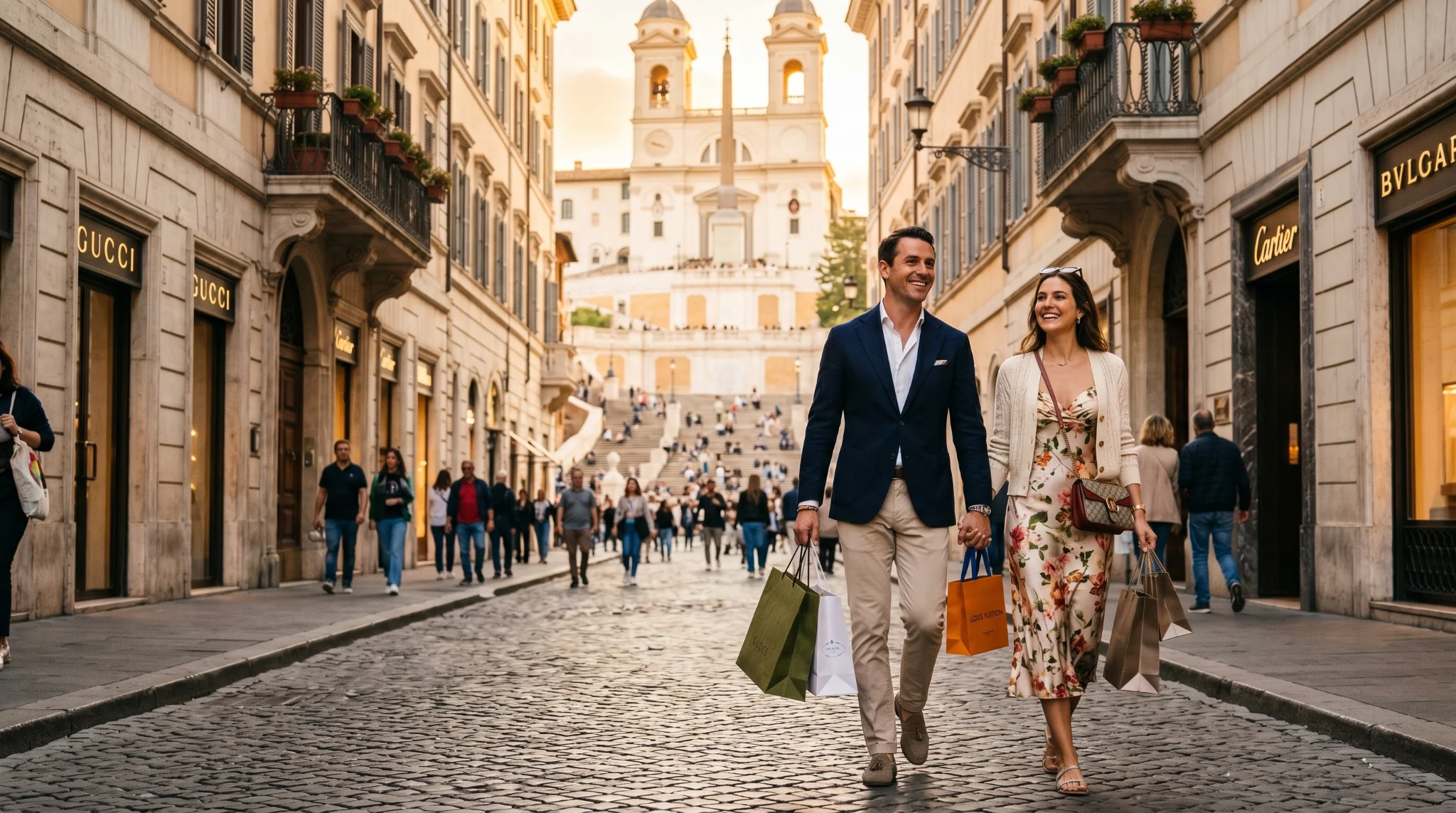
If you want the best of Italian and international fashion, Via Condotti is your street. Stretching from the base of the Spanish Steps toward the Tiber, it’s lined with flagship boutiques: Gucci, Prada, Valentino, Fendi, Bulgari, Louis Vuitton, and Salvatore Ferragamo, among others. The surrounding streets — Via Borgognona, Via della Croce, and Via Frattina — extend the luxury zone considerably.
This is also prime territory for VAT refund shopping, since high price tags mean you’ll almost certainly clear the €154.94 threshold easily. Staff in most stores here are experienced with the tax-free process, so just ask when you pay.
Via del Corso — High Street and Mid-Range Brands
Running from Piazza del Popolo to Piazza Venezia, Via del Corso is Rome’s main high-street shopping artery. You’ll find Zara, H&M, Mango, Bershka, Sephora, and many Italian mid-range brands here. It’s busy, buzzing, and perfect if you want accessible fashion without designer prices. The parallel streets — Via del Babuino and Via della Vite — offer a slightly more curated, boutique-heavy experience.
Trastevere — Artisan Shops and Local Character
Trastevere, across the Tiber River, is Rome at its most atmospheric. Wander the narrow lanes and you’ll find small independent shops selling handmade jewelry, artisan ceramics, leather goods, vintage clothing, and locally made gifts. This isn’t the area for luxury brands — it’s the area for something genuinely made in Rome, by Romans. Shopping here feels more like discovery than retail therapy, which is exactly the point.
Campo de’ Fiori Market — Daily Food and Local Market
Every morning except Sunday, Campo de’ Fiori hosts one of Rome’s liveliest open-air markets. The focus is fresh produce, local cheeses, cured meats, spices, dried pasta, and other edible souvenirs you can legitimately bring home. Come early (by 9am) for the best selection before the tourist crowds arrive. It’s not a flea market — it’s a real neighborhood food market that tourists are welcome to shop at.
Porta Portese Flea Market — Sunday Bargain Hunting
Every Sunday from early morning until around 2pm, the area around Porta Portese in Trastevere transforms into Rome’s largest and most chaotic flea market. Thousands of vendors sell antiques, vintage clothing, furniture, records, books, and general junk. It’s a proper rummage experience — keep an eye on your belongings, arrive early for the best finds, and don’t be shy about negotiating prices.
What Should You Buy in Rome?
Rome has a strong tradition of artisan craftsmanship that predates fast fashion by centuries. These are the things worth buying here rather than at home.
Leather Goods Italy’s leather is legendary, and Rome is a great place to buy it. Bags, wallets, belts, gloves, and travel accessories made from quality Italian leather are widely available. Skip the tourist-trap markets around the Colosseum and instead head to Trastevere’s independent shops or the leather stores near Piazza di Spagna for better quality. Look for items stamped “Made in Italy” and ask where the leather is sourced.
Gold Jewelry — Via dei Coronari Rome has a long tradition of gold craftsmanship, and Via dei Coronari, near Piazza Navona, is the place to find it. This street is lined with antique dealers and jewelers selling handcrafted gold pieces, antique rings, and estate jewelry. It’s completely different from the mass-produced tourist jewelry sold elsewhere — this is heirloom-quality shopping.
Silk Ties and Scarves Italian silk accessories are a classic purchase, and Rome has excellent options — particularly around Via Condotti and the luxury shopping district. Look for ties, pocket squares, and scarves from Italian brands or smaller artisan shops. The quality difference between Italian silk and imported alternatives is immediately obvious.
Artisan Ceramics Roman and Italian ceramics make beautiful, practical souvenirs. Hand-painted plates, bowls, mugs, and decorative pieces are widely available across the city, from tourist shops (where quality varies) to proper artisan workshops in Trastevere. If you’re serious about ceramics, visit a workshop where you can see the pieces being made.
Food and Wine Italy’s greatest exports are edible, and Rome is an excellent place to stock up. Aged balsamic vinegar from Modena, truffle products, high-quality olive oil, dried pasta in unusual shapes and flavors, and regional wines all travel well and make meaningful gifts. Eataly near the Ostiense neighborhood is a large, curated food hall where quality is consistent. For more local character, try the specialty food shops in the Prati neighborhood or near Campo de’ Fiori.
How Do You Get a Tax Refund When Shopping in Rome?
This is one of the most valuable — and most misunderstood — perks of shopping in Italy as a non-EU visitor. Here’s exactly how it works.
Who Qualifies
You qualify for a VAT refund if you are a resident of a country outside the European Union and you spend €154.94 or more in a single store in a single day. Note that this is the minimum per store, not across multiple shops — each store’s purchase is processed separately.
The standard VAT rate in Italy is 22%, though some goods (like food and books) have lower rates. The refund you receive is typically between 11% and 15% of the purchase price after processing fees, depending on which refund company processes your claim.
How to Request Your Tax-Free Form In-Store
When you’re ready to pay, tell the salesperson you want a rimborso IVA (VAT refund). Have your passport with you — retailers are required to record your passport details on the tax-free form. Most major stores work with a tax-free refund service like Global Blue or Planet Tax Free and will print your form on the spot.
Keep all of your receipts and tax-free forms in a folder or envelope — you’ll need them at the airport.
Validating Your Refund at FCO Airport
This is the step most people get wrong. You must validate your tax-free forms before passing through passport control at Fiumicino Airport (FCO).
At Terminal 3, look for the OTELLO electronic kiosks. These are self-service machines where you scan your tax-free documents and receipts. The system validates your claim electronically — faster and more reliable than the old paper stamp process.
Once validated, you can either receive a cash refund at a dedicated refund desk in the airport or have the money credited back to your card. For a complete walkthrough of the process, read our VAT refund Italy guide and our broader VAT refund guide for Europe.
Are There Outlet Stores Near Rome?
If designer brands at full price aren’t in your budget, Castel Romano Designer Outlet is worth the detour. Located approximately 30 minutes south of Rome city center (easily reached by shuttle bus from Termini station or by rental car), it’s one of Italy’s largest designer outlet centers with over 130 stores.
You’ll find Armani, Burberry, Versace, Bottega Veneta, Coach, Michael Kors, Dolce & Gabbana, and dozens of other brands, typically at 30–70% below regular retail. The outlet is open seven days a week and has a pleasant open-air village layout. VAT refunds also apply to purchases here if you meet the €154.94 threshold per store.
What Are the Best Department Stores and Malls in Rome?
Rome doesn’t have the giant malls you might find in other European capitals, but it has a few solid options when you want everything under one roof.
La Rinascente — Via del Tritone The most upmarket department store in Rome, La Rinascente on Via del Tritone carries a strong selection of international and Italian designer brands across fashion, beauty, home, and food. The rooftop bar and food hall offer spectacular views over the city — worth visiting even if you’re just browsing. A good one-stop option if you want curated Italian products without hunting through individual boutiques.
Coin A more accessible mid-market department store with several locations around Rome, carrying fashion, homeware, cosmetics, and gifts at reasonable prices. Reliable, well-organized, and good for practical purchases.
Porta di Roma If you need a full mall experience — food court, cinema, big-box retailers — Porta di Roma in the northern suburbs is Rome’s largest enclosed shopping center. Not a destination for authentic Roman shopping, but useful if you need everyday items or just want to escape the heat.
Practical Shopping Tips for Rome
Opening Hours Most shops open around 10am and close between 7pm and 7:30pm. Many stores outside tourist areas still observe a traditional lunch break between 1pm and 3:30pm. Don’t assume a closed door in the early afternoon means the shop is done for the day.
Sunday Closings Many smaller shops are closed on Sundays. The main tourist shopping streets (Via Condotti, Via del Corso) tend to stay open on Sundays, as do department stores. Porta Portese flea market runs only on Sunday mornings.
Payment Cards are widely accepted in central Rome, but smaller market vendors and artisan workshops often prefer cash. Carry €50–€100 in smaller denominations for market shopping and incidental purchases.
Bargaining Don’t negotiate in boutiques or any shop with marked prices — it’s not done. At Porta Portese and other open-air markets, bargaining is entirely normal, especially if you’re buying multiple items from the same vendor.
Counterfeits Rome has a significant market in counterfeit goods near major tourist sites. Buying fakes is technically illegal in Italy — both seller and buyer can be fined. Stick to reputable shops for anything representing significant money.
Ready to Plan Your Rome Trip?
Now that you know how to shop tax-free in Rome, explore our related guides:
Frequently Asked Questions
Yes. Non-EU residents who spend €154.94 or more in a single store in one day qualify for a VAT refund. Ask the retailer for a tax-free form (rimborso IVA) at the time of purchase, then validate it at the airport before you leave Italy.
Via Condotti is Rome's premier luxury shopping street, home to Gucci, Prada, Valentino, Fendi, Bulgari, and more. It runs directly from the Spanish Steps and is the go-to destination for high-end designer shopping.
For budget-friendly finds, head to Via del Corso for high-street brands like Zara and H&M, Campo de' Fiori market for local goods and souvenirs, or Porta Portese flea market on Sunday mornings for vintage items, antiques, and bargain hunting.
Rome's best buys include leather goods (bags, belts, gloves), gold jewelry from Via dei Coronari, silk ties, handmade artisan ceramics, and Italian food products like olive oil, aged balsamic, truffles, and wine.
At Rome Fiumicino Airport (FCO), go to Terminal 3 and use the OTELLO electronic kiosks to validate your tax-free forms before passing through passport control. Have your receipts, goods, and passport ready for inspection.
Yes. Castel Romano Designer Outlet is located about 30 minutes south of Rome and features 130+ brand-name stores including Armani, Burberry, Coach, Versace, and Michael Kors, often at 30–70% below retail.
Most shops in Rome open around 10am and close around 7:30pm. Many stores outside tourist areas close for a lunch break between 1pm and 3:30pm. Some smaller shops close on Sunday, particularly outside the city center.
Bargaining is not done in boutiques, department stores, or fixed-price shops. It is acceptable — and even expected — at outdoor markets like Porta Portese flea market, where negotiating the price is part of the experience.