Buenos Aires Travel Guide: Everything You Need to Know for 2026
Last Updated: January 2026
Tango birthplace, world-class steaks, Malbec wine, and a nightlife scene that doesn't start until midnight — welcome to Argentina's electrifying capital
Buenos Aires is the capital of Argentina and one of South America's most vibrant and culturally rich cities, where European elegance meets Latin American passion. Known as the "Paris of South America," it pulses with tango music, world-class beef and wine, stunning architecture, and a nightlife scene that doesn't get started until midnight. Visitors come for the dramatic blend of culture, food, and authentic Argentine experiences — all made exceptionally affordable when exchanging USD at the favorable "blue dollar" rate.
Table of Contents
- Buenos Aires Overview
- Getting There & Around
- Top Attractions & Landmarks
- Neighborhoods & Districts
- Food & Dining
- Nightlife & Entertainment
- Shopping
- Seasonal Events & Festivals
- Accommodation Recommendations
- Practical Information
- Day Trips & Nearby Destinations
- Insider Tips & Hidden Gems
- Money-Saving Tips
- Common Tourist Mistakes to Avoid
- Sample Itineraries
- Frequently Asked Questions
What Is Buenos Aires and Why Should You Visit?
Buenos Aires is the capital of Argentina and one of South America's most captivating cities — a place where European grandeur, Latin passion, and unmistakable tango culture collide in ways you won't find anywhere else. This Buenos Aires travel guide covers everything you need to plan the perfect trip, from world-class steakhouses and milongas to day trips into the Paraná Delta and beyond.
You should visit Argentina for experiences you simply can't find anywhere else on Earth. Watch massive chunks of ice calve from Perito Moreno Glacier, dance tango in a Buenos Aires milonga, taste some of the world's best beef and Malbec wine, spot penguins and whales along the Atlantic coast, and meet gauchos on the vast pampas. The country's passion for football, asado barbecues, and mate tea creates a cultural experience that's authentically Argentine, while the stunning natural beauty ranges from subtropical jungles to Antarctic landscapes.
Argentina is an incredibly vast country — the eighth largest in the world — so distances between destinations can be considerable. Internal flights are often necessary to see multiple regions, and some remote areas require significant travel time. The economy has experienced instability, which means prices can fluctuate and there's a complex exchange rate situation that savvy travelers can navigate to their advantage. Despite these challenges, Argentina offers exceptional value for international visitors and rewards those who venture beyond Buenos Aires.
Best Time to Visit Buenos Aires
Spring (September–November): Spring brings comfortable temperatures of 15–25°C (59–77°F) in Buenos Aires and central Argentina, with jacaranda trees blooming purple throughout the capital. This is shoulder season with moderate crowds and reasonable prices. Wine regions like Mendoza are particularly beautiful as vineyards come to life. This is an excellent time for general sightseeing with pleasant weather and fewer tourists than summer.
Summer (December–February): Peak season across most of Argentina, with hot temperatures reaching 30–35°C (86–95°F) in Buenos Aires and the north. This is the best time for Patagonia and southern Argentina, when temperatures are warmest and all trails and parks are fully accessible. Expect high prices and advance booking requirements, especially for Patagonia hotels and Iguazu Falls accommodations. Book everything at least 3–6 months ahead for travel during January.
Fall (March–May): Arguably the best time to visit Argentina, with ideal weather of 18–25°C (64–77°F), stunning fall foliage in wine country and Patagonia, and the grape harvest season in Mendoza. Crowds thin out significantly after Easter, prices drop, and the golden light is perfect for photography. This is the sweet spot for wine tourism when wineries celebrate the harvest with festivals and special events.
Winter (June–August): Winter brings cool, rainy weather to Buenos Aires (8–15°C/46–59°F) but is peak season for Iguazu Falls when water levels are highest and most spectacular. Ski resorts near Bariloche and Mendoza operate from June through September. Patagonia is largely inaccessible with many hotels and tours closed. Winter offers the lowest prices and smallest crowds in Buenos Aires.
How Long to Stay in Buenos Aires
- 1–2 days: Only enough for a quick taste — you can see the main neighborhoods, visit a tango show, and enjoy some excellent food, but you'll barely scratch the surface.
- 3–5 days: Adequate for exploring Buenos Aires thoroughly with perhaps a day trip to a nearby estancia or the colonial town of Colonia del Sacramento in Uruguay.
- 7–10 days: Perfect for first-time visitors to see Buenos Aires plus one other major region — either Iguazu Falls in the north or Patagonia in the south.
- 2–3 weeks: Perfect for truly immersing yourself — time to explore every neighborhood in depth, take multiple day trips, attend cultural events, take tango lessons, and settle into a porteño rhythm.
- 1 month+: For those wanting to live like a local — rent an apartment, learn Spanish, become a regular at neighborhood cafés and markets, and enjoy weekend trips to Uruguay.
Quick Facts About Buenos Aires
- Population: Buenos Aires metro area: 15 million
- Language: Spanish (English spoken in tourist areas, less common elsewhere)
- Currency: Argentine Peso (ARS) — Note: Complex exchange rate system with official and "blue" rates
- Time Zone: Argentina Time (ART/UTC-3), no daylight saving time
- Country Code: +54
- Area Code: 11 (Buenos Aires), varies by province
- City Area: 203 km² (78 square miles)
How Do You Get To and Around Buenos Aires?
Buenos Aires is well connected to the world via two airports and has an excellent internal public transport network of metro, buses, and taxis. The key tourist neighborhoods are concentrated in a relatively compact area, making it easy to get around once you're settled.
Airports Serving Buenos Aires
Ministro Pistarini International Airport (EZE)
Autopista Teniente General Pablo Riccheri, Ezeiza, Buenos Aires Province, Argentina
Located 35 km (22 miles) southwest of Buenos Aires city center, this is Argentina's main international gateway. All long-haul flights from North America, Europe, and Asia arrive here. The airport has two terminals with ATMs, currency exchange, restaurants, and duty-free shopping. Major airlines including American, United, Delta, Air France, Iberia, and LATAM operate from EZE.
Aeroparque Jorge Newbery (AEP)
Avenida Rafael Obligado, Costanera Norte, Buenos Aires, Argentina
Just 5 km (3 miles) from downtown along the Río de la Plata waterfront, Aeroparque handles domestic flights and some regional routes to Uruguay, Brazil, Chile, and Paraguay. If you're connecting to Patagonia, Iguazu Falls, or Mendoza, you'll likely use this airport.
Getting from Ezeiza Airport (EZE) to Buenos Aires City Center
Airport Shuttle Bus (Manuel Tienda León or Arbus): ARS 15,000–20,000 (approximately USD 15–20 at tourist rate, 2026), 45–90 minutes depending on traffic. Buses depart every 30 minutes and stop at major hotels or the main terminal in Puerto Madero/Retiro. This is the most popular option for budget-conscious travelers.
Private Transfer/Remis: ARS 40,000–60,000 (USD 40–60 at tourist rate), 40–60 minutes. Pre-arranged private cars can be booked through your hotel or at official counters in the arrivals hall. Never accept rides from unofficial drivers approaching you in the terminal.
Taxi: ARS 50,000–70,000 (USD 50–70), 40–60 minutes. Only use official taxis from the authorized taxi stand outside arrivals — they have fixed rates posted. Taxi Ezeiza and Radio Taxi Premium are reputable companies.
Uber/Cabify/DiDi: ARS 35,000–55,000 (USD 35–55), 40–60 minutes depending on traffic and surge pricing. Rideshare apps work at EZE but pickup locations can be confusing — follow the app's instructions carefully and meet at designated rideshare zones.
Getting Around Buenos Aires
Buenos Aires has an excellent public transportation system combining subway, buses, and taxis that's both efficient and affordable. Walking is pleasant in neighborhoods like Palermo, Recoleta, and San Telmo. The city is quite flat, making it easy to navigate.
Subte (Subway System)
Buenos Aires has six subway lines (A, B, C, D, E, and H) that cover the city center and reach into Palermo, Recoleta, and Caballito. The system operates Monday–Friday 5am–11pm, Saturday 6am–11pm, and Sunday 8am–10pm. Lines A and B are the oldest and most atmospheric.
Tickets & Passes (2026 prices):
- Single ride: ARS 650 (approximately USD 0.65 at tourist rate)
- You must use a SUBE card (rechargeable smart card) for all public transport
- SUBE card: ARS 1,500 (USD 1.50) one-time purchase, then reload with credit
- Same card works on Subte, buses, and suburban trains throughout Buenos Aires
Colectivos (Buses)
Buenos Aires has over 150 bus lines crisscrossing the city 24 hours a day. Colectivos reach every corner that the Subte doesn't and run frequently. Fares vary by distance: short trips ARS 500–650, longer rides up to ARS 900, all paid with your SUBE card. Google Maps provides excellent bus directions.
Taxis & Rideshare
Official Buenos Aires taxis are black and yellow with a light-up "TAXI" sign on the roof. They're metered and relatively affordable: starting fare around ARS 2,500 (USD 2.50), then ARS 350–450 per 200 meters. Most trips within the city center cost ARS 5,000–12,000 (USD 5–12). Rideshare apps Uber, Cabify, and DiDi all operate in Buenos Aires and often cost slightly less than taxis.
Walking
Buenos Aires neighborhoods are wonderfully walkable with wide sidewalks, tree-lined streets, and endless cafés for rest stops. Palermo, Recoleta, San Telmo, and the microcentro can all be explored on foot. Sidewalks can be uneven with occasional holes — watch your step, especially at night.
Biking
Buenos Aires has expanded its bike infrastructure significantly with dedicated bike lanes throughout Palermo, along the riverfront, and connecting major neighborhoods. The city's free bike-share program EcoBici offers 400+ stations. Many hostels and hotels rent bikes for ARS 5,000–8,000 (USD 5–8) per day.
What Are the Top Attractions and Landmarks in Buenos Aires?
Buenos Aires packs an extraordinary concentration of history, culture, and beauty into its neighborhoods. From Eva Perón's tomb to one of the world's finest opera houses, here are the must-visit attractions.
Recoleta Cemetery (Cementerio de la Recoleta)
Junín 1760, C1113 CABA, Buenos Aires, Argentina
Recoleta Cemetery is Buenos Aires's most famous burial ground and one of the world's most beautiful cemeteries, featuring elaborate mausoleums and sculptures in a stunning array of architectural styles from Gothic to Art Nouveau to Baroque. Walking through feels like exploring a miniature city of marble and granite, with tree-shaded lanes leading past ornate family tombs that rival European cathedrals in grandeur. This is where Argentina's elite have been buried since 1822, including presidents, war heroes, and Eva Perón.
The cemetery contains over 4,600 above-ground vaults arranged in blocks like city streets, many featuring stained glass windows, bronze doors, and statues of angels or grieving figures. Dozens of cats roam the grounds, considered guardians of the cemetery.
Time needed: 1–2 hours self-guided, 2–3 hours with guided tour | Entrance: Free | Hours: Daily 8:00am–5:45pm (last entry 5:30pm) | Best time: Morning (9–11am) for softer light and fewer tour groups
Teatro Colón (Colón Theater)
Cerrito 628, C1010 CABA, Buenos Aires, Argentina
Teatro Colón is one of the world's finest opera houses, renowned for its exceptional acoustics and stunning Belle Époque architecture. Opened in 1908 after 20 years of construction, this horseshoe-shaped theater seats 2,500 with standing room for 1,000 more across seven levels. The interior dazzles with red velvet seats, gilded balconies, a hand-painted ceiling dome, and a massive chandelier containing 700 lights. The acoustics are considered among the top three in the world.
The theater has hosted legendary performers including Pavarotti, Maria Callas, Plácido Domingo, and Mikhail Baryshnikov. Behind the velvet curtains lie workshops where costumes, wigs, sets, and props are still made by hand using traditional techniques.
Time needed: 1 hour for guided tour, 3–4 hours for a performance | Entrance: Guided tours ARS 15,000 (USD 15, 2026) for foreign visitors. Performance tickets ARS 5,000–80,000 (USD 5–80) depending on seat and show | Hours: Tours daily 9:00am–5:00pm; English tours at 11am, 1pm, 3pm
La Boca & Caminito Street Museum
Caminito, La Boca, Buenos Aires, Argentina (Corner of Del Valle Iberlucea and Magallanes streets)
La Boca is Buenos Aires's most colorful neighborhood, famous for its vibrant conventillos (tenement houses) painted in bright blues, yellows, reds, and greens. Caminito is a pedestrian street museum and outdoor art gallery where tango dancers perform, artists sell paintings, and the energy captures the working-class immigrant roots that defined Buenos Aires. This is the birthplace of tango — Carlos Gardel and other legends developed the dance in the bars and brothels of this waterfront neighborhood.
Time needed: 1–2 hours for Caminito itself, add 2–3 hours if visiting La Bombonera stadium museum | Entrance: Free to walk Caminito streets. La Bombonera museum ARS 12,000 (USD 12, 2026) | Hours: Caminito accessible 24/7 but active with performers 10:00am–6:00pm daily
Palacio Barolo
Av. de Mayo 1370, C1085 CABA, Buenos Aires, Argentina
Palacio Barolo is an architectural masterpiece — a 22-story office tower designed in 1923 as a tribute to Dante's Divine Comedy. The structure, measurements, and decorations all reference the medieval epic poem, with the basement representing Hell, middle floors Purgatory, and the lighthouse dome symbolizing Heaven. The building was South America's tallest when completed.
Time needed: 1 hour for standard tour, 1.5 hours for sunset tour | Entrance: Standard tour ARS 18,000 (USD 18, 2026), sunset tour ARS 25,000 (USD 25). Must book in advance at pbarolo.com.ar | Hours: Tours Monday–Sunday at various times between 10:00am–8:00pm
MALBA (Museo de Arte Latinoamericano de Buenos Aires)
Av. Figueroa Alcorta 3415, C1425CLA CABA, Buenos Aires, Argentina
MALBA is Latin America's premier modern art museum, housing an exceptional collection of 20th-century works by Latin American artists including Frida Kahlo, Diego Rivera, Fernando Botero, and Argentines like Antonio Berni and Xul Solar. The permanent collection focuses on avant-garde movements, surrealism, and contemporary Latin American art, while rotating exhibitions showcase international artists.
Time needed: 2–3 hours | Entrance: ARS 8,000 (USD 8, 2026) general admission, ARS 4,000 students, free for children under 12. Wednesday half-price after 5pm | Hours: Thursday–Monday 12:00pm–8:00pm, Wednesday 12:00pm–9:00pm, closed Tuesday
San Telmo Market (Mercado de San Telmo)
Defensa 963, C1065 Buenos Aires, Argentina
Mercado de San Telmo is Buenos Aires's oldest market, operating since 1897 in a magnificent iron-and-glass structure that evokes European market halls. The building spans an entire city block with skylit corridors lined with vendors selling fresh produce, meats, cheeses, flowers, prepared foods, antiques, artisan crafts, and vintage clothing. Sunday's famous antiques fair in Plaza Dorrego spills into the market, transforming the surrounding streets into an enormous outdoor bazaar.
Time needed: 1–2 hours for the market itself, 3–4 hours if visiting during Sunday antiques fair | Entrance: Free to enter and browse | Hours: Daily 8:00am–7:00pm. Sunday antiques fair in surrounding streets 10:00am–5:00pm
El Ateneo Grand Splendid
Av. Santa Fe 1860, C1123 CABA, Buenos Aires, Argentina
El Ateneo Grand Splendid is regularly named the world's most beautiful bookstore — a 1919 theater converted into a bookshop that retains its ornate balconies, frescoed ceilings, red velvet stage curtains, and theatrical atmosphere. Shelves of books fill the former orchestra seating area, balconies display different genres, and the stage now houses a café where you can sip coffee surrounded by 120,000 books.
Time needed: 30 minutes to 1 hour | Entrance: Free to enter and browse | Hours: Monday–Thursday 9:00am–10:00pm, Friday–Saturday 9:00am–midnight, Sunday 12:00pm–10:00pm
Floralis Genérica
Av. Figueroa Alcorta y Jerónimo Salguero, Recoleta, Buenos Aires, Argentina
Floralis Genérica is a massive metal flower sculpture that opens its petals at dawn and closes them at dusk, powered by hydraulics and sensors that detect sunlight. Created by Argentine architect Eduardo Catalano and gifted to the city in 2002, the sculpture stands 23 meters tall and weighs 18 tons. Made of stainless steel and aluminum, it reflects sunlight during the day and glows with internal lighting at night. Entry is free in a public park perfect for picnics.
Time needed: 20–30 minutes | Entrance: Free, in public park | Hours: Accessible 24/7; petals programmed to open at sunrise and close at sunset
Plaza de Mayo & Casa Rosada
Plaza de Mayo, Balcarce 50, C1064 CABA, Buenos Aires, Argentina
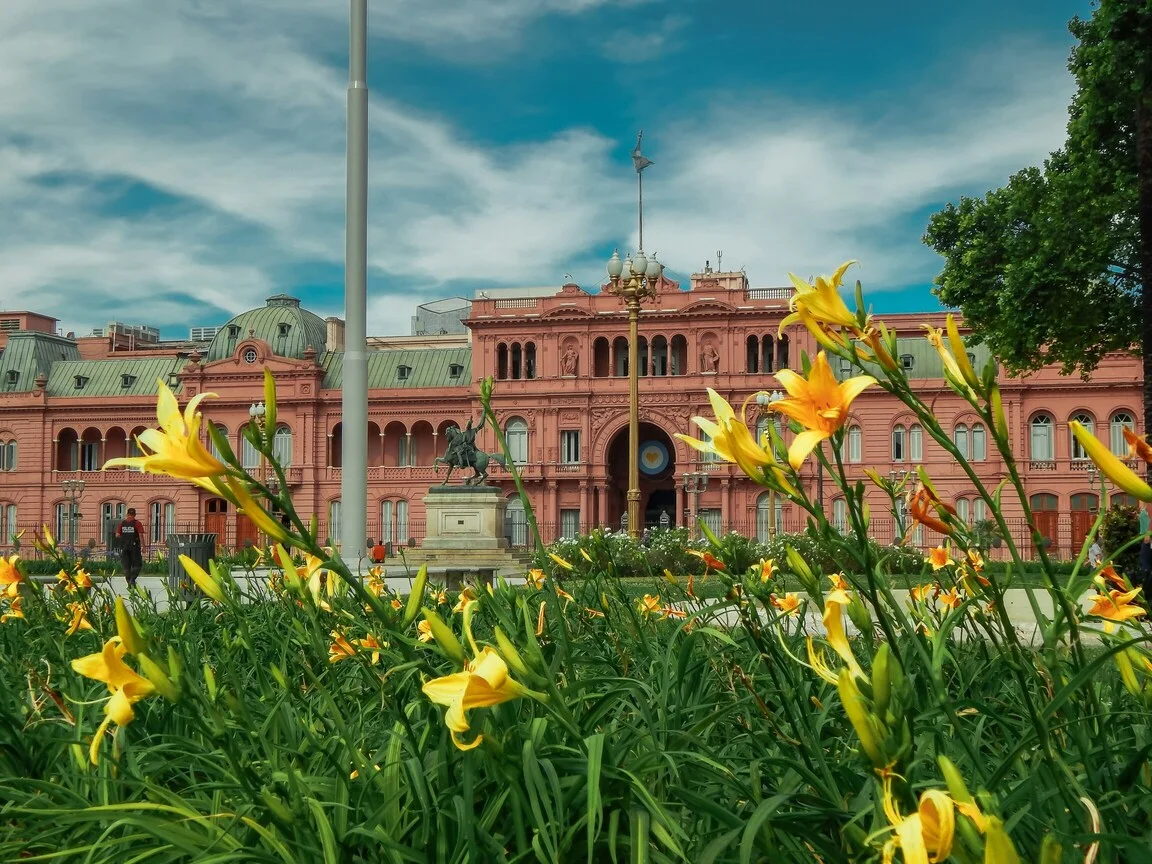
Plaza de Mayo is Argentina's most historically significant square — the political heart of Buenos Aires where the presidential palace (Casa Rosada), Metropolitan Cathedral, and Cabildo face each other. This is where Argentina declared independence from Spain, where Eva Perón addressed massive crowds from the Casa Rosada balcony, and where the Mothers of the Plaza de Mayo have marched every Thursday since 1977. The Casa Rosada (Pink House) takes its distinctive color from a tradition of mixing beef fat with paint in the 1800s.
Time needed: 1–2 hours for the plaza and Casa Rosada tour, add 1 hour for Cathedral and Cabildo | Entrance: Plaza is free public space. Casa Rosada tours free but must book online in advance at casarosada.gob.ar. Cathedral free, Cabildo museum ARS 2,000 (USD 2) | Hours: Plaza accessible 24/7. Casa Rosada tours Saturday–Sunday 10:00am–6:00pm (booking required)
What Are the Best Neighborhoods to Explore in Buenos Aires?
Buenos Aires is a city of distinct neighborhoods, each with its own personality, architecture, and local culture. The barrios evolved from different immigrant communities and social classes, creating a patchwork of experiences within one metropolis.
Palermo
Character: Buenos Aires's largest and most diverse neighborhood, subdivided into Palermo Soho (cobblestone streets, boutiques, restaurants, street art), Palermo Hollywood (nightlife, media companies, upscale dining), and Palermo Chico (embassy-lined streets, elegant mansions). The massive Bosques de Palermo parks provide green space with rose gardens, lakes, and Japanese gardens.
Best for: Foodies, shoppers, nightlife seekers, art lovers, anyone wanting to experience contemporary Buenos Aires culture. First-time visitors should spend at least half their Buenos Aires time here.
Must-see: Bosques de Palermo parks, Palermo Soho's street art and boutiques, Japanese Gardens, MALBA museum, craft markets on Plaza Armenia, nightlife along Honduras and Costa Rica streets
How to get there: Metro Line D to Plaza Italia, Palermo, or Ministro Carranza stations
Palermo Soho center: Plaza Serrano (officially Plaza Julio Cortázar), intersection of Honduras and Serrano streets, Buenos Aires, Argentina
Recoleta
Character: Buenos Aires's most aristocratic neighborhood, filled with French-style architecture, grand boulevards, luxury hotels, and elegant apartment buildings. The wide, tree-lined Avenida Alvear rivals Paris's Champs-Élysées for sophistication. This is old money Buenos Aires — polo clubs, exclusive galleries, designer boutiques, and refined cafés.
Best for: Culture lovers, architecture enthusiasts, upscale dining and shopping, couples wanting romantic strolls, history buffs interested in Argentine aristocracy
Must-see: Recoleta Cemetery, Floralis Genérica sculpture, National Museum of Fine Arts, Recoleta Cultural Center, Avenida Alvear luxury shopping, weekend craft fair at Plaza Francia, El Ateneo Grand Splendid bookstore
How to get there: No metro station directly in Recoleta — walk from Palermo (20 minutes) or take buses 17, 61, 62, 92, 110
San Telmo
Character: Buenos Aires's oldest neighborhood, preserving cobblestone streets, colonial architecture, and bohemian atmosphere. Once the aristocratic district until yellow fever drove the wealthy north in the 1870s, San Telmo was then filled by artists and working-class families who created a neighborhood of antique shops, tango bars, street performers, and authentic parillas.
Best for: Antique hunters, tango enthusiasts, photographers, history lovers, budget travelers
Must-see: Sunday antiques fair at Plaza Dorrego, Mercado de San Telmo, Pasaje Defensa antique galleries, street art on Pasaje San Lorenzo, tango performances at Bar Sur or El Viejo Almacén, Parque Lezama
How to get there: Metro Line C to San Juan or Independencia stations. Buses 29, 86, 126 along Defensa street
Plaza Dorrego, Defensa and Humberto Primo, San Telmo, Buenos Aires, Argentina
Puerto Madero
Character: Buenos Aires's newest neighborhood, a redeveloped waterfront district of converted brick warehouses now housing upscale restaurants, corporate offices, and luxury apartments. The Puente de la Mujer (Woman's Bridge), designed by Santiago Calatrava, symbolizes the neighborhood's contemporary character.
Best for: Romantic dinners, safe evening walks, joggers and cyclists, business travelers, families
Must-see: Puente de la Mujer bridge, Costanera Sur Ecological Reserve, waterfront dining along docks, Fragata Sarmiento museum ship, nighttime skyline views
How to get there: Metro Line B to Leandro N. Alem station (10-minute walk). Excellent bike paths connect to Palermo along the river
Puente de la Mujer, Dique 3, Juana Manuela Gorriti, Puerto Madero, Buenos Aires, Argentina
Microcentro & Retiro
Character: Buenos Aires's downtown business district, filled with banks, office buildings, government ministries, and pedestrian shopping streets. Architecture ranges from Spanish colonial (Cabildo) to French belle époque (Correos building) to modern skyscrapers. Florida Street, a pedestrian shopping avenue, bustles with crowds and currency exchange houses.
Best for: History enthusiasts, architecture lovers, business travelers, budget shoppers
Must-see: Plaza de Mayo and Casa Rosada, Teatro Colón, Café Tortoni, Palacio Barolo, Avenida de Mayo, Obelisco monument, Galerías Pacífico shopping mall
How to get there: Metro Lines A, B, C, D, and E all serve the microcentro
Plaza de Mayo, Buenos Aires, Argentina (central reference point)
Villa Crespo & Chacarita
Character: These neighboring barrios north of Palermo offer authentic Buenos Aires without tourist crowds. Villa Crespo was historically a Jewish immigrant neighborhood, now transforming into a hipster enclave with vintage shops, craft breweries, leather outlets, and underground music venues. Chacarita features the city's largest cemetery, traditional markets, and residential streets lined with jacaranda trees.
Best for: Travelers seeking authentic local life, leather shoppers, craft beer enthusiasts, budget-conscious visitors (prices are lower than Palermo/Recoleta)
Must-see: Leather outlets along Murillo and Malabia streets, craft breweries (Strange Brewing, Antares), vintage shops, Chacarita Cemetery, Mercado de Chacarita, live music venues
How to get there: Metro Line B to Malabia, Dorrego, or Federico Lacroze stations
Villa Crespo center: Scalabrini Ortiz and Corrientes, Villa Crespo, Buenos Aires, Argentina
What Food Should You Try in Buenos Aires?
Argentine cuisine centers on beef, wine, and Italian-influenced dishes reflecting the country's immigrant heritage and gaucho traditions. Buenos Aires offers world-class dining from neighborhood parillas (steakhouses) serving perfectly grilled beef to innovative fusion restaurants pushing culinary boundaries. Meal times run late — lunch starts around 1–2pm, dinner rarely before 9pm, and restaurants stay open until midnight or later.
What Are the Must-Try Local Dishes in Buenos Aires?
- Asado — Argentina's famous barbecue featuring various beef cuts slowly grilled over wood or charcoal. A proper asado includes chorizo, morcilla (blood sausage), achuras (organ meats), and multiple beef cuts. Asado is both a meal and a social ritual.
- Bife de Chorizo — Argentine sirloin steak, the most popular cut in restaurants. Thick-cut (3–4 cm), simply seasoned with salt, and grilled to juicy perfection. Order "a punto" (medium-rare) for the best flavor.
- Empanadas — Savory hand pies filled with beef, chicken, ham and cheese, or vegetables. Each Argentine province has distinct styles — tucked edges indicate oven-baked, crimped edges mean fried.
- Milanesa — Breaded, fried meat cutlet (usually beef or chicken) served with french fries or salad. Milanesa napolitana adds tomato sauce, ham, and melted cheese on top.
- Dulce de Leche — Caramelized milk spread that's the national obsession — smeared on toast, filling pastries, drizzled on ice cream, or eaten straight from the jar.
- Provoleta — Thick slice of provolone cheese grilled until the exterior chars and interior melts, served as an appetizer at parillas. Often topped with oregano and chili flakes.
- Choripán — Grilled chorizo sausage in crusty bread topped with chimichurri sauce. Argentina's favorite street food, sold at food stands, sports stadiums, and parks.
- Medialunas — Small, slightly sweet croissants eaten for breakfast or afternoon tea. Dunk them in café con leche for the authentic Argentine breakfast experience.
- Alfajores — Cookie sandwiches filled with dulce de leche and often coated in chocolate or powdered sugar. Argentina's favorite sweet treat and excellent gifts.
Where Should You Eat in Buenos Aires?
Budget-Friendly (Under ARS 20,000/USD 20 per meal)
- El Cuartito — Talcahuano 937, Recoleta — Legendary pizzeria since 1934 serving thick, cheesy fugazzeta (onion pizza) and classic mozzarella pies. ARS 8,000–12,000 (USD 8–12) per person.
- La Cocina — Paraná 1228, Recoleta — Excellent budget parilla with huge portions, friendly service, and neighborhood atmosphere. ARS 12,000–18,000 (USD 12–18) per person including wine.
- Mercado de San Telmo Food Stalls — Defensa 963, San Telmo — Various stalls serve empanadas, sandwiches, pasta, and parilla. ARS 5,000–10,000 (USD 5–10) per meal.
- El Sanjuanino — Posadas 1515, Recoleta — Specializing in northwestern Argentine cuisine — empanadas, tamales, humita, and locro stew. ARS 10,000–15,000 (USD 10–15) per person.
Mid-Range (ARS 20,000–50,000/USD 20–50 per meal)
- Don Julio — Guatemala 4699, Palermo — Consistently ranked among the world's best steakhouses. Reserve weeks in advance. ARS 35,000–50,000 (USD 35–50) per person.
- La Cabrera — Cabrera 5099, Palermo — Popular parilla with enormous portions; one steak feeds two people. Complimentary appetizers keep arriving. ARS 25,000–40,000 (USD 25–40) per person.
- Sarkis — Thames 1101, Palermo — Armenian restaurant serving massive portions of Middle Eastern food — hummus, baba ghanoush, kebabs. ARS 20,000–30,000 (USD 20–30) per person.
- Osaka — Soler 5608, Palermo — Excellent Nikkei (Peruvian-Japanese fusion) cuisine. Fresh ceviches, creative sushi, and strong cocktails. ARS 30,000–45,000 (USD 30–45) per person.
Fine Dining (Over ARS 50,000/USD 50 per meal)
- Tegui — Costa Rica 5852, Palermo — One of Latin America's best restaurants featuring creative tasting menus. Reserve a month ahead. ARS 80,000–120,000 (USD 80–120) per person with wine pairing.
- Elena — Four Seasons Hotel, Posadas 1086, Recoleta — Elegant fine dining showcasing premium Argentine beef with French technique. ARS 70,000–100,000 (USD 70–100) per person.
Dining Customs & Etiquette
Meal times: Breakfast 8–10am is light (coffee and medialunas). Lunch 1–3pm is the main meal. Dinner starts 9pm at earliest, typically 10–11pm on weekends. Restaurants open for dinner at 8pm but will be empty until 9:30–10pm.
Tipping: 10% is standard and expected in restaurants — service is rarely included. Leave cash on the table or add to credit card payment.
Table service: Argentine meals are leisurely — expect to spend 2–3 hours at dinner. Waiters won't rush you or bring the check until requested. Say "la cuenta, por favor" when ready to leave.
What Is the Nightlife Like in Buenos Aires?
Buenos Aires nightlife is legendary — the city truly comes alive after dark with bars, clubs, live music venues, tango shows, and theaters operating until dawn. Argentines start their evenings late (dinner at 10pm, bars at midnight, clubs at 2am) and party until the sun rises.
Best Areas for Nightlife
- Palermo Hollywood — Costa Rica, Honduras, and Fitzroy streets — The epicenter of Buenos Aires nightlife with dozens of bars, clubs, and late-night restaurants. Gets packed Thursday–Saturday nights until 6am.
- Palermo Soho — Around Plaza Serrano — More laid-back with hipster bars, wine bars, and outdoor terraces. Popular for pre-dinner drinks and relaxed evening socializing.
- San Telmo — Defensa Street and Plaza Dorrego — Bohemian nightlife with tango bars, rock venues, and dive bars frequented by artists and locals. Several traditional milongas operate nightly.
- Recoleta — Around Avenida Alvear and Quintana — Upscale nightlife with hotel bars, wine lounges, and elegant cocktail bars. Ideal for sophisticated evening drinks.
Bars & Pubs
- Florería Atlántico — Arroyo 872 (basement entrance), Retiro — Award-winning speakeasy hidden beneath a flower shop with creative cocktails made from Argentine spirits. ARS 8,000–12,000 per drink. Reservations recommended.
- La Puerta Roja — Chacabuco 733, San Telmo — Secretive speakeasy with no sign — look for the red door. Ring the bell, climb the stairs to a dimly-lit apartment-style bar.
- 878 Bar — Thames 878, Palermo — Craft cocktail bar in a converted house with multiple rooms and garden patio. ARS 6,000–10,000 per drink.
Clubs & Dancing
- Crobar — Paseo de la Infanta Isabel 104, Palermo — Buenos Aires's largest club with multiple rooms, international DJs, and capacity for 3,000 people. Opens 2am, peaks 4–5am. Cover ARS 15,000–25,000.
- Niceto Club — Niceto Vega 5510, Palermo — Iconic club hosting "Club 69" (famous LGBTQ+ party on Thursdays) and live bands other nights. Cover ARS 10,000–20,000.
- Kika — Honduras 5339, Palermo — Underground club with resident and guest DJs spinning house and techno. No photos allowed inside. Cover ARS 8,000–15,000. Opens 1am.
Live Music & Shows
- La Bomba de Tiempo — Konex Cultural Center, Sarmiento 3131, Abasto — Every Monday night, 20+ drummers perform improvised percussion rhythms while hundreds dance. Doors 7pm, show 8pm. Entry ARS 5,000–8,000.
- Notorious — Callao 966, Recoleta — Jazz club and record store hosting live jazz, tango, and world music nightly. Cover varies ARS 8,000–15,000.
- La Trastienda — Balcarce 460, San Telmo — Legendary live music venue featuring tango, rock, folk, and international artists. Tickets ARS 12,000–30,000.
Tango Shows & Milongas
- Milonga Parakultural — Salguero 3820, Palermo — Authentic milonga where locals dance traditional tango. Free lessons at 8pm, dancing starts 10pm. This is real tango, not tourist show. Entry ARS 6,000–8,000.
- La Viruta Tango — Armenia 1366, Palermo — Popular milonga with mixed crowd of locals and tourists. Free lessons start at 10pm, dancing continues past 3am. Entry ARS 5,000–7,000.
- La Ventana — Balcarce 431, San Telmo — Traditional tango dinner-show in a converted conventillo. Very touristy but quality production. ARS 80,000–100,000 (USD 80–100) with dinner.
What and Where Should You Shop in Buenos Aires?
Best Shopping Districts
- Avenida Alvear (Recoleta) — Argentina's most luxurious shopping street featuring international designer boutiques — Louis Vuitton, Hermès, Ralph Lauren, Cartier. The beautiful belle époque architecture makes strolling worthwhile even without buying.
- Palermo Soho — Around Plaza Serrano — Bohemian shopping neighborhood with Argentine fashion designers, independent boutiques, vintage shops, and artisan crafts. Shops in converted houses sell unique items you won't find elsewhere.
- Florida Street (Calle Florida) — Busy pedestrian shopping street with chain stores, souvenir shops, and currency exchange houses. Touristy but convenient for basics. Nearby Galerías Pacífico mall offers upscale shopping in a stunning 1890s building.
- Villa Crespo Leather District — Murillo and Malabia streets — Multiple blocks of leather outlets and factories selling jackets, bags, shoes, and belts at wholesale prices. Quality Argentine leather craftsmanship without tourist markup. ARS 50,000–150,000 (USD 50–150) for leather jackets.
Markets
- Feria de San Telmo — Defensa Street and Plaza Dorrego — Sundays 10am–5pm — 270+ antique vendors selling vintage jewelry, old records, mate gourds, tango memorabilia, and collectibles. Live tango performances and street musicians create festive atmosphere. Prices negotiable.
- Feria Plaza Francia (Recoleta Artisan Fair) — Plaza Francia — Weekends 11am–8pm — Arts and crafts market with 200+ artisan stalls selling handmade jewelry, leather goods, mate sets, textiles, and ceramics. Higher quality than tourist shops.
- Feria de Mataderos — Avenida de los Corrales 6476, Mataderos — Sundays 11am–8pm (April–December) — Authentic gaucho fair selling traditional Argentine crafts, silverwork, leather, and regional foods. Far from tourist areas but worth the trip for cultural immersion.
What to Buy
- Leather Goods — A good leather jacket costs ARS 80,000–200,000 (USD 80–200). Buy from outlets in Villa Crespo for authentic quality at fair prices. Avoid cheap leather on Florida Street.
- Wine — Buy Mendoza Malbec at wine shops like Grand Cru or Aldo's Vinoteca for ARS 8,000–30,000 (USD 8–30) per bottle — prices are 1/3 of international costs.
- Mate Gourds & Bombillas — Traditional mate drinking sets make excellent gifts. Decorated gourds ARS 5,000–25,000 (USD 5–25), metal straws ARS 3,000–10,000.
- Dulce de Leche — Havanna brand alfajores (dulce de leche sandwich cookies) are the most popular souvenir food. Buy at Havanna cafés or supermarkets.
- Argentine Football Jerseys — Boca Juniors and River Plate jerseys available at official stores. Authentic jerseys ARS 40,000–60,000 (USD 40–60).
What Festivals and Events Happen in Buenos Aires?
Argentina celebrates numerous festivals throughout the year combining European traditions, Catholic holidays, and uniquely Argentine cultural events. Buenos Aires hosts world-class concerts, sporting events, cultural festivals, and neighborhood celebrations.
| Month | Event | Description |
|---|---|---|
| January | Summer in Buenos Aires | Free outdoor concerts, dance performances, and cultural events in parks throughout the city. Peak tourist season with highest prices. |
| February–March | Vendimia (Grape Harvest Festival) | Mendoza's biggest celebration honoring the wine harvest. Multiple events over 2 weeks including concerts, parades, and the selection of Harvest Queen. Book Mendoza hotels 6+ months ahead. |
| March | Tango Buenos Aires Festival | Two-week tango festival with free concerts, milongas, workshops, and performances throughout the city. World Tango Championship occurs simultaneously. Mostly free events. |
| April | Buenos Aires International Book Fair | Largest book fair in Latin America with author presentations, book signings, and hundreds of exhibitors. Held at La Rural exhibition center in Palermo. Entry ARS 3,000–5,000. Three weeks in April–May. |
| May | May Revolution Day (May 25) | National holiday celebrating Argentina's 1810 independence movement. Plaza de Mayo hosts official ceremonies, military parades, and patriotic celebrations. Traditional locro stew served. |
| July | Independence Day (July 9) | National holiday commemorating independence declaration in Tucumán, 1816. Celebrations nationwide with flag ceremonies and parades. Many businesses closed. |
| August | La Rural Agricultural Exhibition | Annual agricultural fair with livestock competitions, gaucho demonstrations, rural crafts, and food from different provinces. Held at La Rural exhibition center, Palermo. Entry ARS 8,000–12,000. |
| November | Buenos Aires International Jazz Festival | Week-long free jazz festival with concerts in parks, cultural centers, and outdoor venues throughout Buenos Aires. All events free. Usually first week of November. |
| November–December | Argentine Open Polo Championship | World's most prestigious polo tournament at Campo Argentino de Polo, Palermo. General admission ARS 15,000–25,000. Dress code enforced in premium areas. |
| December | Christmas & New Year Celebrations | Christmas Eve (Nochebuena, Dec 24) is the main celebration with family dinners and midnight fireworks. New Year's Eve brings massive street parties especially in Buenos Aires. Many restaurants offer special menus — book ahead. |
Where Should You Stay in Buenos Aires?
Buenos Aires offers accommodations for every budget from backpacker hostels to luxury five-star hotels. Neighborhood choice matters more than accommodation type — staying in Palermo or Recoleta puts you near restaurants and nightlife, while San Telmo offers historic atmosphere and budget options.
Best Neighborhoods to Stay
| Neighborhood | Vibe | Price Range (per night) | Best For |
|---|---|---|---|
| Palermo Soho | Trendy, youthful, restaurant/bar scene, boutique shopping, street art | ARS 60,000–150,000 (USD 60–150) | First-time visitors, foodies, nightlife lovers, 20–40 year olds |
| Recoleta | Elegant, sophisticated, European architecture, safe, upscale dining/shopping | ARS 80,000–200,000 (USD 80–200) | Couples, luxury travelers, museum lovers |
| San Telmo | Historic, bohemian, tango culture, antique shops, cobblestone streets, artistic | ARS 40,000–100,000 (USD 40–100) | Budget travelers, tango enthusiasts, artists, history buffs |
| Puerto Madero | Modern, safe, waterfront, upscale restaurants, contemporary architecture, quiet | ARS 90,000–180,000 (USD 90–180) | Business travelers, families, those prioritizing safety |
| Microcentro | Downtown business district, historic sites, shopping, convenient transit | ARS 50,000–120,000 (USD 50–120) | Budget-conscious visitors, business travelers, sightseers |
Accommodation Types
Hotels
Buenos Aires hotels range from international chains (Hilton, Four Seasons, Sofitel in Puerto Madero and Recoleta) to boutique hotels in converted mansions (common in Palermo and San Telmo). Expect breakfast included, WiFi standard, and English-speaking staff at 3-star and above. Book directly with hotels for best rates and flexibility.
Apartments (Short-term Rentals)
Furnished apartments offer excellent value for stays of 4+ nights, especially for couples or families. Websites like Airbnb, Vrbo, and local sites list thousands of options. Studios start around ARS 50,000/night (USD 50), one-bedrooms ARS 70,000–120,000 (USD 70–120). Benefits include kitchen access and more space.
Hostels
Buenos Aires has an excellent hostel scene concentrated in Palermo and San Telmo. Hostels offer dorms (ARS 15,000–30,000/USD 15–30 per night) and private rooms (ARS 40,000–70,000/USD 40–70). Most include breakfast, WiFi, and organized social activities. Top-rated: Milhouse Hostel (multiple locations), America Del Sur (San Telmo and Palermo), The Cocker Hostel (Palermo).
What Do You Need to Know Before Visiting Buenos Aires?
Essential Travel Details
- Currency: Argentine Peso (ARS). As of 2026, bring USD cash to exchange at cuevas for the "blue dollar" rate — often 50–100% better than official rate. Credit cards use official rate, making cash king.
- Credit Cards: Visa and Mastercard widely accepted in hotels, restaurants, and shops in tourist areas. Many small businesses, markets, and taxis are cash-only.
- ATMs: Available throughout Buenos Aires. Daily withdrawal limits ARS 40,000–80,000 (USD 40–80 at official rate). Use ATMs inside banks during business hours for safety.
- Language: Spanish (Castellano with distinct Argentine accent and slang). English spoken in tourist areas and major hotels.
- Tipping: Restaurants 10%, taxis round up ARS 500–1,000 or 10%, hotel porters ARS 2,000–3,000 per bag, tour guides 10–15% of tour cost.
- Electrical Plugs: Type C (two round pins) and Type I (three flat pins in triangular pattern). Voltage 220V, 50Hz. Bring universal adapter.
- Emergency Number: 911 (police, ambulance, fire) nationwide
- Medical Emergency: 107 (SAME ambulance service in Buenos Aires)
- Tourist Police: +54 11 5050-9260 or 0800-999-5000 (English spoken)
- SIM Cards: Available at airports and carrier stores (Personal, Movistar, Claro). Prepaid tourist SIM cards ARS 15,000–25,000 (USD 15–25) with 5–10GB data, 30 days validity.
- Tap Water: Safe to drink in Buenos Aires and most Argentine cities.
Daily Budget Guide (2026 Prices)
| Budget Type | Daily Cost | What's Included |
|---|---|---|
| Budget Traveler | ARS 50,000–80,000 (USD 50–80) | Hostel dorm bed, street food and budget restaurants, public transport, free attractions, supermarket picnics |
| Mid-Range Traveler | ARS 120,000–200,000 (USD 120–200) | Budget hotel or apartment, mix of cheap eats and nice restaurants, some taxis, paid attractions and museum entry, occasional wine |
| Luxury Traveler | ARS 300,000+ (USD 300+) | 4–5 star hotel, fine dining for most meals, private transport, skip-the-line tickets, guided tours, tango shows, premium experiences |
Language Basics — Essential Phrases
- Hello: Hola (OH-lah)
- Thank you: Gracias (GRAH-see-ahs)
- Please: Por favor (pohr fah-VOHR)
- How much?: ¿Cuánto cuesta? (KWAN-toh KWEHS-tah?)
- Where is…?: ¿Dónde está…? (DOHN-deh ehs-TAH?)
- Check, please: La cuenta, por favor (lah KWEHN-tah, pohr fah-VOHR)
- Do you speak English?: ¿Habla inglés? (AH-blah een-GLEHS?)
- Good morning: Buen día (bwehn DEE-ah) — Argentines say this instead of "buenos días"
- Cheers!: ¡Salud! (sah-LOOD)
Safety Tips
Buenos Aires is generally safe for tourists, comparable to major U.S. or European cities. Exercise normal urban caution — don't flash expensive items, keep valuables secured, stay aware of surroundings. Violent crime against tourists is rare, but petty theft (pickpocketing, bag snatching) occurs in crowded areas and tourist sites.
Areas to avoid: La Boca beyond the 2-block Caminito tourist area, southern parts of San Telmo south of Avenida San Juan at night, Retiro train station surroundings at night, Villa 31 and other villas (shantytowns), Constitución neighborhood especially at night.
Common scams: (1) Fake police demanding to see your wallet — real police never ask to inspect money. (2) Mustard scam — someone spills something on you while an accomplice pickpockets. (3) Currency exchange scams — count cash carefully, use established cuevas. (4) Unofficial taxis overcharging — use only licensed taxis or rideshare apps.
LGBTQ+ friendliness: Argentina is the most LGBTQ+ friendly country in Latin America. Same-sex marriage legal since 2010, strong anti-discrimination laws, vibrant gay scene especially in Buenos Aires. Pride parade every November attracts 100,000+.
Visa Requirements
Argentina grants visa-free entry to citizens of most Western countries for tourism up to 90 days. This includes USA, Canada, UK, EU countries, Australia, New Zealand, Japan, and South Korea. Passport must be valid for at least 6 months beyond entry date. No visa application required — simply arrive and receive a tourist stamp at immigration. As of 2026, most reciprocity fees have been eliminated — verify at argentina.gob.ar/interior before traveling.
Health & Medical Information
Vaccinations: No mandatory vaccinations for Argentina. Recommended routine vaccines (MMR, tetanus, hepatitis A/B) should be up-to-date. Yellow fever vaccination recommended only if visiting Iguazu Falls or northern Argentina rainforests.
Pharmacies: "Farmacias" are plentiful and well-stocked throughout Argentina. Many medications available over-the-counter that would require prescriptions elsewhere. 24-hour pharmacies ("farmacias de turno") rotate by neighborhood — check farmaciasdeturno.com.ar for the nearest open pharmacy.
Hospitals: Argentina has good public hospitals (free for emergencies, even for foreigners) and excellent private hospitals. Hospital Alemán, Swiss Medical, and British Hospital in Buenos Aires are top private facilities with English-speaking doctors. Travel insurance highly recommended.
What Are the Best Day Trips from Buenos Aires?
Buenos Aires serves as an excellent base for exploring diverse destinations within 1–3 hours — colonial towns, gaucho ranches, wine country, and the Paraná Delta all offer rewarding day trips or overnight escapes.
Colonia del Sacramento, Uruguay
Distance: 50 km across the Río de la Plata, 1 hour by ferry from Buenos Aires
This UNESCO World Heritage colonial town was founded by Portuguese in 1680, with charming cobblestone streets, colorful houses, and historic fortifications. The old quarter (Barrio Histórico) preserves 17th–18th century architecture with museums, artisan shops, and riverside restaurants. The iconic lighthouse offers river views, and the town feels frozen in time with vintage cars and tree-shaded streets.
How to get there: Buquebus and Colonia Express operate 3–5 daily crossings from Puerto Madero's Buquebus terminal. Round-trip tickets ARS 60,000–90,000 (USD 60–90). Journey takes 1 hour by fast ferry. Passport required (international border).
Best for: History lovers, photographers, couples seeking romantic getaway, travelers wanting a break from big city intensity
Calle de los Suspiros (Street of Sighs), Barrio Histórico, Colonia del Sacramento, Uruguay
Tigre Delta & Paraná River
Distance: 30 km north of Buenos Aires, 1 hour by train
The Tigre Delta is a vast network of rivers, streams, and islands where the Paraná River spreads into countless waterways. This lush subtropical delta begins just 30 kilometers from downtown Buenos Aires and offers wooden houses on stilts, boat-access-only islands, rowing clubs, and riverside restaurants. Options include guided boat tours, kayak rentals, visiting island estancias, or simply enjoying lunch at a riverside restaurant.
How to get there: Train from Retiro station (Tren de la Costa line) or Belgrano C station (Mitre line) to Tigre station. Journey 50–60 minutes, ARS 1,300 (USD 1.30) with SUBE card.
Best for: Nature lovers, families, kayakers, food enthusiasts (excellent riverside restaurants), photographers
Tigre Tourist Office, Mitre 305, Tigre, Buenos Aires Province, Argentina
San Antonio de Areco
Distance: 113 km northwest of Buenos Aires, 2 hours by bus
Argentina's most authentic gaucho town preserves traditional culture with silversmiths, leather craftsmen, colonial architecture, and working estancias where gauchos still tend cattle. Visit Museo Gauchesco Ricardo Güiraldes showcasing gaucho life, watch silversmiths craft mate bombillas in workshops, and browse antique shops. Estancia visits include horseback riding, asado lunch, and gaucho demonstrations.
How to get there: Buses from Retiro bus terminal with Chevallier company, departures every 1–2 hours, journey 2 hours, ARS 12,000–18,000 (USD 12–18) round-trip.
Best for: Culture enthusiasts, those wanting authentic gaucho experience, families, horseback riders, photographers
Plaza Ruiz de Arellano, San Antonio de Areco, Buenos Aires Province, Argentina
Montevideo, Uruguay
Distance: 200 km across Río de la Plata, 2.5 hours by fast ferry
Uruguay's capital offers sophisticated urban culture, a beautiful rambla (coastal promenade), historic Ciudad Vieja (old town), excellent restaurants, and a relaxed atmosphere. Main sights include Mercado del Puerto (bustling market with parillas), Teatro Solís, Independence Plaza, and the long coastal boardwalk. Better as overnight trip than day trip to fully experience the city.
How to get there: Buquebus from Puerto Madero to Montevideo, 2–3 daily crossings, 2.5 hours by fast ferry. Round-trip ARS 80,000–140,000 (USD 80–140). Passport required.
Best for: Those wanting to explore another capital city, beach lovers, wine enthusiasts, travelers combining Argentina and Uruguay
Plaza Independencia, Ciudad Vieja, Montevideo, Uruguay
What Are the Hidden Gems and Insider Tips for Buenos Aires?
Beyond the guidebook sights, Buenos Aires rewards curious travelers who venture off the beaten path. These insider spots, local traditions, and lesser-known experiences reveal the city's authentic character.
Hidden Gems & Local Favorites
- Pasaje Russell — Russell Passage between Defensa and Balcarce, San Telmo — Hidden cobblestone alley lined with colorful houses, vintage shops, and artists' studios. This quiet passageway offers San Telmo charm without Sunday market crowds.
- Cementerio de Chacarita — Guzmán 680, Chacarita — Buenos Aires's largest cemetery and final resting place of Carlos Gardel (tango's most famous singer). More authentic and less crowded than Recoleta Cemetery, with massive mausoleums and genuine local atmosphere. Gardel's tomb always has fresh flowers and playing tango music.
- Jardín Japonés (Japanese Gardens) — Av. Casares 2966, Palermo — Largest Japanese garden outside Japan, offering peaceful walking paths, koi ponds, bridges, bonsai displays, and a tea house serving traditional Japanese food. Entry ARS 6,000 (USD 6), open daily 10am–6pm.
- Palais de Glace — Posadas 1725, Recoleta — Beautiful 1910 building originally an ice skating rink, now hosting free rotating art exhibitions in a stunning belle époque space. Stained glass dome, marble staircases, and art nouveau details. Free admission, closed Mondays.
- Mercado de las Pulgas (Flea Market) — Av. Dorrego and Niceto Vega, Colegiales — Permanent flea market selling vintage furniture, antiques, vinyl records, retro clothing, and collectibles. More authentic and cheaper than San Telmo tourist market. Bargaining expected. Open Tuesday–Sunday 10am–7pm.
- Calle Lanín (Street of Colors) — Lanín Street between Magallanes and Brandsen — Entire residential street where neighbors painted their houses in rainbow colors. Less famous than Caminito but more authentic — real residents living in these colorful homes, not tourist shops.
How Can You Save Money in Buenos Aires?
Comprehensive Money-Saving Strategies
- Use public transport (Subte and colectivos) exclusively — ARS 650 per ride vs ARS 5,000–12,000 for taxis. A SUBE card loaded with ARS 15,000 covers dozens of rides, costing less than two taxi trips.
- Eat "menu ejecutivo" (executive menu) at lunch — many restaurants offer 2–3 course fixed-price lunches for ARS 8,000–15,000 (USD 8–15) that would cost ARS 25,000–35,000 at dinner. Same food, half the price.
- Shop at supermarkets (Carrefour, Día, Coto) for snacks, breakfast items, wine, and picnic supplies. A bottle of excellent Malbec costs ARS 3,000–8,000 (USD 3–8) vs ARS 15,000–30,000 in restaurants.
- Rent an apartment with kitchen for stays over 4 nights — cooking even half your meals saves ARS 100,000–200,000 (USD 100–200) per week compared to eating all meals at restaurants.
- Visit free attractions: Recoleta Cemetery, most parks, street art tours, many churches, Centro Cultural Kirchner concerts, Sunday markets, Costanera Sur Ecological Reserve, and various neighborhood festivals.
- Book accommodation directly with hotels or apartments rather than through booking sites — many offer 10–15% discount for direct reservations, especially for longer stays.
- Travel during shoulder season (March–May, September–November) — hotel prices drop 30–50% compared to peak summer (December–February), flights are cheaper, and attractions less crowded.
- Join free walking tours (tip-based) — excellent 2–3 hour tours of neighborhoods like San Telmo, Recoleta, or Palermo where you tip what you think it's worth (ARS 5,000–10,000/USD 5–10 is standard).
- Skip tourist-trap tango dinner shows (USD 80–150) — instead attend a real milonga for ARS 5,000–8,000 entrance, take the free beginner lesson, watch incredible dancers, then eat dinner at a neighborhood parilla for a quarter of the price.
- Visit museums on free days — many museums offer free entry one day per week. National Museum of Fine Arts is always free. Check individual museum websites for free days.
- Share large meals — Argentine portions are massive, easily serving 2–3 people. Order one steak and sides to share, saving ARS 15,000–25,000 per meal. Restaurants expect this.
- Avoid eating/shopping on Florida Street or near major tourist sites — prices inflate 2–3x normal. Walk 2–3 blocks into actual neighborhoods for authentic pricing at local businesses.
Free Activities & Attractions
- Recoleta Cemetery: Free daily 8am–5:45pm — one of Buenos Aires's top attractions costs nothing.
- National Museum of Fine Arts (MNBA): Av. del Libertador 1473, Recoleta — Always free. Excellent collection of Argentine and European art. Open Tuesday–Sunday 12:30pm–8:30pm.
- Costanera Sur Ecological Reserve: Free access to 350-hectare nature preserve with walking trails, bird watching, and wetlands. Open Tuesday–Sunday 8am–6pm.
- Centro Cultural Kirchner: Free admission to this stunning cultural center in a renovated post office building. Free concerts, art exhibitions, and events. Check schedule at cck.gob.ar. Sarmiento 151, Microcentro.
- Sunday Markets: San Telmo Antiques Fair, Feria de Mataderos, Plaza Francia Artisan Market — all free to browse with no pressure to buy. Live music and street performances included.
What Mistakes Should You Avoid in Buenos Aires?
- Mistake: Arriving without USD cash and relying entirely on credit cards and ATMs. → Instead: Bring USD cash (new, crisp bills — torn or marked bills won't be accepted) to exchange at cuevas for blue dollar rate. Carry USD 500–1,000 cash per week of travel.
- Mistake: Trying to cover all of Argentina in one trip — Buenos Aires, Patagonia, Iguazu Falls, Mendoza, and the Northwest in 10 days. → Instead: Argentina is huge (8th largest country). Choose 2–3 regions maximum for trips under 3 weeks. Buenos Aires + one region is ideal for first-time visitors.
- Mistake: Eating dinner at 7–8pm and wondering why restaurants are empty. → Instead: Embrace the Argentine schedule — dinner starts 9–10pm, bars at midnight, clubs at 2am. Restaurants that look empty at 8pm will be packed by 10pm. This is normal, not a sign of poor quality.
- Mistake: Booking expensive tango dinner shows (USD 80–150) without realizing they're tourist traps with mediocre food and choreographed performances. → Instead: Attend authentic milongas like La Viruta or Parakultural (ARS 5,000–8,000 entry) where locals dance traditional tango.
- Mistake: Staying only in the Microcentro thinking it's the city center and safest option. → Instead: Stay in Palermo or Recoleta for better nightlife, dining, and neighborhood atmosphere. Microcentro empties at night and weekends, becoming less safe and boring.
- Mistake: Wandering beyond Caminito's 2 tourist blocks in La Boca with an expensive camera visible. → Instead: Arrive at Caminito by taxi/Uber, stay on the main pedestrian streets, take photos, then leave the same way. La Boca has Argentina's highest crime rates — don't explore off the tourist path.
- Mistake: Shopping for leather on Florida Street at tourist-trap stores selling low-quality goods at inflated prices. → Instead: Visit Villa Crespo leather outlets (Murillo and Malabia streets) for factory-direct prices and authentic Argentine leather craftsmanship.
- Mistake: Ordering steak "well done" (bien cocida) at an Argentine parilla — chef will judge you and the meat will be dry and disappointing. → Instead: Order "a punto" (medium-rare) or "jugoso" (juicy/medium) to experience beef as Argentines intend.
- Mistake: Assuming Argentina works like other South American countries. → Instead: Argentines consider themselves distinct from neighbors and resent comparisons to Brazil, Chile, or other Latin American nations. They identify more with European culture. Never mention the Falkland Islands (Islas Malvinas) casually — this is an extremely sensitive political topic.
What Is the Best Itinerary for Buenos Aires?
1 Day in Buenos Aires — Highlights Tour
Morning (9:00am–12:00pm): Start at Plaza de Mayo viewing Casa Rosada (Pink Palace), Metropolitan Cathedral, and historic Cabildo building. Walk Avenida de Mayo to Congress (15 minutes), stopping for coffee at Café Tortoni (Buenos Aires's oldest café, 1858). Continue to Teatro Colón for exterior photos. Metro Line B to Recoleta for Recoleta Cemetery — spend 1 hour exploring Eva Perón's tomb and stunning mausoleums.
Afternoon (12:00pm–5:00pm): Lunch at La Cocina or El Cuartito in Recoleta for authentic Argentine food at reasonable prices. Walk through Recoleta neighborhood admiring European architecture, stopping at Floralis Genérica sculpture. Metro or 20-minute walk to Palermo Soho for street art exploration, boutique shopping, and café culture. Visit MALBA museum if time permits (Wednesday after 5pm for half-price entry).
Evening (5:00pm–10:00pm): Sunset at Puerto Madero's Puente de la Mujer bridge. Dinner at Puerto Madero parilla or Palermo restaurant around 9pm. Option: Attend evening tango milonga like La Viruta (free lesson 10pm, dancing after) or evening cultural event at Centro Cultural Kirchner.
3 Days in Buenos Aires — Perfect First Visit
Day 1: Historic Buenos Aires & Tango Culture
Morning: Plaza de Mayo area including Casa Rosada tour (book online in advance for Saturday/Sunday only), Metropolitan Cathedral, Cabildo. Walk Avenida de Mayo stopping at Café Tortoni. Visit Palacio Barolo for guided tour and city views from lighthouse (book ahead). Afternoon: San Telmo neighborhood exploration including Mercado de San Telmo, antique shops on Defensa Street, street art. Late afternoon: Parque Lezama. Evening: Dinner at San Telmo parilla, then authentic milonga (La Viruta or Parakultural) — arrive 8pm for free tango lesson, stay to watch dancing.
Day 2: Art, Culture & European Elegance
Morning: Recoleta Cemetery (arrive 9am to avoid crowds), followed by National Museum of Fine Arts (free admission). Walk through Recoleta neighborhood admiring architecture on Avenida Alvear. Afternoon: MALBA museum in Palermo (plan 2–3 hours). Late afternoon: Walk or bike through Bosques de Palermo parks, Japanese Gardens, or Rosedal rose garden. Evening: Palermo Soho dinner at Don Julio, La Cabrera, or El Preferido. Explore Palermo Soho nightlife — craft beer bars, wine lounges, or cocktail bars depending on preference.
Day 3: Modern Buenos Aires & Personal Interests
Morning: Day trip to Tigre Delta — train from Retiro (1 hour), boat tour or kayaking through waterways, lunch at riverside restaurant, return afternoon. Alternative if staying in city: Teatro Colón guided tour, then Puerto Madero waterfront walk and Costanera Sur Ecological Reserve. Afternoon: Personal interests — shopping in Palermo Soho boutiques, El Ateneo Grand Splendid bookstore, Villa Crespo leather outlets, or relaxing in cafés. Evening: Farewell dinner at favorite neighborhood, possibly a tango show if you skipped milonga earlier.
5–7 Days in Buenos Aires — In-Depth Exploration
Days 1–3: Follow the 3-day itinerary above as foundation.
Day 4: Day Trip to Colonia del Sacramento, Uruguay
Take early ferry (8am) from Puerto Madero to Colonia, Uruguay (1-hour crossing). Explore UNESCO World Heritage colonial town — Portuguese Museum, Basilica, lighthouse, cobblestone streets, riverside promenade, artisan shops. Lunch at riverside restaurant. Return on 5–6pm ferry. Option: Stay overnight in Colonia for peaceful evening after day-trippers leave, return next morning.
Day 5: Hidden Gems & Local Favorites
Morning: Chacarita Cemetery visiting Carlos Gardel's tomb, less touristy than Recoleta. Nearby Mercado de Chacarita for local shopping. Afternoon: Villa Crespo neighborhood — leather outlet shopping on Murillo Street, craft breweries, vintage shops. Visit Palais de Glace for free art exhibitions. Evening: La Bomba de Tiempo on Monday nights (arrive 7pm), or neighborhood exploration in Colegiales/Belgrano with dinner at local restaurants.
Day 6: Deep Dive Into Personal Interests
Choose your adventure: (1) Wine experience — visit wine shops for tastings or day trip to nearby wineries. (2) Football match — Boca Juniors or River Plate stadium tour or attend a match (book tour company for safety/tickets). (3) Food tour — organized food walking tour of neighborhoods or self-guided market explorations. (4) Architecture tour — self-guided or organized tours of Buenos Aires's incredible architecture spanning colonial to art nouveau to modernist.
Day 7: Favorite Neighborhood & Departure Prep
Return to favorite neighborhood for deeper exploration. Shop for last-minute gifts (leather goods, wine, dulce de leche, mate sets). Revisit favorite restaurant or café. Pack carefully (especially if bringing wine home). Final sunset at Puerto Madero or favorite park.
Frequently Asked Questions
Buenos Aires is generally safe for tourists, comparable to major U.S. or European cities. Exercise normal urban caution — petty theft (pickpocketing, bag snatching) occurs but violent crime against tourists is rare. Stay aware in crowded areas, avoid La Boca beyond Caminito, don't flash expensive items, and use registered taxis at night. Neighborhoods like Palermo, Recoleta, and Puerto Madero are very safe day and night.
Most Western countries (USA, Canada, UK, EU, Australia, New Zealand) receive visa-free entry for tourism up to 90 days. Passport must be valid 6 months beyond entry. As of 2026, most reciprocity fees have been eliminated — verify current requirements at argentina.gob.ar/interior before traveling. Simply arrive and receive a tourist stamp at immigration.
Public transport is best — the Subte (metro) and colectivos (buses) are efficient, safe, and cheap (ARS 650 per ride with SUBE card). Buy a SUBE card immediately upon arrival for ARS 1,500 and load it with credit. Taxis and rideshare (Uber, Cabify, DiDi) are affordable for longer trips or late nights. Buenos Aires is walkable within neighborhoods but distances between neighborhoods require transport.
Budget travelers: ARS 50,000–80,000 (USD 50–80) for hostels, cheap eats, public transport, and free attractions. Mid-range travelers: ARS 120,000–200,000 (USD 120–200) for hotels, restaurant meals, some taxis, paid attractions, and occasional wine. Luxury travelers: ARS 300,000+ (USD 300+) for upscale hotels, fine dining, private transport, and premium experiences. These estimates assume using the favorable blue dollar exchange rate.
For international visitors using the blue dollar exchange rate (exchanging USD cash at cuevas), Buenos Aires is very affordable — one of South America's best value destinations. Excellent dinners cost USD 20–40, wine USD 3–8 per bottle, hotels USD 60–150 per night. If using credit cards or official exchange rates, costs double immediately making Buenos Aires expensive.
English is spoken in tourist areas, upscale hotels, and major restaurants in Palermo and Recoleta, but less common elsewhere. Young people in the hospitality industry speak functional English. Outside tourist zones, Spanish is necessary. Learning basic Spanish phrases greatly enhances travel — Argentines appreciate efforts and are patient with attempts.
Buenos Aires is stylish — pack smart casual clothes (no shorts/flip-flops for restaurants). Comfortable walking shoes essential for cobblestone streets and long walks. Summer (Dec–Feb): light clothes, sunscreen, sunglasses. Fall/Spring (Mar–May, Sep–Nov): layers and light jacket. Winter (Jun–Aug): warm jacket, umbrella, closed shoes. Bring adapter for Type C/I plugs and a small cross-body bag that zips closed.
Yes, Buenos Aires is excellent for solo travelers with active hostel scene, organized tours, free walking tours, and social nightlife. Safety-wise, it's comparable to major cities — exercise normal precautions, avoid empty streets at night, trust instincts. Women traveling alone should take taxis after dark and ignore catcalls (common but generally harmless piropos). Many solo travelers stay in Palermo hostels which organize group activities.
Yes, tap water in Buenos Aires is safe to drink and meets international standards. The water treatment system is modern and reliable. Some travelers prefer bottled water for taste preferences but it's unnecessary for safety. This saves money and reduces plastic waste.
Fall (March–May) and Spring (September–November) offer the best combination of weather, smaller crowds, and reasonable prices. Fall has stunning foliage, grape harvest in wine country, and ideal temperatures (18–25°C/64–77°F). Spring brings jacaranda blooms and comfortable weather. Summer (December–February) is peak season — hot, crowded, expensive but best for Patagonia. Winter (June–August) is off-peak with lowest prices and fewer tourists.