Zurich Travel Guide: Everything You Need to Know for 2026
Last Updated: March 2026
Your complete guide to visiting Zurich — Switzerland's vibrant, world-class city on the lake
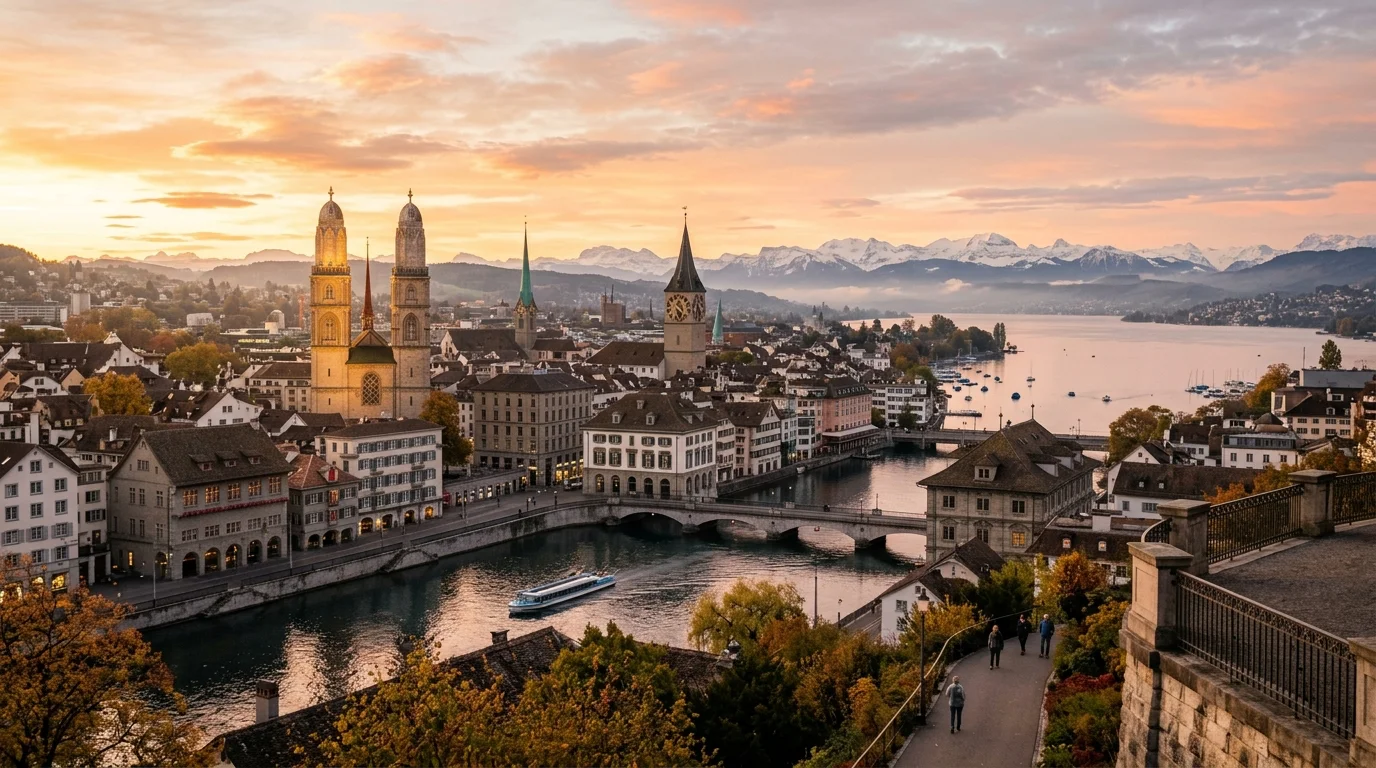
Zurich is Switzerland's largest city, situated at the northern tip of Lake Zurich in the heart of Europe, surrounded by rolling hills and the distant Alps. It is best known for its stunning lakefront setting, impeccably preserved medieval Old Town (Altstadt), world-class museums, and its reputation as one of the world's leading financial centers. Visitors come here for the extraordinary quality of life, incredible dining and nightlife scene, easy access to Alpine adventures, and the chance to experience one of Europe's most beautiful, clean, and cultured cities.
Table of Contents
- Zurich Overview
- Getting There & Around
- Top Attractions & Landmarks
- Neighborhoods & Districts
- Food & Dining
- Nightlife & Entertainment
- Shopping
- Seasonal Events & Festivals
- Accommodation Recommendations
- Practical Information
- Day Trips & Nearby Destinations
- Insider Tips & Hidden Gems
- Money-Saving Tips
- Common Tourist Mistakes to Avoid
- Sample Itineraries
- Frequently Asked Questions
What Is Zurich and Why Should You Visit?
Zurich is Switzerland's largest city and one of Europe's most livable, beautiful, and culturally rich destinations, sitting at the northern end of Lake Zurich with the snow-capped Alps visible on clear days. What makes Zurich truly special is its rare combination: a perfectly preserved medieval Old Town, a buzzing contemporary arts and nightlife scene (especially in the transformed Zürich West district), pristine nature at your doorstep, and a cosmopolitan energy that feels both Swiss and international. The city is compact, incredibly clean, and remarkably easy to navigate — making it a joy for first-time visitors and repeat travelers alike.
People visit Zurich for many reasons: to stroll the cobbled lanes of the Altstadt, cruise on Lake Zurich, visit world-class art museums, eat their way through Swiss-German cuisine, or use it as a base for Alpine day trips. Despite its reputation for being expensive, Zurich rewards those who plan smart — there are plenty of free attractions, excellent public transport, and a wealth of experiences that justify every franc spent. This is a city that consistently ranks among the world's best for quality of life, and one visit usually reveals why.
Zurich does carry a reputation as one of Europe's priciest cities, and that reputation is not entirely undeserved. But thoughtful travelers quickly discover that the city's free attractions, excellent lake swimming spots, and superb public transport make it far more accessible than its image suggests. The Swiss culture of precision, cleanliness, and service means that almost every experience here — whether budget or luxury — is delivered with quality.
When Is the Best Time to Visit Zurich?
Summer (June–August): Temperatures reach 25–28°C (77–82°F), lake swimming is in full swing, outdoor festivals fill the calendar, and the city is at its most vibrant. Crowds are at their highest and hotel prices peak — book at least 3 months ahead for summer visits. The long daylight hours (up to 16 hours) mean you get enormous value from each day.
Winter (December–February): Temperatures drop to 0–5°C (32–41°F) and snow occasionally dusts the city, turning Zurich into a Christmas card. The famous Zurich Christmas markets (Weihnachtsmärkte) at Bellevue and the Hauptbahnhof are magical. Ski resorts are just an hour away, making this a great time for winter sports enthusiasts. Hotel prices drop significantly outside the Christmas market season.
Shoulder Season (March–May & September–October): This is arguably the smartest time to visit Zurich. Spring brings cherry blossoms along the lake and mild temperatures of 10–18°C (50–64°F), while autumn turns the surrounding hills into a palette of golds and reds. Crowds are manageable, hotel prices are 20–30% lower than summer, and the city's cultural calendar is in full swing. September in particular is exceptional — warm enough for lake swimming but without the peak summer crowds.
Festival Season: The city's biggest events cluster in summer — Zurich Street Parade (August, Europe's largest techno parade), Zurich Film Festival (September–October), and the open-air Zurich Opera performances on the lake. The Christmas market season in December brings a different kind of festive energy that is absolutely worth experiencing.
How Many Days Do You Need in Zurich?
- 1–2 days: Enough for the Old Town, Grossmünster, Bahnhofstrasse, lake views, and one or two museums. Suits those using Zurich as a transit stop.
- 3–4 days: Ideal for first-time visitors — covers all key sights, a day trip to the Rhine Falls or Lucerne, and time to enjoy the food and nightlife scene.
- 5–7 days: Allows for deep exploration of multiple neighborhoods, Zürich West, mountain day trips to Rigi or Titlis, and a leisurely pace to appreciate the city's lifestyle.
- 1 week+: For those who want to live like a local — cooking classes, cycling the lake, extended Alpine excursions, and discovering the many hidden gems of this layered city.
Quick Facts About Zurich
- Population: Approximately 440,000 (city); 1.4 million (greater metro area)
- Language: Swiss German (Züritüütsch dialect); standard German, English widely spoken in tourist areas
- Currency: Swiss Franc (CHF / Fr.)
- Time Zone: Central European Time (CET) / UTC+1; CEST (UTC+2) in summer
- Country Code: +41
- Area Code: 044 (from within Switzerland) / +41 44 (internationally)
- Climate: Humid continental / oceanic — warm summers, cold winters, rain year-round
- Altitude: 408 meters (1,339 feet) above sea level
How Do You Get To and Around Zurich?
The easiest way to reach Zurich is by flying into Zurich Airport (ZRH), one of Europe's best-connected hub airports, with direct flights from virtually every major city worldwide. From within Europe, the direct intercity rail connections to Zurich are excellent — high-speed trains connect from Paris (4 hours), Frankfurt (3.5 hours), Milan (3.5 hours), and Amsterdam (5.5 hours). Once in Zurich, the public transport system is so efficient that a rental car is completely unnecessary.
Which Airports Serve Zurich?
Zurich Airport — Flughafen Zürich (ZRH)
Kloten, 8058 Zurich, Switzerland
Located just 13 km (8 miles) north of the city center, Zurich Airport is Switzerland's largest international airport and one of Europe's most efficient and pleasant transit hubs. It serves over 60 airlines with direct connections to more than 180 destinations. The airport features excellent duty-free shopping, lounges, and a direct rail link to Zurich Hauptbahnhof (main train station) every 10 minutes.
How Do You Get from the Airport to the City Center?
Train (Most Recommended): The direct rail connection from Zurich Airport to Zurich Hauptbahnhof (HB) takes just 10–13 minutes and runs every 10 minutes throughout the day. Tickets cost CHF 6.80 (2026) for a single adult journey. This is by far the fastest, most reliable, and most cost-effective option.
Official Taxi: Taxis are available outside the arrivals hall and cost approximately CHF 55–75 (2026) to the city center, taking 20–30 minutes depending on traffic. Only use official metered taxis from the official stands — they are white and bear the "Zürich Taxi" logo.
Rideshare: Uber operates in Zurich. An UberX from the airport to the city center typically costs CHF 40–60 (2026) depending on time of day and demand. Pickup is from designated rideshare zones outside the terminal.
Bus: The 768 bus runs from Zurich Airport to various city stops. It is cheaper but significantly slower than the train — useful for specific destinations not well-served by the rail connection.
Private Transfer: Pre-booked private transfers cost CHF 80–120 (2026) and are ideal for groups or those with heavy luggage arriving late at night.
What Is the Best Way to Get Around Zurich?
The best way to get around Zurich is the city's outstanding public transport network (ZVV), which includes trams, buses, S-Bahn trains, and lake boats that run with Swiss precision — punctual, frequent, and covering every corner of the city and surrounding region. Zurich's compact city center is also very walkable, and cycling is popular along the lake and through residential districts.
Public Transport System
The ZVV (Zürcher Verkehrsverbund) network covers Zurich and the greater canton with trams, trolleybuses, motor buses, urban S-Bahn trains, and lake ferries. Trams are the backbone of the inner-city network, running frequently from approximately 5:30 AM to midnight daily, with night trams and buses running on weekends. The system is extremely intuitive and signs are in German and often English.
Tickets & Passes:
- Single short ride (1–3 stops): CHF 2.70 (2026)
- Single standard ride (zones 110): CHF 4.60 (2026)
- 24-hour pass (city zones): CHF 13.20 (2026)
- Zurich Card (24 hours): CHF 29.00 (2026) — includes unlimited transport + museum discounts
- Zurich Card (72 hours): CHF 57.00 (2026)
Taxis & Rideshare
Official Zurich taxis (white cars, metered) are reliable but expensive — a typical cross-city journey costs CHF 20–40 (2026). Uber is widely available and usually 15–25% cheaper than official taxis. Download the Uber app before arrival. Taxis are most useful for late-night travel after public transport becomes less frequent.
Walking
Zurich's Old Town (Altstadt) and main tourist areas are compact and extremely walkable. The distance from the Hauptbahnhof to Lake Zurich is about a 15-minute stroll, and most key attractions in the historic center are within 20–30 minutes walk of each other. The terrain is mostly flat along the lake, with some hilly streets in the Altstadt and Zürichberg areas — wear comfortable shoes.
Walkability Score: 88/100 for the tourist center. The Old Town, Bahnhofstrasse, and the lakefront are all highly walkable. Outlying districts like Zürich West and Wiedikon are best reached by tram.
Smart travellers always compare transfer options before booking — prices for the same route can vary by 40% or more. Take 60 seconds to check all options and choose what works best for your arrival.
What Are the Top Attractions and Landmarks in Zurich?
Zurich's top attractions include the iconic twin-towered Grossmünster cathedral, the medieval Altstadt, the stunning Lake Zurich promenade, the Kunsthaus Zürich art museum, and the Uetliberg mountain — plus a rich collection of world-class museums, historic churches, and vibrant cultural spaces that reflect this city's extraordinary depth of history and culture.
Grossmünster Cathedral
Zwingliplatz 1, 8001 Zürich, Switzerland
The Grossmünster (Great Minster) is Zurich's most iconic landmark — a Romanesque-style Protestant cathedral whose twin towers have defined the city's skyline since the 12th century. According to legend, the church was founded by Charlemagne after his horse bowed down at the grave of Zurich's patron saints, Felix and Regula. The cathedral played a pivotal role in the Protestant Reformation when Huldrych Zwingli preached here from 1519.
Inside, the cathedral is strikingly austere — typical of Reformation-era Protestant churches that stripped away Catholic ornamentation. The highlight is the stunning modern stained glass windows by Augusto Giacometti (1932) in the choir area, and the bronze door reliefs depicting biblical scenes. Climbing the Karlsturm tower rewards visitors with panoramic views over the Old Town and Lake Zurich.
Why visit: The Grossmünster is the heart of Zurich's spiritual and historical identity — free to enter the main nave, it rewards both history lovers and those simply seeking a gorgeous photo of the city's most recognizable twin towers.
Entrance: Main cathedral free; tower climb CHF 5 adults (2026)
Best time: Early morning (9–10 AM) for fewer crowds
Hours: April–October daily 10:00–18:00; November–March daily 10:00–17:00
Fraumünster Church
Münsterhof 2, 8001 Zürich, Switzerland
The Fraumünster (Women's Minster) stands on the west bank of the Limmat River and is Zurich's most artistically treasured church, home to five extraordinary stained glass windows created by Marc Chagall in 1970 and an additional rose window by Augusto Giacometti. Founded in 853 AD as a convent for women of noble birth, it is one of the oldest and most historically significant buildings in the city.
The Chagall windows are the main draw — five lancet windows of breathtaking color and biblical imagery that fill the choir with shimmering light on sunny mornings. Each window has a distinct color theme: blue for the prophets, green for Zion, yellow for the law, red for Christ, and blue for the apostles. The Giacometti window in the north transept is equally stunning.
Why visit: The Fraumünster houses what many art experts consider among the finest examples of 20th-century religious art in Europe — Chagall's windows are an unmissable masterpiece.
Entrance: CHF 5 adults (2026); children under 16 free
Best time: Sunny mornings for the best light through the windows
Hours: Monday–Saturday 10:00–18:00; Sunday 11:30–18:00 (shorter in winter)
Kunsthaus Zürich (Zurich Art Museum)
Heimplatz 1, 8001 Zürich, Switzerland
The Kunsthaus Zürich is Switzerland's largest art museum and one of the finest art collections in Europe, housing over 100,000 works spanning from the Middle Ages to the present day. The permanent collection includes major works by Monet, Picasso, Munch, Giacometti, Hodler, and a superb collection of Impressionist and post-Impressionist paintings. The museum expanded dramatically in 2021 with a stunning new extension by architect David Chipperfield, doubling its exhibition space.
The Chipperfield extension focuses on 20th and 21st century art and has become an architectural landmark in its own right — a refined, light-filled building connected to the original historic structure by an underground passage. The expanded collection now includes remarkable works by Louise Bourgeois, Mark Rothko, and an outstanding Dada collection with international significance.
Why visit: The Kunsthaus is a must for any art lover — the combination of old masters, Impressionists, Giacometti sculptures, and cutting-edge contemporary art under one roof makes this one of Europe's most comprehensive and rewarding art experiences.
Entrance: CHF 26 adults; CHF 19 students; children under 16 free (2026); free with Zurich Card
Best time: Weekday mornings
Hours: Tuesday–Sunday 10:00–18:00; Wednesday & Thursday until 20:00; Monday closed
Lake Zurich (Zürichsee) and Lakefront Promenade
Zürichsee-Promenade, 8008 Zürich, Switzerland
Lake Zurich is the shimmering heart of the city — a 40 km long glacial lake framed by rolling hills and, on clear days, a magnificent Alpine backdrop. The lakefront promenade stretching from Bürkliplatz south through Riesbach is one of Europe's most beautiful urban waterfronts, lined with manicured gardens, outdoor cafes, historic boathouses, and stunning views. In summer, the lake becomes the city's outdoor living room, with locals swimming at the many free Badis (lake swimming pools).
Lake cruises depart from Bürkliplatz and range from 1.5-hour short tours to full-day trips to the far southern end of the lake. The lake is clean enough to swim in, and free bathing spots are dotted around its shores. In winter, the promenade takes on a peaceful, fog-draped beauty that is equally captivating.
Why visit: The lake is Zurich's soul — whether you're swimming in summer, cruising by boat, cycling the shore path, or simply sitting at a cafe watching the swans, the Zürichsee is an experience no visitor should miss.
Entrance: Free (lakefront access); Boat cruises from CHF 8.80 (2026)
Best time: Sunrise for magical light; summer evenings for the most activity
Hours: Open 24 hours (promenade)
Uetliberg Mountain
Uetliberg, 8143 Stallikon, Switzerland
Uetliberg is Zurich's very own mountain — standing 871 meters (2,858 feet) above sea level and offering jaw-dropping 360-degree panoramic views over Zurich, Lake Zurich, and the Alps on clear days. Known affectionately as the "Zuriberg" or "Zurich's local mountain," it is accessible by a direct S-Bahn train (S10 line) from Zurich Hauptbahnhof in just 22 minutes, making it one of the most accessible urban mountain viewpoints in the world.
At the summit, a viewing tower (Planetenweg tower) adds an additional 10 meters of height for even better vistas. A popular hiking trail called the Planetenweg (Planet Trail) runs from the summit along the ridge to Felsenegg, offering 90 minutes of scenic forest walking. The entire area is laced with well-marked trails for different fitness levels.
Why visit: Uetliberg delivers the most spectacular views of Zurich and the Alps for minimal effort and cost — the S-Bahn ride up is covered by the standard ZVV day pass, making this one of the city's greatest free viewpoints.
Entrance: Free (viewpoint); S-Bahn ticket included in standard ZVV pass
Best time: Clear mornings (especially after rain when Alps are most visible)
Hours: Always open; S10 trains run from approximately 5:30 AM to midnight
Swiss National Museum (Landesmuseum Zürich)
Museumstrasse 2, 8001 Zürich, Switzerland
The Swiss National Museum is Switzerland's largest cultural history museum, housed in a fairytale neo-Gothic castle right next to Zurich Hauptbahnhof. The museum chronicles Swiss history, art, culture, and craftsmanship from prehistoric times through the present day, with highlights including medieval armor collections, historic Swiss clocks and watches, stunning Gothic painted ceilings transplanted from historic buildings, and fascinating exhibits on Swiss daily life through the centuries.
A superb modern extension opened in 2016 connects seamlessly to the historic castle building and houses a striking archaeology gallery. The museum's collection of Swiss decorative arts — ceramics, textiles, furniture, and silverwork — is outstanding and often overlooked by visitors focused on the architecture and history galleries.
Why visit: The Swiss National Museum is the perfect introduction to Switzerland's history and culture, and the magnificent castle building alone is worth the visit — it looks like something from a fairy tale right in the middle of the city.
Entrance: CHF 10 adults; CHF 8 students; children under 16 free (2026)
Best time: Weekday afternoons (quieter)
Hours: Tuesday–Sunday 10:00–17:00; Thursday until 19:00; Monday closed
Lindenhügel and Lindenhof Square
Lindenhof, 8001 Zürich, Switzerland
Lindenhof is a hilltop square in the very heart of Zurich's Old Town, sitting on the site of the ancient Roman fort that gave birth to the city of Turicum (Roman Zurich) in the 1st century AD. This peaceful, leafy terrace offers some of the most beautiful free views in the city — across the rooftops of the Old Town, over the Limmat River, and to the Grossmünster towers on the opposite bank. There are no cars and no shops — just locals playing chess on giant outdoor boards and visitors soaking in the view.
Lindenhof has been a gathering place for over 2,000 years. In Roman times, a customs station stood here. Medieval Zurich used it as a fortified defensive position. Today, the square is shaded by ancient linden trees and surrounded by some of the city's oldest architecture, creating a timeless pocket of calm in the middle of a world-class city.
Why visit: Lindenhof offers the finest free viewpoint in central Zurich and a genuinely peaceful escape from the tourist-filled streets just below — it is the kind of spot that makes you feel like a local.
Entrance: Free
Best time: Late afternoon for golden light on the Grossmünster; evening in summer
Hours: Always open
Zürich West and Viadukt
Viadukt, Limmatstrasse 231, 8005 Zürich, Switzerland
Zürich West is the city's coolest and most transformative neighborhood — a former industrial district that has been reinvented as a hub of art galleries, design studios, boutique shops, gourmet restaurants, and celebrated nightclubs. At its heart is the Viadukt, a 19th-century railway viaduct whose 36 stone arches have been converted into a stunning row of artisan shops, delis, and restaurants that perfectly capture Zurich's fusion of historic heritage and contemporary creativity.
The area includes the famous LPM (Langstrasse Produktionshalle) arts center, the Schiffbau theatre and jazz club, the Halle (a massive warehouse club), and a rotating collection of pop-up bars and concept stores. The street art, the industrial architecture, and the general vibe here feel a world apart from the polished Old Town — and that contrast is exactly what makes Zürich West so exciting.
Why visit: Zürich West shows a completely different, more cutting-edge side of the city that most tourists miss — it's where young Zurichers actually spend their weekends and where the city's creative future is being written.
Entrance: Free to explore; individual venues vary
Best time: Thursday–Saturday evenings for nightlife; Saturday mornings for the market
Hours: Shops generally 10:00–19:00; restaurants and bars until late
Bahnhofstrasse
Bahnhofstrasse, 8001 Zürich, Switzerland
Bahnhofstrasse is Zurich's legendary main shopping boulevard — stretching 1.4 km from the Hauptbahnhof south to the lake at Bürkliplatz, it is consistently ranked among the world's most expensive and prestigious shopping streets, alongside the Champs-Élysées and Fifth Avenue. Lined with global luxury brands (Cartier, Louis Vuitton, Rolex, Chanel) alongside Swiss-specific institutions like Sprüngli chocolates and the flagship Globus department store, it is a glamorous showcase of Swiss wealth and design.
Beyond the famous luxury boutiques, Bahnhofstrasse has a charming quality to it — the wide, tram-crossed street is free of cars, dotted with linden trees, and ends at the magnificent lake view. The street is free to walk and explore regardless of your budget, and the window shopping alone is extraordinary.
Why visit: Even if luxury shopping isn't your thing, walking Bahnhofstrasse is a quintessential Zurich experience — pick up some Sprüngli chocolates, admire the Swiss watch boutiques, and stroll all the way to the lake for a perfect introduction to the city.
Entrance: Free to walk
Best time: Weekday mornings (less crowded); evening for Christmas lights in December
Hours: Shops generally open Monday–Saturday 9:00–18:30; Sunday mostly closed
Zurich Zoo (Zoo Zürich)
Zürichbergstrasse 221, 8044 Zürich, Switzerland
Zurich Zoo is one of Europe's most acclaimed zoological gardens — consistently rated among the continent's best for animal welfare, habitat design, and conservation work. Set on the wooded Zürichberg hillside, the zoo is home to over 380 species and 4,000 animals, including rare snow leopards, Komodo dragons, Malagasy lemurs, and the spectacular Masoala Rainforest pavilion — a massive greenhouse containing a complete slice of Madagascar rainforest ecosystem with free-flying birds and chameleons.
The zoo's Lewa Savannah African habitat is stunning, featuring giraffes, zebras, and antelopes in expansive natural enclosures that are some of the largest and most naturalistic in Europe. The Kaeng Krachan Elephant Park, with its huge outdoor and indoor areas for Asian elephants, is another highlight that sets Zurich Zoo apart from most European zoos.
Why visit: Zurich Zoo is exceptional even for non-zoo fans — the habitats are genuinely beautiful, the animals have remarkable space, and the Masoala Rainforest is a truly unique indoor ecosystem experience unlike anything else in Central Europe.
Entrance: CHF 29 adults; CHF 19 children 6–15; children under 6 free (2026)
Best time: Weekday mornings; avoid school holidays
Hours: Daily March–October 9:00–18:00; November–February 9:00–17:00
Rietberg Museum
Gablerstrasse 15, 8002 Zürich, Switzerland
The Museum Rietberg is Switzerland's only museum dedicated exclusively to the art and cultures of Asia, Africa, the Americas, and Oceania — and it is world-class in both scope and presentation. Housed in a series of beautiful villas and a stunning contemporary underground extension in Rieterpark, the museum's collection includes extraordinary sculptures from India, Nepal, and Tibet, ancient Egyptian artifacts, Japanese prints, and exceptional African ritual objects.
The surrounding Rieterpark is one of Zurich's most beautiful public parks, making a visit to the Rietberg Museum a wonderful combination of art, architecture, and nature. The underground Smaragd extension (named for its emerald-green glass roof) is an architectural marvel that sits invisibly beneath the park, only revealing itself as you descend into the light-filled galleries.
Why visit: The Rietberg is a hidden gem that many Zurich visitors overlook in favor of the Kunsthaus — but its extraordinary collection and beautiful park setting make it one of the city's most rewarding and peaceful museum experiences.
Entrance: CHF 18 adults; CHF 12 students; children under 16 free (2026)
Best time: Weekday afternoons
Hours: Tuesday–Sunday 10:00–17:00; Wednesday until 20:00; Monday closed
Book your tours and tickets in advance — it saves hours of queuing and often gets you a better price. These two platforms cover different options, so it's worth checking both.
What Are the Best Neighborhoods to Explore in Zurich?
Zurich's neighborhoods each have a completely distinct character — from the medieval cobblestoned Altstadt to the industrial-chic streets of Zürich West — and together they tell the full story of this multifaceted city.
Altstadt (Old Town) — Niederdorf & Lindenhügel
Character: The historic heart of Zurich — a labyrinth of cobbled lanes, medieval guild houses, Romanesque churches, and flower-adorned fountains on both banks of the Limmat River. The east bank (Niederdorf) is lively with restaurants and bars; the west bank (Lindenhügel) is more upscale and residential.
What makes it special: Walking the Altstadt feels like stepping back 500 years — narrow alleys lead to hidden courtyards, the Grossmünster and Fraumünster towers rise above the roofline, and at every turn there is a beautiful architectural detail or a charming cafe. The area is safe, walkable, and perfectly preserved.
Best for: History lovers, first-time visitors, couples, photographers
Must-see in this area: Grossmünster, Fraumünster, Lindenhof viewpoint, Niederdorfstrasse, Rathaus (Town Hall), Augustinergasse
How to get there: Walking from Hauptbahnhof (10 minutes); trams 4, 15 to Helmhaus
Location: Niederdorfstrasse, 8001 Zürich, Switzerland
Zürich West (Kreis 5)
Character: Zurich's most exciting and rapidly evolving neighborhood — a post-industrial zone of converted factories, railway viaducts turned into boutiques, street art walls, and a dense concentration of restaurants, clubs, galleries, and design studios. Raw, creative, and proudly un-touristy.
What makes it special: The Viadukt market arches, the Prime Tower (Switzerland's second-tallest building), and the cluster of internationally recognized nightclubs (Halle, Zukunft, MaagHalle) make this the city's undisputed cultural and nightlife capital. The food scene here is diverse and genuinely excellent.
Best for: Nightlife seekers, foodies, design enthusiasts, creatives, hipsters of all ages
Must-see in this area: Viadukt market arches, Im Viadukt shops, Schiffbau theatre, Langstrasse street, Frau Gerolds Garten
How to get there: Tram 4 or 13 to Escher-Wyss-Platz; S-Bahn to Hardbrücke
Location: Limmatstrasse, 8005 Zürich, Switzerland
Langstrasse (Kreis 4)
Character: Zurich's most multicultural and edgy street — a long boulevard that is simultaneously the city's red light district and its most vibrant restaurant and bar strip. Don't be put off by its reputation; Langstrasse has transformed significantly and is now one of the most dynamic eating and drinking destinations in the city.
What makes it special: The diversity of restaurants here is extraordinary — Thai, Vietnamese, Turkish, Lebanese, Mexican, and Swiss dishes are served cheek by jowl with cocktail bars, wine caves, and underground clubs. The energy at night is electric without being threatening in the main areas.
Best for: Budget travelers, food lovers, nightlife enthusiasts, solo travelers seeking atmosphere
Must-see in this area: Restaurant row along Langstrasse, Helvetiaplatz, various street art installations
How to get there: Tram 2, 3, 14 to Helvetiaplatz
Location: Langstrasse, 8004 Zürich, Switzerland
Seefeld (Kreis 8)
Character: Zurich's most elegant and affluent residential neighborhood — a sun-drenched lakeside district of beautiful 19th-century townhouses, upscale boutiques, gourmet cafes, and lovely lake bathing areas (Badis). Calm, sophisticated, and exceptionally beautiful.
What makes it special: The Seefeld lakefront is Zurich at its most postcard-perfect — long promenades, historic boathouses, swans on the water, and the Alps visible in the distance on clear days. The neighborhood's coffee shop culture and artisan food scene are among the city's finest.
Best for: Couples, families, upscale travelers, those seeking a relaxed lakefront experience
Must-see in this area: Utoquai lake promenade, Zürichhorn park, Chinese Garden, Riesbach Badi (lake bathing)
How to get there: Tram 2, 4 to Fröhlichstrasse or Riesbach
Location: Seefeldstrasse, 8008 Zürich, Switzerland
Wiedikon (Kreis 3)
Character: Zurich's most authentically local and up-and-coming neighborhood — a residential district without the tourist polish of the Altstadt, where young families, artists, and long-time locals coexist in a relaxed urban atmosphere. The ideal neighborhood for understanding how Zurichers actually live.
What makes it special: Wiedikon has a fantastic weekend market at Helvetiaplatz, a growing cluster of independent cafes and restaurants along Birmensdorferstrasse, and easy access to the Uetliberg mountain. It's unpretentious, genuinely local, and increasingly cool.
Best for: Budget travelers, solo explorers, those wanting an authentic local experience away from tourist crowds
Must-see in this area: Bäckeranlage park, Helvetiaplatz market, Birmensdorferstrasse restaurant strip
How to get there: Tram 2, 3, 8, 9 to Stauffacher or Helvetiaplatz
Location: Birmensdorferstrasse, 8003 Zürich, Switzerland
Zürichberg (Kreis 7)
Character: Zurich's wealthy hillside residential district — a leafy, tranquil area of large villas, embassy residences, and forested hillsides that rise above the city center. Home to the Zurich Zoo and the Dolder Grand hotel, it offers a very different perspective of the city from above.
What makes it special: The forest trails through Zürichberg provide an immediate nature escape from the city. The views over Zurich and the lake from various vantage points along the hillside are stunning, and the neighborhood has an old-world, aristocratic calm that feels far removed from the urban bustle below.
Best for: Families (zoo), hikers, those seeking nature, luxury travelers
Must-see in this area: Zurich Zoo, Dolder Grand Hotel (for a drink at the bar), Zürichberg forest trails
How to get there: Tram 6 to Zoo; bus 33, 34 to various stops
Location: Zürichbergstrasse, 8044 Zürich, Switzerland
What Food Should You Try in Zurich?
Zurich is famous for its rich Swiss-German cuisine built around fondue, rösti, and Zürich's own beloved veal dish — Züri-Geschnetzeltes — but the city's diverse immigrant population has made it one of Europe's most exciting and cosmopolitan dining cities, with outstanding Thai, Japanese, Italian, and Middle Eastern restaurants alongside the Swiss classics.
What Are the Must-Try Local Dishes in Zurich?
- Züri-Geschnetzeltes (Zurich-style sliced veal) — Zurich's signature dish: thin strips of tender veal (and often veal kidney) sautéed in a rich cream, white wine, and mushroom sauce, served on a bed of buttery Rösti potato pancake. This dish is on almost every traditional Swiss restaurant menu and is a must-try for meat eaters.
- Rösti — Switzerland's iconic grated potato pancake, pan-fried to golden perfection. Rösti comes plain or topped with eggs, cheese, bacon, or served as a side dish. Simple, satisfying, and deeply Swiss.
- Fondue — The Swiss national dish: a pot of melted cheese (usually Gruyère and Emmental) with white wine and garlic, kept warm over a flame, into which you dip cubes of bread. Best enjoyed in winter in a traditional restaurant like Blaue Ente or Swiss Chuchi.
- Raclette — Another Swiss cheese classic: a wheel of Raclette cheese is melted by a heat lamp and the molten cheese is scraped over boiled potatoes, pickled onions, and gherkins. Rich, warming, and completely delicious.
- Birchermüesli — Bircher muesli was invented in Zurich by physician Maximilian Bircher-Benner around 1900. The original recipe combines rolled oats soaked overnight in apple juice, grated fresh apple, lemon juice, condensed milk, and hazelnuts — it bears little resemblance to what most of the world calls muesli.
- Zopf — A beautiful braided Swiss bread traditionally eaten on Sunday mornings, with a soft, slightly sweet interior and a golden braided crust. Found in every bakery and essential to the Swiss weekend breakfast ritual.
- Luxemburgerli — Zurich's own version of the French macaron, made by the legendary Confiserie Sprüngli on Bahnhofstrasse. Lighter, smaller, and more delicate than French macarons, these come in dozens of seasonal flavors and are a must-buy souvenir.
- Swiss Chocolate — Switzerland is the world capital of chocolate, and Zurich has outstanding artisan chocolatiers including Sprüngli, Laderach, and Teuscher. Buy boxes of hand-made pralines and truffles to take home — they are significantly cheaper bought directly in Zurich than in airport shops.
Where Should You Eat in Zurich?
Budget-Friendly (Under CHF 20 per meal)
- Tibits — Seefeldstrasse 2, 8008 Zürich — A beloved Zurich vegetarian buffet restaurant where you pay by weight. Fill your plate with fresh salads, warm dishes, and desserts — typically CHF 12–18 for a satisfying meal. Excellent value and always fresh. Multiple locations across the city.
- Manora (Manor Food Hall) — Bahnhofstrasse 75, 8001 Zürich — The self-service restaurant on the top floor of the Manor department store serves excellent Swiss and international dishes at very reasonable prices (CHF 12–16). Popular with office workers — come before 12:30 PM to avoid queues.
- Sternen Grill — Theaterstrasse 22, 8001 Zürich — Zurich's most legendary bratwurst stand, serving outstanding grilled Swiss sausages with bread for around CHF 7–10 since 1963. Always has a queue — always worth it. Standing eating only.
Mid-Range (CHF 30–60 per meal)
- Swiss Chuchi — Rosengasse 10, 8001 Zürich — One of Zurich's most charming and authentic Swiss restaurants in the heart of the Old Town, serving excellent fondue, Züri-Geschnetzeltes, and Raclette in a cozy wooden interior. Reservations highly recommended. Dinner for two with wine approximately CHF 90–120 (2026).
- Kronenhalle — Rämistrasse 4, 8001 Zürich — A legendary Zurich institution since 1924, famous for its collection of original artworks by Picasso, Miró, Matisse, and Chagall hanging on the walls. The Swiss cuisine is excellent (Züri-Geschnetzeltes is exceptional here), the service is impeccable, and the atmosphere is of another era. A truly special experience.
- Neumarkt Restaurant — Neumarkt 5, 8001 Zürich — A beloved neighbourhood bistro in the Old Town serving seasonal Swiss-French cuisine in a beautifully renovated space. The lunch menu is excellent value at CHF 22–28 for two courses (2026).
- Hiltl — Sihlstrasse 28, 8001 Zürich — Founded in 1898, Hiltl is officially the world's oldest vegetarian restaurant (Guinness World Records certified). The buffet restaurant serves innovative global vegetarian and vegan cuisine in an elegant setting — around CHF 30–45 for a full meal (2026).
Fine Dining (CHF 80+ per meal)
- The Restaurant at Baur au Lac — Talstrasse 1, 8001 Zürich — One of Switzerland's finest restaurants, set inside Zurich's legendary five-star lakeside hotel. Chef Laurent Eperon serves sophisticated French-Swiss tasting menus in an extraordinarily elegant setting. Dinner tasting menus from CHF 180 per person (2026); book at least 3 weeks in advance.
- Pavillon at Baur au Lac — Talstrasse 1, 8001 Zürich — The Baur au Lac's more relaxed terrace restaurant offers stunning lake views with an excellent seasonal menu at slightly more accessible prices. Set lunch menus from CHF 65 (2026).
What Are the Dining Customs in Zurich?
Meal times: Breakfast typically 7:00–9:00 AM; lunch 12:00–2:00 PM (restaurants fill up fast during this hour); dinner from 6:30 PM, with most kitchens closing around 10:00–10:30 PM.
Tipping: Tipping is not mandatory in Switzerland — service is included in the price. However, rounding up the bill or leaving 5–10% for excellent service is appreciated. Swiss locals typically round up to the nearest franc or add a small amount.
Reservations: Essential for dinner at popular restaurants, especially on Thursday–Saturday evenings. Many top restaurants in Zurich require reservations 1–3 weeks in advance. Use the Zomato app or restaurant websites to book.
Dress code: Zurich is generally smart-casual to smart — very few restaurants require formal dress, but the Swiss tend to dress well for dinner. Avoid athletic wear at mid-range or upscale restaurants.
What Is the Nightlife Like in Zurich?
Zurich's nightlife scene is one of Europe's best-kept secrets — this quiet, buttoned-up banking city transforms after dark into a world-class party destination, with a legendary club scene born in converted industrial spaces, a thriving jazz and live music culture, and excellent cocktail bars that stay open until 4–5 AM on weekends. Things typically get going after 10 PM, with clubs reaching their peak between midnight and 4 AM.
Where Are the Best Areas for Nightlife in Zurich?
- Langstrasse (Kreis 4): Langstrasse 60–150, 8004 Zürich — The undisputed heart of Zurich's bar scene. This long strip and its surrounding streets are packed with bars, clubs, late-night restaurants, and cocktail lounges of every persuasion. Lively from 9 PM, wild from midnight. Good mix of age groups and musical tastes.
- Zürich West (Kreis 5): Escher-Wyss-Platz area, 8005 Zürich — Home to Zurich's world-famous industrial-scale clubs: MaagHalle, Halle, Zukunft, and the legendary Hive. This is where the serious music and techno scene lives — international DJs, massive warehouse spaces, and a cool, underground atmosphere.
- Niederdorf (Old Town East Bank): Niederdorfstrasse, 8001 Zürich — The more tourist-friendly and accessible bar district, with dozens of bars, wine bars, and smaller clubs in historic medieval buildings. Great for an early evening bar-hop before heading to the clubs in Zürich West.
What Are the Best Bars and Clubs in Zurich?
Bars & Pubs
- Widder Bar — Rennweg 7, 8001 Zürich — One of Zurich's most beautiful and celebrated cocktail bars, hidden inside the boutique Widder Hotel in the Old Town. Outstanding cocktail menu, a stellar whiskey collection (over 1,000 whiskies), and an intimate, sophisticated atmosphere. Drinks from CHF 22–30 (2026).
- Frau Gerolds Garten — Geroldstrasse 23a, 8005 Zürich — A magical outdoor bar-garden complex under the railway viaduct in Zürich West, open from spring through autumn. Container bars, street food stalls, live music, and a relaxed, community feel. Entry free; drinks from CHF 8 (2026).
- Longstreet Bar — Langstrasse 92, 8004 Zürich — A legendary Zurich dive bar on Langstrasse — grungy, unpretentious, cheap (beers from CHF 6), and open until 4 AM on weekends. The anti-Widder Bar experience, beloved by locals.
Clubs & Dancing
- Halle (MFO) — Geroldstrasse 5, 8005 Zürich — One of Europe's most respected techno and electronic music clubs, housed in a converted industrial hall in Zürich West. International DJs, exceptional sound system. Open Thursday–Saturday from 11 PM; entry CHF 15–25 (2026).
- Hive Club — Geroldstrasse 5, 8005 Zürich — Zurich's legendary underground club, known for its basement-bunker aesthetic and cutting-edge electronic music programming. Open weekends from midnight; entry CHF 15–20 (2026).
Live Music & Shows
- Moods Jazz Club — Schiffbaustrasse 6, 8005 Zürich — Switzerland's finest jazz club, housed in the Schiffbau complex in Zürich West. Internationally acclaimed jazz, blues, and soul acts perform here regularly. Tickets CHF 25–55 (2026); check listings on moods.ch.
- Tonhalle Zürich — Claridenstrasse 7, 8002 Zürich — Zurich's magnificent concert hall, home to the Zurich Tonhalle Orchestra — one of Europe's great orchestras. Classical concerts in a stunning 1895 Art Nouveau interior. Tickets from CHF 30 (2026).
What Family-Friendly Evening Entertainment Is Available?
Zurich offers excellent family-friendly evening options — the Zürichsee lakefront is beautiful for evening strolls, the Swiss National Museum sometimes hosts evening events, and the Opera House (Zurich Opernhaus) offers family-friendly matinée and ballet performances. The Zurich Christmas markets are spectacular for families in December, with light displays, ice skating, mulled wine, and children's activities running until 9–10 PM.
What and Where Should You Shop in Zurich?
The best things to buy in Zurich are Swiss watches, artisan chocolates, Swiss cheese, luxury fashion, and uniquely Swiss design goods — and the top shopping areas range from the ultra-luxurious Bahnhofstrasse to the independent boutiques of Zürich West and the artisan markets of the Viadukt.
What Are the Best Shopping Districts in Zurich?
- Bahnhofstrasse: Bahnhofstrasse 1–100, 8001 Zürich — Zurich's legendary luxury shopping boulevard, home to Rolex, Cartier, Louis Vuitton, Chanel, Hermès, and flagship stores of every global luxury brand. Also features Swiss institutions like Confiserie Sprüngli, Globus department store, and Jelmoli (Switzerland's grandest department store).
- Niederdorf (Old Town): Niederdorfstrasse, 8001 Zürich — The Old Town's east bank strip is lined with independent boutiques, Swiss souvenir shops, bookstores, antique dealers, and gift shops selling Swiss knives, cowbells, and other traditional items at more reasonable prices than the airport.
- Viadukt & Zürich West: Im Viadukt, Limmatstrasse 231, 8005 Zürich — The Viadukt arches house around 35 independent boutiques, artisan food purveyors, design shops, and concept stores offering unique, locally made goods far more interesting than mass-market souvenirs.
What Markets Should You Visit in Zurich?
Bürkliplatz Flea Market — Bürkliplatz, 8001 Zürich — Open Saturday 6:00 AM – 4:00 PM (May–October). Zurich's beloved weekend flea market along the lakefront, selling antiques, vintage clothing, jewelry, books, and curiosities. No bargaining culture — prices are generally firm.
Viadukt Saturday Market — Im Viadukt, Limmatstrasse, 8005 Zürich — Saturday 7:00 AM – 4:00 PM year-round. An outstanding farmers' and artisan market under the railway viaduct arches, selling organic produce, regional cheeses, artisan breads, Swiss wines, and specialty foods from local producers.
Helvetiaplatz Market — Helvetiaplatz, 8004 Zürich — Tuesday and Friday 7:00 AM – 12:00 PM. A neighborhood fruit and vegetable market popular with locals, offering excellent produce at lower prices than supermarkets.
What Should You Buy in Zurich?
- Swiss Watches — Zurich is one of the world's watch-buying capitals. Even mid-range Swiss watches (Tissot, Longines, Mondaine) are often cheaper bought directly in Zurich than abroad, especially with VAT refund. Find them on Bahnhofstrasse and in dedicated watch boutiques throughout the city.
- Swiss Chocolate — Sprüngli Luxemburgerli (Bahnhofstrasse 21), Läderach pralines, and Teuscher champagne truffles are far cheaper in Zurich than at airports or abroad. Buy direct from the shops and avoid airport markups of 30–40%.
- Swiss Army Knives (Victorinox) — Excellent value bought directly in Zurich versus tourist shops abroad. Find official Victorinox shops on Bahnhofstrasse and throughout the city.
- Swiss Cheese — Buy vacuum-sealed Gruyère, Appenzeller, Raclette, or Emmental from the Migros or Coop supermarket — dramatically cheaper than specialty stores and often higher quality than tourist-oriented shops.
- Swiss Design — Swiss design products (Freitag bags made from recycled truck tarps, Mondaine railway clocks, Swiss schoolbag Bata shoes) are excellent quality, uniquely Swiss, and make fantastic gifts.
- Freitag Bags — Geroldstrasse 17, 8005 Zürich — The iconic Zurich brand making unique bags from recycled truck tarps, bicycle inner tubes, and car seat belts. The flagship Zurich store (a tower of stacked shipping containers) is a design landmark itself. Bags from CHF 150 (2026).
What Are the Shopping Hours and Customs?
Most Zurich shops are open Monday–Friday 9:00 AM – 7:00 PM and Saturday 9:00 AM – 6:00 PM. Shops on Bahnhofstrasse often open until 8:00 PM Thursday. Almost all shops are closed on Sundays, with the exception of the airport, main train station (Hauptbahnhof) shops, and some tourist-area shops. Bargaining is not a part of Swiss shopping culture — prices are fixed. VAT (MWST/TVA) in Switzerland is 8.1% on most goods, and non-EU tourists can claim a refund on purchases over CHF 300 at the airport.
Can Non-EU Visitors Claim a VAT Tax Refund in Zurich?
Yes — if you are a visitor from outside the European Union (including travellers from the USA, Canada, Australia, the UK, and most of Asia and Latin America), you are entitled to a refund of the VAT (Value Added Tax) included in the price of goods you buy in Switzerland. VAT in Switzerland is 8.1% on most goods (Switzerland runs its own VAT refund scheme — not EU), which means this refund can be significant on high-value purchases like clothing, leather goods, jewellery, designer fashion, and electronics. Note: Switzerland is not an EU member but operates its own VAT refund scheme — the process at the airport is the same.
How to Claim Your VAT Refund — Step by Step
- Spend at least CHF 300 in a single shop in a single day. This is the minimum threshold for a VAT refund claim in Switzerland. It does not apply across multiple shops — the full amount must be spent in one store.
- Look for the "Tax Free" sign. Participating shops display a "Tax Free Shopping," "Global Blue," or "Planet" logo in the window or at the register.
- Ask for the tax refund form at the register before you pay. Present your non-EU passport — the shop will fill out the form with your details and the purchase amount. Keep the form with your receipt.
- Get the form stamped at customs before you leave. Go to the Customs office at Zurich Airport (ZRH) before check-in and have an officer stamp your tax refund form. Keep your purchases accessible in hand luggage — do not pack them deep in your checked bags.
- Collect your refund. Hand the stamped form to the Global Blue or Planet desk at the airport. You can receive the refund in cash (minus a processing fee) or as a credit card refund (lower fees, takes a few weeks).
VAT Refund Quick Facts for Zurich
- Minimum spend: CHF 300 in one shop in one day
- VAT rate on most goods: 8.1% on most goods (Switzerland runs its own VAT refund scheme — not EU)
- Typical refund after fees: 10–15% of the purchase price
- Refund processors: Global Blue and Planet (formerly Premier Tax Free) at Zurich Airport (ZRH)
- Who qualifies: Anyone with a non-EU passport who is not a resident of an EU country
- UK visitors: British passport holders qualify since Brexit — the UK is no longer in the EU
- Deadline: Purchases must be exported within 3 months of the date of purchase
- Full guide: VAT Refund in Europe — Complete Guide for Non-EU Travelers
What Festivals and Events Happen in Zurich?
Zurich's biggest festivals include the Street Parade techno parade in August (one of the world's largest), the Zurich Film Festival in autumn, and the enchanting Christmas markets in December — together forming a year-round calendar that gives every season a reason to visit.
What Is the Annual Events Calendar for Zurich?
| Month/Season | Event Name | Description |
|---|---|---|
| January | Zurich Art Weekend | Major contemporary art galleries open specially extended events and exhibitions across the city, with free access to many normally ticketed spaces. |
| February | Fasching / Carnival | Zurich's modest carnival season with costume parties, street events, and traditional Swiss-Germanic celebrations; smaller than Basel's famous Fasnacht but still lively. |
| March | Sechseläuten (Spring Festival Preview) | Preparations for the famous spring festival begin; guild processions and the city starts to emerge from winter with lakefront pop-ups reopening. |
| April | Sechseläuten Spring Festival | Zurich's beloved spring festival features an extraordinary guild procession of historically costumed riders through the Old Town, culminating in the burning of the "Böögg" snowman effigy on Sechseläutenplatz. The time it takes the snowman's head to explode is said to predict the coming summer — a shorter time means a better summer. Free to watch. |
| May | Zurich Carnival Weekend / Langstrasse Night | The Langstrasse neighborhood hosts special outdoor events, street markets, and open-air dining celebrations welcoming the warmer weather. |
| June | Züri Fäscht (every 3 years — next 2026) | Zurich's biggest public festival, held every three years along the lakefront — a massive free event with fireworks, lake concerts, food stalls, and street entertainment attracting over 3 million visitors. The 2026 edition is scheduled — check dates early and book accommodation 6+ months ahead. |
| July | Open Air Kino (Open Air Cinema) | Open-air cinema screenings at various locations including the lakefront at Zürichhorn and Altstadtschulhaus — watching films under the stars with lake or Old Town views is a magical summer experience. Tickets CHF 20–25 (2026). |
| August | Zurich Street Parade | Europe's largest techno street parade — approximately one million people (not a typo) converge on Zurich for a massive mobile rave featuring dozens of "Love Mobiles" (decorated trucks with DJs) cruising along the lakefront from Sihlquai to Bürkliplatz. Free to attend; typically held on the second Saturday of August. |
| September | Zurich Film Festival (ZFF) | One of Europe's premier film festivals, showcasing international premieres, independent cinema, documentaries, and special events over 11 days. Red carpet events, Q&As with filmmakers, and screenings across multiple city venues. Tickets from CHF 18 (2026). |
| October | Zurich Wine Festival / Expovina | The Expovina wine fair held on riverboats moored along the Limmat — an unusual and wonderful setting for tasting wines from hundreds of Swiss and international producers. Entry from CHF 15 (2026). |
| November | Zurich Design Week / Design Preis | Design exhibitions, open studios, and special events celebrating Swiss design, architecture, and creative industries across galleries and cultural venues citywide. |
| December | Zurich Christmas Markets (Weihnachtsmärkte) | Multiple magical Christmas markets transform the city: the indoor Christmas market at Hauptbahnhof (world's largest indoor Christmas market, inside the spectacular main hall), the lakefront market at Bellevue, and the romantic market in Niederdorf Old Town. Running late November through December 24, with mulled wine, artisan gifts, and spectacular lights. |
How Do Festivals Affect Hotel Prices and Availability?
Zurich's peak hotel demand periods are the Street Parade weekend in August (book 4–6 months ahead), the Christmas market season in December (book 3–4 months ahead), Züri Fäscht years (book 6+ months ahead), and the ZFF Film Festival in September. During these periods, hotel prices can increase 50–100% above normal rates and budget options sell out entirely within hours of becoming available. The Street Parade weekend is particularly dramatic — budget hotels are often fully booked within minutes of opening.
Where Should You Stay in Zurich?
The best neighborhood to stay in Zurich depends entirely on your travel style — the Old Town (Altstadt) puts you in the middle of the historic action, Seefeld offers elegant lakeside calm, and Zürich West places you in the heart of the creative and nightlife scene.
What Are the Best Neighborhoods to Stay in Zurich?
| Neighborhood | Vibe | Price Range (per night, 2026) | Best For |
|---|---|---|---|
| Altstadt / City Center (Kreis 1) | Historic, central, walkable | CHF 180–400 | First-time visitors, couples, sightseers |
| Seefeld (Kreis 8) | Elegant, lakeside, relaxed | CHF 200–500+ | Couples, luxury travelers, families |
| Zürich West (Kreis 5) | Trendy, industrial-chic, lively | CHF 130–280 | Nightlife lovers, design enthusiasts |
| Langstrasse (Kreis 4) | Multicultural, affordable, buzzy | CHF 100–200 | Budget travelers, solo travelers |
| Near Hauptbahnhof (Kreis 1/5) | Convenient, business-oriented | CHF 150–350 | Transit travelers, business visitors |
What Are the Pros and Cons of Each Area?
Altstadt / City Center:
Pros: Walking distance to all major sights, beautiful surroundings, excellent restaurant access, easy tram connections everywhere.
Cons: Most expensive area, can be noisy on summer evenings in Niederdorf, limited parking (irrelevant if using public transport).
Seefeld:
Pros: Quiet and very beautiful, lakefront access, upscale dining and cafes nearby, easy tram connections to the center.
Cons: Expensive, 15–20 minute tram ride to Old Town, limited budget options.
Zürich West:
Pros: Best value for central Zurich, excellent restaurant and bar access, very good transport links, cool creative atmosphere.
Cons: Can be noisy on weekend nights near clubs, less scenic than Seefeld or Old Town, fewer tourist attractions nearby.
Langstrasse / Kreis 4:
Pros: Most affordable central option, excellent diverse food scene, lively atmosphere, good transport connections.
Cons: Red-light district presence on part of Langstrasse, can feel gritty for some travelers, not the prettiest area.
How Far in Advance Should You Book in Zurich?
For peak season (June–August), book Zurich hotels at least 2–3 months in advance, and for the Street Parade weekend, book 5–6 months ahead. Christmas market season (December) requires 2–3 months' notice for good options. Shoulder season (March–May, September–October) can often be booked 3–4 weeks ahead. Direct booking through hotel websites often provides better rates than OTA platforms, and many Zurich hotels offer free breakfast or other perks for direct bookings.
What Do You Need to Know Before Visiting Zurich?
Here are the essential practical details every visitor to Zurich needs to know — from currency and tipping to safety, health, and cultural customs that will help you navigate this wonderful city with confidence.
Essential Travel Details for Zurich
- Currency: Swiss Franc (CHF / Fr.) — Not Euros! ATMs are widely available; exchange at banks or official bureau de change (avoid airport and train station exchange desks which charge high fees)
- Credit Cards: Visa and Mastercard accepted almost everywhere; American Express less so. Contactless payments widely used. Some smaller shops, markets, and kiosks are cash-only.
- ATMs: Abundantly available citywide. Use bank ATMs (UBS, Credit Suisse/PostFinance, Raiffeisen) rather than independent ATMs to avoid extra fees. Daily withdrawal limits typically CHF 1,000–2,000.
- Language: Swiss German (Züritüütsch dialect) is the everyday language; standard German is used formally. English is widely spoken in tourist areas, hotels, restaurants, and shops — Zurich has exceptional English proficiency.
- Tipping: 5–10% for exceptional service (not obligatory); rounding up to nearest franc is common. Service charges are included in restaurant bills.
- Electrical Plugs: Type J (Swiss three-pin) — unique to Switzerland. Bring a universal travel adapter. Voltage: 230V / 50Hz.
- Emergency Number: Police: 117 | Ambulance: 144 | Fire: 118 | European emergency: 112
- Tourist Police: Zurich City Police: +41 44 247 22 11
- SIM Cards: Available at Zurich Airport, Hauptbahnhof, and carrier stores (Swisscom, Salt, Sunrise). Tourist SIMs with data from CHF 15–25 for 7–14 days (2026). eSIMs available from all major carriers — easiest to set up before travel.
- WiFi: Excellent public WiFi (ZurichCard, SBB trains, many cafes). Free WiFi at Hauptbahnhof and many public spaces. Switzerland has among Europe's fastest and most reliable internet infrastructure.
- Tap Water: Zurich tap water is among the best in the world — perfectly safe to drink and actually comes from mountain springs. Over 1,200 public drinking fountains throughout the city provide free, cold, clean water. Bring a refillable bottle.
Skip the airport queue — order your eSIM before you travel and activate it the moment you land. Prices and data allowances vary, so it pays to compare providers.
How Much Does It Cost to Visit Zurich?
| Budget Type | Daily Cost (2026) | What's Included |
|---|---|---|
| Budget Traveler | CHF 100–150 | Hostel dorm or budget guesthouse (CHF 45–65), supermarket meals and street food (CHF 25–35), ZVV day pass (CHF 13), free attractions (Lindenhof, lakes, Uetliberg) |
| Mid-Range Traveler | CHF 200–350 | 3-star hotel (CHF 130–200), mix of cafes and restaurants (CHF 50–80), Zurich Card (CHF 29), 1–2 paid museum entries |
| Luxury Traveler | CHF 500–1,000+ | 4–5 star hotel (CHF 300–600+), fine dining (CHF 100–200+), private tours, premium experiences, shopping on Bahnhofstrasse |
What Are the Most Useful Phrases in Zurich?
- Hello: Grüezi (Swiss German formal) / Hoi (informal)
- Thank you: Danke / Merci vielmal
- Please: Bitte
- Excuse me: Entschuldigung / Pardon
- How much?: Wieviel kostet das? / Was kostet das?
- Where is...?: Wo ist...?
- I don't understand: Ich verstehe nicht
- Help!: Hilfe!
- Bathroom: Toilette / WC
- Check, please: Die Rechnung, bitte
Is Zurich Safe for Tourists?
Yes — Zurich is one of the safest cities in the world and consistently ranks in the top 5 globally for safety and quality of life. Violent crime is extremely rare, and tourists generally face no safety concerns beyond normal urban pickpocketing awareness. The city feels safe at virtually any time of day or night in tourist areas.
Areas to exercise some caution: The Langstrasse red-light district section (Langstrasse 100–130 area) is safe but slightly uncomfortable at night if unfamiliar with European red-light areas. The Hauptbahnhof underpass (Shopville) has had occasional issues with drug users — stay aware in this area at night.
Common scams: Fake charity collectors asking for signatures and then demanding money; overpriced unofficial taxi rides (always use metered taxis); unlicensed street currency exchange; distraction theft at busy tram stops. These are relatively rare in Zurich compared to other major European cities.
Pickpocketing: Low risk but possible at crowded events like the Street Parade, on busy trams, and at the Hauptbahnhof. Use standard precautions — don't leave bags unattended, keep wallets in front pockets.
Solo traveler safety: Zurich is excellent for solo travelers of all genders. Women traveling alone are generally very safe throughout the city at all hours. Zurich has a well-established and visible LGBTQ+ community centered around Langstrasse and Zürich West — the city is generally very LGBTQ+-friendly.
What Are the Cultural Customs in Zurich?
- Greetings: Swiss Germans are politely formal with strangers — "Grüezi" (grue-tzi) is the standard greeting. A firm handshake is the norm when meeting someone for the first time.
- Dress code: Smart-casual is appropriate for most restaurants and evenings out. Swiss people dress well in general — avoid wearing beachwear or athletic clothing in restaurants or shops.
- Photography: Generally fine in public spaces; ask permission before photographing individuals. Photography is restricted inside some churches and museums — always check posted signs.
- Public behavior: Zurich is a quiet, orderly city — speaking loudly on public transport or in restaurants is considered rude. Trams and buses are almost silent. Queuing is strictly observed.
- Sunday quiet: The Swiss take Sunday seriously — most shops are closed, and DIY activities (drilling, lawn mowing) are prohibited in apartment buildings. Be respectful of noise levels on Sundays.
- Gestures to avoid: Beckoning someone with a curved finger is considered impolite. Punctuality is taken very seriously in Switzerland — being more than a few minutes late is considered rude even in social settings.
Do You Need a Visa to Visit Zurich?
Switzerland is part of the Schengen Area. Citizens of the EU, USA, UK, Canada, Australia, New Zealand, and most Western nations do not need a visa for stays of up to 90 days within any 180-day period. Citizens of many other countries may require a Schengen visa, which can be applied for through Swiss embassies or consulates. Always check the official Swiss State Secretariat for Migration (SEM) website (sem.admin.ch) for the most current visa requirements for your specific nationality before travel.
What Health Precautions Should You Take in Zurich?
Vaccinations: No special vaccinations are required for Switzerland. Standard up-to-date routine vaccinations (MMR, DTP, Hepatitis B) are recommended. Tick-borne encephalitis (TBE) vaccination is recommended if you plan extensive hiking in forested areas.
Pharmacies: Pharmacies (Apotheke) are widespread and excellent throughout Zurich. Many common medications available over the counter in other countries require a prescription in Switzerland. At least one pharmacy in every district provides 24-hour emergency service — call 0900 55 35 35 for the nearest duty pharmacy.
Hospitals: Zurich has world-class medical facilities — the University Hospital Zurich (UniversitätsSpital Zürich, Rämistrasse 100) is one of Europe's finest hospitals. Medical care is excellent but very expensive for uninsured visitors — comprehensive travel insurance is strongly recommended. EU citizens should carry their European Health Insurance Card (EHIC) — note that Switzerland is not EU but has bilateral agreements.
Common health issues: Tap water is perfectly safe to drink. Food safety standards are extremely high. Altitude is not an issue in Zurich itself (408m), though extended Alpine day trips to high altitudes may require some acclimatization. Sun protection is important at high altitude on Alpine excursions.
Do You Need Travel Insurance for Zurich?
Yes — and you should buy it before you board your flight, not after. Travel insurance covers the situations that can turn a great trip into a financial disaster: a medical emergency (a single ambulance ride and hospital stay in Europe can cost €3,000–€10,000 without coverage), a cancelled or delayed flight, lost or stolen baggage, or a last-minute trip cancellation. EU citizens with an EHIC or GHIC card receive reciprocal state healthcare, but this does not cover repatriation, trip cancellation, or lost luggage — a full travel policy fills those gaps. Non-EU travellers have no state coverage at all and should never visit without insurance.
Choosing the right policy matters — coverage limits, exclusions, and pre-existing condition terms vary significantly between providers. Read our full guide before you buy: Best Travel Insurance for Europe — Honest Comparison for 2026.
Travel insurance is strongly recommended for Zurich — an unexpected medical bill, flight cancellation, or lost luggage can cost far more than the policy. Get covered before you go.
What Are Your Rights If Your Flight to Zurich Is Delayed or Cancelled?
Under EU Regulation 261/2004, if your flight to or from Zurich is delayed by more than 3 hours or cancelled without sufficient notice, you are entitled to compensation of up to €600 per passenger — regardless of which airline you flew with, and regardless of how long ago it happened (claims can go back up to 6 years in some countries). This applies to all flights departing from an EU airport, and all flights arriving into an EU airport on an EU-based carrier. Most travellers don't realise they are owed money, and airlines rarely volunteer to pay. A claims service handles everything on your behalf and only charges a fee if they win — so there is no risk to you.
Both services check your eligibility for free with no upfront cost — they only charge a commission if they successfully recover your compensation.
Is Zurich Accessible for People with Disabilities?
Zurich is one of Europe's most accessible cities for travelers with disabilities. The ZVV public transport system is largely wheelchair-accessible with low-floor trams and buses, tactile guidance systems, and audio announcements. Most major attractions, museums, and public buildings are wheelchair-accessible. The Hauptbahnhof has excellent accessibility features. The Swiss Federal Railways (SBB) offers a dedicated Mobility Service (0800 007 102) providing assistance for rail travel. The Zurich Tourism website maintains an updated accessibility guide for the city.
Is Zurich Good for Families with Kids?
Zurich is an outstanding family destination — the zoo, lake swimming, Uetliberg mountain hikes, boat trips, and the enormous variety of parks and playgrounds make it highly enjoyable for children of all ages. Swiss public spaces are exceptionally child-friendly, and most restaurants welcome families warmly with high chairs and children's menus. The city's cleanliness, safety, and excellent public transport make navigating with pushchairs and young children remarkably stress-free compared to most major European cities.
What Are the Best Day Trips from Zurich?
The best day trips from Zurich include the Rhine Falls (Europe's most powerful waterfall), the enchanting medieval city of Lucerne, the Titlis and Rigi mountains, and the stunning Lake Constance region — all reachable within 1–2 hours by public transport, making Zurich one of Europe's finest bases for day excursions.
Rhine Falls (Rheinfall) — Europe's Largest Waterfall
Distance: 50 km / 31 miles; approximately 40 minutes by direct train to Schloss Laufen am Rheinfall station
What to see: The Rhine Falls at Schaffhausen are the most powerful waterfall in Europe by volume — 700 m³ of water per second crashing over 23-meter-high cliffs with a roar you feel in your chest. Boat rides take you right up to the central rock in the middle of the falls, and viewing platforms at multiple levels offer breathtaking perspectives. The medieval Schloss Laufen castle stands dramatically above the falls, housing a visitor center and cafe with stunning views.
How to get there: Direct S-Bahn trains from Zurich Hauptbahnhof to Schloss Laufen am Rheinfall (line S9) every 30 minutes; journey approximately 40 minutes. One-way fare approximately CHF 16 (2026). Combine with a visit to the charming medieval town of Schaffhausen nearby.
Time needed: Half day (3–4 hours at the falls); full day if combining with Schaffhausen old town
Best for: Nature lovers, families with children, photographers
Location: Schloss Laufen, 8447 Dachsen, Switzerland
Lucerne — Switzerland's Most Beautiful City
Distance: 55 km / 34 miles; approximately 45 minutes by direct InterCity train
What to see: Lucerne is arguably Switzerland's most photogenic city — a fairy-tale medieval center of beautifully painted guild houses, the famous covered Chapel Bridge (Kapellbrücke, built in 1333), an extraordinary lakefront backed by snow-capped mountains, and outstanding museums including the Swiss Transport Museum and the KKL Luzern (designed by Jean Nouvel). The Lion Monument (Löwendenkmal), carved into a cliff face, is one of the most moving sculptures in Europe. Boat trips on Lake Lucerne and rack railway ascents to the summit of Mount Pilatus or Rigi make this a full-day or overnight destination.
How to get there: Direct InterCity trains from Zurich Hauptbahnhof to Luzern every 30 minutes; approximately 45 minutes. One-way fare approximately CHF 26 (2026). Swiss Pass and GA travel cards cover the journey.
Time needed: Full day (6–8 hours) minimum; overnight recommended to see the mountains at golden hour
Best for: All types of travelers — universally beloved
Location: Schwanenplatz, 6004 Luzern, Switzerland
Mount Titlis — Year-Round Alpine Adventure
Distance: 90 km / 56 miles; approximately 2 hours (train to Engelberg, then cable car)
What to see: Titlis is the most accessible glacier experience from Zurich — cable cars ascend to 3,028 meters (9,934 feet) where you walk through an actual glacier (the Glacier Cave), cross the Titlis Cliff Walk suspension bridge (Europe's highest pedestrian suspension bridge), and enjoy 360-degree Alpine panoramas that extend to 600 peaks. Snow is guaranteed year-round at the summit. The journey itself — including the world's first revolving cable car — is part of the attraction.
How to get there: Train from Zurich Hauptbahnhof to Engelberg (via Luzern), then Titlis cable car. Total travel time approximately 2 hours each way. All-inclusive return ticket (train + cable car) approximately CHF 90–100 (2026); check titlis.ch for combined package pricing.
Time needed: Full day (at least 8 hours door-to-door)
Best for: Adventure seekers, families, snow lovers, visitors who want a glacier experience
Location: Titlis Bergstation, 6390 Engelberg, Switzerland
Mount Rigi — The "Queen of the Mountains"
Distance: 65 km / 40 miles; approximately 1.5 hours from Zurich (train to Arth-Goldau or Vitznau, then rack railway)
What to see: Rigi (1,797 m / 5,896 ft) is the most charming and accessible mountain excursion from Zurich — offering superb panoramas over Lake Lucerne, Lake Zug, and the Alps from a mountain that is covered with flower-meadow hiking trails, cozy mountain restaurants, and peaceful cow pastures. Unlike the more dramatic Titlis, Rigi is about peaceful Alpine beauty and excellent hiking rather than glaciers and thrills. Sunrise from Rigi is legendary — thousands hike up or stay overnight to watch the sun rise over the Swiss Alps.
How to get there: Train from Zurich to Arth-Goldau (30 min), then Rigi rack railway to Rigi Kulm summit (30 min). Return journey approximately CHF 72 (2026). Also reachable via Lake Lucerne ferry from Lucerne to Vitznau. Swiss Pass covers the trains but rack railway requires a supplement.
Time needed: Half to full day
Best for: Hikers, families, those seeking peaceful Alpine scenery
Location: Rigi Kulm, 6410 Rigi, Switzerland
Stein am Rhein — Medieval Gem
Distance: 65 km / 40 miles; approximately 1 hour 20 minutes by train
What to see: Stein am Rhein is one of Switzerland's most beautifully preserved medieval towns — a tiny jewel of a place where the facades of 15th and 16th-century half-timbered townhouses are covered in extraordinary painted frescoes depicting local history and legend. The central Rathausplatz square is one of Switzerland's most photographed scenes, and the whole village fits within a 15-minute walking circle. The Abbey of St. George (founded 1005 AD) houses a remarkable museum of medieval artifacts.
How to get there: Train from Zurich Hauptbahnhof, changing at Schaffhausen or Winterthur; approximately 1 hour 20 minutes. Combine with Rhine Falls for a perfect full-day excursion. One-way fare approximately CHF 20 (2026).
Time needed: Half day (2–3 hours in the town)
Best for: History lovers, photographers, architecture enthusiasts
Location: Rathausplatz, 8260 Stein am Rhein, Switzerland
Car rental prices vary significantly between agencies — the same car on the same date can differ by 30–50% depending on where you book. Always compare before confirming.
What Are the Hidden Gems and Insider Tips for Zurich?
Beyond the main tourist sites, Zurich hides some incredible spots most visitors never find — from secret viewpoints and obscure museums to locals-only swimming spots and the city's thriving underground art scene.
What Are the Best Hidden Gems in Zurich?
- Augustinergasse: Augustinergasse, 8001 Zürich — The most beautiful and least-visited street in the Altstadt. This narrow medieval lane lined with oriel windows, painted facades, and historic guild signs is the Old Town at its most authentic and photogenic — and is somehow missed by most visitors who stay on the main Bahnhofstrasse and Niederdorfstrasse routes. Best photographed in early morning light.
- Lindenhügel/Lindenhof at Sunset: Lindenhof, 8001 Zürich — Locals come here at sunset on warm evenings for the best free city view, to play chess on the giant outdoor boards, and to watch the light turn the Grossmünster golden. Most tourists don't know this is the finest sunset viewpoint in central Zurich.
- Cabaret Voltaire: Spiegelgasse 1, 8001 Zürich — The birthplace of the Dada art movement (1916), this tiny basement venue in the Old Town is where Hugo Ball, Emmy Hennings, and Tristan Tzara launched one of art history's most radical and influential movements. Now an art space and cafe, it offers a fascinating and very affordable cultural experience. Entry typically CHF 5–10 (2026).
- Badi (Free Lake Swimming Spots): Oberer Letten, Wasserwerkstrasse 141, 8006 Zürich — Zurich has multiple free open-air swimming areas along the Limmat River and Lake Zurich where locals swim throughout summer. The Oberer Letten is a beloved urban river lido — free to use, with jumping platforms, a snack bar, and an authentic local vibe that no packaged tour will ever show you.
- Chinese Garden (Chinagarten): Zürichhorn, 8008 Zürich — A formal Suzhou-style Chinese garden on the lakefront in the Zürichhorn park, donated by Zurich's sister city Kunming. Beautifully constructed with traditional pavilions, lotus ponds, and intricate stonework — completely off most tourist itineraries. Entry CHF 5 adults (2026); best visited on weekday mornings.
- Hürlimann Areal Thermalbad & Spa: Brandschenkestrasse 150, 8002 Zürich — A rooftop thermal spa built into the historic Hürlimann brewery building, offering mineral-rich thermal pools with views over Zurich — the perfect Swiss relaxation experience. Entry from CHF 39 (2026); book ahead on thermalbad-spa.ch.
- Zurich's Drinking Fountains: Throughout the city — Zurich has over 1,200 public drinking fountains throughout the city providing free, clean, cold spring water. Look for the ones in the Old Town that also serve wine or lemonade during special festivals. Bring a refillable bottle and stay hydrated for free throughout your visit.
Where Are the Best Photo Spots in Zurich?
- Lindenhof at Sunset: Lindenhof, 8001 Zürich — The classic shot of Grossmünster's twin towers reflected in the Limmat with the Fraumünster in the background. Best light: 5–7 PM on clear summer evenings.
- Grossmünster Bridge (Münsterbrücke): Münsterbrücke, 8001 Zürich — Stand on the Münsterbrücke at sunrise for the iconic shot of both the Grossmünster (behind you) and the Fraumünster (ahead) flanking the Limmat River with the Old Town guild houses reflected in the still morning water.
- Uetliberg Summit: Uetliberg, 8143 Stallikon — The 360-degree panorama from the tower on clear days stretches to 600 Alpine peaks. Best early morning after rain when the air is clearest.
- Hardbrücke Bridge View: Hardbrücke, 8005 Zürich — Looking south from this elevated bridge offers a superb view over Zürich West's industrial-meets-contemporary skyline with the Old Town church spires in the distance — a uniquely Zurich juxtaposition.
- Bürkliplatz Lake View: Bürkliplatz, 8001 Zürich — The view south along Lake Zurich toward the Alps on a clear day is genuinely breathtaking — one of the great urban Alpine vistas in the world, and it's right at the bottom of Bahnhofstrasse.
What Do Locals Know That Tourists Don't?
How Can You Save Money in Zurich?
The biggest way to save money in Zurich is to eat where locals eat (supermarket lunches, market stalls, and Tagesmenü set menus), use the superb public transport instead of taxis, and take advantage of the city's extraordinary wealth of free attractions — from world-class parks to magnificent viewpoints and free museum days.
What Are the Best Money-Saving Strategies for Zurich?
- Buy the Zurich Card (CHF 29/24hr or CHF 57/72hr) if visiting 2+ paid museums — it covers unlimited public transport AND free/discounted entry to 40+ museums and attractions, almost always paying for itself quickly.
- Eat lunch, not dinner, at upscale restaurants — the same kitchen serves dramatically cheaper Tagesmenü set menus at lunch (CHF 18–28) versus dinner (CHF 50–80+).
- Drink Zurich's excellent free tap water from public fountains throughout the city — save CHF 3–5 per bottle you'd otherwise buy.
- Use the ZVV day pass (CHF 13.20, 2026) for unlimited city transport rather than buying individual tickets — it pays for itself after just 3 journeys.
- Visit free attractions: Lindenhof viewpoint, lake promenade, Uetliberg mountain (just pay transport), Augustinergasse, Zürichhorn park, the Chinese Garden is nominal CHF 5, botanical gardens are free.
- First Wednesday of every month: the Kunsthaus Zürich (normally CHF 26) offers free admission from 5–8 PM. Check museum websites for similar free evening offers.
- Shop for chocolate and Swiss produce at Migros or Coop supermarkets — same brands, same quality, 30–50% cheaper than tourist souvenir shops.
- Swim for free or very cheaply at the lake Badis (outdoor swimming areas) — the Oberer Letten river swimming area is entirely free; lake Badis charge CHF 5–8 for a full day.
- Get the SBB Swiss Federal Railways app for mobile tickets — often includes last-minute deals and promo fares for day trips.
- Book accommodation midweek (Monday–Thursday) when possible — especially in business hotels near the Hauptbahnhof, where midweek prices can be 25–35% lower than weekends.
- Avoid foreign transaction fees by using a no-fee travel credit card (Wise, Revolut, or your bank's travel card) — Swiss ATM fees plus foreign transaction fees can add up quickly over a week.
- Use the Migros Cumulus or Coop Supercard loyalty programs for additional discounts if you're in Zurich for more than a few days.
- Claim the Swiss VAT refund (MWST refund) if you spend CHF 300+ at a single store — the 8.1% refund is processed at the airport before departure.
- Pack a picnic for the lake — buy bread, cheese, cold cuts, and wine from the Viadukt market or Migros and enjoy a magnificent lakefront picnic at Zürichhorn park or the Uto-Quai promenade.
- Attend free cultural events — Zurich has an active calendar of free outdoor concerts, film screenings, and cultural events especially in summer. Check zurich.com/events for the current free events calendar.
What Can You Do for Free in Zurich?
- Walk the Altstadt (Old Town): The entire Old Town is free to walk and explore — wander Niederdorfstrasse, cross the Münsterbrücke, climb to Lindenhof, and discover the medieval alleyways at no cost.
- Grossmünster Cathedral Main Nave: Grossmünster, Zwingliplatz 1 — Free entry to the main cathedral interior; only the tower climb (CHF 5) has a fee.
- Lake Zurich Promenade: Zürichsee-Promenade — The entire lakefront promenade is free to walk and sit. The views are genuinely spectacular and completely free.
- Uetliberg Mountain: Uetliberg, 8143 Stallikon — Free to visit (just pay the S10 train fare covered by a ZVV day pass); the hike along the Planetenweg ridge trail is one of Switzerland's finest free walks.
- Zürichhorn Park and Chinese Garden: Zürichhorn, 8008 — The park itself is free; the Chinese Garden charges a nominal CHF 5.
- ETH Zurich Rooftop Terrace: ETH Zürich, Rämistrasse 101 — The roof terrace of ETH Zurich (the world's leading technology university) is open to the public and offers stunning 180-degree views over the city and lake. Completely free and almost entirely unknown to tourists.
- Rieterpark: Gablerstrasse 15, 8002 Zürich — A stunning hilltop English landscape park with lake and city views, home to the Rietberg Museum villas and lovely walking paths. Free to enter.
- Zurich Botanical Garden (Botanischer Garten): Zollikerstrasse 107, 8008 Zürich — The ETH Zurich botanical garden features over 9,000 plant species in beautiful outdoor gardens and greenhouses. Completely free and a peaceful escape from the city.
Are There Any Discount Cards or Passes Worth Buying?
Zurich Card: CHF 29 (24 hours) / CHF 57 (72 hours) — Unlimited ZVV public transport + free or discounted entry to 40+ museums. Pays for itself if visiting 2 paid museums. Buy at Zurich Airport, Hauptbahnhof, or major hotels.
Swiss Travel Pass: From CHF 244 (3 days) for adults — Covers all Swiss rail, bus, and lake transport plus entry to 500+ museums. Essential for travelers doing multiple day trips and using mountain railways. Available at major Swiss stations or through sbb.ch.
What Are the Budget-Friendly Alternatives?
Instead of a paid restaurant dinner, pack a lakefront picnic from the Viadukt market or Migros — same quality, fraction of the price, and the lake setting is arguably better than any restaurant. Instead of cable cars, hike up Uetliberg for the same Alpine views for free. Instead of a paid boat cruise, take the public ferry (included in ZVV pass) between Zurich lake stops for a genuine lake experience at public transport prices.
What Mistakes Should You Avoid in Zurich?
The biggest mistake tourists make in Zurich is trying to pay with Euros — Switzerland is not in the EU and uses Swiss Francs (CHF). Attempting to use Euros will result in either refusal or a very unfavorable exchange rate. Always have CHF or a card for payments.
What Are the Most Common Tourist Mistakes in Zurich?
- Mistake: Using Euros to pay. → Instead: Use Swiss Francs (CHF) or a card with no foreign transaction fees. Exchange money at a bank or official exchange bureau, never at airport currency exchange desks which charge high commission.
- Mistake: Going to the airport for the last minute to buy chocolate as souvenirs. → Instead: Buy Swiss chocolate at Confiserie Sprüngli or Läderach in the city — same chocolate, often better selection, significantly cheaper than airport duty-free.
- Mistake: Dismissing Zurich as "too expensive" and not visiting. → Instead: Plan around free attractions, supermarket lunches, and the Zurich Card — a budget traveler can have an excellent Zurich experience for CHF 100–130 per day.
- Mistake: Visiting Fraumünster's Chagall windows on a cloudy or overcast day. → Instead: Check the weather forecast and visit on a sunny morning — the difference in how the windows look with natural light versus grey light is extraordinary.
- Mistake: Walking along Bahnhofstrasse and missing the Altstadt alleyways. → Instead: Step off Bahnhofstrasse into the side streets and alleyways — Augustinergasse, Thermengasse, and Schipfe waterfront are as beautiful as anything on the main boulevard and far less crowded.
- Mistake: Taking an unofficial taxi from the airport or train station. → Instead: Always use official metered taxis from designated stands, or book a rideshare via app. Better still, take the direct train from the airport (10 minutes, CHF 6.80).
- Mistake: Planning to shop on Sundays. → Instead: Almost all Zurich shops are closed on Sundays. Plan all shopping for Monday–Saturday. Exceptions: the Hauptbahnhof shops and airport shops are open on Sundays.
- Mistake: Going to the Uetliberg on a foggy day without checking the forecast. → Instead: Check SRF MeteoSchweiz or the Uetliberg webcam before heading up. In autumn and winter, Zurich often has low cloud (Nebel) that makes the city invisible from the summit — though the "sea of fog" above the clouds is a different kind of spectacular.
- Mistake: Booking a restaurant for Friday or Saturday evening without a reservation. → Instead: Popular Zurich restaurants fill up weeks in advance for Friday and Saturday dinner. Always book ahead, especially for Swiss cuisine restaurants like Swiss Chuchi or Kronenhalle.
- Mistake: Ignoring the Swiss public transport system and taking taxis everywhere. → Instead: Zurich's ZVV tram and bus network is faster, cheaper, and more reliable than taxis for most city journeys. A CHF 13.20 day pass covers unlimited travel — far cheaper than a single taxi across town.
- Mistake: Spending the entire trip in the Old Town and missing Zürich West. → Instead: Dedicate at least a half-day to Zürich West — the Viadukt market, street art, design boutiques, and food scene here represent a completely different and equally compelling side of the city.
- Mistake: Buying bottled water throughout the city. → Instead: Zurich's tap water is world-class and the 1,200+ public drinking fountains provide free, cold, clean water throughout the city. Bring a refillable bottle and save CHF 3–5 per bottle throughout your trip.
What Is the Best Itinerary for Zurich?
The best itinerary for Zurich depends on your available time — here are three complete options for one day, three days, and five to seven days, each designed to give you the most memorable and authentic experience of this extraordinary city.
What Can You Do in One Day in Zurich?
Morning (8:00 AM – 12:00 PM): Start early with a Zopf bread breakfast at a lakefront cafe or grab a coffee and pastry at Confiserie Sprüngli (Paradeplatz) — a beloved Zurich institution. Walk down Bahnhofstrasse to the lake at Bürkliplatz and take in the magnificent Alpine lake view. Then head into the Altstadt — cross the Münsterbrücke (bridge) to Niederdorf, climb to Lindenhof for the best free viewpoint of the Old Town, then visit the Fraumünster's Chagall windows (CHF 5) and the Grossmünster (free). Allow 3–4 hours for this morning circuit.
Afternoon (12:00 PM – 5:00 PM): Grab a Tagesmenü (set lunch) at Neumarkt Restaurant (CHF 22–26) or a cheaper Sternen Grill bratwurst (CHF 8). After lunch, visit the Swiss National Museum (CHF 10) for an hour, then stroll through Zürich West to see the Viadukt arches and the creative neighborhood vibe. Take tram 4 back to the city center for one final lakeside walk along the Zürichsee promenade as the afternoon light turns golden.
Evening (5:00 PM – 10:00 PM): Sunset from Lindenhof (free), then dinner at Swiss Chuchi in the Old Town (book ahead!) for authentic Züri-Geschnetzeltes and Rösti. After dinner, explore the bars of Niederdorf for a nightcap, or head to the Widder Bar for one of Zurich's finest cocktails.
What Is the Perfect 3-Day Itinerary for Zurich?
Day 1: The Heart of Zurich
Follow the one-day itinerary above for your first day — Bahnhofstrasse, Altstadt, Lindenhof, Fraumünster, Grossmünster, Swiss National Museum, lakefront promenade, and dinner in the Old Town. This covers Zurich's historic core comprehensively. End the evening with a stroll through the Niederdorf bar scene if you're feeling energetic.
Day 2: Mountains, Museums, and Zürich West
Rise early and take the S10 train up to Uetliberg mountain for the panoramic sunrise or morning views (allow 2–3 hours for the summit visit and optional Planetenweg hike back down to Triemli). Return to the city for lunch at the Viadukt Saturday market or the Im Viadukt food hall. Spend the afternoon at the Kunsthaus Zürich (CHF 26, or free with Zurich Card) — allow 2–3 hours for the collection. In the evening, explore Zürich West properly — start with dinner at Frau Gerolds Garten (if open seasonally) or one of the excellent restaurants around Escher-Wyss-Platz, then sample the nightlife scene.
Day 3: Day Trip to Lucerne
Take the early 8:00 AM direct train from Zurich to Lucerne (45 minutes). Spend the day exploring Lucerne's spectacular Chapel Bridge and medieval old town, the Lion Monument, and if time allows, take the rack railway or boat to Mount Rigi or a Lake Lucerne cruise. Return to Zurich by early evening for dinner at Hiltl (the world's oldest vegetarian restaurant) or any restaurant from your wish list. Consider an evening concert at Tonhalle Zürich if available.
What Is the Best 5-7 Day Itinerary for Zurich?
Days 1–3: Follow the 3-day itinerary above to establish your Zurich base and cover the key highlights.
Day 4: Rhine Falls and Stein am Rhein
Take the morning S-Bahn to the Rhine Falls at Schaffhausen (40 minutes) — arrive before 10 AM to beat the day-tripper crowds. Take the boat to the central rock in the falls and enjoy the viewpoints (allow 2 hours). Continue by train to Stein am Rhein (25 minutes) for lunch and an afternoon exploring the extraordinary painted medieval facades of this jewel-like town. Return to Zurich by early evening for a relaxed dinner in Zürich West.
Day 5: Alpine Adventure — Mount Titlis
A full-day excursion to Titlis glacier (3,028 m) via Engelberg — take the 8:00 AM train from Zurich Hauptbahnhof, cable car to the summit, glacier cave, Cliff Walk suspension bridge, and panoramic Alpine views. Pack warm layers as the summit temperature is dramatically colder than Zurich regardless of season. Return by 6–7 PM exhausted and exhilarated.
Day 6: Zurich Neighborhoods and Hidden Gems
A relaxed local day — morning at the Seefeld lakefront and Zürichhorn park (visit the Chinese Garden). Lunch at Tibits (CHF 14–18). Afternoon at the Rietberg Museum and the beautiful Rieterpark. Evening at Hürlimann Thermalbad spa (book ahead), followed by dinner at one of the Langstrasse restaurant strip's excellent world-cuisine options.
Day 7: Final Morning and Departure
A gentle final morning — early coffee and Zopf bread from a local bakery, one last lakefront walk at sunrise, and any final shopping at Confiserie Sprüngli or the Migros for Swiss chocolate and cheese to take home. Airport transfer via the direct train from Hauptbahnhof (10 minutes). Auf Wiedersehen, Zürich!
Ready to Explore Zurich?
Zurich is a city that rewards curious travelers who look beyond its gleaming financial reputation — this is a place of extraordinary beauty, rich culture, incredible food, and an Alpine backdrop that makes even a morning coffee feel cinematic. Whether you're strolling the medieval Altstadt, swimming in the crystal-clear lake on a summer afternoon, watching fireworks over the Rhine Falls, or losing yourself in the cathedral light of the Fraumünster's Chagall windows, Zurich has a way of staying with you long after you've left.
Start planning your Zurich adventure today — pack your walking shoes, grab your Zurich Card, and get ready to discover why this city consistently ranks among the world's greatest. And if you've already visited Zurich, we'd love to hear your experience — send us a message and share your favorite hidden gem or insider tip!
Frequently Asked Questions
Yes — Zurich is one of the safest cities in the world and consistently ranks among the top five globally for safety. Violent crime is extremely rare, and tourists face minimal risks beyond normal urban pickpocketing awareness. The city is safe to walk at virtually any time of day or night in tourist areas. Exercise the same common sense you would in any major city — keep bags secure in crowded areas and be aware of your surroundings on busy tram routes.
Zurich is known for being Switzerland's largest city and one of the world's leading financial centers, home to major banks and the Swiss Stock Exchange. It is internationally celebrated for its stunning lakefront setting, medieval Old Town (Altstadt) with its twin-towered Grossmünster cathedral and Fraumünster's Chagall windows, world-class museums including the Kunsthaus, and a legendary nightlife scene centered on converted industrial spaces in Zürich West. Swiss chocolate, watches, fondue, and the Street Parade music festival (one of Europe's largest) are among Zurich's other claims to fame.
The best overall time to visit Zurich is late spring (May–early June) or early autumn (September–October), when the weather is pleasant, crowds are manageable, and hotel prices are 20–30% lower than peak summer rates. Summer (June–August) offers the most outdoor activities and vibrant atmosphere including the Street Parade, but brings peak crowds and prices. December is magical for the Christmas markets but can be cold and foggy.
Three to four days is ideal for a first visit to Zurich — enough time to explore the Old Town, visit the top museums, take a day trip to Lucerne or the Rhine Falls, and get a feel for the city's excellent dining and nightlife scene. A one or two-day visit covers the highlights at a brisk pace, while five to seven days allows for a more relaxed exploration including multiple Alpine day trips and deeper neighborhood discoveries.
Citizens of the USA, EU, UK, Canada, Australia, New Zealand, and most Western nations do not need a visa for stays up to 90 days — Switzerland is part of the Schengen Area but not the EU. Citizens of other countries may require a Schengen visa applied through Swiss embassies or consulates. Always verify the current requirements for your specific nationality on the official Swiss State Secretariat for Migration website (sem.admin.ch) before travel, as visa regulations can change.
The best way to get around Zurich is the ZVV public transport network — an exceptional system of trams, buses, S-Bahn trains, and lake ferries that covers every corner of the city with Swiss precision. Buy a ZVV day pass (CHF 13.20, 2026) or the Zurich Card (CHF 29 for 24 hours, includes transport plus museum discounts) for unlimited travel. The city center is also highly walkable, and cycling is popular along the lake. Taxis and Uber are available but rarely necessary given the quality of public transport.
Budget travelers can manage on CHF 100–150 per day (dorm accommodation, supermarket meals, free attractions, ZVV day pass). Mid-range travelers should plan for CHF 200–350 per day (3-star hotel, mix of restaurants and cafes, Zurich Card, 1–2 museum visits). Luxury travelers spending at 4–5 star hotels with fine dining should budget CHF 500–1,000+ per day. Food and accommodation are the biggest costs — eating at supermarkets and choosing mid-range hotels significantly reduces the daily budget.
The must-try dishes in Zurich are Züri-Geschnetzeltes (sliced veal in cream sauce served on Rösti potato pancake) — Zurich's signature dish found at every traditional restaurant; fondue (melted Swiss cheese with white wine into which you dip bread cubes); Rösti (golden pan-fried grated potato pancake); Birchermüesli (invented in Zurich in 1900); and the legendary Luxemburgerli macarons from Confiserie Sprüngli. Swiss chocolate from Sprüngli or Läderach is an essential purchase and souvenir.
Yes — absolutely. Zurich's tap water is among the finest drinking water in the world, sourced from Lake Zurich and mountain springs, and is perfectly safe to drink. Over 1,200 public drinking fountains throughout the city provide this free, cold, clean water. Bring a refillable water bottle and save CHF 3–5 every time you'd otherwise buy a plastic bottle.
Yes — English is widely spoken throughout Zurich, especially in hotels, restaurants, tourist attractions, shops, and the city center. Zurich is an international financial hub with a large expat population, and English proficiency is generally excellent. Most signs in tourist areas, public transport information, and attraction information is available in English. You can comfortably navigate the entire city as an English-speaking visitor. Learning a few basic German phrases (Grüezi, Danke, Bitte) is appreciated but not necessary.
Zurich is an excellent destination for solo travelers — it is extremely safe, very walkable, and the excellent public transport makes independent exploration effortless. The city has a thriving hostel scene, excellent solo dining culture, and an active social scene especially in the Niederdorf bar district and Zürich West. Women traveling solo report feeling very safe throughout the city. LGBTQ+ solo travelers will find Zurich to be genuinely welcoming and openly progressive, with an established LGBTQ+ scene centered around Langstrasse and Zürich West.
Pack layers regardless of the season — Zurich's weather can be unpredictable, and temperatures vary significantly between the city (moderate) and Alpine day trips (much colder). For summer visits, bring sunscreen, a light rain jacket, and comfortable walking shoes. For winter visits, pack a warm coat, waterproof boots, and warm layers. For mountain day trips (Titlis, Rigi, Uetliberg), bring warm, wind-resistant layers even in summer — summit temperatures can be 10–15°C colder than the city. A universal travel adapter (Swiss Type J plug) is essential as Swiss plugs are unique.