Vienna Travel Guide: Everything You Need to Know for 2026
Last Updated: March 2026
Your complete guide to visiting Vienna — Austria's imperial capital of music, art, coffee houses, and grand palaces
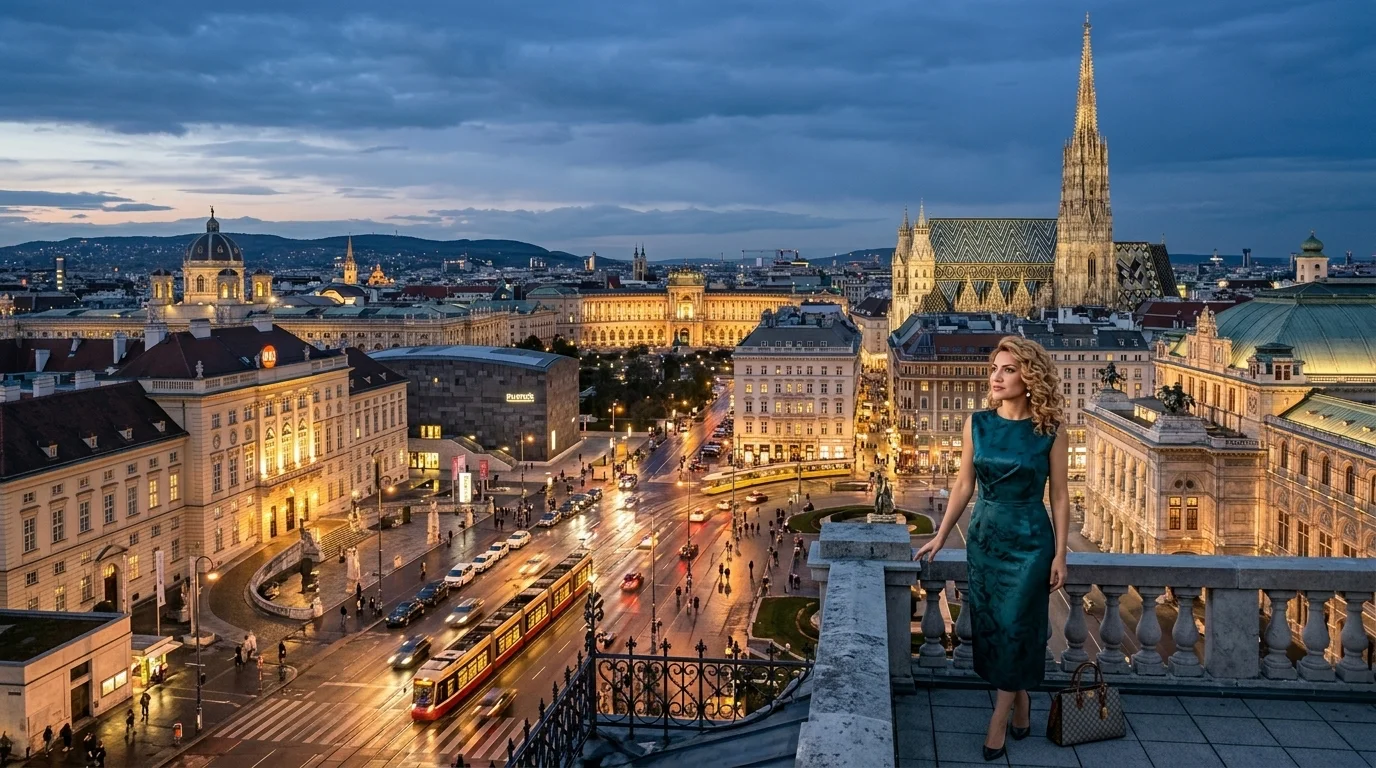
Vienna is the capital city of Austria, located in the heart of Central Europe along the banks of the Danube River. It is best known for its breathtaking imperial palaces, world-class museums, legendary coffee house culture, and its centuries-long role as the musical capital of the world — home to Mozart, Beethoven, and Strauss. Visitors come here for the stunning Baroque architecture, the extraordinary art collections, the vibrant food and wine scene, and the relaxed, sophisticated pace of life that earned Vienna the title of the world's most livable city for years running.
Table of Contents
- Vienna Overview
- Getting There & Around
- Top Attractions & Landmarks
- Neighborhoods & Districts
- Food & Dining
- Nightlife & Entertainment
- Shopping
- Seasonal Events & Festivals
- Accommodation Recommendations
- Practical Information
- Day Trips & Nearby Destinations
- Insider Tips & Hidden Gems
- Money-Saving Tips
- Common Tourist Mistakes to Avoid
- Sample Itineraries
- Frequently Asked Questions
What Is Vienna and Why Should You Visit?
Vienna is Austria's magnificent capital city, a place where imperial grandeur meets modern sophistication in a way you simply won't find anywhere else on Earth. For over 600 years, Vienna was the seat of the Habsburg Empire — one of the most powerful dynasties in European history — and that legacy shows in every palace, every museum, and every ornate coffee house you walk into. The city has a depth of culture, history, and beauty that rewards visitors again and again, no matter how many times they return.
What makes Vienna truly special is how it layers the old and the new. You can stand in front of a 700-year-old cathedral in the morning, visit a cutting-edge contemporary art museum in the afternoon, and spend the evening at one of the world's finest opera houses. The streets are clean, the public transport is excellent, the food is hearty and delicious, and the locals — though sometimes reserved at first — are genuinely helpful and welcoming once you engage with them.
Vienna regularly tops global surveys for quality of life, and once you visit, it's easy to see why. It's one of the safest capitals in Europe, incredibly well-organized, and rich with free or affordable cultural experiences. Whether you're an art lover, a history buff, a foodie, a music fan, or simply someone who appreciates beautiful cities, Vienna will exceed your expectations.
When Is the Best Time to Visit Vienna?
Spring (April–May): Spring is one of the best times to visit Vienna. Temperatures are comfortable (15–22°C / 59–72°F), the parks burst into bloom, and the summer crowds haven't yet arrived. The Prater chestnut trees blossom in April, and the city hosts several music festivals. Hotel prices are moderate and availability is good. Book major attractions in advance but you'll generally find shorter queues than summer.
Summer (June–August): Summer is Vienna's peak tourist season. Temperatures reach 25–30°C (77–86°F), sometimes higher, and the city is alive with outdoor festivals, open-air concerts, and film screenings. The famous Wiener Festwochen festival runs in May and June. Crowds at popular sites like Schönbrunn Palace can be intense, and hotel prices are at their highest. Book everything — especially accommodation and the Opera — months in advance.
Autumn (September–October): Shoulder season is arguably the smartest time to visit. The weather is still pleasant (12–20°C / 54–68°F), the summer tourists have thinned out, and the city's cultural calendar is in full swing as the opera and concert season reopens. Vineyards in the surrounding region are harvesting grapes, and you can enjoy fantastic Heuriger (wine tavern) experiences nearby.
Winter (November–February): Vienna in winter is magical, especially during the Christmas market season (late November through December). The famous Christkindlmarkt on Rathausplatz is one of Europe's most beautiful holiday markets. January–February is quieter and colder (-2 to 5°C / 28–41°F), with lower prices and fewer crowds — a great time for museum lovers. The Vienna Opera Ball in late January/early February is one of the most prestigious events on the European social calendar.
How Many Days Do You Need in Vienna?
- 1–2 days: Enough for the historic centre (Innere Stadt), St. Stephen's Cathedral, the Hofburg, and a coffee house experience. Ideal for transit visitors or those combining Vienna with other cities.
- 3–4 days: The ideal minimum for first-time visitors. You can add Schönbrunn Palace, the Belvedere, the Naschmarkt, and a day trip to the Vienna Woods or Klosterneuburg.
- 5–7 days: Allows deep exploration — the Kunsthistorisches Museum, Prater, lesser-known museums, neighbourhood walks, and a day trip to Salzburg or Budapest.
- 1 week+: For enthusiasts who want to live like a local — attending the Opera, exploring all the imperial palaces, visiting Vienna's wine villages, and soaking up the café culture at a leisurely pace.
Quick Facts About Vienna
- Population: Approximately 1.93 million (city); 2.6 million (metro area)
- Language: German (Austrian dialect); English widely spoken in tourist areas
- Currency: Euro (€)
- Time Zone: Central European Time (CET) / UTC+1 (UTC+2 in summer)
- Country Code: +43
- Area Code: 01
- Climate: Humid continental (warm summers, cold winters)
- Altitude: 151–542 metres (495–1,778 feet) above sea level
How Do You Get To and Around Vienna?
The easiest way to reach Vienna is by air into Vienna International Airport (VIE), though excellent rail connections from neighbouring countries — including Germany, Hungary, Czech Republic, and Switzerland — make train travel a fantastic and scenic alternative. Once in Vienna, the city's outstanding public transport network makes getting around easy, affordable, and stress-free.
Which Airports Serve Vienna?
Vienna International Airport (VIE) — Flughafen Wien-Schwechat
Flughafen Wien, 1300 Schwechat, Austria
Vienna's main international airport is located about 18 km (11 miles) southeast of the city centre. It is Austria's busiest airport, handling over 30 million passengers a year, and serves direct flights from hundreds of destinations worldwide including North America, Asia, the Middle East, and across Europe. Airlines including Austrian Airlines (the flag carrier), Lufthansa, British Airways, Emirates, United, and Ryanair all operate here. The airport is modern, well-signposted in English, and has excellent facilities including shopping, dining, and currency exchange.
How Do You Get from the Airport to the City Center?
City Airport Train (CAT): The fastest and most convenient option. The CAT runs non-stop between the airport and Wien Mitte/Landstraße station in just 16 minutes. Cost: €14 one way, €24 return (2026). Runs every 30 minutes from 06:05 to 23:35. You can even check in your luggage at the Wien Mitte terminal the night before your flight — a fantastic feature unique to Vienna.
S-Bahn (S7 suburban train): The cheaper alternative, running the same route but stopping at more stations. Takes about 25 minutes and costs only €4.20 with a standard city transport ticket (2026). Runs roughly every 30 minutes. This is the best budget option if you're not in a hurry.
Official Taxi: Takes 20–40 minutes depending on traffic. Expect to pay €35–€45 (2026) for a metered taxi to the city centre. Always use official yellow taxis from the designated rank or pre-booked services to avoid overcharging.
Rideshare (Uber/Bolt): Available and reliable. Typically €25–€35 to the city centre, slightly cheaper than a taxi. App-based so pricing is transparent. Book directly from the app inside the arrivals hall.
Private Transfer: Can be pre-booked for €45–€60 and includes a meet-and-greet service, help with luggage, and a fixed price. Ideal for families or first-time visitors who want total peace of mind.
What Is the Best Way to Get Around Vienna?
The best way to get around Vienna is by using the city's outstanding public transport network, which is one of the finest in Europe. The U-Bahn (metro), trams, buses, and suburban trains together cover virtually every corner of the city quickly and reliably. For short distances in the historic centre, walking is often the best option — Vienna's pedestrian-friendly old town is compact and extremely beautiful.
Public Transport System
Vienna's Wiener Linien network operates 5 U-Bahn (metro) lines, 28 tram lines, and dozens of bus routes running daily from approximately 05:00 to midnight. On Friday and Saturday nights, the entire network runs through the night (Nightline). The system is clean, punctual, and very easy to navigate even without speaking German — all signage is clear and digital displays show upcoming stops.
Tickets & Passes (2026 prices):
- Single ride: €2.40
- Vienna City Card (24 hours): €17.10 (includes unlimited transport + museum discounts)
- Vienna City Card (48 hours): €25.70
- Vienna City Card (72 hours): €33.80
- Weekly pass: €17.10
- Klimaticket (annual Austria-wide): €1,095
Taxis & Rideshare
Vienna has a reliable official taxi system. The base fare is €3.80 and the per-kilometre rate is approximately €1.42 (2026). Recommended taxi companies include Taxi 40100, Taxi 31300, and Taxi 60160 — all reputable and meter-regulated. Rideshare apps Uber and Bolt both operate in Vienna and are often slightly cheaper than traditional taxis. Freenow (formerly mytaxi) is the most popular local ride-hailing app.
Walking
Vienna's historic Innere Stadt (First District) is extremely walkable. Most of the major landmarks — St. Stephen's Cathedral, the Hofburg, the Kunsthistorisches Museum, the Opera House, and the Naschmarkt — are within 20–30 minutes walk of each other on flat, well-paved streets. Vienna is also a fantastic cycling city, with over 1,500 km of bike paths and the City Bike (Citybike Wien) hire scheme available across the city.
Walkability Score: 89/100 for the tourist centre. The Ringstrasse boulevard and the pedestrianised Kärntner Strasse are particularly pleasant for walkers. Outer districts require trams or U-Bahn.
Smart travellers always compare transfer options before booking — prices for the same route can vary by 40% or more. Take 60 seconds to check all options and choose what works best for your arrival.
What Are the Top Attractions and Landmarks in Vienna?
Vienna's top attractions include some of the most magnificent palaces, museums, and cultural institutions in the world. From the grand imperial Schönbrunn Palace to the jaw-dropping art collections at the Kunsthistorisches Museum and the world-famous Vienna State Opera, the city offers a genuinely overwhelming richness of things to see and do. Here are the must-visit highlights.
Schönbrunn Palace (Schloss Schönbrunn)
Schönbrunner Schloßstraße 47, 1130 Wien, Austria
Schönbrunn Palace is Vienna's most visited attraction and one of the most important cultural monuments in Austria. This spectacular 1,441-room Baroque palace was the primary summer residence of the Habsburg imperial family from the 18th century onwards. Walking through its gilded state rooms, you'll follow in the footsteps of Empress Maria Theresa, Emperor Franz Joseph, and the legendary Empress Sisi. The young Mozart performed here at just six years old, and Napoleon used it as his headquarters after conquering Vienna.
Beyond the palace itself, the gardens are extraordinary — 186 hectares of perfectly manicured Baroque gardens stretching up to the Gloriette hilltop monument, which offers one of the finest panoramic views of Vienna. The palace complex also includes Europe's oldest zoo (Tiergarten Schönbrunn, founded 1752), the Imperial Carriage Museum, and the beautiful Orangery where Mozart concerts are regularly performed.
Why visit: Schönbrunn is the Habsburg legacy at its most spectacular — nowhere else in Vienna gives you such a vivid sense of the extraordinary wealth and power of the imperial family. The gardens alone are worth a full half-day.
Entrance: Grand Tour (40 rooms): €22 adults, €14 children (2026); Gardens: free; Gloriette: €5
Best time: Weekday mornings to avoid crowds; gardens at sunset
Hours: Palace: 09:00–17:00 daily (extended hours in summer); Gardens: open sunrise to sunset
St. Stephen's Cathedral (Stephansdom)
Stephansplatz 3, 1010 Wien, Austria
St. Stephen's Cathedral is the most recognisable symbol of Vienna and the spiritual heart of the city. This Gothic masterpiece dominates the skyline with its distinctive multicoloured diamond-patterned roof made of over 230,000 glazed tiles — an icon of Viennese architecture. Construction began in the 12th century and continued for hundreds of years, resulting in a magnificent blend of Romanesque and Gothic styles. The cathedral's 137-metre (450-foot) South Tower, known affectionately as "Steffl," can be climbed for stunning views.
Inside, the cathedral is breathtaking — vast, dark, and atmospheric, with an ornate pulpit carved in 1515, the imperial tomb of Frederick III, and the Wiener Neustädter Altar. Beneath the cathedral lies the Habsburg Crypt (Kaisergruft), where the internal organs of Habsburg rulers were stored separately from their bodies (which are in the Imperial Crypt at the Kapuzinerkirche). The catacombs beneath the cathedral hold over 11,000 human skeletons.
Why visit: Stephansdom is the beating heart of Vienna — an astonishing piece of living history that has survived wars, fires, and centuries of change. You can visit the main nave for free, making it one of the best value experiences in the city.
Entrance: Main nave: free; South Tower climb: €5.50; North Tower elevator: €6; Catacombs tour: €6 (2026)
Best time: Early morning (08:00–09:00) for an empty, peaceful experience
Hours: 06:00–22:00 daily (tourist visits limited to specific hours around services)
The Hofburg Imperial Palace
Michaelerkuppel, 1010 Wien, Austria
The Hofburg was the winter residence of the Habsburg dynasty for over six centuries and is one of the largest palace complexes in the world. Today it houses several world-class museums, the Austrian National Library, the Spanish Riding School, and the official residence and offices of the Austrian Federal President. The complex is a city within a city — an enormous collection of interconnected buildings spanning different architectural styles from Gothic to Neo-Renaissance.
The three must-visit museums within the Hofburg are the Imperial Apartments (where Emperor Franz Joseph and Empress Sisi lived), the Sisi Museum (dedicated to the iconic Empress Elisabeth), and the Imperial Silver Collection — an astonishing array of Habsburg tableware and dinner services. The Kunstkammer Wien, housed nearby, contains some of the most extraordinary Renaissance art objects ever assembled.
Why visit: The Hofburg gives you unparalleled insight into the daily lives of the Habsburgs — from Empress Sisi's obsessive gym routine and extreme diets to Franz Joseph's famously Spartan lifestyle. The contrast between their very different personalities makes for compelling storytelling.
Entrance: Imperial Apartments + Sisi Museum + Silver Collection combined: €19.90 adults, €11.50 children (2026)
Best time: Tuesday–Thursday mornings
Hours: 09:00–17:30 daily (extended to 18:00 July–August)
Kunsthistorisches Museum (Museum of Art History)
Maria-Theresien-Platz, 1010 Wien, Austria
The Kunsthistorisches Museum is one of the great art museums of the world, housing the Habsburg imperial art collection assembled over five centuries of conquest, patronage, and passionate collecting. The building itself — a magnificent Neo-Renaissance palace built in 1891 — is as much of an attraction as the art inside. The Picture Gallery on the first floor contains one of the finest collections of Old Master paintings anywhere, including an extraordinary collection of Bruegel works (the largest in the world), Vermeer, Raphael, Titian, Caravaggio, Rubens, and Velázquez.
The museum also houses world-class collections of Egyptian and Near Eastern antiquities, Greek and Roman antiquities, and the Kunstkammer — an extraordinary treasury of Renaissance and Baroque decorative arts, ivory carvings, gold objects, and scientific instruments. The famous Salt Cellar (Saliera) by Benvenuto Cellini — once stolen and recovered — is displayed here.
Why visit: This is simply one of the top 10 art museums on Earth. The Bruegel collection alone would justify a full day — but the sheer breadth and quality of every department makes it essential for anyone with even a passing interest in art or history.
Entrance: €21 adults, €18 seniors, free under 19 (2026)
Best time: Tuesday morning (closed Mondays)
Hours: Tuesday–Sunday 10:00–18:00; Thursday until 21:00; closed Mondays
Belvedere Palace (Schloss Belvedere)
Prinz-Eugen-Straße 27, 1030 Wien, Austria
The Belvedere is a spectacular Baroque palace complex comprising two palaces — the Upper Belvedere and Lower Belvedere — set in formal gardens that rival those of Versailles. Built in the early 18th century as the summer residence of the brilliant military commander Prince Eugene of Savoy, the Upper Belvedere today houses Austria's most important collection of art, including the largest collection of Gustav Klimt paintings in the world. The iconic painting "The Kiss" (1907–1908) by Klimt is displayed here and draws enormous crowds every day.
The Lower Belvedere contains the Baroque Museum and the Orangery, used for temporary exhibitions and classical concerts. The gardens between the two palaces are a gorgeous formal Baroque landscape with fountains, cascades, and sphinx sculptures — one of the finest garden designs in Central Europe.
Why visit: The Klimt collection alone makes the Belvedere unmissable — "The Kiss" is one of the most recognisable paintings in Western art and seeing it in person, at its true large scale, is a genuine wow moment. The palace itself and the gardens are equally stunning.
Entrance: Upper Belvedere: €16 adults, €13 seniors, free under 19 (2026)
Best time: Weekday mornings; Thursday evenings (open late)
Hours: Daily 09:00–18:00; Upper Belvedere open until 21:00 on Fridays
Vienna State Opera (Wiener Staatsoper)
Opernring 2, 1010 Wien, Austria
The Vienna State Opera is one of the world's leading opera houses and the most prestigious venue on the global opera calendar. The building itself is a magnificent Neo-Renaissance masterpiece that anchors the famous Ringstrasse boulevard. Built between 1863 and 1869 and heavily restored after WWII bombing, the opera house has been the home stage of legendary conductors including Gustav Mahler, Herbert von Karajan, and Leonard Bernstein. The programme runs from September to June with nearly 300 performances a year across opera, ballet, and special events.
Even if you don't attend a performance, the Opera House offers guided tours of its lavish interior — the Grand Staircase, the Tea Room, and the main auditorium. Standing room tickets (Stehplätze) are sold on the day of performance for just €5–€10 and give access to world-class opera that would cost hundreds of euros for a seat.
Why visit: Attending a performance at the Vienna State Opera — even standing — is one of the great cultural experiences available anywhere in the world. The quality of performance is extraordinary, and the atmosphere is electric.
Entrance: Standing room: €5–€10; Seats: €15–€300+ depending on performance and tier (2026); Tour: €13
Best time: September–June (opera season)
Hours: Box office: 10:00–19:00 on performance days; guided tours multiple times daily
The Naschmarkt
Naschmarkt, 1060 Wien, Austria (between Linke Wienzeile and Rechte Wienzeile)
Vienna's Naschmarkt is the city's most famous and beloved open-air market, stretching for nearly a kilometre along the Wienzeile between the 4th and 6th districts. Running continuously since the 16th century, it is one of the oldest markets in Europe. Today it's a vibrant mix of fresh produce stalls, cheese and spice vendors, meat and fish counters, Middle Eastern food shops, restaurants, and cafés. The diversity reflects Vienna's multicultural present alongside its imperial past.
On Saturdays, the eastern end of the market transforms into a lively flea market (Flohmarkt) where you can find antiques, vintage clothing, old books, vinyl records, and all manner of curiosities. The market is also lined with sit-down restaurants where you can enjoy a full breakfast, lunch, or dinner while watching the world go by.
Why visit: The Naschmarkt is where Vienna comes alive in the most authentic, unfiltered way. It's the best place to sample local ingredients, try international street food, pick up provisions for a picnic, and simply absorb the daily rhythm of Viennese life.
Entrance: Free
Best time: Saturday morning (market + flea market combined)
Hours: Monday–Friday 06:00–19:30; Saturday 06:00–18:00; closed Sundays
The Prater and Riesenrad (Giant Ferris Wheel)
Prater 90, 1020 Wien, Austria
The Prater is Vienna's beloved public park and recreation area, stretching across 6 km² in the 2nd district. It is bisected by the famous Hauptallee — a 4.5-km arrow-straight chestnut-tree-lined avenue — and includes forests, meadows, jogging paths, cycling tracks, golf courses, and the historic Wurstelprater amusement park. At the heart of the amusement park stands the iconic Riesenrad — a 65-metre tall historic Ferris wheel built in 1897 that is one of Vienna's most recognisable landmarks. It featured memorably in the Orson Welles film "The Third Man" (1949).
The Prater itself is entirely free to enter and explore. The amusement park rides have individual ticket prices, but you can wander through the fairground atmosphere, watch the rides, and enjoy the nostalgic atmosphere without spending a cent. The park is particularly magical in spring when the chestnut trees blossom and in autumn when the foliage turns golden.
Why visit: The Riesenrad Ferris wheel offers fantastic views over Vienna and the Danube, and a ride in one of its historic wooden gondolas feels like stepping back in time. The Prater itself is one of the great urban parks of Europe — perfect for a relaxed afternoon.
Entrance: Prater park: free; Riesenrad: €13.50 adults, €7 children (2026)
Best time: Late afternoon for golden light; spring for blossoms
Hours: Park always open; Riesenrad: 10:00–22:00 (seasonal variations)
Musikverein
Musikvereinsplatz 1, 1010 Wien, Austria
The Musikverein is one of the most acoustically perfect concert halls in the world and home to the Vienna Philharmonic Orchestra. The Golden Hall (Großer Musikvereinssaal), completed in 1870, is a stunning Neo-Greek masterpiece in gold and red, with its famous gilded caryatid figures supporting the galleries. It is here that the internationally broadcast Vienna New Year's Concert is performed each January 1st — arguably the most watched classical music event in the world. The hall's acoustics are ranked among the top three in the world by music experts.
The Musikverein hosts hundreds of concerts every year across its six halls, from the Vienna Philharmonic's subscription series to visiting orchestras, chamber music, and solo recitals. Tickets for Vienna Philharmonic concerts are notoriously difficult to obtain, but many other outstanding performances are available with reasonable advance booking.
Why visit: Hearing live music in the Golden Hall is an almost spiritual experience — the sound quality is unlike anything you will encounter in most other venues. Even a chamber music recital in a smaller hall here will likely be one of the highlights of your trip.
Entrance: Concerts: €15–€150+ depending on performance; Tours: €7 (2026)
Best time: September–June (main concert season)
Hours: Box office: Monday–Friday 09:00–18:00; Saturday 09:00–12:00
Vienna Woods (Wienerwald) and Kahlenberg Hill
Kahlenbergerdorf, 1190 Wien, Austria
The Vienna Woods is a vast forested area of hills and valleys that forms the natural backdrop of Vienna's western and northern edges. Covering over 1,350 km², it is one of the largest forested areas surrounding any major European capital. The Vienna Woods are laced with hiking and cycling trails, traditional wine taverns (Heurigen), and charming villages. The highest accessible point near the city is Kahlenberg (484 m), which offers a remarkable panoramic view over Vienna, the Danube, and on clear days, the Carpathian mountains beyond.
A trip to Kahlenberg is one of the best half-day excursions from central Vienna — accessible by bus 38A from Heiligenstadt U-Bahn station. At the top there's a small restaurant and a historic church from which the Polish King Jan III Sobieski blessed his troops before the Battle of Vienna (1683) that saved the city from Ottoman siege.
Why visit: Kahlenberg gives you the best free panoramic view of Vienna without any crowds or entrance fees — genuinely one of Vienna's top experiences that most tourists skip entirely in favour of paid towers.
Entrance: Free
Best time: Clear days, late afternoon for golden hour over the city
Hours: Always accessible; restaurant varies seasonally
Albertina Museum
Albertinaplatz 1, 1010 Wien, Austria
The Albertina is one of Vienna's great art museums, housed in a magnificent palace that formed part of the Hofburg complex. It holds one of the world's largest and most important collections of graphic art — over one million prints, drawings, and watercolours — including works by Dürer, Rembrandt, Michelangelo, Raphael, and Rubens. The Batliner Collection on permanent display includes a superb survey of Impressionist and modern masters: Monet, Picasso, Matisse, Chagall, and Kokoschka.
The Albertina is also famous for its outstanding temporary exhibitions, which regularly attract international blockbusters. The palace's Imperial State Rooms provide a gorgeous Classicist backdrop to the entire experience, and the rooftop terrace offers excellent views over the Burggarten and Operring.
Why visit: The Albertina combines Habsburg imperial history, a world-class permanent collection, and blockbuster temporary shows in one beautiful building. It's excellent value and often less crowded than the Kunsthistorisches Museum.
Entrance: €18.90 adults, €14.90 seniors, free under 19 (2026)
Best time: Weekday afternoons
Hours: Daily 10:00–18:00; Wednesday until 21:00
Book your tours and tickets in advance — it saves hours of queuing and often gets you a better price. These two platforms cover different options, so it's worth checking both.
What Are the Best Neighborhoods to Explore in Vienna?
Vienna's neighborhoods each have a distinct character shaped by their history, architecture, and the people who live there. Here are the most interesting and visitor-friendly areas to explore beyond the main tourist sites.
Innere Stadt (1st District) — The Imperial Heart
Character: Vienna's historic centre is a UNESCO World Heritage Site — a dense tapestry of medieval churches, Baroque palaces, grand Ringstrasse institutions, and elegant coffee houses. The streets are narrow and atmospheric, the architecture is jaw-dropping at every turn, and the energy is a mix of tourists, office workers, and shoppers.
What makes it special: Simply walking through the Innere Stadt is an experience — you'll stumble across Roman ruins, medieval courtyards, spectacular churches, and elegant squares without even trying. The pedestrian Graben and Kohlmarkt streets are lined with luxury shops and some of Vienna's most historic cafés.
Best for: First-time visitors, history lovers, architecture enthusiasts, luxury shoppers
Must-see in this area: Stephansdom, Graben, Peterskirche, Augustinerkirche, Figarohaus (where Mozart lived), Looshaus by Adolf Loos
How to get there: U1/U3 to Stephansplatz; U2 to Museumsquartier; walk from the Ringstrasse
Location: Stephansplatz, 1010 Wien, Austria
Mariahilf and Neubau (6th and 7th Districts) — Creative and Bohemian
Character: These adjacent inner districts are Vienna's most creative and bohemian neighbourhoods — a world away from the imperial grandeur of the first district. The streets are lined with independent boutiques, vintage shops, design studios, casual bars, hipster coffee shops, and some of the city's best international restaurants.
What makes it special: The Mariahilfer Strasse is Vienna's main shopping street — a long pedestrianised boulevard connecting the 6th and 7th districts. But head one or two streets off it and you'll find the real character: the Spittelberg quarter, with its preserved Biedermeier townhouses and charming Christmas market; the MuseumsQuartier complex (MQ), one of the largest arts complexes in the world; and Burggasse with its galleries and independent restaurants.
Best for: Young travellers, design lovers, foodies, shoppers, art enthusiasts
Must-see in this area: MuseumsQuartier, Spittelberg quarter, Mariahilfer Strasse, Burggasse galleries
How to get there: U2/U3 to Volkstheater; U3 to Neubaugasse or Zieglergasse
Location: Mariahilfer Straße 1, 1060 Wien, Austria
Leopoldstadt (2nd District) — Vienna's Jewish Quarter
Character: Leopoldstadt is Vienna's most historically significant and rapidly transforming neighbourhood. Historically home to Vienna's Jewish community (and devastated during the Holocaust), it is today one of the most vibrant, diverse, and exciting areas in the city — full of young professionals, excellent restaurants, cool bars, and the massive Prater park.
What makes it special: The Karmeliterviertel within Leopoldstadt is a charming area of narrow streets, a wonderful Saturday farmers market, synagogues, kosher bakeries, and increasingly, trendy cafés. The famous Naschmarkt is nearby, and the entire area has an authentic, non-touristy energy that the first district sometimes lacks.
Best for: History lovers, foodies, families (Prater), those who want to live like a local
Must-see in this area: Prater, Riesenrad, Karmelitermarkt, Jewish Museum, Augarten park
How to get there: U1 to Praterstern; U2 to Taborstraße; trams 1 and 2
Location: Karmeliterplatz, 1020 Wien, Austria
Josefstadt (8th District) — Elegant and Understated
Character: Josefstadt is one of Vienna's quietest and most elegant inner districts — a neighbourhood of Biedermeier architecture, independent bookshops, antique dealers, excellent restaurants, and the famous Theater in der Josefstadt. It's the kind of neighbourhood where academics, lawyers, and doctors live — intelligent, understated, and genuinely Viennese.
What makes it special: Josefstadt has virtually no tourists despite being just 10 minutes walk from the city centre. The Josefstädter Strasse is lined with lovely independent shops and restaurants. The neighbourhood's covered market and the surrounding streets feel like a village within the city.
Best for: Visitors wanting authentic Viennese experience, bookworms, theatre lovers
Must-see in this area: Theater in der Josefstadt, Blindengasse antique shops, Bennoplatz local market
How to get there: U2 to Rathaus; tram J to Josefstädter Strasse
Location: Josefstädter Straße, 1080 Wien, Austria
Favoriten (10th District) — Multicultural and Authentic
Character: Favoriten is Vienna's most populous and most ethnically diverse district — a melting pot of Turkish, Serbian, Afghan, and many other immigrant communities that has given it a distinctive, vibrant, and unpretentious energy. It's not a typical tourist destination, but it's one of the most fascinating and authentic parts of the city.
What makes it special: The 10th district offers some of the best and cheapest food in Vienna — from outstanding Turkish kebabs and Bosnian burek to Vietnamese pho and Iranian rice dishes. The area around Reumannplatz has great street food and the nearby Theresienbad is a beautiful historic public swimming pool complex.
Best for: Adventurous foodies, budget travellers, those wanting to see Vienna beyond the tourist trail
Must-see in this area: Reumannplatz, Triester Strasse food strip, Theresienbad
How to get there: U1 to Reumannplatz or Keplerplatz
Location: Reumannplatz, 1100 Wien, Austria
Döbling and Grinzing (19th District) — Wine Country Villages
Character: Döbling is Vienna's most affluent and perhaps most surprising district — a leafy, hilly area on the northern edge of the city where the Viennese suburbs merge seamlessly into vineyard-covered hills and traditional wine villages. Grinzing, Sievering, Neustift, and Nussdorf are charming historic villages within the Vienna city limits, famous for their traditional Heurigen wine taverns.
What makes it special: Visiting a Heuriger in Grinzing or Nussdorf is a quintessentially Viennese experience — you sit in a garden or rustic indoor space, eat cold cuts and bread, and drink local Grüner Veltliner or Riesling wine produced on the premises. It's affordable, social, and authentic — a beloved Viennese institution.
Best for: Wine lovers, couples, those wanting a relaxed afternoon or evening
Must-see in this area: Heurigen wine taverns, Kahlenberg hill views, Vienna Woods hiking trails
How to get there: D tram to Nussdorf; bus 38A from Heiligenstadt U4 to Kahlenberg
Location: Grinzing, 1190 Wien, Austria
What Food Should You Try in Vienna?
Vienna is famous for its hearty, satisfying Central European cuisine — rich with meat dishes, dumplings, soups, and above all, extraordinary pastries and cakes. The must-try dishes include Wiener Schnitzel, Tafelspitz, Kaiserschmarrn, and Sachertorte, but the city's food scene has evolved enormously and now offers outstanding international dining alongside its beloved classics.
What Are the Must-Try Local Dishes in Vienna?
- Wiener Schnitzel — The dish Vienna is most famous for: a thin slice of veal (always veal for the authentic version) pounded flat, breaded in fine breadcrumbs, and pan-fried in butter or lard until golden. Served with potato salad and a slice of lemon. The definitive version must be made from Kalb (veal) — anything else must be called "Schnitzel Wiener Art." Expect to pay €18–€28 at a good restaurant in 2026.
- Tafelspitz — Emperor Franz Joseph's favourite dish: boiled prime beef (typically the rump cap cut) simmered for hours in broth with vegetables and bone marrow. Served with apple-horseradish sauce, creamed spinach, and rösti potatoes. It is comfort food elevated to art. Best tried at Plachutta restaurants.
- Kaiserschmarrn — Literally "Emperor's Mess" — a fluffy shredded pancake traditionally made with raisins, dusted with icing sugar, and served with plum compote. Legend has it Franz Joseph loved this dessert so much it was named in his honour. Essential eating at any Viennese café.
- Sachertorte — The most famous cake in the world: a dense chocolate sponge cake with a thin layer of apricot jam beneath a smooth chocolate glaze. Created in 1832 by 16-year-old Franz Sacher for Prince Metternich. The original is served at the Hotel Sacher and Café Demel — and both establishments have historically argued over who makes the "true" original.
- Apfelstrudel — Thin pastry wrapped around spiced apple filling with raisins and cinnamon, served warm with vanilla sauce or ice cream. Vienna's answer to apple pie. Available everywhere, but best at traditional coffee houses.
- Gulasch — Vienna's beloved adaptation of the Hungarian stew — beef slow-cooked in a rich, paprika-spiced sauce until fork-tender. Vienna has a specific Viennese Gulasch tradition, with the Figlmüller and Café Leopold Hawelka versions being legendary. Served with bread dumplings (Semmelknödel).
- Zwiebelrostbraten — Roasted beef sirloin topped with crispy fried onions and served with roasted potatoes. One of Vienna's great pub dishes, found in almost every traditional Gasthaus.
- Palatschinken — Viennese-style thin crêpes, typically filled with jam, chocolate sauce, or sweet curd cheese (Topfen). A staple of café menus and much thinner and more delicate than their Hungarian cousins.
Where Should You Eat in Vienna?
Budget-Friendly (Under €15 per meal)
- Würstelstand am Graben — Graben, 1010 Wien — Vienna's sausage stands (Würstelstände) are an institution. The one on the Graben is iconic. Get a Käsekrainer (cheese-filled sausage) with mustard and a bread roll for €4–€6. Open late into the night — a favourite after-theatre snack.
- Gasthaus Pöschl — Weihburggasse 17, 1010 Wien — A genuine Viennese Gasthaus with no-nonsense, hearty food at honest prices. The Gulasch is outstanding and the daily lunch special (Mittagsmenü) is around €11–€13 for two courses.
- Naschmarkt food stalls — Naschmarkt, 1060 Wien — For the best budget lunch in Vienna, graze the Naschmarkt stalls: Turkish börek, fresh sushi, Lebanese falafel, Greek mezes, and fresh fruit. A full meal costs €6–€10.
Mid-Range (€20–€45 per meal)
- Figlmüller Bäckerstraße — Bäckerstraße 6, 1010 Wien — Vienna's most famous Schnitzel restaurant. The schnitzels are legendary — so large they hang over the plate on both sides. Book ahead, always. Schnitzel from €24 in 2026.
- Café Central — Herrengasse 14, 1010 Wien — One of Vienna's grand coffee houses, occupying a stunning Venetian Gothic hall. The food is good (traditional Viennese dishes), but you're also paying for the atmosphere. A coffee house classic that Leon Trotsky, Sigmund Freud, and Arthur Schnitzler all once frequented.
- Meixner's Gastwirtschaft — Buchengasse 64, 1100 Wien — A genuine Viennese neighbourhood restaurant in the 10th district. No tourists, real locals, fantastic Tafelspitz and Schnitzel at neighbourhood prices. A true find.
- Steirereck im Stadtpark (bar/bistro area) — Am Heumarkt 2a, 1030 Wien — While the main restaurant is fine dining, the adjacent Meierei dairy restaurant serves excellent Austrian food in a more casual setting at moderate prices.
Fine Dining (€60+ per meal)
- Steirereck im Stadtpark — Am Heumarkt 2a, 1030 Wien — Austria's most celebrated restaurant, consistently ranked among the world's top 50. Chef Heinz Reitbauer creates extraordinary contemporary Austrian cuisine using hyper-local ingredients. Full dinner tasting menu €175–€210 per person. Book 2–3 months in advance.
- Konstantin Filippou — Dominikanerbastei 17, 1010 Wien — Two Michelin star Greek-Austrian fusion in an intimate setting. One of the most creative and exciting restaurants in Vienna. Tasting menus from €145 per person.
What Are the Dining Customs in Vienna?
Meal times: Breakfast is taken from 07:00–09:00 (often just coffee and a roll). Lunch is the main meal of the day for many locals (12:00–14:00), and many restaurants offer outstanding value Mittagsmenü deals. Dinner is from 18:30–21:00.
Tipping: Tipping in Vienna is customary but not obligatory. Round up to the nearest convenient amount or add 5–10% for good service. Tell the waiter your total when paying (e.g., say "Zwanzig" for €20 when the bill is €18.50) — this is the Viennese way of tipping.
Reservations: Essential for mid-range and fine dining restaurants, especially on weekends. Book at least 2–3 days ahead for popular spots, 2–3 months for Steirereck or Michelin-starred venues.
Dress code: Smart casual for most restaurants. Opera house dining before a performance calls for neat dressing. Fine dining restaurants request at minimum smart casual — jacket optional but appreciated.
What Is the Nightlife Like in Vienna?
Vienna's nightlife scene is sophisticated, diverse, and surprisingly vibrant — with everything from legendary opera and classical concert performances to underground clubs, rooftop bars, live jazz, and all-night parties in the Prater. The city generally gets going late — bars fill up from 22:00 and clubs from midnight — and on weekends, venues regularly stay open until 04:00 or later.
Where Are the Best Areas for Nightlife in Vienna?
- Bermuda Dreieck (Bermuda Triangle): Rabensteig/Seitenstettengasse/Judengasse, 1010 Wien — Vienna's most famous pub district, a cluster of bars and clubs in the Jewish quarter of the first district, so named because visitors "disappear" into it. Lively, accessible, and great for a pub crawl. Best for: bar-hopping, meeting other travellers.
- Gürtel (U6 Nightlife Belt): Along the Gürtel ring road near Josefstädter Str. U6 station — The arches beneath the elevated U6 metro line host Vienna's best alternative, electronic, and indie music bars and clubs. Establishments like Chelsea, Rhiz, and B72 have been Viennese nightlife institutions for decades. Best for: alternative music, local crowd, underground scene.
- Prater area: Near Praterstern, 1020 Wien — The Prater's outer reaches host several large clubs and music venues, popular with the 18–25 crowd. Best for: large venue clubbing, EDM, late nights.
What Are the Best Bars and Clubs in Vienna?
Bars & Pubs
- Loos American Bar — Kärntner Durchgang 10, 1010 Wien — Designed in 1908 by master architect Adolf Loos, this tiny (37m²) masterpiece of modernist design is one of the most beautiful bars in the world. The mirrored interior creates an infinite space. Classic cocktails from €12–€16. A genuine architectural and cultural experience.
- Vinothek W — Brahmsplatz 2, 1040 Wien — Outstanding Austrian wine bar with an extraordinary selection of Austrian regional wines by the glass. Perfect for exploring Grüner Veltliner, Riesling, and Blaufränkisch in a knowledgeable but relaxed setting.
- Das Möbel — Burggasse 10, 1070 Wien — A design bar-café in the 7th district where every piece of furniture is for sale. Great cocktails, a young creative crowd, and an ever-changing interior. Very Viennese in the best way.
Clubs & Dancing
- Pratersauna — Waldsteingartenstraße 135, 1020 Wien — Vienna's most legendary club, set in a converted outdoor swimming pool and sauna complex near the Prater. The outdoor pool area opens in summer for daytime events. World-class DJs, excellent sound system, and a loyal local following. Cover €10–€20. Open Thursday–Sunday from 23:00.
- Flex — Donaukanal/Augartenbrücke, 1010 Wien — A Vienna institution under the Augartenbrücke bridge on the Donaukanal. One of the best small clubs in Europe for alternative, techno, and indie music. Famously democratic door policy. Cover €8–€15.
Live Music & Shows
- Jazzland — Franz-Josefs-Kai 29, 1010 Wien — Vienna's oldest jazz club (founded 1972) in a beautiful vaulted cellar beneath the city. Nightly live jazz, blues, and swing performances. Entry €15–€25 depending on the act. Book ahead for popular shows.
- WUK (Werkstätten und Kulturhaus) — Währinger Straße 59, 1090 Wien — Vienna's best alternative cultural centre in a converted 19th-century locomotive factory. Concerts, theatre, dance, and community events across multiple spaces. Tickets €10–€35 depending on the event.
What Family-Friendly Evening Entertainment Is Available?
Vienna offers excellent family evening options: outdoor film screenings at the Rathausplatz (free in summer), evening performances of Mozart concerts in historic venues (child-friendly), the evening Prater amusement park rides, and the many excellent restaurants that welcome families enthusiastically throughout the evening. The Vienna Puppet Theatre (Marionettentheater) at Schönbrunn offers charming shows suitable for all ages.
What and Where Should You Shop in Vienna?
The best things to buy in Vienna are Austrian speciality food products (wine, chocolate, coffee, Mozartkugeln), traditional crafts (Augarten porcelain, Lobmeyr crystal glassware), designer fashion, and antiques. The top shopping areas range from luxury boutiques on Kohlmarkt to indie designers in the 7th district and antique dealers throughout the inner districts.
What Are the Best Shopping Districts in Vienna?
- Kohlmarkt and Graben (1st District): Kohlmarkt, 1010 Wien — Vienna's luxury shopping corridor. Home to Viennese institutions like Meinl am Graben (the finest food hall in Austria), international luxury brands (Louis Vuitton, Hermès, Cartier), and Demel, the imperial confectioner. Very expensive — better for window shopping unless you have a serious budget.
- Mariahilfer Strasse (6th/7th District): Mariahilfer Straße, 1060 Wien — Vienna's main mass-market shopping street, largely pedestrianised and packed with H&M, Zara, Mango, MediaMarkt, and dozens of Austrian mid-range brands. Great for everyday shopping at accessible prices.
- Neubaugasse and Burggasse (7th District): Neubaugasse, 1070 Wien — Vienna's best area for independent designers, vintage shops, concept stores, record shops, and local fashion. The 7th district is Vienna's Brooklyn — creative, independent, and constantly evolving.
What Markets Should You Visit in Vienna?
Naschmarkt Flea Market — Wienzeile, 1060 Wien — Every Saturday from 06:00–18:00, the eastern end of the Naschmarkt becomes a sprawling flea market with antiques, vintage clothing, books, vinyl, and curiosities. Arrive early for the best finds. Bargaining is accepted here — start at 60–70% of the asking price.
Flohmarkt am Dorotheum (Dorotheergasse Auction House) — Dorotheergasse 17, 1010 Wien — The Dorotheum is one of the oldest and largest auction houses in the world, founded in 1707. Regular viewings and sales of fine art, antiques, jewellery, and collectibles. A fascinating place to browse even if you don't intend to buy.
Karmelitermarkt — Karmeliterplatz, 1020 Wien — A charming local market in Leopoldstadt, open Tuesday–Saturday. One of the most authentic and least touristy food markets in Vienna, with excellent local produce, organic foods, and a wonderful Saturday farmers market atmosphere.
What Should You Buy in Vienna?
- Mozartkugeln — Pistachio marzipan and nougat balls coated in chocolate, named after Mozart. The original Reber Mozartkugel (in silver foil) is from Salzburg, but Vienna's Café Demel makes their own excellent version. Available everywhere; €8–€15 for a gift box.
- Augarten Porcelain — Hand-painted fine porcelain from Europe's second-oldest porcelain manufacturer (founded 1718). Figurines, tableware, and decorative items, all made by hand at the Augarten factory in the 2nd district. Expensive but extraordinary quality. Figurines from €60–€300+.
- Austrian Wine — A bottle of Grüner Veltliner or Riesling from a top Wachau producer (Knoll, Prager, F.X. Pichler) makes an excellent gift. Available at wine specialist shops like Vinothek W or Wein & Co. Price: €15–€60 per bottle for premium producers.
- Lobmeyr Crystal — Vienna's Lobmeyr has been making exquisite crystal glassware since 1823 and supplied the imperial court. Their flagship store on Kärntner Strasse is magnificent. Glasses from €40–€150 each.
- Viennese Coffee Blends — Julius Meinl am Graben sells beautifully packaged Viennese coffee blends — a classic souvenir that won't break the budget. Bags from €8–€14.
- Vintage Design and Art Books — Vienna's independent bookshops and the Dorotheum are great sources for art books, vintage posters, and prints. The Freytag & Berndt bookshop (Kohlmarkt 9) is excellent for maps and travel books.
What Are the Shopping Hours and Customs?
Most shops in Vienna are open Monday–Friday 10:00–19:00 and Saturday 10:00–18:00. Shops are closed on Sundays except at the Naschmarkt and shops inside train stations. The pre-Christmas period (November–December) sees shops open until 20:00 or later. VAT refunds (Global Blue scheme) are available for non-EU tourists on purchases over €75 at participating shops — ask for the Tax Free form at the till.
Can Non-EU Visitors Claim a VAT Tax Refund in Vienna?
Yes — if you are a visitor from outside the European Union (including travellers from the USA, Canada, Australia, the UK, and most of Asia and Latin America), you are entitled to a refund of the VAT (Value Added Tax) included in the price of goods you buy in Austria. VAT in Austria is 20% on most goods, which means this refund can be significant on high-value purchases like clothing, leather goods, jewellery, designer fashion, and electronics.
How to Claim Your VAT Refund — Step by Step
- Spend at least €75.01 in a single shop in a single day. This is the minimum threshold for a VAT refund claim in Austria. It does not apply across multiple shops — the full amount must be spent in one store.
- Look for the "Tax Free" sign. Participating shops display a "Tax Free Shopping," "Global Blue," or "Planet" logo in the window or at the register.
- Ask for the tax refund form at the register before you pay. Present your non-EU passport — the shop will fill out the form with your details and the purchase amount. Keep the form with your receipt.
- Get the form stamped at customs before you leave. Go to the Customs office at Vienna International Airport (VIE) before check-in and have an officer stamp your tax refund form. Keep your purchases accessible in hand luggage — do not pack them deep in your checked bags.
- Collect your refund. Hand the stamped form to the Global Blue or Planet desk at the airport. You can receive the refund in cash (minus a processing fee) or as a credit card refund (lower fees, takes a few weeks).
VAT Refund Quick Facts for Vienna
- Minimum spend: €75.01 in one shop in one day
- VAT rate on most goods: 20% on most goods
- Typical refund after fees: 10–15% of the purchase price
- Refund processors: Global Blue and Planet (formerly Premier Tax Free) at Vienna International Airport (VIE)
- Who qualifies: Anyone with a non-EU passport who is not a resident of an EU country
- UK visitors: British passport holders qualify since Brexit — the UK is no longer in the EU
- Deadline: Purchases must be exported within 3 months of the date of purchase
- Full guide: VAT Refund in Europe — Complete Guide for Non-EU Travelers
What Festivals and Events Happen in Vienna?
Vienna's biggest festivals include the Vienna Opera Ball in January/February, the Wiener Festwochen arts festival in May and June, the free Vienna Film Festival (Filmfestival am Rathausplatz) in July and August, and the magical Christmas markets in November and December. The city's event calendar is extraordinarily rich year-round.
What Is the Annual Events Calendar for Vienna?
| Month/Season | Event Name | Description |
|---|---|---|
| January | Vienna New Year's Concert | The Vienna Philharmonic's globally broadcast New Year's Day concert from the Musikverein Golden Hall — the world's most watched classical music event. Tickets are allocated by lottery years in advance, but you can watch it live on screens across the city for free. |
| January/February | Vienna Opera Ball (Wiener Opernball) | The most prestigious ball in Europe, held at the Vienna State Opera. The floor of the opera house is transformed into a dance floor. Tickets from €350 per person; loges (boxes) from €25,000. Watching the televised broadcast with locals in cafés and bars is almost as fun. |
| February/March | Fasching (Carnival Season) | Vienna's pre-Lent carnival season features over 300 balls (Bälle) across the city — from the famous Coffeehouse Owners' Ball to the Pharmacy Ball and the Rainbow Ball (LGBTQ+). Ball season is a deeply traditional Viennese institution. Ball tickets typically €50–€150. |
| April | Easter Markets | Beautiful Easter markets appear in front of the Schönbrunn and Belvedere palaces with hand-painted Easter eggs, traditional crafts, and seasonal food. Usually 2 weeks before and after Easter. Free to enter. |
| May–June | Wiener Festwochen | Vienna's major international arts festival, running for 6 weeks from mid-May to mid-June. Theatre, dance, music, and performance from across the world, with many free outdoor performances. The festival opening on the Rathausplatz is a spectacular and free public event. |
| June | Donauinselfest | Europe's largest open-air music festival, held annually on the Donauinsel (Danube Island) for three days in late June. Free admission. Hundreds of acts across dozens of stages — rock, pop, folk, electronic. Attracts 2–3 million visitors over the three days. |
| July–August | Filmfestival am Rathausplatz | A free open-air film and music festival on the Rathausplatz in front of the City Hall. Every evening from sunset, international opera performances, concerts, and films are screened on a giant screen. Food stalls from 16 nations surround the square. One of Vienna's best summer experiences. |
| August | ImPulsTanz Festival | One of Europe's most important international contemporary dance festivals, running through July and August across multiple Vienna venues. Workshops, performances, and master classes with dancers and choreographers from around the world. |
| September | Vienna Design Week | A 10-day festival celebrating contemporary design, architecture, and creative industries across the city. Events, exhibitions, and open studios in both established venues and unexpected locations. Many events are free. |
| October | Wien Modern | Austria's major contemporary and modern music festival, bringing the world's most innovative composers and ensembles to Vienna for a month-long programme. Concerts across the city from the Musikverein to unusual venues. |
| November–December | Christmas Markets (Christkindlmärkte) | Vienna's Christmas markets are among the most beautiful in Europe. The Rathausplatz market is the largest, but the Schönbrunn palace market and the Am Hof market are the most charming. Markets run from late November to Christmas Eve. Hot mulled wine (Glühwein) is essential. |
| December 31 | Vienna Silvesterpfad (New Year's Path) | Vienna's enormous New Year's Eve street party — a 1.5 km walk through the historic centre with multiple stages, live music, food and drink stalls, and fireworks over the Stephansdom at midnight. Free to attend. One of Europe's great New Year's celebrations. |
How Do Festivals Affect Hotel Prices and Availability?
The Opera Ball (usually late January or early February) is the single biggest impact event for hotels — prices at 4- and 5-star hotels can triple during Opera Ball week, and rooms sell out 6–12 months in advance. The Christmas market period (late November through December 23) also sees significantly higher prices and early sell-outs. Book accommodation for these periods at least 3–4 months in advance, ideally more.
The Donauinselfest weekend in June brings 2–3 million visitors to the city — book accommodation 2–3 months ahead. Summer in general (July–August) sees high prices and heavy demand. The lowest prices are January (post-Opera Ball) and November (pre-Christmas markets).
Where Should You Stay in Vienna?
The best neighbourhood to stay in Vienna depends on your travel style — the historic Innere Stadt puts you in the heart of the sights but costs more, while the 6th and 7th districts offer excellent access, a local feel, and better value. Here's a full breakdown.
What Are the Best Neighborhoods to Stay in Vienna?
| Neighbourhood | Vibe | Price Range per night (2026) | Best For |
|---|---|---|---|
| 1st District (Innere Stadt) | Imperial, grand, central | €150–€500+ | Luxury travellers, those wanting maximum convenience |
| 4th District (Wieden) | Upscale, quiet, residential | €90–€200 | Couples, business travellers, proximity to Naschmarkt |
| 6th/7th Districts (Mariahilf/Neubau) | Trendy, local, lively | €70–€180 | Young travellers, first-timers wanting local experience |
| 8th/9th Districts (Josefstadt/Alsergrund) | Elegant, residential, authentic | €65–€150 | Budget-conscious travellers, longer stays |
| 2nd District (Leopoldstadt) | Diverse, up-and-coming, near Prater | €60–€140 | Budget travellers, families, adventure seekers |
What Are the Pros and Cons of Each Area?
1st District (Innere Stadt):
Pros: Everything is walkable; you wake up surrounded by history; restaurants and cafés immediately on your doorstep; no transport costs for main sights.
Cons: Significantly more expensive; can feel touristy; some areas are very busy and noisy; fewer supermarkets and local grocery options.
6th/7th Districts (Mariahilf/Neubau):
Pros: Excellent transport links (U2, U3); great local restaurant and bar scene; the Naschmarkt is next door; the MuseumsQuartier is 5 minutes away; local feel without sacrificing convenience.
Cons: Mariahilfer Strasse can be noisy; not quite as walkable to far-east sights; quality of individual hotels varies significantly.
8th/9th Districts:
Pros: Excellent value; genuinely local residential feel; good transport; quieter than inner districts.
Cons: A 15–20 minute walk or short transit ride to the main sights; fewer tourist facilities immediately at hand.
How Far in Advance Should You Book in Vienna?
For peak season (June–August and Opera Ball week), book at least 2–3 months in advance for good options at reasonable prices. Christmas market period (late November–December) is best booked 3–4 months ahead. For shoulder season (April–May, September–October) booking 4–6 weeks ahead is usually sufficient. January and November offer last-minute deals of up to 40% off standard rates — great for flexible travellers.
What Do You Need to Know Before Visiting Vienna?
Here are the essential practical details every visitor to Vienna needs to know before arriving — from money and language to safety and health.
Essential Travel Details for Vienna
- Currency: Euro (€); exchange available at banks, post offices, and certified exchange offices (avoid airport and hotel exchanges — rates are poor)
- Credit Cards: Widely accepted at hotels, restaurants, and shops; some smaller cafés, market stalls, and traditional Gasthäuser are cash-only
- ATMs: Abundant throughout the city; use bank ATMs (Volksbank, Erste Bank, Raiffeisen) rather than independent ATMs to avoid high fees; daily limit typically €500–€1,000
- Language: German (Austrian dialect); English is widely and confidently spoken in all tourist areas, hotels, and major restaurants
- Tipping: Round up or add 5–10%; always tip by telling the waiter the total you wish to pay, not by leaving coins on the table
- Electrical Plugs: Type F (Schuko); 230V; UK and US visitors need adaptors
- Emergency Number: 112 (Europe-wide); 133 (Police); 144 (Ambulance); 122 (Fire)
- Tourist Police: +43 1 31310 available 24/7 for tourist-specific assistance
- SIM Cards: Available at A1, T-Mobile, and Drei shops at the airport and across the city; tourist SIMs with 10GB data from approximately €15 (2026)
- WiFi: Excellent free WiFi at most cafés, restaurants, hotels, and public spaces including U-Bahn stations
- Tap Water: Excellent and safe to drink — Vienna's tap water comes from Alpine springs and is among the cleanest in the world. No need to buy bottled water.
Skip the airport queue — order your eSIM before you travel and activate it the moment you land. Prices and data allowances vary, so it pays to compare providers.
How Much Does It Cost to Visit Vienna?
| Budget Type | Daily Cost (2026) | What's Included |
|---|---|---|
| Budget Traveller | €60–€90 per day | Hostel dorm or budget guesthouse, Mittagsmenü lunches, self-catered breakfast, free sights, public transport day pass |
| Mid-Range Traveller | €120–€200 per day | 3-star hotel, café breakfasts, sit-down restaurant lunches and dinners, Vienna City Card, 2–3 paid attractions |
| Luxury Traveller | €300–€600+ per day | 4–5 star hotel, fine dining, private guided tours, opera tickets, taxis, premium museum entry and experiences |
What Are the Most Useful Phrases in Vienna?
- Hello: Hallo / Grüß Gott (Austrian greeting)
- Thank you: Danke (formal: Danke schön)
- Please: Bitte
- Excuse me: Entschuldigung
- How much?: Wie viel kostet das?
- Where is...?: Wo ist...?
- I don't understand: Ich verstehe nicht
- Help!: Hilfe!
- Bathroom: Toilette / WC
- Check, please: Zahlen bitte (say this to your waiter)
Is Vienna Safe for Tourists?
Yes — Vienna is one of the safest capital cities in Europe and consistently ranks among the world's top cities for safety and quality of life. Violent crime against tourists is extremely rare. The city is well-lit, well-policed, and the general public is law-abiding and orderly.
Areas to avoid: There are no genuinely dangerous areas in Vienna for tourists. Some outer districts (15th, 16th, 17th) can feel less welcoming late at night, but even these are safe by international standards. The Gürtel area late at night may feel edgy but is generally fine.
Common scams: Overcharging by unlicensed taxi drivers at the airport (use official ranks or apps); street petitions where signatories are then pressured for donations (decline politely and walk away); shell games and card tricks near tourist sites (never engage); fake "surveys" that end with requests for money.
Pickpocketing: Moderately common in tourist areas, particularly on the U-Bahn lines 1 and 4, at Stephansplatz, and in the Naschmarkt on Saturdays. Keep bags in front of you, use zipped pockets, and be alert in crowded areas.
Solo traveller safety: Vienna is excellent for solo travellers of all genders. Women travelling alone report feeling very safe throughout the city day and night. Vienna is generally LGBTQ+-friendly with a strong community centred around the 6th and 7th districts and Naschmarkt area.
What Are the Cultural Customs in Vienna?
- Greetings: Shake hands firmly with direct eye contact. Austrians use titles (Herr/Frau + surname) more formally than most Western countries. "Grüß Gott" is the standard Austrian greeting rather than "Hallo."
- Dress code: Austrians dress smartly — particularly in restaurants, the opera, and museums. Casual is fine for daytime, but shorts and flip-flops look out of place in nicer venues. Religious sites require covered shoulders and knees.
- Photography: Photography is generally permitted in churches and outdoors. Many museums restrict or prohibit flash photography — always check signs. Ask before photographing individuals, especially in markets.
- Public behaviour: Austrians tend to be reserved and formal with strangers — don't be put off by initial coolness. Queue patiently and quietly. Speaking loudly in public, especially on public transport, is considered rude.
- Dining: Wait to be seated in restaurants. Wish fellow diners "Guten Appetit" before eating. Don't leave tips in coins on the table — always pay verbally through the waiter.
- Gestures to avoid: The "thumbs up" is generally fine. Avoid pointing with your index finger (use an open hand). In coffee houses, waving impatiently for the waiter is considered very rude — patient eye contact is the correct approach.
Do You Need a Visa to Visit Vienna?
Austria is part of the Schengen Area, which means citizens of the EU, EEA, USA, Canada, Australia, New Zealand, UK, and most other Western nations do not need a visa for stays of up to 90 days within any 180-day period. Citizens of countries outside this group should check the Austrian Federal Ministry for European and International Affairs website (bmeia.gv.at) for current requirements. From 2025, travellers from visa-exempt countries (excluding EU citizens) must obtain an ETIAS travel authorisation before visiting.
What Health Precautions Should You Take in Vienna?
Vaccinations: No specific vaccinations are required or recommended for Vienna beyond standard routine vaccinations. The European Health Insurance Card (EHIC) covers EU citizens at Austrian public hospitals.
Pharmacies: Pharmacies (Apotheke) are plentiful across Vienna with green crosses outside. Most common medications are available without prescription. A rotating 24-hour pharmacy service operates every night — the address of the nearest open pharmacy is displayed in the window of any closed one.
Hospitals: Vienna has an excellent public healthcare system. The Vienna General Hospital (AKH) — Währinger Gürtel 18–20, 1090 Wien — is one of the largest and finest hospitals in Europe. Travel insurance is strongly recommended for non-EU visitors as private hospital costs can be significant.
Common health issues: Tap water is exceptionally clean and safe. Food safety standards are very high. In summer, pollen counts can be high (Vienna is surrounded by forests). Altitude is not a concern in the city itself.
Do You Need Travel Insurance for Vienna?
Yes — and you should buy it before you board your flight, not after. Travel insurance covers the situations that can turn a great trip into a financial disaster: a medical emergency (a single ambulance ride and hospital stay in Europe can cost €3,000–€10,000 without coverage), a cancelled or delayed flight, lost or stolen baggage, or a last-minute trip cancellation. EU citizens with an EHIC or GHIC card receive reciprocal state healthcare, but this does not cover repatriation, trip cancellation, or lost luggage — a full travel policy fills those gaps. Non-EU travellers have no state coverage at all and should never visit without insurance.
Choosing the right policy matters — coverage limits, exclusions, and pre-existing condition terms vary significantly between providers. Read our full guide before you buy: Best Travel Insurance for Europe — Honest Comparison for 2026.
Travel insurance is strongly recommended for Vienna — an unexpected medical bill, flight cancellation, or lost luggage can cost far more than the policy. Get covered before you go.
What Are Your Rights If Your Flight to Vienna Is Delayed or Cancelled?
Under EU Regulation 261/2004, if your flight to or from Vienna is delayed by more than 3 hours or cancelled without sufficient notice, you are entitled to compensation of up to €600 per passenger — regardless of which airline you flew with, and regardless of how long ago it happened (claims can go back up to 6 years in some countries). This applies to all flights departing from an EU airport, and all flights arriving into an EU airport on an EU-based carrier. Most travellers don't realise they are owed money, and airlines rarely volunteer to pay. A claims service handles everything on your behalf and only charges a fee if they win — so there is no risk to you.
Both services check your eligibility for free with no upfront cost — they only charge a commission if they successfully recover your compensation.
Is Vienna Accessible for People with Disabilities?
Vienna is one of Europe's most accessible cities for travellers with disabilities. The U-Bahn system is almost entirely step-free with lifts at most stations. Trams and low-floor buses have ramps. Most major museums and attractions have wheelchair access, lifts, and adapted facilities. The city's tourism website (wien.info) has a dedicated accessible Vienna section with detailed information on facilities at each attraction.
Is Vienna Good for Families with Kids?
Vienna is outstanding for families. The Prater and Riesenrad, the Natural History Museum (free for children under 19), the Schönbrunn Zoo (Europe's oldest), the planetarium, the Haus des Meeres (aquarium and terrarium), and the city's excellent parks and playgrounds make it a child-friendly destination. Pushchair-friendly streets, widespread high chairs, and a relaxed attitude toward children in restaurants make travelling with young children very comfortable.
What Are the Best Day Trips from Vienna?
The best day trips from Vienna include Salzburg (Mozart's birthplace), the medieval Klosterneuburg Monastery, the dreamy Wachau Valley wine region, and the imperial Mayerling hunting lodge. Vienna's central location in Europe also makes it a gateway for longer excursions to Budapest and Prague.
Salzburg — Mozart's City
Distance: 300 km (185 miles); approximately 2.5 hours by direct high-speed train
What to see: Salzburg is one of Europe's most beautiful cities — a Baroque treasure built between mountain peaks on the banks of the Salzach River. The Altstadt (Old Town) is a UNESCO World Heritage Site. Must-sees include the Hohensalzburg Fortress (one of the largest medieval castles in Europe), Mozart's Birthplace (Mozarts Geburtshaus), the Mirabell Gardens, and Hellbrunn Palace with its extraordinary trick fountains. The Sound of Music filming locations attract huge numbers of visitors.
How to get there: OBB direct trains from Wien Hauptbahnhof run frequently (every 30 minutes during peak hours). Cost: €29–€49 one way (2026) — book online at oebb.at for lowest prices. Rail passes valid.
Time needed: Full day; overnight recommended if your schedule allows
Best for: Music lovers, history enthusiasts, families, those doing Austria in depth
Location: Mozartplatz, 5020 Salzburg, Austria
Wachau Valley — Wine and Castles
Distance: 80–100 km (50–60 miles); approximately 1.5 hours by train to Krems
What to see: The Wachau Valley is one of Austria's most beautiful landscapes — a 36-km stretch of the Danube between Krems and Melk where steep vineyard terraces, medieval villages, and magnificent monasteries line both banks of the river. The valley is a UNESCO World Heritage Site. Key stops include Dürnstein (where Richard the Lionheart was imprisoned), the spectacular Melk Abbey perched on a cliff above the Danube, and the charming village of Spitz. The Wachau produces some of Austria's finest Grüner Veltliner and Riesling wines.
How to get there: Train to Krems an der Donau from Wien Franz-Josefs-Bahnhof (\~1 hour, €20 return). Then rent a bike and cycle along the Danube, or take local buses between villages. A boat cruise back from Melk to Krems is magical.
Time needed: Full day; start early to see multiple villages
Best for: Wine lovers, cyclists, couples, nature lovers
Location: Rathausplatz 1, 3500 Krems an der Donau, Austria
Budapest, Hungary
Distance: 240 km (150 miles); approximately 2.5 hours by direct train
What to see: Budapest is one of Europe's most spectacular and atmospheric capitals — the "Paris of the East." The city is divided by the Danube into historic Buda (with the Castle District and Fisherman's Bastion) and vibrant Pest (with the incredible Parliament Building, thermal baths, and the ruin bar district). Budapest offers extraordinary architecture, unique thermal bath culture, vibrant nightlife, outstanding food (try goulash, langos, and chimney cakes), and significantly lower prices than Vienna. It's one of the world's great cities and makes a perfect one or two night add-on to a Vienna visit.
How to get there: Railjet high-speed trains from Wien Hauptbahnhof run several times daily. Cost: €29–€59 one way (2026). Book at oebb.at or mavcsoport.hu. EU passengers need to check current entry requirements and ETIAS status.
Time needed: Minimum 2 days; ideally 3 days to do it justice
Best for: Everyone — Budapest is unmissable for any visitor to this region
Location: Deák Ferenc tér, 1052 Budapest, Hungary
Klosterneuburg Monastery
Distance: 13 km (8 miles); approximately 30 minutes by S-Bahn train
What to see: Klosterneuburg Monastery is one of Austria's most important and impressive monasteries — a vast Augustinian complex founded in 1114 that dominates a hill above the Danube just north of Vienna. The monastery complex is extraordinary: an early 18th-century expansion project attempted to rival Versailles and El Escorial (though was never completed). The Treasury holds remarkable Habsburg regalia including Archduke's hat and the insignia of the Order of the Fleece. The monastery's wine cellars are some of the most historic in Austria.
How to get there: S40 suburban train from Wien Franz-Josefs-Bahnhof; trains every 30 minutes. Cost: included in Vienna transport day pass.
Time needed: Half day
Best for: History lovers, religious architecture enthusiasts, wine lovers
Location: Stiftsplatz 1, 3400 Klosterneuburg, Austria
Bratislava, Slovakia
Distance: 80 km (50 miles); approximately 1 hour by train or hydrofoil boat
What to see: Bratislava is the world's only capital city that borders two other countries (Austria and Hungary), and it makes for a fascinating and very different day trip from Vienna. The compact old town (Starý Mesto) is charming with its pastel-coloured baroque buildings, imposing Bratislava Castle, and the endearingly quirky public art installations scattered around the streets. Bratislava's restaurant and bar scene offers excellent value — dinner that would cost €30 in Vienna costs €15 here.
How to get there: Trains from Wien Hauptbahnhof run hourly (€14–€22 one way, 1 hour). From April–October, the Twin City Liner hydrofoil boat is a spectacular alternative (€25–€35 one way, 75 minutes, oebb.at). Check current visa/entry requirements for Slovak Republic.
Time needed: Half day to full day
Best for: Budget travellers, those combining multiple Central European capitals, first-timers to Slovakia
Location: Hlavné námestie, 811 01 Bratislava, Slovakia
Car rental prices vary significantly between agencies — the same car on the same date can differ by 30–50% depending on where you book. Always compare before confirming.
What Are the Hidden Gems and Insider Tips for Vienna?
Beyond the main tourist sites, Vienna hides some incredible spots that most visitors never find — places where locals eat, drink, and relax without the tour group crowds. Here are the insider secrets that make a good Vienna trip into a great one.
What Are the Best Hidden Gems in Vienna?
- Hundertwasserhaus: Kegelgasse 36–38, 1030 Wien — Designed by visionary artist Friedensreich Hundertwasser in 1986, this extraordinary residential apartment building is a riot of colour, uneven floors, rooftop trees, and organic shapes. You can't enter the building (people live there), but the exterior is astonishing and completely free to view. The adjacent KunstHaus Wien museum has a Hundertwasser retrospective. Best visited on a weekday morning before the tour buses arrive.
- Jesuitenkirche (Jesuit Church): Dr.-Ignaz-Seipel-Platz 1, 1010 Wien — Vienna's best-kept secret church: a stunning 17th-century Jesuit church whose interior uses trompe-l'oeil painting to simulate a high vaulted ceiling where none actually exists. The illusion is extraordinary. Free to enter and almost always empty — an astonishing experience hiding in plain sight in the city centre.
- Liechtenstein Palace Garden: Fürstengasse 1, 1090 Wien — The private garden of the Liechtenstein family palace, which can be visited for free on certain open days. The garden is one of the finest Baroque gardens in Vienna, entirely unspoiled and frequented mainly by locals.
- Café Hawelka: Dorotheergasse 6, 1010 Wien — Opened in 1939 and barely changed since, Hawelka was the meeting place of Vienna's postwar intellectual and artistic elite. The atmosphere is dark, smoky (as much as indoor smoking laws allow), crammed, and utterly authentic. The Buchteln (sweet buns with plum jam filling) served from 22:00 onwards are legendary. One of Vienna's great experiences.
- Narrenturm (Tower of Fools / Pathological Anatomy Museum): Spitalgasse 2, 1090 Wien — One of the world's most unusual museums, housed in an 18th-century circular tower that was originally a psychiatric hospital. It holds the world's largest collection of anatomical specimens and medical curiosities. Extraordinarily fascinating and unlike anything else in Vienna. Open Wednesdays only.
- Augarten Park and Porcelain Factory: Obere Augartenstraße 1, 1020 Wien — A vast, beautiful baroque park in Leopoldstadt that most tourists skip entirely. The park contains two enormous WWII anti-aircraft flak towers (impossible to demolish) that loom surreally over the manicured gardens. The Augarten porcelain factory within the park offers tours showing hand-painting of their world-famous china.
- Vinothek W (Wine Bar): Brahmsplatz 2, 1040 Wien — An outstanding authentic Austrian wine bar run by passionate wine experts. No tourist nonsense — just exceptional Austrian regional wines by the glass and knowledgeable staff who love sharing their expertise. A fantastic alternative to the touristy wine bars near the first district.
Where Are the Best Photo Spots in Vienna?
- Michaelerplatz (from the south side): Michaelerplatz, 1010 Wien — The view of the Michaelertor gateway into the Hofburg is one of the most dramatic architectural photographs in Vienna. Best light: morning. Stand at the south side of the square looking north.
- Gloriette at Schönbrunn (sunset): Schloss Schönbrunn, 1130 Wien — The terrace in front of the Gloriette gives a golden-hour panorama of the entire palace and Vienna beyond that is one of the most beautiful urban views in Europe. Free to access. Best 30 minutes before sunset.
- Donaukanal embankment (summer): Schwedenbrücke, 1010 Wien — The canal embankment lit with beach bars, fairy lights, and the colourful murals painted on the canal walls creates a vivid and very contemporary Vienna image. Best in the long summer evenings around 21:00.
- Belvedere garden (facing the Upper Palace): Prinz-Eugen-Straße 27, 1030 Wien — Walk up through the garden from the Lower Belvedere entrance and photograph the Upper Belvedere palace reflected in the garden's long reflecting pools. Morning light from the east is perfect.
- Spittelberg in snow (December/January): Spittelberggasse, 1070 Wien — The narrow cobblestone streets of the Spittelberg quarter covered in snow (or decorated for Christmas) are the most atmospheric and beautiful street photography location in Vienna.
What Do Locals Know That Tourists Don't?
How Can You Save Money in Vienna?
The biggest way to save money in Vienna is to time your visit outside peak season (July–August and Opera Ball week), eat the daily Mittagsmenü lunch instead of dinner at restaurants, and take advantage of the city's extraordinary number of free world-class cultural experiences.
What Are the Best Money-Saving Strategies for Vienna?
- Visit in January or November — hotel prices can be 30–50% lower than peak summer rates, and all the attractions and restaurants remain open.
- Buy the Vienna City Card — at €17.10 for 24 hours (2026), it includes unlimited public transport AND discounts at 210+ museums, restaurants, and shops. The discounts can add up to far more than the card costs.
- Eat the Mittagsmenü lunch at restaurants — two courses for €10–€16 versus €25–€40 for the same dishes at dinner. The single biggest food saving strategy.
- Drink the tap water — Vienna's tap water comes directly from Alpine springs and is among the finest in the world. Never buy bottled water.
- Take the S7 S-Bahn from the airport instead of the CAT — saves €10 per person each way with exactly the same destination.
- Use the public Citybike Wien bike hire for short distances — the first 30 minutes are free with a registration card (€1, refundable). For a 20-minute journey, it's completely free and faster than the U-Bahn.
- Get standing room opera tickets (Stehplätze) at the Vienna State Opera for €10 — you'll experience the same extraordinary opera for 5% of a seated ticket price.
- Visit the Naschmarkt at closing time (17:00–19:30 on weekdays) — stallholders reduce prices significantly on fresh produce rather than packing it up.
- Use the free museum days — the first Sunday of every month, many Austrian federal museums offer free entry (though crowds increase accordingly).
- Pack a picnic for the parks — the Stadtpark, Prater, and Augarten are beautiful for picnics. Buy provisions from the Naschmarkt or a Billa/Spar supermarket at a fraction of restaurant prices.
- Walk everywhere in the Innere Stadt — all the major first district sights are within 20 minutes walk of each other. Save your transport card for the outer districts.
- Book OBB train tickets for day trips well in advance — prices can be 60% lower than same-day fares when booked 30+ days ahead.
What Can You Do for Free in Vienna?
- Filmfestival am Rathausplatz (July–August): Rathausplatz, 1010 Wien — Free open-air opera and concert screenings every evening throughout summer. Unmissable.
- Donauinselfest (June): Donauinsel, 1020 Wien — Europe's largest free music festival, three days of live performances across dozens of stages.
- Prater park and Hauptallee: Prater, 1020 Wien — Vast, beautiful public park with a 4.5 km straight avenue — completely free and wonderful for cycling, jogging, or walking.
- Kahlenberg viewpoint: Kahlenbergerdorf, 1190 Wien — The best panoramic view of Vienna from a hilltop, free to visit (bus fare only).
- Stephansdom main nave: Stephansplatz 3, 1010 Wien — Entry to the main nave of Vienna's greatest Gothic cathedral is completely free.
- Vienna's public gardens: Stadtpark, Belvedere gardens, Augarten, Burggarten, Volksgarten — all free to enter and beautifully maintained.
- MuseumsQuartier courtyard: Museumsplatz 1, 1070 Wien — One of the world's great contemporary urban spaces, free to enter and use.
- Christmas markets (browsing): Multiple locations across Vienna — entry is free; just avoid the temptation to buy everything.
Are There Any Discount Cards or Passes Worth Buying?
Vienna City Card: €17.10 (24h) / €25.70 (48h) / €33.80 (72h) — Includes unlimited public transport plus discounts at 210+ attractions, restaurants, and shops. Excellent value for anyone visiting multiple paid attractions. Buy online or from ticket machines at the airport. Valid on U-Bahn, trams, and buses.
Vienna Museums Pass: Check individual museum websites for combination tickets — the Kunsthistorisches Museum, Belvedere, and Albertina all offer better rates when booked as combinations. The Haus der Musik + Beethoven Museum combination is particularly good value at €19 for both.
What Are the Budget-Friendly Alternatives?
Instead of paying for the North Tower elevator at Stephansdom (€6), climb the South Tower yourself for €5.50 — it's higher, more scenic, and the exercise is good. Instead of pricey hotel breakfasts, eat breakfast at a Würstelstand (sausage stand) with a coffee for €4–€5 — this is what many Viennese do. Instead of expensive tourist coffee houses, visit a Wein & Co or a Café Merkur for the same quality coffee at half the price without the tourist premium.
What Mistakes Should You Avoid in Vienna?
The biggest mistake tourists make in Vienna is trying to rush through the major attractions without leaving time to simply wander, sit in a coffee house, and absorb the atmosphere — because Vienna's greatest pleasures are often found in the unplanned moments between sights.
What Are the Most Common Tourist Mistakes in Vienna?
- Mistake: Only visiting the Innere Stadt. → Instead: Explore the 6th, 7th, 2nd, and 19th districts — they offer authentic Viennese life that the tourist-heavy first district can't match.
- Mistake: Paying full dinner prices at every meal. → Instead: Exploit the Mittagsmenü (set lunch) system and save 40–60% on identical dishes.
- Mistake: Visiting Schönbrunn at 11:00–14:00 on a weekend. → Instead: Arrive at 09:00 on a weekday and pre-book skip-the-line tickets. The difference is enormous.
- Mistake: Buying Mozartkugeln from tourist souvenir shops. → Instead: Buy them from Café Demel (Kohlmarkt 14) or the Naschmarkt where quality is far superior and prices are comparable.
- Mistake: Taking a taxi everywhere. → Instead: Vienna's public transport is outstanding, cheap, and fast — use it for anything beyond 10 minutes walking distance.
- Mistake: Ignoring the Kunsthistorisches Museum because "it's just another art museum." → Instead: This is one of the top 10 art museums in the world — an absolute must for anyone even remotely interested in Western art, history, or the ancient world.
- Mistake: Not booking Opera standing room tickets in advance. → Instead: Standing room goes on sale 80 minutes before the performance — queue from 90 minutes ahead for popular operas, especially on weekends.
- Mistake: Rushing through Vienna in 24–36 hours on a European multi-city trip. → Instead: Vienna needs minimum 3 days to begin to appreciate properly. Budget at least 4–5 days if possible.
- Mistake: Buying bottled water. → Instead: Vienna's tap water is Alpine spring water and one of the cleanest in the world. Carry a refillable bottle and use the public fountains (the water from the green Viennese street fountains is safe to drink).
- Mistake: Forgetting to validate transport tickets. → Instead: Always validate before boarding — the fine is €105 with no exceptions for tourists or language barriers.
- Mistake: Visiting the museums on Mondays. → Instead: The Kunsthistorisches Museum, Kunstkammer, and several other major museums are closed Mondays — plan your itinerary around this.
- Mistake: Expecting locals to be immediately warm and effusive. → Instead: Viennese reserve is a cultural characteristic, not rudeness. Learn a few German phrases ("Grüß Gott," "Bitte," "Danke schön") and you'll find Viennese people genuinely warm and helpful underneath the formal exterior.
What Is the Best Itinerary for Vienna?
The best itinerary depends on your time. Here are three carefully designed options — 1 day, 3 days, and 5–7 days — that balance the iconic highlights with local experiences.
What Can You Do in One Day in Vienna?
Morning (08:00–12:00): Start at Stephansdom at 08:00 before the crowds arrive — climb the South Tower for views. Walk west along the Graben to the Hofburg for 09:30, visiting the Imperial Apartments and Sisi Museum (book skip-the-line tickets in advance). Coffee at Café Central (Herrengasse 14) at 11:30 — splurge on a Melange and Apfelstrudel in this extraordinary historic space.
Afternoon (12:00–17:00): Quick Mittagsmenü lunch (€13–€15) at Gasthaus Pöschl (Weihburggasse 17). Take the U4 to Schönbrunn at 13:30 — do the Grand Tour of the palace and then walk up to the Gloriette for the city view. Back to the centre by 16:30 — stroll the Ringstrasse on foot past the Opera House, Kunsthistorisches Museum, and Parliament Building.
Evening (17:00–22:00): Visit the Naschmarkt for a browse before closing. Dinner at Figlmüller Bäckerstraße (Schnitzel — book 24 hours ahead). If budget allows, join the standing room queue at the Vienna State Opera (queue from 80 minutes before the performance for €10 tickets). Or end the evening in the Bermuda Dreieck bar district.
What Is the Perfect 3-Day Itinerary for Vienna?
Day 1: Imperial Vienna
Begin at Stephansdom at 08:30 before the crowds. Walk west to the Hofburg — spend 3 hours in the Imperial Apartments, Sisi Museum, and Silver Collection. Lunch at Café Central (Mittagsmenü). Afternoon at the Kunsthistorisches Museum — a full 2–3 hours is needed. Evening stroll on the Ringstrasse, dinner at a traditional Gasthaus, and a performance at the Vienna State Opera (standing room or pre-booked seats).
Day 2: Imperial Palaces and Parks
Early start (09:00) at Schönbrunn Palace — Grand Tour and then the Gloriette gardens for the view. Lunch at the palace café or picnic in the gardens. Afternoon at the Belvedere — Upper Belvedere for Klimt's "The Kiss" and the Baroque garden walk. Evening at the Naschmarkt (open until 19:30 on weekdays) — dinner from one of the market restaurants or a Würstelstand.
Day 3: Neighbourhoods and Culture
Morning at the Albertina — combine with a walk through the MuseumsQuartier and the 7th district (Neubaugasse independent boutiques). Lunch at a 7th district restaurant. Afternoon at the Prater — Riesenrad Ferris wheel and a cycle along the Hauptallee. Evening in the Gürtel bar district or a concert at the Musikverein (check the programme at musikverein.at).
What Is the Best 5–7 Day Itinerary for Vienna?
Days 1–3: Follow the 3-day itinerary above.
Day 4: Wachau Valley Day Trip
Take the early morning train from Wien Franz-Josefs-Bahnhof to Melk (1 hour). Visit the spectacular Melk Abbey above the Danube (09:30–11:00). Take the DDSG river boat downstream through the Wachau Valley vineyards to Dürnstein (11:30–13:00) — visit Richard the Lionheart's castle ruins. Lunch with local wine at a Wachau wine tavern. Continue by train or boat to Krems. Return to Vienna by train (1 hour from Krems).
Day 5: Vienna's Hidden Gems
Morning at the Hundertwasserhaus and KunstHaus Wien in the 3rd district. Lunch at Café Schwarzenberg on the Ringstrasse. Afternoon at Augarten park and porcelain factory tour. Evening Heuriger experience in Grinzing or Nussdorf — take the D tram for an authentic local wine tavern dinner with young Viennese wine.
Day 6: Shopping, Relaxation and Culture
Morning at the Naschmarkt Saturday flea market (if it's a Saturday) — best Vienna flea market experience. Or explore the Mariahilfer Strasse and 7th district independent shops. Afternoon at the Naturhistorisches Museum (free under 19) and its extraordinary evolutionary natural history collections. Evening at a rooftop bar on the Donaukanal embankment or a classical concert.
Day 7: Favourites Revisited and Departure
Return to your favourite coffee house for a long breakfast with a newspaper — the most Viennese way to spend a final morning. Visit any attractions you missed or buy gifts at Meinl am Graben or the Naschmarkt. Ensure airport transport is booked. The CAT city airport train departs from Wien Mitte — allow 90 minutes before your flight for international departures.
Ready to Explore Vienna?
Vienna is a city that gets under your skin from the very first visit. The grandeur of the imperial palaces, the hush of the great museums, the warmth of the coffee houses, and the energy of the Naschmarkt on a Saturday morning combine to create one of the most complete and satisfying travel experiences in the world. Whether you're visiting for 24 hours or two weeks, Vienna will give you more than you expect and leave you wanting more.
From the golden hills of the Wachau Valley to the intimate courtyards of the Hofburg, from the soaring acoustics of the Musikverein to the honest simplicity of a Würstelstand at midnight — Vienna is a city of extraordinary depth, beauty, and character. It is one of the great travel destinations on Earth, and we hope this guide helps you make the most of every moment there. Safe travels, and come back soon — Vienna will be waiting.
We'd love to hear about your Vienna experiences! Send us a message with your favourite discovery, your best restaurant find, or any questions you have — our team reads every message and we're happy to help you plan the perfect trip.
Frequently Asked Questions
Yes — Vienna is one of the safest capital cities in Europe and regularly ranks in the top 5 safest cities in the world. Violent crime against tourists is exceptionally rare. The main concerns are pickpocketing in crowded tourist areas (Stephansplatz, U-Bahn, Naschmarkt Saturday flea market) and occasional overcharging by unlicensed taxis. Keep your bag in front of you in crowded places, use official taxis or rideshare apps, and you'll have no issues. Solo travellers of all genders report feeling very safe throughout the city day and night.
Vienna is known for its extraordinary imperial heritage — the Habsburgs who ruled here for 600 years left behind magnificent palaces (Schönbrunn, Belvedere, Hofburg), world-class museums, and a cultural legacy that made the city the musical capital of the world. It is famous for composers Mozart, Beethoven, Schubert, Brahms, Mahler, and the Strauss family; for Viennese coffee house culture; for the Vienna State Opera; for Wiener Schnitzel and Sachertorte; and for Sigmund Freud and Vienna's role as the birthplace of psychoanalysis.
The best times to visit Vienna are April–May (spring, before peak summer crowds, pleasant weather) and September–October (shoulder season, beautiful autumn colours, full cultural calendar at reopened opera and concert season). July and August are the most popular months but also the most expensive and crowded. December is magical for the Christmas markets. January–February is the cheapest period (except Opera Ball week) and ideal for museum-focused visits.
A minimum of 3–4 days is needed to experience Vienna's highlights without rushing. First-time visitors will feel they've scratched the surface in 3 days — 5 days is more comfortable and allows for a day trip. Those who want to go deeper, attend the Opera, explore the wine villages, and do a Wachau day trip comfortably should budget 7 days. Vienna is a city that genuinely rewards longer stays.
Most Western nationalities (EU, USA, Canada, Australia, New Zealand, UK) do not need a visa for stays up to 90 days in Austria, which is part of the Schengen Area. From 2025, travellers from visa-exempt non-EU countries must obtain an ETIAS travel authorisation (€7 fee, valid 3 years) before their first visit. Always check the current requirements at the Austrian Foreign Ministry website (bmeia.gv.at) before travelling, as rules can change.
The best way to get around Vienna is by combining walking (for the historic centre) with the U-Bahn (metro) and trams for longer distances. Vienna's public transport network is outstanding — clean, punctual, cheap, and easy to use. The Vienna City Card (from €17.10 for 24 hours) includes unlimited transport and museum discounts. For the tourist zone, walking is often faster and more enjoyable than any other option.
Budget travellers can manage on €60–€90 per day (hostel, street food and Mittagsmenü lunches, free attractions, public transport). Mid-range travellers should budget €120–€200 per day (3-star hotel, café breakfasts, sit-down restaurant meals, Vienna City Card, 2–3 paid attractions). Luxury travellers spending €300–€600+ per day can stay in 4–5 star hotels, enjoy fine dining, take private tours, and attend the Opera with premium seats.
The absolute must-try dishes in Vienna are: Wiener Schnitzel (thin breaded veal, the city's signature dish — try it at Figlmüller); Tafelspitz (emperor's boiled beef with apple-horseradish sauce); Kaiserschmarrn (fluffy shredded pancake dessert); Sachertorte (the world's most famous chocolate cake, from Hotel Sacher or Café Demel); and Apfelstrudel (warm apple strudel with vanilla sauce). The Viennese coffee house experience — a Melange (cappuccino) and a pastry in a grand historic café — is also unmissable.
Absolutely yes — Vienna's tap water is of exceptional quality, sourced directly from Alpine springs in the mountains south of the city. It is among the cleanest and best-tasting tap water in the world. There is zero need to buy bottled water anywhere in Vienna. Carry a refillable bottle and use it freely — even the green public street fountains in the city supply potable Alpine water.
English is widely and confidently spoken throughout Vienna's tourist areas, hotels, restaurants, museums, and by younger Austrians generally. You will have no trouble communicating in English at any tourist-facing establishment. In outer districts and with older residents, German is more important — learning a few basic Austrian phrases ("Grüß Gott" for hello, "Danke schön" for thank you, "Bitte" for please) is both useful and appreciated by locals.
Vienna is excellent for solo travellers. The city is extremely safe, the transport system is easy to navigate independently, and the coffee house culture (where sitting alone for hours over a single coffee is perfectly normal) is practically designed for solo visitors. The city's hostels in the 6th and 7th districts are excellent for meeting other travellers. Solo women travellers report feeling very safe and comfortable throughout the city, including at night. Vienna is also generally LGBTQ+-friendly with an active community centred around the 6th and 7th districts.
For summer (June–August): light clothing, comfortable walking shoes (you'll walk a lot on cobblestones), sunscreen, a light jacket for cool evenings and air-conditioned museums, and one smart outfit for the Opera or a nice restaurant. For spring and autumn: layers are essential as temperatures swing between 8°C and 22°C. For winter: a warm coat, waterproof shoes, gloves, and hat are necessary — temperatures regularly drop below freezing. Year-round: a power adaptor for Type F sockets, a refillable water bottle, and a small day bag for your daily essentials.