Tokyo Travel Guide: Everything You Need to Know for 2026
Last Updated: May 2026
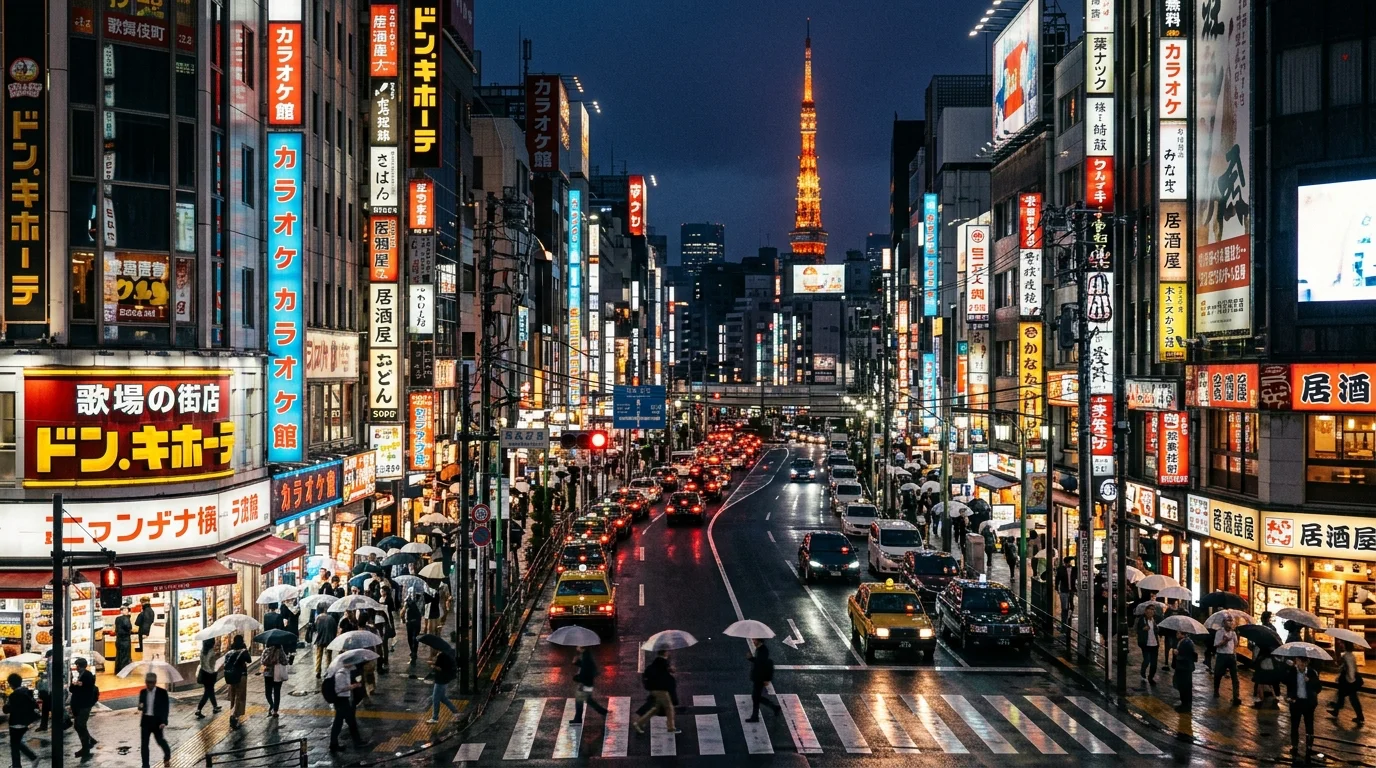
From neon-lit izakayas in Shinjuku to the hushed rituals of Senso-ji at dawn — the city that makes every other megalopolis feel ordinary.
Tokyo is the capital of Japan and the most populous metropolitan area on Earth, home to approximately 37 million people across the Greater Tokyo Area on the island of Honshu. It is best known for its extraordinary blend of ultramodern architecture and ancient temples, its unmatched food scene (the city has more Michelin stars than any other in the world), and its effortlessly efficient public transport network that moves millions of people with near-perfect punctuality. Visitors come to Tokyo for the perfect collision of the future and the past — robot restaurants beside 400-year-old shrines, dazzling pop culture beside centuries of samurai history, and some of the most extraordinary food on the planet in every price bracket imaginable.
Table of Contents
- Tokyo Overview
- Getting There & Around
- Top Attractions & Landmarks
- Neighborhoods & Districts
- Food & Dining
- Nightlife & Entertainment
- Shopping
- Seasonal Events & Festivals
- Accommodation Recommendations
- Practical Information
- Day Trips & Nearby Destinations
- Insider Tips & Hidden Gems
- Money-Saving Tips
- Common Tourist Mistakes to Avoid
- Sample Itineraries
- Frequently Asked Questions
What Is Tokyo and Why Should You Visit?
Tokyo is a city of magnificent contradictions — a place where vending machines dispense hot ramen beside 17th-century temple gates, where schoolgirls in elaborate Harajuku fashion walk past salarymen in identical black suits, and where silence in a packed train carriage feels completely normal. This Tokyo travel guide will help you navigate one of the world's most rewarding, layered, and endlessly surprising capitals.
What makes Tokyo genuinely different from every other world city is its absolute commitment to excellence in everything. Whether it is a ¥500 bowl of soba from a train station counter or a three-Michelin-star kaiseki dinner, the quality and care invested in the experience is extraordinary. Tokyo is also astonishingly safe, remarkably clean, and logistically seamless — a city that rewards both spontaneous wandering and meticulous planning in equal measure.
The main challenge for first-time visitors is the sheer scale and complexity of the place. Tokyo is not one city but dozens of distinct neighborhoods, each with its own personality, architecture, and subculture. The good news is that the public transport system is so good that no corner of this enormous city feels truly out of reach. With the right preparation, Tokyo delivers experiences that genuinely change how you think about what a city can be.
When Is the Best Time to Visit Tokyo?
Cherry Blossom Season (Late March–Early April): This is the most magical and most crowded time to visit Tokyo. Temperatures hover around 10–18°C (50–64°F), the parks explode in pink and white blossoms, and the entire city gathers for hanami (flower-viewing) picnics under the trees. Hotels book out months in advance and prices spike significantly. Book 4–6 months ahead if you want to visit during sakura season.
Summer (June–August): Tokyo summers are hot, humid, and punishing — temperatures regularly hit 32–36°C (90–97°F) with high humidity that makes it feel even hotter. The rainy season (tsuyu) runs through most of June. That said, summer brings incredible festivals (matsuri), spectacular fireworks shows, and Obon celebrations in mid-August. Crowds are manageable outside peak festival dates.
Autumn (September–November): Arguably the best time to visit Tokyo alongside cherry blossom season. Temperatures cool to a comfortable 15–25°C (59–77°F), the autumn foliage (koyo) turns parks and temple gardens into works of art from late October, and the city feels at its most livable. Crowds are lighter than spring and the skies are consistently clear.
Winter (December–February): Cold but rarely freezing (3–10°C / 37–50°F), Tokyo winters are dry and often gloriously clear — the best time of year to see Mount Fuji from the city. Illumination events light up parks and shopping streets through December and January. Crowds at attractions are thinner and hotel prices are significantly lower. A very underrated time to visit.
How Many Days Do You Need in Tokyo?
- 1–2 days: A rushed but fascinating introduction — see Senso-ji, Shibuya Crossing, and one neighborhood in depth. Best for stopovers or as part of a wider Japan trip.
- 3–4 days: Ideal for first-time visitors. Enough time to explore 4–5 key neighborhoods, visit major landmarks, and eat your way through different food experiences without feeling rushed.
- 5–7 days: Allows deep exploration of neighborhoods like Yanaka and Shimokitazawa, day trips to Nikko or Kamakura, the Imperial Palace East Gardens, and the slower rhythms of local life.
- 1 week+: For enthusiasts and slow travelers. Day trips to Hakone and Mount Fuji, museum deep-dives, cooking classes, sumo tournaments (seasonal), and the luxury of getting genuinely lost in neighborhoods that most tourists never find.
Quick Facts About Tokyo
- Population: \~13.9 million (city); \~37 million (Greater Tokyo Area)
- Language: Japanese; English widely spoken in tourist areas and on signage
- Currency: Japanese Yen (¥ / JPY); Japan is still largely cash-based
- Time Zone: Japan Standard Time (JST) / UTC+9 (no daylight saving)
- Country Code: +81
- Area Code: 03 (Tokyo)
- Climate: Humid subtropical — hot, humid summers; mild, dry winters
- Altitude: Approximately 40 meters (131 feet) above sea level at city center
How Do You Get To and Around Tokyo?
The easiest way to reach Tokyo is by air into Narita International Airport or Haneda Airport, both of which have excellent rail and bus connections to the city center. Once you are in Tokyo, the city has one of the world's most extraordinary public transport systems — mastering it unlocks everything.
Which Airports Serve Tokyo?
Narita International Airport (NRT)
1-1 Furugome, Narita, Chiba 282-0004, Japan
Located 60 km (37 miles) east of central Tokyo, Narita is the main international hub, handling flights from most major global airlines including ANA, JAL, United, British Airways, Air Canada, Cathay Pacific, and dozens of others. It has three terminals connected by a free shuttle bus. Terminal 2 has a dedicated budget carrier section. Allow 90 minutes to 2 hours for the journey to central Tokyo.
Haneda Airport (HND) — Tokyo International Airport
3-3-2 Hanedakuko, Ota City, Tokyo 144-0041, Japan
Located just 14 km (9 miles) south of central Tokyo, Haneda has grown into a major international hub, especially for flights from Asia, the US, and Europe. The journey to central Tokyo takes 20–35 minutes by monorail or train, making it dramatically more convenient than Narita. If you have a choice, Haneda is almost always the better option for Tokyo visitors.
How Do You Get from the Airport to the City Center?
From Narita — Narita Express (N'EX): The fastest and most convenient option. Runs directly to Shinjuku, Shibuya, Ikebukuro, and Tokyo Station. Journey time: 60–90 minutes. Cost: ¥3,070 one way (2026). Runs approximately every 30 minutes. Seats must be reserved but the process is straightforward at station ticket machines (English menus available).
From Narita — Keisei Skyliner: Runs to Nippori and Ueno stations in central Tokyo. Journey time: 41 minutes (faster than N'EX to central Tokyo). Cost: ¥2,570 one way (2026). A great option if you are staying in the Asakusa or Ueno area. Highly recommended.
From Narita — Airport Limousine Bus: Door-to-door service to major hotels and neighborhoods across Tokyo. Cost: ¥2,800–3,600 depending on destination (2026). Journey time: 90–120 minutes depending on traffic. Excellent for those with heavy luggage.
From Haneda — Tokyo Monorail: Connects directly to Hamamatsucho Station on the Yamanote Line. Journey time: 18 minutes. Cost: ¥510 (2026). Fast, simple, and very convenient.
From Haneda — Keikyu Airport Line: Runs to Shinagawa, Asakusa, and beyond. Journey time: 12–30 minutes to major stations. Cost: ¥300–620 depending on destination (2026). Often the fastest option to central Tokyo.
Taxi from either airport: Available but expensive — expect ¥15,000–25,000 from Narita (60–90 min) and ¥4,000–8,000 from Haneda (20–40 min). Only recommended late at night when trains have stopped or for large groups.
What Is the Best Way to Get Around Tokyo?
The best way to get around Tokyo is the extraordinary network of trains and subways — a system so comprehensive, punctual, and clean that it genuinely feels like science fiction to visitors from cities with inferior transit. The IC card (Suica or Pasmo) makes navigating it effortless, and the English-language signage and apps mean you never need to feel lost.
Public Transport System
Tokyo's train network includes the JR Yamanote Line (a loop connecting all major neighborhoods), JR lines radiating outward, the Tokyo Metro (9 lines), and the Toei Subway (4 lines), plus dozens of private railway lines. Between them they serve virtually every corner of the 23 Special Wards. Trains run from approximately 05:00 to 00:30 (midnight), with some lines running slightly later on weekends.
Tickets & Passes (2026 prices):
- Single ride (minimum): ¥140–200 on Tokyo Metro; ¥140–210 on JR lines
- IC Card (Suica/Pasmo): ¥500 deposit + load any amount — best value for multi-day visits, automatically charges the cheapest fare, no need to calculate ticket prices
- Tokyo Metro 24-hour pass: ¥800 (unlimited Metro rides for 24 hours — great value for sightseeing days)
- Tokyo Metro 72-hour pass: ¥1,500 (unlimited Metro rides for 72 hours)
- JR East Suica card: available at airport and major JR stations, works on all JR and most private lines
Taxis & Rideshare
Tokyo taxis are clean, reliable, and — by global capital standards — reasonably priced, though not cheap. The flagfall is ¥500 for the first 1.052 km, then ¥100 per 237 meters (2026 rates). Taxis are widely available throughout the city, especially at major stations and hotels. GO is the main rideshare app used in Tokyo, operating through licensed taxi companies rather than Uber-style private drivers. Uber also operates in Tokyo but uses professional taxi drivers, so pricing is similar.
Cycling & Scooters
Tokyo has expanded its cycling infrastructure in recent years, and bike-share services like Docomo Bike Share operate in most central wards. Day passes cost ¥165 for 30-minute increments (2026). Cycling is a genuinely pleasant way to explore flat neighborhoods like Yanaka, Ueno, or along the Sumida River. Electric scooters are not yet widely available for tourist use in central Tokyo.
Walking
Tokyo's tourist districts are highly walkable at the neighborhood level — Shinjuku, Shibuya, Harajuku, Asakusa, and Akihabara are each best explored on foot. However, distances between neighborhoods are substantial — it is approximately 7 km from Shinjuku to Asakusa, which is too far to walk comfortably. The train is almost always faster and more logical for inter-neighborhood travel.
Walkability Score: 85/100 within neighborhoods. Tokyo's tourist districts are dense and fascinating on foot. Sidewalks are excellent and the city is very pedestrian-friendly. Wear comfortable shoes — the amount of walking adds up quickly.
What Are the Top Attractions and Landmarks in Tokyo?
Tokyo's top attractions include the ancient Senso-ji Temple in Asakusa, the dizzying Shibuya Crossing, the serene Imperial Palace East Gardens, world-class museums, and some of the most extraordinary urban viewpoints on the planet — making it one of the most diverse sightseeing cities in Asia.
Senso-ji Temple
2-3-1 Asakusa, Taito City, Tokyo 111-0032, Japan
Tokyo's oldest and most visited temple, Senso-ji was founded in 628 AD and is dedicated to the Buddhist goddess of mercy, Kannon. The iconic Thunder Gate (Kaminarimon) with its giant red lantern marks the entrance to Nakamise-dori shopping street — a 250-meter arcade of traditional craft and souvenir shops leading to the main hall. The five-story pagoda rising to the right is one of the most photographed structures in Japan.
Despite being extremely popular with tourists, Senso-ji retains genuine religious significance — locals come here daily to pray, and the temple grounds feel authentically spiritual especially early in the morning. The Nakamise stalls sell everything from lacquerware and kimonos to freshly made ningyo-yaki (small cakes shaped like temple bells). The surrounding Asakusa neighborhood is the best-preserved area of old Tokyo (shitamachi culture).
Why visit: Senso-ji is the single best introduction to traditional Japanese temple culture in Tokyo — accessible, beautiful, and genuinely atmospheric, especially at sunrise before the crowds arrive.
Entrance: Free (temple grounds always open; main hall free to enter)
Best time: 6:00–8:00 AM for near-empty temple grounds; avoid weekend afternoons
Hours: Grounds open 24 hours; main hall 06:00–17:00 (Oct–Mar 06:30–17:00)
Shibuya Crossing
Shibuya, Tokyo 150-0002, Japan (in front of Shibuya Station Hachiko Exit)
The most famous intersection in the world, Shibuya Crossing (officially called Shibuya Scramble Crossing) sends thousands of pedestrians across its five-way intersection simultaneously when all traffic lights turn red. At peak times — evenings and weekends — up to 2,500 people cross in a single wave, a choreography of organized chaos that never loses its power to astonish. The crossing has become one of the defining images of modern Tokyo.
Standing in the middle of the crossing during rush hour, surrounded by thousands of people moving in every direction without collision, is one of the great urban experiences in the world. The best way to see the crossing in full effect is from above — the Scramble Square observation deck, the Mag's Park viewing area above Starbucks, or the viewing platform at Shibuya Sky (SKY) on the 45th and 46th floors of the Scramble Square building all offer iconic aerial views.
Why visit: Shibuya Crossing is genuinely jaw-dropping at rush hour — an experience that captures something essential about Tokyo's density, efficiency, and controlled energy that nothing else replicates.
Entrance: Crossing free; Shibuya Sky observation deck ¥2,500 adults (2026)
Best time: 17:00–20:00 on weekdays for maximum crossing density
Hours: Crossing always accessible; Shibuya Sky 10:00–22:30 (last entry 21:00)
Meiji Jingu Shrine
1-1 Yoyogikamizonocho, Shibuya City, Tokyo 151-8557, Japan
Meiji Jingu is Tokyo's most important Shinto shrine, dedicated to the deified spirits of Emperor Meiji and Empress Shoken. Set within a 70-hectare forested park in the heart of the city, the shrine provides a profound contrast to the surrounding urban energy — its broad gravel paths shaded by enormous cedar trees create an atmosphere of serene timelessness. The forest contains approximately 120,000 trees, donated from across Japan when the shrine was built in 1920.
The main shrine complex features the characteristic torii gates, the inner garden (Naien), and the outer garden (Gaien) which connects to nearby Harajuku and Yoyogi Park. The shrine is one of the most popular in Japan for hatsumode (the first shrine visit of the New Year), drawing over three million visitors in the first three days of January. Traditional Shinto weddings often take place here on weekends — you may be lucky enough to witness one.
Why visit: Walking the forested approach to Meiji Jingu — 15 minutes through ancient cedar trees within earshot of Harajuku — is one of the most meditative and unexpectedly powerful experiences in Tokyo.
Entrance: Free (inner garden ¥500 adults, 2026)
Best time: Early morning (07:00–09:00) for peaceful atmosphere; avoid New Year period unless you specifically want to experience the crowds
Hours: Sunrise to sunset (approximately 05:00–18:00 depending on season)
Tokyo Skytree
1-1-2 Oshiage, Sumida City, Tokyo 131-0045, Japan
At 634 meters (2,080 feet), Tokyo Skytree is the tallest tower in Japan and the second tallest structure in the world. It serves as a broadcast tower for Tokyo's digital television and radio signals, but for visitors its primary draw is the pair of observation decks at 350 meters (Tembo Deck) and 450 meters (Tembo Galleria). On clear days — especially in winter — you can see Mount Fuji, 100 km to the southwest, from the upper deck.
The Skytree is located in the Oshiage neighborhood of Sumida Ward, adjacent to the enormous Tokyo Solamachi shopping complex with over 300 shops and restaurants at its base. The tower is particularly spectacular at night when its LED illumination system creates beautiful effects — rotating through different colors on special occasions and festivals. The surrounding Oshiage area is an interesting older Tokyo neighborhood worth exploring.
Why visit: The view from the Tembo Galleria at 450 meters — standing on a transparent walkway with Tokyo sprawling to every horizon — is one of the most spectacular urban panoramas in the world, and far less crowded than Tokyo Tower.
Entrance: Tembo Deck (350m): ¥2,300 adults; Tembo Galleria (450m) add-on: ¥1,100 (2026)
Best time: 30–60 minutes before sunset for golden hour transitioning to night; winter for Fuji views
Hours: Daily 10:00–21:00 (last entry 20:00)
Imperial Palace East Gardens (Kokyo Higashi Gyoen)
1-1 Chiyoda, Chiyoda City, Tokyo 100-8111, Japan
The Imperial Palace is the primary residence of Japan's Emperor, and while the main palace itself is not open to the public, the Imperial Palace East Gardens (Higashi Gyoen) provide access to an extraordinary 21-hectare historic garden at the heart of Tokyo — located on the site of the former Edo Castle, the greatest castle in pre-modern Japan. The remaining stone foundations of Edo Castle's keep, destroyed by fire in 1657 and never rebuilt, are a powerful presence in the landscape.
The gardens contain beautifully manicured Japanese garden areas, seasonal flower gardens, ancient stone walls and gates from the Edo period, and the Ninomaru Garden with its prized irises that bloom in late May and early June. The surrounding Imperial Palace Outer Gardens (free, always open) provide a tranquil green loop around the moat that is popular with Tokyo's office workers for lunchtime runs.
Why visit: The Imperial Palace East Gardens offer the most direct connection to Edo-period Tokyo history in the city, presented in an immaculately maintained garden setting that feels completely removed from the surrounding urban energy — despite being ten minutes' walk from Tokyo Station.
Entrance: Free
Best time: Late April (cherry blossom end / young leaves), late May (irises), or any clear morning
Hours: Tuesday–Thursday, Saturday–Sunday 09:00–17:00 (Oct–Feb until 16:30); closed Monday and Friday
Shinjuku Gyoen National Garden
11 Naitomachi, Shinjuku City, Tokyo 160-0014, Japan
Shinjuku Gyoen is Tokyo's most beautiful formal garden — a 58-hectare national park combining French formal, English landscape, and Japanese traditional garden styles in one seamless composition. Originally an imperial garden, it was opened to the public in 1949 and remains the finest green space in central Tokyo. The garden contains 1,500 cherry trees of 65 varieties, making it one of the best spots in the city for hanami (cherry blossom viewing) in spring.
The large greenhouse at the southern end contains tropical plants from across the Pacific. The Japanese section features traditional teahouses, stone lanterns, and manicured pond landscapes. The English landscape section offers open lawns ideal for picnics. Unlike many parks in Tokyo, alcohol is prohibited within Shinjuku Gyoen — making it a calmer, more family-friendly alternative to the lively hanami parties in Yoyogi Park or Ueno.
Why visit: Shinjuku Gyoen is an extraordinary urban escape — a pocket of genuine tranquility in the middle of one of Tokyo's busiest districts, offering some of the best seasonal scenery in the entire city at a very modest entrance fee.
Entrance: ¥500 adults, ¥250 children (2026)
Best time: Late March–early April (cherry blossoms); late October–November (autumn colors)
Hours: Tuesday–Sunday 09:00–18:00 (Mar–Sep until 18:30, Oct–Feb until 16:30); closed Monday
teamLab Borderless (Azabudai Hills)
B2F Azabudai Hills Gardenplaza B, 1-2-4 Azabudai, Minato City, Tokyo 106-0041, Japan
teamLab Borderless is the most celebrated digital art museum in the world — a vast, labyrinthine space where the boundaries between artworks dissolve entirely, with interactive digital projections that spill from room to room, respond to visitor presence, and create an experience unlike anything in conventional art. The museum moved to its spectacular new home at Azabudai Hills in 2024, with even more ambitious installations than its predecessor.
Visitors wander freely through a series of interconnected rooms where forests of light, universes of floating flowers, and rivers of calligraphy wrap around every surface and follow every footstep. The "Forest of Resonating Lamps" fills an entire room with thousands of glass spheres that change color in response to touch. The "Athletics Forest" is a physical play space as much as an art installation. No experience quite prepares you for the totality of immersion this museum achieves.
Why visit: teamLab Borderless is genuinely unlike any other museum in the world — part art, part technology, part meditation, and completely spectacular in a way that photographs cannot capture.
Entrance: ¥3,800 adults, ¥1,000 children 4–12 (2026); advance booking essential
Best time: Weekday evenings for slightly smaller crowds
Hours: Monday, Wednesday, Thursday 10:00–20:00; Friday 10:00–21:00; Saturday 09:00–21:00; Sunday 09:00–20:00; closed Tuesday
Tsukiji Outer Market
4-16-2 Tsukiji, Chuo City, Tokyo 104-0045, Japan
While the inner wholesale fish market moved to Toyosu in 2018, the Tsukiji Outer Market remains one of the greatest food experiences in Tokyo — a dense network of market stalls, knife shops, kitchen suppliers, and small restaurants serving some of the freshest seafood in Japan. Over 400 shops and restaurants cluster in the streets around the former inner market, most of them open from early morning.
The best experience here is simply walking, tasting, and eating — fresh tuna sashimi, grilled scallops on sticks, tamagoyaki (rolled sweet omelette), sea urchin on rice, fresh oysters, and dozens of other seafood preparations, most available from ¥200–800 per portion from standing stalls. The atmosphere is bustling, professional, and utterly delicious. Several shops also specialize in professional kitchen knives — among the finest in the world — that make extraordinary souvenirs.
Why visit: Tsukiji Outer Market delivers the most concentrated, authentic, and delicious early-morning food experience in Tokyo — a feast for all senses that operates with remarkable precision every single morning.
Entrance: Free to enter; food costs vary (budget ¥1,500–3,000 for a satisfying morning)
Best time: 06:30–09:00 on weekdays for the freshest products and most lively atmosphere
Hours: Most shops open 05:00–13:00; closed Wednesday and some Sundays (check ahead)
Ueno Park and Museums
Uenokoen, Taito City, Tokyo 110-0007, Japan
Ueno Park is Tokyo's most culturally dense public green space — a 54-hectare park containing no fewer than nine major museums and galleries, a zoo, a large pond covered in lotus plants, and numerous shrines and temples. The Tokyo National Museum (the largest art museum in Japan), the National Museum of Nature and Science, the National Museum of Western Art (a UNESCO World Heritage building designed by Le Corbusier), and the Tokyo Metropolitan Museum of Art all stand within a short walk of each other in the park.
Beyond the museums, Ueno Toshogu Shrine in the park's southwest corner is one of Tokyo's few remaining original Edo-period structures — its golden-leafed gate and stone lanterns are visually stunning. The Shinobazu Pond, with its lotus flowers and a Buddhist temple on an island at its center, is one of the most photogenic spots in Tokyo in summer. Ueno is also one of the best places for cherry blossom viewing in the city, with over 1,000 trees along the main approach.
Why visit: Ueno gives you more cultural density per square kilometer than almost anywhere else in Tokyo — you could spend three full days visiting its museums without exhausting the options, and the park itself is beautiful in every season.
Entrance: Park free; Tokyo National Museum ¥1,000 adults; National Museum of Western Art ¥500 adults (2026)
Best time: Weekday mornings for museums; late October for autumn colors; March–April for cherry blossoms
Hours: Park open 24 hours; museums generally Tuesday–Sunday 09:30–17:00 (check individual websites)
Harajuku and Takeshita Street
1-17 Jingumae, Shibuya City, Tokyo 150-0001, Japan (Takeshita Street entrance)
Harajuku is Tokyo's fashion district — a neighborhood that encompasses both the pedestrian Takeshita Street, packed with Japanese youth fashion, kawaii (cute) culture, and extraordinary food novelties, and the more upscale Omotesando avenue, sometimes called Tokyo's Champs-Élysées, lined with flagship luxury boutiques in spectacular architectural buildings. The contrast between these two parallel streets just 400 meters apart captures something essential about Tokyo's range.
Takeshita Street is one of the most photographed streets in Japan — an explosion of color, character, and creative self-expression where Lolita fashion, anime cosplay, and streetwear collide. On Sunday afternoons, the street becomes almost impassably crowded. Omotesando, by contrast, features some of the most architecturally striking retail buildings in the world — including Tadao Ando's Omotesando Hills, the Prada building by Herzog & de Meuron, and the Louis Vuitton tower. Both streets lead naturally toward Meiji Jingu for a complete Harajuku half-day experience.
Why visit: Harajuku is one of those neighborhoods that genuinely exists nowhere else — a unique expression of Japanese popular culture that has influenced fashion worldwide and rewards both people-watching and shopping exploration.
Entrance: Free to explore
Best time: Weekday mornings for Takeshita Street without crowds; Sunday afternoons for the most vivid fashion-watching
Hours: Streets accessible 24 hours; shops typically 10:00–20:00
What Are the Best Neighborhoods to Explore in Tokyo?
Tokyo's neighborhoods each have a completely distinct character — from the ancient temple district of Asakusa to the electric pop-culture overload of Akihabara, the serene old-city feel of Yanaka, and the cool coffee bars and live music venues of Shimokitazawa. Here are the best areas to explore.
Asakusa
Character: Tokyo's most traditional neighborhood — the best-preserved area of old shitamachi (low city) culture, centered on Senso-ji Temple. Rickshaw pullers, wooden craft shops, geisha streets, and the sound of temple bells create an atmosphere of pre-modern Japan that is genuinely transportive.
What makes it special: Asakusa offers the closest thing in Tokyo to the city as it looked before the 1923 earthquake and WWII bombing. Nakamise-dori, the ancient craft stalls street, and the back streets around Hoppy Street offer authentic atmosphere alongside the temple. The Sumida River is a short walk away, with views of Skytree and traditional yakatabune (dinner boat) cruises.
Best for: First-time visitors, history lovers, cultural experiences, traditional craft shopping
Must-see in this area: Senso-ji Temple, Nakamise shopping street, Kaminarimon Gate, Sumida Park, rickshaw ride through old streets, Tokyo Skytree (across the river)
How to get there: Metro: Asakusa (Ginza Line, Asakusa Line); 40 minutes from Shinjuku
Location: Asakusa, Taito City, Tokyo 111-0032, Japan
Shinjuku
Character: Tokyo's entertainment and transport megahub — one of the world's busiest train stations (over 3.5 million passengers daily), surrounded by towering skyscrapers, neon-lit entertainment districts, department stores, and the remarkable Golden Gai neighborhood of tiny 6-seat bars tucked into a few short alleyways.
What makes it special: Shinjuku contains multitudes. The east side has Kabukicho (Tokyo's largest entertainment and nightlife district, including the famous Robot Restaurant area), Omoide Yokocho ("Memory Lane" — a narrow alley of tiny charcoal-grilled meat skewer bars surviving from the 1950s), and Golden Gai. The west side has the Tokyo Metropolitan Government Building with its free 45th-floor observation decks and serene Shinjuku Gyoen garden. It is simultaneously overwhelming and endlessly fascinating.
Best for: Nightlife, food, department store shopping, observation decks, budget travelers who want central accommodation
Must-see in this area: Shinjuku Gyoen garden, Omoide Yokocho, Golden Gai, Tokyo Metropolitan Government Building (free views), Kabukicho entertainment district, Isetan department store
How to get there: JR Shinjuku Station (multiple lines); central hub of the Yamanote Line
Location: Shinjuku, Shinjuku City, Tokyo 160-0022, Japan
Shibuya and Harajuku
Character: The twin epicenters of Tokyo youth culture — Shibuya for nightlife, fashion, and the famous crossing; Harajuku for street fashion, kawaii culture, and the beautifully curated high street of Omotesando. These two neighborhoods flow into each other and reward a combined half-day or full-day exploration.
What makes it special: Shibuya's reconstruction following major urban renewal projects has created some of Tokyo's most architecturally exciting new buildings — Shibuya Scramble Square, Shibuya Stream, and Shibuya Hikarie are all remarkable. Harajuku's Takeshita Street remains one of the most visually arresting streets in Japan, while Omotesando's luxury flagships sit in buildings designed by some of the world's great architects.
Best for: Youth culture, fashion, nightlife, architecture, street food
Must-see in this area: Shibuya Crossing, Shibuya Sky observation deck, Takeshita Street, Omotesando avenue, Meiji Jingu Shrine, Yoyogi Park
How to get there: JR Shibuya Station (Yamanote Line); JR Harajuku Station or Metro Meiji-Jingumae
Location: Shibuya, Shibuya City, Tokyo 150-0002, Japan
Yanaka
Character: The most atmospheric old neighborhood in Tokyo — a remarkably intact area of traditional wooden houses, independent shops, temples, and a famous cemetery that survived both the 1923 earthquake and WWII bombing. Yanaka feels like a village that got swallowed by a megalopolis and simply refused to change. Deeply loved by Tokyoites as a refuge from the city's relentless modernity.
What makes it special: Yanaka Ginza — a short, old-fashioned shopping street — is lined with tiny shops selling traditional crafts, local produce, and the cat-themed goods that reflect the neighborhood's many resident felines. The cemetery, while unconventional as an attraction, is an extraordinarily beautiful place — old cherry trees, overgrown stone lanterns, and silence just minutes from Nippori Station. The area is perfect for aimless wandering.
Best for: Slow travelers, Japan enthusiasts, photographers, anyone seeking the authentic Tokyo that modernity has mostly erased
Must-see in this area: Yanaka Ginza shopping street, Yanaka Cemetery, Tennoji Temple, Nezu Shrine (nearby), Yanaka Reien park areas
How to get there: JR Nippori Station (Yamanote Line); 15-minute walk to Yanaka Ginza
Location: Yanaka, Taito City, Tokyo 110-0001, Japan
Shimokitazawa
Character: Tokyo's bohemian, counter-cultural neighborhood — a dense, walkable area of vintage clothing stores, independent cafes, live music venues, tiny theaters, and record shops, built around a network of narrow pedestrian streets that resist the city's car culture. Beloved by students, musicians, and creative types. Feels unmistakably young and independent in a way that Shinjuku and Shibuya no longer do.
What makes it special: Shimokitazawa hosts more live music venues per square kilometer than almost anywhere in Japan — the Shelter, DUO MUSIC EXCHANGE, and dozens of smaller spots book indie and alternative acts nightly. The vintage clothing scene is among Tokyo's best, with hundreds of shops ranging from curated boutiques to chaotic thrift stores. The neighborhood's recent partial redevelopment around the old train station has added new independent shops and restaurants while preserving its character.
Best for: Music lovers, vintage fashion enthusiasts, independent travelers, those wanting to escape the tourist trail
Must-see in this area: Honda Theater, live music venues along the main strip, vintage clothing cluster around Shimokitazawa Station north exit, Bonus Track development
How to get there: Odakyu or Keio Inokashira Line to Shimokitazawa Station; 20 minutes from Shinjuku
Location: Kitazawa, Setagaya City, Tokyo 155-0031, Japan
Akihabara
Character: Tokyo's electronics and anime district — a sensory overload of neon signs, multi-story electronics megastores, maid cafes, anime figure shops, retro game arcades, and every piece of consumer technology imaginable. Akihabara ("Electric Town") is both a serious destination for electronics enthusiasts and a fascinating window into Japanese pop culture obsessions.
What makes it special: You can still find components for 1970s transistor radios in Akihabara, alongside cutting-edge robotics, the world's largest selection of anime merchandise, and themed cafes where waitstaff in maid outfits address you as "master" or "mistress." The multi-story Yodobashi Camera megastore is one of the largest electronics retailers in the world. Retro Game Camp and dozens of other shops stock original Famicom, PC Engine, and Game Boy games for collectors.
Best for: Technology enthusiasts, anime and manga fans, gamers, pop-culture tourists
Must-see in this area: Yodobashi Camera Akiba, Radio Kaikan building (anime goods), retro game shops on main strip, maid cafe experience, Gundam Base Tokyo (seasonal)
How to get there: JR Akihabara Station (Yamanote Line, Sobu Line); 5 minutes from Tokyo Station
Location: Soto-Kanda, Chiyoda City, Tokyo 101-0021, Japan
What Food Should You Try in Tokyo?
Tokyo is the greatest food city in the world — the city holds more Michelin stars than Paris, London, and New York combined, and the quality of eating extends from ¥800 convenience store onigiri (rice balls) to ¥50,000 omakase sushi counter experiences. The must-try dishes include fresh-cut sushi, soul-warming ramen, delicate kaiseki ryori, and fluffy Japanese curry.
What Are the Must-Try Local Dishes in Tokyo?
- Sushi (すし) — Raw fish over hand-pressed vinegared rice. Tokyo's Edo-mae style is the original form — leaner, more focused, and quicker than the elaborate rolls common in Western sushi restaurants. Try it at a counter where the chef hands each piece directly to you. Budget options: Sushiro or Kura Sushi conveyor-belt chains (¥100–130/plate). Mid-range: Tsukiji Outer Market stalls. Premium: omakase counter from ¥15,000.
- Ramen (ラーメン) — Chinese-derived noodle soup that Japan has completely transformed into its own art form. Tokyo-style (shoyu/soy sauce broth) is lighter and more elegant than Sapporo miso or Hakata tonkotsu styles. Ichiran Ramen and Fuunji (for tsukemen dipping noodles) are excellent starting points. A bowl costs ¥800–1,200.
- Tempura (天ぷら) — Seafood and vegetables fried in a paper-thin, incredibly light batter unique to Japanese technique. At its best, tempura is airy, greaseless, and delicate. Tendon (tempura over rice) is the budget-friendly version; sit-down counter tempura with fresh prawns and seasonal vegetables can be one of the great dining experiences in Japan.
- Yakitori (焼き鳥) — Chicken parts (and sometimes vegetables) grilled on bamboo skewers over charcoal. Every cut of chicken is used — breast (mune), thigh (momo), skin (kawa), heart (hatsu), liver (rebaa), and the extraordinary tail piece (bonjiri). Best enjoyed at a traditional yakitori-ya counter with cold Sapporo beer. Omoide Yokocho in Shinjuku is the classic destination.
- Tonkatsu (とんかつ) — Thick pork cutlet (loin or fillet) breaded in panko and deep-fried, served with shredded cabbage, rice, miso soup, and a thick Worcestershire-style sauce. Comfort food elevated to near-art form. Maisen in Omotesando (famous for its restaurant inside a converted bathhouse) is the iconic destination; a set costs around ¥2,000–3,500.
- Kaiseki (懐石) — The pinnacle of Japanese haute cuisine: a multi-course meal following a strict seasonal and aesthetic philosophy, using only ingredients at their peak and presenting each dish as a visual composition. An authentic kaiseki dinner in Tokyo costs ¥15,000–50,000 per person but represents one of the world's great dining experiences.
- Onigiri (おにぎり) — Rice balls filled with various fillings (umeboshi pickled plum, tuna-mayo, salmon, mentaiko pollock roe) and wrapped in crisp nori seaweed. The best convenience-store onigiri in Japan is from 7-Eleven or Lawson — freshly made daily, ¥130–200 each, and genuinely delicious. One of Tokyo's great democratic pleasures.
- Wagashi (和菓子) — Traditional Japanese confections made from mochi (rice cake), anko (red bean paste), and seasonal ingredients. Often served with matcha tea. Toraya in Akasaka (one of Japan's oldest wagashi shops, founded in the 16th century) is the definitive destination.
Where Should You Eat in Tokyo?
Budget-Friendly (Under ¥1,500 per meal)
- Ichiran Ramen — Multiple locations across Tokyo, including 1-22-7 Jinnan, Shibuya — A solo-dining innovation where each customer gets their own private booth, adjusts their broth to personal taste via a detailed checklist, and receives their bowl through a small wooden hatch. The tonkotsu ramen is superlative. A bowl with extra noodles costs around ¥1,000–1,300.
- Yoshinoya / Sukiya / Matsuya — Multiple locations throughout Tokyo — The great Japanese gyudon (beef rice bowl) chains, open 24 hours, serving a satisfying bowl of thinly sliced seasoned beef over rice for ¥400–600. Not glamorous, but deeply Japanese and genuinely good comfort food. Matsuya's curry udon is particularly good.
- Tsukiji Outer Market stalls — 4-16-2 Tsukiji, Chuo City — Fresh sashimi, grilled seafood on skewers, and tamagoyaki from ¥200–600 per item. Best in the city for a fresh, delicious, and extremely affordable breakfast or brunch experience.
Mid-Range (¥2,000–6,000 per meal)
- Torishiki — 2-14-12 Kamimeguro, Meguro City — One of Tokyo's finest yakitori restaurants, awarded a Michelin star for its extraordinary work with every part of the chicken over charcoal. Omakase course ¥5,500–8,000. Reservations essential (book at least one month ahead).
- Maisen — 4-8-5 Jingumae, Shibuya City — Tokyo's most beloved tonkatsu restaurant in a spectacular converted old bathhouse. Set meals ¥1,900–3,800 for the finest kurobuta (Berkshire pork) cutlets available. Queues form from opening on weekends.
- Fuunji — 2-14-3 Yoyogi, Shibuya City — A legendary tsukemen (dipping noodle) shop where thick, chewy noodles are dipped in a rich, intensely concentrated pork and fish broth. ¥900–1,200. Arrive early as queues form before opening and the shop sells out its daily noodles by early afternoon.
- Sushi Zanmai Honten — 4-11-9 Tsukiji, Chuo City — An accessible, high-quality sushi restaurant across from the Tsukiji Outer Market. Fresh, large cuts at fair prices. Lunch sets ¥1,800–3,500. Open 24 hours — a Tokyo institution.
Fine Dining (¥10,000+ per meal)
- Sukiyabashi Jiro Honten — Tsukiji Seki Building, Chuo City — The legendary three-Michelin-star sushi counter made famous by the documentary "Jiro Dreams of Sushi." Omakase dinner ¥40,000+. Reservations notoriously difficult — the restaurant now works primarily with concierge-arranged bookings through top hotels. A bucket-list experience for serious food lovers.
- Ryugin — 7-17-24 Roppongi, Minato City — Chef Seiji Yamamoto's three-Michelin-star restaurant offers the most innovative and technically dazzling kaiseki experience in Tokyo. The tasting menu (¥33,000–55,000) showcases seasonal Japanese ingredients through techniques that span tradition and science. Book 1–3 months ahead online.
What Are the Dining Customs in Tokyo?
Meal times: Breakfast is early (07:00–09:00). Lunch is serious — the best-value time to eat, with many restaurants offering a teishoku (set lunch) for ¥800–1,500 that would cost three times as much at dinner. Dinner starts around 18:00–19:00 and restaurants are typically full by 19:30 on weekdays. Reservations are essential at any popular restaurant.
Tipping: Do not tip in Japan. Tipping is culturally unusual and can be awkward or even offensive. Service is universally excellent without it. If you try to leave money on the table, staff will often run after you to return it.
Reservations: Essential at any Michelin-starred or highly rated restaurant, often required weeks or months in advance. TableCheck and Omakase are the main online reservation platforms for English-speaking travelers. Many top restaurants only accept reservations through hotel concierges.
Cash: Many traditional Tokyo restaurants — including some excellent ramen shops and yakitori counters — are cash only. Always carry ¥5,000–10,000 in cash when eating out.
What Is the Nightlife Like in Tokyo?
Tokyo's nightlife is vast, diverse, and runs later than most cities in the world — the train system closes around midnight, creating a culture where people either head home by the last train or commit to staying out until 05:00 when the first trains run again. The city ranges from intimate jazz bars in basement venues to enormous nightclubs in Roppongi, with a depth and variety that rewards years of exploration.
Where Are the Best Areas for Nightlife in Tokyo?
- Shinjuku (Kabukicho and Golden Gai): 1-1 Kabukicho, Shinjuku City — Tokyo's most famous entertainment district. Kabukicho is the dense nightlife zone with bars, clubs, karaoke, and entertainment of every variety. Golden Gai is a network of alleyways containing over 200 tiny bars — many seating only 6–8 people — that collectively represent one of the world's great drinking experiences. Cover charges (usually ¥500–1,000) are common at Golden Gai venues.
- Roppongi: 3-10-5 Roppongi, Minato City — Tokyo's international nightlife hub, with large clubs, international bars, and a cosmopolitan crowd. Roppongi Hills and the surrounding streets are the most accessible nightlife zone for non-Japanese speakers. Clubs include Muse, V2 Tokyo, and the legendary Ageha (in Shinkiba). The area has a rowdy reputation that is often exaggerated, but standard late-night caution applies.
- Shimokitazawa: Kitazawa, Setagaya City — The best live music neighborhood in Tokyo. Multiple venues host indie, jazz, folk, and experimental music nightly. The atmosphere is underground, friendly, and unpretentious. Ticket prices range from ¥1,500–4,000 depending on the act.
What Are the Best Bars and Clubs in Tokyo?
Bars & Pubs
- Bar Benfiddich — 1-13-7 Nishi-Shinjuku, Shinjuku City — One of the most acclaimed craft cocktail bars in Japan. Bartender Hiroyasu Kayama grows his own herbs and foraged botanicals to create extraordinary herbal cocktails. Intimate atmosphere; 12 seats. Cocktails from ¥1,500–3,000. No reservations; arrive early to secure a seat.
- Albatross G — 1-2-11 Nishi-Shinjuku, Shinjuku City — A Golden Gai institution — two tiny floors of art, music, and conversation. The kind of bar where you can sit next to a famous novelist or a bricklayer and have an equally fascinating conversation. Cover charge ¥700 including one drink. Open from 18:00 daily.
- The SG Club — 1-7-8 Jinnan, Shibuya City — A beautifully designed two-floor cocktail establishment from one of Japan's most celebrated bartenders, Shingo Gokan. The basement bar (Guzzle) is more casual; the upper bar (Sip) more refined. World-class cocktails in a world-class setting.
Clubs & Dancing
- Womb — 2-16 Maruyamacho, Shibuya City — Tokyo's most respected electronic music club — four floors, a legendary sound system, and regular bookings of international electronic music names. Cover ¥2,000–3,500. Best from 01:00 onward. Techno, house, and electronic in the main room; different genres on upper floors.
- Ageha — 2-2-10 Shinkiba, Koto City — A truly enormous club (capacity 3,000) on the waterfront in Shinkiba, featuring outdoor poolside areas in summer and a lineup of international DJs that rivals the best clubs in Europe. Cover ¥3,000–4,000. Best reached by the club shuttle bus from Shibuya on club nights.
Live Music & Shows
- Billboard Live Tokyo — 2-4-1 Nagatacho, Chiyoda City — Tokyo's premier live music dining venue, hosting major international and Japanese acts in an intimate seated format. Tickets ¥5,000–15,000 depending on artist; dinner service during the show. An extraordinary format for seeing established artists up close.
- Blue Note Tokyo — 6-3-16 Minami-Aoyama, Minato City — One of the finest jazz clubs in Asia, hosting world-class jazz, soul, and blues acts in a beautiful venue. Two shows nightly; tickets ¥5,000–15,000. Dinner and drinks available. Book well ahead for popular acts.
- Shinjuku Pit Inn — B1F 2-12-4 Shinjuku, Shinjuku City — A legendary underground jazz club that has been running since 1965 and remains one of the most important jazz venues in Japan. Covers from ¥1,500–3,000. The afternoon sessions are a particularly good entry point.
What Family-Friendly Evening Entertainment Is Available?
Tokyo offers spectacular family-friendly evening entertainment across the city. The teamLab Borderless digital art museum in Azabudai Hills runs until 20:00–21:00 and is suitable for all ages. The Tokyo Skytree observation deck is open until 21:00. The Odaiba entertainment complex features the enormous DiverCity Tokyo Plaza, the digital Mori Building Digital Art Museum, and Joypolis indoor theme park, all easily reachable by Yurikamome train. Evening cruises on the Sumida River offer beautiful illuminated city views for around ¥1,500–3,000.
What and Where Should You Shop in Tokyo?
The best things to buy in Tokyo are Japanese whisky, kitchen knives, traditional ceramics, high-quality electronics at competitive prices, vintage fashion, and cosmetics, and the top shopping areas range from the luxury flagships of Omotesando to the anarchic vintage stores of Shimokitazawa and the electronics megastores of Akihabara.
What Are the Best Shopping Districts in Tokyo?
- Omotesando Avenue: Omotesando, Minato City, Tokyo 107-0062 — Tokyo's luxury shopping boulevard, featuring flagship stores for Louis Vuitton, Prada, Chanel, Dior, and Japanese luxury brands in architecturally spectacular buildings. Omotesando Hills (designed by Tadao Ando) is a must-see shopping center even if you do not buy anything. Mid-range Japanese fashion labels including Comme des Garçons, Issey Miyake, and A Bathing Ape also have boutiques here.
- Ginza: Ginza, Chuo City, Tokyo 104-0061 — Tokyo's most established luxury shopping district with every major international brand represented. The Ginza Six complex is the most impressive recent addition. On weekends, Chuo-dori becomes a pedestrian zone — perfect for window shopping and people-watching in one of Tokyo's most elegant streetscapes.
- Shimokitazawa and Harajuku backstreets: Kitazawa, Setagaya City — The best areas for vintage clothing, independent designer boutiques, and unique items not available in standard retail. Shimokitazawa has hundreds of vintage stores; Cat Street between Harajuku and Omotesando is lined with independent streetwear and lifestyle boutiques.
What Markets Should You Visit in Tokyo?
Oedo Antique Market — 2-3 Marunouchi, Chiyoda City (Tokyo International Forum) — Held on the first and third Sunday of every month, 09:00–16:00. Over 250 antique dealers sell Edo-period ceramics, lacquerware, textiles, prints, and furniture. One of the best antique markets in Asia. Free to enter.
Tsukiji Outer Market — 4-16-2 Tsukiji, Chuo City — More food market than conventional market, but essential for fresh seafood, professional kitchen equipment, specialty foods, and the extraordinary morning atmosphere. Open Monday–Saturday approximately 05:00–13:00.
Shimokitazawa Vintage Fairs — Various venues around Shimokitazawa Station — Regular weekend vintage fashion events bringing together the best dealers from the neighborhood's 200+ vintage stores. Follow @shimokitazawa_vintage on social media for schedules.
What Should You Buy in Tokyo?
- Japanese whisky — Single malts from Yamazaki, Hakushu, and Nikka produce some of the world's most celebrated whiskies. Buy at duty-free shops or specialist whisky bars with retail operations. Rare bottles unavailable abroad can be found at the Yamazaki Distillery shop and specialist retailers in Ginza. Prices from ¥3,000 for entry-level bottles.
- Kitchen knives (hocho) — Japanese kitchen knives represent some of the finest blademaking in the world. Buy from specialist shops in Tsukiji, Kappabashi Kitchen Town (Asakusa), or Kiya in Nihombashi. A quality gyuto (chef's knife) starts at ¥8,000 and will last a lifetime. Staff will recommend the right knife for your cooking style.
- Cosmetics and skincare — Japanese cosmetics brands including Shiseido, Hada Labo, SK-II, and Cosrx-equivalents are significantly cheaper in Japan than abroad. Don Quijote discount stores and drug chains like Matsumoto Kiyoshi have comprehensive selections at competitive prices. Many products are not available outside Japan.
- Electronics — Yodobashi Camera in Akihabara (1-1 Kanda-Hanaokacho) is the largest electronics retailer in Japan, with competitive pricing and enormous stock. Many products have English-language models; staff can advise on compatibility. Tax-free shopping available with passport for purchases over ¥5,000.
- Traditional ceramics and lacquerware — Japanese ceramics range from affordable Mino-ware teacups to extraordinary Imari and Arita porcelain. The depachika (department store basement) and dedicated ceramics shops in Ginza and Omotesando offer the best curated selections. A beautiful teacup starts from ¥2,000; serious pieces go far higher.
- Matcha products — High-quality ceremonial-grade matcha from Ippodo (Marunouchi branch), matcha KitKats, matcha chocolate from Mariage Frères, and matcha sweets make excellent gifts. Ippodo's ceremonial-grade matcha tin (40g, ¥2,000–5,000) is a far superior souvenir to anything sold at tourist shops.
What Are the Shopping Hours and Customs?
Most Tokyo shops open 10:00–20:00 or 21:00, seven days a week. Department stores generally open 10:00–20:00 and are closed one day per week (varies by store). Electronics stores in Akihabara often open as late as 22:00. Very few shops close for lunch. Tax-free shopping (8% consumption tax refund) is available at participating shops for purchases over ¥5,000 — bring your passport. Bargaining is not practiced in Japan; marked prices are final.
What Festivals and Events Happen in Tokyo?
Tokyo's biggest annual events include cherry blossom season (late March–early April), the Sumida River Fireworks Festival (late July), the Koenji Awa Odori dance festival (late August), and the Sanja Matsuri in Asakusa (May) — but the city celebrates dozens of local matsuri (festivals) throughout the year across its many neighborhood shrines.
What Is the Annual Events Calendar for Tokyo?
| Month | Event Name | Description |
|---|---|---|
| January | Hatsumode (New Year Shrine Visit) | The entire city visits shrines for the first time in the new year from January 1–3. Meiji Jingu sees over 3 million visitors in three days. Despite the crowds, the atmosphere is extraordinary — traditional clothing, food stalls, and the purchase of new omamori (charms) for the coming year. |
| February | Setsubun | February 3rd — Bean-throwing ceremony at shrines and temples across Tokyo, marking the end of winter in the traditional calendar. Senso-ji and Zojoji Temple both hold public ceremonies where sumo wrestlers and celebrities throw roasted soybeans into the crowd. Tradition says to eat the same number of beans as your age. |
| March–April | Sakura (Cherry Blossom) Season | Late March to early April — Cherry trees bloom across the city in a two-week explosion of pink and white. Ueno Park, Shinjuku Gyoen, Chidorigafuchi moat, Meguro River, and Yoyogi Park are the best viewing locations. Office workers and families gather for hanami picnics under the trees from morning to night. The exact timing shifts year to year based on temperature. |
| May | Sanja Matsuri | Third weekend in May — One of Tokyo's three great festivals, centered on Asakusa's Senso-ji Temple. Mikoshi (portable shrines) carried by hundreds of participants through the streets of Asakusa; traditional music and dance; enormous crowds creating a genuinely carnival atmosphere. One of the most spectacular street festivals in Japan. |
| June | Sanno Matsuri | Mid-June (odd-numbered years only) — One of the three great Edo festivals, based at Hie Shrine in Akasaka. A grand procession of 300 people in traditional Heian-period court costume carries the mikoshi through Chiyoda district. Magnificent and historically significant. |
| July | Tanabata | July 7th — The "star festival" celebrating the annual meeting of the star deities Orihime and Hikoboshi. Streets and shopping areas are decorated with colorful streamers (tanzaku) on which wishes are written. Asagaya's Tanabata festival (late July) is one of the most elaborate in Tokyo. |
| Late July | Sumida River Fireworks Festival | Last Saturday of July — One of Japan's oldest and most spectacular fireworks festivals, with 20,000 fireworks launched over the Sumida River between Asakusa and Ryogoku. Crowds of over one million; arrive extremely early or watch from a restaurant with river view. Traditional yukata (summer kimono) worn by many spectators. |
| August | Koenji Awa Odori | Last weekend of August — Tokyo's largest dance festival, with over 12,000 dancers in traditional Awa Odori style filling the streets of Koenji for two evenings. Free to watch from the street; the atmosphere is joyous, colorful, and completely intoxicating. |
| September | Tokyo Game Show | Mid-September — One of the world's largest video game exhibitions, held at Makuhari Messe in nearby Chiba. Attracts 200,000+ visitors over four days. Business days are trade-only; public days are open to all. Essential for gaming enthusiasts. |
| October–November | Autumn Foliage (Koyo) | October to late November — Tokyo's parks and temple gardens turn spectacular shades of gold, orange, and crimson. Shinjuku Gyoen, Rikugien Garden, Hamarikyu Gardens, and Koishikawa Korakuen are the finest spots. Late November is typically peak color in central Tokyo. |
| November | Tokyo International Film Festival | Late October to early November — Japan's premier film festival, centered on Hibiya and the surrounding cinema district. International and Japanese film premieres, director Q&As, and public screenings of selected films. |
| December | Winter Illuminations | December through January — Tokyo transforms at night with spectacular LED light displays. Caretta Shiodome's canyon illumination, Roppongi Hills illuminations, and the Marunouchi Illumination along the brick street from Tokyo Station are among the most beautiful. Most are free to walk through. |
How Do Festivals Affect Hotel Prices and Availability?
Cherry blossom season (late March–early April) causes the single biggest spike in Tokyo hotel prices and availability — rooms can double or triple in price and sell out months in advance. The Sanja Matsuri weekend in May causes localized hotel scarcity in Asakusa. New Year (December 31–January 3) is extremely popular with Japanese domestic travelers and requires advance booking. For all peak periods, book accommodation 3–6 months ahead minimum.
Where Should You Stay in Tokyo?
The best neighborhood to stay in Tokyo depends entirely on your travel priorities — Shinjuku for convenience and budget range, Shibuya for access to youth culture and shopping, Asakusa for traditional atmosphere, and Ginza/Marunouchi for business and luxury travelers. Every major neighborhood has direct train links to everywhere else, so location is less critical than in less well-connected cities.
What Are the Best Neighborhoods to Stay in Tokyo?
| Neighborhood | Vibe | Price Range (per night, 2026) | Best For |
|---|---|---|---|
| Shinjuku | Busy, central, everything available | ¥8,000–35,000 | All types; best central base |
| Asakusa | Traditional, cultural, atmospheric | ¥7,000–30,000 | First-time visitors, culture lovers |
| Shibuya/Harajuku | Young, fashionable, energetic | ¥10,000–40,000 | Fashion, nightlife, youth culture |
| Ginza/Marunouchi | Luxury, central, business-oriented | ¥20,000–80,000+ | Business travelers, luxury seekers |
| Ueno/Akihabara | Functional, budget-friendly, accessible | ¥5,000–20,000 | Budget travelers, museum visitors |
| Roppongi/Azabudai | International, nightlife, art | ¥15,000–60,000 | Nightlife, art, international crowd |
What Are the Pros and Cons of Each Area?
Shinjuku:
Pros: The best-connected transport hub in Tokyo, with every major train line converging here. Enormous range of accommodation options at every price point. Department stores, restaurants, and entertainment immediately available. Shinjuku Gyoen garden and Golden Gai are walking distance.
Cons: Can feel overwhelming — Shinjuku Station is genuinely one of the most confusing train stations in the world (200+ exits). West Shinjuku (skyscraper district) lacks neighborhood charm; east Shinjuku (Kabukicho) is noisy at night.
Asakusa:
Pros: Most atmospheric and traditional neighborhood in Tokyo. Senso-ji Temple, Nakamise shopping, and the Sumida River are all walkable. Traditional ryokan (Japanese inn) options available alongside hotels. Good budget accommodation range.
Cons: Slightly further from some major western districts (30–40 minutes to Shibuya). Fewer international restaurant options. Can feel very quiet after 22:00 when shops close.
Shibuya/Harajuku:
Pros: Excellent transport connections, immediate access to shopping and nightlife, walking distance to Meiji Jingu and Yoyogi Park. The most contemporary and energetic neighborhoods. New hotel stock is excellent quality.
Cons: Noisy on weekends. Premium location means premium pricing. Some streets feel overwhelming on busy evenings.
How Far in Advance Should You Book in Tokyo?
For cherry blossom season (late March–early April), book 3–6 months ahead — this is the single most competitive accommodation period. For regular summer and autumn travel, 4–8 weeks ahead is usually sufficient. For the New Year period (December 29–January 3), book at least 3 months ahead. Budget accommodation (hostels, capsule hotels) in Asakusa and Ueno can be found with shorter lead times but quality options in popular areas sell out quickly.
What Do You Need to Know Before Visiting Tokyo?
Here are the essential practical details every visitor to Tokyo needs to know — from cash culture and IC cards to earthquake preparedness and etiquette in train carriages.
Essential Travel Details for Tokyo
- Currency: Japanese Yen (¥); Japan is substantially cash-based — always carry cash. ATMs at 7-Eleven and Japan Post are the most reliably international-card-friendly.
- Credit Cards: Accepted at hotels, department stores, and many restaurants, but many traditional restaurants, small shops, and vending machines are cash only. Never assume card acceptance — always carry cash.
- ATMs: 7-Eleven ATMs (Japan) and Japan Post ATMs accept most international cards with a flat fee of ¥110–220 per transaction. Avoid bank ATMs that show "Japanese cards only."
- Language: Japanese; English signage is widespread on trains and in tourist areas. Translation apps (Google Translate's camera function) are invaluable for menus.
- Tipping: Never tip in Japan. It is not expected and can cause embarrassment. Excellent service is the cultural standard, not something requiring financial acknowledgment.
- Electrical Plugs: Type A (2 flat pins), 100V/50–60Hz. US plugs work directly; UK and European visitors need an adapter and possibly a voltage converter.
- Emergency Number: 110 (Police); 119 (Ambulance and Fire)
- Tourist Police: +81-3-3501-0110 (Japan Tourism Agency consultation line, English available)
- SIM Cards / eSIM: Pocket WiFi and prepaid SIM cards are available at Narita and Haneda airports. IIJmio, NTT Docomo, and Rakuten Mobile offer tourist data SIMs from ¥1,500 for 7 days. eSIM providers like Airalo also work well in Japan.
- WiFi: Free WiFi is available at major train stations, 7-Eleven stores, McDonald's, and many cafes. Tokyo Metropolitan Government offers free WiFi at many tourist sites. Coverage is improving but not yet universal — a pocket WiFi or SIM is recommended.
- Tap Water: Safe to drink and of excellent quality throughout Tokyo. Tap water is some of the best in Asia — drink freely and refill bottles.
How Much Does It Cost to Visit Tokyo?
| Budget Type | Daily Cost (2026) | What's Included |
|---|---|---|
| Budget Traveler | ¥5,000–8,000 (CAD $45–75) | Capsule hotel or hostel dorm (¥2,500–4,000), convenience store meals and ramen (¥1,500–2,500), IC card for trains (¥500–1,000), free attractions including temples and parks |
| Mid-Range Traveler | ¥15,000–30,000 (CAD $135–270) | 3-star business hotel (¥8,000–15,000), mix of sit-down restaurants and convenience store meals, train IC card, 1–2 paid attractions (Skytree, teamLab, museums) |
| Luxury Traveler | ¥50,000–150,000+ (CAD $450–1,350+) | 4–5 star hotel (¥25,000–80,000), kaiseki dinners, fine sushi omakase, private guided tours, premium museum access, premium sake tasting experiences |
What Are the Most Useful Phrases in Tokyo?
- Hello (general): Konnichiwa (こんにちは)
- Good morning: Ohayou gozaimasu (おはようございます)
- Thank you: Arigatou gozaimasu (ありがとうございます)
- Please (requesting): Onegaishimasu (おねがいします)
- Excuse me: Sumimasen (すみません) — also used to get a waiter's attention
- How much?: Ikura desu ka? (いくらですか?)
- Where is...?: ...wa doko desu ka? (…はどこですか?)
- I don't understand: Wakarimasen (わかりません)
- Help!: Tasukete! (たすけて!)
- Bathroom: Toire (トイレ) or Otearai (おてあらい)
- Check, please: Okaikei onegaishimasu (おかいけいおねがいします)
- Delicious: Oishii! (おいしい!) — use this liberally; it will delight any chef or host
Is Tokyo Safe for Tourists?
Tokyo is one of the safest major cities in the world for tourists. Violent crime targeting visitors is extremely rare. Lost wallets are frequently returned with cash intact. Women can walk alone at night in most neighborhoods without concern. The city's sense of collective order and social trust is extraordinary by global standards and genuinely felt by every visitor.
Areas requiring some care: Kabukicho in Shinjuku has some late-night touts and hostess bar recruiters who can be persistent, but serious trouble is rare. The Roppongi nightlife district attracts a mix of international visitors and can have occasional incidents — standard nightlife precautions apply. Avoid any establishment that aggressively recruits from the street in Kabukicho or Roppongi.
Common scams: Drink spiking and enormous bills at hostess bars in Roppongi and Kabukicho — never enter any bar through the invitation of a tout on the street. "Friendly stranger" encounters that end with suggestions of a specific bar are to be avoided. These are rare but do occur.
Pickpocketing: Extremely rare by global city standards, but does occur in dense crowds at festivals, cherry blossom season events, and on crowded rush-hour trains. Standard precautions are prudent.
Solo traveler safety: Tokyo is exceptional for solo travelers of all genders and sexual orientations. The LGBTQ+ scene is active (particularly in Shinjuku ni-chome) though Japan's legal framework for same-sex relationships continues to develop. The city is extremely welcoming to solo diners — many counter-seat restaurants are specifically designed for the solo diner experience.
What Are the Cultural Customs in Tokyo?
- Greetings: A slight bow is the standard greeting — depth of bow indicates respect. Handshakes are fine in business and tourist contexts. Do not initiate physical contact (hugging, cheek-kissing) with Japanese people you have just met.
- Train etiquette: Do not talk on the phone on trains. Keep voice levels low. Give up priority seats to elderly, pregnant, or disabled passengers. Do not eat on local trains (bullet trains and some special services have dining cars). Phones on silent mode.
- Shoes: Remove shoes when entering traditional restaurants with tatami seating, ryokan (Japanese inns), many temples and traditional buildings, and any home. Look for the genkan (entrance step) and rows of shoes as your guide.
- Onsen (hot spring) etiquette: Wash thoroughly before entering any shared bath. Tattoos are prohibited at the majority of public onsen and sento in Japan — check the rules of any specific venue before visiting.
- Waste: Public rubbish bins are scarce in Tokyo — a legacy of the 1995 Aum Shinrikyo sarin attack that led to bin removal from stations. Carry a small bag for rubbish and dispose at convenience stores or your hotel.
- Walking and eating: It is considered impolite to walk and eat simultaneously in Japan (exceptions: festival food stalls during matsuri, ice cream from a shop). Eat standing at stalls or find a bench.
Do You Need a Visa to Visit Tokyo?
Citizens of 68 countries including the USA, Canada, UK, Australia, New Zealand, and most EU nations can enter Japan visa-free for stays up to 90 days. From 2025–2026, Japan has implemented a tourist tax and registration system — check the Japan Tourism Agency's official website (jnto.go.jp) for the current requirements for your nationality before travel, as these have evolved and may continue to change. Some nationalities require a visa arranged through the Japanese embassy before departure.
What Health Precautions Should You Take in Tokyo?
Vaccinations: No specific vaccinations are required for Japan. Routine up-to-date vaccinations are recommended. There is no malaria or significant tropical disease risk in Tokyo.
Pharmacies: Matsumoto Kiyoshi and Welcia are the main drug store chains, found throughout Tokyo. Many over-the-counter medications are available; bring any prescription medications in clearly labeled original packaging with a doctor's letter for customs clearance. Pharmacists can advise in basic English at most tourist-area branches.
Hospitals: Tokyo has excellent healthcare. St. Luke's International Hospital (Chuo City) and Tokyo Medical and Surgical Clinic (Minato City) both have English-speaking staff and are accustomed to treating foreign visitors. Comprehensive travel insurance with medical coverage is strongly recommended — costs for uninsured foreign visitors can be very high.
Common health issues: Tap water is safe to drink throughout Tokyo. Food safety is exceptionally high. Summer heat and humidity can cause heat exhaustion — stay hydrated, use convenience store cold drinks, and rest in air-conditioned spaces during peak midday heat in July and August. Japan experiences occasional earthquakes — familiarize yourself with the earthquake safety information in your hotel room.
Is Tokyo Accessible for People with Disabilities?
Tokyo has made extraordinary efforts toward accessibility in preparation for the 2020 (2021) Paralympics. Major train stations have lifts and barrier-free access; newer stations have been built to exemplary accessibility standards. Many major tourist attractions including Senso-ji, Tokyo Skytree, teamLab Borderless, and all major museums have wheelchair-accessible routes. The old parts of Tokyo (uneven surfaces in Yanaka and parts of Asakusa) can be challenging for wheelchair users. The Japan Tourism Agency publishes accessibility information at accessible-japan.com.
Is Tokyo Good for Families with Kids?
Tokyo is an extraordinary city for families. The safety, cleanliness, and child-friendly culture make it one of the best family travel destinations in the world. Specific family highlights include the Ghibli Museum (Mitaka City — book months ahead), Odaiba's indoor theme parks and DiverCity, the Tokyo National Zoo in Ueno, Kidzania Tokyo (Toyosu) for educational role-play experiences, and Ueno's nine museums which include outstanding natural science exhibits. High chairs are available at most restaurants; baby-changing facilities are excellent throughout the city.
What Are the Best Day Trips from Tokyo?
The best day trips from Tokyo include the UNESCO World Heritage temples and shrines of Nikko, the samurai history and giant Buddha of Kamakura, the volcanic hot springs and views of Mount Fuji from Hakone, and the magnificent traditional town of Kawagoe — all reachable within 1–2.5 hours by train.
Kamakura
Distance: 50 km / 31 miles south of Tokyo; approximately 1 hour by train
What to see: Kamakura was Japan's de facto capital in the 12th–14th centuries, and its extraordinary collection of temples, shrines, and the iconic Kotoku-in (Great Buddha) — a 13-meter bronze Amida Buddha that has sat in the open air since 1498 when the hall housing it was destroyed by a typhoon — makes it one of the most rewarding day trips from Tokyo. The hiking trails connecting temples through forested hills above the town offer one of Japan's great walks. Enoshima Island, a short walk from Kamakura, adds beach and shrine culture to the itinerary.
How to get there: JR Yokosuka Line from Tokyo Station to Kamakura Station. ¥940 one way (2026); approximately 57 minutes. Trains run frequently throughout the day.
Time needed: Full day; arrive by 09:00 to beat the crowds at the Great Buddha
Best for: History lovers, hikers, Buddhist culture enthusiasts, first-time Japan visitors
Location: 2-1-1 Hase, Kamakura, Kanagawa 248-0016, Japan (Kotoku-in Great Buddha)
Nikko
Distance: 150 km / 93 miles north of Tokyo; approximately 2 hours by train
What to see: Nikko is home to one of Japan's most spectacular temple and shrine complexes — the Toshogu Shrine, built in the 17th century to enshrine the first Tokugawa Shogun, is an extraordinary expression of Edo-period decorative art. The complex of buildings — lacquered in brilliant red and gold with thousands of intricate carvings — sits in a forested mountain valley. The nearby Kegon Falls (97 meters), Lake Chuzenji, and the mountain landscapes make Nikko an extraordinary combination of cultural heritage and natural beauty. Autumn foliage season (mid-October–early November) makes Nikko one of the most beautiful places in Japan.
How to get there: Tobu Nikko Line Ltd Express from Asakusa Station to Nikko Station. ¥1,350 one way (2026); approximately 1 hour 50 minutes. A special "Nikko All Area Pass" covers trains and buses in the Nikko area and is excellent value.
Time needed: Full day; arrive early (08:30–09:00)
Best for: Culture lovers, history enthusiasts, nature lovers, autumn foliage seekers
Location: 2301 Sannai, Nikko, Tochigi 321-1431, Japan (Toshogu Shrine)
Hakone
Distance: 80 km / 50 miles southwest of Tokyo; approximately 85 minutes by Romancecar train
What to see: Hakone is Japan's most popular hot spring (onsen) resort area, set in the volcanic National Park surrounding Mount Fuji. The Hakone Open Air Museum, extraordinary views of Fuji from Lake Ashinoko, the dramatic Owakudani volcanic hot spring valley, the Hakone Ropeway cable car, and the traditional ryokan accommodations make Hakone an ideal overnight or day trip. On clear days (most common in winter), Mount Fuji appears above the lake in one of Japan's most iconic views. The Romancecar train from Shinjuku is itself a pleasure.
How to get there: Odakyu Romancecar from Shinjuku Station to Hakone-Yumoto. ¥2,470–3,100 depending on train type (2026); 85 minutes. The Hakone Free Pass (¥6,100 from Shinjuku) covers return travel plus all transport within Hakone including the ropeway, cable car, lake cruise, and buses — excellent value for a day or overnight.
Time needed: Full day; overnight in a ryokan highly recommended for the onsen experience
Best for: Onsen enthusiasts, Mount Fuji views, nature lovers, couples, those wanting a traditional Japanese inn experience
Location: Hakone, Ashigarashimo District, Kanagawa 250-0408, Japan
Kawagoe (Little Edo)
Distance: 30 km / 19 miles northwest of Tokyo; approximately 30–45 minutes by train
What to see: Kawagoe is called "Little Edo" because it preserves more traditional kura-zukuri (black-plastered clay storehouse) buildings from the Edo period than almost anywhere else in the Kanto region. The famous bell tower (Toki no Kane) and a long street of traditional merchant buildings housing sweet shops, craft stores, and teahouses create a genuinely atmospheric step back in time. The sweet potato specialties (imo kawagoe confections) are delicious, and the Hikawa Shrine has a charming wind chime festival in summer.
How to get there: Tobu Tojo Line from Ikebukuro Station to Kawagoe Station. ¥480 one way (2026); approximately 30 minutes. Alternatively, Seibu Shinjuku Line from Seibu-Shinjuku Station to Hon-Kawagoe Station.
Time needed: Half day; combine with Nikko or Hakone for a fuller excursion
Best for: History lovers, architecture enthusiasts, families, those wanting a less crowded alternative to major day trip destinations
Location: Kurazukuri Streetscape, Motomachi, Kawagoe, Saitama 350-0043, Japan
Yokohama
Distance: 30 km / 19 miles south of Tokyo; approximately 25–35 minutes by train
What to see: Japan's second-largest city is so well connected to Tokyo that it feels like an extension of the capital rather than a separate destination. Yokohama's Chinatown (the largest in Japan, with over 600 restaurants and shops) is one of the great food destinations in the country. The Minato Mirai 21 waterfront development features the Landmark Tower (with a spectacular observation deck), elegant harbor views, the Cup Noodles Museum, and the extraordinary Yokohama Cosmo World amusement park on the waterfront. The Sankeien Garden and the Yamashita Park add further variety.
How to get there: JR Keihin-Tohoku Line from Shinagawa Station to Yokohama Station. ¥290 one way (2026); approximately 18 minutes. Also reachable directly from Tokyo Station via the Tokaido Line.
Time needed: Half day to full day
Best for: Food lovers (especially Chinatown), families, those wanting a coastal city atmosphere close to Tokyo
Location: Yamashita-cho, Naka Ward, Yokohama, Kanagawa 231-0023, Japan
What Are the Hidden Gems and Insider Tips for Tokyo?
Beyond the famous temples, crossings, and observation decks, Tokyo hides an extraordinary layer of lesser-known experiences — serene gardens visited only by locals, basement jazz clubs that have operated for decades below the city streets, and neighborhoods that most tourists never find.
What Are the Best Hidden Gems in Tokyo?
- Yanaka Ginza: 3-13-1 Yanaka, Taito City — An old-fashioned shotengai (covered shopping street) that feels frozen in the 1960s — tiny shops selling traditional crafts, fish, tofu, and street food alongside an extraordinary density of neighbourhood cats. Most Tokyo tourists never visit; locals love it fiercely. Best on a weekday afternoon when it is lively but not crowded.
- Nezu Shrine: 1-28-9 Nezu, Bunkyo City — A smaller, far less crowded alternative to the famous Fushimi Inari in Kyoto, with its own series of torii gate tunnels winding through forested hillside. Genuinely beautiful, historically significant (founded in the 1st century BC according to tradition), and usually quiet enough to photograph in peace. Free to enter.
- Koenji: Koenji, Suginami City — One of Tokyo's most authentic and independent neighborhoods, built around a covered shopping arcade that mixes vintage clothing, indie record stores, antique shops, and local izakayas. Far less polished than Shimokitazawa, far more local — a genuine counterculture neighborhood that has resisted gentrification. The Koenji Awa Odori dance festival in late August is one of Tokyo's greatest free events.
- Rikugien Garden: 6-16-3 Hon-Komagome, Bunkyo City — One of Tokyo's finest daimyo (feudal lord) gardens, built in 1702 and featuring 88 scenes representing famous settings from classical Japanese and Chinese poetry. Far less visited than Shinjuku Gyoen; extraordinarily beautiful in autumn (late November) and during spring when weeping cherry trees are illuminated for evening visits. Entrance ¥300 adults (2026).
- Harmonica Yokocho (Kichijoji): 1-1-2 Kichijoji Honcho, Musashino City — A tiny alley of miniature bars packed into the space of what was once a post-war black market in the Kichijoji neighborhood. Each bar seats 6–10 people maximum; dozens of different establishments serving yakitori, beer, and conversation in an atmosphere of extraordinary intimacy. Take the Chuo Line to Kichijoji — about 25 minutes from Shinjuku.
- Hamarikyu Gardens: 1-1 Hamarikyuteien, Chuo City — A stunning Edo-period tidal garden — originally a Tokugawa Shogunate duck-hunting ground — where old ponds and traditional teahouses sit in the shadow of the Shiodome skyscraper district. The contrast between ancient tidal landscape and modern glass towers is extraordinary. Entrance ¥300 adults (2026). Accessible by boat from Asakusa on the Sumida River cruise (¥1,200 one way).
- Tokyo Metropolitan Government Building Free Observatory: 2-8-1 Nishi-Shinjuku, Shinjuku City — One of the best-kept secrets in Tokyo: two free observation decks on the 45th floor of the Tokyo Metropolitan Government Building, open until 23:00 (south tower) and offering panoramic views of the city including Mount Fuji on clear days. Completely free, rarely crowded, and frankly as good as most paid observatories in the city.
Where Are the Best Photo Spots in Tokyo?
- Senso-ji at Dawn: 2-3-1 Asakusa, Taito City — The Kaminarimon gate and five-story pagoda in the soft early morning light, 30–40 minutes after sunrise, before any crowds arrive. The golden lantern glows; the incense smoke rises. Unmissable for photographers.
- Shibuya Crossing from Above: Mag's Park, 1-23-16 Shibuya (free viewing above Starbucks), or Shibuya Sky (¥2,500) — The crossing during rush hour (17:30–19:00) photographed from above with a wide lens captures the extraordinary choreography of thousands of simultaneous pedestrians.
- Nezu Shrine Torii Gates: 1-28-9 Nezu, Bunkyo City — The tunnel of torii gates photographed on a weekday morning with early mist creates images of extraordinary atmosphere. Azalea season (late April) adds color.
- Meguro River during Cherry Blossom Season: Along 目黒川, Meguro City — The Meguro River lined with weeping cherry trees creates a tunnel of blossoms reflected in the dark water below. Best photographed in early morning light or evening when the trees are illuminated. The most photogenic cherry blossom location in Tokyo that is not Shinjuku Gyoen.
- Tokyo Skytree from Asakusa: Azumabashi Bridge, 1-1 Asakusa, Taito City — The 634-meter tower reflected in the Sumida River from the Azuma Bridge, particularly beautiful at blue hour (20–30 minutes after sunset). Free, and far more atmospheric than the tower's own observation deck views.
What Do Locals Know That Tourists Don't?
How Can You Save Money in Tokyo?
The biggest way to save money in Tokyo is to embrace the extraordinary value of the Japanese convenience store and the lunch-time teishoku set meal culture — combining these two strategies cuts food costs dramatically while maintaining extraordinary quality. Tokyo is not a cheap city, but its value for money at every price point is remarkably high.
What Are the Best Money-Saving Strategies for Tokyo?
- Get a Suica IC card immediately at the airport and use it for every train journey — it automatically finds the cheapest route and saves the time and cost of individual ticket purchase.
- Buy the Tokyo Metro 72-hour pass (¥1,500) for sightseeing-intensive days — unlimited metro rides across all 9 Tokyo Metro lines more than pays for itself if you make 4+ journeys per day.
- Visit Tsukiji Outer Market before 09:00 on a weekday for the most extraordinary fresh food at market prices — a full breakfast of sashimi, tamagoyaki, and fresh juice for under ¥1,500.
- The Tokyo Metropolitan Government Building free observation deck (45th floor, north and south towers) provides panoramic city views including Mount Fuji at zero cost — equal to paid observatories in many respects.
- All major Shinto shrines and most temple grounds are free to enter. Senso-ji, Meiji Jingu, Nezu Shrine, and dozens of local shrines are free. Admission fees at temples typically cover only museum-grade historical exhibitions.
- The first Tuesday of the month, most Tokyo Metropolitan Government museums offer free admission — check individual museum websites for their specific free-entry days.
- Standing at the bar in any coffee shop or cafe in Japan costs 10–20% less than sitting at a table in some traditional establishments. Drink your morning coffee standing at the counter like a local.
- Carry and use a reusable bottle — tap water in Tokyo is excellent quality and completely free everywhere.
- Department store basement food halls (depachika) mark down prepared foods significantly at 19:00–20:00 before closing — extraordinary quality bento boxes, sushi, and prepared dishes at 20–50% discount.
- JR Pass is worth buying only if you are traveling extensively across Japan by bullet train (Shinkansen). For Tokyo-only visits, it is rarely cost-effective.
- Harajuku's Takeshita Street and Shimokitazawa's vintage stores offer extraordinary fashion finds at a fraction of department store prices — Tokyo vintage is world-class quality and reasonably priced by global standards.
- The Hakone Free Pass (¥6,100 from Shinjuku for 2 days) covers all transport in the Hakone area including the ropeway, lake cruise, and bus network — always better value than individual tickets.
What Can You Do for Free in Tokyo?
- Senso-ji Temple and Asakusa: 2-3-1 Asakusa, Taito City — Grounds open 24 hours, main hall free. The entire Asakusa temple complex costs nothing to explore and is endlessly atmospheric.
- Meiji Jingu Shrine and Yoyogi Park: 1-1 Yoyogikamizonocho, Shibuya City — Free shrine visit and extensive park, best on a Sunday morning.
- Shibuya Crossing: Always free to cross and experience at street level.
- Imperial Palace Outer Gardens and East Gardens: Outer garden free; East Gardens free admission (closed Mon/Fri).
- Tokyo Metropolitan Government Building Observatory: 2-8-1 Nishi-Shinjuku — Free panoramic views on 45th floor, open until 23:00 (south tower). One of the best free activities in Tokyo.
- Hamarikyu Gardens: ¥300 (not strictly free but exceptional value) — A genuinely world-class Edo garden at minimal cost.
- Yanaka Ginza and neighborhood wandering: The best free activity in Tokyo is simply walking the old streets of Yanaka — completely free and completely absorbing for hours.
- Nezu Shrine: 1-28-9 Nezu, Bunkyo City — Free entry; one of Tokyo's most beautiful small shrines.
Are There Any Discount Cards or Passes Worth Buying?
Tokyo Metro 72-hour pass: ¥1,500 — Unlimited rides on all 9 Tokyo Metro lines for 72 hours. Worth buying for any visitor doing extensive sightseeing across multiple neighborhoods in their first 3 days.
Hakone Free Pass: ¥6,100 from Shinjuku (2 days) — Covers all transport within Hakone including ropeway, lake cruise, and buses. Essential for any Hakone day trip.
Tobu Nikko Pass: ¥4,780 from Asakusa (2 days) — Covers return train to Nikko plus unlimited buses in the Nikko area. Excellent value for a Nikko day trip.
What Mistakes Should You Avoid in Tokyo?
The biggest mistake tourists make in Tokyo is trying to plan too much — the city's scale and the anxiety of "seeing everything" leads visitors to rush between attractions without experiencing any of them properly. Tokyo rewards depth and slowness; the best experiences are always found one step off the main path.
What Are the Most Common Tourist Mistakes in Tokyo?
- Mistake: Not getting a Suica IC card at the airport → Instead: Get one immediately upon arrival, load ¥5,000–10,000, and use it for every train journey, convenience store purchase, and vending machine in Japan.
- Mistake: Assuming everywhere accepts credit cards → Instead: Always carry ¥5,000–10,000 cash. Many excellent restaurants and shops in Tokyo are cash-only, especially traditional establishments. 7-Eleven ATMs reliably accept international cards.
- Mistake: Planning more than 2–3 neighborhoods per day → Instead: Tokyo is enormous. Pick 1–2 neighborhoods per day and go deep rather than skimming the surface of 5. Rushing between districts wastes transit time and never allows the city's real character to emerge.
- Mistake: Tipping at restaurants or hotels → Instead: Never tip. It causes confusion and embarrassment. Service in Tokyo is universally excellent without any financial incentive.
- Mistake: Booking teamLab Borderless without advance tickets → Instead: Book online at teamlab.art weeks or months ahead. The museum regularly sells out. Walk-in tickets are sometimes available but never guaranteed.
- Mistake: Missing the last train → Instead: Note the last train time from wherever you are at the start of each evening. The trains stop between approximately 00:00 and 01:00 depending on line. Miss it and you face an expensive taxi or a night in a manga cafe.
- Mistake: Eating only at "tourist-safe" restaurants with English menus and display models → Instead: Use Google Translate's camera function to read any Japanese menu and eat wherever smells good and is full of locals. The best ramen shops often have no English at all.
- Mistake: Wearing shoes that require untying at temples and restaurants → Instead: Wear slip-on shoes or shoes with convenient closures — you will remove your footwear more often than in any other city in the world.
- Mistake: Talking loudly on the train or making phone calls → Instead: Keep trains quiet. Phone on silent mode, conversations in low voice. This is serious social etiquette in Japan and violations are noticed by everyone around you.
- Mistake: Booking accommodation only in Shinjuku or Shibuya without considering Asakusa → Instead: Asakusa is as well-connected as any neighborhood and far more atmospheric, with generally lower accommodation prices and immediate access to one of Japan's great temple districts. Consider it for at least part of your stay.
- Mistake: Visiting Senso-ji on a weekend afternoon → Instead: Go before 08:00 on any morning. The temple at dawn with incense rising and only a handful of worshippers is one of the most powerful experiences in Tokyo. Weekend afternoons are almost unnavigably crowded.
- Mistake: Entering a hostess bar in Roppongi or Kabukicho through a street tout's invitation → Instead: Only enter bars you have selected in advance. Bills in predatory establishments can reach ¥50,000–100,000 or more through hidden charges. This is the single genuine tourist safety risk in Tokyo.
What Is the Best Itinerary for Tokyo?
The best itinerary depends on your time. Here are three options — 1 day, 3 days, and 5–7 days — to make the most of Tokyo at any pace.
What Can You Do in One Day in Tokyo?
Morning (7:00 AM – 12:00 PM): Begin at Senso-ji Temple in Asakusa at 07:00 for the near-empty early morning atmosphere — draw your fortune, watch the monks, and photograph Kaminarimon gate in the soft morning light. Walk to Nakamise-dori for a taiyaki (fish-shaped sweet cake) from a street stall. Take the Ginza Metro Line two stops to Ueno for a brisk walk through Ueno Park and a peek at Shinobazu Pond and its lotuses. Back on the metro to Shibuya for 11:00.
Afternoon (12:00 PM – 5:00 PM): Lunch at Fuunji ramen shop (arrive before 12:00 to beat the queue) near Shinjuku Station — extraordinary tsukemen dipping noodles at ¥900–1,200. Walk through Shinjuku to the west exit for a free visit to the Tokyo Metropolitan Government Building observatory (45th floor). Head by metro to Harajuku for a walk down Takeshita Street and then the length of Omotesando toward Shibuya.
Evening (5:00 PM – 10:00 PM): Watch Shibuya Crossing at rush hour from the Starbucks window or from Shibuya Sky (book ahead). Dinner in Shimokitazawa (20 minutes by Keio Inokashira Line from Shibuya) at any of the dozens of izakayas — order beer and a spread of small dishes for ¥1,500–2,500. Back on the last train by midnight.
What Is the Perfect 3-Day Itinerary for Tokyo?
Day 1: Old Tokyo and Culture — Early morning at Senso-ji (07:00) before the crowds. Walk the Asakusa backstreets and Nakamise. Take the Sumida River cruise to Hamarikyu Gardens (departing from Asakusa Pier, ¥1,200). Walk through Tsukiji Outer Market if still hungry. Afternoon in Ueno — Imperial Palace East Gardens and a museum. Evening dinner in an Asakusa izakaya and early to bed for jet lag recovery.
Day 2: Modern Tokyo and Pop Culture — Morning at Meiji Jingu Shrine (quiet, forested, spectacular). Walk through Harajuku — Takeshita Street and Omotesando. Lunch at Maisen tonkatsu restaurant. Afternoon at teamLab Borderless in Azabudai Hills (booked in advance). Rush hour at Shibuya Crossing from above. Dinner in Shimokitazawa — izakaya food and perhaps a live music venue.
Day 3: Panoramas and Hidden Neighborhoods — Morning at Shinjuku Gyoen garden (open 09:00). Lunch at a teishoku restaurant in Shinjuku or Shibuya. Afternoon in Yanaka — the old cemetery, Yanaka Ginza street, and Nezu Shrine. Late afternoon drinks at a Golden Gai bar in Shinjuku (arrive before 19:00 to secure a seat). Dinner at Omoide Yokocho yakitori alley — tiny charcoal-grilled chicken skewer counters at the foot of Shinjuku Station.
What Is the Best 5-7 Day Itinerary for Tokyo?
Days 1–3: Follow the 3-day itinerary above — these days provide the essential Tokyo framework.
Day 4: Kamakura Day Trip — Take the 08:00 JR Yokosuka Line from Tokyo Station to Kamakura (57 minutes). Visit the Great Buddha at Kotoku-in (magnificent in morning light), then walk the hiking trail connecting Kenchoji Temple, Zuisenji Temple, and Kakuoji Temple through forested hills. Late afternoon: return to Tokyo; dinner at a yakitori counter in Yurakucho under the railway arches.
Day 5: Hidden Tokyo — Morning at Rikugien Garden (extraordinary in autumn; beautiful year-round). Walk to Yanaka for a slow exploration of old streets and the famous cemetery. Afternoon: Koenji neighborhood — vintage shops, record stores, and the real Tokyo that tourists rarely find. Evening: live music at Shimokitazawa venue (check listings at shibuya-eplus.jp for current shows).
Day 6: Akihabara and Ginza — Morning at Tsukiji Outer Market (06:30 for the freshest experience). Walk to the Hamarikyu Gardens for a leisurely hour. Train to Ginza for window-shopping and a beautiful teahouse lunch. Afternoon in Akihabara — electronics megastores, retro game shops, and a maid cafe experience if curious. Evening: Tokyo Skytree for sunset and city illuminations (book online for the sunset slot).
Day 7: Hakone or Slow Day — For active travelers: early train to Hakone (Romancecar from Shinjuku 07:30) for a Mount Fuji view day or night in a ryokan onsen. For slow travelers: revisit a favourite neighbourhood, revisit the best food discoveries, buy carefully chosen souvenirs from Tsukiji knife shops and the Isetan depachika basement, and take the Limousine Bus or N'EX back to the airport with time to spare.
Ready to Explore Tokyo?
Tokyo will exceed whatever expectations you bring to it — a city that simultaneously fulfills and reinvents everything you think you know about what a city can be. From the first moment you tap your Suica card at the airport gate to the last mouthful of ramen before your departure flight, every detail of this extraordinary place will reward your attention. Go slowly, eat fearlessly, bow often, and let the city show you what it is.
Planning to extend your Japan adventure? Kyoto and Osaka both pair perfectly with a Tokyo visit for a complete Japan experience.
Have a question or a tip to share? Send us a message — we read every message and update our guides regularly.
Frequently Asked Questions
Tokyo is one of the safest major cities in the world for tourists. Violent crime targeting visitors is extremely rare. Lost property is routinely returned intact. Women traveling alone are generally very safe in tourist areas and most neighborhoods at any hour. The main risks are the predictable late-night bar scams in Roppongi and Kabukicho (easily avoided by not entering bars through street touts' invitations) and occasional pickpocketing in very dense festival crowds. Standard travel precautions apply, but genuine safety concerns in Tokyo are far lower than in most comparable world cities.
Tokyo is known for its extraordinary food culture (the city holds more Michelin stars than any other in the world), its remarkable blend of ancient temple culture and futuristic technology, its pop culture exports (anime, manga, video games, street fashion), its hyper-efficient train network, the iconic Shibuya Crossing, the Senso-ji Temple in Asakusa, and its reputation as one of the safest and cleanest large cities on Earth. It is also the home base of some of the world's most celebrated contemporary architecture.
The best times to visit Tokyo are autumn (mid-October to late November) for comfortable temperatures and spectacular foliage, or the cherry blossom season (late March to early April) for the famous sakura experience — though the latter requires booking 3–6 months ahead as the city fills completely. Spring and autumn offer the most pleasant weather (15–25°C) with fewer crowds than summer and significantly lower humidity. Winter (December–February) is an excellent and underrated time for clear skies, Mount Fuji views, and fewer tourists at major attractions.
Three to four days is the minimum recommended for a first visit — enough to cover Asakusa, Shibuya/Harajuku, Shinjuku, Ueno, and Akihabara without feeling rushed. Five to seven days allows for a day trip (Kamakura or Hakone), deeper neighborhood exploration, and the slower pace that allows Tokyo's real character to emerge. A week genuinely passes too quickly — many repeat visitors return specifically to revisit the city. The honest answer is that Tokyo rewards as much time as you can give it.
Citizens of 68 countries including the USA, Canada, UK, Australia, New Zealand, and most EU nations can enter Japan without a visa for stays up to 90 days. Japan introduced a tourist registration and tax system in 2025–2026 — check the Japan Tourism Agency's official website (jnto.go.jp) for the current entry requirements for your specific nationality, as these may be updated. Some nationalities require a visa obtained from the Japanese embassy before departure.
The best way to get around Tokyo is by Suica IC card on the extensive train and metro network — get one at the airport immediately upon arrival and load it with ¥5,000–10,000. The Suica card works on virtually every train line, metro, bus, and taxi in Tokyo, and also at convenience stores and many restaurants. Walking is excellent within individual neighborhoods (Asakusa, Harajuku, Shibuya, Yanaka), but distances between neighborhoods make the train almost always the right choice for inter-district travel.
Budget travelers spending ¥5,000–8,000 per day (approximately CAD $45–75) can stay in a capsule hotel or hostel, eat convenience store meals and ramen, use the IC card for transport, and enjoy Tokyo's many free temples, shrines, and parks. Mid-range travelers at ¥15,000–30,000 per day enjoy business hotels, sit-down restaurant meals, and paid attractions. Luxury travelers spending ¥50,000+ per day can access five-star hotels, kaiseki dining, and premium experiences. The city is genuinely excellent value at every level compared to comparable world capitals.
The non-negotiable Tokyo food experiences are: fresh Edo-mae sushi from a counter (at any budget), a bowl of shoyu ramen from a dedicated ramen shop, yakitori grilled chicken skewers from a smoky counter in Omoide Yokocho or a local yakitori-ya, convenience store onigiri (rice balls) from 7-Eleven at least once, and tamagoyaki (sweet rolled omelette) from Tsukiji Outer Market in the morning. If budget allows, a tonkatsu set lunch at Maisen and any form of kaiseki ryori (Japanese tasting menu) represent the pinnacle of Japanese cooking culture.
Yes — tap water in Tokyo is completely safe to drink and is of very high quality. It tastes clean and neutral. Carry a reusable bottle and fill it freely from any tap, cafe, or restaurant. Bottled water is widely available if preferred (¥100–150 at convenience stores), but there is no health reason to avoid the tap water.
English is widely spoken in tourist-facing contexts — all major train stations, airports, major attractions, hotels, and many restaurants in tourist areas have English signage and staff who can communicate in basic English. Away from the tourist circuit, English proficiency decreases, but younger Tokyoites (under 40) increasingly speak functional English. Google Translate's camera function, which translates menus and signs in real time, is invaluable and effectively solves almost all language challenges for day-to-day navigation and eating. Learning a handful of Japanese phrases (sumimasen, arigatou gozaimasu, oishii) is warmly appreciated and immediately improves interactions.
Tokyo is one of the world's best cities for solo travelers. The Japanese counter-seat restaurant culture is specifically designed for solo dining — yakitori bars, sushi counters, ramen shops, and izakayas all have individual counter seats where solo dining is the default and entirely comfortable. The city is extraordinarily safe, the train system makes navigation simple, and the Japanese social culture of quiet, respectful coexistence makes solo wandering in public spaces entirely natural. The language barrier is the main challenge for solo travelers, but translation apps effectively address most situations.
Pack comfortable walking shoes without complicated laces (you will remove them constantly at temples, restaurants, and traditional spaces), a lightweight day bag that closes securely, a portable phone charger for long navigation days, and layers appropriate to the season — Tokyo's weather varies significantly from freezing winters to extremely hot and humid summers. An IC card or mobile payment option loaded before arrival is essential, not optional. A small carry bag for rubbish is useful since public bins are scarce. If visiting in summer (June–August), a small folding fan (purchased in any convenience store) is exactly what locals carry and genuinely necessary in the heat.