Monaco Travel Guide: Everything You Need to Know for 2026
Last Updated: March 2026
Your complete guide to visiting the world's most glamorous city-state on the French Riviera
Monaco is a tiny sovereign city-state on the French Riviera, bordered by France and the Mediterranean Sea, covering just 2.02 square kilometres — making it the second-smallest country in the world. It is best known for its legendary Casino de Monte-Carlo, the Formula 1 Grand Prix race through its streets, and some of the most luxurious hotels and yachts on the planet. Visitors come here for the jaw-dropping wealth and glamour, world-class dining, stunning sea views, fascinating royal history, and the unique thrill of exploring a nation you can walk across in under an hour.
Table of Contents
- Monaco Overview
- Getting There & Around
- Top Attractions & Landmarks
- Neighborhoods & Districts
- Food & Dining
- Nightlife & Entertainment
- Shopping
- Seasonal Events & Festivals
- Accommodation Recommendations
- Practical Information
- Day Trips & Nearby Destinations
- Insider Tips & Hidden Gems
- Money-Saving Tips
- Common Tourist Mistakes to Avoid
- Sample Itineraries
- Frequently Asked Questions
What Is Monaco and Why Should You Visit?
Monaco is a sovereign microstate on the Côte d'Azur — a glittering jewel pressed between the Maritime Alps and the deep blue Mediterranean — that somehow packs the lifestyle of the world's elite into less than a square mile. Despite its tiny size, Monaco punches far above its weight as a travel destination: it has more Michelin-starred restaurants per capita than anywhere else on Earth, a fairy-tale royal palace still occupied by the ruling Grimaldi family, and a glamour quotient that has drawn princes, celebrities, and billionaires for over 150 years.
People visit Monaco for experiences that are truly one-of-a-kind. You can walk the same streets where Formula 1 cars thunder through during the Grand Prix, sip a cocktail in the bar where James Bond was set in Casino Royale, watch superyachts the size of apartment buildings drift into the harbour, and then stroll through a botanical garden clinging to a cliff face — all on the same afternoon. Monaco is not just a destination; it is a statement.
Yes, Monaco is expensive — it is the most expensive place in the world per square metre. But smart visitors know that the principality can be enjoyed on a day-trip budget from Nice or Menton, experiencing most of its magic without spending a fortune. The museums are affordable, the gardens are free, and the pleasure of simply walking these extraordinary streets costs nothing at all.
When Is the Best Time to Visit Monaco?
Spring (March–May): Spring is widely considered the best time to visit Monaco. Temperatures are warm and comfortable (18–24°C / 64–75°F), the flowers are in bloom, crowds are manageable, and hotel prices are reasonable. Late May brings the Formula 1 Grand Prix, which transforms the city into a global spectacle — extraordinary to witness, but book absolutely everything at least six months ahead if you plan to visit during race week, as prices triple and accommodation sells out entirely.
Summer (June–August): Summer is hot (up to 30°C / 86°F), crowded, and expensive. Every luxury hotel is full, the harbour is packed with superyachts, and the streets buzz with an international jet-set crowd. It is Monaco at its most glamorous, but also at its most expensive. If you visit in summer, book at least three months ahead.
Autumn (September–November): Shoulder season brings golden light, quieter streets, lower prices, and water still warm enough for swimming. October and November are especially pleasant for exploring Monaco without the summer hustle. This is arguably the smartest time to visit for value and comfort.
Winter (December–February): Monaco in winter is quiet, uncrowded, and surprisingly charming. Temperatures drop to around 8–14°C (46–57°F) but rarely feel bitterly cold. December brings festive decorations and the Fête Nationale on November 19. Hotels drop prices significantly. The only drawback is that some beach clubs and seasonal restaurants close.
How Many Days Do You Need in Monaco?
- 1 day: A day trip from Nice or Cannes is absolutely possible and satisfying — visit the Casino, Palace Square, Prince's Palace, Oceanographic Museum, and Exotic Garden viewpoint. Perfect for travellers doing the Riviera circuit.
- 2–3 days: Ideal for first-time visitors who want to explore all the major sights, dine in style, and take a short day trip to nearby Cap d'Ail or Menton.
- 4–5 days: Allows time to venture into every district, take day trips to Nice and Eze, explore Monaco's less-visited gems, and fully absorb the principality's unique character.
- 1 week+: For enthusiasts, a week lets you attend specific events, enjoy Monaco as a luxury base for the entire Côte d'Azur, dine at multiple Michelin-starred restaurants, and truly live like a local — or at least like a very happy tourist.
Quick Facts About Monaco
- Population: Approximately 39,000 (one of the most densely populated countries on Earth)
- Language: French (official); English is widely spoken in tourist areas, hotels, and restaurants
- Currency: Euro (€) — Monaco uses the Euro despite not being an EU member
- Time Zone: Central European Time (CET) / UTC+1; Central European Summer Time (CEST) / UTC+2 in summer
- Country Code: +377
- Area Code: No separate area code — all Monaco numbers begin with +377
- Climate: Mediterranean — hot, dry summers and mild, wet winters
- Altitude: Sea level to 163 metres (535 feet) at the top of Monaco-Ville rock
How Do You Get To and Around Monaco?
The easiest way to reach Monaco is by train from Nice, which takes just 25 minutes and drops you directly at Monaco-Monte-Carlo station in the heart of the principality. International flights land at Nice Côte d'Azur Airport, about 30 km (19 miles) away, and Monaco also has its own heliport for helicopter transfers from Nice airport in a spectacular 7 minutes.
Which Airports Serve Monaco?
Nice Côte d'Azur Airport (NCE)
60 Boulevard René Cassin, 06206 Nice, France
The nearest major international airport, approximately 30 km from Monaco. It serves direct flights from across Europe, North America, and the Middle East. Airlines including Air France, British Airways, easyJet, Ryanair, and Lufthansa all operate here. It is a well-equipped modern airport with good facilities and frequent connections.
Monaco Heliport
Fontvieille, MC-98000 Monaco
Monaco has its own heliport operated by Héli Air Monaco, offering scheduled helicopter flights from Nice airport in just 7 minutes. This is the fastest and most dramatic way to arrive. One-way fares start from approximately €160 per person (2026).
How Do You Get from the Airport to Monaco?
Train from Nice: Take the Ligne d'Azur or SNCF train from Nice-Ville station to Monaco-Monte-Carlo station. Journey time: 25–35 minutes. Cost: approximately €4.10 one way (2026). Trains run every 30 minutes. This is the best value option by far.
Helicopter (Héli Air Monaco): From Nice airport direct to Monaco Heliport in 7 minutes. Cost: from €160 one way (2026). Book at helihair.com. Spectacular views, ultimate convenience.
Taxi from Nice: Approximately €80–120 one way depending on traffic (2026). Journey time: 45–75 minutes depending on traffic on the Basse Corniche (A8). Can be slow during peak hours.
Rideshare (Uber/Bolt): Available from Nice, typically €55–90 to Monaco (2026). Slightly cheaper than official taxis but availability can vary.
Bus (Line 110): The Zou! regional bus line 110 runs from Nice airport to Monaco. Journey time approximately 45–60 minutes. Cost: approximately €1.50 (2026). Infrequent but very affordable.
What Is the Best Way to Get Around Monaco?
The best way to get around Monaco is on foot — the entire principality is only 2 km across, and most top attractions are within a short walk of each other. However, Monaco is also extremely hilly, so the public elevator (ascenseur) and escalator network is essential for getting between the lower and upper levels without climbing steep stairs.
Public Transport — Buses and Elevators
Monaco's public bus network (CAM — Compagnie des Autobus de Monaco) covers all districts with clean, modern, air-conditioned buses. There are 6 bus routes. Free public elevators and escalators connect the different levels of the city and are marked on tourist maps. These lifts are extremely useful for reaching Monaco-Ville (the Old Town on the rock) without the steep climb.
Tickets & Passes (2026):
- Single ride bus ticket: €2.00
- 10-trip carnet: €11.00
- Monaco does not currently offer a tourist day pass for buses
- Elevators and escalators: completely free
Taxis & Rideshare
Official taxis in Monaco are metered, clean, and reliable. The base fare starts at €3.30, and a typical short journey within Monaco costs €8–15 (2026). Taxi stands are located at Place du Casino, the train station, and the port. Uber operates in Monaco, with similar prices to official taxis. Always use official metered taxis or the Uber app to avoid overcharging.
Walking
Monaco is extremely walkable in terms of distance — you can walk from one end to the other in about 20–25 minutes. The main challenge is the elevation: Monaco rises steeply from sea level to the top of the Monaco-Ville rock, with some very steep streets and stairways. Comfortable walking shoes with good grip are essential, especially on the polished marble streets near the Casino.
Walkability Score: 85/100 for the tourist center. The Casino, Port Hercule, and Monaco-Ville are all easily walkable from each other if you use the free public elevators.
Smart travellers always compare transfer options before booking — prices for the same route can vary by 40% or more. Take 60 seconds to check all options and choose what works best for your arrival.
What Are the Top Attractions and Landmarks in Monaco?
Monaco's top attractions include the legendary Casino de Monte-Carlo, the ancient Prince's Palace, the world-class Oceanographic Museum, the stunning Exotic Garden, and the glamorous Port Hercule — all packed into a space smaller than New York's Central Park.
Casino de Monte-Carlo
Place du Casino, 98000 Monaco
The Casino de Monte-Carlo is the most iconic building in Monaco and one of the most famous casinos in the world. Built between 1858 and 1863 by architect Charles Garnier (who also designed the Paris Opera House), this Belle Époque masterpiece drips with gold leaf, painted ceilings, and chandeliers the size of small rooms. Even if you never place a single bet, the building itself is worth the entrance fee.
The casino offers two distinct experiences: the European rooms (Salles Européennes) where you can play roulette, blackjack, and slot machines in a relatively relaxed setting, and the glamorous Salles Privées (private rooms) where high-rollers play in opulent surroundings. The exterior square, Place du Casino, is lined with luxury cars and flanked by the iconic Café de Paris — a perfect spot for people-watching.
Why visit: This is not just a casino — it is a living monument to the Gilded Age, a piece of architectural history, and the very symbol of Monaco's legendary glamour. Walking through its ornate rooms feels like stepping into another era.
Entrance (Gaming Rooms): €17 for adults (2026), includes access to Salles Européennes. Must be 18+. Passport or ID required.
Best time: Mornings for photos of the exterior; evenings for the full glamour experience
Hours: Gaming rooms open from 2:00 PM daily; closes around 4:00 AM
Prince's Palace of Monaco (Palais Princier)
Place du Palais, 98015 Monaco-Ville
The Prince's Palace is the official residence of the reigning Sovereign Prince of Monaco — currently Prince Albert II — and has been the home of the Grimaldi family for over 700 years. Perched dramatically on the 60-metre-high "Le Rocher" (the Rock), the palace commands breathtaking panoramic views over the Mediterranean, Port Hercule, and the Ligurian coastline. Parts of the palace are open to visitors from June to October.
The State Apartments, open during summer, showcase royal furnishings, Flemish and Italian art, and the gilded Gallery of Hercules. Outside, the daily Changing of the Guard ceremony in the main courtyard at 11:55 AM is a short but charming spectacle that draws crowds daily. The palace square itself, Place du Palais, is always open and offers some of the best views in Monaco.
Why visit: You are visiting an actual working royal palace of a reigning European monarchy — still lived in by a real royal family. The combination of history, architecture, and stunning views makes this one of Monaco's unmissable experiences.
Entrance: €10 adults, €5 children 8–14 (2026); Palace Square is always free
Best time: 11:40 AM to catch the Changing of the Guard at 11:55 AM
Hours: Open daily June–October, 10:00 AM–6:00 PM (last entry 5:30 PM)
Musée Océanographique de Monaco (Oceanographic Museum)
Avenue Saint-Martin, 98000 Monaco-Ville
The Oceanographic Museum is one of the most spectacular science museums in the world, founded in 1910 by Prince Albert I — himself a passionate marine scientist. Built directly into the cliff face of the Monaco-Ville rock, the museum rises 87 metres above the sea it studies. Its collections include thousands of marine specimens, a jaw-dropping main aquarium with a 6-metre-deep shark lagoon, and exhibits on deep-sea exploration that are genuinely thrilling for all ages.
The museum has been directed by legends of ocean exploration, most famously Jacques-Yves Cousteau, who ran it from 1957 to 1988. Today it continues cutting-edge marine conservation work. The rooftop terrace, reached by a grand staircase, offers one of the most dramatic views in all of Monaco — a sheer cliff drop straight into the glittering Mediterranean, with Italy visible on a clear day.
Why visit: This is not just a museum — it is an architectural marvel, a living tribute to ocean science, and home to a world-class aquarium that will delight children and adults equally. The rooftop view alone is worth the entrance price.
Entrance: €20 adults, €12 children 4–12, free for under 4 (2026)
Best time: First thing in the morning to avoid school groups
Hours: Daily 10:00 AM–6:00 PM (July–August until 7:00 PM)
Jardin Exotique de Monaco (Exotic Garden)
62 Boulevard du Jardin Exotique, 98000 Monaco
The Exotic Garden is a spectacular collection of over 7,000 succulent and cacti species, clinging to a near-vertical cliff face in the western part of Monaco. Founded in 1933, the garden showcases cacti and succulents from around the world, some of them over a century old and towering to extraordinary heights. The garden itself is an engineering feat — carved into the cliffside with winding paths, metal bridges, and dizzying viewpoints that look out over the entire principality.
Beneath the garden lies a prehistoric cave complex, the Grotte de l'Observatoire, accessible with a guided tour included in the entrance ticket. The cave is home to impressive stalactites and stalagmites and evidence of human habitation from 300,000 years ago. The Prehistoric Anthropology Museum, included in the same ticket, displays skulls and tools found in the caves.
Why visit: The combination of extraordinary plants, cliff-edge views, and underground caves makes this one of Monaco's most underrated gems — far less crowded than the Casino or Palace, and absolutely unique in the world.
Entrance: €8 adults, €4 children 6–18 (2026); includes cave tour and anthropology museum
Best time: Morning for best light on the plants and views
Hours: Daily 9:00 AM–6:00 PM (closed November 19 and December 25)
Port Hercule (Port of Monaco)
Port Hercule, 98000 Monaco (La Condamine district)
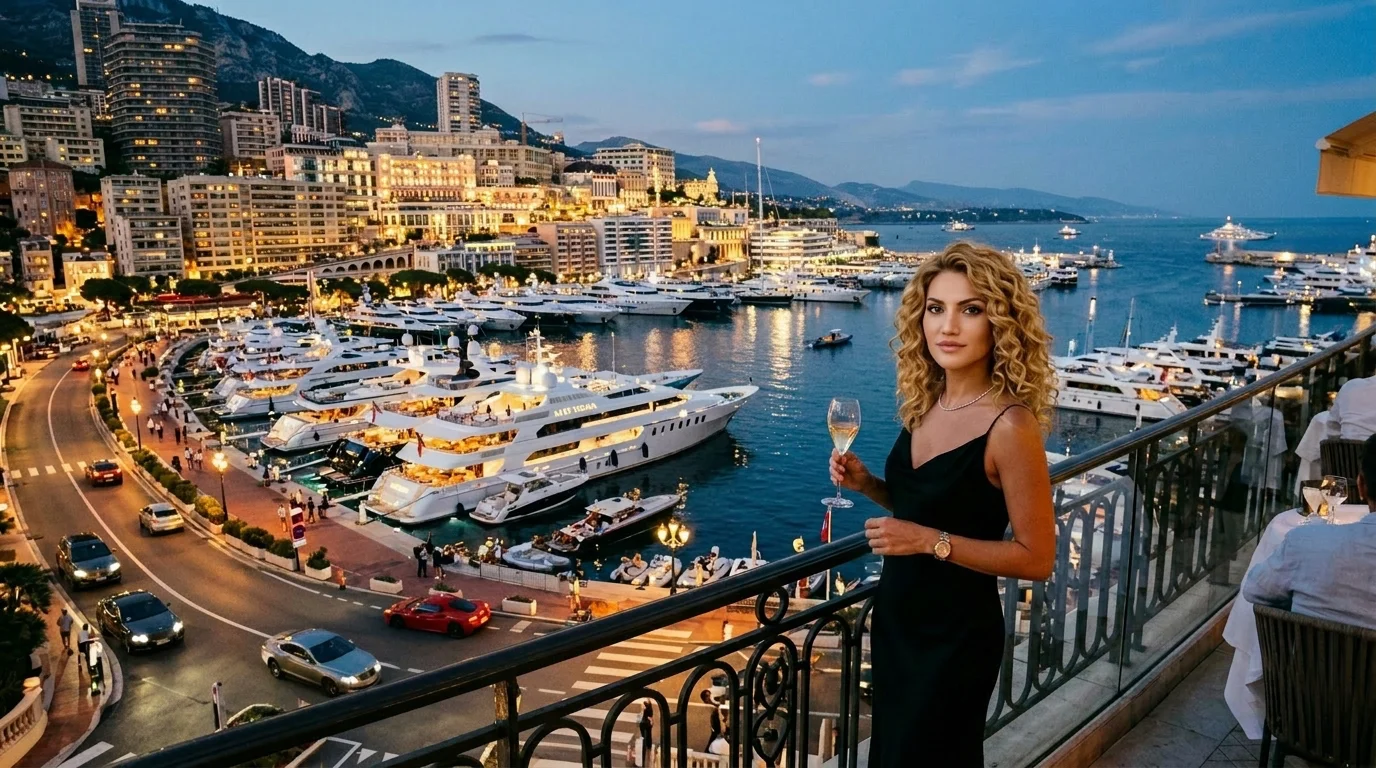
Port Hercule is Monaco's iconic natural harbour and one of the most famous ports in the Mediterranean, home to a permanent fleet of superyachts alongside the regular fishing and commercial boats. The quayside boulevard, Quai Albert I and Quai Antoine I, is perfect for an evening stroll, with rows of enormous private yachts providing a jaw-dropping backdrop. During the Monaco Grand Prix, temporary grandstands fill the portside and the F1 circuit runs along the waterfront.
The port area houses many of Monaco's best restaurants, brasseries, and bars at street level, while the hillside above is lined with terraced apartment buildings and the Rampe Major — the old stone pathway leading up to the Palace. The port is the social heart of Monaco and the best place to feel the city's unique rhythm of billionaires, fishermen, tourists, and locals all sharing the same small space.
Why visit: Port Hercule is pure, unfiltered Monaco. It is completely free to enjoy and offers the best people-watching, the most dramatic superyacht viewing, and a front-row seat to Monaco's extraordinary mix of old fishing village and modern billionaire playground.
Entrance: Free
Best time: Sunset for golden light on the yachts; evenings for the lively restaurant scene
Hours: Always open
Monaco-Ville (The Old Town / The Rock)
Monaco-Ville, 98000 Monaco
Monaco-Ville, also known simply as "The Rock" (Le Rocher), is the ancient heart of the principality — a medieval hilltop village perched dramatically on a 60-metre-high promontory jutting out into the sea. The entire district is a pedestrian zone of narrow cobblestone streets, orange-shuttered façades, small squares, and independent shops. It is home to the Prince's Palace, the Oceanographic Museum, the Cathedral of Our Lady of the Immaculate Conception, and the Palatine Chapel.
Strolling through Monaco-Ville feels genuinely different from the rest of Monaco — quieter, more human-scaled, and full of history. The Cathedral (Cathédrale Notre-Dame-Immaculée) is where Princess Grace Kelly is buried alongside generations of the Grimaldi dynasty. It is a serene, beautiful space open to visitors throughout the day.
Why visit: Monaco-Ville is the soul of the principality. It is where Monaco's 700 years of history are most visible, and where the contrast between ancient village life and the glittering modernity visible below is most striking.
Entrance: Free to walk; individual monuments have separate fees
Best time: Early morning (before 10 AM) when cruise tourists haven't arrived yet
Hours: Always accessible; Cathedral open daily 9:00 AM–7:00 PM
Cathédrale Notre-Dame Immaculée (Monaco Cathedral)
4 Rue Colonel Bellando de Castro, 98000 Monaco-Ville
The Monaco Cathedral, built in white La Turbie stone in a Romano-Byzantine style and consecrated in 1903, is both a working church and one of Monaco's most visited monuments. It is the burial place of Princess Grace Kelly (Grace de Monaco), who died in 1982 following a car accident on the Corniche road. Her simple marble grave slab, inscribed "Gratia Patricia — Princesse de Monaco," draws a constant stream of respectful visitors. Prince Rainier III is interred beside her.
Beyond its royal associations, the Cathedral houses an exceptional 16th-century altarpiece by Nice painter Louis Bréa — one of the finest examples of religious painting on the entire Côte d'Azur. The interior is peaceful and beautifully proportioned, a rare quiet moment in Monaco's generally busy tourist circuit.
Why visit: For anyone interested in the romantic story of Grace Kelly, this is a deeply moving visit. For history and art lovers, the Bréa altarpiece alone makes it worthwhile. And for everyone, it is a moment of quiet reflection in the heart of the most frenetic principality on Earth.
Entrance: Free
Best time: Weekday mornings for quiet reflection
Hours: Daily 9:00 AM–7:00 PM (closed during religious ceremonies)
Musée des Souvenirs Napoléoniens (Napoleon Museum)
Place du Palais, 98015 Monaco-Ville
Located within the Prince's Palace complex, the Napoleon Museum houses one of the most comprehensive private collections of Napoleonic memorabilia in the world, assembled by the Grimaldi family over generations. It includes Napoleon's personal hat, his coat, medals, letters, weapons, and an extraordinary range of documents and imperial objects. The connection comes through the Bonaparte family's historical links to Monaco.
The museum also contains documents tracing the history of Monaco itself, from its earliest origins as a Grimaldi stronghold to the 20th century. It is compact and well-curated, taking about 45 minutes to explore properly. For history enthusiasts, it is an unexpected treasure trove in a principality better known for casinos than collections.
Why visit: This is a genuinely world-class Napoleonic collection in a beautiful, uncrowded setting. If you have any interest in the Napoleonic era, you will be amazed at what is kept here.
Entrance: Included with Palace entrance (€10 adults, 2026) or €4 for museum only
Best time: Anytime; it rarely gets extremely crowded
Hours: Open during Palace visiting season (June–October), 10:00 AM–6:00 PM
Nouveau Musée National de Monaco — Villa Paloma
56 Boulevard du Jardin Exotique, 98000 Monaco
The Villa Paloma is one of two sites of Monaco's National Museum of Fine Arts (the other being Villa Sauber near the Larvotto beach). Housed in a stunning early 20th-century villa with beautiful gardens overlooking the sea, the museum presents rotating contemporary art exhibitions of genuinely high quality. The building itself — a pale yellow Belle Époque mansion surrounded by palm trees — is as impressive as what's inside.
The museum focuses on contemporary and modern art with rotating international exhibitions. Past shows have included major works by artists ranging from James Turrell to Roman Signer. The combination of the architecture, the garden, and the art makes Villa Paloma one of Monaco's most rewarding cultural experiences.
Why visit: If you want to experience Monaco beyond the obvious tourist circuit, Villa Paloma offers excellent contemporary art in a magnificent setting at a very reasonable price.
Entrance: €6 adults, €3 students (2026)
Best time: Weekday afternoons
Hours: Tuesday–Sunday 12:00–6:00 PM; closed Monday
Larvotto Beach
Avenue Princesse Grace, 98000 Monaco (Larvotto district)
Larvotto is Monaco's public beach — a small crescent of imported fine gravel and sand (Monaco beaches are naturally rocky, so the gravel is imported) stretching along Avenue Princesse Grace in the eastern part of the principality. It is divided into public sections (free access) and private beach clubs with sun loungers, restaurants, and full service. The water is clean and blue, and the setting — with Monaco's towering apartment buildings as a backdrop — is uniquely dramatic.
The beach is patrolled and safe for swimming. The sea floor is rocky in places, so water shoes are recommended. The private beach clubs — Jimmy'z Beach, Sporting Beach, and Plage du Larvotto among them — offer sun loungers from €30–80 per day (2026) with waiter service, cocktails, and restaurant food.
Why visit: For the simple pleasure of swimming in the Mediterranean in one of the world's most glamorous locations — and the free public section means anyone can enjoy it regardless of budget.
Entrance: Public beach: free; Private beach clubs: sun lounger rental from €30 (2026)
Best time: June–September for swimming; May and October for quiet beach walks
Hours: Beach always accessible; clubs open approximately 9 AM–8 PM in season
Jardin Japonais (Japanese Garden)
Avenue Princesse Grace, 98000 Monaco
The Japanese Garden is a perfect 7,000 square metre traditional Japanese garden created in 1994, designed by landscape architect Yasuo Beppu and consecrated by a Shinto priest. It sits right on the seafront next to the Larvotto beach and feels like an oasis of calm in one of the world's most densely packed places. Bonsai trees, a traditional teahouse, koi ponds, wooden bridges, and meticulously raked stone gardens create an atmosphere utterly unlike the rest of Monaco.
The garden is beautifully maintained and is entirely free to enter, making it one of Monaco's best free attractions. It is a popular spot for wedding photographs and is beloved by both locals and visitors for its serene atmosphere.
Why visit: It is free, beautiful, peaceful, and represents an extraordinary cultural contrast in the most unexpected location — a perfect Japanese garden right on the glamorous Riviera seafront.
Entrance: Free
Best time: Early morning or late afternoon; spring for cherry blossoms
Hours: Daily 9:00 AM–sunset
Book your tours and tickets in advance — it saves hours of queuing and often gets you a better price. These two platforms cover different options, so it's worth checking both.
What Are the Best Neighborhoods to Explore in Monaco?
Monaco's neighborhoods each have a distinct character — despite their tiny size, the principality is divided into clearly different districts, each with its own atmosphere, architecture, and social life.
Monte-Carlo
Character: The glamorous heart of Monaco — Monte-Carlo is synonymous with luxury, wealth, and spectacle. This is where the Casino sits, where the grand Belle Époque hotels line up along the seafront, and where the most expensive restaurants, boutiques, and art galleries concentrate. The architecture ranges from ornate 19th-century palaces to gleaming modern towers.
What makes it special: Monte-Carlo is the Monaco that appears in films and magazines — the place of James Bond, Grace Kelly, and Formula 1. Place du Casino is the iconic centre, but the surrounding streets of the Carré d'Or (Golden Square) are equally impressive, lined with Cartier, Hermès, Chanel, and Louis Vuitton boutiques.
Best for: First-time visitors, luxury travellers, architecture lovers, Casino visitors, high-end shoppers
Must-see in this area: Place du Casino, Casino de Monte-Carlo, Hôtel de Paris, Café de Paris, Carré d'Or shopping streets, Terrasses du Soleil viewpoint
How to get there: Monaco-Monte-Carlo train station is within walking distance; Bus lines 1, 2, 4 all pass through
Location: Place du Casino, 98000 Monte-Carlo, Monaco
Monaco-Ville (The Rock / Le Rocher)
Character: The ancient soul of Monaco — a medieval hilltop village perched on a rocky promontory above the sea. Cobblestone alleys, ochre façades, flower boxes in windows, and the ceremonial hush around the Palace. This is the oldest part of Monaco and the most architecturally and historically rich.
What makes it special: Monaco-Ville is a living medieval village that happens to be the seat of one of Europe's oldest royal families. The Cathedral, the Palace, the Oceanographic Museum, and dozens of tiny independent shops and restaurants are all packed into its labyrinthine streets.
Best for: History lovers, families, culture seekers, fans of Princess Grace Kelly, photography enthusiasts
Must-see in this area: Prince's Palace, Monaco Cathedral, Oceanographic Museum, Place du Palais, Rue Emile de Loth
How to get there: Free public elevator from Port Hercule or the Rampe Major stairway; Bus line 2
Location: Place du Palais, 98000 Monaco-Ville, Monaco
La Condamine
Character: The most "real" and lived-in neighbourhood of Monaco — this is where locals shop at the daily market, where neighbourhood restaurants serve affordable lunches, and where the bustle of Port Hercule meets the practicalities of daily life. Less polished than Monte-Carlo, more authentic and human-scaled.
What makes it special: La Condamine is home to Monaco's only open-air market (the Marché de la Condamine), the best selection of mid-range restaurants, and the social heart of working-class Monaco. Port Hercule, with its superyachts and racing circuit, is right on the doorstep.
Best for: Budget-conscious travellers, food lovers, people-watchers, anyone wanting to see Monaco beyond the glamour
Must-see in this area: Marché de la Condamine, Port Hercule, Quai Albert I, Place d'Armes
How to get there: Monaco-Monte-Carlo train station is in La Condamine; central walking distance from everywhere
Location: Place d'Armes, 98000 La Condamine, Monaco
Fontvieille
Character: Monaco's industrial and artisan district, reclaimed from the sea on artificial land in the 1960s–80s. Fontvieille feels quieter and less touristy than the rest of Monaco — it is where the principality's small industries, workshops, and light manufacturing happen. It also houses Monaco's heliport.
What makes it special: Fontvieille is home to the Princess Grace Rose Garden, a beautiful free park with over 8,000 rose varieties, and the Terrasses de Fontvieille — a shopping complex and several museums including the Naval Museum and the Stamps and Coins Museum, all charging very reasonable entry fees.
Best for: Garden lovers, families, museum enthusiasts, visitors wanting a quieter Monaco experience
Must-see in this area: Princess Grace Rose Garden, Roseraie Princesse Grace, Naval Museum, Terrasses de Fontvieille
How to get there: Bus line 5 or 6; about 20 minutes walk from Monte-Carlo
Location: Roseraie Princesse Grace, 98000 Fontvieille, Monaco
Larvotto
Character: Monaco's beach district — the easternmost part of the principality, characterised by high-rise luxury apartment towers, the public beach, private beach clubs, and the glamorous Avenue Princesse Grace running along the seafront. It has a more relaxed, seaside resort feel than Monte-Carlo.
What makes it special: Larvotto contains Monaco's only public beach, the beautiful Japanese Garden, Villa Sauber (the second site of the National Museum), and some of Monaco's best beach restaurants and clubs. It is where locals swim and where the city feels most like a Mediterranean resort.
Best for: Beach lovers, families, contemporary art enthusiasts, anyone wanting a swim in the Med
Must-see in this area: Larvotto Beach, Jardin Japonais, Villa Sauber, Sporting Monte-Carlo
How to get there: Bus line 4 or 6 along Avenue Princesse Grace; 20-25 minutes walk from the Casino
Location: Avenue Princesse Grace, 98000 Larvotto, Monaco
What Food Should You Try in Monaco?
Monaco's food culture is defined by the French Riviera tradition — a sophisticated blend of French haute cuisine, Italian Ligurian influences, and fresh Mediterranean seafood, elevated by some of the world's best chefs who have set up here drawn by the principality's wealthy clientele and tax advantages. The must-try dishes are Socca, Barbajuan, bouillabaisse, and fresh grilled fish from the Mediterranean.
What Are the Must-Try Local Dishes in Monaco?
- Barbajuan — Monaco's most iconic local dish: deep-fried pastry parcels stuffed with swiss chard, ricotta, and parmesan. They are eaten as a snack or appetiser and found at all traditional restaurants and the local market. Essential tasting experience unique to Monaco.
- Socca — A crispy, thin chickpea flour pancake baked in wood-fired ovens, seasoned simply with olive oil and black pepper. Originally from nearby Nice, it is widely eaten in Monaco and is one of the best budget street foods on the Riviera.
- Bouillabaisse — The legendary Provençal fish stew, made with multiple varieties of local fish, saffron, tomato, and fennel, served with rouille (garlic mayo) and crusty bread. An authentic bouillabaisse in Monaco is expensive but unforgettable.
- Pissaladière — A Niçois onion tart topped with anchovies and black olives on a thick, caramelised onion base. Found at bakeries and casual restaurants throughout Monaco and perfect for a quick lunch.
- Fougasse — The local Provençal bread, made with olive oil and often flavoured with herbs, anchovies, olives, or bacon. Found at every bakery in Monaco and at the Condamine market.
- Grilled Mediterranean Fish (Loup de Mer / Sea Bass) — Freshly caught sea bass grilled whole with olive oil, lemon, and herbs is the dish that best captures the Monaco dining experience at its most elegant simplicity.
- Pasta with Truffle — Monaco's proximity to the Italian border means excellent fresh pasta is everywhere. Black or white truffle pasta in autumn and winter is a spectacular Riviera speciality.
- Pastries and Tarts — The patisserie culture is extraordinary in Monaco. Tarte tropézienne (cream-filled brioche), lemon tart (tarte au citron), and almond tuiles from Monaco's bakeries are among the best you will ever taste.
Where Should You Eat in Monaco?
Budget-Friendly (Under €20 per meal)
- Marché de la Condamine — Place d'Armes, 98000 La Condamine — Monaco's best daily market with food stalls serving fresh socca, barbajuan, sandwiches, pizza, and pastries. Eat like a local for €5–10. Open Tuesday to Sunday mornings.
- Boulangerie-Pâtisserie Carolles — 16 Rue Grimaldi, 98000 Monaco — An excellent local bakery serving fresh sandwiches, quiches, pastries, and fougasse at genuine local prices (€5–12 for a full lunch). Very popular with Monaco workers.
- Le Café de Paris (brasserie level) — Place du Casino, 98000 Monaco — The iconic brasserie across from the Casino serves croque monsieurs, salads, and pastries at the outdoor tables from around €15–20. More affordable than its glamorous setting suggests.
Mid-Range (€30–80 per meal)
- Café Llorca — The Atrium, 98000 Monte-Carlo — Chef Alain Llorca's casual restaurant offering high-quality French bistro cooking at surprisingly reasonable prices for Monaco. Set lunches from around €35 are excellent value.
- Quai des Artistes — 4 Quai Antoine 1er, 98000 La Condamine — A lively portside brasserie with a great view of the yachts, serving well-executed French classics. Popular with locals and visitors alike. Mains €25–50.
- La Marée — 1 Avenue de Grande Bretagne, 98000 Monaco — A classic seafood restaurant near the port serving excellent fresh fish and bouillabaisse in a relaxed, traditional setting. Very popular — reservations recommended. Mains €30–60.
- Polpetta — 2 Rue Paradis, 98000 Monaco — A beloved Italian-inspired trattoria-style restaurant serving excellent fresh pasta, risotto, and seafood. Queues at peak times but worth the wait. Mains €25–45.
Fine Dining (€100+ per meal)
- Le Louis XV – Alain Ducasse — Hôtel de Paris, Place du Casino, 98000 Monaco — Arguably the most famous restaurant in Monaco and one of the best in the world, with 3 Michelin stars. Chef Alain Ducasse's flagship Mediterranean menu in an extraordinarily opulent setting. Reservation essential months in advance. Menu from €260pp (2026).
- Joël Robuchon Monte-Carlo — Hôtel Métropole, 4 Avenue de la Madone, 98000 Monaco — A 2-Michelin-star restaurant serving the legendary "cuisine of perfection" tradition. The truffle tarts and roast suckling pig are iconic. Menu from €180pp (2026).
What Are the Dining Customs in Monaco?
Meal times: Breakfast is typically 7:30–10:00 AM; lunch is served 12:00–2:30 PM; dinner generally begins at 7:30 PM and kitchens close around 10:30–11:00 PM. Arriving outside these windows is not recommended at traditional restaurants.
Tipping: A service charge (service compris) is usually already included in Monaco restaurant bills. If service is exceptional, an additional 5–10% cash tip is appreciated but never obligatory. Check your bill before tipping to avoid double-tipping.
Reservations: Essential at fine dining restaurants (book weeks or months ahead). Strongly recommended at mid-range restaurants in summer and during Grand Prix week. Casual brasseries generally accept walk-ins.
Dress code: Smart casual is appropriate at most restaurants. Formal attire (jacket recommended for men) is expected at Michelin-starred establishments and the Casino restaurants.
What Is the Nightlife Like in Monaco?
Monaco's nightlife scene is sophisticated, glamorous, and expensive — nights here start late (rarely before 10 PM for dinner) and can run until 4–5 AM in the clubs. It caters primarily to an international jet-set crowd and is centred around Monte-Carlo, with the Casino area and the Sporting Monte-Carlo complex being the main hubs.
Where Are the Best Areas for Nightlife in Monaco?
- Place du Casino, Monte-Carlo: Place du Casino, 98000 Monaco — The epicentre of Monaco's nightlife. The Casino itself operates late, and Café de Paris is open until 3 AM. The surrounding streets have bars and clubs drawing a well-heeled international crowd. Dress up.
- Port Hercule, La Condamine: Quai Antoine 1er, 98000 Monaco — The portside has a more relaxed bar scene with restaurants and bars staying open late into the night. Less formal than Monte-Carlo, better for a relaxed evening drink while watching the yachts.
- Sporting Monte-Carlo, Larvotto: Avenue Princesse Grace, 98000 Monaco — Monaco's premier entertainment complex, hosting Jimmy'z nightclub and major concert events in summer. This is where the biggest parties happen.
What Are the Best Bars and Clubs in Monaco?
Bars & Pubs
- American Bar at Hôtel de Paris — Place du Casino, 98000 Monaco — A legendary hotel bar that has been serving Monaco's elite since the 1860s. Impeccable cocktails, extraordinary history, and an atmosphere of hushed elegance. Cocktails from €22 (2026).
- Bar Brasserie de Monaco — 36 Route de la Piscine, 98000 Fontvieille — Monaco's one and only microbrewery and bar, serving craft beers brewed on-site. A completely different, more relaxed and local atmosphere. Beers from €6 (2026). Popular with Monaco's younger working population.
- Sass Café — 11 Avenue Princesse Grace, 98000 Monaco — A legendary Monaco institution — part restaurant, part piano bar, with live jazz and soul music nightly. The sophisticated crowd, the music, and the cocktails make it one of the best evening experiences in Monaco. Open until 3 AM.
Clubs & Dancing
- Jimmy'z Monte-Carlo — Avenue Princesse Grace, Sporting d'Hiver, 98000 Monaco — The most famous nightclub in Monaco and one of the most exclusive in Europe. Open air in summer with a pool, international DJs, and a guest list that regularly includes celebrities and royalty. Cover charge approximately €30–50 (2026). Dress code strictly enforced.
- Living Room — 7 Avenue des Spélugues, 98000 Monaco — A more accessible and lively club inside the Monte-Carlo Bay Hotel. Resident DJs, themed nights, and a less intimidating door policy than Jimmy'z. Popular with a younger, international crowd. Entry from €20 (2026).
Live Music & Shows
- Opéra de Monte-Carlo (Salle Garnier) — Place du Casino, 98000 Monaco — The Casino building houses Monaco's opera house, the stunning Salle Garnier designed by Charles Garnier. A full season of opera, ballet, and classical concerts runs October–April. Tickets from €30–180 (2026).
- Grimaldi Forum — 10 Avenue Princesse Grace, 98000 Monaco — Monaco's major modern events centre hosting international concerts, Broadway shows, comedy, and large-scale performances year-round. Tickets and programming vary widely.
What Family-Friendly Evening Entertainment Is Available?
Families can enjoy evening strolls along the illuminated port, sunset at Place du Palais, and dinner at the many family-friendly brasseries in La Condamine. The Grimaldi Forum hosts family-friendly shows and events, and during summer there are free outdoor cinema events and concerts at various venues around the principality.
What and Where Should You Shop in Monaco?
The best things to buy in Monaco are luxury fashion, watches, fine jewellery, perfume, and Monaco-branded souvenirs, and the top shopping areas are the Carré d'Or (Golden Square) in Monte-Carlo and the Fontvieille shopping complex for more accessible brands.
What Are the Best Shopping Districts in Monaco?
- Carré d'Or (Golden Square), Monte-Carlo: Avenue de Monte-Carlo and Boulevard des Moulins, 98000 Monaco — Monaco's premier luxury shopping zone. Hermès, Chanel, Dior, Cartier, Bulgari, Louis Vuitton, Rolex, and every other major luxury house has a boutique here. This is not a place for bargains — it is a place to see the ultimate in retail luxury.
- Boulevard des Moulins: Boulevard des Moulins, 98000 Monaco — The main pedestrianised shopping street with a mix of luxury boutiques and more accessible brands. Good for window-shopping and people-watching even if the prices are beyond your budget.
- Terrasses de Fontvieille: Terrasses de Fontvieille, 98000 Fontvieille — A modern shopping complex in the Fontvieille district with more accessible brands, a supermarket, pharmacy, and everyday services. This is where Monaco residents actually do their regular shopping.
What Markets Should You Visit in Monaco?
Marché de la Condamine — Place d'Armes, 98000 La Condamine — Monaco's beloved daily outdoor market, open Tuesday to Sunday from approximately 7:00 AM–1:00 PM. Stalls sell fresh fruit, vegetables, cheese, olives, flowers, honey, and prepared foods. There is no real bargaining culture — prices are fixed and fair. This is the authentic Monaco shopping experience and the best place to buy local Provençal food products to take home.
Brocante (Flea Market) — Various locations around Monaco — Seasonal brocante markets are held occasionally in different districts. Check the Monaco tourism website (visitmonaco.com) for current dates. Good for vintage postcards, art prints, and Monaco memorabilia.
What Should You Buy in Monaco?
- Monaco Postage Stamps — Monaco's stamps are genuinely collectible internationally and are prized by philatelists. The Musée des Timbres et Monnaies in Fontvieille sells current and historic stamps, and they make extraordinary, lightweight gifts.
- Locally Produced Olive Oil and Jam — From the Condamine market and specialist food shops, olive oil, fig jam, lavender honey, and tapenade from the region make excellent authentic gifts.
- Monaco Royal Family Memorabilia — Official merchandise, books, prints, and collectibles connected to the Grimaldi family are sold throughout Monaco-Ville and at the Palace gift shop. High quality official items stand apart from cheap tourist tat.
- Perfume — Monaco has its own perfume house, Monaco Perfumes, and several local perfumers. The Riviera botanical tradition produces exceptional lavender, rose, and citrus fragrances.
- Watches and Jewellery — If budget allows, Monaco's watch boutiques (Rolex, Patek Philippe, Richard Mille) and jewellers carry pieces that are genuine investments. Even if buying is off the table, browsing is educational and exciting.
- Artwork and Photography — Monaco has a vibrant contemporary art scene. Galleries in Monte-Carlo and Monaco-Ville sell original prints and photography by both local and international artists at varying price points.
What Are the Shopping Hours and Customs?
Most shops in Monaco are open Monday to Saturday, 10:00 AM–7:00 PM (luxury boutiques sometimes open later). Some shops close for lunch (12:30–2:30 PM) in the French tradition. Sunday shopping is limited — most boutiques close, though tourist-facing shops in Monaco-Ville and some on Boulevard des Moulins open Sunday mornings. VAT refund: Monaco, while not an EU member, operates a VAT rate of 20% and non-EU residents can claim a tax refund on purchases over €175 from the same store on the same day. Ask at the till for a détaxe form.
Can Non-EU Visitors Claim a VAT Tax Refund in Monaco?
Yes — if you are a visitor from outside the European Union (including travellers from the USA, Canada, Australia, the UK, and most of Asia and Latin America), you are entitled to a refund of the VAT (Value Added Tax) included in the price of goods you buy in Monaco. VAT in Monaco is 20% on most goods (Monaco uses the French VAT system), which means this refund can be significant on high-value purchases like clothing, leather goods, jewellery, designer fashion, and electronics.
How to Claim Your VAT Refund — Step by Step
- Spend at least €100 in a single shop in a single day. This is the minimum threshold for a VAT refund claim in Monaco. It does not apply across multiple shops — the full amount must be spent in one store.
- Look for the "Tax Free" sign. Participating shops display a "Tax Free Shopping," "Global Blue," or "Planet" logo in the window or at the register.
- Ask for the tax refund form at the register before you pay. Present your non-EU passport — the shop will fill out the form with your details and the purchase amount. Keep the form with your receipt.
- Get the form stamped at customs before you leave. Go to the Customs office at Nice Côte d'Azur Airport (NCE) before check-in and have an officer stamp your tax refund form. Keep your purchases accessible in hand luggage — do not pack them deep in your checked bags.
- Collect your refund. Hand the stamped form to the Global Blue or Planet desk at the airport. You can receive the refund in cash (minus a processing fee) or as a credit card refund (lower fees, takes a few weeks).
VAT Refund Quick Facts for Monaco
- Minimum spend: €100 in one shop in one day
- VAT rate on most goods: 20% on most goods (Monaco uses the French VAT system)
- Typical refund after fees: 10–15% of the purchase price
- Refund processors: Global Blue and Planet (formerly Premier Tax Free) at Nice Côte d'Azur Airport (NCE)
- Who qualifies: Anyone with a non-EU passport who is not a resident of an EU country
- UK visitors: British passport holders qualify since Brexit — the UK is no longer in the EU
- Deadline: Purchases must be exported within 3 months of the date of purchase
- Full guide: VAT Refund in Europe — Complete Guide for Non-EU Travelers
What Festivals and Events Happen in Monaco?
Monaco's biggest events include the Formula 1 Monaco Grand Prix in May, the Monte-Carlo Rally in January, the International Circus Festival in January, and the Monaco Yacht Show in September — plus a packed cultural calendar that punches well above the principality's tiny size.
What Is the Annual Events Calendar for Monaco?
| Month | Event Name | Description |
|---|---|---|
| January | Monte-Carlo Rally (Rallye Automobile Monte-Carlo) | One of the oldest and most legendary car rallies in the world — the final stages end in Monaco with cars on the podium in Place du Casino. Free to watch on the streets. Usually held mid-January. |
| January | International Circus Festival of Monte-Carlo | A world-famous circus competition held annually in the Chapiteau de Fontvieille. Founded by Prince Rainier III in 1974, it is considered the "Olympics of the Circus." Tickets sell out — book months in advance. |
| February | Bal de la Rose | The most glamorous charity ball in Europe, held in the Salle des Étoiles at the Sporting Club. Traditionally organised by Princess Caroline and attended by royalty, celebrities, and global elites. Very exclusive. |
| March | Monte-Carlo Tennis Masters (Rolex Monte-Carlo Masters) | An ATP Masters 1000 clay court tennis tournament held at the Monte-Carlo Country Club just across the border in Roquebrune-Cap-Martin. Top-ranked players compete. Tickets from €30 (2026). Book early. |
| April | Monaco Grand Prix Historic | Vintage racing cars from different eras race on the Monaco circuit in a spectacular festival of classic motorsport. More relaxed than the F1 Grand Prix but with extraordinary old cars. |
| May | Formula 1 Monaco Grand Prix | The jewel in motorsport's crown — the Monaco Grand Prix has been held on the streets of Monte-Carlo since 1929. One of the hardest and most prestigious races in F1. The entire city transforms. Book accommodation 6–12 months ahead. Race week is late May. |
| June | Fête de la Musique | Free outdoor music events throughout Monaco on June 21 celebrating the summer solstice — a French tradition fully embraced by Monaco with performances in public squares and gardens. |
| July | Fireworks Festival (Festival International du Feu d'Artifice) | International pyrotechnic companies compete with spectacular fireworks displays launched from a barge in Monaco harbour, viewed from the Casino terrace and surrounding hillsides. Free to watch. |
| August | Summer Concerts at Sporting Club | The Sporting Club hosts major international pop and rock concerts throughout August in its open-air Salle des Étoiles. Past performers include major international stars. Tickets from €80 (2026). |
| September | Monaco Yacht Show | The world's most prestigious superyacht exhibition — 500+ yachts (the largest in the world) moored in Port Hercule for five days. The public event is extraordinary to see even without a purchasing intent. Trade and public tickets available. |
| November | Fête Nationale de Monaco (National Day) | Monaco's national day on November 19 celebrates Prince Albert II's accession with a military parade, fireworks, concert, and public festivities. A genuine local celebration — hotels fill up but prices are reasonable. A wonderful time to visit. |
| December | Christmas Village and New Year's Eve | A charming Christmas market fills Port Hercule with food stalls, rides, and decorations throughout December. New Year's Eve brings spectacular fireworks over the harbour at midnight — one of the most dramatic New Year displays on the Riviera. |
How Do Festivals Affect Hotel Prices and Availability?
The Formula 1 Grand Prix (late May) causes the most dramatic price increase of any event — hotels routinely charge 3–5× their normal rates and sell out 6–12 months in advance. The Monaco Yacht Show (September) and the Monte-Carlo Rally (January) also significantly raise prices and reduce availability. For Grand Prix week, booking a year ahead is genuinely recommended if you want to stay in Monaco itself. Staying in nearby Nice or Menton and commuting by train during Grand Prix week is a smart cost-saving strategy.
Where Should You Stay in Monaco?
The best neighbourhood to stay in Monaco depends on your travel style and budget. Monte-Carlo puts you at the heart of the action near the Casino, while La Condamine offers better value and a more local feel near the port.
What Are the Best Neighborhoods to Stay in Monaco?
| Neighborhood | Vibe | Price Range per Night (2026) | Best For |
|---|---|---|---|
| Monte-Carlo | Ultra-luxury, glamorous, central | €350–2,000+ | Luxury travellers, first-timers wanting the classic Monaco experience |
| La Condamine | Local, lively, port views | €180–600 | Value-seekers, food lovers, port enthusiasts |
| Monaco-Ville | Quiet, historic, limited options | €200–500 | History and culture travellers wanting tranquillity |
| Larvotto | Beachside, modern, relaxed | €250–800 | Beach lovers, families, contemporary travellers |
| Fontvieille | Quiet, residential, practical | €150–350 | Budget-conscious visitors, longer stays |
What Are the Pros and Cons of Each Area?
Monte-Carlo:
Pros: Central location, walking distance to Casino and most attractions, great restaurant choice, iconic atmosphere, excellent transport links.
Cons: Most expensive area, noise from Casino area late at night, very touristy, crowded in summer.
La Condamine:
Pros: More affordable, lively local atmosphere, great market and port access, excellent mid-range restaurant choice, Monaco train station is here.
Cons: Less glamorous than Monte-Carlo, some street noise, fewer luxury hotel options.
Larvotto:
Pros: Beach access, more relaxed pace, good mid-range hotels, beautiful seafront walking.
Cons: 20–25 minute walk to Casino area, limited restaurant variety compared to Monte-Carlo.
How Far in Advance Should You Book in Monaco?
During Formula 1 Grand Prix week (late May), book 6–12 months ahead with a non-refundable rate — accommodation sells out completely. For July and August, 3 months ahead is recommended. Shoulder season (October, November, March, April) can often be booked 4–6 weeks ahead with good availability. Always look for hotels with free cancellation so you can rebook if a better deal appears.
What Do You Need to Know Before Visiting Monaco?
Here are the essential practical details every visitor to Monaco needs to know — from money and language to safety and health.
Essential Travel Details for Monaco
- Currency: Euro (€). Monaco is not in the EU but uses the Euro by agreement with France. Widely accepted everywhere. No currency exchange needed if you're coming from the Eurozone.
- Credit Cards: Accepted almost universally in Monaco — Visa, Mastercard, and Amex are all standard. Some small market stalls are cash-only.
- ATMs: Available throughout Monaco. Use bank ATMs (HSBC, BNP Paribas, Société Générale) rather than standalone cash machines to avoid high fees. Daily withdrawal limits vary by your home bank.
- Language: French is the official language. English is very widely spoken in all hotels, restaurants, and tourist-facing businesses. Italian is also common due to proximity to Italy.
- Tipping: Service charge is usually included in restaurant bills (service compris). An additional 5–10% is appreciated but not obligatory. Tip taxi drivers €1–3 and hotel porters €2–5 per bag.
- Electrical Plugs: Type E/F (two round pins), same as France. Voltage: 230V, 50Hz. US and UK visitors need an adapter.
- Emergency Numbers: Police: 17 | Ambulance: 15 | Fire: 18 | European emergency number: 112
- Tourist Police: Monaco Sûreté Publique: +377 93 15 30 15
- SIM Cards: Monaco has its own carrier (Monaco Telecom) but French SIM cards (Orange, SFR, Bouygues) work perfectly in Monaco. Buy at Nice airport or any French phone shop. eSIM services (Airalo, Nomad) also work well.
- WiFi: Excellent. Most hotels, cafés, and restaurants offer free high-speed WiFi. Monaco has public WiFi zones throughout major tourist areas.
- Tap Water: Completely safe to drink. Monaco tap water is excellent quality — there is no need to buy bottled water.
Skip the airport queue — order your eSIM before you travel and activate it the moment you land. Prices and data allowances vary, so it pays to compare providers.
How Much Does It Cost to Visit Monaco?
| Budget Type | Daily Cost (2026) | What's Included |
|---|---|---|
| Budget Traveller (Day Trip) | €60–100/day | Train from Nice, market lunch, free attractions (gardens, port, Cathedral), one paid museum, no accommodation |
| Mid-Range Traveller | €300–600/night total | 3-star hotel in La Condamine or Larvotto, brasserie dinners, taxi, 1–2 paid attractions, occasional cocktail |
| Luxury Traveller | €1,000–5,000+/night total | 5-star hotel (Hôtel de Paris, Hotel Hermitage), Michelin dining, Casino, private transfers, premium experiences |
What Are the Most Useful Phrases in Monaco?
- Hello: Bonjour (bon-ZHOOR)
- Thank you: Merci (mair-SEE)
- Please: S'il vous plaît (seel-voo-PLAY)
- Excuse me: Excusez-moi (ex-KYOO-zay-mwah)
- How much?: Combien? (kom-bee-AHN)
- Where is...?: Où est...? (oo-AY)
- I don't understand: Je ne comprends pas (zhuh nuh kom-PRAHN pah)
- Help!: Au secours! (oh-suh-KOOR)
- Bathroom: Les toilettes (lay twah-LET)
- Check, please: L'addition, s'il vous plaît (lah-dee-SYON, seel-voo-PLAY)
Is Monaco Safe for Tourists?
Yes — Monaco is one of the safest places in the world for tourists. With one of the highest police-to-resident ratios on Earth (every resident is reportedly surveilled by CCTV), violent crime is essentially non-existent. Monaco has recorded among the lowest crime rates of any country globally for decades.
Areas to avoid: There are no genuinely dangerous areas in Monaco. The principality is uniformly safe at all hours. The only mild concern is petty theft in very crowded tourist areas.
Common scams: Overcharging by unlicensed taxi drivers (always use metered taxis or Uber); "friendship bracelets" placed on your wrist by vendors (rare but occasionally seen near tourist spots); overly helpful strangers at ATMs (cover your PIN and decline "help"). These are mild nuisances, not serious safety concerns.
Pickpocketing: Very rare by European standards, but the Casino area and Port during peak tourist months do attract occasional opportunistic thieves. Keep valuables in a front pocket or secure bag. Monaco's CCTV coverage makes pickpocketing relatively low-risk.
Solo traveller safety: Monaco is exceptional for solo travellers of all genders. Women travelling alone report feeling very safe. LGBTQ+ visitors are welcomed comfortably, though Monaco is not specifically a pride destination. The city is small, well-lit, and heavily policed at all hours.
What Are the Cultural Customs in Monaco?
- Greetings: Locals greet with "Bonjour" and a light handshake in formal settings, or a kiss on both cheeks (la bise) with people they know. Always say "Bonjour" when entering a shop or restaurant — it is considered rude not to.
- Dress code: Smart casual is expected throughout Monaco — this is not a flip-flop town. The Casino and Michelin restaurants require smart attire. Monaco-Ville has no specific dress code but modest clothing is appreciated near the Cathedral.
- Photography: Generally fine in public areas. No photography inside the Casino gaming rooms. Ask permission before photographing people, especially locals going about their daily lives.
- Public behaviour: Keep voices at moderate levels. Excessive noise, drunken behaviour, or aggressive street behaviour are genuinely rare and unwelcome — Monaco's police force is present and effective.
- Dining: Never rush a meal. French dining culture applies — meals are social occasions. Don't expect fast service; it means the kitchen is working properly.
- Gestures to avoid: The "OK" sign is generally understood positively in Monaco due to the international crowd. Pointing directly at people is considered rude. Loud haggling or bargaining at restaurants is inappropriate.
Do You Need a Visa to Visit Monaco?
Monaco has a customs union with France, meaning it effectively applies French/Schengen visa rules. Citizens of EU countries, the UK, USA, Canada, Australia, New Zealand, and most Western nations do not need a visa to visit Monaco for stays of up to 90 days within a 180-day period. Non-EU nationals who need a Schengen visa for France also need one for Monaco. Always check official requirements at the Monaco government website (service-public-particuliers.gouv.mc) and your country's foreign affairs portal before travelling, as visa rules change.
What Health Precautions Should You Take in Monaco?
Vaccinations: No specific vaccinations required for Monaco. Standard EU/Western vaccination schedules are fine. Travel insurance with medical cover is strongly recommended as Monaco private medical care is expensive.
Pharmacies: Monaco has several well-stocked pharmacies (pharmacies display a green cross sign). Over-the-counter medications are widely available. Some pharmacies are open late or on weekend duty — check the posted rota on pharmacy doors.
Hospitals: The Centre Hospitalier Princesse Grace (1 Avenue Pasteur, 98000 Monaco) is Monaco's main hospital — modern, excellent, and expensive for non-residents. EU citizens with an EHIC/GHIC card receive reciprocal care. Non-EU visitors should have comprehensive travel insurance that covers medical evacuation.
Common health issues: Sun and heat in summer — use strong sunscreen (the Mediterranean UV index is extremely high). Tap water is safe. Food hygiene standards are very high. There are no mosquito-borne disease concerns beyond mild irritation.
Do You Need Travel Insurance for Monaco?
Yes — and you should buy it before you board your flight, not after. Travel insurance covers the situations that can turn a great trip into a financial disaster: a medical emergency (a single ambulance ride and hospital stay in Europe can cost €3,000–€10,000 without coverage), a cancelled or delayed flight, lost or stolen baggage, or a last-minute trip cancellation. EU citizens with an EHIC or GHIC card receive reciprocal state healthcare, but this does not cover repatriation, trip cancellation, or lost luggage — a full travel policy fills those gaps. Non-EU travellers have no state coverage at all and should never visit without insurance.
Choosing the right policy matters — coverage limits, exclusions, and pre-existing condition terms vary significantly between providers. Read our full guide before you buy: Best Travel Insurance for Europe — Honest Comparison for 2026.
Travel insurance is strongly recommended for Monaco — an unexpected medical bill, flight cancellation, or lost luggage can cost far more than the policy. Get covered before you go.
What Are Your Rights If Your Flight to Monaco Is Delayed or Cancelled?
Under EU Regulation 261/2004, if your flight to or from Monaco is delayed by more than 3 hours or cancelled without sufficient notice, you are entitled to compensation of up to €600 per passenger — regardless of which airline you flew with, and regardless of how long ago it happened (claims can go back up to 6 years in some countries). This applies to all flights departing from an EU airport, and all flights arriving into an EU airport on an EU-based carrier. Most travellers don't realise they are owed money, and airlines rarely volunteer to pay. A claims service handles everything on your behalf and only charges a fee if they win — so there is no risk to you.
Both services check your eligibility for free with no upfront cost — they only charge a commission if they successfully recover your compensation.
Is Monaco Accessible for People with Disabilities?
Monaco has invested significantly in accessibility. The public elevator (ascenseur) network connecting different levels of the city is fully accessible for wheelchair users and is extremely useful. Monaco-Ville (The Rock) is the most challenging area — narrow cobblestone streets and steps make full wheelchair access difficult, though some routes are accessible. Most major hotels, restaurants, and modern attractions are wheelchair accessible. Contact visitmonaco.com for specific accessibility information before travelling.
Is Monaco Good for Families with Kids?
Absolutely — Monaco is wonderfully family-friendly despite its glamorous reputation. The Oceanographic Museum's aquarium is fantastic for children of all ages. The Exotic Garden is a natural playground of bizarre giant plants and underground caves. The Larvotto beach is safe for swimming and the Japanese Garden enchants children and adults equally. The International Circus Festival in January is specifically ideal for families. Most restaurants welcome children with high chairs and simplified menus, and the principality's streets are very safe for children.
What Are the Best Day Trips from Monaco?
The best day trips from Monaco include Nice (the vibrant capital of the Côte d'Azur), Eze (a medieval hilltop village with extraordinary views), Menton (the lemon capital of France), the Italian Riviera towns of Ventimiglia and San Remo, and Cannes. All are easily reachable within 30–90 minutes.
Nice, France
Distance: 18 km / 11 miles — 25–35 minutes by train
What to see: Nice is the grand dame of the Côte d'Azur — a city of magnificent Belle Époque architecture, the famous Promenade des Anglais, the extraordinary Marché du Cours Saleya (one of the best markets in France), the Vieux-Nice old town maze of baroque buildings and colourful façades, and world-class museums including the Musée Matisse and Musée Marc Chagall.
How to get there: Direct trains from Monaco-Monte-Carlo station every 30 minutes, €4.10 one way (2026). Journey time 25–35 minutes.
Time needed: Full day
Best for: Everyone — this is the essential complement to Monaco for any Riviera visit
Location: Place Masséna, 06000 Nice, France
Eze Village, France
Distance: 8 km / 5 miles — 15 minutes by bus or taxi
What to see: Eze is a breathtaking medieval village perched at 427 metres above the sea on the Grande Corniche road. Its labyrinthine streets have been preserved almost completely intact since the Middle Ages. The Jardin d'Eze, a beautiful cactus garden at the very top with panoramic views, is the highlight. The village also has excellent art galleries, perfumeries (the Fragonard perfume factory is here), and restaurants.
How to get there: Bus line 112 from Monaco (Fragonard stop for Eze Village) — approximately 15 minutes, €1.50. By taxi: approximately €25–35 one way. Nietzsche famously walked down from Eze to the sea — the Nietzsche Path (Sentier Nietzsche) is a beautiful 45-minute hike down to Eze-sur-Mer station.
Time needed: Half day to full day
Best for: Romantic couples, photographers, history enthusiasts, anyone wanting to escape Monaco's crowds
Location: Place du Général de Gaulle, 06360 Eze, France
Menton, France
Distance: 10 km / 6 miles — 12 minutes by train
What to see: Menton is a tranquil, old-fashioned Riviera town right on the Italian border, famous for its exceptional lemons (celebrated each February at the Fête du Citron), its beautiful old town with an extraordinary hilltop cemetery offering the best views on the Riviera, and its exquisite Belle Époque promenade. It feels more Italian than French and is significantly less expensive than Monaco for dining and shopping.
How to get there: Direct train from Monaco every 30 minutes, approximately €3.50 one way (2026). Journey time 12 minutes.
Time needed: Half day to full day
Best for: Culture lovers, garden enthusiasts, anyone wanting a quieter, more affordable Riviera experience
Location: Place Georges Clemenceau, 06500 Menton, France
San Remo, Italy
Distance: 55 km / 34 miles — 1 hour by train
What to see: San Remo is the undisputed queen of the Italian Riviera — a handsome resort town famous for its flower market (the largest in the world), its casino, the medieval La Pigna old town, and the spectacular Liberty-style villas along the promenade. The food is outstanding (fresh pasta, seafood, pesto) and prices are noticeably lower than on the French Riviera. The weekly morning flower and food market at the port is a highlight.
How to get there: Direct regional trains run from Monaco-Monte-Carlo station through Ventimiglia to San Remo. Approximately 1 hour. Cost: around €8–12 depending on service (2026). Take your passport — you're crossing an international border.
Time needed: Full day
Best for: Food lovers, market enthusiasts, anyone wanting to combine France and Italy in one trip
Location: Piazza Eroi Sanremesi, 18038 Sanremo, Italy
Cannes, France
Distance: 58 km / 36 miles — 1 hour by train
What to see: Cannes is famous worldwide for its annual Film Festival (May) and its spectacular beach boulevard, La Croisette. The old port, the Marché Forville (one of the best markets on the Riviera), the hilltop neighbourhood of Le Suquet, and the beautiful Île Sainte-Marguerite (home of the legendary Man in the Iron Mask prison) are all outstanding. Cannes has more of a beachside resort feel than Monaco and excellent mid-range dining options.
How to get there: Train from Monaco, changing at Nice. Total journey approximately 1–1.5 hours. Cost: approximately €10 one way (2026).
Time needed: Full day
Best for: Film enthusiasts, beach lovers, shoppers, anyone who wants the Riviera experience at lower price points
Location: Boulevard de la Croisette, 06400 Cannes, France
Car rental prices vary significantly between agencies — the same car on the same date can differ by 30–50% depending on where you book. Always compare before confirming.
What Are the Hidden Gems and Insider Tips for Monaco?
Beyond the Casino and the Palace, Monaco hides some incredible spots most visitors never find — peaceful gardens, secret viewpoints, local haunts, and experiences that reveal a completely different side of the world's most glamorous principality.
What Are the Best Hidden Gems in Monaco?
- Princess Grace Rose Garden (Roseraie Princesse Grace): Fontvieille, 98000 Monaco — This stunning free park in Fontvieille contains over 8,000 rose plants of 300 varieties, named in honour of Princess Grace Kelly. It is almost entirely unknown to tourists, quietly loved by locals, and particularly beautiful in May–June when the roses bloom. A completely peaceful haven from Monaco's tourist circuit.
- The Rampe Major: Near Rue Comte Félix Gastaldi, Monaco-Ville — A beautiful historic cobblestone pathway winding steeply up the side of the Monaco-Ville rock from La Condamine to the Palace area. Used by locals for centuries, it is far more atmospheric than the main tourist elevator and offers glimpses of private gardens and the rock face as you climb.
- Terrasse de la Condamine Viewpoint: Rampe Major, 98000 Monaco — A small terrace halfway up the Rampe Major path with extraordinary views of Port Hercule directly below. Virtually unknown to tourists and perfect for photographs at any time of day without crowds.
- Brasserie de Monaco Microbrewery: 36 Route de la Piscine, 98000 Fontvieille — Monaco's only microbrewery, completely off the tourist trail, where local workers come for lunch and an evening drink. They brew their own craft beers (blonde, amber, stout) and serve hearty brasserie food at Monaco-reasonable prices. You will likely be the only tourist there.
- Saint Martin Gardens (Jardins Saint-Martin): Avenue Saint-Martin, Monaco-Ville — A series of beautiful terraced gardens running along the cliff face of Monaco-Ville between the Palace and the Oceanographic Museum. Completely free, often nearly empty, and offering extraordinary sea views. The statue of Prince Albert I gazing out to sea is one of Monaco's most poetic monuments.
- Monaco Cathedral Early Morning: 4 Rue Colonel Bellando de Castro, 98000 Monaco — Visit the Cathedral before 9:30 AM on a weekday and you will have it almost entirely to yourself. The morning light through the windows is beautiful and the silence around Princess Grace's tomb is genuinely moving — a completely different experience from the midday crowds.
- Musée des Timbres et Monnaies (Stamps and Coins Museum): Terrasses de Fontvieille, 98000 Monaco — Completely overlooked by most tourists, this exceptional little museum tells the story of Monaco through its extraordinary postage stamp heritage. Entry is just €3 (2026) and the collection is genuinely fascinating — Monaco stamps are famous among collectors worldwide.
Where Are the Best Photo Spots in Monaco?
- Jardin Exotique Viewpoint: 62 Boulevard du Jardin Exotique, 98000 Monaco — The highest publicly accessible viewpoint in Monaco, offering a panoramic view of the entire principality, the Casino, the port, and the sea. Best in morning light (9–11 AM).
- Place du Casino at Night: Place du Casino, 98000 Monaco — The Casino illuminated at night with supercars in the foreground is the quintessential Monaco photograph. Best shot between 9–11 PM when the lighting is warm and the crowds are manageable.
- Quai des États-Unis (Port View): Quai des États-Unis, 98000 Monaco — The long quayside on the far side of Port Hercule offers the classic view of the moored superyachts with Monaco-Ville rising dramatically behind them. Golden hour (6–8 PM in summer) is magical here.
- Tête de Chien Viewpoint: Route de la Turbie, near Monaco (technically in France) — A short drive or taxi ride above Monaco to this dramatic promontory at 550 metres offers the most spectacular bird's-eye view of the entire principality. Photographers come here specifically for the classic "Monaco from above" shot.
- Larvotto Beach at Dawn: Avenue Princesse Grace, 98000 Monaco — The beach at sunrise with the apartment towers reflected in calm water and the first light on the Casino buildings behind is extraordinary and completely empty of people.
What Do Locals Know That Tourists Don't?
How Can You Save Money in Monaco?
The biggest way to save money in Monaco is to stay in nearby Nice or Menton and visit on a day trip — accommodation prices in Monaco are among the highest in the world, and the train connection is so fast and cheap that commuting from the Riviera's excellent value towns makes huge financial sense.
What Are the Best Money-Saving Strategies for Monaco?
- Take the train from Nice to Monaco instead of a taxi or transfer — saves €60–100 per journey and takes just 25 minutes.
- Eat lunch at the Marché de la Condamine (Place d'Armes) — full meal for €8–12 instead of €30–50 at a restaurant.
- Visit the Casino in the morning (before 2 PM) when the Atrium is free as a museum — you see the extraordinary architecture without paying the €17 gaming room entrance fee.
- Explore the free attractions first: Japanese Garden, Princess Grace Rose Garden, Saint Martin Gardens, Monaco Cathedral, Port Hercule — all completely free and all genuinely spectacular.
- Buy a 10-trip bus carnet (€11) if you are staying several days — saves money over single tickets (€2 each) if you plan to use buses regularly.
- Use the free public elevators (ascenseurs publics) instead of taxis to move between Monaco's levels — they are free and marked on tourist maps.
- Have your main meal at lunch rather than dinner — most restaurants offer a two-course "Menu du Jour" at lunch for €25–45, which is significantly less than equivalent evening dining.
- Visit the Oceanographic Museum, Exotic Garden, and Napoleon Museum on a combined ticket if available (check the current offer at visitmonaco.com) — you can save €5–10 per person.
- Drink at local bars (like Brasserie de Monaco in Fontvieille) rather than hotel bars — a beer costs €5–6 instead of €15–22 at luxury hotel bars.
- Visit in November or February for the lowest hotel prices — shoulder season accommodation in Monaco can be 40–60% cheaper than peak summer rates.
- Walk everywhere you reasonably can — Monaco is tiny and taxis add up quickly. Comfortable walking shoes are your best money-saving tool in Monaco.
- Buy provisions at the Carrefour supermarket on Rue Grimaldi for breakfasts and snacks rather than eating every meal out — saves €20–40 per day for a couple.
- The Formula 1 free "Orange" viewing areas (booked in advance at formula1.com) let you watch race week action without grandstand tickets — extraordinary value for motorsport fans.
What Can You Do for Free in Monaco?
- Walk the entire principality: Monaco is so small you can walk from border to border in 45 minutes — it is a free sightseeing experience in itself.
- Jardin Japonais (Japanese Garden): Avenue Princesse Grace — Free to enter, beautifully maintained, extraordinary.
- Princess Grace Rose Garden: Fontvieille — Free, peaceful, spectacular in spring.
- Saint Martin Gardens: Monaco-Ville — Free cliff-side gardens with sea views.
- Monaco Cathedral: Monaco-Ville — Free to enter, see Grace Kelly's tomb.
- Port Hercule Superyacht viewing: Quai Albert I — Completely free, endlessly entertaining.
- Place du Casino and Casino Exterior: Free to stand in the square, photograph the cars, and admire the building's exterior.
- Changing of the Guard: Place du Palais, 11:55 AM — Free to watch from the square.
- Larvotto Public Beach: Free public swimming beach.
Are There Any Discount Cards or Passes Worth Buying?
Monaco City Pass: Monaco offers a combined ticket for its main museums through visitmonaco.com. Check the current year's offer as it changes annually, but a combination pass covering the Oceanographic Museum, Exotic Garden, and Prince's Palace can save €8–15 per person versus buying individual tickets (2026). Available at the Monaco Tourist Office at 2 Boulevard des Moulins.
What Are the Budget-Friendly Alternatives?
Instead of the Casino gaming rooms (€17 entry), visit the free Atrium in the morning. Instead of a Michelin restaurant (€200pp+), do the Restaurant Menu du Jour at a quality brasserie (€35–45pp). Instead of a private beach club (€30–80/day), use the free public Larvotto beach. Instead of a Monaco hotel (€300–600/night), stay in Nice (€80–180/night) and train in. These simple swaps can reduce your Monaco trip cost by 60–70% while still giving you 90% of the experience.
What Mistakes Should You Avoid in Monaco?
The biggest mistake tourists make in Monaco is trying to see it only through the lens of gambling and luxury — and then feeling priced out. Monaco has extraordinary free and affordable experiences that the majority of visitors miss entirely because they assume everything requires a fat wallet.
What Are the Most Common Tourist Mistakes in Monaco?
- Mistake: Arriving by expensive taxi from Nice airport. → Instead: Take a taxi to Nice-Ville station (€15) and then the train (€4.10, 25 minutes). You save €80–100 per journey.
- Mistake: Not dressing up for the Casino. → Instead: Pack smart shoes and a collared shirt or smart outfit. You will be turned away at the door in shorts or trainers after 2 PM.
- Mistake: Booking accommodation in Monaco for Grand Prix week without checking dates. → Instead: If you want to experience Grand Prix, book 6–12 months ahead. Or base yourself in Nice and take the train — the F1 atmosphere fills the trains and Nice hotels cost a fraction of Monaco's during race week.
- Mistake: Visiting Monaco-Ville at midday when cruise ships arrive. → Instead: Go to Monaco-Ville before 9:30 AM or after 4:30 PM. Between 10:30 AM and 4:00 PM it can be uncomfortably crowded with cruise day-trippers.
- Mistake: Only visiting the Casino and Palace and missing the rest of Monaco. → Instead: Monaco's Oceanographic Museum, Exotic Garden, Japanese Garden, and Rose Garden are all extraordinary. The Casino is just one small part of what Monaco offers.
- Mistake: Eating all meals at tourist restaurants near the Casino. → Instead: The Condamine Market, the brasseries on Quai Antoine 1er, and the restaurants in Fontvieille offer far better value and more authentic food.
- Mistake: Forgetting that Monaco is hilly and wearing inappropriate footwear. → Instead: Wear sturdy, comfortable walking shoes with grip. The polished marble streets near the Casino are surprisingly slippery, especially after rain.
- Mistake: Taking photos inside the Casino gaming rooms. → Instead: Photography inside the gaming areas is strictly prohibited. Your phone will be confiscated and you may be asked to leave. Save photos for the exterior.
- Mistake: Not pre-booking the Prince's Palace in peak summer. → Instead: Buy tickets online at palais.mc to skip the sometimes lengthy queuing at the ticket office. Also note the Palace is closed from November to May.
- Mistake: Using a car in Monaco. → Instead: Monaco's roads are notoriously narrow, parking is extremely limited and expensive, and the entire principality is best navigated on foot, by bus, or by lift. Leave the car in Nice.
- Mistake: Expecting to bargain or negotiate prices anywhere in Monaco. → Instead: Prices in Monaco — from markets to luxury shops — are fixed. There is no bargaining culture here. Attempting to negotiate at a restaurant or shop will cause genuine embarrassment.
- Mistake: Visiting Monaco without travel insurance. → Instead: Monaco private medical care is extraordinarily expensive. Always carry comprehensive travel insurance with medical cover when visiting.
What Is the Best Itinerary for Monaco?
The best itinerary depends on your time. Here are three options — 1 day, 3 days, and 5–7 days — that hit the essential highlights while leaving room for the unexpected moments that make Monaco so memorable.
What Can You Do in One Day in Monaco?
Morning (8:30 AM – 12:30 PM): Arrive by train from Nice (€4.10, 25 minutes). Take the public elevator straight from the station up to Monaco-Ville. Arrive at Monaco Cathedral before 9:30 AM for a quiet visit to Princess Grace's tomb. Walk to Place du Palais for the panoramic view and the Changing of the Guard at 11:55 AM. Visit the Oceanographic Museum rooftop for the best views in Monaco. Grab a coffee and a barbajuan from a Monaco-Ville café.
Afternoon (12:30 PM – 5:30 PM): Walk down Rampe Major to Port Hercule for lunch at a portside brasserie (€20–35). Stroll the full length of both quays photographing the superyachts. Walk or bus to Place du Casino for the iconic Casino exterior photographs. Visit the Casino Atrium (free before 2 PM) or pay the €17 entrance to the gaming rooms. Stroll through Carré d'Or window shopping. Walk down to the Japanese Garden for the golden hour light.
Evening (5:30 PM – 9:00 PM): Have an aperitif at a portside bar watching the evening yachts come and go. Dinner at a La Condamine brasserie or mid-range restaurant (€30–50pp). Take the train back to Nice from Monaco-Monte-Carlo station.
What Is the Perfect 3-Day Itinerary for Monaco?
Day 1: Iconic Monaco
Start with the Monaco-Ville morning circuit (Cathedral, Palace Square, Changing of the Guard at 11:55 AM, Saint Martin Gardens stroll) before the cruise crowds arrive. Lunch at the Condamine Market. Afternoon at the Oceanographic Museum (2–3 hours minimum — the shark lagoon deserves time). Evening: aperitif at Port Hercule, dinner at Quai des Artistes, then the Casino for the evening experience (dress up).
Day 2: Hidden Monaco & the Beach
Morning: Exotic Garden for extraordinary views and the prehistoric cave tour (allow 1.5–2 hours). Bus to Fontvieille to visit the Princess Grace Rose Garden (free) and Brasserie de Monaco for lunch (very local, very good). Afternoon: walk or bus to Larvotto for the Japanese Garden and a swim at the public beach. Evening: dinner at Sass Café for the live music experience, or book a table at a mid-range Monte-Carlo restaurant for the smart brasserie experience.
Day 3: Day Trip & Return
Full-day trip to Eze Village (morning bus up, explore, lunch, walk the Nietzsche Path down) and then continue by train to Nice for the evening. Explore Vieux-Nice, the Cours Saleya market, and dinner in the old town. Return to Monaco by last train (runs until approximately 11 PM). Or — skip Nice and spend the day in Menton for a quieter, more intimate Riviera experience just 12 minutes away.
What Is the Best 5–7 Day Itinerary for Monaco?
Days 1–3: Follow the 3-day itinerary above, taking your time at each sight rather than rushing.
Day 4: Italian Riviera Day Trip
Take the morning train to San Remo (1 hour, bring your passport). Visit the Mercato dei Fiori (flower market), explore the La Pigna medieval old town, have a spectacular lunch of fresh pasta and seafood in one of the portside restaurants (noticeably cheaper than Monaco), browse the boutiques, and return to Monaco by late afternoon. Stop in Ventimiglia's enormous Friday market if your visit falls on a Friday.
Day 5: Museums, Gardens & Hidden Gems
Visit Villa Paloma for contemporary art (noon–6 PM). Morning: Musée des Timbres et Monnaies in Fontvieille. Walk the full Rampe Major path up to Monaco-Ville. Explore the Napoleon Museum inside the Palace. Late afternoon: return to Larvotto beach for a final swim. Evening: splurge on a set lunch (done as a special dinner) at a quality French brasserie.
Day 6: Cannes and the Lérins Islands
Train to Cannes (1–1.5 hours). Walk La Croisette, visit Le Suquet old town, lunch at the Marché Forville area. Take the ferry from Cannes port to Île Sainte-Marguerite (€15 return) for the Fort Royal and the extraordinary clear water. Return to Cannes for dinner in the port area. Train back to Monaco by 10 PM.
Day 7: Revisit Favourites & Departure
Revisit your favourite spot in Monaco (the Japanese Garden at sunrise? A final portside coffee?). Visit any museums or shops you didn't get to. Grab barbajuan and socca from the Condamine Market for the last time. Depart relaxed and unhurried by train to Nice airport.
Ready to Explore Monaco?
Monaco is one of those rare places that genuinely exceeds expectations — a destination where every cliché turns out to be true and yet still manages to surprise you. Whether you spend an afternoon or a week, whether your budget runs to the Casino or the Condamine Market, the principality offers a density of beauty, history, glamour, and Mediterranean joie de vivre that is completely unlike anywhere else on Earth.
The good news is that you do not need a billionaire's bank account to love Monaco. The free gardens, the public beach, the ancient cathedral, the Port Hercule promenade, and the sheer theatrical spectacle of the place are available to everyone. Come with good shoes, one smart outfit, and an open mind — Monaco will do the rest.
We hope this guide helps you plan the perfect visit. Have a wonderful trip to Monaco — and if you have questions or experiences to share, please leave them in the comments below!
Frequently Asked Questions
Monaco is one of the safest destinations in the world for tourists. With one of the world's highest police-to-resident ratios and comprehensive CCTV coverage, violent crime is essentially non-existent. The main concerns are limited to very occasional petty theft in crowded tourist areas and overcharging by unlicensed taxi drivers. Solo travellers, women, and LGBTQ+ visitors consistently report Monaco as an extremely safe and welcoming destination.
Monaco is known primarily for three things: the legendary Casino de Monte-Carlo (one of the world's most famous buildings), the Formula 1 Monaco Grand Prix (one of motorsport's most prestigious races), and the glamorous lifestyle of extraordinary wealth it represents — superyachts, luxury hotels, Michelin-starred restaurants, and its royal family, the Grimaldis. It is also known as the tax haven of choice for the world's ultra-rich and as the location where American actress Grace Kelly became a real-life princess.
Spring (March–May) is generally the best time to visit Monaco, offering warm weather (18–24°C), manageable crowds, reasonable hotel prices, and the excitement of Grand Prix season building in May. Autumn (September–October) is the best value time — the sea is still warm, crowds have thinned from summer, and accommodation prices drop significantly. Avoid late May (Grand Prix week) unless you book a year ahead and budget for 3–5× normal prices.
A determined day-tripper from Nice can hit the major highlights in one full day. Three days is the sweet spot for first-time visitors who want to see everything properly without rushing. Five to seven days allows you to use Monaco as a base for the entire Côte d'Azur and Italian Riviera while exploring the principality's lesser-known gems between day trips. More than a week is best reserved for those staying in the region for an extended Riviera holiday.
Monaco applies French and Schengen visa rules. Citizens of the EU, UK, USA, Canada, Australia, New Zealand, and most Western countries do not need a visa for stays of up to 90 days. If you need a Schengen visa to enter France, you also need one for Monaco. Always verify current requirements at the Monaco government website (service-public-particuliers.gouv.mc) or your country's foreign affairs portal, as requirements can change.
Walking is the best way to get around Monaco — the entire principality is just 2 km across and most attractions are close together. The free public elevator (ascenseur) network is essential for navigating Monaco's steep hills without exhaustion. Public buses (CAM) cover all districts for €2 per ride. Taxis and Uber are available but expensive for such short distances. Do not rent a car — Monaco's roads are narrow and parking is extremely scarce and costly.
A day-tripper from Nice spending a full day in Monaco can manage on €60–100 (train, market lunch, one paid museum, a drink, transport). A mid-range visitor staying in Monaco should budget €300–600 per night all-inclusive (hotel, brasserie dining, taxis, attractions). A luxury visitor should budget €1,000–5,000+ per night for a 5-star hotel, Michelin dining, and premium experiences. The key money-saver is staying outside Monaco — Nice and Menton hotels cost 50–70% less than equivalent Monaco options.
The essential Monaco food experiences are: Barbajuan (deep-fried pastry parcels of chard and ricotta — Monaco's signature dish), Socca (crispy chickpea pancake from the market), fresh grilled Mediterranean sea bass, and the extraordinary Provençal-French cooking tradition found in brasseries and fine dining restaurants throughout the principality. For the best affordable food experience, visit the Marché de la Condamine (Place d'Armes) on a Tuesday–Sunday morning.
Yes — Monaco's tap water is completely safe, excellent quality, and there is no need to buy bottled water. This is a simple way to save money in one of the world's most expensive places.
English is very widely spoken throughout Monaco, particularly in hotels, restaurants, the Casino, museums, and all tourist-facing businesses. Monaco is extremely international — you are more likely to hear English, Russian, Italian, or Arabic in many parts than French. A few words of French (Bonjour, Merci, S'il vous plaît) are always appreciated by locals, but you will have absolutely no difficulty getting around Monaco speaking only English.
Monaco is excellent for solo travellers. It is extremely safe, compact and easy to navigate, and full of interesting experiences that work perfectly alone — from casino visits to museum explorations and long walks along the seafront. The compact size means you never feel isolated, and the cosmopolitan crowd means solo travellers are completely unremarkable. Women travelling alone consistently report feeling very safe in Monaco at all hours.
Bring smart casual clothing — this is not a T-shirt-and-flip-flop destination. Pack at minimum one smart outfit for the Casino or a fine restaurant (collared shirt and smart trousers for men; a dress or smart separates for women). Comfortable walking shoes with good grip are essential for Monaco's hilly, sometimes slippery streets. In summer, sunscreen (very high SPF — the Mediterranean UV is intense), a hat, and a light layer for air-conditioned interiors. In winter, a warm jacket and waterproof layer for the occasional rainy day.