Malta Travel Guide: Everything You Need to Know for 2026
Last Updated: March 2026
Your complete guide to visiting Malta — the stunning Mediterranean island nation south of Sicily
Malta is a small island nation in the central Mediterranean Sea, located about 93 km (58 miles) south of Sicily, Italy, and one of the world's smallest and most densely populated countries. It is best known for its extraordinary prehistoric temples (some older than Stonehenge), its stunning walled capital Valletta, crystal-clear turquoise waters, and over 7,000 years of layered history spanning Phoenicians, Romans, Knights of St. John, and the British Empire. Visitors come here for the jaw-dropping history, incredible diving and swimming, golden limestone architecture, warm Mediterranean weather, world-class cuisine, and an island warmth that makes it one of Europe's most welcoming destinations.
Table of Contents
- Malta Overview
- Getting There & Around
- Top Attractions & Landmarks
- Neighborhoods & Districts
- Food & Dining
- Nightlife & Entertainment
- Shopping
- Seasonal Events & Festivals
- Accommodation Recommendations
- Practical Information
- Day Trips & Nearby Destinations
- Insider Tips & Hidden Gems
- Money-Saving Tips
- Common Tourist Mistakes to Avoid
- Sample Itineraries
- Frequently Asked Questions
What Is Malta and Why Should You Visit?
Malta is a tiny but mighty island nation in the heart of the Mediterranean, and it packs more history, beauty, and culture per square kilometre than almost anywhere else on Earth. Covering just 316 sq km (122 sq miles) and home to around 520,000 people, Malta sits at a crossroads of civilisations — every empire worth its salt has passed through here, leaving behind temples, fortresses, cathedrals, and a people with a unique identity all their own.
What makes Malta special is the sheer density of amazing things to see and do. In a single day you can walk the battlements of a 16th-century fortified city, swim in a hidden sea cave, eat fresh fish on a waterfront, and watch the sun set over a harbour that hasn't changed much in 500 years. Despite being small, Malta never feels boring — every corner reveals something unexpected.
Malta does get very hot and crowded in July and August, and some tourist areas can feel a bit commercialised — but step even slightly off the beaten path and you'll find an island that is authentic, affordable, and absolutely worth the trip. English is widely spoken (it's an official language!), making it one of the easiest European destinations for English-speaking travellers.
When Is the Best Time to Visit Malta?
Peak Season (June–August): Temperatures soar to 33–38°C (91–100°F) and the sea reaches a perfect 27°C (81°F). Beaches are packed, accommodation is pricier, and you'll need to book everything well in advance. The island buzzes with energy — beach clubs, outdoor concerts, and festivals are everywhere. Expect to pay 30–50% more for hotels.
Shoulder Season (April–May & September–October): This is arguably the best time to visit Malta. Temperatures are warm (20–28°C / 68–82°F), the sea is swimmable, crowds are manageable, and prices drop significantly. Spring also brings wildflowers and greener landscapes. October is especially lovely — warm enough to swim but quiet enough to actually enjoy the UNESCO sites without fighting through tour groups.
Off-Peak Season (November–March): Malta in winter is mild (12–18°C / 54–64°F) and the island quiets down considerably. Many beach bars and some hotels close, but the historic sites are beautifully uncrowded. Hotel prices drop to their lowest, and you'll experience the real Malta — locals going about their daily lives without tourists everywhere. It can rain, especially December and January.
Festival Season: Malta's biggest cultural moment is Carnival in February/March, followed by Holy Week (Easter) processions that are some of the most dramatic in Europe. The Malta International Arts Festival runs in June/July, and village festas (saints' day celebrations) happen every weekend from May through September and are the most authentic local experience on the island.
How Many Days Do You Need in Malta?
- 1-2 days: You can hit Valletta, the Three Cities, and maybe the Blue Grotto. A tight but memorable taste of Malta's highlights — suits stopover travellers.
- 3-4 days: The ideal minimum for first-time visitors — adds Mdina, the Dingli Cliffs, Marsaxlokk, a Blue Lagoon trip, and time to actually relax.
- 5-7 days: Deep exploration including Gozo island, hidden coves, prehistoric temples, village festas, and proper beach time.
- 1 week+: Enough time to live like a local — rent a car, find secret swimming spots, explore all three islands (Malta, Gozo, Comino), take a cooking class, and still have lazy afternoons at a café in Valletta.
Quick Facts About Malta
- Population: \~520,000 (metro area including full archipelago)
- Language: Maltese and English (both official); English is widely spoken throughout the island
- Currency: Euro (€)
- Time Zone: Central European Time (CET / UTC+1); Central European Summer Time (CEST / UTC+2) in summer
- Country Code: +356
- Area Code: No area codes — all Maltese numbers are 8 digits starting with 2 (landlines) or 7/9 (mobile)
- Climate: Mediterranean — hot dry summers, mild wet winters
- Altitude: Highest point 253 m (830 ft); most of Malta is between 0–100 m above sea level
How Do You Get To and Around Malta?
The easiest way to reach Malta is by flying directly into Malta International Airport, which receives direct flights from over 50 countries and is just 8 km from Valletta. Getting around the island is straightforward — public buses cover most of Malta's main areas, taxis and rideshares are available, and the island is small enough that renting a car gives you maximum freedom.
Which Airports Serve Malta?
Malta International Airport (MLA)
Luqa, Malta, LQA 9000
Malta's only international airport is located in Luqa, about 8 km (5 miles) south of Valletta and about 10–15 minutes by car from the main tourist areas. It handles over 7 million passengers a year and is served by Air Malta, Ryanair, easyJet, Wizz Air, Lufthansa, Turkish Airlines, Emirates, and dozens more. The airport has a solid selection of shops, restaurants, ATMs, currency exchange, and car rental desks.
How Do You Get from the Airport to the City Center?
Official Taxi (White Taxi): Fixed-rate taxis are available just outside arrivals. The set fare to Valletta is approximately €20–25 (2026), to Sliema/St Julian's around €15–20, and to Mellieħa in the north around €35–45. Journey time is 15–30 minutes depending on traffic. Always use the official white taxis from the designated rank — they are metered/fixed-rate and reliable.
Rideshare (eCabs / Bolt): eCabs and Bolt operate in Malta and are often 20–30% cheaper than official taxis. Download the app before you land. Expect to pay €12–18 to Valletta, €10–15 to Sliema. Bolt in particular is very popular and usually has short wait times at the airport.
Public Bus (X4): Bus route X4 runs directly from the airport to Valletta Bus Terminal (Triton Fountain) every 20–30 minutes from 5:30 AM to midnight. The fare is €2 (2026) for a single journey using the Tallinja Card, or €2 cash. Journey time is about 30–40 minutes. This is the best budget option and perfectly easy with light luggage.
Private Transfer: Pre-booked private transfers cost €25–45 to most areas and are great for families or groups with lots of luggage. They meet you in arrivals with your name on a sign and load your bags — worth the small premium for a stress-free start.
What Is the Best Way to Get Around Malta?
The best way to get around Malta depends on where you're going — public buses cover the main tourist routes cheaply, but renting a car (or a small scooter) unlocks Malta's hidden coves, village backroads, and out-of-the-way sites that buses simply don't reach well. Valletta and the Three Cities are best explored entirely on foot.
Public Transport System
Malta's public bus network (operated by Malta Public Transport) covers the whole island with around 80 routes. The system is affordable and reliable for the main attractions, though buses can be very crowded in summer and schedules can run a little late. The main hub is Valletta Bus Terminal at Triton Fountain, where nearly every route passes through. Night buses (N routes) run on Fridays and Saturdays.
Tickets & Passes:
- Single ride (cash on bus, summer): €2.00
- Single ride (cash on bus, winter): €1.50
- Tallinja Card (reloadable smart card): €2.00 one-time card fee — single trips cost €1.50 year-round with the card, making it well worth it
- 7-day unlimited pass (Tallinja Card): €21 — excellent value if you're using the bus daily
- 12-trip card: €15 — good for shorter stays
You can buy and top up the Tallinja Card at the airport, Valletta Bus Terminal, or online. The card saves money immediately and makes boarding much faster.
Taxis & Rideshare
Official white taxis are metered and reliable — you'll find them at ranks near Valletta, Sliema, and St Julian's. Bolt is the most popular rideshare app in Malta and is consistently 20–30% cheaper than official taxis. eCabs is the local alternative. A cross-island trip from Valletta to Mellieħa costs around €30–40 by taxi or €20–28 on Bolt (2026 prices).
Car Rental
Renting a car is the single best way to explore Malta properly. Prices start from around €25–40 per day for a small car (2026), and Malta drives on the LEFT (British system). Roads are narrow and Maltese drivers are enthusiastic, so stay alert! Parking in Valletta is extremely limited — use park-and-ride options or leave the car at your hotel and take the bus into the city centre.
Walking
Valletta, Mdina, and the Three Cities are all best explored entirely on foot — they're compact walled cities where cars barely fit. For inter-town travel, walking distances are too long in Malta's summer heat. Most tourist attractions within central Valletta are within a 10–15 minute walk of each other.
Walkability Score: 85/100 for central Valletta and Mdina. The historic centres are wonderfully walkable with mostly flat or gently sloping streets, though some areas have steep steps.
Smart travellers always compare transfer options before booking — prices for the same route can vary by 40% or more. Take 60 seconds to check all options and choose what works best for your arrival.
What Are the Top Attractions and Landmarks in Malta?
Malta's top attractions include the UNESCO-listed Valletta, the prehistoric Ħaġar Qim and Mnajdra temples, the medieval walled city of Mdina, the stunning Blue Lagoon on Comino, the Three Cities, the Ħal Saflieni Hypogeum, and the dramatic Dingli Cliffs. For such a small island, the density of world-class sights is extraordinary.
Valletta — Capital City & UNESCO World Heritage Site
Valletta, VLT, Malta (city centre)
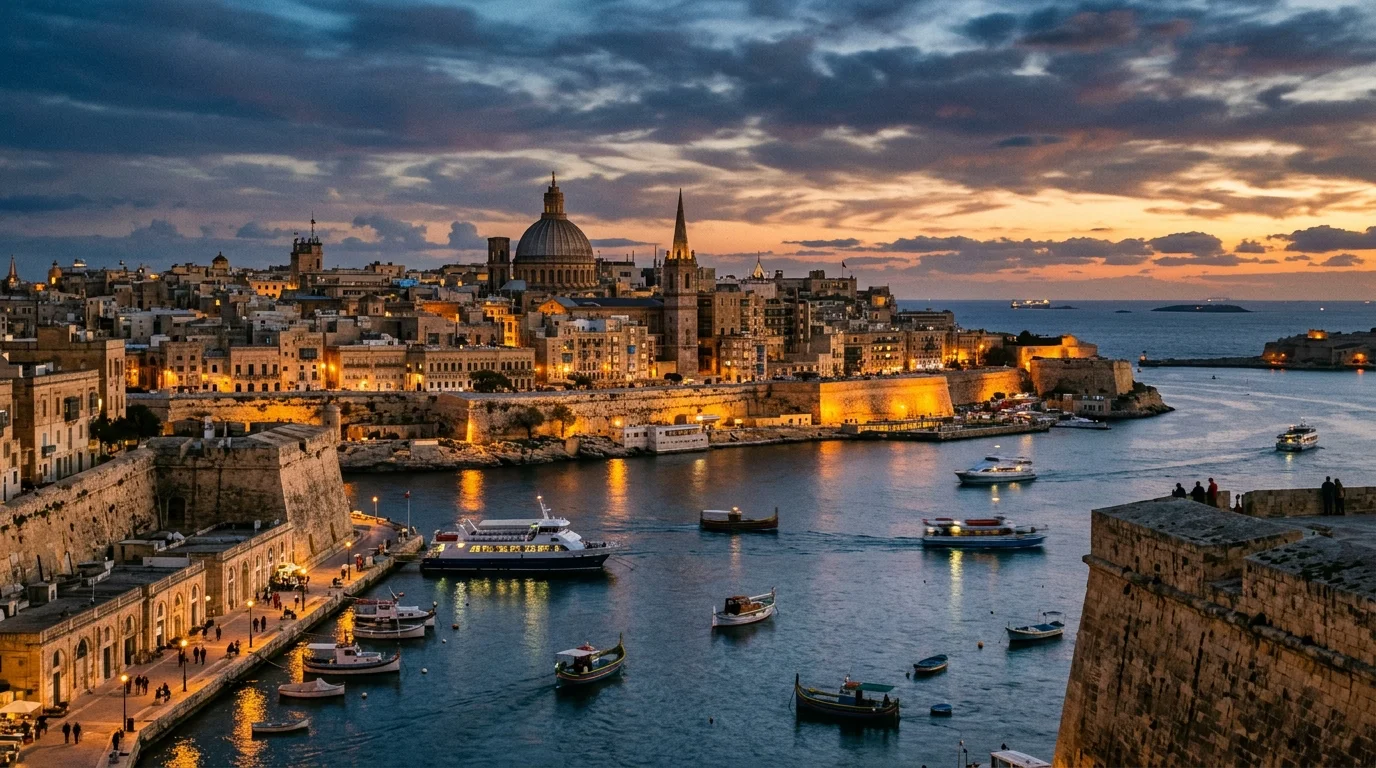
Valletta is one of Europe's smallest capital cities and one of its most beautiful. Built by the Knights of St. John after the Great Siege of 1565, the entire city — less than 1 km long and 600 m wide — is a perfectly preserved Baroque masterpiece. Every street is lined with honey-coloured limestone buildings, ornate churches, and those iconic Maltese balconies in bright colours.
The city served as the 2018 European Capital of Culture, which brought a wave of new restaurants, galleries, and creative spaces to complement the centuries-old palaces and fortifications. Despite being the capital, Valletta has a wonderfully unhurried pace — it's a city designed for walking, thinking, and stopping for a pastizzi at a street café.
Why visit: Valletta is the beating heart of Maltese history and culture, and walking its streets is like walking through 500 years of Mediterranean civilisation. The views from the city walls over the Grand Harbour are among the most beautiful in Europe.
Entrance: The city itself is free to enter; individual sites charge separately
Best time: Early morning (before 9 AM) for quiet streets; evening for atmospheric golden light
Hours: Open 24/7 as a city; most attractions open 9 AM–5 PM
St. John's Co-Cathedral
Triq San Gwann, Valletta VLT 1220, Malta
St. John's Co-Cathedral is widely considered one of the finest Baroque churches in the world, and seeing it in person is genuinely jaw-dropping. Built by the Knights of St. John between 1572 and 1577, the plain limestone exterior gives absolutely no hint of the extraordinary interior — a riot of gold inlay, marble floor tombstones, carved stone walls, and ceiling paintings covering every surface.
The cathedral's greatest treasure is Caravaggio's massive painting "The Beheading of Saint John the Baptist" (1608) — the only work Caravaggio ever signed. It hangs in the Oratory alongside another Caravaggio. The intricate marble floor contains 375 tombstones of Knights, each uniquely carved and inlaid with coloured marble.
Why visit: This is simply one of the most stunning interiors you will ever see in your life — no photography does it justice. The Caravaggio alone justifies the entrance fee many times over.
Entrance: €15 adults, €11.50 students, €7.50 children 12–17 (2026); under 12 free
Best time: First thing in the morning (opens 9:30 AM) before tour groups arrive
Hours: Monday–Friday 9:30 AM–4:30 PM; Saturday 9:30 AM–12:30 PM; closed Sunday
Mdina — The Silent City
Mdina, MDN, Malta (main gate: Misraħ il-Kunsill)
Mdina is Malta's ancient walled city and former capital, perched on a hilltop in the centre of the island. With a permanent population of just 247 people, it's known as "The Silent City" — and it truly is eerily quiet, especially in the early morning or evening when the day-trippers have gone. The narrow limestone streets, Baroque palaces, and Norman architecture create one of the most atmospheric places in the entire Mediterranean.
Mdina's history stretches back over 4,000 years — it was the island's main settlement through the Roman, Arab, Norman, and Knights eras. The Arabs built the first walls; the Knights added the Baroque churches and palaces. Walking around Mdina feels like stepping back into a fairy tale — especially at night when the city is lit by warm golden lanterns.
Why visit: Mdina is one of those rare places that genuinely transports you — the silence, the beauty, the centuries of history pressing in from every wall. It's also worth knowing this was a filming location for Game of Thrones.
Entrance: Free to enter the city; individual museums charge separately
Best time: Early morning (before 9 AM) or evening after 6 PM when day-trippers leave
Hours: Open 24/7 as a city
Ħaġar Qim & Mnajdra Temples
Triq il-Qrendi, Qrendi QRD 2502, Malta
Ħaġar Qim and Mnajdra are two prehistoric megalithic temples located side by side on Malta's southern cliffs, overlooking the sea and the uninhabited islet of Filfla. Both temples date to between 3600 and 2500 BCE — making them older than Stonehenge and the Egyptian pyramids, and among the world's oldest free-standing stone structures. They are UNESCO World Heritage Sites and genuinely mind-blowing to stand inside.
The temples were built without metal tools, wheels, or draft animals — by a mysterious prehistoric civilisation that disappeared around 2500 BCE. Archaeologists still don't fully understand how or why they were built. The stones themselves weigh up to 20 tonnes, and the site is aligned with the rising sun at the summer and winter solstices.
Why visit: Standing among stones placed by unknown people 5,500 years ago, in a coastal landscape that has barely changed, is an extraordinary experience — deeply moving and genuinely humbling. These temples are among the most important prehistoric sites in the world.
Entrance: €10 adults, €7 students, €5 children 6–11 (2026); covers both temples
Best time: Morning or late afternoon; avoid midday in summer (very exposed, no shade)
Hours: Daily 9 AM–5 PM (last entry 4:30 PM)
The Blue Lagoon, Comino
Comino Island, Malta (boat from Ċirkewwa Ferry Terminal, Mellieħa)
The Blue Lagoon is a small bay on the tiny island of Comino — midway between Malta and Gozo — and its water is genuinely, absurdly, impossibly blue. The combination of white sand, shallow crystal-clear water, and surrounding limestone cliffs creates one of the most photographed places in the entire Mediterranean. Swimming here on a calm day is one of Malta's finest experiences.
Comino itself is a car-free island of just 3.5 sq km with a permanent population of around 4 people (a farmer and his family). Besides the Blue Lagoon, there's the Crystal Lagoon, a series of sea caves, and the old Comino Tower — all accessible by kayak or swimming. The island is completely undeveloped, which makes it feel wild and special.
Why visit: The Blue Lagoon is the kind of place that makes you wonder why you haven't always lived by the sea. On a calm weekday in May, June, or September, it's one of the most beautiful swimming spots in Europe.
Entrance: Free; ferry costs €15–18 return from Ċirkewwa (2026)
Best time: Late May, early June, or September — beautiful water, manageable crowds. July and August are extremely crowded.
Hours: Ferry boats run roughly 9 AM–6 PM from Ċirkewwa; last return ferries around 5:30–6 PM
The Three Cities — Vittoriosa, Senglea & Cospicua
Birgu (Vittoriosa), BRG, Malta
The Three Cities — Vittoriosa (Birgu), Senglea (L-Isla), and Cospicua (Bormla) — sit directly across the Grand Harbour from Valletta and are among Malta's most atmospheric and authentic urban areas. Vittoriosa is the oldest — it was the Knights' original base before they built Valletta — and its narrow streets, the imposing Fort St. Angelo, and the Knight's Inquisitor's Palace are fascinating.
Unlike tourist-heavy Valletta, the Three Cities still feel lived-in and real. Locals hang laundry between buildings, cats nap on warm stone steps, and the waterfront marina has a wonderful mix of old fishing boats and luxury yachts. The views back across the water to Valletta are breathtaking — especially at sunset.
Why visit: The Three Cities give you the real Malta that tourists often miss — medieval atmosphere, authentic local life, and some of Malta's finest history with far smaller crowds. The ferry across the harbour from Valletta (€1.50 each way) is a highlight in itself.
Entrance: Free to wander; Fort St. Angelo costs €10 adults (2026)
Best time: Morning or late afternoon; weekday visits are quieter
Hours: Open 24/7 as a neighbourhood; ferry operates daily 7 AM–8 PM approx
Ħal Saflieni Hypogeum
Burial Street, Paola PLA 1117, Malta
The Ħal Saflieni Hypogeum is an underground prehistoric burial complex carved entirely by hand from solid rock between 3600 and 2500 BCE — one of the most remarkable prehistoric sites in the world and a UNESCO World Heritage Site. Over 7,000 human remains have been found here across three levels descending to about 10 metres below ground. The carved chambers, decorated with ancient ochre designs, are eerily beautiful.
What makes the Hypogeum so special is that it was discovered purely by accident in 1902 during construction of a housing development. The lower chambers contain mysterious spiral and honeycomb carvings, and a chamber known as the "Oracle Room" that has extraordinary acoustic properties — a low note hummed in one corner reverberates throughout the complex in a way that has never been fully explained.
Why visit: The Hypogeum is one of the world's great ancient wonders — intimate, eerie, and deeply moving. Being underground in chambers carved 5,500 years ago, in near silence, is unlike any other experience in Malta.
Entrance: €40 adults, €32 students, €17 children 6–17 (2026); booking essential
Best time: Book 3–6 months in advance — this is not an exaggeration
Hours: Tuesday–Sunday; specific time slots throughout the day
Dingli Cliffs
Dingli Cliffs Road, Dingli DGL, Malta
The Dingli Cliffs are Malta's most dramatic natural landscape — sheer limestone cliffs rising over 250 metres (820 feet) above the Mediterranean on Malta's western edge, with unobstructed views to the uninhabited islet of Filfla and, on a clear day, the distant outline of Sicily. The clifftop walk runs for several kilometres through fragrant wild thyme and garrigue shrubland, with no guardrails and a wonderful sense of freedom.
The cliffs are particularly spectacular at sunset, when the honey-coloured stone turns orange and gold and the sea below blazes. The nearby Chapel of St. Mary Magdalene (built in 1618) perches right on the clifftop and is one of Malta's most photographed small churches.
Why visit: The Dingli Cliffs are Malta's best nature experience and a perfect antidote to all the history and crowds — wide open space, fresh sea air, and views that go on forever. Completely free to access.
Entrance: Free
Best time: Sunset (especially in autumn and winter); morning is lovely in summer
Hours: Always open
Marsaxlokk Fishing Village
Xatt is-Sajjieda, Marsaxlokk MXK, Malta
Marsaxlokk is Malta's most picturesque fishing village and the home of Malta's traditional fishing fleet. The harbour is filled with brightly painted luzzu — traditional Maltese fishing boats with eyes painted on the bow (a practice dating back to Phoenician times) — creating one of the most photographed scenes in Malta. The waterfront market and the smell of fresh fish make it feel wonderfully authentic.
Sunday morning is the absolute best time to visit, when the weekly fish market fills the entire waterfront esplanade. Locals come from all over Malta to buy the freshest fish directly from fishermen, and dozens of outdoor restaurants set up along the harbour serving grilled fish platters. It's a genuinely vibrant, sensory experience.
Why visit: Marsaxlokk is one of the few places in Malta where you can see traditional fishing culture still fully alive. The Sunday market, the colourful boats, the fresh fish lunch on the waterfront — it's the kind of morning that you'll remember forever.
Entrance: Free
Best time: Sunday morning 8 AM–1 PM for the fish market
Hours: Always open; restaurants typically 12 PM–9 PM
Gozo — The Sister Island
Mġarr Harbour, Gozo GXQ 1250, Malta (ferry from Ċirkewwa, Mellieħa)
Gozo is Malta's smaller sister island — just 14 km (9 miles) long and 7 km wide — and many visitors find it even more beautiful and authentic than Malta itself. Greener, quieter, and with a more rural, unhurried character, Gozo offers stunning sea views, the imposing hilltop Citadel in Victoria, pristine diving sites, and village life that feels genuinely unchanged for decades.
Gozo's famous Azure Window rock arch collapsed into the sea in 2017 during a storm, but the island still has spectacular scenery including the Inland Sea at Dwejra, the salt pans of Xwejni, the Ramla l-Ħamra red sand beach, and the neolithic Ggantija Temples. Gozo is worth at least one full day — many visitors wish they'd stayed longer.
Why visit: Gozo offers a slower, more authentic side of Malta — it's what people imagine when they think of a Mediterranean island escape. The pace of life, the food, the scenery, and the diving are all exceptional.
Entrance: Free; ferry costs €4.65 return per person (2026); car ferry extra
Best time: April–June or September–October for best combination of weather and crowds
Hours: Ferries run every 45 minutes from Ċirkewwa, 24 hours a day
Book your tours and tickets in advance — it saves hours of queuing and often gets you a better price. These two platforms cover different options, so it's worth checking both.
What Are the Best Neighborhoods to Explore in Malta?
Malta's neighbourhoods each have a completely distinct character — from the Baroque grandeur of Valletta to the beach-club buzz of St Julian's to the hilltop silence of Mdina. Here are the best areas to explore.
Valletta — Capital & Cultural Heart
Character: Europe's smallest capital city is a perfectly preserved Baroque masterpiece — honey-gold limestone buildings, ornate churches, flower-filled balconies, and a remarkably laid-back pace for a national capital.
What makes it special: Every street is essentially a museum — palaces, the Co-Cathedral, Upper Barrakka Gardens, the Grand Harbour views, the Strait Street arts and nightlife scene. Since being European Capital of Culture in 2018, Valletta has gained a fantastic restaurant and café scene to match its historic credentials.
Best for: History lovers, culture seekers, foodies, city walkers, photographers
Must-see in this area: St. John's Co-Cathedral, Upper Barrakka Gardens, Grand Master's Palace, Strait Street, Merchants Street
How to get there: Bus from anywhere on the island to Triton Fountain Bus Terminal; ferry from the Three Cities
Location: Valletta City Gate, Pjazza tas-Sliem, Valletta VLT 1010, Malta
Sliema & St Julian's — Modern & Lively
Character: Sliema and adjacent St Julian's form Malta's main modern tourist and residential hub — a buzzing stretch of seafront promenade, shopping centres, beach clubs, bars, restaurants, and apartment blocks. It's where most tourists stay and where Malta's nightlife is centred.
What makes it special: The Sliema seafront promenade (il-Lanġa) is excellent for evening strolls and swimming off the rocks. St Julian's Paceville area has Malta's highest concentration of bars and clubs. The shopping options here are the best on the island. The ferry to Valletta leaves from Sliema's waterfront and takes just 8 minutes.
Best for: Nightlife lovers, shoppers, beach holidaymakers, families, people who want everything nearby
Must-see in this area: Sliema seafront promenade, Balluta Bay (St Julian's), Paceville club district, Spinola Bay
How to get there: Bus routes 12, 13, 21 from Valletta (10–15 minutes)
Location: The Strand, Sliema SLM, Malta
Mdina & Rabat — The Ancient Interior
Character: Mdina is Malta's ancient hilltop capital — a walled medieval city of 247 permanent residents, Baroque palaces, and near-total silence. Directly outside its walls lies Rabat, a busy working town with Roman catacombs, hidden gardens, and an excellent local food market.
What makes it special: Mdina's extraordinary atmosphere — especially early morning and evening — is unlike anywhere else in Malta. Rabat's Church Square is the real, authentic Malta with locals rather than tourists. Together they represent 4,000 years of continuous habitation.
Best for: History lovers, photographers, honeymooners, anyone wanting real Maltese atmosphere
Must-see in this area: Mdina Main Gate, Mdina Cathedral, Palazzo Falson, St. Paul's Catacombs in Rabat, Wignacourt Museum
How to get there: Bus routes 51, 52, 53 from Valletta (25–35 minutes)
Location: Misraħ il-Kunsill (Main Gate Square), Mdina MDN 1010, Malta
Marsaxlokk & The South — Fishing Villages & Prehistory
Character: Malta's south is quieter, more traditional, and strikingly beautiful — rocky coastlines, prehistoric temples on clifftops, the colourful fishing harbour of Marsaxlokk, the dramatic Blue Grotto sea caves, and the Dingli Cliffs. This is rural Malta at its finest.
What makes it special: The south contains Malta's two greatest prehistoric sites (Ħaġar Qim & Mnajdra), the most photogenic harbour (Marsaxlokk), Malta's highest cliffs (Dingli), and some of the island's most authentic village life. Far fewer tourists than the north.
Best for: History lovers, nature seekers, photographers, independent travellers with a car
Must-see in this area: Marsaxlokk harbour, Blue Grotto, Ħaġar Qim temples, Dingli Cliffs, Għar Lapsi natural swimming pool
How to get there: Best by rental car; buses are infrequent in this area
Location: Xatt is-Sajjieda, Marsaxlokk MXK, Malta
Mellieħa & The North — Beaches & Countryside
Character: Northern Malta has a different character to the south — greener valleys, sandy beaches (Malta's best are up here), and the gateway to Gozo and Comino. Mellieħa town itself is a lovely hilltop village with whitewashed streets and a famous cliff-face shrine to the Madonna.
What makes it special: Mellieħa Bay is Malta's largest sandy beach and perfect for families. Golden Bay and Ghajn Tuffieħa are the prettiest beaches on the island. The Ċirkewwa ferry port gives access to Gozo and Comino. The area feels more rural and relaxed than the bustling north-east.
Best for: Families with children, beach lovers, nature walkers, those visiting Gozo
Must-see in this area: Mellieħa Bay, Golden Bay, Ghajn Tuffieħa, Popeye Village, Red Tower
How to get there: Bus route 221 from Valletta (45–55 minutes)
Location: Triq il-Marfa, Mellieħa MLH, Malta
What Food Should You Try in Malta?
Maltese cuisine is a wonderfully hearty reflection of the island's history — a mix of Italian, North African, British, and Middle Eastern influences, shaped by centuries of different rulers and by the island's own agricultural and fishing traditions. The must-try dishes include rabbit (fenek), pastizzi, ftajjar, braġjoli, and fresh Mediterranean seafood.
What Are the Must-Try Local Dishes in Malta?
- Fenek (Rabbit) — Malta's national dish, served braised in wine and garlic, fried, or as a rich rabbit stew. Every family has their own recipe, and the annual Maltese rabbit eating competition (Mnarja festival in June) gives you an idea of how seriously locals take it. Try it at a traditional rabbit restaurant in Mgarr or Buskett.
- Pastizzi — Flaky, diamond-shaped savoury pastries filled with either ricotta cheese or mushy peas. These are Malta's iconic street food — cheap (around €0.30–0.40 each in 2026), hot, and found at every village bar and pastizzeria. Eating pastizzi from a tray at a local bar is one of Malta's great rituals.
- Ftira — Malta's traditional bread roll, round and ring-shaped, made from sourdough and baked in wood-fired ovens. The Maltese ftira sandwich — loaded with tuna, capers, tomatoes, olives, and fresh cheese — is a national institution and the best lunch you can buy for €3–5.
- Braġjoli — "Beef Olives" — thin slices of beef rolled around a filling of breadcrumbs, eggs, herbs, and sometimes bacon or sausage, then braised slowly in wine and tomato sauce. Rich, comforting, and unmistakably Maltese.
- Timpana — A baked pasta dish encased in a short pastry shell — essentially macaroni cheese in a pie crust — and deeply satisfying. It appears on every traditional Maltese menu and is sold ready-made at local pastry shops.
- Lampuki Pie — Fresh lampuki (dorado/mahi-mahi) enclosed in a flaky pastry with olives, capers, spinach, and tomatoes. Only available September–November when lampuki are in season and at their best — one of the finest things you can eat in Malta.
- Bigilla — A thick, spiced dip made from mashed broad beans with garlic, herbs, and olive oil — served with Maltese bread or galletti (water biscuits). Ancient, simple, and delicious.
- Imqaret — Deep-fried date-filled pastry diamonds, typically sold hot from street stalls at festivals and markets. Sweet, crispy, and fragrant with spices — Malta's best street dessert.
Where Should You Eat in Malta?
Budget-Friendly (Under €10 per meal)
- Crystal Palace Pastizzeria — 22 Triq Santa Marija, Rabat RBT, Malta — The most famous pastizzeria in Malta, beloved by locals for generations. Open from early morning, selling pastizzi for €0.30–0.40 each. Get them fresh and hot with a cappuccino for the most authentic Maltese breakfast experience possible. Cash only.
- Is-Suq tal-Belt (Valletta Market) — St. John's Street, Valletta VLT 1000, Malta — The beautifully restored Victorian covered market in Valletta has excellent food stalls on the upper floor serving everything from ftira sandwiches to pasta to fresh fish at very reasonable prices (€6–12 per dish). Great for lunch.
- Busy Bee Restaurant — 8 Old Bakery Street, Valletta VLT 1455, Malta — A no-frills local legend in Valletta serving enormous portions of traditional Maltese food (braġjoli, rabbit, pasta) at prices that make you wonder how they do it. Main courses from €7–12. Plastic tablecloths, zero pretension, maximum satisfaction.
Mid-Range (€15–35 per meal)
- Noni Restaurant — 162 St. Lucy Street, Valletta VLT 1185, Malta — One of Valletta's most celebrated restaurants, blending Maltese tradition with modern techniques. The tasting menu is exceptional. Book ahead, especially for weekends. Mains €22–30.
- Rubino — 53 Old Bakery Street, Valletta VLT 1455, Malta — A Valletta institution since 1906, serving traditional Maltese dishes with genuine pride. The cannoli and ricotta desserts alone are worth the visit. Mains €14–25.
- Ta' Kris — 6 Spinola Road, St Julian's STJ, Malta — A beloved St. Julian's institution specialising in traditional Maltese cooking — rabbit, braġjoli, fenek — in a warm, family-run setting. Mains €16–24. Book ahead.
- The Harbour Club — Vittoriosa Waterfront, Birgu BRG 1270, Malta — Waterfront dining in the Three Cities with excellent fresh fish and Maltese meat dishes. The views across to Valletta at sunset are spectacular. Mains €18–30.
Fine Dining (€50+ per person)
- Under Grain — 13 St. John Street, Valletta VLT 1170, Malta — Malta's premier fine dining destination, located underground in a beautifully converted cistern beneath Valletta. The tasting menu (€95–120, 2026) is extraordinary — innovative Mediterranean cuisine using the finest local ingredients. Book weeks ahead.
- Bahia at Kempinski Hotel — San Lawrenz, Gozo GXQ, Malta — Exceptional fine dining on Gozo's north coast, with panoramic sea views and a menu celebrating Gozitan and Mediterranean ingredients. The setting is simply stunning at sunset.
What Are the Dining Customs in Malta?
Meal times: Breakfast is typically 7–9 AM; lunch 12:30–2:30 PM (the main meal of the day for locals); dinner 7:30–10:30 PM. Most restaurants don't open for dinner before 7 PM.
Tipping: Tipping is appreciated but not mandatory. 10–15% is generous and welcomed at sit-down restaurants. Service charges are sometimes added automatically — check the bill. No tipping expected at bars or pastizzerias.
Reservations: Highly recommended for popular restaurants, especially on weekends in summer. For fine dining, book a week or more in advance. Many places now take bookings via their websites or OpenTable.
Dress code: Malta is relaxed — smart casual is fine almost everywhere. Only the most upscale fine dining restaurants expect anything more formal. Beachwear is not appropriate in restaurants.
What Is the Nightlife Like in Malta?
Malta's nightlife scene is lively, diverse, and centred primarily in St Julian's (Paceville), with a growing arts and cocktail bar scene in Valletta's Strait Street. Nightlife typically gets going late — locals don't go out until 11 PM and clubs run until 4–5 AM on weekends. Malta has a reputation as one of the Mediterranean's best party destinations, especially in summer.
Where Are the Best Areas for Nightlife in Malta?
- Paceville, St Julian's: Triq San Ġorġ, St Julian's STJ — Malta's main party district, packed with clubs, bars, pubs, and late-night restaurants. The energy here peaks on Friday and Saturday nights from midnight to 4 AM. Very mixed crowd — local Maltese, expats, and tourists. Ranges from sophisticated cocktail bars to loud nightclubs.
- Strait Street (Is-Triq id-Dejqa), Valletta: Strait Street, Valletta VLT — Valletta's historic "gut" — once a legendary sailors' entertainment strip — has been beautifully revived as Malta's most atmospheric bar and live music street. Narrow, lantern-lit, lined with craft cocktail bars, jazz venues, and intimate wine bars. The antithesis of Paceville's high-energy scene.
- Spinola Bay, St Julian's: Spinola Bay, St Julian's STJ — The waterfront around Spinola Bay has excellent outdoor restaurant-bars that transition from dinner to cocktails in the evening, with stunning views across the illuminated bay. A more relaxed alternative to the Paceville madness just 5 minutes away.
What Are the Best Bars and Clubs in Malta?
Bars & Pubs
- Yard 32 — 32 St John Street, Valletta VLT 1170, Malta — An iconic Valletta bar in a beautifully restored townhouse courtyard. Excellent cocktails, good wine list, and a crowd that's more locals and creative types than tourists. Open from 5 PM. Cocktails around €10–12.
- Bridge Bar — 252 St Paul Street, Valletta VLT 1210, Malta — Long-established Valletta favourite with an excellent selection of local and craft beers, friendly staff, and a comfortable mix of expats, locals, and tourists. Very reasonable prices (beer from €3).
- Medasia — Level 22, Portomaso Tower, St Julian's STJ 4011, Malta — Rooftop bar at the top of Malta's tallest building with panoramic views across the island. The cocktails are priced accordingly (€15–18) but the views are extraordinary, especially at sunset.
Clubs & Dancing
- Club Numero Uno — 39 Triq San Ġorġ, Paceville, St Julian's STJ — One of Malta's most established nightclubs, operating for over two decades in the heart of Paceville. Mixed music — house, R&B, commercial — with regular DJ nights. Cover charge €5–15 (2026) depending on night and event. Dress code enforced.
- Clique — Triq Grognet, Paceville, St Julian's STJ 3330, Malta — A newer, upscale club concept in Paceville with a more sophisticated atmosphere and better sound system. Popular with an older (25+) crowd. Cover varies €10–20. Book via their social media for tables.
Live Music & Shows
- The Pub — 136 Archbishop Street, Valletta VLT 1444, Malta — Tiny, legendary Valletta bar with live music most nights — mostly jazz, blues, and rock. Standing room only on busy nights. One of Malta's most authentic music venues with an atmosphere that decades of regular use creates. Beers from €2.50.
- Café Society — 113 Strait Street, Valletta VLT 1245, Malta — A key Strait Street venue for jazz, swing, and soul — regular live acts on weekends in a beautifully restored townhouse with exposed stone and warm lighting. Cover charge on live music nights typically €5–10.
What Family-Friendly Evening Entertainment Is Available?
Families in Malta can enjoy evening walks along the Sliema seafront promenade and a gelato stop, watching the spectacular Sound and Light show at Fort St. Elmo in Valletta (check heritagemalta.org for dates), attending village festas (saints' day fireworks displays happening every summer weekend), or taking an evening harbour cruise from Sliema or Valletta waterfront. These cruises are fantastic for children and adults alike.
What and Where Should You Shop in Malta?
The best things to buy in Malta are handmade lace (a centuries-old Maltese craft), Maltese glass (distinctive hand-blown pieces from the Mdina Glass factory), local honey, sea salt, local wines and liqueurs, and traditional ceramic and silver items. The top shopping areas are Valletta's Merchants Street, Sliema's The Strand and Bisazza Street, and the markets at Marsaxlokk and Valletta.
What Are the Best Shopping Districts in Malta?
- Republic Street & Merchants Street, Valletta: Republic Street (Triq ir-Repubblika), Valletta VLT — Valletta's main shopping spine, with a mix of local boutiques, souvenir shops, pharmacies, and a handful of international brands. Merchants Street (Triq il-Merkanti) has more artisan shops and local craft sellers. More interesting for unique finds than brand shopping.
- The Strand & Bisazza Street, Sliema: The Strand, Sliema SLM — Malta's main modern retail area, with The Point shopping mall, international fashion brands (Zara, H&M, Mango), and numerous high street shops along Bisazza Street. Best for practical shopping and international brands.
- Craft Village, Ta' Qali: Ta' Qali Crafts Village, Attard ATD 4000, Malta — An entire village of craft workshops where you can watch artisans make Maltese glass, lace, pottery, and silverwork, then buy directly from the makers. Best place on the island for authentic Maltese crafts at reasonable prices.
What Markets Should You Visit in Malta?
Marsaxlokk Sunday Market — Xatt is-Sajjieda, Marsaxlokk MXK, Malta — Sunday 7 AM–1 PM. Malta's most famous and atmospheric market, primarily a fish market but also selling fruit, vegetables, local food products, and touristy souvenirs. The fish market section is genuine, vibrant, and a must-see even if you don't buy anything. Bargaining is not the culture here — prices are usually marked.
Is-Suq tal-Belt (Valletta Central Market) — St. John's Street, Valletta VLT 1000, Malta — Monday–Saturday 7 AM–7 PM; Sunday 7 AM–2 PM. The beautifully restored Victorian cast-iron market hall in the heart of Valletta, with fresh produce stalls on the ground floor and excellent food court upstairs. Great for local cheese, honey, olives, and fresh produce to bring home.
Valletta Sunday Market — Triq il-Merkanti, Valletta VLT — Sunday 7 AM–1 PM. A weekly flea market and local goods market on Merchants Street and the surrounding area — second-hand books, antiques, vintage clothing, local art, and street food. Good for unique finds and browsing.
What Should You Buy in Malta?
- Maltese Lace (Bizzilla) — Hand-made Maltese bobbin lace is one of the island's oldest and most beautiful crafts. Look for pieces made by hand (not machine-made imports) — authentic pieces are pricier but extraordinary. Buy at Ta' Qali Crafts Village or specialist lace shops in Mdina and Valletta. Prices range from €15 for small pieces to hundreds for larger tablecloths.
- Mdina Glass — Hand-blown glass in distinctive Mediterranean colours (deep blues, greens, ambers). The Mdina Glass workshop near San Anton Gardens is the main producer — you can watch the glassblowing and buy direct. Prices from €15–20 for small pieces, €60–120 for larger decorative items (2026).
- Maltese Honey (Ħobż u Għasel) — Maltese honey is exceptionally good — particularly thyme honey from Gozo. Look for certified Maltese origin honey at farmers' markets and good supermarkets. Around €8–15 per jar (2026).
- Maltese Sea Salt — Harvested from traditional salt pans in the north of Malta and Gozo (particularly Xwejni Bay on Gozo). Pure, mineral-rich, and an excellent souvenir that's practical to bring home. Around €5–8 for a generous bag (2026).
- Local Wine & Ċisk Beer — Maltese wines (try Marsovin, Delicata, and Meridiana) have improved dramatically and some are genuinely excellent. Ċisk is Malta's beloved local lager and the most popular beer in the country — a multipack from a supermarket makes a fun souvenir. Wines from €8–15 per bottle.
- Silver Filigree Jewellery — Malta has a centuries-old tradition of intricate silver filigree work. Authentic pieces made by local silversmiths can be found in Valletta jewellery shops — look for the Maltese Cross motif. Prices vary widely depending on size and complexity.
What Are the Shopping Hours and Customs?
Most shops in Malta are open Monday–Saturday 9 AM–7 PM, with a lunch break from approximately 1–4 PM common in older and family-run shops (particularly in smaller towns). Sunday shopping is limited — most shops closed, though tourist shops in Valletta and large malls stay open. The main shopping malls (The Point in Sliema) stay open 10 AM–9 PM Monday–Saturday. There is no bargaining culture in regular shops or markets in Malta — prices are fixed. EU residents cannot claim VAT refunds (Malta is in the EU), but non-EU visitors can claim the 18% VAT back on purchases over €100 at participating shops.
Can Non-EU Visitors Claim a VAT Tax Refund in Malta?
Yes — if you are a visitor from outside the European Union (including travellers from the USA, Canada, Australia, the UK, and most of Asia and Latin America), you are entitled to a refund of the VAT (Value Added Tax) included in the price of goods you buy in Malta. VAT in Malta is 18% on most goods, which means this refund can be significant on high-value purchases like clothing, leather goods, jewellery, designer fashion, and electronics.
How to Claim Your VAT Refund — Step by Step
- Spend at least €100 in a single shop in a single day. This is the minimum threshold for a VAT refund claim in Malta. It does not apply across multiple shops — the full amount must be spent in one store.
- Look for the "Tax Free" sign. Participating shops display a "Tax Free Shopping," "Global Blue," or "Planet" logo in the window or at the register.
- Ask for the tax refund form at the register before you pay. Present your non-EU passport — the shop will fill out the form with your details and the purchase amount. Keep the form with your receipt.
- Get the form stamped at customs before you leave. Go to the Customs office at Malta International Airport (MLA) before check-in and have an officer stamp your tax refund form. Keep your purchases accessible in hand luggage — do not pack them deep in your checked bags.
- Collect your refund. Hand the stamped form to the Global Blue or Planet desk at the airport. You can receive the refund in cash (minus a processing fee) or as a credit card refund (lower fees, takes a few weeks).
VAT Refund Quick Facts for Malta
- Minimum spend: €100 in one shop in one day
- VAT rate on most goods: 18% on most goods
- Typical refund after fees: 10–15% of the purchase price
- Refund processors: Global Blue and Planet (formerly Premier Tax Free) at Malta International Airport (MLA)
- Who qualifies: Anyone with a non-EU passport who is not a resident of an EU country
- UK visitors: British passport holders qualify since Brexit — the UK is no longer in the EU
- Deadline: Purchases must be exported within 3 months of the date of purchase
- Full guide: VAT Refund in Europe — Complete Guide for Non-EU Travelers
What Festivals and Events Happen in Malta?
Malta's biggest festivals include Carnival in February/March, Mnarja (Midsummer) in June, the Malta International Arts Festival in July, and literally dozens of village festas (saints' day celebrations) every weekend from May to September. The festas in particular are one of the most authentic and exciting cultural experiences in the entire Mediterranean.
What Is the Annual Events Calendar for Malta?
| Month/Season | Event Name | Description |
|---|---|---|
| February/March | Malta Carnival | A week-long carnival centred in Valletta with elaborate floats, colourful costumes, masked balls, and street processions. One of the oldest carnivals in Europe, dating to the Knights of St. John era. Main parade on the final Sunday before Ash Wednesday. |
| March/April | Holy Week & Good Friday | Malta's most deeply felt religious observance. Dramatic Good Friday processions through towns across Malta and Gozo feature life-sized statues depicting the Passion of Christ carried through candlelit streets in solemn silence. Valletta and Żebbuġ have the most impressive processions. |
| May–September | Village Festas | Every village in Malta and Gozo celebrates its patron saint with fireworks, band marches, church decorations, street stalls, and community gatherings. Virtually every weekend has at least one festa. Check maltafestas.com for the complete calendar. |
| June 29 | Mnarja (L-Imnarja) | Malta's oldest national folk festival, celebrating Saints Peter and Paul on June 28–29. The main events are held at Buskett Gardens in Rabat — folk singing (għana), rabbit eating, donkey races, and general festivity. Families camp overnight in the gardens on June 28. |
| June/July | Malta International Arts Festival | Two weeks of world-class music, theatre, dance, and visual arts across Valletta's most beautiful venues — the Grand Harbour, Valletta Waterfront, and St. George's Square. Free and ticketed events. |
| July | Isle of MTV | Malta's biggest music event — a free outdoor concert (one of the largest in Europe) at Floriana Granaries with major international pop and dance acts. Attracts 50,000+ attendees. Registration required (free) in advance. |
| August | Malta Jazz Festival | Three nights of jazz performances at the Ta' Liesse waterfront in Valletta, with international headline acts performing against the backdrop of the Grand Harbour. A uniquely atmospheric event. |
| September 8 | Regatta & Victory Day | Celebrates the end of the 1565 Great Siege and the 1943 WWII convoy victory. The traditional rowing regatta in the Grand Harbour is the highlight — eight-oared traditional boats racing between Valletta and the Three Cities in intense competition. |
| October | Notte Bianca | Valletta's "White Night" — a free annual arts festival where museums, galleries, palaces, and churches stay open until midnight and the streets fill with art installations, music, and theatre. One of the most magical nights of the year in Valletta. |
| November | Malta Book Festival | Annual book fair at the Mediterranean Conference Centre in Valletta with international and local publishers, author talks, and literary events. |
| December 8–13 | Republic Day & Feast of the Immaculate Conception | December 13 is both Republic Day (marking Malta's independence) and the Feast of the Immaculate Conception — a major religious and national celebration with ceremonies in Valletta. |
| December | Christmas Celebrations | Malta's towns are beautifully decorated for Christmas, with cribs (presepju) competitions, carol services, and New Year's Eve fireworks over the Grand Harbour that are spectacular. |
How Do Festivals Affect Hotel Prices and Availability?
Isle of MTV (July) and major summer festas can significantly increase hotel prices and reduce availability in St Julian's and Sliema — book at least 2–3 months ahead if visiting in July and August. Carnival week (February/March) fills Valletta hotels quickly. Holy Week is increasingly popular with tourists and should be booked 1–2 months ahead. The quieter shoulder season months (October–November, March–April) have more availability and much better prices.
Where Should You Stay in Malta?
The best neighbourhood to stay in Malta depends on your travel style — Valletta for culture and atmosphere, Sliema/St Julian's for convenience and nightlife, Mellieħa for beaches and a quieter pace. Here's a full breakdown to help you choose.
What Are the Best Neighbourhoods to Stay in Malta?
| Neighbourhood | Vibe | Price Range (per night, 2026) | Best For |
|---|---|---|---|
| Valletta | Historic, atmospheric, boutique | €80–250+ (hotels); €60–150 (Airbnb) | History lovers, couples, culture seekers |
| Sliema | Modern, convenient, seafront | €60–180 (hotels); €50–120 (apartments) | First-timers, families, shoppers |
| St Julian's / Paceville | Lively, touristy, nightlife-centred | €60–200 (hotels); €45–130 (apartments) | Young travellers, partygoers |
| Mellieħa | Quieter, village feel, near beaches | €50–150 (hotels); €40–100 (apartments) | Families with children, beach lovers |
| Gozo (Victoria/Xlendi) | Rural, authentic, peaceful | €60–180 (hotels); €50–120 (farmhouses) | Couples, divers, slow travellers |
What Are the Pros and Cons of Each Area?
Valletta:
Pros: Extraordinary atmosphere, walking distance to main attractions, excellent restaurants and bars, no need for transport to explore the city. The boutique hotels in converted palaces and townhouses are some of the best accommodation experiences in Malta.
Cons: Limited hotel stock drives prices up. No sandy beaches within the city (nearest are 20+ minutes away). Parking essentially impossible — must rely on public transport or taxis.
Sliema:
Pros: Excellent transport links to everywhere on the island, short ferry to Valletta (€1.50), good shopping, long seafront promenade, plenty of mid-range hotels and apartments. Most practical base for island-wide exploration.
Cons: No sand beach (rocky seafront swimming), quite built-up and busy, not much architectural charm. Can feel anonymous compared to Valletta.
Mellieħa:
Pros: Closest to Malta's best sandy beaches (Mellieħa Bay, Golden Bay), much quieter and more authentically Maltese than the north-east, easy ferry access to Gozo and Comino. More relaxed family atmosphere.
Cons: Further from Valletta (45+ minutes by bus), less choice of restaurants and shopping, fewer late-night entertainment options.
How Far in Advance Should You Book in Malta?
For July and August (peak season), book accommodation 3–6 months ahead — the best options in popular areas sell out fast and prices rise steeply closer to the date. For May, June, September, and October (shoulder season), 4–8 weeks ahead is usually sufficient, though boutique hotels in Valletta fill up faster. Winter visits (November–March) can often be booked with less than 2 weeks notice. Always check cancellation policies carefully and consider flexible rates especially if you've booked flights but not yet confirmed plans.
What Do You Need to Know Before Visiting Malta?
Here are the essential practical details every visitor to Malta needs to know — covering money, safety, language, health, and cultural customs.
Essential Travel Details for Malta
- Currency: Euro (€). ATMs are widely available everywhere. Exchange currency at banks or airport exchange desks (airport rates are less favourable than city centre banks).
- Credit Cards: Widely accepted at hotels, restaurants, and shops. Smaller local bars, pastizzerias, and market stalls may be cash-only.
- ATMs: Available throughout Malta — Valletta, Sliema, St Julian's, Mellieħa, and most towns. Daily limit typically €500–1000. International withdrawal fees apply — check with your bank before travelling.
- Language: Maltese and English are both official languages. English is spoken fluently throughout the tourist industry and widely in everyday life. You will have zero language barriers as an English speaker.
- Tipping: 10% is appreciated at restaurants; not mandatory. Round up taxi fares. No tipping expected at bars.
- Electrical Plugs: Type G (UK 3-pin plug), 230V. UK visitors need no adapter; visitors from continental Europe and North America need a Type G adapter.
- Emergency Number: 112 (EU standard) for police, ambulance, and fire. Also 191 (police) and 196 (ambulance).
- Tourist Police: Available in Valletta during peak season; general police number 2294 2494.
- SIM Cards: Available from GO, Vodafone Malta, and Epic at the airport and in shops throughout the island. A tourist SIM with 20 GB data costs approximately €15–20 (2026). EU residents can use their home SIM with no roaming charges within the EU.
- WiFi: Excellent free WiFi available in most hotels, cafés, and restaurants. The Valletta city WiFi network covers much of the capital. Mobile data coverage is very strong across the island (4G/5G).
- Tap Water: Safe to drink but heavily treated (desalinated seawater) and tastes quite chlorinated. Most Maltese prefer bottled water, and it's widely available and cheap. Bring a refillable bottle and use filtered/bottled water.
Skip the airport queue — order your eSIM before you travel and activate it the moment you land. Prices and data allowances vary, so it pays to compare providers.
How Much Does It Cost to Visit Malta?
| Budget Type | Daily Cost (2026) | What's Included |
|---|---|---|
| Budget Traveller | €45–70 per day | Hostel or budget guesthouse, pastizzi breakfasts, local lunch menus, public buses (Tallinja card), free sights (Mdina streets, Dingli Cliffs, Marsaxlokk market), 1–2 paid attractions |
| Mid-Range Traveller | €100–180 per day | 3-star hotel or apartment, sit-down restaurants, mix of buses and Bolt taxis, major paid attractions (Hypogeum, St John's Co-Cathedral), day trip to Gozo or Comino |
| Luxury Traveller | €250–500+ per day | Boutique hotel in Valletta or 5-star resort, fine dining, private transfers, guided tours, boat charters, premium experiences |
What Are the Most Useful Phrases in Malta?
- Hello: Bonġu (bon-JOO) — morning greeting; Bonswa (bon-SWAH) — evening greeting
- Thank you: Grazzi (GRAT-see)
- Please: Jekk jogħġbok (yeck yoħ-JBOK) — though "please" in English works perfectly fine
- Excuse me: Skużani (skoo-ZAH-nee)
- How much?: Kemm jiswew? (kem YIS-wew)
- Where is...?: Fejn hu...? (fayn OO)
- I don't understand: Ma nifhimx (ma nif-HIMSH)
- Help!: Għajnuna! (AY-noo-na)
- Bathroom: Il-kamra tal-banju (il KAM-ra tal BAN-yoo)
- Check, please: Il-kont, jekk jogħġbok (il-KONT yeck yoħ-JBOK) — or just "the bill please" in English — works everywhere
Is Malta Safe for Tourists?
Yes, Malta is one of the safest countries in Europe for tourists. The overall crime rate is very low, violent crime against tourists is extremely rare, and the Maltese are genuinely warm and helpful towards visitors. Walking around at night in Valletta, Sliema, or Mdina is safe and comfortable.
Areas to avoid: There are no significant no-go areas for tourists in Malta. Exercise normal urban caution in Paceville late at night when the nightlife crowd is at its most exuberant.
Common scams: Malta has very few tourist scams compared to other Mediterranean destinations. The main ones to be aware of: unofficial taxi drivers at the airport (use the official white taxi rank or Bolt); overpriced "seafood restaurants" near major tourist attractions (check prices before sitting down); souvenir shops selling "hand-made Maltese lace" that is actually machine-made and imported. There is no notable pickpocketing culture in Malta.
Solo traveller safety: Malta is excellent for solo travellers — men and women alike. Women travelling solo will find Malta very comfortable and safe. LGBTQ+ travellers: Malta has some of the most progressive LGBTQ+ rights in Europe (same-sex marriage legal since 2017) and is generally welcoming and inclusive.
What Are the Cultural Customs in Malta?
- Greetings: Handshakes are standard for formal greetings; friends often exchange kisses on the cheek. Maltese people are warm and direct — don't be surprised if strangers start chatting with you.
- Dress code: Casual dress is fine throughout most of Malta. Churches require covered shoulders and knees — St. John's Co-Cathedral enforces this strictly. Beachwear should stay at the beach.
- Photography: Generally fine everywhere outdoors. Ask permission before photographing individuals. Photography inside St. John's Co-Cathedral is strictly prohibited. Religious services should not be photographed without permission.
- Public behaviour: Maltese public life is fairly relaxed. Moderate noise levels are normal. PDA is generally fine in tourist areas. Queueing is observed but occasionally chaotic — be patient.
- Dining: Taking your time over meals is the norm — don't expect quick service at local restaurants (it's not rudeness, it's the Mediterranean pace). Asking for the bill is normal — it won't be brought automatically.
- Gestures to avoid: Malta is a conservative Catholic country — be respectful near churches and during religious processions. Disruptive behaviour during Good Friday processions in particular is deeply frowned upon.
Do You Need a Visa to Visit Malta?
Citizens of EU/EEA countries and Switzerland need only a valid ID card or passport to enter Malta with no restrictions. Citizens of the UK, USA, Canada, Australia, New Zealand, Japan, and most other Western countries do not need a visa for stays up to 90 days within any 180-day period (Malta is part of the Schengen Area). Citizens of other countries should check the official Maltese government website (gov.mt) or their nearest Maltese embassy for current visa requirements, as these can change.
What Health Precautions Should You Take in Malta?
Vaccinations: No specific vaccinations are required for Malta. Standard EU vaccinations (tetanus, MMR, etc.) are recommended. No malaria risk.
Pharmacies: Pharmacies (marked with a green cross) are plentiful throughout Malta and stock most common medications. A rotating 24-hour pharmacy schedule operates in each district — pharmacies post the nearest on-duty pharmacy on their door. Many medications available over-the-counter in Malta require prescriptions in some other countries.
Hospitals: Mater Dei Hospital (Triq Dun Karm, Msida MSD 2090 — Malta's main public hospital) provides excellent emergency care free to EU citizens with a valid EHIC/GHIC card. Private clinics (Barts Health, St. James Hospital) offer faster service for non-emergencies. Travel insurance with medical coverage is strongly recommended for all visitors.
Common health issues: The main health risk in Malta is sunburn and heat exhaustion in summer — the sun is very intense and shade scarce at many sites. Drink plenty of water (bottled recommended), use high SPF sunscreen, and wear a hat. The sea is clean and safe for swimming throughout Malta.
Do You Need Travel Insurance for Malta?
Yes — and you should buy it before you board your flight, not after. Travel insurance covers the situations that can turn a great trip into a financial disaster: a medical emergency (a single ambulance ride and hospital stay in Europe can cost €3,000–€10,000 without coverage), a cancelled or delayed flight, lost or stolen baggage, or a last-minute trip cancellation. EU citizens with an EHIC or GHIC card receive reciprocal state healthcare, but this does not cover repatriation, trip cancellation, or lost luggage — a full travel policy fills those gaps. Non-EU travellers have no state coverage at all and should never visit without insurance.
Choosing the right policy matters — coverage limits, exclusions, and pre-existing condition terms vary significantly between providers. Read our full guide before you buy: Best Travel Insurance for Europe — Honest Comparison for 2026.
Travel insurance is strongly recommended for Malta — an unexpected medical bill, flight cancellation, or lost luggage can cost far more than the policy. Get covered before you go.
What Are Your Rights If Your Flight to Malta Is Delayed or Cancelled?
Under EU Regulation 261/2004, if your flight to or from Malta is delayed by more than 3 hours or cancelled without sufficient notice, you are entitled to compensation of up to €600 per passenger — regardless of which airline you flew with, and regardless of how long ago it happened (claims can go back up to 6 years in some countries). This applies to all flights departing from an EU airport, and all flights arriving into an EU airport on an EU-based carrier. Most travellers don't realise they are owed money, and airlines rarely volunteer to pay. A claims service handles everything on your behalf and only charges a fee if they win — so there is no risk to you.
Both services check your eligibility for free with no upfront cost — they only charge a commission if they successfully recover your compensation.
Is Malta Accessible for People with Disabilities?
Malta presents mixed accessibility — major attractions like Valletta, Mdina, and the prehistoric temples have been making improvements, but the old limestone streets, steps, and historic buildings can make wheelchair access challenging. Mater Dei Hospital and most modern hotels are fully accessible. The Tallinja bus network has low-floor accessible buses on most routes. Heritage Malta provides accessibility information for each site at heritagemalta.org.
Is Malta Good for Families with Kids?
Malta is an excellent family destination — the beaches are safe and calm (especially Mellieħa Bay and Golden Bay), the island is compact and easy to navigate, English is everywhere so there are no language barriers, and attractions like the Luzzu boats in Marsaxlokk, the Blue Lagoon, Popeye Village (a family fun park), and the Malta Aquarium in Qawra are great for children. The long summers mean beach weather from June through October.
What Are the Best Day Trips from Malta?
The best day trips from Malta include Gozo island (easily the most popular), Comino and the Blue Lagoon, and from Malta itself, day trips to Sicily (Italy) are surprisingly accessible by ferry or short flight. Within Malta, the south (temples and cliffs) and the north (beaches) each make excellent self-guided day trips with a rental car.
Gozo Island
Distance: 25 km / 15 miles; 25 minutes by ferry from Ċirkewwa
What to see: Gozo's Citadel (Il-Kastell) in Victoria is a spectacular hilltop fortification with panoramic views over the whole island. The Ggantija Temples (older than the pyramids) are on UNESCO's list. Dwejra Bay and the Inland Sea are dramatic coastal scenery. Ramla l-Ħamra has a stunning red sand beach. The salt pans at Xwejni are beautiful and unique. Gozo's food scene is exceptional — Gozitan cheeselets (gbejniet), fresh fish, and local wines.
How to get there: Ferry from Ċirkewwa terminal in Mellieħa — passenger ferry €4.65 return (2026); car ferry available. Buses run to Ċirkewwa from Valletta (route 221, about 55 minutes). Ferries run 24 hours, every 45 minutes approx.
Time needed: Full day; overnight highly recommended to truly experience it
Best for: All types of travellers — Gozo has something for everyone
Location: Mġarr Harbour, Gozo GXQ 1250, Malta
Comino & the Blue Lagoon
Distance: 6 km / 4 miles from Malta; 20 minutes by small boat from Ċirkewwa or Mellieħa Bay
What to see: The Blue Lagoon's impossibly turquoise water is the main draw. Beyond it, the Crystal Lagoon, Santa Marija Bay, the Comino Tower (a 1610 watchtower in excellent condition), sea caves and snorkelling, and the absolute peace of an island with no cars and almost no permanent residents.
How to get there: Multiple boat operators from Ċirkewwa and from Sliema/Valletta waterfront run daily ferries to Comino in summer (roughly April–November). Return fares approximately €15–18 (2026). Day trip boats from Sliema include transport and sometimes snorkelling equipment.
Time needed: Half day to full day
Best for: Beach lovers, snorkellers, families, photographers, anyone who loves beautiful water
Location: Comino Island, CMN, Malta
Sicily, Italy (Catania or Syracuse)
Distance: 93 km / 58 miles north; 90 minutes by high-speed ferry (seasonal) or 45 minutes by flight
What to see: Catania's baroque city centre, volcanic Mount Etna (which can be seen from Malta on clear days), Syracuse's ancient Greek theatre and Ortigia island, Modica's famous chocolate, and the extraordinary Baroque hilltop towns of the Val di Noto (UNESCO World Heritage Sites).
How to get there: Virtu Ferries operates a high-speed catamaran from Valletta/Grand Harbour to Pozzallo or Catania (seasonal April–October, \~90 minutes, from €60 return). Air Malta and Ryanair fly Malta–Catania in about 45 minutes from €30–80 return (2026).
Time needed: Full day; overnight gives much more time
Best for: History lovers, food lovers, those wanting to combine Malta with Sicily
Location: Catania Centrale, Via Etnea, 95131 Catania CT, Italy
Prehistoric Malta Day Trip (Self-Guided South)
Distance: All within 20–30 minutes of Valletta
What to see: A self-guided day in southern Malta combines the Ħal Saflieni Hypogeum in Paola, Ħaġar Qim and Mnajdra temples on the southern cliffs, the Blue Grotto sea caves nearby, and lunch at Marsaxlokk's waterfront. This is Malta's greatest "greatest hits" day for history and scenery.
How to get there: Rental car is the most practical option. Bus service is available but involves multiple changes and significant waiting time. Organised tours are available from Valletta and Sliema (book through GetYourGuide or Viator).
Time needed: Full day
Best for: History lovers, archaeology enthusiasts, anyone wanting the best of Malta's ancient world in one day
Location: Start: Ħal Saflieni Hypogeum, Burial Street, Paola PLA 1117, Malta
Beaches of the North — Golden Bay & Mellieħa
Distance: 25–35 km from Valletta; 35–50 minutes by bus or car
What to see: Golden Bay is Malta's most beautiful sandy beach — a perfect crescent of golden sand backed by low cliffs, with excellent water quality and a good beach club. Adjacent Ghajn Tuffieħa Bay (accessed by 200 steps) is slightly wilder and less crowded. Mellieħa Bay to the north is Malta's largest sandy beach, ideal for families. Combine with a visit to the Red Tower (a 17th-century watchtower) or Popeye Village for a fun family day.
How to get there: Bus route 223 from Valletta to Golden Bay (50–60 minutes); bus 221 to Mellieħa Bay (45–50 minutes). Car: follow the main road north via Mosta.
Time needed: Half day to full day
Best for: Families, beach lovers, swimmers
Location: Golden Bay, Mellieħa MLH 9063, Malta
Car rental prices vary significantly between agencies — the same car on the same date can differ by 30–50% depending on where you book. Always compare before confirming.
What Are the Hidden Gems and Insider Tips for Malta?
Beyond the main tourist sites, Malta hides some incredible spots most visitors never find — secret swimming holes, forgotten temples, views that beat the famous ones, and experiences that the guidebooks don't always reach.
What Are the Best Hidden Gems in Malta?
- Għar Lapsi Natural Swimming Pool: Triq Għar Lapsi, Siġġiewi SGW, Malta — A hidden natural pool in a rocky inlet on Malta's south-west coast, completely unknown to most tourists. Local families swim here throughout summer, there's a simple boat shed and a tiny café, and the swimming is excellent. Peaceful even in August when beaches are packed.
- Fomm ir-Riħ Bay: Fomm ir-Riħ, Baħrija, Malta — "Mouth of the Wind" bay is Malta's most dramatic and difficult-to-reach cove — a steep 20-minute hike down from the clifftop leads to a completely isolated pebble beach in a spectacular gorge. Almost always deserted even in summer. Worth every step of the descent (and the sweaty climb back up).
- Skorba Temples: Triq iz-Zebbiegh, Mġarr MGR, Malta — One of Malta's prehistoric temple sites that almost no tourists visit — smaller than Ħaġar Qim but with a more intimate atmosphere and interpretive panels that are excellent. Usually completely empty. Entrance through Heritage Malta bookings.
- Palazzo Falson Historic House Museum, Mdina: Triq Villegaignon, Mdina MDN 1101, Malta — A beautifully preserved medieval palazzo turned museum in Mdina, containing extraordinary collections of silver, weapons, paintings, and furniture. One of the finest small museums in Malta — overlooked by most tourists who visit Mdina just to walk the streets.
- Qrendi Village on a Sunday Morning: Misraħ San Mattew, Qrendi QRD, Malta — One of Malta's most beautiful village squares, quiet and completely untouristy, near the temples and Blue Grotto. The village bar serves coffee and pastizzi for pennies. Perfect for experiencing authentic Maltese Sunday village life.
- Upper Barrakka at 7:30 AM: Upper Barrakka Gardens, Valletta VLT 1060, Malta — Arriving at Upper Barrakka Gardens before 8 AM gives you the Grand Harbour views almost entirely to yourself. The light on the Three Cities across the water at sunrise is breathtaking and completely different from the midday tourist experience.
- Xlendi Bay, Gozo: Xlendi Bay, Xlendi, Gozo — A beautiful fjord-like bay on Gozo's south coast with excellent swimming, good restaurants on the waterfront, and a more authentic feel than the main tourist spots. Walk the coastal path above the bay for extraordinary views.
Where Are the Best Photo Spots in Malta?
- Upper Barrakka Gardens: Upper Barrakka Gardens, Valletta VLT 1060 — The classic Grand Harbour view. Best at sunrise (golden light on the Three Cities) or at the noon cannon salute. The arched colonnade creates beautiful framing for wide shots.
- Valletta City Gate at Night: Pjazza tas-Sliem, Valletta VLT 1010 — The Renzo Piano-designed City Gate is dramatically lit at night, with the Baroque ruins of the old Royal Opera House alongside it creating a powerful contrast of old and new.
- Marsaxlokk Harbour: Xatt is-Sajjieda, Marsaxlokk MXK — The colourful luzzu boats at sunrise or on Sunday morning market days make extraordinary photographs. Arrive by 7 AM for the best light and fewest people.
- Dingli Cliffs at Sunset: Triq l-Għoljiet, Dingli DGL — The cliffs glow golden-orange at sunset, with the Mediterranean stretching to the horizon below and the tiny silhouette of Filfla island in the distance.
- Mdina at Night: Triq Villegaignon, Mdina MDN — The limestone streets and Baroque doorways lit by warm lanterns after dark create a fairy-tale atmosphere. Almost no other tourists after 9 PM in the shoulder season.
What Do Locals Know That Tourists Don't?
How Can You Save Money in Malta?
The biggest way to save money in Malta is to use the Tallinja public bus card (unlimited weekly pass €21), eat at local pastizzerias and bar daily specials rather than tourist restaurants, and visit many of Malta's greatest attractions — Mdina, Valletta streets, Dingli Cliffs, Marsaxlokk, village festas — for free.
What Are the Best Money-Saving Strategies for Malta?
- Get the Tallinja 7-day unlimited bus pass (€21) — saves money from your very first bus trip and eliminates all public transport costs for the week.
- Eat pastizzi for breakfast (€0.30–0.40 each at local pastizzerias) instead of hotel or tourist café breakfasts — it's cheaper, tastier, and more authentically Maltese.
- Order the daily lunch special (platt tal-ġurnata) at local bars for €6–9 rather than sitting down at tourist restaurants where the same food costs €18–25.
- Buy your Ħaġar Qim + Mnajdra + Ħal Saflieni tickets as a Heritage Malta combination — if visiting multiple Heritage Malta sites, the multi-site ticket offers significant savings over individual entries.
- Visit Gozo on the passenger-only ferry (€4.65 return) rather than taking a car across (€15–25 return including vehicle) — rent a car on Gozo for around €30/day instead.
- Book the Ħal Saflieni Hypogeum well in advance — last-minute booking services add fees, and unavailable slots force you into expensive private tours.
- Visit beaches at Golden Bay and Ghajn Tuffieħa instead of renting beach umbrellas and sunbeds at commercial beach clubs — the free public areas of these beaches are equally beautiful.
- Attend village festas for free world-class fireworks and cultural entertainment — far better value than paid events.
- Use Bolt instead of official taxis for all transfers — consistently 20–30% cheaper with transparent pricing.
- Shop for souvenirs at Ta' Qali Crafts Village (direct from makers) rather than tourist shops in Valletta and Mdina (significant markup for the same items).
- Picnic at Dingli Cliffs, Upper Barrakka Gardens, or Buskett with groceries from Lidl or PharmaCity supermarkets — a great meal for €5–8 with world-class views included.
- Visit St. John's Co-Cathedral on the first Sunday of the month — occasional free admission periods are announced on their website; otherwise buy tickets online to avoid queue wasting time.
- Use the Sliema to Valletta ferry (€1.50 each way) rather than taxis when staying in Sliema — it's cheaper, faster, and incomparably more scenic.
What Can You Do for Free in Malta?
- Walk the streets of Valletta: The entire city is essentially a free open-air museum — exploring Republic Street, Merchants Street, Strait Street, and the Barrakka Gardens costs nothing.
- Dingli Cliffs: Triq l-Għoljiet, Dingli DGL — Malta's most dramatic natural scenery, always free to access and walk.
- Marsaxlokk Sunday Market & Harbour: Xatt is-Sajjieda, Marsaxlokk MXK — Free to browse, atmospheric, and genuinely wonderful.
- Upper and Lower Barrakka Gardens, Valletta: Free public gardens with the best Grand Harbour views on the island. The noon cannon salute is free to watch.
- Mdina City Walk: The streets and squares of Mdina are free to explore; only the individual museums charge entry.
- Village Festas: All village festivals are free to attend — fireworks, band marches, street food, and all.
- Sliema Promenade Walk: The Sliema waterfront promenade (il-Lanġa) stretches for kilometres and is free, lovely for evening strolling, and has free rock swimming access.
- St. John's Co-Cathedral Free Admission Periods: Check stjohnscocathedral.com for any free admission Sundays or events.
Are There Any Discount Cards or Passes Worth Buying?
Heritage Malta Multi-Site Pass: €50 adults, €38 students (2026) — covers entry to all Heritage Malta properties including Ħaġar Qim & Mnajdra, Tarxien Temples, Skorba Temples, the National Museum of Archaeology, Maritime Museum, and more. Pays for itself in 2–3 site visits and is excellent value for history enthusiasts. Available at heritagemalta.org and at any Heritage Malta site. Note: The Ħal Saflieni Hypogeum is NOT included — it must be booked and paid separately.
What Are the Budget-Friendly Alternatives?
Instead of a paid harbour cruise (€25–35), take the Sliema–Valletta ferry (€1.50) and then the Dghajsa water taxi to the Three Cities (€1.50) — almost as good a harbour experience for a fraction of the price. Instead of a guided Valletta walking tour (€20–30), download the free Heritage Malta audio guide app and walk at your own pace. Instead of expensive beach clubs, use the free public areas at Golden Bay or Ghajn Tuffieħa with a picnic from a supermarket.
What Mistakes Should You Avoid in Malta?
The biggest mistake tourists make in Malta is not booking the Ħal Saflieni Hypogeum in advance — it's one of the world's great ancient wonders and sells out months ahead, and the regret of missing it is one of the most common complaints from visitors who didn't plan ahead.
What Are the Most Common Tourist Mistakes in Malta?
- Mistake: Not booking the Hypogeum months in advance → Instead: Book immediately when you confirm your travel dates — even 6 months ahead isn't too early in summer.
- Mistake: Visiting Mdina between 10 AM and 4 PM on a weekday → Instead: Go early morning (before 9 AM) or evening (after 6 PM) to experience the silence and atmosphere that gives it the name "The Silent City".
- Mistake: Going to the Blue Lagoon in July and August at midday → Instead: Go on the first morning ferry, arrive by 9:30 AM, leave by 1 PM before the afternoon rush — or visit in May, June, September, or October when it's genuinely beautiful.
- Mistake: Trying to drive into Valletta → Instead: Park outside the city walls or take a bus/Bolt — driving in Valletta is near-impossible, parking is extremely expensive, and you'll waste precious time.
- Mistake: Relying entirely on public buses for the south of Malta → Instead: Rent a car for at least one day to access the south's temples, cliffs, and coves — the bus service in rural areas is genuinely inadequate.
- Mistake: Buying "authentic Maltese lace" from tourist shops without checking → Instead: Buy from verified makers at Ta' Qali Crafts Village or specialist lace shops — much of what's sold as Maltese lace in tourist areas is machine-made imports from Asia.
- Mistake: Underestimating the heat in summer → Instead: Schedule outdoor sites and walks for early morning and late afternoon; rest or visit indoor attractions (St. John's Co-Cathedral, museums) during the 12–3 PM peak heat window.
- Mistake: Using unofficial taxis from the airport → Instead: Always use the official white taxi rank inside the arrivals hall or book Bolt through the app — unlicensed taxis have no price controls.
- Mistake: Skipping Gozo because it seems complicated → Instead: Take the 25-minute ferry — it's completely straightforward, cheap, and Gozo may well be the highlight of your entire trip.
- Mistake: Visiting only in the tourist zones of Sliema and Paceville → Instead: Explore beyond the resort strip — take a bus to a village, find a local bar, attend a village festa. The real Malta is wonderful and will surprise you.
- Mistake: Not allowing enough time in Valletta → Instead: Give Valletta a full day at minimum — many visitors allow just a couple of hours and then wish they'd given it more time. The city rewards slow exploration.
- Mistake: Bringing only beach clothes and forgetting smart/modestly dressed items for churches → Instead: Pack at least one pair of covered-knee trousers or a scarf — you'll need covered shoulders and knees for St. John's Co-Cathedral and other churches.
What Is the Best Itinerary for Malta?
The best itinerary depends on your time available. Here are three options — 1 day, 3 days, and 5–7 days — each designed to give you the very best of what Malta has to offer.
What Can You Do in One Day in Malta?
Morning (8:00 AM – 12:00 PM): Start at Upper Barrakka Gardens (Valletta) at 8 AM for the best Grand Harbour views before the crowds. Walk down Republic Street for a pastizzi breakfast at a local café. Visit St. John's Co-Cathedral when it opens at 9:30 AM — spend 1.5–2 hours here. Walk to the Grand Master's Palace courtyard (free to enter) and explore the Baroque streets around it.
Afternoon (12:00 PM – 5:00 PM): Lunch at Is-Suq tal-Belt (Valletta Market) upstairs food court — great food for €8–14. Take the afternoon ferry to Sliema (€1.50) for a completely different perspective on the harbour. If time allows, take a Bolt to Mdina (30 minutes) for a 2-hour walk through the Silent City.
Evening (5:00 PM – 10:00 PM): Return to Valletta for the golden evening light on the Baroque buildings. Dinner on Strait Street or at one of the harbour-view restaurants in Valletta (book ahead). Watch the city light up after dark — Valletta at night is magical.
What Is the Perfect 3-Day Itinerary for Malta?
Day 1: Valletta & the Three Cities
Start with Upper Barrakka Gardens at 8 AM, then St. John's Co-Cathedral at 9:30 AM — book tickets in advance. Explore Merchants Street and the back streets of Valletta through late morning. Lunch at Is-Suq tal-Belt market. After lunch, take the Dghajsa water taxi (€1.50) across the harbour to Vittoriosa (Birgu) and explore the Three Cities on foot — Fort St. Angelo, the quiet streets, the waterfront marina. Return to Valletta for dinner on Strait Street.
Day 2: Mdina, South Coast & Marsaxlokk (if Day 2 is Sunday)
Hire a rental car for the day. Start early at Mdina before the tour groups arrive — walk the silent streets and visit Palazzo Falson. Drive to Ħaġar Qim and Mnajdra temples (book in advance, 2 hours). Continue to the Blue Grotto nearby for a 20-minute boat tour of the sea caves (€9 per person, 2026). Afternoon at Marsaxlokk for a fresh fish lunch on the waterfront, then browse the market if it's Sunday. Return via the Dingli Cliffs at sunset.
Day 3: Comino & Blue Lagoon (or Gozo)
Take an early bus or Bolt to Mellieħa, then the boat to Comino — arrive at the Blue Lagoon by 9:30–10 AM to enjoy it before the afternoon crowds. Swim, snorkel, explore the island on foot. Return afternoon ferry to Malta. If you prefer Gozo, take the morning ferry from Ċirkewwa (25 minutes), rent a car, visit the Citadel, Dwejra, and Ramla Beach, and return on an evening ferry. Dinner back in Valletta or Sliema.
What Is the Best 5-7 Day Itinerary for Malta?
Days 1-3: Follow the 3-day itinerary above, ensuring you've covered Valletta, the Three Cities, Mdina, the south coast temples, Marsaxlokk, and the Blue Lagoon.
Day 4: Gozo — Full Day
Take the first morning ferry from Ċirkewwa to Gozo. Rent a car at Mġarr Harbour immediately. Drive to Victoria/Rabat and spend the morning exploring the Citadel (extraordinary views) and the excellent Gozo Museum of Archaeology. After lunch in Victoria, drive to Dwejra Bay and the Inland Sea for dramatic coastal scenery. Afternoon at Ramla l-Ħamra red sand beach. Sunset views from Xewkija Rotunda. Either return on the evening ferry or stay overnight in Gozo (highly recommended).
Day 5: Hidden Gems & Ħal Saflieni Hypogeum
Morning: Visit the Ħal Saflieni Hypogeum (pre-booked — essential) in Paola. Spend the afternoon exploring the southern hidden gems: Għar Lapsi natural pool, the village of Żurrieq, and a long relaxed coffee stop at a village bar. Try to find a local festa if one is happening — check maltafestas.com.
Day 6: Northern Beaches & Ta' Qali
Rent a car for a northern day. Morning: Artisan shopping at Ta' Qali Crafts Village near Attard — watch glassblowers and buy authentic Maltese crafts directly from the makers at the best prices. Lunch in Mosta with a look at the famous Mosta Dome (Rotunda of St. Mary). Afternoon: Golden Bay for swimming and a beach afternoon. Sunset walk at Ghajn Tuffieħa. Dinner in Mellieħa.
Day 7: Revisit Favourites & Departure
A final slow morning in Valletta — revisit your favourite café, pick up any last souvenirs on Merchants Street, and do a final walk through Upper Barrakka Gardens. Head to the airport with time for a last Maltese pastizzi at the terminal. Check-in typically requires 2 hours before departure.
Ready to Explore Malta?
Malta is one of those rare destinations that rewards every type of traveller — the history buff standing in a 5,500-year-old temple will be just as speechless as the beach lover floating in the Blue Lagoon's impossible blue water, or the food lover discovering their first pastizzi. For an island you can drive across in 45 minutes, the sheer density of extraordinary experiences is genuinely remarkable.
Whether you have one day or two weeks, Malta will leave you wanting more — it's the kind of place that works its way under your skin quietly, and you'll find yourself planning a return trip before you've even flown home. Don't overthink it. Just go.
We hope this guide helps you plan the Malta trip of your dreams. If you have questions about any aspect of visiting Malta or want to share your own experience and tips, send us a message — we'd love to hear from you!
Frequently Asked Questions
Yes, Malta is one of the safest countries in Europe for tourists. Violent crime is very rare, the Maltese are welcoming and helpful, and there are no significant no-go areas. The main things to be aware of are: opportunistic petty theft in very crowded tourist areas (uncommon but possible), late-night Paceville can get rowdy on weekends, and Malta's roads require careful driving. Women travelling solo and LGBTQ+ travellers will both find Malta very comfortable and accepting.
Malta is known for its extraordinary concentration of UNESCO World Heritage Sites — the Baroque capital Valletta, the prehistoric temples (older than Stonehenge), the medieval Silent City of Mdina, and the Ħal Saflieni Hypogeum underground burial complex. It is also famous for its stunning clear Mediterranean waters (especially the Blue Lagoon), Knights of St. John history, village festas with spectacular fireworks, and a vibrant food and nightlife scene that belies the island's small size.
The best time to visit Malta is May–June or September–October. These shoulder season months offer warm weather (22–28°C / 72–82°F), swimmable sea temperatures, manageable tourist crowds, and significantly lower prices than peak summer. July and August are very hot (up to 38°C / 100°F), extremely crowded, and expensive. Spring (March–May) is lovely with mild weather and wildflowers. Winter (November–February) is quiet and cheap, good for cultural sightseeing, though some beach facilities close.
Three to four days is the ideal minimum for a first visit to Malta — enough to cover Valletta, Mdina, the south coast temples, Marsaxlokk, and either the Blue Lagoon or Gozo. Five to seven days allows you to go deeper — both Gozo and Comino, hidden coves, the Ħal Saflieni Hypogeum, and proper beach time. Two days is possible for a highlights-only trip, and one week or more is ideal for those who want to truly explore the whole archipelago.
EU/EEA and Swiss citizens need only a valid ID card or passport. Citizens of the UK, USA, Canada, Australia, New Zealand, and most other Western countries do not need a visa for stays up to 90 days within any 180-day period — Malta is in the Schengen Area. Citizens of other countries should check official requirements at gov.mt or their nearest Maltese diplomatic mission, as visa requirements can change.
For the main tourist areas and attractions, the public bus network with a Tallinja Card (€1.50 per trip or €21 for an unlimited weekly pass) is affordable and practical. For exploring the south coast temples, hidden coves, and rural areas, renting a car (from €25–40/day) gives much greater freedom. For transfers between Valletta and Sliema/St Julian's, the Bolt rideshare app or the Sliema–Valletta ferry (€1.50) are the best options. Taxis are reliable but more expensive.
Budget travellers can manage on €45–70 per day covering a hostel or budget guesthouse, pastizzi breakfasts, local lunch specials, buses, and 1–2 paid attractions. Mid-range travellers should budget €100–180 per day for a 3-star hotel or apartment, sit-down restaurants, taxis, and major attractions. Luxury travellers in boutique hotels with fine dining should budget €250–500+ per day. Malta is generally good value compared to Western European destinations.
The absolute must-try Maltese foods are pastizzi (flaky savoury pastries filled with ricotta or mushy peas — about €0.35 each), fenek (rabbit, Malta's national dish), ftira (the traditional Maltese bread sandwich loaded with local ingredients), braġjoli (beef rolls braised in wine), and lampuki pie (fresh fish in pastry, seasonal September–November). For dessert, try imqaret (fried date pastries) and kannoli with ricotta cream.
Tap water in Malta is safe to drink — it's treated desalinated seawater that meets EU safety standards. However, it tastes quite chlorinated and most Maltese prefer bottled water, which is widely available and inexpensive (€0.40–0.80 for a 1.5 litre bottle). Bringing a refillable bottle and using bottled or filtered water is recommended.
Yes — English is one of Malta's two official languages (alongside Maltese) and is spoken fluently throughout the island, especially in the tourism industry, business, and government. As an English-speaking visitor you will have absolutely no language barriers anywhere in Malta. Learning a few words of Maltese (Grazzi for "thank you," Bonġu for "good morning") is warmly appreciated by locals but entirely optional.
Malta is excellent for solo travellers. The island is safe, easy to navigate, English-speaking, compact, and full of other travellers to meet — Sliema and St Julian's have a good hostel and social scene. Solo women travellers will find Malta comfortable and safe. Valletta's café and bar culture is very welcoming to people exploring alone. The compact size means solo travel by bus is practical and you rarely feel isolated even when exploring off the beaten path.
In summer (June–September): lightweight clothing, high SPF sunscreen (sun is intense), swimwear, a hat, and sunglasses are essential. Pack at least one outfit with covered knees and shoulders for churches (light trousers and a scarf are ideal). Comfortable walking shoes are important — Valletta and Mdina streets are uneven. In shoulder season (April–May, October–November) bring a light jacket for evenings. In winter, bring a warm layer and a waterproof jacket — it can rain and coastal winds are cool. A UK-style Type G plug adapter is needed if you're not from the UK or Malta.