Luxembourg Travel Guide: Everything You Need to Know for 2026
Last Updated: March 2026
Your complete guide to visiting Luxembourg City and the Grand Duchy — Europe's best-kept secret
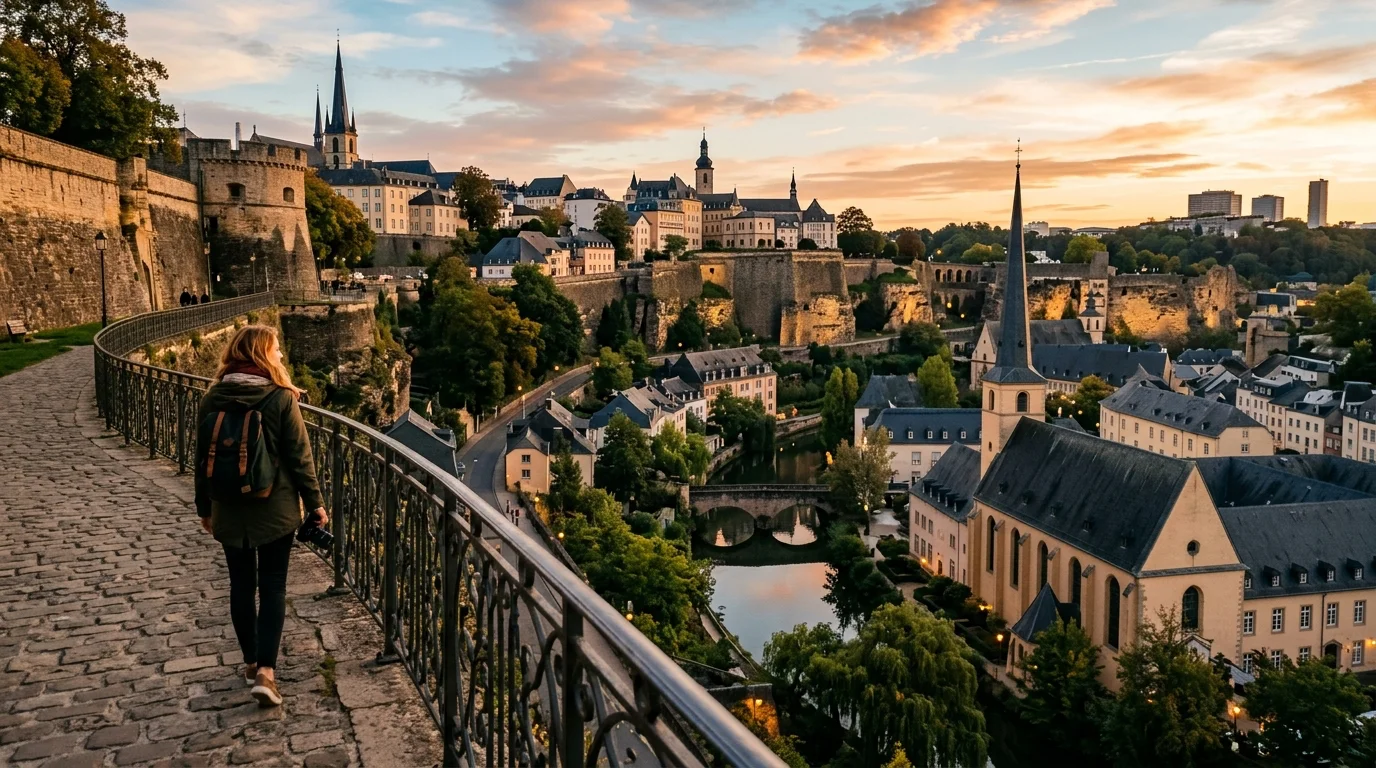
Luxembourg is a small but stunning Grand Duchy in the heart of Western Europe, bordered by Belgium, France, and Germany. It is best known for its fairy-tale medieval old town (a UNESCO World Heritage Site), dramatic river gorges, and impressive Bock Casemates fortress tunnels. Visitors come here for the remarkable blend of history and modernity, world-class cuisine, extraordinary walking trails through the Pétrusse and Alzette valleys, and easy access to three neighboring countries — all in one compact, safe, and surprisingly affordable destination.
Table of Contents
- Luxembourg Overview
- Getting There & Around
- Top Attractions & Landmarks
- Neighborhoods & Districts
- Food & Dining
- Nightlife & Entertainment
- Shopping
- Seasonal Events & Festivals
- Accommodation Recommendations
- Practical Information
- Day Trips & Nearby Destinations
- Insider Tips & Hidden Gems
- Money-Saving Tips
- Common Tourist Mistakes to Avoid
- Sample Itineraries
- Frequently Asked Questions
What Is Luxembourg and Why Should You Visit?
Luxembourg is one of the world's smallest countries — and one of its most rewarding to visit. Wedged between Belgium, France, and Germany in the heart of Europe, this tiny Grand Duchy packs an astonishing amount into its 2,586 square kilometers: a soaring medieval capital city, rolling green valleys, ancient fortifications, Michelin-starred restaurants, and a multilingual culture that feels like nowhere else on earth.
Visitors should visit Luxembourg because it offers a rare combination that few European destinations can match. The capital, Luxembourg City, is one of the continent's most dramatically situated cities — built across a series of deep gorges, with historic neighborhoods perched on rocky plateaus above river valleys. You can walk from a UNESCO World Heritage fortress to a cutting-edge contemporary art museum in under 20 minutes. Best of all, most visitors overlook Luxembourg entirely, meaning you can explore its magnificent Old Town without fighting through tour groups.
Luxembourg does require a slightly higher daily budget than some of its neighbors — it is one of the wealthiest countries in the world — but savvy travelers can keep costs reasonable, and the country's free public transport for all visitors makes getting around completely cost-free once you arrive.
When Is the Best Time to Visit Luxembourg?
Late Spring (May–June): This is arguably Luxembourg's finest season. Temperatures are comfortable at 15–22°C (59–72°F), the valleys are lush and green, and the city is full of life but not yet crowded with summer tourists. Hotel prices are still moderate, and outdoor café terraces are open. Book accommodation about two weeks in advance for this period.
Summer (July–August): July and August bring warm temperatures of 22–28°C (72–82°F) and Luxembourg's busiest tourist season. The city hosts outdoor festivals and open-air events, and the Mullerthal Trail draws hikers from across Europe. Expect higher hotel prices and book at least one month ahead. The long evenings are perfect for exploring the gorge walks and parks.
Autumn (September–October): Shoulder season is a wonderful time to visit Luxembourg. Temperatures cool to a pleasant 10–18°C (50–64°F), the forests around the Ardennes turn spectacular shades of red and gold, and crowds thin considerably. Prices drop noticeably from the August peak, making this arguably the smartest time to go.
Winter & Christmas Season (November–December): Luxembourg transforms into a magical destination during the Christmas market season. The Place d'Armes and Place de la Constitution host some of Europe's most charming Christmas markets from late November through December 30th. Temperatures hover between 0–8°C (32–46°F) — cold but rarely brutal — and this is one of the city's most atmospheric and beloved seasons.
How Many Days Do You Need in Luxembourg?
- 1–2 days: Enough to cover the essential Old Town highlights — Bock Casemates, Chemin de la Corniche, Place d'Armes, and a walk through the Grund valley. Suits transit travelers or those combining with nearby cities.
- 3–4 days: The ideal amount for first-time visitors. You can explore Luxembourg City thoroughly, take a day trip to the fairy-tale Vianden Castle or the Mullerthal region, and enjoy the dining and nightlife scene properly.
- 5–7 days: Perfect for deeper exploration — including the Luxembourg Ardennes, the Moselle wine valley, the town of Echternach, and smaller villages in the north. You can truly slow down and feel like a local.
- 1 week+: For those who want to hike the full Mullerthal Trail, cycle the Moselle valley, explore every neighborhood in the capital, and use Luxembourg as a base for day trips into Germany, Belgium, and France.
Quick Facts About Luxembourg
- Population: \~695,000 (Grand Duchy); \~130,000 (Luxembourg City proper)
- Language: Luxembourgish (national), French and German (official); English widely spoken in tourist areas
- Currency: Euro (€)
- Time Zone: Central European Time (CET), UTC+1 (UTC+2 in summer)
- Country Code: +352
- Area Code: No city area codes — all numbers use the country code +352 directly
- Climate: Temperate oceanic — mild summers, cold winters, rain possible year-round
- Altitude: Luxembourg City averages about 370 m (1,214 ft) above sea level
How Do You Get To and Around Luxembourg?
The easiest way to reach Luxembourg is by air into Luxembourg Findel Airport, which is just 6 km from the city center, or by high-speed train from Brussels, Paris, or Frankfurt. Once you arrive, getting around is remarkably easy — and completely free, because Luxembourg abolished all public transport fares in 2020, making it the first country in the world to do so.
Which Airports Serve Luxembourg?
Luxembourg Airport – Findel (LUX)
4, rue de Trèves, L-2632 Findel, Luxembourg
Luxembourg's only international airport sits just 6 km east of the city center. It handles flights from most major European hubs including London, Amsterdam, Paris, Frankfurt, Madrid, and Lisbon. Airlines serving Findel include Luxair (the national carrier), Ryanair, easyJet, Lufthansa, British Airways, and several others. The airport is modern, manageable in size, and rarely congested — you can be through arrivals and on a bus in under 30 minutes.
How Do You Get from the Airport to the City Center?
Public Bus (Line 29 or Navette): Completely free thanks to Luxembourg's nationwide free public transport policy. Bus line 29 runs between the airport and Luxembourg Central Station (Gare Centrale) approximately every 10–20 minutes. Journey time is about 20 minutes. This is by far the best value option — it literally costs nothing.
Official Taxi: Taxis from Findel Airport to the city center cost approximately €25–35 (2026 rates). Journey time is 15–20 minutes depending on traffic. Use official taxis from the designated rank outside arrivals — do not accept offers from unofficial drivers inside the terminal.
Rideshare (Uber): Uber operates in Luxembourg City and typically costs €18–28 from the airport to the center. It is generally slightly cheaper than official taxis and easy to book through the app.
Private Transfer: Pre-booked private transfers run approximately €40–55 (2026) and are useful for larger groups or travelers with lots of luggage. They can be arranged through hotel concierges or online transfer services.
What Is the Best Way to Get Around Luxembourg?
The best way to get around Luxembourg City and the entire country is on foot combined with free public transport. Luxembourg made all buses, trams, and trains completely free for everyone (residents and tourists alike) in March 2020 — so there is no cost at all for getting around once you arrive.
Public Transport System
Luxembourg's public transport network is operated by Mobilitéit and covers the entire country with buses, trains, and a modern tram line through the capital. Buses run frequently in the city, while trains connect major towns across the Grand Duchy. The tram runs from the Central Station through the city center to the Kirchberg plateau, which is extremely useful for reaching the Philharmonie and MUDAM museum.
Tickets & Passes:
- Single ride: Free for all passengers (since March 2020)
- Weekly/monthly passes: Not needed — all travel is already free
- First Class train travel: €2.00 per journey (the only exception to the free travel rule)
Taxis & Rideshare
Taxis in Luxembourg City are metered and regulated. The starting fare is around €3.00, with a per-km rate of approximately €2.00–2.50 (2026). Uber also operates in the city and is generally slightly cheaper. For longer journeys within the city, taxis are useful for late-night travel or getting to areas poorly served by buses.
Walking
Luxembourg City is one of Europe's most walkable capitals, especially for sightseeing. The main tourist sites — Old Town, Bock Casemates, Chemin de la Corniche, Place d'Armes, and the Grund — are all within comfortable walking distance of each other. The main caveat is that the city's dramatic topography means you will encounter steep stairs and slopes between the upper city (Ville Haute) and the lower gorge neighborhoods like the Grund and Clausen.
Walkability Score: 82/100 for the tourist center. The Old Town plateau is very walkable; the gorge walks are stunning but involve significant elevation changes — good shoes are essential.
Smart travellers always compare transfer options before booking — prices for the same route can vary by 40% or more. Take 60 seconds to check all options and choose what works best for your arrival.
What Are the Top Attractions and Landmarks in Luxembourg?
Luxembourg's top attractions include the UNESCO-listed Old Town fortifications, the dramatic Bock Casemates tunnel network, the elegant Place d'Armes, the Grand Ducal Palace, the remarkable Chemin de la Corniche promenade, and world-class museums. Here is a detailed guide to every major sight worth your time.
Bock Casemates (Casemates du Bock)
Montée de Clausen, L-1343 Luxembourg City, Luxembourg
The Bock Casemates are a vast network of underground tunnels and galleries carved into the sandstone rock beneath Luxembourg's Old Town promontory. Originally built by the Spanish in 1644 and greatly expanded over subsequent centuries, these fortifications once housed thousands of troops, horses, workshops, bakeries, and slaughterhouses. Today, visitors can explore 17 km of tunnels with breathtaking viewpoints over the Alzette valley and Grund neighborhood below.
The Bock Casemates are part of the reason Luxembourg's Old Town was inscribed as a UNESCO World Heritage Site in 1994. The fortification system is genuinely impressive in scale — at its peak, the "Gibraltar of the North" (as the Duke of Wellington called it) boasted 23 km of tunnels and multiple rings of defensive walls. Most of the fortifications were demolished after 1867, but what remains is extraordinary.
Why visit: This is the single most iconic sight in Luxembourg and one of the most impressive medieval-era fortifications in all of Europe. The viewpoints from the rocky promontory over the Alzette gorge are among the most dramatic urban panoramas in the continent.
Entrance: Adults €8, Children (6–17) €4, Under 6 free (2026)
Best time: Weekday mornings to avoid school groups
Hours: March–October: 10:00–20:30 daily; Closed November–February
Chemin de la Corniche
Chemin de la Corniche, L-1359 Luxembourg City, Luxembourg
Widely described as "Europe's most beautiful balcony," the Chemin de la Corniche is a pedestrian promenade that curves along the edge of the Old Town promontory, offering uninterrupted panoramic views over the lower Alzette valley, the Grund neighborhood, and the ancient fortification walls below. The path stretches for about 500 meters and is lined with historic buildings, benches, and perfectly framed viewpoints.
The Chemin de la Corniche has existed in some form since the 17th century, originally as a rampart walkway. Today it is beautifully maintained and completely free to walk. It connects the Old Town to the Cathedral and the Bock rock, making it a natural route for any city exploration. At different times of day it offers completely different moods — misty and atmospheric in the morning, warm and golden at sunset.
Why visit: This is Luxembourg's most iconic free experience and the view it offers is genuinely world-class. Any visit to the city is incomplete without a slow walk along the Corniche, especially at golden hour.
Entrance: Free
Best time: Sunrise or late afternoon for photography; any time for a stroll
Hours: Open 24/7 (well-lit at night)
Grand Ducal Palace (Palais Grand-Ducal)
17 Rue du Marché-aux-Herbes, L-2095 Luxembourg City, Luxembourg
The Grand Ducal Palace is the official residence of the Grand Duke of Luxembourg and one of the most beautiful examples of Spanish Renaissance architecture in northern Europe. Located right in the heart of the Old Town, its ornate white facade with decorative arcades faces onto the bustling Rue du Marché-aux-Herbes. The building dates to 1572, when it served as the city's town hall, before becoming the royal residence in 1890.
The palace is used for official state receptions and is guarded by a changing of the guard that takes place at the main entrance. During summer months (typically July–August), guided tours of the palace interior are available, offering a rare glimpse into the state rooms, which are lavishly decorated with Gobelin tapestries, porcelain, and royal portraits. Outside these tour dates, the exterior and immediate surroundings are always accessible.
Why visit: The palace exterior is one of Luxembourg's most photographed buildings and its location in the beating heart of the Old Town makes it a natural centrepiece of any city walk. The summer interior tours are a genuine highlight and worth booking in advance.
Entrance: Exterior free; Summer guided tour: Adults €12, Children €6 (2026)
Best time: Morning for the exterior and changing of the guard
Hours: Exterior always accessible; Interior tours: July–August only, check luxembourg-city.com for dates
Notre-Dame Cathedral (Cathédrale Notre-Dame)
Rue Notre-Dame, L-2240 Luxembourg City, Luxembourg
Luxembourg's most important church, the Cathedral of Notre-Dame is a stunning example of early Baroque architecture with Gothic elements, built between 1613 and 1621 by the Jesuits. The cathedral's pale stone facade, ornate doorways carved with intricate reliefs, and three elegant towers make it one of the most visually striking religious buildings in the Benelux region. Inside, the vaulted nave, beautiful stained glass windows, and the revered statue of Our Lady of Luxembourg draw both worshippers and visitors throughout the year.
The cathedral holds enormous significance in Luxembourg's cultural life. Every year in May, the Octave of Our Lady of Luxembourg brings thousands of pilgrims to the city for a two-week festival of prayer and procession that has been celebrated for over 350 years. The crypt below the cathedral houses the tombs of members of the House of Nassau-Weilburg, Luxembourg's royal family, and is open to the public.
Why visit: The cathedral is free to enter, architecturally magnificent, and genuinely moving — even for non-religious visitors. The contrast between the grandeur of the interior and the intimate scale of the city outside is quite remarkable.
Entrance: Free (donations welcome); crypt: Free
Best time: Weekday mornings for peace and quiet
Hours: Mon–Fri 8:00–18:00; Sat 8:00–19:00; Sun 10:00–19:00 (times vary for services)
MUDAM Luxembourg – Musée d'Art Moderne Grand-Duc Jean
3 Park Dräi Eechelen, L-1499 Luxembourg City, Luxembourg
Luxembourg's premier contemporary art museum, MUDAM (Musée d'Art Moderne Grand-Duc Jean) is housed in a stunning building designed by world-renowned architect I.M. Pei — the same architect behind the famous Louvre Pyramid in Paris. The museum opened in 2006 and sits dramatically on the Kirchberg plateau, partly built into the historic Fort Thüngen fortifications that form part of the UNESCO World Heritage Site. The collection features major works by international and Luxembourg artists across photography, design, fashion, and fine art.
MUDAM's permanent collection includes works by artists including Mike Kelley, Cindy Sherman, and Franz West, alongside a dynamic program of temporary exhibitions that rotate throughout the year. The building itself is as much an attraction as the art — the interplay between I.M. Pei's glass and steel structure and the ancient fortification walls below it is genuinely dramatic and thought-provoking.
Why visit: MUDAM is simply one of the finest contemporary art museums in Europe, in one of the most spectacular museum buildings anywhere in the world. Even visitors who are not regular gallery-goers tend to be impressed by the architecture and atmosphere.
Entrance: Adults €10, Concessions €7, Under 21 free (2026); free every first Sunday of the month
Best time: Weekday afternoons
Hours: Wed–Mon 10:00–18:00 (until 20:00 on Wednesdays); closed Tuesdays
Luxembourg City History Museum (Musée d'Histoire de la Ville de Luxembourg)
14 Rue du Saint-Esprit, L-1475 Luxembourg City, Luxembourg
Housed in a beautifully restored set of 17th-century townhouses on the cliff edge of the Old Town, the Luxembourg City History Museum tells the story of the city from its Roman and early medieval origins to the present day. The museum is exceptionally well-designed, with interactive displays, multilingual exhibits, and a glass panoramic lift that descends through the rock face, giving visitors a truly unique perspective on the city's geology and urban layers.
The museum's collection spans over 1,000 years of history, including maps, paintings, artifacts, and scale models showing how the city's extraordinary fortress grew over the centuries. The rooftop terrace and courtyard offer excellent free views over the Alzette valley that rival the Bock Casemates — and they are accessible without buying a museum ticket.
Why visit: This museum is excellent value and provides essential context for understanding why Luxembourg City looks the way it does. The panoramic glass lift alone is worth the entrance fee.
Entrance: Adults €6, Students €4, Under 18 free (2026); free first Sunday of month
Best time: Morning, when the light in the upper galleries is excellent
Hours: Tue–Sun 10:00–18:00 (Thu until 20:00); closed Mondays
Vianden Castle (Château de Vianden)
Montée du Château, L-9408 Vianden, Luxembourg
Although technically located 45 km north of Luxembourg City, Vianden Castle is so spectacular that it deserves a place in any Luxembourg attractions list. Perched dramatically above the Our River valley, this enormous Romanesque-Gothic castle dates to the 10th century and is one of the largest and most beautiful feudal residences in the whole of Europe west of the Rhine. After decades of ruin, it was painstakingly restored between 1977 and 2009 and is now open to the public in magnificent condition.
Vianden Castle features a series of grand halls, a palatine chapel, kitchen rooms, and museum galleries filled with furniture, weapons, and artwork from various historical periods. The views from the castle ramparts over the Our River valley are absolutely breathtaking, especially in autumn and spring. Victor Hugo lived in Vianden for a period in 1871 and wrote about the castle's beauty extensively.
Why visit: Vianden Castle is, quite simply, one of the most spectacular medieval castles in Europe — and far fewer tourists visit it compared to more famous German Rhine castles or French châteaux. It is a genuinely world-class sight that most visitors to Luxembourg overlook.
Entrance: Adults €10, Children (6–15) €4, Under 6 free (2026)
Best time: Weekday mornings in spring or autumn
Hours: Daily 10:00–18:00 (March–October); 10:00–16:00 (November–February)
Pétrusse Casemates & the Pétrusse Valley Walk
Plateau du Saint-Esprit, L-2090 Luxembourg City, Luxembourg
While the Bock Casemates get most of the attention, the Pétrusse Casemates on the opposite side of the city are smaller, free to enter, and often wonderfully uncrowded. These fortification tunnels and artillery positions were cut into the sandstone bluffs above the Pétrusse River, and from their viewpoints you can look out across the deep green valley to the Adolphe Bridge above. The surrounding Pétrusse Valley Park offers one of the loveliest green walks in the city.
The Pétrusse Valley (Vallée de la Pétrusse) is a ribbon of parkland threading between the high sandstone cliffs directly beneath the city's main boulevard, Boulevard de la Pétrusse. The valley floor is lush, peaceful, and remarkably wild-feeling for a capital city center. Walking paths wind along the river, past old mill buildings, beneath dramatic rock overhangs, and through a sequence of footbridges and tunnels.
Why visit: This is one of Luxembourg's best-kept secrets — a completely free, peaceful, and beautiful experience right in the heart of the capital that most tourists miss because they spend all their time on the upper city plateau.
Entrance: Free
Best time: Morning or golden hour; autumn for foliage colors
Hours: Valley always open; Casemates: seasonal, check with city tourist office
Place d'Armes
Place d'Armes, L-1136 Luxembourg City, Luxembourg
The Place d'Armes is the social heart of Luxembourg City — a beautifully proportioned central square surrounded by elegant 19th-century buildings, pavement cafés, restaurants, and the municipal theatre. Once a military parade ground (hence the name), today it is the city's most animated gathering spot, filled with locals enjoying coffee in the morning, lunch crowds at noon, and families strolling in the evening. A small bandstand hosts free concerts during summer evenings.
The square is lined with tempting café terraces and is the perfect spot for people-watching in a city that genuinely feels both cosmopolitan and cosy at the same time. The weekly market (Wednesday and Saturday mornings) brings local farmers, flower sellers, and food producers to the square, filling it with color and activity. At Christmas time, the Place d'Armes hosts one of Luxembourg's most charming Christmas market segments.
Why visit: This is simply the best place to sit down, have a coffee, and soak up the atmosphere of Luxembourg's city life. After all the walking and sightseeing, the Place d'Armes is where you recharge.
Entrance: Free
Best time: Wednesday/Saturday morning for the market; summer evenings for concerts
Hours: Always open; cafés typically open 8:00–23:00
Luxembourg American Cemetery and Memorial
50 Val du Scheid, L-2377 Hamm, Luxembourg (3 km from city center)
One of the most moving sites in Luxembourg, the American Cemetery at Hamm contains the graves of 5,076 American soldiers killed in the Battle of the Bulge and the campaign to liberate Luxembourg during World War II. Among those buried here is General George S. Patton, at his own request positioned at the head of his troops. The cemetery is immaculately maintained by the American Battle Monuments Commission and set in beautiful, peaceful grounds.
The site includes a memorial chapel, a large map room documenting the military operations, and rows of gleaming white marble crosses and Stars of David that stretch in precise formation across the green lawn. The contrast between the serenity of the setting and the weight of what it represents is deeply affecting. Visiting here provides powerful historical context for Luxembourg's 20th-century story.
Why visit: This is one of the most important and moving WWII memorial sites in Europe. It is free, beautifully maintained, and less visited than its significance deserves. Every visitor to Luxembourg City should make the short journey here.
Entrance: Free
Best time: Morning, when the light is gentle and the site is quiet
Hours: Daily 9:00–17:00 (closed Christmas Day and New Year's Day)
Philharmonie Luxembourg
1 Place de l'Europe, L-1499 Luxembourg City, Luxembourg
Luxembourg's concert hall, the Philharmonie, is one of the most architecturally striking modern buildings in the country — designed by Christian de Portzamparc and opened in 2005, its exterior is wrapped in 823 free-standing white columns that create a luminous, ethereal effect, especially at night when it glows from within. Located on the Kirchberg plateau alongside MUDAM and the European institutions, the Philharmonie hosts world-class orchestral concerts, jazz performances, chamber music, and visiting international artists throughout the year.
Even if you don't attend a concert, the building is worth seeing from the outside — particularly in the evening when it is illuminated. The adjacent Place de l'Europe is a pleasant space connecting the Philharmonie to the MUDAM museum and the European Parliament buildings, and the whole area is walkable from the city center via tram or a 30-minute walk.
Why visit: Luxembourg punches well above its weight culturally, and the Philharmonie is the proof. Tickets are often surprisingly affordable and the acoustics inside are magnificent. An evening concert here is a truly memorable Luxembourg experience.
Entrance: Concert tickets €15–75 (2026); exterior viewing free
Best time: Evening performances; check philharmonie.lu for program
Hours: Box office: Mon–Fri 10:00–18:30; Sat 10:00–14:00
Book your tours and tickets in advance — it saves hours of queuing and often gets you a better price. These two platforms cover different options, so it's worth checking both.
What Are the Best Neighborhoods to Explore in Luxembourg?
Luxembourg City's neighborhoods each have a completely distinct character shaped by the city's extraordinary topography. The city is divided between the upper plateau (Ville Haute) and the lower gorge neighborhoods, creating very different experiences within a compact area.
Ville Haute (Old Town / Upper City)
Character: The historic upper city is Luxembourg's elegant heart — grand boulevards, ornate historic buildings, the Grand Ducal Palace, the Cathedral, and the main commercial street, Rue Philippe II. The architecture here ranges from medieval to 19th-century neo-Renaissance and feels prosperous, stately, and beautifully maintained.
What makes it special: This is where Luxembourg's most famous sights are concentrated — the Bock Casemates, the Chemin de la Corniche, the Place d'Armes, and the Grand Ducal Palace. The area is wonderfully walkable and dense with good restaurants, chocolate shops, and boutiques. In the evening it takes on a warm glow that is magical.
Best for: First-time visitors, history lovers, luxury shoppers, anyone who wants to be walking distance from the main sights
Must-see in this area: Chemin de la Corniche, Grand Ducal Palace, Place d'Armes, Rue Philippe II, Marché-aux-Herbes
How to get there: Walk directly from Luxembourg Central Station in about 15 minutes, or take Tram 1 to Hamilius stop
Location: Place d'Armes, L-1136 Luxembourg City, Luxembourg
Le Grund (The Grund)
Character: Tucked into the deep valley of the Alzette River directly below the Old Town, the Grund is Luxembourg's most romantic and atmospheric neighborhood. Rows of small historic houses painted in muted yellows, blues, and creams line the riverbank, overlooked by the massive fortification walls high above. The area has a bohemian, village-like feel with independent bars, craft breweries, art studios, and excellent restaurants.
What makes it special: Walking into the Grund feels like stepping into a different city. The contrast between the grand plateau above and this tiny valley community below is extraordinary. The Alzette River runs gently through the neighborhood, and on summer evenings the terraced bars fill with a lively, cosmopolitan mix of locals and visitors. The Abbaye de Neumünster — a beautifully restored former Benedictine abbey — anchors the cultural life of the Grund.
Best for: Evening drinks, dinner, romantic walks, young travelers, food and culture lovers
Must-see in this area: Abbaye de Neumünster, Alzette riverbank, Brasserie Simon bar, Rue Münster
How to get there: Walk down from the Bock Casemates via steep stairs (Montée de Clausen), or take Bus 23 from the city center
Location: Rue Münster, L-2160 Luxembourg City (Le Grund), Luxembourg
Clausen
Character: Adjacent to the Grund but with a slightly more party-oriented atmosphere, Clausen is the valley neighborhood built around the old Mousel brewery and the Alzette riverbank east of the Bock rock. It is known primarily as Luxembourg's nightlife hub — clusters of bars, clubs, and restaurants fill the former industrial buildings and riverside terraces, particularly on weekend evenings.
What makes it special: Clausen has reinvented itself brilliantly over the past 20 years — the old Brasserie nationale (Bofferding) building now houses the excellent Brasserie de Luxembourg microbrewery and entertainment complex. The area buzzes on Thursday, Friday, and Saturday nights with a young, local crowd. The Montée de Clausen staircase connecting this valley neighborhood to the Bock above is one of the city's most dramatic urban walks.
Best for: Nightlife, craft beer, young travelers, evening dining
Must-see in this area: Brasserie de Luxembourg, Montée de Clausen staircase, riverside terraces in summer
How to get there: Walk from the Bock or Grund (about 10 minutes), or Bus 23
Location: Rue de Clausen, L-1342 Luxembourg City, Luxembourg
Kirchberg
Character: A complete contrast to the medieval charm of the Old Town, Kirchberg is Luxembourg's modern European quarter — a planned plateau neighborhood of gleaming glass office towers, European Union institutions, museums, and international headquarters. It is the financial and institutional heart of Luxembourg's remarkable economic success story.
What makes it special: Kirchberg is home to MUDAM, the Philharmonie, the Luxembourg Pavilion, and the spectacular Trois Glands park built over old Fort Thüngen fortifications. The architecture here is deliberately ambitious — Luxembourg has used this quarter as a showcase for world-class contemporary design. The European Court of Justice and the European Investment Bank are headquartered here, making it genuinely important in world affairs.
Best for: Architecture enthusiasts, museum lovers, contemporary art fans, business travelers
Must-see in this area: MUDAM, Philharmonie, Fort Thüngen museum, Trois Glands park
How to get there: Tram 1 from Central Station or Hamilius, direction Luxexpo — about 15 minutes
Location: Place de l'Europe, L-1499 Kirchberg, Luxembourg City, Luxembourg
Limpertsberg
Character: A leafy residential neighborhood on the northern plateau, Limpertsberg is where many of Luxembourg City's more affluent residents live. It has a calm, bourgeois atmosphere with beautiful Art Nouveau and early 20th-century townhouses, independent cafés, quality restaurants, and the Stadtpark (municipal park).
What makes it special: Limpertsberg offers a real glimpse into everyday Luxembourg life away from tourist areas. The Boulevard Royal running through it is lined with banks and financial institutions, while the side streets hold wonderful independent restaurants, wine bars, and delicatessens frequented by locals rather than tourists. The Municipal Park is one of the city's best green spaces for a relaxed afternoon.
Best for: Independent travelers seeking local life, food lovers, park walkers, architecture enthusiasts
Must-see in this area: Municipal Park (Stadtpark), Boulevard Royal, local restaurants and cafés on Avenue Pasteur
How to get there: Walk from Place d'Armes in about 20 minutes, or Bus 3/4
Location: Avenue Pasteur, L-2310 Luxembourg City, Luxembourg
Bonnevoie
Character: South of the Central Station, Bonnevoie is a more multicultural, affordable, and rapidly gentrifying neighborhood that is increasingly popular with young professionals, artists, and international residents. It has a cosmopolitan street-food scene, independent coffee shops, record stores, and vintage boutiques that feel quite different from the manicured Old Town.
What makes it special: Bonnevoie is where you find Luxembourg's most diverse and adventurous food scene — Eritrean restaurants, Japanese ramen bars, Vietnamese street food, craft cocktail bars, and excellent bakeries share streets with traditional Luxembourg bakeries and butchers. It is the most up-and-coming neighborhood in the city and gives visitors a genuine sense of contemporary Luxembourg rather than its postcard image.
Best for: Food lovers, budget travelers, young travelers, those seeking authentic local life
Must-see in this area: Rue de Bonnevoie food strip, weekend street market near the station
How to get there: 5-minute walk from Luxembourg Central Station
Location: Rue de Bonnevoie, L-1260 Luxembourg City, Luxembourg
What Food Should You Try in Luxembourg?
Luxembourg's cuisine is a rich, hearty blend of German, French, and Belgian influences — and eating here is one of the great pleasures of visiting. The country has more Michelin stars per capita than almost any other nation, but equally compelling is its tradition of Éisleker (Oesling) country cooking, with thick stews, smoked pork, freshwater fish, and beautifully crafted pastries.
What Are the Must-Try Local Dishes in Luxembourg?
- Judd mat Gaardebounen — Luxembourg's national dish: a generous portion of smoked collar of pork (Judd) served with broad beans (Gaardebounen) in a creamy sauce, accompanied by boiled potatoes. Rich, salty, and deeply satisfying. Found at nearly every traditional Luxembourg restaurant.
- Bouneschlupp — A thick, comforting green bean soup made with smoked bacon, potatoes, and onions. This is the quintessential Luxembourg home-cooking dish and a warming staple on winter menus throughout the country.
- Gromperekichelcher — Crispy potato fritters flavored with onion and parsley, sold from market stalls and fairground stands across Luxembourg. Hot, salty, and addictive — the ultimate Luxembourg street food.
- Träipen — A type of black pudding made with pork blood, bread, and spices, traditionally served with apple compote and mashed potatoes. A beloved winter dish for locals and one of the most authentically Luxembourg things you can eat.
- Friture de la Moselle — Deep-fried freshwater fish (typically small river fish like gudgeon) from the Moselle River, served in a paper cone with lemon. A classic along the Luxembourg Moselle wine route — best eaten outside on a summer afternoon.
- Quetschentaart — A beautiful open tart made with Quetsch plums (a type of small blue plum) on a buttery pastry base. Sold in every Luxembourg bakery from August to October and one of the most evocative tastes of autumn in the country.
- Rieslingspaschtéit — A magnificent raised pork pie made with pork, veal, and Riesling wine encased in pastry. It is served cold as a starter and is one of Luxembourg's finest culinary traditions, often seen at celebrations and formal meals.
- Kniddelen — Dense flour dumplings served with smoked bacon and cream. A filling, traditional dish that represents the German-influenced rural cooking of the Luxembourg countryside.
Where Should You Eat in Luxembourg?
Budget-Friendly (Under €18 per meal)
- Brasserie de Luxembourg (Mousel) — 7 Montée de Clausen, L-1343 Luxembourg City — A beloved large brasserie in the Clausen valley brewing its own beer and serving excellent traditional Luxembourg dishes at reasonable prices. The Judd mat Gaardebounen here is one of the city's best versions. Expect to pay €12–17 for a main course (2026).
- Um Dierfgen — 6 Rue de l'Eau, L-1449 Luxembourg City — A small, unpretentious bistro in the Old Town that locals love for its honest, traditional Luxembourg cooking at fair prices. The plat du jour (daily special) at €11–14 is remarkable value in a city where eating out can be expensive (2026).
- Wengler Gaart Food Market — Avenue du Dix Septembre, L-2550 Luxembourg City — An indoor food hall in the Belair neighborhood with multiple food counters offering everything from sushi to grilled meats and excellent hot sandwiches. The best quick-lunch option in the city for under €12.
Mid-Range (€20–45 per meal)
- Café de Paris — 16 Place d'Armes, L-1136 Luxembourg City — The most classically situated restaurant in Luxembourg, with a prime terrace on the Place d'Armes. The brasserie menu covers Belgian mussels, steak frites, and Luxembourg specialties at fair mid-range prices. Excellent for a long, relaxed lunch (2026: mains €22–36).
- Mosconi — 13 Rue Münster, L-2160 Luxembourg City (Le Grund) — A highly regarded Italian restaurant in the Grund with a beautiful interior and a reputation for exceptional handmade pasta and Italian ingredients. Reservations recommended on weekends (2026: mains €24–38).
- Restaurant Clairefontaine — 9 Place de Clairefontaine, L-1341 Luxembourg City — A respected restaurant in the heart of the Old Town facing the Duchess Charlotte statue. Classic French-Luxembourg cuisine with excellent seasonal menus (2026: mains €28–42).
- Wengé — 15 Rue Louvigny, L-1946 Luxembourg City — A stylish modern restaurant that is very popular with Luxembourg City's professional crowd. Creative international menu with good vegetarian options — a reliable choice for business dining or a smart dinner out (2026: mains €22–34).
Fine Dining (€60+ per meal)
- Belair Montée — 4 Rue de Clausen, L-1342 Luxembourg City — One of Luxembourg City's most acclaimed fine dining restaurants, with a refined seasonal tasting menu showcasing outstanding Luxembourg and French produce. Reservations essential, often booked several weeks ahead (2026: tasting menu €95–130).
- La Gaichel — 5 Rue de la Gaichel, L-8469 Eischen, Luxembourg (outside city) — Worth the 20-minute drive from the capital, La Gaichel is a legendary Luxembourg country restaurant with Michelin recognition, set in a beautiful garden in the Attert valley. The cooking is sophisticated French-Luxembourg, and a Sunday lunch here is the ultimate Luxembourg dining experience (2026: set menus €65–120).
What Are the Dining Customs in Luxembourg?
Meal times: Lunch is typically 12:00–14:00 and is the main meal of the day for many locals. Dinner service begins around 18:30–19:00 and most restaurants stop taking orders by 21:30–22:00. Luxembourg eats earlier than France or Spain.
Tipping: Service charges are typically included in the bill ("service compris"). It is customary but not obligatory to leave a small additional tip — rounding up or leaving €2–5 on a restaurant meal is appreciated. In cafés, simply round up to the nearest euro.
Reservations: Strongly recommended for dinner at mid-range and above restaurants, especially on Friday and Saturday evenings and during festival periods. Most restaurants accept online booking through their websites or TheFork platform.
Dress code: Smart casual is expected at mid-range restaurants. Fine dining venues expect smart attire — no shorts or sports shoes. Brasseries and casual eateries are relaxed about dress.
What Is the Nightlife Like in Luxembourg?
Luxembourg City's nightlife scene is small but surprisingly lively — focused primarily in the Clausen and Grund valleys, with additional bars and live music venues scattered throughout the Old Town and Bonnevoie. Nights typically start late (around 22:00) and run until 3–4 AM on weekends. The scene is international, multilingual, and generally very safe.
Where Are the Best Areas for Nightlife in Luxembourg?
- Clausen Valley: Rue de Clausen, L-1342 Luxembourg City — The undisputed nightlife hub, with a concentrated cluster of bars, clubs, and brasseries along the river. Busiest Thursday through Saturday from 22:00 onward. The crowd is young and international, the atmosphere friendly and energetic.
- Le Grund: Rue Münster, L-2160 Luxembourg City — A more intimate, relaxed bar scene with outdoor terraces along the Alzette river. Perfect for early evening drinks before a late-night move to Clausen. More food-focused but with several excellent cocktail and wine bars.
- Old Town / Place d'Armes: Place d'Armes, L-1136 Luxembourg City — Bars and restaurants around the main square are busiest in summer, with outdoor terraces filling up from around 18:00. More tourist-facing but lively and convenient for visitors staying in the center.
What Are the Best Bars and Clubs in Luxembourg?
Bars & Pubs
- Scott's Pub — 4 Bisserwee, L-1238 Luxembourg City (Le Grund) — An enormously popular Irish-style pub right on the Alzette riverbank in the Grund. Famous for its riverside terrace, extensive beer selection, and lively atmosphere. Attracts a multinational crowd of expats, students, and tourists. Pint of Guinness around €6.50 (2026).
- Urban Bar — 2 Rue de la Boucherie, L-1247 Luxembourg City — A stylish, upscale cocktail bar in the Old Town known for creative cocktails and an excellent whisky selection. Attracts a slightly older, well-dressed crowd. Cocktails from €12 (2026).
- Brasserie de Luxembourg — 7 Montée de Clausen, L-1343 Luxembourg City — The city's most famous brewery-bar, serving its own craft beers brewed on site alongside hearty brasserie food. A must-visit for beer lovers. Luxembourg lager from €4.50 (2026).
Clubs & Dancing
- Club Melusina — 145 Rue de la Tour Jacob, L-1831 Luxembourg City (Clausen) — The longest-running and most established club in Luxembourg, housed in a large venue in the Clausen valley. Hosts international DJs, themed nights, and regular electronic music events. Cover charge €8–15 (2026). Busiest on Friday and Saturday from midnight onward.
- De Gudde Wëllen — 18 Avenue de la Porte-Neuve, L-2227 Luxembourg City — A respected medium-sized venue that hosts alternative rock, indie, and electronic events in a raw, warehouse-style space. Beloved by Luxembourg's local music scene. Check schedule at deguddewellen.lu.
Live Music & Shows
- den Atelier — 54 Rue de Hollerich, L-1740 Luxembourg City — The main live music venue in Luxembourg for international touring acts across rock, pop, jazz, and hip-hop. Capacity around 1,200 standing. Tickets typically €20–50 (2026). Book through atelier.lu.
- Rotondes — 2 Place des Rotondes, L-2448 Luxembourg City — A brilliant multi-arts venue in two converted train roundhouses (hence the name), hosting live music, theatre, art exhibitions, and cultural events with a strong focus on contemporary and emerging artists. Many events are free or low-cost.
What Family-Friendly Evening Entertainment Is Available?
Families in Luxembourg have excellent evening options. The summer open-air cinema season runs in July and August at various locations in the city, with free screenings in the Pétrusse valley and park areas. The Philharmonie hosts family concert programs on Sunday mornings and some weekend evenings that are appropriate for older children. In winter, the Christmas markets are a magical family evening experience from late November onward.
What and Where Should You Shop in Luxembourg?
The best things to buy in Luxembourg are locally produced wines and spirits, fine chocolates, Luxembourgish crystal, quality clothing, and artisan ceramics. The top shopping areas are the Old Town pedestrian zone, the Royal-Hamilius shopping complex, and the Kirchberg shopping centers.
What Are the Best Shopping Districts in Luxembourg?
- Rue Philippe II / Grand-Rue (Old Town): Grand-Rue, L-1660 Luxembourg City — The main pedestrian shopping street in the Old Town, lined with international fashion brands, luxury shops, jewelers, perfumeries, and Luxembourg's excellent chocolate boutiques. Perfect for high-quality gifts and fashion. Prices reflect the premium location.
- Royal-Hamilius Shopping Center: 5 Boulevard Royal, L-2449 Luxembourg City — A modern underground shopping mall opened in 2018 directly beneath the central boulevard, connecting the Old Town to the station area. Home to H&M, Zara, a quality food hall, and various other international retailers. Convenient for one-stop shopping whatever the weather.
- Kirchberg Shopping (Auchan Kirchberg): L-1499 Luxembourg City, Kirchberg — The main large hypermarket area on the Kirchberg plateau, useful for grocery shopping, everyday items, and Luxembourg souvenir products at supermarket prices. Take Tram 1 directly there.
What Markets Should You Visit in Luxembourg?
Weekly Market (Wochenmarkt) — Place Guillaume II, L-2090 Luxembourg City — Every Wednesday and Saturday morning, 7:00–13:00. A lovely farmers' market selling fresh local produce, eggs, cheese, honey, flowers, bread, and hot food including Gromperekichelcher (potato fritters). This is one of Luxembourg's most enjoyable and authentic experiences and the best place to buy local food products to take home.
Christmas Market (Wënachtsmaart) — Place d'Armes and Place de la Constitution, Luxembourg City — Late November to December 30th, daily 11:00–21:00. One of Europe's most charming Christmas markets, spread across two of the city's main squares. Excellent local artisan crafts, hot wine (Glühwein), seasonal food, and a magical atmosphere.
Antiques & Flea Market — Place de la Constitution, Luxembourg City — Monthly on Saturdays (check city website for dates). A pleasant browse through antiques, vintage clothing, ceramics, and curiosities in a beautiful setting above the Pétrusse valley.
What Should You Buy in Luxembourg?
- Luxembourg Moselle Wine — Particularly Riesling, Auxerrois, and Crémant de Luxembourg sparkling wine. Buy directly at wine shops or the weekly market for the best selection. Bottles from €8–20 (2026). The sparkling Crémant makes an excellent gift.
- Namur Chocolate or Oberweis Pralines — Luxembourg has excellent artisan chocolatiers. Oberweis (branches across the city) is the most prestigious national brand, producing exceptionally crafted pralines, macarons, and pastries. A box of pralines (€15–25) makes a perfect gift (2026).
- Villeroy & Boch Ceramics — Although German-owned, Villeroy & Boch's historic factory is in Luxembourg and the brand is deeply associated with the country. Quality dinnerware, tiles, and bathroom accessories at the Kirchberg or Royal-Hamilius stores. Often significantly cheaper here than abroad.
- Luxembourgish Craft Beer — Bofferding, Diekirch, and Simon are the national beer brands, while newer craft producers like Ourdaller and Brauerei Simon's limited ranges are excellent. Buy from specialist beer shops or directly from the Clausen brewery shop.
- Rieslingspaschtéit (Pork Pie) — A traditional vacuum-packed Rieslingspaschtéit from a quality charcuterie makes a wonderful and unique edible souvenir. Available at market stalls and specialist food shops.
- Pottery and Ceramics from Nospelt — Traditional hand-painted earthenware from the Luxembourg village of Nospelt, with distinctive geometric folk patterns. Available at artisan shops in the Old Town and at the weekly market.
What Are the Shopping Hours and Customs?
Most shops in Luxembourg are open Monday–Saturday 9:00–19:00, with some extending to 20:00 on Fridays. Almost all shops close on Sundays — this is strictly observed outside of tourist season. Supermarkets have slightly longer hours. The summer sales (July) and winter sales (January) offer significant discounts on clothing. VAT in Luxembourg is 17% (one of the EU's lowest), and non-EU visitors can claim a VAT refund on purchases over €50 through the Global Blue system.
Can Non-EU Visitors Claim a VAT Tax Refund in Luxembourg City?
Yes — if you are a visitor from outside the European Union (including travellers from the USA, Canada, Australia, the UK, and most of Asia and Latin America), you are entitled to a refund of the VAT (Value Added Tax) included in the price of goods you buy in Luxembourg. VAT in Luxembourg is 17% on most goods, which means this refund can be significant on high-value purchases like clothing, leather goods, jewellery, designer fashion, and electronics.
How to Claim Your VAT Refund — Step by Step
- Spend at least €74 in a single shop in a single day. This is the minimum threshold for a VAT refund claim in Luxembourg. It does not apply across multiple shops — the full amount must be spent in one store.
- Look for the "Tax Free" sign. Participating shops display a "Tax Free Shopping," "Global Blue," or "Planet" logo in the window or at the register.
- Ask for the tax refund form at the register before you pay. Present your non-EU passport — the shop will fill out the form with your details and the purchase amount. Keep the form with your receipt.
- Get the form stamped at customs before you leave. Go to the Customs office at Luxembourg Findel Airport (LUX) before check-in and have an officer stamp your tax refund form. Keep your purchases accessible in hand luggage — do not pack them deep in your checked bags.
- Collect your refund. Hand the stamped form to the Global Blue or Planet desk at the airport. You can receive the refund in cash (minus a processing fee) or as a credit card refund (lower fees, takes a few weeks).
VAT Refund Quick Facts for Luxembourg City
- Minimum spend: €74 in one shop in one day
- VAT rate on most goods: 17% on most goods
- Typical refund after fees: 10–15% of the purchase price
- Refund processors: Global Blue and Planet (formerly Premier Tax Free) at Luxembourg Findel Airport (LUX)
- Who qualifies: Anyone with a non-EU passport who is not a resident of an EU country
- UK visitors: British passport holders qualify since Brexit — the UK is no longer in the EU
- Deadline: Purchases must be exported within 3 months of the date of purchase
- Full guide: VAT Refund in Europe — Complete Guide for Non-EU Travelers
What Festivals and Events Happen in Luxembourg?
Luxembourg's biggest festivals include the National Day celebrations on June 23rd, the Schueberfouer funfair in late August/September, the Christmas markets in December, and the Carnival season in February. The city's event calendar is packed throughout the year with cultural, music, and community events.
What Is the Annual Events Calendar for Luxembourg?
| Month/Season | Event Name | Description |
|---|---|---|
| January | Winter Sales / Soldes d'Hiver | Major post-holiday sales across all Luxembourg City shops, typically starting the first week of January. Up to 50–70% reductions on clothing and household goods. |
| February | Carnival (Krautwëschdag) | Luxembourg's traditional carnival, particularly lively in the south of the country around Differdange and Esch-sur-Alzette. Children and adults dress in costumes for street parades, and the Old Town sees festive events. Dates vary each year based on Easter. |
| March | Bretzelsonndeg (Pretzel Sunday) | A uniquely Luxembourgish Valentine's-style tradition on the fourth Sunday of Lent, when boys give girls decorated pretzels as tokens of affection. If the girl returns a decorated egg on Easter Sunday, it signifies mutual interest. A charming and distinctly local custom. |
| April | Easter Markets | Easter markets appear in the city center with crafts, Easter eggs, flowers, and seasonal food. The Old Town feels particularly festive as spring arrives. |
| May | Octave of Our Lady of Luxembourg | A two-week Catholic pilgrimage festival centered on the Cathedral Notre-Dame, drawing thousands of pilgrims from across Luxembourg and the surrounding regions. The procession on the fifth Sunday of Easter (Octave Sunday) through the city streets is a remarkable sight and deeply important to Luxembourg culture. |
| June | National Day (Nationalfeierdag) – June 22–23 | Luxembourg's biggest national celebration — the Grand Duke's official birthday. On June 22nd, a spectacular torchlight procession moves through the city streets, followed by a massive fireworks display over the Alzette valley at midnight. June 23rd brings a military parade and public celebrations throughout the city. This is the single most exciting date in the Luxembourg calendar. |
| July | SummerInTheCity / Open-Air Events | A program of free outdoor concerts, cinema screenings, and cultural events across Luxembourg City's parks and squares. The Pétrusse Amphitheatre becomes an outdoor performance venue throughout the summer. |
| August | Schueberfouer Funfair (late August) | One of the oldest fairgrounds in Europe, dating back to 1340, the Schueberfouer is a massive traveling funfair held on the Glacis field on the edge of the city. Thousands of local families visit daily for rides, food stalls, candy floss, and traditional fair entertainment. Runs for three weeks from late August into September — a beloved annual tradition. |
| September | Remembrance Day / Heritage Open Days | Luxembourg participates in European Heritage Days in mid-September, opening many normally-closed historic buildings, private gardens, and institutional sites for free public visits. An excellent time to see hidden sides of the city. |
| October | Luxembourg City Film Festival | An international film festival focused on emerging cinema from around the world, held across multiple venues in Luxembourg City. Screenings are often low-cost or free, and the selection tends toward ambitious, non-mainstream international cinema. |
| November | Martinmas Lantern Processions (Saint Martin's Day, Nov 11) | One of the most beloved events in the Luxembourg family calendar — children carry handmade paper lanterns through neighborhood streets at dusk on November 11th, singing traditional songs. In rural Luxembourg towns, the processions are especially atmospheric. |
| December | Christmas Markets (Wënachtsmaart) | Luxembourg City's Christmas markets on Place d'Armes and Place de la Constitution open from late November and run until December 30th. Consistently rated among the most atmospheric Christmas markets in Europe — the cobblestone setting, warm lights, and quality artisan stalls make it a magical experience. Free to enter; budget €30–50 for food and gifts. |
How Do Festivals Affect Hotel Prices and Availability?
National Day weekend (June 22–23) and the Christmas market period (especially first two weeks of December) cause the biggest spikes in hotel prices and availability in Luxembourg City. For National Day, book at least 6–8 weeks in advance as the city fills with returning nationals and visitors from neighboring countries. The Schueberfouer funfair period (late August–September) has a moderate impact on prices. The Octave pilgrimage period in May can affect accommodation availability, particularly at weekends.
Where Should You Stay in Luxembourg?
The best neighborhood to stay in Luxembourg City depends on your travel style. The Old Town (Ville Haute) is perfect for first-time visitors who want to walk to sights; the Grund and Clausen are best for nightlife and atmosphere; Gare/Bonnevoie suits budget travelers and those arriving by train.
What Are the Best Neighborhoods to Stay in Luxembourg?
| Neighborhood | Vibe | Price Range (per night, 2026) | Best For |
|---|---|---|---|
| Old Town (Ville Haute) | Historic, elegant, central | €120–250 (mid); €280–500+ (luxury) | First-time visitors, couples, sightseers |
| Le Grund / Clausen | Romantic, village-feel, lively evenings | €90–180 (limited options) | Couples, nightlife seekers, atmosphere lovers |
| Gare / Bonnevoie | Practical, multicultural, budget-friendly | €60–120 (budget/mid) | Budget travelers, rail travelers, backpackers |
| Kirchberg | Modern, spacious, business-oriented | €100–220 (business hotels) | Business travelers, families, museum visitors |
| Limpertsberg | Residential, quiet, leafy | €85–160 (apartments/B&Bs) | Long-stay visitors, independent travelers |
What Are the Pros and Cons of Each Area?
Old Town (Ville Haute):
Pros: Walking distance to all main sights, excellent restaurants and bars on the doorstep, beautiful historic surroundings, good public transport links to entire city.
Cons: Most expensive accommodation in the city; some streets can be noisy on weekends; limited budget options; parking is expensive and difficult.
Gare / Bonnevoie:
Pros: Most affordable accommodation zone; direct train connections; excellent multicultural food scene; easy tram access to Old Town (about 15 minutes).
Cons: Less atmospheric than the Old Town or Grund; some streets around the station are less salubrious; more traffic noise.
Kirchberg:
Pros: Modern, spacious hotels; direct tram to city center; excellent for families (MUDAM, Philharmonie, parks); good parking availability.
Cons: Lacks character and atmosphere; feels very business-district-like on evenings and weekends; less walkable to Old Town sights.
How Far in Advance Should You Book in Luxembourg?
For standard weekends between April and October, booking 2–4 weeks ahead is generally sufficient. For National Day weekend (June 22–23) and the first two weeks of December (Christmas markets), book 6–10 weeks in advance. Major European Parliament and Council summits occasionally cause short-notice spikes — keep an eye on the EU calendar if traveling in the spring or autumn. Mid-week stays between October and March are rarely overbooked and can be found at short notice at good rates.
What Do You Need to Know Before Visiting Luxembourg?
Here are the essential practical details every visitor to Luxembourg needs to know — from money and transport to safety and language.
Essential Travel Details for Luxembourg
- Currency: Euro (€); exchange available at banks and post offices; airport exchange has poor rates
- Credit Cards: Widely accepted everywhere including small shops and cafés; Visa and Mastercard universally accepted; Amex less common
- ATMs: Plentiful throughout the city; most charge no foreign transaction fee within the EU; Euronet ATMs charge fees — use bank ATMs (BGL BNP Paribas, ING, Spuerkeess)
- Language: Luxembourgish (national); French and German (official); English widely spoken in all tourist areas and by most under-40s
- Tipping: 5–10% in restaurants if service is not included; round up in cafés; not expected for taxis
- Electrical Plugs: Type E/F (European round 2-pin); 230V/50Hz; UK and US visitors need adapters
- Emergency Number: 112 (police, ambulance, fire — all services)
- Tourist Police: +352 4994-1 (Luxembourg City Police)
- SIM Cards: POST Luxembourg, Orange Luxembourg, and Tango are the main carriers; SIM cards from €10–15 at airport or phone shops; EU roaming rules apply for EU visitors
- WiFi: Excellent and free across the city; most cafés, restaurants, and hotels provide good WiFi; the city also has free public WiFi hotspots in tourist areas
- Tap Water: Safe to drink and excellent quality — Luxembourg's tap water is among the cleanest in Europe. No need to buy bottled water.
Skip the airport queue — order your eSIM before you travel and activate it the moment you land. Prices and data allowances vary, so it pays to compare providers.
How Much Does It Cost to Visit Luxembourg?
| Budget Type | Daily Cost | What's Included |
|---|---|---|
| Budget Traveler | €55–80/day | Hostel or budget hotel near station, market lunches and supermarket meals, free public transport, free attractions (Chemin de la Corniche, Cathedral, valley walks) |
| Mid-Range Traveler | €130–200/day | 3-star hotel in Old Town, café breakfast, restaurant lunch (plat du jour), restaurant dinner, paid attractions (Bock Casemates, MUDAM), occasional taxi |
| Luxury Traveler | €350–600+/day | 5-star hotel, fine dining, Philharmonie concert, private guided tours, spa, premium wine with meals, private transfers |
What Are the Most Useful Phrases in Luxembourg?
- Hello: Moien (Luxembourgish) / Bonjour (French) / Guten Tag (German)
- Thank you: Merci (widely used) / Villmools merci (Luxembourgish)
- Please: S'il vous plaît (French) / Wann ech gelift (Luxembourgish)
- Excuse me: Excusez-moi (French) / Entschuldigung (German)
- How much?: C'est combien? (French) / Wéivill kascht dat? (Luxembourgish)
- Where is...?: Où est...? (French) / Wou ass...? (Luxembourgish)
- I don't understand: Je ne comprends pas (French) / Ech verstinn net (Luxembourgish)
- Help!: Au secours! (French) / Hëllef! (Luxembourgish)
- Bathroom: Les toilettes / La salle de bain (French)
- Check, please: L'addition, s'il vous plaît (French)
Is Luxembourg Safe for Tourists?
Yes — Luxembourg is one of the safest countries in the world for tourists. Crime rates are very low, the city is well-policed and well-lit, and serious violent crime targeting tourists is extremely rare. Luxembourg City regularly ranks in the top tier of Europe's safest capital cities.
Areas to avoid: There are no truly dangerous areas in Luxembourg City, but exercise normal urban caution around the Central Station at late night (after midnight on weekends) when some street-level intoxication and occasional petty crime occurs.
Common scams: Overcharging by unofficial taxis (use metered official taxis or Uber); fake charity collectors in the Old Town pedestrian zone; card-skimming at independent ATMs (use bank ATMs only); unsolicited "helping" with luggage at the station in exchange for payment.
Pickpocketing: Uncommon but present in crowded tourist areas (Place d'Armes, Bock Casemates) and during the Christmas markets. Keep valuables in a front pocket or money belt in dense crowds.
Solo traveler safety: Luxembourg City is excellent for solo travelers of all genders. Women traveling alone report feeling very safe throughout the city and at night. LGBTQ+ travelers will find Luxembourg one of the most welcoming countries in Europe — same-sex marriage has been legal since 2015 and discrimination is rare.
What Are the Cultural Customs in Luxembourg?
- Greetings: A handshake is standard for formal introductions. Among friends, a kiss on the cheek (once, to the right) is common. Say "Moien" (good day) when entering a small shop — it is considered polite and locals appreciate the effort.
- Dress code: Smart casual is the norm in the city. Cover shoulders and knees when entering the Cathedral or any religious building. No flip-flops or beachwear in restaurants.
- Photography: Generally unrestricted in public spaces. Ask permission before photographing people, particularly at religious events like the Octave procession. The Grand Ducal Palace has no photography restrictions outside.
- Public behavior: Luxembourgers are generally quiet and reserved in public spaces. Keep noise low on public transport. Queueing is orderly and expected.
- Dining: Wait to be shown to a table at restaurants rather than seating yourself. Address waitstaff politely and make eye contact when ordering.
- Gestures to avoid: None that are particularly specific to Luxembourg — standard European social norms apply. Pointing with a single finger is considered slightly rude; use an open hand gesture instead.
Do You Need a Visa to Visit Luxembourg?
Citizens of the EU, EEA, and most Western countries (USA, Canada, Australia, New Zealand, UK, and many others) do not need a visa to visit Luxembourg for stays up to 90 days. Luxembourg is part of the Schengen Area, so your 90-day allowance applies across all Schengen countries combined. Citizens of some other nationalities require a Schengen visa — always check the official requirements at european-union.europa.eu or your country's foreign ministry website before traveling, as rules can change.
What Health Precautions Should You Take in Luxembourg?
Vaccinations: No specific vaccinations are required for Luxembourg beyond routine immunizations. EU/EEA visitors should bring their European Health Insurance Card (EHIC).
Pharmacies: Pharmacies (Pharmacie/Apothéek) are plentiful and well-stocked. Many medicines available only by prescription in other countries can be purchased over-the-counter. A rotating 24-hour pharmacy system operates in Luxembourg City — the address of the duty pharmacy is posted on all pharmacy doors and at: cap.lu.
Hospitals: Luxembourg has excellent public and private hospitals. The main central hospital is the Centre Hospitalier de Luxembourg (CHL) at 4 Rue Barblé, L-1210 Luxembourg City. Treatment standards are very high. EU visitors with an EHIC card receive treatment at EU rates. Non-EU visitors face full private medical costs — comprehensive travel insurance is strongly advised.
Common health issues: Tap water is safe; food hygiene standards are very high; insect repellent is recommended for evening walks in the valleys in summer (mosquitoes near the rivers). There is no altitude sickness risk at Luxembourg's modest elevation.
Do You Need Travel Insurance for Luxembourg City?
Yes — and you should buy it before you board your flight, not after. Travel insurance covers the situations that can turn a great trip into a financial disaster: a medical emergency (a single ambulance ride and hospital stay in Europe can cost €3,000–€10,000 without coverage), a cancelled or delayed flight, lost or stolen baggage, or a last-minute trip cancellation. EU citizens with an EHIC or GHIC card receive reciprocal state healthcare, but this does not cover repatriation, trip cancellation, or lost luggage — a full travel policy fills those gaps. Non-EU travellers have no state coverage at all and should never visit without insurance.
Choosing the right policy matters — coverage limits, exclusions, and pre-existing condition terms vary significantly between providers. Read our full guide before you buy: Best Travel Insurance for Europe — Honest Comparison for 2026.
Travel insurance is strongly recommended for Luxembourg City — an unexpected medical bill, flight cancellation, or lost luggage can cost far more than the policy. Get covered before you go.
What Are Your Rights If Your Flight to Luxembourg City Is Delayed or Cancelled?
Under EU Regulation 261/2004, if your flight to or from Luxembourg City is delayed by more than 3 hours or cancelled without sufficient notice, you are entitled to compensation of up to €600 per passenger — regardless of which airline you flew with, and regardless of how long ago it happened (claims can go back up to 6 years in some countries). This applies to all flights departing from an EU airport, and all flights arriving into an EU airport on an EU-based carrier. Most travellers don't realise they are owed money, and airlines rarely volunteer to pay. A claims service handles everything on your behalf and only charges a fee if they win — so there is no risk to you.
Both services check your eligibility for free with no upfront cost — they only charge a commission if they successfully recover your compensation.
Is Luxembourg Accessible for People with Disabilities?
Luxembourg City's modern areas (Kirchberg, the station area, Royal-Hamilius) are well-equipped with wheelchair access, lifts, and accessible transport. However, the Old Town and gorge neighborhoods present genuine challenges — the Chemin de la Corniche, Bock Casemates, and valley stairs are difficult or impossible for wheelchair users. The Grund is partly accessible by vehicle (Rue Münster) but many scenic walking routes are not. The tourist office provides an accessibility map — request one at the tourist office at Place Guillaume II or download it from luxembourg-city.com.
Is Luxembourg Good for Families with Kids?
Luxembourg is excellent for families. The Bock Casemates tunnels are thrilling for children, the Pétrusse valley walks are adventure-ready, and the Schueberfouer funfair (August–September) is a children's paradise. Stroller accessibility is good in the main city areas, though challenging in the gorge neighborhoods. Baby-changing facilities are available in shopping centers and most major restaurants. Baby food, formula, and supplies are readily available at supermarkets.
What Are the Best Day Trips from Luxembourg?
The best day trips from Luxembourg City include Vianden Castle, the Mullerthal rock trail, the Moselle wine valley, Echternach old town, and the Belgian city of Liège — all reachable within 1–2 hours using the country's free public transport.
Vianden and the Our Valley
Distance: 45 km / 28 miles north of Luxembourg City; approximately 75 minutes by public transport
What to see: Vianden is Luxembourg's most spectacular historic town, dominated by its enormous 10th-century castle perched high above the Our River gorge. The town itself is beautifully preserved, with half-timbered houses, a baroque church, and the Victor Hugo House museum (the French writer lived here in 1871). The surrounding Our valley is gorgeous walking country, with forest trails connecting Vianden to neighboring villages.
How to get there: Take a free train from Luxembourg Central Station to Ettelbruck (about 40 minutes), then Bus 570 to Vianden (35 minutes). Both are free. In summer, check the direct bus option from the city. By car, the N7 motorway takes about 50 minutes.
Time needed: Full day
Best for: History lovers, castle enthusiasts, families, hikers
Location: Montée du Château, L-9408 Vianden, Luxembourg
Mullerthal – "Luxembourg's Little Switzerland"
Distance: 35 km / 22 miles northeast of Luxembourg City; approximately 60 minutes by bus
What to see: The Mullerthal region is one of Europe's most rewarding hiking destinations — a landscape of extraordinary sandstone rock formations, narrow gorges, waterfalls, moss-covered boulders, and dense beech forest. The Mullerthal Trail (110 km total, divided into three main routes) is internationally recognized and can be explored in sections as a day trip. The town of Echternach, the oldest town in Luxembourg and home to a magnificent Benedictine abbey, serves as the regional hub.
How to get there: Free Bus 110 from Luxembourg Central Station to Echternach (about 60 minutes). From Echternach, local buses connect to trailheads. By car, take the N1 east — about 40 minutes.
Time needed: Full day (half day possible for just Echternach town)
Best for: Hikers, nature lovers, photographers, active travelers
Location: Echternach Tourist Office, 1 Porte Saint-Willibrord, L-6400 Echternach, Luxembourg
Moselle Wine Valley
Distance: 25–40 km east of Luxembourg City; 40–60 minutes by train or bus
What to see: Luxembourg's Moselle valley is the country's wine-producing heartland — a sun-drenched corridor of vineyards, wine villages, and historic châteaux stretching along the river that forms the border with Germany. The villages of Remich, Grevenmacher, and Wormeldange are the most visited, with wine cave tours, riverside restaurants, boat trips on the Moselle, and excellent cycle routes linking them all. Luxembourg Crémant sparkling wine is produced here and is excellent quality.
How to get there: Free Bus 175 from Luxembourg Central Station to Remich (about 45 minutes). Regional buses connect Moselle villages. By car, take the A1/E44 motorway east — about 30 minutes to Remich.
Time needed: Full day
Best for: Wine lovers, cyclists, couples, food enthusiasts
Location: Remich Tourist Office, 6 Rue de la Moselle, L-5561 Remich, Luxembourg
Echternach — Luxembourg's Oldest Town
Distance: 35 km northeast of Luxembourg City; about 60 minutes by bus
What to see: Echternach is a beautifully preserved medieval market town built around the Benedictine abbey founded by Saint Willibrord in 698 AD. The abbey basilica is stunning; the old town marketplace surrounded by arcaded medieval buildings is one of the most photogenic spots in Luxembourg; and the town sits at the gateway to the Mullerthal rock trails. Every year on Whit Tuesday, Echternach hosts the world-famous Dancing Procession — a UNESCO-listed ritual where participants dance in linked pairs through the streets to music. It is one of the most extraordinary religious traditions in Europe.
How to get there: Free Bus 110 from Luxembourg Central Station — about 60 minutes. By car, N1 east — about 40 minutes.
Time needed: Half to full day
Best for: History lovers, architecture enthusiasts, cultural travelers, hikers
Location: Place du Marché, L-6460 Echternach, Luxembourg
Esch-sur-Sûre & the Luxembourg Ardennes
Distance: 55 km north of Luxembourg City; about 90 minutes by bus
What to see: Esch-sur-Sûre is one of Luxembourg's most dramatically situated villages — a tiny community of 300 people almost completely encircled by a sharp bend in the Sûre River, with a ruined medieval castle perched on the rocky promontory above. The surrounding Luxembourg Ardennes (called the Éislek or Oesling) is the wilder, greener, and less visited northern half of the country — forested hills, deer, hawks, and the Our and Sûre river valleys. Walking, mountain biking, and kayaking are exceptional here.
How to get there: Train to Ettelbruck (free, 40 min), then Bus 571 to Esch-sur-Sûre (about 50 min, free). By car, take the N7 north — about 55 minutes.
Time needed: Full day or overnight
Best for: Nature lovers, hikers, photographers, those seeking quieter Luxembourg
Location: Rue du Château, L-9650 Esch-sur-Sûre, Luxembourg
Car rental prices vary significantly between agencies — the same car on the same date can differ by 30–50% depending on where you book. Always compare before confirming.
What Are the Hidden Gems and Insider Tips for Luxembourg?
Beyond the main tourist sites, Luxembourg hides some incredible spots that most visitors never find — from secret valley walks and hidden viewpoints to local markets and off-the-beaten-path museums.
What Are the Best Hidden Gems in Luxembourg?
- Rham Plateau & Olizy Viewpoint: Rue du Saint-Esprit, L-2090 Luxembourg City — The small Rham plateau on the east side of the city offers extraordinary views over three neighborhoods simultaneously — the Pfaffenthal below, the Bock casemates to the west, and Kirchberg to the east. Almost no tourists find this viewpoint. Best at sunset when the light catches the valley below.
- Pfaffenthal Valley: Rue Vauban, L-2663 Luxembourg City — The Pfaffenthal is the least-visited of Luxembourg City's three gorge neighborhoods — a narrow valley between the Bock rock and the Kirchberg plateau, with old houses, a small church, and a remarkable funicular/lift connecting it directly to the Kirchberg plateau (free on all public transport). Walking here feels genuinely off the tourist trail despite being 10 minutes from the Old Town.
- National Museum of History and Art (MNHA): Marché-aux-Poissons, L-2345 Luxembourg City — An excellent museum that is chronically undervisited relative to its quality. The Luxembourg archaeological collection is one of the finest in the Benelux, with outstanding Roman-era mosaics, medieval sculptures, and Flemish paintings. Free on Tuesdays. Two hours here is genuinely rewarding for history lovers.
- Three Acorns Park (Parc des Trois Glands): 3 Park Dräi Eechelen, L-1499 Luxembourg City — The park built over Fort Thüngen's old earthworks next to MUDAM is one of the most beautiful and least-crowded green spaces in the capital. The rampart walls, hidden bastions, and views over the Pfaffenthal valley are extraordinary. Almost entirely visited only by MUDAM attendees — the park itself is always free and open.
- Wengler Gallery (Galerie Wengler): 4 Rue Louvigny, L-1946 Luxembourg City — A tiny but excellent commercial gallery in the Old Town showing contemporary and modern art, including works by significant Luxembourg artists. Free to enter; the changing exhibitions are consistently interesting and give a genuine feel for Luxembourg's creative culture.
- Berdorf Rock Formations (Mullerthal): Rue Principale, L-6550 Berdorf, Luxembourg — If you're doing the Mullerthal day trip, the village of Berdorf (rather than just Echternach) is where the most dramatic sandstone formations are concentrated. The local trail network from Berdorf takes you through narrow crevices, under rock overhangs, and past formations with names like the "Amphitheatre" and the "Narrow Pass." Completely free and almost deserted on weekday mornings.
- Alzette Valley Night Walk: Le Grund, Luxembourg City — Walk the Alzette riverbank through the Grund at 9–10 PM in summer. The illuminated fortification walls above, the quiet river, the lit-up abbey, and the handful of bar terraces all come together for one of the most romantically beautiful urban night walks in Europe. Costs nothing.
Where Are the Best Photo Spots in Luxembourg?
- Bock Casemates Overlook: Montée de Clausen, L-1343 Luxembourg City — The rocky promontory at the end of the Bock gives the most iconic view in Luxembourg — the red-roofed Grund directly below, the fortification walls curving around, and the green valley stretching away. Best light: late afternoon (15:00–18:00 in summer).
- Adolphe Bridge from Below: Pétrusse Valley, L-1017 Luxembourg City — Walking into the Pétrusse valley from the Boulevard de la Pétrusse steps and looking back up at the Adolphe Bridge soaring 42 meters above you is extraordinary. The bridge is most dramatically lit in the golden hour before sunset.
- Place Guillaume II (Knuedler) at Dawn: Place Guillaume II, L-1648 Luxembourg City — At 6:30–7:30 AM in summer, the square is empty except for market setup, the morning light is golden, and the equestrian statue of King William II makes a magnificent foreground subject with the Town Hall behind.
- Alzette Valley from the History Museum Terrace: 14 Rue du Saint-Esprit, L-1475 Luxembourg City — Buy a museum ticket for the rooftop terrace access or use the (free) courtyard entrance to photograph straight down the cliff face to the Grund below. Particularly dramatic in autumn when the valley trees turn golden.
- Vianden Castle from the Chairlift: Vianden Télécabine, L-9408 Vianden — The chairlift above Vianden gives a perfect aerial view of the castle with the Our valley sweeping below. Exceptional on clear autumn days when the forest is in full color. Chairlift: approx €5 return (2026).
What Do Locals Know That Tourists Don't?
How Can You Save Money in Luxembourg?
The biggest way to save money in Luxembourg is to take full advantage of the free public transport system and focus your activities on the many world-class free attractions — the gorge walks, the Chemin de la Corniche, the Cathedral, and the valley neighborhoods are all completely free and among the best experiences in the country.
What Are the Best Money-Saving Strategies for Luxembourg?
- Use public transport for everything — it is completely free in Luxembourg and the coverage is excellent. This alone saves €20–40 per day compared to using taxis.
- Eat your main meal at lunch rather than dinner. Most quality restaurants offer a two-course "formule midi" for €12–18 — the same quality as dinner for less than half the price.
- Buy groceries from Aldi, Lidl, or Cactus supermarkets for breakfast and snack supplies — Luxembourg has all major discount supermarkets and prices are lower than France or Germany.
- Visit MUDAM and the City History Museum on the first Sunday of the month when both are free. Plan your museum day around this date.
- The MUDAM café has excellent, reasonably priced lunches (€12–18) and a stunning terrace — far better value than tourist restaurants in the Old Town.
- Drink Luxembourg wines rather than French — quality is just as high, but prices are 20–30% lower on Moselle Rieslings and Crémant compared to equivalent Alsace or Champagne wines.
- The Chemin de la Corniche, Pétrusse valley walk, Alzette valley, Cathedral, all public parks, and the American Cemetery are all completely free and provide the essential Luxembourg experience.
- Buy Gromperekichelcher (potato fritters) from the market stalls on Place Guillaume II (Wednesday and Saturday) for €2–3 — the best and cheapest food in the city.
- Look for the "Plat du Jour" (daily special) chalkboard outside restaurants — typically €10–14 for a substantial home-cooked meal including a drink at smaller eateries in Bonnevoie and Limpertsberg.
- Tap water in Luxembourg is excellent — carry a reusable water bottle and refill it anywhere. Do not buy bottled water.
- Book accommodation midweek rather than Friday–Sunday — weekend rates in Luxembourg City are often 30–50% higher than equivalent midweek nights.
- Luxembourg's VAT rate is 17% — the lowest in the EU. Buy quality electronics, cosmetics, or clothing here rather than in France or Germany and you save the difference automatically.
What Can You Do for Free in Luxembourg?
- Chemin de la Corniche walk: The most beautiful urban promenade in Europe — completely free, open 24/7.
- Pétrusse Valley walk: A stunning gorge walk through riverside parkland directly beneath the city — free always.
- Notre-Dame Cathedral: A magnificent early Baroque cathedral, free to enter with no time restrictions.
- American Cemetery at Hamm: One of Europe's most important WWII memorial sites — free entry, take free Bus 4.
- Place d'Armes evening concerts: Free outdoor live music in the square bandstand throughout July and August.
- Kirchberg Tram viaduct view: One of the best free views in Luxembourg — ride Tram 1 across the Alzette viaduct.
- Trois Glands Park: The beautiful park over Fort Thüngen next to MUDAM — always free and wonderfully peaceful.
- Mullerthal Trail hiking: The trail itself is free — just buy a €2 bus ticket to Echternach (or use free regional bus) and walk.
Are There Any Discount Cards or Passes Worth Buying?
Luxembourg Card: €15/day (adult), €25/day (family) — Includes entry to over 60 attractions across the entire Grand Duchy including Vianden Castle, the Bock Casemates, MUDAM, and multiple regional museums (2026). Since public transport is already free, the value depends entirely on how many paid attractions you plan to visit in a day. If you plan to do Bock Casemates + MUDAM + one regional museum in a single day, the card pays for itself. Available from Luxembourg City tourist office at Place Guillaume II and from larger hotels.
What Are the Budget-Friendly Alternatives?
Instead of paying for a rooftop bar with city views, walk the Chemin de la Corniche at sunset for the same (or better) view for free. Instead of expensive guided city tours (€25–40), download the free Luxembourg City audio guide app and do a self-guided walk. Instead of eating in Old Town tourist restaurants, walk five minutes to the side streets of Bonnevoie or take the tram to a Limpertsberg bistro and pay local prices.
What Mistakes Should You Avoid in Luxembourg?
The biggest mistake tourists make in Luxembourg is staying only one day — treating it as a transit stop between Paris and Amsterdam and missing 90% of what makes it extraordinary. Luxembourg rewards slow travel and multiple days of exploration.
What Are the Most Common Tourist Mistakes in Luxembourg?
- Mistake: Paying for taxis everywhere → Instead: Use the free public transport system — buses, trams, and trains are genuinely free for everyone and cover the entire country. You will save €50–100+ per day.
- Mistake: Eating only in Old Town tourist restaurants → Instead: Walk to Bonnevoie, Limpertsberg, or the Grund where local restaurants charge far less for the same or better quality food.
- Mistake: Visiting only Luxembourg City → Instead: Take at least one free train/bus to Vianden, the Mullerthal, or the Moselle — these are among the finest experiences the country offers and cost nothing in transport.
- Mistake: Wearing inappropriate shoes for the Old Town → Instead: Bring sturdy, grippy shoes with ankle support. The cobblestone streets, steep stairs, and narrow valley paths require proper footwear — especially in wet weather when stone steps become slippery.
- Mistake: Booking only one or two nights → Instead: Budget at least 3–4 nights to properly experience Luxembourg City plus one day trip. Overnight visitors consistently report wishing they had stayed longer.
- Mistake: Visiting the Bock Casemates at midday in summer → Instead: Visit in late afternoon (15:00–17:00) when the crowds thin and the valley light is at its most beautiful. Midday visits in July–August involve long queues and crowded tunnels.
- Mistake: Ignoring the free Luxembourg Card if doing multiple paid attractions in one day → Instead: Calculate your planned paid entries — if visiting Bock Casemates + MUDAM + Vianden on the same day, the Luxembourg Card pays for itself and saves money.
- Mistake: Not checking Sunday opening hours → Instead: Virtually all shops in Luxembourg close on Sundays. Plan grocery shopping and any souvenir purchases for weekdays or Saturday. Museums and attractions are typically open Sundays.
- Mistake: Trying to drive within Luxembourg City center → Instead: The Old Town is largely pedestrianized, parking is expensive (€3–5/hour, 2026), and free public transport takes you everywhere faster. Leave the car at a park-and-ride on the city outskirts (free, with free bus connection) if you arrive by car.
- Mistake: Assuming everyone speaks only French or German → Instead: English is widely spoken in Luxembourg City, especially among people under 40 and in all tourist-facing contexts. Start with a "Moien" (hello in Luxembourgish) and locals will be delighted by the effort.
- Mistake: Skipping the valley neighborhoods → Instead: The Grund, Pfaffenthal, and Clausen valleys — directly below the tourist plateau — are arguably the most beautiful and atmospheric parts of Luxembourg City. Most visitors never go down the stairs to find them.
- Mistake: Over-planning every hour of a Luxembourg visit → Instead: Build in unscheduled time for wandering. Luxembourg City is compact enough that serendipitous discoveries are easy and some of the best experiences come from getting slightly lost in the side streets of the Old Town or along the valley paths.
What Is the Best Itinerary for Luxembourg?
The best itinerary depends on your time. Here are three options — one day, three days, and five to seven days — designed to give you the best possible Luxembourg experience at each time scale.
What Can You Do in One Day in Luxembourg?
Morning (8:00 AM – 12:00 PM): Start with breakfast at Café Chiggeri on Rue du Nord, then walk to the Notre-Dame Cathedral (free, opens 8:00 AM). Walk to the Grand Ducal Palace exterior and into Rue du Marché-aux-Herbes. If it's Wednesday or Saturday, detour to Place Guillaume II for the morning market. Then walk the full length of the Chemin de la Corniche from east to west, taking time at every viewpoint alcove.
Afternoon (12:00 PM – 5:00 PM): Have lunch at Um Dierfgen or buy market snacks for a picnic on the Corniche. After lunch, head to the Bock Casemates (€8, opens 10:00) for 1.5 hours in the tunnels and on the rock platform. Then walk down the Montée de Clausen stairs to the Grund valley and spend an hour wandering Rue Münster and the Alzette riverbank.
Evening (5:00 PM – 10:00 PM): Walk back up to the Old Town via the Alzette valley steps. Drinks on a terrace at Place d'Armes, then dinner at Café de Paris or a Grund restaurant. If energy allows, walk back to the Bock overlook at dusk for the most beautiful view in Luxembourg in the golden light. The valley is illuminated after dark — the night walk back through the Grund is magical.
What Is the Perfect 3-Day Itinerary for Luxembourg?
Day 1: The Old Town and Gorge Neighborhoods
Follow the one-day itinerary above for a thorough exploration of the historic city core — Cathedral, Grand Ducal Palace, Chemin de la Corniche, Bock Casemates, and the Grund. Take time for a proper dinner in the Grund or Clausen in the evening. The Brasserie de Luxembourg for dinner and drinks is the perfect end to the first day.
Day 2: Museums, Kirchberg, and Pfaffenthal
Start at the Luxembourg City History Museum (opens 10:00) for essential historical context — 1.5–2 hours. Walk to the Place Guillaume II for coffee and the market (if Wednesday or Saturday). Take Tram 1 to Kirchberg for the afternoon at MUDAM (allow 2–2.5 hours), followed by a walk through the Trois Glands park and across the Kirchberg viaduct on foot. In the evening, attend a concert at the Philharmonie if the program aligns, or return to the Grund for dinner.
Day 3: Vianden Day Trip
Take the free train from Luxembourg Central Station to Ettelbruck, then free Bus 570 to Vianden — depart by 9:30 AM to maximize time. Explore Vianden village (Victor Hugo House, Church, market square), then spend 2 hours in the castle. Take the chairlift up for the valley view. Lunch at a Vianden restaurant (river fish is excellent here). Return to Luxembourg City by late afternoon. Spend the evening at a leisure pace in the Old Town, trying a Rieslingspaschtéit starter and Judd mat Gaardebounen main at a traditional Luxembourg restaurant.
What Is the Best 5–7 Day Itinerary for Luxembourg?
Days 1–3: Follow the three-day itinerary above for the city, museums, and Vianden.
Day 4: Mullerthal Hiking Day
Take free Bus 110 to Echternach (depart by 9:00 AM). Spend 30 minutes exploring Echternach's magnificent old town and abbey basilica. Then hike Mullerthal Trail Route 3 toward Berdorf — about 4–5 hours of stunning rock formations, narrow gorge passages, and forest. Have lunch at a Berdorf trail-side restaurant. Return to Echternach by bus and then free bus back to Luxembourg City. This is the most physically demanding day but possibly the most memorable.
Day 5: Moselle Wine Valley
Take free Bus 175 to Remich (depart by 10:00). Visit the Bernard Massard wine caves for a guided tour and tasting of Luxembourg Crémant sparkling wine. Cycle or walk the Moselle cycle path between Remich and Wormeldange (about 12 km — excellent for cyclists; bike rental available in Remich for approximately €15/day, 2026). Lunch of Friture de la Moselle (fried river fish) in a Moselle restaurant. Return by free bus in late afternoon. Wine shopping before departing is essential.
Day 6: Hidden Luxembourg City
Dedicate this day to the things missed earlier — the American Cemetery at Hamm (free Bus 4, take at least 90 minutes), the MNHA history museum (free Tuesdays), the Pfaffenthal valley and its free lift to Kirchberg, and the Rham plateau viewpoint. In the afternoon, explore Bonnevoie's food scene for a diverse, excellent, and budget-friendly lunch. Evening: return to Clausen for a craft beer at the Brasserie de Luxembourg and farewell drinks at Scott's Pub in the Grund.
Day 7: Leisurely Final Day
A relaxed final morning — coffee and pastries at Oberweis patisserie, a slow browse of the Old Town shops (buy Crémant wine, pralines, and Rieslingspaschtéit for gifts), a final walk on the Chemin de la Corniche. Take the free tram or bus to the airport. Luxembourg will likely feel like home by now.
Ready to Explore Luxembourg?
Luxembourg is one of Europe's most rewarding and least appreciated travel destinations. A country that fits in your pocket but contains dramatic gorge cities, fairy-tale castles, world-class hiking trails, outstanding wine, and some of the most beautiful urban walks anywhere on the continent — all served by completely free public transport. Whether you have one day or one week, Luxembourg will leave you wondering why it took this long to discover it.
From the breathtaking cliff-edge panorama of the Chemin de la Corniche to the underground mysteries of the Bock Casemates, from a glass of Crémant overlooking Moselle vineyards to a hike through the sandstone labyrinth of the Mullerthal — every hour you invest in Luxembourg pays dividends. Book the trip. You will not regret it. We would love to hear about your Luxembourg adventures — share your experiences or questions in the comments below!
Frequently Asked Questions
Yes, Luxembourg is one of the safest countries in Europe for tourists. Violent crime is very rare, the city is well-policed and well-lit, and most visitors experience no safety issues whatsoever. The main precautions to take are standard urban ones: watch for pickpockets in crowded tourist areas like the Bock Casemates and Place d'Armes during peak season, avoid unlicensed taxis at the station, and use bank ATMs rather than independent ones. Solo travelers, including women traveling alone, consistently rate Luxembourg as very safe and welcoming.
Luxembourg is known for its extraordinarily well-preserved medieval Old Town and UNESCO-listed fortifications — particularly the Bock Casemates tunnel system and the Chemin de la Corniche panoramic walk. It is also renowned for being one of the world's wealthiest countries per capita, for hosting major European Union institutions, for its excellent Moselle wines and Crémant sparkling wine, and for the fairy-tale Vianden Castle in the north. The country is also notable for being the first in the world to make all public transport free.
The best times to visit Luxembourg are late spring (May–June) and early autumn (September–October). May and June offer comfortable temperatures of 15–22°C, lush green valleys, and moderate crowds. September and October bring stunning autumn foliage, cooler temperatures, and noticeably lower prices and crowds than summer. The Christmas market season (late November to December 30th) is also a magical time to visit if you enjoy festive atmosphere. The absolute peak of summer (July–August) is fine but busier and more expensive.
A minimum of 3–4 days is recommended to do Luxembourg City justice plus take at least one day trip to Vianden or the Mullerthal. Two days is enough to cover the essential highlights but feels rushed, and most first-time visitors wish they had stayed longer. Five to seven days allows a thorough exploration of both the capital and the wider Grand Duchy, including the Moselle wine valley and the Ardennes.
Citizens of EU, EEA, and Schengen countries do not need a visa to visit Luxembourg. Citizens of the USA, Canada, Australia, New Zealand, UK, and many other countries can visit Luxembourg (and the entire Schengen area) visa-free for up to 90 days in any 180-day period. Citizens of some other nationalities require a Schengen visa — always verify current requirements at the official EU website or your country's foreign affairs ministry before traveling.
The best way to get around Luxembourg is on foot in the city center combined with the free public transport system for longer distances. Since March 2020, all buses, trams, and trains in Luxembourg are completely free for everyone — this is the most cost-effective transport system of any country in the world. In Luxembourg City, the tram connects the Central Station to the Old Town and Kirchberg. Buses cover all neighborhoods. Walking is excellent in the Old Town and gorge areas, though requires good shoes for the steep terrain.
Budget travelers can manage on approximately €55–80 per day, covering a hostel or budget hotel near the station, market food and supermarket meals, free public transport, and free attractions. Mid-range travelers should budget €130–200 per day for a 3-star Old Town hotel, café breakfast, restaurant lunch (plat du jour), restaurant dinner, and a couple of paid attraction entries. Luxury travelers should plan for €350–600+ per day for 5-star accommodation, fine dining, and premium experiences.
The must-try dishes in Luxembourg are Judd mat Gaardebounen (smoked pork with broad beans — the national dish), Bouneschlupp (hearty green bean and bacon soup), Gromperekichelcher (crispy potato fritters, best from market stalls), Quetschentaart (open plum tart, perfect in autumn), and Rieslingspaschtéit (a classic pork and Riesling wine pie). For drinks, try Luxembourg Crémant sparkling wine and Moselle Riesling — both are excellent and more affordable than comparable French equivalents.
Yes — Luxembourg's tap water is among the cleanest and highest-quality in Europe. There is absolutely no need to buy bottled water. Carry a reusable water bottle and refill it anywhere: in hotels, cafés (they will always refill for free on request), or public drinking fountains.
English is widely spoken in Luxembourg, especially in Luxembourg City, tourist areas, restaurants, hotels, and by most people under 40. Luxembourg has a highly educated, multilingual population — most locals speak at least 3–4 languages (Luxembourgish, French, German, and often English). You will rarely encounter any language barrier in tourist contexts. That said, a "Moien!" (hello in Luxembourgish) when entering a shop or café is always warmly received and appreciated by locals.
Luxembourg is excellent for solo travelers of all backgrounds. It is very safe, English is widely spoken, the public transport system makes independent exploration easy, and the compact size of Luxembourg City means solo visitors can cover a great deal on foot without needing tours or guides. The social scene in the Grund and Clausen neighborhoods is lively and welcoming, making it easy to meet other travelers. Solo female travelers consistently rate Luxembourg as one of Europe's safest and most comfortable destinations.
Pack comfortable, sturdy walking shoes with good grip — essential for the cobblestone streets, steep valley stairs, and gorge walking paths, particularly in wet weather when they become slippery. In spring and autumn, pack layers as temperatures vary significantly between morning and afternoon. A compact waterproof jacket is useful year-round. For summer visits, sunscreen and a hat for outdoor sightseeing. Dress code in Luxembourg is smart casual — one outfit suitable for a decent restaurant is worth bringing. A power adapter (Type E/F plug) is needed for UK and US visitors.