Lisbon Travel Guide: Everything You Need to Know for 2026
Last Updated: March 2026
Your complete guide to visiting one of Europe's most captivating and soulful capital cities.
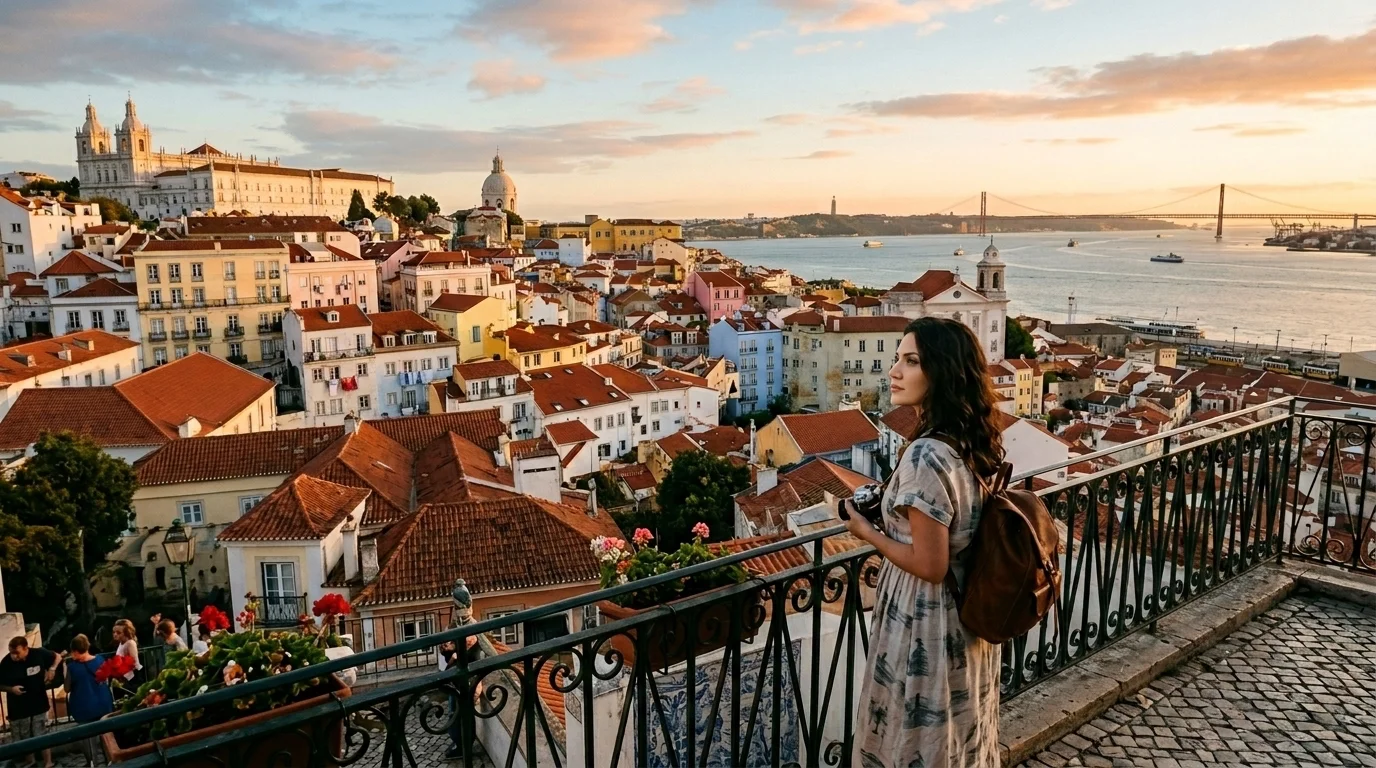
Lisbon is the sun-drenched capital of Portugal, perched on seven hills above the wide Tagus River on Europe's Atlantic edge. It is best known for its iconic yellow trams, sweeping viewpoints called miradouros, the melancholic music of fado, and its rich Age of Exploration history. Visitors come here for a rare blend of old-world charm, delicious food, vibrant nightlife, and some of the best value for money of any Western European capital.
Table of Contents
- Lisbon Overview
- Getting There & Around
- Top Attractions & Landmarks
- Neighborhoods & Districts
- Food & Dining
- Nightlife & Entertainment
- Shopping
- Seasonal Events & Festivals
- Accommodation Recommendations
- Practical Information
- Day Trips & Nearby Destinations
- Insider Tips & Hidden Gems
- Money-Saving Tips
- Common Tourist Mistakes to Avoid
- Sample Itineraries
- Frequently Asked Questions
What Is Lisbon and Why Should You Visit?
Lisbon is the oldest capital city in Western Europe, a place where ancient hilltop castles look down on cobblestoned alleys, art nouveau cafés, and some of the Atlantic's most spectacular sunsets. Unlike many European capitals, Lisbon has kept its soul intact — the streets of Alfama still echo with live fado music at night, fishermen's tiles (azulejos) cover entire building facades, and a small pastel de nata costs about €1.20 at a local café.
What sets Lisbon apart is the combination of things you simply cannot find together anywhere else. The city is genuinely beautiful, genuinely affordable, and genuinely warm — both in climate and in the character of its people. You can eat extraordinarily well for not much money, the public transport is excellent, and the Atlantic coastline is just a short train ride away.
The city has grown enormously in popularity over the past decade, so some tourist zones can feel crowded in summer. But step even one or two streets away from the main drag, and you find a quieter, more authentic Lisbon that rewards the curious traveler.
When Is the Best Time to Visit Lisbon?
Peak Season (June–August): Temperatures reach 28–35°C (82–95°F) and the city buzzes with tourists and festivals. Prices for accommodation are at their highest, and popular spots like Alfama and the Jerónimos Monastery can feel very crowded. Book accommodation at least two to three months in advance. The long sunny evenings and rooftop bar culture are at their best.
Shoulder Season (March–May and September–October): This is arguably the best time to visit. Temperatures are pleasant — around 18–24°C (64–75°F) — crowds are manageable, and prices are noticeably lower. The city is green from winter rains in spring, and the light in September and October is spectacularly golden. Highly recommended for first-time visitors.
Off-Peak Season (November–February): Lisbon's winters are mild by European standards — rarely below 10°C (50°F) — and prices drop considerably. Rain is more frequent from November to January, but there are many sunny winter days too. The city has fewer tourists and feels more like a real city than a museum. Ideal for budget travelers and those who love a quieter atmosphere.
Festival Season: June is the month of the city's patron saint, Santo António, and Lisbon transforms into one giant street party. The Festas de Lisboa fill the city with grilled sardines, paper decorations, and dancing every night. It is one of Europe's most joyful urban festivals and absolutely worth planning your trip around.
How Many Days Do You Need in Lisbon?
- 1–2 days: Enough to hit the major highlights — Belém, Alfama, and a rooftop bar. Good for a weekend stopover or first taste of the city.
- 3–4 days: The ideal amount for most first-time visitors. Covers the main attractions, a day trip or two, and quality time exploring neighborhoods and food.
- 5–7 days: Allows for deeper exploration of hidden neighborhoods, a day trip to Sintra and another to Setúbal, and time to simply wander without a schedule.
- 1 week+: For lovers of Lisbon who want to soak it all in — day trips to the Alentejo, exploring the art scene, learning to cook local dishes, and living at a genuinely local pace.
Quick Facts About Lisbon
- Population: Approximately 545,000 (city); 2.9 million (metro area)
- Language: Portuguese (English widely spoken in tourist areas)
- Currency: Euro (€)
- Time Zone: Western European Time / WET (UTC+0); WEST (UTC+1) in summer
- Country Code: +351
- Area Code: 21
- Climate: Mediterranean (hot, dry summers; mild, wet winters)
- Altitude: Approximately 20 metres (66 feet) above sea level at the waterfront; highest point \~226 metres
How Do You Get To and Around Lisbon?
The easiest way to reach Lisbon is by flying into Humberto Delgado Airport, which is conveniently located just 7 km from the city centre and is one of the most well-connected airports in southern Europe.
Which Airports Serve Lisbon?
Humberto Delgado Airport (LIS)
Alameda das Comunidades Portuguesas, 1700-008 Lisbon, Portugal
Located just 7 km northeast of the city centre, this is Lisbon's only commercial airport. It handles over 30 million passengers per year and is served by most major European airlines, as well as transatlantic routes from the United States, Brazil, and Canada. The airport has two terminals connected by a free shuttle, with the full range of shops, restaurants, and services you'd expect from a major international hub.
How Do You Get from the Airport to the City Centre?
Metro (Subway): The cheapest and often fastest option. The Red Line connects the airport directly to Alameda and Oriente stations, from which you can transfer to other lines. Journey time to the city centre is around 20–25 minutes. A single ticket costs €1.85 (2026) plus a €0.50 refundable card fee. Trains run daily from around 6:30 AM to 1:00 AM.
Official Taxi: A taxi from the airport to central Lisbon costs approximately €12–€20 (2026) depending on traffic and destination. There is a fixed-rate luggage surcharge. Licensed taxis are yellow and green, and the official taxi rank is just outside the arrivals hall. The journey takes 15–30 minutes depending on traffic.
Rideshare (Uber/Bolt/Free Now): All three apps operate in Lisbon and usually cost €8–€16 for the airport-to-centre journey. They pick up from the designated rideshare area at the airport. Often slightly cheaper than taxis, especially at off-peak hours. Download the apps before you travel.
Aerobus (Bus Line 1): A dedicated airport shuttle bus that connects the airport to Marquês de Pombal, Restauradores, and Cais do Sodré. Tickets cost €4.00 (2026) and the journey takes 30–45 minutes. A convenient option if you are staying near those stops.
Private Transfer: Pre-booked private transfers cost €25–€45 (2026) and offer the convenience of a driver waiting for you at arrivals with a name sign. Ideal for families with lots of luggage or late-night arrivals when public transport options are reduced.
What Is the Best Way to Get Around Lisbon?
The best way to get around Lisbon is a combination of the Metro for longer distances, trams and buses for specific routes, and your own two feet for exploring the historic neighborhoods. The city is hilly, which makes walking more tiring than it looks on a map, so using the funiculars (elevadores) to get up the steep hills is a smart move.
Public Transport System
Lisbon's public transport is run by Carris (buses and trams) and Metro de Lisboa (subway). Together they cover the entire city and most tourist attractions. The metro has four lines (Blue, Yellow, Green, Red) and runs daily from approximately 6:30 AM to 1:00 AM. Buses and trams run from early morning until late at night, with some night bus routes running through the early hours.
Tickets & Passes:
- Single metro/bus/tram ride: €1.85 (2026) with Viva Viagem card
- Viva Viagem rechargeable card: €0.50 one-time fee (refundable)
- 24-hour unlimited Carris/Metro pass: €6.80 (2026)
- 72-hour unlimited pass: €15.70 (2026)
- Lisboa Card (tourist card with unlimited transport + attraction discounts): €21 / 24h, €36 / 48h, €44 / 72h (2026)
Taxis & Rideshare
Official taxis in Lisbon are yellow and green, or black with a green roof. They use meters and are generally honest. Starting fare is €3.25 (2026) with a per-km rate of €0.47–€0.47. Uber, Bolt, and Free Now all operate here and are often cheaper. Pre-book through the app to avoid surge pricing. Rideshare is especially useful late at night when the metro is closed.
Walking
Lisbon's historic neighborhoods — Alfama, Mouraria, Chiado, and Bairro Alto — are best explored on foot. Many of the most charming streets and viewpoints are only reachable by walking. However, the seven hills mean significant elevation changes. Good walking shoes with grip are essential, as the traditional calçada portuguesa (mosaic cobblestones) can be slippery when wet.
Walkability Score: 85/100 for the tourist centre. The waterfront promenade, Baixa, Chiado, and Bairro Alto are all very walkable. Alfama requires comfortable shoes for the steep, narrow alleyways. Belém is best reached by tram 15E, bus, or taxi as it is 6 km from the centre.
Smart travellers always compare transfer options before booking — prices for the same route can vary by 40% or more. Take 60 seconds to check all options and choose what works best for your arrival.
What Are the Top Attractions and Landmarks in Lisbon?
Lisbon's top attractions include a UNESCO-listed monastery, a medieval Moorish castle, a stunning river-mouth tower, one of the world's oldest operating funiculars, and an extraordinary collection of azulejo tiles that cover the city like a living art gallery. Here are the must-see sights.
Mosteiro dos Jerónimos (Jerónimos Monastery)
Praça do Império 1400-206, Lisbon, Portugal
The Jerónimos Monastery is the crown jewel of Lisbon's architectural heritage and one of the finest examples of Manueline architecture in the world. Built in the 16th century to celebrate Vasco da Gama's successful voyage to India, it was funded by profits from the spice trade and represents the height of Portugal's imperial golden age. The building is a UNESCO World Heritage Site alongside the Torre de Belém.
The sheer scale and intricacy of the carved stonework inside and outside the monastery is breathtaking. The double-story cloister is considered one of the most beautiful spaces in Portugal, with elaborate carvings of maritime ropes, armillary spheres, coral, and exotic flora from the newly discovered lands. The church contains the tombs of both Vasco da Gama and the poet Luís de Camões.
Why visit: This is the single most impressive monument in Lisbon and arguably in all of Portugal. No photograph does justice to the scale and craftsmanship — you need to stand inside the cloister to truly feel it.
Entrance: Church — free; Monastery — €10 adults, €5 youth (13–25), free under 12 (2026)
Best time: Arrive at opening time (10:00 AM) or after 4:00 PM to avoid the largest tour groups
Hours: Tue–Sun 10:00 AM – 6:30 PM (closed Mondays and public holidays)
Torre de Belém (Belém Tower)
Av. Brasília, 1400-038 Lisbon, Portugal
The Torre de Belém is Lisbon's most iconic landmark — a small, ornate fortified tower that stands at the edge of the Tagus River in Belém. Built between 1516 and 1521, it served as a ceremonial gateway to Lisbon and as a defensive fortification. Like the Jerónimos Monastery nearby, it is a UNESCO World Heritage Site and is decorated in the distinctive Manueline style with armillary spheres, crosses, and carved stone ropes.
The tower has five floors and you can climb to the top for sweeping views of the river and the surrounding Belém district. The lower level has a dungeon where the tide once flooded in, which was used to imprison enemies of the state in a particularly unpleasant manner. The entire structure is surrounded by water on three sides, making for some of the most photographed scenes in all of Portugal.
Why visit: The Torre de Belém is a symbol of the Age of Discovery and of Portugal itself. Standing beside it as the sun sets over the Tagus is one of those travel moments you remember for a lifetime.
Entrance: €6 adults, €3 youth (13–25), free under 12 (2026)
Best time: Early morning for the best light and smallest crowds; stunning at sunset
Hours: Tue–Sun 10:00 AM – 6:30 PM (closed Mondays)
Castelo de São Jorge (St. George's Castle)
R. de Santa Cruz do Castelo, 1100-129 Lisbon, Portugal
Castelo de São Jorge is a medieval hilltop fortress that dominates the Lisbon skyline, occupying the highest hill in the city. The site has been continuously occupied since at least the 2nd century BC, when it served as a fortified settlement for Phoenicians, Romans, Visigoths, and Moors before being captured by Portugal's first king, Afonso Henriques, in 1147. The castle you see today is largely a 20th-century restoration, but it sits on genuinely ancient foundations.
The castle grounds contain ten towers, a royal palace complex (now in ruins), and extraordinary panoramic views in every direction — the river, the bridges, the red-tiled rooftops of Alfama, and the distant Atlantic. A small archaeological museum on-site displays artefacts from Moorish and Iron Age periods found during excavations.
Why visit: The views from the castle walls are the best in the entire city. It is also a genuinely interesting historical site, and the wooded grounds with peacocks wandering freely are a lovely place to relax.
Entrance: €15 adults, €7.50 youth (13–25), free under 10 (2026)
Best time: First thing in the morning or late afternoon; spectacular at sunset
Hours: Daily 9:00 AM – 9:00 PM (Nov–Feb until 6:00 PM)
Museu Nacional do Azulejo (National Tile Museum)
R. Me. Deus 4, 1900-312 Lisbon, Portugal
The National Tile Museum is one of the most unique and rewarding museums in all of Europe. Housed in a stunning 16th-century convent, it tells the complete story of azulejo tile-making in Portugal from its Moorish origins in the 15th century to contemporary art pieces. The collection spans over five centuries and includes some of the most spectacular tile panels you will ever see, all displayed in a beautifully preserved religious building.
The highlight is an extraordinary 23-metre panoramic tile panel depicting Lisbon's skyline as it appeared before the devastating 1755 earthquake — an invaluable historical document as much as a work of art. The museum's own chapel, the Igreja da Madre de Deus, is completely covered in gilded baroque woodwork and blue-and-white azulejos of breathtaking quality.
Why visit: Tiles are everywhere in Lisbon, and this museum gives you the context to understand and appreciate them on a completely different level. It is also one of the less crowded major museums, making the experience genuinely peaceful.
Entrance: €5 adults, €2.50 youth, free under 12 (2026)
Best time: Any time; less crowded than most Lisbon museums
Hours: Tue–Sun 10:00 AM – 6:00 PM (closed Mondays)
Padrão dos Descobrimentos (Monument to the Discoveries)
Av. Brasília, 1400-038 Lisbon, Portugal
The Monument to the Discoveries is a striking 52-metre concrete and limestone monument on the Belém waterfront, shaped like a ship's prow with 33 carved figures representing the key figures of Portugal's Age of Exploration. At its head stands Prince Henry the Navigator, who directed Portugal's 15th-century maritime expeditions. The monument was built in 1960 to mark the 500th anniversary of his death.
You can take a lift to the top of the monument for panoramic views over Belém and the Tagus River. Inside, there are temporary exhibitions related to Portuguese history and exploration. In front of the monument, embedded in the pavement, is a large compass rose mosaic that was a gift from South Africa and marks the routes of major Portuguese voyages of discovery.
Why visit: This is one of Lisbon's most photogenic modern monuments and gives great context to Portugal's extraordinary maritime history. The views from the top are excellent, and the riverside setting in Belém is perfect for a leisurely afternoon.
Entrance: €10 adults, €5 youth (2026), free under 6
Best time: Morning or late afternoon
Hours: Tue–Sun 10:00 AM – 7:00 PM (closed Mondays in winter)
Museu Calouste Gulbenkian
Av. de Berna 45A, 1067-001 Lisbon, Portugal
The Gulbenkian Museum houses one of the finest private art collections ever assembled by a single individual. Calouste Gulbenkian was an Armenian oil magnate who moved to Lisbon during World War II and left his entire collection — over 6,000 objects — to Portugal upon his death. The collection spans 4,000 years of human history, from ancient Egyptian scarabs to René Lalique jewellery, Flemish masterworks, Islamic art, and Impressionist paintings by Monet, Renoir, and Degas.
The building itself is a masterpiece of 1960s modernist architecture, designed by Portuguese architects and surrounded by beautiful gardens. There is also a separate Modern Art Centre next door with regular temporary exhibitions of 20th and 21st century art.
Why visit: This is arguably the best museum in Lisbon — and one of the best in Europe — yet it is remarkably uncrowded. The quality and breadth of the collection is genuinely world-class, and the gardens make for a perfect picnic spot before or after.
Entrance: €10 adults, €5 students, free under 12 and every Sunday (2026)
Best time: Any day; Sunday for free entry
Hours: Wed–Mon 10:00 AM – 6:00 PM (closed Tuesdays)
Alfama & Miradouro da Graça
Alfama, 1100 Lisbon, Portugal
Alfama is Lisbon's oldest neighborhood — a labyrinthine hillside district of narrow alleyways, crumbling walls hung with washing, tile-covered houses, and tiny fado bars. It was largely spared from the 1755 earthquake that destroyed much of the rest of the city, meaning its medieval Moorish street plan has survived intact for over a thousand years. Walking through Alfama is the closest thing to time travel that Lisbon offers.
The Miradouro da Graça is one of the most beloved viewpoints in the city — a small terrace shaded by pine trees, with sweeping views over the castle, the river, and the rooftops of Alfama. It is less touristy than the Portas do Sol viewpoint below and is where many Lisboetas come to watch the sunset. A small kiosk serves drinks and snacks.
Why visit: Alfama is the heart and soul of Lisbon. Even without entering a single museum or monument, spending two hours wandering its alleys, listening for fado music drifting from open windows, and stopping at a small café for a bica (espresso) is one of the most memorable experiences the city offers.
Entrance: Free (neighborhood); free (viewpoint)
Best time: Morning for fewer crowds; evenings for fado atmosphere
Hours: Always open
Elevador de Santa Justa (Santa Justa Lift)
R. de Santa Justa, 1150-060 Lisbon, Portugal
The Santa Justa Lift is a wrought-iron neo-Gothic elevator tower built in 1902 to connect the lower streets of Baixa with the higher Chiado neighborhood. Designed by Raoul Mesnier du Ponsard, a student of Gustave Eiffel, it is 45 metres tall with an ornate upper terrace that offers outstanding views over Lisbon's rooftops, the castle, and the Tagus River. It remains a functioning piece of public transport to this day.
The lift has two large wood-panelled cabins and rises about 32 metres vertically. At the top, a spiral staircase leads to the outdoor observation platform where you can look across the entire city. The whole structure is a wonderful piece of engineering history and one of the most recognizable landmarks in Lisbon.
Why visit: Beyond the iconic views, the Santa Justa Lift is a functioning piece of living urban history that is over 120 years old. It is also one of the best value viewpoints in the city.
Entrance: €5.50 round trip; free with Lisboa Card or Viva Viagem transport card (2026)
Best time: Early morning or evening to avoid queues of 30–45 minutes
Hours: Daily 7:00 AM – 11:00 PM
LX Factory
R. Rodrigues de Faria 103, 1300-501 Lisbon, Portugal
LX Factory is a creative hub built inside a 19th-century industrial complex in the Alcântara neighborhood. What was once a large textile factory has been transformed into a vibrant village of independent shops, restaurants, studios, bars, bookshops, and creative businesses. It has become one of the coolest spots in Lisbon, beloved by locals and increasingly discovered by visitors who want something beyond the traditional tourist trail.
The complex is busiest on Sunday mornings when a weekend market takes over the main streets, with vintage clothing, local design, artisan food, and live music. The buildings retain much of their original industrial character — exposed brick, iron girders, worn concrete — which gives everything a wonderfully atmospheric quality quite unlike anywhere else in the city.
Why visit: LX Factory is the best place in Lisbon to shop for unique local products, eat at excellent independent restaurants, and see a side of the city that is genuinely contemporary and creative rather than purely historical.
Entrance: Free to enter
Best time: Sunday morning 10:00 AM – 2:00 PM for the market; Thursday–Saturday evenings for the bar scene
Hours: Complex open daily; individual businesses have varying hours
Museu Nacional de Arte Antiga (National Museum of Ancient Art)
R. das Janelas Verdes 9, 1249-017 Lisbon, Portugal
The National Museum of Ancient Art — often called the "Green Windows Museum" after the street it is on — is Portugal's largest art museum and houses a spectacular collection of Portuguese and European paintings, sculpture, decorative arts, and Asian artefacts from the 12th to the 19th century. The star piece is the extraordinary Panels of Saint Vincent, a six-panel 15th-century altarpiece by Nuno Gonçalves considered the most important Portuguese painting in existence.
The museum is beautifully organized across three floors of a 17th-century palace, with a garden terrace overlooking the Tagus River. The collection of Portuguese silver, gold, furniture, and textiles from the Age of Exploration period is extraordinary, as is the collection of Japanese Namban art created by Japanese artists depicting the arrival of Portuguese traders.
Why visit: This is one of the great art museums of Southern Europe and is remarkably uncrowded compared to its counterparts in Madrid or Paris. The quality of the collection is outstanding for the modest entry fee.
Entrance: €6 adults, €3 students, free under 12 (2026)
Best time: Weekday mornings for the quietest experience
Hours: Tue–Sun 10:00 AM – 6:00 PM (closed Mondays)
Oceanário de Lisboa (Lisbon Oceanarium)
Esplanada Dom Carlos I, 1990-005 Lisbon, Portugal
The Lisbon Oceanarium is widely considered one of the best aquariums in Europe and is the most visited paid attraction in Portugal. Located in the Parque das Nações neighborhood on the banks of the Tagus, it was built for the 1998 World Exposition and centres around a massive central tank that holds over five million litres of water and simulates an open ocean environment, complete with sharks, rays, sunfish, and thousands of other species.
The oceanarium uses an innovative design where the central tank is surrounded by four habitats representing different ocean environments — the North Atlantic, the Antarctic, the Pacific, and the Indian Ocean. Sea otters, penguins, puffins, and sea birds inhabit these zones. The exhibits on ocean conservation are excellent and genuinely moving.
Why visit: This is the best family attraction in Lisbon and is highly recommended even for adults without children. The central tank is genuinely awe-inspiring, and the whole experience is world-class.
Entrance: €22 adults, €15 children 4–12, free under 4 (2026)
Best time: Weekday mornings are quietest
Hours: Daily 10:00 AM – 8:00 PM (last entry 7:00 PM)
Book your tours and tickets in advance — it saves hours of queuing and often gets you a better price. These two platforms cover different options, so it's worth checking both.
What Are the Best Neighborhoods to Explore in Lisbon?
Lisbon's neighborhoods each have a distinct character — from the ancient Moorish alleys of Alfama to the sleek modernist riverside of Parque das Nações. Here are the best districts to explore.
Alfama
Character: Lisbon's oldest and most atmospheric neighborhood, with a medieval Moorish street plan, colourful tile-covered houses, drying laundry strung between windows, and the sound of fado drifting through the streets at night. It climbs steeply from the riverside up to the castle walls.
What makes it special: Walking through Alfama is like walking through a thousand years of history. The neighborhood survived the 1755 earthquake largely intact and retains its original character in a way that almost no other European city centre does. There are tiny family-run tascas (taverns), beautiful tiled churches, and spectacular viewpoints at every turn.
Best for: History lovers, fado music seekers, photography enthusiasts, and anyone who wants the authentic heart of Lisbon.
Must-see in this area: Miradouro da Graça, Miradouro de Santa Luzia, Igreja de São Vicente de Fora, Feira da Ladra (Tuesday/Saturday flea market), Castelo de São Jorge
How to get there: Tram 28E; Bus 737 to castle; or a steep 15-minute walk from Baixa
Location: Alfama, 1100 Lisbon, Portugal
Chiado & Bairro Alto
Character: Chiado is Lisbon's elegant, literary, and café culture heart — a hillside neighborhood of boutique shops, historic bookstores, theatres, and beautiful 19th-century architecture. Bairro Alto, directly adjacent, is quiet by day and transforms into the centre of Lisbon's nightlife after 10:00 PM.
What makes it special: Chiado is home to the famous A Brasileira café, where the poet Fernando Pessoa used to drink his absinthe — his bronze statue still sits at a table outside. The neighborhood also has some of the best independent fashion and design boutiques in the city, and a rich café culture that has thrived here since the 18th century.
Best for: Culture lovers, bookworms, café hoppers, shoppers, and night owls.
Must-see in this area: A Brasileira café, Livraria Bertrand (world's oldest operating bookshop), Convento do Carmo ruins, Largo do Chiado, Rua Nova do Carvalho (Pink Street)
How to get there: Metro to Baixa-Chiado; Tram 28E; or Santa Justa Lift from Baixa
Location: Chiado, 1200 Lisbon, Portugal
Belém
Character: Belém is the riverside neighborhood that served as the departure point for Portugal's great Age of Exploration voyages — and it still carries that sense of grand history. Wide riverside esplanades, monumental architecture, world-class museums, and the best pastel de nata in the world all sit in one relatively compact area.
What makes it special: The entire Belém waterfront feels like an open-air museum of Portuguese imperial ambition and achievement. The Jerónimos Monastery, the Torre de Belém, and the Monument to the Discoveries are all within easy walking distance, as are the MAAT contemporary art museum and the Museu de Arte Popular. The wide riverside promenade is beautiful for a leisurely stroll.
Best for: History and architecture enthusiasts, first-time visitors to Lisbon, families, and anyone who loves beautiful riverfront settings.
Must-see in this area: Jerónimos Monastery, Torre de Belém, Pastéis de Belém bakery, Monument to the Discoveries, MAAT museum
How to get there: Tram 15E from Figueira Square; bus 728; or a 20-minute ride-share from centre
Location: Belém, 1400 Lisbon, Portugal
Mouraria
Character: Mouraria is Lisbon's most multicultural neighborhood and the historically Moorish quarter that gave the city much of its soul. It is a dense, colourful tangle of narrow streets on the slopes below the castle, filled with Arabic restaurants, spice shops, Indian grocery stores, and tiny local cafés. It is also widely credited as the birthplace of fado music.
What makes it special: Mouraria has undergone quiet regeneration over the past decade but has retained its raw, authentic character. The street art here is some of the best in the city, and the Intendente Square — once one of Lisbon's roughest corners — has been beautifully revitalized with outdoor cafés and a great community vibe. The weekly market at Intendente is excellent.
Best for: Adventurous travelers, food lovers, history seekers, those who want to go beyond the tourist trail.
Must-see in this area: Largo do Intendente, Fado Museum, Rua do Capelão street art, Praça de Martim Moniz
How to get there: Metro to Intendente or Martim Moniz; a 10-minute walk from Baixa
Location: Mouraria, 1100 Lisbon, Portugal
Príncipe Real & Santos
Character: Príncipe Real is Lisbon's most sophisticated and bohemian neighborhood — a hilltop area of beautiful 19th-century palaces, shaded garden squares, antique shops, concept stores, wine bars, and excellent restaurants. It is home to a large LGBTQ+ community and has a relaxed, creative, open-minded atmosphere.
What makes it special: The weekend market in the Jardim do Príncipe Real sells excellent organic produce, local cheeses, and artisan crafts under the shade of a spectacular century-old cedar tree. The neighborhood's restaurants are some of the most innovative in the city, and the antique and design shops are endlessly interesting to browse.
Best for: Design lovers, foodies, couples, LGBTQ+ travelers, and those who want a refined but unpretentious atmosphere.
Must-see in this area: Jardim do Príncipe Real, Pavilhão Chinês bar, Embaixada concept store, Museu Nacional de Arte Antiga (nearby in Santos)
How to get there: A 10-minute walk uphill from Chiado; Bus 758
Location: Príncipe Real, 1200 Lisbon, Portugal
Parque das Nações
Character: Parque das Nações is Lisbon's modern face — a sleek, purpose-built neighborhood developed on reclaimed industrial land for the 1998 World Expo. Wide riverside promenades, striking modernist architecture, international restaurants, a casino, and the Oceanarium make it feel entirely different from the rest of the city.
What makes it special: This neighborhood shows Lisbon's confidence in its 21st-century identity. The Oriente train station, designed by Santiago Calatrava, is one of the most beautiful pieces of modern architecture in Portugal. The whole area is flat and beautifully walkable, making it a welcome contrast to the hills of the historic center.
Best for: Families, architecture enthusiasts, and visitors who want to see a different side of Lisbon.
Must-see in this area: Oceanarium, Oriente Station, MAAT (online), Casino Lisboa, riverside promenade
How to get there: Metro Red Line to Oriente station
Location: Parque das Nações, 1990 Lisbon, Portugal
What Food Should You Try in Lisbon?
Lisbon is famous for its extraordinarily diverse and delicious food culture — from world-famous custard tarts and perfectly grilled fresh fish to hearty stews, dried cod dishes, and innovative contemporary cuisine. The must-try dishes are bacalhau (salt cod), pastéis de nata, grilled sardines, and bifanas (pork sandwiches).
What Are the Must-Try Local Dishes in Lisbon?
- Pastel de Nata — The iconic Portuguese custard tart: a flaky pastry shell filled with a creamy, slightly caramelized egg custard. Best eaten warm, dusted with cinnamon and icing sugar. The original and best version is at Pastéis de Belém, but excellent ones are found at every good pastelaria in the city.
- Bacalhau à Brás — Shredded salt cod mixed with thin fried potato sticks, scrambled eggs, onions, and olives. One of the most popular ways to eat bacalhau (salted cod), of which Portugal reportedly has over 365 recipes — one for every day of the year.
- Sardinhas Assadas (Grilled Sardines) — Fresh Atlantic sardines, grilled whole over charcoal and served on a slice of bread to catch the juices. A quintessential Lisbon summer experience, especially during the June festivals when they are sold at street stalls all over the city.
- Bifana — A simple but deeply satisfying sandwich of thin-sliced marinated pork in a soft white roll, seasoned with garlic, white wine, and paprika. The go-to street food of Lisbon and one of the great fast-food sandwiches in the world.
- Caldo Verde — A warming, deeply comforting soup made from kale (or collard greens), potato, onion, and a slice of chouriço sausage. It is found at virtually every traditional Portuguese restaurant and is especially good on cooler evenings.
- Açorda de Mariscos — A hearty bread-based seafood stew made with shellfish, eggs, coriander, garlic, and olive oil. Rich and deeply savoury, it is one of the great Portuguese comfort foods and should be tried at least once.
- Amêijoas à Bulhão Pato — Fresh clams cooked with olive oil, garlic, lemon juice, white wine, and fresh coriander. Simple, fragrant, and utterly delicious — a perfect starter or light meal with crusty bread.
- Tosta Mista — Portugal's answer to the toasted cheese and ham sandwich, made with thick slices of bread, mild cheese, and cooked ham, pressed until golden. Available at every café for around €2–3, it is one of the great budget breakfast or lunch options.
Where Should You Eat in Lisbon?
Budget-Friendly (Under €12 per meal)
- Tasca do Chico — R. do Diário de Notícias 39, 1200-144 Lisbon — A tiny, legendary fado tasca in Bairro Alto serving excellent traditional Portuguese food at very reasonable prices. Book in advance — it is tiny. Expect to pay €8–12 for a main.
- Solar dos Presuntos — Look for a bifana at Casa das Bifanas, R. Augusta 272, 1100-059 Lisbon — Arguably the city's most famous bifana spot in Baixa, serving the classic pork sandwich fresh from the pan. Under €4 per sandwich.
- Mercado da Ribeira / Time Out Market — Av. 24 de Julho 49, 1200-479 Lisbon — Lisbon's famous food hall at Cais do Sodré where over 35 of the city's best chefs and restaurants have stalls. A great place to sample a wide range of Portuguese dishes for €10–16 per dish.
Mid-Range (€15–€35 per meal)
- O Corvo — R. do Corvo 11, 1170-092 Lisbon — A beloved small restaurant in Intendente serving creative modern Portuguese food with market-fresh ingredients. Excellent daily specials. Around €20–25 for a full meal including wine.
- ZuZu — R. da Bica de Duarte Belo 64, 1200-096 Lisbon — A lively, colourful spot in Bica with very good Portuguese comfort food, natural wines, and a young, creative energy. Great value at around €25–30 per person.
- Taberna da Rua das Flores — R. das Flores 103, 1200-195 Lisbon — One of Lisbon's best tasca-style restaurants, with a daily-changing menu of traditional dishes made with exceptional ingredients. Very popular — book in advance. Around €25–35 per person.
Fine Dining (€60+ per meal)
- Alma — R. Anchieta 15, 1200-023 Lisbon — Chef Henrique Sá Pessoa's two Michelin-starred restaurant in Chiado, offering elevated contemporary Portuguese cuisine in an elegant setting. One of the most prestigious dining experiences in the city. Book weeks in advance. €80–120+ per person.
- Belcanto — Largo de São Carlos 10, 1200-410 Lisbon — Chef José Avillez's flagship two Michelin-starred restaurant near the opera house in Chiado. Celebrated for its inventive take on Portuguese classics. €120–150+ per person with wine pairing. Book months in advance for weekends.
What Are the Dining Customs in Lisbon?
Meal times: Breakfast (pequeno-almoço) is typically 7:00–10:00 AM, often just coffee and a pastel de nata or toast. Lunch (almoço) is the main meal of the day, eaten between 12:30 and 2:30 PM. Dinner (jantar) starts late by northern European standards — most restaurants don't fill up until 8:30–9:00 PM, and going at 7:00 PM feels very early to locals.
Tipping: Tipping is not mandatory in Portugal but is appreciated. A tip of 5–10% is standard for good service at sit-down restaurants. At casual tascas and cafés, rounding up the bill is common. Service is not typically included in the bill price.
Couvert: Watch out for the couvert — bread, olives, and small appetisers brought to your table at the start of the meal are not free. They are charged per person (usually €1.50–€3.50 each) and you have the right to refuse them if you don't want to pay.
Reservations: Required at fine dining restaurants (book weeks or months ahead for the most popular ones) and strongly recommended at mid-range restaurants on Friday and Saturday evenings.
What Is the Nightlife Like in Lisbon?
Lisbon's nightlife scene is vibrant, diverse, and starts very late — most bars don't fill up until after 11:00 PM and clubs often don't peak until 2:00–3:00 AM. The city has a reputation as one of Europe's most exciting nightlife destinations, with everything from intimate fado houses to massive riverside clubs.
Where Are the Best Areas for Nightlife in Lisbon?
- Bairro Alto: R. do Diário de Notícias and surrounding streets, 1200 Lisbon — The historic hub of Lisbon nightlife. Dozens of small bars line the narrow streets, spilling their crowds onto the cobblestones from about 10:00 PM. A young, mixed crowd, very lively on Thursday through Saturday nights.
- Cais do Sodré & Pink Street: R. Nova do Carvalho, 1200-302 Lisbon — The area around the old docklands has transformed into Lisbon's trendiest nightlife zone. The famous Pink Street (literally painted pink) is lined with bars and clubs, and the nearby Santos district has excellent cocktail bars and clubs.
- Alcântara & LX Factory: R. Rodrigues de Faria, 1300 Lisbon — The riverside warehouse clubs in Alcântara attract the best international DJs and a fashion-forward crowd. These are the biggest and most impressive clubs in the city.
What Are the Best Bars and Clubs in Lisbon?
Bars & Pubs
- Park Bar — Calçada do Combro 58, 1200-115 Lisbon — A rooftop bar on top of a multi-storey car park with one of the best views of Lisbon. Stunning at sunset. Great cocktails for around €10–13. Arrive before 7:00 PM or queue.
- Pavilhão Chinês — R. Dom Pedro V 89, 1250-093 Lisbon — One of the most extraordinary and eccentric bars in Europe, with rooms absolutely crammed floor-to-ceiling with antiques, collectibles, and curios accumulated over decades. Billiards tables, excellent whisky selection, and a genuinely unique atmosphere. Entry is free, drinks around €6–10.
- Topo Chiado — Terraços do Carmo, Calçada do Sacramento 30-A, 1200-394 Lisbon — A trendy rooftop terrace bar with stunning views over the city and Tagus River, cocktails, and a good food menu. Very popular — arrive early for a seat.
Clubs & Dancing
- Lux Frágil — Av. Infante Dom Henrique, Cais da Pedra, 1900-436 Lisbon — Lisbon's most famous and celebrated club, housed in a converted warehouse on the riverside in Santa Apolónia. Multiple floors with different music styles, world-class DJs, and a beautiful rooftop terrace. Cover charge €10–20. Opens at midnight, peaks after 2:00 AM.
- Ministerium Club — Av. 24 de Julho 1, 1200-479 Lisbon — One of the largest and most spectacular clubs in the city, set inside a spectacular neo-baroque hall near Cais do Sodré. International DJs every weekend. Cover €10–25 depending on the night. Huge dance floor and impressive production.
Live Music & Fado
- Clube de Fado — R. de São João da Praça 92, 1100-521 Lisbon — One of the most authentic and highly regarded fado clubs in Alfama, run by acclaimed fadista and guitarist Mário Pacheco. Dinner from €50 per person (music included); music-only entry from €30. Book well in advance.
- Mesa de Frades — R. dos Remédios 139A, 1100-440 Lisbon — A tiny, intimate fado venue in a converted chapel in Alfama, widely regarded as one of the most atmospheric places to hear fado in the world. Dinner from €60 per person. Absolutely worth the price. Book weeks ahead.
What Family-Friendly Evening Entertainment Is Available?
Lisbon offers several excellent evening options for families. The Parque das Nações waterfront promenade is beautiful and safe in the evenings, with lit-up fountains, playgrounds, and several family restaurants. The Casino Lisboa in Parque das Nações has a theatre with regular shows suitable for families. The summer months bring outdoor film screenings and free concerts in various parks and squares around the city.
What and Where Should You Shop in Lisbon?
The best things to buy in Lisbon are azulejo tiles, quality Portuguese wine, custard tart tins and recipe books, local ceramics, cork products, flannel shirts and blankets from the famous Burel factory, and locally made leather goods. The top shopping areas are Chiado, Príncipe Real, and Alfama for independent and artisan shops, and the Amoreiras or Colombo malls for high-street shopping.
What Are the Best Shopping Districts in Lisbon?
- Chiado / Rua Garrett and Rua do Carmo: 1200 Lisbon — The most elegant shopping street in the city, with a mix of Portuguese heritage brands, international luxury labels, bookshops, and concept stores. Very pleasant to browse even without buying.
- Príncipe Real: R. da Escola Politécnica, 1250 Lisbon — The best area for independent design boutiques, antique dealers, vintage fashion, and home décor. Relaxed and unhurried, with a very high quality of product.
- Baixa (Downtown): Rua Augusta, 1100 Lisbon — The main pedestrian shopping street with a mix of souvenir shops, pharmacy chains, and some traditional Portuguese shops. Best for practical purchases and seeing the beautiful Arco da Rua Augusta.
What Markets Should You Visit in Lisbon?
Feira da Ladra (Thieves' Market) — Campo de Santa Clara, 1100-471 Lisbon — Lisbon's famous flea market, held every Tuesday (small) and Saturday (large) from early morning until around 3:00 PM. An enormous spread of antiques, vintage clothing, old books, bric-a-brac, and genuine curios. Bargaining is expected. One of the best markets in Europe.
LX Market (at LX Factory) — R. Rodrigues de Faria 103, 1300-501 Lisbon — Every Sunday morning from about 10:00 AM to 3:00 PM. Excellent selection of vintage clothes, local artisan products, food, design items, and live music. Very popular with both locals and tourists.
Mercado de Campo de Ourique — R. Coelho da Rocha, 1350-075 Lisbon — A beautiful covered market from the 1930s in a residential neighborhood, open Tuesday–Sunday. Good for fresh local produce, artisan food products, and a very authentic Lisbon experience away from tourist crowds.
What Should You Buy in Lisbon?
- Azulejo Tiles — Hand-painted traditional Portuguese tiles make beautiful, durable, and deeply personal souvenirs. Avoid cheap tourist-market tiles; buy from reputable shops like Sant'Anna (founded 1741) at R. do Alecrim 95, 1200-014 Lisbon, or Solar (antique tiles) at R. Dom Pedro V 68, 1250-093 Lisbon.
- Pastéis de Nata Kit / Recipe Books — The tin of the famous custard tarts, along with a quality Portuguese cookbook, make a wonderfully practical souvenir. Available at most supermarkets and the Pastéis de Belém shop.
- Portuguese Wine — The supermarkets and wine shops (garrafeiras) have extraordinary value wines from the Alentejo, Douro, Minho (Vinho Verde), and Setúbal regions. A very good bottle of wine costs as little as €8–15. Garrafeira Nacional at R. de Santa Justa 18, 1100-484 Lisbon is the best specialist wine shop.
- Cork Products — Portugal produces over half the world's cork, and the range of cork products in Lisbon is extraordinary — bags, wallets, hats, umbrellas, notebooks, and jewellery, all made from sustainable harvested cork. Beautiful and surprisingly practical.
- Flannel Blankets / Burel Products — Burel Factory products, made from the wool of Merino sheep raised in the Serra da Estrela mountains, are some of the finest textiles produced in Portugal. The Burel store in Chiado (R. Serpa Pinto 15B, 1200-444 Lisbon) sells beautiful blankets, throws, and accessories.
- Ginjinha (Ginja) — The iconic Lisbon cherry liqueur, sold in tiny glasses for about €1.50 at the famous A Ginjinha bar at Largo de São Domingos 8, 1100-201 Lisbon. You can also buy bottles to take home — excellent and authentic local spirit.
What Are the Shopping Hours and Customs?
Most shops in Lisbon open Monday to Saturday, 10:00 AM – 7:00 PM, often with a lunch break from 1:00–3:00 PM at smaller independent stores. Shopping malls are open daily 10:00 AM – 11:00 PM or later. Markets typically run from early morning (8:00–9:00 AM) until early afternoon (1:00–3:00 PM). Bargaining is only expected at flea markets like the Feira da Ladra — in regular shops, prices are fixed.
Can Non-EU Visitors Claim a VAT Tax Refund in Lisbon?
Yes — if you are a visitor from outside the European Union (including travellers from the USA, Canada, Australia, the UK, and most of Asia and Latin America), you are entitled to a refund of the VAT (Value Added Tax) included in the price of goods you buy in Portugal. VAT in Portugal is 23% on most goods, which means this refund can be significant on high-value purchases like clothing, leather goods, jewellery, designer fashion, and electronics.
How to Claim Your VAT Refund — Step by Step
- Spend at least €61.35 in a single shop in a single day. This is the minimum threshold for a VAT refund claim in Portugal. It does not apply across multiple shops — the full amount must be spent in one store.
- Look for the "Tax Free" sign. Participating shops display a "Tax Free Shopping," "Global Blue," or "Planet" logo in the window or at the register.
- Ask for the tax refund form at the register before you pay. Present your non-EU passport — the shop will fill out the form with your details and the purchase amount. Keep the form with your receipt.
- Get the form stamped at customs before you leave. Go to the Customs office at Lisbon Humberto Delgado Airport (LIS) before check-in and have an officer stamp your tax refund form. Keep your purchases accessible in hand luggage — do not pack them deep in your checked bags.
- Collect your refund. Hand the stamped form to the Global Blue or Planet desk at the airport. You can receive the refund in cash (minus a processing fee) or as a credit card refund (lower fees, takes a few weeks).
VAT Refund Quick Facts for Lisbon
- Minimum spend: €61.35 in one shop in one day
- VAT rate on most goods: 23% on most goods
- Typical refund after fees: 10–15% of the purchase price
- Refund processors: Global Blue and Planet (formerly Premier Tax Free) at Lisbon Humberto Delgado Airport (LIS)
- Who qualifies: Anyone with a non-EU passport who is not a resident of an EU country
- UK visitors: British passport holders qualify since Brexit — the UK is no longer in the EU
- Deadline: Purchases must be exported within 3 months of the date of purchase
- Full guide: VAT Refund in Europe — Complete Guide for Non-EU Travelers
What Festivals and Events Happen in Lisbon?
Lisbon's biggest festivals are the Festas de Lisboa in June — one of Europe's greatest street festivals — and the Carnaval in February. The city has a rich calendar of music, film, art, and cultural events throughout the year.
What Is the Annual Events Calendar for Lisbon?
| Month | Event Name | Description |
|---|---|---|
| January | Epiphany / New Year | The city is calm after New Year celebrations. The Three Kings cake (Bolo Rei) is eaten throughout January. Low season with great hotel deals. |
| February | Carnaval | While less famous than Rio or Venice, Lisbon's Carnaval brings colourful street parades, music, and fancy dress across the city. The Sesimbra Carnaval (30 km away) is especially charming. |
| March | ModaLisboa (Fashion Week) | Portugal's premier fashion event showcasing emerging and established Portuguese designers. Multiple venues around the city, some events open to public. |
| April | Lisbon Half Marathon & Freedom Day | The Lisbon Half Marathon is one of Europe's most scenic city races, run along the Tagus riverfront. April 25th is Freedom Day (Dia da Liberdade), marking the 1974 Carnation Revolution — expect concerts and demonstrations. |
| May | Queima das Fitas (Student Festival) | The end-of-year university festival, with large open-air concerts, parades, and celebrations around the university neighborhoods. Very lively atmosphere throughout the month. |
| June | Festas de Lisboa / Santo António | The biggest event of the year. The entire city celebrates the feast of its patron saint with grilled sardines, paper decorations (manjericos), street parties, and parades every night throughout June. The main parade on June 12–13 is extraordinary. Absolutely unmissable. |
| July | NOS Alive Festival | One of Europe's top music festivals, held in Algés on the Lisbon waterfront. Multi-day event with massive international headliners across multiple stages. Tickets sell out very quickly — book months in advance. |
| August | Super Bock Super Rock | Another major rock and indie music festival held in the city or nearby, typically attracting big international acts. The city is also at its busiest and hottest in August. |
| September | Peixe em Lisboa (Fish in Lisbon) | A wonderful food festival celebrating Portuguese fish and seafood culture, with chefs from top restaurants cooking demos and tasting menus. Great for food lovers. Held in Estoril (just outside Lisbon). |
| October | Lisbon & Estoril Film Festival | An international film festival screening world cinema premieres, retrospectives, and documentaries across multiple venues in the city. Events are ticketed but affordable. |
| November | Web Summit | One of the world's largest technology conferences, attracting 70,000+ attendees to Lisbon. If you are visiting for pleasure, note that hotel prices spike dramatically — book months in advance or consider staying outside the city. |
| December | Christmas & New Year | The city is beautifully decorated with lights, especially on Rua Augusta and in Chiado. New Year's Eve sees a massive free fireworks display over the Tagus River, visible from multiple viewpoints across the city. |
How Do Festivals Affect Hotel Prices and Availability?
The June Festas de Lisboa and the July NOS Alive festival both cause significant price spikes and availability crunches — book accommodation at least two to three months in advance if visiting then. Web Summit in November is the most extreme case, with hotel prices sometimes tripling. The Christmas and New Year period also fills up quickly. Shoulder season months (March–May and September–October) offer the best combination of good weather, events, and manageable accommodation prices.
Where Should You Stay in Lisbon?
The best neighborhood to stay in Lisbon depends on your travel style — Baixa and Chiado are the most convenient for first-time visitors, while Alfama is the most atmospheric, Príncipe Real the most chic, and Parque das Nações the most modern and affordable. Here is a breakdown of the main options.
What Are the Best Neighborhoods to Stay in Lisbon?
| Neighborhood | Vibe | Price Range (per night, 2026) | Best For |
|---|---|---|---|
| Baixa / Chiado | Central, elegant, lively | €80–€300+ | First-time visitors, couples, those who want everything walkable |
| Alfama | Historic, atmospheric, hilly | €60–€200 | Romance seekers, fado lovers, photographers, boutique hotel fans |
| Príncipe Real | Sophisticated, quiet, bohemian | €100–€350+ | Design-conscious travelers, LGBTQ+ visitors, foodies |
| Bairro Alto / Mouraria | Edgy, creative, nightlife-focused | €50–€150 | Young travelers, budget-conscious visitors, nightlife seekers |
| Belém | Historic, riverside, quieter | €70–€220 | History enthusiasts, families, those wanting a calmer base |
| Parque das Nações | Modern, spacious, business-friendly | €60–€180 | Business travelers, families, those visiting for Web Summit |
What Are the Pros and Cons of Each Area?
Baixa / Chiado:
Pros: Excellent transport connections, walkable to most major attractions, excellent restaurant and café options right on your doorstep, very safe and tourist-friendly.
Cons: Expensive, can feel touristy, noisy on weekend nights especially in Chiado and Bairro Alto. Very little local residential character.
Alfama:
Pros: Incredibly atmospheric and beautiful, fado music right outside your door, close to the castle and the best miradouros, a genuinely unique experience.
Cons: Very hilly — you will climb stairs every day. Limited car access. Pickpocketing risk on the main tourist streets. Noise from fado bars can affect sleep.
Príncipe Real:
Pros: Quiet, beautiful, close to excellent independent restaurants and boutiques, very safe, feels genuinely like living in Lisbon rather than just visiting.
Cons: Slightly further from major tourist sights, which require transport or a 15–20 minute walk. More expensive than some other areas.
How Far in Advance Should You Book in Lisbon?
For June and July (peak season plus Festas and NOS Alive), book accommodation two to three months in advance, especially for mid-range and budget options. November (Web Summit) is the most extreme case — book four to six months ahead or prices will be extraordinary. For shoulder season (March–May, September–October), booking three to four weeks ahead is usually sufficient for most budgets. During the low season (January–February, November outside Web Summit), last-minute deals are often available.
What Do You Need to Know Before Visiting Lisbon?
Here are the essential practical details every visitor to Lisbon needs to know — from money and language to safety, health, and cultural customs.
Essential Travel Details for Lisbon
- Currency: Euro (€). Cards accepted almost everywhere; cash still useful for small cafés, taxis, and markets.
- Credit Cards: Visa and Mastercard accepted at most restaurants, shops, and hotels. American Express accepted at higher-end establishments. Contactless payment very widely accepted.
- ATMs: Widely available throughout the city. Use bank ATMs (Multibanco network) rather than standalone ATM machines, which charge high fees. Inform your bank before travel. Daily withdrawal limits typically €200–€400.
- Language: Portuguese. English is very widely spoken in tourist areas, hotels, and restaurants. Learning a few basic Portuguese phrases is appreciated.
- Tipping: 5–10% for sit-down restaurants. Round up for taxis. Not expected at cafés for just coffee.
- Electrical Plugs: Type F (two round pins). Voltage 230V. Travellers from the UK need an adaptor; North Americans need an adaptor and a voltage converter for older devices.
- Emergency Number: 112 (Police, Ambulance, Fire — all services)
- Tourist Police (PSP): Praça dos Restauradores tourist office: +351 21 342 1634
- SIM Cards: Buy at the airport or any phone shop (NOS, MEO, Vodafone, NOWO). A tourist SIM with 10–15GB of data costs approximately €10–15 (2026). Roaming within the EU is free for EU citizens.
- WiFi: Excellent free WiFi throughout the city in cafés, restaurants, most hotels, and many public squares. Very reliable and fast by European standards.
- Tap Water: Safe to drink. Lisbon's tap water is good quality, though some locals prefer bottled water. Always drink tap water to save money and reduce plastic waste.
Skip the airport queue — order your eSIM before you travel and activate it the moment you land. Prices and data allowances vary, so it pays to compare providers.
How Much Does It Cost to Visit Lisbon?
| Budget Type | Daily Cost (2026) | What's Included |
|---|---|---|
| Budget Traveler | €45–€70 per day | Hostel dorm or budget room, prato do dia lunches, bifanas and pastéis de nata, public transport, free attractions and viewpoints |
| Mid-Range Traveler | €100–€180 per day | 3-star hotel or apartment, mix of tascas and good restaurants, occasional rideshare, paid museum entries and day trips |
| Luxury Traveler | €250–€500+ per day | 4–5 star boutique hotel, fine dining, private transport, guided tours, the best fado houses, private day trips to Sintra |
What Are the Most Useful Phrases in Lisbon?
- Hello: Olá / Bom dia (Good morning) / Boa tarde (Good afternoon)
- Thank you: Obrigado (man speaking) / Obrigada (woman speaking)
- Please: Por favor / Se faz favor
- Excuse me: Com licença / Desculpe
- How much?: Quanto custa? / Quanto é?
- Where is...?: Onde fica...?
- I don't understand: Não entendo / Não compreendo
- Help!: Socorro!
- Bathroom: Casa de banho / WC (pronounced "veh-seh")
- Check, please: A conta, por favor
Is Lisbon Safe for Tourists?
Yes — Lisbon is one of the safest capital cities in Europe and is consistently ranked among the top cities globally for safety and quality of life. Violent crime targeting tourists is extremely rare. The city feels safe to walk in at night in most neighborhoods, and solo travelers — including solo women — generally report feeling very comfortable.
Areas to be cautious in: The narrow streets of Alfama (particularly the main tourist routes up to the castle), Martim Moniz Square, and areas around Intendente late at night. These are not dangerous, but pickpocketing is more common in these zones.
Common scams: (1) Tram 28E pickpockets — this is the single most common tourist crime in Lisbon. Stand against a wall if possible and keep bags in front. (2) Unlicensed taxi drivers near the airport and train stations — only use licensed taxis or apps. (3) Couvert charges in restaurants — check if bread and appetisers on your table are free or charged before eating them. (4) Gem/jewellery scam — someone approaches you claiming to have found a valuable ring or necklace and offers to sell it cheap. It is worthless. Walk away. (5) "Cheap tour" touts near the castle — unofficial guides who offer to show you around for "a small donation" that rapidly increases.
Solo traveler safety: Lisbon is excellent for solo travelers of all genders. It has a well-established solo and backpacker culture, great hostels with social spaces, and a generally open and welcoming attitude. LGBTQ+ travelers will find Lisbon one of the most welcoming cities in southern Europe, with a well-established community centred around Príncipe Real and Bairro Alto.
What Are the Cultural Customs in Lisbon?
- Greetings: A kiss on each cheek (right cheek first) between friends and acquaintances is standard. In formal situations, a handshake is appropriate. Portuguese people are polite and relatively formal with strangers.
- Dress code: Smart casual is appropriate for most restaurants. Beach attire should be kept to the beach — walking through residential areas or city centres in swimwear is considered disrespectful. Cover shoulders and knees when entering churches.
- Photography: Generally allowed at attractions unless signs say otherwise. Always ask before photographing individuals, especially in markets and Alfama. Do not photograph military or police installations.
- Public behavior: Portuguese people tend to be moderate in volume in public spaces. Loud groups can attract stares. Queue politely at transport stops — cutting in line is frowned upon.
- Dining: Dinner is eaten late (8:30–10:00 PM is normal). Taking your time over a meal is normal and expected — restaurants will not rush you. Splitting the bill is perfectly acceptable.
- Gestures to avoid: The "OK" sign (thumb and forefinger circle) can be considered rude in Portugal. Avoid pointing with one finger — use your whole hand or make eye contact instead.
Do You Need a Visa to Visit Lisbon?
Citizens of EU and EEA countries can visit Portugal indefinitely without a visa. Citizens of the United States, Canada, Australia, New Zealand, the United Kingdom, and most South American countries can visit Portugal visa-free for up to 90 days within any 180-day period under the Schengen Area rules. Citizens of most other countries will need to apply for a Schengen visa before travel. Check the official Portuguese immigration authority website (SEF — Serviço de Estrangeiros e Fronteiras, at sef.pt) for the most up-to-date requirements for your specific nationality.
What Health Precautions Should You Take in Lisbon?
Vaccinations: No specific vaccinations are required or strongly recommended for Lisbon beyond standard up-to-date vaccinations. Portugal has excellent public health infrastructure.
Pharmacies: Farmacias (pharmacies) are widespread throughout Lisbon and can dispense many medications over the counter that require prescriptions elsewhere. Look for the green neon cross sign. Each neighborhood has a rotating 24-hour pharmacy — the address is posted on the door of any closed pharmacy.
Hospitals: Lisbon has excellent private hospitals (Hospital da Luz, CUF Infante Santo, Hospital de Santa Maria) and public hospitals. EU citizens with an EHIC/Global Health Insurance Card receive free or reduced-cost treatment. Non-EU visitors should have comprehensive travel insurance as hospital costs can be significant.
Common health issues: Tap water is safe to drink. Food safety is generally excellent. In summer, the heat can be intense (35°C+) — stay hydrated and carry sunscreen. The cobblestoned streets can cause ankle sprains, especially in inappropriate footwear.
Do You Need Travel Insurance for Lisbon?
Yes — and you should buy it before you board your flight, not after. Travel insurance covers the situations that can turn a great trip into a financial disaster: a medical emergency (a single ambulance ride and hospital stay in Europe can cost €3,000–€10,000 without coverage), a cancelled or delayed flight, lost or stolen baggage, or a last-minute trip cancellation. EU citizens with an EHIC or GHIC card receive reciprocal state healthcare, but this does not cover repatriation, trip cancellation, or lost luggage — a full travel policy fills those gaps. Non-EU travellers have no state coverage at all and should never visit without insurance.
Choosing the right policy matters — coverage limits, exclusions, and pre-existing condition terms vary significantly between providers. Read our full guide before you buy: Best Travel Insurance for Europe — Honest Comparison for 2026.
Travel insurance is strongly recommended for Lisbon — an unexpected medical bill, flight cancellation, or lost luggage can cost far more than the policy. Get covered before you go.
What Are Your Rights If Your Flight to Lisbon Is Delayed or Cancelled?
Under EU Regulation 261/2004, if your flight to or from Lisbon is delayed by more than 3 hours or cancelled without sufficient notice, you are entitled to compensation of up to €600 per passenger — regardless of which airline you flew with, and regardless of how long ago it happened (claims can go back up to 6 years in some countries). This applies to all flights departing from an EU airport, and all flights arriving into an EU airport on an EU-based carrier. Most travellers don't realise they are owed money, and airlines rarely volunteer to pay. A claims service handles everything on your behalf and only charges a fee if they win — so there is no risk to you.
Both services check your eligibility for free with no upfront cost — they only charge a commission if they successfully recover your compensation.
Is Lisbon Accessible for People with Disabilities?
Lisbon presents genuine challenges for wheelchair users due to its hilly topography and historic cobblestoned streets. The lower city (Baixa, Belém, Parque das Nações) is relatively flat and accessible. The Metro has lifts at most (though not all) stations. Most major museums and attractions have good accessibility. The historic neighborhoods of Alfama and Mouraria are difficult to navigate in a wheelchair. The Lisbon City Council's accessibility guide is available at visitlisboa.com.
Is Lisbon Good for Families with Kids?
Lisbon is an excellent family destination. Children are warmly welcomed in virtually all restaurants, including fine dining establishments. The Oceanarium is one of Europe's best aquariums and absolutely loved by children. The trams and funiculars are a constant source of delight for kids of all ages. Parque das Nações has good playgrounds and wide, safe promenades. Nappies, formula, and baby supplies are widely available in pharmacies and supermarkets. High chairs are available at most restaurants on request.
What Are the Best Day Trips from Lisbon?
The best day trips from Lisbon include the fairy-tale palaces of Sintra, the stunning beaches of the Arrábida Natural Park, the royal palace town of Óbidos, and the UNESCO-listed wine region of the Douro (though this is a longer journey). Within 1–2 hours of Lisbon, you have extraordinary variety.
Sintra
Distance: 30 km / 18 miles; 40 minutes by train
What to see: A UNESCO World Heritage mountain town of extraordinary fairy-tale palaces and romantic gardens perched among forested crags. The multi-coloured Palácio da Pena is one of the most fantastical buildings in Europe. The ruined Moorish Castle above the town offers breathtaking views. The Quinta da Regaleira with its mysterious initiation wells and romantic gardens is one of the most unusual and enchanting places in Portugal.
How to get there: Direct train from Rossio station in central Lisbon to Sintra station every 20–40 minutes. Return ticket costs approximately €4.60 (2026). Journey takes 40 minutes. Trains run frequently from early morning to late evening. No booking required.
Time needed: Full day (the palaces and gardens together require 5–7 hours)
Best for: Architecture and history lovers, families, photographers, romantics.
Location: Sintra, 2710-001 Sintra, Portugal
Cascais & Estoril
Distance: 30 km / 18 miles; 40 minutes by train
What to see: Cascais is an elegant coastal town on the Atlantic, with a beautiful old town of white-washed buildings, a fishing harbour, excellent seafood restaurants, beaches, a castle, and a charming town centre. Estoril, just 2 km away, has the Casino Estoril and a beautiful seafront promenade. The drive (or cycle) west from Cascais along the wild Atlantic coast to Cabo da Roca — the westernmost point of mainland Europe — is spectacular.
How to get there: Comboios de Portugal train from Cais do Sodré station every 20 minutes. Return ticket approximately €4.60 (2026). The journey offers beautiful coastal views for much of the way. Very easy and frequent service.
Time needed: Half day to full day
Best for: Beach lovers, relaxed coastal exploration, seafood dining, cycling.
Location: Cascais, 2750-431 Cascais, Portugal
Arrábida Natural Park & Setúbal
Distance: 40–50 km / 25–30 miles; 1 hour by car
What to see: Arrábida is one of the most beautiful and relatively unspoiled natural areas in Portugal, with dramatic limestone cliffs dropping to crystal-clear turquoise bays, hidden beaches of fine white sand, and a 16th-century monastery perched on the cliff face. The water is remarkably clear and warm — some of the best swimming and snorkeling in mainland Portugal. The nearby city of Setúbal has a beautiful historic centre and excellent fresh seafood restaurants.
How to get there: Best by car or a guided day tour from Lisbon. Public bus connections exist from Setúbal but are infrequent to the park itself. A guided day tour with boat trip typically costs €40–60 per person (2026).
Time needed: Full day
Best for: Beach and nature lovers, snorkeling and diving enthusiasts, those who want a completely different experience from the city.
Location: Parque Natural da Arrábida, 2900-201 Setúbal, Portugal
Évora & the Alentejo
Distance: 130 km / 80 miles; 1.5 hours by bus or car
What to see: Évora is a beautifully preserved UNESCO World Heritage walled city with a remarkable Roman temple, a medieval cathedral, a macabre chapel decorated with the bones of 5,000 monks, and some of the finest Alentejo cuisine in Portugal. The vast rolling cork and olive landscape of the Alentejo surrounding it is deeply calming and utterly unlike anything in the Lisbon region. Stay overnight to truly appreciate the slow pace and quality of the regional food and wine.
How to get there: Rede Expressos bus from Sete Rios bus station in Lisbon, departing multiple times daily. Return ticket approximately €24 (2026). Journey takes 1.5–2 hours. Alternatively, trains run from Oriente station (change at Casa Branca), but buses are faster and more frequent.
Time needed: Full day or ideally overnight
Best for: History and food lovers, wine enthusiasts, those wanting a slower pace and rural Portuguese experience.
Location: Évora, 7000-500 Évora, Portugal
Óbidos
Distance: 80 km / 50 miles; 1 hour by bus
What to see: Óbidos is a perfectly preserved medieval walled town of whitewashed houses with colourful flower-covered balconies, narrow cobblestoned streets, and a castle that has been converted into a pousada (heritage hotel). Once a wedding gift from Portuguese kings to their queens, it feels like stepping into a living fairy tale. Famous for its local cherry liqueur (Ginjinha de Óbidos), served in a chocolate shot cup — one of the best food souvenirs in Portugal.
How to get there: Rede Expressos bus from Sete Rios bus station in Lisbon, approximately 3–4 departures per day. Return ticket approximately €18 (2026). The town is small enough to see in half a day, but combine with nearby Caldas da Rainha market (excellent local ceramics) for a full day.
Time needed: Half to full day
Best for: Couples, history lovers, photographers, families with children.
Location: Óbidos, 2510-001 Óbidos, Portugal
Car rental prices vary significantly between agencies — the same car on the same date can differ by 30–50% depending on where you book. Always compare before confirming.
What Are the Hidden Gems and Insider Tips for Lisbon?
Beyond the main tourist sites, Lisbon hides some incredible spots most visitors never find — quiet viewpoints, neighbourhood bakeries that locals swear by, and experiences that are far more authentic than anything on the usual tourist circuit.
What Are the Best Hidden Gems in Lisbon?
- Miradouro da Graça: Largo da Graça, 1170 Lisbon — One of the best viewpoints in the city, far less crowded than the more famous Portas do Sol or Santa Catarina viewpoints. Locals come here in the evenings with beer from the kiosk to watch the sunset over the castle and river. Genuinely beautiful and genuinely local.
- Cemitério dos Prazeres: Praça São João Bosco 1, 1350-289 Lisbon — Lisbon's beautiful Victorian cemetery in Campo de Ourique is a remarkable open-air art gallery of elaborate family tombs and mausoleums. Peaceful, fascinating, and free to enter. Unlike any cemetery you have seen before.
- Pátio das Antigas: R. dos Remédios 43, 1100-439 Lisbon — A hidden courtyard in Alfama with beautiful traditional architecture, colourful azulejos, and an excellent small café. Easy to walk past without noticing the entrance. A perfect quiet escape from the tourist flow.
- Museu da Água: R. do Alviela 12, 1170-012 Lisbon — The extraordinary underground water museum inside a 19th-century pumping station in the Intendente neighborhood. Beautiful industrial architecture, an excellent permanent exhibition on Lisbon's water history, and almost never crowded. Entry €3 (2026).
- Bica Funicular: R. de São Paulo 234, 1200-433 Lisbon — The smallest and most charming of Lisbon's three funiculars, running steeply up through a residential neighborhood of tiled buildings. Less touristy than the Glória funicular and a beautiful piece of working urban history. Free with transport card.
- Solar dos Mouros: R. do Milagre de Santo António 6, 1100-351 Lisbon — A beautiful small wine bar with exceptional natural wines, thoughtfully chosen local food, and stunning castle views from its terrace. Hidden up in the Alfama alleyways, it is beloved by locals and rarely crowded. One of the best places in Lisbon for a glass of wine at sunset.
- Convento do Carmo Ruins: Largo do Carmo, 1200-092 Lisbon — The magnificent roofless Gothic ruins of a church destroyed in the 1755 earthquake, now housing an excellent small archaeological museum. One of the most haunting and beautiful spaces in Lisbon, and surprisingly quiet even in peak season.
Where Are the Best Photo Spots in Lisbon?
- Miradouro da Graça: Largo da Graça, 1170 Lisbon — Best at golden hour (1–2 hours before sunset) for warm light on the castle and terracotta rooftops. A bench viewpoint under pine trees.
- Rua da Bica de Duarte Belo (Bica Funicular street): 1200 Lisbon — Best in the morning when the light illuminates the tiled buildings and the funicular is descending the steep hill. One of the most photographed streets in Lisbon.
- Miradouro de Santa Luzia: Largo de Santa Luzia, 1100 Lisbon — A beautiful viewpoint in Alfama with a rose garden, tiled pergola, and stunning views over the rooftops to the river. Best in the morning light.
- Torre de Belém at low tide at sunrise: Av. Brasília, 1400 Lisbon — The tower is surrounded by water only at low tide (check the tide chart), making for the classic reflection photo. The 7:00–8:00 AM golden light is spectacular.
- Rua das Portas de Santo Antão: 1150 Lisbon — A pedestrian street in Baixa at night, glowing with restaurant lights, seafood displays, and charming old signage. Beautiful for long-exposure evening photography.
What Do Locals Know That Tourists Don't?
How Can You Save Money in Lisbon?
The biggest way to save money in Lisbon is to eat where and how the locals eat — the prato do dia at lunch, pastéis de nata from local pastelarias rather than tourist cafés, and wine from the supermarket rather than tourist bars. Lisbon is already one of the most affordable Western European capitals, and with a few smart strategies you can eat and drink very well for very little.
What Are the Best Money-Saving Strategies for Lisbon?
- Eat the prato do dia (daily special) at any neighbourhood tasca for €8–12 — the best value meal in Lisbon, often including a drink and dessert.
- Drink your morning coffee standing at the café counter (balcão) — coffee at the counter is typically 20–30 cents cheaper than at a table.
- Buy wine at the supermarket (Pingo Doce or Continente) — excellent Portuguese wines from €3–8 per bottle, perfect for picnics.
- Load a Viva Viagem transport card rather than buying single tickets — individual fares with the card are €1.85 vs significantly higher paper ticket prices.
- Visit the Museu Calouste Gulbenkian on Sunday — entry is free every Sunday, including the permanent collection and any temporary exhibitions.
- Walk or use the metro instead of Tram 28E for transport (save the tram ride for the experience, not for efficient getting around).
- Picnic in one of Lisbon's beautiful parks (Monsanto Forest Park, Jardim do Príncipe Real) with supermarket food and wine for the price of a café coffee.
- Explore the free miradouros (viewpoints) — Graça, Santa Luzia, São Pedro de Alcântara, and Portas do Sol are all free and offer the city's most spectacular views.
- Take the Cacilhas ferry across the Tagus for €1.30 each way — one of the best value views in Europe, looking back at the Lisbon skyline from the river.
- Buy pastéis de nata from local pastelarias rather than tourist-facing cafés — the quality is often better and the price is about 30–40% less.
- Look for menu do dia (set lunch menus) at restaurants — often €10–14 for three courses including bread, drink, and dessert at places that would charge €25+ per person in the evening.
- Use the free Lisbon beach: take the train to Carcavelos (20 minutes, €2.30 each way) for one of the largest and cleanest beaches near the city — free entry and significantly less crowded than the Algarve.
What Can You Do for Free in Lisbon?
- Explore all the miradouros: Viewpoints throughout the city — free, spectacular, and the most memorable visual experience Lisbon offers.
- Wander Alfama, Mouraria, and Chiado: Some of the most beautiful and interesting urban walking in Europe, entirely free.
- Attend a free fado performance: During the June Festas de Lisboa, free fado performances are given in streets and squares throughout Alfama every evening.
- Visit the Berardo Collection Museum at CCB: Av. Brasília, 1449-003 Lisbon — Free entry to one of the best modern art collections in Portugal, featuring Warhol, Duchamp, Picasso, and Lichtenstein.
- Walk the Avenida da Liberdade: Lisbon's grand Haussmann-style boulevard with beautiful mosaic pavements, fountains, and impressive architecture — free and lovely at any time of day.
- Explore the riverside at Belém and Parque das Nações: Both offer beautiful free walking along the wide Tagus riverfront.
- Browse the LX Factory on Sunday: Free entry to the weekly market, with great people-watching, live music, and creative energy at no cost.
Are There Any Discount Cards or Passes Worth Buying?
Lisboa Card: €21 (24h) / €36 (48h) / €44 (72h) — Includes free entry to Jerónimos Monastery (€10), Torre de Belém (€6), Castelo de São Jorge (€15), and 40+ other museums, plus unlimited transport. Breaks even after just two or three attractions. Buy at the airport tourist office or the official tourist kiosks in the city centre.
What Are the Budget-Friendly Alternatives?
Instead of the paid Elevador de Santa Justa viewpoint (€5.50), walk up the staircase from Largo do Carmo and see the lift from above for free — the view of the lift and the city is actually better from this angle. Instead of an expensive guided tour of Alfama, download the free Lisboa Story Centre audio guide and wander on your own. Instead of hotel breakfast (€15–25 per person), eat at any local café — a galão (milky coffee) and pastel de nata costs under €3 and is a far more authentic Lisbon experience.
What Mistakes Should You Avoid in Lisbon?
The biggest mistake tourists make in Lisbon is taking Tram 28E in peak hours without protecting their belongings — it is one of the most targeted pickpocket spots in southern Europe. Beyond that, several common errors can significantly reduce the quality of your visit.
What Are the Most Common Tourist Mistakes in Lisbon?
- Mistake: Taking Tram 28E without securing belongings. → Instead: Keep your phone and wallet in front pockets or a secure bag, or take Bus 737 to reach the same area without the risk.
- Mistake: Paying for the couvert (bread, butter, and appetisers) without realising it costs money. → Instead: Check if the couvert is charged (usually €1.50–3.50 per person) before eating. You have the right to refuse it — just tell the waiter "Não, obrigado" (No, thank you).
- Mistake: Visiting Jerónimos Monastery or Torre de Belém at midday in summer without pre-booked tickets. → Instead: Book tickets online in advance and arrive at opening time (10:00 AM) or go after 4:00 PM to avoid the busiest periods.
- Mistake: Expecting to eat dinner at 7:00 PM and wondering why the restaurant is empty and staff seem surprised. → Instead: Eat dinner Portuguese-style — aim for 8:30–9:30 PM for the authentic atmosphere and when restaurants are at their best.
- Mistake: Assuming Belém is walking distance from the city centre. → Instead: Belém is 6 km from Baixa. Take Tram 15E (from Praça da Figueira, €1.85 with transport card) or a taxi (€8–12) — don't try to walk it unless you have hours to spare.
- Mistake: Booking a Sintra day trip without pre-booking palace tickets. → Instead: Book Pena Palace and Sintra tickets online at least a week ahead in summer — they frequently sell out, and showing up without tickets can mean a wasted journey.
- Mistake: Wearing high heels or flat-soled city shoes in Alfama. → Instead: The calçada portuguesa cobblestones are beautiful but treacherous in smooth-soled shoes, especially when damp. Wear comfortable walking shoes with good grip.
- Mistake: Using unlicensed taxis near the airport. → Instead: Use the licensed taxi rank (yellow-green cars) or official rideshare apps (Uber, Bolt). Unlicensed drivers can charge three to five times the normal fare.
- Mistake: Buying souvenir azulejo tiles from shops right next to major attractions. → Instead: Walk two or three streets away for dramatically lower prices, or visit the Feira da Ladra for antique tiles at very good prices.
- Mistake: Assuming all cafés welcome you to sit for hours over one coffee. → Instead: At busy cafés, especially those with outdoor seating in tourist areas, there is usually an expectation to order periodically. At neighbourhood tascas, lingering over a meal is completely normal and expected.
- Mistake: Not validating your transport ticket or card. → Instead: Always tap your Viva Viagem card on the yellow card readers when entering the metro or boarding a bus/tram. Inspectors do check, and fines for not validating are €100+.
- Mistake: Booking accommodation without checking the neighborhood. → Instead: Baixa addresses can still be 20+ minutes by foot from Alfama or Belém. Check the specific location on Google Maps before booking to ensure it suits your itinerary.
What Is the Best Itinerary for Lisbon?
The best itinerary depends on your time. Here are three options — 1 day, 3 days, and 5–7 days — to help you make the most of your visit to Lisbon.
What Can You Do in One Day in Lisbon?
Morning (8:00 AM – 12:00 PM): Start with coffee and a warm pastel de nata at Manteigaria in Chiado (R. do Loreto 2). Walk up through the beautiful Largo do Carmo to see the Gothic ruins of the Convento do Carmo (45 min, €4). Take the Santa Justa Lift down to Baixa (free with transport card). Walk up to Alfama and Castelo de São Jorge (arrive by 10:00 AM to beat the crowds; 1.5 hours, €15).
Afternoon (12:00 PM – 5:00 PM): Wander down through the alleyways of Alfama, stopping at the Miradouro de Santa Luzia for photos. Have lunch at a local tasca in Alfama — try the prato do dia for €10–12. In the afternoon, take a taxi or Bus 28 to Belém to see the Jerónimos Monastery (arrive by 2:00 PM to pre-book tickets, 1.5–2 hours). Walk to the Torre de Belém for exterior photos (the queue for inside may be long if you haven't pre-booked).
Evening (5:00 PM – 10:00 PM): Stop at Pastéis de Belém (R. de Belém 84–92, 1300-085 Lisbon) for the legendary custard tarts. Take a taxi back to Chiado for an evening aperitivo at a rooftop bar (Park Bar or Topo). Dinner in Bairro Alto — try the tasting menu at a mid-range restaurant. End with a walk through the lively Bairro Alto bar scene or head to Alfama for an intimate fado experience.
What Is the Perfect 3-Day Itinerary for Lisbon?
Day 1: Old Lisbon — Alfama, Chiado, and Bairro Alto
Start at Castelo de São Jorge at opening time (9:00 AM) for the best views and smallest crowds. Spend two hours exploring, then descend through Alfama on foot, stopping at the Miradouros da Graça and Santa Luzia. Lunch at a tasca in Alfama (try Chapitô à Mesa at Costa do Castelo 7 for the views). In the afternoon, explore Mouraria's multicultural streets and street art. In the early evening, head to Chiado for aperitivos and shopping. Dinner in Bairro Alto, then an evening exploring its famous bar scene.
Day 2: Belém & the Discoveries
Take Tram 15E to Belém in the morning, arriving by 10:00 AM. Visit the Jerónimos Monastery (pre-book tickets — 2 hours). Lunch at a riverside café in Belém. After lunch, visit the Monument to the Discoveries and Torre de Belém (pre-book). Walk or cycle the riverside promenade to the MAAT contemporary art museum (Av. Brasília, Belém — excellent, free with Lisboa Card). Return to Chiado in the evening for cocktails at Park Bar and dinner at Taberna da Rua das Flores (book in advance).
Day 3: Sintra Day Trip
Take the 7:30 AM or 8:00 AM train from Rossio station to Sintra (40 minutes). Spend the morning at Pena Palace (pre-book — this is essential in summer) and walk the grounds. After lunch at a restaurant in the village (try Incomum by Luis Santos for excellent regional food), explore the Quinta da Regaleira gardens with their mysterious wells and tunnels. Return to Lisbon in the late afternoon/early evening. Final dinner in Lisbon at a fado house in Alfama — book Clube de Fado or Mesa de Frades well in advance. This is the perfect send-off for your Lisbon visit.
What Is the Best 5–7 Day Itinerary for Lisbon?
Days 1–3: Follow the 3-day itinerary above, covering Alfama, Belém, and a Sintra day trip.
Day 4: Cascais Coast & Atlantic Beaches
Take the Cascais train line from Cais do Sodré (35 minutes, €2.30 each way). Spend the morning exploring Cascais town and the fishing harbour. Take the coastal bus west towards Guincho beach, one of the most spectacular Atlantic beaches in Europe — wild, wide, and relatively uncrowded outside of August. Lunch at one of the seafood restaurants in Cascais old town. Explore Estoril Casino in the late afternoon before returning to Lisbon.
Day 5: Gulbenkian, Príncipe Real & Hidden Gems
Start with the Museu Calouste Gulbenkian (go on a Sunday for free entry — or pay the modest €10 any other day). Spend 2–3 hours with this world-class collection, then lunch in the museum gardens. Afternoon exploring Príncipe Real — the neighbourhood market on Saturdays or the Embaixada concept store. Visit the Solar dos Presuntos (antique tiles) and browse independent boutiques. Evening drinks at the beautiful Pavilhão Chinês before dinner at a creative restaurant in the neighborhood.
Day 6: Évora or Arrábida (choose based on interests)
Culture lovers: Take the bus to Évora (1.5 hours) for a full day in the UNESCO walled city — the Roman temple, cathedral, and unforgettable Bone Chapel. Beach lovers: Rent a car or book a guided tour to the Arrábida Natural Park for swimming in its extraordinary turquoise bays. Return to Lisbon in the evening with an excellent dinner using the money you saved eating cheaply during the day trip.
Day 7: Revisit Favourites, LX Factory & Departure
If departing on Sunday, start the day at LX Factory market (10:00 AM – 2:00 PM) for last-minute gifts, vintage finds, and a great brunch. Take a final slow walk along the riverfront. Stop at Manteigaria for one last pastel de nata. Take the Metro to the airport — allow 30–40 minutes from the city centre. Depart with a heart full of Lisbon, and almost certainly a plan to return.
Ready to Explore Lisbon?
Lisbon is a city that does something remarkable: it makes you feel instantly at home while also continuously surprising and delighting you around every corner. From the heartbreaking beauty of a fado song drifting through the alleyways of Alfama at midnight, to the golden light pouring over the rooftops from the Miradouro da Graça at sunset, to the perfect warmth of a custard tart straight from the oven at Manteigaria — this city has a way of getting under your skin in the very best way.
Whether you have one day or one week, Lisbon will reward every moment you give it. The food is extraordinary, the history is astonishing, the people are warm, and the light — the famous Lisbon light that painters and poets have been writing about for centuries — is absolutely real. Book that trip. You will not regret it.
Have a wonderful adventure in Lisbon! If you have questions about planning your trip, or want to share your own experiences of this magical city, send us a message — we'd love to hear from you.
Frequently Asked Questions
Yes — Lisbon is one of the safest capital cities in Europe. Violent crime targeting tourists is extremely rare. The main risk is petty theft and pickpocketing, particularly on Tram 28E, in Alfama, and in crowded tourist areas. Keep bags in front of you, use inside pockets for valuables, and stay aware in very crowded situations. Solo travelers, including women traveling alone, generally feel very safe in Lisbon.
Lisbon is known for its iconic yellow trams, the melancholic music of fado, world-famous custard tarts (pastéis de nata), stunning azulejo tile art, the UNESCO-listed Jerónimos Monastery and Torre de Belém in Belém, spectacular hilltop viewpoints (miradouros), and a rich history as the launchpad of Portugal's Age of Exploration. It is also known for its warm, laid-back atmosphere and outstanding quality of life.
The best times to visit Lisbon are the shoulder seasons: March to May and September to October. The weather is pleasantly warm (18–24°C / 64–75°F), crowds are manageable, and accommodation prices are lower than in peak summer. June is special for the Santo António festival and street parties throughout the month, but it is also very busy. November through February offers the quietest experience with the lowest prices, though rain is more frequent.
Three to four days is ideal for most first-time visitors, allowing you to see the main highlights, take a day trip to Sintra, and experience the food and nightlife without rushing. Two days is enough for the major sights if you are tight on time. Five to seven days allows for deeper exploration, multiple day trips, and a much slower, more rewarding pace.
Citizens of the EU, US, Canada, Australia, New Zealand, and the UK can visit Portugal visa-free for up to 90 days within any 180-day period under Schengen rules. Citizens of most other countries will need to apply for a Schengen visa in advance. Always check the current official requirements for your nationality at the Portuguese immigration authority website before travel, as rules change.
The best way to get around Lisbon is a combination of the Metro for longer distances, walking for the historic neighbourhoods, and the funiculars and trams for specific scenic or hilly routes. Get a Viva Viagem rechargeable transport card (€0.50 + credit loaded) from the airport or any metro station — it covers all public transport including buses, trams, funiculars, and metro. The Lisboa Card includes unlimited transport plus attraction discounts and is excellent value if you plan to visit multiple paid sites.
Budget travelers can get by on €45–70 per day by staying in hostels, eating the prato do dia at lunch and street food for other meals, and using public transport. Mid-range travelers typically spend €100–180 per day for a comfortable hotel or apartment, quality restaurant meals, and paid attractions. Luxury travelers spending on fine dining, boutique hotels, and private experiences should budget €250–500+ per day.
The absolute must-try foods in Lisbon are: pastéis de nata (warm custard tarts with cinnamon), bacalhau à Brás (salt cod with eggs and potato sticks), bifana (marinated pork sandwich), grilled sardines (especially in June), amêijoas à Bulhão Pato (clams with garlic and coriander), and caldo verde (kale and potato soup). Portuguese wine — especially Vinho Verde and Alentejo reds — is exceptional value and should accompany all meals.
Yes — Lisbon's tap water is completely safe to drink and meets EU quality standards. Carrying a reusable water bottle is recommended to save money and reduce plastic waste. If you prefer still or sparkling mineral water, it is available in all supermarkets for around €0.30–0.50 per litre.
Yes — English is very widely spoken in Lisbon, especially in tourist areas, hotels, restaurants, and shops. Portugal consistently ranks among the highest in Europe for English proficiency. Young Lisbonites in particular speak excellent English. In very local neighbourhood tascas and older markets, basic Portuguese phrases are helpful and always appreciated by locals.
Lisbon is an excellent destination for solo travelers. The city has a well-developed hostel and solo travel culture, friendly and welcoming locals, and a very walkable, navigable layout. It is generally very safe for solo travelers of all genders, and the LGBTQ+ community will find Lisbon one of the most open and welcoming cities in southern Europe, particularly in the Príncipe Real and Bairro Alto neighborhoods.
Year-round essentials: comfortable walking shoes with good grip (the cobblestones are slippery), a reusable water bottle, and a small daypack for exploring. In summer (June–August), pack light clothing, sunscreen (factor 50+), and sunglasses — the heat can be intense. In spring and autumn, pack a light jacket and a compact rain jacket. In winter, a warm jacket and umbrella are necessary. Modest clothing for church visits is required — a light scarf or pashmina works well.