Day Trip from Rome to Pompeii and the Amalfi Coast: Everything You Need to Know
Last Updated: May 22, 2026
Few day trips from Rome compete with the dramatic double bill of Pompeii and the Amalfi Coast. In a single day you can walk the streets of a Roman city frozen in 79 AD by the eruption of Vesuvius — and then stand on a cliffside terrace in Positano watching the same Tyrrhenian Sea that ancient Romans sailed. Here’s everything you need to know to make it happen.
Can You Visit Pompeii and the Amalfi Coast in One Day from Rome?
Yes — but you need to go in with open eyes about what the day involves. Combining both destinations means leaving Rome by 7:00 AM, spending 2.5–3 hours at Pompeii, travelling on to the coast by ferry or coach, spending 2–3 hours at Positano or Amalfi, and returning to Rome by 9:00–10:00 PM. That is a 14–16 hour day with a lot of movement.
A guided day tour from Rome is the only practical way to combine both — the logistics of Circumvesuviana trains, ferry connections, and the terrifying Amalfi coast road are genuinely complex to coordinate independently in a single day.
How Do You Get from Rome to Pompeii?
The fastest and cheapest independent route to Pompeii is by high-speed train plus the Circumvesuviana commuter line.
| Step | Transport | Time | Cost |
|---|---|---|---|
| Roma Termini → Napoli Centrale | Frecciarossa high-speed train | 1h 10min | €20–€45 (book ahead) |
| Naples Porta Nolana → Pompei Scavi | Circumvesuviana train | 35 min | €2.80 |
| Total journey time | ~2 hours | ~€25–€50 |
The Circumvesuviana is a commuter train — not the high-speed Frecciarossa. Buy a separate ticket for €2.80 at the Naples Porta Nolana station (a 10-minute walk from Napoli Centrale, or take the Metro Line 1 to Garibaldi). The train is old and slow but perfectly reliable.
What Can You See at Pompeii on a Day Trip?
Pompeii is the best-preserved ancient Roman city in the world — buried under 4–6 metres of volcanic ash when Vesuvius erupted in 79 AD and rediscovered in the 18th century. Walking its streets is one of the most moving experiences in Italy.
The site covers 66 hectares and would take 2–3 days to see entirely. On a day trip, focus on these highlights:
- The Forum (Foro) — the civic and religious centre, with views up to Vesuvius
- The Lupanare — the ancient brothel, with remarkably explicit frescoes above each room
- House of the Faun (Casa del Fauno) — the grandest private home in Pompeii, over 3,000 square metres
- Stabian Baths (Terme Stabiane) — the city’s best-preserved bathing complex
- Garden of the Fugitives — plaster casts of 13 victims caught by the ash, frozen in their final moments
- The Amphitheatre — the oldest surviving Roman amphitheatre in the world (80 BC)
How Do You Get to the Amalfi Coast from Rome?
The Amalfi Coast is best reached via Naples, either by ferry (seasonal) or by coach along the famous — and terrifying — SS163 coastal road.
| Route | Transport | Time | Notes |
|---|---|---|---|
| Rome → Naples → Positano (ferry) | Train + ferry | ~3 hours total | April–October only |
| Rome → Naples → Sorrento → Amalfi (ferry/bus) | Train + ferry/SITA bus | ~3.5 hours | Year-round option |
| Rome → Amalfi Coast (guided tour) | Coach from Rome | ~3–3.5 hours | Handles all logistics |
The ferry from Naples (from Molo Beverello port) to Positano takes about 1 hour 45 minutes and is seasonal (roughly April–October). It’s the most scenic approach — arriving by sea with Positano’s colourful houses stacked on the cliff above you is a proper cinematic moment.
The SITA bus from Sorrento along the Amalfi Drive (SS163) is the year-round option and is genuinely dramatic — but the road is extremely narrow and winding, and the bus drivers are fearless. Many first-time visitors prefer being on a guided coach where someone else is driving.
What Is the Best Town to Visit on the Amalfi Coast on a Day Trip?
Three towns are the main targets on a day trip from Rome, each with a different character.
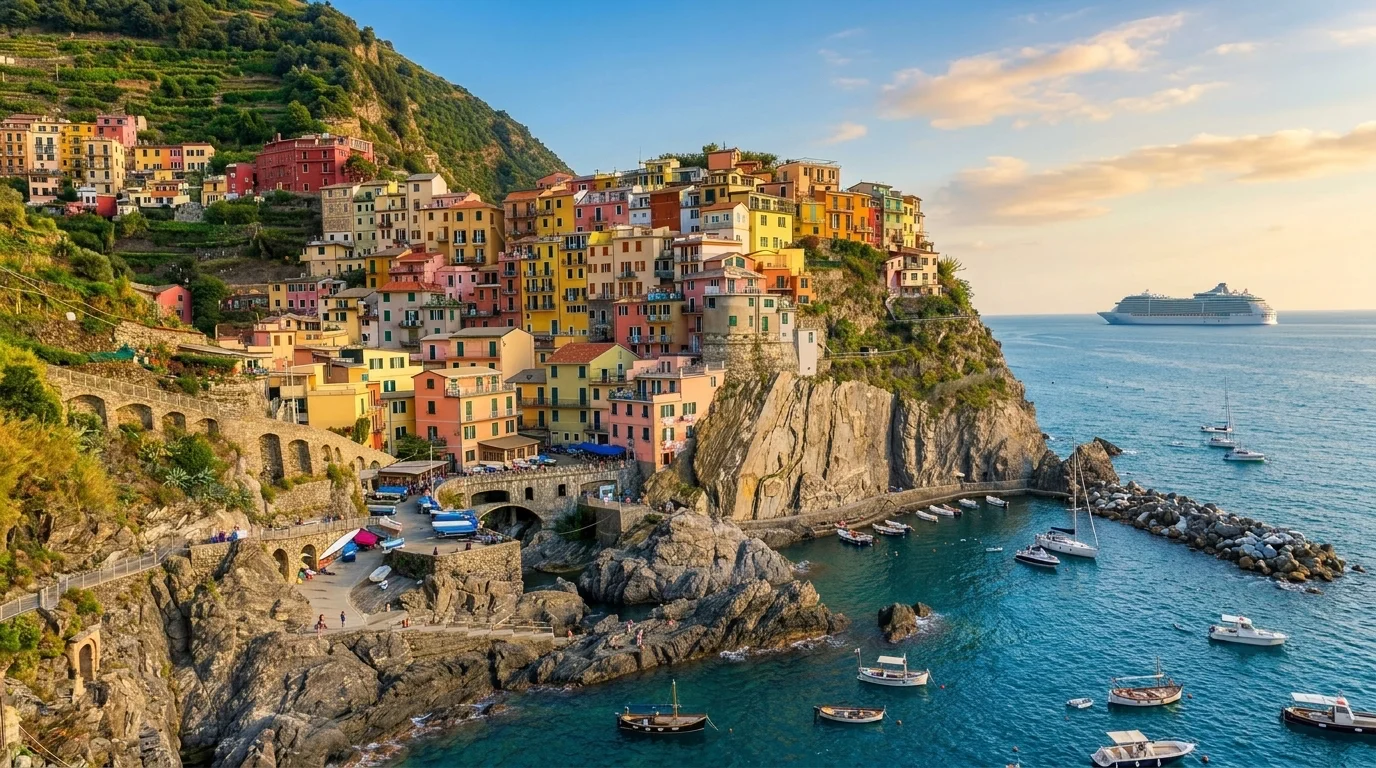
Positano is the most photographed — a near-vertical cascade of pink and terracotta buildings tumbling down to a pebble beach. It’s small (most streets are staircases), beautiful, and best explored in 2–3 hours. The beach is pleasant but not the main draw — it’s really about the views and the atmosphere of the town itself.
Amalfi is the historic capital of the coast — a proper town with a magnificent Arab-Norman cathedral (Duomo di Sant’Andrea), a covered market, and more flat ground than Positano. Good for a longer wander and a seafood lunch.
Ravello sits high above the coast (350 metres) with the best views of all — the Villa Cimbrone garden terrace is one of the most spectacular viewpoints in Italy. Reached by bus from Amalfi (25 minutes). Quieter and less touristy than the coastal towns.
How Much Does a Pompeii and Amalfi Coast Day Trip Cost?
| Option | Transport | Entrance/Activities | Food | Total per person |
|---|---|---|---|---|
| Independent (Pompeii only) | €45–€90 return train + Circumvesuviana | €18 | €20–€35 | €83–€143 |
| Independent (Amalfi Coast only) | €45–€90 train + €30–€50 ferry | — | €25–€45 | €100–€185 |
| Guided tour (both combined) | Included | Often included | Extra | €100–€180 |
What Is the Best Time of Year for This Day Trip?
Late spring (April–May) is the single best time for combining Pompeii and the Amalfi Coast. The weather is warm (20–26°C), the ferry services are running, Pompeii is not yet in full summer heat, and the coastal flowers are in bloom.
Early autumn (September–October) is equally good — the summer crowds thin out, the sea is still warm enough to swim, and the light on the coast is golden and beautiful.
Summer (July–August) is doable but demanding — Pompeii bakes (35°C+ with almost no shade), the coastal road traffic is severe, and everything is at maximum crowding. If you must go in summer, book the earliest possible train and arrive at Pompeii by 8:00 AM.
Winter is not recommended for the combined trip — Amalfi ferries don’t run, many coastal restaurants and hotels close, and the SS163 bus service is reduced. Pompeii alone in winter is actually lovely — mild temperatures, almost no crowds, and a hauntingly atmospheric atmosphere.
Frequently Asked Questions
Yes, but it is a very long and demanding day — typically 14–16 hours with an early 6:00–7:00 AM departure from Rome. A guided tour is the only practical way to combine both in one day, as the logistics of train, ferry, and bus connections are complex to manage independently. If you have the energy, the combination is spectacular. If not, choose one — Pompeii alone or the Amalfi Coast alone — and enjoy it properly.
Pompeii is about 240 km south of Rome. The fastest route is the Frecciarossa high-speed train from Roma Termini to Napoli Centrale (1 hour 10 minutes), then the Circumvesuviana commuter train from Naples to the Pompei Scavi station (about 35 minutes). Total journey time is approximately 2 hours door-to-site.
Take the Frecciarossa high-speed train from Roma Termini to Napoli Centrale (1h 10min, every 30–60 minutes, €20–€45 each way booked in advance), then the Circumvesuviana commuter train from Naples Porta Nolana station to Pompei Scavi (35 min, €2.80). A guided day tour by coach from Rome is also a popular option and covers logistics, entrance tickets, and a guide.
A minimum of 2.5 hours is needed to see the highlights of Pompeii — the Forum, the Lupanare, the Stabian Baths, the House of the Faun, and the plaster cast victims. Three to four hours allows a thorough visit at a comfortable pace. The site covers 66 hectares, so comfortable shoes and water are essential.
Yes — even a single day on the Amalfi Coast is unforgettable. The dramatic coastal scenery between Positano, Amalfi, and Ravello is unlike anywhere else in Europe. That said, travel time from Rome is long (3+ hours each way), so the day is short once you arrive. A guided tour maximises your time on the coast itself.
A guided coach-and-boat tour from Rome is the best option — the coach handles the mountain road driving (which is terrifying for first-timers), and some tours include a ferry leg along the coast for the best views. If going independently, take the high-speed train to Naples, then a ferry from Naples to Positano or Amalfi (1.5–2 hours, April–October only).
Positano is about 275 km from Rome by road — roughly 3 to 3.5 hours by car or coach depending on traffic on the A3 motorway and the winding Amalfi Coast road (SS163). By train and ferry, allow 2.5–3 hours: high-speed train to Naples (1h 10min) plus ferry to Positano (1.5–1.75 hours, seasonal).
Late spring (April–May) and early autumn (September–October) are ideal. The weather is warm without the brutal summer heat, ferries and boats are running, and crowds at Pompeii are manageable. July and August are extremely hot at Pompeii (an open-air archaeological site with almost no shade) and the Amalfi Coast road becomes heavily congested. Winter trips to Pompeii are pleasant but the Amalfi ferries often don't run.