Quebec City Travel Guide: Everything You Need to Know for 2026
Last Updated: June 2026
Where cobblestone streets wind past 400-year-old stone fortifications, the aroma of maple-glazed duck drifts from bistro windows, and the only walled city north of Mexico feels like stepping into a medieval French village perched above the St. Lawrence River.
Quebec City is the historic capital of Quebec province, situated on a dramatic clifftop overlooking the St. Lawrence River in eastern Canada. It is best known for its UNESCO World Heritage-listed Old Town (Vieux-Québec), the iconic Château Frontenac hotel, and its vibrant French-speaking culture. Visitors come for the extraordinary architecture, world-class French cuisine, the famous Winter Carnival, and an atmosphere unlike anywhere else in North America.
Table of Contents
- Quebec City Overview
- Getting There & Around
- Top Attractions & Landmarks
- Neighborhoods & Districts
- Food & Dining
- Nightlife & Entertainment
- Shopping
- Seasonal Events & Festivals
- Accommodation Recommendations
- Practical Information
- Day Trips & Nearby Destinations
- Insider Tips & Hidden Gems
- Money-Saving Tips
- Common Tourist Mistakes to Avoid
- Sample Itineraries
- Frequently Asked Questions
What Is Quebec City and Why Should You Visit?
Quebec City is the only remaining walled city in North America north of Mexico, and it earned its UNESCO World Heritage designation in 1985 for good reason — it is simply unlike anywhere else on the continent. Founded in 1608 by Samuel de Champlain, the city carries over 400 years of French colonial history within streets so authentically European that first-time visitors genuinely stop and question whether they have landed in France.
You should visit Quebec City because it offers something the rest of Canada cannot: total cultural immersion into French North American identity, where the language, food, architecture, and daily rhythms are distinctly, unapologetically Québécois. The food scene alone — rooted in French technique but shaped by the Canadian wilderness — is reason enough to make the trip. Add the dramatic clifftop setting, the four wildly different seasons, and genuine warmth from locals, and you have a destination that earns repeat visits.
The one challenge: Quebec City is a small city by international standards, and it gets crowded during summer and Winter Carnival. But plan your timing right, and you will find a city that feels like a reward for those who seek it out.
When Is the Best Time to Visit Quebec City?
Summer (June–August): Temperatures range from 18°C to 27°C (64°F–80°F), and the city is at its most festive with outdoor festivals, terrace dining, and long sunny evenings. This is peak season — crowds are large, prices are highest, and booking hotels two to three months ahead is essential.
Winter (December–March): Quebec City transforms into a genuine winter wonderland, with temperatures dropping to -15°C (5°F) or colder. The famous Carnaval de Québec runs in late January and February, the ice hotel (Hôtel de Glace) opens nearby, and the Old Town looks breathtaking under snow. This is the most iconic version of Quebec City — dress in serious layers.
Shoulder Season (April–May and September–October): These are the smartest months to visit. Spring brings the maple syrup harvest and fewer crowds, while fall delivers spectacular foliage on the cliffs and along the St. Lawrence. Prices drop noticeably, restaurants are easier to get into, and the city's character shines without the tourist rush.
Festival Season: Beyond Carnaval, the Festival d'été de Québec in July is one of the biggest music festivals in the world. Book accommodation the moment the lineup drops if you plan to attend.
How Many Days Do You Need in Quebec City?
- 1–2 days: You can cover the highlights of Old Quebec — the Château Frontenac, the Plains of Abraham, the Petit-Champlain neighbourhood, and the city walls. Doable but rushed.
- 3–4 days: The ideal length for first-time visitors. Enough time for all the main sights, a day trip to Montmorency Falls or Île d'Orléans, and a proper exploration of the food scene.
- 5–7 days: Allows you to explore the Lower Town deeply, venture to Sainte-Anne-de-Beaupré, discover hidden neighbourhoods, and truly slow down.
- 1 week+: For those who want to live temporarily as a local — attending cooking classes, joining festivals, exploring the surrounding Charlevoix region.
Quick Facts About Quebec City
- Population: 850,000 (metro area)
- Language: French (primary); English spoken in tourist areas
- Currency: Canadian Dollar (CAD / $)
- Time Zone: Eastern Time (ET) — UTC-5 in winter, UTC-4 in summer
- Country Code: +1
- Area Code: 418
- Climate: Humid continental — hot summers, bitterly cold winters with heavy snowfall
- Altitude: Upper Town sits at approximately 98 metres (321 feet) above the St. Lawrence River
How Do You Get To and Around Quebec City?
The easiest way to reach Quebec City is by flying into Jean Lesage International Airport, by VIA Rail train from Montreal (about 3 hours), or by driving along the highway from Montreal (approximately 2.5 hours). Once in the city, Old Quebec itself is best explored entirely on foot.
Which Airports Serve Quebec City?
Québec City Jean Lesage International Airport (YQB)
505 Rue Principale, L'Ancienne-Lorette, QC G2G 0C9
Located 16 km (10 miles) west of downtown, YQB is a mid-sized regional airport served by Air Canada, WestJet, Air Transat, and seasonal US carriers including United and American. Most international travellers connect through Montreal (YUL) or Toronto (YYZ). The airport is modern and easy to navigate.
How Do You Get from the Airport to the City Center?
Taxi: A metered taxi from YQB to Old Quebec costs approximately CAD $45–$55 and takes 20–30 minutes in normal traffic.
Rideshare (Uber): Uber operates in Quebec City and is typically CAD $35–$45 from the airport, slightly cheaper than a taxi.
RTC Bus (Route 76): The city bus runs between the airport and downtown for approximately CAD $3.75 per ride. Takes about 40–50 minutes and requires exact change. Not recommended with heavy luggage.
Private Transfer: Pre-booked private shuttles run CAD $60–$80. Best for groups of three or more when split, or if travelling with significant luggage.
What Is the Best Way to Get Around Quebec City?
The best way to get around Quebec City is on foot — at least within Old Quebec. The historic district is compact and designed for walking, though the steep inclines between Upper Town and Lower Town require some fitness. For outer neighbourhoods, the RTC bus network is reliable and affordable.
Public Transport System
The Réseau de transport de la Capitale (RTC) operates the city's bus network. Within Old Quebec, walking renders most bus routes unnecessary. Buses run from approximately 5:30 AM to midnight on major routes.
Tickets & Passes:
- Single ride: CAD $3.75 (exact change required on bus)
- Opus card (rechargeable): CAD $6 one-time card fee
- 10-trip book: CAD $30.25
- Daily pass: CAD $10.50
The Funicular (Funiculaire du Vieux-Québec)
The historic funicular connects Lower Town (Petit-Champlain) to Upper Town (Dufferin Terrace) in about 90 seconds. It costs CAD $4 one way or $7.50 return and runs daily. Beyond its utility, it is a classic Quebec City experience worth doing at least once.
Taxis & Rideshare
Taxis are plentiful and can be hailed on the street or found at designated stands. Uber is active and generally 10–20% cheaper than taxis. For late-night travel from the Vieux-Port area or Grande Allée bars, use Uber for safety and to avoid surge pricing surprises.
Walking
Old Quebec is extraordinarily walkable for sightseeing, with nearly every major attraction within 15–20 minutes on foot. The critical thing to know is the elevation change between Upper and Lower Town — the Breakneck Stairs (Escalier Casse-Cou) drop steeply and can be treacherous in icy winter conditions.
Walkability Score: 88/100 for the historic core. Outside the walls, a car or bus becomes more useful.
What Are the Top Attractions and Landmarks in Quebec City?
Quebec City's top attractions are concentrated in and around Old Quebec, making it easy to cover multiple sights in a single day. The city's landmarks range from a 17th-century fortification system to one of the most photographed hotels on earth.
Château Frontenac
1 Rue des Carrières, Québec, QC G1R 4P5
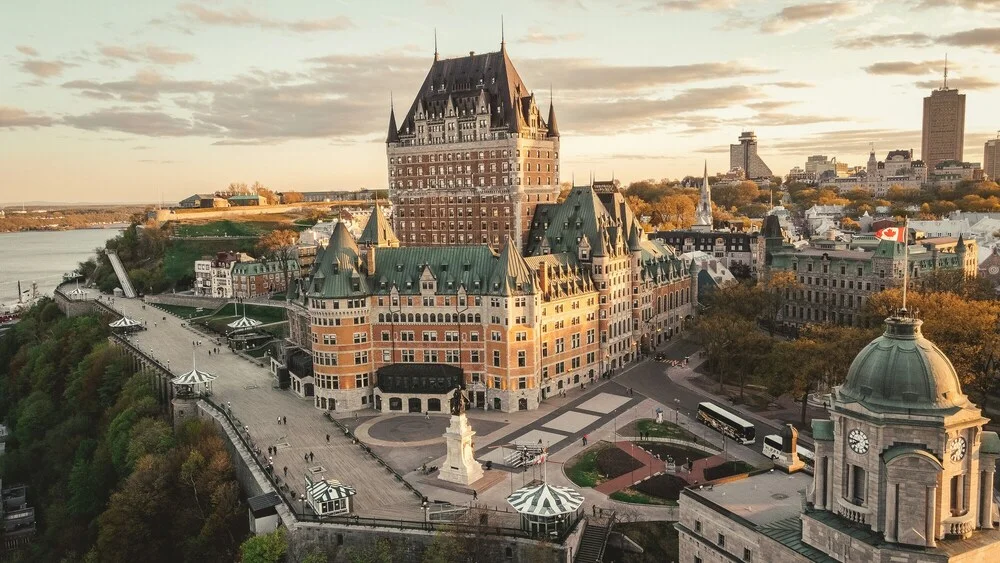
The Château Frontenac is arguably the most photographed hotel in the world and the defining symbol of Quebec City. Built in 1893 by the Canadian Pacific Railway and designed by architect Bruce Price in the French château style, it rises dramatically above the St. Lawrence River from its clifftop perch in Upper Town. Even if you are not staying here, it is impossible to fully experience Quebec City without standing before it.
The hotel has hosted Winston Churchill, Franklin D. Roosevelt, and Alfred Hitchcock, among countless other luminaries. Guided tours of the interior run regularly and give access to the grand ballroom, historic corridors, and permanent exhibitions on the hotel's history.
Why visit: The view of the Château from Dufferin Terrace at sunset — or from a boat on the St. Lawrence — is one of the most cinematic sights in all of Canada.
Entrance: Exterior free; guided tours from CAD $18 adults, $10 children
Best time: Late afternoon for golden hour photography from Dufferin Terrace
Hours: Guided tours offered daily; check FairmontHotels.com for schedules
Old Quebec City Walls (Fortifications of Quebec)
100 Rue Saint-Louis, Québec, QC G1R 3Z6
Quebec City has the only remaining fortified city walls in North America north of Mexico, and walking the full circuit of the 4.6-km ramparts is one of the most unique experiences available on the continent. The walls were originally built by the French in the 17th century and significantly reinforced by the British after 1759. Parks Canada manages the site and offers exceptional interpretation programs.
The wall walk takes you past four distinctive gates — Porte Saint-Louis, Porte Kent, Porte Saint-Jean, and Porte Prescott — each with its own history. In winter, portions of the ramparts are used as a toboggan run.
Why visit: Walking the walls gives you a geographical understanding of how the city is structured — the Upper Town, the Lower Town, the St. Lawrence below — that no map can replicate.
Entrance: Free (guided tours from CAD $8 through Parks Canada)
Best time: Early morning in summer (before crowds), or in winter after a snowfall
Hours: Open year-round; interpretive centre open daily May–October
Plains of Abraham (Parc des Champs-de-Bataille)
835 Avenue Wilfrid-Laurier, Québec, QC G1S 3C2
The Plains of Abraham is the historic battlefield where, in September 1759, British forces under General Wolfe defeated the French under General Montcalm in a 15-minute battle that determined the fate of Canada. Today it is a beautiful 108-hectare urban park that Québécois use for jogging, picnicking, cross-country skiing, and kite-flying.
The park contains two Martello towers (defensive fortifications), walking and cycling paths, and the excellent Musée des Plaines d'Abraham, which brings the 1759 battle to vivid life with multimedia exhibits. In summer, major concerts including the Festival d'été are held on the plains.
Why visit: The plains offer the best panoramic views of the St. Lawrence River in the city, and the park's scale — right inside an urban area — is genuinely surprising.
Entrance: Park free; Museum from CAD $14 adults, $8 children (6–17)
Best time: Summer evenings for views; winter for cross-country skiing
Hours: Park open year-round; Museum Tuesday–Sunday 10:00–17:00
Rue du Petit-Champlain & Place Royale
Rue du Petit-Champlain, Québec, QC G1K 4H3
Rue du Petit-Champlain is North America's oldest commercial street, dating to the 1680s, and it is as charming as streets come — a narrow lane of stone buildings housing artisan galleries, boutiques, chocolatiers, and restaurants in Quebec's Lower Town. Place Royale, the historic square just steps away, is where Samuel de Champlain established his first trading post in 1608, making it the cradle of French civilization in North America.
The neighbourhood is quintessentially Québécois — colourful window boxes, murals on building sides, the scent of crêpes and beaver tail pastries drifting through the air. In winter, the area is strung with lights and transforms into a fairytale scene.
Why visit: This is the emotional heart of Quebec City — standing in Place Royale, you are standing at the very birthplace of Canada as a French colonial project.
Entrance: Free to walk; shops and restaurants priced individually
Best time: Weekday mornings (before tour buses arrive) or evenings for ambiance
Hours: Always accessible; shops typically open 10:00–18:00
Montmorency Falls (Chute Montmorency)
2490 Avenue Royale, Boischatel, QC G0A 1H0
Montmorency Falls is 83 metres (272 feet) tall — 30 metres higher than Niagara Falls — and sits just 12 kilometres east of Old Quebec. The falls thunder over a cliff into the St. Lawrence River and can be viewed from multiple vantage points: a suspension bridge across the top, a cable car from the base, or a challenging staircase with 487 steps.
In winter, the mist from the falls freezes into a massive ice cone at the base known as the pain de sucre (sugar loaf), which locals climb for recreation. The surrounding Parc de la Chute-Montmorency offers picnic areas, trails, and a restaurant with panoramic views.
Why visit: The raw power of Montmorency is genuinely impressive, and standing on the suspension bridge above the falls — with the St. Lawrence spreading out below — is a moment that earns its trip.
Entrance: Parking CAD $15; cable car CAD $14 adults return, $9 children; stairs free
Best time: Mid-morning on weekdays; spectacular in any season
Hours: Open year-round; cable car typically 9:00–18:00 (extended in summer)
Musée de la Civilisation
85 Rue Dalhousie, Québec, QC G1K 8R2
The Musée de la Civilisation is one of Canada's finest museums — a beautifully designed institution in the Lower Town that explores Québécois identity, Indigenous history, and global civilizations through immersive, thoughtfully curated exhibitions. The building itself is an architectural marvel by Moshe Safdie, incorporating two historic stone buildings into a modern design.
Permanent exhibitions include "We, the First Nations" — an extraordinary exploration of the 11 Indigenous nations of Quebec — and "This Is Our Story," which traces the history of Québécois culture from the earliest settlers to today.
Why visit: This museum answers the question "what makes Quebec distinct?" better than any other single experience in the city, and it is genuinely moving for any visitor interested in history and identity.
Entrance: CAD $21 adults; $13 seniors; $10 youth (12–17); free under 12; free Tuesday evenings 17:00–21:00
Best time: Tuesday evening for free admission and fewer crowds
Hours: Tuesday–Sunday 10:00–17:00 (open Mondays in summer)
Citadelle of Quebec
1 Côte de la Citadelle, Québec, QC G1R 3R2
The Citadelle is a star-shaped fortress built by the British between 1820 and 1850 on the highest point of Cap Diamant. It remains an active military installation — home to the Royal 22e Régiment (the "Van Doos"), the most celebrated French-Canadian regiment in the Canadian Forces. It is the largest British North American fortress ever built.
The daily Changing of the Guard ceremony (June–Labour Day at 10:00 AM) and the Beating of the Retreat ceremony (Fridays and Saturdays in summer at 19:00) are spectacular military pageants. The Citadelle also houses the residence of the Governor General of Canada.
Why visit: The panoramic views of the St. Lawrence from the Citadelle's ramparts are the finest in the city, and the military museum inside is genuinely fascinating.
Entrance: CAD $20 adults; $16 seniors; $9 children (7–17); free under 7
Best time: Arrive by 9:45 AM on summer mornings to secure a position for the Changing of the Guard
Hours: Daily 10:00–16:00 (October–April); 9:00–17:00 (May–September)
Dufferin Terrace
Terrasse Dufferin, Québec, QC G1R 4N4
Dufferin Terrace is a long, wooden boardwalk perched 60 metres above the St. Lawrence River, running alongside the Château Frontenac with sweeping views of the river, the Lévis shoreline, and Île d'Orléans on the horizon. Built in 1838 and expanded in 1879, it is the city's grand promenade — the place where Québécois have gathered for generations.
In winter, Dufferin Terrace hosts one of Canada's most thrilling tobogganing runs — an 85-metre wooden slide that reaches speeds of 70 km/h. The winter atmosphere here, with the illuminated Château glowing against a dark winter sky, is one of the most magical scenes in Canadian winter travel.
Why visit: This is the single best place in Quebec City to understand why people fall in love with this place — the view rewards any weather condition.
Entrance: Free to walk; toboggan slide approximately CAD $3.75 per ride in winter
Best time: Sunset in summer; evenings in winter with the lights
Hours: Always open
Musée National des Beaux-Arts du Québec (MNBAQ)
179 Grande Allée Ouest, Québec, QC G1R 2H1
The National Museum of Fine Arts of Quebec houses the most comprehensive collection of Quebec art in existence — over 43,000 works spanning from the 17th century to the present. The museum complex consists of four pavilions on the edge of the Plains of Abraham, including a former prison whose cells now display works of art in one of the most creative museum installations in Canada.
The Brousseau Inuit Art collection — over 2,600 works of Inuit sculpture and print — is one of the finest of its kind in the world. Temporary exhibitions are consistently world-class.
Why visit: This is the definitive place to understand what Québécois artists have made and what has shaped their distinct visual identity.
Entrance: CAD $22 adults; $14 seniors; free under 31 (Quebec residents); free every Sunday
Best time: Wednesday evenings for late hours and fewer crowds
Hours: Tuesday–Sunday 10:00–17:00 (Wednesday until 21:00)
What Are the Best Neighborhoods to Explore in Quebec City?
Quebec City's neighbourhoods each have a distinct personality — from the UNESCO-listed historic core to leafy residential streets where locals live without a tourist in sight.
Vieux-Québec Haute-Ville (Upper Town)
Character: The historic heart of the city, perched atop Cap Diamant within the ancient stone walls. Cobblestone streets, 17th-century churches, grand hotels, and the Château Frontenac define the atmosphere. It feels authentically medieval by North American standards.
What makes it special: This is the only walled city in North America north of Mexico — walking through the gates of Porte Saint-Louis or Porte Saint-Jean, you step into a different era. Every corner reveals a building with centuries of history behind it.
Best for: First-time visitors, history lovers, couples, and photographers
Must-see in this area: Château Frontenac, Dufferin Terrace, Rue Saint-Louis, Ursulines Monastery, Holy Trinity Cathedral
How to get there: Central — walkable from most hotels; bus routes 3 and 11 serve the area
Location: Rue Saint-Louis, Québec, QC G1R 3Z4
Petit-Champlain & Vieux-Port (Lower Town)
Character: The oldest commercial district in North America, Lower Town sits at the base of the cliffs where the St. Lawrence once lapped against the city's warehouses. Today it is a warren of artisan boutiques, galleries, restaurants, and terrace cafés with a romantic, village-within-a-city atmosphere.
What makes it special: The contrast with Upper Town is dramatic — descend the Breakneck Stairs or ride the funicular, and you enter a quieter, more intimate Quebec. Place Royale anchors the neighbourhood's 400-year commercial history.
Best for: Shoppers, art lovers, foodies, and anyone who wants less tourist bustle than Upper Town
Must-see in this area: Rue du Petit-Champlain, Place Royale, Musée de la Civilisation, waterfront promenade
How to get there: Funicular from Dufferin Terrace (CAD $4) or Breakneck Stairs (free)
Location: Place Royale, Québec, QC G1K 4H5
Saint-Jean-Baptiste
Character: Just outside the city walls, Saint-Jean-Baptiste is where Quebec City gets authentically local. Rue Saint-Jean is the main artery — a lively street packed with independent restaurants, bars, bookshops, fromageries, and cafés where local students, artists, and professionals spend their evenings.
What makes it special: This is where you will find the Quebec City that Québécois actually live in — not the tourist showcase, but the real, working, culturally vibrant city.
Best for: Travellers who want local atmosphere, great food at better prices, and authentic nightlife
Must-see in this area: Rue Saint-Jean, Église Saint-Jean-Baptiste, Épicerie J.A. Moisan (North America's oldest grocery store)
How to get there: 5-minute walk from Porte Saint-Jean through the city walls
Location: Rue Saint-Jean, Québec, QC G1R 1N5
Grande Allée & Parliament Hill
Character: Quebec City's grand boulevard runs west from the old city toward the National Assembly. Grande Allée is lined with Victorian mansions converted into restaurants and bars, and in summer the terrasses overflow with a lively after-work and late-night crowd.
What makes it special: Grande Allée has the city's most concentrated bar and terrace scene — in warm weather, the whole street becomes one massive outdoor party from late afternoon until the early hours. The Plains of Abraham are a short walk away.
Best for: Nightlife, people-watching, patio dining, political tourism (Parliament visits)
Must-see in this area: Hôtel du Parlement (Quebec National Assembly), MNBAQ, terrace restaurants on Grande Allée Est
How to get there: 10-minute walk west from Porte Saint-Louis through the walls
Location: Grande Allée Est, Québec, QC G1R 2H1
Limoilou
Character: A working-class neighbourhood across the St. Charles River that has been gentrifying rapidly over the past decade. 3e Avenue is the main commercial street — now a genuine foodie destination with natural wine bars, third-wave coffee roasters, artisan bakeries, and independent restaurants at prices significantly lower than the tourist zones.
What makes it special: Limoilou is where Quebec City's next generation of chefs and creators are setting up shop. It is the most interesting neighbourhood in the city right now for food and culture.
Best for: Food-focused travellers, budget-conscious visitors, those seeking a completely local experience
Must-see in this area: 3e Avenue market scene, Marché du Vieux-Limoilou on Saturdays, independent cafés and wine bars
How to get there: 20-minute walk from Old Quebec or bus routes 4 and 6
Location: 3e Avenue, Québec, QC G1L 2C1
What Food Should You Try in Quebec City?
Quebec City is one of the finest food cities in North America. The cuisine is rooted in French technique but built on ingredients from the surrounding land — maple syrup, game meat, aged cheddar, cidre de glace (ice cider), and the freshest cold-water seafood from the St. Lawrence estuary.
What Are the Must-Try Local Dishes in Quebec City?
- Poutine — Quebec's most famous export: French fries topped with fresh cheese curds and smothered in rich brown gravy. Do not judge it until you have tried it fresh, with proper squeaky curds. Chez Ashton is the local institution.
- Tourtière — A rich, spiced meat pie made with ground pork, veal, or game meat, seasoned with cinnamon and cloves. A traditional Christmas dish, but available year-round at traditional restaurants.
- Soupe aux pois (Yellow Pea Soup) — A thick, warming soup made with yellow split peas and salted pork, dating to the earliest French settlers. A humble dish that has been on Quebec tables for 400 years.
- Caribou (the drink) — A traditional Québécois winter drink made with red wine, whisky, and maple syrup. Associated with Carnaval, it is served warm in a cane at outdoor winter events.
- Maple products — Quebec produces 70% of the world's maple syrup. The range goes far beyond syrup: maple butter, maple taffy on snow (tire sur la neige), maple liqueur, and maple-glazed meats. A sugar shack (cabane à sucre) experience in spring is a defining Québécois ritual.
- Cidre de glace (ice cider) — A Québécois invention: sweet, complex apple cider made from apples frozen on the tree or pressed and then frozen. Île d'Orléans is the heart of production. Serve cold as an aperitif or with foie gras.
- Cheese curds (grains de chapelet) — Fresh, squeaky, salty cheese curds from local fromageries. They should squeak against your teeth when truly fresh.
- Cipâte (sea pie) — A layered meat and vegetable pie of Indigenous origin, adapted by French settlers, made with game meats like rabbit, partridge, and pork between layers of pastry.
Where Should You Eat in Quebec City?
Budget-Friendly (Under CAD $20 per meal)
- Chez Ashton — 54 Côte du Palais, Québec, QC G1R 4H8 — The local poutine institution since 1969. Affordable, generous portions, and the most Québécois fast-food experience possible.
- Buffet de l'Antiquaire — 95 Rue Saint-Paul, Québec, QC G1K 3V8 — A Lower Town institution for traditional Québécois comfort food at very reasonable prices. Very popular with locals.
- Épicerie J.A. Moisan — 699 Rue Saint-Jean, Québec, QC G1R 1P7 — North America's oldest grocery store (since 1871) and an excellent deli for fresh sandwiches, local cheeses, and charcuterie. Perfect for picnic supplies.
Mid-Range (CAD $30–$70 per meal)
- Le Clocher Penché — 203 Rue Saint-Joseph Est, Québec, QC G1K 3B1 — A beloved neighbourhood bistro in Saint-Roch with seasonal, market-driven Quebec cuisine and an outstanding natural wine list. The brunch is legendary.
- Café du Monde — 84 Rue Dalhousie, Québec, QC G1K 4B7 — A classic French brasserie in Lower Town with gorgeous river views, serving dependable steak-frites, moules marinières, and crêpes Suzette.
- L'Affaire est Ketchup — 46 Rue Joseph-Garneau, Québec, QC G1R 1H8 — A tiny BYOB (bring your own wine) restaurant offering creative prix fixe menus. Legendary for quality and value. Book weeks ahead.
Fine Dining (CAD $90+ per meal)
- Chez Muffy — 10 Rue Marché-Finlay, Québec, QC G1K 4H2 — Set in a historic stone warehouse in the Vieux-Port district, serving exceptional fine-dining Quebec cuisine with a celebrated wine list.
- Laurie Raphaël — 117 Rue Dalhousie, Québec, QC G1K 4C1 — Chef Daniel Vézina's signature restaurant is a benchmark of modern Quebec fine dining — technically precise, locally sourced, and beautifully presented.
What Are the Dining Customs in Quebec City?
Meal times: Locals eat dinner late — most restaurants fill up between 19:00 and 21:00. Many better restaurants offer table d'hôte (prix fixe) lunch menus at significant savings compared to dinner.
Tipping: 15–20% is the standard tip. Service is generally excellent and tipping is expected.
Reservations: Essential at any mid-range or fine dining restaurant on weekends. For the best bistros, book a week or more ahead.
Language: Address restaurant staff in French if you can — even a simple "Bonjour" at the start goes a long way.
What Is the Nightlife Like in Quebec City?
Quebec City's nightlife is convivial rather than raucous — this is a city where people go out to enjoy long meals, extended conversations over wine, and lively terrasse drinking, rather than mega-club experiences. Things come alive around 22:00 and last until 3:00 AM on weekends.
Where Are the Best Areas for Nightlife in Quebec City?
- Grande Allée Est: 640 Grande Allée Est, Québec, QC G1R 2K4 — The main party strip in warm months, with dozens of bar terrasses that fill with a mixed crowd from early evening.
- Rue Saint-Jean (Saint-Jean-Baptiste): Rue Saint-Jean, Québec, QC G1R 1P7 — More local, more eclectic, with craft beer bars, wine bars, live music spots, and LGBTQ+-friendly venues.
- Saint-Roch: Rue Saint-Joseph Est, Québec, QC G1K 3B2 — The city's most creative neighbourhood, with an emerging bar scene of craft cocktail bars and natural wine spots drawing a younger, artistic crowd.
What Are the Best Bars and Clubs in Quebec City?
Bars & Pubs
- Les Bières de mon Père — 33 Rue Couillard, Québec, QC G1R 3T4 — A beloved craft beer bar in the heart of Old Quebec with a rotating tap list of Quebec-brewed craft beers. Cozy and unpretentious.
- Bar Le Sacrilège — 447 Rue Saint-Jean, Québec, QC G1R 1P5 — A wildly popular bar-terrasse on Rue Saint-Jean with one of the best outdoor patios in the city. Locals pack it every summer evening.
- Pub d'Orsay — 65 Rue de Buade, Québec, QC G1R 4A2 — A classic English-style pub in Old Quebec serving an excellent selection of draft beers and whiskeys.
Clubs & Dancing
- Bar Le Drague — 815 Rue Saint-Augustin, Québec, QC G1R 3J4 — Quebec City's most famous LGBTQ+ nightclub and cabaret, featuring drag shows, multiple dance floors, and a genuinely welcoming crowd. Cover charges vary by event (CAD $5–$15).
- Maurice — 575 Grande Allée Est, Québec, QC G1R 2K4 — A complex of four bars and a nightclub spread over multiple floors of a Victorian mansion on Grande Allée. The rooftop patio is essential in summer.
Live Music & Shows
- Le Cercle — 228 Rue Saint-Joseph Est, Québec, QC G1K 3B4 — A multi-purpose cultural space in Saint-Roch that functions as a café by day and live music venue, gallery, and cocktail bar by night.
- Grand Théâtre de Québec — 269 Boulevard René-Lévesque Est, Québec, QC G1R 2B3 — The city's premier classical music and performing arts venue, home to the Orchestre symphonique de Québec.
What Family-Friendly Evening Entertainment Is Available?
Families can enjoy evening strolls along Dufferin Terrace, outdoor concerts in summer on the Plains of Abraham, Carnaval night parades in winter, and evening funicular rides. Many family-friendly restaurants in Old Quebec accommodate children until 20:00.
What and Where Should You Shop in Quebec City?
The best things to buy in Quebec City are locally made: artisan crafts, maple products, local wines and ciders, Inuit art, and Québécois fashion. The top shopping areas are Rue Saint-Jean, Petit-Champlain, and the Saint-Roch neighbourhood.
What Are the Best Shopping Districts in Quebec City?
- Rue du Petit-Champlain: Rue du Petit-Champlain, Québec, QC G1K 4H3 — The most charming shopping street, lined with artisan boutiques, galleries, glassblowers, and specialty food shops. Higher prices but excellent quality.
- Rue Saint-Jean: Rue Saint-Jean, Québec, QC G1R 1N5 — More affordable and diverse, mixing independent boutiques, bookshops, food shops, and clothing stores with a local flavour.
- Place de la Cité (Sainte-Foy): 2600 Boulevard Laurier, Québec, QC G1V 4T3 — Quebec City's main shopping mall, about 10 km from Old Town, with major department stores. Less interesting culturally but useful for practical shopping.
What Markets Should You Visit in Quebec City?
Marché du Vieux-Port de Québec — 160 Quai Saint-André, Québec, QC G1K 3Y2 — Open daily May through October, this excellent farmers' market showcases Quebec producers: fresh cheeses, maple products, charcuterie, local vegetables, ciders, and crafts. Saturday mornings are most lively.
Marché du Vieux-Limoilou — 3e Avenue, Québec, QC G1L 2C3 — A smaller Saturday-morning neighbourhood market with an emphasis on local producers, artisan food makers, and a strong community atmosphere. Far less tourist traffic than the Vieux-Port market.
What Should You Buy in Quebec City?
- Maple products — Maple syrup, maple butter, maple candy, and maple vinegar. Buy from producers at the Vieux-Port market for better prices than gift shops.
- Local cheese — Quebec produces outstanding artisan cheeses: aged Cheddar de l'Île-aux-Grues, Le Migneron de Charlevoix, or Oka. A fromagerie will let you taste before buying.
- Cidre de glace — Bottles of Québécois ice cider from Île d'Orléans producers. A unique gift that cannot be found anywhere else in the world.
- Inuit art — Small sculptures, prints, and tapestries from Indigenous Arctic artists. Buy from reputable galleries to ensure authenticity.
- Artisan glasswork — Several studios on Petit-Champlain produce hand-blown glass — vases, ornaments, and decorative pieces unique to Quebec.
- Local fashion — Quebec designers and boutiques on Rue Saint-Jean carry clothing with a distinct Québécois sensibility. Look for fur-trimmed accessories in winter.
What Are the Shopping Hours and Customs?
Most shops in Old Quebec open daily from 10:00 to 18:00 in shoulder seasons, with extended hours to 21:00 during peak summer. Bargaining is not a cultural practice in Quebec — prices are fixed in all retail environments. Grocery stores and the SAQ (liquor stores) are generally open daily.
What Festivals and Events Happen in Quebec City?
Quebec City runs significant festivals in every season — winter draws ice lovers and Carnaval revellers; summer brings the continent's biggest music festival; and autumn is for harvest celebrations. The event calendar is one of the richest of any small city in North America.
What Is the Annual Events Calendar for Quebec City?
| Month | Event Name | Description |
|---|---|---|
| January–February | Carnaval de Québec | The world's largest winter carnival, running for 17 days. Features ice sculptures, night parades, the Bonhomme Carnaval mascot, snow slides, and outdoor concerts. Draws 500,000+ visitors. Book hotels 6 months ahead. |
| February | Hôtel de Glace | The famous ice hotel at Village Vacances Valcartier (30 minutes from city), rebuilt each winter with entirely new design. Day visits from CAD $25; overnight stays from CAD $299. |
| March–April | Temps des Sucres (Sugar Shack Season) | Maple syrup harvest season. Local sugar shacks outside the city open for meals, maple taffy on snow, sleigh rides, and music. A deeply Québécois experience available until mid-April. |
| June | Fête Nationale du Québec | Quebec's national holiday (June 24) celebrated with bonfires, concerts, and fireworks. The most emotionally significant holiday in the Quebec calendar — the June 23 bonfires are free and extraordinary to witness. |
| July | Festival d'été de Québec (FEQ) | One of the world's largest outdoor music festivals — 11 days, 250+ shows, past headliners include Metallica, The Weeknd, Paul McCartney, and Celine Dion. Full pass from CAD $120. Plains of Abraham main stage holds 100,000 people. |
| August | Les Fêtes de la Nouvelle-France | A 5-day historical re-enactment festival with participants in 17th and 18th-century costume, period markets, performances, and parades. Free to attend and genuinely spectacular. |
| September–October | Fall Foliage Season | Peak colour typically arrives the last week of September in the Charlevoix region and on Île d'Orléans. The most beautiful drive is Route 362 along the river. |
| October | Québec City Film Festival | A growing film festival presenting Québécois, Canadian, and international cinema. Many free outdoor screenings are available to the public. |
| November | Marché de Noël Allemand de Québec | A German-style Christmas market running from mid-November on Place de l'Hôtel-de-Ville. Small but charming, with mulled wine, crafts, and festive atmosphere. |
| December | Christmas in Old Quebec | Old Quebec is decorated elaborately for the holiday season. The Château Frontenac is particularly dramatic illuminated against winter skies. The market continues until Christmas Eve. |
How Do Festivals Affect Hotel Prices and Availability?
Carnaval (late January–February) and Festival d'été (July) are the two events that cause the most extreme price increases — hotel rates can triple compared to shoulder-season levels, and the best properties sell out 6 months in advance. For these events, booking the moment you confirm travel is essential. Les Fêtes de la Nouvelle-France in August causes a noticeable but less severe price increase.
Where Should You Stay in Quebec City?
The best neighbourhood to stay in Quebec City depends on your priorities — Old Quebec gives you walking access to the historic core, while outer neighbourhoods offer better value and a more local experience.
What Are the Best Neighborhoods to Stay in Quebec City?
| Neighbourhood | Vibe | Price Range (per night) | Best For |
|---|---|---|---|
| Vieux-Québec Haute-Ville (Upper Town) | Historic, charming, central | CAD $180–$450+ | First-time visitors, couples |
| Vieux-Québec Basse-Ville (Lower Town) | Intimate, romantic, quieter | CAD $150–$350 | Couples, boutique hotel seekers |
| Saint-Jean-Baptiste | Local, lively, good restaurant access | CAD $120–$250 | Travellers who want a local feel |
| Grande Allée | Grand, convenient for MNBAQ and Plains | CAD $130–$280 | Culture seekers, families |
| Saint-Roch | Hip, creative, best food-per-dollar | CAD $90–$180 | Budget-conscious, foodie travellers |
What Are the Pros and Cons of Each Area?
Upper Town Old Quebec:
Pros: Walking distance to every major attraction, charming historic atmosphere, excellent restaurants nearby, easiest logistics for a short visit.
Cons: Most expensive area, can feel heavily touristy in peak season, noisy in summer with street performers and tour groups.
Saint-Jean-Baptiste:
Pros: 5-minute walk from Old Quebec, much more local and less touristy, better restaurant value, excellent food shopping, great nightlife access.
Cons: Slightly hilly terrain, can be noisy on Rue Saint-Jean on summer weekends.
Saint-Roch:
Pros: Most affordable neighbourhood, best emerging food and bar scene, very authentic local experience.
Cons: 20-minute walk or short bus ride to Old Quebec, less picturesque than historic districts.
How Far in Advance Should You Book in Quebec City?
For peak summer (July–August) and Carnaval (January–February): 3–6 months ahead. For shoulder seasons (May, June, September, October): 4–6 weeks ahead. For the Festival d'été specifically: book the moment the dates are announced (typically March or April for July dates). For winter outside Carnaval: 2–3 weeks ahead is usually sufficient.
What Do You Need to Know Before Visiting Quebec City?
Here are the essential practical details every visitor to Quebec City needs to know — from currency and language to health and safety.
Essential Travel Details for Quebec City
- Currency: Canadian Dollar (CAD); most places accept Visa, Mastercard, and debit. Always pay in CAD — American dollars accepted in tourist areas at unfavourable rates.
- Credit Cards: Accepted almost universally; contactless payment is standard everywhere in Quebec.
- ATMs: Widely available. Use bank ATMs (National Bank, TD, Desjardins) to avoid high surcharge fees (up to CAD $6.50) at standalone machines.
- Language: French is the official and dominant language. English is spoken in tourist areas but do not assume it in neighbourhood restaurants, pharmacies, or local shops outside the historic core.
- Tipping: 15–20% in restaurants; CAD $1–$2 per drink at bars; CAD $2 per bag for hotel porters; 10–15% for taxi drivers.
- Electrical Plugs: Type A and B (same as the US); 120V, 60Hz. No adapter needed for US electronics.
- Emergency Number: 911 (police, ambulance, fire)
- Non-emergency police: Quebec City Police Service at 418-641-6526
- SIM Cards: Available at the airport and downtown from Rogers, Telus, and Videotron. A tourist SIM with data runs approximately CAD $35–$50 for 30 days. Most US plans cover Canada at no extra charge.
- WiFi: Excellent throughout the city; most hotels, cafés, and restaurants provide free WiFi.
- Tap Water: Completely safe to drink. No need for bottled water anywhere in Quebec City.
How Much Does It Cost to Visit Quebec City?
| Budget Type | Daily Cost | What's Included |
|---|---|---|
| Budget Traveler | CAD $80–$130 | Hostel or budget auberge, poutine and market meals, public transit, free attractions (walls, terrace, parks) |
| Mid-Range Traveler | CAD $180–$320 | 3-star hotel, mix of bistro lunches and mid-range dinners, occasional taxi, 2–3 paid attractions per day |
| Luxury Traveler | CAD $450+ | Château Frontenac or boutique hotel, fine dining, private tours, private transport |
What Are the Most Useful French Phrases in Quebec City?
- Hello: Bonjour (universal greeting at any time of day)
- Thank you: Merci
- Please: S'il vous plaît
- Excuse me: Excusez-moi
- How much?: C'est combien?
- Where is...?: Où est...?
- I don't understand: Je ne comprends pas
- Do you speak English?: Parlez-vous anglais?
- Help!: Au secours!
- Bathroom: Les toilettes
- Check, please: L'addition, s'il vous plaît
Is Quebec City Safe for Tourists?
Yes — Quebec City is one of the safest cities in Canada, with very low violent crime rates and a tourist-friendly environment throughout the historic core and inner neighbourhoods. It consistently ranks among Canada's safest major urban centres.
Common issues: Quebec City has very few tourist scams. The most common issue is overpriced restaurants targeting tourists on Rue Sainte-Anne — check Google reviews before entering anywhere you have not researched. Always use official calèche (horse-drawn carriage) operators with the city seal on the carriage.
Solo traveler safety: Excellent for solo travellers of all genders. Women travelling alone report feeling very safe throughout the city, including at night. The city has a visible LGBTQ+ community and is considered one of the most LGBTQ+-friendly cities in Canada.
What Are the Cultural Customs in Quebec City?
- Greetings: A handshake for introductions; close friends often kiss on both cheeks (la bise). "Bonjour" is used universally as a greeting at any time of day.
- Dress code: Quebec City is fashion-conscious. Smart-casual is the norm for restaurants; jeans are accepted almost everywhere. Churches require covered shoulders.
- Photography: Generally open; always ask permission before photographing individuals. The Basilica of Sainte-Anne-de-Beaupré requests no photography during mass.
- Public behavior: Québécois value personal space and quiet conversation. Loud behaviour in restaurants or on public transit is noticed and frowned upon.
- Queuing: Orderly and expected everywhere. Skipping a queue is a significant social offence.
Do You Need a Visa to Visit Quebec City?
Citizens of the United States do not need a visa to visit Canada and may enter with a valid US passport for up to 180 days. Citizens of most European Union countries, the UK, Australia, and New Zealand do not need a visa but must obtain an Electronic Travel Authorization (eTA) for CAD $7 before flying — apply at canada.ca. Always verify your specific requirements at canada.ca/immigration before travelling.
What Health Precautions Should You Take in Quebec City?
Vaccinations: No specific vaccinations are required for travel to Quebec City.
Pharmacies: Pharmacies (Jean Coutu, Pharmaprix/Shoppers Drug Mart) are widely available and open daily, with some 24-hour locations.
Hospitals: CHU de Québec (2705 Boulevard Laurier, Sainte-Foy) is the main university hospital. As a non-Canadian, you will be billed directly — travel health insurance is strongly recommended.
Cold weather health: In winter, frostbite is a genuine risk during extreme cold snaps (-25°C or colder). Cover all exposed skin, wear layered clothing, and know the warning signs.
Is Quebec City Accessible for People with Disabilities?
Quebec City presents genuine accessibility challenges — Old Quebec's cobblestone streets, steep stairways between Upper and Lower Town, and the hilly terrain are difficult for wheelchair users and those with limited mobility. The funicular is fully accessible and provides the best connection between Upper and Lower Town. Most major museums and hotels are fully accessible. The city's accessibility guide is available at ville.quebec.qc.ca.
Is Quebec City Good for Families with Kids?
Quebec City is an excellent family destination. Children are welcomed in virtually all restaurants, the outdoor spaces are engaging, Carnaval is designed for families, and attractions like Montmorency Falls and the city walls are genuinely exciting for kids of all ages. In winter, the toboggan slide on Dufferin Terrace is a highlight for children. Strollers work on most main routes, though the Breakneck Stairs require carriers for small children.
What Are the Best Day Trips from Quebec City?
The best day trips from Quebec City include Île d'Orléans, the Charlevoix region, Montmorency Falls, and the pilgrimage town of Sainte-Anne-de-Beaupré. Each is accessible within an hour by car.
Île d'Orléans
Distance: 15 km from Old Quebec; 20-minute drive across the suspension bridge
What to see: A large agricultural island in the St. Lawrence River — often called "the garden of Quebec." Six distinct villages along its 67-km circumference road offer strawberry farms, apple orchards, ice cider producers, artisan cheese makers, historic churches, and panoramic river views. In spring and early summer, the roadside strawberry stands are a rite of passage for Québécois.
How to get there: Drive or rent a car — no public transport crosses to the island. The bridge is free. Cycling the island's circumference is popular in summer.
Time needed: Full day recommended for a complete circuit
Best for: Foodies, cyclists, families, anyone who loves agricultural landscapes
Location: Pont de l'Île-d'Orléans, Saint-Pierre, QC G0A 4E0
Charlevoix Region (Baie-Saint-Paul)
Distance: 100 km northeast of Quebec City; 1.5-hour drive along the scenic Route 362
What to see: A UNESCO World Biosphere Reserve — a dramatic landscape of mountains, fjords, and the wide St. Lawrence estuary. Baie-Saint-Paul, the main town, is an artist colony with over 20 galleries, excellent restaurants, and the architecturally striking Loto-Québec casino. Le Massif de Charlevoix ski resort has the highest vertical drop in eastern Canada. In fall, the foliage here is extraordinary.
How to get there: Car is best; a scenic train service (Corridor Rail) operates seasonally. Route 362 (the Chemin du Roy) is more beautiful than the highway — add 20 minutes but the drive is the experience.
Time needed: Full day minimum; overnight highly recommended
Best for: Art lovers, skiers, nature enthusiasts, food travellers
Location: Baie-Saint-Paul, QC G3Z 2Z4
Mont-Sainte-Anne
Distance: 40 km east of Quebec City; 40-minute drive
What to see: Quebec City's backyard ski resort — 66 trails with a 625-metre vertical drop, the largest illuminated ski area in Canada, and world-class cross-country trails through old-growth forest. In summer, the mountain becomes a mountain biking destination with chair-lift access. The resort hosts World Cup events in both alpine and biathlon.
How to get there: Bus service runs from Quebec City during ski season (CAD $20 round trip); taxi approximately CAD $70 one-way; car is most flexible.
Time needed: Full day
Best for: Skiers and snowboarders in winter; mountain bikers and hikers in summer
Location: 2000 Boulevard Beaupré, Beaupré, QC G0A 1E0
Valcartier Vacation Village
Distance: 25 km north of Quebec City; 30-minute drive
What to see: North America's largest winter amusement park and home of the famous Hôtel de Glace (ice hotel). In winter it features over 35 snow slides, an ice skating river, tubing runs, and an entire village made of ice and snow including rooms, a chapel, and bars. In summer it transforms into a major water park with wave pools and tube slides.
How to get there: Car is recommended; shuttle service is available from major hotels during peak season.
Time needed: Full day
Best for: Families, winter adventure seekers, anyone wanting the Hôtel de Glace experience
Location: 1860 Boulevard Valcartier, Saint-Gabriel-de-Valcartier, QC G0A 4S0
What Are the Hidden Gems and Insider Tips for Quebec City?
Beyond the Château Frontenac and Petit-Champlain, Quebec City rewards explorers with remarkable off-the-radar experiences that most visitors never discover.
What Are the Best Hidden Gems in Quebec City?
- Jardins de Saint-Roch: 310 Rue de la Couronne, Québec, QC G1K 6H2 — A beautiful urban garden in the Saint-Roch neighbourhood where locals picnic, read, and relax entirely away from tourist traffic. Almost no tourists visit; a perfect midday break.
- Promenade des Gouverneurs: Access from Citadelle or Dufferin Terrace — This dramatic cliffside walkway connects the Citadelle to Dufferin Terrace along the edge of Cap Diamant, offering the most vertiginous views of the St. Lawrence in the city. Many tourists walk Dufferin Terrace and never discover this continuation.
- Rue Sainte-Ursule murals: Rue Sainte-Ursule, Québec, QC G1R 4E6 — A quiet Upper Town street that has become an open-air gallery for striking murals commissioned from Quebec artists. Completely off the main tourist circuit.
- La Barberie Microbrasserie: 310 Rue Saint-Roch, Québec, QC G1K 6S3 — A beloved cooperative microbrewery in Saint-Roch serving its own craft beers in a relaxed, no-pretension space. The seasonal and experimental taps are outstanding. Almost entirely local clientele.
- Aquarium du Québec: 1675 Avenue des Hôtels, Québec, QC G1W 4S3 — An underrated attraction on the Sainte-Foy plateau with outstanding marine life displays and the best polar bear exhibit in eastern Canada. Rarely crowded and genuinely excellent for families.
- Café Temporal: 25 Rue Couillard, Québec, QC G1R 3T4 — One of the finest coffee shops in Old Quebec, tucked on a quiet side street. Exceptional espresso, a relaxed atmosphere, and a neighbourhood feel despite its location inside the walls.
- The Lévis Ferry for the skyline view: 10 Rue des Traversiers, Lévis, QC G6V 9J4 — The 12-minute ferry crossing gives the single best view of Quebec City's skyline — the walls, the Château, the cliff. Cost is CAD $4 return. Worth every cent solely as a viewpoint experience.
Where Are the Best Photo Spots in Quebec City?
- Breakneck Stairs (looking up): 17 Rue du Petit-Champlain, Québec, QC G1K 4H4 — Looking up from the bottom of the stairs toward the Château Frontenac visible above the cliff edge. Best at dusk with warm light on the stone buildings.
- Rue Sainte-Famille: Rue Sainte-Famille, Québec, QC G1R 3V7 — A quiet Upper Town street where the Château Frontenac towers above Victorian row houses in a way no guidebook photograph captures. Best in late afternoon light.
- Île d'Orléans suspension bridge (looking west): The view back toward Quebec City from the middle of the bridge, with the city's skyline and the Château Frontenac visible on the clifftop, is one of the most dramatic panoramas in Canada.
- Plains of Abraham at sunrise: 835 Avenue Wilfrid-Laurier, Québec, QC G1S 3C2 — The eastern edge of the plains catches the first light over the St. Lawrence in a way that is genuinely breathtaking. You will very likely be alone there at 5:30 AM.
- Promenade des Gouverneurs at dusk: The cliffside walkway between the Citadelle and Dufferin Terrace offers views of the St. Lawrence turning golden that are among the finest in the city.
What Do Locals Know That Tourists Don't?
How Can You Save Money in Quebec City?
The biggest way to save money in Quebec City is to eat lunch at fine restaurants instead of dinner — the same kitchen, the same quality, at 40–50% less cost through the table d'hôte lunch menu.
What Are the Best Money-Saving Strategies for Quebec City?
- Buy the Passeport Musées for CAD $40 — covers 18 institutions including MNBAQ, Musée de la Civilisation, and the Musée Huron-Wendat
- Visit the MNBAQ on Sundays (free admission) and the Musée de la Civilisation on Tuesday evenings after 17:00 (free)
- Walk the city walls and Dufferin Terrace instead of booking guided tours — both are free and self-guiding is straightforward
- Eat table d'hôte lunch menus at mid-range and fine dining restaurants (CAD $18–$35 for three courses vs. CAD $50–$80 at dinner)
- Buy wine at the SAQ and use BYOB restaurants to dramatically reduce dining costs
- Use the RTC bus pass (CAD $10.50/day) instead of taxis for travel outside the walking core
- Take the Lévis ferry (CAD $4 return) for the best skyline view instead of booking a boat tour (CAD $45+)
- Buy maple products and local food at the Marché du Vieux-Port or Limoilou markets — same products, 30–50% less than Old Town souvenir shops
- Picnic on the Plains of Abraham with market supplies rather than eating at tourist restaurants (save CAD $30–$50 per person per meal)
- Book accommodation in Saint-Jean-Baptiste or Saint-Roch rather than Old Quebec — 30–40% lower nightly rates with equal access to the historic core
- Visit Montmorency Falls via the free staircase rather than the cable car (save CAD $14 per person)
- Attend the Fêtes de la Nouvelle-France in August (entirely free) rather than booking expensive guided history tours
- Travel in May, early June, or October for shoulder-season hotel rates (40–60% lower than peak summer)
What Can You Do for Free in Quebec City?
- Walk the city walls (Fortifications de Québec): The 4.6-km rampart walk — entirely free, entirely spectacular
- Dufferin Terrace: The city's grand promenade with St. Lawrence River views — always free
- Plains of Abraham: 108 hectares of park, river views, and history — free to enter and walk
- Place Royale: The birthplace of French North America — free to explore
- Hôtel du Parlement (National Assembly) tours: Free guided tours of Quebec's parliament building in English and French — book at assnat.qc.ca
- Fête Nationale bonfires (June 23): Free community events across the city on Quebec's national holiday eve
- Île d'Orléans (free entrance): The bridge to the island is free; the island is a free rural landscape to explore by car or bike
Are There Any Discount Cards or Passes Worth Buying?
Passeport Musées de la région de Québec: CAD $40 for adults — covers 18 cultural institutions. Breaks even with visits to just the Musée de la Civilisation + MNBAQ + Citadelle. Purchase at any participating museum or tourism office.
Festival d'été de Québec (FEQ) Full Pass: CAD $120–$150 for 11 days of world-class concerts — extraordinary value for music lovers visiting in July. Buy as soon as tickets go on sale in spring.
What Mistakes Should You Avoid in Quebec City?
The biggest mistake tourists make in Quebec City is assuming they can walk into the best restaurants without reservations — especially on weekends and during festivals — and end up at overpriced tourist traps on Rue Sainte-Anne instead.
What Are the Most Common Tourist Mistakes in Quebec City?
- Mistake: Not knowing any French → Instead: Learn five words — Bonjour, Merci, S'il vous plaît, Excusez-moi, and L'addition. The effort transforms how locals treat you.
- Mistake: Wearing improper footwear in winter → Instead: Bring waterproof boots with real grip or buy ice cleats on arrival (CAD $15 at any downtown gear shop). Cobblestones plus ice is genuinely dangerous.
- Mistake: Eating only on Rue Sainte-Anne and Petit-Champlain → Instead: These streets have the worst value-to-quality ratio in the city. Walk five minutes to Saint-Jean-Baptiste or Saint-Roch for significantly better food at lower prices.
- Mistake: Skipping the Lower Town entirely → Instead: Take the funicular or Breakneck Stairs down to Petit-Champlain and Place Royale — it is a completely different city below the cliff, and among the most atmospheric places in Canada.
- Mistake: Only visiting in summer → Instead: Winter Quebec City is extraordinary. The Carnaval, the ice hotel, the snow-covered walls — these experiences are uniquely powerful and not possible at any other time.
- Mistake: Assuming English is universal → Instead: Always start with "Bonjour." In neighbourhood shops, pharmacies, and local restaurants outside the tourist core, service in English may be limited.
- Mistake: Renting a car for exploring Old Quebec → Instead: A car is completely unnecessary and actively problematic within Old Quebec — parking is scarce and expensive. Walk or use the bus. Reserve a car only for day trips outside the city.
- Mistake: Missing the Musée de la Civilisation to save money → Instead: Visit Tuesday evening after 17:00 for free. The "We, the First Nations" exhibition alone is worth the detour — one of the finest museum exhibitions in Canada.
- Mistake: Treating the city walls as a backdrop rather than a destination → Instead: Walk the full 4.6-km circuit of the ramparts — it takes 90 minutes and provides a perspective on the city that no other experience offers.
- Mistake: Visiting Montmorency Falls by car and missing the cable car → Instead: Park below and take the cable car up (CAD $14), then walk across the suspension bridge above the falls. The view looking down into the gorge is what makes the visit extraordinary.
- Mistake: Booking accommodation in the far suburbs to save money → Instead: Staying in Saint-Jean-Baptiste is 5 minutes from Old Quebec on foot and 30–40% cheaper. Going further out removes the magic of being embedded in the city.
- Mistake: Not checking festival dates before booking → Instead: Know when Carnaval and Festival d'été fall — if you are in town during those events, accommodate them in your plans or book accommodation months ahead.
What Is the Best Itinerary for Quebec City?
The best itinerary depends on your time. Here are three structured options — 1 day, 3 days, and 5–7 days — that make the most of what Quebec City offers.
What Can You Do in One Day in Quebec City?
Morning (8:00 AM – 12:00 PM): Begin with breakfast at Café Temporal on Rue Couillard. Walk to Dufferin Terrace for the morning view of the St. Lawrence. Tour the exterior and lobby of the Château Frontenac. Take the Breakneck Stairs down to Lower Town and explore Place Royale and Rue du Petit-Champlain before the crowds arrive.
Afternoon (12:00 PM – 5:00 PM): Lunch at Buffet de l'Antiquaire on Rue Saint-Paul for traditional Québécois cuisine at fair prices. Take the funicular back up to Upper Town. Walk the city walls from Porte Saint-Louis to Porte Saint-Jean. Explore the Plains of Abraham briefly for river views.
Evening (5:00 PM – 10:00 PM): Walk to Rue Saint-Jean for a pre-dinner drink at Bar Le Sacrilège terrasse. Dinner in the Saint-Jean-Baptiste neighbourhood. End the evening on Dufferin Terrace for the illuminated Château Frontenac at night.
What Is the Perfect 3-Day Itinerary for Quebec City?
Day 1: Old Quebec Deep Dive
Follow the one-day itinerary above at a slower pace, allowing for the Musée de la Civilisation in Lower Town (2–3 hours) and the full city wall circuit in the afternoon. Dinner in Saint-Jean-Baptiste. Evening walk on the illuminated terrace.
Day 2: History, Art, and the Plains
Morning guided tour of the Citadelle (arrive by 9:45 for the Changing of the Guard in summer). Lunch at a Grande Allée terrasse restaurant. Afternoon at the Musée National des Beaux-Arts du Québec (MNBAQ) — the former prison pavilion alone justifies the visit. Walk the Plains of Abraham at dusk. Dinner on Grande Allée Est; evening drinks at the Maurice rooftop bar.
Day 3: Day Trip + Local Neighbourhood
Morning: Drive to Montmorency Falls and Île d'Orléans (combined half-day — waterfalls by 9:30 AM, island circuit by noon, back in the city by 15:00). Afternoon: Explore Limoilou on foot and stop at La Barberie microbrewery. Farewell dinner in Saint-Roch at one of the neighbourhood's rising restaurants.
What Is the Best 5–7 Day Itinerary for Quebec City?
Days 1–3: Follow the 3-day itinerary above.
Day 4: Charlevoix Region
Drive the scenic Route 362 northeast to Baie-Saint-Paul (1.5 hours), stopping at roadside fromageries and cideries along the way. Explore the artist galleries and village centre of Baie-Saint-Paul. Lunch featuring Charlevoix regional products — bison, lamb, local cheeses. Return via the highway for dinner back in Quebec City.
Day 5: Hidden Quebec City
Morning: Take the Lévis ferry across the river for the definitive skyline photograph, then explore Lévis's own historic Vieux-Lévis neighbourhood. Afternoon: Return to Quebec City, visit the Aquarium du Québec in Sainte-Foy. Evening: Promenade des Gouverneurs at dusk, followed by dinner at an intimate Old Town auberge restaurant.
Day 6: Sainte-Anne-de-Beaupré + Avenue Royale
Drive east along the Avenue Royale to the Basilica of Sainte-Anne-de-Beaupré (30 minutes). In spring (March–April), stop at a sugar shack (cabane à sucre) on the way for the maple syrup harvest experience. Explore the Côte-de-Beaupré region at leisure.
Day 7: Revisit Favourites and Depart
Morning return to the Old Quebec spots that resonated most — one last coffee on a terrasse, one last walk on Dufferin Terrace, one last look at the St. Lawrence from the walls. Shop the Vieux-Port market for take-home maple products, ice cider, and local cheese. Depart with properly heavy luggage.
Frequently Asked Questions About Quebec City
Here are answers to the most common questions about visiting Quebec City, based on what travellers actually search for before their trip.
Is Quebec City safe for tourists?
Quebec City is one of the safest cities in Canada and has very low violent crime rates throughout its tourist areas and inner neighbourhoods. The historic core is safe at all hours. The most significant safety concern is winter ice on cobblestone streets, which requires proper footwear. Exercise standard urban awareness near the train station (Gare du Palais) late at night.
What is Quebec City known for?
Quebec City is best known for being the only walled city in North America north of Mexico and the UNESCO World Heritage-listed Old Quebec. It is also celebrated for the Château Frontenac, the Carnaval de Québec (the world's largest winter carnival), its French language and distinct Québécois culture, and exceptional French-influenced cuisine built on local Quebec ingredients including maple syrup, local cheeses, and game meats.
When is the best time to visit Quebec City?
For outdoor sightseeing, late June through September offers the best weather (18°C–27°C). For the iconic winter experience with Carnaval, late January through February is unmatched — though temperatures can reach -20°C. Shoulder seasons (May–June and September–October) offer significantly lower prices, fall foliage, and more authentic local access. Avoid the first two weeks of July if crowds bother you — Festival d'été brings 500,000+ visitors.
How many days do you need in Quebec City?
Three to four days is the ideal minimum for a first-time visit — enough time to cover Old Quebec's highlights, make one day trip, and experience the food scene properly. Two days is doable but rushed. A full week allows for deep exploration of the neighbourhoods, Charlevoix, and a true slow-travel experience.
Do I need a visa to visit Quebec City?
US citizens do not need a visa to visit Canada and may enter with a valid passport. Most EU, UK, Australian, and New Zealand citizens do not need a visa but must apply for an Electronic Travel Authorization (eTA) for CAD $7 at canada.ca before flying. Citizens of other countries may require a visitor visa — check the official requirements at canada.ca/immigration before booking travel.
What is the best way to get around Quebec City?
Within Old Quebec, walking is by far the best option — the entire area is compact and most attractions are within 15 minutes on foot. For travel between Upper and Lower Town, the funicular (CAD $4) is the most enjoyable option. For outer neighbourhoods, the RTC bus network (CAD $3.75 per ride) is reliable. A car is only necessary for day trips outside the city.
How much should I budget per day in Quebec City?
Budget travellers can manage on CAD $80–$130 per day using hostels, market meals, public transit, and free attractions. Mid-range travellers should budget CAD $180–$320 per day for a comfortable hotel, mix of restaurant meals, and paid attractions. Luxury travellers staying at the Château Frontenac with fine dining and private tours should budget CAD $450+ per day. These figures exclude flights and initial transport.
What food should I try in Quebec City?
The absolute must-try dishes are poutine (fries, cheese curds, and gravy — a Québécois invention), tourtière (spiced meat pie), and anything featuring local maple products. The city's food scene is outstanding for French-influenced bistro cooking using local ingredients — game meats, fresh St. Lawrence seafood, local cheeses, and cidre de glace (ice cider) from Île d'Orléans.
Can I drink tap water in Quebec City?
Yes, absolutely. Quebec City's tap water is safe, clean, and considered high quality. There is no need to buy bottled water anywhere in the city.
Do people speak English in Quebec City?
English is spoken in hotels, major tourist attractions, and most restaurants in Old Quebec. However, Quebec City is significantly more French-dominant than Montreal — outside the historic district, French is the primary language and English proficiency varies considerably. Always begin any interaction with "Bonjour" — it is both courteous and practically effective.
Is Quebec City good for solo travelers?
Quebec City is excellent for solo travellers. It is safe, compact, and full of communal dining spaces, bar terrasses, and cultural events that make solo exploration enjoyable. The city has an active hostel scene for budget-conscious solo travellers and a welcoming LGBTQ+ community. Solo women travellers consistently report feeling safe throughout the city.
What should I pack for Quebec City?
In summer, pack light layers and walking shoes with grip for cobblestones. In winter, pack serious cold-weather gear: insulated waterproof boots (non-negotiable), thermal base layers, a warm hat covering the ears, mittens, and a heavy coat rated to -20°C. Ice cleats (CAD $15 at any downtown gear shop) are strongly recommended for winter visits. In fall and spring, waterproofs and sturdy shoes handle the variable conditions.
Ready to Explore Quebec City?
Quebec City does something rare to visitors — it changes them slightly. Standing inside 400-year-old walls, looking down at the St. Lawrence River in the frozen blue light of a February afternoon, you understand why Samuel de Champlain chose this clifftop and why the people who came after him never left. The city is not just beautiful; it is stubbornly, defiantly itself in a continent where most cities have surrendered their distinctiveness. That intransigence — the French language alive and well, the cuisine particular to this landscape, the winter embraced rather than endured — is what makes Quebec City one of the essential North American experiences.
Planning to extend your Canadian journey? Explore our guide to Montreal (3 hours west by train) and Toronto for more of Canada's best cities.
Have a question or a tip to share? Send us a message — we read every message and update our guides regularly.