Montreal Travel Guide: Everything You Need to Know for 2026
Last Updated: June 2026
Where centuries-old cobblestone meets a neon-lit jazz bar at 2 AM — Montreal is the city that does French culture better than anywhere outside France, then hands you a plate of poutine at midnight to seal the deal.
Montreal is the largest city in the province of Quebec, Canada, situated on an island in the St. Lawrence River. It is best known for its French-Canadian culture, legendary food scene (poutine, smoked meat, world-class bagels), and one of the greatest festival lineups on the planet. Visitors come here for the electric mix of European charm and North American energy — a city that festivals year-round, eats seriously, and stays up very, very late.
Table of Contents
- Montreal Overview
- Getting There & Around
- Top Attractions & Landmarks
- Neighborhoods & Districts
- Food & Dining
- Nightlife & Entertainment
- Shopping
- Seasonal Events & Festivals
- Accommodation Recommendations
- Practical Information
- Day Trips & Nearby Destinations
- Insider Tips & Hidden Gems
- Money-Saving Tips
- Common Tourist Mistakes to Avoid
- Sample Itineraries
- Frequently Asked Questions
What Is Montreal and Why Should You Visit?
Montreal is a bilingual, bicultural metropolis of 4.2 million people on an island in the St. Lawrence River, and it is the cultural capital of French Canada. It is the only city in North America where you can spend a morning in a 17th-century stone church, eat a four-hour French tasting menu for lunch, then dance until sunrise in a warehouse club — and do all of it without a car.
What makes Montreal impossible to replicate is the tension between its two identities: the old-world French soul and the relentlessly modern, multicultural city that has grown up around it. The result is a place that takes food, art, nightlife, and festivals with complete seriousness while somehow never taking itself too seriously. Locals call it "La Belle Ville" — and after one visit, you'll understand exactly why.
Montreal does have cold winters — genuinely cold, not city-of-mild-complaining cold — but Montrealers have turned this into an art form, building an underground city of tunnels (RESO) that connects 80 buildings, 5 metro stations, and 2,000 shops so you never have to go outside in February if you don't want to.
When Is the Best Time to Visit Montreal?
Peak Summer (June–August): Temperatures average 25–30°C (77–86°F) with long sunny days. This is festival season — Montreal Jazz Festival, Just For Laughs Comedy Festival, Osheaga, and dozens more run nearly back-to-back. Crowds are at their highest, hotel prices peak, and the city is at full electric energy. Book accommodation 3–4 months in advance for July.
Shoulder Season (May and September): Arguably the smartest time to visit. Temperatures are comfortable (15–22°C), crowds are thinner, prices drop 20–30%, and the city is beautiful — spring blossoms in May, golden leaves in September.
Fall (October–November): The foliage in Mount Royal Park is spectacular. Temperatures drop quickly after October but the indoor restaurant scene is superb and hotel rates are low.
Winter (December–March): Cold (averaging -10 to -15°C), but Montreal in winter has its own magic. Igloofest — an outdoor techno festival where people dance in -25°C weather — is genuinely one of the most fun events in North America.
How Many Days Do You Need in Montreal?
- 1–2 days: Hit Old Montreal, Mount Royal, and one major food experience. Tight but doable.
- 3–4 days: The ideal first visit. Major sights, the Plateau, food, and nightlife.
- 5–7 days: Deep Montreal: hidden neighborhood gems, day trip to Quebec City, food tours.
- 1 week+: Slow travel: art galleries, Eastern Townships wine country, living like a Montrealer.
Quick Facts About Montreal
- Population: 4.2 million (metro area)
- Language: French (official); English widely spoken in tourist areas
- Currency: Canadian Dollar (CAD $)
- Time Zone: Eastern Time (ET) — UTC-5 (winter), UTC-4 (summer/DST)
- Country Code: +1
- Area Code: 514 (island), 438 (overlay)
- Climate: Humid continental — hot summers, very cold snowy winters
- Altitude: 233 m / 764 ft above sea level at Mount Royal summit
How Do You Get To and Around Montreal?
The easiest way to reach Montreal is by air into Montreal-Trudeau International Airport (YUL), by train from Toronto or New York via VIA Rail or Amtrak, or by car from Toronto (5.5 hours) or Boston (4.5 hours). The city itself is best explored by metro, BIXI bike, and on foot in tourist neighborhoods.
Which Airports Serve Montreal?
Montreal-Trudeau International Airport (YUL)
975 Romeo Vachon Blvd North, Dorval, QC H4Y 1H1
Located 20 km (12 miles) west of downtown, YUL is served by Air Canada, WestJet, Delta, Air France, British Airways, and many international airlines. Two terminals connected by a free shuttle bus, with duty-free shopping, lounges, and full dining options.
How Do You Get from the Airport to the City Center?
747 Express Bus (STM): CAD $11 one-way (2026), runs 24 hours. Takes 45–60 minutes to downtown. Includes unlimited STM transfers for 24 hours. Best value for most travelers.
Taxi: CAD $50–65 flat rate to downtown, approximately 25–40 minutes. Only use regulated taxis from the official queue in Arrivals.
Uber/Lyft: CAD $35–55 depending on surge pricing. Rideshare pickup area is clearly marked.
Private Transfer: CAD $80–120, bookable in advance. Worth it for groups of 3+ sharing the cost.
What Is the Best Way to Get Around Montreal?
The best way to get around Montreal is by metro (STM subway) combined with walking and BIXI bikes in warmer months. The metro system is clean, reliable, and covers all major tourist areas. In summer, the city's BIXI bike-share system is world-class.
Montreal Metro (STM)
Montreal's metro has 4 lines (Green, Orange, Yellow, Blue) and 68 stations covering the island. Trains run approximately 5:30 AM to 1 AM on weekdays. Clean, safe, and air-conditioned in all newer cars.
Tickets & Passes (2026 prices):
- Single ride: CAD $3.75
- OPUS rechargeable card: CAD $6 one-time fee
- 10-trip bundle: CAD $31.50 (CAD $3.15/ride)
- 24-hour unlimited: CAD $12
- 3-day unlimited: CAD $21
- Weekly unlimited: CAD $29.50
BIXI Bike Share
Montreal's BIXI system offers over 10,000 bikes and 950+ stations from mid-April through November. Day passes start at CAD $7.25 for 24 hours of unlimited 45-minute rides. Electric BIXI bikes available for approximately CAD $1.50 per ride extra.
Taxis & Rideshare
Uber and Lyft both operate in Montreal. Taxis are abundant downtown and in Old Montreal. Fares start at approximately CAD $3.50 base plus CAD $1.75/km. During festivals and late nights, Uber surge pricing can be significant — have the metro app handy.
Walking
Old Montreal, the Plateau-Mont-Royal, Mile End, and the downtown core are all highly walkable. The terrain is mostly flat with the exception of Mount Royal itself. In summer the city is phenomenal on foot — in winter, sidewalks are generally well-cleared but wear boots with grip.
Walkability Score: 82/100 for the tourist center. Old Montreal and the Plateau are fully walkable; only trips to outlying neighborhoods require transit.
What Are the Top Attractions and Landmarks in Montreal?
Montreal's top attractions include the Gothic basilica of Notre-Dame, the cobblestone streets of Old Montreal, the forested summit of Mount Royal, the interactive science exhibits at Space for Life, and some of the best contemporary art museums in Canada.
Basilique Notre-Dame de Montreal
110 Notre-Dame St W, Montreal, QC H2Y 1T1
Notre-Dame Basilica is one of the most breathtaking interiors in North America — a Gothic Revival masterpiece built in 1829 with a ceiling painted deep midnight blue and studded with thousands of gold stars, illuminated by cascading stained glass. The sanctuary seats 3,200 people and has hosted the funerals of Pierre Elliott Trudeau and Celine Dion's husband Rene Angelil.
The church has two towers — the western tower houses a massive 12-ton bell called Jean-Baptiste. The AURA light-and-sound show, projected onto the interior after dark, transforms the already spectacular space into something close to otherworldly.
Why visit: This is arguably the most beautiful interior of any building in Canada. Even non-religious visitors are consistently moved by the scale and craftsmanship. The AURA show is worth booking separately for a second evening experience.
Entrance: Adults CAD $8; children (7–17) CAD $5; under 6 free. AURA show: CAD $25 adults
Best time: Weekday mornings to avoid tour groups; evenings for AURA
Hours: Mon–Fri 8 AM–4:30 PM, Sat 8 AM–4 PM, Sun 12:30–4 PM (closed during services)
Old Montreal (Vieux-Montreal)
Place Jacques-Cartier, Montreal, QC H2Y 1H2
Old Montreal is the historic heart of the city, a 55-block neighborhood of 17th and 18th century stone buildings, cobblestone streets, and the old port waterfront along the St. Lawrence River. It's where the city was founded in 1642, and today it blends world-class restaurants, boutique hotels in converted warehouses, galleries, and one of the liveliest terrasse scenes in Canada.
The central square, Place Jacques-Cartier, is filled with street performers and flower sellers from spring through fall. The nearby Place d'Armes square faces Notre-Dame Basilica and has been the symbolic heart of Montreal for nearly four centuries.
Why visit: Old Montreal is the most European-feeling neighborhood in North America — genuinely so, not aspirationally. The combination of architecture, history, waterfront, food, and nightlife makes it unmissable on any visit.
Entrance: Free (public streets and squares)
Best time: Morning for fewer crowds; evenings for the atmospheric cobblestone experience
Hours: Always open; restaurants and shops typically 11 AM–11 PM
Mount Royal Park (Parc du Mont-Royal)
Parc du Mont-Royal, Montreal, QC H3H 1A1
Mount Royal is the forested hill that rises 232 metres above the city centre — the "mountain" that gives Montreal its name. The 190-hectare park was designed in 1876 by Frederick Law Olmsted, the same landscape architect behind New York's Central Park. In summer it hosts hikers, cyclists, and the legendary Sunday Tam-Tams drum circle. In winter, Beaver Lake becomes one of the most picturesque outdoor skating rinks in the world.
The Kondiaronk Belvedere lookout at the summit offers one of the finest panoramic views in Canada — 360 degrees from the St. Lawrence River to the mountains of Vermont on a clear day. The giant illuminated cross (La Croix du Mont-Royal) was erected in 1924 and is visible from 80 km away at night.
Why visit: The park is free, spectacular in every season, and gives you the most iconic view of Montreal's skyline. The Sunday Tam-Tams (May–October) is a uniquely Montreal cultural experience — thousands of people drumming, dancing, and picnicking on the hillside every weekend.
Entrance: Free
Best time: Sunday for Tam-Tams (May–October); January–February for ice skating on Beaver Lake
Hours: Open year-round; Maison Smith visitor centre open daily 9 AM–5 PM
Musee des Beaux-Arts de Montreal (Montreal Museum of Fine Arts)
1380 Sherbrooke St W, Montreal, QC H3G 1J5
The Montreal Museum of Fine Arts is the largest art museum in Canada, with a permanent collection of over 44,000 works spanning from ancient Egypt to contemporary installation art. The museum spans six interconnected pavilions on Sherbrooke Street with dedicated galleries for Quebec and Canadian art, international art, decorative arts and design, and world cultures.
The museum is particularly strong in its collection of Inuit art, Impressionist gallery, and rotating international blockbuster exhibitions. Recent years have seen landmark exhibitions on designers like Iris van Herpen and retrospectives of major international artists.
Why visit: The permanent collection is genuinely world-class and partially free — you can spend hours here without spending a dime. The temporary exhibitions are the best in Canada and rival major European institutions.
Entrance: Permanent collection free for under 31; Adults CAD $24 for permanent; CAD $30+ for temporary exhibitions
Best time: Weekday mornings for fewest crowds; Wednesday evenings for free admission events
Hours: Tue–Sun 10 AM–5 PM (Wed until 9 PM), closed Mondays
Montreal Botanical Garden (Jardin Botanique de Montreal)
4101 Sherbrooke St E, Montreal, QC H1X 2B2
The Montreal Botanical Garden is the second-largest botanical garden in the world after Kew Gardens in London, covering 75 hectares with 22,000 plant species across 20 themed outdoor gardens and 10 exhibition greenhouses. Part of the Space for Life complex alongside the Biodome and Insectarium.
The Japanese Garden and Chinese Garden are particularly extraordinary — the Chinese Garden is the largest authentic Chinese garden outside of China itself, built by artisans brought from Shanghai. The annual Jardins de Lumiere lantern festival in fall transforms the garden after dark with thousands of illuminated silk lanterns.
Why visit: The garden is magnificent in every season — cherry blossoms in May, roses in summer, the spectacular lantern festival in fall, and serene greenhouse gardens in winter. The Space for Life combo pass makes visiting all four attractions excellent value.
Entrance: Adults CAD $23.75; Space for Life combo pass (all 4 attractions): Adults CAD $49.75 (2026 prices)
Best time: May–June for blossoms; September–October for the lantern festival
Hours: Open daily 9 AM–6 PM (extended to 9 PM during lantern festival)
Biodome de Montreal
4777 Pierre-De Coubertin Ave, Montreal, QC H1V 1B3
The Biodome is one of the most unique attractions in North America — a massive indoor nature museum housed inside the former Olympic velodrome from the 1976 Montreal Olympics. Inside the iconic saddle-shaped building, five distinct ecosystems have been recreated: the Tropical Rainforest, the Laurentian Maple Forest, the Gulf of St. Lawrence, the Labrador Coast, and the Sub-Antarctic Islands.
You walk through each habitat on a continuous path, going from 30°C humid rainforest to -15°C sub-Antarctic environments, passing free-roaming animals, birds, reptiles, and fish. Penguins, lynx, river otters, hundreds of tropical birds, and a working coral reef are among the inhabitants.
Why visit: Genuinely unlike anything else in the world. The Biodome had a complete renovation and reopened in 2020 with new exhibits and upgraded habitats. A highlight for families but captivating for any visitor.
Entrance: Adults CAD $23.75; included in Space for Life combo
Best time: Weekday mornings to avoid school groups
Hours: Open daily 9 AM–5 PM (summer until 6 PM)
Old Port of Montreal (Vieux-Port de Montreal)
333 de la Commune St W, Montreal, QC H2Y 2E2
The Old Port is a 2.5 km stretch of redeveloped waterfront along the St. Lawrence River, directly south of Old Montreal. Originally the commercial port that built the city, it has been transformed into a spectacular public park and entertainment district. In summer, the promenade buzzes with cyclists, rollerbladers, tourists, and food vendors. In winter, it hosts the most popular outdoor ice skating rink in the city.
Key attractions within the Old Port include the Montreal Science Centre, the IMAX Theatre, the Clock Tower accessible for views, and La Ronde amusement park on the adjacent Ile Sainte-Helene. Boat tours of the St. Lawrence depart from the Old Port docks.
Why visit: The Old Port is free to walk and is the city's great outdoor living room. The combination of views, food, entertainment, and proximity to Old Montreal makes it a natural first stop and great evening destination.
Entrance: Free (promenade); individual attractions priced separately
Best time: Summer evenings; winter Saturdays for skating
Hours: Always open; facilities vary by attraction
Marche Jean-Talon (Jean-Talon Market)
7070 Henri-Julien Ave, Montreal, QC H2S 3S3
Jean-Talon Market is the largest outdoor farmers' market in North America — a vast covered market in the Little Italy neighborhood where over 300 vendors sell fresh produce, Quebec cheeses, artisan charcuterie, local honey, maple products, exotic spices, fresh flowers, and prepared foods. It peaks spectacularly from June through October when Quebec's famously intense growing season is in full explosion.
The market's permanent indoor section houses specialty food shops including a Portuguese fishmonger, Quebec cheese caves, an olive oil specialist, a chocolatier, and artisan bread bakers. The surrounding neighborhood of Little Italy is worth exploring for espresso bars and trattorias.
Why visit: Jean-Talon is a core part of Montreal's identity as a food city. Even if you have no kitchen, walking through at peak season with a bag of Quebec strawberries and aged cheddar is one of the purest pleasures the city offers.
Entrance: Free
Best time: Saturday mornings in summer for the best produce and full atmosphere
Hours: Mon–Fri 7 AM–6 PM, Sat–Sun 7 AM–5 PM (extended hours in peak summer)
What Are the Best Neighborhoods to Explore in Montreal?
Montreal's neighborhoods each have a distinct personality — the city is a patchwork of hyper-local communities, each with its own food scene, character, and feel. Here are the essential districts to know.
Old Montreal (Vieux-Montreal)
Character: The most historically preserved district in Canada — grey limestone buildings from the 17th and 18th centuries, cobblestone streets, horse-drawn carriages, and the Old Port waterfront. By day it's a museum; by night it's a sophisticated restaurant and bar scene.
What makes it special: The architectural integrity is extraordinary — European-style historic preservation in a North American context. The mix of excellent restaurants, boutique hotels, art galleries, and working churches makes it uniquely livable and visitable simultaneously.
Best for: History lovers, couples, first-time visitors, architecture enthusiasts
Must-see in this area: Notre-Dame Basilica, Place d'Armes, Rue Saint-Paul, Pointe-a-Calliere Museum, the Old Port clock tower
How to get there: Orange Line metro to Place-d'Armes station, or Yellow Line to Square-Victoria-OACI
Location: Place Jacques-Cartier, Montreal, QC H2Y 1H2
Plateau-Mont-Royal
Character: The artsy, bohemian heart of Montreal — Victorian row houses with spiral staircases, independent coffee shops on every corner, second-hand bookstores, and some of the best restaurants in the city tucked into residential blocks. This is where Montrealers actually live.
What makes it special: Boulevard Saint-Laurent ("The Main") cuts through the center and has historically divided the English and French parts of the city — today it's an incredible strip of restaurants from every country on earth. Rue Saint-Denis is lined with French bistros and cafe terrasses.
Best for: Foodies, solo travelers, artists, culture seekers, second-time visitors
Must-see in this area: Schwartz's Deli, La Sala Rossa, Carre Saint-Louis, Parc Lafontaine, Cafe Olimpico
How to get there: Orange Line to Mont-Royal or Laurier station
Location: Avenue du Mont-Royal, Montreal, QC H2T 1P2
Mile End
Character: The hipster-creative district that spawned Arcade Fire and hundreds of other cultural exports. Bagel shops operating since before dawn, independent record stores, studios, galleries, and a mix of Jewish, Greek, Portuguese, and Quebecois communities coexisting on the same blocks.
What makes it special: The St-Viateur and Fairmount bagel shops are institutions — Montreal-style bagels (hand-rolled, wood-fired, slightly sweet) are genuinely different from anything else. The street art on Bernard Avenue and the independent fashion boutiques on Saint-Laurent make this the city's most photographable neighborhood.
Best for: Creative travelers, food enthusiasts, music lovers, photographers
Must-see in this area: St-Viateur Bagel, Fairmount Bagel, Depanneur Le Pick Up, Cafe Olimpico, Drawn & Quarterly bookstore
How to get there: Orange Line to Laurier station, then walk north
Location: 51 Ave Fairmount O, Montreal, QC H2T 2M4
Downtown (Centre-Ville)
Character: The modern commercial heart — skyscrapers, universities (McGill and UQAM), shopping streets, museums on Sherbrooke, and the subterranean RESO underground city connecting it all. More polished and formal than the Plateau but with excellent food and entertainment options.
What makes it special: The RESO underground network is a world unto itself — 33 km of tunnels connecting hotels, shopping centres, cinemas, restaurants, and metro stations. Essential in winter, fascinating to explore any time. Rue Sainte-Catherine is the main shopping artery; Rue Crescent is the English-language bar and restaurant strip.
Best for: Shopping, business travelers, museum-goers, winter visitors
Must-see in this area: McGill University campus, Musee des Beaux-Arts, Rue Sainte-Catherine shopping, the RESO underground city entrance at Place Ville Marie
How to get there: Green or Orange Line to McGill or Peel station
Location: 1 Place Ville Marie, Montreal, QC H3B 2B5
Little Italy (Petite Italie)
Character: A tight-knit Italian-Canadian community north of the Plateau, centered around Jean-Talon Market. Tree-lined streets, espresso bars where the same families have sat for 50 years, and some of the best trattorias in the city.
What makes it special: The combination of Jean-Talon Market and the neighbourhood's food culture makes this the greatest food destination in the city. Restaurant Impasto is one of the most celebrated Italian restaurants in Canada.
Best for: Food lovers, market enthusiasts, travelers who value local atmosphere over tourist infrastructure
Must-see in this area: Jean-Talon Market, Caffe Italia, Impasto, Madonna della Difesa church with its famous historical fresco
How to get there: Orange Line to Jean-Talon station
Location: 7070 Henri-Julien Ave, Montreal, QC H2S 3S3
Griffintown
Character: Montreal's fastest-changing neighborhood — a former industrial district along the Lachine Canal transformed into a condo-filled, restaurant-dense young professional enclave. Edgy, modern, and full of excellent food.
What makes it special: The Lachine Canal bike path runs through Griffintown and is one of the best urban cycling experiences in Canada. The neighborhood has the highest concentration of new-wave Quebec restaurants and brewpubs. Less tourist-heavy than Old Montreal but increasingly on the radar.
Best for: Cyclists, craft beer lovers, foodies interested in contemporary Quebec cuisine
Must-see in this area: Lachine Canal bike path, Atwater Market, Brasserie 701
How to get there: Green Line to Lionel-Groulx, then walk south; or cycle from Old Port along the canal
Location: 120 Peel St, Montreal, QC H3C 0L8
What Food Should You Try in Montreal?
Montreal is a serious food city — the most food-obsessed city in Canada and one of the top ten restaurant cities in North America. The must-try dishes are poutine, smoked meat, Montreal bagels, and the city's extraordinary French-inspired cuisine, but the food scene has expanded to encompass every cuisine on earth at a genuinely high level.
What Are the Must-Try Local Dishes in Montreal?
- Poutine — The iconic Quebec dish: french fries topped with fresh squeaky cheese curds and brown gravy. La Banquise on Rachel Street is the institution, open 24 hours with 30 varieties. Price: CAD $10–18.
- Montreal Smoked Meat Sandwich — Beef brisket cured in spices for 10 days, slow-smoked, hand-sliced thick, and piled on rye bread with yellow mustard. Schwartz's Hebrew Delicatessen (3895 Saint-Laurent Blvd) has been the gold standard since 1928. Expect a queue. Order medium fat.
- Montreal Bagel — Hand-rolled, wood-oven-fired, slightly sweet, and with a smaller hole than New York bagels. The sesame bagel with cream cheese from St-Viateur (263 Saint-Viateur W) or Fairmount (74 Fairmount W) is breakfast perfection. Both are open 24 hours. This debate divides the city and you must take a side.
- Tourtiere — A hearty spiced meat pie (pork, beef, and veal) that is a Quebec winter tradition. Available year-round at traditional Quebec restaurants — deep, earthy, warming, and uniquely Quebecois.
- Butter Tarts — The quintessential Canadian pastry: a flaky pastry shell filled with a gooey butter-sugar-egg mixture, often with raisins or pecans. Found at every patisserie and market stall.
- Maple Everything — Quebec produces 72% of the world's maple syrup. Try it as a glaze on salmon, poured over snow (tire sur la neige) at sugar shacks in spring, in maple soft-serve ice cream, and stirred into espresso at independent cafes.
- Steamies (Steame) — Montreal's hot dog: a soft steamed bun, all-beef frankfurter, topped with mustard, onions, and coleslaw. The classic experience at La Belle Province or Orange Julep (7700 Decarie Blvd).
- Portuguese Rotisserie Chicken — Montreal's Little Portugal on Saint-Laurent produces extraordinary piri-piri and rotisserie chicken. Coco Rico (3907 Saint-Laurent) has had queues out the door for decades.
Where Should You Eat in Montreal?
Budget-Friendly (Under CAD $20 per meal)
- La Banquise — 994 Rachel St E, Montreal, QC H2J 2J3 — Open 24 hours with 30 varieties of poutine. The classic version with smoked meat is under CAD $18. Consistently ranked Montreal's best poutine.
- Fairmount Bagel Bakery — 74 Fairmount Ave W, Montreal, QC H2T 2M2 — Arguably the best bagels in the world for under CAD $2 each. A dozen for CAD $11. Open 24 hours every day. The wood-fired oven fills the entire block with an extraordinary smell.
- Marche Jean-Talon food stalls — 7070 Henri-Julien Ave — Greek gyros, Quebec smoked sausages, fresh soup, and charcuterie plates for CAD $10–15 at communal tables in the market centre.
Mid-Range (CAD $35–80 per meal)
- Joe Beef — 2491 Notre-Dame St W, Montreal, QC H3J 1N6 — The restaurant that put Montreal on the international food map. Chef David McMillan's French-Quebecois brasserie with a legendary wine cellar. Book 2–3 weeks ahead.
- Park Restaurant — 378 Victoria Ave, Montreal, QC H3Z 2M8 — Chef Antonio Park's Japanese-Latin fusion in Westmount. The best sushi in Montreal by most accounts, with a South American influence that feels natural and inspired.
- Brasserie T! — 1425 Jeanne-Mance St, Montreal, QC H3H 2A9 — Chef Normand Laprise's casual brasserie facing Place des Arts. Excellent value set lunch menus (CAD $25) with rotating Quebec seasonal ingredients.
- Impasto — 48 Dante St, Montreal, QC H2S 1A1 — Stefan Cassady and Michele Forgione's Little Italy gem making hand-made pasta. The cacio e pepe and arancini are benchmarks for Montreal Italian cooking.
Fine Dining (CAD $120+ per meal)
- Toque! — 900 Place Jean-Paul-Riopelle, Montreal, QC H2Z 2B2 — The undisputed temple of Quebec haute cuisine. 29 years of creativity, locally-sourced ingredients pushed to their limits, one of the best wine programs in the country. Tasting menu CAD $175+. Reservations essential weeks in advance.
- Jatoba — 1184 Place Phillips, Montreal, QC H3B 3C7 — Spectacular Asian fusion fine dining in an architecturally dramatic downtown space. The black truffle sashimi and wagyu tataki are among the most photographed dishes in Montreal.
What Are the Dining Customs in Montreal?
Meal times: Breakfast 7–10 AM, lunch 11:30 AM–2 PM, dinner from 6 PM with peak seating at 7:30–8 PM. Montrealers eat later than most North Americans — arriving at 8:30 PM is completely normal.
Tipping: 15–20% is standard. Some restaurants add a service charge — check your bill. Tip in cash when possible.
Reservations: Essential at fine dining (2–4 weeks advance), recommended on weekends for mid-range. Use the restaurant's website or OpenTable.
Language: Begin any interaction with "Bonjour" — most servers will switch seamlessly to English if needed.
What Is the Nightlife Like in Montreal?
Montreal's nightlife is world-class and genuinely late — bars legally stay open until 3 AM and clubs have been known to run until dawn. The city is consistently ranked one of the top five nightlife destinations in North America, and the density of options per square kilometer on Rue Saint-Laurent alone rivals most major world cities.
Where Are the Best Areas for Nightlife in Montreal?
- Boulevard Saint-Laurent ("The Main"), Mile End to Plateau: 3555–4200 Saint-Laurent Blvd — The primary nightlife artery. A 2 km strip holds hundreds of bars, clubs, live music venues, and restaurants. Every musical taste covered within a 10-minute walk. Busiest Thursday through Saturday.
- Rue Crescent, Downtown: Crescent St between Sherbrooke and Maisonneuve — The English-speaking bar district. McGill graduates and downtown professionals pack the terrasses from happy hour. More mainstream than Saint-Laurent but lively and reliable.
- Gay Village (Le Village): Rue Sainte-Catherine Est between Amherst and Papineau — One of the largest and most vibrant gay neighborhoods in the world, with bars, clubs, drag shows, and terrasses. The street is closed to cars all summer creating an enormous pedestrianized party area.
What Are the Best Bars and Clubs in Montreal?
Bars & Pubs
- Bar le Lab Comptoir — 1351 Rachel St E, Montreal, QC H2J 2K2 — One of the best craft cocktail bars in Canada. Expert mixologists with a seasonal Quebec produce menu. Try the smoky maple old fashioned.
- Chez Serge — 4237 Saint-Laurent Blvd, Montreal, QC H2W 1Z4 — A neighborhood dive bar on The Main since the 1980s. No pretension, excellent jukebox, open until 3 AM.
- Brutopia Pub & Brewery — 1219 Crescent St, Montreal, QC H3G 2B1 — Montreal's original craft beer brewpub making excellent ales and stouts on-site. Pool tables, live music on weekends, large terrasse.
Clubs & Dancing
- Stereo Bar — 858 Sainte-Catherine St E, Montreal, QC H2L 2E1 — A legendary Montreal institution for electronic music. The sound system is considered one of the best in the world. Doors open at 2 AM and the party runs until noon or later. Cover CAD $20–30.
- Newspeak — 1403 Saint-Laurent Blvd, Montreal, QC H2X 2S9 — The best mid-sized club on The Main for live electronic music and DJ nights. Excellent sound and a crowd that actually knows the music.
Live Music & Shows
- La Sala Rossa — 4848 Saint-Laurent Blvd, Montreal, QC H2T 1R5 — A beautifully restored Spanish hall hosting indie, folk, and world music most nights. Intimate (capacity ~300), great acoustics, two bars.
- Theatre du Nouveau Monde — 84 Sainte-Catherine St W, Montreal, QC H2X 1Z6 — The flagship French-language theatre in Montreal. If your French is solid, a performance here is one of the great cultural experiences of the city.
What Family-Friendly Evening Entertainment Is Available?
Families have excellent evening options. The AURA light show at Notre-Dame Basilica is appropriate for children over 8. The Old Port has outdoor movie screenings in summer. La Ronde amusement park is open until 10 PM on summer evenings. The Biodome and Montreal Science Centre offer special evening events during school holidays.
What and Where Should You Shop in Montreal?
The best things to buy in Montreal are locally-made artisan goods, Quebec maple products, francophone books and music, vintage clothing, and independent designer fashion. The top shopping areas are Rue Sainte-Catherine downtown for mainstream retail, Rue Saint-Denis for boutiques, and Mile End's Bernard Avenue for independent design.
What Are the Best Shopping Districts in Montreal?
- Rue Sainte-Catherine Ouest (Downtown): 890–2050 Sainte-Catherine St W — Montreal's main commercial shopping street. Zara, H&M, Hudson's Bay, CF Montreal mall, Simons (Quebec's finest homegrown department store). Underground access via RESO tunnels in winter.
- Rue Saint-Denis (Plateau): 1000–3500 Saint-Denis St — Independent Quebecois boutiques, French bookstores (Librairie Gallimard), design studios, and vintage shops mixed with cafe terrasses.
- Avenue Bernard (Mile End): 5200–5500 Avenue Bernard — Mile End's boutique strip with independent fashion, jewellery, art, and home goods made by Quebec designers.
What Markets Should You Visit in Montreal?
Marche Jean-Talon — 7070 Henri-Julien Ave, Montreal, QC H2S 3S3 — The definitive Montreal food market. Open daily, peak season June–October with over 300 vendors. Best place to buy Quebec cheeses, maple products, and artisan preserves to bring home.
Marche Atwater — 138 Atwater Ave, Montreal, QC H4C 2G4 — The most elegant of Montreal's public markets, housed in a 1933 Art Deco building. Exceptional butchers, the city's best cheese shop (Fromagerie Atwater), and seasonal produce. Located at the entrance to the Lachine Canal.
What Should You Buy in Montreal?
- Maple Products — Syrup, butter, candies, and fleur de sel maple. Buy directly from Quebec producers at Jean-Talon Market. CAD $15–40 depending on size and grade.
- Quebec Artisan Cheese — Quebec makes extraordinary cheese: Oka, Le Migneron, Vacherin Chaput, and dozens of farmstead cheeses available only in Quebec. Best selection at Fromagerie Atwater or Jean-Talon.
- Smoked Meat (to go) — Schwartz's Deli sells vacuum-packed smoked meat that travels well. The definitive Montreal souvenir for food lovers.
- Quebecois Literature and Music — French-language bookstores like Librairie Gallimard carry Quebec authors unavailable elsewhere. CDs and vinyl by Quebec artists (Leonard Cohen, Arcade Fire, Celine Dion, Coeur de Pirate) are authentic and available everywhere.
- Independent Quebec Fashion — Designers like Philippe Dubuc, Marie Saint Pierre, and Harricana (famous for upcycled fur) are Montreal originals with boutiques in the Plateau and downtown.
- Vintage & Second-Hand — Montreal has an extraordinary vintage clothing scene. Friperies (second-hand shops) on Saint-Laurent and the Plateau are excellent and well-priced.
What Are the Shopping Hours and Customs?
Standard retail hours are Monday–Saturday 10 AM–6 PM, Sunday 11 AM–5 PM. Most malls stay open until 9 PM Monday–Friday. Jean-Talon Market opens at 7 AM daily. There is no bargaining culture in standard Montreal retail. International visitors can apply for a GST/HST rebate on eligible purchases through the CRA website.
What Festivals and Events Happen in Montreal?
Montreal is one of the greatest festival cities in the world — the city hosts over 100 major festivals annually, with the summer season running one major event nearly every weekend from June through September. The Festival International de Jazz de Montreal is the largest jazz festival on the planet; Just For Laughs is the world's biggest comedy festival.
What Is the Annual Events Calendar for Montreal?
| Month/Season | Event Name | Description |
|---|---|---|
| January–February | Igloofest | Outdoor electronic music festival held in the Old Port in the depths of winter. Costumes, dancing, -25°C temperatures, and 80,000 attendees who refused to let winter win. One of the most unique events in Canada. |
| February | Fete des Neiges (Snow Festival) | Two weekends of winter activities at Parc Jean-Drapeau — snow sculpture competitions, dog sledding, ice slides, and outdoor concerts. Family-friendly and quintessentially Montreal. |
| March–April | Temps des Sucres (Maple Sugar Season) | Quebec's sugar shacks open for the maple harvest — visitors go to cabanes a sucre for maple-soaked meals, live folk music, and tire sur la neige (maple taffy pulled on snow). A genuine Quebec cultural tradition. |
| May | Mural Festival | A massive international street art festival transforming Saint-Laurent Boulevard with new large-scale murals by artists from around the world. Free, public, and spectacular — the murals remain year-round. |
| Late June–July | Festival International de Jazz de Montreal | The world's largest jazz festival: 10 days, 500 concerts, 3,000 artists from 30 countries, and 2 million attendees. Most outdoor concerts are free. Indoor paid shows feature the biggest names in jazz, blues, soul, and world music. The unmissable event. |
| July | Just For Laughs (Juste Pour Rire) | The world's largest comedy festival: 10 days of stand-up shows, galas, street performers, and free outdoor events. Every major comedian from every country performs here. Many free shows in the Quartier des spectacles. |
| July | Festival Fantasia | North America's largest genre film festival (horror, science fiction, action, animation) runs for 3 weeks and screens hundreds of international films, many receiving their North American premieres here. |
| August | Osheaga Music Festival | Montreal's massive rock/indie/electronic music festival at Parc Jean-Drapeau, typically headlined by the biggest international acts. Sells out months in advance. CAD $350+ for a 3-day pass. |
| August | Pride Montreal | One of the largest Pride events in North America, centered on the Gay Village on Sainte-Catherine Est. Free outdoor stages, parade, and an atmosphere of extraordinary community celebration. |
| September–October | Jardins de Lumiere (Gardens of Light) | The Montreal Botanical Garden's Chinese Garden is transformed after dark by thousands of illuminated silk lanterns. One of the most beautiful events in the city. Book tickets early — sells out. |
| November | Festival du Nouveau Cinema | International film festival focused on independent, avant-garde, and digital cinema. 12 days, 400+ films from 60 countries. One of the most important film festivals in North America for emerging cinema. |
| December | Marche de Noel de Montreal (Christmas Market) | Old Montreal's traditional Christmas market with artisan crafts, Quebec foods, mulled wine, and festive entertainment. December 1–24 in the Old Port. The stone buildings of Old Montreal in snow with Christmas lights are genuinely magical. |
How Do Festivals Affect Hotel Prices and Availability?
During the Jazz Festival (late June–July) and Osheaga (August), hotels in central Montreal can sell out and prices can increase 40–80% above normal. Book accommodation 3–4 months in advance if your trip coincides with a major festival. Airbnb in the Plateau and Mile End are excellent alternatives and often at lower prices with more space.
Where Should You Stay in Montreal?
The best neighborhood to stay in Montreal depends on your travel style: Old Montreal for romance and walkability to history, Downtown for business and shopping access, and the Plateau for a local experience with excellent restaurants at your door.
What Are the Best Neighborhoods to Stay in Montreal?
| Neighborhood | Vibe | Price Range (per night, 2026) | Best For |
|---|---|---|---|
| Old Montreal | Historic, romantic, atmospheric | CAD $180–450 | Couples, first-timers, weekenders |
| Downtown (Centre-Ville) | Modern, convenient, commercial | CAD $150–350 | Business travelers, shoppers, families |
| Plateau-Mont-Royal | Artsy, local, walkable | CAD $90–200 (mostly B&Bs/Airbnb) | Solo travelers, foodies, return visitors |
| Mile End | Creative, independent, bohemian | CAD $80–180 (mostly Airbnb) | Artists, couples seeking local experience |
| Gay Village | Lively, inclusive, centrally located | CAD $100–220 | LGBTQ+ travelers, nightlife seekers |
What Are the Pros and Cons of Each Area?
Old Montreal:
Pros: Walking distance to major sights, atmospheric stone streets, excellent restaurant density, romantic atmosphere, close to Old Port waterfront.
Cons: More expensive than other areas, cobblestones can be challenging with luggage, fewer grocery stores, gets very crowded in peak tourist season.
Downtown:
Pros: Central location, direct metro access, walking distance to museums, RESO underground city access in winter, widest selection of hotel chains.
Cons: Less character than neighbourhood districts, some areas feel corporate, more expensive than the Plateau.
Plateau-Mont-Royal:
Pros: Best access to the local restaurant and cafe scene, proximity to Mount Royal Park, feels like real Montreal rather than tourist Montreal, generally better value.
Cons: Fewer hotels (mostly B&Bs and Airbnb), slightly further from Old Montreal and major downtown sights.
How Far in Advance Should You Book in Montreal?
During peak festival season (Jazz Festival in late June/July, Osheaga in August) book 2–4 months in advance. For shoulder season (May, September, October) 3–4 weeks in advance is usually sufficient. Winter offers the best value — last-minute bookings in January–March are often possible at excellent prices.
What Do You Need to Know Before Visiting Montreal?
Here are the essential practical details every visitor to Montreal needs to know — from money and language to safety and health.
Essential Travel Details for Montreal
- Currency: Canadian Dollar (CAD $). Exchange at banks or credit unions for the best rates — avoid airport kiosks.
- Credit Cards: Accepted virtually everywhere. Visa and Mastercard universal; Amex widely accepted. Contactless payment standard.
- ATMs: Widely available. Use major bank ATMs (TD, Scotiabank, RBC, BMO) for best rates. Foreign ATM fees typically CAD $3–5 plus your bank's foreign transaction fee.
- Language: French is the official language. English is widely spoken in tourist areas and by most residents under 50. Greeting people with "Bonjour" before switching to English is expected and appreciated.
- Tipping: 15–18% standard at restaurants; 15% for taxis; CAD $2–5/bag for hotel porters; CAD $1–2 per drink at bars.
- Electrical Plugs: Type A and B (same as US), 120V/60Hz. No adapter needed for US travelers; Europeans need a voltage adapter.
- Emergency Number: 911 (police, ambulance, fire)
- Non-Emergency Police: 514-280-2222
- SIM Cards: Buy prepaid SIMs from Telus, Rogers, or Freedom Mobile at the airport or at any carrier store. Tourist data plan (10–15 GB) costs CAD $35–50/month.
- WiFi: Excellent coverage throughout the city. Free public WiFi in most restaurants, cafes, the metro, and many public spaces.
- Tap Water: Safe to drink everywhere in Montreal. Consistently ranks among the best in Canadian cities.
How Much Does It Cost to Visit Montreal?
| Budget Type | Daily Cost (CAD $) | What's Included |
|---|---|---|
| Budget Traveler | $80–120/day | Hostel or shared Airbnb, poutine and bagels, metro rides, free festival events and parks, occasional paid attraction |
| Mid-Range Traveler | $200–350/day | 3-star hotel or private Airbnb, sit-down meals at mid-range restaurants, Uber/metro mix, 2–3 paid attractions |
| Luxury Traveler | $500+/day | Boutique hotel in Old Montreal, fine dining, private car, top-tier museum access, premium festival seating, personal guides |
What Are the Most Useful Phrases in Montreal?
- Hello: Bonjour (bohn-ZHOOR) — always start with this
- Thank you: Merci (mehr-SEE)
- Please: S'il vous plait (seel voo PLAY)
- Excuse me: Excusez-moi (ex-ku-ZAY mwa)
- How much?: C'est combien? (say com-BYEHN?)
- Where is...?: Ou est...? (oo AY?)
- I don't understand: Je ne comprends pas (zhuh nuh com-PRAHN pa)
- Help!: A l'aide! (ah LAYD)
- Bathroom: Les toilettes (lay twa-LET)
- Check, please: L'addition, s'il vous plait (lah-dee-SYOHN seel voo PLAY)
Is Montreal Safe for Tourists?
Montreal is one of the safest major cities in North America with a violent crime rate significantly lower than comparable American cities. The tourist areas — Old Montreal, the Plateau, Mile End, and downtown — are safe at essentially any hour. Standard urban awareness applies: watch your phone in busy areas, don't leave bags unattended at cafe tables.
Areas to be more aware of: Certain blocks in Hochelaga-Maisonneuve and parts of Saint-Michel have higher crime rates but are not tourist destinations. The areas you're likely to visit are genuinely safe.
Common issues: Occasional aggressive panhandling near tourist sites (politely decline and keep moving) and overpriced exchange kiosks near Old Montreal. No major organized tourist scams in the city.
Solo traveler safety: Montreal is excellent for solo travelers including women. The well-lit, busy streets, walkable neighborhoods, and active transit system make it comfortable at most hours. The LGBTQ+ community is extremely well-integrated into city life.
What Are the Cultural Customs in Montreal?
- Greetings: Always begin with "Bonjour." Two kisses on the cheek (la bise) is common between friends and acquaintances; handshakes are standard for new introductions in formal contexts.
- Dress code: Casual-smart for most restaurants and bars. Some fine dining establishments expect business casual. Clubs may turn away overly casual dress (gym clothes, sandals) at higher-end venues.
- Photography: No restrictions in public spaces. Ask permission before photographing individuals.
- Language respect: The French language is a point of deep cultural pride. Even a simple "Bonjour" before switching to English is not merely polite — it's expected and appreciated. Demanding service immediately in English without acknowledging French can cause genuine offense.
Do You Need a Visa to Visit Montreal?
US citizens do not need a visa to enter Canada but must have a valid passport. Citizens of the UK, EU, Australia, and most Western nations do not need a visa but must obtain an Electronic Travel Authorization (eTA) before flying — applied for online at canada.ca for CAD $7. Always check the official Government of Canada website (canada.ca) for current requirements.
What Health Precautions Should You Take in Montreal?
Vaccinations: No special vaccinations required for travel to Canada. Standard routine vaccinations (COVID, flu, tetanus) are recommended.
Pharmacies: Jean Coutu and Pharmaprix chains have dozens of locations, many open until 10 PM or 24 hours. Quebec pharmacists can provide minor medical advice and prescribe some medications without a doctor's visit.
Hospitals: Montreal General Hospital (1650 Cedar Ave) and Hotel-Dieu de Montreal are the main hospitals near tourist areas. Emergency care is available to all visitors but healthcare costs are high for non-residents — travel insurance is strongly recommended. An ER visit can cost CAD $2,000–10,000.
Is Montreal Accessible for People with Disabilities?
Montreal is moderately accessible. The metro system is being upgraded with elevators — roughly 30% of stations are now accessible. Most major attractions have wheelchair access. Old Montreal's cobblestones are a significant challenge for wheelchair users. The STM accessible transport service (Para transport) is available for those who qualify.
Is Montreal Good for Families with Kids?
Montreal is excellent for families. The Space for Life complex (Biodome, Botanical Garden, Insectarium, Planetarium) is world-class family entertainment. La Ronde amusement park, Old Port activities, Mount Royal Park, and the Montreal Science Centre are all superb for children. High chairs are standard at virtually all restaurants and changing facilities are widely available in malls and major attractions.
What Are the Best Day Trips from Montreal?
The best day trips from Montreal include Quebec City's fortress city walls, the ski and hiking paradise of the Laurentians, the wine country of the Eastern Townships, and Canada's capital Ottawa. All are within 2.5 hours of the city.
Quebec City (Ville de Quebec)
Distance: 253 km / 157 miles, 2.5 hours by car or 3 hours by bus/train
What to see: The only walled city north of Mexico, Quebec City's Old Town (Vieux-Quebec) is a UNESCO World Heritage Site of extraordinary preservation. Walk the ramparts, visit the Chateau Frontenac (the most photographed hotel in the world), explore the Quartier Petit-Champlain, and experience the most European-feeling city in North America. The Plains of Abraham is where the fate of Canada was decided in 1759.
How to get there: VIA Rail train from Central Station (CAD $40–80 one-way, 3 hours); Orleans Express bus (CAD $30–60 one-way, 3 hours); car on Highway 20 (2.5 hours). Parking in Old Quebec City is difficult — take transit.
Time needed: Full day minimum; overnight strongly recommended to experience the city at night
Best for: History lovers, architecture enthusiasts, French Canada culture seekers
Location: Chateau Frontenac, 1 Rue des Carrieres, Quebec, QC G1R 4P5
The Laurentians (Les Laurentides)
Distance: 80–150 km north of Montreal, 1–2 hours by car
What to see: The Laurentian Mountains are Montreal's backyard playground — a region of lakes, forests, ski hills, and charming villages offering world-class outdoor recreation in every season. Mont-Tremblant is the jewel: a four-season resort village with excellent restaurants and one of the top ski destinations in eastern North America. In summer the mountain offers hiking, gondola rides, mountain biking, and white-water rafting.
How to get there: Car strongly recommended on Highway 15 North; no direct train service to Tremblant. Bus service to Saint-Sauveur-des-Monts (90 minutes) available from Gare d'autocars de Montreal.
Time needed: Full day; overnight ideal for skiing
Best for: Outdoor enthusiasts, skiers, families, nature lovers
Location: Mont-Tremblant, 1000 Chemin des Voyageurs, Mont-Tremblant, QC J8E 1T1
Eastern Townships (Cantons-de-l'Est)
Distance: 100–150 km southeast of Montreal, 1–1.5 hours by car
What to see: Quebec's wine country — rolling hills reminiscent of the French countryside, covered bridges, apple orchards, artisan cheese producers, and the Wine Route connecting over 20 wineries between Granby and Dunham. The Abbaye de Saint-Benoit-du-Lac produces award-winning cheese and cider sold at the monastery shop. Lac Brome (Knowlton) is a particularly charming English-heritage village with antique shops and a famous duck specialty restaurant.
How to get there: Car required — no reliable direct transit from Montreal. Highway 10 East from downtown. A rental car for a weekend is ideal.
Time needed: Full day; weekend ideal for the wine route
Best for: Wine lovers, couples, food tourists, cyclists
Location: Dunham Wine Route, 3843 Chemin Dunham, Dunham, QC J0E 1M0
Ottawa
Distance: 200 km / 124 miles west, 2 hours by car or 2 hours by VIA Rail
What to see: Canada's capital offers the National Gallery of Canada (free, world-class collection), the Canadian Museum of History, the Rideau Canal (UNESCO World Heritage), the Parliament Buildings, and the Byward Market neighborhood. In February, the Canal becomes the world's longest skating rink. Ottawa is bilingual and particularly accessible for English-speaking visitors.
How to get there: VIA Rail from Central Station (CAD $30–60 one-way, 2 hours); Megabus (CAD $15–40, 2.5 hours); car on Highway 417. VIA Rail is the most comfortable option.
Time needed: Full day; overnight ideal to explore properly
Best for: History and politics enthusiasts, museum lovers, families
Location: Parliament Hill, Wellington St, Ottawa, ON K1A 0A9
What Are the Hidden Gems and Insider Tips for Montreal?
Beyond the major tourist sites, Montreal hides dozens of extraordinary spots that most visitors never find — neighborhood institutions, secret viewpoints, and experiences that define the city for people who actually live here.
What Are the Best Hidden Gems in Montreal?
- Parc de la Fontaine in the Plateau: 3933 Rachel St E, Montreal, QC H2J 2H6 — Two ornamental ponds, mature trees, free outdoor theatre performances in summer (Theatre de Verdure), and an outdoor ice skating rink in winter. Locals use this park far more than tourists do. On Sunday afternoons in summer it is essentially the most pleasant place in the city.
- The Lachine Canal Bike Path: Running 14.5 km from the Old Port to Lac Saint-Louis — The most scenic urban cycling route in Montreal, passing the Atwater Market, historic warehouses, and Griffintown. Rent a BIXI at the Old Port and ride until you feel like turning back.
- Pointe-a-Calliere Museum: 350 Place Royale, Montreal, QC H2Y 3Y5 — Built directly over the archaeological ruins of the city's original founding site from 1642, with excavated streets and foundations visible beneath your feet. One of the best history museums in Canada and far less visited than the major attractions.
- Marche Atwater: 138 Atwater Ave, Montreal, QC H4C 2G4 — Less touristy than Jean-Talon but arguably superior for prepared foods and specialty products. The cheese shop, butcher, and wine merchant are local institutions. Combine with the Lachine Canal bike path for a perfect afternoon.
- Le Chalet du Mont-Royal at dusk: The large chalet building near the Kondiaronk Belvedere fills with locals at sunset in summer — bring a bottle of wine, watch the city lights come on, and experience the moment all Montrealers cherish at their mountain.
- Cafe Olimpico (Mile End): 124 Rue Saint-Viateur O, Montreal, QC H2T 2L3 — The most storied cafe in the city, open since 1970. Standing room, strong espresso, and a clientele of artists, writers, and people who've been coming here since before you were born. No wifi, no quiet corner — just excellent coffee and the feeling of real Montreal.
- Librairie Drawn & Quarterly: 211 Bernard St W, Montreal, QC H2T 2K8 — Quite possibly the best independent bookstore in Canada, specializing in comics, graphic novels, literary fiction, and Quebecois literature. The staff know their stock and the events program brings world-class authors through regularly.
Where Are the Best Photo Spots in Montreal?
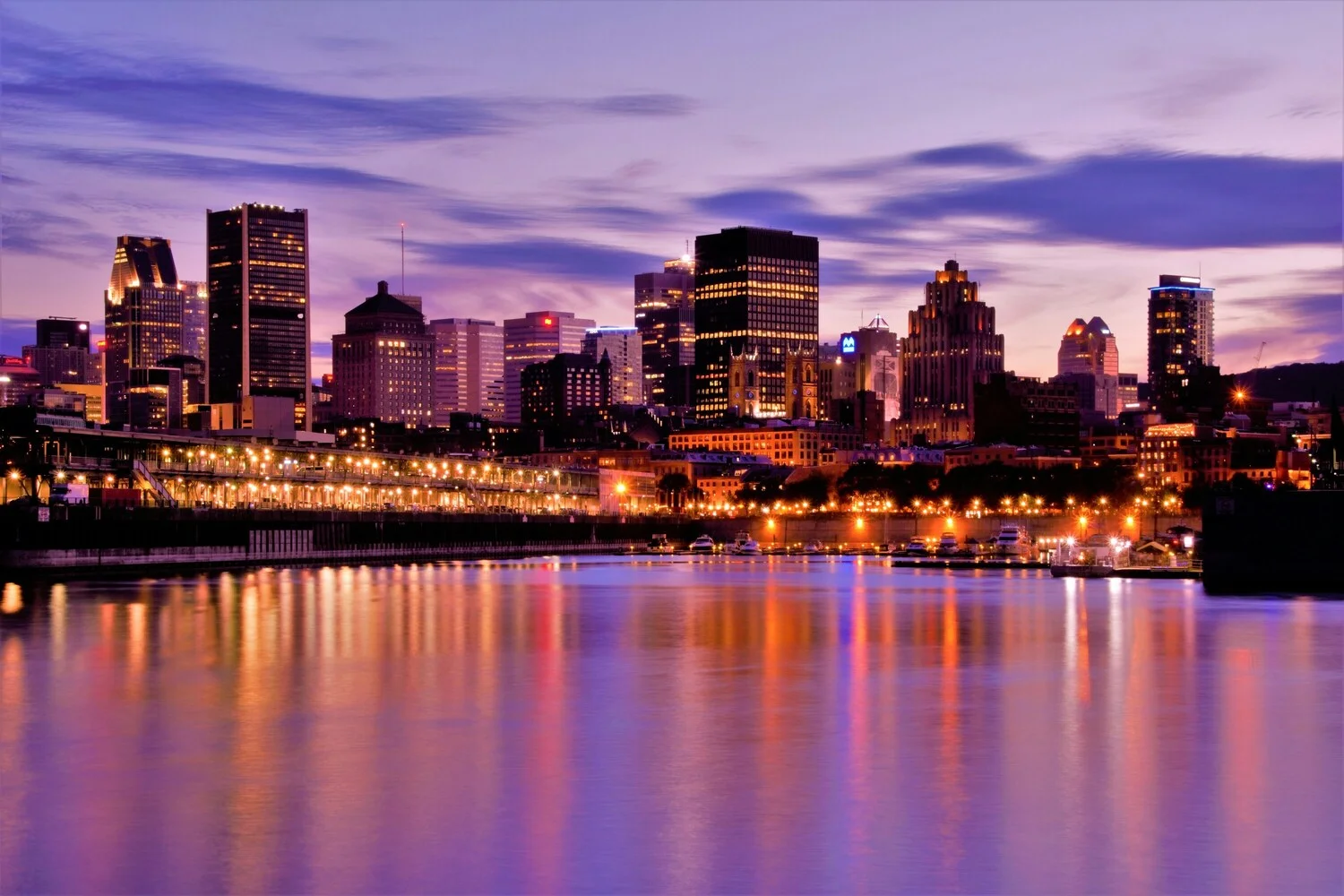
- Kondiaronk Belvedere, Mount Royal: 1260 Remembrance Road, Montreal — The classic Montreal skyline panorama. Best in morning light or at blue hour (30 minutes after sunset). City lights reflect off the St. Lawrence on clear evenings.
- Rue de la Commune, Old Port: 333 Rue de la Commune Ouest — The view of Old Montreal's 18th century rooftops from the waterfront at dawn, with the St. Lawrence behind them, is one of the most photogenic urban scenes in Canada.
- The exterior staircases of the Plateau: Marie-Anne Est between Papineau and Fullum streets — Montreal's signature architectural quirk. The outdoor spiral staircases of the Plateau's Victorian triplex houses are uniquely photogenic, especially in golden hour light on October afternoons.
- Under the Jacques Cartier Bridge: Espace 67, Ile Sainte-Helene — The underside of the bridge with city reflection in the river is one of the best architectural photography spots in the city, particularly at night when the bridge is illuminated.
- Jean-Talon Market on summer Saturday mornings: The colour and scale of the produce stands in peak season is spectacular in photographs — flowers, vegetables, and fruit vendor stalls stretching in every direction.
What Do Locals Know That Tourists Don't?
How Can You Save Money in Montreal?
The single biggest way to save money in Montreal is to use the BYOB (bring your own wine) restaurant culture — bringing your own bottle to dinner saves CAD $25–60 on every restaurant bill and is completely legal and culturally embraced in the city.
What Are the Best Money-Saving Strategies for Montreal?
- Buy a 3-day or weekly STM metro pass (CAD $21/$29.50) rather than paying per ride — it pays for itself after 8 rides.
- Eat your main restaurant meal at lunch — table d'hote (set menus) at excellent restaurants are CAD $18–28 including 3 courses; the same food at dinner costs CAD $50–80.
- The Jazz Festival's free outdoor concerts are genuinely world-class. You can spend a full week attending free shows with headline performers and spend zero on tickets.
- The Montreal Museum of Fine Arts permanent collection is free for anyone under 31, and Wednesday evenings are free for all.
- Shop for picnic food at Jean-Talon or Atwater Market and eat in Mount Royal Park — CAD $15 buys an extraordinary spread of Quebec cheeses, smoked sausage, and bread.
- Take the 747 Express Bus from the airport (CAD $11 including 24-hour metro transfer) instead of a CAD $55 taxi.
- Use BIXI bikes (day pass CAD $7.25) instead of Uber for daytime sightseeing between neighborhoods.
- Look for restaurant happy hours (typically 3–6 PM) — many Plateau and Mile End restaurants offer 25–50% off wine and appetizers.
- The Space for Life Combo Pass (CAD $49.75) covers Biodome, Botanical Garden, Insectarium, and Planetarium — excellent value if visiting all four.
- Download the Cineplex app and go to movies on Tuesday (discount Tuesday — CAD $8 per ticket versus CAD $16 on weekends).
- Free concerts at the Theatre de Verdure in Parc La Fontaine run May through September — among the best-funded free outdoor programming in North America.
- Montreal in winter (January–March) is 30–50% cheaper for hotels. If you can handle the cold, winter Montreal is the best value in North America.
What Can You Do for Free in Montreal?
- Mount Royal Park: Free, always open — hiking, cycling, the Kondiaronk lookout, Beaver Lake, and the Sunday Tam-Tams drum circle (May–October).
- Old Port waterfront: Free to walk the 2.5 km waterfront with views of the St. Lawrence River. Summer entertainment and street performers at no cost.
- Jazz Festival free outdoor stages: 10 days in late June/early July with full concert productions at multiple outdoor stages at no charge.
- Just For Laughs free outdoor shows: Comedy Festival's free outdoor program in July brings professional comedians to street stages throughout the Quartier des spectacles.
- Mural Festival: Over 100 large-scale murals on Saint-Laurent and surrounding streets — a self-guided walking tour of world-class street art at zero cost.
- Jean-Talon and Atwater Markets: Free to browse — the sensory atmosphere of peak summer market days costs nothing to enjoy.
- McGill University campus: 845 Sherbrooke St W — One of the most beautiful university campuses in Canada, with free walking access and frequent free public lectures.
- Bibliotheque et Archives nationales du Quebec (BAnQ): 475 De Maisonneuve Blvd E — The Grande Bibliotheque is a spectacular piece of contemporary architecture with free access to reading rooms, exhibitions, and one of the finest public library spaces in the world.
What Mistakes Should You Avoid in Montreal?
The biggest mistake tourists make in Montreal is going to the wrong poutine restaurant — many tourist-facing spots in Old Montreal serve a mediocre version of Quebec's signature dish at premium prices when the real thing is 10 minutes away by metro.
What Are the Most Common Tourist Mistakes in Montreal?
- Mistake: Demanding service in English without saying "Bonjour" first. → Instead: Begin every interaction with "Bonjour" — it acknowledges the city's French identity and costs you nothing. Montrealers are warm and bilingual; this one word makes every interaction friendlier.
- Mistake: Going to Old Montreal restaurants without researching them. → Instead: Check Google Maps ratings, reserve in advance for well-reviewed spots, and avoid walk-in tourist menus on Place Jacques-Cartier's main drag.
- Mistake: Underestimating the winter cold. → Instead: Check the windchill, not just the temperature. -15°C with a 40 km/h wind feels like -30°C. Dress in serious layers and have a plan for warming up every 30–45 minutes if you're outside.
- Mistake: Not reserving tables at top restaurants. → Instead: Joe Beef, Toque!, and other marquee restaurants book up 2–4 weeks in advance. Reserve online before you arrive, not on the night.
- Mistake: Taking a taxi instead of the STM 747 bus from the airport. → Instead: The 747 Express Bus costs CAD $11 including a 24-hour metro pass versus CAD $55+ for a taxi. It takes slightly longer but saves you CAD $44.
- Mistake: Visiting the Botanical Garden without checking seasonal highlights. → Instead: The Gardens of Light lantern festival in September–October is the best time to visit by far. Plan your trip around this if possible.
- Mistake: Assuming you need a car in Montreal. → Instead: A car is unnecessary and actively inconvenient for a city visit. Parking is expensive and competitive. The metro, BIXI, and walking cover every tourist destination.
- Mistake: Missing the free Jazz Festival concerts because they look too casual. → Instead: The free outdoor stages regularly feature Grammy-winning artists playing full sets to enormous crowds. They are not second-rate — they are often the most memorable shows of the festival.
- Mistake: Buying maple syrup in tourist shops when it's 40% cheaper at the market. → Instead: Buy maple products directly from producers at Jean-Talon or Atwater markets. A 540ml bottle costs CAD $8–12 versus CAD $18–25 at a tourist boutique.
- Mistake: Visiting only in summer and missing what makes Montreal truly unique. → Instead: Montreal in February during Igloofest, or in October during the leaves and the lantern festival, is a completely different and equally extraordinary city.
- Mistake: Staying only in Old Montreal and missing the Plateau's energy. → Instead: Spend at least half a day in the Plateau-Mont-Royal — this is where Montrealers actually live, eat, and drink. The restaurant culture here is where the city's real culinary identity lives.
- Mistake: Skipping Pointe-a-Calliere Museum because it looks small. → Instead: This is the most underrated attraction in Montreal — built over the excavated ruins of the city's 1642 founding, with real 17th century streets visible beneath your feet. Budget 2 hours and be genuinely surprised.
What Is the Best Itinerary for Montreal?
The best itinerary depends on your time. Here are three options — a focused one day, an ideal three days, and a deep five-to-seven day exploration.
What Can You Do in One Day in Montreal?
Morning (8:00 AM – 12:00 PM): Start with fresh bagels from Fairmount Bagel (74 Fairmount Ave W, open at dawn) with cream cheese — eat them standing on the sidewalk as the locals do. Take the metro Orange Line to Place-d'Armes and arrive at Notre-Dame Basilica when it opens at 8 AM before the tour groups arrive. Walk the cobblestone streets of Old Montreal — Rue Saint-Paul Ouest, Place Jacques-Cartier, and the Old Port waterfront.
Afternoon (12:00 PM – 5:00 PM): Lunch at a BYOB bistro in the Plateau — take the metro to Mont-Royal station and walk Rue Saint-Denis for options. After lunch, walk or take the 11 bus up to Mount Royal Park for the Kondiaronk Belvedere viewpoint. Spend 2 hours in the park.
Evening (5:00 PM – 10:00 PM): Return to the Plateau for dinner on Boulevard Saint-Laurent — La Banquise for poutine if it's your first time, or choose from the extraordinary restaurant selection on The Main. After dinner, walk or take a cab to a bar on Saint-Laurent for one of Montreal's signature late nights.
What Is the Perfect 3-Day Itinerary for Montreal?
Day 1: Old Montreal and the Waterfront
Morning: Notre-Dame Basilica (arrive at opening, 8 AM) then explore Old Montreal streets. Lunch on Rue Saint-Paul. Afternoon: Pointe-a-Calliere Museum (2 hours) then the Old Port waterfront for a bike rental and Lachine Canal ride. Evening: Book the AURA light show at Notre-Dame (9 PM) — the combination of daytime and evening experiences of the Basilica is extraordinary.
Day 2: Mount Royal, Plateau, and Mile End
Morning: Take the 11 bus to Mount Royal, hike to the Kondiaronk Belvedere (allow 2 hours for the park). Bagels from St-Viateur Bagel in Mile End. Explore Mile End's Bernard Avenue and Fairmount Avenue boutiques and galleries. Afternoon: Jean-Talon Market for a food-centric afternoon — taste Quebec cheeses, buy a picnic, explore Little Italy. Evening: Dinner on Boulevard Saint-Laurent in the Plateau. Reserve ahead at a BYOB restaurant, bring a bottle from the SAQ.
Day 3: Montreal Museum of Fine Arts and Downtown
Morning: The Montreal Museum of Fine Arts opens at 10 AM — 3 hours in the partially free permanent collection. Lunch at Brasserie T! for the excellent value table d'hote lunch menu. Afternoon: Walk the downtown core — Rue Sherbrooke's museum mile, the McGill campus, Rue Sainte-Catherine for shopping. Evening: Explore the Gay Village on Rue Sainte-Catherine Est for dinner and drinks in summer when the street is car-free.
What Is the Best 5-7 Day Itinerary for Montreal?
Days 1-3: Follow the 3-day itinerary above for the Montreal fundamentals.
Day 4: Quebec City Day Trip (or overnight)
Take the 8:00 AM VIA Rail train to Quebec City (arrive 11 AM). Walk the ramparts of Old Town, visit the Plains of Abraham, lunch in the Quartier Petit-Champlain, and climb to the Chateau Frontenac for the views. Return on the 6 PM train or stay overnight — the walled city at night is unforgettable.
Day 5: Space for Life and the Olympic Park
The Biodome, Botanical Garden, and Insectarium are physically adjacent to the 1976 Olympic Stadium — a full Space for Life day using the combo pass. The Botanical Garden alone justifies the day. Add a visit to the Olympic Tower observation deck for the most architecturally spectacular view of the city.
Day 6: Market, Canal, and Griffintown
Rent a BIXI or visit a bike shop and cycle the full Lachine Canal path. Start at Atwater Market (Fromagerie Atwater for the cheese board of your life), cycle west to Lac Saint-Louis and back, stopping in Griffintown for lunch at one of its contemporary Quebec restaurants.
Day 7: Revisit Favorites and Departure
A final morning bagel from whichever shop won the debate (Fairmount vs St-Viateur — the right answer is both). Visit any neighborhoods or restaurants you missed. Pack maple products from Jean-Talon Market for gifts. The 747 bus to the airport takes 45-60 minutes — leave Old Montreal by 2.5 hours before your flight.
Frequently Asked Questions About Montreal
Here are answers to the most common questions travelers ask about visiting Montreal.
Is Montreal safe for tourists?
Montreal is one of the safest major cities in North America. Violent crime against tourists is rare, though petty theft can occur in busy tourist areas like Old Montreal and near metro stations. Use standard urban precautions and you'll have a safe and enjoyable visit.
What is Montreal known for?
Montreal is known for its French-Canadian culture, world-famous poutine, the Montreal Jazz Festival, stunning Gothic architecture in Old Montreal, and a thriving arts and food scene. It is also famous for its underground city (RESO), vibrant nightlife, and being one of the most bilingual cities in the world.
When is the best time to visit Montreal?
The best time to visit Montreal is from late June through September, when the weather is warm and the city's legendary festival season is in full swing. The Montreal Jazz Festival in late June and July, Osheaga music festival in August, and the Comedy Festival in July are all highlights. Winters are cold but magical for those who enjoy snow and winter festivals.
How many days do you need in Montreal?
Three to four days is ideal for a first-time visitor to Montreal, giving you enough time to explore Old Montreal, the Plateau-Mont-Royal neighborhood, Mount Royal Park, and enjoy the food and nightlife. A full week lets you take a day trip to Quebec City and discover the hidden gems locals love.
Do I need a visa to visit Montreal?
Citizens of the United States do not need a visa to enter Canada but will need a valid passport. Citizens of most European Union countries, Australia, and the UK do not need a visa but must obtain an Electronic Travel Authorization (eTA) before flying. Always check the official Government of Canada website for the most current requirements.
What is the best way to get around Montreal?
The best way to get around Montreal is by metro (STM), which is clean, fast, and covers all major tourist areas. The BIXI bike-share system is excellent in summer. Walking is ideal in Old Montreal and the Plateau. Taxis and Uber are widely available for late nights and areas not served by metro.
How much should I budget per day in Montreal?
Budget travelers can get by on CAD $80–120 per day covering a hostel, street food, and metro rides. Mid-range travelers should expect CAD $200–350 per day for a 3-star hotel, sit-down meals, and attractions. Luxury travelers typically spend CAD $500 or more per day on upscale accommodation, fine dining, and private tours.
What food should I try in Montreal?
You must try poutine (fries, cheese curds, and gravy), a smoked meat sandwich from Schwartz's Deli, bagels from St-Viateur or Fairmount Bagel, tourtiere (meat pie), and maple-everything. Montreal's food scene also includes incredible French bistros, Portuguese rotisserie chicken, and a thriving brunch culture.
Can I drink tap water in Montreal?
Yes, tap water in Montreal is safe to drink and meets high quality standards. You do not need to buy bottled water.
Do people speak English in Montreal?
Yes, Montreal is a bilingual city and most residents in tourist areas speak both French and English. French is the official language and the primary language on signage. Making an effort to greet people with "Bonjour" is appreciated and goes a long way with locals.
Is Montreal good for solo travelers?
Montreal is excellent for solo travelers. The city is safe, easy to navigate by metro, and has a welcoming, social atmosphere. Solo travelers thrive in the cafe culture of the Plateau, the live music scene, and the many walking tours available in Old Montreal. Women traveling alone generally feel comfortable in most neighborhoods.
What should I pack for Montreal?
Pack layers regardless of the season — Montreal weather is unpredictable. In summer bring light clothing plus a jacket for cool evenings and air-conditioned restaurants. In winter pack serious cold-weather gear: a heavy parka, thermal underlayers, waterproof boots, gloves, and a hat. Comfortable walking shoes are essential year-round for the cobblestone streets of Old Montreal.
Ready to Explore Montreal?
Montreal is the kind of city that changes you a little — you arrive expecting a Canadian city and find something closer to a European capital that happens to make the world's best bagels and stays up until 4 AM on a Tuesday. The combination of 400-year-old stone buildings, an extraordinary food culture, world-class festivals, and the warmth of a bilingual city that genuinely enjoys being visited makes Montreal one of the greatest travel destinations in North America.
Planning to extend your Canadian adventure? Also explore our guides to Toronto and Quebec City for more inspiration across this remarkable country.
Have a question or a tip to share? Send us a message — we read every message and update our guides regularly.