Paris Travel Guide: Everything You Need to Know for 2026
Last Updated: March 2026
Your complete guide to visiting the City of Light — from the Eiffel Tower to hidden backstreet cafés
Paris is the capital and largest city of France, located in north-central France along the Seine River, and is one of the most visited cities in the world. It is best known for iconic landmarks like the Eiffel Tower, the Louvre Museum, and Notre-Dame Cathedral, as well as its world-class cuisine, fashion, and art. Visitors come here for its unmatched blend o
f history, romance, culture, gastronomy, and a street-level beauty found in every arrondissement.
Table of Contents
- Paris Overview
- Getting There & Around
- Top Attractions & Landmarks
- Neighborhoods & Districts
- Food & Dining
- Nightlife & Entertainment
- Shopping
- Seasonal Events & Festivals
- Accommodation Recommendations
- Practical Information
- Day Trips & Nearby Destinations
- Insider Tips & Hidden Gems
- Money-Saving Tips
- Common Tourist Mistakes to Avoid
- Sample Itineraries
- Frequently Asked Questions
What Is Paris and Why Should You Visit?
Paris is the capital of France and one of the most iconic cities on Earth — a place where centuries of art, history, fashion, and culinary genius collide on every cobblestoned street corner. Few cities in the world carry the same emotional weight: the first glimpse of the Eiffel Tower, the hushed grandeur of the Louvre, the smell of fresh croissants drifting from a corner boulangerie — Paris delivers moments that stay with you forever.
What sets Paris apart is the sheer density of world-class experiences in such a walkable area. Within a few kilometers you can visit one of the world's greatest art museums, stroll through a 17th-century palace garden, eat at a Michelin-starred restaurant, browse an open-air flower market, and watch the city light up from a candlelit rooftop bar. Paris rewards slow travelers who wander without a strict plan as much as it rewards those with a packed itinerary.
Paris can feel expensive and crowded, especially in summer, but with the right planning — visiting free museums, eating at local bistros instead of tourist traps, and traveling in shoulder season — it is absolutely possible to enjoy the full Parisian experience without breaking the bank.
When Is the Best Time to Visit Paris?
Spring (April–June): This is widely considered the best time to visit Paris. Temperatures sit between 12°C–20°C (54°F–68°F), the cherry blossoms bloom in parks, and café terraces fill up without the suffocating summer heat. Crowds are manageable in April and May before the school holiday rush in June. Book accommodation at least 2–3 months ahead.
Summer (July–August): Paris gets very busy and prices spike, especially around the 14th of July (Bastille Day). Temperatures reach 25°C–33°C (77°F–91°F), occasionally higher. The upside: Paris-Plages (artificial beach along the Seine) is open, outdoor concerts fill the parks, and the city has a festive energy. Many Parisians leave in August, which actually quiets some neighborhoods.
Autumn (September–November): Arguably the smartest time to visit. Crowds thin after mid-September, temperatures remain pleasant (10°C–18°C / 50°F–64°F), the city turns golden with fall foliage, and you'll find better hotel rates. This is also harvest season in nearby wine regions, great for day trips.
Winter (December–February): Paris in winter is magical — Christmas lights, ice skating rinks at the Trocadéro, and fewer tourist crowds at major museums. It gets cold (2°C–8°C / 36°F–46°F) and rainy, but the festive atmosphere in December is special. January and February offer the cheapest prices of the year for flights and hotels.
How Many Days Do You Need in Paris?
- 1–2 days: See the Eiffel Tower, Louvre, and Notre-Dame; best for a layover or first-timer's sampler
- 3–4 days: Ideal for a first visit — covers major landmarks, a neighborhood walk, great food, and one day trip or extra museum
- 5–7 days: Allows deeper exploration of multiple arrondissements, Versailles, Montmartre, and hidden gems
- 1 week+: For true lovers of art, food, and culture — dive into lesser-known museums, local markets, wine bars, and the surrounding Île-de-France region
Quick Facts About Paris
- Population: Approx. 2.1 million (city); 12 million (metro area)
- Language: French (English widely spoken in tourist areas and hotels)
- Currency: Euro (€)
- Time Zone: Central European Time (CET) — UTC+1; Summer: CEST UTC+2
- Country Code: +33
- Area Code: 01 (Paris)
- Climate: Oceanic (mild, four distinct seasons; rain year-round)
- Altitude: Approx. 35 m (115 ft) above sea level
How Do You Get To and Around Paris?
The easiest way to reach Paris is by air into Charles de Gaulle (CDG) — one of Europe's busiest international hubs — though Orly Airport and Beauvais are also options. From within Europe, the Eurostar train from London and high-speed TGV trains from across France and neighboring countries are fast, comfortable alternatives to flying.
Which Airports Serve Paris?
Charles de Gaulle Airport (CDG)
95 Boulevard du Maréchal de Lattre de Tassigny, 95700 Roissy-en-France, France
CDG is 30 km (19 miles) northeast of Paris city center and handles most long-haul and European flights. It is served by virtually every major airline in the world including Air France, Delta, United, British Airways, and Lufthansa. The airport has three terminals (T1, T2, T3) with full facilities — shops, lounges, restaurants, and currency exchange.
Orly Airport (ORY)
Route de Pontoise, 94390 Orly, France
Orly sits 14 km (9 miles) south of Paris and primarily handles European, domestic French, and some North African routes. It is smaller and quicker to navigate than CDG, making it a pleasant alternative when available.
Beauvais-Tillé Airport (BVA)
Aéroport de Beauvais, 60000 Beauvais, France
Used mainly by Ryanair, Beauvais is 85 km (53 miles) north of Paris — budget fares often come at the cost of a long transfer into the city. Factor in the shuttle bus cost (around €17 each way) and travel time (1.5 hours) before booking here.
How Do You Get from the Airport to the City Center?
RER B Train (from CDG): The cheapest and most popular option. Trains run every 10–15 minutes from CDG Terminals 2 and 3 directly into central Paris stops like Gare du Nord, Châtelet-Les Halles, and Saint-Michel. Journey time: 35–45 minutes. Cost in 2026: approximately €11.80 for a single ticket.
Le Bus Direct (Airport Coach): Comfortable coaches connect CDG to major Paris neighborhoods including the Arc de Triomphe, Trocadéro, Gare Montparnasse, and Gare de Lyon. Journey: 45–75 minutes depending on traffic. Cost: approximately €18 one-way, €31 return. Luggage-friendly and no metro stairs.
Official Taxi (from CDG): Fixed flat fares apply — €56 to Right Bank addresses, €65 to Left Bank addresses. Journey time: 30–60 minutes depending on traffic. Only use taxis from official taxi ranks outside arrivals halls — never accept approaches from touts inside the terminal.
Rideshare (Uber/Bolt): Uber and Bolt operate from CDG from dedicated pick-up zones. Prices are comparable to taxis (€40–€70) but you can book in the app before arrival. Surge pricing can push this higher during peak times.
Private Transfer: Pre-booked private transfers cost €70–€120 from CDG and include a driver waiting for you by name at arrivals. Great for families with luggage or late-night arrivals when you want zero stress.
What Is the Best Way to Get Around Paris?
The best way to get around Paris is by the Métro (subway) combined with walking — the system is fast, affordable, and covers almost everywhere a tourist wants to go. For longer journeys across the city, RER trains are faster. Taxis and Vélib' (bike share) are great supplements.
Paris Métro & Public Transport
The Paris Métro has 16 lines and over 300 stations, running from approximately 5:30 AM to 1:15 AM on weekdays (until 2:15 AM on Fridays and Saturdays). It is clean, frequent (trains every 2–5 minutes at peak), and covers every major tourist area. The RER regional express network supplements the Métro for longer distances including Versailles and CDG airport.
Tickets & Passes (2026 prices):
- Single t+ ticket (zones 1–2): €2.15
- Carnet of 10 t+ tickets: €17.35
- Navigo Easy card (rechargeable): €2.00 card fee + load tickets
- Navigo Day Pass (unlimited zones 1–5): €8.65
- Navigo Weekly Pass (Mon–Sun, all zones): €30.00
Taxis & Rideshare
Paris taxis are metered and regulated. A short trip within central Paris typically costs €8–€15. Uber, Bolt, and the French app G7 all operate widely. Always insist the meter is running or confirm the flat rate before departure. Avoid unlicensed touts — Paris has strict regulations and official taxis display a lit roof sign.
Vélib' Bike Share
Paris has one of the best urban bike-share systems in the world. Vélib' has over 1,400 stations and 20,000 bikes (including electric). A single 30-minute ride costs €3; a day pass is €5 (unlimited 30-minute rides). Perfect for scenic rides along the Seine or through the Marais. The flat terrain of central Paris makes cycling easy and enjoyable.
Walking
Paris is extremely walkable. The historic center is compact — it takes about 45 minutes to walk from the Louvre to the Eiffel Tower. Sidewalks are wide, well-maintained, and café-lined, making strolling a pleasure rather than a chore.
Walkability Score: 90/100 for the tourist center. Most major attractions in the 1st–8th arrondissements are within comfortable walking distance of each other.
Smart travellers always compare transfer options before booking — prices for the same route can vary by 40% or more. Take 60 seconds to check all options and choose what works best for your arrival.
What Are the Top Attractions and Landmarks in Paris?
Paris's top attractions include the Eiffel Tower, the Louvre, Notre-Dame Cathedral, Versailles, and Sacré-Cœur — but the city's real magic lies in the dozens of world-class museums, royal gardens, and neighborhoods that most visitors barely scratch the surface of.
Eiffel Tower (Tour Eiffel)
Champ de Mars, 5 Avenue Anatole France, 75007 Paris, France
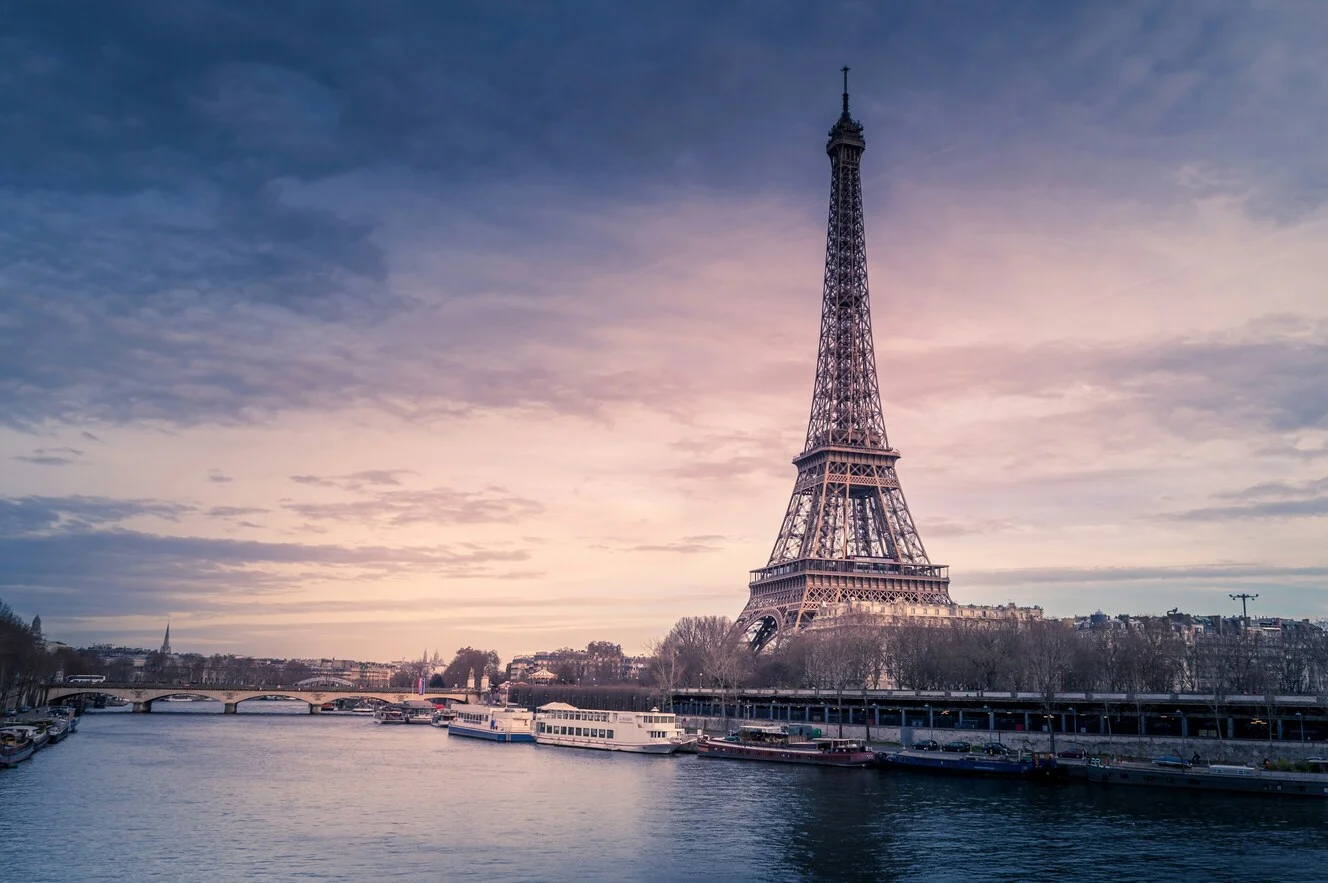
The Eiffel Tower is arguably the most recognized structure in the world — a 330-meter (1,083 ft) iron lattice tower built by Gustave Eiffel for the 1889 World's Fair. What was originally meant to be a temporary structure became the permanent symbol of Paris and France itself. Today it receives approximately 7 million visitors per year, making it the most visited paid monument on Earth.
There are three accessible floors. The first and second floors have glass-floored sections, restaurants, and exhibits. The summit offers a 360-degree view stretching up to 70 km on clear days. The entire tower sparkles with 20,000 light bulbs every hour after dark for five minutes — an absolutely breathtaking sight from the Trocadéro plaza across the river.
Why visit: No matter how many photos you've seen, standing beneath the tower or ascending to the summit delivers a genuine sense of wonder. Book summit tickets in advance — walk-up queues can exceed 3 hours in peak season.
Entrance (2026): Adults €29.40 (summit), €18.80 (2nd floor); Youth 12–24 €14.70 / €9.40; Children under 12 €7.50 / €4.70
Best time: First session at 9 AM or 45 minutes before closing; sunset for photos
Hours: Daily 9:00 AM – 12:45 AM (last admission 11 PM)
The Louvre Museum (Musée du Louvre)
Rue de Rivoli, 75001 Paris, France
The Louvre is the world's largest and most visited art museum, housed in a stunning 12th-century fortress-palace that later became a royal residence. Its glass pyramid entrance, designed by I.M. Pei and opened in 1989, is itself an icon. The museum spans 72,735 square meters and holds nearly 500,000 objects — though only about 35,000 are on display at any time.
The permanent collection covers ancient civilizations (Egyptian, Greek, Roman), Islamic art, European paintings, sculptures, and decorative arts from the Middle Ages to the mid-19th century. Highlights include the Mona Lisa (Room 711, Denon Wing), Venus de Milo (Sully Wing), and the Winged Victory of Samothrace (top of the Daru staircase).
Why visit: Even if you're not an art enthusiast, the sheer scale and beauty of the building and its collections make the Louvre an unmissable human achievement. Plan strategically — trying to see everything is impossible and exhausting.
Entrance (2026): Adults €22; Free for visitors under 18 and EU residents under 26; Free on first Friday evening of each month (after 6 PM)
Best time: Wednesday or Friday evenings (open until 9:45 PM, fewer crowds)
Hours: Monday, Thursday, Saturday, Sunday: 9 AM – 6 PM; Wednesday, Friday: 9 AM – 9:45 PM; Closed Tuesdays
Notre-Dame Cathedral (Cathédrale Notre-Dame de Paris)
6 Parvis Notre-Dame, Place Jean-Paul II, 75004 Paris, France
Notre-Dame de Paris is a masterpiece of French Gothic architecture, construction of which began in 1163 and took nearly 200 years to complete. The cathedral suffered a devastating fire on April 15, 2019 that destroyed its spire and much of the roof. After years of extraordinary restoration work, Notre-Dame reopened to visitors in December 2024 — more magnificent than ever, with fully restored interiors and a brand-new spire.
The restored cathedral features its famous rose windows (13th century originals, beautifully preserved), its soaring nave, the grand organ (one of the largest in France), and intricate medieval stonework throughout. Climbing the towers offers a gargoyle's-eye view over central Paris and the Seine.
Why visit: This is one of the greatest Gothic cathedrals on Earth, and its reopening after the 2019 fire is itself a historic moment. Visiting now means seeing a cathedral that has been lovingly restored to its absolute best in decades.
Entrance (2026): Cathedral interior — Free; Tower climb: Adults €13, under 18 free
Best time: Weekday mornings (9–10 AM) before coach tour groups arrive
Hours: Monday–Friday 8 AM – 6:45 PM; Saturday–Sunday 8 AM – 7:15 PM (towers close earlier)
Palace of Versailles (Château de Versailles)
Place d'Armes, 78000 Versailles, France
The Palace of Versailles, 23 km (14 miles) southwest of Paris, was the principal royal residence of France from 1682 until the French Revolution in 1789. It is one of the most opulent royal palaces in the world — a UNESCO World Heritage Site covering 2,000 acres of formal gardens, fountains, and woods, with a palace boasting 2,300 rooms. The Hall of Mirrors (Galerie des Glaces) alone — 73 meters long, lined with 357 mirrors and 20,000 candles — is worth the journey alone.
The Grand Trianon and Petit Trianon palaces within the grounds offer a more intimate look at royal life, while the restored Hameau de la Reine (Marie Antoinette's fantasy rural hamlet) is a fascinating and surprisingly peaceful corner of the vast estate.
Why visit: Versailles gives you a direct window into the absolute power and extraordinary excess of the French monarchy. The scale of the gardens alone — where you can walk for hours — is impossible to fully appreciate from photos.
Entrance (2026): Palace + Gardens: Adults €21.50; under 18 free; Gardens only (no fountain shows): Free; Passport ticket (all areas): €32
Best time: Arrive at opening (9 AM) on a Tuesday or Wednesday; avoid Mondays (closed) and summer weekends
Hours: Palace: Tuesday–Sunday 9 AM – 5:30 PM (6:30 PM April–October); Gardens: Daily 8 AM – 8:30 PM
Musée d'Orsay
1 Rue de la Légion d'Honneur, 75007 Paris, France
The Musée d'Orsay is housed in a stunning former railway station (Gare d'Orsay, built 1900) on the Left Bank of the Seine, directly across the river from the Tuileries Garden. It holds the world's largest collection of Impressionist and Post-Impressionist masterpieces, including works by Monet, Manet, Renoir, Degas, Van Gogh, Gauguin, Cézanne, and Toulouse-Lautrec. For many visitors, this is their single favorite museum in Paris.
The building itself is breathtaking — its vast iron-and-glass nave has been perfectly converted into gallery space, with the original ornate clock faces still framing views of the Seine. The collection spans 1848 to 1914, meaning it picks up where the Louvre leaves off.
Why visit: If you have even a passing interest in Impressionism, this is one of the greatest collections ever assembled. Seeing Van Gogh's self-portraits and Monet's Water Lilies studies in person is genuinely moving.
Entrance (2026): Adults €16; under 18 free; EU residents under 26 free; First Sunday of every month: Free
Best time: Thursday evenings (open until 9:45 PM with smaller crowds); Tuesday mornings
Hours: Tuesday–Sunday 9:30 AM – 6 PM; Thursday until 9:45 PM; Closed Mondays
Sacré-Cœur Basilica & Montmartre
35 Rue du Chevalier de la Barre, 75018 Paris, France
The Sacré-Cœur Basilica sits atop the Butte Montmartre — the highest point in Paris at 130 m (427 ft) — and its gleaming white Romano-Byzantine domes have dominated the northern Paris skyline since its completion in 1914. The views from the front steps across the whole of Paris are stunning and completely free. Inside, the mosaic of Christ in Majesty above the altar is one of the largest mosaics in the world.
The surrounding village of Montmartre is where Picasso, Modigliani, Toulouse-Lautrec, and Van Gogh all lived and worked. Cobblestone streets, vineyard terraces, artist ateliers, and the famous Place du Tertre (outdoor portrait square) make Montmartre feel like a village within the city. The Moulin Rouge cabaret is at the foot of the hill.
Why visit: Montmartre offers the most atmospheric and romantic neighborhood walk in Paris — especially early in the morning before the crowds arrive. The basilica is free to enter, and the panoramic view from the steps is one of the best in the city.
Entrance: Basilica free; Dome climb: €8 adults
Best time: Early morning (8–9 AM) for the neighborhood walk; golden hour for photos
Hours: Basilica open daily 6 AM – 10:30 PM
The Marais & Place des Vosges
Place des Vosges, 75004 Paris, France
Place des Vosges is Paris's oldest planned square, commissioned by King Henri IV in 1612 — a perfect ensemble of 36 red-brick pavilions surrounding a central garden of fountains and chestnuts. Victor Hugo lived at No. 6 (now a free museum). The elegant arcaded galleries house galleries, restaurants, and boutiques. It is one of the most beautiful squares in Europe and remains a living, active space rather than a frozen museum piece.
The surrounding Marais neighborhood (3rd and 4th arrondissements) is one of Paris's most rewarding areas to walk. Medieval townhouses, Jewish quarter delis, LGBTQ+ bars, cutting-edge art galleries, and boutique fashion shops all coexist within a few blocks. The area was largely spared from Haussmann's 19th-century modernization, so it retains its original medieval street layout.
Why visit: The Marais is where Paris feels most alive day-to-day — markets, cafés, architecture, and street life all at their best. Place des Vosges provides one of the most photogenic and tranquil spots in the city.
Entrance: Free (public square and garden)
Best time: Weekend mornings when the arcades are lively
Hours: Square open at all times; gardens daily 8 AM – 8:30 PM (seasonal)
Musée de l'Orangerie
Jardin des Tuileries, Place de la Concorde, 75001 Paris, France
The Orangerie is a small, intimate museum at the western end of the Tuileries Garden that houses one of the most extraordinary art experiences in the world: Claude Monet's famous Water Lilies (Les Nymphéas) — eight enormous curved canvases installed in two purpose-built oval rooms flooded with natural light. Monet designed these rooms himself, and standing in the center surrounded by the soft, shimmering paintings is genuinely meditative.
The lower floors contain the Walter-Guillaume collection of Impressionist and Post-Impressionist works including Cézanne, Matisse, Picasso, Renoir, and Rousseau. Despite the quality of this collection, it is often overlooked in favor of the Water Lilies rooms above.
Why visit: The Water Lilies rooms are among the most peaceful and moving art experiences in Paris — and the world. This is a much smaller, less crowded, and more intimate experience than the Louvre or Orsay.
Entrance (2026): Adults €12.50; under 18 free; EU residents under 26 free; First Sunday of each month: Free
Best time: Weekday mornings; the oval rooms are most magical in natural morning light
Hours: Wednesday–Monday 9 AM – 6 PM; Closed Tuesdays
Sainte-Chapelle
8 Boulevard du Palais, 75001 Paris, France
Sainte-Chapelle is a royal Gothic chapel completed in 1248 on the Île de la Cité, just a short walk from Notre-Dame. It was built by King Louis IX (Saint Louis) to house his collection of Christian relics including what was believed to be Christ's crown of thorns. The upper chapel is a breathtaking cage of 15 floor-to-ceiling stained glass windows — 1,113 panels covering 618 square meters — depicting over 1,000 biblical scenes in extraordinary detail and color.
Sainte-Chapelle is one of Paris's most underrated and overlooked major monuments. On a sunny day, the interior is transformed into a kaleidoscope of colored light — blue, red, gold, and green — that rivals anything in Europe for sheer visual impact.
Why visit: This is one of the finest examples of Gothic architecture in existence and one of the most spectacular interior spaces in Paris — without the Louvre's massive crowds. Many visitors say it is their single most memorable Parisian experience.
Entrance (2026): Adults €13; under 18 free; Combined ticket with Conciergerie: €18
Best time: Sunny days (essential for the light through the windows); late afternoon for warmest light tones
Hours: Daily 9 AM – 7 PM (until 5 PM October–March)
Arc de Triomphe & Champs-Élysées
Place Charles de Gaulle, 75008 Paris, France
The Arc de Triomphe stands at the center of the Place Charles de Gaulle — the massive roundabout where 12 avenues meet, including the iconic Avenue des Champs-Élysées. Commissioned by Napoleon after his victory at Austerlitz in 1805 and completed in 1836, the arch stands 50 meters high and honors those who fought in the French Revolutionary and Napoleonic Wars. The Unknown Soldier's tomb with its eternal flame burns beneath it.
Climbing to the rooftop terrace offers one of Paris's most dramatic panoramic views — the straight line of the Champs-Élysées stretching to the Louvre in one direction and to the Grande Arche de La Défense in the other. The Champs-Élysées itself (1.9 km from the Arc to Place de la Concorde) is lined with flagship stores, cinemas, cafés, and luxury brands.
Why visit: The Arc de Triomphe rooftop is one of the best viewpoints in Paris for understanding the city's radiating urban plan. The Champs-Élysées is famous worldwide, though locals will tell you the side streets nearby are more interesting.
Entrance (2026): Adults €13; EU residents under 26 free; under 18 free
Best time: Sunset for the golden light view down the Champs-Élysées
Hours: Daily 10 AM – 10:30 PM (April–September); 10 AM – 9:30 PM (October–March)
Centre Pompidou
Place Georges-Pompidou, 75004 Paris, France
The Centre Pompidou is one of the world's most important modern and contemporary art museums — and one of its most architecturally controversial buildings. Designed by Renzo Piano and Richard Rogers and opened in 1977, its inside-out design (with all utilities, escalators, and ducts on the exterior in color-coded pipes) was shocking at the time and remains bold today. The building is currently undergoing a major renovation with phased reopening — check ahead for which galleries are accessible in 2026.
The Musée National d'Art Moderne inside holds Europe's largest collection of modern art — over 120,000 works including Matisse, Kandinsky, Duchamp, Warhol, and hundreds of other 20th and 21st-century artists. The free public plaza in front is a lively gathering place and home to street performers, the animated Stravinsky Fountain, and the Atelier Brancusi studio.
Why visit: The Pompidou offers the best modern art collection in France and a rooftop terrace with sweeping views over the Marais. The surrounding area — Beaubourg — is one of Paris's most vibrant pedestrianized districts.
Entrance (2026): Adults €15; under 18 free; First Sunday of each month: Free — verify current access given ongoing renovations
Best time: Weekday afternoons
Hours: Wednesday–Monday 11 AM – 9 PM; Closed Tuesdays
Book your tours and tickets in advance — it saves hours of queuing and often gets you a better price. These two platforms cover different options, so it's worth checking both.
What Are the Best Neighborhoods to Explore in Paris?
Paris's neighborhoods each have a strikingly distinct character — from the grand boulevards of the 8th to the bohemian lanes of Montmartre, the medieval streets of the Marais, and the intellectual cafés of Saint-Germain-des-Prés. Here are the best ones to explore.
Le Marais (3rd & 4th Arrondissements)
Character: The Marais is Paris's most fashionable and historically rich neighborhood — a maze of 17th-century hôtels particuliers (private mansions), medieval lanes, and beautiful squares. It somehow manages to be simultaneously ancient, arty, LGBTQ+-friendly, and fiercely chic.
What makes it special: You'll find the city's Jewish quarter on Rue des Rosiers, the stunning Place des Vosges, the Musée Picasso, cutting-edge contemporary galleries, and some of the best falafel in Europe — all within a 15-minute walk of each other.
Best for: First-time visitors, culture lovers, LGBTQ+ travelers, foodies, architecture enthusiasts
Must-see in this area: Place des Vosges, Rue des Rosiers, Musée Picasso, Rue de Bretagne market, Hôtel de Ville
How to get there: Métro lines 1 or 11 to Saint-Paul or Arts et Métiers; 15-minute walk from Notre-Dame
Location: Place des Vosges, 75004 Paris, France
Saint-Germain-des-Prés (6th Arrondissement)
Character: Saint-Germain is the intellectual soul of Paris — this is where Sartre and de Beauvoir philosophized at Café de Flore, where Hemingway wrote, and where the French New Wave was born. Today it balances literary heritage with luxury boutiques, outstanding food markets, and some of the best antique shops in the world.
What makes it special: The Marché Saint-Germain covered market, the 6th-century abbey church of Saint-Germain-des-Prés (Paris's oldest church), Café de Flore and Les Deux Magots — plus the Luxembourg Gardens just a few minutes' walk away.
Best for: Literature lovers, luxury shoppers, café culture enthusiasts, couples
Must-see in this area: Café de Flore, Jardin du Luxembourg, Église Saint-Germain-des-Prés, Rue de Buci market, Odéon Théâtre
How to get there: Métro line 4 to Saint-Germain-des-Prés
Location: Boulevard Saint-Germain, 75006 Paris, France
Montmartre (18th Arrondissement)
Character: Montmartre retains its village character despite being squarely in the heart of Paris — winding cobblestone lanes, a working vineyard (Clos Montmartre), artist studios, cabarets, and sweeping city views from the Sacré-Cœur steps. It feels like stepping into a different era.
What makes it special: The hilltop location gives Montmartre a unique topography — steep stairways, surprising viewpoints, and hidden squares that most of Paris lacks. The area has genuine bohemian roots and still attracts working artists.
Best for: Romantics, photographers, art lovers, those who love atmospheric walking
Must-see in this area: Sacré-Cœur, Place du Tertre, Rue Lepic, Moulin Rouge (exterior), Clos Montmartre vineyard, Bateau-Lavoir (Picasso's first studio)
How to get there: Métro line 2 to Blanche or Abbesses; Funicular from Anvers
Location: Place du Tertre, 75018 Paris, France
Latin Quarter (5th Arrondissement)
Character: The Latin Quarter is Paris's student and intellectual heart — home to the Sorbonne university (founded 1257), narrow streets lined with bookshops and crêperies, the Roman Arènes de Lutèce, and the magnificent Panthéon. The neighborhood has been the home of scholars, poets, and revolutionaries for eight centuries.
What makes it special: The mix of history (Roman ruins, medieval university, 18th-century domes) with lively present-day café and bar culture makes this one of the most energetic neighborhoods in Paris. Shakespeare and Company bookshop — one of the most famous in the world — is on the Seine near Notre-Dame.
Best for: History buffs, students, book lovers, budget travelers, solo travelers
Must-see in this area: Panthéon, Musée de Cluny, Arènes de Lutèce, Rue Mouffetard market, Shakespeare and Company
How to get there: Métro line 10 to Cluny–La Sorbonne or line 7 to Place Monge
Location: Place de la Sorbonne, 75005 Paris, France
Canal Saint-Martin (10th Arrondissement)
Character: Canal Saint-Martin is the trendiest and most authentic "local" neighborhood in Paris right now — a 4.5 km tree-lined canal with iron footbridges, lock gates, hip cafés, indie boutiques, and a genuinely young, creative crowd of Parisians. This is where Amélie Poulain skipped stones in the film.
What makes it special: This area feels completely unlike the tourist Paris of the Right Bank. The canalside is especially lovely on Sunday when the roads are closed to cars and filled with cyclists, picnickers, and market stalls.
Best for: Young travelers, repeat visitors, hipsters, photographers, those wanting a local experience
Must-see in this area: Canal Saint-Martin locks, Quai de Valmy cafés, Marché du Temple, Hôtel du Nord
How to get there: Métro line 5 to République or line 7 to Jacques Bonsergent
Location: Quai de Valmy, 75010 Paris, France
Île Saint-Louis (4th Arrondissement)
Character: Île Saint-Louis is a tiny, tranquil natural island in the Seine — just a few blocks wide — lined with 17th-century mansions, one main street of restaurants and ice cream shops, and absolutely zero tourist traps. It feels like a private village in the middle of the busiest city in France.
What makes it special: The island has no Métro station and deliberately minimal commercial development, which keeps it peaceful even in peak season. Berthillon ice cream (made here since 1954) is justifiably world-famous.
Best for: Couples, quiet afternoon walkers, ice cream enthusiasts, those wanting a calm break from the crowds
Must-see in this area: Berthillon ice cream, Rue Saint-Louis en l'Île, views from the island's quays toward Notre-Dame
How to get there: Walk across Pont Saint-Louis from Notre-Dame; Métro line 7 to Pont Marie
Location: Rue Saint-Louis en l'Île, 75004 Paris, France
What Food Should You Try in Paris?
Paris is famous for being the culinary capital of the world — the city that codified modern restaurant culture, gave us haute cuisine, and still sets the global standard for bread, pastry, cheese, and wine. The must-try items range from a perfect buttery croissant to a steak-frites at a traditional zinc-countered bistro.
What Are the Must-Try Local Dishes in Paris?
- Croissant au beurre — A flaky, buttered crescent pastry that bears no relation to its pale imitations elsewhere. Go to a proper artisan boulangerie (bakery with a "artisan boulanger" sign) and you'll taste the difference immediately. Best eaten warm, around 8 AM.
- Steak-Frites — The quintessential Parisian bistro dish: a perfectly cooked entrecôte (rib steak) with a mountain of crispy thin fries. Served with béarnaise sauce. Unpretentious and delicious.
- Soupe à l'Oignon (French Onion Soup) — Caramelized onion broth topped with a thick crouton and molten Gruyère cheese. Best on a cold Paris evening.
- Crêpes & Galettes — Sweet crêpes (flour, butter, egg) or savory galettes (buckwheat flour) from a crêperie. The galette complète (ham, cheese, egg) is a perfect lunch.
- Escargots de Bourgogne — Burgundy snails cooked in herb garlic butter. A classic Parisian brasserie starter that converts most skeptics instantly.
- Croque-Monsieur / Croque-Madame — Hot ham and cheese toasted sandwich (madame has a fried egg on top). A Parisian café staple for lunch.
- Tarte Tatin — Upside-down caramelized apple tart, invented by the Tatin sisters in the Loire Valley but perfected in Parisian restaurants. Served warm with crème fraîche.
- Macarons — Delicate almond meringue sandwich cookies from Ladurée or Pierre Hermé. The original flavors — rose, raspberry, salted caramel — are still the best.
Where Should You Eat in Paris?
Budget-Friendly (Under €15 per meal)
- Bouillon Chartier — 7 Rue du Faubourg Montmartre, 75009 Paris. A legendary Parisian bouillon (workers' canteen) open since 1896, serving classic French dishes at extraordinary value. Expect queues but it moves fast. Main dishes from €8–€14.
- Marché d'Aligre — Place d'Aligre, 75012 Paris. The city's most authentic outdoor food market (Tue–Sun mornings) — perfect for buying fresh bread, cheese, charcuterie, and fruit for a riverside picnic. Budget €8–€12 for a feast.
- Crêperie de Josselin — 67 Rue du Montparnasse, 75014 Paris. On the famous "Crêpe Street" in Montparnasse, this Breton crêperie makes excellent galettes with quality local ingredients. €9–€13 per galette.
Mid-Range (€20–€50 per meal)
- Bistrot Paul Bert — 18 Rue Paul Bert, 75011 Paris. A classic, beloved Parisian bistro with a €42 set menu (entrée, plat, dessert) that represents exactly what French bistro cooking is at its best. Book ahead.
- Le Comptoir du Relais — 9 Carrefour de l'Odéon, 75006 Paris. Chef Yves Camdeborde's celebrated Saint-Germain bistro. Weekday lunches are à la carte and affordable (€25–€40); Saturday evening is a full 5-course set menu.
- Septime — 80 Rue de Charonne, 75011 Paris. One of Paris's most praised modern bistros with a seasonal tasting menu approach. Reservations essential — book via their website 3–4 weeks ahead. €55–€75 for the set menu.
Fine Dining (€100+ per meal)
- Le Grand Véfour — 17 Rue de Beaujolais, 75001 Paris. One of the most beautiful dining rooms in Paris — a 1784 Palais-Royal jewel with original Empire décor. Classic haute cuisine with a modern touch. €150–€250 per person.
- L'Ambroisie — 9 Place des Vosges, 75004 Paris. Three Michelin stars in the most beautiful location in Paris — Place des Vosges. Reserve months in advance. €300+ per person. An utterly exceptional experience.
What Are the Dining Customs in Paris?
Meal times: Breakfast is typically 7–9 AM (a café crème and croissant at a bar). Lunch is noon–2 PM (the main meal for many Parisians). Dinner starts at 7:30–8 PM and rarely before. Kitchens often close by 10:30 PM.
Tipping: Service (15%) is legally included in all restaurant bills in France. Tipping is appreciated but never expected — €1–€5 rounding up or leaving coins is perfectly normal and generous.
Reservations: Essential for mid-range and above, especially on weekends. For popular bistros, book 2–4 weeks ahead. Booking online via LaFourchette (TheFork) is easy and widely used.
Dress code: Smart casual is appropriate for most mid-range restaurants. Fine dining requires proper attire — no shorts or trainers. Cafés and crêperies are fully casual.
What Is the Nightlife Like in Paris?
Paris's nightlife scene is sophisticated, varied, and starts late — most bars don't fill up until 9–10 PM and clubs rarely hit their stride before midnight. The city has everything from candlelit wine bars and live jazz cellars to cutting-edge electronic music clubs and legendary cabarets.
Where Are the Best Areas for Nightlife in Paris?
- Oberkampf / Ménilmontant (11th): Rue Oberkampf, 75011 Paris — The liveliest bar street in Paris for a young local crowd. Dozens of bars ranging from dive bars to cocktail lounges, busy every night from Thursday to Saturday.
- Pigalle / South Pigalle (SoPi) (9th/18th): Place Pigalle, 75018 Paris — Once notorious, now reinvented as Paris's hippest neighborhood. Trendy cocktail bars, record shops, and intimate music venues mix with the Moulin Rouge and its neighbors.
- Canal Saint-Martin (10th): Quai de Jemmapes, 75010 Paris — Canalside bars and pop-up events popular with young creative Parisians. More relaxed and sociable than club-oriented areas.
What Are the Best Bars and Clubs in Paris?
Bars & Pubs
- Le Syndicat — 51 Rue du Faubourg Saint-Denis, 75010 Paris. A cocktail bar dedicated entirely to French spirits — Armagnac, Calvados, Cognac, and artisan French gins. No imports. Inventive, excellent, and proudly patriotic. €14–€18 per cocktail.
- Harry's New York Bar — 5 Rue Daunou, 75002 Paris. Opened in 1911 and claiming to be the birthplace of the Bloody Mary and the French 75. Dark wood, worn leather, and proper bartenders. A Parisian institution. €14–€20 per cocktail.
- La Belle Hortense — 31 Rue de Bretagne, 75003 Paris. A Marais wine bar inside an independent bookshop. Perfect for a literary glass of natural wine in a genuinely special atmosphere. Wine from €6–€12 per glass.
Clubs & Dancing
- Rex Club — 5 Boulevard Poissonnière, 75002 Paris. One of Europe's great techno and electronic music clubs, operating since 1987 with a legendary sound system. Entry €15–€20. Thursday to Saturday nights.
- Concrete — 69 Port de la Rapée, 75012 Paris. A club on a boat on the Seine that pioneered the extended weekend rave format in Paris. Starts Friday evening and runs (in phases) through Sunday. International DJ lineup. Entry €15–€25.
Live Music & Shows
- Moulin Rouge — 82 Boulevard de Clichy, 75018 Paris. The world-famous cabaret opened in 1889 — sequins, feathers, French can-can dancing, and serious production values. The Féerie show runs nightly. Dinner + show from €210; show only (9 PM or 11 PM): from €115.
- Caveau de la Huchette — 5 Rue de la Huchette, 75005 Paris. A 13th-century cave in the Latin Quarter that has hosted jazz and swing dancing every night since 1946. Arrive early to dance. Entry €14–€16.
What Family-Friendly Evening Entertainment Is Available?
Paris has excellent family evening options. The Eiffel Tower light show (every hour after dark) is free and magical from the Trocadéro. The Lido de Paris (116 Av. des Champs-Élysées) offers family-friendly cabaret dinners. Cinemas showing English-language films (marked "VO" — version originale) are found across the city, and the Palais de Tokyo museum is open until midnight on some evenings.
What and Where Should You Shop in Paris?
The best things to buy in Paris are fashion (from luxury couture to vintage and indie), gourmet food products (cheese, chocolate, wine, macarons), perfume, and art books — and the top shopping areas range from the grand department stores on Boulevard Haussmann to the flea markets of Saint-Ouen.
What Are the Best Shopping Districts in Paris?
- Triangle d'Or / Golden Triangle (8th): Avenue Montaigne & Rue du Faubourg Saint-Honoré, 75008 Paris — Home to Chanel, Dior, Louis Vuitton, Hermès, and every major luxury house. This is the global epicenter of haute couture.
- Le Marais (3rd/4th): Rue des Francs-Bourgeois, 75004 Paris — Indie boutiques, vintage stores, concept stores, and emerging French designers. Excellent for unique finds at all price points.
- Saint-Germain-des-Prés (6th): Boulevard Saint-Germain, 75006 Paris — A mix of literary bookshops, antique dealers, luxury fashion, and artisan food shops. Isabel Marant, Vanessa Bruno, and A.P.C. all started here.
What Markets Should You Visit in Paris?
Marché aux Puces de Saint-Ouen — 110 Rue des Rosiers, 93400 Saint-Ouen. The largest antique market in the world — open Saturday, Sunday, and Monday (9 AM–6 PM). Over 2,500 dealers selling furniture, art, vintage fashion, records, and collectibles. Arrive early; bargaining is expected. Flea market prices vary wildly; €5 vinyl records to €50,000 antiques.
Marché d'Aligre — Place d'Aligre, 75012 Paris. Paris's most authentic covered and outdoor food market, open Tuesday–Sunday mornings. Incredible produce, cheese, wine, and olives at very local prices. The covered Beauvau market section is permanent.
Marché des Enfants Rouges — 39 Rue de Bretagne, 75003 Paris. Paris's oldest covered market (1615) in the heart of the Marais — now a vibrant food hall with Moroccan, Japanese, Lebanese, and French stalls. Perfect for a multicultural lunch, Tuesday–Sunday.
What Should You Buy in Paris?
- French Perfume — Paris is the world capital of perfume. Buy directly from the historic houses (Guerlain, Fragonard, Caron) for the best selection. Budget €80–€200 for a quality bottle.
- Wine & Champagne — Any Parisian caviste (wine shop) will advise you on bottle selection. Nicolas (national chain) is reliable for everyday bottles; Les Caves de Taillevent for serious collectors.
- Macarons — Ladurée and Pierre Hermé are the two great macaron houses. A box of 6 costs around €12–€15 at either, but the quality difference from lesser versions is enormous.
- Scarves & Silk — Hermès silk scarves (€450+) are legendary investment pieces; more accessible silk scarves from the Marais boutiques run €40–€120.
- Art Books & Prints — The bouquinistes (green box second-hand booksellers along the Seine quays) sell vintage prints, posters, and books at very reasonable prices. A beautiful Parisian keepsake.
- French Cheese & Charcuterie — From a Parisian fromagerie (cheese shop) for the flight home — vacuum-packed hard cheeses (Comté, Mimolette) travel well and cost far less than abroad.
What Are the Shopping Hours and Customs?
Most Paris shops open Monday–Saturday, 10 AM–7 PM. Some smaller shops close for lunch (12:30–2 PM) and many are closed on Sundays (except in tourist areas like the Marais, which is notably busy on Sundays). January and July are the official sales periods (les soldes) with discounts of 20–70%. Tourists from outside the EU can claim VAT refund (détaxe) on purchases over €100.01 at a single retailer — ask for the détaxe form at checkout.
Can Non-EU Visitors Claim a VAT Tax Refund in Paris?
Yes — if you are a visitor from outside the European Union (including travellers from the USA, Canada, Australia, the UK, and most of Asia and Latin America), you are entitled to a refund of the VAT (Value Added Tax) included in the price of goods you buy in France. VAT in France is 20% on most goods, which means this refund can be significant on high-value purchases like clothing, leather goods, jewellery, designer fashion, and electronics.
How to Claim Your VAT Refund — Step by Step
- Spend at least €100 in a single shop in a single day. This is the minimum threshold for a VAT refund claim in France. It does not apply across multiple shops — the full amount must be spent in one store.
- Look for the "Tax Free" sign. Participating shops display a "Tax Free Shopping," "Global Blue," or "Planet" logo in the window or at the register.
- Ask for the tax refund form at the register before you pay. Present your non-EU passport — the shop will fill out the form with your details and the purchase amount. Keep the form with your receipt.
- Get the form stamped at customs before you leave. Go to the Customs office at Paris Charles de Gaulle (CDG) or Orly (ORY) before check-in and have an officer stamp your tax refund form. Keep your purchases accessible in hand luggage — do not pack them deep in your checked bags.
- Collect your refund. Hand the stamped form to the Global Blue or Planet desk at the airport. You can receive the refund in cash (minus a processing fee) or as a credit card refund (lower fees, takes a few weeks).
VAT Refund Quick Facts for Paris
- Minimum spend: €100 in one shop in one day
- VAT rate on most goods: 20% on most goods
- Typical refund after fees: 10–15% of the purchase price
- Refund processors: Global Blue and Planet (formerly Premier Tax Free) at Paris Charles de Gaulle (CDG) or Orly (ORY)
- Who qualifies: Anyone with a non-EU passport who is not a resident of an EU country
- UK visitors: British passport holders qualify since Brexit — the UK is no longer in the EU
- Deadline: Purchases must be exported within 3 months of the date of purchase
- Full guide: VAT Refund France — Complete Step-by-Step Guide
- Shopping guide: Paris Shopping Guide — Best Districts, Tips and Tax-Free Shopping
What Festivals and Events Happen in Paris?
Paris's biggest festivals include Bastille Day (July 14), the Paris Marathon, Nuit Blanche (all-night art event), and the Paris Carnival — but the city hosts hundreds of cultural events across the year, from fashion weeks and open-air cinema to wine festivals and Christmas markets.
What Is the Annual Events Calendar for Paris?
| Month | Event Name | Description |
|---|---|---|
| January | Paris Fashion Week (Men's) | Menswear shows from top designers across Paris venues; largely trade/press but street fashion is spectacular around show venues. |
| February | Carnival de Paris | A colorful street parade through central Paris, usually in late February. Free to watch from the street; procession runs from Place Gambetta to Hôtel de Ville. |
| March | Salon du Livre (Paris Book Fair) | One of Europe's major book fairs at the Porte de Versailles exhibition center. Author signings, publishers, and hundreds of bookstalls. Entry around €10. |
| April | Paris Marathon | One of the world's great marathons with 50,000+ runners. The course passes the Eiffel Tower, Bois de Vincennes, and Bois de Boulogne. Lining the streets to cheer is free and festive. |
| May | French Open (Roland-Garros) | One of tennis's four Grand Slams, held at Stade Roland-Garros in the 16th arrondissement from late May to early June. Tickets sell out fast — book months ahead. |
| June | Fête de la Musique | June 21 (summer solstice) — free live concerts on every street corner, in parks, in cafés, and on station platforms across Paris. One of the best nights of the year to be in the city. |
| July | Bastille Day (14 Juillet) | France's national day: the world's greatest military parade down the Champs-Élysées in the morning, followed by a Bastille Day concert, fireworks over the Eiffel Tower at 11 PM, and street parties everywhere. Book months ahead. |
| July–August | Paris-Plages | The Seine riverbanks transform into artificial beaches with sand, deck chairs, beach volleyball, and events. Free and open to all — typically mid-July to late August. |
| September | Journées du Patrimoine (European Heritage Days) | The third weekend of September — hundreds of private and normally inaccessible buildings (government palaces, embassies, private mansions) open their doors for free. Extraordinary. |
| October | Nuit Blanche | First Saturday of October — Paris's all-night contemporary art event. Hundreds of free art installations across the city, museums open all night, surprise performances. Begins at nightfall. |
| November | Paris Photo | The world's largest international art fair dedicated to photography, held at the Grand Palais. Entry from €20. Leading galleries from 30+ countries. Mid-November. |
| December | Christmas Markets & Ice Rinks | Christmas markets on the Champs-Élysées and across the city from late November. Free outdoor ice rinks at the Trocadéro, Hôtel de Ville, and Montparnasse from December through January. Festive light displays throughout. |
How Do Festivals Affect Hotel Prices and Availability?
Bastille Day (July 14), Paris Fashion Weeks (late January/February and late September/October), and the French Open (late May–early June) are the events that cause the biggest price spikes and accommodation shortages. Book at least 3–4 months ahead for these periods. Nuit Blanche and Journées du Patrimoine are large events but rarely cause major hotel price increases since they are weekend affairs that attract primarily local visitors.
Where Should You Stay in Paris?
The best neighborhood to stay in Paris depends entirely on your travel style — the Marais is ideal for first-timers, Saint-Germain for romantics, Montmartre for atmosphere, and the 11th for a local feel. Here's a clear breakdown.
What Are the Best Neighborhoods to Stay in Paris?
| Neighborhood | Vibe | Price Range (per night, 2026) | Best For |
|---|---|---|---|
| Le Marais (3rd/4th) | Hip, historic, central | €130–€300 | First-timers, culture lovers, LGBTQ+ travelers |
| Saint-Germain-des-Prés (6th) | Intellectual, chic, romantic | €180–€450+ | Couples, luxury travelers, culture lovers |
| Montmartre (18th) | Bohemian, atmospheric, village feel | €100–€220 | Romantics, budget travelers, photographers |
| Canal Saint-Martin / République (10th/11th) | Trendy, local, youthful | €90–€200 | Young travelers, repeat visitors, night owls |
| Châtelet / Louvre area (1st) | Most central, very touristy | €160–€400+ | Those prioritizing location above all else |
What Are the Pros and Cons of Each Area?
Le Marais (3rd/4th arrondissements):
Pros: Extremely central, walkable to Notre-Dame and the Louvre, excellent restaurant and bar scene, beautiful historic streets, lively on Sundays when many other areas close.
Cons: Can be noisy on weekend nights (11th century streets don't have much soundproofing), parking impossible, hotels can be pricier for the size of rooms.
Montmartre (18th arrondissement):
Pros: Charming village atmosphere, lower prices than central Paris, beautiful views, excellent local restaurant scene, distinctive character.
Cons: Hilly (lots of stairs), 25–35 minute Métro ride to major sights, the immediate Sacré-Cœur area can feel overtouristy and has petty crime issues.
Canal Saint-Martin / République (10th/11th):
Pros: Best value for money, most authentic local feel, best bar and restaurant scene for young travelers, well-connected by Métro.
Cons: 20–30 minutes from main tourist sights, can feel less "Parisian postcard" than central areas, some streets are run-down.
How Far in Advance Should You Book in Paris?
For peak summer (June–August), book 2–3 months in advance for best selection. For Fashion Weeks, Bastille Day, and the French Open, book 3–4 months ahead. For shoulder season (April–May, September–October), 4–6 weeks is usually sufficient. January and February offer the best last-minute deals. Always look for free cancellation rates — Paris hotel availability can change and better deals occasionally appear closer to travel dates.
What Do You Need to Know Before Visiting Paris?
Here are the essential practical details every visitor to Paris needs to know — from money and safety to visas, health, and cultural customs.
Essential Travel Details for Paris
- Currency: Euro (€); ATMs are everywhere; exchange at banks for best rates; avoid airport/hotel exchange
- Credit Cards: Widely accepted everywhere including most markets and taxis; Visa and Mastercard preferred; some smaller cafés are cash-only
- ATMs: Available on almost every block; use bank ATMs (BNP Paribas, Société Générale, Crédit Agricole) for lowest fees; typical fee: €3–€5 per withdrawal
- Language: French; English widely spoken in hotels, major restaurants, and tourist areas; basic French phrases are warmly appreciated
- Tipping: Service is legally included in all bills; rounding up or leaving €1–€5 is generous and appreciated but never obligatory
- Electrical Plugs: Type E (round 2-pin); 230V/50Hz; UK and US visitors need adapters
- Emergency Number: 112 (EU emergency), 15 (SAMU medical), 17 (police), 18 (fire)
- Tourist Police: Brigade Touristique — 12 Boulevard des Capucines, 75009 Paris; Tel: 01 53 73 53 73
- SIM Cards: Available at CDG airport and any phone shop; Orange, SFR, Bouygues, and Free all offer tourist SIMs from €15–€30 including data
- WiFi: Excellent quality; free public WiFi in all parks, many Métro stations, and most cafés; Paris has one of the best urban WiFi networks in Europe
- Tap Water: Completely safe to drink; Paris tap water ("eau du robinet") is excellent quality — ask for it free at restaurants by requesting "une carafe d'eau"
Skip the airport queue — order your eSIM before you travel and activate it the moment you land. Prices and data allowances vary, so it pays to compare providers.
How Much Does It Cost to Visit Paris?
| Budget Type | Daily Cost (2026) | What's Included |
|---|---|---|
| Budget Traveler | €60–€100 | Hostel dorm (€25–€45/night), boulangerie breakfasts, picnic lunches, set-menu dinners, Navigo day pass, free museums on first Sundays |
| Mid-Range Traveler | €150–€280 | 3-star hotel (€100–€180/night), café breakfasts, bistro lunches (formule), restaurant dinners, Navigo weekly pass, 1–2 paid attractions |
| Luxury Traveler | €450–€1,000+ | 4–5 star hotel (€250–€600+/night), fine dining, private transfers, guided tours, Champagne bars, premium experiences |
What Are the Most Useful Phrases in Paris?
- Hello: Bonjour (bon-ZHOOR) — always say this entering any shop or café
- Thank you: Merci (MAIR-see)
- Please: S'il vous plaît (seel voo PLAY)
- Excuse me: Excusez-moi (ex-koo-ZAY mwa)
- How much?: C'est combien? (say comb-YAN)
- Where is...?: Où est...? (oo AY)
- I don't understand: Je ne comprends pas (zhuh nuh com-PRON pah)
- Help!: Au secours! (oh suh-KOOR)
- Bathroom: Les toilettes (lay twa-LET)
- Check, please: L'addition, s'il vous plaît (lad-ee-SYON, seel voo PLAY)
Is Paris Safe for Tourists?
Paris is generally a very safe city for tourists — millions of visitors travel here each year without incident. The main concerns are pickpocketing (particularly around major tourist sites) and occasional scams targeting visitors. Violent crime against tourists is rare.
Areas to avoid: The immediate periphery of the Eiffel Tower at night; some parts of the northern 18th arrondissement beyond Montmartre; certain exit corridors of Gare du Nord late at night.
Common scams: Bracelet scam (Sacré-Cœur steps — people loop friendship bracelets on your wrist then demand payment); petition scam (someone asks you to sign a clipboard, then demands a donation); fake gold ring scam (someone "finds" a gold ring near you and tries to sell it); three-card monte (street gambling game — always rigged).
Pickpocketing: Most common on the Métro (especially RER B from CDG), around the Eiffel Tower, Louvre, Sacré-Cœur, and on tourist buses. Use a money belt or anti-theft bag; keep phones out of back pockets.
Solo traveler safety: Paris is excellent for solo travelers, including solo women. The city is well-lit, always has people on the streets, and the Métro runs until 1 AM. Standard urban awareness applies. The LGBTQ+ scene is well-established and welcoming, particularly in the Marais.
What Are the Cultural Customs in Paris?
- Greetings: Always say "Bonjour" when entering any shop, café, or office. Failing to do so is considered genuinely rude in French culture. "Au revoir" on leaving. Between friends, two to four cheek kisses (la bise) are standard.
- Dress code: Parisians dress with care — smart casual is appropriate almost everywhere. Religious sites (Notre-Dame, Sacré-Cœur) require covered shoulders and knees. No dress code at parks or markets.
- Photography: Ask permission before photographing individuals. The Eiffel Tower at night (with the light show) is technically copyrighted for commercial use — personal photos are fine.
- Public behavior: Parisians value restraint in public spaces — avoid loud conversations on the Métro. Queue patiently. PDA is accepted and common, especially among young people.
- Dining: Don't rush — a Parisian meal is a multi-hour event. Requesting the check is not considered rude; simply make eye contact with the waiter and ask for "l'addition." Bread is free and always replaced.
- Gestures to avoid: Pointing with the index finger is considered impolite; gesture with an open hand instead. Putting your hand over the top of your wine glass to decline more wine is universally understood.
Do You Need a Visa to Visit Paris?
Citizens of EU/EEA countries, the UK, USA, Canada, Australia, New Zealand, Japan, and many other countries do not need a visa to visit France (and the Schengen Area) for stays up to 90 days within a 180-day period. From 2025, non-EU visitors from visa-exempt countries are required to complete ETIAS (European Travel Information and Authorisation System) pre-registration online — a simple process costing €7. Always check the current requirements for your specific nationality on the official French government website (france-visas.gouv.fr).
What Health Precautions Should You Take in Paris?
Vaccinations: No vaccinations are required to enter France. Standard up-to-date vaccinations (COVID, flu, tetanus) are recommended as for any international travel.
Pharmacies: Pharmacies (marked with a green cross) are ubiquitous in Paris and sell a wide range of medications without prescription. Most are open Monday–Saturday 9 AM–7:30 PM. Pharmacie des Champs-Élysées (84 Av. des Champs-Élysées) is open 24 hours.
Hospitals: Paris has excellent public hospitals. For emergencies, the Hôtel-Dieu (1 Parvis Notre-Dame) is the most central. APHP (Assistance Publique-Hôpitaux de Paris) hospitals accept travelers; costs can be high without EU health card or travel insurance. EU travelers should carry their EHIC/GHIC card. Non-EU visitors need comprehensive travel insurance.
Common health issues: Tap water is safe. Heat exhaustion in July–August (Paris can exceed 35°C during heat waves). No malaria risk. Allergies may be triggered by spring pollen (particularly trees in parks and boulevards).
Do You Need Travel Insurance for Paris?
Yes — and you should buy it before you board your flight, not after. Travel insurance covers the situations that can turn a great trip into a financial disaster: a medical emergency (a single ambulance ride and hospital stay in Europe can cost €3,000–€10,000 without coverage), a cancelled or delayed flight, lost or stolen baggage, or a last-minute trip cancellation. EU citizens with an EHIC or GHIC card receive reciprocal state healthcare, but this does not cover repatriation, trip cancellation, or lost luggage — a full travel policy fills those gaps. Non-EU travellers have no state coverage at all and should never visit without insurance.
Choosing the right policy matters — coverage limits, exclusions, and pre-existing condition terms vary significantly between providers. Read our full guide before you buy: Best Travel Insurance for Europe — Honest Comparison for 2026.
Travel insurance is strongly recommended for Paris — an unexpected medical bill, flight cancellation, or lost luggage can cost far more than the policy. Get covered before you go.
What Are Your Rights If Your Flight to Paris Is Delayed or Cancelled?
Under EU Regulation 261/2004, if your flight to or from Paris is delayed by more than 3 hours or cancelled without sufficient notice, you are entitled to compensation of up to €600 per passenger — regardless of which airline you flew with, and regardless of how long ago it happened (claims can go back up to 6 years in some countries). This applies to all flights departing from an EU airport, and all flights arriving into an EU airport on an EU-based carrier. Most travellers don't realise they are owed money, and airlines rarely volunteer to pay. A claims service handles everything on your behalf and only charges a fee if they win — so there is no risk to you.
Both services check your eligibility for free with no upfront cost — they only charge a commission if they successfully recover your compensation.
Is Paris Accessible for People with Disabilities?
Paris has been making significant improvements to accessibility, though the city's age (and cobblestones) present challenges. Most major museums (Louvre, Orsay, Pompidou) have full wheelchair access and free entry for disabled visitors and their companion. The Métro has limited elevator access — roughly 9 lines have some accessible stations. Buses (all routes) are fully accessible with ramps. The Paris tourism board publishes a "Paris for All" accessibility guide at parisinfo.com.
Is Paris Good for Families with Kids?
Paris is an excellent family destination — the city has world-class science museums (Cité des Sciences at La Villette), puppet shows in the parks, Disneyland Paris just 35 km away, and children under 18 enter the Louvre, Orsay, and most national museums for free. Strollers are manageable in the Marais and along the Seine; the Métro's many stairs can be challenging but elevators are present at major stations.
What Are the Best Day Trips from Paris?
The best day trips from Paris include Versailles, Giverny (Monet's garden), the Loire Valley châteaux, Champagne country, and the Cathedral of Chartres — all within 1–2 hours of the city and offering dramatically different landscapes and experiences.
Palace of Versailles
Distance: 23 km / 14 miles; 35–40 minutes by RER C from Paris
What to see: The world's most opulent royal palace, the Hall of Mirrors, the Grand Trianon, the Petit Trianon, Marie Antoinette's estate, and 800 hectares of perfectly designed gardens with musical fountains on weekends. This is the single most popular day trip from Paris and rightly so — the scale and grandeur are genuinely incomparable.
How to get there: RER C line to Versailles-Château-Rive Gauche; trains run every 15–30 minutes from Paris Gare d'Austerlitz or Musée d'Orsay; standard Navigo weekly pass covers this journey. Single RER C ticket from zone 1: €4.35 each way.
Time needed: Full day (6–8 hours minimum)
Best for: All travelers, especially history and architecture enthusiasts; families
Location: Place d'Armes, 78000 Versailles, France
Giverny – Claude Monet's House & Gardens
Distance: 75 km / 47 miles; approximately 1.5 hours by train + bus from Paris Saint-Lazare
What to see: The preserved home and extraordinary gardens of Impressionist master Claude Monet — the actual Japanese bridge, water lily pond, and wisteria-draped paths that inspired his most famous series of paintings. The house (with its yellow kitchen, blue dining room, and impressive print collection) is equally fascinating. The garden is at its peak from May to September.
How to get there: SNCF train from Paris Saint-Lazare to Vernon (70 min); then shuttle bus or bicycle hire (5 km) to Giverny. Total journey approximately 1.5 hours. Train ticket: €20–€30 return.
Time needed: Full day (including travel)
Best for: Art lovers, garden enthusiasts, photographers, romantic couples
Location: 84 Rue Claude Monet, 27620 Giverny, France
Chartres Cathedral
Distance: 90 km / 56 miles; 1 hour by SNCF train from Paris Montparnasse
What to see: One of the finest and best-preserved Gothic cathedrals in the world, with its original 12th and 13th-century stained glass windows (168 of them), extraordinary carved portals, and famous labyrinth floor. Unlike Notre-Dame (still being restored), Chartres is fully intact and gives you the most complete picture of a great medieval cathedral. The surrounding medieval old town is charming for lunch.
How to get there: SNCF train from Paris Montparnasse to Chartres; hourly service; journey 1 hour. Return tickets approximately €30–€38.
Time needed: Half day to full day
Best for: Architecture buffs, medieval history fans, those who appreciate religious art
Location: 16 Cloître Notre-Dame, 28000 Chartres, France
Épernay & the Champagne Region
Distance: 130 km / 81 miles; 1 hour 20 minutes by TGV from Paris Est to Reims
What to see: The Avenue de Champagne in Épernay is lined with the cellars of Moët & Chandon, Perrier-Jouët, Pol Roger, and other famous Champagne houses — you can tour the chalk caves and taste the wines at source. Nearby Reims has a magnificent Gothic cathedral where French kings were crowned, and an incredible collection of its own Champagne houses.
How to get there: TGV from Paris Gare de l'Est to Reims (1h20), then regional train or bus to Épernay (25 min). SNCF return tickets from €40–€60.
Time needed: Full day; overnight recommended for a relaxed experience
Best for: Wine enthusiasts, couples, food lovers
Location: Avenue de Champagne, 51200 Épernay, France
Loire Valley Châteaux (Chambord & Chenonceau)
Distance: 170–220 km / 105–137 miles; 1–1.5 hours by TGV from Paris Montparnasse to Blois or Tours
What to see: The Loire Valley is France's garden and royal playground — a UNESCO World Heritage landscape dotted with over 300 Renaissance châteaux. The unmissable pair: Château de Chambord (the largest and most theatrical, with its double-helix staircase attributed to Leonardo da Vinci) and Château de Chenonceau (the most elegant, straddling the Cher river). Both are in reasonably close proximity.
How to get there: TGV from Paris Montparnasse to Blois (1h) or Tours (1h10). Rental car in the region is recommended to reach multiple châteaux. Return TGV tickets from €30–€70 (book early).
Time needed: Full day (one château each) or overnight for multiple
Best for: History lovers, architecture enthusiasts, families, photographers
Location: Château de Chambord, 41250 Chambord, France
Car rental prices vary significantly between agencies — the same car on the same date can differ by 30–50% depending on where you book. Always compare before confirming.
What Are the Hidden Gems and Insider Tips for Paris?
Beyond the main tourist sites, Paris hides some incredible spots most visitors never find — secret gardens, unmarked wine bars, jaw-dropping viewpoints, and neighborhood markets that make locals' daily lives so enviable.
What Are the Best Hidden Gems in Paris?
- Promenade Plantée (La Coulée Verte): 1 Avenue Daumesnil, 75012 Paris — The world's first elevated park (built on a disused 19th-century railway viaduct), predating New York's High Line by two decades. 4.5 km of garden promenade above the rooftops of the 12th arrondissement. Almost entirely free of tourists and one of the most serene walks in Paris.
- Palais Royal Gardens: Place du Palais Royal, 75001 Paris — A beautifully peaceful formal garden enclosed by 18th-century arcaded galleries directly behind the Louvre. A favorite lunch spot for Parisian government workers and almost unknown to tourists. The striped columns (Colonnes de Buren) are a striking modern art installation.
- Butte-aux-Cailles Neighborhood: Rue de la Butte-aux-Cailles, 75013 Paris — A village-within-Paris feel even more authentic than Montmartre, with street art, quirky bars, a public art-deco swimming pool (Piscine de la Butte-aux-Cailles), and zero tourist crowds. Best on a weekend afternoon.
- Sainte-Chapelle at Sunset: 8 Boulevard du Palais, 75001 Paris — Most people don't think to visit Sainte-Chapelle in the late afternoon when the angle of the sun sets the stained glass windows blazing gold and red. Book a late-afternoon slot for an almost spiritual experience.
- Musée de la Vie Romantique: 16 Rue Chaptal, 75009 Paris — A tiny Romantic-era museum in a rose-covered villa in a private garden, dedicated to painter Ary Scheffer and the salon life of George Sand. Free entry to the garden and temporary exhibitions (small charge). One of the most charming hidden museums in Paris.
- Passage Verdeau and Galerie Vivienne: 6 Rue de la Banque, 75002 Paris — Paris's covered 19th-century shopping arcades (passages couverts) are living pieces of history. Galerie Vivienne (the grandest) and Passage Verdeau (the quirkiest, full of antique print dealers) are remarkable and mostly empty of tourists.
- Square du Vert-Galant: Île de la Cité, 75001 Paris — The hidden triangular garden at the very western tip of the Île de la Cité, below street level, with benches facing the Seine and one of the best views of the Pont Neuf from water level. Perfect for a quiet picnic.
Where Are the Best Photo Spots in Paris?
- Trocadéro Esplanade: Place du Trocadéro, 75016 Paris — The classic Eiffel Tower photo from across the Seine, best at sunrise (golden light, no crowds) or during the evening light show.
- Rue Crémieux: Rue Crémieux, 75012 Paris — Paris's most colorful street — a private residential lane of rainbow-painted houses, best photographed on weekday mornings before residents emerge. Please be respectful of this residential street.
- Pont de Bir-Hakeim: Pont de Bir-Hakeim, 75015 Paris — The two-level iron bridge with the Métro running above is a favorite of film directors (Inception, Inception famously filmed here) and photographers. Best in early morning mist.
- Musée d'Orsay Clock Café: 1 Rue de la Légion d'Honneur, 75007 Paris — The giant clock face on the museum's top floor frames a perfect view of Sacré-Cœur across the Seine. Instagram gold.
- Montmartre Vineyard Terraces: Rue des Saules, 75018 Paris — The Clos Montmartre vineyard and the steps below Sacré-Cœur at dawn in autumn, when the vines turn gold, offer an extraordinary and utterly un-crowded Paris panorama.
What Do Locals Know That Tourists Don't?
How Can You Save Money in Paris?
The biggest way to save money in Paris is to shift major meals to lunchtime (the formule du déjeuner gives you bistro-quality food at half the dinner price) and to visit museums on the first Sunday of the month when most national museums are free.
What Are the Best Money-Saving Strategies for Paris?
- Visit major national museums (Louvre, Orsay, Orangerie) on the first Sunday of each month — completely free.
- EU residents under 26 get free entry to all French national museums and monuments year-round — always bring ID.
- Under 18s enter virtually all French national museums for free — always ask before paying.
- Eat lunch at a bistro using the formule du déjeuner (€14–€22 for 2–3 courses) instead of the evening menu (same courses: €30–€50+).
- Buy breakfast supplies (croissants, pain au chocolat, juice) from a boulangerie or supermarket rather than a café — save €5–€10 per person per morning.
- Use the free Vélib' bike share for journeys under 30 minutes — the first 30 minutes of every ride is free with a day pass (€5).
- Carry a refillable water bottle — Paris's 1,200+ public drinking fountains (Wallace fountains) provide excellent free tap water throughout the city.
- Visit free attractions: Père Lachaise Cemetery, all Paris parks and gardens, the Palais Royal gardens, Père-Lachaise, the bouquinistes along the Seine, and street art in Belleville.
- Picnic in the parks — a spectacular Parisian lunch (baguette, cheese, charcuterie, wine) from a market costs €10–€15 for two people and is a quintessential experience.
- Take the Navigo weekly pass to Versailles instead of buying a separate RER ticket — it's included within zone 5.
- Book Versailles and major attraction tickets online in advance to avoid same-day premium pricing.
- Avoid restaurants on the immediate tourist circuit (within 100 m of the Eiffel Tower or Sacré-Cœur) — prices are 30–50% higher for dramatically worse food.
- Check the Happy Culture card (€32) if visiting multiple smaller museums — it covers 14 Parisian museums not included in the Paris Museum Pass.
What Can You Do for Free in Paris?
- Père Lachaise Cemetery: 16 Rue du Repos, 75020 Paris — The world's most visited cemetery, with the graves of Édith Piaf, Jim Morrison, Oscar Wilde, Proust, and Chopin among its 70,000 graves in a beautiful park setting. Free entry, open daily.
- All Public Parks and Gardens: Jardin du Luxembourg, Tuileries, Champ de Mars, Parc des Buttes-Chaumont — free, daily. The Buttes-Chaumont (19th arr.) is particularly beautiful and almost entirely un-touristy.
- Seine Riverbanks Walk: Walk the 3.5 km from the Trocadéro to the Île de la Cité along the Left or Right Bank quays — one of the most pleasant urban walks in Europe, completely free.
- Fête de la Musique (June 21): Hundreds of free concerts across every neighborhood — one of the best nights of the year in Paris, zero cost.
- Sacré-Cœur Basilica: 35 Rue du Chevalier de la Barre, 75018 Paris — Free to enter; the panoramic view from the front steps over all of Paris is completely free.
- Street Art in Belleville (20th arr.): The Rue de Belleville and surrounding streets host a world-class open-air gallery of street art, particularly around Rue Dénoyez. Free, always open.
Are There Any Discount Cards or Passes Worth Buying?
Paris Museum Pass: 2 days €55 / 4 days €70 / 6 days €85 — Covers free entry to 50+ museums and monuments including the Louvre, Orsay, Orangerie, Sainte-Chapelle, Arc de Triomphe, Versailles, and more. Skip ticket queues entirely (still need timed entry at the Louvre). Worth buying if you plan 3+ paid attractions per day; break-even point is around 3 major museums. Buy at participating museums, tourism offices, or online.
What Mistakes Should You Avoid in Paris?
The biggest mistake tourists make in Paris is trying to see everything in too little time, which turns one of the world's great cities into a rushed checklist rather than the immersive experience it deserves to be. Slow down, sit in cafés, walk further than planned, and let Paris reveal itself.
What Are the Most Common Tourist Mistakes in Paris?
- Mistake: Not booking Louvre or Eiffel Tower tickets in advance. → Instead: Book time-slot tickets online 1–4 weeks ahead, especially in summer. Same-day queues can be 2–3 hours.
- Mistake: Eating at the first café you see near a major attraction. → Instead: Walk 3–5 minutes away from tourist sites for dramatically better food at 30–50% lower prices.
- Mistake: Using unlicensed taxis or accepting "cheap transfer" offers at CDG airport. → Instead: Use only official taxi ranks or Uber/Bolt app with upfront pricing.
- Mistake: Trying to see the entire Louvre in one visit. → Instead: Choose one or two wings and focus. Better to see 10 things properly than 100 things while exhausted.
- Mistake: Wearing shorts and sleeveless tops into Notre-Dame or Sacré-Cœur. → Instead: Carry a lightweight scarf to cover shoulders; entry can be refused for inappropriate dress.
- Mistake: Buying Métro tickets one at a time. → Instead: Buy a carnet of 10 tickets (€17.35) or a weekly Navigo pass for immediate savings.
- Mistake: Not saying "Bonjour" when entering shops and restaurants. → Instead: Always greet staff with "Bonjour" — this one word dramatically improves service and interactions across Paris.
- Mistake: Planning to visit Versailles for half a day. → Instead: Versailles requires a full day minimum. Allocate 6–8 hours; the gardens alone take 3 hours to explore properly.
- Mistake: Exchanging money at airport currency counters or hotel front desks. → Instead: Use a local bank ATM (BNP Paribas, Société Générale) for the best exchange rates.
- Mistake: Ignoring Paris's less famous museums. → Instead: The Musée de Cluny (medieval art), Musée Rodin, Musée Marmottan Monet, and Musée Jacquemart-André are all world-class with a fraction of the crowds.
- Mistake: Accepting friendship bracelets from people near tourist sites. → Instead: Keep hands in pockets near the Sacré-Cœur steps; politely say "Non, merci" and keep walking without stopping.
- Mistake: Planning the Eiffel Tower as a daytime-only visit. → Instead: Combine a sunset visit to the top with the hourly light show viewed from the Trocadéro — the evening experience is far more magical than the daytime view alone.
What Is the Best Itinerary for Paris?
The best Paris itinerary depends on your available time. Here are three tested options — one day, three days, and five to seven days — designed to give you the best of Paris without exhausting yourself.
What Can You Do in One Day in Paris?
Morning (8:00 AM – 12:00 PM): Start with a croissant and café crème at any local boulangerie. Head to the Musée d'Orsay (open at 9:30 AM) — arrive early to see Monet, Van Gogh, and Renoir in relative peace. After the museum, walk across the Pont des Arts (the former "love locks" bridge) to the Right Bank. Visit Sainte-Chapelle (pre-booked tickets) at around 11:30 AM for the extraordinary stained glass experience.
Afternoon (12:00 PM – 5:00 PM): Lunch on Île de la Cité or in the Latin Quarter (try a crêperie on Rue de la Huchette for budget, or a bistro formule du déjeuner for a proper sit-down). After lunch, walk to Notre-Dame to see the restoration in progress from the outside, then explore the Marais neighborhood — Place des Vosges, Rue des Francs-Bourgeois, and a falafel from L'As du Fallafel.
Evening (5:00 PM – 10:00 PM): Head to the Trocadéro by Métro for the golden-hour view of the Eiffel Tower. Pick up picnic supplies (wine, cheese, bread) from a nearby shop and sit on the Champ de Mars lawn as the city transitions to evening. At 9 PM (summer) or 8 PM (winter), watch the Eiffel Tower's hourly five-minute light show from the grass — one of Paris's most magical free experiences.
What Is the Perfect 3-Day Itinerary for Paris?
Day 1: The Right Bank — Louvre, Marais, and Île de la Cité
Start at the Louvre (open at 9 AM — enter via the Richelieu Wing to beat the pyramid queue). Spend 3–4 hours focusing on the Denon Wing highlights (Mona Lisa, Venus de Milo, Winged Victory). Walk through the Tuileries Garden to Place de la Concorde for lunch at a café on Rue de Rivoli. Afternoon: explore the Marais on foot — Place des Vosges, Rue des Rosiers, the Musée Picasso. Evening: cross to Île de la Cité for Sainte-Chapelle at sunset, then dinner in the Latin Quarter.
Day 2: Eiffel Tower, Musée d'Orsay, and Saint-Germain-des-Prés
Book the 9 AM slot for the Eiffel Tower summit — arrive early to beat heat and crowds, and stay for 90 minutes. Walk along the Seine to the Musée d'Orsay for a 2–3 hour Impressionist deep-dive. Cross Pont Royal to Saint-Germain for lunch at a Café de Flore or nearby bistro. Afternoon: Jardin du Luxembourg (wander for an hour), then the Musée de l'Orangerie for Monet's Water Lilies as a perfect close to an art-filled day. Evening: rooftop cocktail at a Saint-Germain bar.
Day 3: Montmartre Morning, Day Trip (Versailles or Giverny), or Neighborhood Deep Dive
Option A (Day Trip): Take the RER C to Versailles (depart 8:30 AM), spend the full day exploring the palace and gardens, return to Paris by 6:30 PM for a quiet dinner in the Marais. Option B (City): Early morning walk up to Sacré-Cœur and through Montmartre's backstreets before the tourist crowds arrive (8–10 AM is magical). Afternoon: Canal Saint-Martin area for lunch, then the Centre Pompidou for modern art and rooftop views. Evening: dinner at a Ménilmontant bistro and cocktails at Le Perchoir rooftop.
What Is the Best 5–7 Day Itinerary for Paris?
Days 1–3: Follow the 3-day itinerary above.
Day 4: Versailles Day Trip — Full day at the Palace of Versailles, arriving at opening. Visit the palace, Hall of Mirrors, Grand Trianon, and Marie Antoinette's hamlet. Return to Paris for dinner. (If you visited Versailles on Day 3, substitute a Giverny day trip today.)
Day 5: Hidden Gems Day — Morning: Promenade Plantée elevated park (take Métro to Bastille to find the entrance). Lunch at Marché d'Aligre in the 12th. Afternoon: Musée de Cluny (medieval art, including the incredible Lady and the Unicorn tapestries) in the Latin Quarter. Evening: drinks at a Rue Oberkampf bar, dinner at a Ménilmontant bistro.
Day 6: Champagne or Loire Day Trip, or Slow Neighborhoods Day — Day trip to Reims and Épernay for Champagne cellar tours and tastings (depart 8:30 AM, return 7 PM). Alternatively, spend the day exploring Canal Saint-Martin, Belleville's street art, and the Butte-aux-Cailles village neighborhood — a genuinely local Paris experience.
Day 7: Revisit Favourites and Departure Prep — Morning: return to your favourite café or market for a final Parisian breakfast. Visit any missed sights, do final shopping at a covered passage or the bouquinistes. Afternoon: picnic in the Jardin du Luxembourg or along the Seine. Early evening: one last look at the Eiffel Tower from the Trocadéro before heading to the airport or train station.
Ready to Explore Paris?
Paris is not just a destination — it's an experience that changes the way you see the world. From the first morning café crème at a zinc-countered bar to a late-night walk back from a candlelit bistro past the illuminated Seine, the city delivers moments of genuine, irreplaceable beauty at every turn. No other city on Earth combines history, art, food, architecture, and sheer joie de vivre in quite the same way.
Whether you have two days or two weeks, whether you're a first-timer checking off the classics or a repeat visitor hunting for new hidden corners, Paris will surprise, delight, and probably make you fall a little bit in love. Book your trip, learn a few words of French, say "Bonjour" first, and let the City of Light do the rest.
We'd love to hear about your Paris adventures — drop your tips, questions, and stories in the comments below. Bon voyage!
Frequently Asked Questions
Paris is generally safe for tourists and receives millions of visitors each year without incident. The main concerns are pickpocketing at major tourist sites (Eiffel Tower, Métro, Louvre) and petty scams. Violent crime against tourists is rare. Standard urban awareness — keeping bags zipped, phones secure, and being aware of your surroundings — makes Paris a very comfortable city to visit for most travelers.
Paris is known worldwide as the City of Light — home to the Eiffel Tower, the Louvre, Notre-Dame Cathedral, and the Palace of Versailles. It is equally famous for French cuisine (croissants, bistros, fine dining), high fashion (Chanel, Dior, Louis Vuitton), Impressionist art, romantic atmosphere, and its café culture. Paris is considered the cultural capital of Europe and one of the most visited cities on Earth.
The best time to visit Paris is spring (April–June) or early autumn (September–October). Spring brings pleasant temperatures (12–20°C), blooming parks, and manageable crowds. Early autumn offers similar conditions with lower hotel prices and thinner tourist numbers after the school holiday rush. July and August are popular but hot and crowded; December is magical for Christmas lights and ice rinks but cold and occasionally rainy.
Three to four days is ideal for a first visit to Paris — enough to see the major landmarks (Eiffel Tower, Louvre, Notre-Dame, Montmartre), explore a neighborhood properly, and have a relaxed meal without rushing. Five to seven days allows you to add a day trip to Versailles, discover hidden neighborhoods, and find your personal rhythm in the city. Even a long weekend (2–3 days) is enormously rewarding for first-timers.
Citizens of EU/EEA countries, the USA, UK, Canada, Australia, and New Zealand do not need a visa for stays up to 90 days in France. From 2025, most non-EU visitors must complete ETIAS (European Travel Information and Authorisation System) pre-registration online before travel — it costs €7 and takes minutes. Always verify current requirements for your specific nationality at the official French visa portal (france-visas.gouv.fr) before booking.
The Paris Métro is the fastest and most efficient way to get around the city — 16 lines, 300+ stations, trains every 2–5 minutes at peak times, and a €30 weekly pass (Navigo) that covers unlimited travel. Walking is excellent for the historic center (most major sights are within 4–5 km of each other). Uber and Bolt are good for late nights or airport trips. Avoid taxis from tout drivers — use only official taxi ranks or apps.
Budget travelers can manage on €60–€100 per day by staying in hostels, eating boulangerie breakfasts and picnic lunches, using the Navigo transit pass, and visiting free museums on first Sundays. Mid-range travelers typically spend €150–€280 per day including a 3-star hotel, bistro meals, and 1–2 paid attractions. Luxury travelers should budget €450–€1,000+ per day for top hotels, fine dining, and premium experiences.
The absolute must-tries in Paris are the croissant au beurre (from a proper artisan boulangerie), steak-frites at a classic bistro, crêpes or savory galettes, soupe à l'oignon gratinée, escargots de Bourgogne, and a macaron from Ladurée or Pierre Hermé. For drinks: café crème in the morning, a glass of Burgundy or Bordeaux with lunch, and Champagne for any celebration. The formule du déjeuner (set lunch menu) at a traditional bistro is the single best food experience and value in the city.
Yes — Paris tap water is completely safe to drink and of excellent quality. Ask for "une carafe d'eau" at any restaurant for free tap water. The city's 1,200+ public Wallace fountains throughout the city also provide free drinking water. There is no need to buy bottled water in Paris.
English is widely spoken in hotels, major restaurants, museums, and tourist areas throughout Paris. Most Parisians under 40 have at least basic English proficiency, and many are fluent. The key cultural note: always begin any interaction with "Bonjour" in French — this single greeting dramatically changes the warmth of the response you'll receive. Even a few basic French phrases (merci, s'il vous plaît, excusez-moi) are greatly appreciated and will earn you genuine goodwill.
Paris is an excellent destination for solo travelers. The city is very safe for independent exploration, has a vibrant hostel and social scene particularly in the Marais, Bastille, and Canal Saint-Martin areas, and is culturally rich enough that solo museum days are genuinely fulfilling. Solo women travelers generally feel safe throughout the tourist areas; standard big-city awareness applies in quieter areas at night. The LGBTQ+ scene is welcoming and well-established, centered on the Marais.
For spring and autumn, pack layers — mornings and evenings can be cool (8–12°C) even when afternoons are mild. Comfortable walking shoes are essential (Paris's cobblestones destroy poorly-soled shoes quickly). A light, packable rain jacket is wise year-round. Smart casual clothing is appropriate for most restaurants; bring one slightly dressier outfit if you plan fine dining. In summer, add a sun hat and sunscreen — Paris can get genuinely hot (30°C+). A cross-body anti-theft bag is strongly recommended for navigating crowded areas.