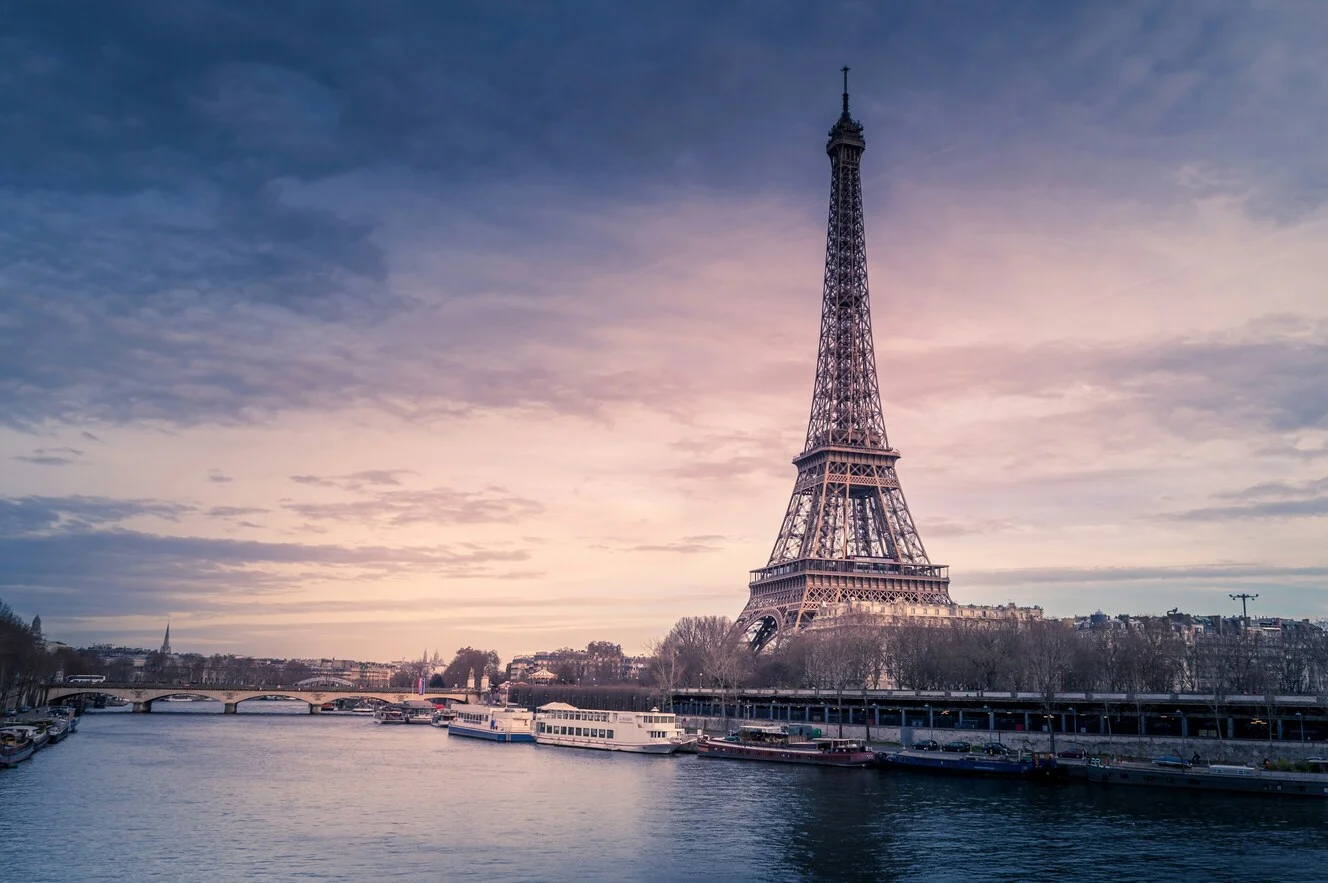
1. Paris Overview
Paris is the city where romance meets history on every cobblestone street. The Eiffel Tower sparkles at night, artists paint along the Seine, and sidewalk cafés serve perfect croissants while you watch the world go by. This is a place where every corner reveals architectural masterpieces, from Gothic cathedrals to Belle Époque boulevards.
You should visit Paris for its unmatched combination of world-class museums, incredible food, and timeless beauty. Whether you’re admiring Monet’s water lilies at the Musée de l’Orangerie, strolling through charming Montmartre, or simply enjoying a glass of wine in a hidden courtyard, Paris offers experiences you can’t find anywhere else. The city seamlessly blends 2,000 years of history with cutting-edge fashion, cuisine, and culture.
Paris can feel crowded during peak summer months, and popular attractions like the Louvre and Eiffel Tower often have long lines. However, with smart planning and advance bookings, you can navigate the crowds and discover quieter moments in this magnificent city. The Parisians’ reputation for being unfriendly is mostly a myth—learn a few French phrases and you’ll be warmly received.
Best Time to Visit Paris
Spring (April-May): Spring in Paris is magical, with temperatures ranging from 10-18°C (50-64°F). The city’s parks and gardens burst into bloom, especially the Luxembourg Gardens and Tuileries. Crowds are moderate, prices are reasonable, and café terraces reopen after winter. This is peak season for cherry blossoms along the Seine and in the Jardin des Plantes.
Summer (June-August): Summer brings warm weather (18-25°C/64-77°F) and peak tourist season. Expect large crowds at major attractions and higher hotel prices, especially in July and August. Book accommodations and skip-the-line tickets months in advance. The upside is longer daylight hours (sunset around 10pm), outdoor festivals, and Seine-side beaches during Paris Plages in August.
Fall (September-October): Fall is arguably the best time to visit Paris, with pleasant temperatures (12-20°C/54-68°F), smaller crowds, and beautiful golden light perfect for photography. The city returns to its normal rhythm after August vacation season. Trees in the Jardin du Luxembourg turn vibrant colors, and cultural events ramp up for the new season.
Winter (November-March): Winter in Paris is cold (3-8°C/37-46°F) and often gray, with occasional snow. However, this is the quietest season with the lowest prices and shortest lines. The city is enchanting during the Christmas season (late November-early January) with festive markets and decorations. Indoor attractions like museums are perfect for chilly days, and you’ll experience Paris more like a local.
How Long to Stay in Paris
- 1-2 days: A rushed visit but possible for a weekend trip. You can see the Eiffel Tower, walk along the Champs-Élysées, visit Notre-Dame’s exterior, and explore one major museum. You’ll barely scratch the surface but can hit the iconic highlights.
- 3-4 days: Perfect for first-time visitors. This gives you time to see the major sights (Eiffel Tower, Louvre, Notre-Dame, Arc de Triomphe), explore 2-3 neighborhoods thoroughly, enjoy leisurely meals, and have time for wandering without a strict schedule.
- 5-7 days: Ideal for deep exploration. You can visit multiple museums, explore different neighborhoods at a relaxed pace, take a day trip to Versailles or Giverny, discover hidden gems, attend a show or concert, and truly soak in Parisian life.
- 1 week+: For Paris enthusiasts who want to live like a local. You’ll have time to explore every arrondissement, take multiple day trips, revisit favorite spots, discover neighborhood markets, take cooking classes, and enjoy Paris without rushing.
Quick Facts About Paris
- Population: 2.1 million (city proper), 12.4 million (metro area)
- Language: French (English widely spoken in tourist areas, less so in neighborhoods)
- Currency: Euro (€)
- Time Zone: Central European Time (CET/UTC+1, CEST/UTC+2 in summer)
- Country Code: +33
- Area Code: 01
2. Getting There & Around
Airports Serving Paris
Charles de Gaulle Airport (CDG) 95700 Roissy-en-France, France Located 25km (16 miles) northeast of Paris, CDG is Europe’s second-busiest airport and the main international gateway to Paris. All major international airlines use this airport. It has three terminals connected by free shuttle trains.
Orly Airport (ORY) 94390 Orly, France Located 13km (8 miles) south of Paris, Orly primarily handles domestic and European flights, plus some international routes. It’s smaller and often more convenient for southern Paris destinations. Budget airlines and charter flights commonly use Orly.
Beauvais-Tillé Airport (BVA) 60000 Beauvais, France Located 85km (53 miles) north of Paris, this airport is used exclusively by low-cost carriers like Ryanair. Only consider this option if you’re on a tight budget and don’t mind the 75-90 minute shuttle bus ride to Paris.
[AFFILIATE LINK: Find cheap flights to Paris – Skyscanner/Expedia]
Getting from Airport to City Center
From Charles de Gaulle (CDG):
RER B Train: €11.45 per person, 30-35 minutes to central Paris. Trains run every 10-15 minutes from 5am-midnight, stopping at Gare du Nord, Châtelet-Les Halles, Saint-Michel Notre-Dame, and other stations. Buy tickets at the airport RER station. This is the best value for solo travelers or couples.
Roissybus: €16.60 per person, 60-75 minutes to Opéra Garnier. Buses run every 15-20 minutes from 6am-12:30am. Convenient if your hotel is near the Opéra district.
Le Bus Direct (Airport Shuttle): €18 per person, 45-70 minutes depending on route. Comfortable coaches with luggage space, connecting to Eiffel Tower, Trocadéro, Arc de Triomphe, and Gare de Lyon. More comfortable than RER with space for bags.
Taxi: €56 fixed rate to Right Bank, €62 to Left Bank, 30-60 minutes depending on traffic. Official taxis are cream-colored with roof lights. Good value for 3-4 people with luggage. Avoid unlicensed taxis approaching you in the terminal.
Uber/Bolt: €40-70 depending on time and surge pricing, 30-60 minutes. Order from the official pickup areas in each terminal. Prices fluctuate with demand.
Private Transfer: €60-90 for sedan, €90-120 for van, pre-booked. Driver meets you at arrivals with name sign. Best for families or if arriving late at night.
From Orly (ORY):
Orlyval + RER B: €14.10 total (€9.30 Orlyval + €4.80 RER), 35-40 minutes. Take automated Orlyval train to Antony station, then RER B to Paris. Runs 6am-11pm.
OrlyBus: €11.20 per person, 30 minutes to Denfert-Rochereau metro station. Runs every 10-15 minutes from 5:35am-12:30am. Connect to metro line 4 or 6.
Tram 7 + Metro: €2.15 per person, 45-60 minutes total. Most budget-friendly but slowest option. Take Tram 7 to Villejuif-Louis Aragon, then metro line 7. Good if you’re not in a hurry.
Taxi: €37 fixed rate to Left Bank, €42 to Right Bank, 20-40 minutes. Use official taxi stands at each terminal.
PRO TIP: The RER B from CDG is the best value, but can be crowded during rush hours (8-9:30am, 5:30-7:30pm). If you have lots of luggage or are traveling with family, a taxi or private transfer at the fixed rate is worth the extra cost for convenience and comfort.
[AFFILIATE LINK: Book airport transfers to Paris – GetYourGuide/Viator]
Getting Around Paris
Paris has one of the world’s best public transportation systems, making it easy to navigate without a car. The historic center is compact and walkable, with most major attractions within a 30-minute walk or short metro ride of each other. The metro, buses, and trams are efficient, affordable, and cover the entire city. Most visitors rely primarily on the metro and walking.
Metro/Subway System
The Paris Métro has 16 lines covering 214km with 320 stations, making it one of the densest networks in the world. Trains run every 2-8 minutes during the day, with longer waits late at night. The system is generally safe, clean, and incredibly efficient. Lines are identified by number and color, and by their end stations (e.g., “Direction Château de Vincennes”). Operating hours are approximately 5:30am-1:15am Sunday-Thursday, and until 2:15am Friday-Saturday.
Tickets & Passes:
- Single ticket (t+): €2.15 (valid 90 minutes with transfers between metro/bus/tram, but not round trips)
- Carnet of 10 tickets: €17.35 (saves €4.15, best for 2-3 day visits)
- Navigo Easy card: €2 one-time, then load with t+ tickets (reusable card)
- Navigo Day Pass: €8.65 (unlimited travel in zones 1-5 for one calendar day)
- Paris Visite Pass (1-5 days): €13.95-€72.80 depending on zones and duration (includes airport transport and minor discounts)
- Navigo Weekly Pass: €30.75 (Monday-Sunday unlimited in zones 1-5)
Buy tickets at any metro station from ticket windows or vending machines (machines accept coins, bills, and credit cards with PIN). You must validate your ticket at the turnstiles before boarding. Keep your ticket until you exit the station—inspectors can fine you €60 for riding without a valid ticket.
PRO TIP: If you’re taking more than 4 trips per day, the Navigo Day Pass (€8.65) pays for itself. Buy it the night before and it’s valid for the entire next calendar day. A carnet of 10 tickets is the best value for shorter stays. Always validate your ticket—there’s no “I didn’t know” excuse with ticket inspectors!
Buses & Trams
Paris has an extensive bus network that’s perfect for sightseeing since you see the city while traveling. Buses use the same tickets as the metro. You must validate your ticket in the machine on board. Some scenic routes include line 29 (Opera to Bastille), line 69 (Eiffel Tower to Père Lachaise), and line 72 (Right Bank Seine views). Trams are useful for reaching outer arrondissements and suburbs. Night buses (Noctilien) run when the metro closes.
Taxis & Rideshare
Official Paris taxis are cream or white with a “TAXI PARISIEN” roof light. Flag fall is €2.60, then €1.14-1.65 per km depending on time and zone. Minimum fare is €7.30. You can hail taxis on the street, find them at taxi stands (marked by blue signs), or call G7 (+33 1 41 27 66 99). Taxis accept credit cards but tell the driver before starting your trip.
Uber, Bolt, and Heetch operate in Paris with similar pricing to taxis, often cheaper during non-peak hours. The French taxi app LeCab is also reliable. Expect surge pricing during rush hours, rain, and late nights.
WATCH OUT: Unlicensed “gypsy cabs” target tourists at airports and train stations. Only use official taxis from designated stands or pre-booked transfers. Never accept rides from someone approaching you inside terminals. Also beware of taxis taking unnecessarily long routes—use Google Maps to follow your route.
Walking
Paris is one of Europe’s most walkable cities, especially the central arrondissements (1-8). The distance from Notre-Dame to the Eiffel Tower is only 3.5km (2.2 miles)—about a 45-minute pleasant walk along the Seine. The entire city center from Montmartre to the Latin Quarter is about 6km across. Most sidewalks are in good condition, though some historic areas have cobblestones. The city is relatively flat except for Montmartre and Belleville hills.
Walkability Score: 95/100 for the historic center (arrondissements 1-11). Most major attractions are within 20-30 minutes walking distance of each other. Wear comfortable shoes—you’ll easily walk 15,000-20,000 steps per day sightseeing.
Biking
Paris has made huge improvements to cycling infrastructure with over 1,000km of bike lanes. The city is mostly flat (except Montmartre) making biking pleasant. Vélib’ Métropole is the bike-share system with 20,000 bikes at 1,400 stations. Pricing: €5 for a day pass (first 30 minutes free per trip, then €1-4 per additional 30 minutes), or €20.40 per month. Download the Vélib’ app to locate bikes and stations. Electric bikes (green) cost more but make hills easier.
Tourist Passes & Cards
Paris Museum Pass: €62 for 2 days, €77 for 4 days, €92 for 6 days. Includes skip-the-line access to 60+ museums and monuments including the Louvre, Musée d’Orsay, Arc de Triomphe, and Versailles. Worth it if you’re visiting 4+ major attractions. Does NOT include the Eiffel Tower.
Paris Passlib’: Combines Paris Visite transport pass with Paris Museum Pass. Prices range from €76-€185 depending on duration. Convenient but only saves €5-10 compared to buying separately—evaluate based on your itinerary.
PRO TIP: The Paris Museum Pass is worth it if you visit the Louvre (€22), Musée d’Orsay (€16), Arc de Triomphe (€13), and Sainte-Chapelle (€13)—that’s already €64, more than the 2-day pass cost. Plus you skip most ticket lines. Don’t activate it until your first museum visit, and plan to use it on consecutive days to maximize value.
[DISPLAY AD PLACEHOLDER #1]
3. Top Attractions & Landmarks
[AFFILIATE LINK: Book skip-the-line tickets for Paris attractions – GetYourGuide/Viator]
Eiffel Tower (Tour Eiffel)
Champ de Mars, 5 Avenue Anatole France, 75007 Paris, France
The Eiffel Tower is Paris’s most iconic landmark and the world’s most-visited paid monument, welcoming nearly 7 million visitors annually. Built by Gustave Eiffel for the 1889 World’s Fair, this 330-meter (1,083-foot) iron lattice tower was initially criticized by Parisians but became the city’s beloved symbol. The structure contains 18,038 metal pieces held together by 2.5 million rivets.
You can visit three levels: the first floor (57m high) with glass floors and exhibits, the second floor (115m) with the best views and dining, and the summit (276m) with Gustave Eiffel’s restored private office and champagne bar. The tower sparkles for 5 minutes every hour after dark—a magical sight from Trocadéro across the river.
Why visit: Beyond being a must-see icon, the Eiffel Tower offers unparalleled 360-degree views of Paris. On clear days, you can see 70km (43 miles) in every direction. The engineering is fascinating up close, and experiencing this masterpiece at both day and night is unforgettable. It’s a Paris rite of passage.
Time needed: 2-3 hours (including queuing, elevator rides, and viewing time) Entrance: €29.40 adults to summit (elevator), €23.10 to 2nd floor, €18.80 stairs to 2nd floor, €14.70 youth 12-24, €7.40 children 4-11, free under 4 Best time: Sunrise for photos, or 45 minutes before sunset for day-to-night views Hours: Daily 9:00am-12:45am (mid-June to early Sept), 9:30am-11:45pm (Sept-mid-June), stairs close earlier
WATCH OUT: Lines can be 2-3 hours in peak season without reservations. Book timed tickets online 60 days in advance—they sell out fast for summer. Security screening adds 30+ minutes. Pickpockets target the crowded area. Bring water and snacks—they’re expensive at the tower. In summer, the metal structure can reach 40°C (104°F).
PRO TIP: Visit at sunrise for the best photos with minimal crowds—the tower opens at 9am but Trocadéro gardens across the river are open 24/7 for exterior views and photos. For the cheapest option, take stairs to the 2nd floor (€18.80) where views are actually better than the summit, then buy a separate summit ticket there if desired. Book the champagne bar at the summit for a special experience.
Louvre Museum (Musée du Louvre)
Rue de Rivoli, 75001 Paris, France
The Louvre is the world’s largest and most visited art museum, housed in a former royal palace dating to the 12th century. The museum’s collection spans 9,000 years and 380,000 objects, with 35,000 works of art on display across 72,735 square meters. The iconic glass pyramid entrance, designed by I.M. Pei, was completed in 1989 and has become a landmark itself.
Home to masterpieces including the Mona Lisa, Venus de Milo, Winged Victory of Samothrace, and the Coronation of Napoleon, the Louvre’s collection is organized into eight departments spanning ancient civilizations to the mid-19th century. The palace’s Richelieu, Sully, and Denon wings each tell different stories of human creativity and culture. Even the building itself—with its medieval foundations, Renaissance architecture, and modern additions—is a work of art.
Why visit: The Louvre offers an unparalleled journey through human history and artistic achievement. Beyond seeing the world’s most famous painting (Mona Lisa), you’ll discover ancient Egyptian mummies, Mesopotamian tablets, Italian Renaissance masterpieces, and French royal apartments. It’s overwhelming in the best way—you could spend weeks here. Even a focused 3-4 hour visit will leave you amazed.
Time needed: 3-4 hours minimum for highlights, full day for art lovers Entrance: €22 adults, free under 18 and EU residents under 26, free first Saturday of month 6pm-9:45pm (Oct-Mar) Best time: Wednesday or Friday evenings (open until 9:45pm), or first hour after opening at 9am Hours: Monday, Wednesday, Thursday, Saturday, Sunday 9am-6pm; Friday 9am-9:45pm; Closed Tuesday
WATCH OUT: The museum is enormous—trying to see everything will exhaust you. The Mona Lisa room is always mobbed with crowds and selfie sticks. Book timed-entry tickets online to skip the 1-2 hour ticket line. The main pyramid entrance is most crowded—use Porte des Lions or Carrousel du Louvre entrances instead. Pick your top 10 must-sees and accept you’ll miss thousands of works.
PRO TIP: Download the free Louvre app before visiting—it has maps and audio guides. Start with the Denon wing for masterpieces (Mona Lisa, Venus de Milo, Winged Victory), then Sully for Egyptian antiquities and Crown Jewels. Visit the Mona Lisa first thing at opening or last thing before closing for smaller crowds. The Café Mollien on the first floor offers stunning views through massive windows—perfect for a break.
Arc de Triomphe
Place Charles de Gaulle, 75008 Paris, France
The Arc de Triomphe stands majestically at the center of Place Charles de Gaulle (formerly Place de l’Étoile), where 12 grand avenues radiate outward like a star. Commissioned by Napoleon in 1806 after his victory at Austerlitz, the monument wasn’t completed until 1836. At 50 meters tall and 45 meters wide, it’s the second-largest triumphal arch in the world, covered in intricate sculptural reliefs depicting French military victories and revolutionary events.
The most famous sculpture is François Rude’s “La Marseillaise” (also called “The Departure of the Volunteers”) on the right pillar facing the Champs-Élysées. The names of 660 generals and 128 battles are inscribed on the inner and outer surfaces. Beneath the arch lies the Tomb of the Unknown Soldier from WWI, with an eternal flame rekindled every evening at 6:30pm. Climb the 284 steps to the rooftop for one of Paris’s most spectacular panoramic views.
Why visit: The rooftop terrace offers the best view down the Champs-Élysées and of the perfectly symmetrical star pattern of surrounding avenues. You can see the Eiffel Tower, Sacré-Cœur, La Défense, and the entire city layout. The monument itself is an architectural masterpiece with historical significance. It’s especially beautiful at night when illuminated, and witnessing the eternal flame ceremony is moving.
Time needed: 45 minutes to 1 hour Entrance: €13 adults, free under 18 and EU residents under 26, free first Sunday Nov-Mar Best time: Late afternoon for sunset views, or early morning to avoid crowds Hours: Daily 10am-11pm (Apr-Sept), 10am-10:30pm (Oct-Mar), closed major holidays
WATCH OUT: Never try to cross the chaotic roundabout at street level to reach the monument—it’s extremely dangerous with 12 lanes of Parisian traffic. Use the underground passages from the Champs-Élysées or Avenue de la Grande Armée. The climb is 284 steps with no elevator—not suitable for those with mobility issues. Can be very crowded during peak season.
PRO TIP: Visit around 6:30pm to watch the eternal flame rekindling ceremony, then climb to the top for sunset. The view is included with the Paris Museum Pass. For the best photos of the Arc de Triomphe itself, walk down the Champs-Élysées toward Concorde and look back—the symmetry with the avenue is stunning, especially at night with traffic light trails.
Notre-Dame Cathedral
6 Parvis Notre-Dame, Place Jean-Paul II, 75004 Paris, France
Notre-Dame de Paris is one of the finest examples of French Gothic architecture, begun in 1163 and completed in 1345. The cathedral features innovative flying buttresses, stunning rose windows, and the famous gargoyles that served both as water spouts and protectors against evil spirits. Victor Hugo’s 1831 novel “The Hunchback of Notre-Dame” saved the deteriorating cathedral from demolition and sparked a major restoration.
Following the devastating fire of April 15, 2019, which destroyed the spire and roof, Notre-Dame has been undergoing extensive restoration. As of 2026, the cathedral exterior can be viewed and the surrounding Île de la Cité explored, though the interior remains closed to visitors. The restoration, aiming to preserve the Gothic masterpiece exactly as it was, is one of the most ambitious architectural projects in French history. The forecourt (parvis) remains a gathering place and offers views of the iconic facade with its Gallery of Kings and intricate portal sculptures.
Why visit: Even during restoration, Notre-Dame remains Paris’s spiritual and geographic heart, located at “Point Zéro” from which all distances in France are measured. The exterior view alone showcases medieval craftsmanship at its finest. Walking around the cathedral to see the flying buttresses, rose windows from outside, and the impressive side views from Square Jean XXIII is worthwhile. The area is steeped in 850 years of Parisian history.
Time needed: 30 minutes for exterior viewing and surrounding area Entrance: Currently closed for interior visits due to restoration; exterior viewing is free Best time: Early morning or evening when the facade is beautifully lit Hours: Exterior accessible 24/7; projected reopening for interior visits December 2024 (check official website for updates)
WATCH OUT: The interior remains closed to visitors during restoration work. The area attracts many tourists, so watch for pickpockets. Some viewing areas may be restricted due to ongoing construction. Information about the cathedral’s history and restoration is available at temporary viewing areas. Book tower climb tickets in advance when they reopen.
PRO TIP: For the best photo of Notre-Dame’s facade, cross to the Left Bank and shoot from Square René Viviani with the distinctive old tree in your composition. Walk around to Square Jean XXIII behind the cathedral for peaceful gardens and the best view of the flying buttresses and South Rose Window. Visit the archaeological crypt beneath the parvis to see Roman and medieval ruins.
[DISPLAY AD PLACEHOLDER #2]
Sacré-Cœur Basilica
35 Rue du Chevalier de la Barre, 75018 Paris, France
The Sacré-Cœur Basilica gleams white atop Montmartre hill, the highest point in Paris at 130 meters (427 feet) above sea level. This Romano-Byzantine basilica was built between 1875-1914 with travertine stone that bleaches white over time and has a self-cleaning quality that maintains its brilliant appearance. The building was constructed as a monument of penance after France’s defeat in the 1870 Franco-Prussian War.
The basilica’s interior features one of the world’s largest mosaics—”Christ in Majesty”—covering 480 square meters of the apse ceiling in stunning gold detail. The crypt below contains relics and chapels worth exploring. The 83-meter-high dome can be climbed via 300 spiral steps for spectacular 360-degree views extending up to 50km on clear days. The perpetual adoration of the Blessed Sacrament has continued here without interruption since 1885.
Why visit: The view from the basilica steps or dome is one of Paris’s finest—the entire city spreads before you with the Eiffel Tower in the distance. The white stone exterior contrasts beautifully against blue skies and is especially photogenic at sunset. The basilica’s serene interior offers respite from bustling Montmartre. The surrounding neighborhood is charming with cobblestone streets, artists, and cafés. It’s free to enter, making it an excellent budget-friendly attraction.
Time needed: 1-1.5 hours (including dome climb and area exploration) Entrance: Basilica free; dome €8 adults, €5 youth 4-16, €6 reduced rate Best time: Sunrise or sunset for best light and views; early morning to avoid crowds Hours: Basilica daily 6am-10:30pm; Dome daily 9:30am-8pm (summer), 10am-5pm (winter)
WATCH OUT: The area attracts aggressive bracelet scammers who try to tie string bracelets on your wrist then demand payment—firmly say “non merci” and keep walking. The climb up from Abbesses metro involves 300+ steps—take the funicular (€2.15, regular metro ticket) if you want to save energy. Dress modestly (covered shoulders and knees) for church entry. Pickpockets work the crowded steps and surrounding streets.
PRO TIP: Visit at sunrise before the crowds and scammers arrive—the early morning light on the white stone is magical, and you’ll have the steps almost to yourself. The dome climb offers better views than the steps below but requires 300 spiral steps and gets claustrophobic. For the best photos of Sacré-Cœur, shoot from the park to the west around sunset when the white stone glows golden, or from the square in front at twilight as lights illuminate it.
Sainte-Chapelle
8 Boulevard du Palais, 75001 Paris, France
Sainte-Chapelle is a Gothic architectural masterpiece and one of Paris’s most stunning sights, despite being lesser-known than Notre-Dame. Built in just seven years (1241-1248) by King Louis IX to house precious Christian relics including the Crown of Thorns, this royal chapel represents the pinnacle of Rayonnant Gothic architecture. The building consists of two chapels—the lower chapel for palace servants and the magnificent upper chapel for royalty.
The upper chapel features 15 spectacular stained glass windows rising 15 meters high, comprising 1,113 scenes depicting Biblical history from Genesis to Christ’s resurrection. The 600 square meters of medieval stained glass (two-thirds original from the 13th century) create a kaleidoscope of color when sunlight streams through. On sunny days, the interior glows with ethereal blue, red, and gold light. The rose window at the west end, added in the 15th century, depicts the Apocalypse in 86 panels.
Why visit: The stained glass windows are among the most beautiful and best-preserved medieval glass in the world. Visiting on a sunny day is a transcendent experience as colored light fills the chapel. The Gothic architecture represents medieval craftsmanship at its absolute finest. It’s relatively small and can be seen in 30-45 minutes, making it perfect to combine with other Île de la Cité sights. Classical music concerts held here (extra charge) offer an unforgettable acoustic and visual experience.
Time needed: 30-45 minutes Entrance: €13 adults, free under 18 and EU residents under 26; combined ticket with Conciergerie €18 Best time: Sunny mornings for best stained glass light effects; weekday early afternoons less crowded Hours: Daily 9am-5pm (Oct-Mar), 9am-7pm (Apr-Sept); closed major holidays
WATCH OUT: Security lines can be very long (45+ minutes) in peak season as the venue is small with limited capacity. Book skip-the-line tickets online or arrive right at opening. The lower chapel is nice but not remarkable—the magic happens in the upper chapel up the narrow spiral staircase. Visit on a sunny day if possible—overcast days don’t showcase the stained glass well. Combined with Palais de Justice security, allow extra time.
PRO TIP: Visit on a bright, sunny day between 10am-2pm when sunlight directly illuminates the south-facing windows for maximum color impact. The Paris Museum Pass includes Sainte-Chapelle and lets you skip the ticket line (but not security). Combine with a visit to the Conciergerie next door—Marie Antoinette’s prison cell. For something special, attend an evening classical concert (check schedule on official website)—hearing Vivaldi surrounded by glowing stained glass is magical.
Versailles Palace (Château de Versailles)
Place d’Armes, 78000 Versailles, France
The Palace of Versailles, located 20km (12 miles) southwest of Paris, is the world’s most opulent royal residence and the ultimate symbol of absolute monarchy. Originally Louis XIII’s hunting lodge, it was transformed by Louis XIV (the Sun King) into an extravagant palace with 2,300 rooms, 67 staircases, and 1,944 windows. The palace served as the royal court from 1682-1789 and showcases 17th and 18th-century French art, architecture, and craftsmanship at their finest.
Must-see areas include the Hall of Mirrors—82 meters long with 357 mirrors reflecting 17 windows overlooking the gardens, where the Treaty of Versailles was signed in 1919. The King’s Grand Apartments feature seven salons dedicated to Greek and Roman gods, while the Queen’s Grand Apartments include Marie Antoinette’s bedchamber. The 800-hectare gardens contain 50 fountains, sculptures, the Grand Canal, the Grand and Petit Trianon palaces, and Marie Antoinette’s rustic hamlet. The Musical Fountain Shows and Musical Gardens (spring-fall weekends) bring the gardens to life with synchronized fountains and Baroque music.
Why visit: Versailles represents the absolute peak of European royal grandeur—nothing else compares. Walking through the Hall of Mirrors and royal apartments transports you to Louis XIV’s court. The gardens are as impressive as the palace, perfect for strolling, picnicking, or rowing on the Grand Canal. Marie Antoinette’s Estate offers intimate contrast to the main palace’s formality. It’s an essential Paris area experience, though technically a day trip.
Time needed: Full day recommended (palace 2-3 hours, gardens 2-3 hours, Trianon palaces 1-2 hours) Entrance: Palace €21, Palace + Gardens on fountain show days €29.50, full Passport ticket €30; free under 18 and EU under 26 Best time: Tuesday or Wednesday; arrive at 9am opening; avoid weekends and Mondays (palace closed) Hours: Palace Tuesday-Sunday 9am-6:30pm (Apr-Oct), 9am-5:30pm (Nov-Mar); Gardens daily 8am-6pm (winter), 8am-8:30pm (summer)
WATCH OUT: Versailles is extremely crowded, especially May-October and weekends. The palace is closed Mondays. Book timed-entry tickets online weeks in advance or you’ll wait 1-2+ hours. The palace has no cafe—eat before or pack lunch for the gardens. Wear comfortable shoes—you’ll walk 10+ km. Gardens require separate ticket on Musical Fountain/Garden days (Apr-Oct weekends). Don’t miss the Trianon palaces and Marie Antoinette’s estate—separate free area 20 minutes walk from main palace.
PRO TIP: Take RER C from Paris (€7.60 round trip, 40 minutes, get off at Versailles Château Rive Gauche station, 10-minute walk to palace). Arrive right at 9am opening to tour the palace before huge crowds arrive by 10:30am. Use the skip-the-line entrance on the right side (Entrance A for pre-booked tickets). After the palace, have lunch at La Petite Venise café by the Grand Canal, then explore the gardens, Trianon palaces, and Marie Antoinette’s Hamlet at a leisurely pace. Rent a golf cart or bike to cover more ground in the vast gardens.
Latin Quarter & Panthéon
Place du Panthéon, 75005 Paris, France
The Latin Quarter is Paris’s historic student neighborhood, centered around the Sorbonne University (founded 1257), which still gives the area its intellectual and youthful energy. The name comes from the Latin language spoken by medieval scholars. This Left Bank district features narrow medieval streets, bookshops, cafés where Hemingway and Sartre debated philosophy, and some of Paris’s oldest buildings including the Roman Arènes de Lutèce amphitheater.
The Panthéon dominates the Latin Quarter skyline with its massive neoclassical dome visible across Paris. Originally built as a church dedicated to St. Genevieve, it became a mausoleum for France’s greatest citizens after the Revolution. The crypt contains the tombs of Voltaire, Rousseau, Victor Hugo, Émile Zola, Marie Curie (the only woman), Alexandre Dumas, and other French heroes. The interior features massive columns, Foucault’s Pendulum demonstrating Earth’s rotation, and murals depicting French history. The dome offers panoramic city views.
Why visit: The Latin Quarter captures Paris’s intellectual soul with atmospheric streets perfect for wandering. Shakespeare and Company bookshop (37 Rue de la Bûcherie) is a legendary English bookstore and café. The area has excellent bistros and student-friendly prices. The Panthéon’s neoclassical architecture is stunning, and paying respects to France’s greatest minds is moving. Combining the neighborhood with the Panthéon and Luxembourg Gardens nearby makes a perfect Left Bank day.
Time needed: 1 hour for Panthéon, 2-3 hours for Latin Quarter wandering Entrance: Panthéon €13 adults, free under 18 and EU under 26; free first Sunday Nov-Mar Best time: Late morning or early afternoon; weekdays less crowded Hours: Panthéon daily 10am-6pm (Oct-Mar), 10am-6:30pm (Apr-Sept); closed major holidays
WATCH OUT: Many “tourist trap” restaurants along Rue de la Huchette overcharge for mediocre food—eat on side streets for better value and quality. The area is generally safe but pickpockets work crowded streets. Shakespeare and Company gets very crowded—visit early morning or evening. Some bars inflate prices for tourists. The Panthéon’s dome climb is 206 steps without elevator access.
PRO TIP: Start at the Panthéon (included with Paris Museum Pass), then wander down Rue Soufflot toward the Luxembourg Gardens. Detour to Rue Mouffetard, a market street with excellent food shops, cafes, and affordable bistros. Visit Shakespeare and Company bookshop early (10am) or late (7-8pm) to avoid crowds—it’s free and magical. For authentic student atmosphere, grab a crêpe on Rue de la Huchette or coffee at Café de Flore. The Jardin des Plantes botanical garden nearby is free and beautiful.
Luxembourg Gardens (Jardin du Luxembourg)
Boulevard Saint-Michel, 75006 Paris, France
The Luxembourg Gardens is Paris’s most beloved public park, covering 25 hectares (61 acres) in the 6th arrondissement. Created in 1612 by Marie de’ Medici, widow of King Henry IV, the gardens surround the Luxembourg Palace (now home to the French Senate). The park represents the quintessential French formal garden with geometric flowerbeds, tree-lined promenades, and perfectly manicured lawns.
The centerpiece is the Medici Fountain, a romantic 17th-century grotto-style fountain shaded by plane trees. The park features over 100 statues, including monuments to Stendhal, Chopin, and Delacroix. The octagonal Grand Bassin pond is where children sail model boats (a Parisian tradition since 1920s). The gardens include apple and pear orchards, a rose garden, an apiary where beekeeping classes are taught, tennis courts, a bandstand for concerts, playgrounds, and even a miniature Statue of Liberty. Luxembourg Museum hosts temporary art exhibitions.
Why visit: This is where Parisians come to relax, read, jog, play chess, or watch children play—it’s Paris’s living room. The gardens are perfect for picnics, people-watching, or escaping museum fatigue. Scenes change seasonally with spring blossoms, summer concerts, fall colors, and winter’s bare beauty. The park captures the essence of Parisian life—locals reading Le Monde in the iconic green chairs, students studying, couples kissing. It’s free, central, and quintessentially Paris.
Time needed: 1-2 hours, or longer for picnicking and relaxing Entrance: Free Best time: Spring for blossoms (April-May), summer for full gardens, early morning for joggers, late afternoon for golden light Hours: Daily 7:30am-dusk (varies by season, as early as 4:30pm winter, late as 9:30pm summer)
WATCH OUT: Don’t sit or walk on the grass—most lawns are off-limits and guards will whistle at you. The iconic green metal chairs are free to move and use anywhere. Toy boat rentals at the Grand Bassin cost €4-5 for 30 minutes. The park closes at dusk, which varies dramatically by season. Cafés in the park are overpriced—bring your own picnic from nearby markets.
PRO TIP: Buy bread, cheese, wine, and fruit from the nearby Rue Mouffetard market or Bon Marché grocery, then picnic on a bench or in one of the designated grass areas. The Medici Fountain is most beautiful in dappled morning light—arrive around 9-10am before crowds. For the best people-watching, grab a chair near the Grand Bassin. Free photography exhibitions display on the fence along Boulevard Saint-Michel. Combine with visits to nearby Panthéon, Latin Quarter, or Saint-Germain-des-Prés.
Montmartre & Place du Tertre
Place du Tertre, 75018 Paris, France
Montmartre is Paris’s most charming hilltop village, crowned by Sacré-Cœur and filled with winding cobblestone streets, ivy-covered buildings, and artistic history. This bohemian neighborhood was home to Picasso, Van Gogh, Renoir, Toulouse-Lautrec, and countless other artists in the late 19th and early 20th centuries. The area retains its village atmosphere despite tourist popularity, with functioning windmills, vineyards, hidden squares, and steep staircases.
Place du Tertre is Montmartre’s beating heart—a small square where artists have been painting and selling their work since the 19th century. Today dozens of artists set up easels daily, creating portraits, caricatures, and Paris scenes. Nearby highlights include the Moulin Rouge cabaret, Au Lapin Agile cabaret (oldest in Paris), Café des Deux Moulins (from the film Amélie), the Wall of Love with “I love you” in 250 languages, and the only remaining vineyard in Paris (Clos Montmartre). The side streets like Rue Lepic and Rue des Abbesses overflow with boutiques, cafés, and authentic Parisian charm.
Why visit: Montmartre offers Paris’s most romantic and photogenic streets. It feels like stepping into a postcard with artists, accordion music, and Belle Époque architecture. The village atmosphere contrasts completely with grand Paris below. Beyond Sacré-Cœur, exploring the side streets reveals the real magic—quiet squares, secret staircases, locals buying baguettes, and stunning city views. It’s especially beautiful at sunset when light bathes the old buildings in gold.
Time needed: 2-3 hours for thorough exploration, longer with café stops Entrance: Free to wander; portrait artists typically €30-60; Montmartre Museum €15 adults Best time: Early morning (8-9am) before tourist crowds, or weekday late afternoon Hours: Streets open 24/7; shops/cafés typically 9am-7pm; artists 10am-6pm in Place du Tertre
WATCH OUT: Place du Tertre can feel touristy and expensive—the area’s charm is in the surrounding streets. Aggressive bracelet scammers work around Sacré-Cœur (see Sacré-Cœur warning). Restaurant prices are inflated in the main square—eat on side streets. Some portrait artists are pushy about getting you to sit—only engage if interested. The area is safe but watch belongings in crowds. Avoid unlicensed “tour guides” offering services.
PRO TIP: Take metro to Abbesses (not Anvers which is at the bottom of the hill), exit to see the beautiful Art Nouveau entrance and iconic “Je t’aime” wall nearby. Wander up Rue Lepic (where Amélie lived) or take the funicular. Visit early morning before 10am when streets are quiet, locals buy bread, and lighting is perfect. Must-sees: hidden vineyard at Rue des Saules, Moulin de la Galette windmill, stairs from Rue Maurice Utrillo for classic Paris views. For authentic meals, try La Maison Rose (pink cottage) or Le Consulat on quieter side streets.
Champs-Élysées & Place de la Concorde
Avenue des Champs-Élysées, 75008 Paris, France
The Champs-Élysées is the world’s most famous avenue, stretching 1.9km (1.2 miles) from Place de la Concorde to the Arc de Triomphe. Designed in the 17th century and named “Elysian Fields” after Greek paradise, the broad tree-lined avenue epitomizes Parisian grandeur. The lower section near Concorde features gardens, museums (Grand Palais, Petit Palais), and the Théâtre Marigny. The upper commercial section showcases flagship stores of luxury brands, cafés, cinemas, and the famous Ladurée macaron shop.
Place de la Concorde, Paris’s largest square (8.64 hectares), marks the avenue’s eastern end and holds dark history—Louis XVI and Marie Antoinette were guillotined here during the Revolution, along with 1,119 others. Today the square features the 3,300-year-old Egyptian Luxor Obelisk (gifted 1833), two ornate fountains, and eight statues representing French cities. From here you can see the Eiffel Tower, Arc de Triomphe, Madeleine Church, and the National Assembly in a single 360-degree view. The square marks the beginning of the Tuileries Gardens and the Louvre beyond.
Why visit: Walking the Champs-Élysées is a Paris rite of passage. The avenue hosts major events including the Tour de France finish, Bastille Day parade, and New Year’s celebrations. The Christmas season transforms it into a magical wonderland with lights and markets. Place de la Concorde offers spectacular views and photo opportunities with multiple monuments visible simultaneously. The area represents Paris’s elegant side, perfect for window shopping, café-sitting, and people-watching. It’s especially beautiful illuminated at night.
Time needed: 1 hour to walk the avenue; 30 minutes at Place de la Concorde Entrance: Free to walk and explore Best time: Late afternoon into evening for shopping and sunset views; avoid weekday rush hours Hours: Avenue open 24/7; shops typically 10am-8pm; some flagship stores open Sundays
WATCH OUT: The Champs-Élysées is extremely touristy and expensive—cafés charge premium prices for mediocre food and coffee just for the location (€8+ for coffee). Pickpockets target crowds, especially near metro exits. Crossing the Place de la Concorde roundabout can be dangerous—use pedestrian crossings. The avenue gets very crowded during events and holidays. Most shops are overpriced tourist versions—go to other neighborhoods for better shopping.
PRO TIP: Visit at night when the avenue is illuminated and less crowded—it’s more magical than daytime. Window shop but save actual shopping for other neighborhoods. For macaron souvenirs, buy from Ladurée’s side street shop (cheaper than the famous café). The best photo of the Champs-Élysées is from Arc de Triomphe looking down at the perfect symmetry. Visit Place de la Concorde at sunset for golden light on the obelisk. The nearby Tuileries Gardens are perfect for escaping the commercial hustle.
4. Neighborhoods & Districts to Explore
Paris is divided into 20 arrondissements (administrative districts) spiraling clockwise from the center like a snail shell. Each neighborhood has distinct character, architecture, and atmosphere. Understanding the arrondissements helps you navigate Paris and choose where to stay and explore. The lower numbers (1-8) contain most major tourist sites, while outer arrondissements offer authentic local life. The Seine River divides the Right Bank (north) from the Left Bank (south), each with different personalities.
Le Marais (3rd & 4th Arrondissements)
Character: Le Marais is Paris’s most charming and diverse neighborhood, with narrow medieval streets, historic mansions (hôtels particuliers), Jewish heritage sites, and trendy boutiques. It’s the city’s LGBTQ+ center and fashion hub, mixing 17th-century architecture with avant-garde galleries. The atmosphere is energetic, welcoming, and artistic with a young, cosmopolitan crowd. The area survived Haussmann’s 19th-century renovations, preserving authentic medieval Paris.
What makes it special: The Marais combines history and modernity perfectly. You’ll find the Place des Vosges (Paris’s oldest planned square), Jewish bakeries selling challah since the 1920s, haute couture boutiques, vintage shops, world-class museums (Picasso, Carnavalet, Jewish history), hidden courtyards, and Europe’s oldest Jewish quarter around Rue des Rosiers. Weekend afternoons bring crowds to fashion boutiques along Rue des Francs-Bourgeois. Sunday is the only day many Paris shops open, making it perfect for weekend visitors.
Best for: Fashion lovers, LGBTQ+ travelers, history enthusiasts, foodies, couples seeking romance, anyone wanting authentic Parisian neighborhood life with excellent dining and shopping. Not ideal for those seeking quiet—it’s always bustling.
Must-see in this area: Place des Vosges (perfect square with arcade shops), Rue des Rosiers (Jewish quarter with falafel shops), Centre Pompidou (modern art), Musée Picasso, Village Saint-Paul (antique shops in hidden courtyards), Rue des Francs-Bourgeois (boutique shopping), Marché des Enfants Rouges (oldest covered market).
How to get there: Metro Saint-Paul (line 1), Hôtel de Ville (lines 1, 11), Rambuteau (line 11); central location walkable from most Right Bank areas
Location: Rue des Francs-Bourgeois, 75004 Paris, France (heart of neighborhood)
Saint-Germain-des-Prés (6th Arrondissement)
Character: Saint-Germain-des-Prés is the epitome of Left Bank sophistication—intellectual, literary, artistic, and expensive. This is the Paris of Sartre, Simone de Beauvoir, Hemingway, and Picasso, where existentialism was born in smoke-filled cafés. Elegant Haussmann buildings line tree-shaded boulevards filled with art galleries, antique shops, high-end fashion boutiques, gourmet food shops, and historic cafés. The atmosphere is refined, cultured, and undeniably Parisian chic.
What makes it special: The neighborhood centers on Paris’s oldest church (Saint-Germain-des-Prés abbey, founded 542 AD) and legendary cafés where 20th-century intellectuals debated philosophy over coffee and cigarettes. Today it’s Paris’s most expensive neighborhood with Hermès, Louis Vuitton, and independent designer boutiques. The Luxembourg Gardens border the area. Streets are perfect for strolling, window shopping, and café-sitting. Literary landmarks include Shakespeare and Company across the river and Café de Flore, Les Deux Magots, and Brasserie Lipp.
Best for: Culture vultures, literary enthusiasts, luxury shoppers, gourmands, couples seeking romantic ambiance, anyone wanting classic Parisian café culture and people-watching. Those on tight budgets should visit but eat elsewhere.
Must-see in this area: Saint-Germain-des-Prés church (oldest in Paris), Café de Flore and Les Deux Magots (historic literary cafés), Bon Marché (luxury department store), Rue de Buci market street, Boulevard Saint-Germain shopping, Musée Delacroix, Luxembourg Gardens nearby, Institute de France with its distinctive dome.
How to get there: Metro Saint-Germain-des-Prés (line 4), Mabillon (line 10), Odéon (lines 4, 10); very walkable from Latin Quarter or across bridges from Right Bank
Location: Place Saint-Germain-des-Prés, 75006 Paris, France
The Latin Quarter (5th Arrondissement)
Character: The Latin Quarter is Paris’s historic intellectual heart, centered around the Sorbonne University and filled with students, bookshops, cafés, and medieval streets. Named for the Latin spoken by medieval scholars, this Left Bank neighborhood buzzes with youthful energy, international restaurants, budget eateries, and some of Paris’s oldest monuments. The atmosphere mixes ancient Roman ruins with lively student life, creating an energetic yet historically rich ambiance.
What makes it special: This area contains layers of Parisian history from Roman times (arena and baths) through medieval universities to 1968 student protests. Shakespeare and Company bookshop is legendary among literature lovers worldwide. Narrow streets like Rue Mouffetard host colorful markets and affordable restaurants. The Panthéon honors France’s greatest citizens. Jardin des Plantes offers botanical gardens and natural history museums. The neighborhood balances tourism with authentic student life and remains more affordable than Right Bank areas.
Best for: Students, budget travelers, book lovers, history enthusiasts, foodies seeking authentic bistros, anyone wanting lively atmosphere with younger crowds. Perfect for those who enjoy wandering atmospheric streets and discovering hidden cafés.
Must-see in this area: Panthéon, Shakespeare and Company bookshop, Rue Mouffetard market street, Jardin des Plantes, Natural History Museum, Sorbonne University, medieval streets around Rue de la Huchette, Roman Arènes de Lutèce amphitheater, Cluny Museum of medieval art, Église Saint-Étienne-du-Mont.
How to get there: Metro Cluny-La Sorbonne (line 10), Maubert-Mutualité (line 10), Place Monge (line 7), Cardinal Lemoine (line 10); very walkable from Île de la Cité and Saint-Germain
Location: Place de la Sorbonne, 75005 Paris, France
Canal Saint-Martin (10th Arrondissement)
Character: Canal Saint-Martin is one of Paris’s hippest, most local-feeling neighborhoods where Parisians actually hang out. The 4.5km canal built in 1825 features charming footbridges, locks, tree-lined quays, and waterside cafés. This was a working-class area that gentrified in the 2000s, attracting artists, startups, and creative types. The vibe is relaxed, bohemian, and authentically Parisian without major tourist sites—just daily life, coffee culture, and beautiful canal views.
What makes it special: This neighborhood shows Paris beyond monuments and museums. Locals picnic along the canal with wine and cheese, vintage boutiques replace luxury brands, independent cafés outnumber chain stores, and Sunday flea markets attract treasure hunters. The area gained fame from the film “Amélie” and represents modern Paris’s creative scene. It’s especially lively on sunny afternoons and weekends when the quays fill with picnickers. The diversity of restaurants reflects multicultural Paris rarely seen in tourist areas.
Best for: Travelers seeking authentic local Paris, vintage shoppers, young travelers, those who’ve seen major sights and want to live like Parisians, picnic lovers, people escaping tourist crowds. Not for first-time visitors with limited time—come here once you’ve covered the classics.
Must-see in this area: Canal Saint-Martin waterway walks, Marché Alibert Sunday market, Hôtel du Nord café (from 1930s film), vintage shops along Rue de Marseille, Chez Prune and Le Verre Volé wine bars, Parc des Buttes-Chaumont nearby, street art, indie boutiques, artisan coffee shops, Passerelle de la Grange-aux-Belles footbridge.
How to get there: Metro République (lines 3, 5, 8, 9, 11), Jacques Bonsergent (line 5), Goncourt (line 11); canal runs from République toward La Villette
Location: Quai de Jemmapes, 75010 Paris, France (along the canal)
Île de la Cité & Île Saint-Louis
Character: These two small islands in the Seine River are Paris’s historic heart where the city was founded by the Parisii tribe in 250 BC. Île de la Cité hosts major monuments including Notre-Dame Cathedral and Sainte-Chapelle, making it tourist-heavy but historically significant. Île Saint-Louis, connected by a footbridge, is a residential oasis of 17th-century townhouses, quiet streets, boutique shops, and the famous Berthillon ice cream. Together they offer concentrated beauty and history surrounded by water.
What makes it special: Île de la Cité is Paris’s geographic and spiritual center, marked by “Point Zéro” from which all distances in France are measured. Despite tourist crowds around Notre-Dame, the western tip (Square du Vert-Galant) offers peaceful Seine views. Île Saint-Louis feels like a village frozen in the 17th century—quiet residential streets, no metro (adding to seclusion), elegant architecture, and local shops serving residents who’ve lived there for generations. The islands offer magnificent Seine views from all sides, especially romantic at sunset.
Best for: History lovers, photographers, couples seeking romantic strolls, anyone wanting to experience Paris’s origins and medieval heritage. Ice cream enthusiasts shouldn’t miss Berthillon. Ideal for short visits (1-2 hours) combined with Latin Quarter or Right Bank.
Must-see in this area: Notre-Dame Cathedral (exterior during restoration), Sainte-Chapelle stained glass, Conciergerie (Marie Antoinette’s prison), Place Dauphine square, flower market, Berthillon ice cream, Square du Vert-Galant park, Pont Neuf (oldest bridge), quaint streets of Île Saint-Louis, Seine riverside walks.
How to get there: Metro Cité (line 4) on Île de la Cité, Pont Marie (line 7) near Île Saint-Louis; both islands very walkable from Left or Right Banks via multiple bridges
Location: Île de la Cité, 75004 Paris, France
Bastille & Oberkampf (11th Arrondissement)
Character: The Bastille area radiates from the historic square where the French Revolution began in 1789. Today it’s a lively neighborhood known for nightlife, diverse dining, the Opera Bastille, and the Sunday Bastille Market (one of Paris’s largest). The adjoining Oberkampf district is even more alternative—filled with dive bars, live music venues, street art, international restaurants, and a young, edgy crowd. The vibe is energetic, multicultural, and unpretentious compared to central Paris.
What makes it special: Bastille offers Paris’s best nightlife scene without the touristy Champs-Élysées crowds. Rue de Lappe and Rue de la Roquette pack dozens of bars, clubs, and live music venues. The nearby Promenade Plantée (elevated park on old railway) inspired New York’s High Line. Bastille Market on Sunday mornings fills Boulevard Richard-Lenoir with 100+ vendors selling fresh produce, cheese, flowers, and prepared foods. The area feels lived-in and real, showing contemporary Parisian life rather than postcard Paris.
Best for: Nightlife lovers, young travelers, foodies seeking diverse cuisines (North African, Asian, modern French), market enthusiasts, those wanting to party like locals, budget-conscious visitors (more affordable than central areas). Not recommended for first-time visitors with limited time as there are few classic sights.
Must-see in this area: Place de la Bastille and July Column, Bastille Market (Sunday mornings), Promenade Plantée elevated park, Viaduc des Arts (artisan workshops under railway arches), Opera Bastille, Rue de Lappe nightlife street, Rue Oberkampf bars and restaurants, Cimetière du Père-Lachaise nearby, Canal Saint-Martin northern section.
How to get there: Metro Bastille (lines 1, 5, 8), Oberkampf (lines 5, 9), Parmentier (line 3); walkable from Marais or République
Location: Place de la Bastille, 75011 Paris, France
5. Food & Dining
Paris is one of the world’s greatest food cities where eating is taken seriously as both art and daily pleasure. French culinary traditions remain strong in bistros, brasseries, and markets, while modern Paris embraces international cuisines and innovative fusion. Meal times are sacred—lunch is typically 12:30-2pm, dinner starts around 8pm (earlier meals mark you as a tourist). Parisians linger over meals with multiple courses, good wine, and conversation. Understanding French food culture enhances your experience dramatically.
Must-Try Local Dishes & Specialties
- Croissants & Pain au Chocolat – Flaky, buttery pastries that are breakfast staples. Real croissants are made with pure butter (croissant au beurre), marked by a curved shape, never perfect croissant shape. Pain au chocolat is similar pastry with two chocolate bars inside. Buy from a boulangerie (bakery), never pre-packaged. Best eaten fresh and warm.
- Baguette – The iconic French bread, crispy outside and soft inside, baked fresh multiple times daily. Parisians buy baguettes twice a day and judge boulangeries strictly on quality. Try it plain, with butter and jam, or as the foundation of any sandwich (jambon-beurre is classic ham and butter).
- Steak Frites – Perfectly cooked steak (usually entrecôte or bavette) served with crispy golden fries and salad. Order your steak rare (saignant), medium-rare (à point), or medium (bien cuit)—the French rarely eat it well-done. Classic bistro dish found everywhere. Expect to pay €18-28.
- Coq au Vin – Chicken braised in red wine with mushrooms, pearl onions, and lardons (bacon). This traditional Burgundy dish showcases French rustic cooking at its finest. The slow-cooked chicken falls off the bone and the sauce is rich and complex. Usually served with potatoes or crusty bread.
- Boeuf Bourguignon – Beef stewed in red Burgundy wine with carrots, onions, and mushrooms. Similar to coq au vin but with beef, this is ultimate French comfort food requiring hours of slow cooking. The meat becomes incredibly tender. Traditional Sunday lunch dish found in bistros.
- Escargots (Snails) – Burgundy snails cooked in garlic, parsley, and butter. Usually served as an appetizer in special shells or ceramic dishes. Don’t be squeaky—they taste mostly like the delicious garlic butter. Use the special tongs and small fork provided. Typically 6-12 snails per order for €12-18.
- French Onion Soup (Soupe à l’Oignon) – Caramelized onions in beef broth topped with toasted bread and melted Gruyère cheese. This Paris classic originated in Les Halles market where workers ate it at dawn. The combination of sweet onions, savory broth, and gooey cheese is perfect on cold days.
- Croque Monsieur & Croque Madame – Grilled ham and cheese sandwich with béchamel sauce. Croque Madame adds a fried egg on top. Simple but perfected—quality bread, ham, Gruyère cheese, and creamy sauce make this café staple addictive. Found at every bistro for €8-14.
- Duck Confit (Confit de Canard) – Duck leg slow-cooked in its own fat until incredibly tender, then crisped. The meat falls off the bone and the skin is crackling crispy. Served with potatoes cooked in duck fat (pommes sarladaises). Rich and decadent Southwest France specialty popular in Paris bistros.
- Macarons – Delicate almond meringue cookies sandwiched with ganache, buttercream, or jam. Ladurée and Pierre Hermé are famous for these colorful treats in flavors from classic (vanilla, chocolate, pistachio) to exotic (rose, passion fruit, salted caramel). Expensive at €2-3 each but worth trying once.
- Crêpes (Sweet & Savory) – Thin pancakes filled with sweet (Nutella, jam, sugar and lemon) or savory (ham, cheese, egg) ingredients. Savory buckwheat crêpes are called galettes. Street crêpe stands charge €5-8, sit-down crêperies €10-15. Perfect quick meal or dessert.
- Cheese (Fromage) – France produces over 400 cheese varieties. A proper French meal includes a cheese course before dessert. Try Camembert (soft, creamy), Roquefort (blue cheese), Comté (hard, nutty), and goat cheese varieties. Buy from a fromagerie for best selection and ask for recommendations.
Restaurant Recommendations by Budget
Budget-Friendly (Under €15 per meal)
- L’As du Fallafel – 34 Rue des Rosiers, 75004 Paris – The legendary falafel joint in the Marais with lines out the door. Their special falafel pita (€8) stuffed with crispy chickpea balls, fried eggplant, cabbage, tahini, and hot sauce is worth the wait. Lenny Kravitz’s favorite. Closed Saturdays.
- Breizh Café – 109 Rue Vieille du Temple, 75003 Paris – Authentic Breton crêperie serving buckwheat galettes (€8-14) and sweet crêpes with high-quality ingredients and organic flour. The jambon-oeuf-fromage galette is perfect. Also excellent cider selection. Modern, clean atmosphere.
- Les Papilles – 30 Rue Gay-Lussac, 75005 Paris – Tiny bistro with no menu—you eat what the chef prepares that day. Prix-fixe lunch €25, dinner €37 including wine. The daily-changing market cuisine is exceptional quality for the price. Also functions as wine shop and épicerie. Reservations essential.
- Le Petit Cambodge – 20 Rue Alibert, 75010 Paris – Popular Cambodian restaurant near Canal Saint-Martin with fresh, flavorful dishes (€8-14). The bo bun (Vietnamese salad bowl) and curry dishes are excellent. No reservations, expect to wait, but it moves quickly. Authentic and affordable.
- Bouillon Chartier – 7 Rue du Faubourg Montmartre, 75009 Paris – Historic workers’ cafeteria from 1896 with Belle Époque decor and rock-bottom prices (€15-20 for full meal). The food is decent French classics, but you come for the authentic atmosphere and throwback experience. No reservations, communal seating.
Mid-Range (€20-45 per meal)
- Bistrot Paul Bert – 18 Rue Paul Bert, 75011 Paris – Classic Parisian bistro that perfectly embodies the genre. The steak frites (€28) with green peppercorn sauce is legendary, as is the Paris-Brest dessert. Traditional red-checked tablecloths, tiled floors, and chalkboard menus. Reservations absolutely essential.
- Chez Janou – 2 Rue Roger Verlomme, 75003 Paris – Provençal bistro in the Marais with charming terrace and over 60 pastis varieties. Mediterranean dishes like daube, bouillabaisse, and tapenade (€18-32). The chocolate mousse served in giant bowls is Instagram famous. Relaxed, friendly atmosphere.
- Le Comptoir du Relais – 9 Carrefour de l’Odéon, 75006 Paris – Yves Camdeborde’s famous bistro serving exceptional market-driven French cuisine. Lunch offers simple dishes (€15-25), dinner is prix-fixe tasting menu (€65). Impossible to get reservations, but lunch accepts walk-ins. Worth the wait.
- Pink Mamma – 20bis Rue de Douai, 75009 Paris – Massive, gorgeous Italian restaurant in Pigalle with multiple floors of Instagram-worthy décor. Excellent pizzas, pastas, and antipasti (€16-28). The burrata and truffle pizza is divine. Very popular—book ahead or expect 1+ hour wait.
- Frenchie – 5 Rue du Nil, 75002 Paris – Modern bistro from star chef Gregory Marchand serving innovative French cuisine with international influences. Tasting menu €78. The open kitchen, natural wines, and creative seasonal dishes make this very special. Tiny space, reservations open one month ahead online.
Fine Dining (€50+ per meal)
- Le Jules Verne – Eiffel Tower, 2nd Floor, Avenue Gustave Eiffel, 75007 Paris – Michelin-starred restaurant inside the Eiffel Tower with Alain Ducasse’s team in the kitchen. Spectacular views accompany contemporary French haute cuisine. Lunch €105-135, dinner €190-230. Book months ahead. Dress code: smart casual minimum.
- L’Ambroisie – 9 Place des Vosges, 75004 Paris – Three-Michelin-star temple of classic French gastronomy in stunning Place des Vosges location. Chef Bernard Pacaud’s cuisine is perfection—traditional techniques with flawless execution. Expect €300+ per person. Jacket required. Reserve far in advance.
- Septime – 80 Rue de Charonne, 75011 Paris – One of Paris’s hardest reservations—this Michelin-starred modern bistro serves creative, seasonal cuisine (5-course tasting menu €95). Bertrand Grébaut’s cooking is innovative yet approachable. Casual atmosphere despite gastronomic quality. Reservations open 3 weeks ahead, book immediately.
Food Markets & Street Food
Marché des Enfants Rouges – 39 Rue de Bretagne, 75003 Paris – Paris’s oldest covered market (1615) in the Marais, open Tuesday-Sunday 8:30am-8pm. Beyond fresh produce stalls, find prepared food stands serving Japanese, Lebanese, Italian, and French cuisine. The Moroccan tagine stand and organic crêpe stand are excellent. Perfect for lunch (€10-15).
Marché Bastille – Boulevard Richard-Lenoir, 75011 Paris – Paris’s largest open-air market operates Sunday and Thursday mornings from 7am-2:30pm. Over 100 vendors sell fresh produce, cheese, bread, meat, fish, flowers, and prepared foods. The quality and prices are excellent. Locals shop here—arrive early for best selection.
Rue Mouffetard Market – Rue Mouffetard, 75005 Paris – Charming market street in the Latin Quarter open Tuesday-Sunday mornings. Historic cobblestone street lined with fruit stands, cheese shops, butchers, bakeries, and cafés. More touristy than others but still authentic. Great for assembling a picnic for Luxembourg Gardens nearby.
Marché d’Aligre – Place d’Aligre, 75012 Paris – Working-class market near Bastille with cheapest prices in Paris. The outdoor market (Tuesday-Sunday mornings) has produce, fish, and meat; covered market has specialty foods; surrounding flea market has vintage treasures. Very local atmosphere, minimal English, authentic Paris.
Dining Customs & Etiquette
Meal times: Breakfast (petit-déjeuner) 7-10am—typically croissant or bread with coffee. Lunch (déjeuner) 12:30-2pm—traditionally the main meal. Dinner (dîner) 8-10pm—lighter than lunch for Parisians, but restaurants serve tourists earlier. Restaurants open for dinner around 7pm but filling with French diners by 8:30pm.
Tipping: Service is included in your bill (15% legally required). A few euros (€1-5) is appreciated for good service but not obligatory. Round up for cafés and casual meals. Fine dining: €10-20 tip is appropriate. Never tip percentage like in America—it’s already included.
Reservations: Essential for popular restaurants, especially dinner. Book online through TheFork (La Fourchette), restaurant websites, or by phone at least 3-7 days ahead for weekend dinners. Top restaurants require 2-4 weeks notice. Walk-ins work for lunch at casual spots, but dinner reservations are strongly recommended.
Dress code: Casual but neat at bistros and cafés. Avoid gym clothes and baseball caps. Fine dining requires smart casual minimum (no shorts, flip-flops, or athletic wear). Parisians dress well—you’ll feel more comfortable matching the style level.
Ordering: Waiters aren’t pushy—you must ask for the check (“l’addition, s’il vous plaît”). Meals are meant to be enjoyed slowly. Bread is free, water “une carafe d’eau” (tap water) is free, but most order bottled. Prix-fixe menus (entrée-plat-dessert) often better value than à la carte.
SAVE MONEY: Eat your main meal at lunch when many restaurants offer prix-fixe menus (€15-25) vs dinner (€35-60 for same food). Shop at markets for picnic ingredients—bread, cheese, charcuterie, fruit from separate specialty shops costs €15-20 total. Bakeries sell sandwiches for €5-7. Avoid tourist-trap restaurants near major monuments. Free tap water “une carafe d’eau” instead of paying €6+ for bottled.
PRO TIP: For the best croissants, look for bakeries with “Meilleur Ouvrier de France” (MOF) awards or winning the annual “Grand Prix de la Baguette de Paris.” Du Pain et des Idées, Blé Sucré, and Mamiche are exceptional. Always say “Bonjour” when entering shops and “Merci, au revoir” when leaving—it’s considered rude not to greet shopkeepers. For authentic bistro experience, choose places with handwritten menus, checked tablecloths, and mostly French clientele.
[AFFILIATE LINK: Book food tours and cooking classes in Paris – GetYourGuide/Viator]
6. Nightlife & Entertainment
Paris nightlife is diverse and sophisticated, ranging from cozy wine bars to legendary cabarets to pumping nightclubs. Parisians go out late—bars fill up after 10pm, clubs don’t get busy until midnight or 1am, and partying continues until dawn. The scene varies dramatically by neighborhood: Saint-Germain offers upscale cocktail bars, Bastille and Oberkampf have dive bars and live music, the Marais has LGBTQ+ venues, Latin Quarter attracts students, and Pigalle features cabarets and clubs. Dress well—Paris nightlife is more sophisticated than casual.
Best Areas for Nightlife
- Bastille & Oberkampf: Rue de Lappe and Rue de la Roquette, 75011 Paris – The city’s best concentration of bars, clubs, and live music. Alternative, artsy crowd. Venues range from punk rock bars to cocktail lounges to electronic music clubs. Rue Oberkampf continues the scene with cheaper drinks and divey atmosphere.
- Marais: Rue des Archives and Rue Sainte-Croix de la Bretonnerie, 75004 Paris – LGBTQ+ nightlife capital with welcoming bars, clubs, and cafés. Mix of relaxed wine bars, trendy cocktail spots, and dance clubs. Very friendly, diverse crowd. Most venues clustered around Hôtel de Ville metro.
- Pigalle & SoPi (South Pigalle): Rue des Martyrs and Boulevard de Clichy, 75009/75018 Paris – Transformed from red light district to hip nightlife zone. Cocktail bars, wine bars, and clubs mix with historic cabarets (Moulin Rouge). Younger, creative crowd. More upscale than Oberkampf but still edgy.
- Latin Quarter: Rue de la Huchette and surrounding streets, 75005 Paris – Student bars, jazz clubs, and late-night restaurants. Cheaper drinks, younger international crowd. Can feel touristy on main streets but side streets reveal local student haunts. Lively especially during university term.
- Champs-Élysées: Avenue des Champs-Élysées, 75008 Paris – Upscale clubs with strict door policies, expensive drinks (€15+ cocktails), dressed-up crowd. Nightclubs like Queen and exclusive spots. Very touristy and expensive but iconic Paris nightlife experience.
Bars & Pubs
- Le Comptoir Général – 80 Quai de Jemmapes, 75010 Paris – Eclectic bar/cultural space near Canal Saint-Martin with tropical décor, African artifacts, cheap drinks, DJs, concerts, and weird events. Free entry, laid-back vibe, diverse crowd. One of Paris’s coolest alternative spots.
- Candelaria – 52 Rue de Saintonge, 75003 Paris – Tiny taqueria with hidden speakeasy cocktail bar behind a door in the back. Excellent mezcal and tequila cocktails, though crowded. The secret entrance and intimate atmosphere make it special. Arrive early (before 8pm) to get in.
- Little Red Door – 60 Rue Charlot, 75003 Paris – Award-winning cocktail bar in the Marais with innovative seasonal cocktails (€14-16) and excellent service. The drinks are creative without being pretentious. Dark, intimate atmosphere perfect for dates. Reservations recommended for tables.
- Le Très Particulier – 23 Avenue Junot, 75018 Paris – Hidden cocktail bar in Hôtel Particulier Montmartre with gorgeous garden terrace and Belle Époque conservatory. Expensive cocktails (€16-18) but stunning setting. Feel like you’re at a private mansion party. Romantic atmosphere, smart casual dress.
- La Recyclerie – 83 Boulevard Ornano, 75018 Paris – Unique bar in converted railway station with urban farm, terrace, cheap drinks, and eco-friendly ethos. Host events, workshops, and markets. Hipster crowd, relaxed vibe, affordable. Perfect for sunny afternoons.
Clubs & Dancing
- Concrete – 69 Port de la Rapée, 75012 Paris – Paris’s best techno club on a boat on the Seine. World-class DJs, excellent sound system, dance until noon. Weekend marathons last 24+ hours. €10-20 cover. Dress code: cool/dark, no preppy clothes. Serious dance music crowd only.
- Rex Club – 5 Boulevard Poissonnière, 75002 Paris – Legendary electronic music club since 1988 with prestigious DJs and superb sound system. House, techno, and electronic music. €15-20 entry. Underground vibe, dedicated dancers, minimal seating. Don’t go to chat—go to dance.
- Wanderlust – 32 Quai d’Austerlitz, 75013 Paris – Seine-side club and cultural space with indoor and outdoor areas. Electronic music, live concerts, dancing, and restaurant. More accessible than hardcore clubs, better for mixed groups. €10-15 cover depending on event. Great summer terrace.
- Badaboum – 2bis Rue des Taillandiers, 75011 Paris – Small club near Bastille with excellent programming—live bands, DJ sets, indie electronic music. Young, cool crowd. €10-15 entry. The tiny size creates intimate atmosphere. Check schedule for specific events.
Live Music & Shows
- Moulin Rouge – 82 Boulevard de Clichy, 75018 Paris – The world’s most famous cabaret, operating since 1889. Feathers, rhinestones, can-can dancers, and spectacular production. Dinner + show €190-240, show only €90-130. Touristy but iconic Paris experience. Book months ahead for good seats.
- Lido de Paris – 116bis Avenue des Champs-Élysées, 75008 Paris – Glamorous cabaret on Champs-Élysées with Bluebell Girls dancers and impressive technical effects. Slightly less famous than Moulin Rouge but equally polished. €100-180 depending on package and seating. Modern production values.
- New Morning – 7-9 Rue des Petites Écuries, 75010 Paris – Legendary jazz club hosting international jazz, blues, soul, and world music acts since 1981. Intimate venue with excellent acoustics. Tickets €20-40. Check schedule for specific artists. Standing or seated options available.
- Le Caveau de la Huchette – 5 Rue de la Huchette, 75005 Paris – Medieval cellar jazz club in Latin Quarter, famous from the film “La La Land.” Live jazz and swing dancing nightly. €15-16 entry including first drink. Atmospheric stone vaults, mixed crowd from students to seniors. Open until 2:30am weekends.
- Café de la Danse – 5 Passage Louis-Philippe, 75011 Paris – Medium-sized concert venue near Bastille featuring French and international indie, rock, and pop acts. Great acoustics and sightlines. Tickets €20-40 depending on artist. Check schedule online. Standing room creates festival vibe.
Cultural Performances
Opera and ballet at Palais Garnier and Opéra Bastille offer world-class performances (€10-200). The Philharmonie de Paris hosts classical concerts (€20-100). Comédie-Française presents classic French theater. Many churches offer free or low-cost classical concerts—check Saint-Eustache, Saint-Germain-des-Prés, and Sainte-Chapelle schedules. Book tickets in advance through venue websites or FNAC stores.
Family-Friendly Evening Entertainment
The Eiffel Tower sparkles hourly after dark—watch from Trocadéro for free magical light show. Seine river cruises offer 1-hour evening trips (€15-20) with illuminated monument views. The Disney Village near Disneyland Paris has evening entertainment (accessible by RER A). Jardin d’Acclimatation amusement park sometimes has evening hours. Many parks host free outdoor movies in summer.
WATCH OUT: Watch your drinks—drink spiking can happen in crowded bars and clubs. Don’t accept drinks from strangers. Some nightclubs have strict door policies (looking for “cool” crowd)—dress well and be polite to doormen. The last metro runs around 1:15am weeknights, 2:15am weekends—plan night bus (Noctilien) or cab after. Pigalle still has some seedy areas—stay on well-lit main streets. Cover charges often don’t include coat check (€2-4 extra).
PRO TIP: Start evenings with “apéro” (pre-dinner drinks) 6-8pm when many bars have happy hour specials (€5-8 cocktails vs €12-16 regular price). Parisians socialize over drinks before dinner, not during. For cheaper cabaret, book show-only tickets without dinner and eat well beforehand at a nearby bistro for half the cost. The best free entertainment is watching the Eiffel Tower sparkle on the hour after dark from Trocadéro—romantic and costs nothing.
7. Shopping
Best Shopping Districts
- Champs-Élysées & Triangle d’Or: Avenue des Champs-Élysées, Avenue Montaigne, Rue du Faubourg Saint-Honoré, 75008 Paris – Luxury shopping at its finest with flagship stores of every major French and international brand. Hermès, Chanel, Louis Vuitton, Dior, Saint Laurent at top prices. Window shopping is free. Extremely touristy on Champs-Élysées itself.
- Le Marais: Rue des Francs-Bourgeois and Rue de Turenne, 75004 Paris – Trendy boutiques, vintage shops, French designers, concept stores, and jewelry. Mix of established brands (COS, Sandro, Maje) and independent boutiques. Open Sundays. Excellent for unique fashion and accessories at mid-range prices.
- Saint-Germain-des-Prés: Rue de Rennes and Boulevard Saint-Germain, 75006 Paris – Sophisticated shopping with luxury brands, art galleries, antique shops, and Le Bon Marché department store (Paris’s chicest). More relaxed than Champs-Élysées with beautiful window displays. High-end pricing.
- Rue de Rivoli & Les Halles: Rue de Rivoli, 75001 Paris – Mainstream shopping near the Louvre and Palais Royal. H&M, Zara, Sephora, and souvenir shops. Les Halles shopping mall has 150 mid-range stores. Convenient but nothing special or uniquely Parisian.
Markets
Marché aux Puces de Saint-Ouen – Rue des Rosiers, 93400 Saint-Ouen – The world’s largest antiques and flea market covering 7 hectares with 2,500 dealers. Open Saturday-Monday 10am-6pm. Find furniture, vintage clothing, books, art, jewelry, and curiosities. Prices range from €5 trinkets to €10,000 antiques. Bargaining expected. Metro: Porte de Clignancourt.
Marché Bastille – Boulevard Richard-Lenoir, 75011 Paris – Paris’s best food market with fresh produce, cheese, flowers (see Food section for details). Also vendors selling clothing, accessories, and housewares. Sunday and Thursday mornings. Great for food souvenirs like honey, jam, and olive oil.
Marché Raspail Organic – Boulevard Raspail between Rue du Cherche-Midi and Rue de Rennes, 75006 Paris – All-organic market every Sunday 9am-3pm. More expensive but highest quality produce, bread, cheese, prepared foods. Popular with health-conscious Parisians. Great for picnic supplies.
What to Buy – Local Products & Souvenirs
- French Wine – Bring a bottle (or six) from wine shops like La Dernière Goutte or Le Vin qui Danse. Quality Bordeaux starts at €15-20, Champagne at €25-40. Wrap carefully or buy shipping service. Airport duty-free prices are often better than stores.
- Macarons – Ladurée, Pierre Hermé, or Sadaharu Aoki offer beautiful gift boxes (€25-45 for assortment). Last 3-5 days unrefrigerated. Classic Paris souvenir. Buy at airport if concerned about travel time.
- French Skincare & Perfume – Pharmacies sell Caudalie, La Roche-Posay, Avène, Bioderma at much lower prices than abroad. Perfumes at department stores or Marionnaud. Expect 20-40% savings vs US prices. Remember liquid carry-on limits.
- Cheese – Buy vacuum-sealed cheese from specialty shops (Androuet, Barthélémy) which travels well for 24-48 hours unrefrigerated. Comté, aged Beaufort, and hard goat cheeses travel best. Check your country’s customs regulations before buying.
- Books from Shakespeare and Company – Books with the iconic shop stamp make literary souvenirs. English and French titles. Small notebooks and tote bags also available. Support this legendary independent bookstore.
- Art Prints & Posters – Vintage posters at bouquinistes (book stalls) along the Seine (€10-50), museum shops, or Affiches Moisant. Toulouse-Lautrec Moulin Rouge reproductions are classic. Easy to pack flat.
Shopping Hours & Customs
Most shops open Monday-Saturday 10am-7pm, closed Sundays except in tourist areas and the Marais (which opens Sundays instead of Mondays). Department stores stay open until 8-9pm including Sundays. Smaller boutiques may close 1-2pm for lunch and all day Monday. August sees many shops closed as Parisians vacation. Sales (soldes) happen January-February and June-July with genuine 30-70% discounts.
Bargaining isn’t customary in shops but is expected at flea markets (offer 10-20% less than asking price). Tax-free shopping (détaxe) available for non-EU residents spending €100+ at one store—ask for VAT refund forms (12% savings). Process forms at airport before checking luggage. Most major stores handle this process.
SAVE MONEY: Shop winter and summer sales (soldes) for genuine 50-70% discounts at quality stores. Outlet stores at La Vallée Village (30 minutes by shuttle from Paris) offer designer brands at 30-70% off year-round. Department store food halls (Galeries Lafayette, Printemps) have quality souvenirs cheaper than tourist shops. Tax refund on purchases over €100 gives back 12% for non-EU residents—always ask for détaxe forms.
PRO TIP: For unique souvenirs, skip Eiffel Tower keychains and shop like locals: quality kitchen items from E.Dehillerin (professional chefs’ store), linen dishtowels from Monoprix supermarket (€5-8, classic French design), artisan chocolates from Jacques Genin or Patrick Roger, handmade soap from Maison Saponifère, or a stylish scarf from Petit Bateau. These cost €10-30 but feel authentically Parisian rather than touristy.
8. Seasonal Events & Festivals
Paris hosts festivals, cultural events, and celebrations year-round that showcase French culture, arts, music, and traditions. Some events are centuries old, others modern additions, but all offer unique opportunities to experience Parisian life beyond sightseeing. Major events book hotels far in advance, so plan accordingly if you want to attend specific festivals.
Annual Events Calendar
Month/Season
Event Name
Description
January
Winter Sales (Soldes d’Hiver)
Six-week shopping extravaganza with 30-70% off at all stores. Starts mid-January, lasts through February. Best deals in first and final weeks. All Parisians participate—expect crowds.
February
Chinese New Year
Paris’s Asian community celebrates in the 13th arrondissement with dragon dances, parades, food stalls, and fireworks. Usually late January or early February depending on lunar calendar. Free and colorful.
March
Printemps du Cinéma
Three-day cinema festival with €5 movie tickets at participating theaters (normally €12-15). See new releases and classics cheaply. Usually late March. Film lovers’ paradise.
April
Paris Marathon
40,000+ runners from 160 countries race through the city’s most beautiful streets. Champs-Élysées to Bois de Vincennes via major monuments. Early April. Parts of city closed to traffic—plan accordingly.
May
French Open (Roland-Garros)
One of tennis’s Grand Slam tournaments in southwest Paris. Late May-early June. Tickets €30-200 depending on court and round. Book far ahead for finals weekend. Great atmosphere even in early rounds.
June
Fête de la Musique
Free music festival on June 21 (summer solstice) with thousands of free concerts across the city—streets, parks, cafés, metro stations. All music genres. Amazing atmosphere. Entire city celebrates. Totally free.
July
Bastille Day (July 14)
France’s national holiday celebrating the French Revolution. Military parade on Champs-Élysées (9am), fireworks at Eiffel Tower (11pm), parties everywhere. Incredible atmosphere. Arrive early for fireworks spots. Free public events.
July
Tour de France Finale
The world’s most famous bicycle race finishes on the Champs-Élysées in late July. Final stage loops the avenue multiple times. Arrive early to claim spots. Huge crowds. Free to watch. Patriotic French celebration.
August
Paris Plages (Paris Beaches)
Artificial beaches along the Seine riverbanks with sand, palm trees, beach chairs, activities. Mid-July through August. Free. Perfect for picnics. Lots of Parisians are on vacation, so Paris feels quieter.
September
Journées du Patrimoine
Heritage Days (third weekend) when normally closed buildings open free to public—Élysée Palace, National Assembly, embassies, private mansions, government ministries. Unique access. Expect long lines at popular sites. Free.
October
Nuit Blanche
All-night contemporary art festival (first Saturday) with installations, performances, concerts throughout Paris. Museums stay open all night. Public transportation runs 24 hours. Completely free. Magical atmosphere exploring art until dawn.
November
Beaujolais Nouveau Day
Third Thursday in November celebrates release of new Beaujolais wine. Cafés and bars host tastings and parties. Not high-quality wine but fun tradition. Try a glass (€5-8) and join celebrations.
December
Christmas Markets & Lights
From late November, Christmas markets appear at Champs-Élysées, Tuileries, Notre-Dame, La Défense, and Montparnasse. Twinkling lights decorate streets. Department store windows are spectacular. Magical atmosphere despite cold. Free to browse markets.
December 31
New Year’s Eve
Champs-Élysées fills with revelers but no official fireworks (moved to Bastille Day). Bars and clubs have parties. Many restaurants offer special menus (€80-200). Book months ahead. Métro runs all night.
Booking Considerations During Festival Periods
Major events like French Open, Bastille Day, Fashion Weeks (February/March and September/October), and Christmas season significantly increase hotel prices—expect 30-100% premiums. Book 3-6 months ahead for popular periods. September’s Heritage Days weekend sees long lines at free sites—arrive very early or book timed slots if available. Tour de France finale and Bastille Day fill Champs-Élysées areas—stay elsewhere or book a year ahead. Paris Plages and Fête de la Musique don’t require advance planning since events are free and spread throughout the city.
PRO TIP: Fête de la Musique (June 21) is Paris’s best free event—thousands of concerts from classical to rock in every neighborhood, all completely free. Wander from venue to venue, stopping wherever sounds good. Bastille Day fireworks from the Eiffel Tower are best viewed from Trocadéro (arrive 3+ hours early) or various bridges—Pont Alexandre III offers spectacular views without extreme crowds. For Journées du Patrimoine, make a strategy—Élysée Palace has 4+ hour waits; less famous sites offer similar unique access with shorter lines.
9. Accommodation Recommendations
Paris offers accommodation ranging from budget hostels to palatial five-star hotels. Location is crucial—staying central saves transport time and lets you walk to attractions. The arrondissement system helps narrow choices. Generally, lower numbers (1-8) are most central and expensive, while outer arrondissements (13-20) offer local flavor and lower prices. Left Bank feels more bohemian and residential; Right Bank more grand and commercial. Book 2-3 months ahead for summer and major events, 1-2 months for other periods.
Best Neighborhoods to Stay
Neighborhood
Vibe
Price Range (per night)
Best For
Le Marais (3rd/4th)
Historic, trendy, central, LGBTQ+-friendly
€120-280
First-timers, couples, culture lovers, shoppers, nightlife seekers
Latin Quarter (5th)
Bohemian, studenty, historic
€90-220
Budget travelers, students, book lovers, those wanting Left Bank charm
Saint-Germain (6th)
Sophisticated, literary, expensive, elegant
€200-500+
Luxury travelers, couples, those wanting classic Paris, mature travelers
Montmartre (18th)
Artistic, romantic, village-like, hilly
€90-200
Romantics, photographers, those okay with stairs/hills, first-timers
Louvre/Palais Royal (1st/2nd)
Central, tourist-heavy, grand
€150-350
First-timers wanting ultimate central location, museum lovers
Bastille (11th/12th)
Local, lively, multicultural, nightlife
€80-180
Nightlife lovers, foodies, budget-conscious, those seeking authentic Paris
Canal Saint-Martin (10th)
Hip, local, young, trendy
€70-160
Young travelers, hipsters, those who’ve seen main sights, budget travelers
Pros & Cons of Each Area
Le Marais (3rd/4th):
Pros: Most central location, walking distance to major sights (Notre-Dame, Louvre, Place des Vosges), excellent restaurants and cafés, safe, great shopping, lively atmosphere, metro connections, cobblestone charm, LGBTQ+ welcoming.
Cons: Can be noisy especially weekends, touristy on main streets, more expensive than outer areas, limited parking, some streets crowded, Sunday shopping means more tourist crowds.
Latin Quarter (5th):
Pros: Charming Left Bank location, near Luxembourg Gardens and Panthéon, budget-friendly dining, bookshops and cafés, good metro access, walkable to Île de la Cité and Saint-Germain, authentic neighborhood feel.
Cons: Rue de la Huchette area very touristy with mediocre restaurants, noise from student bars, inconsistent hotel quality, fewer luxury options, some streets feel gritty, farther from Right Bank attractions.
Saint-Germain-des-Prés (6th):
Pros: Most elegant area, sophisticated cafés and restaurants, luxury shopping, beautiful Haussmann architecture, cultural sites, Luxembourg Gardens, safe and quiet at night, refined atmosphere.
Cons: Most expensive neighborhood, restaurant prices inflated, can feel formal/stuffy, fewer budget options, limited nightlife, less diverse dining, very crowded with shoppers weekends.
Montmartre (18th):
Pros: Most romantic setting, incredible views, village atmosphere, charming cobblestone streets, near Sacré-Cœur, artistic heritage, more affordable than central areas, authentic Parisian feel.
Cons: Steep hills and stairs challenging with luggage or mobility issues, farther from many attractions, fewer metro lines, touristy around Sacré-Cœur, some sketchy areas near Pigalle, evening walk uphill from metro.
Louvre/Palais Royal (1st/2nd):
Pros: Can’t beat centrality—Louvre, Tuileries, Palais Royal all walkable, excellent metro connections, safe, grand architecture, near shopping (Les Halles), prestigious address.
Cons: Very touristy, higher prices, crowded streets, traffic noise on main boulevards, fewer authentic restaurants (more tourist traps), can feel impersonal, Les Halles area gritty at night.
Bastille (11th/12th):
Pros: Authentic local Paris, excellent restaurants and nightlife, large Sunday market, good value accommodations, diverse and multicultural, safe, good metro access, near Marais, real neighborhood feel.
Cons: Fewer tourist sights nearby, some areas feel “regular neighborhood” rather than charming historic Paris, street noise from bars weekends, farther from Eiffel Tower and western attractions, less English spoken.
Canal Saint-Martin (10th):
Pros: Best value for money, local atmosphere without tourists, hip cafés and restaurants, picturesque canal, diverse dining, authentic Paris experience, young creative vibe, good for repeat visitors.
Cons: Farther from major sights (20-30 minutes to Louvre/Eiffel Tower), fewer luxury hotels, some areas near Gare du Nord feel sketchy, limited metro lines, best for those who’ve seen main attractions already.
Booking Tips
Book 2-3 months ahead for May-September and Christmas season when prices are highest and availability limited. January-February and November offer best deals (40-60% off summer prices). Read reviews carefully—Paris hotel rooms are notoriously small (10-15 square meters is normal for €150/night). “Double bed” often means two twins pushed together. Elevators are tiny or nonexistent in older buildings—request ground/first floor if stairs are an issue. Breakfast is rarely included and costs €15-25 extra—skip it and buy croissants at a bakery for €2.
Vacation rentals (Airbnb/Vrbo) can offer more space and kitchens for €80-150/night, but Paris enforces strict short-term rental laws—verify listings are legal (registration number required). Hotels provide consistent service and daily cleaning. Hostels (€30-50/dorm, €80-120/private) work for budget travelers—Generator Hostel, St Christopher’s, and Les Piaules are good options in lively areas.
PRO TIP: Location beats amenities—a basic hotel in the Marais beats a fancier hotel in the 15th arrondissement. You’ll spend minimal time in your room and lots of time walking/metro-ing from distant locations. Look for hotels near metro stations (within 5 minutes walk). The “neighborhood tax” (taxe de séjour) adds €1-5 per person per night—factor this into budgets. Book directly with small hotels after comparing aggregator prices—sometimes they match and include breakfast or upgrades as incentive.
[AFFILIATE LINK: Search hotels in Paris – Booking.com/Hotels.com]
[AFFILIATE LINK: Book vacation rentals in Paris – Airbnb/Vrbo]
[DISPLAY AD PLACEHOLDER #3]
10. Practical Information
Essential Travel Details
- Currency: Euro (€), approximately €1 = $1.10 USD (rates fluctuate). Exchange at banks for best rates, avoid airport/hotel exchanges. ATMs widely available—use bank ATMs, not independent machines with high fees.
- Credit Cards: Widely accepted everywhere—Visa and Mastercard preferred. Chip-and-PIN standard—US magnetic stripe cards sometimes refused. Notify bank before travel. Contactless payment very common. Amex less accepted outside luxury establishments.
- ATMs: Everywhere, especially near metro stations. Daily limit typically €200-500. Your bank charges foreign transaction fees (1-3%) plus ATM fees (€3-5). Check with your bank about international fees. BNP Paribas, Société Générale, and Crédit Agricole widely available.
- Language: French. English widely spoken in tourist areas, hotels, major restaurants. Much less English in neighborhoods, markets, small shops. Learn basic phrases—Parisians appreciate effort and respond more warmly. Younger people speak more English than older generations.
- Tipping: Service included in restaurant bills (15% legally required). Small additional tip (€1-5) appreciated for good service but optional. Round up taxi fares. €1-2 per bag for hotel porters. No tip expected in cafés for counter service.
- Electrical Plugs: Type C and E plugs (two round pins), 230V/50Hz. North American devices need plug adapter AND voltage converter unless dual-voltage (most phones/laptops are). Buy adapters before arrival or at airports.
- Emergency Number: 112 (general emergency, English operators available)
- Police: 17
- Medical Emergency/Ambulance: 15
- Fire Department: 18
- Tourist Police: No specific number, dial 17 and ask for “police touristique”
- SIM Cards: Buy at Orange, SFR, or Bouygues stores in airports or city (€20-40 for tourist plans with 10-50GB data, valid 1 month). Bring passport. Free calls within Europe. Free.fr and Lebara offer cheaper prepaid options.
- WiFi: Free in most cafés (ask for password), hotels, many public spaces. Quality varies. McDonald’s, Starbucks reliable for free WiFi. Some metro stations have WiFi. “Paris WiFi” free network in parks and public buildings.
- Tap Water: Completely safe to drink from taps and public fountains. Taste slightly chlorinated but healthy. Free “eau carafe” at restaurants. Refill bottles at public fountains (green Wallace fountains). Save money by not buying bottled water.
Daily Budget Guide (2026 Prices)
Budget Type
Daily Cost
What’s Included
Budget Traveler
€60-90
Hostel dorm (€30-40), street food/bakery meals (€15-20), supermarket picnics (€10), metro carnet tickets (€5), free attractions, walking tours, parks, some paid museums with student discounts
Mid-Range Traveler
€150-250
3-star hotel or Airbnb (€100-150), bistro lunches (€20-30), casual restaurant dinners (€25-40), cafés and snacks (€15), metro day passes (€9), paid attractions (€20-30), occasional taxis
Luxury Traveler
€400+
4-5 star hotel (€300-600), fine dining lunch and dinner (€80-150 each), private transport, skip-the-line tickets, private tours and experiences, champagne bars, cabaret shows, premium museums
Language Basics – Essential Phrases
- Hello: Bonjour (bon-ZHOOR) or Bonsoir (bon-SWAHR) for evening
- Thank you: Merci (mair-SEE)
- Please: S’il vous plaît (seel voo PLEH)
- Excuse me: Excusez-moi (ex-koo-zay-MWAH)
- How much?: C’est combien? (say com-bee-EN)
- Where is…?: Où est…? (oo AY)
- I don’t understand: Je ne comprends pas (zhuh nuh com-PRON pah)
- Do you speak English?: Parlez-vous anglais? (par-lay-voo on-GLAY)
- Help!: Au secours! (oh se-KOOR)
- Bathroom: Les toilettes (lay twah-LET)
- Check, please: L’addition, s’il vous plaît (lah-dee-see-ON, seel voo PLEH)
- Yes/No: Oui/Non (WEE/NO)
- Goodbye: Au revoir (oh ruh-VWAHR)
Safety Tips
Paris is generally safe with low violent crime rates. The main risks for tourists are pickpocketing and petty theft. Use common sense precautions: watch belongings in crowded areas, don’t flash expensive jewelry or electronics, be aware of surroundings on metro and in tourist areas. Most neighborhoods are safe to walk day and night, though some areas warrant caution after dark.
Areas to avoid or exercise caution: Gare du Nord and Gare de l’Est train station areas after dark (though main stations are fine), northern edge of 18th and 19th arrondissements, Château Rouge metro area, Les Halles neighborhood at night, quiet isolated streets very late at night. These areas aren’t dangerous per se but have more petty crime and feel less comfortable.
Common scams:
- Friendship bracelet scam: Men approach tourists (especially at Sacré-Cœur) and forcibly tie string bracelets on wrists, then demand €20-30. Firmly refuse, keep hands in pockets, say “non merci” and walk away. Never let them touch you.
- Ring scam: Someone “finds” a gold ring near you, asks if it’s yours, then offers to sell it. The ring is worthless brass. Ignore completely and keep walking.
- Petition scam: People with clipboards ask you to sign petitions (deaf charity, save the children, etc.) while accomplices pickpocket you. Never stop for clipboard people. Real charities don’t solicit on street.
- Three-card Monte: Card games on cardboard near tourist sites. Shills pretend to win, you can’t. All participants are scammers. Never play street gambling games.
- Helpful local scam: Someone offers to help with metro ticket machine, “accidentally” causes it to eat your money, distracts you while stealing card/cash. Politely refuse help at machines.
Pickpocketing: Very common on metro (especially lines 1, 2, 4, 6, 9), at tourist sites (Eiffel Tower, Louvre, Sacré-Cœur), and crowded areas. Keep valuables in front pockets or inside jacket pockets. Use anti-theft bags with slash-proof material and locking zippers. Never put phones/wallets in back pockets. Be extra vigilant when getting on/off metro as doors close. Distraction techniques common—someone bumps you while another steals.
Solo traveler safety: Paris is very safe for solo travelers including women. Obvious precautions apply: avoid isolated areas very late, don’t walk through parks alone at 2am, watch drink in bars. Share Uber/taxi rides at night if possible. Solo female travelers report few issues—some unwanted attention but rarely aggressive. Trust instincts. Use well-lit main streets at night.
LGBTQ+ friendliness: Paris is very LGBTQ+-friendly, especially the Marais which is the gay capital of France. Same-sex couples face no issues showing affection in most areas. Pride (Marche des Fiertés) in June draws 700,000+ participants. France legalized same-sex marriage in 2013. Paris is consistently rated one of the world’s most LGBTQ+-friendly cities.
WATCH OUT: The most common problem tourists face is pickpocketing on the metro and at major tourist sites. Keep a very close watch on belongings, especially phones and wallets. Be skeptical of anyone approaching you with “found” items, petitions, bracelet strings, or offering unsolicited help. Legitimate Parisians will not approach you randomly. If something feels off, trust your instincts and walk away.
Cultural Customs & Etiquette
- Greetings: Always say “Bonjour” when entering shops, restaurants, or addressing someone. Handshakes for business/formal, cheek kisses (bises) among friends—one on each cheek, sometimes up to four depending on region. Wait for French person to initiate kisses with tourists.
- Dress code: Parisians dress more formally than Americans. Jeans are fine but clean and fitted, not distressed/baggy. Avoid athletic wear except going to/from gym. Shorts acceptable in summer but Parisians wear them less. Religious sites require covered shoulders and knees. Smart casual for nice restaurants.
- Photography: Generally allowed in public spaces. Flash photography prohibited in most museums. Always ask permission before photographing individuals, especially street performers, market vendors, or religious sites. Don’t photograph military/police installations.
- Public behavior: Speak quietly—loud American voices stand out. Parisians value discretion. Queuing strictly observed—jumping lines is very rude. Public displays of affection are common and accepted. Don’t eat while walking (except ice cream). Smoking still widespread but banned in enclosed public spaces.
- Dining: Keep hands on table (not lap) but never elbows. Bread goes on table, not plate. Cut salad with fork, never knife. Splitting checks (separate checks) rare—restaurants resist. Coffee comes after dessert, never during meal. Lingering for hours after eating is normal and expected.
- Gestures to avoid: “OK” sign (thumb and finger circle) can be offensive meaning “zero” or “worthless.” Pointing with index finger is impolite—gesture with whole hand. Eye contact during toasts is important—it’s bad luck not to make eye contact while clinking glasses.
Visa Requirements
France is part of the Schengen Area, allowing visa-free entry for tourism up to 90 days within 180-day period for US, Canadian, Australian, UK, and many other nationals. Passport must be valid for at least 3 months beyond departure date. No visa required for short tourist stays from most Western countries. Check specific requirements for your nationality at the French consulate website as policies change. EU/EEA citizens only need national ID card. From 2025, ETIAS (European Travel Information and Authorization System) will require US/Canadian/Australian visitors to pre-register online (€7, valid 3 years) even for visa-free entry.
Health & Medical Information
Vaccinations: No special vaccines required for France. Routine vaccines (measles, tetanus, etc.) should be up to date. COVID-19 vaccination may still be required for entry—check current requirements. Health standards are excellent.
Pharmacies: Indicated by green cross sign, found on nearly every corner. Pharmacists are knowledgeable and can recommend over-the-counter medications for minor ailments. Many medicines requiring prescriptions in US are available over counter (some antibiotics, stronger pain relief). 24-hour pharmacies marked on pharmacy doors. Bring prescriptions for any medications you need refilled.
Hospitals: France has excellent healthcare. Public hospitals (Hôpital de la Pitié-Salpêtrière, Hôtel-Dieu) offer emergency care. Private clinics (American Hospital in Neuilly, Hertford British Hospital) cater to English speakers but cost more. EU citizens with European Health Insurance Card receive free/reduced emergency care. Non-EU tourists pay full cost—travel insurance essential. Emergency care available to all regardless of ability to pay.
Common health issues: Tap water is safe. Food safety standards are high—stomach issues rare. Air quality generally good though pollution spikes in summer. Pollen allergies common in spring. Walking 15,000+ steps daily on cobblestones causes blisters/sore feet—break in shoes before trip and bring blister treatments. Heat exhaustion possible in summer (stay hydrated). No altitude concerns.
[AFFILIATE LINK: Get travel insurance for your Paris trip – World Nomads/SafetyWing]
Accessibility Information
Paris accessibility is improving but remains challenging compared to newer cities. Medieval streets with cobblestones, old buildings without elevators, and metro stations with stairs present obstacles. However, major museums and attractions have made significant improvements. The RATP (public transport) publishes accessibility guides showing which metro/bus lines are wheelchair accessible. Newer lines (1, 14) have elevators at most stations; older lines (most others) have stairs only. Buses are more accessible than metro—all have wheelchair lifts.
Major attractions with good accessibility: Louvre (elevators, ramps, wheelchair loan), Musée d’Orsay (elevators, wheelchair access), Arc de Triomphe has elevator to top for those unable to climb, Versailles Palace (accessible ground floor, gardens have some unpaved paths). Eiffel Tower has elevators but long waits. Sacré-Cœur requires climbing or taking funicular then stairs. Notre-Dame currently closed for restoration.
Wheelchair rental available from Paris Roulettes (€15-20/day). Accessible taxis (G7 company) must be booked in advance. Hotels: Verify accessibility details before booking—”accessible” may only mean ground floor room without bathroom modifications. Many historic hotels cannot install elevators. Newer hotels in outer arrondissements more accessible than historic center.
Family-Friendly Considerations
Paris is very welcoming to families. Children under 4 generally travel free on metro. Many museums free for children under 18 (EU residents) or under 12 (others). Stroller-friendly streets in main tourist areas but cobblestones and metro stairs challenging—baby carriers recommended for metro travel. Most restaurants welcome children though Parisians bring well-behaved children who sit through meals quietly. Fast food and casual options widely available for picky eaters.
Changing tables found in newer museums and department store bathrooms, less common in restaurants and older facilities. Baby supplies (diapers, formula) widely available at Monoprix, Carrefour City, and pharmacies. Jardin du Luxembourg, Jardin des Tuileries, and Parc Monceau have playgrounds and puppet shows. Disneyland Paris is 45 minutes by RER. Paris offers family-friendly activities: boat rides, crêpe making, Luxembourg Gardens sailing boats, pastry shop visits, Seine cruises, Cité des Sciences children’s museum.
WATCH OUT: Many tourists underestimate Paris walking—you’ll walk 5-10 miles daily on often uneven cobblestones. Bring very comfortable, broken-in shoes and foot care products. Don’t assume tap water is free in restaurants—always ask for “une carafe d’eau” (a jug of tap water) which must be provided free by law. Simply asking for “water” may result in expensive bottled water. Most tourist sites have bag security checks adding 15-30 minutes to entry times—factor this in. Paris is expensive—budget €100+ per person daily minimum for reasonable comfort.
11. Day Trips & Nearby Destinations
Paris’s central location makes it an excellent base for exploring surrounding regions. The Palace of Versailles, Château de Fontainebleau, cathedral cities, Champagne vineyards, and Normandy beaches all make excellent day trips via train, bus, or car. France’s excellent rail network (SNCF) connects Paris to destinations across the country in 1-2 hours. These excursions offer countryside charm, historical sites, and different perspectives on French culture beyond Paris’s urban energy.
Versailles
Distance: 20 km (12 miles) southwest, 35-45 minutes by RER C train
What to see: The magnificent Palace of Versailles with its Hall of Mirrors, State Apartments, and royal chambers showcases absolute monarchy’s grandeur. The vast gardens with geometrical flower beds, fountains, Grand Canal, Grand Trianon and Petit Trianon palaces, and Marie Antoinette’s charming Hamlet offer hours of exploration. Spring-fall weekends feature Musical Fountain Shows with classical music and dancing fountains. The entire estate covers 800 hectares—one of Europe’s most impressive royal residences and a UNESCO World Heritage Site.
How to get there: RER C to Versailles Château Rive Gauche station (€7.60 round trip, 40 minutes from central Paris, trains every 15 minutes 6am-11pm, 10-minute walk to palace). Alternatively, SNCF train from Gare Montparnasse to Versailles Chantiers (€7.60, 20 minutes). Book palace tickets online weeks in advance to avoid 1-2 hour ticket lines. Paris Museum Pass includes admission.
Time needed: Full day. Palace requires 2-3 hours, gardens 2-3 hours, Trianon estates 1-2 hours. Most visitors spend 5-7 hours total. Arrive at opening (9am) to beat crowds in palace, then enjoy gardens at leisure.
Best for: History enthusiasts, architecture lovers, garden enthusiasts, photographers, first-time France visitors, those interested in French Revolution history and royal excess.
Location: Place d’Armes, 78000 Versailles, France
Giverny (Monet’s Gardens)
Distance: 80 km (50 miles) northwest, 45 minutes by train plus 20-minute bus or 10-minute bike ride
What to see: Claude Monet’s house and gardens in the small village of Giverny inspired his famous Water Lilies series and countless Impressionist paintings. The property features two distinct gardens: the formal Clos Normand flower garden bursting with color April-October, and the Japanese water garden with the iconic green bridge, willow trees, and lily pond. Monet’s pink house displays his art collection and preserved studios. The village has several small museums, cafés, and the Impressionism Museum. Visit during spring bloom or summer when gardens are in full glory.
How to get there: SNCF train from Gare Saint-Lazare to Vernon (€32 round trip, 45 minutes, 4-6 trains daily), then shuttle bus (€10 round trip, 20 minutes, coordinated with trains) or rent bicycle in Vernon (€15/day, scenic 7km ride). Alternatively, organized bus tours from Paris (€75-95 including admission). The shuttle/bike ride through countryside is lovely. April-October only as gardens close November-March.
Time needed: Half day to full day. Gardens require 2-3 hours to fully enjoy. Arrive early (9:30am opening) before tour groups flood in by 11am. Combine with Vernon village lunch or visit the Impressionism Museum (€9). Most people spend 4-5 hours total in Giverny.
Best for: Art lovers, Impressionism enthusiasts, garden lovers, photographers, those seeking pastoral French village atmosphere, anyone wanting a peaceful contrast to Paris’s urban energy.
Location: 84 Rue Claude Monet, 27620 Giverny, France
Reims & Champagne Region
Distance: 145 km (90 miles) northeast, 45 minutes by TGV train
What to see: Reims, the “capital of Champagne,” offers spectacular Gothic Notre-Dame Cathedral (where French kings were crowned), historic Champagne houses for tastings and cellar tours, and charming city center. Major Champagne houses like Veuve Clicquot, Taittinger, Mumm, and Pommery offer tours (€25-45 including tastings). The cathedral’s facade features 2,300 sculptures and stunning stained glass. Palais du Tau next door displays coronation treasures. The surrounding Champagne wine region has rolling vineyards and picturesque villages—Épernay and its Avenue de Champagne line prestigious Champagne houses.
How to get there: TGV train from Gare de l’Est to Reims (€45-60 round trip depending on time, 45 minutes, hourly departures). Cathedral and several Champagne houses within walking distance of train station. Rent car for visiting smaller producers and villages. Organized day tours from Paris (€180-250) include transportation, multiple Champagne house visits, and lunch. Book Champagne house tours in advance online.
Time needed: Full day recommended. Cathedral 1 hour, two Champagne house tours 3 hours total, lunch 1-2 hours, city wandering 1 hour. Half-day possible but rushed. Wine enthusiasts should plan overnight to visit multiple houses and villages properly without drinking-and-driving concerns.
Best for: Wine lovers, history enthusiasts, foodies, those interested in Gothic architecture, anyone wanting to taste Champagne where it’s produced and learn about production methods.
Location: Place du Cardinal Luçon, 51100 Reims, France (cathedral)
Château de Fontainebleau
Distance: 65 km (40 miles) southeast, 35-40 minutes by train
What to see: This massive royal château, less crowded than Versailles, served French monarchs from Louis VII to Napoleon III across 700 years. The 1,500-room palace showcases Renaissance, classical, and medieval architecture. Highlights include Napoleon’s apartments preserved as he left them, the ornate Chapel of the Trinity, Francis I Gallery with Renaissance frescoes, throne room, and Marie Antoinette’s Turkish-style boudoir. The 130-hectare gardens and 280-hectare forest are perfect for walking and picnicking. The palace has UNESCO status and represents eight centuries of French royal history without Versailles’s overwhelming crowds.
How to get there: SNCF train from Gare de Lyon to Fontainebleau-Avon station (€18 round trip, 40 minutes, every 30-60 minutes). Then bus line 1 (€2, 15 minutes, every 30 minutes) or taxi (€8-10, 5 minutes) to château. Or organized tour (€75-95). Castle is 2km from train station—walkable but buses are convenient.
Time needed: Half day to full day. Palace requires 2-3 hours for Grand Apartments and special sections. Gardens add 1-2 hours. Forest trails great for afternoon walks. Most spend 4-5 hours total. Less crowded than Versailles means more leisurely pacing.
Best for: History lovers, those who found Versailles too crowded, architecture enthusiasts, Napoleon fans, forest hikers, visitors wanting French royal splendor without mass tourism.
Location: Place du Général de Gaulle, 77300 Fontainebleau, France
Chartres
Distance: 90 km (56 miles) southwest, 1 hour by train
What to see: The Notre-Dame de Chartres Cathedral is widely considered the finest Gothic cathedral in France, famous for its incredible 176 stained glass windows dating to the 12th and 13th centuries—the largest collection of medieval stained glass in the world. The “Chartres blue” color in the windows has never been replicated. Two architectural styles (Romanesque and Gothic) create fascinating asymmetry. The labyrinth on the nave floor is a medieval spiritual symbol. The cathedral’s sculpture and rose windows are masterpieces. The medieval old town below has half-timbered houses and charming streets perfect for wandering. The cathedral is a UNESCO World Heritage Site and pilgrimage destination.
How to get there: SNCF train from Gare Montparnasse to Chartres (€32 round trip, 1 hour, hourly departures). Cathedral is 10-minute walk from train station through old town. Day trips easy to self-organize. No need for tour groups.
Time needed: Half day. Cathedral 1.5-2 hours (arrive when sun hits windows for best effect), old town wandering 1 hour, lunch 1 hour. Most visitors spend 3-4 hours in Chartres. Combine with Versailles for a long day if ambitious. Best visited on sunny days when stained glass glows brilliantly.
Best for: Architecture enthusiasts, stained glass admirers, medieval history lovers, religious art fans, photographers (interior photography allowed), those seeking less-crowded Gothic masterpiece than Notre-Dame.
Location: 16 Cloître Notre Dame, 28000 Chartres, France
Normandy D-Day Beaches
Distance: 250 km (155 miles) northwest, 2.5 hours by car or organized tour
What to see: The D-Day landing beaches (Omaha, Utah, Juno, Gold, Sword) where Allied forces landed June 6, 1944, are moving historical sites. Visit American Cemetery at Omaha Beach overlooking the sea with 9,388 white crosses, Pointe du Hoc where Rangers scaled cliffs, German bunkers and remains of Mulberry Harbor at Arromanches, excellent museums (Caen Memorial, Utah Beach Museum), and charming Norman villages like Bayeux. The landscapes remain much as they were in 1944. This is an emotional, educational experience honoring those who fought for freedom. The region also offers cideries, Camembert cheese producers, and Mont Saint-Michel (add 1 hour further west).
How to get there: Organized day tours from Paris (€180-250, 14 hours) handle logistics—expert guides, transportation, museum entries, skip-the-line access. Highly recommended over attempting independently. Tours pick up from Paris hotels. Alternatively, rent car (2.5-hour drive each way) for multi-day exploration staying in Bayeux. Public transport to beaches is difficult and time-consuming—tours or car rental only realistic options.
Time needed: Full long day (14 hours with tour) minimum. Better as 2-3 day trip staying in Bayeux to properly visit multiple beaches, museums, and sites without exhaustion. Single-day tours are rushed but doable. History buffs should plan 2-3 days.
Best for: WWII history enthusiasts, military history buffs, Americans and Canadians wanting to honor ancestors, educational family trips for teenagers, those seeking moving historical experiences beyond Paris.
Location: Omaha Beach American Cemetery, 14710 Colleville-sur-Mer, France (main cemetery)
PRO TIP: For Versailles, arrive right at 9am opening, tour the palace first (2-3 hours), then spend the afternoon in the gardens and Trianon estates when your feet need a rest from museums. Pack a picnic lunch to eat in the gardens—the on-site cafés are overpriced and mediocre. The Musical Fountain Shows (April-October weekends, €29.50 combo ticket) are worth experiencing but create larger crowds. For Giverny, sunny days are essential to see the gardens at their best—avoid visiting on rainy/overcast days when flowers and light don’t shine. Both trips can be done independently and cheaply via public transport—organized tours cost 3-4x more without adding much value.
[AFFILIATE LINK: Book guided day tours from Paris – GetYourGuide/Viator]
12. Insider Tips & Hidden Gems
Beyond the Eiffel Tower and Louvre, Paris holds countless secrets that even many Parisians don’t know. These hidden gems, insider viewpoints, and local favorites offer authentic experiences away from tourist crowds. Discovering these places transforms Paris from a list of famous monuments into a living city full of surprises. The best Paris experiences often happen when you wander off the main streets into quiet courtyards, stumble upon a perfect café, or discover a secret garden.
Hidden Gems & Local Favorites
- Musée de la Chasse et de la Nature: 62 Rue des Archives, 75003 Paris – This quirky museum in a renovated mansion showcases hunting and nature through contemporary art installations, taxidermy, and period rooms. It’s wonderfully strange—polar bears stand in Renaissance rooms, owls perch above doorways, contemporary art mixes with antique weaponry. The unexpected combinations provoke thought about humanity’s relationship with nature. Far more interesting than it sounds. €10 entry.
- Coulée Verte (Promenade Plantée): 1 Coulée Verte René-Dumont, 75012 Paris – Paris’s original elevated park (predating New York’s High Line by 20 years) runs 4.7km on a former railway viaduct from Bastille to Bois de Vincennes. The first section features flowers, roses, bamboo groves, and views into apartment windows. Below, the Viaduc des Arts houses artisan workshops in the arches. Peaceful, beautiful, totally free, and most tourists miss it completely.
- Square René Viviani: 2 Rue du Fouarre, 75005 Paris – Tiny square behind Shakespeare and Company with Paris’s oldest tree (planted 1602), the best Notre-Dame view, and usually empty benches. The Robinia acacia tree is propped up with concrete supports. The square offers peaceful respite with cathedral views without crowds. Perfect picnic spot with bread and cheese from nearby shops.
- Petite Ceinture: Various access points around Paris – Abandoned railway line circling Paris, partially converted to secret green corridors and parks. Sections in 12th, 13th, 14th, 15th, 16th, and 18th arrondissements accessible at various points (schedules vary). Feel like you’re exploring forgotten Paris. Wildlife thrives here. Check access schedules as some sections open only weekends. Free and wonderfully atmospheric.
- Mosquée de Paris Tea Room: 39 Rue Geoffroy-Saint-Hilaire, 75005 Paris – Beautiful mosaic-tiled Moorish tearoom in Paris’s Grand Mosque serves mint tea and pastries in a gorgeous courtyard. The hammam (spa) is also open to public. Feels like you’ve been transported to Marrakech. Extremely peaceful. €10-15 for tea and pastries. The mosque itself is also stunning and welcomes visitors (modest dress required).
- Passage des Panoramas: 11 Boulevard Montmartre, 75002 Paris – Built in 1800, this is Paris’s oldest covered passage, with beautiful glass ceiling, historic cafés, vintage shops, stamp dealers, and excellent bistros. Escape rain or heat in these charming arcades. Several interconnected passages in the area (Passage Jouffroy, Passage Verdeau) form a network of old-world shopping and dining. Free to explore and very atmospheric.
- Père Lachaise Cemetery: 16 Rue du Repos, 75020 Paris – While technically famous, most tourists skip this stunning cemetery with Gothic architecture, artistic tombs, tree-lined paths, and graves of Oscar Wilde, Jim Morrison, Chopin, Edith Piaf, Molière, Proust, and countless others. It’s more park than cemetery—peaceful, beautiful, and fascinating for wandering. Grab a map at entrance to find famous graves. Free admission.
- Cité Florale: Villa Croix Nivert, 75015 Paris – A hidden residential dead-end with houses and streets named after flowers. The tiny streets (Rue des Iris, Rue des Glycines, Rue des Orchidées) feature cottages with gardens, totally unlike surrounding Paris. Feels like a secret village within the city. Purely residential with no shops/cafés—just wander and admire. Free.
Best Photo Spots
- Pont Alexandre III at Sunrise: Pont Alexandre III, 75008 Paris – Paris’s most ornate bridge with gold statues and Art Nouveau lamps creates stunning photos at sunrise when soft light hits the Seine and Invalides dome beyond. Arrive 30 minutes before sunrise. Nearly empty versus daytime crowds. The golden hour light on the bridge’s gold details is spectacular.
- Rue Crémieux: Rue Crémieux, 75012 Paris – Instagram-famous cobblestone pedestrian street lined with pastel-painted houses (pink, yellow, green, blue). Super photogenic though now overrun with influencers on weekends. Visit early morning weekdays for photos without crowds. Be respectful—actual residents live here and are tired of constant photography.
- Trocadéro Gardens for Eiffel Tower: Place du Trocadéro, 75016 Paris – The iconic Eiffel Tower photo spot with perfect symmetry. Arrive at sunrise for empty plaza and golden light, or after dark for sparkling tower (sparkles 5 minutes every hour after dark). The human chess board provides unique foreground. Weekday early mornings least crowded.
- Bir-Hakeim Bridge: Pont de Bir-Hakeim, 75015 Paris – The two-level bridge with Eiffel Tower views featured in “Inception.” Walk up to metro level for symmetrical arches framing the tower. Much less crowded than Trocadéro. Best at sunset or blue hour when tower is lit. The iron structure creates dramatic geometric lines.
- Sainte-Chapelle Interior: 8 Boulevard du Palais, 75001 Paris – On sunny days, the stained glass creates ethereal blue and red light inside. Visit mid-morning when sun streams through south windows. Don’t shoot the windows themselves—capture how light colors the entire chapel interior and floor. Allows photography without flash.
Local Secrets
PRO TIP: The best Eiffel Tower photo is from the top floor of Galeries Lafayette department store’s rooftop terrace—free access (versus €30 to climb the tower), 360-degree panoramic views with the Eiffel Tower framed by Parisian rooftops, and almost no crowds. Access via 6th floor then elevator or stairs to the roof. Open during store hours (9:30am-8pm). While there, admire the stunning Art Nouveau glass dome from below—it’s free and beautiful.
PRO TIP: For the most romantic evening, buy wine, cheese, bread, and strawberries from a market, then picnic on Pont des Arts or along the Seine quays at sunset while watching boats pass and the Eiffel Tower sparkle hourly after dark. This costs €20-30 total versus €100+ for a dinner with similar views. Locals do this constantly in summer. Bring a blanket and arrive by 7pm for good spots. Police occasionally enforce rules about drinking on bridges but are generally tolerant if you’re discreet and clean up after yourself.
PRO TIP: The public library at Institut du Monde Arabe (Arab World Institute) offers the best free panoramic view in Paris from its 9th floor terrace. See Notre-Dame, Sacré-Cœur, Eiffel Tower, and the entire city for free while tourists pay €30 to climb monuments. The building’s south facade with mechanical apertures that open/close with sunlight is also architecturally fascinating. Free entry to library level. Open Tuesday-Sunday.
13. Money-Saving Tips
SAVE MONEY: The Paris Museum Pass (€62 for 2 days, €77 for 4 days, €92 for 6 days) pays for itself quickly and saves huge time. If you visit the Louvre (€22), Musée d’Orsay (€16), Arc de Triomphe (€13), and Sainte-Chapelle (€13), that’s already €64—more than the 2-day pass cost. Plus you skip most ticket lines (though not security lines). It covers 60+ sites including Versailles. Only worthwhile if visiting 3-4 major paid attractions per day the pass is active. Calculate whether your actual itinerary justifies the cost.
Comprehensive Money-Saving Strategies
- Visit museums on first Sunday of each month when most offer free admission (Louvre, Musée d’Orsay, Orangerie, Rodin, Picasso, etc.). Expect larger crowds. Some museums free all the time for under-18 or EU residents under-26—bring passport.
- Eat your main meal at lunch when restaurants offer prix-fixe menus (€15-25) versus the same food at dinner (€35-60). You get the full experience for half the price. Lunch is traditionally the main meal in France anyway.
- Buy picnic supplies from markets and specialty shops instead of restaurants. A baguette (€1.50), cheese (€5), charcuterie (€5-8), fruit (€3), and bottle of wine (€8) feeds two people for €25 versus €60+ at a café for similar food. Eat in parks and along the Seine.
- Skip tourist-area cafés and walk two blocks to where locals go. Coffee at a Champs-Élysées café costs €8 versus €2.50 at a neighborhood café three blocks away. Same coffee, 70% savings.
- Request “une carafe d’eau” (free tap water) at restaurants instead of buying bottled water (€6-8). Tap water is safe and free by law. Saves €6+ per person per meal.
- Buy a 10-pack (carnet) of metro tickets for €17.35 versus single tickets at €2.15 each. Saves €4+ if you’re taking more than 8 rides. Carnets can be shared among travel companions.
- Get breakfast from a boulangerie (croissant €1.50, pain au chocolat €1.80, coffee €2) instead of hotel breakfast (€15-25). Better quality, 90% cheaper, more authentic experience.
- Skip the Moulin Rouge (€90-240) and see free street performers, buskers, and jazz at metro stations. Some stations have world-class musicians. Châtelet-Les Halles often has incredible talent.
- Use supermarkets (Monoprix, Franprix, Carrefour City) for drinks, snacks, and prepared meals instead of convenience stores or touristy shops. Supermarket wine selection is excellent and affordable (€6-12 for quality bottles).
- Book skip-the-line tickets online directly from official sites instead of third-party vendors who mark up prices 30-50%. Eiffel Tower tickets, Louvre entry, etc., are cheaper direct. Book as far ahead as possible.
- Stay in outer arrondissements (11th, 12th, 13th, 18th, 19th, 20th) where hotels cost 40-60% less than central Paris. With excellent metro, you’re still 20 minutes from anywhere. Locals live here—more authentic, better value.
- Visit Paris in January-March or November when hotel prices drop 50% and crowds thin dramatically. Weather is cold but museums and monuments are pleasantly uncrowded. Pack layers and enjoy the savings.
- Use the Vélib’ bike share (€5/day, first 30 minutes free per trip) instead of taxis. Paris is increasingly bike-friendly. Faster than metro for medium distances, great for exploring neighborhoods, tiny cost.
- Bring a refillable water bottle and fill from public fountains (Wallace fountains throughout the city and fountains in parks). Staying hydrated without buying €3-5 bottles saves €10-15 daily.
- Buy macarons from Carette or Pierre Hermé boutiques (€2 each) instead of sitting in their cafés where the same macaron costs €4-5. Get them to-go and eat in a park. Same product, half price.
- Check for free concerts at churches—Saint-Eustache, Saint-Germain-des-Prés, La Madeleine, and others host free or low-cost concerts (€10-15) multiple times weekly. Quality rivals ticketed performances at concert halls charging €50-100.
- Use Airbnb for stays of 4+ nights—apartments with kitchens let you cook some meals, saving €30-60 daily on food. One home-cooked dinner saves more than the apartment’s premium over hotels.
- Get VAT refund (détaxe) on purchases over €100 at one store. Non-EU residents get back 12% at the airport. Keep receipts, ask for tax refund forms at time of purchase, process before checking luggage. Free money if you were buying anyway.
- Download “Too Good To Go” app to buy surplus food from restaurants and bakeries at 50-70% off before it’s thrown out. High-quality pastries, sandwiches, meals for €3-6. Reduces waste, saves money, supports businesses.
- Visit in shoulder seasons (April-May or September-October) when hotels are 25-30% cheaper than summer, weather is still excellent, crowds are smaller, and everything operates normally. Perfect sweet spot.
Free Activities & Attractions
- Walking along the Seine: The riverbanks, bridges, and quays offer endless free beauty. Watch the Eiffel Tower sparkle, see Notre-Dame, browse bouquinistes (booksellers), people-watch. Zero cost, maximum Paris atmosphere.
- Luxembourg Gardens and Tuileries Gardens: Paris’s most beautiful parks are completely free. Perfect for picnics, people-watching, reading, relaxing between museums. Kids can sail boats, play in playgrounds.
- Wandering Le Marais, Montmartre, Latin Quarter: Exploring charming neighborhoods costs nothing and reveals authentic Paris. Get lost in side streets, admire architecture, window shop.
- Sacré-Cœur Basilica: Free to enter the church and sit on the steps with million-dollar views of Paris. One of the city’s most spectacular spots without spending a euro. Dome costs €8 but steps are free.
- Museums on First Sunday: Louvre, Musée d’Orsay, Orangerie, Pompidou, Rodin, Picasso, and 50+ others are free the first Sunday of each month. Plan around this if budget-conscious. Arrive early as everyone knows this secret.
- Père Lachaise Cemetery: Wander this beautiful cemetery-park seeing famous graves and Gothic sculpture for free. Pick up map at entrance to find Jim Morrison, Oscar Wilde, Édith Piaf, Chopin.
Discount Cards & Passes Worth Buying
Paris Museum Pass: €62 for 2 consecutive days, €77 for 4 days, €92 for 6 days. Covers 60+ museums and monuments including Louvre, Musée d’Orsay, Arc de Triomphe, Versailles, Sainte-Chapelle. Worth it if visiting 3-4 major sites per active day. Skip-the-line benefit valuable at Louvre and Versailles. Does not include Eiffel Tower or Montparnasse Tower. Buy online or at participating museums.
Paris Visite Pass: €13.95-€72.80 depending on zones and duration (1-5 days). Unlimited public transport in selected zones plus minor discounts at some attractions. Usually NOT worth it unless taking 10+ rides per day. The Navigo Day Pass at €8.65 offers better value for one day. Calculate your actual transportation needs before buying.
Budget-Friendly Alternatives
Instead of paying €30 to climb the Eiffel Tower, view it from Trocadéro or Champ de Mars for free. Instead of €16 museum entries, explore free architectural gems like the Panthéon exterior, Notre-Dame exterior, and Opéra Garnier from the outside. Rather than expensive Seine dinner cruises (€100+), take the Batobus water taxi (€19 day pass) for similar views. Skip pricey cabarets and see free street performers. Replace tour bus rides (€30) with walking and discovering on foot. Forget expensive shops and browse flea markets. Choose food halls at department stores over restaurants. Paris’s best experiences—wandering, people-watching, architecture, atmosphere—are completely free.
PRO TIP: The absolute biggest money-saver: Buy a €1.50 baguette, €5 wedge of cheese, €5 charcuterie, and a €8 bottle of wine, then picnic in front of the Eiffel Tower, along the Seine, or in Luxembourg Gardens. This quintessentially Parisian experience costs €20 for two people versus €150 at a restaurant with lesser views. Add a €6 box of pastries for dessert and you’re still under €30 total. This is what actual Parisians do constantly—embrace it!
14. Common Tourist Mistakes to Avoid
WATCH OUT: The single biggest mistake tourists make is underestimating how much time major attractions require. The Louvre needs 3-4 hours minimum, Versailles requires a full day, lines can add 1-2 hours without advance tickets. Don’t schedule 6 museums in one day or try to “do Paris” in 2 days. You’ll be exhausted and miss the joy of Parisian life—lingering over coffee, wandering aimlessly, people-watching. Quality over quantity always wins in Paris.
Mistakes to Avoid
- Mistake: Not booking major attraction tickets in advance → lines of 1-3+ hours at Eiffel Tower, Louvre, Versailles, Sainte-Chapelle in peak season → Instead: Book timed-entry tickets online 1-2 months ahead for summer visits. Skip-the-line tickets are worth every penny. The Paris Museum Pass also lets you bypass most ticket lines.
- Mistake: Staying near the Eiffel Tower thinking it’s “central” → It’s actually in the 7th arrondissement, far from most attractions, with limited nightlife and dining → Instead: Stay in the Marais, Latin Quarter, or Bastille for walkability to attractions, better dining, and authentic neighborhood life. The Eiffel Tower is easy to reach from anywhere.
- Mistake: Eating at restaurants directly on tourist squares (Champs-Élysées, Place du Tertre, near Eiffel Tower, Notre-Dame) → Terrible food, inflated prices, touristy atmosphere → Instead: Walk 2-3 blocks off main drags to where you see locals eating. Better food, fair prices, authentic experience. Use Google Maps to find highly-rated spots nearby.
- Mistake: Trying to see 5+ museums in 3 days → Museum fatigue sets in, everything blurs together, you’re exhausted and cranky → Instead: Visit 1-2 museums per day maximum, intersperse with parks, walks, café breaks. One great museum deeply experienced beats five museums rushed through. Build in relaxation time.
- Mistake: Only speaking English and expecting everyone to accommodate you → Parisians appreciate effort and respond much better to those who try → Instead: Learn “Bonjour,” “merci,” “s’il vous plaît,” and “parlez-vous anglais?” Locals will switch to English if they can, but starting in French shows respect and opens doors.
- Mistake: Taking taxis everywhere → Expensive (€20+ per ride), stuck in traffic, stressful → Instead: Use the excellent metro system which is faster, cheaper (€2.15 per ride), and covers the entire city. Metro is safe, efficient, and essential to Paris experience. Walk between nearby sites.
- Mistake: Visiting only in August → Paris in August means many restaurants/shops closed (Parisians vacation), extreme heat, high prices, and ironically more tourists than locals → Instead: Visit May-June or September-October for perfect weather, everything open, fewer crowds. Spring and fall are genuinely the best times. Avoid August if possible.
- Mistake: Wearing obvious tourist clothes (shorts and sneakers at nice restaurants, fanny packs, baseball caps, athletic wear) → You mark yourself for pickpockets and get poor service → Instead: Dress like Parisians—neat jeans or trousers, nice tops, comfortable leather shoes. You’ll blend in, avoid theft targets, and receive better treatment at restaurants. Smart casual is the Parisian default.
- Mistake: Not validating metro tickets or buying the wrong tickets → €60 fine from inspectors who show no mercy → Instead: Always validate tickets at turnstiles before boarding. Keep your ticket until exiting the station. Buy the correct zone tickets for your destination. Ignorance isn’t an excuse—inspectors fine everyone regardless.
- Mistake: Expecting Parisians to be warm and friendly like Americans → Different cultural norms; Parisians are polite but reserved with strangers → Instead: Don’t take formal politeness as rudeness. Parisians warm up once you engage properly (start with “Bonjour” in shops, don’t smile at strangers randomly). They value privacy and directness over fake friendliness.
- Mistake: Going to the Moulin Rouge expecting an authentic experience → It’s a tourist trap costing €90-240 for a glitzy commercial show → Instead: If you want cabaret, great, but know it’s touristy and expensive. For authentic Paris nightlife, try jazz clubs in the Latin Quarter, wine bars in the Marais, or nightclubs in Bastille/Oberkampf at 1/4 the cost.
- Mistake: Not making restaurant reservations → Popular bistros fully booked days/weeks ahead, especially dinner; you’ll eat at mediocre places with availability → Instead: Reserve online (TheFork/La Fourchette app) or call ahead for dinner at desired restaurants 3-7 days in advance. Lunch is easier for walk-ins. Top restaurants need weeks of notice.
- Mistake: Tipping 20% like in America → Service is included; overtipping means you don’t understand French system and mark yourself as ignorant → Instead: Service is legally included (15%). Leave €1-5 for good service, round up taxi fares, that’s it. No tips needed for counter service. Servers earn real wages and don’t rely on tips like in America.
- Mistake: Renting a car to drive in Paris → Nightmare parking (€4-6/hour, impossible to find), confusing one-way streets, aggressive drivers, expensive fuel → Instead: Only rent cars for day trips outside Paris. Within Paris, use metro, walk, bike-share, or occasional taxis/Uber. Driving is the worst way to see Paris. Parisians barely drive in their own city.
- Mistake: Buying water bottles constantly → Spending €15-20 per person for the trip on something available free → Instead: Tap water is perfectly safe and free. Bring refillable bottle, fill from public fountains and taps. Order “une carafe d’eau” (free tap water) at restaurants. Save money and reduce plastic waste.
15. Sample Itineraries
1 Day in Paris – Highlights Tour
Morning (8:00 AM – 12:00 PM): Start at Trocadéro at sunrise (7am in summer, 8am in winter) for crowd-free Eiffel Tower photos with golden light. Walk across Pont d’Iéna to the tower, circle its base appreciating the iron structure. Take RER C to Saint-Michel Notre-Dame station (15 minutes). Grab coffee and croissant at a Latin Quarter café (Café de Flore or Les Deux Magots if you want famous ones, or any local boulangerie for authentic + cheap). Walk to Notre-Dame to view exterior and surroundings on Île de la Cité. Cross to Sainte-Chapelle (arrive at 9am opening, €13, 30-45 minutes for stunning stained glass). Walk to the Louvre (15 minutes), entering by 10am with advance tickets.
Afternoon (12:00 PM – 6:00 PM): Spend 2-3 hours at the Louvre seeing highlights (Mona Lisa, Venus de Milo, Winged Victory, Napoleon’s Apartments). Exit and have lunch at a bistro near Palais Royal or grab sandwiches from a boulangerie for a Tuileries Gardens picnic. Walk through the gardens toward Place de la Concorde, then up the Champs-Élysées (browsing without spending). Reach Arc de Triomphe by 3-4pm, climb to the top (€13, 45 minutes including queue) for panoramic views. Metro to Montmartre (Abbesses station), explore charming streets, artists at Place du Tertre, and climb to Sacré-Cœur for sunset views around 6-7pm (varies by season).
Evening (6:00 PM – 10:00 PM): Have dinner at a Montmartre bistro (La Maison Rose, Le Consulat) or head back down to the Marais or Latin Quarter for more dining options and lively atmosphere. If energy remains, take metro to Trocadéro to watch the Eiffel Tower sparkle on the hour after dark (every hour starting at sunset until 1am)—a magical finale to your Paris day. The sparkling lasts 5 minutes each hour.
PRO TIP: This itinerary is PACKED and requires stamina—you’ll walk 10+ miles and climb stairs at monuments. Start very early to maximize time. Buy all advance tickets (Louvre, Arc de Triomphe, Sainte-Chapelle) to skip lines. If you get tired, skip either the Louvre OR Montmartre/Sacré-Cœur—trying to do both in one day is ambitious. Wear extremely comfortable shoes and bring snacks/water. This gives you the greatest hits but zero depth—perfect for a layover or weekend trip.
3 Days in Paris – Perfect First Visit
Day 1: Right Bank Icons & Louvre
Morning: Start at Trocadéro for Eiffel Tower photos (8am), then visit the tower itself if you have advance tickets (€29.40, 2-3 hours total). If tickets sold out, admire from below and save time for other sights. Walk to the Champs-Élysées via Pont d’Iéna and Avenue de New York (30 minutes scenic walk along Seine). Stop at Ladurée for famous macarons. Continue to Arc de Triomphe (€13, 1 hour). Lunch at a Champs-Élysées side street bistro. Afternoon: Visit the Louvre (pre-booked ticket, 3-4 hours)—focus on Denon wing for masterpieces. Exit to Tuileries Gardens for a rest with views. Evening: Walk through Palais Royal gardens and arcades, have dinner in the Marais (Le Marais is lively at night with excellent restaurants like L’As du Fallafel or Breizh Café). End with drinks at a Marais bar or café terrace.
Day 2: Left Bank Culture & Charm
Morning: Visit Musée d’Orsay at opening (9:30am, pre-booked ticket, €16, 2-3 hours) for Impressionist masterpieces without crowds. Walk to nearby Saint-Germain-des-Prés neighborhood, see the church (oldest in Paris), browse galleries and boutiques on Boulevard Saint-Germain and Rue de Buci. Have lunch at a Saint-Germain café or bistro (Les Deux Magots or Café de Flore for history, or side streets for better value). Afternoon: Explore Luxembourg Gardens (free)—rent a chair, watch the octagonal pond, stroll through tree-lined paths. Walk to the Panthéon (€13 if you want to enter, or admire free exterior) and wander the Latin Quarter’s medieval streets. Visit Shakespeare and Company bookshop (free). Walk to Notre-Dame to see cathedral exterior and Île de la Cité. Evening: Cross to Île Saint-Louis for Berthillon ice cream, then dinner in Latin Quarter (avoid touristy Rue de la Huchette—eat on side streets like Rue Mouffetard). Optional: attend classical concert at a church or jazz at Le Caveau de la Huchette.
Day 3: Montmartre & Versailles
Early Morning: Take RER C to Versailles Château Rive Gauche station (arrive 9am at palace opening to beat crowds, €21 or included in Museum Pass, full day trip). Spend 2-3 hours touring the palace (Hall of Mirrors, State Apartments), have lunch at a café on palace grounds or picnic in gardens. Spend afternoon exploring the vast gardens (free except Musical Fountain Show days), Grand Trianon, Petit Trianon, and Marie Antoinette’s Estate. Return to Paris by 5-6pm. Alternative if skipping Versailles: Spend full day in Montmartre—sleep in, explore the charming hilltop neighborhood, visit Sacré-Cœur (free), wander artists at Place du Tertre, discover side streets like Rue Lepic and Rue des Abbesses, visit Musée de Montmartre (€15), see Moulin Rouge exterior. Evening: Have dinner at a Montmartre bistro with views, or return to central Paris for a special farewell dinner in the Marais or Saint-Germain. End with Eiffel Tower sparkling view from Trocadéro if you haven’t experienced it yet.
PRO TIP: This 3-day itinerary balances major sights with wandering time and includes both Right and Left Bank experiences. Book all museum tickets in advance. If Versailles sounds exhausting (it’s a full day), replace Day 3 with Montmartre + Sainte-Chapelle + Seine river walk or a day trip to Giverny. Adjust based on your interests—art lovers could do 3 days of museums (Louvre, Orsay, Orangerie, Rodin, Picasso), while casual visitors might prefer more neighborhood walks and café time. Don’t try to do everything—Paris rewards returning, not checking boxes.
5-7 Days in Paris – In-Depth Exploration
Follow the 3-day itinerary above for Days 1-3, then add:
Day 4: Day Trip to Giverny or Fontainebleau
Option A – Giverny: Take morning train from Gare Saint-Lazare to Vernon (8:30am departure, €32 round trip, 45 minutes), then shuttle bus or bike to Giverny (20 minutes). Visit Monet’s house and gardens (€12, open April-October only, 2-3 hours)—arrive early to beat tour groups. The water lily pond, Japanese bridge, and flower gardens are spectacular in late spring/summer. Have lunch at a Giverny restaurant or return to Vernon. Return to Paris by 4-5pm. Evening in Paris: Explore Canal Saint-Martin neighborhood—stroll the waterway, have dinner at Le Verre Volé or Chez Prune, experience local Paris away from tourists. Option B – Fontainebleau: Train from Gare de Lyon (40 minutes), then bus to château. Tour Napoleon’s palace and apartments (€13, 2-3 hours), explore vast gardens and forest. Less crowded alternative to Versailles with different historical period. Return to Paris for evening in Bastille neighborhood—Sunday market if it’s Sunday, nightlife on Rue de Lappe if evening.
Day 5: Hidden Gems & Specialized Museums
Morning: Visit Musée Rodin (€14, beautiful sculpture garden, 2 hours) or Musée Picasso in Marais (€16, world’s largest Picasso collection, 2 hours). Late morning: Explore the charming covered passages (Passage des Panoramas, Galerie Vivienne, Passage Jouffroy)—historic glass-roofed shopping arcades with cafés and boutiques. Have lunch at a passage bistro. Afternoon: Visit Père Lachaise Cemetery (free, 2-3 hours)—beautiful park-cemetery with graves of Jim Morrison, Oscar Wilde, Edith Piaf, Chopin. Pick up map at entrance. Alternatively, visit Les Invalides and Napoleon’s Tomb (€15) and Army Museum. Evening: Experience authentic Parisian nightlife in Oberkampf or Bastille—bar hop along Rue Oberkampf or Rue de la Roquette, live music venues, local scene without tourists. Or attend opera/ballet at Palais Garnier or Opéra Bastille for cultural evening.
Day 6: Markets, Shopping & Cuisine
Morning: Visit a Paris market depending on day—Marché Bastille (Thursday/Sunday mornings), Marché d’Aligre (Tuesday-Sunday mornings), or Marché Raspail Organic (Sunday). Shop for picnic supplies, soak in local atmosphere, practice French with vendors. Have market picnic in a nearby park. Alternatively, take a cooking class (4 hours, €100-150)—learn French techniques and eat what you make. Afternoon: Shopping in Le Marais boutiques (Rue des Francs-Bourgeois, Rue de Turenne) for French fashion, or visit department stores Galeries Lafayette and Printemps (9th arr.) for high-end shopping and rooftop views. Browse bookshops in Latin Quarter. Visit food halls at Bon Marché or Galeries Lafayette for gourmet souvenirs. Evening: Splurge on a nice dinner at a recommended bistro (Bistrot Paul Bert, Le Comptoir, Frenchie) with advance reservations. Or do a wine tasting at a wine bar like Le Verre Volé or La Dernière Goutte, learning about French wines while sampling with cheese and charcuterie.
Day 7: Your Choice – Revisit Favorites or New Discovery
Option A – Return to favorite neighborhood: Spend the day wandering your preferred area at leisure—morning coffee, shopping, long lunch, afternoon in a park with a book, farewell dinner. Paris rewards slow exploration more than frantic sightseeing. Option B – Day trip to Reims and Champagne (TGV 45 minutes each way)—visit cathedral, tour Champagne houses, lunch in Reims. Option C – Day trip to Normandy D-Day beaches (organized tour or car rental recommended). Option D – Explore a neighborhood you haven’t seen: Canal Saint-Martin, Belleville (street art, diverse food, city views from Parc de Belleville), La Villette (Cité des Sciences museum, Parc de la Villette), or Buttes-Chaumont park. Option E – Museum day for enthusiasts: Musée de l’Orangerie (Monet’s Water Lilies, €12.50), Musée Marmottan Monet (largest Monet collection, €14), or the modern art at Centre Pompidou (€15).
PRO TIP: With 5-7 days, you can experience Paris more like locals do—slower pace, longer meals, wandering without agenda, returning to favorite spots. Don’t feel pressure to see everything. By Day 5, you’ll know your favorite neighborhood—spend more time there. Take half-days off from sightseeing to sit in cafés, read in parks, people-watch. The best Paris memories often come from unplanned moments, not checking off a list. Leave room for serendipity. Book only 1-2 restaurant reservations per day maximum, leaving flexibility for spontaneous discoveries.
[DISPLAY AD PLACEHOLDER #4]
16. Frequently Asked Questions
Is Paris safe for tourists?
Yes, Paris is generally very safe for tourists with low violent crime rates. The main risks are pickpocketing and petty theft in crowded tourist areas and on public transportation, not violent crime. Use common sense—watch your belongings on metro and at tourist sites, don’t flash expensive items, be aware of scam artists around major monuments. Most neighborhoods are safe to walk day and night. Avoid isolated areas very late, keep valuables secure, and you’ll be fine. Millions of tourists visit safely every year.
Do I need a visa to visit Paris/France?
Most Western tourists (US, Canadian, UK, Australian, etc.) don’t need visas for stays under 90 days. France is in the Schengen Area allowing visa-free tourism. Your passport must be valid for at least 3 months beyond your departure date. Starting 2025, ETIAS pre-registration (€7, valid 3 years) will be required even for visa-free nationalities. Check your specific country’s requirements at the French consulate website as policies vary by nationality.
What’s the best way to get around Paris?
The metro is the best way—fast, cheap (€2.15 per ride), safe, and covers the entire city with 320 stations. Combine metro with walking for the ideal Paris experience. Buses are scenic but slower. Taxis and Uber work for late nights or with luggage but are expensive and get stuck in traffic. Bikes via Vélib’ share system are increasingly popular. Don’t rent a car—driving in Paris is stressful and unnecessary with excellent public transportation. Walking is wonderful for nearby destinations and lets you discover hidden gems.
How much should I budget per day in Paris?
Budget travelers can manage on €60-90 per day (hostels, picnics, free attractions). Mid-range travelers should budget €150-250 daily (3-star hotel, restaurant meals, paid attractions). Luxury travelers will spend €400+ daily (4-5 star hotels, fine dining, private transport, premium experiences). Paris is expensive but budget-conscious travelers can reduce costs with market picnics, lunch prix-fixe menus, free museum days, walking instead of taxis, and staying in outer arrondissements.
Is Paris expensive?
Yes, Paris is one of Europe’s most expensive cities, comparable to London or New York. Hotels, restaurants in tourist areas, and attractions add up quickly. However, it’s possible to visit affordably with market picnics (€10-15 per person), lunch menus instead of dinner (saving 50%), free attractions (Seine walks, gardens, first-Sunday museums), and smart choices. Paris rewards research—knowing where locals eat and shop dramatically reduces costs compared to tourist-area prices.
Do people speak English in Paris?
English is widely spoken in tourist areas, hotels, major restaurants, and by younger Parisians. Older Parisians and those in neighborhoods speak less English. Don’t assume everyone speaks English—always ask “Parlez-vous anglais?” politely first. The stereotype of rude Parisians often stems from English speakers expecting accommodation without trying French. Learn basic phrases (“Bonjour,” “Merci,” “S’il vous plaît”) and you’ll find Parisians much friendlier. Most will switch to English if they can once you’ve shown effort.
What should I pack for Paris?
Pack layers—Paris weather changes quickly. Spring/fall: light jacket, sweaters, long pants, comfortable walking shoes, rain jacket or umbrella. Summer: light clothes, sunscreen, sunglasses, hat, but bring a cardigan for air-conditioned museums and cooler evenings. Winter: warm coat, scarves, gloves, waterproof boots. Always: comfortable broken-in walking shoes (you’ll walk 15,000+ steps daily), small day bag or backpack, electrical adapters (Type C/E plug), portable charger. Dress more formally than you might at home—Parisians notice scruffy tourists. Leave athletic wear at home unless actually exercising.
Is Paris good for solo travelers?
Paris is excellent for solo travelers—safe, easy to navigate, plenty of cafés for solo dining, rich cultural life perfect for independent exploration. Many museums, attractions, and activities are ideal alone. Solo female travelers report feeling safe with normal precautions. The metro makes getting anywhere easy. Café culture welcomes solo patrons reading or working. Join walking tours or cooking classes to meet other travelers if desired. The city rewards solo wandering and discovery. Just watch belongings like in any major city.
Can I drink tap water in Paris?
Yes, absolutely. Paris tap water is completely safe, regularly tested, and high quality. Drink from taps in hotels, refill bottles at public Wallace fountains throughout the city, and request free “une carafe d’eau” at restaurants. The water may taste slightly chlorinated compared to bottled, but it’s healthy and free. Don’t waste money on bottled water. Bring a reusable bottle and refill anywhere. Parisians drink tap water—you should too.
What’s the best time of year to visit Paris?
April-May and September-October are ideal—pleasant weather (12-20°C/54-68°F), smaller crowds than summer, everything open, beautiful light for photos, moderate prices. Spring brings blossoms; fall brings colors and harvest foods. June and early September are great if you can handle some crowds. Avoid peak summer (July-August) if possible—hot, extremely crowded, many locals gone, highest prices. Winter (November-March) is cold and gray but much cheaper with shortest lines—Christmas season (late November-January) is magical despite cold. Overall, late spring and early fall offer the best balance.
How many days do I need in Paris?
3-4 days minimum for first-time visitors to see major highlights without rushing. 5-7 days ideal for experiencing Paris more thoroughly with day trips and neighborhood exploration. 1-2 days possible for a quick visit hitting iconic sites, but you’ll barely scratch the surface and leave exhausted. 10+ days let you live like a local, take multiple day trips, and truly absorb the city. Paris rewards longer stays—there’s always more to discover. Plan at least 4 full days if it’s your first visit.
Ready to Explore Paris?
Paris is a city that captures hearts and never lets go. Whether it’s your first visit or your tenth, the City of Light always has new secrets to reveal—a hidden courtyard, a perfect croissant, a sunset over the Seine that takes your breath away. From world-famous museums to quiet neighborhood cafés, from Gothic cathedrals to contemporary art, Paris offers experiences you’ll remember forever. Now that you have this guide, you’re ready to explore confidently, eat well, avoid tourist traps, and discover why Paris has inspired artists, writers, and dreamers for centuries.
Start planning your Paris adventure today! And when you return home with a camera full of photos and a heart full of memories, share your experiences with fellow travelers. Bon voyage!