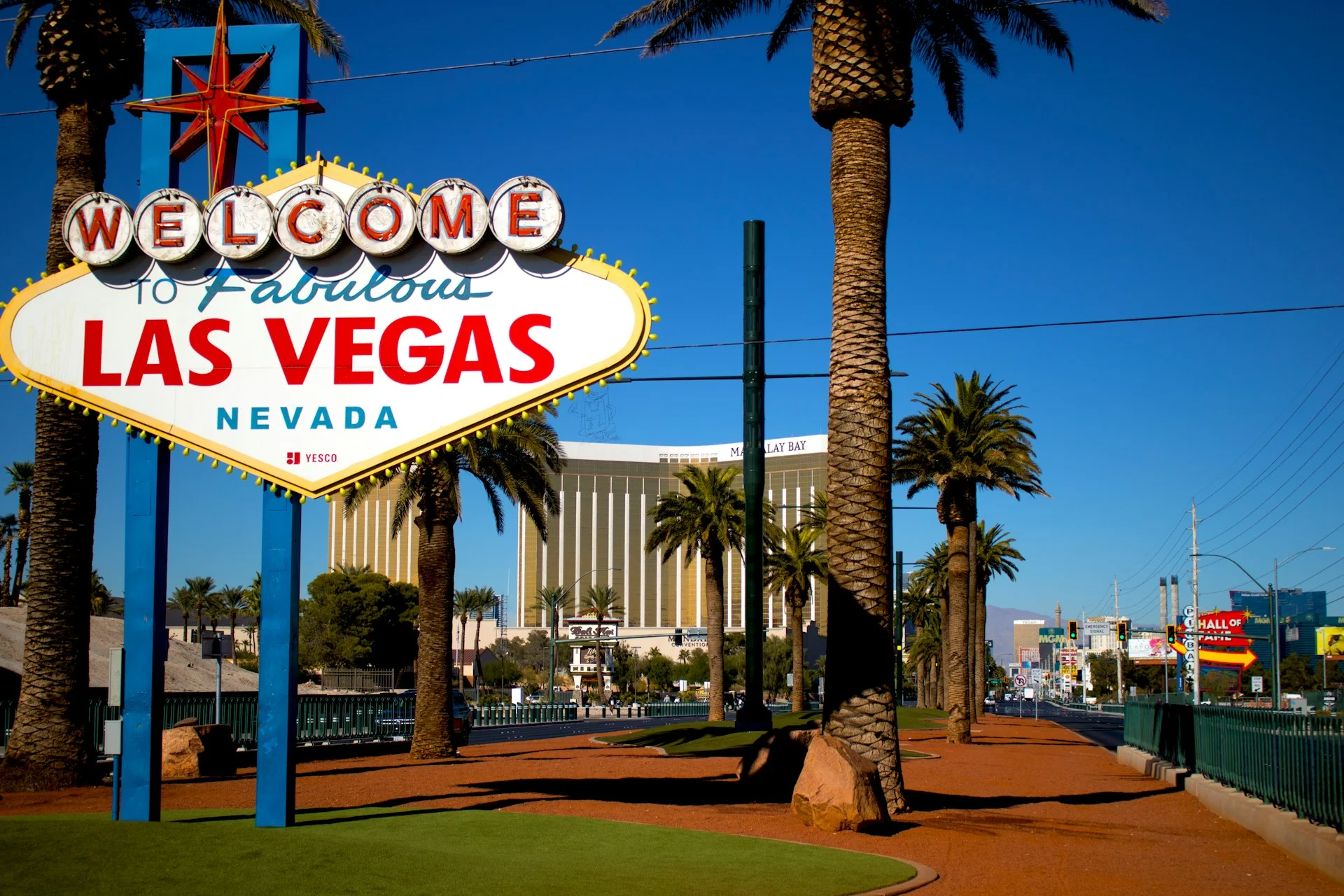
Las Vegas is a vibrant city in the Nevada desert, USA, world-famous for its spectacular casino resorts, non-stop entertainment, and electrifying nightlife. It is best known for its iconic Strip boulevard lined with mega-resorts, world-class shows, and high-end dining from celebrity chefs. Visitors come here for the gambling, the spectacle, the luxury hotels, and an unmatched variety of entertainment that operates 24 hours a day, seven days a week.
What Is Las Vegas and Why Should You Visit?
Las Vegas is a dazzling desert metropolis in Clark County, Nevada, USA — a city that rose from the Mojave Desert to become one of the most-visited tourist destinations on earth. Known as “Sin City” and the “Entertainment Capital of the World,” Las Vegas is unlike any other place on the planet: a city that never sleeps, where massive themed casino resorts tower above a desert landscape and every night feels like New Year’s Eve. The atmosphere is electric, the excess is unapologetic, and the sheer variety of things to do is staggering.
People visit Las Vegas for many reasons: the world-famous casinos, the legendary shows (from Cirque du Soleil to A-list residencies), the Michelin-starred restaurants, the poolside luxury, and the buzzing nightlife. But beyond the neon lights, Las Vegas also offers incredible natural beauty just a short drive away — the Grand Canyon, Red Rock Canyon, and Valley of Fire are all accessible as day trips. Whether you’re a first-timer drawn by the glamour or a seasoned visitor seeking hidden gems, Las Vegas delivers.
Las Vegas can feel overwhelming at first — the scale of the Strip, the constant stimulation, and the crowds can be a lot to take in. But with a little planning, you can experience the best of the city without burning out your budget or your senses. This guide covers everything you need to know.
When Is the Best Time to Visit Las Vegas?
Spring (March–May): Spring is one of the best times to visit Las Vegas. Temperatures are pleasant — ranging from 60°F to 85°F (16°C–29°C) — crowds are manageable, and hotel rates are reasonable. March and April are ideal for outdoor activities and pool season starts warming up. Spring Break (mid-March) brings larger crowds, so book early.
Summer (June–August): Summer is scorching hot, with temperatures regularly hitting 105°F–115°F (40°C–46°C). Despite the heat, it remains a popular time to visit because hotels slash prices dramatically to attract visitors, and the pools are open and fabulous. If you visit in summer, plan outdoor activities early in the morning and spend afternoons indoors or by the pool.
Fall (September–November): Fall is arguably the best season for Las Vegas. Temperatures cool to a very comfortable 65°F–90°F (18°C–32°C), crowds thin out after Labor Day, and hotel deals are plentiful. October is a sweet spot — warm days, cool nights, and vibrant Halloween events throughout the city.
Winter (December–February): Winter brings cool to cold temperatures (40°F–65°F / 4°C–18°C) and some of the best hotel deals of the year — except around New Year’s Eve, which is one of the busiest and most expensive nights in Las Vegas history. The city is surprisingly festive in December, with elaborate holiday displays at major resorts. If you visit in January or February, you’ll find rock-bottom rates and much smaller crowds.
How Many Days Do You Need in Las Vegas?
- 1–2 days: A quick weekend getaway. You can walk the Strip, see a show, hit a few casinos, and try a celebrity restaurant. Best for people who’ve been before or just want a taste of the city.
- 3–4 days: The sweet spot for first-time visitors. Enough time to explore the Strip thoroughly, visit Fremont Street, do a day trip to Red Rock Canyon or Hoover Dam, and experience the nightlife without exhausting yourself.
- 5–7 days: Ideal for those who want to go deeper — visit the Grand Canyon, explore off-Strip neighborhoods like the Arts District, try more restaurants, and really soak in the experience.
- 1 week+: For true enthusiasts. A full week lets you explore multiple day trips, attend special events, get into a slower rhythm, and discover the city like a local.
Quick Facts About Las Vegas
- Population: Approx. 2.2 million (metro area, 2026)
- Language: English (widely spoken; Spanish common in many neighborhoods)
- Currency: US Dollar (USD, $)
- Time Zone: Pacific Time (PT) — UTC-8 in winter, UTC-7 in summer (PDT)
- Country Code: +1 (USA)
- Area Code: 702
- Climate: Hot desert (BWh) — extremely hot summers, mild winters, very low rainfall
- Altitude: Approx. 2,001 feet (610 meters) above sea level
How Do You Get To and Around Las Vegas?
The easiest way to reach Las Vegas is by flying into Harry Reid International Airport, which is conveniently located just minutes from the Strip. Las Vegas is also reachable by car from Los Angeles (roughly 4 hours), Phoenix (4.5 hours), and Salt Lake City (6.5 hours). Amtrak doesn’t currently serve Las Vegas directly, but bus services like Greyhound connect it to major western cities.
Which Airports Serve Las Vegas?
Harry Reid International Airport (LAS) 5757 Wayne Newton Blvd, Las Vegas, NV 89119 Harry Reid International is the primary airport serving Las Vegas, located just 1.5 miles south of the southern end of the Strip. It is one of the busiest airports in the US, served by virtually every major US airline and many international carriers. The airport is modern, well-organized, and slot machines greet you the moment you step off the plane — very on-brand for Las Vegas. A second facility, Henderson Executive Airport, serves private aviation.
How Do You Get from the Airport to the City Center?
Official Taxi: Taxis are available at the designated taxi stand outside baggage claim. The fare to the Strip is approximately $18–$25 USD (2026), with a mandatory tunnel fee of around $3 if your hotel is mid-Strip. Journey time is 10–20 minutes depending on traffic.
Rideshare (Uber/Lyft): Uber and Lyft are widely available and often cheaper than taxis at $12–$20 USD to most Strip hotels. Pick-up is from the designated rideshare area on Level 2 of the parking structure — follow the signs from the terminal.
Monorail: The Las Vegas Monorail does not directly serve the airport. However, a ride-share or taxi to the Mandalay Bay station (the closest monorail stop to the airport) is cheap, and from there you can use the monorail to reach mid-Strip and north Strip hotels.
Public Bus (RTC): The RTC Centennial Express (CX) bus connects the airport to downtown Las Vegas for just $2 USD, but it’s slow and not ideal with heavy luggage. The WAX (Westcliff Airport Express) connects to the Strip for $3 USD and is a faster option for budget travelers.
Private Transfer: Pre-booked private shuttles and limousines start around $50–$150+ USD depending on vehicle type. These are great for groups or luxury travelers who want a seamless arrival.
PRO TIP: For most visitors, Uber or Lyft from the designated rideshare pick-up area offers the best combination of price and convenience. Avoid unmarked “transportation” offers inside the terminal — always use the official rideshare area or the official taxi stand.
What Is the Best Way to Get Around Las Vegas?
The best way to get around the Las Vegas Strip is on foot, by monorail, or by rideshare app. Las Vegas is designed for walking along the Strip, though the distances between casinos are deceptively long — what looks like a 5-minute walk can take 20 minutes. For off-Strip destinations, Uber and Lyft are fast, affordable, and readily available at all hours.
The Las Vegas Monorail
The Las Vegas Monorail runs along the east side of the Strip from the MGM Grand (southern end) to the SAHARA Las Vegas (northern end), with 7 stops total. It’s fast, air-conditioned, and a great way to skip the traffic — especially during busy periods.
Tickets & Passes (2026 estimates):
- Single ride: $8 USD
- 2-ride pass: $14 USD
- 1-day unlimited pass: $16 USD
- 3-day unlimited pass: $38 USD
- 7-day unlimited pass: $65 USD
PRO TIP: Buy your monorail passes at the station or online in advance to save time. The 3-day unlimited pass pays for itself very quickly if you’re hopping between casinos frequently. Avoid the Strip during peak hours (8–10 PM on weekends) when foot traffic is at its densest — the monorail is your best friend then.
RTC Public Buses
The Regional Transportation Commission (RTC) operates several bus routes across Las Vegas. The Deuce is a double-decker bus running 24/7 along the full length of the Strip and downtown, costing $6 for a 2-hour pass or $8 for a 24-hour unlimited pass (2026). It’s slow but incredibly cheap and covers the full Strip — great for budget travelers.
Taxis & Rideshare
Taxis are plentiful at major casino entrances, though the city has largely moved to rideshare apps for most travelers. Uber and Lyft are your best bets — they’re reliable, affordable, and available 24/7. An average Strip-to-Strip ride costs $8–$15 USD; longer trips off the Strip run $15–$30. Surge pricing applies during major events and weekends after midnight.
WATCH OUT: Never accept rides from unofficial “limo” or transportation touts inside or outside the airport terminal. Always use the official Uber/Lyft pick-up zones or the clearly marked official taxi stands. Unofficial drivers may overcharge or take longer routes.
Walking the Strip
The Las Vegas Strip (Las Vegas Boulevard South) runs approximately 4.2 miles from Mandalay Bay to the SAHARA, and walking it end-to-end takes about 2–3 hours at a leisurely pace. Most major attractions between Bellagio and Aria are tightly clustered and highly walkable. Be warned: the desert heat in summer makes extended midday walks uncomfortable.
Walkability Score: 75/100 for the Strip corridor. The Strip itself is extremely walkable, but getting off the Strip — to local restaurants, the Arts District, or east/west side neighborhoods — really does require a car or rideshare.
What Are the Top Attractions and Landmarks in Las Vegas?
Las Vegas’s top attractions range from world-famous casino spectacles to natural wonders, and from iconic street scenes to remarkable museums. Here are the essential sights you should not miss on your visit.
The Las Vegas Strip (Las Vegas Boulevard South)
Las Vegas Blvd S, Las Vegas, NV 89109
The Strip is the beating heart of Las Vegas — a roughly 4.2-mile stretch of Las Vegas Boulevard South lined with some of the largest and most extravagant hotels, casinos, and resorts on earth. Walking the Strip at night, with the neon lights blazing and the crowds buzzing, is one of the great urban experiences in the world. Major resorts like the Bellagio, MGM Grand, Caesars Palace, Venetian, and Wynn each feel like entire cities unto themselves.
Beyond the casinos, the Strip is home to free outdoor spectacles, world-class restaurants, designer boutiques, and entertainment venues hosting A-list performers. Even if you never set foot in a casino, the Strip alone offers days of free entertainment. Just walking through the themed hotel lobbies is an experience — from the canals of The Venetian to the Roman grandeur of Caesars Palace.
Why visit: The Strip is the quintessential Las Vegas experience. It’s where the city’s energy concentrates, and every block offers something new, spectacular, and completely over-the-top.
Time needed: 2–6+ hours (could spend full days) Entrance: Free to walk; individual venues have their own costs Best time: After dark for the full neon light experience Hours: Always open (it’s an outdoor street)
PRO TIP: Walk the Strip from north to south to take advantage of the elevation — it’s a very slight downhill grade that makes the walk easier in the heat. Start at the SAHARA and work your way down to Mandalay Bay as the sun sets for stunning golden-hour photos.
Bellagio Fountains
3600 S Las Vegas Blvd, Las Vegas, NV 89109 (In front of Bellagio Hotel)
The Fountains of Bellagio are one of the most iconic free attractions in Las Vegas — and arguably the world. The choreographed water show features over 1,200 jets and 4,500 lights that shoot water up to 460 feet in the air, all synchronized to music ranging from classical opera to pop hits. Shows run every 30 minutes during the day and every 15 minutes in the evenings.
The Bellagio lake that houses the fountains spans over 8 acres and sits directly in front of the resort on the Strip. The show lasts about 5 minutes and draws massive crowds — but it’s completely free and worth seeing multiple times, as each musical selection creates a completely different atmosphere. The fountain show at night, with the Bellagio towers lit up behind it, is pure Las Vegas magic.
Why visit: It’s the most romantic, spectacular, and photogenic free show in Las Vegas. Missing the Bellagio Fountains would be like visiting Paris and skipping the Eiffel Tower.
Time needed: 15–30 minutes (to watch 1–2 shows) Entrance: Completely free Best time: After dark (7 PM–midnight) for the best lighting Hours: Mon–Fri 3 PM–midnight; Sat–Sun noon–midnight; every 30 min afternoons, every 15 min evenings
PRO TIP: The best free viewing spot is the railing directly in front of the Bellagio. For an elevated view, grab a drink at the Petrossian Bar inside Bellagio, which overlooks the fountain lake from indoors — air-conditioned luxury with the same view.
Fremont Street Experience
425 Fremont St, Las Vegas, NV 89101 (Downtown Las Vegas)
Fremont Street Experience is the heart of “Old Vegas” — a pedestrian mall in downtown Las Vegas covered by the world’s largest LED display canopy, the Viva Vision screen, which stretches 1,500 feet long and 90 feet wide. Every evening, the screen comes to life with free light shows set to booming surround sound. The street below is packed with live music, street performers, zip lines, vintage casinos, and some of the best people-watching in the city.
Unlike the polished, corporate glamour of the Strip, Fremont Street has a grittier, more eclectic energy. The classic old casinos — the Golden Nugget, Binion’s, the Four Queens — are smaller, friendlier, and often better value than their Strip counterparts. The free light shows run multiple times each night and draw enthusiastic crowds.
Why visit: Fremont Street offers a completely different side of Las Vegas — historic, energetic, and totally free. It’s a must-visit, especially if you want a break from the Strip’s intensity.
Time needed: 2–4 hours Entrance: Free (Slotzilla zip line: $25–$50 USD, 2026) Best time: After 9 PM for the full LED light show experience Hours: 24/7; light shows run approximately hourly from 6 PM–2 AM
WATCH OUT: Fremont Street gets extremely crowded on Friday and Saturday nights. Keep your phone and wallet secure — pickpocketing does occur in dense crowds. Also, street performers and people in costumes may aggressively request tips for photos.
The High Roller Observation Wheel
3545 S Las Vegas Blvd, Las Vegas, NV 89109 (The LINQ Promenade)
At 550 feet (167 meters) tall, the High Roller is the largest observation wheel in the Western Hemisphere. Located at the LINQ Promenade — an outdoor shopping and dining complex at the center of the Strip — the High Roller offers breathtaking 360-degree views of Las Vegas, the surrounding desert, and the Spring Mountains. Each cabin is a fully enclosed, air-conditioned pod holding up to 40 people.
One full rotation takes approximately 30 minutes. The cabins are transparent and spacious, giving you unobstructed views in every direction. There’s even an option to ride in a “Happy Half Hour” pod that comes pre-loaded with an open bar — a very popular choice for celebrating special occasions.
Why visit: The High Roller gives you the best aerial perspective of the Strip and is especially spectacular at sunset or after dark when the city lights up below you.
Time needed: 45–60 minutes (including queueing) Entrance: Approx. $25–$37 USD daytime; $37–$45 USD nighttime (2026); open bar cabin extra Best time: Around sunset or after dark Hours: Daily 11:30 AM–2 AM (hours may vary)
PRO TIP: Buy tickets online in advance to save money and skip the queue at the ticket booth. Sunset rides (starting around 45 minutes before sunset) offer the best of both worlds — you see the Strip in golden light and then watch the neon come alive.
The Venetian and The Palazzo Resort
3355 S Las Vegas Blvd, Las Vegas, NV 89109
The Venetian Las Vegas is one of the most remarkable hotel complexes in the world — a recreation of Venice, Italy, complete with hand-painted frescoes, marble floors, a replica Grand Canal, and gondoliers in striped shirts singing Italian opera as they glide beneath indoor bridges. The property seamlessly connects to The Palazzo, making it one of the largest hotel complexes on earth with over 7,000 suites. Together, they house dozens of high-end restaurants, a massive casino, a luxury shopping mall, and one of Vegas’s most respected art museums.
The Grand Canal Shoppes inside The Venetian recreates a Venetian streetscape complete with cobblestoned walkways, arched bridges, and gondola rides on the indoor canal under a painted blue sky ceiling. You could spend an entire afternoon just wandering through the property. The Canyon Ranch Spa and The Venetian’s entertainment lineup make it a destination unto itself.
Why visit: Walking through The Venetian is like stepping into another world — a visually stunning experience that doesn’t require you to spend a single dollar, yet makes you feel like you’re living the high life.
Time needed: 2–4 hours Entrance: Free to walk through; gondola rides approx. $29–$39 USD (2026) Best time: Afternoons and evenings Hours: Casino and lobby: 24/7; Grand Canal Shoppes: 10 AM–11 PM (later on weekends)
Sphere (MSG Sphere)
255 Sands Ave, Las Vegas, NV 89169
Opened in 2023, the Sphere is Las Vegas’s newest and most technically jaw-dropping attraction. This 17,500-seat arena is covered entirely in programmable LED panels on the outside, making it a massive, glowing orb visible from across the city — and arguably the most photographed new building in the world. On the inside, the Sphere features the world’s largest and highest-resolution LED screen (wrapping the entire interior), a revolutionary sound system, and haptic seats that vibrate in sync with the experience.
The Sphere hosts major concerts and residencies by world-famous artists, as well as immersive cinematic experiences. Even if you don’t attend an event, the exterior of the Sphere after dark — glowing with art, visuals, and advertising — is one of the most extraordinary sights in Las Vegas. It can be seen clearly from the Strip and nearby overpasses.
Why visit: The Sphere represents the future of live entertainment and is a uniquely Las Vegas landmark — nothing else like it exists anywhere on earth.
Time needed: 2–3 hours for an event; 15 minutes to see exterior Entrance: Exterior is free; event tickets start at approx. $75–$400+ USD (2026) Best time: After dark for the exterior light show Hours: Exterior visible 24/7; events as scheduled
PRO TIP: You can see the Sphere’s LED exterior show for free from the pedestrian bridge over Sands Avenue or from many points on the Strip. Book event tickets months in advance — they sell out extremely fast.
Mob Museum (National Museum of Organized Crime and Law Enforcement)
300 Stewart Ave, Las Vegas, NV 89101 (Downtown Las Vegas)
The Mob Museum is one of the best museums in Las Vegas — an engaging, professionally curated look at the history of organized crime and law enforcement in America. Housed in a stunning 1933 federal courthouse building in downtown Las Vegas, the museum has a direct connection to the city’s own mob history. Exhibits cover everything from Al Capone and the Chicago Outfit to the Las Vegas mob era, drug cartels, and modern organized crime.
The museum is genuinely fascinating, well-designed, and surprisingly family-friendly (though some content is mature). It includes artifacts like the actual brick wall from the St. Valentine’s Day Massacre, interactive exhibits, a firing range experience, and even a working speakeasy in the basement serving Prohibition-era cocktails.
Why visit: The Mob Museum provides real depth and historical context for Las Vegas’s fascinating and often overlooked past. It’s engaging, atmospheric, and far more interesting than most visitors expect.
Time needed: 2–3 hours Entrance: Adults approx. $32 USD; seniors/students approx. $24 USD; children (5–17) approx. $22 USD (2026) Best time: Weekday mornings for smaller crowds Hours: Daily 9 AM–9 PM (last entry 8 PM)
Cirque du Soleil – “O” at Bellagio
3600 S Las Vegas Blvd, Las Vegas, NV 89109 (Bellagio Hotel Theater)
“O” by Cirque du Soleil is widely considered one of the greatest live performances in Las Vegas — an aquatic theatrical spectacle performed in, on, and above a 1.5-million-gallon pool that transforms the stage into a constantly morphing water-and-air performance space. Acrobats, divers, synchronized swimmers, and aerial artists perform in an atmosphere of breathtaking artistry and physical mastery. The water stage can change from a shallow performance area to a 25-foot-deep pool in seconds.
“O” has been running since 1998 and remains one of the most technically complex and visually stunning shows ever created. The name is derived from the French word “eau” (water), and water is the central element of every act. This is not a typical circus show — it’s a genuinely moving piece of performance art that leaves audiences speechless.
Why visit: “O” is a once-in-a-lifetime theatrical experience that you simply cannot see anywhere else in the world. It’s worth every penny of the ticket price.
Time needed: Approx. 2 hours (show runs 1hr 30min + time to find seats) Entrance: Tickets from approx. $142–$235+ USD (2026) Best time: Any show — quality is consistently excellent Hours: Shows run Wed–Sun; check Bellagio website for current schedule
WATCH OUT: Book “O” tickets well in advance — weeks or even months ahead during peak season. Sold-out shows are very common. Purchase directly from the Bellagio website to avoid third-party markups.
Neon Museum (Neon Boneyard)
770 Las Vegas Blvd N, Las Vegas, NV 89101
The Neon Museum is a unique outdoor art and history museum that preserves and exhibits vintage Las Vegas neon signs — more than 250 signs spanning over 70 years of the city’s history. The main collection, called the Neon Boneyard, is an open-air outdoor area where unrestored signs create a hauntingly beautiful, slightly apocalyptic landscape of glowing neon and rusted metal.
The museum tells the story of Las Vegas’s visual identity through its most iconic signage — from the original Moulin Rouge sign to the Golden Nugget and the Stardust. Guided tours are available and extremely informative. The evening “Brilliant!” experience is a spectacular digital art show projected onto the signs and surrounding structures. The museum’s restored La Concha Visitor Center is itself a classic piece of mid-century modern architecture.
Why visit: The Neon Museum offers a poetic and surprisingly moving look at Las Vegas history through the lens of design and pop culture. The night experience is absolutely magical.
Time needed: 1–2 hours (regular tour); 1.5–2.5 hours (Brilliant! experience) Entrance: General tours approx. $22–$28 USD; Brilliant! experience approx. $40–$60 USD (2026) Best time: Night for the Brilliant! experience; early morning for photography Hours: Daily; hours vary — check website for current schedule
PRO TIP: Book tours online in advance — they often sell out. The Brilliant! night show is the best value and most visually stunning option. Bring a camera with manual settings for the best neon sign photography.
Red Rock Canyon National Conservation Area
1000 Scenic Loop Dr, Las Vegas, NV 89161 (approx. 17 miles west of the Strip)
Red Rock Canyon is one of the most spectacular natural landscapes in the American Southwest — and it’s just a 20-minute drive from the Las Vegas Strip. The conservation area features dramatic sandstone cliffs in vivid shades of red and orange, ancient desert washes, Joshua trees, and hiking trails suitable for all levels. The 13-mile scenic drive loop offers accessible views for those who prefer to stay in their car, while hikers can tackle everything from easy 1-mile walks to demanding all-day climbs.
The most popular hikes include the Calico Hills Trail, Ice Box Canyon, and the Keystone Thrust. Wildlife is abundant — you may spot desert tortoises, bighorn sheep, and roadrunners. The canyon is also a world-class rock climbing destination. Sunrise at Red Rock Canyon is breathtaking, with the rising sun painting the cliffs gold and amber.
Why visit: Red Rock Canyon proves that Las Vegas is more than casinos — the natural beauty here is genuinely world-class and offers a refreshing contrast to the neon and noise of the Strip.
Time needed: 2–6 hours depending on hiking Entrance: $15 USD per vehicle (2026); annual pass available Best time: Early morning (before 10 AM) to avoid heat and crowds Hours: Scenic Drive open daily 7 AM–dusk (seasonal variation)
WATCH OUT: The desert sun is intense — bring at least 2 liters of water per person, sunscreen, and a hat. In summer, plan to arrive before 8 AM and leave before 11 AM to avoid dangerous heat levels on the trails.
What Are the Best Neighborhoods to Explore in Las Vegas?
Las Vegas’s neighborhoods each have a distinct character — from the neon spectacle of the Strip to the bohemian charm of the Arts District and the old-school grit of downtown. Here are the best areas to explore.
The Strip (Las Vegas Boulevard South)
Character: The ultimate tourist corridor — glitzy, excessive, theatrical, and endlessly stimulating. Every square foot has been designed to dazzle. Giant casino resorts, designer stores, celebrity restaurants, and rooftop pools line both sides of the boulevard.
What makes it special: No other street on earth looks quite like the Strip at night. The free outdoor attractions alone — the Bellagio Fountains, the Mirage Volcano (when active), the Paris balloon, and the Sphere — make it worth repeated visits. Each hotel-casino is its own themed world.
Best for: First-time visitors, luxury travelers, party-goers, foodies.
Must-see in this area: Bellagio, Caesars Palace, The Venetian, Cosmopolitan, MGM Grand, The High Roller.
How to get there: Walk, monorail, Uber/Lyft, or the Deuce bus.
Location: Las Vegas Blvd S between Mandalay Bay and SAHARA Hotel, Las Vegas, NV 89109
Fremont Street / Downtown Las Vegas
Character: Old Vegas nostalgia meets a gritty, energetic street party. Downtown is rawer and more authentic than the Strip — smaller casinos, cheaper drinks, better odds, and a buzzing outdoor pedestrian mall under a massive LED canopy.
What makes it special: The Fremont Street Experience LED canopy light shows are free, the vintage casinos like the Golden Nugget and Binion’s have real character, and the area is increasingly populated with cool bars and street art installations. The neighborhood around Fremont East has become a genuine local nightlife hub.
Best for: Budget travelers, history buffs, those who prefer a more local atmosphere.
Must-see in this area: Golden Nugget, Fremont Street Experience canopy shows, Slotzilla zip line, the Neon Museum (nearby).
How to get there: Deuce bus from the Strip; 10–15 min Uber/Lyft.
Location: 425 Fremont St, Las Vegas, NV 89101
The Arts District (18b)
Character: Las Vegas’s creative hub — a compact neighborhood of galleries, independent restaurants, vintage shops, murals, coffee roasters, and craft breweries that feels completely unlike anywhere else in the city. It’s walkable, relaxed, and genuinely interesting.
What makes it special: The monthly First Friday art walk draws thousands of locals. The neighborhood is anchored by galleries, street art (including works by internationally known muralists), and some of the best independent restaurants in the city. This is where Las Vegas locals actually hang out.
Best for: Art lovers, foodies, culture seekers, anyone wanting to experience local Las Vegas rather than tourist Las Vegas.
Must-see in this area: First Friday art walk, Huss Art Project murals, independent galleries on Casino Center Blvd.
How to get there: 10-minute Uber from the Strip; limited street parking available.
Location: S Main St & Charleston Blvd, Las Vegas, NV 89104
The LINQ Promenade
Character: An open-air shopping, dining, and entertainment district in the heart of the Strip that strikes a balance between the mega-resort excess of the Strip and something slightly more human-scaled. It’s younger, louder, and more fun than many nearby areas.
What makes it special: The LINQ Promenade is anchored by the High Roller observation wheel and hosts the Brooklyn Bowl live music venue. It has an excellent selection of casual restaurants, bars, and entertainment options — plus its central Strip location makes it a great base for exploring in both directions.
Best for: Younger travelers, groups, those wanting fun on a moderate budget.
Must-see in this area: High Roller, Brooklyn Bowl, In-N-Out Burger (of course), rooftop bars.
Location: 3545 S Las Vegas Blvd, Las Vegas, NV 89109
Summerlin (West Las Vegas)
Character: A planned master community on the western edge of the Las Vegas Valley, right at the foot of the Spring Mountains and Red Rock Canyon. Summerlin is where affluent Las Vegas locals live — beautiful parks, upscale restaurants, and a completely different, quieter, more suburban feel.
What makes it special: Summerlin is the gateway to Red Rock Canyon and offers excellent local dining options away from tourist pricing. Downtown Summerlin is a large outdoor mall with great restaurants and local shops. It’s also very walkable and clean — a nice contrast to the intensity of the Strip.
Best for: Nature lovers, families, those seeking local restaurants and experiences.
Location: Summerlin, Las Vegas, NV 89135
What Food Should You Try in Las Vegas?
Las Vegas is famous for its extraordinary food scene — the city has evolved from the buffet capital of the world into one of the top dining destinations on the planet, with more celebrity-chef restaurants per square mile than almost anywhere else. From Michelin-starred tasting menus to world-class street tacos, the food options in Las Vegas are genuinely staggering.
What Are the Must-Try Local Dishes and Food Experiences in Las Vegas?
- The Las Vegas Buffet: The classic buffet has evolved significantly. While it’s no longer the cheap deal it once was, iconic buffets like the Wicked Spoon (Cosmopolitan) or the Bacchanal Buffet (Caesars Palace) offer extraordinary variety at one all-inclusive price. A true Las Vegas rite of passage.
- In-N-Out Burger: Not exclusive to Las Vegas, but a cultural landmark — the In-N-Out on the Strip (inside the LINQ Promenade) is one of the busiest in the country. Order your burger “Animal Style” (extra sauce, grilled onions, pickles) from the secret menu for the true experience.
- Las Vegas Strip Steak: Las Vegas has some of the best steakhouses in America. Carving out a special evening at a premium steakhouse like Andiamo at the D or CUT by Wolfgang Puck is an essential Las Vegas dining experience.
- Shrimp Cocktail at Golden Gate: A Las Vegas institution since 1959, the famous 99-cent shrimp cocktail at the Golden Gate Casino in downtown Las Vegas is a must-try piece of local history. The price has gone up slightly, but the tradition endures.
- Celebrity Chef Restaurants: Las Vegas has outposts from nearly every famous chef in America — Gordon Ramsay, Bobby Flay, Mario Batali’s successors, José Andrés, Thomas Keller, and many more. Dining at one of these restaurant destinations is a core part of the Las Vegas experience.
- Authentic Mexican Food: Las Vegas has a large and vibrant Mexican-American community, and the East Side of the city has some exceptional and affordable Mexican restaurants and taquerias. Lindo Michoacan and Tacos El Gordo are local legends.
- All-You-Can-Eat Sushi: Las Vegas has an extraordinary number of high-quality AYCE sushi restaurants at astonishingly good value, given the competitive market. It’s a food category the city does better than almost anywhere.
Where Should You Eat in Las Vegas?
Budget-Friendly (Under $15 USD per meal)
- Tacos El Gordo – 1724 E Charleston Blvd, Las Vegas, NV 89104 – Legendary taqueria serving Tijuana-style tacos at rock-bottom prices. The adobada (marinated pork) and cabeza (beef head) tacos are extraordinary. Cash only. Lines are long on weekends but move fast.
- In-N-Out Burger (Strip location) – LINQ Promenade, 3545 S Las Vegas Blvd – The iconic California fast-food chain is worth visiting for the experience and the quality. The Double-Double Animal Style is one of fast food’s great achievements.
- Secret Pizza (Cosmopolitan 3rd Floor) – 3708 Las Vegas Blvd S, Las Vegas, NV 89109 – A hidden gem inside the Cosmopolitan Hotel on the 3rd floor, with no signage and no advertising. Simple, excellent pizza by the slice at incredible prices for a Strip location. A beloved local secret.
Mid-Range ($20–$60 USD per meal)
- Estiatorio Milos at The Cosmopolitan – 3708 Las Vegas Blvd S – Exceptional Greek seafood restaurant with beautiful, light-filled decor. The lunch prix-fixe is outstanding value. The octopus is a must-order.
- Lotus of Siam – 953 E Sahara Ave, Las Vegas, NV 89104 – Frequently called the best Thai restaurant in North America by serious food critics. Located off-Strip in a nondescript strip mall, this James Beard-recognized restaurant makes the trip completely worth it. The Northern Thai menu is the highlight.
- Bratalian Neapolitan Cantina – 3900 Paradise Rd, Las Vegas, NV 89169 – A beloved off-Strip Italian restaurant with genuine Neapolitan-style cooking, strong cocktails, and a lively local atmosphere. Excellent value and great pizza.
Fine Dining ($100+ USD per person)
- Joël Robuchon at MGM Grand – 3799 S Las Vegas Blvd, Las Vegas, NV 89109 – The late chef’s flagship US restaurant remains one of the most celebrated fine dining experiences in Las Vegas. The 16-course tasting menu is a legendary indulgence. One of the few Las Vegas restaurants to hold multiple Michelin stars. Book weeks in advance.
- é by José Andrés at the Cosmopolitan – 3708 Las Vegas Blvd S – A hyper-exclusive culinary experience: just eight guests per night, a set tasting menu from the brilliant Spanish-American chef. This requires booking months in advance and is an extraordinary food memory.
What Are the Dining Customs in Las Vegas?
Meal times: Las Vegas is flexible — many restaurants are open 24 hours or until very late. Dinner typically runs 6–10 PM, but late-night dining is always available. Brunch is popular on weekends from 10 AM–2 PM.
Tipping: Tipping is expected in Las Vegas — 18–20% is standard for sit-down restaurants, 15% minimum. Many bills will auto-add a suggested gratuity. Some high-end restaurants add a mandatory service charge of 18–20%.
Reservations: For any celebrity-chef or high-end restaurant on the Strip, reservations are essential and should be made weeks in advance during peak periods. OpenTable and Resy are widely used. For budget and casual places, no reservation is needed.
Dress code: Las Vegas is generally casual, even at upscale restaurants. Smart casual (neat jeans, collared shirt, clean shoes) is appropriate for most mid-range and fine dining venues. Only the most exclusive restaurants enforce a strict dress code.
SAVE MONEY: The best budget dining move in Las Vegas is to eat off the Strip. Restaurants even one block east or west of Las Vegas Boulevard typically charge 30–50% less for equivalent food. Downtown Las Vegas also has excellent, cheaper dining options. Also look for lunch specials and prix-fixe deals at restaurants that would be very expensive at dinner.
PRO TIP: Many high-end Strip restaurants offer outstanding value lunch menus — you can experience the same kitchen and setting as dinner at a fraction of the price. Joël Robuchon’s lunch prix-fixe, for example, is substantially cheaper than the dinner tasting menu. Plan your splurge meals at lunchtime.
What Is the Nightlife Like in Las Vegas?
Las Vegas nightlife is legendary worldwide — the city operates 24 hours a day with no last-call restriction in casinos, world-class nightclubs that host the biggest DJs on the planet, rooftop bars with Strip views, intimate speakeasies, and everything in between. Things typically get started late: clubs don’t fill up until midnight, and the party can run until 6 AM or later.
Where Are the Best Areas for Nightlife in Las Vegas?
- The Strip: Las Vegas Blvd S, Las Vegas, NV 89109 – The epicenter of nightlife, with major club venues, high-end lounges, rooftop bars, and pool parties at virtually every major resort. Best for the full Las Vegas clubbing experience.
- Fremont East District: Fremont St & 6th–9th Streets, Las Vegas, NV 89101 – The local nightlife hub in downtown Las Vegas. A dense concentration of cocktail bars, dive bars, and music venues with a much more local, relaxed, and affordable vibe than the Strip. Best for those who want something more genuine and less expensive.
- The Arts District / Main Street: S Main St & Charleston, Las Vegas, NV 89101 – Craft cocktail bars, rooftop hangouts, and live music venues popular with Las Vegas’s creative class. More low-key and interesting than the Strip, with excellent cocktail culture.
What Are the Best Bars and Clubs in Las Vegas?
Bars & Lounges
- Chandelier Bar (Cosmopolitan) – 3708 Las Vegas Blvd S – A stunning three-story bar inside a giant chandelier installation, with incredible cocktails and arguably the most beautiful bar atmosphere in the city. Order the Verbena cocktail for a unique experience.
- The Laundry Room – Contact details by reservation only (call: 702-701-1466) – Las Vegas’s most famous speakeasy, hidden behind a laundromat downtown. You must call ahead for access to one of 10 seats per night. Exceptional craft cocktails in a tiny, intimate space.
- Commonwealth Bar – 525 Fremont St, Las Vegas, NV 89101 – A gorgeous three-level cocktail bar and nightclub in the Fremont East district with a rooftop terrace, Victorian-inspired decor, and a great local crowd.
Nightclubs & Dancing
- Omnia Nightclub (Caesars Palace) – 3570 Las Vegas Blvd S, Las Vegas, NV 89109 – One of the most spectacular nightclub spaces in the world, featuring a mechanical chandelier kinetic sculpture above the main dance floor and three different rooms. Hosts major EDM DJs. Cover charge: $30–$60+ USD; table reservations are very expensive but often include entry.
- Hakkasan (MGM Grand) – 3799 S Las Vegas Blvd, Las Vegas, NV 89109 – A massive five-floor nightclub and restaurant complex that consistently books the world’s top DJs. Known for its incredible production value and celebrity sightings. Cover: $30–$60 USD.
Live Music & Shows
- Brooklyn Bowl Las Vegas (LINQ Promenade) – 3545 S Las Vegas Blvd, Las Vegas, NV 89109 – A 2,000-capacity live music venue and bowling alley with an eclectic lineup of acts. Great food, excellent sound system, and a fun, unpretentious atmosphere. Ticket prices vary by artist.
- House of Blues (Mandalay Bay) – 3950 S Las Vegas Blvd, Las Vegas, NV 89119 – A legendary live music venue with an excellent lineup of rock, blues, and R&B acts. The Foundation Room on the top floor has incredible views of the Strip. Ticket prices vary.
What Family-Friendly Evening Entertainment Is Available?
Families can enjoy evening entertainment at the Bellagio Fountains (free), the Fremont Street Experience (free light shows), the High Roller observation wheel, the Tournament of Kings dinner show at Excalibur ($80 USD per person), and the Absinthe comedy circus show at Caesars Palace (adults only, technically, but adventurous families with teens enjoy it). The Las Vegas Natural History Museum and Discovery Children’s Museum are daytime options that close by evening.
WATCH OUT: Las Vegas nightclubs use a strict two-tier system — those on the guest list get in faster and cheaper, those who walk up cold may wait hours or not get in at all. Always research guest list procedures in advance, or book a table to guarantee entry. Also be aware that drink prices in major clubs are extremely high — $15–$20 per cocktail is standard.
PRO TIP: Get on the guest list for major nightclubs by contacting the venue’s promoter directly via their website or social media before your visit. Being on the list is usually free and means discounted or free entry before a certain time (typically before midnight). Thursday nights often offer better deals and slightly smaller crowds than Friday and Saturday.
What and Where Should You Shop in Las Vegas?
The best things to buy in Las Vegas include luxury fashion, unique entertainment memorabilia, specialty food items, and high-end jewelry — and the top shopping areas are the Forum Shops at Caesars, the Grand Canal Shoppes, and the Las Vegas Premium Outlets.
What Are the Best Shopping Districts in Las Vegas?
- Forum Shops at Caesars Palace: 3500 Las Vegas Blvd S, Las Vegas, NV 89109 – Over 160 luxury and high-end shops in a stunning Roman-themed shopping center complete with moving statues and a faux sky ceiling. Brands include Gucci, Louis Vuitton, Prada, Balenciaga, and many more. Truly a spectacle even if you’re not shopping.
- Grand Canal Shoppes (The Venetian): 3355 Las Vegas Blvd S, Las Vegas, NV 89109 – A Venetian-themed shopping mall with gondola rides and designer boutiques. Great mix of mid-range and luxury brands, plus excellent dining.
- Las Vegas Premium Outlets (North and South): 875 S Grand Central Pkwy (North) – The best place for discounted designer brands — factory-direct prices on Calvin Klein, Coach, Michael Kors, Polo Ralph Lauren, and hundreds more. North location is more accessible; South location is slightly cheaper.
What Markets Should You Visit in Las Vegas?
First Friday Art Walk – S Main St & Commerce St, Las Vegas, NV 89104 – Held the first Friday of every month in the Arts District, this free community event features local artists selling original artwork, handmade jewelry, ceramics, and more, alongside food trucks, live music, and street performers. Hours approximately 6–11 PM.
Downtown Container Park – 707 Fremont St, Las Vegas, NV 89101 – An outdoor shopping and entertainment complex made from repurposed shipping containers. Features local boutiques, food vendors, and regular live entertainment. Open daily.
What Should You Buy in Las Vegas?
- Casino merchandise and poker chips: Authentic casino chips and merchandise from your favorite Las Vegas casino make unique souvenirs. Most casino gift shops sell commemorative chips and branded items.
- Luxury goods at outlet prices: The Premium Outlets offer significant discounts on designer brands — if you’re looking for Burberry, Kate Spade, or Cole Haan, you can save 30–70% off retail.
- Local artisan goods: The First Friday market and local galleries in the Arts District sell original paintings, photography, handmade jewelry, and ceramics by Las Vegas-based artists.
- Specialty food items: The gourmet food shops inside major casinos sell excellent local honey, hot sauces, specialty chocolates, and Nevada-made spirits — great for edible gifts.
- Show merchandise: Official merchandise from Cirque du Soleil, resident performers, and major shows is available at venue gift shops and makes a meaningful souvenir.
- Nevada spirits and wine: Nevada has a growing craft distillery and winery scene. Pick up a bottle of local gin, whiskey, or wine as a unique take-home gift.
What Are the Shopping Hours and Customs?
Strip shopping malls like the Forum Shops are typically open 10 AM–11 PM Sunday through Thursday and until midnight on Friday and Saturday. Premium Outlets open at 9 AM and close at 9 PM. There is no bargaining culture in regular retail stores in Las Vegas — prices are fixed. Las Vegas has a sales tax of 8.375% (Clark County rate, 2026), which is added to all purchases at checkout. International visitors cannot claim VAT refunds in the US.
SAVE MONEY: Download the Premium Outlets app for additional coupon savings on top of already-discounted outlet prices. Sign up for loyalty programs at major stores — even one visit can earn you significant discounts. Avoid buying branded merchandise inside casino gift shops, where the same items cost significantly more than outside retailers.
What Festivals and Events Happen in Las Vegas?
Las Vegas’s biggest annual events include the Electric Daisy Carnival (EDC), the Consumer Electronics Show (CES), NASCAR races at Las Vegas Motor Speedway, and New Year’s Eve on the Strip — one of the largest NYE celebrations anywhere on earth. The city hosts world-class events year-round across sports, music, technology, and entertainment.
What Is the Annual Events Calendar for Las Vegas?
Month
Event Name
Description
January
Consumer Electronics Show (CES)
The world’s largest technology trade show draws 100,000+ attendees to the Las Vegas Convention Center. Hotels book up months in advance — rates triple or quadruple during this week.
February
Super Bowl Watch Parties
Las Vegas goes all-out for the Super Bowl with huge parties at every casino, major sports betting events, and citywide celebrations. The city hosted the Super Bowl itself in 2024.
March
NASCAR Cup Series (Las Vegas Motor Speedway)
Three major NASCAR race weekends take place at the Las Vegas Motor Speedway annually. The spring race is one of the largest sporting events in the city.
April
Las Vegas Marathon / Half Marathon
One of America’s most unique races, run through the Strip at night under the neon lights. A truly once-in-a-lifetime running experience. Register months in advance.
May
Electric Daisy Carnival (EDC)
The world’s largest electronic dance music festival, held at the Las Vegas Motor Speedway over three nights. Over 160,000 attendees per day. Elaborate art installations, multiple stages, and 24-hour dancing. Tickets sell out in hours.
June
World Series of Poker (WSOP)
The most prestigious poker tournament in the world takes place at Horseshoe Las Vegas (formerly Bally’s) over several weeks in June–July, with millions of dollars in prize money at stake.
July
WSOP Main Event Final Table
The culmination of the World Series of Poker, with the Main Event final table drawing massive crowds and media attention. Free to watch as a spectator.
August
Pool Party Season Peak
Daytime pool clubs like Marquee Dayclub, Wet Republic, and Encore Beach Club hit their busiest peak in August, with major DJ performances running throughout the month.
September
Life is Beautiful Festival
A major music, food, and art festival held in downtown Las Vegas over a weekend in September. Features top musical acts across multiple stages, art installations, and outstanding food vendors. A great local favorite.
October
Halloween Events / Monster Mash on the Strip
Las Vegas goes all-out for Halloween — costume parties at every club, haunted attractions, and the entire city dresses up. One of the best times to visit for a memorable nightlife experience.
November
NASCAR Cup Series (Fall Race)
The fall NASCAR race at Las Vegas Motor Speedway brings another wave of racing fans to the city. November is also an excellent time to visit for hotel deals and smaller crowds.
December
New Year’s Eve on the Strip
One of the world’s most spectacular New Year’s celebrations, with fireworks launched from multiple casino towers simultaneously at midnight. The Strip is closed to vehicles and becomes a massive outdoor party. Hotels must be booked 3–6 months in advance.
How Do Festivals Affect Hotel Prices and Availability?
Major events like CES (January), EDC (May), and New Year’s Eve (December) cause hotel prices to spike dramatically — sometimes 300–500% above normal rates. For CES specifically, mid-Strip hotels can reach $500–$1,500+ per night for what is normally a $100/night room. Book 3–6 months in advance for any major event. If you’re not attending the event but visiting at the same time, consider staying slightly off the Strip where prices are less affected, or look at Henderson and North Las Vegas properties.
PRO TIP: If you want to attend EDC, Life is Beautiful, or other major festivals, always buy tickets and book hotels simultaneously — the moment tickets go on sale, hotels nearby start raising rates. The LINQ and Flamingo are popular for EDC because they’re relatively central and have good value for the dates. For CES, hotels in Henderson offer much better rates with a 20-minute Uber to the convention center.
Where Should You Stay in Las Vegas?
The best neighborhood to stay in Las Vegas depends on your travel style. First-time visitors are almost always best served by staying directly on the Strip — the convenience, the ambiance, and the central location are hard to beat. Budget travelers will find better value downtown or off-Strip.
What Are the Best Neighborhoods to Stay in Las Vegas?
Neighborhood
Vibe
Price Range (per night, 2026)
Best For
Center Strip
Glamorous, central, high-energy
$150–$500+ USD
First-timers, luxury travelers
North Strip
Slightly quieter, more affordable
$80–$250 USD
Budget-conscious Strip visitors
South Strip
Family-friendly, slightly removed
$100–$350 USD
Families, those visiting CityCenter area
Downtown Las Vegas
Old Vegas charm, local energy
$60–$180 USD
Budget travelers, history buffs
Henderson
Suburban, quiet, excellent value
$70–$200 USD
Extended stays, families with cars
What Are the Pros and Cons of Each Area?
Center Strip (Bellagio, Cosmopolitan, Caesars Palace area):
Pros: Best location for walkability; you’re in the middle of everything; iconic hotel properties; best selection of restaurants and entertainment within walking distance.
Cons: Most expensive area; can be very loud; resort fees are highest here ($45–$65/night extra on top of room rate); parking is expensive.
North Strip (SAHARA, Resorts World, Wynn area):
Pros: Better rates than Center Strip; Wynn and Encore are among the best hotels in the world; Resorts World is a newer property with excellent facilities; shorter queues at attractions.
Cons: Longer walk to some central attractions; the top end of the Strip is less lively than the center.
Downtown / Fremont Street:
Pros: Significantly cheaper than the Strip (sometimes 40–60% less); great local atmosphere; close to the Neon Museum and Arts District; Gold and Silver Pawn (from the TV show) is nearby.
Cons: Requires transport to reach the Strip (about $15–$20 each way by Uber); area is rougher around the edges; fewer dining options at the high end.
How Far in Advance Should You Book in Las Vegas?
For regular weekends (non-event), booking 4–8 weeks in advance usually gets good rates. For major holidays (New Year’s Eve, Thanksgiving weekend, Memorial Day), book 3–6 months ahead. For major events (CES, EDC, big fights or concerts), book the moment you know you’re coming — sometimes 6–12 months out. Las Vegas hotel prices are highly dynamic and change daily; using rate-tracking tools on Booking.com or Hotels.com can help you book at the right moment.
PRO TIP: Always check the resort fee before booking — Las Vegas hotels charge mandatory resort fees of $30–$65 per night on top of the room rate, which are NOT included in the advertised price. A room that looks like $89/night may end up costing $150/night once fees are added. Budget accordingly. The true total cost is room rate + resort fee + taxes (approximately 13.38% hotel tax in Clark County).
What Do You Need to Know Before Visiting Las Vegas?
Here are the essential practical details every visitor to Las Vegas needs to know — from money and transport to safety and cultural customs.
Essential Travel Details for Las Vegas
- Currency: US Dollar (USD, $). ATMs everywhere. Credit cards universally accepted.
- Credit Cards: Visa and Mastercard accepted everywhere. American Express widely accepted on Strip. Cash useful for tips, street food, and some local spots.
- ATMs: Available throughout all casinos (often with high fees — $5–$10 per transaction). Use your bank’s network ATMs or Walgreens/CVS ATMs for lower fees.
- Language: English. Spanish widely spoken. Tourist areas have excellent English proficiency.
- Tipping: Essential in Las Vegas — 18–20% at restaurants, $1–$5 per drink at bars, $1–$5 per bag for bellhops, $2–$5/night for housekeeping, $5–$10 per day for your dealer at table games (optional but appreciated).
- Electrical Plugs: Type A/B (flat prongs). 120V / 60Hz. European/UK travelers need an adapter and possibly a voltage converter for some devices.
- Emergency Number: 911 (police, fire, ambulance)
- Non-Emergency Police: 702-828-3111
- SIM Cards: Available at the airport and at T-Mobile, AT&T, and Verizon stores throughout the city. Tourist SIM cards with data plans from $30–$50 USD for 30 days of service.
- WiFi: Free WiFi available in all major casinos and hotels (usually requires loyalty club registration). Quality is variable in large casino floors due to interference.
- Tap Water: Safe to drink. Las Vegas tap water is treated and meets all federal safety standards. The taste is not remarkable (it’s desert water), so many visitors prefer bottled.
How Much Does It Cost to Visit Las Vegas?
Budget Type
Daily Cost (2026)
What’s Included
Budget Traveler
$80–$150 USD
Downtown or North Strip hotel, street food & budget restaurants, public bus or walking, free attractions (Fremont Street, Bellagio Fountains, Strip walking)
Mid-Range Traveler
$200–$400 USD
Mid-Strip 3-star hotel (including resort fee), mix of casual and mid-range restaurants, Uber/monorail, 1–2 paid attractions per day, one show
Luxury Traveler
$500–$2,000+ USD
5-star Strip hotel, celebrity-chef dining, private transport, VIP club access, major shows like Cirque du Soleil, spa treatments, premium gambling
What Are the Most Useful Phrases for Las Vegas?
- “What’s the resort fee?” — Always ask upfront when booking; resort fees are mandatory and not always clearly displayed.
- “Is gratuity included?” — Ask your server to avoid double-tipping.
- “Can I get a comp?” — Casinos offer complimentary drinks, meals, or hotel stays based on gambling activity. Ask your host or at the players desk what you qualify for.
- “What’s on the guest list?” — Ask nightclub promoters what the guest list terms are (free entry? discounted? what time does it end?).
- “Is this the line or the walk-up?” — Major clubs have separate lines for table reservations, guest list, and general admission. Asking upfront saves you waiting in the wrong queue.
- Spanish phrases are useful — Many service industry workers in Las Vegas are Spanish-speaking. “Gracias,” “Por favor,” and “¿Habla inglés?” are helpful basics.
Is Las Vegas Safe for Tourists?
Las Vegas is generally safe for tourists in the major resort corridor and tourist areas, and millions of visitors enjoy the city without incident every year. The Strip itself is heavily policed and security cameras are absolutely everywhere. However, like any major city, Las Vegas has areas that require more care, and certain tourist-specific scams are common.
Areas to avoid: Avoid the area east of the Strip (particularly around Maryland Pkwy south of Sahara) at night. The area surrounding Fremont Street can get rough late at night — stay on the main pedestrian mall and don’t wander into side streets.
Common scams: Timeshare workers will approach you on the Strip with offers of free show tickets or gifts in exchange for attending a “90-minute presentation.” These are aggressive and time-consuming — just say no. Also watch for CD scammers who thrust a music CD into your hand and then demand payment. Street “photographers” offer to take your photo and then demand large tips. Unofficial taxi drivers at the airport charge inflated rates.
Pickpocketing: Relatively uncommon compared to European tourist cities, but it does happen in dense crowds on the Strip and Fremont Street. Use a money belt or keep your wallet in a front pocket. Never leave belongings unattended at casino tables or pools.
Solo traveler safety: Las Vegas is generally good for solo travelers of all genders. Women traveling alone should take the same precautions they would in any city — don’t leave drinks unattended, pre-arrange transport home at night, and trust your instincts. Las Vegas is quite LGBTQ+ friendly, with a visible and welcoming queer community particularly on the Strip and downtown.
WATCH OUT: Drink spiking does occur in Las Vegas — particularly in crowded nightclub environments. Never leave your drink unattended. If you feel suddenly dizzy or disoriented, alert a security guard or bartender immediately. Casino security and LVMPD (Las Vegas Metropolitan Police Department) are very responsive in tourist areas.
What Are the Cultural Customs in Las Vegas?
- Greetings: Standard American handshake. Friendly, informal tone is the norm.
- Dress code: Casual to smart-casual for most venues. Upscale clubs and fine dining restaurants may require smart-casual dress — no gym shorts, flip-flops, or sleeveless shirts for men in some venues.
- Photography: Generally fine throughout the city. Inside casinos, photography of the gaming floor is typically restricted — respect posted signs. Always ask before photographing individuals, especially street performers.
- Public behavior: Las Vegas has a notoriously relaxed attitude toward what other cities might consider unusual public behavior. That said, LVMPD does enforce laws against harassment, public intoxication to excess, and aggressive solicitation.
- Gambling age: You must be 21 or older to gamble or consume alcohol in Nevada. Casinos enforce this strictly with ID checks.
- Gestures to avoid: Touching casino dealers or passing money directly to them (always place on the table). Also avoid using your phone at the gaming table — it’s generally frowned upon and some casinos prohibit it.
Do You Need a Visa to Visit Las Vegas?
Las Vegas is in the United States, so visa requirements depend on your nationality and the US immigration rules. Citizens of Visa Waiver Program (VWP) countries — including the UK, EU nations, Australia, Japan, and many others — can visit for up to 90 days without a visa using ESTA authorization (apply at esta.cbp.dhs.gov, cost $21 USD, apply at least 72 hours before travel). Citizens of countries not in the VWP must apply for a B-1/B-2 tourist visa at a US embassy. Always verify current requirements at travel.state.gov before your trip.
What Health Precautions Should You Take in Las Vegas?
Vaccinations: No specific vaccinations are required for entry to the US. Standard routine vaccinations (MMR, flu, COVID-19 as per your country’s guidance) are recommended. Las Vegas is not in an area with malaria or tropical disease risk.
Pharmacies: Walgreens and CVS pharmacies are open 24 hours at multiple Strip-adjacent locations. Many over-the-counter medications available in your home country are readily available. Bring a copy of any prescriptions for medications you need.
Hospitals: Sunrise Hospital & Medical Center (3186 Maryland Pkwy) and University Medical Center (1800 W Charleston Blvd) are the main hospitals. Emergency treatment is available but very expensive without insurance — travel insurance with medical coverage is strongly recommended for international visitors. A basic ER visit without insurance can cost $2,000–$5,000+ USD.
Common health issues: Dehydration is the #1 health issue for Las Vegas tourists — the desert air is extremely dry (humidity can be below 10%) and alcohol consumption contributes significantly. Drink water constantly. Sun protection is essential — the desert sun at altitude is intense. Altitude sickness is generally not an issue at Las Vegas’s modest elevation.
Is Las Vegas Accessible for People with Disabilities?
Las Vegas’s major Strip casinos and resorts are generally very wheelchair accessible — they are large, flat, modern facilities designed to accommodate all guests. Most major attractions have accessible entrances, elevators, and facilities. The Strip’s pedestrian overpasses have elevators. The monorail is wheelchair accessible. Accessible transportation can be arranged through ride services with accessible vehicle requests. Clark County RTC buses are all ADA-compliant.
Is Las Vegas Good for Families with Kids?
Las Vegas is more family-friendly than its reputation suggests, though it is fundamentally designed for adults. Children are welcome in hotels and many restaurants, but cannot be on casino floors. Family-appropriate attractions include the Discovery Children’s Museum (360 Promenade Pl), the Natural History Museum, the Big Apple Coaster at New York-New York, the roller coasters at Circus Circus, and day trips to Red Rock Canyon or the Hoover Dam. Families should stay at hotels like Circus Circus, Excalibur, or the LINQ which have more family-oriented amenities.
What Are the Best Day Trips from Las Vegas?
The best day trips from Las Vegas include Red Rock Canyon, Hoover Dam, the Grand Canyon, Valley of Fire State Park, and Zion National Park — a remarkable variety of natural wonders within a few hours’ drive of the city.
Hoover Dam
Distance: 30 miles / 48 km; approximately 45 minutes by car
What to see: One of the greatest engineering achievements in American history, Hoover Dam stands 726 feet tall on the Colorado River between Nevada and Arizona. The dam can be visited on self-guided walks across the top (free) or guided tours inside the structure. The views of Lake Mead and Black Canyon are spectacular. The visitor center provides excellent historical context about the dam’s construction during the Great Depression.
How to get there: Rental car recommended (most flexible); guided bus tours from the Strip run approximately $65–$120 USD per person (2026) including hotel pick-up. US-93 South from Las Vegas.
Time needed: 2–4 hours; can be combined with a stop at Lake Mead
Best for: History buffs, engineering enthusiasts, families
Location: Hoover Dam, Boulder City, NV 89005
Valley of Fire State Park
Distance: 50 miles / 80 km; approximately 1 hour by car
What to see: Nevada’s oldest and largest state park is a landscape from another world — ancient Aztec sandstone formations in blazing shades of red, orange, and purple, formed 150 million years ago. The park features petroglyph sites carved by ancestral Puebloans, the famous Wave rock formation, Fire Canyon, Rainbow Vista, and some of the most otherworldly photography locations in the American West.
How to get there: Car is the only practical option (no public transport). Take I-15 North to Exit 75 (Valley of Fire Highway). No guided tours required, though available through local operators.
Time needed: Half day to full day
Best for: Nature lovers, photographers, hikers
Location: Valley of Fire State Park, Overton, NV 89040
Grand Canyon South Rim
Distance: 278 miles / 447 km; approximately 4.5 hours by car (or 50 min by plane from Vegas)
What to see: One of the Seven Natural Wonders of the World, the Grand Canyon’s South Rim offers the most iconic and accessible views. The canyon stretches 277 miles long and up to 18 miles wide, dropping 6,093 feet to the Colorado River below. The Bright Angel Trail, Mather Point, and Yavapai Geology Museum are highlights. Sunrise and sunset views are absolutely extraordinary.
How to get there: By car via US-93 South to I-40 East, approximately 4.5 hours each way. Guided day trips from Las Vegas available at approx. $100–$200 USD per person. Grand Canyon West (Skywalk) is much closer at 2.5 hours, but the South Rim has far superior views and experiences.
Time needed: Full day minimum (consider staying overnight for the best experience)
Best for: Nature lovers, families, first-time visitors to the American Southwest
Location: Grand Canyon South Rim Visitor Center, Grand Canyon Village, AZ 86023
Zion National Park
Distance: 160 miles / 260 km; approximately 2.5 hours by car
What to see: Zion is one of America’s most beloved national parks — a canyon carved by the Virgin River, with sheer red and white sandstone cliffs, hanging gardens, and exceptional hiking trails. The Narrows (hiking through the Virgin River canyon), Angels Landing (a thrilling summit hike with chain-assisted ascents), and Emerald Pools are the iconic experiences. The park is extraordinarily beautiful in all seasons.
How to get there: Car via I-15 North (about 2.5 hours). No direct public transport from Las Vegas. Guided tours from the Strip available at approx. $100–$180 USD. Book Angels Landing permits well in advance (seasonal lottery system).
Time needed: Full day; overnight strongly recommended for the best experience
Best for: Hikers, nature lovers, adventure travelers
Location: Zion National Park Visitor Center, Springdale, UT 84767
PRO TIP: If you only have time for one day trip, choose based on your priorities: Red Rock Canyon for ease and natural beauty closest to the city; Hoover Dam for history and engineering; Valley of Fire for the most otherworldly photography. For a bigger adventure, Zion or the Grand Canyon are truly life-changing. Combining Valley of Fire with the Hoover Dam makes a great single full-day road trip.
What Are the Hidden Gems and Insider Tips for Las Vegas?
Beyond the main tourist sites, Las Vegas hides some incredible spots most visitors never find — secret bars, spectacular viewpoints, and local experiences that offer the real soul of the city.
What Are the Best Hidden Gems in Las Vegas?
- Secret Pizza (Cosmopolitan, 3rd Floor): 3708 Las Vegas Blvd S, Las Vegas, NV 89109 – A completely unmarked pizza restaurant on the Cosmopolitan’s 3rd floor (take the elevator, follow the hallway past the art) that serves some of the best and most affordable pizza on the Strip. No website, no signage — just delicious pizza at honest prices. A true Strip insider secret.
- The Laundry Room Speakeasy: Call 702-701-1466 for reservations – A 10-seat speakeasy hidden inside an actual laundromat in downtown Las Vegas. One of the best cocktail bars in the country, with an ever-changing menu of inventive drinks. Reservations essential.
- Buffalo Bill’s Casino Roller Coaster (Jean, NV): Interstate 15, Jean, NV 89026 – A massive old-school wooden roller coaster at a roadside casino on the Nevada/California border, about 30 miles south of Las Vegas. Absolutely wild and completely underrated.
- Pinball Hall of Fame: 4925 Las Vegas Blvd S, Las Vegas, NV 89119 – A nonprofit museum with hundreds of vintage and classic pinball machines from the 1950s to the 2000s, all in working condition and all playable for 25–50 cents. A genuinely fun, nostalgic, and completely non-commercialized Las Vegas experience.
- Downtown Container Park at Night: 707 Fremont St, Las Vegas, NV 89101 – This boutique shopping and entertainment complex made from repurposed shipping containers comes alive at night with live music, fire features, and local vendors. Much more local in character than the Strip.
- The Atomic Testing Museum: 755 E Flamingo Rd, Las Vegas, NV 89119 – A Smithsonian-affiliated museum documenting Nevada’s extraordinary role in American nuclear history, including the Nevada Test Site where over 900 nuclear weapons were detonated above and below ground. Surprisingly fascinating and deeply moving.
- Ethel M Chocolates Factory & Garden: 2 Cactus Garden Dr, Henderson, NV 89014 – A free self-guided tour of the famous Ethel M Chocolates factory (owned by Mars, Inc.), followed by a walk through one of the largest cactus gardens in the Southwest. Great for families and completely free to visit.
Where Are the Best Photo Spots in Las Vegas?
- Welcome to Las Vegas Sign: 5100 Las Vegas Blvd S, Las Vegas, NV 89119 – The iconic vintage sign at the south end of the Strip. Best photographed at early morning before the crowds arrive. Free parking lot adjacent. The sign looks best at dusk or with early morning golden light.
- Bellagio Fountain Railing: 3600 S Las Vegas Blvd – The front railing for the fountain show offers the most direct, dramatic view. Arrive 15–20 minutes before a scheduled evening show to secure a prime spot.
- High Roller at Sunset: 3545 S Las Vegas Blvd – The observation wheel ride provides 360-degree golden-hour and nighttime views that are impossible to replicate from the ground. Bring a camera with a fast lens for the light conditions inside the pod.
- Fremont Street Mosaic Ceiling: 425 Fremont St – Looking straight up at the LED canopy during a light show gives extraordinary abstract imagery. Use a wide-angle lens for the best results.
- Neon Museum (Boneyard): 770 Las Vegas Blvd N – The most photogenic 90 minutes you’ll spend in Las Vegas. The Brilliant! night experience creates extraordinary colors and shadows that reward creative photographers enormously.
What Do Locals Know That Tourists Don’t?
PRO TIP: Get a Total Rewards / True Rewards / M life Rewards casino loyalty card on your first day and use it everywhere you gamble. Even small amounts of play accumulate points toward free meals, shows, hotel stays, and cash back. It’s completely free to join and pays off remarkably quickly.
PRO TIP: The best time to walk the Strip is 7–9 AM on weekday mornings. The temperature is pleasant, the crowds are thin, and you’ll see the city in a completely different — and surprisingly peaceful — light. Many casinos offer breakfast deals in the morning to attract foot traffic.
PRO TIP: Las Vegas slot machines are programmed at different return-to-player rates, and machines in high-foot-traffic areas (near entrances, ATMs) typically have lower payback percentages. Ask casino staff about which section of the floor has “looser” machines — they often know, and some are surprisingly candid about it.
How Can You Save Money in Las Vegas?
The biggest way to save money in Las Vegas is to separate your entertainment budget from your gambling budget — decide in advance exactly how much you’re willing to lose gambling, and stick to it. Beyond that, Las Vegas is full of free entertainment, off-menu deals, and insider hacks that can dramatically reduce your costs.
SAVE MONEY: Stay Sunday through Thursday nights instead of Friday and Saturday. Hotel rates on weeknights in Las Vegas can be 40–70% lower than weekend rates for the exact same room. A room that costs $300 on Saturday night may cost $80 on Tuesday night.
What Are the Best Money-Saving Strategies for Las Vegas?
- Stay on weeknights (Sun–Thu) to save 40–70% on hotel rooms.
- Book directly with the hotel casino and join their loyalty program — members often get better rates and waived resort fees.
- Take advantage of free entertainment: Bellagio Fountains, Fremont Street Experience light shows, and walking through hotel lobbies cost nothing.
- Eat off the Strip — restaurants just one or two blocks from Las Vegas Boulevard charge significantly less for equivalent or better food.
- Use the Deuce bus ($8 for 24-hour unlimited) instead of Uber/Lyft for Strip transportation — you’ll save $30–$60 per day if you use transport frequently.
- Join casino loyalty programs immediately — free to join and they accumulate points toward meals, shows, and stays very quickly.
- Look for lunch prix-fixe menus at celebrity restaurants — the same kitchen at half the price.
- Set a strict gambling budget before you arrive and withdraw that exact amount in cash. When it’s gone, stop. Never gamble with card credit.
- Many casino pools are free to use for hotel guests — choose your accommodation partly based on pool quality to maximize value.
- Grocery stores (Whole Foods, Smith’s, Walmart Neighborhood Market) sell alcohol far cheaper than casino bars. Stock your hotel room minibar with outside purchases.
- The Pinball Hall of Fame, Fremont Street Experience, and Welcome to Las Vegas Sign are all free and completely satisfying.
- Avoid in-casino ATMs (fees of $5–$10 per transaction). Use CVS, Walgreens, or your bank’s network ATMs instead.
- Download the Vegas.com app and the individual casino apps — they often include exclusive coupons and free-play offers.
- Shows at smaller or off-Strip venues often cost half the price of Strip productions with comparable entertainment quality.
- Happy hour is real and widely available in Las Vegas — typically 4–7 PM at most bars and lounges, including some on the Strip.
What Can You Do for Free in Las Vegas?
- Bellagio Fountains: 3600 Las Vegas Blvd S – World-class free water show; runs every 15–30 minutes all evening.
- Fremont Street Experience: 425 Fremont St – Free LED light shows on the world’s largest screen run multiple times nightly from 6 PM–2 AM.
- Walk Through Casino Lobbies: The Venetian, Bellagio, Caesars Palace, and Wynn are architectural and design masterpieces — completely free to walk through.
- The Strip at Night: Las Vegas Blvd S – The ultimate free experience in Las Vegas. Spending 2–3 hours walking the Strip after dark costs nothing and is spectacular.
- Welcome to Las Vegas Sign: 5100 Las Vegas Blvd S – Photograph the iconic sign for free in 10 minutes.
- Red Rock Canyon Scenic Drive: $15 per vehicle (not free, but exceptional value) — the 13-mile loop can be done without hiking.
- Ethel M Cactus Garden: 2 Cactus Garden Dr, Henderson – Free cactus garden and factory tour; a serene escape from the Strip.
- First Friday Art Walk: S Main St, Las Vegas – Free monthly community event in the Arts District, first Friday of each month, 6–11 PM.
Are There Any Discount Cards or Passes Worth Buying?
Go Las Vegas All-Inclusive Pass: Available at $109–$229 USD per day (2026 estimates), depending on duration. Covers entry to multiple attractions including the High Roller, Mob Museum, Neon Museum, and others. Worth it if you’re planning to visit 3+ paid attractions on the same day; less useful if your main entertainment is casino-based.
What Are the Budget-Friendly Alternatives?
Instead of spending $140 on a Cirque du Soleil show, consider the Mac King Comedy Magic Show at Harrah’s (approximately $38 USD) — a beloved Vegas institution that’s been running for years and is genuinely excellent. Instead of $30 club entry plus $15-per-drink minimums, try the Fremont East bars where entry is free and drinks start at $5. Instead of pricey hotel pools, visit the local community pool at Lorenzi Park (502 W Washington Ave) for nominal fee entry.
PRO TIP: Walk the Sky Bridge connections between Strip casinos — Excalibur connects to Luxor, which connects to Mandalay Bay; Bellagio connects to CityCenter; Park MGM connects to New York-New York. These air-conditioned walkways let you hop between multiple properties without going outside in the heat, and many contain free art, entertainment, and shopping.
What Mistakes Should You Avoid in Las Vegas?
The biggest mistake tourists make in Las Vegas is underestimating how much everything costs — the mandatory resort fees, the high cost of drinks inside casinos, the expensive transport, and the casino losses can quickly double or triple what you expected to spend.
WATCH OUT: Never book a Las Vegas hotel based solely on the advertised nightly rate without checking the total cost including the mandatory resort fee and taxes. The all-in cost can be 40–80% higher than the headline rate. Always click through to the total price breakdown before confirming any reservation.
What Are the Most Common Tourist Mistakes in Las Vegas?
- Mistake: Not accounting for resort fees. → Instead: Always calculate the total cost (room rate + resort fee + taxes) before booking. Some casinos with higher base rates actually end up cheaper all-in than those with lower advertised rates but high resort fees.
- Mistake: Thinking you’ll walk everywhere on the Strip. → Instead: Distances are much greater than they appear. What looks like 2 blocks can be a 20-minute walk in summer heat. Use the monorail, sky bridges, or rideshare apps strategically.
- Mistake: Using in-casino ATMs repeatedly. → Instead: Withdraw a larger sum from a low-fee ATM (CVS, Walgreens, or your bank network) once or twice per day instead of paying $5–$10 fees multiple times.
- Mistake: Playing casino games without understanding the odds. → Instead: Blackjack, craps, and video poker offer the best odds for players; slots have some of the worst. Learn basic strategy for whichever game you play.
- Mistake: Attending a timeshare presentation thinking you’ll get free show tickets. → Instead: Politely but firmly decline all unsolicited offers from people on the Strip promising “free gifts” in exchange for a “quick presentation.” The presentations are 2–4 hours and the gifts never justify the time lost.
- Mistake: Visiting the Strip only and never going downtown or off-Strip. → Instead: Spend at least one evening on Fremont Street and one meal at an off-Strip restaurant. You’ll save money and have more authentic experiences.
- Mistake: Chasing losses at the casino. → Instead: Set a firm gambling budget before you arrive and treat it as the cost of entertainment, not an investment. When your budget is gone, stop completely.
- Mistake: Dehydrating in the desert. → Instead: Drink water constantly — more than you think you need. The dry desert air, air conditioning, and alcohol all accelerate dehydration dramatically.
- Mistake: Booking the cheapest flight without considering timing. → Instead: Consider when you’ll arrive — arriving after midnight means you’ll likely need to pay for an extra hotel night even if you can’t check in yet. Morning arrivals are much more practical.
- Mistake: Not making dinner reservations in advance. → Instead: For any restaurant you’re genuinely excited about, book online at least 1–2 weeks in advance. For the most popular spots (Joël Robuchon, é, Nobu), book months ahead.
- Mistake: Expecting to sleep normally. → Instead: Accept that Las Vegas disrupts sleep schedules, and plan accordingly. Don’t over-schedule morning activities if you plan to be out late the night before.
- Mistake: Leaving your casino loyalty card at home. → Instead: Sign up for players club cards at every casino you visit. The points, free play credits, and perks accumulate fast and add real value.
What Is the Best Itinerary for Las Vegas?
The best itinerary depends on your time and interests. Here are three complete options — one day, three days, and five to seven days — each designed to maximize your Las Vegas experience.
What Can You Do in One Day in Las Vegas?
Morning (8:00 AM – 12:00 PM): Start with a coffee walk along the Strip from SAHARA southward, stopping to walk through The Venetian and marvel at the Grand Canal. Visit the Bellagio conservatory and gardens (free, changes seasonally). Have breakfast at the Wynn Buffet or grab a quick bite at Secret Pizza on the Cosmopolitan’s 3rd floor (opens at 11 AM).
Afternoon (12:00 PM – 6:00 PM): Head to Fremont Street by Uber ($12–$15). Explore the Mob Museum (2–3 hours), walk Fremont Street, and see the Container Park. Take an Uber back to the Strip and check into your hotel. Spend an hour at the pool if time permits. Freshen up for the evening.
Evening (6:00 PM – midnight+): Dinner at a mid-range Strip restaurant (Gordon Ramsay Fish & Chips at LINQ is fun and affordable, around $25–$35 per person). Ride the High Roller at sunset. Watch the Bellagio Fountains at night — multiple shows. Walk the Strip and duck into casino lobbies. Consider a late drink at the Chandelier Bar at the Cosmopolitan.
PRO TIP: For a one-day visit, focus on the central Strip corridor and Fremont Street. Don’t try to cover too much ground — the heat and the walking will exhaust you. Prioritize depth over breadth: really experience two or three things well rather than rushing through ten.
What Is the Perfect 3-Day Itinerary for Las Vegas?
Day 1: The Strip & Spectacle Spend the day immersed in the Strip experience. Start at The Venetian and walk southward, dipping into Caesars Palace, the Bellagio (conservatory and gallery), and the Cosmopolitan. Lunch at Secret Pizza. Afternoon at your hotel pool. Evening: Bellagio Fountains, dinner at a celebrity restaurant (book in advance), and a ride on the High Roller at sunset. End the night with drinks at the Chandelier Bar or an evening at a casino game of your choice.
Day 2: Fremont Street, History & Off-Strip Start with breakfast at Egg Slut in the Cosmopolitan (arrive before 10 AM to avoid lines). Uber to the Mob Museum for a 2-hour visit, then explore Fremont Street and the Container Park. Lunch at a Fremont Street casino (the Golden Nugget has a great pool and shark tank). Afternoon: take an Uber to the Arts District for galleries and coffee. Dinner at Lotus of Siam (the best Thai food you’ll ever have). Evening: return to the Strip for nightlife — pick one major nightclub or live music venue and commit to it fully.
Day 3: Red Rock Canyon & Neon Museum Rise early and drive or take a guided tour to Red Rock Canyon (30 minutes from the Strip). Spend 3–4 hours hiking or doing the scenic loop. Return to Las Vegas for a late lunch off the Strip (try Tacos El Gordo on Charleston Blvd). Afternoon: Neon Museum (book the Brilliant! evening experience in advance). Dinner and a final night on Fremont Street to soak in the LED light show one more time. Leave having seen a genuine cross-section of Las Vegas.
PRO TIP: Structure your days with the most physically active activities in the morning and plan shows or nightlife in the evenings. Las Vegas afternoons in summer are brutal for outdoor activity — save them for pools, indoor attractions, and dining.
What Is the Best 5–7 Day Itinerary for Las Vegas?
Days 1–3: Follow the 3-day itinerary above for the core Las Vegas experience.
Day 4: Hoover Dam & Valley of Fire A spectacular desert double-header: start early at the Hoover Dam (45 min from Las Vegas) for a 2-hour guided tour. Drive north through the desert to Valley of Fire State Park for an afternoon of hiking among the extraordinary red rock formations. Watch the sunset from White Domes area before returning to Las Vegas. This is one of the most visually dramatic days you can have in the American Southwest.
Day 5: Grand Canyon South Rim (Day Trip) An early start is essential — leave by 7 AM to reach the Grand Canyon by noon. Spend 4–5 hours exploring Mather Point, Bright Angel Trail (down 1.5 miles for stunning views), and the rim trail. Lunch at El Tovar Lodge. Head back to Las Vegas by 9 PM. This is a long day but an unforgettable one. Consider booking with a guided tour service to avoid driving fatigue.
Day 6: Shopping, Spa & Local Exploration A lighter day. Morning: explore Downtown Summerlin for local restaurants and relaxed shopping. Afternoon: Las Vegas Premium Outlets for designer deals. If budget allows, book a treatment at the Spa at Encore or Canyon Ranch at The Venetian — some of the best spa experiences in the country. Evening: go back to your favorite Strip spot for a farewell dinner.
Day 7: Revisit Favorites & Departure Use your final morning to revisit your favorite spot — the Bellagio Fountains at dawn are extraordinary and completely uncrowded. Pick up any last gifts or souvenirs. Check out and head to the airport with plenty of time. Security at Harry Reid International can be slow during peak hours — plan at least 2 hours before your domestic flight and 3 hours for international.
PRO TIP: On a week-long trip, build in at least one completely unscheduled afternoon. Las Vegas rewards spontaneity — wander into a casino that intrigues you, follow a show poster that catches your eye, or just sit by a pool and recharge. The best Las Vegas memories are often the unplanned ones.
Frequently Asked Questions About Las Vegas
Here are answers to the most common questions about visiting Las Vegas — the information travelers need most before their trip.
Is Las Vegas safe for tourists?
Las Vegas is generally very safe for tourists within the main tourist corridors — the Strip and downtown Fremont Street are heavily policed and monitored. The most common risks are petty theft, scams targeting tourists (timeshare touts, CD scammers), and drink-spiking in nightclubs. Stick to well-lit, populated areas at night, keep valuables secure, and use official transportation. Avoid wandering off the Strip or Fremont Street pedestrian area into side streets late at night.
What is Las Vegas known for?
Las Vegas is world-famous for its casino resorts, non-stop nightlife, and spectacular entertainment — including major concert residencies, Cirque du Soleil shows, and world-class magic acts. The city is also increasingly recognized for its extraordinary restaurant scene, with more celebrity-chef restaurants per capita than nearly anywhere else on earth. Beyond the neon, Las Vegas is the gateway to some of the American Southwest’s most magnificent natural wonders.
When is the best time to visit Las Vegas?
The best times to visit Las Vegas are spring (March–May) and fall (September–November), when temperatures are pleasant and crowds are manageable. Fall — particularly October — is the sweet spot: comfortable weather, vibrant Halloween events, and lower hotel rates than the busy summer season. Winter offers rock-bottom hotel prices (except New Year’s Eve) and mild, cool weather ideal for sightseeing. Summer is extremely hot but offers discounted hotel rates and fabulous pool season.
How many days do you need in Las Vegas?
Three to four days is the ideal length for a first-time visit to Las Vegas — enough time to experience the Strip thoroughly, visit Fremont Street, do one day trip (like Red Rock Canyon or Hoover Dam), try multiple restaurants, and enjoy the nightlife without burning out. Weekend trips (2 days) work well for those who’ve been before. A full week allows for Grand Canyon day trips and a deeper exploration of the city’s local neighborhoods.
Do I need a visa to visit Las Vegas?
Las Vegas is in the United States, so standard US visa requirements apply. Citizens of Visa Waiver Program countries (UK, EU, Australia, Japan, and many others) can visit for up to 90 days without a visa by registering through the ESTA system at esta.cbp.dhs.gov (cost: $21 USD). Citizens of non-VWP countries must apply for a US tourist visa (B-2) at a US embassy or consulate in their home country. Always verify current requirements at travel.state.gov before booking.
What is the best way to get around Las Vegas?
For the Strip, walking, the Las Vegas Monorail, and rideshare apps (Uber/Lyft) are the best options. Walking covers most attractions between Bellagio and the Cosmopolitan area comfortably. The monorail runs along the east side of the Strip and is fast and air-conditioned. For longer distances — Fremont Street, the Arts District, or day trips — use Uber/Lyft or rent a car. The Deuce bus is the cheapest option at $8 for 24 hours but is slow during peak times.
How much should I budget per day in Las Vegas?
Budget travelers can manage on $80–$150 USD per day (downtown hotel, street food, public transport, free attractions). Mid-range travelers should budget $200–$400 USD per day (Strip hotel including resort fee, mix of casual and mid-range dining, Uber, one or two paid attractions). Luxury travelers regularly spend $500–$2,000+ USD per day when factoring in 5-star hotels, fine dining, premium shows, and higher-end entertainment. Gambling is entirely separate from these estimates — set a firm separate budget for casino play.
What food should I try in Las Vegas?
Must-try Las Vegas food experiences include the Secret Pizza at the Cosmopolitan (a hidden gem worth seeking out), the classic shrimp cocktail at the Golden Gate Casino downtown (a historic Las Vegas tradition), authentic Tijuana-style tacos at Tacos El Gordo, and a celebrity-chef restaurant dinner for a special occasion. The Bacchanal Buffet at Caesars Palace represents the evolved Las Vegas buffet tradition at its finest. Lotus of Siam off-Strip is considered one of the best Thai restaurants in North America.
Can I drink tap water in Las Vegas?
Yes, Las Vegas tap water is safe to drink and meets all US federal safety standards. Many visitors find the taste slightly mineral due to the desert water source, so bottled water is widely consumed — but drinking tap water will not make you ill. Free ice water is available at casino bars upon request.
Do people speak English in Las Vegas?
English is the primary language of Las Vegas, and it is spoken universally in all tourist areas, hotels, restaurants, and casinos. Spanish is also widely spoken by a significant portion of the service industry workforce, and many casinos have Spanish-speaking staff available. Visitors from non-English-speaking countries will have no difficulty communicating in English throughout the city — tourist areas are well set up for international visitors.
Is Las Vegas good for solo travelers?
Las Vegas is excellent for solo travelers — it’s one of the easiest cities in the world to navigate alone, with no language barrier, abundant public entertainment, and a highly social atmosphere that makes it easy to meet people. Solo travelers can enjoy casino table games (a naturally social activity), bar-hop along Fremont East, join guided day tours, or simply explore the Strip at their own pace. Women traveling solo should take standard urban safety precautions at night but generally find Las Vegas welcoming and well-monitored.
What should I pack for Las Vegas?
Packing essentials depend on the season. Year-round: comfortable walking shoes (you’ll walk much more than expected), sunscreen (SPF 50+), sunglasses, and lip balm (desert air is extremely drying). Summer: lightweight, breathable clothing; a small cooling towel; a portable fan; and layers for the heavily air-conditioned interiors. Winter: a warm jacket for evenings (temperatures drop sharply after dark in the desert, often into the 40s°F/4–8°C). At any time of year, bring one smart-casual outfit for nicer restaurants and clubs, and don’t overpack — Las Vegas hotel rooms are spacious and laundry services are available.
Ready to Explore Las Vegas?
Las Vegas is one of those cities that defies easy description — it has to be experienced to be believed. Whether you’re drawn by the spectacle of the Strip, the call of the casino floor, the extraordinary food scene, or the breathtaking natural landscapes just beyond the city limits, Las Vegas will leave an impression unlike any other destination in the world. It is excessive, exhilarating, occasionally overwhelming, and completely unforgettable.
The city rewards those who plan smartly — who know when to splurge, when to seek out the hidden gems, and when to simply stand at the Bellagio railing and let the fountains do their thing. Whatever your travel style, Las Vegas has something genuinely extraordinary to offer you. Book that trip — you won’t regret it.
We’d love to hear about your Las Vegas experience — drop your best tips, favorite hidden spots, or questions in the comments below!
About the Author
This guide was written by the travel team at traveltips4you.com — a team of passionate travelers dedicated to helping you plan smarter, more enjoyable trips around the world. Our guides are based on real travel experience, extensive research, and regular updates to keep information accurate and useful. We’ve visited Las Vegas multiple times across different seasons and have drawn on local expertise to bring you the most comprehensive and honest travel guide possible.
Have a question about Las Vegas or want to share your own experience? Leave a comment below — we’d love to hear from you!