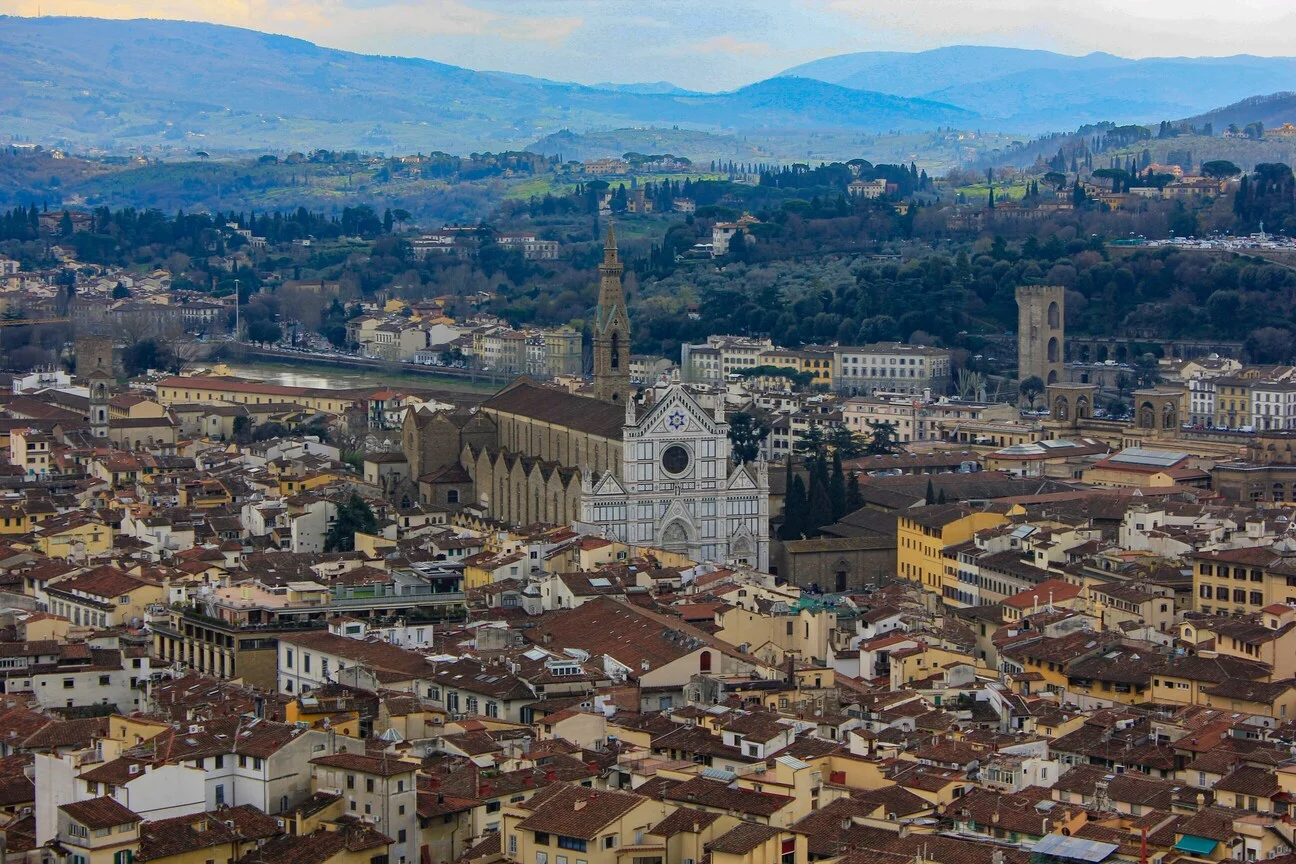
1. Florence Overview
Florence is where the Renaissance was born, and walking through its streets feels like stepping into a living museum. The terracotta rooftops spread beneath the iconic Duomo dome, while narrow medieval lanes open onto piazzas filled with street musicians and gelato vendors. Every corner reveals masterpieces by Michelangelo, Botticelli, and da Vinci that changed art history forever.
This compact Tuscan capital offers travelers an intimate experience with some of the world’s greatest art treasures, all within a walkable historic center. The Arno River cuts through the city, crossed by the enchanting Ponte Vecchio lined with jewelry shops. Beyond the museums, Florence captivates with authentic Tuscan cuisine, world-class wines, and Italian craftsmanship from leather goods to handmade paper.
While Florence’s popularity means crowds at major attractions, especially during summer, smart planning and early morning visits let you experience the city’s magic without the chaos. The city has managed tourism challenges by requiring advance reservations for major museums, which actually improves the experience when you plan ahead.
Best Time to Visit Florence
Spring (April-May): Spring is Florence’s most beautiful season, with temperatures ranging from 15-23°C (59-73°F) and flowers blooming in the Boboli Gardens. Crowds are moderate, and hotel prices are reasonable outside Easter week. The countryside around Florence bursts with wildflowers and fresh green vineyards, making this perfect for day trips to Tuscany.
Summer (June-August): Peak season brings temperatures of 25-35°C (77-95°F), massive crowds, and the highest prices. Major museums sell out days in advance, and midday heat makes sightseeing challenging. However, summer offers outdoor concerts, rooftop aperitivo terraces, and extended museum hours. Book everything months ahead if visiting in July or August.
Fall (September-October): September rivals spring as the best time to visit, with warm weather (18-26°C/64-79°F), golden lighting perfect for photography, and harvest season in Chianti wine country. October sees fewer tourists while weather remains pleasant, and many cultural events take place. Hotel prices drop after mid-September.
Winter (November-March): Winter is the quietest season, with temperatures of 5-12°C (41-54°F) and occasional rain. Major museums have no lines, hotels offer great deals, and you’ll see Florence as locals experience it. Christmas markets and decorations make December magical despite cold weather. Pack layers and an umbrella, but enjoy authentic experiences without tourist crowds.
How Long to Stay in Florence
- 1-2 days: You can hit the absolute highlights in a rushed weekend trip seeing the Duomo, Uffizi Gallery, and walking across Ponte Vecchio, but you’ll barely scratch the surface and spend most of your time in lines.
- 3-4 days: Perfect for first-time visitors, allowing time to see major museums without rushing, explore different neighborhoods, enjoy long Tuscan lunches, and perhaps take one day trip to nearby towns or Chianti wine country.
- 5-7 days: Ideal for art lovers and those wanting to truly experience Tuscan life, with time for smaller museums, hidden churches with frescoes, cooking classes, multiple day trips, and leisurely exploration of artisan workshops.
- 1 week+: For Renaissance enthusiasts and those using Florence as a Tuscany base, allowing deep dives into art history, Italian language practice, daily trips to hill towns, wine tours, and developing favorite local spots.
Quick Facts About Florence
- Population: 380,000 (historic center: 80,000)
- Language: Italian (English widely spoken in tourist areas)
- Currency: Euro (€)
- Time Zone: Central European Time (CET/UTC+1, summer UTC+2)
- Country Code: +39
- Area Code: 055
2. Getting There & Around
Airports Serving Florence
Florence Airport, Peretola (FLR) Via del Termine, 11, 50127 Firenze FI, Italy Just 4km from the city center, this small airport handles European flights and some seasonal international routes. It’s convenient for quick arrivals but has limited flight options.
Pisa International Airport (PSA) Piazzale D’Ascanio, 1, 56121 Pisa PI, Italy Located 80km west of Florence, Pisa Airport offers more international connections and often cheaper flights. Many visitors fly into Pisa and take the direct train to Florence, which takes 60-90 minutes.
Bologna Guglielmo Marconi Airport (BLQ) Via del Triumvirato, 84, 40132 Bologna BO, Italy 105km north of Florence, Bologna is another alternative with good international connections. High-speed trains reach Florence in just 37 minutes, making this a viable option for better flight deals.
[AFFILIATE LINK: Find cheap flights to Florence – Skyscanner/Expedia]
Getting from Airport to City Center
From Florence Airport (FLR)
Tramvia T2 (Tram): €1.50 per person, 20 minutes to Santa Maria Novella train station. Trams run every 5-10 minutes from 5am-midnight. This is the cheapest and most convenient option, departing directly from the airport terminal.
Taxi: €22-25 fixed rate to city center, 15-20 minutes depending on traffic. Official white taxis wait outside arrivals. Pay the metered fare or agree on the fixed rate before departing.
Rideshare (Uber/FreeNow): €18-30 depending on demand, 15-20 minutes. Uber operates in Florence but FreeNow is more popular locally. Surge pricing applies during peak times.
Volainbus Shuttle: €6 per person, 25 minutes to Santa Maria Novella station with stops at Fortezza and Libertà. Buses run every 30 minutes from 6am-8:30pm, less frequent on Sundays.
From Pisa Airport (PSA)
PisaMover + Train: €2.70 for PisaMover shuttle to Pisa Centrale station (5 minutes), then €9.90-14 for train to Florence (60-90 minutes). Regional trains are cheaper but slower, while high-speed trains cost more but take 50 minutes.
Direct Bus (Terravision/Autostradale): €13-15 per person, 70 minutes directly to Florence Santa Maria Novella. Buses depart hourly from the airport terminal.
Private Transfer: €120-150 for up to 4 people, door-to-door service. Book in advance through hotel or online services.
From Bologna Airport (BLQ)
Marconi Express + Train: €9.40 for monorail to Bologna Centrale (8 minutes), then €9-38 for train to Florence (37-90 minutes depending on train type). High-speed Frecciarossa trains are worth the extra cost for speed.
PRO TIP: Flying into Pisa or Bologna often saves €100+ on flights compared to Florence Airport. The train journey is easy and comfortable, passing through beautiful Tuscan countryside. Book high-speed train tickets in advance on Trenitalia or Italo websites for the best prices.
[AFFILIATE LINK: Book airport transfers to Florence – GetYourGuide/Viator]
Getting Around Florence
Florence’s compact historic center is almost entirely walkable, with most major sights within 20 minutes of each other on foot. The city banned private vehicles from the center (ZTL zone), making walking even more pleasant. Public transport is mainly useful for reaching Piazzale Michelangelo, Fiesole, or your accommodation if staying outside the center.
Walking
Walking is the best way to experience Florence’s narrow medieval streets and discover hidden corners. The historic center measures only 2km across, so you can walk from the Duomo to Palazzo Pitti in 15 minutes. Cobblestone streets can be uneven, so wear comfortable shoes with good support. Most streets are flat except the climb to Piazzale Michelangelo and Fiesole.
Walkability Score: 95/100 for the historic center. Everything major is walkable, though you’ll average 10-15km of walking daily while sightseeing.
Buses
ATAF buses serve Florence and surrounding areas, with most routes starting from Santa Maria Novella station. Buses are mainly useful for reaching Piazzale Michelangelo (bus 12 or 13), Fiesole (bus 7), or accommodations outside the center. Buses run frequently from 5:30am-midnight, with limited night buses on weekends.
Tickets & Passes:
- Single ride: €1.70 (90 minutes validity, must validate on board)
- Multiple rides (10 tickets): €13
- 24-hour pass: €5
- 3-day pass: €12
- 7-day pass: €18
Buy tickets at tabacchi shops (look for blue “T” signs), newsstands, or automated machines at major bus stops and Santa Maria Novella station. You cannot buy tickets on the bus. Always validate your ticket in the yellow machine when boarding.
PRO TIP: Most visitors don’t need bus passes since the center is walkable. Buy the 24-hour pass only if you’re taking more than 3 bus rides. Bus 12 or 13 to Piazzale Michelangelo for sunset is the most useful tourist route. Buy a return ticket before going up since there’s nowhere to buy at the viewpoint!
Tramvia (Tram)
Florence has three modern tram lines, with T1 and T2 being most useful for tourists. T1 connects Villa Costanza park-and-ride to Santa Maria Novella station. T2 runs from the airport to Santa Maria Novella and Piazza dell’Unità. T3 connects Careggi to Santa Maria Novella. Trams use the same tickets as buses and run every 5-10 minutes from 5am-midnight.
Taxis & Rideshare
Official white taxis charge €3.30 base fare, then €1.20 per km within the city. Minimum fare is €6.60, with supplements for luggage (€1 per bag), airport trips, and late nights. You cannot hail taxis on the street in most areas; find them at designated taxi stands near major piazzas or call +39 055 4242 or +39 055 4390. Credit cards are accepted but ask before entering.
Uber operates in Florence but is more expensive than regular taxis and less available. FreeNow (formerly MyTaxi) is the most popular rideshare app locally, offering both traditional taxis and private drivers. Expect to pay €10-15 for trips within the historic center, though walking is usually faster given traffic restrictions.
WATCH OUT: Unlicensed taxi drivers approach tourists at the train station and airport offering rides. Only use official white taxis with the taxi sign on top and the city crest on the door. Agree on approximate fare for fixed-price trips, or ensure the meter is running for metered rides.
Biking
Florence is not particularly bike-friendly due to narrow streets, cobblestones, pedestrian zones, and aggressive drivers. The historic center prohibits cycling in many areas during busy hours. However, bikes are nice for reaching Cascine Park or following the Arno River paths. Several bike-share systems operate, including Mobike (dockless bikes via app). Rental shops near Santa Maria Novella rent bikes for €12-20 per day.
Tourist Passes & Cards
Firenzecard: €85 for 72 hours, includes admission to 60+ museums and priority entrance lines at major sites like the Uffizi and Accademia. Also includes unlimited public transport. Worth it only if you plan to visit 5+ major museums in 3 days and want to skip lines. Calculate whether individual advance-booked tickets are cheaper for your specific plans.
Firenzecard+: €7 additional gives you 5 days instead of 3 to visit all museums, useful for slower-paced trips.
PRO TIP: The Firenzecard saves time rather than money for most visitors. It’s worth it during peak season when you’d otherwise waste hours in ticket lines. In off-season, pre-booking individual timed tickets online is usually cheaper unless you’re a museum fanatic visiting 7+ attractions.
[DISPLAY AD PLACEHOLDER #1]
3. Top Attractions & Landmarks
[AFFILIATE LINK: Book skip-the-line tickets for Florence attractions – GetYourGuide/Viator]
Florence Cathedral (Duomo di Firenze)
Piazza del Duomo, 50122 Firenze FI, Italy
The Cathedral of Santa Maria del Fiore dominates Florence’s skyline with Brunelleschi’s revolutionary terracotta dome, the largest masonry dome ever constructed. Built between 1296 and 1436, this Gothic masterpiece features a stunning white, green, and pink marble facade that gleams in the Tuscan sun. Inside, Vasari’s Last Judgment frescoes cover the dome’s interior, while the cathedral floor showcases intricate marble inlays.
The dome itself was an engineering marvel of the Renaissance, built without scaffolding using innovative herringbone brickwork techniques that architects still study today. The cathedral complex includes Giotto’s Campanile bell tower and the Baptistery with Ghiberti’s famous bronze “Gates of Paradise” doors, creating Florence’s most photographed architectural ensemble.
Why visit: This is the architectural symbol of Florence and the birthplace of Renaissance architecture. Climbing the 463 steps inside the dome gives you intimate views of the frescoes and stunning panoramas over Florence’s terracotta rooftops. The experience of standing beneath this engineering wonder is unforgettable.
Time needed: 2-3 hours (more with dome climb) Entrance: Cathedral free, Dome climb €20, Bell tower €20, Baptistery €10, Combined ticket €30 (all monuments) Best time: Early morning (8:30am opening) before cruise ship crowds arrive Hours: Cathedral Mon-Fri 10am-5pm, Sat 10am-4:45pm, Sun 1:30-4:45pm. Dome Mon-Fri 8:30am-7pm, Sat 8:30am-5pm
WATCH OUT: Dome tickets must be booked in advance online and sell out days ahead in peak season. No elevator exists – you must climb 463 steep, narrow steps with no exit until the top. Not recommended for claustrophobia, mobility issues, or heart conditions. Strict dress code: no shorts, bare shoulders, or short skirts.
PRO TIP: Book the first dome time slot (8:30am) to beat crowds and heat. The cathedral itself is free but often has long security lines – visit mid-afternoon when cruise groups have left. For the best exterior photos without crowds, arrive at Piazza del Duomo at sunrise (6:30-7am).
Uffizi Gallery
Piazzale degli Uffizi, 6, 50122 Firenze FI, Italy
The Uffizi holds the world’s finest collection of Italian Renaissance art, housed in a 16th-century palace designed by Vasari for the Medici family. Walking through these galleries, you’ll encounter masterpieces by Botticelli, Leonardo da Vinci, Michelangelo, Raphael, Caravaggio, and Titian that shaped Western art history. The building itself exemplifies Renaissance architecture with its long corridors connecting art-filled rooms.
Highlights include Botticelli’s “Birth of Venus” and “Primavera,” Leonardo’s “Annunciation,” Michelangelo’s “Doni Tondo,” and Caravaggio’s “Medusa” and “Bacchus.” The chronological layout lets you trace the evolution of Italian art from medieval Byzantine-style works through the Renaissance flowering to Baroque drama. Third-floor corridors offer views over the Arno River and Ponte Vecchio between galleries.
Why visit: This is arguably the world’s most important museum for Renaissance art, containing paintings you’ve seen in art history books since school. Standing before Botticelli’s Venus rising from her shell is a transcendent experience that photographs cannot capture. Art lovers could spend days here absorbing the density of masterpieces.
Time needed: 3-4 hours minimum (art lovers: full day) Entrance: €25 adults, €2 EU youth (18-25), free under 18 and over 65 Best time: Tuesday-Thursday mornings, or late afternoon after 4pm Hours: Tuesday-Sunday 8:15am-6:30pm, closed Mondays. Last entry 5:30pm
WATCH OUT: Advance reservations are MANDATORY and sell out weeks ahead in high season. Book at least 2-3 weeks early for summer visits. The museum is enormous and exhausting – pace yourself, take breaks at the café terrace, and don’t try to see everything. Lines without reservations can be 3+ hours.
PRO TIP: Enter through the Vasari Corridor entrance (same ticket) for smaller crowds. Download the Uffizi app for free audio guides. Focus on rooms 10-14 (Botticelli), 15 (Leonardo), 35 (Michelangelo), and 41 (Rembrandt). Visit the rooftop café terrace on the top floor for espresso with views – your ticket allows re-entry if you get your hand stamped.
Galleria dell’Accademia
Via Ricasoli, 58/60, 50129 Firenze FI, Italy
The Accademia Gallery houses Michelangelo’s iconic “David,” the most famous sculpture in the world. Carved from a single block of Carrara marble between 1501-1504 when Michelangelo was just 26 years old, this 17-foot masterpiece represents the biblical hero in perfect human form. The museum also displays Michelangelo’s unfinished “Prisoners” struggling to emerge from rough marble blocks, offering insight into his creative process.
Beyond Michelangelo, the gallery contains important paintings from the Florentine school, medieval religious art, and a collection of musical instruments. The Gallery of the Colossus houses plaster models and works by Giambologna. However, most visitors come specifically to see David, and experiencing this sculpture’s anatomical perfection and powerful presence makes the visit worthwhile.
Why visit: Standing before the original David is a bucket-list moment for art lovers worldwide. Michelangelo captured movement, tension, and psychological intensity in cold marble, creating a work that still moves viewers 500 years later. The unfinished Prisoners reveal the sculptor’s working method, making this a pilgrimage site for understanding Renaissance genius.
Time needed: 1.5-2 hours Entrance: €16.50 adults, €2 EU youth (18-25), free under 18 Best time: First entry slot (8:15am) or late afternoon (4pm) Hours: Tuesday-Sunday 8:15am-6:30pm, closed Mondays. Last entry 6pm
WATCH OUT: Like the Uffizi, advance reservations are absolutely required and sell out weeks ahead in summer. Without a timed ticket, you’ll face 2-3 hour lines. The museum is much smaller than the Uffizi and gets crowded – David’s hall can be claustrophobic in peak season with hundreds surrounding the statue.
PRO TIP: Book the earliest time slot for a more intimate experience with David. Most tour groups arrive 10am-2pm. Walk slowly down the hallway of Prisoners before entering David’s hall – this build-up enhances the reveal. Stand in different positions around David to appreciate how Michelangelo carved different expressions visible from various angles.
Ponte Vecchio
Ponte Vecchio, 50125 Firenze FI, Italy
Florence’s oldest and most photographed bridge spans the Arno River, dating to 1345. Unlike modern bridges, Ponte Vecchio is lined with shops built directly onto its structure, creating a covered marketplace over the water. Originally home to butchers and tanners, the Medici family replaced them with goldsmiths and jewelers in 1593, a tradition continuing today with 50+ jewelry shops glittering in tiny medieval storefronts.
The bridge survived World War II when retreating German forces destroyed every other Florence bridge but spared Ponte Vecchio on Hitler’s direct orders. Above the shops runs the Vasari Corridor, a secret elevated passageway the Medici used to walk from Palazzo Vecchio to Palazzo Pitti without mingling with commoners. The bridge offers classic views up and down the Arno, especially beautiful at sunset.
Why visit: This is Florence’s most iconic landmark and a marvel of medieval engineering and commerce. The bridge embodies centuries of Florentine history while remaining a living, working market. Sunset here ranks among Europe’s most romantic moments, with golden light reflecting off the river and illuminating the bridge’s jewelry windows.
Time needed: 30 minutes to walk across and browse Entrance: Free to walk across, Vasari Corridor €28 (special tours only) Best time: Early morning (7am) or sunset (varies by season) for photos, midday for shopping Hours: Open 24 hours, shops typically 10am-7pm
WATCH OUT: This is Florence’s pickpocket central – keep bags zippered and phones secure. The bridge gets unbearably crowded midday in summer, making it hard to move or take photos. Street sellers aggressively push souvenirs on the approaches. Jewelry prices are very high and negotiable – never pay the first price quoted.
PRO TIP: For the best photos, don’t photograph from ON the bridge – instead, go to Ponte Santa Trinità (next bridge west) for perfect views of Ponte Vecchio with the Arno. Visit at 7am before shops open for empty bridge photos. The center opening (marked by a bust of Cellini) offers the best river views and is where locals toss padlocks for luck.
Palazzo Pitti & Boboli Gardens
Piazza de’ Pitti, 1, 50125 Firenze FI, Italy
This massive Renaissance palace was built by the wealthy Pitti family in 1458, later becoming the principal residence of Florence’s ruling families including the Medici and Habsburg-Lorraine. The imposing facade stretches 200 meters across Piazza Pitti, housing six museums including the magnificent Palatine Gallery with paintings by Raphael, Titian, Rubens, and Caravaggio displayed in sumptuous Baroque rooms.
Behind the palace, the Boboli Gardens spread across 45,000 square meters of hillside, creating a Renaissance garden masterpiece of geometric patterns, fountains, grottos, and sculptures. The gardens offer sweeping views over Florence’s rooftops and provide a peaceful escape from the crowded streets. Highlights include the Neptune Fountain, the Grotticina di Madama, and the Kaffeehaus terrace overlooking the city.
Why visit: Palazzo Pitti offers a completely different museum experience from the Uffizi, displaying art in original princely apartments that show how the Medici lived. The Boboli Gardens are Florence’s green lung, perfect for picnics, leisurely walks, and understanding Renaissance garden design. The combination of palace and gardens reveals the complete lifestyle of Renaissance royalty.
Time needed: 3-4 hours (2 hours palace, 2 hours gardens) Entrance: Palatine Gallery & Royal Apartments €16, Boboli Gardens €10, Combined ticket €22 Best time: Early morning for gardens, afternoon for palace galleries Hours: Palace Tuesday-Sunday 8:15am-6:30pm, Gardens 8:15am-4:30pm (winter) to 7:30pm (summer), closed Mondays
WATCH OUT: The palace is enormous and easy to get lost in – pick up a map at entry. The Boboli Gardens close surprisingly early in winter (4:30pm) and involve significant uphill walking on gravel paths. Wear comfortable shoes. Several museum sections have separate tickets, which is confusing – the combined ticket is usually the best value.
PRO TIP: Enter Boboli Gardens early morning when they open at 8:15am for empty paths and morning light perfect for photography. The Kaffeehaus café inside the gardens offers the best panoramic city views with afternoon aperitivo. On the first Sunday of each month, the palace and gardens are free but extremely crowded – arrive when doors open.
[DISPLAY AD PLACEHOLDER #2]
Piazzale Michelangelo
Piazzale Michelangelo, 50125 Firenze FI, Italy
This hilltop square offers Florence’s most famous panoramic viewpoint, created in 1869 by architect Giuseppe Poggi as part of the city’s transformation when it briefly served as Italy’s capital. The terrace provides postcard-perfect views encompassing the entire historic center, from the Duomo’s dome to Palazzo Vecchio’s tower, all framed by the Arno River and surrounding Tuscan hills.
At the center stands a bronze replica of Michelangelo’s David, surrounded by copies of his allegorical statues from the Medici Chapel. The square includes café terraces, souvenir vendors, and street musicians creating a lively atmosphere. While touristy, the views genuinely justify the hype, especially during sunset when the city glows golden and the Duomo catches the last light.
Why visit: This is the single best spot to photograph Florence’s skyline and understand the city’s layout. The 360-degree views help you orient yourself and appreciate Florence’s compact beauty. Sunset here is magical, and the 20-minute uphill walk from the center provides exercise after days of museum touring.
Time needed: 1 hour including walk up Entrance: Free, open 24 hours Best time: Sunset (golden hour) or early morning before tour buses arrive Hours: Open 24/7, but best visited during daylight or sunset
WATCH OUT: The square gets mobbed at sunset, especially in summer when you’ll share the view with hundreds. Tour buses arrive 10am-4pm making midday crowded. Pickpockets work the crowds. The walk up is steep – alternatively take bus 12 or 13, but the walk down through gardens is lovely and easier than climbing up.
PRO TIP: For the best photos without crowds, arrive 45 minutes before sunset to secure your spot. Walk up via the stairs from Porta San Niccolò through the Rose Garden (free) for beautiful landscaping and quieter views. The bar at La Loggia serves overpriced drinks but the terrace is worth one splurge for the view.
Basilica di Santa Croce
Piazza di Santa Croce, 16, 50122 Firenze FI, Italy
This Franciscan basilica serves as Italy’s Westminster Abbey, housing the tombs of Michelangelo, Galileo, Machiavelli, Rossini, and other Italian luminaries. Built in 1294, the Gothic church features stunning frescoes by Giotto and his pupils that revolutionized painting by introducing perspective and emotional realism. The leather-working Pazzi Chapel designed by Brunelleschi sits in the cloister, showcasing early Renaissance architecture.
The church’s interior displays 16 chapels decorated by master artists, with Giotto’s frescoes in the Bardi and Peruzzi chapels being particular highlights. The adjacent museum houses Cimabue’s Crucifix, damaged in the 1966 flood, and Donatello’s gilded bronze “Annunciation.” The vast piazza outside hosts festivals, concerts, and even traditional calcio storico (historic football) matches.
Why visit: Santa Croce offers a complete Renaissance experience combining architecture, painting, sculpture, and the final resting places of Italian genius. The Giotto frescoes here influenced European art for centuries. Standing before Michelangelo’s tomb while knowing his David and Sistine Chapel ceiling makes history tangible and moving.
Time needed: 1.5-2 hours Entrance: €8 adults, €6 students, free under 11 Best time: Early morning or late afternoon for better lighting Hours: Monday-Saturday 9:30am-5:30pm, Sunday 2-5:30pm
WATCH OUT: Flash photography is prohibited as it damages the frescoes. The church floor is full of tomb markers – watch your step. Dress modestly (no shorts or bare shoulders). The piazza outside has aggressive souvenir sellers and restaurant touts – politely decline and walk away.
PRO TIP: Buy tickets online to skip the line at the entrance. Use the free audio guide app to learn about each tomb and fresco. Michelangelo’s tomb is on the right wall as you enter – his monument includes figures representing Painting, Sculpture, and Architecture mourning his death. Visit the leather school (free) behind the church for traditional Florentine craftsmanship.
Palazzo Vecchio
Piazza della Signoria, 50122 Firenze FI, Italy
Florence’s fortress-like town hall dominates Piazza della Signoria with its 94-meter Arnolfo Tower, serving as the seat of city government since 1299. The palace housed the Medici family briefly before they moved to Palazzo Pitti, and Vasari transformed the interior with magnificent frescoes glorifying Medici power. The Salone dei Cinquecento (Hall of Five Hundred) is one of Italy’s most impressive civic rooms, measuring 54 meters long with elaborate ceiling paintings.
The palace contains the private apartments of Cosimo I and his wife Eleonora di Toledo, decorated with Renaissance art and offering intimate glimpses of Medici life. Secret passages, hidden staircases, and a theatrical secret room add intrigue. The tower provides stunning rooftop views over Florence after climbing 418 steps. The palace also displays original sculptures including Donatello’s “Judith and Holofernes.”
Why visit: This is where Florence’s government operated for 700 years, making it central to understanding the city’s political history and republican traditions. The Vasari frescoes and Medici apartments rival any museum, while the tower views compete with Piazzale Michelangelo from a central location. The secret passages tour reveals fascinating hidden spaces.
Time needed: 2-3 hours including tower Entrance: €12.50 adults, tower additional €12.50, secret passages tour €6 (separate booking) Best time: Early morning for smaller crowds, or take a twilight tour Hours: October-March Friday-Wednesday 9am-7pm, Thursday 9am-2pm; April-September Friday-Wednesday 9am-11pm, Thursday 9am-2pm
WATCH OUT: The tower climb is strenuous with narrow medieval stairs and no elevator. Secret passages tours are limited capacity and must be booked days ahead online. The extended summer evening hours (until 11pm) are wonderful but the tower closes at 5pm year-round regardless of extended hours.
PRO TIP: Book the secret passages tour for a unique behind-the-scenes experience exploring hidden rooms, narrow stairs, and the roof structure. Visit during summer evening hours (7-11pm) when the palace is beautifully lit, mostly empty, and cooler. The combination ticket with the tower saves €3. Photography is allowed throughout unlike many museums.
Basilica di San Lorenzo & Medici Chapels
Piazza di San Lorenzo, 9, 50123 Firenze FI, Italy
The Medici family’s parish church showcases Brunelleschi’s Renaissance architecture in its elegant nave with grey pietra serena stone columns and white walls creating geometric harmony. Commissioned in 1419, this was one of Florence’s first Renaissance buildings, influencing church design for centuries. The rough, unfinished facade contrasts with the refined interior, as the Medici never completed the exterior Michelangelo designed.
The adjacent Medici Chapels contain the family’s monumental tombs, with Michelangelo’s New Sacristy featuring his famous sculptures “Dawn,” “Dusk,” “Night,” and “Day” on the tombs of Lorenzo and Giuliano de’ Medici. The octagonal Chapel of Princes dazzles with multicolored marble inlay and displays Grand Duke tombs. The combination reveals how the Medici used art and architecture to cement their legacy.
Why visit: This Brunelleschi-designed church demonstrates pure Renaissance architectural principles, while Michelangelo’s tomb sculptures rank among his most moving works. The Medici Chapels show the family’s power and artistic patronage. Together, they tell the story of the dynasty that transformed Florence into the Renaissance capital.
Time needed: 1.5-2 hours (both basilica and chapels) Entrance: Basilica €9, Medici Chapels €9, or combined €15 Best time: Early morning, especially for photographing the interior Hours: Basilica Monday-Saturday 10am-5:30pm, closed Sunday; Medici Chapels daily 8:15am-1:50pm, closed 2nd and 4th Monday of month
WATCH OUT: The basilica and Medici Chapels have separate entrances, tickets, and hours despite being the same complex. The outdoor San Lorenzo market surrounds the church with aggressive vendors selling leather goods – ignore pushy salespeople. Chapel of Princes has limited seating and can feel crowded in small spaces.
PRO TIP: Visit the Laurentian Library (separate entrance, free but limited hours) designed by Michelangelo with a stunning staircase. In the basilica, find Donatello’s bronze pulpits flanking the altar – his last works. The combined ticket saves €3 and both sites are steps apart, making it easy to visit consecutively.
Bargello National Museum
Via del Proconsolo, 4, 50122 Firenze FI, Italy
This fortress-palace built in 1255 served as Florence’s police headquarters and prison before becoming Italy’s most important sculpture museum in 1865. The Gothic courtyard surrounded by stone walls and arched loggias creates a dramatic setting for masterpieces by Donatello, Michelangelo, Giambologna, and Cellini. The museum houses Donatello’s revolutionary bronze “David,” the first freestanding nude male sculpture since antiquity.
The collection spans medieval and Renaissance sculpture across three floors, with highlights including Michelangelo’s early “Bacchus” and “Brutus,” Cellini’s bronze models, and competing Baptistery door panels by Ghiberti and Brunelleschi that marked the Renaissance’s beginning. The former prison rooms and chapel add historical atmosphere, while the decorative arts sections display ceramics, enamels, ivories, and medals.
Why visit: The Bargello is criminally undervisited compared to painting museums, yet contains sculpture treasures rivaling the Uffizi’s painting collection. Seeing Donatello’s revolutionary David alongside his later works traces the evolution of Renaissance sculpture. The medieval building itself is spectacular, and smaller crowds let you appreciate art without fighting masses.
Time needed: 2 hours Entrance: €9 adults, €2 EU youth (18-25), free under 18 Best time: Any time – this museum rarely has significant crowds Hours: Daily 8:15am-1:50pm, closed 2nd and 4th Sunday and 1st, 3rd, and 5th Monday of each month
WATCH OUT: The museum has confusing closing days (varies by week). The hours are surprisingly short – last entry at 1:20pm means you must arrive by noon to see everything. The building has many stairs and no elevator. Some rooms close randomly for staff shortages, particularly upper floor galleries.
PRO TIP: This is the best museum for avoiding crowds while seeing world-class Renaissance art. Arrive when it opens at 8:15am for near-empty galleries. Compare Donatello’s two David sculptures – the bronze one here and the marble one in the Uffizi – to see his artistic evolution. The room with Brunelleschi and Ghiberti’s competition panels is fascinating art history.
Basilica of Santa Maria Novella
Piazza di Santa Maria Novella, 18, 50123 Firenze FI, Italy
This Dominican church features one of Florence’s most beautiful facades, completed in Renaissance style by Leon Battista Alberti in 1470 using green and white marble geometric patterns. Inside, the Gothic interior contains masterpiece frescoes including Masaccio’s “Trinity,” which revolutionized painting by using mathematical perspective to create three-dimensional space on a flat wall for the first time in art history.
The church houses important works by Ghirlandaio, Filippino Lippi, and Giotto, with the Tornabuoni Chapel’s fresco cycle depicting the lives of the Virgin Mary and John the Baptist in stunning detail. The adjacent cloisters include the Spanish Chapel covered in 14th-century frescoes and the Green Cloister with Paolo Uccello’s Genesis scenes. The pharmacy sells perfumes and products made by monks since 1612.
Why visit: Santa Maria Novella offers a complete Renaissance experience combining groundbreaking architecture, revolutionary frescoes, and peaceful cloisters, all steps from the main train station. Masaccio’s Trinity alone is worth the visit for its historical importance in developing perspective. The church is less crowded than Santa Croce while containing equally important art.
Time needed: 1.5 hours Entrance: €7.50 adults, €5 students, free under 11 Best time: Afternoon when morning crowds have left Hours: Monday-Thursday 9am-5:30pm, Friday 11am-5:30pm, Saturday 9am-5pm, Sunday 1-5pm
WATCH OUT: The pharmacy (Officina Profumo-Farmaceutica) has a separate entrance and charges admission (€8) but is interesting for perfume lovers. Dress modestly for church entry. The piazza outside is popular with students and sometimes has loiterers – keep belongings secure. Mass times restrict tourist access to certain areas.
PRO TIP: Don’t miss Masaccio’s Trinity on the left wall – study how he created the illusion of a chapel receding into the wall. The frescoes are best viewed with binoculars for ceiling details. Buy the Firenzecard if you haven’t already – this church alone could justify the card with skip-the-line entry during busy times.
4. Neighborhoods & Districts to Explore
Florence’s compact center divides into distinct neighborhoods, each with unique character shaped by centuries of history. Understanding these districts helps you choose where to stay and explore beyond the main tourist trail.
Centro Storico (Historic Center)
Character: This is Florence’s beating heart, encompassing the Duomo, Piazza della Signoria, and Ponte Vecchio. Medieval towers rise above narrow cobblestone streets packed with tourists, restaurants, gelaterias, and leather shops. Every corner reveals Renaissance palaces, churches with masterpiece frescoes, and shops that have operated for generations.
What makes it special: You’re literally walking where Dante, Michelangelo, and the Medici walked, surrounded by the world’s highest concentration of Renaissance art and architecture. Everything major is within 10 minutes’ walk, making this the most convenient base despite crowds and noise.
Best for: First-time visitors wanting to maximize sightseeing time, those with limited mobility preferring short walking distances, travelers happy to trade authentic local atmosphere for ultimate convenience
Must-see in this area: Duomo and Baptistery, Uffizi Gallery, Palazzo Vecchio, Ponte Vecchio, Piazza della Repubblica, Via de’ Tornabuoni luxury shopping street
How to get there: This IS the center – everywhere else is measured from here. Santa Maria Novella train station sits on the northwestern edge
Location: Piazza della Signoria, 50122 Firenze FI, Italy
San Lorenzo & Mercato Centrale
Character: A working-class neighborhood that maintains authentic Florentine character despite the massive leather market surrounding the Basilica di San Lorenzo. Students, locals shopping for produce, and tourists hunting leather bargains create a lively mix. The restored Mercato Centrale food hall has transformed the area into a foodie destination.
What makes it special: This is where Florence’s Renaissance patrons, the Medici family, are buried in magnificent chapels, yet the area feels more real than touristy with locals buying vegetables at outdoor stalls while visitors shop for leather jackets. The contrast between Michelangelo’s sculptures and market chaos is quintessentially Florentine.
Best for: Budget travelers staying near the train station, food lovers exploring Mercato Centrale, leather shoppers seeking quality goods, visitors wanting local atmosphere with easy access to main sights
Must-see in this area: Mercato Centrale (ground floor produce market, upstairs food hall), San Lorenzo Basilica and Medici Chapels, outdoor leather market, Palazzo Medici Riccardi
How to get there: 5-minute walk north from the Duomo, immediately west of Santa Maria Novella train station
Location: Piazza di San Lorenzo, 50123 Firenze FI, Italy
Oltrarno (Beyond the Arno)
Character: The “left bank” across the Arno River retains the most authentic neighborhood feeling with artisan workshops, antique restorers, and locals going about daily life. Narrower streets, fewer chain stores, and better prices make this where Florentines actually live. Palazzo Pitti and Boboli Gardens anchor the area, but most visitors never explore the surrounding lanes.
What makes it special: Oltrarno is where you’ll find family-run trattorias serving grandmother’s recipes, craftsmen building frames and restoring furniture in street-level workshops, and neighborhood piazzas where locals gather for evening aperitivo. The slower pace and genuine hospitality offer relief from the commercialized historic center.
Best for: Travelers seeking authentic local experiences, craft and antique enthusiasts, those who’ve visited Florence before, visitors wanting good food without tourist prices, artists and creatives inspired by working studios
Must-see in this area: Palazzo Pitti and Boboli Gardens, Piazzale Michelangelo, Santo Spirito church and square, Brancacci Chapel frescoes, artisan workshops along Via Santo Spirito, Rose Garden
How to get there: Cross Ponte Vecchio or Ponte Santa Trinità from the center; 10-minute walk from Piazza della Signoria
Location: Piazza Santo Spirito, 50125 Firenze FI, Italy
Santa Croce
Character: This eastern district surrounding Florence’s second-most-important church mixes students, young professionals, and immigrants creating a diverse, energetic vibe. The large piazza hosts events from concerts to calcio storico matches, while surrounding streets contain hip bars, affordable restaurants, and independent boutiques. It’s grittier and more real than the polished historic center.
What makes it special: Santa Croce feels like a real neighborhood where people live, work, and socialize rather than just a museum district. The evening aperitivo scene attracts young Florentines, making this the best area for nightlife and meeting locals. Leather schools and workshops maintain traditional crafts while modern bars and restaurants show contemporary Florence.
Best for: Young travelers and students, nightlife seekers, budget-conscious visitors, those interested in Florence’s immigrant communities, visitors wanting a more diverse, lived-in neighborhood feel
Must-see in this area: Santa Croce Basilica with Michelangelo’s tomb, Piazza Santa Croce, Scuola del Cuoio leather school, National Library, Sant’Ambrogio Market, evening bars around Piazza Sant’Ambrogio
How to get there: 10-minute walk east from the Duomo
Location: Piazza di Santa Croce, 50122 Firenze FI, Italy
San Niccolò & Piazzale Michelangelo
Character: This southern hillside district rises from the Arno River up to Florence’s famous viewpoint, combining riverside charm at the base with leafy residential streets climbing toward panoramic terraces. The area retains a village atmosphere with small shops, traditional trattorias, and elderly residents who’ve lived here for generations. Medieval gates and walls add historical character.
What makes it special: San Niccolò offers the rare combination of being close to the center yet feeling removed from tourist chaos. The climb to Piazzale Michelangelo passes through gorgeous gardens and quiet streets with stunning glimpses of Florence below. Small, authentic restaurants serve locals, and the evening passeggiata along Via San Niccolò shows neighborhood life.
Best for: Romantic couples wanting sunset views, photographers, visitors staying longer who want a quiet base with character, fitness enthusiasts who enjoy the daily climb, those seeking authentic trattorias without tourist menus
Must-see in this area: Piazzale Michelangelo viewpoint, Rose Garden, San Miniato al Monte church (10 minutes beyond the viewpoint), Porta San Niccolò medieval gate, riverside cafés along Lungarno
How to get there: Cross Ponte alle Grazie from the center; 15-minute walk from Santa Croce, or take bus 12 or 13
Location: Via di San Niccolò, 50125 Firenze FI, Italy
San Marco & University District
Character: This northern neighborhood surrounds the Accademia Gallery and University of Florence, creating a scholarly atmosphere with students, bookshops, and affordable cafés. Wide streets lined with Renaissance palaces feel less claustrophobic than the medieval center. The area is quieter at night once students head home or to other districts for nightlife.
What makes it special: San Marco combines important museums (Accademia, San Marco Museum with Fra Angelico frescoes) with real neighborhood life. Students studying at outdoor tables, professors discussing philosophy over espresso, and locals shopping at small markets create an authentic intellectual atmosphere. It’s close enough to be convenient yet far enough to sleep peacefully.
Best for: Art lovers visiting the Accademia, mature travelers preferring quieter areas, those staying longer who want a residential feel, museum enthusiasts (several smaller museums cluster here), visitors on self-catering apartments needing local groceries
Must-see in this area: Galleria dell’Accademia (Michelangelo’s David), San Marco Museum with Fra Angelico frescoes in monk cells, Piazza Santissima Annunziata (Florence’s most beautiful square), Botanical Garden, Archaeological Museum
How to get there: 10-minute walk north from the Duomo
Location: Piazza San Marco, 50121 Firenze FI, Italy
Fiesole
Character: This hilltop town overlooking Florence sits 8km north at 300 meters elevation, offering cool breezes, Etruscan ruins, and spectacular views. Technically separate from Florence, Fiesole feels like a small Tuscan village with stone houses, a medieval center, and restaurants where locals outnumber tourists. The easy bus connection makes it a perfect escape destination.
What makes it special: Fiesole pre-dates Florence by centuries, established by Etruscans around 800 BC. The Roman amphitheater still hosts summer concerts, and the views from Piazza Mino make Florence look like a toy city below. The cooler temperatures and cleaner air provide relief from summer heat and crowds, yet you’re only 20 minutes from the Duomo by bus.
Best for: Travelers staying a week+ wanting day trips, those visiting in summer seeking cool relief, archaeology enthusiasts interested in Etruscan and Roman ruins, romantic couples wanting countryside views with city access, visitors who’ve seen Florence before
Must-see in this area: Roman Theater and Archaeological Area, San Francesco monastery and views, Bandini Museum, Cathedral of San Romolo, Piazza Mino, walk down to Florence via Via Vecchia Fiesolana (ancient path)
How to get there: Bus 7 from Piazza San Marco (20 minutes, runs every 20 minutes)
Location: Piazza Mino da Fiesole, 50014 Fiesole FI, Italy
5. Food & Dining
Florentine cuisine is hearty, rustic, and based on simple ingredients done exceptionally well – quality olive oil, fresh vegetables, beans, and meat, especially beef. Unlike other Italian cities, Florence isn’t about pasta but about bistecca, ribollita, and crusty unsalted bread. Meal times follow Italian tradition with lunch 1-2:30pm and dinner starting around 7:30pm.
Must-Try Local Dishes & Specialties
- Bistecca alla Fiorentina – Florence’s iconic T-bone steak from Chianina cattle, served rare (al sangue), seasoned only with salt, pepper, and olive oil. This massive steak (minimum 800g) is meant for sharing and costs €40-60. Order it at traditional osterie for the authentic experience.
- Ribollita – Thick Tuscan bread soup made with cannellini beans, kale, cabbage, and vegetables, traditionally made by “reboiling” (ribollita) leftover minestrone. Perfect comfort food in fall and winter, served in ceramic bowls with a drizzle of peppery olive oil.
- Pappa al Pomodoro – Another bread-based soup using stale bread soaked in tomato sauce with garlic, basil, and olive oil. Florentines waste nothing, turning day-old bread into this creamy, comforting dish.
- Pappardelle al Cinghiale – Wide ribbon pasta with wild boar ragù slow-cooked with tomatoes, wine, and herbs. The rich, gamey sauce clings to the broad noodles, creating hearty satisfaction perfect after museum walking.
- Crostini di Fegatini – Chicken liver pâté spread on toasted bread, a classic Tuscan antipasto. The smooth, rich pâté flavored with capers, anchovies, and wine might seem intimidating but is deliciously addictive.
- Lampredotto – Tripe (cow’s fourth stomach) sandwich sold from green carts around Florence. This working-class street food is stewed in tomato broth, stuffed into crusty rolls with salsa verde, and beloved by Florentines. It’s an acquired taste but authentic.
- Schiacciata all’Uva – Sweet focaccia bread topped with wine grapes and sugar, available only during grape harvest season (September-October). Bakeries all over Florence make this autumn treat that’s simultaneously bread and dessert.
- Cantuccini e Vin Santo – Almond biscotti cookies traditionally dunked in sweet dessert wine. Every Tuscan meal ends with this ritual – dunk the hard cookies in the wine until softened, then enjoy the wine-soaked sweetness.
Restaurant Recommendations by Budget
Budget-Friendly (Under €15 per meal)
- All’Antico Vinaio – Via dei Neri, 74/R, 50122 Firenze FI, Italy – Famous for enormous sandwiches stuffed with quality meats, cheeses, and vegetables for €8-12. Lines wrap around the block but move quickly. Perfect lunch between Uffizi and Santa Croce.
- Mercato Centrale Firenze (Upstairs) – Via dell’Ariento, 10-14, 50123 Firenze FI, Italy – Modern food hall with 20+ vendors serving everything from pizza to pasta to gelato for €8-15 per meal. Great for groups where everyone wants different things. Open until midnight.
- I Due Fratellini – Via dei Cimatori, 38/R, 50122 Firenze FI, Italy – Tiny hole-in-the-wall open since 1875 serving simple sandwiches for €5-7. No seating – eat standing in the street like locals have for 150 years. Limited but delicious menu.
- Trattoria Mario – Via Rosina, 2/R, 50123 Firenze FI, Italy – No-frills family trattoria serving authentic Tuscan dishes for €10-15. Communal tables, handwritten menu, lunch only. Arrive at 11:45am opening or expect long waits. Cash only.
- Gusta Pizza – Via Maggio, 46/R, 50125 Firenze FI, Italy – Authentic Neapolitan pizza in Oltrarno for €8-12. Simple, crowded, no reservations, cash only. The margherita pizza is perfection. Popular with students and locals.
Mid-Range (€15-40 per meal)
- Trattoria ZaZa – Piazza del Mercato Centrale, 26/R, 50123 Firenze FI, Italy – Tourist-friendly trattoria near San Lorenzo with Tuscan classics, outdoor seating, and English menus. Reliable quality for €20-30 per person. Try their bistecca or wild boar.
- Osteria Santo Spirito – Piazza Santo Spirito, 16/R, 50125 Firenze FI, Italy – Trendy Oltrarno spot with creative takes on Tuscan dishes for €15-25. Great aperitivo scene on the piazza. Reservations recommended for dinner.
- Il Santo Bevitore – Via di Santo Spirito, 64/66/R, 50125 Firenze FI, Italy – Contemporary Tuscan cuisine with excellent wine list in Oltrarno. Main courses €18-30, modern minimalist decor, inventive seasonal menu. Book ahead for weekend dinners.
- Perseus – Viale Don Giovanni Minzoni, 10/R, 50129 Firenze FI, Italy – Family-run trattoria near Piazza della Libertà serving huge bistecca portions for €35-45. More local crowd, less touristy, worth the walk from center. Cash preferred.
- La Cucina del Garga – Via San Zanobi, 33/R, 50129 Firenze FI, Italy – Colorful restaurant with artistic decor and creative Tuscan-fusion dishes €20-35. The chef personally greets tables. Try their signature taglierini with orange and lemon sauce.
Fine Dining (€40+ per meal)
- Enoteca Pinchiorri – Via Ghibellina, 87, 50122 Firenze FI, Italy – Florence’s only three-Michelin-star restaurant offering refined Tuscan cuisine with 80,000-bottle wine cellar. Tasting menus €200-350 per person. Book months ahead. Jacket required. An unforgettable splurge.
- Ora d’Aria – Via dei Georgofili, 11/R, 50122 Firenze FI, Italy – One Michelin star, modern Italian cuisine with creative presentation. Lunch menus €55, dinner tasting menus €90-140. Near the Uffizi with elegant, contemporary atmosphere. Reservations essential.
- La Bottega del Buon Caffè – Lungarno Benvenuto Cellini, 69/R, 50125 Firenze FI, Italy – One Michelin star riverside restaurant focusing on seasonal, sustainable ingredients. Tasting menus €120-180. Romantic riverside terrace. Smart casual dress code. Book 2-4 weeks ahead.
Food Markets & Street Food
Mercato Centrale (Ground Floor) – Via dell’Ariento, 10-14, 50123 Firenze FI, Italy – Historic covered market open Monday-Saturday 7am-2pm. Fresh produce, meats, cheeses, bread, and specialty items at wholesale prices. Locals shop here for quality ingredients. Second floor is the modern food hall open until midnight.
Mercato di Sant’Ambrogio – Piazza Ghiberti, 50122 Firenze FI, Italy – Neighborhood market in Santa Croce area, open Monday-Saturday 7am-2pm. Less touristy than Mercato Centrale with better prices. Excellent for fresh produce, meat, fish. Vendors are friendlier and happy to advise. Small restaurants inside serve authentic lunches.
Lampredotto Carts – Various locations including Piazza dei Ciompi, Piazza Sant’Ambrogio, Loggia del Porcellino – Traditional tripe sandwich carts serving Florence’s classic street food for €5-6. Don’t miss this authentic experience. Nerbone inside Mercato Centrale also serves excellent lampredotto.
Dining Customs & Etiquette
Meal times: Lunch is 1-2:30pm (many restaurants close 3-7pm), dinner starts 7:30pm (locals eat 8:30-9pm). Restaurants open at 7pm but will be empty until 8pm. Sunday and Monday closures are common – always check.
Tipping: Service charge (coperto) of €1-3 per person covers bread and table. Optional to round up the bill or leave 5-10% for exceptional service, but not expected. Never tip on coperto charge itself.
Reservations: Essential for dinner at popular restaurants, especially weekends and peak season. Book 2-3 days ahead for mid-range restaurants, weeks ahead for fine dining. Lunch is more flexible except at tiny popular spots.
Dress code: Casual dressy for restaurants (no shorts and flip-flops at dinner). Fine dining requires smart casual minimum. Italians dress well for dinner – you won’t feel overdressed.
PRO TIP: The best Florentine restaurants are in Oltrarno where locals eat. Avoid restaurants with multilingual menus and photos on display boards – these target tourists. Look for handwritten daily menus, which indicate fresh, seasonal cooking. The coperto charge is not a scam – it’s standard throughout Italy and covers bread service.
SAVE MONEY: Eat your main meal at lunch when many restaurants offer fixed-price menus (menu del giorno) for €12-20 with primo, secondo, and dessert. Aperitivo (6-8pm) often includes free buffet snacks with drink purchase (€8-12), making a light dinner. Shop at markets for picnic supplies and eat in Boboli Gardens or along the Arno.
[AFFILIATE LINK: Book food tours and cooking classes in Florence – GetYourGuide/Viator]
6. Nightlife & Entertainment
Florence nightlife is more sophisticated than wild, centered on aperitivo culture, wine bars, and live music rather than mega-clubs. The evening starts with aperitivo around 6-8pm, dinner 8-10pm, then bars until 2am. Clubs exist but close early compared to other European cities, with most closing by 3-4am.
Best Areas for Nightlife
- Santo Spirito Square (Oltrarno): Piazza Santo Spirito, 50125 Firenze FI, Italy – The heart of local nightlife with students, artists, and young professionals gathering on the church steps with takeaway drinks. Surrounding bars fill the piazza with outdoor tables for aperitivo and late-night socializing.
- Santa Croce Area: Piazza Santa Croce and surrounding streets, 50122 Firenze FI, Italy – Mix of cocktail bars, pubs, and clubs attracting international students and tourists. Livelier and more party-focused than sophisticated Santo Spirito. Gets loud on weekends.
- Via dei Benci: Via dei Benci, 50122 Firenze FI, Italy – Bar-lined street between Santa Croce and the river with student pubs, wine bars, and clubs. Crowded Thursday-Saturday nights with young international crowds.
Bars & Pubs
- Se·sto on Arno – Piazza Ognissanti, 3, 50123 Firenze FI, Italy – Rooftop bar on the 6th floor of Westin Excelsior with spectacular Duomo and river views. Expensive cocktails (€18-22) but worth it for the panorama. Dress smartly. Opens at 6pm.
- La Terrazza Rooftop Bar – Piazza della Repubblica, 7, 50123 Firenze FI, Italy – Hotel Continentale’s rooftop with sunset views over Ponte Vecchio. Sophisticated atmosphere, excellent aperitivo buffet (€18), gets packed at sunset. Reserve ahead for window tables.
- Volume – Piazza Santo Spirito, 5/R, 50125 Firenze FI, Italy – Hipster bar with craft cocktails and DJ sets in Oltrarno. Young artsy crowd, outdoor seating on the piazza, €8-12 drinks. Perfect for aperitivo hour 6-9pm.
- The Magical Florence – Via de’ Benci, 33-35/R, 50122 Firenze FI, Italy – Popular student bar with affordable drinks (€5-8), frequent live music, and friendly atmosphere. Gets very crowded on weekends. Good for meeting other travelers.
- Fiaschetteria Nuvoli – Piazza dell’Olio, 15/R, 50123 Firenze FI, Italy – Traditional wine bar (enoteca) serving Tuscan wines by the glass with local cheese and salami. Authentic, local crowd, no-frills atmosphere. Wines €4-8 per glass.
Clubs & Dancing
- Tenax – Via Pratese, 46, 50145 Firenze FI, Italy – Florence’s premier nightclub for electronic music with international DJ acts. €15-20 cover, opens 11pm, peaks 1-3am. Take a taxi – it’s outside the center. Check their calendar for special events.
- Otel Club – Piazza Strozzi, 50123 Firenze FI, Italy – Central location club playing house and commercial music. Touristy but conveniently located. €10-15 cover with drink. Opens 11pm, crowded midnight-2am.
- Space Club – Via Palazzuolo, 37, 50123 Firenze FI, Italy – Multi-floor club near train station with different music styles per floor. Mixed local and tourist crowd. €8-15 cover. Open until 4am on weekends.
Live Music & Shows
- Teatro del Maggio Musicale Fiorentino – Piazzale Vittorio Gui, 1, 50144 Firenze FI, Italy – Florence’s opera house with world-class performances September-June. Tickets €20-150. Book online for best seats. The modern building opened in 2014 with excellent acoustics.
- Teatro della Pergola – Via della Pergola, 12-32, 50121 Firenze FI, Italy – Historic 17th-century theater for classical concerts, theater, and smaller opera productions. Beautiful baroque interior worth seeing. Tickets €15-80.
- Jazz Club Firenze – Via Nuova de’ Caccini, 3, 50121 Firenze FI, Italy – Intimate jazz venue with nightly live performances. €10-15 cover with drink. Shows start 9:30pm. Popular with local jazz enthusiasts and musicians.
Cultural Performances
Summer brings outdoor opera and concerts to venues like Teatro Romano in Fiesole and Boboli Gardens. The Estate Fiesolana festival (June-August) offers open-air performances in the Roman amphitheater with views over Florence. Church concerts happen year-round in venues like Chiesa di Santa Monaca and Orsanmichele, often featuring Vivaldi and Bach.
Family-Friendly Evening Entertainment
Evening strolls for gelato along Via de’ Calzaiuoli provide entertainment for all ages. The Duomo and Palazzo Vecchio are beautifully lit at night, creating magical evening ambiance. Piazzale Michelangelo at sunset works for families (take the bus up). Some restaurants offer early seating (6-7pm) suitable for children before the dinner rush.
WATCH OUT: Santo Spirito piazza has drug dealers working the crowds at night – politely decline any offers. Keep bags secure in crowded bars around Santa Croce. Clubs often have aggressive promoters on streets handing out “free drink” coupons that come with mandatory expensive drink purchases. Women should watch drinks in busy clubs to prevent spiking.
PRO TIP: Do aperitivo like locals: order one drink (€8-12) and enjoy the free buffet spread that appears 6-8pm at many bars. Some bars like Slowly or Kitsch have elaborate buffets making this a cheap dinner option. Thursday night is student night with drink specials. Buy alcohol at supermarkets (€4-6 for wine) and join crowds sitting on Santo Spirito church steps – this is accepted local custom.
7. Shopping
Best Shopping Districts
- Via de’ Tornabuoni: Florence’s luxury shopping street, 50123 Firenze FI, Italy – Gucci, Prada, Ferragamo, and other high-end Italian brands line this elegant Renaissance street. Window shopping is free, and the palaces housing these boutiques are architectural gems.
- Via del Corso & Via Roma: 50122 Firenze FI, Italy – Mainstream Italian chains like Zara, H&M, Intimissimi, and Replay fill these central pedestrian streets. Good for affordable fashion and browsing. Extremely crowded on weekends.
- Oltrarno Artisan District: Via Santo Spirito & Via Maggio, 50125 Firenze FI, Italy – Antique shops, artisan workshops, and independent boutiques offering unique items. Watch craftsmen restoring furniture, making frames, or binding books. Higher quality, higher prices than tourist markets.
Markets
San Lorenzo Leather Market – Piazza di San Lorenzo, 50123 Firenze FI, Italy – Daily 9am-7pm – Hundreds of stalls selling leather jackets, bags, wallets, and accessories. Quality varies wildly from genuine leather to plastic. Haggle aggressively – start at 40-50% of asking price. Many items are made in China despite “Made in Italy” tags.
Mercato Nuovo (Porcellino Market) – Piazza del Mercato Nuovo, 50122 Firenze FI, Italy – Daily 9am-6:30pm – Covered loggia selling leather goods, linens, and souvenirs. More expensive but higher quality than San Lorenzo. The bronze boar fountain (Il Porcellino) is famous – rub his nose for luck and good fortune to return to Florence.
Cascine Park Market – Parco delle Cascine, 50144 Firenze FI, Italy – Tuesday 8am-2pm – Massive weekly market with clothing, housewares, food, and plants. Popular with locals. Far from center but worth it for authentic Italian market experience and cheap prices. Take tram T1 to Cascine.
What to Buy – Local Products & Souvenirs
- Leather Goods – Florence’s traditional craft, with jackets (€150-500), bags (€50-300), and wallets (€20-80). Buy from established shops or Scuola del Cuoio (leather school) in Santa Croce for guaranteed quality. Cheaper market goods are often synthetic or poorly made.
- Handmade Paper & Stationery – Marbled paper (carta marmorizzata) using traditional techniques. Notebooks, photo albums, and desk sets make beautiful gifts. Shops like Giulio Giannini e Figlio (since 1856) sell genuine handcrafted items for €10-100.
- Gold Jewelry from Ponte Vecchio – Fine jewelry has been sold here since 1593. Prices are high but quality is guaranteed. Negotiate – vendors expect it. Unique designs often reference Renaissance motifs. €50-thousands depending on piece.
- Tuscan Wine & Olive Oil – Chianti Classico (€10-30), Brunello di Montalcino (€25-100), and peppery extra virgin olive oil (€12-25) make excellent gifts. Buy from wine shops (enoteche) rather than touristy gift shops for better quality and advice.
- Ceramics from Montelupo – Traditional hand-painted pottery from nearby Montelupo Fiorentino. Plates, bowls, and decorative pieces feature Renaissance-inspired designs. €15-200 depending on size and complexity. Look for “fatto a mano” (handmade) labels.
- Perfumes & Soaps – Officina Profumo-Farmaceutica di Santa Maria Novella creates fragrances and lotions using recipes from 1612. Expensive (€30-150) but historic and unique. The shop itself is a baroque masterpiece worth visiting.
Shopping Hours & Customs
Most shops open Monday-Saturday 9:30am-7:30pm, with afternoon closures (1-3:30pm) less common in tourist areas. Sunday opening has increased in the center, but neighborhood shops close. August sees many shops close for 2-4 weeks for summer holidays. Sales periods are January-February and July-August, with discounts reaching 50-70%.
Haggling is expected at outdoor markets but not in established shops. Start at 40-50% of the asking price and negotiate up. VAT (IVA) of 22% is included in displayed prices. Non-EU tourists can claim VAT refunds on purchases over €154.94 from shops displaying “Tax Free” signs – get forms stamped at airport customs before checking bags.
SAVE MONEY: Outlets like The Mall and Barberino Designer Outlet (30-45 minutes from Florence by bus) offer 30-70% discounts on Italian luxury brands. Compare leather market prices – they vary wildly between stalls for identical items. Buy wine and olive oil at supermarkets (Esselunga, Coop) for half the tourist shop prices. January and July sales offer genuine bargains on Italian fashion.
WATCH OUT: Many “Made in Italy” leather goods at markets are actually Chinese imports. Check stitching quality, leather smell (real leather has distinctive smell), and price – if a jacket costs €80, it’s not real quality Italian leather. Aggressive vendors will grab your arm or block your path – firmly say “no grazie” and keep walking. Street vendors selling “designer” bags are selling fakes, and buying supports organized crime.
8. Seasonal Events & Festivals
Florence’s festival calendar blends medieval traditions, religious celebrations, and contemporary cultural events. Many festivals have occurred for centuries, offering glimpses of historical Florence alongside modern entertainment.
Annual Events Calendar
Month/Season
Event Name
Description
January
Epiphany Procession
January 6th celebrates the arrival of the Three Kings with costumed procession from Piazza Pitti to Duomo. The witch Befana distributes sweets to children. Free to watch. Charming family event continuing medieval traditions.
February
Carnevale
Week before Lent brings masked balls, parades, and celebrations especially in Piazza della Repubblica. Not as elaborate as Venice but still festive with children in costumes. Traditional food includes cenci (fried pastries) and schiacciata alla fiorentina.
March-April
Florentine New Year (March 25)
Florence historically celebrated New Year on Annunciation Day (March 25) until 1749. Small celebrations and events around Santissima Annunziata mark this quirky tradition. Easter week sees religious processions and special masses in major churches.
April
Scoppio del Carro
Easter Sunday features the “Explosion of the Cart” – a dove-shaped rocket launched from the Duomo altar ignites a cart of fireworks in Piazza del Duomo. This 350-year tradition supposedly predicts the year’s harvest. Arrive early (8am) for viewing spots. Free event.
May
Maggio Musicale Fiorentino
May Music Festival (actually runs May-June) is Italy’s oldest music festival featuring opera, concerts, and ballet at Teatro del Maggio. Established 1933. Tickets €20-150. World-class performances attract international artists.
June
Calcio Storico
Historic football matches (June 24) in Piazza Santa Croce revive brutal 16th-century sport combining rugby, soccer, and wrestling. Four neighborhood teams battle in Renaissance costume. Tickets €30-100, sell out months ahead. The final is on June 24 (St. John’s Day) followed by fireworks over the Arno.
July-August
Estate Fiesolana
Summer festival in Fiesole’s Roman amphitheater with open-air concerts, opera, cinema, and theater. Spectacular setting overlooking Florence. Performances June-August. Tickets €10-35. Take bus 7 from Florence. Bring cushion – ancient stone seats are hard!
August
Ferragosto
August 15th holiday sees many shops and restaurants close as Florentines vacation. The city is quieter with fewer locals but full of tourists. Special church services and neighborhood festivals. Some museums have extended hours.
September
Rificolona Festival
September 7th celebrates the Virgin Mary’s birthday with children carrying paper lanterns through streets to Santissima Annunziata square. Evening procession with decorated lanterns and singing. Free to participate. Sweet traditional atmosphere.
October
Florence Marathon
Last Sunday of October brings 10,000 runners through Florence’s historic streets. The course passes major monuments. Roads close for the race (9am-2pm). Great spectator event showing the city from different angles. Register at firenzemarathon.it.
November
Wine & Olive Oil Season
Harvest season brings new wine (vino novello) and fresh olive oil (olio nuovo) to restaurants and markets. Sagre (food festivals) in surrounding towns celebrate the harvest. Perfect time for countryside food tours and agriturismo visits.
December
Christmas Markets & Lights
German-style Christmas markets appear in Piazza Santa Croce and Piazza Santo Spirito from late November. The city decorates with lights, and a large Christmas tree lights in Piazza del Duomo. New Year’s Eve brings concerts in Piazza della Signoria.
Booking Considerations During Festival Periods
Major events like Calcio Storico (late June), Maggio Musicale (May-June), and Christmas markets (December) cause hotel prices to spike 30-50% and sell out weeks ahead. Easter weekend, particularly Easter Sunday with Scoppio del Carro, attracts massive crowds. Book accommodations 2-3 months ahead for these periods. Conversely, August (when Florentines vacation) offers deals despite being tourist high season. Check festival dates before booking to either experience events or avoid crowds.
PRO TIP: Calcio Storico is the most uniquely Florentine experience you can witness – violent, chaotic, and utterly unlike modern sports. Semi-final matches (days before the June 24 final) have better availability and cheaper tickets while still being spectacular. The free fireworks display on June 24 at 10pm is best viewed from Piazzale Michelangelo or along the Arno River banks.
9. Accommodation Recommendations
Florence offers accommodation from youth hostels to Renaissance palaces, with the compact center making location less critical than in larger cities. Prices are high year-round, spiking during peak season (April-June, September-October) and major events. Book 2-3 months ahead for spring and fall, even earlier for June’s Calcio Storico festival.
Best Neighborhoods to Stay
Neighborhood
Vibe
Price Range (per night)
Best For
Centro Storico
Tourist central, convenient, crowded
€100-300
First-time visitors, short stays, luxury travelers
Santa Maria Novella
Near train station, practical, busy
€70-180
Budget travelers, early trains, practical accommodation
Oltrarno
Authentic, artisan, quieter
€80-220
Repeat visitors, authentic experience, foodies
Santa Croce
Diverse, lively, young
€75-200
Young travelers, nightlife, budget-conscious
San Marco
Quiet, residential, scholarly
€85-200
Mature travelers, longer stays, peaceful nights
Pros & Cons of Each Area
Centro Storico:
Pros: Walk to everything major in 10 minutes, maximum sightseeing efficiency, endless restaurant choices, best luxury hotels in Renaissance palaces, romantic atmosphere walking home past illuminated monuments.
Cons: Most expensive area, constant tourist crowds and noise, street performers and vendors, difficulty accessing accommodations (many are on pedestrian streets with no vehicle access), restaurant quality often suffers in super-central locations.
Santa Maria Novella:
Pros: Steps from train station for easy arrivals/departures and day trips, many budget hotels and B&Bs, good transport connections, Mercato Centrale food scene, walking distance to center (10 minutes).
Cons: Train station area lacks charm, some streets have loiterers and pickpockets at night, hotel quality varies wildly, traffic noise on main roads, feels less authentically Florentine than other neighborhoods.
Oltrarno:
Pros: Most authentic neighborhood feel with artisan workshops and local trattorias, quieter streets at night, better restaurant value, charming residential atmosphere, easy walk to Pitti Palace and Boboli Gardens, feels like discovering “real Florence.”
Cons: Fewer accommodation options, must cross river to reach Duomo and main museums (10-15 minute walk), some areas poorly lit at night, fewer late-night dining options, hills toward Piazzale Michelangelo require uphill walking.
Santa Croce:
Pros: Diverse neighborhood with authentic local markets (Sant’Ambrogio), best nightlife for young travelers, good value hotels and apartments, multicultural dining options, vibrant piazza atmosphere, 10-minute walk to Duomo.
Cons: Can be noisy on weekend nights, some grittier streets, less polished than historic center, piazza attracts rowdy crowds, fewer luxury accommodation options.
San Marco:
Pros: Quiet residential area perfect for sleep, close to Accademia Gallery, university neighborhood atmosphere, good cafés and restaurants with local prices, wide streets easier for luggage, peaceful evening ambiance.
Cons: Limited nightlife, restaurants close early, farther from Ponte Vecchio and Oltrarno (15-20 minute walk), fewer boutique hotels, area empties out at night creating slightly eerie feeling.
Booking Tips
Book 2-3 months ahead for April-June and September-October peak season when quality hotels sell out. Summer (July-August) has availability despite crowds as it’s less popular with Italians. Winter offers the best deals with prices dropping 30-40% November-March except Christmas and New Year. Many hotels require 2-3 night minimum stays in peak season. Check cancellation policies carefully – some require payment weeks in advance.
PRO TIP: Stay in Oltrarno if you’ve visited Florence before or want authentic experiences. First-timers should stay in Centro Storico or Santa Croce for convenience despite higher prices. Check whether your hotel is inside the ZTL (Limited Traffic Zone) – if so, you must register your rental car license plate with the hotel to avoid €100+ fines. Many hotels have partnerships with nearby parking garages – ask about rates when booking.
[AFFILIATE LINK: Search hotels in Florence – Booking.com/Hotels.com]
[AFFILIATE LINK: Book vacation rentals in Florence – Airbnb/Vrbo]
[DISPLAY AD PLACEHOLDER #3]
10. Practical Information
Essential Travel Details
- Currency: Euro (€), approximately $1.08 USD = €1 as of 2026. Exchange at banks for best rates, avoid airport exchange counters (poor rates). ATMs widely available with better rates than exchange offices.
- Credit Cards: Widely accepted at hotels, restaurants, and shops. Visa and Mastercard work everywhere, American Express less commonly. Some small trattorias, markets, and cafés are cash-only. Always carry €50-100 cash.
- ATMs: Found throughout the center, especially near Piazza della Repubblica and Santa Maria Novella station. Daily limits typically €250-500. Your bank charges €3-5 per withdrawal plus 1-3% foreign transaction fee. Use bank ATMs rather than independent machines for security.
- Language: Italian, but English widely spoken in tourist areas, hotels, and restaurants. Learning basic Italian phrases earns genuine appreciation. Older Italians and those outside tourist zones speak less English. Google Translate helps tremendously.
- Tipping: Restaurants include coperto (€1-3 per person) bread/table charge plus service. Optional to round up or add 5-10% for exceptional service. Taxi drivers: round up to nearest euro. Hotel staff: €1-2 per bag, €5 daily for housekeeping. Bartenders: not expected.
- Electrical Plugs: Type F and L (two or three round pins), 230V. US devices need adapters and possibly voltage converters (though most phone/laptop chargers work with just adapters). Buy adapters at airport or hardware stores (€5-10).
- Emergency Number: 112 (EU-wide emergency number for police, ambulance, fire)
- Police: 113 (Polizia di Stato), 112 (Carabinieri)
- Medical Emergency: 118 (ambulance)
- Tourist Police: Available at Via Pietrapiana, 50, helpful with tourist-specific issues, some English spoken
- SIM Cards: Buy at Vodafone, TIM, or Wind stores in city center (bring passport). Tourist SIM cards cost €10-30 for 20-50GB data valid 2-4 weeks. Airport SIM cards cost more. EU residents can use home country data under EU roaming rules.
- WiFi: Free at most hotels, cafés (order something first), and some public squares. Quality varies. McDonald’s and Starbucks have reliable free WiFi. Firenze WiFi offers free public WiFi in some areas but requires registration.
- Tap Water: Completely safe to drink from taps and public fountains throughout Florence. Refill bottles at nasoni (public fountains) to save money. Restaurants serve bottled water by default – request “acqua del rubinetto” for free tap water.
Daily Budget Guide (2026 Prices)
Budget Type
Daily Cost
What’s Included
Budget Traveler
€60-90
Hostel bed (€25-40), street food/sandwiches (€15-25), free attractions, walking everywhere, supermarket picnics, one gelato daily, free museum Sundays
Mid-Range Traveler
€150-250
3-star hotel (€90-140), mix of trattorias and casual restaurants (€40-70), museum tickets (€15-20), occasional taxi, gelato and coffee stops, one nice dinner, public transport pass
Luxury Traveler
€400+
4-5 star hotel (€250-500), fine dining (€100-200), skip-the-line tickets and guided tours, taxis and private transfers, wine tastings, shopping, rooftop cocktails, private cooking classes
Language Basics – Essential Phrases
- Hello: Buongiorno (bwon-JOR-no) – morning/afternoon; Buonasera (bwo-na-SEH-ra) – evening
- Thank you: Grazie (GRAHT-see-eh)
- Please: Per favore (pehr fah-VOH-reh)
- Excuse me: Mi scusi (mee SKOO-zee)
- How much?: Quanto costa? (KWAN-toh KOH-sta)
- Where is…?: Dov’è…? (doh-VEH)
- I don’t understand: Non capisco (non kah-PEE-sko)
- Help!: Aiuto! (eye-YOO-toh)
- Bathroom: Bagno (BAHN-yo) or toilette (twa-LET)
- Check, please: Il conto, per favore (eel KON-toh pehr fah-VOH-reh)
Safety Tips
Florence is generally very safe with low violent crime rates. The main risks are pickpocketing and tourist scams, concentrated in crowded areas around the Duomo, Uffizi, Ponte Vecchio, and Santa Maria Novella station. Exercise normal big-city caution and you’ll have no problems.
Areas to avoid: Cascine Park after dark (prostitution and drug dealing), streets immediately around Santa Maria Novella station at night (loiterers), Piazza Santo Spirito very late at night (drug dealers). However, violent crime is rare even in these areas – mainly avoid for comfort rather than safety.
Common scams: Fake petition signers who distract while accomplices pickpocket; restaurant waiters bringing unrequested appetizers then charging high prices; “gold ring” scam where someone “finds” a ring near you and offers it for sale (it’s brass); taxi drivers taking long routes from airport/station; gladiators and living statues demanding €20+ for photos after posing. Politely but firmly decline unsolicited approaches.
Pickpocketing: Very common on crowded streets, buses, and museums. Keep bags zippered in front of you, never hang bags on chair backs, use inside pockets for phones/wallets. The #12 and #13 buses to Piazzale Michelangelo are notorious pickpocket targets. Groups of children approaching with clipboards or maps are often pickpocket teams – walk away immediately.
Solo traveler safety: Florence is very safe for solo travelers including women. Normal precautions apply: avoid isolated areas at night, don’t accept drinks from strangers, use licensed taxis late at night. The city is well-lit and busy until late. Solo women may receive attention from men but it’s usually harmless (if annoying) flirtation.
LGBTQ+ friendliness: Florence is LGBTQ+ friendly with several gay bars and clubs, mostly in Santa Croce area. Same-sex couples can show affection without issues in tourist areas. Italy is more conservative than northern Europe but Florence is progressive by Italian standards.
WATCH OUT: The ZTL (Limited Traffic Zone) in the historic center has cameras that automatically fine unauthorized vehicles €100-150. If you rent a car, don’t drive into the center – park outside and walk. Even brief entry is fined. Hotels can authorize guest vehicles but must be arranged in advance with license plate number.
Cultural Customs & Etiquette
- Greetings: Handshake for business/formal situations, cheek kisses (two, starting left) among friends and social situations, eye contact and warmth expected. Always greet shopkeepers when entering stores with “Buongiorno.”
- Dress code: Italians dress stylishly – avoid shorts, flip-flops, and athletic wear except at gym. Churches require covered shoulders and knees (no tank tops or short shorts/skirts). Most restaurants expect smart casual for dinner. You won’t feel overdressed being slightly formal.
- Photography: No flash in museums/churches (damages art), prohibited entirely in some spaces like Sistine Chapel. Ask permission before photographing people, especially merchants and locals. Street photography generally acceptable. Never use selfie sticks in museums (often banned).
- Public behavior: Italians are expressive but not loud in public spaces. Americans especially should lower volume. Lines (queues) are loosely respected – be assertive or you’ll wait forever. Public displays of affection are common. Eating while walking is considered low-class.
- Dining: Keep hands visible on table (not lap), use knife and fork properly, never ask for cappuccino after 11am or after meals (seen as poor digestion), don’t rush meals (multi-hour dinners are normal), pace yourself with courses arriving slowly.
- Gestures to avoid: The “OK” hand sign is rude in Italy. Pointing with index finger is rude – use open hand. The “chin flick” (back of fingers flicking forward from under chin) means “I don’t care/get lost.” Crossed fingers have no lucky meaning – it’s a vulgar gesture.
Visa Requirements
Italy is part of the Schengen Area. US, Canadian, Australian, and many other nationalities can visit visa-free for up to 90 days within any 180-day period for tourism. UK citizens post-Brexit can visit visa-free for 90 days. EU citizens can stay indefinitely. Starting 2024, ETIAS (European Travel Information and Authorization System) will require pre-travel authorization (€7, valid 3 years) for visa-exempt visitors – check current requirements.
Your passport must be valid for at least 3 months beyond your departure date from the Schengen area. Check your specific country’s requirements at the Italian Ministry of Foreign Affairs website or your local Italian consulate.
Health & Medical Information
Vaccinations: No specific vaccinations required for Italy. Routine vaccinations (measles, mumps, rubella, etc.) should be up-to-date. COVID-19 requirements vary – check current rules before travel.
Pharmacies: Farmacie (green cross signs) are everywhere and pharmacists can diagnose minor issues and recommend treatments. Many medications available over-the-counter in Italy require prescriptions in the US. Rotating pharmacies stay open 24 hours – check schedules posted on pharmacy doors or ask your hotel. Staff often speak some English.
Hospitals: Public hospitals provide emergency care to everyone regardless of insurance or citizenship (stabilization is free, further treatment may be billed). Careggi University Hospital and Santa Maria Nuova Hospital are main facilities. Private clinics offer faster service for non-emergencies. Quality is good. EU citizens with European Health Insurance Card receive free/reduced cost treatment. Non-EU visitors should have travel insurance.
Common health issues: Tap water is safe. Summer heat (30-35°C) can cause dehydration and heat exhaustion – drink water constantly and take afternoon breaks. Walking on cobblestones all day causes foot/ankle pain – bring proper shoes. Air pollution from traffic is moderate. No altitude concerns. Food is safe; Italy has strict food safety standards.
[AFFILIATE LINK: Get travel insurance for your Florence trip – World Nomads/SafetyWing]
Accessibility Information
Florence’s medieval streets pose challenges for wheelchair users and those with mobility issues. Cobblestones are bumpy and uneven, many sidewalks are narrow, and curb cuts are inconsistent. Major museums (Uffizi, Accademia) have elevators and accessible entrances, but smaller sites often lack facilities. The Duomo dome and most towers are inaccessible (steep stairs only). Buses have wheelchair access, but many hotels in historic buildings lack elevators.
The most accessible attractions are Palazzo Pitti (mostly flat, elevator access), Uffizi (elevator available), and Accademia (elevator). Ponte Vecchio is flat and accessible. Many churches have steps at entrances. Book accessible hotel rooms months ahead as they’re limited. Contact museums directly for specific accessibility information and assistance arrangements.
Accessible Italy (accessibleitaly.com) and Sage Traveling (sagetraveling.com) specialize in accessible Florence tours. Wheelchair rental available from Ortopedia Fiorentina, Via San Gallo 104.
Family-Friendly Considerations
Florence is moderately family-friendly but better suited for older children who appreciate art and history. Cobblestones make strollers challenging – baby carriers are better. High chairs are available in most restaurants, but not all. Changing facilities exist in larger museums and modern shopping areas but not smaller sites. Baby supplies (diapers, formula, food) are available at pharmacies and supermarkets (Esselunga, Coop).
Family-friendly attractions include Boboli Gardens (space to run), Galileo Museum (interactive science), climbing the Duomo dome (adventurous kids 8+), gelato hunting, Leonardo da Vinci Museum (hands-on), and pizza-making classes. Many museums become tedious for children under 12. Plan shorter museum visits and break days with parks and gelato rewards.
WATCH OUT: Restaurant service is slow by American standards – 2-3 hour dinners are normal. Request faster service if with children. Most restaurants welcome families but expect children to be reasonably well-behaved – running and loud talking will draw disapproving looks. Peak summer heat (July-August) is challenging with young children – plan indoor activities for 1-4pm.
11. Day Trips & Nearby Destinations
Florence’s central Tuscany location makes it perfect for day trips to medieval hill towns, wine regions, and coastal areas. Efficient train and bus connections put dozens of destinations within 1-2 hours. These excursions provide countryside relief from urban sightseeing while exploring Tuscany’s diversity.
Siena
Distance: 70 km / 43 miles, 90 minutes by bus or train
What to see: This Gothic medieval city rivals Florence in beauty with its fan-shaped Piazza del Campo (site of the famous Palio horse race), stunning Duomo with Michelangelo and Bernini sculptures, and Torre del Mangia tower offering 360-degree views. The compact historic center is car-free and perfect for wandering narrow medieval streets. Visit the Duomo, walk the campo, climb the tower, and explore the contradas (neighborhoods) that maintain fierce rivalries during the Palio.
How to get there: Direct buses from Florence bus station (90 minutes, €8-15 round-trip, buses hourly). Regional trains also connect but require changes and take longer. Buses are more convenient and drop you near the center.
Time needed: Full day (leave 9am, return 6-7pm)
Best for: History buffs, photographers, medieval architecture lovers, those wanting to compare Florence’s Renaissance with Gothic Siena, visitors seeking smaller crowds
Location: Piazza del Campo, 53100 Siena SI, Italy
Chianti Wine Region
Distance: 20-40 km / 12-25 miles, 30-60 minutes by car
What to see: Rolling hills covered in vineyards and olive groves, medieval castles, and wine estates producing Chianti Classico. Towns like Greve in Chianti, Castellina, and Radda offer wine tastings, traditional trattorias, and stunning Tuscan landscapes. Visit wineries for tours and tastings (book ahead), explore villages, and enjoy long lunches with local wine. This is Tuscany postcard scenery at its finest.
How to get there: Rental car is best for flexibility to visit multiple wineries and towns. Organized wine tours from Florence (€60-120) handle driving and include 2-3 winery visits, lunch, and hotel pickup. Limited buses connect Florence to Greve in Chianti but aren’t practical for visiting multiple locations.
Time needed: Full day (9am-6pm minimum)
Best for: Wine lovers, couples, food enthusiasts, photographers, scenic drivers, those wanting classic Tuscan countryside experiences
Location: Greve in Chianti, Piazza Matteotti, 50022 Greve in Chianti FI, Italy
Pisa
Distance: 85 km / 53 miles, 50-90 minutes by train
What to see: The iconic Leaning Tower is Pisa’s main draw, along with the beautiful Piazza dei Miracoli complex including the Cathedral, Baptistery, and Camposanto cemetery. The tower’s 294-step climb offers unique tilted views. Beyond the tourist zone, Pisa has a pleasant riverside historic center worth exploring with fewer crowds. The university district brings youthful energy and good cheap dining.
How to get there: Regional trains run hourly from Florence (90 minutes, €9), faster trains take 50 minutes (€14). Trains arrive at Pisa Centrale station, 20-minute walk or short bus ride to the tower. Consider combining with Lucca for a two-town day.
Time needed: Half day (3-4 hours) or combine with Lucca for full day
Best for: First-time Italy visitors wanting the iconic photo, families with kids, those combining with other destinations, architecture enthusiasts
Location: Piazza del Duomo, 56126 Pisa PI, Italy
Lucca
Distance: 75 km / 47 miles, 80 minutes by train
What to see: This perfectly preserved Renaissance city retains its complete 4km circuit of medieval walls, now a tree-lined pedestrian promenade perfect for walking or biking. Inside the walls, car-free streets lead to beautiful piazzas, Romanesque churches, and the unusual oval Piazza Anfiteatro built on Roman amphitheater foundations. Climb Torre Guinigi with trees growing on top for city views. The relaxed atmosphere and lack of major tourist crowds make Lucca charming and authentic.
How to get there: Regional trains from Florence (80-90 minutes, €8-10) via Pisa. Or combine Pisa and Lucca by training to Pisa, visiting the tower, then continuing to Lucca (15-minute train ride). Lucca station is just outside the walls.
Time needed: Half to full day (4-6 hours)
Best for: Travelers seeking authentic small-town Italy, cyclists, those avoiding mega-tourist sites, slow travel enthusiasts, visitors combining with Pisa
Location: Piazza Anfiteatro, 55100 Lucca LU, Italy
San Gimignano
Distance: 55 km / 34 miles, 90 minutes by bus
What to see: The “Medieval Manhattan” bristles with 14 surviving stone towers (originally 72) that wealthy families built as status symbols. This UNESCO World Heritage hilltop town offers spectacular Tuscan countryside views, medieval atmosphere, and excellent Vernaccia white wine. Walk the main street, climb Torre Grossa for panoramic views, visit the Collegiata church with fresco cycles, and sample gelato at Gelateria Dondoli (world champion). Despite tourist crowds, sunset from the towers is magical.
How to get there: SITA buses from Florence bus station (90 minutes, €6-8, hourly). No train service. Day tours from Florence (€50-80) often combine San Gimignano with Siena or Chianti wineries. Arrive early (before 10am) or late afternoon to avoid cruise ship crowds.
Time needed: Half to full day (4-6 hours), or combine with Chianti wine tours
Best for: Medieval architecture lovers, photographers, wine enthusiasts (Vernaccia), Game of Thrones fans (used as filming inspiration), Instagram seekers
Location: Piazza della Cisterna, 53037 San Gimignano SI, Italy
Cinque Terre
Distance: 150 km / 93 miles, 2.5-3 hours by train
What to see: Five colorful fishing villages cling to dramatic cliffs on the Italian Riviera coast. Steep terraced vineyards, hiking trails connecting villages, crystal Mediterranean waters, and seafood restaurants create a completely different landscape from Florence. Monterosso has the only beach, Vernazza is the most picturesque, Manarola offers stunning sunset views. The famous Blue Trail hiking path connects villages (though sections often close for repairs).
How to get there: Train from Florence to La Spezia Centrale (2.5 hours, €15-25), then local trains connect the five villages every 15-30 minutes (€5 Cinque Terre Card for unlimited travel). This is a long day trip – leave Florence by 7am, return around 9pm. Some prefer staying overnight.
Time needed: Long full day (12+ hours including travel) or better as overnight trip
Best for: Hikers, photographers, coastal scenery lovers, seafood enthusiasts, those wanting complete contrast to Florence, visitors staying 7+ days
Location: Vernazza, 19018 Vernazza SP, Italy
PRO TIP: For wine tours, book through reputable companies that limit group sizes to 8-10 people and visit family-run estates rather than commercial wineries. Tuscan Escapes and Walkabout Florence offer excellent small-group tours. If driving yourself to Chianti, download Maps.me offline maps – GPS doesn’t always work in the hills and data is spotty. Many wineries require advance reservations and don’t accept walk-ins.
[AFFILIATE LINK: Book guided day tours from Florence – GetYourGuide/Viator]
12. Insider Tips & Hidden Gems
Beyond Florence’s famous museums and monuments lie lesser-known treasures that most tourists miss. These authentic experiences and hidden corners reveal the city locals know and love, offering respite from crowded tourist trails.
Hidden Gems & Local Favorites
- Rose Garden (Giardino delle Rose): Viale Giuseppe Poggi, 2, 50125 Firenze FI, Italy – Free garden below Piazzale Michelangelo with 1,000 rose varieties blooming April-June, Japanese Zen garden, contemporary sculptures, and stunning city views without crowds. Open 9am-sunset. Perfect picnic spot with better views and peace than the busy viewpoint above.
- Brancacci Chapel: Piazza del Carmine, 14, 50124 Firenze FI, Italy – Small chapel in Santa Maria del Carmine church containing Masaccio’s revolutionary 15th-century frescoes that influenced Michelangelo and Raphael. Only 30 people admitted every 15 minutes (€10, book ahead), creating intimate viewing. One of Florence’s most important Renaissance sites yet remarkably uncrowded.
- San Miniato al Monte: Via delle Porte Sante, 34, 50125 Firenze FI, Italy – Stunning Romanesque church perched on hilltop above Piazzale Michelangelo with marble geometric facade, beautiful interior, and peaceful cemetery. Free admission, Gregorian chants at vespers (5:30pm), and the best panoramic views over Florence. Walk 10 minutes uphill from Piazzale Michelangelo or take bus 12.
- Oltrarno Artisan Workshops: Via Santo Spirito & Via dei Serragli, 50125 Firenze FI, Italy – Working craftsmen restoring furniture, gilding frames, binding books, and creating art in medieval workshops with doors open to the street. Watch masters practicing centuries-old techniques. Most welcome respectful visitors. Best workshops cluster on Via Santo Spirito between numbers 10-60.
- Bardini Gardens: Costa San Giorgio, 2, 50125 Firenze FI, Italy – Lesser-known garden behind Palazzo Bardini with terraced baroque gardens, wisteria tunnel (stunning in April-May), city views, and English-style woods. Only €10, rarely crowded, combines with Bardini Museum. The wisteria-covered stairway creates Instagram magic in spring.
- Cenacolo di Sant’Apollonia: Via XXVII Aprile, 1, 50129 Firenze FI, Italy – Free museum (yes, FREE) containing Andrea del Castagno’s stunning Last Supper fresco in a former monastery refectory. Almost unknown to tourists, often empty, yet containing a masterpiece. Open Tuesday-Saturday 8:15am-1:50pm. One of Florence’s best-kept secrets.
- Procacci Delicatessen: Via de’ Tornabuoni, 64/R, 50123 Firenze FI, Italy – Historic delicatessen since 1885 famous for truffle panini (€5). Locals pop in for quick standing lunch of these tiny sandwiches with prosecco. Elegant atmosphere on Florence’s fanciest shopping street but surprisingly affordable. Open Monday-Saturday 10am-8pm.
Best Photo Spots
- Ponte Santa Trinità: Ponte Santa Trinità, 50100 Firenze FI, Italy – The best views of Ponte Vecchio are FROM this next bridge west. Stand in the center for classic sunset shots with Ponte Vecchio, the Arno, and hills behind. Golden hour (hour before sunset) provides perfect lighting. Less crowded than shooting from Piazzale Michelangelo.
- Piazzale Michelangelo at Sunrise: Piazzale Michelangelo, 50125 Firenze FI, Italy – Everyone shoots sunset here, but sunrise (6:30-7:30am depending on season) offers empty squares, soft morning light, and mist rising from the Arno creating magical atmosphere. Worth the early wake-up. Bring coffee and pastries for a breakfast picnic.
- Via dell’Oriuolo (Duomo View): Via dell’Oriuolo, 50122 Firenze FI, Italy – This narrow street perfectly frames the Duomo dome between medieval buildings. Stand at the Borgo Pinti intersection looking northwest for the classic “Duomo framed by buildings” shot. Early morning has best light and fewer people walking through your frame.
Local Secrets
PRO TIP: The first Sunday of every month, all state museums (Uffizi, Accademia, Pitti, Bargello) are FREE but extremely crowded. Arrive when doors open at 8:15am or skip it entirely – the money you save isn’t worth the chaos. Better strategy: visit these museums on weekdays year-round with advance tickets.
PRO TIP: Florentines escape summer heat at Antico Fattore ice cream shop (Via Lambertesca, 7r) which makes the creamiest gelato using recipes from 1928. Order pistachio or cream flavors. Another local secret: Bar Pasticceria Nencioni (Via Pietra Piana, 24r) makes the best bombolone (Italian donuts) in Florence – arrive before 11am when they sell out.
PRO TIP: For authentic Florentine pizza, avoid anywhere advertising “Neapolitan” or “wood-fired” pizza – Florence’s traditional pizza is schiacciata, a thin, crispy focaccia-style pizza sold by weight at bakeries. Try Pugi (Piazza San Marco) or Antico Forno (Via dei Serragli, 44) where locals line up for hot schiacciata straight from the oven.
13. Money-Saving Tips
SAVE MONEY: Buy the Firenzecard (€85) only if visiting 5+ major museums in 3 days – otherwise, individual advance-booked tickets are cheaper. Calculate your specific plans. The card’s real value is skipping lines during peak season, not cost savings for most travelers.
Comprehensive Money-Saving Strategies
- Eat your main meal at lunch when restaurants offer menu del giorno (daily menu) fixed-price meals for €12-20 including primo, secondo, side, and often wine or water. Same food costs €30-40 at dinner.
- Skip overpriced restaurants near major sights. Walk 5-10 minutes away from the Duomo, Uffizi, or Ponte Vecchio and prices drop 30-40% for the same quality food.
- Do aperitivo (6-8pm) at bars offering free buffets with drink purchase. A €10 Aperol Spritz plus unlimited buffet makes a cheap dinner. Best at Slowly, Kitsch Bar, Volume.
- Buy wine, water, snacks, and breakfast items at supermarkets (Esselunga, Coop, Conad) for 50-70% less than tourist shops. A bottle of good Chianti costs €5-8 at supermarkets vs €25-35 in restaurants.
- Drink tap water and refill bottles at public fountains (nasoni) throughout the city. It’s safe and free. Restaurants charge €2-4 for bottled water you don’t need.
- Walk everywhere in the compact center instead of taxis. You’ll save €10-15 per trip while seeing more of the city. Only take buses to Piazzale Michelangelo or Fiesole.
- Visit free churches containing masterpieces: Santa Maria Novella’s Spanish Chapel, Ognissanti with Ghirlandaio frescoes, San Marco’s Cloister, Orsanmichele sculpture museum. Many rival paid museums.
- Book museum tickets online directly through official websites (€4 booking fee) rather than through resellers charging €8-12 extra per ticket. Uffizi official site: uffizi.it.
- Stay in Oltrarno or Santa Croce neighborhoods for 20-30% cheaper hotels than Centro Storico, with better restaurants and authentic atmosphere, only 10-minute walks to major sights.
- Take the bus or train from Pisa or Bologna airports instead of flying into Florence’s expensive small airport. Save €100+ on flights, travel takes only 60-90 minutes by train.
- Shop at San Lorenzo leather market but haggle aggressively. Start at 40-50% of asking price. Vendors expect negotiation and inflate prices for tourists. Compare multiple stalls before buying.
- Buy opera/concert tickets directly from theater box offices rather than online resellers. Save 20-40% in booking fees. Box offices open 10am-6pm at Teatro della Pergola and Teatro del Maggio.
- Travel in shoulder season (April-May, September-October) for 30% lower hotel prices than peak summer, better weather than winter, and smaller crowds than June-August.
- Pack sandwiches for museum days. Mercato Centrale or All’Antico Vinaio sandwiches (€6-10) beat €15-20 museum cafeterias. Eat in Boboli Gardens or along the Arno River.
- Use ATMs at actual banks (Unicredit, Intesa Sanpaolo) rather than standalone machines which charge extra fees. Withdraw larger amounts less frequently to minimize per-transaction fees.
Free Activities & Attractions
- Duomo Exterior & Baptistery Exterior: Admire the stunning marble facade for free. Interior cathedral is also free (only dome/bell tower cost money). The artistic achievement is visible from outside.
- Piazzale Michelangelo: Florence’s best views are completely free. Walk up or take bus 12/13 (€1.70). Sunset is magical and costs nothing.
- Walking Tours: Self-guided walks through Oltrarno, along the Arno River, or through Santa Croce neighborhood cost nothing. Pick up free city maps at tourist offices or hotels.
- Rose Garden: Beautiful free garden with city views, rose varieties, and Japanese garden. Open daily, no admission charge.
- San Miniato al Monte: Stunning hilltop church with free entry, gorgeous architecture, and panoramic views. Attend 5:30pm vespers for Gregorian chants.
Discount Cards & Passes Worth Buying
Firenzecard: €85 for 72 hours – Includes 60+ museums and skip-the-line access. Worth it ONLY if visiting 5+ paid museums (Uffizi, Accademia, Pitti, Bargello, Medici Chapels) AND traveling during peak season when lines are long. Do the math for your specific plans.
Florence City Pass: Varies €60-85 – Includes Uffizi, Accademia, Duomo complex. Compare price to individual tickets for your itinerary. Often not worth it unless you’re visiting everything included.
Budget-Friendly Alternatives
Instead of the expensive Duomo dome climb (€20), climb Giotto’s Campanile (€20) next door for equally stunning views of the dome itself plus the city. Or climb Palazzo Vecchio’s tower (€12.50) for central views including both the Duomo and river. Better yet, walk to Piazzale Michelangelo for free panoramic views of everything.
Skip expensive Chianti wine tours (€80-150) and take the bus to Greve in Chianti (€5), walk to nearby wineries offering €10-15 tastings, and pack a picnic. You’ll save €100+ while seeing the same countryside.
Instead of €100+ cooking classes, shop at Mercato Centrale, buy ingredients, and cook in your Airbnb using online recipes. A pasta-making class costs €85 per person; making pasta yourself with €10 of ingredients provides the same experience.
PRO TIP: The absolute best money-saving secret: eat aperitivo dinner, shop at supermarkets for breakfast, have a nice sit-down lunch (cheapest with menus del giorno), and walk everywhere. This routine saves €50-70 daily compared to typical tourist patterns while eating better food. Those savings pay for your hotel after 2-3 days.
14. Common Tourist Mistakes to Avoid
WATCH OUT: The single biggest mistake tourists make is not booking Uffizi and Accademia tickets weeks in advance. These sell out completely during peak season, forcing visitors to either skip them or waste 2-3 hours in standby lines with no guarantee of entry. Book 2-4 weeks ahead minimum.
Mistakes to Avoid
- Mistake: Trying to see Florence in one day → Instead: Stay minimum 3-4 days. Florence has world-class museums requiring hours, not minutes. Rushing through in 24 hours means you’ve traveled far to stand in lines and check boxes without actually experiencing anything.
- Mistake: Eating at restaurants with English menus and photos on Piazza della Signoria → Instead: Walk 10 minutes to Oltrarno or Santa Croce for authentic trattorias where locals eat. Quality doubles, prices halve, experience becomes genuine rather than tourist-trap theater.
- Mistake: Visiting only in July-August when it’s hottest, most crowded, and most expensive → Instead: Come in April-May or September-October for perfect weather, smaller crowds, lower prices, and actually enjoyable museum visits. The “best” time to visit is NOT summer despite many tourists thinking so.
- Mistake: Ordering cappuccino after meals or in the afternoon → Instead: Italians drink cappuccino only for breakfast (before 11am). After meals or afternoon, order espresso, caffè macchiato, or caffè lungo. Ordering cappuccino at 3pm marks you as a clueless tourist.
- Mistake: Buying “leather” goods at outdoor markets assuming they’re quality → Instead: Most market leather is synthetic or low-quality, often made in China despite “Made in Italy” tags. For real leather, visit established shops like Scuola del Cuoio or pay more for guaranteed quality. If a jacket costs €80, it’s not real quality leather.
- Mistake: Spending entire days in museums without breaks → Instead: Schedule museum visits for 2-3 hours maximum with breaks. Museum fatigue is real – after 3 hours, you stop appreciating art and just want to escape. Visit Uffizi 8:15-11am, break for lunch, afternoon walk, return for another museum later.
- Mistake: Driving into Florence’s historic center without authorization → Instead: The ZTL (Limited Traffic Zone) has automatic cameras fining unauthorized vehicles €100-150 per entry. Park outside and walk, or arrange vehicle authorization through your hotel days before arrival with license plate number.
- Mistake: Tipping 20% American-style at restaurants → Instead: The coperto (€1-3 per person) covers table service. Tipping is not expected – round up the bill or leave 5-10% only for exceptional service. You’re overpaying by 15% for no reason and confusing servers who wonder why you’re giving them extra money.
- Mistake: Only visiting the Duomo, Uffizi, and Accademia then calling it done → Instead: Florence’s magic is in wandering Oltrarno, sitting in neighborhood piazzas, watching artisans work, eating where locals eat. The famous museums are essential but represent 20% of what makes Florence special.
- Mistake: Assuming everywhere accepts credit cards → Instead: Many small restaurants, markets, and family businesses are cash-only. Always carry €50-100 cash for these situations. Running to find an ATM when trying to pay wastes time and causes embarrassment.
15. Sample Itineraries
1 Day in Florence – Highlights Tour
Morning (8:00 AM – 12:00 PM): Start at the Duomo when it opens at 8:30am – admire the exterior and enter the cathedral (free). If you pre-booked, climb the dome (463 steps, bring water). Walk to Piazza della Signoria (5 minutes) to see Palazzo Vecchio’s exterior, the Loggia dei Lanzi sculptures, and the spot where Savonarola was burned. Grab a quick pastry and espresso at a nearby café. By 10am, head to the Accademia (pre-booked ticket essential) to see Michelangelo’s David. Spend 1-1.5 hours here.
Afternoon (12:00 PM – 5:00 PM): Lunch at All’Antico Vinaio for incredible sandwiches (€8-10, expect lines but they move fast). Walk to the Uffizi for your pre-booked afternoon slot (2pm ideal). Spend 2-3 hours seeing Botticelli, Leonardo, Michelangelo – focus on rooms 10-15 and 35. Exit and walk across Ponte Vecchio to Oltrarno, browsing jewelry shops. Grab gelato at Gelateria la Carraia near the bridge.
Evening (5:00 PM – 9:00 PM): Take bus 12 or 13 to Piazzale Michelangelo for sunset panoramic views (arrive 6pm in summer, 4:30pm in winter). Walk back down through the Rose Garden. Dinner in Oltrarno at Trattoria 4 Leoni or Osteria Santo Spirito (book ahead). End with an evening stroll along the Arno watching the city lights reflect on the water.
PRO TIP: This one-day itinerary requires advance booking for the Accademia (9am slot) and Uffizi (2pm slot), purchased 2-4 weeks ahead. Without reservations, you’ll waste half your day in lines. Skip the Uffizi if you’re not into art – spend that time wandering Oltrarno neighborhoods instead. Wear comfortable shoes – you’ll walk 10-15km.
3 Days in Florence – Perfect First Visit
Day 1: Historic Center & Main Sights
Start with Accademia at 8:15am opening to see David with minimal crowds. Walk to the Duomo (10 minutes) and climb either the dome or Giotto’s Campanile for city views. Visit the Baptistery to see Ghiberti’s bronze doors. Lunch at Mercato Centrale food hall. Afternoon at the Uffizi (pre-booked 2pm slot) spending 2-3 hours on Renaissance masterpieces. Walk across Ponte Vecchio at sunset for photos. Dinner at Trattoria ZaZa near San Lorenzo. Evening gelato walk through the lit streets to Piazza della Repubblica.
Day 2: Museums & Oltrarno
Morning at Palazzo Pitti’s Palatine Gallery seeing Raphael, Titian, and Rubens in original princely apartments. Walk through Boboli Gardens (2 hours) enjoying Renaissance landscaping and city views. Lunch at Gustapizza or Il Santo Bevitore in Oltrarno. Afternoon exploring Oltrarno artisan workshops on Via Santo Spirito – watch craftsmen working with wood, gold, and leather. Visit Brancacci Chapel (pre-book) for Masaccio frescoes. Aperitivo at Volume on Santo Spirito piazza with the free buffet. Dinner at Trattoria 4 Leoni. Evening walk along Lungarno Serristori watching locals socialize.
Day 3: Churches & Neighborhoods
Visit Santa Croce when it opens at 9:30am – see Giotto frescoes and tombs of Michelangelo, Galileo, Machiavelli. Walk through Santa Croce neighborhood to Sant’Ambrogio Market (closes 2pm) for authentic local shopping. Lunch at one of the market’s internal restaurants. Afternoon at Bargello Museum for sculpture including Donatello’s David. Walk to Piazza della Signoria and enter Palazzo Vecchio for the magnificent Salone dei Cinquecento. Late afternoon climb to San Miniato al Monte church for sunset (bus 12 up, walk down). Final dinner at Perseus or another special restaurant. Gelato at Gelateria dei Neri.
PRO TIP: This 3-day itinerary balances major museums with neighborhood exploration and local experiences. It’s adjustable – swap Bargello for Medici Chapels, or skip Palazzo Pitti for a Chianti wine tour. The pacing allows leisurely lunches and evening relaxation rather than exhausting yourself. Book Accademia, Uffizi, and Brancacci Chapel in advance; everything else allows walk-ups or shorter lines.
5-7 Days in Florence – In-Depth Exploration
Days 1-3: Follow the 3-day itinerary above covering main museums, Duomo complex, Oltrarno exploration, major churches, and neighborhood walks.
Day 4: Siena Day Trip
Take 9am bus to Siena (90 minutes). Explore Piazza del Campo, climb Torre del Mangia, visit the stunning Duomo. Lunch at a Siena trattoria. Afternoon shopping and walking the medieval contrada neighborhoods. Return to Florence by 6-7pm. Light dinner at a favorite Florence spot you discovered earlier.
Day 5: Chianti Wine Country
Full-day wine tour visiting 2-3 Chianti Classico wineries with tastings and cellar tours. Stop in Greve in Chianti or Castellina for lunch at a countryside restaurant. Enjoy Tuscan landscape drives through vineyard-covered hills. Return to Florence late afternoon. Rest evening with simple dinner – you’ll be wine-tired!
Day 6: Hidden Florence & Cooking Class
Morning visiting hidden gems: San Miniato al Monte, Bardini Gardens, Rose Garden, Cenacolo di Sant’Apollonia. Light lunch. Afternoon cooking class (3-4 hours) learning to make fresh pasta and traditional Tuscan dishes. Eat what you’ve prepared for dinner with local wine. This hands-on experience beats another museum after 5 days of sightseeing.
Day 7: Relaxation & Revisiting Favorites
Sleep in – you’ve earned it! Late breakfast at a favorite café. Return to a museum you loved for deeper exploration, or simply wander neighborhoods you haven’t fully seen. Afternoon shopping for leather goods, artisan crafts, or food products to bring home. Long leisurely final dinner at your favorite restaurant. Evening stroll revisiting your favorite piazzas and monuments, now familiar like old friends. Final gelato toast to Florence.
PRO TIP: A week in Florence allows comfortable pacing without museum exhaustion. Day 6’s cooking class provides a fun break from cultural overload while learning authentic skills. Use Day 7 to revisit what you loved most – maybe the Uffizi deserves a second visit, or you want more time in Boboli Gardens. Flexibility makes week-long stays magical rather than rigid checklist completion.
[DISPLAY AD PLACEHOLDER #4]
16. Frequently Asked Questions
Is Florence safe for tourists?
Yes, Florence is very safe with low violent crime. The main concerns are pickpocketing and tourist scams, concentrated around the Duomo, Uffizi, Ponte Vecchio, and train station. Keep bags zippered in front of you, watch for distraction techniques, and decline approaches from strangers offering services. Avoid Cascine Park after dark. Overall, Florence is safer than most major European cities.
Do I need a visa to visit Florence/Italy?
US, Canadian, Australian, and UK citizens (plus many others) can visit Italy visa-free for up to 90 days within 180 days for tourism. Your passport must be valid for 3 months beyond your departure date. ETIAS pre-authorization may be required (check current rules). Check your specific country’s requirements before booking.
What’s the best way to get around Florence?
Walking is by far the best transportation – the historic center is compact and mostly pedestrian-only. Everything major is within 20 minutes’ walk. Use buses only for reaching Piazzale Michelangelo or Fiesole. Taxis are expensive and unnecessary for sightseeing. Bring comfortable shoes for cobblestones and expect to walk 10-15km daily.
How much should I budget per day in Florence?
Budget travelers can manage on €60-90/day staying in hostels, eating street food, and visiting free sights. Mid-range travelers should budget €150-250/day for 3-star hotels, restaurant meals, and museum tickets. Luxury travelers need €400+/day for upscale hotels, fine dining, private tours, and shopping. Florence is expensive compared to other Italian cities.
Is Florence expensive?
Yes, Florence is one of Italy’s most expensive cities due to heavy tourism and limited space. Hotels, restaurants, and attractions cost 20-40% more than smaller Italian cities. However, smart strategies (lunch menus, supermarket shopping, free museums, walking) make it affordable. Venice and Rome are similarly expensive; Naples and Bologna are much cheaper.
Do people speak English in Florence?
English is widely spoken in hotels, tourist restaurants, museums, and shops in the historic center. Younger Italians generally speak good English. However, older locals and those in residential neighborhoods speak less English. Learning basic Italian phrases earns appreciation and helps in markets, small trattorias, and outside tourist zones. Menus are often in Italian only.
What should I pack for Florence?
Pack comfortable walking shoes (you’ll walk 10-15km daily on cobblestones), modest clothing for churches (covered shoulders/knees), layers for variable weather, sunscreen and sunglasses for summer, light rain jacket for spring/fall. Bring a money belt for security and day pack for water bottles. Summer requires light breathable fabrics and a hat. Winter needs warm coat and scarf. Italians dress stylishly – avoid athletic wear except for actual exercise.
Is Florence good for solo travelers?
Yes, Florence is excellent for solo travelers with safe streets, easy navigation, English availability, and many other solo travelers to meet. Hostels and walking tours facilitate socializing. The compact size makes solo dining comfortable. Museums and galleries are perfect for independent exploration. Solo women feel safe walking around day and night in tourist areas. It’s one of Europe’s best solo destinations.
Can I drink tap water in Florence?
Absolutely yes! Florence’s tap water is safe, clean, and delicious. Refill bottles at public fountains (nasoni) throughout the city. Don’t waste money on bottled water. Restaurants automatically bring bottled water (€2-4) – specifically request “acqua del rubinetto” (tap water) for free water. The water comes from mountain springs and tastes better than many bottled brands.
What’s the best time of year to visit Florence?
April-May and September-October offer the best combination of pleasant weather (15-25°C), smaller crowds than summer, and reasonable prices. Spring brings blooming gardens, fall offers harvest season and golden light. Summer (June-August) means heat, crowds, and high prices but extended museum hours. Winter (November-March) has the smallest crowds and lowest prices but cold weather and rain. Avoid extreme heat and crowds by skipping July-August.
Ready to Explore Florence?
Florence offers an unparalleled journey through Renaissance art, medieval streets, Tuscan cuisine, and living history that shaped Western civilization. From Michelangelo’s David to hidden artisan workshops, from Botticelli’s Venus to sunset over terracotta rooftops, every moment in this compact city reveals why people have traveled here for centuries. The museums alone could fill weeks, yet Florence’s real magic emerges wandering Oltrarno lanes, sharing aperitivo with locals in Santo Spirito, or watching golden light illuminate the Duomo at dawn.
Whether you’re an art enthusiast, food lover, history buff, or simply a curious traveler, Florence welcomes you to experience beauty that literally changed the world. Book those museum tickets, pack comfortable shoes, and prepare for a city that will capture your heart and make you understand why the Renaissance happened here and nowhere else. Buon viaggio – see you in Florence!