Bogotá Travel Guide: Everything You Need to Know for 2026
Last Updated: March 2026
Your complete guide to visiting Colombia's vibrant, high-altitude capital city
Bogotá is the capital and largest city of Colombia, located high in the Andes Mountains at 2,600 metres (8,530 feet) above sea level in central South America. It is best known for its stunning colonial neighbourhood of La Candelaria, world-class Gold Museum, the lively Zona Rosa entertainment district, and its incredibly rich street art scene. Visitors come here for the culture, history, outstanding food, buzzing nightlife, and as the perfect gateway to the rest of Colombia.
Table of Contents
- Bogotá Overview
- Getting There & Around
- Top Attractions & Landmarks
- Neighborhoods & Districts
- Food & Dining
- Nightlife & Entertainment
- Shopping
- Seasonal Events & Festivals
- Accommodation Recommendations
- Practical Information
- Day Trips & Nearby Destinations
- Insider Tips & Hidden Gems
- Money-Saving Tips
- Common Tourist Mistakes to Avoid
- Sample Itineraries
- Frequently Asked Questions
What Is Bogotá and Why Should You Visit?
Bogotá is the sprawling, high-energy capital of Colombia, a city of over eight million people perched dramatically on the Andean savanna at 2,600 metres above sea level. It is a city of extraordinary contrasts — colonial churches stand beside gleaming glass towers, world-class museums sit next to colourful street art, and trendy café-lined streets give way to vast emerald parks. Few South American capitals can match Bogotá for the sheer density of things to see, eat, and experience.
People visit Bogotá because it genuinely surprises them. The city has transformed itself over the past two decades from a place many travellers skipped to one of South America's most exciting urban destinations. The food scene is outstanding, the cultural life is world-class, and the people — known as rolos — are some of the warmest and most welcoming you will find anywhere. Bogotá is also the main hub for flights into Colombia, making it a natural starting point for exploring the rest of this beautiful country.
The altitude catches many visitors off guard. At 2,600 metres, the air is noticeably thinner than at sea level, and you may feel breathless walking uphill or climbing stairs during your first day or two. This is completely normal — rest well on your first night, drink plenty of water, and avoid heavy meals and alcohol immediately on arrival, and you will adjust quickly.
When Is the Best Time to Visit Bogotá?
Bogotá has a fairly mild climate year-round due to its high altitude, but the city does have two dry seasons and two rainy seasons, and timing your visit makes a real difference to your experience.
Dry Season (December–February & June–August): These are the most popular times to visit, with the best weather — sunny days, temperatures around 14°C–19°C (57°F–66°F), and the lowest rainfall. December is particularly festive, with Christmas lights and holiday celebrations across the city. June to August is peak international tourist season. Expect higher hotel prices and book accommodation well in advance.
Wet/Rainy Season (March–May & September–November): Bogotá receives more rain in these months, with frequent afternoon showers. That said, mornings are often clear and sunny. Prices drop, crowds thin, and the landscape around the city turns a stunning vivid green. This is a perfectly fine time to visit if you pack a light rain jacket and embrace the weather.
Shoulder Season (March and September): The transition months offer a good balance — lower prices than peak season, manageable crowds, and a mix of sunny and showery days. If you are flexible on dates, late January or early July can be an ideal sweet spot.
Festival Season: Bogotá comes most alive during the Ibero-American Theatre Festival (even-numbered years in March–April), the Bogotá International Book Fair (April–May), and the Rock al Parque festival (June–July). These events add incredible energy to the city and are worth planning your trip around.
How Many Days Do You Need in Bogotá?
- 1–2 days: You can cover La Candelaria, the Gold Museum, and Monserrate in a packed two-day visit. Best for travellers using Bogotá as a gateway to other Colombian destinations.
- 3–4 days: The ideal length for first-time visitors. You can explore all the main sights, venture into Usaquén and Zona Rosa, take a day trip to the Salt Cathedral, and enjoy the food scene properly.
- 5–7 days: Enough time to explore hidden gems, visit local markets, enjoy the nightlife, and take a trip to the coffee region or Villa de Leyva. You'll start to feel like a local.
- 1 week+: For enthusiasts and slow travellers who want to really dig into Bogotá's neighbourhoods, arts scene, gastronomy, and use it as a base for exploring central Colombia. You will not run out of things to do.
Quick Facts About Bogotá
- Population: Approximately 8.3 million (city); 11 million (metro area)
- Language: Spanish (English is widely spoken in tourist areas, hotels, and upscale restaurants)
- Currency: Colombian Peso (COP, symbol: $)
- Time Zone: Colombia Time (COT), UTC−5 (no daylight saving time)
- Country Code: +57
- Area Code: 1 (dial 601 when calling from abroad)
- Climate: Highland equatorial (Cfb) — mild and cool year-round, two wet seasons
- Altitude: 2,625 metres (8,612 feet) above sea level
How Do You Get To and Around Bogotá?
The easiest way to reach Bogotá is by flying into El Dorado International Airport, which has direct connections from dozens of cities across North America, Europe, and Latin America. Once in the city, a combination of the TransMilenio bus rapid transit system, taxis, and rideshare apps makes getting around relatively straightforward.
Which Airports Serve Bogotá?
El Dorado International Airport (BOG)
Av. El Dorado, Bogotá, Colombia (approximately 15 km / 9 miles west of the city centre)
El Dorado is Colombia's busiest and most important airport, serving over 35 million passengers annually. It has two terminals: Terminal 1 handles international and most domestic flights, while the smaller Puente Aéreo terminal is used primarily by Avianca for domestic routes. Airlines serving Bogotá include Avianca, LATAM, Copa, American Airlines, Air France, Iberia, Lufthansa, Spirit, JetBlue, and United, among others. The airport has good facilities including currency exchange counters, ATMs, cafés, and duty-free shops.
How Do You Get from the Airport to the City Centre?
Official Yellow Taxi: Around COP $40,000–$60,000 (approximately USD $10–$15), taking 30–60 minutes depending on traffic. Always use official yellow taxis from the designated rank inside the terminal — never accept offers from people approaching you inside arrivals. Ask the driver to use the meter (taxímetro).
Rideshare (Uber/InDriver): Uber operates in Bogotá and typically costs COP $30,000–$50,000 from the airport to the city centre. The app is the safest and most transparent option. Note that drivers may ask you to sit in the front seat to avoid issues with taxi enforcement.
TransMilenio Bus: The cheapest option at around COP $3,200 per ride. The airport has a dedicated TransMilenio stop at Terminal 1. It is not ideal if you have large luggage but is perfectly fine for light travellers heading to a central neighbourhood.
Private Transfer: Pre-booked private transfers typically cost COP $80,000–$120,000 (approximately USD $20–$30) and offer the convenience of a meet-and-greet and fixed price. These are worth booking if you arrive late at night or are travelling with a group.
What Is the Best Way to Get Around Bogotá?
The best way to get around Bogotá is a combination of TransMilenio (for longer distances), walking (in compact tourist neighbourhoods), and Uber or yellow taxis (for evening travel or when you have bags). The city is large and spread out, so understanding the main transport options will save you both time and money.
TransMilenio — Bogotá's Bus Rapid Transit System
TransMilenio is Bogotá's main public transport network — a bus rapid transit system (BRT) with dedicated lanes running along the city's major arteries. It covers most of the city and is fast, frequent, and cheap. The system can be crowded during rush hour (7–9 AM and 5–8 PM), so keep belongings close. A complementary network of smaller alimentadoras (feeder buses) extends coverage into residential areas.
Tickets & Passes:
- Single ride: COP $3,200 (2026)
- Tullave Card (rechargeable): COP $5,000 card fee, then load credit as needed
- No daily or weekly passes — just reload as you go
Taxis & Rideshare
Official yellow taxis are everywhere in Bogotá and are generally safe if you hail them from the street in tourist areas or call through an app like TaxiExpress or Easy Taxi. Uber is popular, reliable, and transparent on pricing. InDriver is another popular option that lets you negotiate the fare. Avoid getting into unmarked or informal vehicles, especially at night.
Ciclovía — Bogotá's Famous Sunday Bike Lanes
Every Sunday and public holiday, Bogotá closes over 120 km of roads to cars and opens them to cyclists, joggers, skaters, and walkers in an event called the Ciclovía. This is one of the city's most beloved traditions and a fantastic, free way to explore the city. You can rent bikes at multiple points along the route for around COP $10,000–$20,000 per hour.
Walking
Bogotá's tourist neighbourhoods — La Candelaria, La Macarena, and Chapinero — are very walkable and compact enough to explore entirely on foot. Zona Rosa and Parque 93 are also pleasant walking areas. The city's terrain is mostly flat in the tourist zones, with the main exception being the climb up to Monserrate.
Walkability Score: 72/100 for the tourist centre. La Candelaria, La Macarena, and Chapinero are easily walkable. The northern districts require transport to reach from the centre.
What Are the Top Attractions and Landmarks in Bogotá?
Bogotá's top attractions include the world-famous Gold Museum (Museo del Oro), the colonial streets of La Candelaria, the hilltop shrine of Monserrate, the extraordinary Botero Museum, and one of South America's most vibrant street art scenes. The city punches well above its weight culturally, and most of its best museums cost little or nothing to enter.
Museo del Oro (Gold Museum)
Cra. 6 #15-88, La Candelaria, Bogotá, Colombia
The Gold Museum is quite simply one of the most extraordinary museums in the world. It holds the largest collection of pre-Hispanic gold artifacts on the planet — over 55,000 pieces of gold and other materials crafted by indigenous cultures of Colombia over more than 2,000 years. The collection includes intricate masks, ceremonial figures, jewellery, and the famous Muisca raft (Balsa Muisca), which is believed to have inspired the legend of El Dorado.
The museum is spread across four floors and is beautifully curated with excellent bilingual (Spanish/English) explanations. The highlight is the Salón Dorado — a darkened circular room where hundreds of gold pieces are illuminated all at once in a breathtaking display. Allow at least two hours to do it justice.
Why visit: There is nowhere else on Earth where you can see pre-Columbian goldwork at this scale and quality. This is the single most important cultural attraction in Colombia.
Entrance: Adults COP $5,000; Children under 12 free; free entry on Sundays (2026)
Best time: Weekday mornings to avoid school groups
Hours: Tuesday–Saturday 9 AM–7 PM; Sunday 10 AM–5 PM; closed Monday
Cerro de Monserrate
Cerro de Monserrate, Bogotá, Colombia (eastern hills above La Candelaria)
Monserrate is the iconic white-domed church that sits atop the mountain looming over eastern Bogotá at 3,152 metres above sea level. It is the city's most recognisable landmark and offers the most spectacular panoramic views of the entire urban sprawl below — on a clear day you can see across the vast Bogotá savanna to the mountains beyond. The church is a place of active pilgrimage for Colombians, who have been making the journey up the mountain for centuries.
You can reach the summit by funicular railway, aerial gondola, or hiking the steep trail (approximately 1,500 steps). The hike takes 1–2 hours and is popular with locals who walk up early in the mornings. At the top you'll find the church, two restaurants, souvenir stalls, and those unforgettable views.
Why visit: The views from Monserrate are unmatched — this is the best place in Bogotá to get a sense of the sheer scale of the city and its dramatic Andean setting.
Entrance (funicular/gondola): Adults COP $26,000 return; children COP $13,000 (2026)
Best time: Clear mornings (before midday clouds roll in); sunset is spectacular
Hours: Monday–Saturday 7:30 AM–midnight; Sunday 5:30 AM–6 PM (funicular/gondola operational hours vary)
Museo Botero (Botero Museum)
Cra. 4 #16-00, La Candelaria, Bogotá, Colombia
The Botero Museum is one of South America's finest art museums and, remarkably, it is completely free to enter. Colombian artist Fernando Botero — famous worldwide for his plump, rounded figures — donated 208 of his own works and 123 works from his personal collection (including Picasso, Monet, Dalí, and Renoir) to the Colombian nation. The result is a world-class collection housed in a beautifully restored 18th-century colonial mansion.
The museum is compact enough to see in 90 minutes but rich enough to reward a longer visit. Botero's trademark style — which he called "Boterismo" — makes his paintings and sculptures immediately recognisable and surprisingly joyful. Even if you have never heard of Botero before, you will leave the museum a fan.
Why visit: Free, world-class, and housed in a stunning colonial building — this is one of the best museum experiences in Colombia for zero cost.
Entrance: Free
Best time: Weekday mornings; less crowded than weekends
Hours: Monday, Wednesday–Saturday 9 AM–7 PM; Sunday 10 AM–5 PM; closed Tuesday
La Candelaria Historic District
La Candelaria, Bogotá, Colombia (between Av. Jiménez and Calle 7, Carrera 1 and Carrera 10)
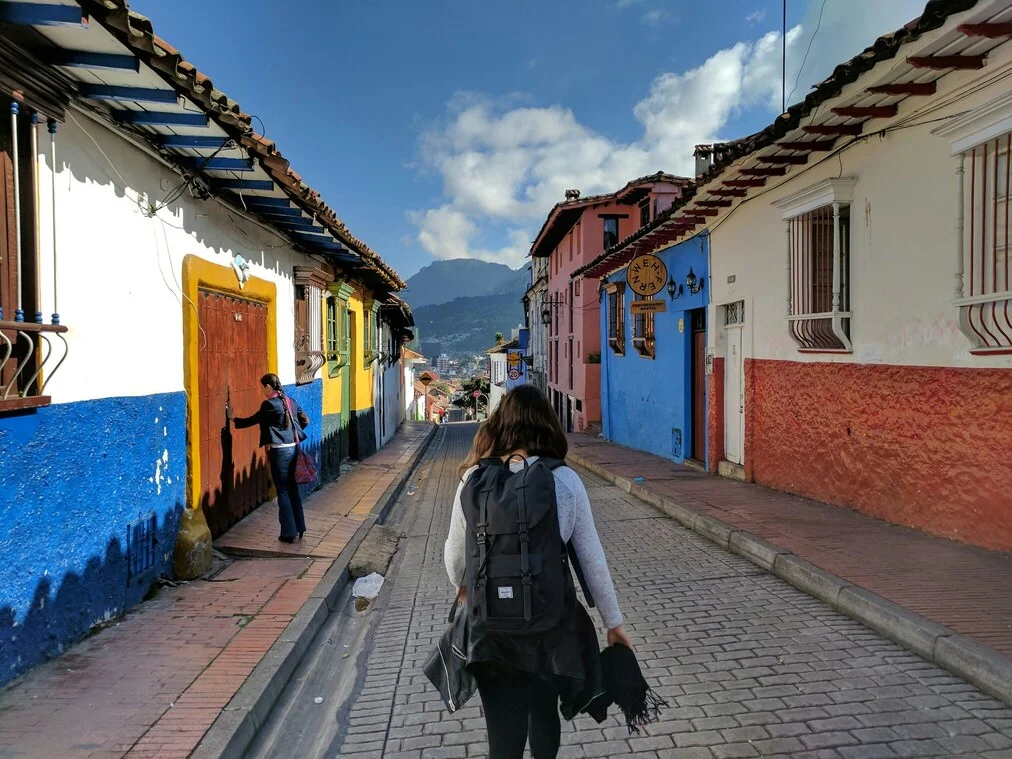
La Candelaria is Bogotá's historic heart — a grid of colonial-era streets, colourful facades, ornate churches, and centuries-old plazas that was the original city centre when Bogotá was founded by the Spanish in 1538. It is one of the best-preserved historic districts in South America. The neighbourhood is home to most of Bogotá's major museums, the national government buildings, the Palace of Justice, and the beautiful Catedral Primada.
Walking through La Candelaria is like stepping back through time — cobblestoned lanes wind past 17th-century churches, street art murals, bookshops, and small cafés. The area is liveliest during the day when students from the nearby universities fill the streets, and it hosts rotating street art installations that make it a living gallery.
Why visit: La Candelaria is the cultural and historical soul of Colombia — every visitor to Bogotá should spend at least half a day exploring it on foot.
Entrance: Free (the streets are public; individual museums have their own entrance fees)
Best time: Daytime only — the area becomes unsafe after dark
Hours: Open 24/7 (visit during daylight hours only)
Plaza de Bolívar
Plaza de Bolívar, La Candelaria, Bogotá, Colombia
Plaza de Bolívar is the grand central square of Bogotá and the symbolic heart of Colombia. Surrounded by the imposing Capitolio Nacional (Colombia's Congress), the Palace of Justice, the Palacio Liévano (City Hall), and the Catedral Primada — the largest cathedral in Colombia — the plaza is a powerful statement of the nation's colonial and republican heritage. The central statue of Simón Bolívar, the liberator of northern South America, was the first public monument built in Bogotá.
The plaza is lively throughout the day, filled with pigeons, street food vendors, students, tourists, and the occasional political demonstration. It is particularly photogenic on a clear day when the mountains behind La Candelaria are visible. On December evenings, the square is spectacularly illuminated as part of the city's Christmas lights display.
Why visit: This is the beating civic heart of Bogotá and Colombia — a beautiful, historically rich square surrounded by important buildings that you should see at least once.
Entrance: Free
Best time: Mid-morning on a weekday for photos; Sunday for a relaxed atmosphere
Hours: Open 24/7 (visit during daylight hours)
Barrio La Macarena Street Art & Restaurants
Barrio La Macarena, Bogotá, Colombia (between Calles 26–28 and Carreras 4–5)
La Macarena is one of Bogotá's most beloved bohemian neighbourhoods — a compact, hilly enclave just north of La Candelaria filled with the city's best independent restaurants, cafés, art galleries, and some of the most impressive street murals in South America. The neighbourhood developed a strong arts and dining scene from the 1990s onwards and today it remains one of the best areas in Bogotá to simply wander, eat, and soak up the atmosphere.
The street art in La Macarena is exceptional. Several world-renowned street artists have worked here, and the murals cover entire building facades with complex, politically charged, and beautifully executed works. Pick up a street art map at the neighbourhood's cafés or join a guided art tour.
Why visit: La Macarena combines Bogotá's two greatest strengths — outstanding food and world-class street art — in a single compact, walkable neighbourhood. This is where Bogotá's creative class eats and hangs out.
Entrance: Free (individual restaurants have their own prices)
Best time: Lunchtime for restaurants; daytime for street art; safe in the evening too
Hours: Neighbourhood is always open; most restaurants open noon–10 PM
Usaquén Market & Village
Usaquén, Bogotá, Colombia (Carrera 6A with Calle 119B, Usaquén)
Usaquén is Bogotá's most charming neighbourhood — a former colonial village that was absorbed by the expanding city but has retained its small-town character, cobblestone streets, and pretty central plaza. It is home to Bogotá's most popular weekend flea market, which spreads through the streets every Sunday from around 9 AM to 5 PM. The market sells antiques, handmade jewellery, art, clothing, leather goods, and excellent street food.
Beyond the Sunday market, Usaquén is one of the best areas in Bogotá to browse independent shops, have a leisurely brunch, and enjoy the upmarket but relaxed vibe of the northern city. The restored colonial buildings along Carrera 6A house some excellent restaurants and bars.
Why visit: Usaquén on a Sunday morning is one of the most enjoyable experiences in Bogotá — a perfect combination of market browsing, people-watching, and great food in a beautiful setting.
Entrance: Free
Best time: Sunday mornings for the market; any day for restaurants
Hours: Flea market every Sunday approximately 9 AM–5 PM; neighbourhood open daily
Museo Nacional de Colombia (National Museum)
Cra. 7 #28-66, Bogotá, Colombia
The National Museum of Colombia is the oldest and largest museum in the country, housed in a remarkable 19th-century building originally constructed as a prison — known as El Panóptico. The collection spans over 20,000 objects and traces Colombia's entire history from pre-Columbian indigenous cultures through the Spanish colonial era, independence, and modern times. It is one of the best places in Colombia to understand the sweep of the country's history.
The building itself is fascinating — a pentagonal structure designed along panopticon principles, with a central courtyard from which all cell corridors radiate. The combination of the building's history and the collections within makes for a deeply interesting visit.
Why visit: Essential for anyone who wants to understand Colombian history and culture beyond the Gold Museum. The building alone is worth a visit.
Entrance: COP $5,000 adults; free on Sundays (2026)
Best time: Weekday mornings
Hours: Tuesday–Saturday 9 AM–5 PM; Sunday 10 AM–5 PM; closed Monday
Parque Simón Bolívar & Jardín Botánico
Parque Simón Bolívar, Cra. 48 #63-60, Bogotá, Colombia
Parque Simón Bolívar is Bogotá's answer to Central Park — a vast 361-hectare green space in the heart of the city where bogotanos come to cycle, jog, picnic, play football, and simply breathe. On Sundays, the park swells with families, street performers, food vendors, and thousands of cyclists spilling in from the Ciclovía route. The park also hosts some of Colombia's biggest music festivals, including Rock al Parque and the Estéreo Picnic Festival.
Adjacent to the park is the Jardín Botánico (Botanical Garden), which houses over 3,500 plant species from Colombia's extraordinarily biodiverse ecosystems — from páramo high-altitude moorland to Amazonian rainforest. It is a peaceful, beautiful escape from the city.
Why visit: A Sunday visit to Parque Simón Bolívar is one of the most authentic local experiences in Bogotá — see the city at play and soak up the relaxed energy of Colombia's capital on its day off.
Entrance: Park is free; Jardín Botánico COP $4,000 adults, COP $2,000 children (2026)
Best time: Sunday mornings
Hours: Park open 24/7; Jardín Botánico Tuesday–Sunday 8 AM–5 PM
Catedral de Sal de Zipaquirá (Salt Cathedral)
Parque de la Sal, Zipaquirá, Cundinamarca, Colombia (48 km / 30 miles north of Bogotá)
The Salt Cathedral of Zipaquirá is one of Colombia's most extraordinary attractions — a vast underground Roman Catholic cathedral carved directly into a salt mine beneath the town of Zipaquirá, about an hour's drive north of Bogotá. The cathedral is famous for its stunning illuminated salt crosses and sculptures, its soaring underground nave, and the remarkable feat of engineering that created it. The current cathedral, opened in 1995, is built 180 metres underground and can hold up to 8,000 people.
The complex includes the main cathedral, a mining museum, and an original tunnel system used by the salt miners. The cathedral remains an active place of worship and is visited by both pilgrims and tourists. The underground temperature is a constant 14°C (57°F), so bring a layer.
Why visit: There is nothing quite like the Salt Cathedral anywhere else in the world — it is genuinely breathtaking and is considered one of the Seven Wonders of Colombia. This is the must-do day trip from Bogotá.
Entrance: COP $80,000 adults; COP $40,000 children (2026)
Best time: Weekdays for fewer crowds; avoid major Catholic holidays when it is extremely busy
Hours: Daily 9 AM–5:30 PM (last entry 4:30 PM)
Andrés Carne de Res (Chía)
Cra. 3 #11A-56, Chía, Cundinamarca, Colombia (15 km / 9 miles north of Bogotá)
Andrés Carne de Res is not just a restaurant — it is a Bogotá institution and one of the most extraordinary dining and entertainment experiences in all of South America. Originally founded in the small town of Chía north of Bogotá in 1982, the restaurant has grown into a vast, multi-room, multi-floor complex that can seat over 2,000 people. The décor is an overwhelming explosion of kitsch Colombian memorabilia, fairy lights, painted walls, and thousands of dangling objects. It must be seen to be believed.
Andrés serves traditional Colombian grilled meats (carnes a la brasa), soups, salads, and an enormous menu of local dishes. As the evening progresses, the restaurant transforms into one of the biggest dance venues in Colombia, with a live DJ, multiple dance floors, and an atmosphere of extraordinary collective joy. Colombians celebrate birthdays, anniversaries, and major occasions here — it is a full-evening commitment.
Why visit: There is no other restaurant experience quite like Andrés Carne de Res — it is an essential, unmissable part of the Bogotá experience that visitors talk about for years afterwards.
Entrance: No cover charge (food and drinks must be ordered); budget COP $80,000–$150,000 per person
Best time: Friday or Saturday night; arrive by 8 PM
Hours: Tuesday–Sunday 6 PM–4 AM (weekdays); noon–4 AM (weekends)
What Are the Best Neighborhoods to Explore in Bogotá?
Bogotá's neighbourhoods each have a strikingly distinct character, from the colonial cobblestones of La Candelaria to the tree-lined avenues and designer boutiques of the Zona Rosa. Here are the best ones to explore on foot.
La Candelaria — The Historic Heart
Character: Colonial-era streets, colourful facades, painted shutters, and centuries-old churches create an atmosphere that feels simultaneously ancient and alive. The neighbourhood has been continuously inhabited since 1538 and retains a fascinating mix of government buildings, universities, hostels, and street art.
What makes it special: La Candelaria is home to the greatest concentration of museums in Colombia, including the Gold Museum, the Botero Museum, and the National Museum. The street art scene is world-class, with large-scale murals covering entire building walls. The neighbourhood is also home to some of Bogotá's best-value restaurants, serving hearty Colombian lunches (almuerzos) for under COP $15,000.
Best for: History lovers, museum-goers, budget travellers, and first-time visitors to Bogotá
Must-see in this area: Plaza de Bolívar, Museo del Oro, Museo Botero, Cerro de Monserrate (visible from the eastern edge), Calle del Embudo (a stunning colonial alley)
How to get there: TransMilenio to Museo del Oro station or Las Aguas station; walking distance from La Macarena
Location: La Candelaria, Bogotá, Colombia (between Av. Jiménez and Calle 7, east of Carrera 10)
La Macarena — The Bohemian Food & Art Quarter
Character: Hilly, colourful streets lined with murals, independent restaurants, art studios, and cafés create a relaxed, creative atmosphere. La Macarena sits between the historic centre and the modern city, drawing Bogotá's artists, chefs, and intellectuals.
What makes it special: La Macarena is the gastronomic heart of Bogotá — the short stretch of Calle 26 (Carrera 5) between Calles 27 and 30 packs in more good restaurants per block than almost anywhere else in the city. The neighbourhood is also home to some of Bogotá's finest street art, with murals that change regularly and are of genuinely museum-quality.
Best for: Foodies, art lovers, solo travellers, couples
Must-see in this area: Calle 26 restaurant strip, Finca La Macarena (Carrera 4A street art), Parque de la Independencia, MAMBO (Museo de Arte Moderno)
How to get there: Walk north from La Candelaria (15 minutes); taxi or Uber from Chapinero (10 minutes)
Location: Barrio La Macarena, Bogotá, Colombia (around Cra. 4A with Calle 26)
Chapinero — The LGBTQ+ & Hipster Hub
Character: Eclectic, energetic, and inclusive, Chapinero is Bogotá's most diverse and liberal neighbourhood. It is the centre of the city's LGBTQ+ community and nightlife, and also home to a thriving indie music, food, and coffee scene. The neighbourhood covers a large area — from the grittier lower Chapinero near Calle 45 to the more upscale Alto Chapinero further north.
What makes it special: Chapinero has some of the best independent coffee shops, cocktail bars, vinyl record stores, and small live music venues in Bogotá. The Chapinero Central area around Calle 58–65 and Carrera 13 is particularly rewarding to explore, with a dense cluster of cafés and restaurants spilling out onto the streets.
Best for: LGBTQ+ travellers, coffee addicts, nightlife seekers, young travellers
Must-see in this area: Carrera 13 food and bar strip, Lourdes Church (beautiful Gothic architecture), and the many independent cafés and bookshops
How to get there: TransMilenio to Calle 57 or Calle 63 stations on the Carrera 7 route; taxi from La Candelaria takes 10–15 minutes
Location: Chapinero, Bogotá, Colombia (around Cra. 13 with Calle 60)
Zona Rosa (El Chicó) — Upscale Shopping & Dining
Character: Zona Rosa is Bogotá's most glamorous district — a polished, beautifully maintained neighbourhood of wide, tree-lined streets filled with designer boutiques, international restaurant chains, rooftop bars, and upscale nightclubs. This is where Bogotá's wealthy residents and business travellers eat, shop, and socialise.
What makes it special: The Zona Rosa / El Chicó area has Bogotá's safest and most pleasant nightlife, with venues on and around Calle 82 and the "Zona T" pedestrian zone drawing well-heeled crowds every weekend. The area is also home to Centro Andino — the city's best upscale shopping mall — and countless international restaurants.
Best for: Shoppers, business travellers, nightlife enthusiasts, families staying uptown
Must-see in this area: Zona T pedestrian street, Centro Andino mall, Parque de la 93, the rooftop bar at the W Bogotá
How to get there: TransMilenio to Calle 85 or Calle 76 stations; taxi from La Candelaria takes 20–25 minutes
Location: Zona Rosa, Bogotá, Colombia (around Cra. 13 with Calle 82)
Usaquén — Colonial Village Charm in the North
Character: Usaquén is a delightful anomaly — a former small colonial town that was swallowed by Bogotá's northward expansion but has stubbornly retained its village identity. Cobblestone streets, whitewashed colonial buildings, a pretty central plaza with a 17th-century church, and a relaxed café culture create an atmosphere quite unlike the rest of the city.
What makes it special: The Sunday flea market that spreads through Usaquén's streets is Bogotá's most popular market and one of the best shopping experiences in the city. The neighbourhood also has an excellent cluster of restaurants and bars around the plaza, catering to the northern city's well-heeled residents. It feels like a destination in its own right, not just a suburb.
Best for: Weekend visitors, shoppers, families, anyone looking for a relaxed contrast to the busy city centre
Must-see in this area: Sunday flea market, Parque Usaquén, Iglesia de Santa Bárbara, Carrera 6A restaurant strip
How to get there: TransMilenio Autopista Norte to Alcalá station then a short taxi; taxi from Zona Rosa takes 10 minutes
Location: Usaquén, Bogotá, Colombia (around Cra. 6A with Calle 119)
Teusaquillo & Quinta Camacho — Quiet Elegance
Character: Teusaquillo and the Quinta Camacho neighbourhood are two of Bogotá's most architecturally interesting and least-touristed areas. Wide, quiet streets are lined with early 20th-century mansions — Gothic, Art Deco, and Tudor-inspired — interspersed with small plazas, independent coffee shops, and bookstores. The area has a calm, intellectual atmosphere that feels miles away from the tourist trail.
What makes it special: The architectural variety is remarkable — this is where Bogotá's middle class built their grand homes in the 1920s–1950s, and many of those buildings still stand. The area is also home to some of the city's best independent bookshops and is conveniently located next to Parque Simón Bolívar.
Best for: Architecture enthusiasts, solo explorers, travellers who want to escape the tourist bubble
Must-see in this area: Calle 45 architectural row, Parque Central Bavaria, the various early 20th-century mansion facades
How to get there: TransMilenio to Calle 45 or Paloquemao stations; 20-minute taxi from La Candelaria
Location: Teusaquillo, Bogotá, Colombia (around Cra. 14 with Calle 41)
What Food Should You Try in Bogotá?
Bogotá is one of the best food cities in South America, famous for its hearty highland cuisine centred on soups, stews, grilled meats, and corn-based dishes. The must-try dishes include ajiaco, bandeja paisa, and arepas, alongside a flourishing modern restaurant scene that mixes Colombian ingredients with international techniques.
What Are the Must-Try Local Dishes in Bogotá?
- Ajiaco Bogotano — Bogotá's signature dish and the soul of the city's cuisine. A thick, rich chicken soup made with three types of potato (papa criolla, papa pastusa, and papa sabanera), corn on the cob, guascas herb, and served with cream, capers, and avocado on the side. It is deeply warming at 2,600 metres altitude and unlike anything you have tasted.
- Bandeja Paisa — Colombia's most famous plate — an enormous, protein-loaded spread of red beans, white rice, minced beef, chicharrón (pork rind), fried egg, sweet plantain, avocado, and an arepa. Originally from the Paisa region (Medellín/Antioquia), it is widely available in Bogotá and is a full meal on one plate.
- Arepas — Flat corn cakes that are the staple of Colombian daily life, eaten at breakfast, lunch, and dinner. In Bogotá you'll find them plain (as a side), topped with cheese, or stuffed with meat and egg. Try the arepa de chócolo (sweet corn version) at a street stall for COP $3,000–$5,000.
- Changua — Bogotá's traditional breakfast soup, made with milk, water, scallions, and poached eggs. It sounds unusual but is comforting, delicious, and the perfect way to start a cold Bogotá morning. Order it at a traditional tienda (small local eatery).
- Fritanga — A mix of fried meats and offal — including morcilla (blood sausage), chicharrón, longaniza (pork sausage), and potato — served on a large shared platter. It is the quintessential Colombian social eating experience, best enjoyed with aguardiente.
- Obleas — Street-food wafers sandwiched with arequipe (Colombian caramel spread) and optional toppings like shredded coconut, cheese, jam, or condensed milk. They cost around COP $3,000–$8,000 and are sold from street carts, particularly around La Candelaria and Usaquén.
- Tamales Bogotanos — A Bogotá-style version of the Latin American tamale, made with yellow corn dough stuffed with pork, chicken, potato, carrot, and peas, then steamed in a banana leaf. They are traditionally eaten on Sundays for breakfast with hot chocolate.
- Chocolate Santafereño — Hot chocolate with cheese — a classic Bogotá breakfast combination that surprises most first-timers but quickly wins them over. The mild, melting cheese is dunked into the thick hot chocolate. Order it at any traditional bakery (panadería) for COP $5,000–$8,000.
Where Should You Eat in Bogotá?
Budget-Friendly (Under COP $20,000 per meal)
- La Puerta Falsa — Calle 11 #6-50, La Candelaria, Bogotá — Bogotá's oldest restaurant (founded 1816) and the most famous place to try changua and chocolate santafereño. Tiny, atmospheric, and under COP $15,000 for a full breakfast. Iconic and unmissable.
- El Palacio del Ajiaco — Cra. 4 #26-22, La Macarena, Bogotá — A no-frills local favourite serving what many consider the best ajiaco in the city. The soup comes with all the traditional accompaniments and costs around COP $18,000. Lines form at lunchtime — arrive by 12:30 PM.
- Mercado de la Perseverancia — Cra. 5 #30-13, La Macarena, Bogotá — A working-class market with a fantastic food court on the upper level serving traditional Colombian lunches (ajiaco, soups, fritanga) for COP $12,000–$18,000. Very local, very authentic, excellent value.
Mid-Range (COP $30,000–$80,000 per meal)
- Restaurante Leo — Cra. 7 #67-51, Chapinero, Bogotá — Chef Leonor Espinosa is one of Latin America's most celebrated chefs, and Leo is her creative showcase restaurant exploring Colombia's extraordinary biodiversity through cuisine. The tasting menu is outstanding. Reservations essential.
- Masa — Cra. 4A #27-26, La Macarena, Bogotá — Bogotá's most famous bakery-café, beloved for its sourdough bread, pastries, and excellent brunch. Long lines on weekends but moves quickly. Try the pan de bono (cheese bread) and Colombian-style eggs.
- Central Cevichería — Cra. 5 #26-58, La Macarena, Bogotá — Creative, beautifully executed Peruvian-style ceviches using Colombian ingredients and seafood. One of the best lunch options in La Macarena. Arrive before 1 PM to guarantee a table.
- El Chato — Cra. 5 #26-36, La Macarena, Bogotá — A beloved neighbourhood restaurant with an ever-changing menu focused on Colombian ingredients prepared with creativity and care. Consistently ranked among Bogotá's best restaurants. Reservations recommended.
Fine Dining (COP $120,000+ per person)
- Criterion — Cra. 13 #83-33, Zona Rosa, Bogotá — One of Bogotá's most prestigious restaurants, serving sophisticated French-Colombian cuisine in an elegant, intimate setting. Exceptional wine list. Smart dress required; reservations essential weeks in advance.
- Astrid & Gastón Bogotá — Cra. 7 #67-64, Chapinero, Bogotá — The Bogotá outpost of Peruvian chef Gastón Acurio's legendary restaurant group, serving modern Peruvian cuisine with Colombian touches. Spectacular tasting menus and impeccable service.
What Are the Dining Customs in Bogotá?
Meal times: Breakfast is typically 7–9 AM (light — bread, hot chocolate, eggs). The main meal is lunch, eaten between noon and 2 PM — most Colombians have their biggest meal at midday. Dinner is eaten later, from 7–9 PM, and is generally lighter than lunch.
Tipping: A voluntary 10% service charge (propina voluntaria) is added to most restaurant bills in Bogotá — you can decline it, but it is customary to leave it if the service was good. Tipping beyond 10% is uncommon but appreciated for exceptional service.
Reservations: Essential at fine dining restaurants and popular mid-range spots, especially on Friday and Saturday evenings. Many restaurants in La Macarena do not take reservations — arrive before 1 PM for lunch and before 7:30 PM for dinner to avoid a long wait.
Dress code: Smart casual is appropriate for most mid-range restaurants. Fine dining establishments expect smart dress — no shorts or flip flops. Casual is perfectly fine for street food and budget restaurants.
What Is the Nightlife Like in Bogotá?
Bogotá's nightlife scene is one of the most vibrant in South America — a city that genuinely does not sleep, with bars and clubs operating until 3–5 AM and Colombians who treat dancing as a near-spiritual practice. Nights typically start late, with locals heading out to dinner around 8–9 PM and clubs filling up after midnight.
Where Are the Best Areas for Nightlife in Bogotá?
- Zona Rosa / Calle 82: Cra. 13–15 with Calle 82, Bogotá — The safest and most polished nightlife area, packed with upscale clubs, rooftop bars, and cocktail lounges. Popular with the well-heeled local crowd and tourists. The "Zona T" pedestrian zone is the epicentre.
- Parque de la 93: Cra. 12 with Calle 93, Bogotá — A beautiful tree-lined park surrounded by restaurants and bars that stay open late. More relaxed and conversation-friendly than the clubs of Zona Rosa. Excellent for drinks al fresco on a clear night.
- Chapinero / Carrera 13: Cra. 13 between Calles 55 and 70, Bogotá — The most diverse and energetic nightlife area, home to the city's LGBTQ+ clubs, indie music venues, and edgier bars. More affordable than Zona Rosa and with a more local, creative crowd.
What Are the Best Bars and Clubs in Bogotá?
Bars & Pubs
- Quiebracanto — Cra. 5 #17-76, La Candelaria, Bogotá — Bogotá's most beloved folk music bar, hosting live performances of traditional Colombian music (vallenato, cumbia, bambuco) most evenings. The atmosphere is warm, inclusive, and deeply Colombian. Cover charge around COP $15,000–$20,000 on performance nights.
- Bogotá Beer Company — Multiple locations including Andino Mall and Usaquén — Bogotá's most popular craft beer brand, with comfortable pub-style bars, excellent local craft beers (try the Cajicá Red Ale), and good pub food. A reliable, relaxed option anywhere in the city.
- El Rincón de Heberth — Cra. 4A #27-34, La Macarena, Bogotá — A legendary neighbourhood bar in La Macarena, beloved for its cheap aguardiente, friendly atmosphere, and occasional live music. Feels like the living room of a Colombian uncle. Very local.
Clubs & Dancing
- Theatron de Bogotá — Cra. 13 #58-30, Chapinero, Bogotá — One of the largest LGBTQ+ clubs in Latin America, comprising 13 themed rooms spread across three floors, each playing different music. Inclusive, spectacular, and unlike any club experience you've had. Cover charge approximately COP $30,000–$50,000 (2026).
- Armando Records — Cra. 14 #82-16, Zona Rosa, Bogotá — Bogotá's most consistently excellent music club, known for hosting international DJs and playing electronic, house, and techno to a fashionable local crowd. Cover charge approximately COP $40,000–$80,000 depending on the DJ.
Live Music & Shows
- Quiebracanto — Cra. 5 #17-76, La Candelaria, Bogotá — Best for traditional Colombian folk music in an authentic, intimate setting. See listing above.
- Media Torta — Cra. 1 #26-33, La Candelaria, Bogotá — An open-air amphitheatre on the slopes of the Candelaria hillside that hosts free and low-cost concerts ranging from salsa to classical. Check the city's cultural programme for upcoming events.
What Family-Friendly Evening Entertainment Is Available?
Families in Bogotá have good options for evening entertainment. The Planetarium (Planetario de Bogotá) near Parque de la Independencia runs evening shows. Cinemas in Centro Andino and other malls show international films in English with Spanish subtitles. Evening visits to Monserrate via gondola are spectacular and suitable for all ages, with restaurants and snack stalls at the top.
What and Where Should You Shop in Bogotá?
The best things to buy in Bogotá are Colombian emeralds, handmade leather goods, Wayuu mochilas (woven bags), artisan crafts, Colombian coffee, and local fashion — and the top shopping areas include Usaquén, La Candelaria's craft shops, and the upscale malls of the Zona Rosa.
What Are the Best Shopping Districts in Bogotá?
- Usaquén Flea Market: Carrera 6A with Calle 119B, Usaquén — The best open-air market in Bogotá, every Sunday. A treasure trove of antiques, handmade jewellery, leather goods, art, and street food. Prices are negotiable and far lower than tourist shops. Best before noon.
- La Candelaria Craft Shops: Calle 10–13 with Carrera 7–9, La Candelaria — Dozens of small artisan shops selling emeralds, hand-woven textiles, leather goods, Wayuu bags, and Colombian souvenirs. Prices vary enormously — compare between several shops before buying.
- Centro Andino & Zona Rosa: Cra. 11 #82-01, Zona Rosa — Bogotá's most upscale shopping mall, with Colombian and international fashion brands, a good emerald jewellery section, and excellent food options. Clean, safe, and air-conditioned — a welcome break from the city.
What Markets Should You Visit in Bogotá?
Mercado de las Pulgas de Usaquén — Carrera 6A with Calle 119B, Usaquén, Bogotá — Sundays 9 AM–5 PM. Bogotá's most popular flea market, selling antiques, vintage clothing, handmade jewellery, and Colombian crafts. Bargaining is expected and part of the fun. Arrive by 10 AM for the best selection.
Paloquemao Market (Plaza de Mercado de Paloquemao) — Cra. 27 with Calle 19, Bogotá — Daily, 4 AM–2 PM. One of the most visually spectacular markets in South America — a vast covered fruit, vegetable, and flower market bursting with Colombia's extraordinary tropical produce. An extraordinary sensory experience. Best visited at dawn when it is at its most vibrant.
Mercado de San Victorino — Cra. 10 with Calle 10, La Candelaria, Bogotá — Daily 8 AM–6 PM. Bogotá's largest traditional market, selling everything from electronics to clothing to hardware. More of a local experience than a tourist market, but interesting to walk through and excellent for cheap everyday goods.
What Should You Buy in Bogotá?
- Colombian Emeralds — Colombia produces over 70% of the world's emeralds, and Bogotá is the best place in the country to buy them. Only purchase from reputable certified dealers (look for the Colombian Gemological Institute certification) — the emerald trade has a long history of fraud. Budget COP $200,000–$2,000,000+ depending on quality and size.
- Wayuu Mochilas — Handwoven bags made by the Wayuu indigenous people of the Guajira peninsula. Each bag takes approximately 20 days to make and features intricate geometric patterns. Authentic pieces cost COP $80,000–$200,000 in Bogotá. Widely sold in La Candelaria and Usaquén.
- Colombian Coffee — Colombia is one of the world's premier coffee origins, and Bogotá has excellent coffee shops selling premium single-origin beans. Juan Valdez shops are convenient; independent coffee roasters in Chapinero (such as Café Cultor and Azahar) sell exceptional specialty coffee for COP $20,000–$60,000 per 250g bag.
- Leather Goods — Colombian leather craftsmanship is excellent, and you can find beautifully made bags, belts, wallets, and shoes at La Candelaria craft shops and Usaquén at much lower prices than equivalent quality in Europe or North America.
- Colombian Chocolate — Colombia grows exceptional cacao, and a new wave of Colombian craft chocolate makers (Cacao Hunters, Luker Chocolate) produce world-class bars. Available in specialty shops and airport duty-free. Budget COP $15,000–$40,000 per bar.
- Aguardiente & Ron Medellín — Bring home a bottle of Colombia's national spirit (aguardiente — an anise-based liquor) or Ron Medellín (Colombian rum) for a fraction of the export price. Available at any supermarket for COP $20,000–$35,000 per bottle.
What Are the Shopping Hours and Customs?
Most shops in Bogotá are open Monday–Saturday 9 AM–7 PM, with many larger stores and malls open on Sundays 11 AM–7 PM. Bargaining is acceptable and expected at open-air markets like Usaquén, but fixed prices apply in formal shops and malls. Foreign visitors spending over COP $3,000,000 at accredited stores can claim a VAT refund (devolución de IVA) at the airport — keep your receipts and passport to claim.
What Festivals and Events Happen in Bogotá?
Bogotá's biggest festivals include the Festival Iberoamericano de Teatro (the world's largest theatre festival, held in even-numbered years), the Feria del Libro (one of Latin America's most important book fairs), and Rock al Parque (one of the largest free rock festivals in Latin America). The city's events calendar is remarkably rich year-round.
What Is the Annual Events Calendar for Bogotá?
| Month/Season | Event Name | Description |
|---|---|---|
| January | Festival de Verano de Bogotá | Summer festival in January (Colombia's dry season) with outdoor concerts, sports events, and cultural activities across the city. Free or low-cost events throughout the month. |
| February | Carnaval de Bogotá | A multi-day arts and culture carnival with parades, music, dance, and street performances across the city. Less famous than Barranquilla's Carnaval but growing rapidly in scale and colour. |
| March–April | Festival Iberoamericano de Teatro (even years) | The world's largest theatre festival, held every two years (2026 is an edition year). Over 100 theatre companies from 30+ countries perform across 60 venues, with many free street performances throughout La Candelaria and the city centre. One of Bogotá's most spectacular cultural events. |
| April–May | Feria Internacional del Libro (FilBo) | One of Latin America's most important book fairs, held at Corferias convention centre. Over 700,000 visitors, 300+ exhibitors, author talks, and cultural events. Many events are free or inexpensive. A wonderful event even for non-Spanish speakers. |
| May | Bogotá Fashion Week | Colombia's premier fashion event, showcasing Colombian and Latin American designers at venues across the Zona Rosa. A growing international event with runway shows, pop-up shops, and industry events. |
| June–July | Rock al Parque | One of the largest free rock music festivals in Latin America, held over three days in Parque Simón Bolívar. Attracts over 400,000 people and features Colombian and international rock, metal, and alternative acts. Entirely free to attend. |
| July | Hip Hop al Parque | Part of Bogotá's famous "Al Parque" free festival series, this event celebrates hip-hop culture with free performances in Parque de los Novios. Very local and authentic. |
| August | Jazz al Parque | Free jazz festival over several days in Parque de los Novios, with Colombian and international jazz artists performing on multiple stages. A wonderful, relaxed atmosphere. |
| September | Festival de Ópera al Parque | Free opera performances in city parks, bringing world-class opera to the public in one of Bogotá's most democratic cultural events. |
| October | Festival de Cine de Bogotá | Bogotá's international film festival, screening Colombian and international cinema across the city's theatres. One of the most important film festivals in Latin America. |
| November | Salsa al Parque | Another of Bogotá's free "Al Parque" festivals, celebrating salsa music and dance. Free performances and dance workshops in a central park location. |
| December | Feria de las Flores y Alumbrados | Bogotá's spectacular Christmas lights display transforms the city from early December through January 7th. Millions of lights illuminate streets, parks, and public buildings throughout the city. Free and absolutely magical. |
How Do Festivals Affect Hotel Prices and Availability?
Major festivals — particularly the Festival Iberoamericano de Teatro (March–April, even years), FilBo (April–May), and Rock al Parque (June–July) — significantly increase hotel prices and reduce availability in central Bogotá. During the Teatro Festival in 2026, central hotels can be 50–100% more expensive than usual, and popular properties sell out months in advance. December is also very busy due to the Alumbrados lights display and Colombian holiday travel.
Where Should You Stay in Bogotá?
The best neighbourhood to stay in Bogotá depends on your travel style — La Candelaria is best for budget travellers who want to be close to museums; Chapinero and La Macarena are best for foodies and the creative set; Zona Rosa and Usaquén are best for comfort, safety, and nightlife.
What Are the Best Neighborhoods to Stay in Bogotá?
| Neighbourhood | Vibe | Price Range per Night (2026) | Best For |
|---|---|---|---|
| La Candelaria | Historic, colonial, busy | COP $60,000–$200,000 (hostels & budget hotels) | Budget travellers, backpackers, museum-goers |
| La Macarena / Chapinero | Bohemian, artsy, foodie | COP $120,000–$350,000 (boutique hotels & Airbnb) | Foodies, solo travellers, creatives |
| Zona Rosa / El Chicó | Upscale, polished, safe | COP $250,000–$600,000 (3–4 star hotels) | Business travellers, couples, shoppers |
| Usaquén | Relaxed, colonial, charming | COP $180,000–$500,000 (boutique hotels) | Families, weekend visitors, design lovers |
| Downtown / Teusaquillo | Mid-city, practical, quieter | COP $150,000–$350,000 | Travellers wanting central but calmer base |
What Are the Pros and Cons of Each Area?
La Candelaria:
Pros: Walking distance to all major museums, cheapest accommodation in the city, most authentic neighbourhood atmosphere, best for meeting other backpackers.
Cons: Not safe to walk alone at night, limited upscale dining and nightlife, can feel intense and crowded during the day.
La Macarena / Chapinero:
Pros: Best restaurant and café scene in the city, walkable to La Candelaria museums during the day, safe in the evening in the restaurant strip, excellent boutique hotel options.
Cons: Fewer formal hotel options (mostly boutique and Airbnb), some streets can be uneven and hilly.
Zona Rosa / El Chicó:
Pros: Safest area in the city at night, excellent restaurants and bars walking distance, best hotel infrastructure with international brands, easy taxi/Uber access.
Cons: Furthest from La Candelaria museums (20–25 minute taxi), most expensive accommodation, less authentic local atmosphere.
Usaquén:
Pros: Beautiful colonial architecture, charming and relaxed atmosphere, excellent Sunday market, safe at night, good restaurant scene.
Cons: Furthest from the historic centre (30+ minutes to La Candelaria by taxi), fewer accommodation options than other areas.
How Far in Advance Should You Book in Bogotá?
For peak season (December, June–July) and during major festivals (particularly the Festival Iberoamericano de Teatro and FilBo in 2026), book accommodation at least 2–3 months in advance for popular properties. At other times, 3–4 weeks is usually sufficient. Booking directly with boutique hotels often yields slightly better rates and flexibility than booking platforms, and always check whether breakfast is included.
What Do You Need to Know Before Visiting Bogotá?
Here are the essential practical details every visitor to Bogotá needs to know — from money and transport to safety and cultural customs.
Essential Travel Details for Bogotá
- Currency: Colombian Peso (COP). Exchange rates in 2026: approximately COP 4,000–4,200 per USD / COP 4,400–4,700 per EUR. Exchange at airport banks, city ATMs, or reputable exchange houses (casas de cambio) — avoid street changers.
- Credit Cards: Visa and Mastercard widely accepted in hotels, restaurants, and shops in tourist areas. American Express less so. Many small restaurants and local businesses are cash-only.
- ATMs: Widely available throughout the city. Use ATMs in malls, banks, and hotel lobbies rather than street ATMs. Typical ATM fee: COP $8,000–$12,000 per withdrawal. Daily withdrawal limit: typically COP $800,000–$1,200,000.
- Language: Spanish. English is widely spoken in upscale hotels, tourist restaurants, and Zona Rosa/Usaquén. In La Candelaria and local areas, English is limited — knowing a few Spanish phrases makes a huge difference.
- Tipping: 10% voluntary service charge in restaurants. Tip taxi drivers by rounding up. No tip expected at street food stalls.
- Electrical Plugs: Type A and B (flat two- and three-pin, same as the USA). Voltage: 110V, 60Hz. European and UK travellers need an adaptor.
- Emergency Number: 123 (police, ambulance, fire — unified emergency number in Colombia)
- Tourist Police: (+57 1) 337 4413 — specialised unit for tourist assistance and reporting crimes against visitors
- SIM Cards: Available at the airport and from Claro, Movistar, and Tigo stores throughout the city. A 30-day SIM with 10–20 GB of data costs approximately COP $30,000–$50,000. Take your passport.
- WiFi: Good WiFi in hotels, cafés, and restaurants in tourist areas. Free public WiFi at TransMilenio stations, parks, and some public buildings, but not consistently fast enough for streaming.
- Tap Water: Technically safe to drink in Bogotá (the city has good water treatment), but most visitors and locals prefer to drink bottled water. Bottled water (500ml) costs COP $1,500–$2,000 at any small shop.
How Much Does It Cost to Visit Bogotá?
| Budget Type | Daily Cost (2026) | What's Included |
|---|---|---|
| Budget Traveller | COP $80,000–$140,000 (USD $20–$35) | Hostel dorm, menú del día meals, TransMilenio, free museums and street art |
| Mid-Range Traveller | COP $250,000–$450,000 (USD $60–$110) | Boutique hotel or Airbnb, mix of restaurants and cafés, taxi/Uber, paid attractions, occasional food tour |
| Luxury Traveller | COP $700,000–$1,500,000+ (USD $170–$360+) | 5-star hotel (W, Casa Medina, Hotel de la Opera), fine dining, private transport, guided tours |
What Are the Most Useful Phrases in Bogotá?
- Hello: Hola (informal); Buenos días/tardes/noches (Good morning/afternoon/evening — used constantly)
- Thank you: Gracias (very common: Muchísimas gracias — thank you very much)
- Please: Por favor
- Excuse me: Con permiso (to pass through); Perdón (to apologise)
- How much?: ¿Cuánto cuesta?
- Where is...?: ¿Dónde queda...? (very common in Colombia — quedar replaces estar for locations)
- I don't understand: No entiendo / No comprendo
- Help!: ¡Auxilio! (Colombian Spanish for help — more common than ayuda)
- Bathroom: El baño
- Check, please: La cuenta, por favor
Is Bogotá Safe for Tourists?
Bogotá is generally safe for tourists who follow common-sense precautions and stick to the well-travelled tourist areas. The city has improved dramatically in safety over the past 20 years, and millions of tourists visit without incident each year. That said, Bogotá does have crime, and pickpocketing, phone snatching, and occasional robberies do occur in tourist areas.
Areas to avoid: The areas south of La Candelaria (La Perseverancia, Bronx, La Sabana) are best avoided by tourists, particularly at night. Do not venture into the Bronx (Calle del Cartucho area) under any circumstances. The streets immediately south of Calle 1 in La Candelaria are also best avoided after dark.
Common scams: Fake police officers ("good Samaritan" scam) asking to check your wallet; individuals asking for directions then stealing your phone; airport taxi touts; and emerald dealers offering impossibly good deals on stones. The scopolamine ("burundanga") drug scam is a serious risk in nightlife areas — never accept food, drinks, or cigarettes from strangers.
Pickpocketing: Common in La Candelaria, on TransMilenio during rush hour, and in crowded tourist areas. Carry only what you need for the day, keep your phone in a front pocket or inside your jacket, and use a money belt for larger amounts of cash.
Solo traveller safety: Solo travellers of all genders generally find Bogotá safe in the tourist areas and northern city during the day. Women travelling alone should be extra cautious at night and use Uber rather than street taxis after dark. Bogotá has a visible and welcoming LGBTQ+ scene, particularly in Chapinero, and is one of the more LGBTQ+-friendly cities in South America.
What Are the Cultural Customs in Bogotá?
- Greetings: Colombians greet with a single kiss on the right cheek between women and between men and women. Men typically shake hands. Always greet with buenos días/tardes/noches when entering a shop or restaurant.
- Dress code: Generally smart casual. Colombians tend to dress well and take pride in their appearance. For religious sites (churches), cover shoulders and knees. Shorts are acceptable in tourist areas but less common among locals.
- Photography: Always ask permission before photographing individuals, particularly indigenous people, street vendors, or people in private spaces. Most Colombians are happy to be photographed if asked politely.
- Public behaviour: Colombians are warm, friendly, and relatively informal. Queue politely, avoid raising your voice in public spaces, and be patient — "Colombian time" means events often start 30+ minutes late.
- Dining: Wait to be seated in formal restaurants; in local fondas you can often seat yourself. Splitting the bill (going Dutch) is less common — one person often pays and others reciprocate next time.
- Gestures to avoid: Avoid pointing at people with your finger — use an open hand or a nod of the head instead. The "OK" sign is generally fine in Colombia. Avoid discussing the drug trade, Pablo Escobar, or making jokes about cocaine — Colombians are deeply tired of these associations and find them offensive.
Do You Need a Visa to Visit Bogotá?
Citizens of the USA, Canada, UK, Australia, New Zealand, and most European Union countries do not need a visa to enter Colombia as a tourist. Upon arrival, most visitors receive a tourist entry stamp allowing a 90-day stay, which can typically be extended for another 90 days (180 days maximum per year). Citizens of some countries (including China, India, and most African nations) do require a visa — always check with the Colombian embassy or consulate in your country well before travel, as requirements can change.
What Health Precautions Should You Take in Bogotá?
Vaccinations: No vaccinations are officially required to enter Colombia, but yellow fever vaccination is required if you have recently visited certain other countries or if you plan to travel to Colombia's lowland regions (the Amazon, Orinoquía, Pacific coast). Recommended vaccinations include Hepatitis A and B, typhoid, and standard routine vaccinations. Consult your travel health clinic or GP at least 4–6 weeks before departure.
Altitude sickness: This is the most common health issue for new arrivals in Bogotá. At 2,625 metres above sea level, altitude sickness symptoms (headache, fatigue, breathlessness, nausea) affect many visitors on their first day. Rest well on arrival, stay hydrated, avoid alcohol for 24 hours, and take it easy on your first day. Most people acclimatise within 48 hours. If symptoms are severe, consult a pharmacist about acetazolamide (Diamox), which is available over the counter in Bogotá.
Pharmacies: Excellent — there are pharmacies (droguerías) on virtually every block in Bogotá, and many common medications are available without a prescription. Drogas La Rebaja and Cruz Verde are the main chains with 24-hour locations throughout the city.
Hospitals: Bogotá has good private hospitals that are far superior to most public facilities. The Fundación Santa Fe de Bogotá and Clínica del Country are the two best private hospitals in the city, used by expats and insured visitors. Treatment at private hospitals is expensive without insurance — comprehensive travel insurance is absolutely essential for visiting Colombia.
Is Bogotá Accessible for People with Disabilities?
Bogotá is making progress on accessibility but remains challenging for visitors with mobility impairments. The historic La Candelaria district has uneven cobblestone streets and steep pavements. The newer northern districts (Zona Rosa, Usaquén) have better infrastructure with ramps and wider pavements. Major museums including the Gold Museum and Botero Museum have wheelchair access and lifts. TransMilenio stations have accessibility features, but the buses themselves can be difficult to board. Private taxis and Uber are the most practical transport option for visitors with mobility needs.
Is Bogotá Good for Families with Kids?
Bogotá is a good destination for families with school-age children, particularly those interested in history, nature, and culture. The Gold Museum, Jardín Botánico, and Parque Simón Bolívar are all excellent for kids. The Sunday Ciclovía is a wonderful family activity. Bogotá has good infrastructure for families — restaurants typically accommodate children well, and the Maloka interactive science museum is specifically designed for young visitors. With babies and toddlers, La Candelaria's cobblestones make strollers difficult — a baby carrier is a better option for exploring the historic centre.
What Are the Best Day Trips from Bogotá?
The best day trips from Bogotá include the Salt Cathedral of Zipaquirá, the colonial town of Villa de Leyva, the Laguna de Guatavita (the origin of the El Dorado legend), and the coffee farms of the nearby Cundinamarca highlands. Bogotá's central location in the Andes makes it an excellent base for exploring a range of strikingly different landscapes and colonial towns.
Zipaquirá & the Salt Cathedral
Distance: 48 km / 30 miles north; approximately 1 hour by bus or car
What to see: The Salt Cathedral is the unmissable reason to make this trip — an extraordinary underground cathedral carved into an active salt mine, considered one of the Seven Wonders of Colombia. The colonial town of Zipaquirá itself is also beautiful, with a well-preserved historic centre, a pleasant central plaza, and good local restaurants. The combination of cathedral and town makes for a perfect half-day or full-day outing.
How to get there: Bus from Portal del Norte TransMilenio station to Zipaquirá (COP $6,000, approximately 60 minutes, every 15–20 minutes). A guided tour from Bogotá including transport and entrance costs COP $80,000–$120,000 per person. By car or taxi, approximately 45–60 minutes depending on traffic.
Time needed: Half day (4–5 hours with travel); full day if exploring the town
Best for: All travellers — this is the must-do day trip from Bogotá for everyone
Location: Parque de la Sal, Zipaquirá, Cundinamarca, Colombia
Villa de Leyva
Distance: 157 km / 98 miles north; approximately 3.5–4 hours by bus
What to see: Villa de Leyva is one of the most beautifully preserved colonial towns in all of South America — a UNESCO-listed gem with cobblestone streets, whitewashed buildings, and one of the largest colonial plazas in Latin America. The town's Plaza Mayor (measuring 120m x 120m) is utterly spectacular, particularly at sunset. The surrounding countryside offers fossil sites (the area was once a prehistoric sea bed), hiking trails, and wineries. Villa de Leyva is best done as an overnight trip, but a very long day trip is possible.
How to get there: Direct buses from Bogotá's Terminal de Transportes del Norte (approximately COP $28,000–$35,000 one way, 3.5–4 hours). Several daily departures from 5 AM. Private transfers available for approximately COP $350,000–$450,000 each way.
Time needed: Overnight strongly recommended; minimum full day
Best for: History lovers, photographers, couples, anyone wanting to experience colonial Colombia at its finest
Location: Plaza Mayor, Villa de Leyva, Boyacá, Colombia
Laguna de Guatavita — The Original El Dorado
Distance: 75 km / 47 miles northeast; approximately 1.5–2 hours by car
What to see: Laguna de Guatavita is a perfectly circular lake in the crater of an ancient volcanic caldera, sacred to the Muisca people who inhabited this highland plateau before the Spanish conquest. It was here that the Muisca chief conducted a ritual involving covering his body in gold dust and diving into the lake — the ceremony that inspired the legend of El Dorado. The lake is surrounded by nature reserve, with walking trails through the highland páramo ecosystem and spectacular views of the lake from the crater rim. The visit includes a ranger-guided walk.
How to get there: Best reached by guided tour from Bogotá (COP $80,000–$120,000 per person including transport) or by a combination of bus to Sesquilé then a taxi to the reserve. Not easily accessible without a car or organised tour.
Time needed: Full day including travel
Best for: History enthusiasts, nature lovers, those who want to stand at the origin of the El Dorado legend
Location: Santuario Flora y Fauna Laguna de Guatavita, Cundinamarca, Colombia
Suesca — Rock Climbing & Páramo Landscapes
Distance: 60 km / 37 miles northeast; approximately 1.5 hours by bus
What to see: Suesca is a small town on the high Cundinamarca savanna that has become a major destination for rock climbing, hiking, and outdoor adventure. The Suesca Rocks — a dramatic 3.5 km row of sandstone cliffs overlooking the Bogotá River valley — offer over 150 established climbing routes for all levels. Even non-climbers will enjoy the dramatic páramo landscape, the walking trails, and the spectacular views from the clifftop. Local guides offer climbing instruction from COP $60,000 per person.
How to get there: Buses from Portal del Norte TransMilenio station to Suesca (COP $7,000, approximately 1.5 hours). A local bus or taxi from Suesca town centre reaches the climbing rocks in 10 minutes.
Time needed: Full day
Best for: Adventure travellers, climbers, hikers, nature lovers seeking a escape from the urban jungle
Location: Suesca, Cundinamarca, Colombia (Cra. Principal with the climbing access road)
Finca Coffee Tour (Cundinamarca Region)
Distance: Various farms 1–2.5 hours from Bogotá in the Cundinamarca and Tequendama regions
What to see: Cundinamarca Department has dozens of small coffee farms offering tours that walk you through the entire coffee production process — from picking the red cherries to processing, drying, roasting, and tasting. This is not the main Colombian coffee region (that is the Eje Cafetero, 5–6 hours from Bogotá) but the farms in the Cundinamarca highlands produce excellent specialty coffee and are easily accessible as a day trip. Many tours include a traditional Colombian lunch, horseback riding, and a waterfall hike.
How to get there: Most easily done as part of an organised tour from Bogotá (COP $150,000–$250,000 per person including transport, guide, tour, and lunch). Some farms can be reached independently by bus to Fusagasugá or Arbeláez.
Time needed: Full day (8–10 hours including travel)
Best for: Coffee lovers, food enthusiasts, families, anyone wanting a taste of rural Colombia close to the capital
Location: Various — ask your hotel or a tour operator in Bogotá for the current best options
What Are the Hidden Gems and Insider Tips for Bogotá?
Beyond the main tourist sites, Bogotá hides some incredible spots most visitors never find — from secret viewpoints and off-the-beaten-path cafés to local markets and neighbourhood festivals that rarely appear in guidebooks.
What Are the Best Hidden Gems in Bogotá?
- Mirador Torre Colpatria: Cra. 7 #24-89, Bogotá — A 50-floor skyscraper that opens its rooftop observation deck to the public only on Saturday and Sunday afternoons and on public holidays. The 360-degree view of Bogotá from the top is arguably better than Monserrate on clear days, and almost no tourists know about it. Entry is only COP $5,000 (2026). Go between 2–5 PM on a clear day.
- Paloquemao Flower Market at Dawn: Cra. 27 with Calle 19, Bogotá — Arrive at the Paloquemao Market at 5–6 AM on any day of the week for an extraordinary spectacle of colour and commerce — Colombia's flower growers delivering their product before dawn. Thousands of flower varieties sold wholesale and retail in a space that looks like a painting. One of the most photographically striking experiences in the city, and almost entirely visited by locals.
- Museo de la Independencia (Casa del Florero): Cra. 7 #11-28, La Candelaria, Bogotá — A small but fascinating museum telling the story of Colombia's independence from Spain, in the very building where the first cry for independence occurred in 1810. Almost always quieter than the Gold Museum or Botero, it is free on Sundays and highly recommended for history lovers.
- Barrio Egipto Viewpoint: Calle 10 above Cra. 1, La Candelaria — The hilltop neighbourhood of Egipto, immediately above La Candelaria, offers spectacular rooftop and street-level views over the colonial district to the city below. The neighbourhood itself is atmospheric and undervisited — best explored in a small group during daylight hours. The view from the top of the Calle 10 stairway is one of the best urban photography spots in the city.
- Biblioteca Virgilio Barco: Av. Cra. 60 #57-60, Bogotá — One of Colombia's most architecturally stunning public buildings — a breathtaking library designed by Rogelio Salmona, surrounded by reflecting pools and gardens. Entirely free to visit, it is one of Bogotá's great public spaces and a wonderful place to sit, read, and watch the local life. Almost no tourists visit.
- Parque Nacional Natural de Chingaza (day hike): 75 km northeast of Bogotá — Colombia's páramo ecosystem at its most spectacular and accessible. Chingaza National Park offers incredible high-altitude wetland landscapes, lagoons, and the chance to spot Andean spectacled bears and condors. Day tours from Bogotá cost COP $120,000–$180,000 per person. A world-class natural experience on the city's doorstep that very few foreign visitors know about.
- Sunday Ciclovía with bike rental: Various routes across Bogotá — Most tourists see the Ciclovía as a backdrop to their Sunday morning walk, but renting a bike and actually cycling the full route (over 120 km of closed roads) is one of the most exhilarating things you can do in Bogotá. Rent at Parque Simón Bolívar or along the Ciclovía route for COP $15,000–$20,000 per hour. Truly unmissable.
Where Are the Best Photo Spots in Bogotá?
- Torre Colpatria Rooftop: Cra. 7 #24-89 — Best on a Saturday/Sunday afternoon when the deck is open. The 360-degree city panorama with the Eastern Hills in the background is unmatched. Late afternoon provides the best light.
- Cerro de Monserrate at Sunset: Eastern Bogotá hills — The view from the summit at golden hour and into blue hour (the city lights coming on) is one of the most spectacular urban panoramas in South America. Take the gondola down after dark for the full effect.
- La Candelaria Street Art (Calle del Embudo and surrounding alleys): Calle 10–12 between Cra. 2–4, La Candelaria — The densest concentration of high-quality street murals in the city. Best photographed in the morning when the streets are quieter and the light is clear.
- Paloquemao Market at Dawn: Cra. 27 with Calle 19 — The flower market before 7 AM provides extraordinary colour and light for photography. The vendors are accustomed to visitors and generally welcoming of photographers.
- Plaza de Bolívar with the Cathedral: La Candelaria — The classic Bogotá shot — the cathedral facade and the central Bolívar statue. Best on a weekday morning when the square is not packed with pigeons and vendors. The mountains behind are visible on clear days.
What Do Locals Know That Tourists Don't?
How Can You Save Money in Bogotá?
The biggest way to save money in Bogotá is to eat where locals eat — the menú del día (set lunch) is an extraordinarily good-value institution that feeds you a full three-course meal with juice for COP $12,000–$20,000 at restaurants across the city. Beyond food, Bogotá has an exceptional range of free cultural experiences that would cost a great deal in other world cities.
What Are the Best Money-Saving Strategies for Bogotá?
- Visit the Gold Museum, Botero Museum, and National Museum on Sundays when entrance is free — this alone saves approximately COP $15,000+ in entrance fees.
- Use TransMilenio for all daytime travel at COP $3,200 per ride rather than taxis at COP $8,000–$25,000.
- Buy a Tullave card for TransMilenio to avoid paying slightly higher cash fares.
- Attend one of Bogotá's free "Al Parque" music festivals (Rock al Parque, Jazz al Parque, Hip Hop al Parque, Salsa al Parque) for world-class live music at zero cost.
- Buy your groceries and snacks at a supermarket (Éxito, Carulla) rather than convenience stores or tourist restaurants — prices are dramatically lower.
- Drink tinto (street black coffee) for COP $800–$1,500 instead of speciality café coffee at COP $6,000–$12,000.
- Book accommodation in La Candelaria or lower Chapinero rather than Zona Rosa — equally well-located during the day, with accommodation from COP $50,000–$150,000 per night versus COP $250,000–$500,000 in the north.
- Join free walking tours in La Candelaria (tip-based — COP $20,000–$30,000 is a fair tip per person) instead of paid guided tours.
- Shop for Colombian souvenirs at Usaquén Sunday market and Paloquemao rather than La Candelaria tourist shops — 30–50% lower prices for the same items.
- Visit the Cerro de Monserrate by hiking (free) rather than the funicular/gondola (COP $26,000) — the hike is free but only recommended on Sunday mornings in a group for safety reasons.
- Drink locally made aguardiente rather than imported spirits in bars — it is cheaper, very good, and the authentic Colombian experience.
- Take day trips by public bus to Zipaquirá (COP $6,000 each way) rather than organised tours (COP $80,000–$120,000) — the route is straightforward and the savings are significant.
- Use Uber instead of taxis — generally 10–20% cheaper for the same journey, transparent pricing, and no risk of being overcharged.
What Can You Do for Free in Bogotá?
- Sunday Ciclovía: 120+ km of car-free roads for cycling, walking, and skating every Sunday. The best free activity in Bogotá.
- Gold Museum (Sundays): Cra. 6 #15-88, La Candelaria — World-class museum, free every Sunday.
- Botero Museum (always free): Cra. 4 #16-00, La Candelaria — One of the best art museums in South America, always free.
- Rock al Parque / Jazz al Parque / Al Parque festivals: Parque Simón Bolívar — Major music festivals, entirely free.
- La Candelaria walking tour: Plaza de Bolívar, La Candelaria — Tip-based free walking tours daily; the street art and colonial architecture are free to enjoy independently.
- Parque Simón Bolívar: Cra. 48 #63-60 — Bogotá's huge green lung, free to enter and enjoy any day.
- Biblioteca Virgilio Barco: Av. Cra. 60 #57-60 — Architecturally stunning public library, free to enter and sit in the gardens.
- Paloquemao Flower Market (browsing): Cra. 27 with Calle 19 — Free to walk through (no obligation to buy). Spectacular at dawn.
Are There Any Discount Cards or Passes Worth Buying?
Tarjeta Tullave (TransMilenio Smartcard): COP $5,000 card fee — This is the only city-specific card worth buying in Bogotá. It makes using TransMilenio much easier and saves a few hundred pesos per journey. Available at any TransMilenio station. Note: there is no tourist "all-attractions" discount pass for Bogotá as of 2026.
What Are the Budget-Friendly Alternatives?
Instead of taking a paid gondola to Monserrate, hike for free on Sunday mornings with other pilgrims. Instead of expensive food tours, take the free walking tour of La Candelaria and eat at the food stalls and tiendas the guide points out. Instead of a paid visit to a coffee farm (COP $150,000+), visit the Paloquemao Market at dawn for free and talk to the vendors about their products over a COP $800 tinto. The authentic Bogotá experience is always cheaper than the tourist version.
What Mistakes Should You Avoid in Bogotá?
The biggest mistake tourists make in Bogotá is venturing into La Candelaria or other central neighbourhoods alone after dark, when the risk of robbery increases significantly. Bogotá is a fantastic city, but it rewards visitors who understand its geography and safety dynamics.
What Are the Most Common Tourist Mistakes in Bogotá?
- Mistake: Getting into an unlicensed or unmarked taxi. → Instead: Always use Uber, InDriver, or official yellow taxis booked through an app (TaxiExpress, Easy Taxi). Never get into a cab that stops for you unsolicited, especially at night.
- Mistake: Using your phone openly on the street in La Candelaria and busy central areas. → Instead: Keep your phone in a pocket or bag when walking. Take photos from inside cafés or in secure, quiet spots. Phone snatching is the most common crime against tourists.
- Mistake: Not acclimatising to the altitude. → Instead: Take it easy on your first day, drink plenty of water, avoid alcohol and heavy exercise for the first 24 hours. Altitude sickness can ruin your first days if you ignore it.
- Mistake: Ignoring local Colombian food in favour of familiar international options. → Instead: Be adventurous — the local cuisine is extraordinary. Try ajiaco for dinner on your first night. You will not regret it.
- Mistake: Scheduling all your time in La Candelaria and neglecting the northern city. → Instead: Allocate at least a full day to exploring Chapinero, La Macarena, and Usaquén — some of the best food, coffee, and cultural experiences in Bogotá are in these neighbourhoods.
- Mistake: Not booking Andrés Carne de Res in advance. → Instead: If visiting on a Friday or Saturday, book a table at Andrés at least a week before your trip. Walk-ins on peak nights face waits of 1–2 hours.
- Mistake: Visiting Monserrate in the afternoon when clouds typically obscure the view. → Instead: Visit in the morning for the clearest views, or at sunset on a clear day for dramatic light. Check the weather app before committing.
- Mistake: Bringing only US dollars or Euros and assuming you can exchange them anywhere. → Instead: Use ATMs at airport banks or mall cash machines for the best rates. Street changers and unauthorised exchange houses often offer poor rates and may be running scams.
- Mistake: Buying emeralds from street vendors or unauthorised shops. → Instead: Only buy from certified dealers with a Certificate of Origin. The emerald trade has a long history of fraud — a stone that looks valuable may be synthetic, treated, or of far lower quality than claimed.
- Mistake: Bringing up Pablo Escobar, the drug trade, or narco-tourism topics in conversation with Colombians. → Instead: Colombians are deeply tired of their country being associated with drugs and violence. Talk about the food, the culture, the landscape, the football — topics Colombians are genuinely proud of. This will enormously improve your interactions.
- Mistake: Visiting without any travel insurance. → Instead: Private hospital treatment in Bogotá is excellent but very expensive without insurance. A comprehensive travel insurance policy covering medical evacuation is essential for any trip to Colombia.
- Mistake: Trying to do too much in one day in La Candelaria. → Instead: The Gold Museum and Botero Museum each deserve 2 hours of proper attention. Better to do two or three things well in La Candelaria per day than rush through seven in exhaustion.
What Is the Best Itinerary for Bogotá?
The best itinerary depends on your available time. Here are three options — one day, three days, and five to seven days — that cover the essential Bogotá experiences while leaving room for spontaneity.
What Can You Do in One Day in Bogotá?
Morning (8:00 AM – 12:00 PM): Start with a traditional Colombian breakfast at La Puerta Falsa (Calle 11 #6-50) — changua or chocolate santafereño with almojábanas. Walk to the Gold Museum (opens 9 AM) and spend 2 hours exploring this world-class collection. Walk to Plaza de Bolívar (5 minutes) and photograph the square and Catedral Primada. Then visit the Botero Museum (free, 10 minutes from the plaza).
Afternoon (12:00 PM – 5:00 PM): Lunch at a tienda near La Candelaria for a menú del día including ajiaco (COP $15,000). Take a taxi to La Macarena and spend the afternoon exploring the street art along Carrera 5 and the surrounding streets. End the afternoon with coffee at Masa bakery (Cra. 4A #27-26).
Evening (5:00 PM – 10:00 PM): Take a taxi or Uber to Cerro de Monserrate for the gondola ride at sunset — the views of the city at dusk are unforgettable. After descending, head to Andrés DC in Zona Rosa for dinner and drinks (or La Macarena's restaurant strip if you prefer a more local atmosphere).
What Is the Perfect 3-Day Itinerary for Bogotá?
Day 1: La Candelaria & Historic Core
Breakfast at La Puerta Falsa, then the Gold Museum (2 hours), Plaza de Bolívar, Botero Museum (1.5 hours), and a walk through La Candelaria's colonial streets and street art. Lunch at Mercado de la Perseverancia (menú del día, COP $12,000–$18,000). Afternoon at the National Museum (Cra. 7 #28-66). Sunset at Monserrate. Dinner in La Macarena.
Day 2: La Macarena, Chapinero & Salt Cathedral
Early breakfast at Masa bakery. Bus to Zipaquirá for the Salt Cathedral (depart by 9 AM from Portal del Norte, return by 2 PM). Lunch in Zipaquirá colonial centre. Afternoon: return to Bogotá, explore Chapinero's cafés and independent shops along Carrera 13. Evening: dinner at El Chato (La Macarena) or Quiebracanto for live folk music.
Day 3: Usaquén Market & North Bogotá
Sunday (ideally): Brunch at a Usaquén plaza café, then explore the Usaquén flea market (until noon). Afternoon: stroll through Parque de la 93 area, visit Centro Andino mall for shopping, and end with a sundowner at a rooftop bar in Zona Rosa. Evening: farewell dinner at Criterion (Cra. 13 #83-33) or a mid-range option in Parque de la 93.
What Is the Best 5-7 Day Itinerary for Bogotá?
Days 1–3: Follow the 3-day itinerary above, covering La Candelaria, the Salt Cathedral, and Usaquén.
Day 4: Villa de Leyva Day Trip (overnight recommended)
Take the early bus from Terminal Norte to Villa de Leyva (depart 6–7 AM, arrive 10–11 AM). Explore the extraordinary Plaza Mayor, walk the cobblestone streets, visit the Casa Museo de Luis Alberto Acuña and the Paleontological Museum (fossil-rich area). Have lunch in the plaza, and either return to Bogotá by the evening bus or stay overnight to explore more the following morning.
Day 5: Bogotá Hidden Gems & Local Experiences
Dawn visit to Paloquemao flower market (5–7 AM). Breakfast at a local panadería near the market. Mid-morning: visit Biblioteca Virgilio Barco and Parque Simón Bolívar. Afternoon: Torre Colpatria rooftop observation deck (Saturdays and Sundays only). Evening: salsa dancing at Salón Malanga (Cra. 6 #55-29).
Day 6: Coffee Culture & Chapinero Exploration
Morning: specialty coffee tour in Chapinero — visit Café Cultor (Cra. 7 #56-65) for a cupping experience, then Azahar Coffee (Cra. 5 #26-29). Afternoon: browse the independent bookshops and vinyl record stores of Chapinero, then visit the MAMBO Museum of Modern Art (Cra. 7 #22-61). Evening: cocktails and dinner in the Zona T pedestrian zone of Zona Rosa.
Day 7: Revisit Favourites & Departure
Slow morning at your favourite neighbourhood café. Last-minute shopping at Usaquén (if a Sunday) or La Candelaria craft shops. Lunch at a mid-range restaurant in La Macarena. Transfer to El Dorado Airport allowing 3 hours before international departure (traffic can be severe during peak hours).
Ready to Explore Bogotá?
Bogotá is a city that defies expectations — a place where world-class museums sit alongside vibrant street art, where extraordinary Colombian food waits around every corner, and where the warmth of the people makes every visit feel personal. Few cities in South America pack as much cultural richness, natural beauty, and genuine energy into a single destination. If you have been on the fence about adding Bogotá to your travel plans, we hope this guide has convinced you: it is absolutely worth it.
The city is changing fast and growing more exciting by the year — the restaurant scene, the arts scene, and the infrastructure for visitors are all at their best ever in 2026. Whether you have two days or two weeks, Bogotá will reward your curiosity. Go with an open mind, follow the advice in this guide, and you will leave wondering why you did not come sooner. Have a wonderful trip — and send us a message to share your Bogotá experiences or questions!
Frequently Asked Questions
Bogotá is generally safe for tourists who follow common-sense precautions and stay in well-visited areas during the day. The city has improved dramatically in safety over the past 20 years. Pickpocketing, phone snatching, and taxi scams are the most common risks. Avoid La Candelaria at night, use Uber or official taxis, keep your phone in your pocket on the street, and do not accept food or drinks from strangers in bars or clubs. Millions of tourists visit Bogotá each year without incident.
Bogotá is known for its world-famous Gold Museum (the largest collection of pre-Hispanic gold on the planet), its stunning colonial district of La Candelaria, and its extraordinary street art scene. It is also famous for the hilltop sanctuary of Monserrate, its remarkably vibrant restaurant and café culture, and the iconic Sunday Ciclovía — when over 120 km of roads are closed to cars and opened to cyclists and pedestrians.
The best times to visit Bogotá are during the two dry seasons: December–February and June–August, when rainfall is lowest and days are sunniest. June–July is ideal for combining good weather with the Rock al Parque music festival. December is magical for the city's spectacular Christmas lights display. The wet seasons (March–May and September–November) offer lower prices and lush green landscapes, but afternoon showers are common.
Three to four days is the ideal minimum for first-time visitors to Bogotá — enough to explore La Candelaria, visit the Gold Museum and Botero Museum, take a day trip to the Salt Cathedral at Zipaquirá, and enjoy the food and nightlife. Five to seven days allows you to go deeper into the city's neighbourhoods and take a trip to Villa de Leyva. Even a long weekend of two days can cover the highlights if you plan carefully.
Citizens of the USA, Canada, UK, Australia, New Zealand, and most EU countries do not need a visa to visit Colombia as a tourist — they receive a 90-day stamp on arrival, extendable to 180 days per year. Citizens of other nationalities (including China, India, and most African nations) do require a visa. Always check with the Colombian embassy or consulate in your home country before travel, as requirements can change.
The best way to get around Bogotá is a combination of TransMilenio (for fast, cheap travel on main routes at COP $3,200 per ride), Uber (for convenient, safe point-to-point travel, especially at night), and walking (in the compact tourist neighbourhoods of La Candelaria, La Macarena, and Chapinero). Avoid street taxis and always use app-based rideshare or official yellow cabs booked through a reliable app.
Budget travellers can get by on COP $80,000–$140,000 per day (approximately USD $20–$35) by staying in hostels, eating the menú del día at local restaurants, using TransMilenio, and visiting free museums. Mid-range travellers should budget COP $250,000–$450,000 per day (USD $60–$110) for a comfortable boutique hotel, restaurant meals, and taxis. Luxury travellers at 5-star hotels with fine dining should budget COP $700,000–$1,500,000+ per day (USD $170–$360+).
The must-try dishes in Bogotá are: ajiaco bogotano (the city's signature rich chicken and potato soup), changua (morning milk and egg soup), arepas (corn cakes eaten at every meal), chocolate santafereño (hot chocolate with cheese — surprisingly delicious), obleas (wafer street snacks with arequipe caramel), and the hearty bandeja paisa (Colombia's great national platter of beans, rice, meats, and plantain).
Bogotá's tap water is technically treated and safe to drink, but most locals and visitors prefer bottled water as a precaution. Bottled water is cheap and widely available at COP $1,500–$2,500 for a 500ml bottle. Using a filtered water bottle is an eco-friendly and cost-effective alternative to buying plastic bottles throughout your stay.
English is widely spoken in tourist hotels, upscale restaurants, Zona Rosa, Usaquén, and among Bogotá's younger, educated population. In La Candelaria, local markets, traditional restaurants, and public transport, English is limited. Learning a handful of basic Spanish phrases — particularly ¿dónde queda...? (where is...?), la cuenta, por favor (the bill please), and ¿cuánto cuesta? (how much?) — will make your visit much smoother and win you warm appreciation from locals.
Bogotá is a very good destination for solo travellers who are safety-conscious and well-prepared. The hostel scene in La Candelaria and Chapinero is excellent for meeting other travellers, the free walking tours make it easy to explore safely and socially, and the city's café culture is welcoming to solo visitors. Women travelling alone should use Uber at night rather than street taxis and avoid walking alone in La Candelaria after dark. The LGBTQ+ community will find Chapinero particularly welcoming.
Pack for mild, changeable weather — Bogotá sits at 2,625 metres altitude and temperatures typically range from 7°C (45°F) at night to 18°C (64°F) during sunny days. Essential items include: a light rain jacket or small umbrella (for the frequent afternoon showers), layers (a fleece or light down jacket for cool evenings), comfortable walking shoes (La Candelaria has cobblestones), sunscreen (the UV index is high at altitude even on cloudy days), and a power adaptor (Colombia uses US-style Type A/B plugs at 110V).